
 Sugarcane harvesting is among the most mechanically demanding processes in global agriculture. A single machine must simultaneously chop, strip, elevate, and discharge tonnes of fibrous cane material — all while navigating uneven terrain, enduring high ambient temperatures, and operating in environments saturated with dust, moisture, and abrasive plant debris. The leaf chain installed within the elevator and drive assemblies of these machines must not only transmit enormous tensile loads but must do so reliably, shift after shift, season after season, with minimal maintenance intervention.
Unlike conventional roller chains used in lighter agricultural equipment, leaf chains — constructed from interleaved sets of link plates secured by hardened pins — are specifically engineered for applications where static or dynamic tensile force is the primary load mode rather than rotary power transmission. This structural distinction makes them ideally suited to the vertical elevator conveyors, counterbalance mechanisms, and lifting assemblies found inside sugarcane harvesters operating across the UK’s growing import markets and the wider global sugar industry supply chain.
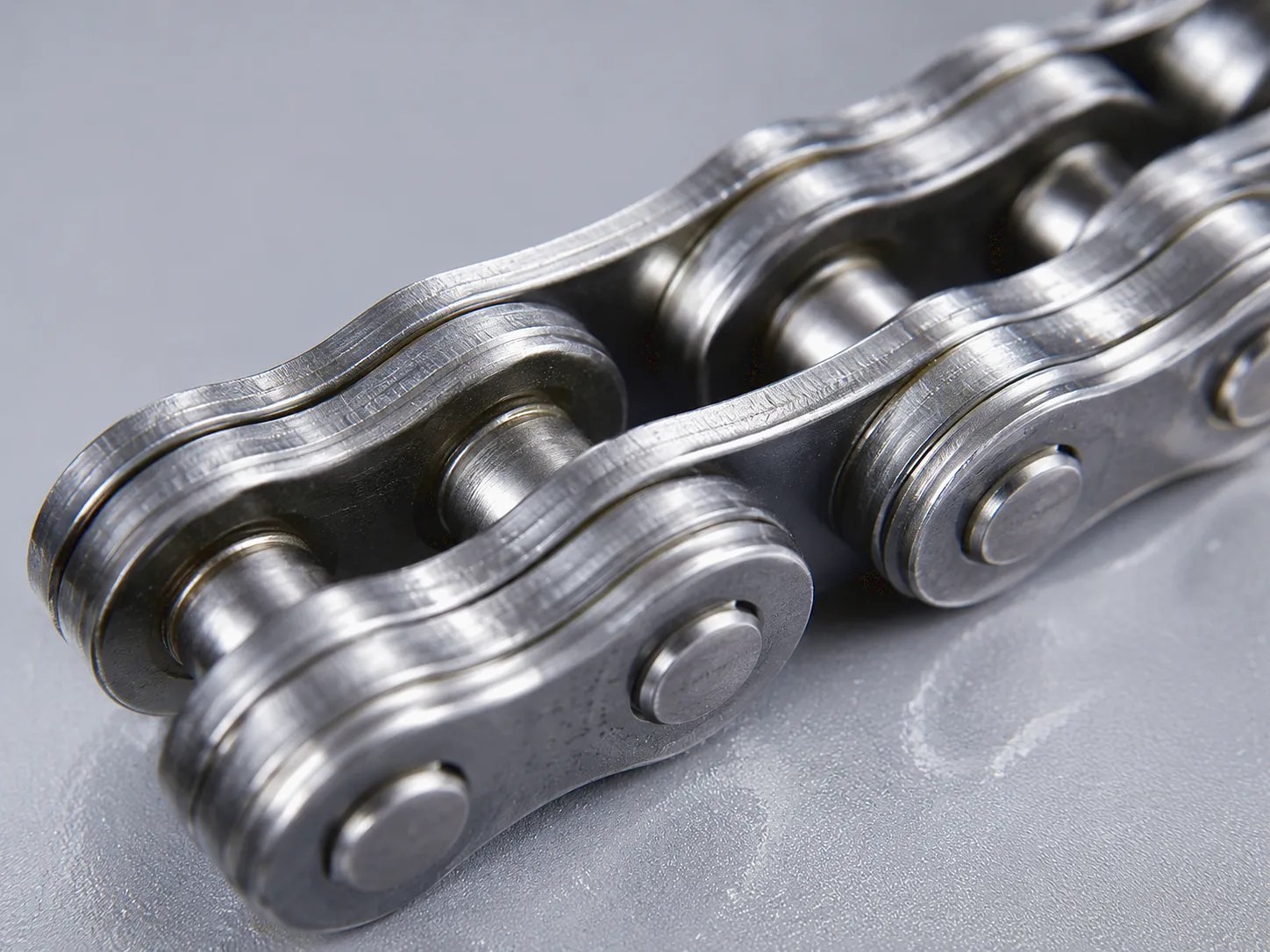
Ever Power Leaf Chain
Engineered for the most demanding agricultural drive applications. Trusted by OEM manufacturers and maintenance engineers across the UK, Europe, and global sugar-producing regions.
- ✔ BL / AL Series — full range available
- ✔ Alloy steel, case-hardened pins
- ✔ Custom lengths, attachments & coatings
- ✔ Fast UK & international shipping
Understanding the Leaf Chain: Principles, Materials, and Construction
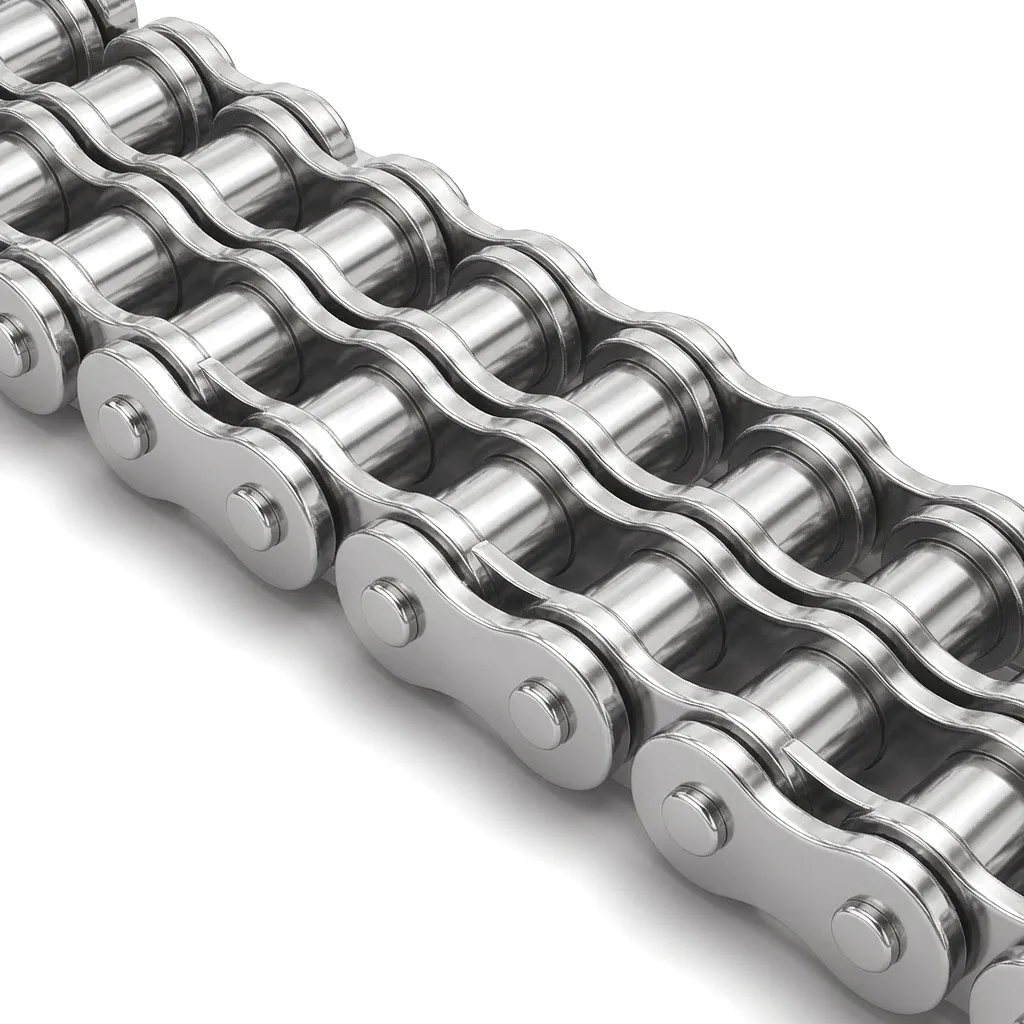
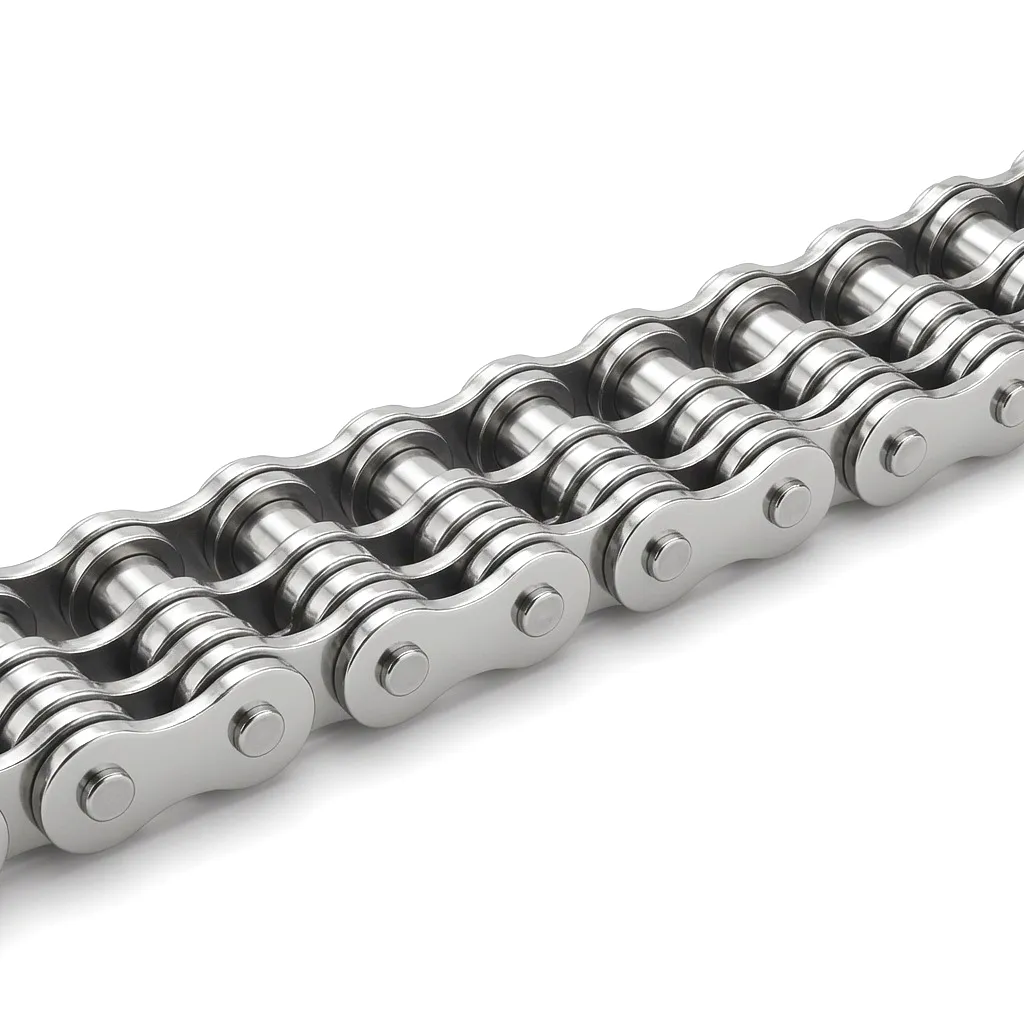
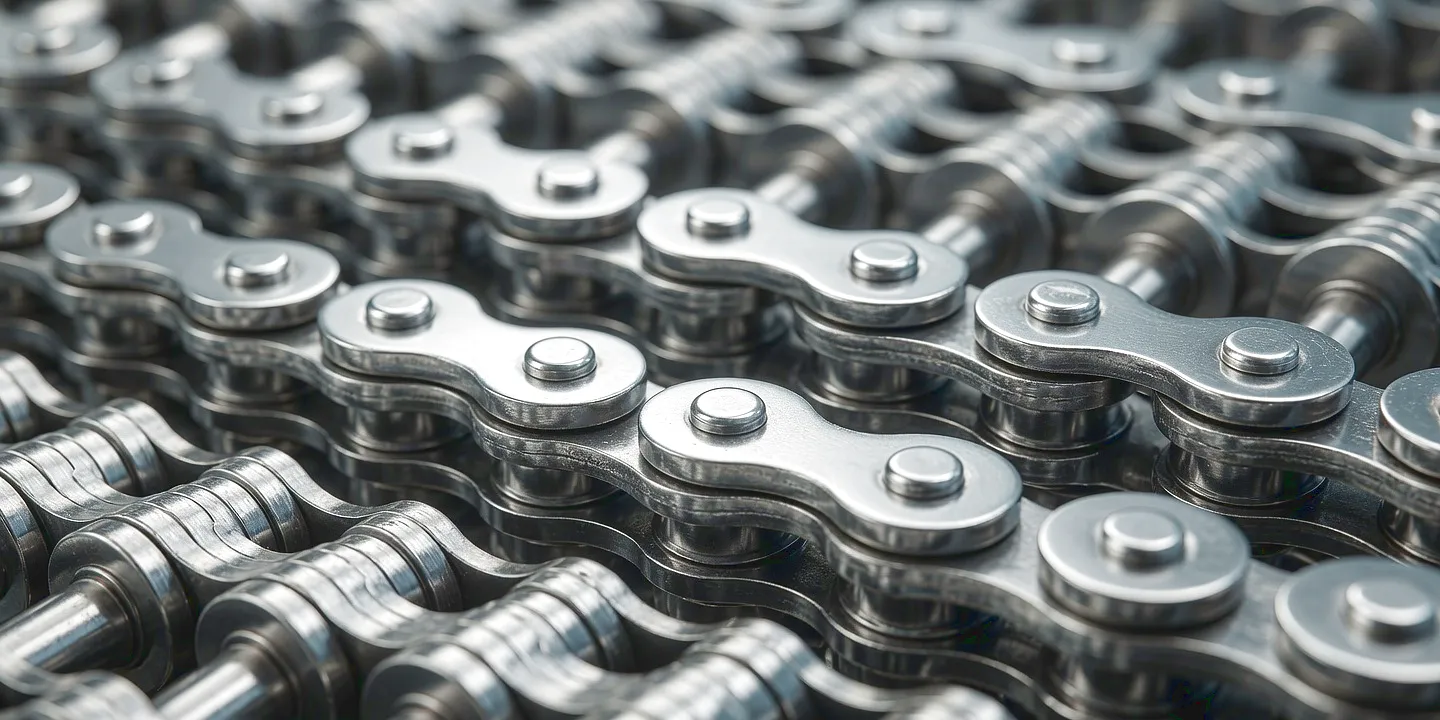
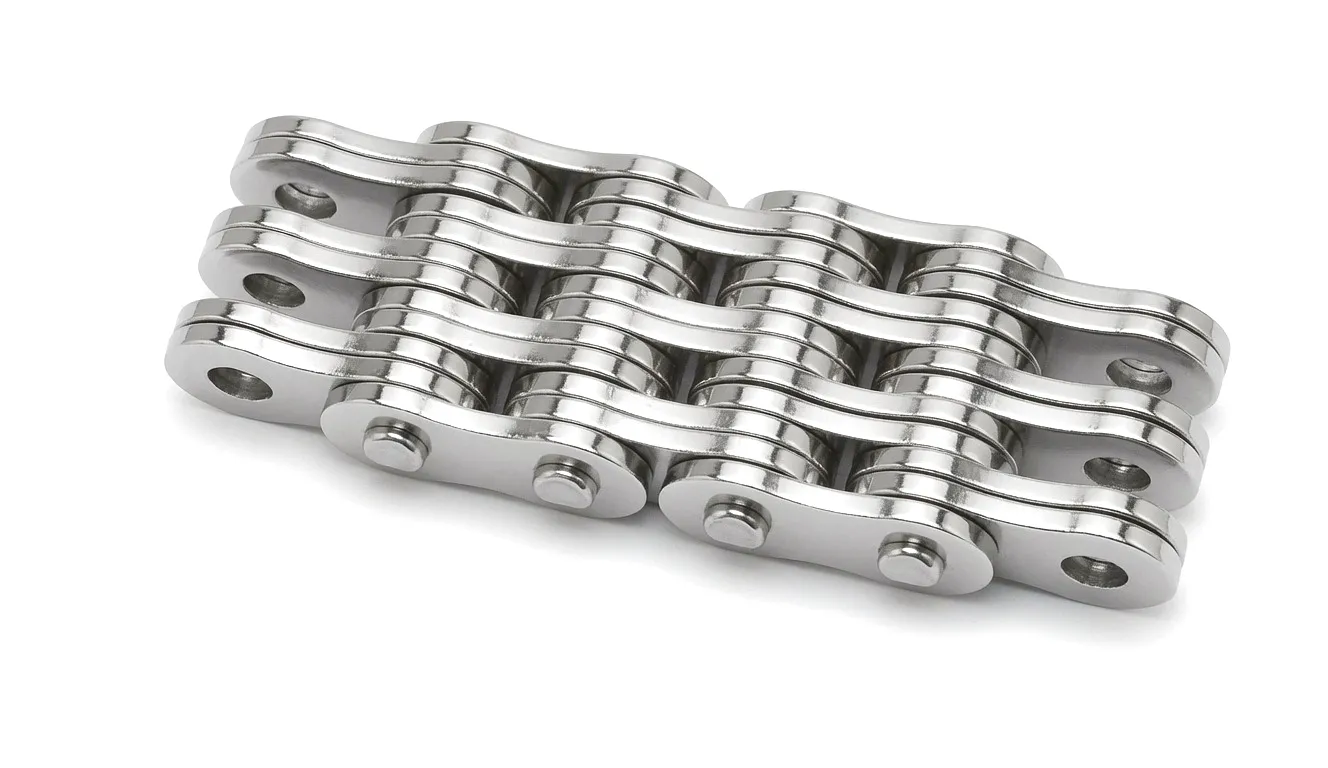
A leaf chain is a type of lifting and load chain built from multiple rows of flat link plates — typically between two and eight rows — that are assembled alternately and pinned together with precision-ground, case-hardened pins. Unlike roller chains, there are no rollers or bushes; the entire load path runs directly through the link plates and pins. This simplicity is its greatest strength: fewer components mean fewer failure points, and the flat plate geometry allows very high cross-sectional area relative to overall chain weight, delivering outstanding tensile strength per unit mass.
The plates are typically stamped from medium-carbon or alloy steel, with hardness carefully controlled to balance strength against brittleness. Pins undergo a carburising or through-hardening process, achieving surface hardness values typically in the range of 58–64 HRC, which provides excellent resistance to the bending fatigue that accumulates over millions of articulation cycles. The assembled chain is then shot-peened — a process that induces compressive residual stresses on the plate surfaces, dramatically improving fatigue life in high-cycle applications such as harvester elevator drives.
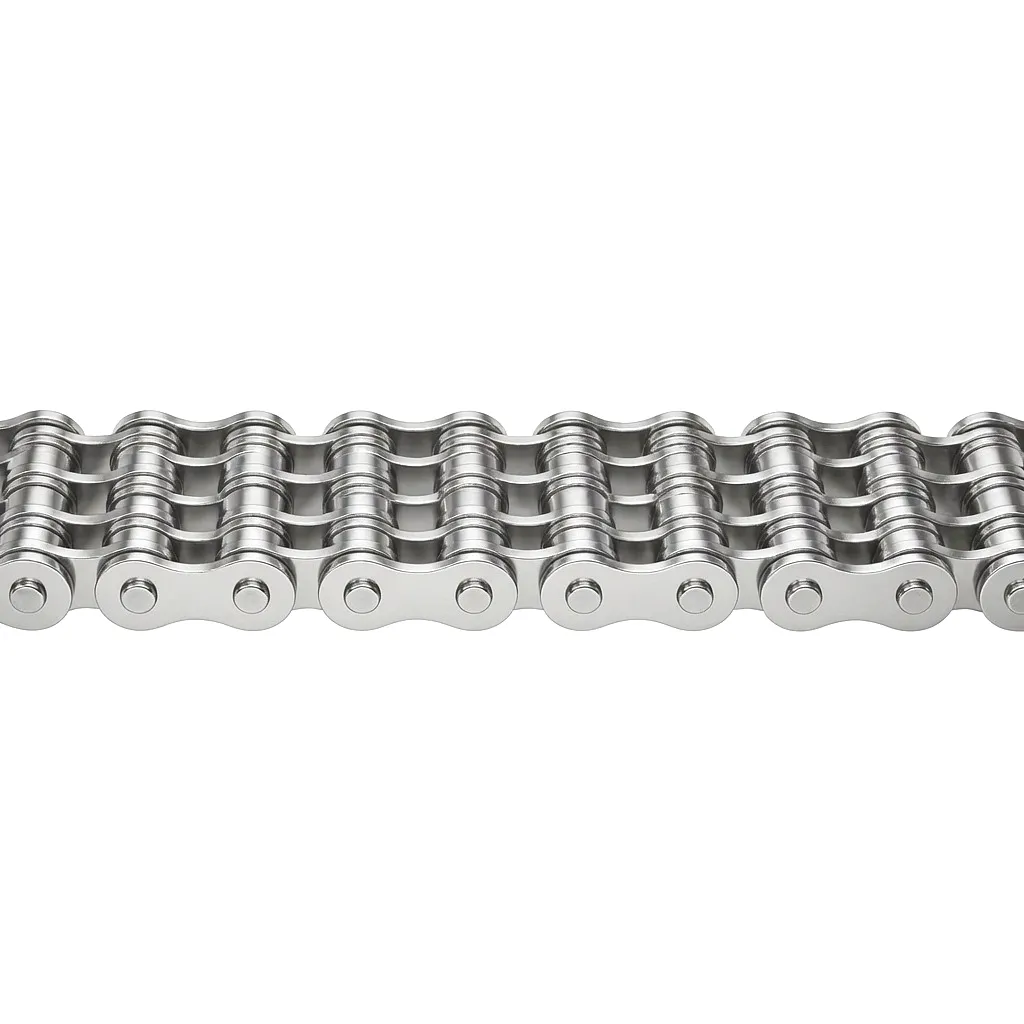
“The leaf chain’s flat plate geometry delivers outstanding tensile strength per unit mass — a critical advantage where weight savings translate directly to fuel efficiency in large-scale agricultural machinery.”
Two primary series dominate industrial and agricultural applications: the BL (or LH) series, which follows ISO 4347 and is the standard for most European and UK-market machinery, and the AL series, which conforms to ANSI standards. Both series are available in lacing configurations from 2×2 (two plates each side) through to 4×4 or beyond for extreme load applications. For sugarcane harvester elevator systems, where chains run under sustained tension loads that can exceed 100 kN in larger machines, the correct series selection — based on a safety factor applied against the chain’s rated minimum breaking load — is a fundamental engineering decision that shapes the entire drivetrain’s reliability.
Technical Performance Parameters
Representative data for BL-series leaf chains commonly specified in sugarcane harvester applications
| Chain Size | Pitch (mm) | Lacing | Min Breaking Load (kN) | Weight (kg/m) | Pin Dia. (mm) | Plate Thickness (mm) |
|---|---|---|---|---|---|---|
| BL534 | 15.875 | 2×3 | 31.1 | 0.75 | 5.08 | 1.52 |
| BL634 | 19.05 | 2×3 | 44.5 | 1.05 | 5.72 | 1.98 |
| BL844 | 25.40 | 2×4 | 111.2 | 2.34 | 7.92 | 3.18 |
| BL1022 | 31.75 | 2×2 | 88.5 | 1.85 | 9.53 | 3.18 |
| BL1044 | 31.75 | 2×4 | 177.0 | 3.70 | 9.53 | 3.18 |
| BL1246 | 38.10 | 2×6 | 266.0 | 5.52 | 11.10 | 4.75 |
* Data indicative only. Final selection requires engineering review based on machine-specific load data, safety factors, and operating environment.
Why the Sugarcane Harvester Demands Leaf Chain
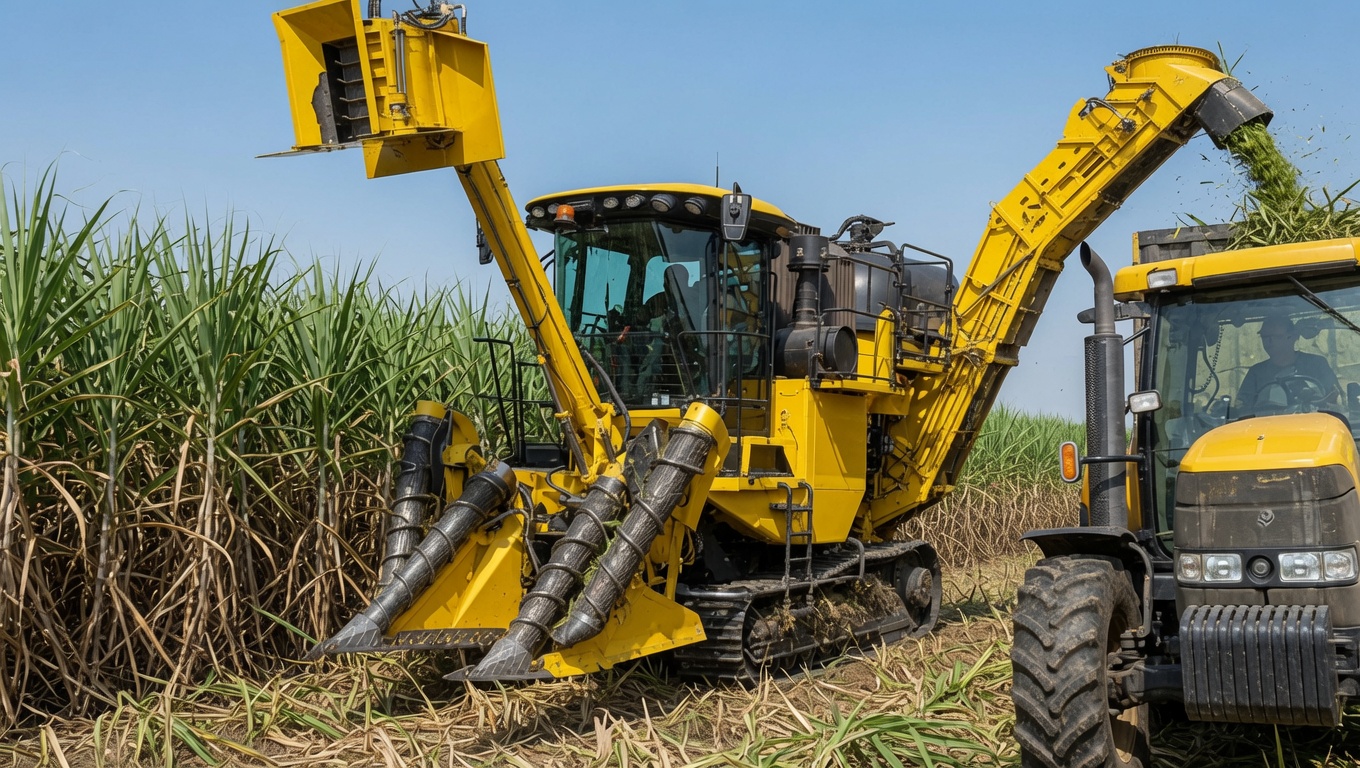
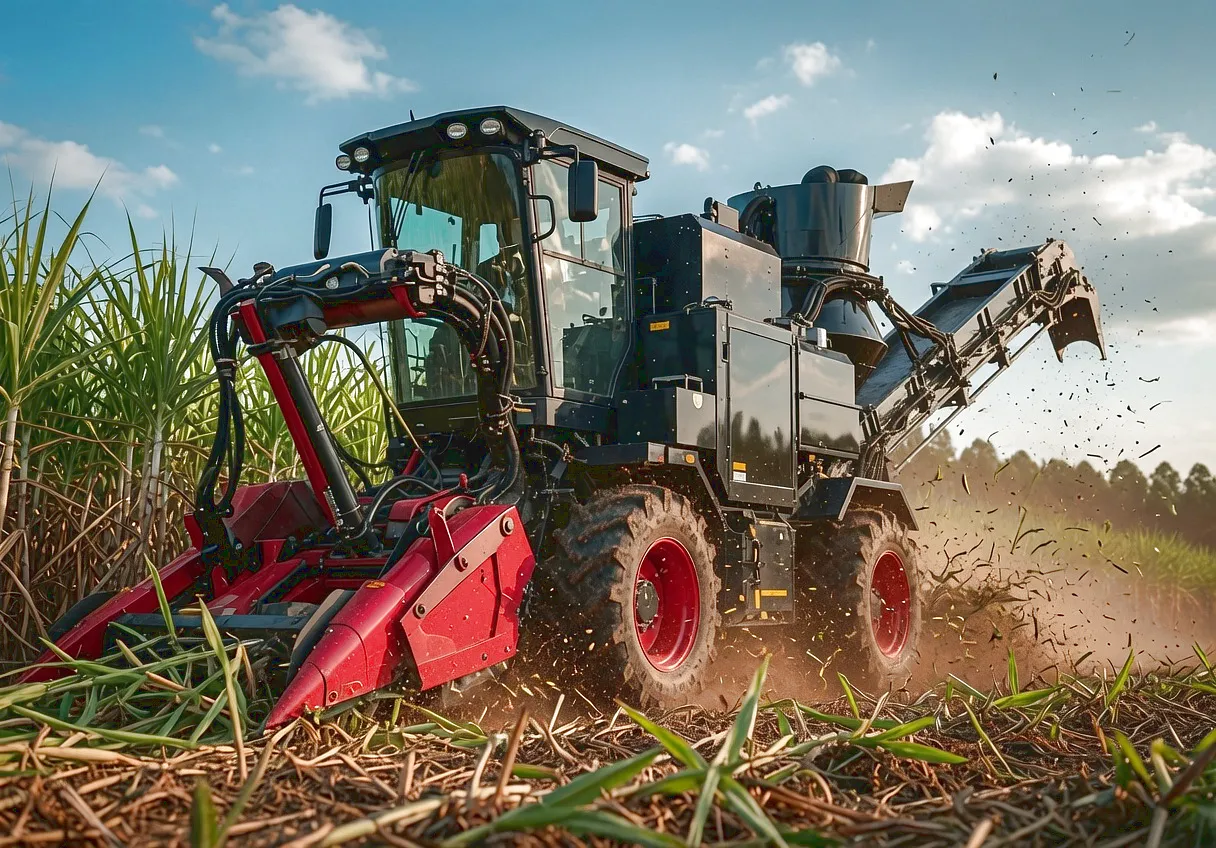
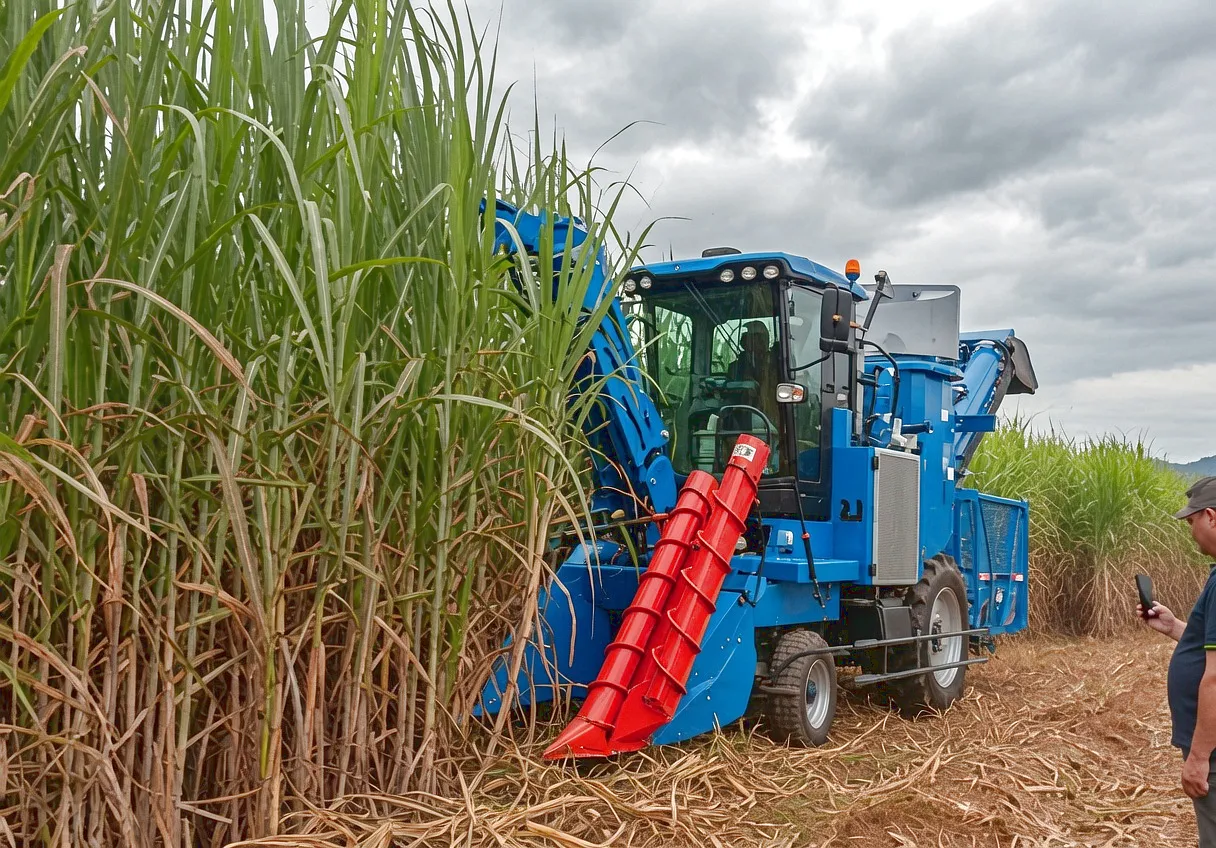 A modern self-propelled sugarcane harvester is a complex machine that integrates a rotating base cutter, a pair of topper units, crop dividers, a stalk-lifting system, primary extractor fans, and — critically — a long inclined elevator conveyor that transfers cut cane billets from the chopping chamber into a trailing trailer or infield bin. It is within this elevator assembly that leaf chains become indispensable.
The elevator chain must bear the full weight of the cane column on the conveyor — which in a large harvester can represent several hundred kilograms of material at any given moment — while also absorbing impact loads as fresh-cut stalks fall onto the slats. The chain runs continuously over the course of a working day that can stretch to 18 or 20 hours during peak harvest season, often in tropical heat exceeding 35°C. The presence of sugary juice, fine soil particles, and cane fibre debris creates a highly abrasive and corrosive lubrication environment.
Leaf chain’s ability to withstand sustained tensile loading without the stress concentrations associated with roller chain engagement makes it the preferred choice of major harvester OEMs worldwide. The flat profile also reduces the ingress of debris into critical articulation points compared to the bushings of a standard conveyor chain, and the multi-plate construction provides a natural level of redundancy — if one plate in a lacing develops a micro-crack, adjacent plates continue to carry load, preventing sudden catastrophic failure and giving maintenance teams the opportunity to detect elongation before a breakdown occurs.
High Static Tensile Strength
Link plate geometry maximises steel cross-section, delivering superior MBL per kilogram of chain weight — essential where elevator loads are constant and substantial.
Superior Fatigue Resistance
Shot-peened plate surfaces and optimised pin-to-hole clearances extend fatigue life in high-cycle elevator applications, reducing unplanned downtime during critical harvest windows.
Redundant Multi-Plate Design
No single point of failure — multiple parallel plates distribute load and provide early elongation warning, allowing planned replacement rather than emergency field repairs.
Wide Temperature Tolerance
Performs reliably from sub-zero UK workshop temperatures through to the extreme tropical heat of cane-growing regions in Brazil, Australia, India, and Southern Africa.
Specific Application Points Within the Sugarcane Harvester
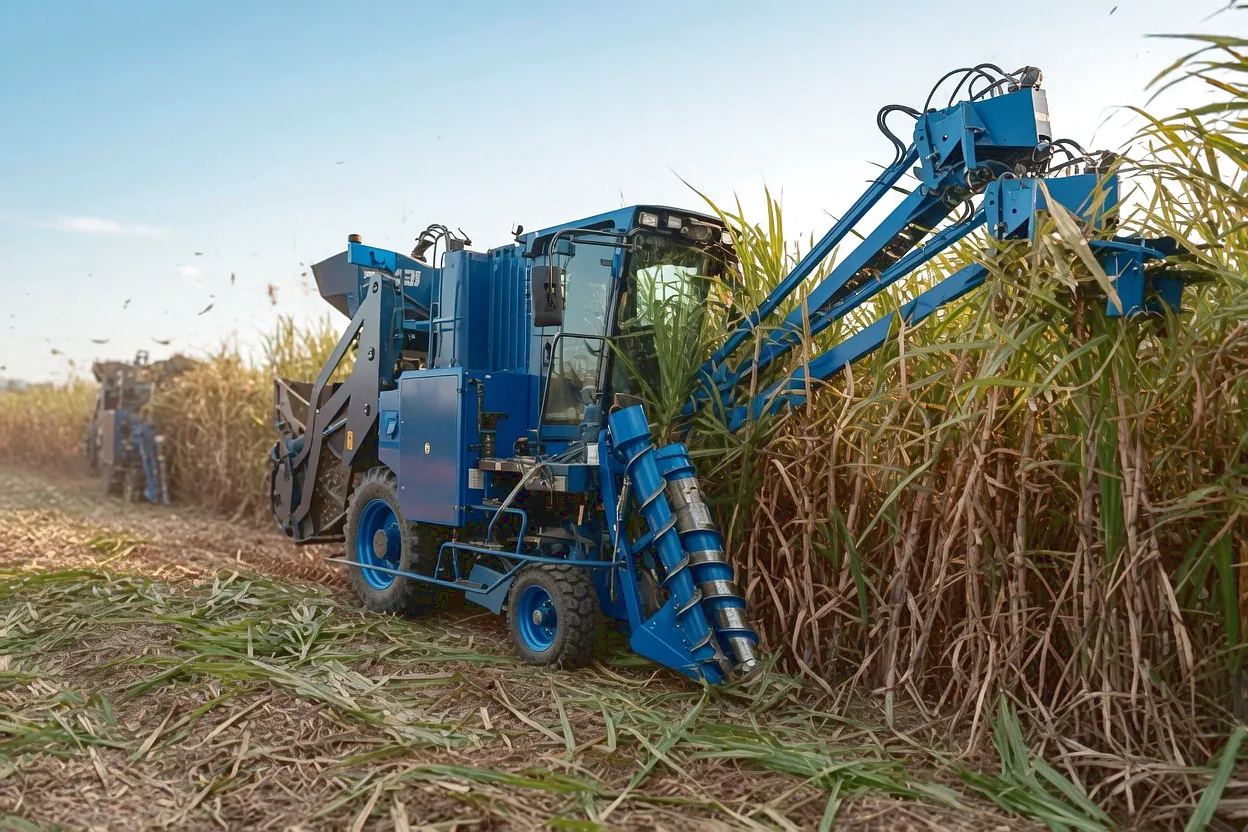 Understanding exactly where leaf chains function within a sugarcane harvester clarifies why their selection is so consequential. The primary application is the inclined elevator conveyor, typically angled between 40° and 55° from horizontal. This assembly consists of two parallel leaf chains running on either side of a series of transverse slats or paddles, forming a moving ladder that carries cut cane billets upward and deposits them into the discharge chute. Each side chain bears half the weight of the cane column plus the weight of the slats themselves — a sustained load that, in a large four-row harvester, can easily reach 40 to 60 kN per chain strand in peak-load conditions.
A secondary application is the counterbalance chain used to support the elevation mechanism of the discharge chute or the upper elevator section. When the operator raises or lowers the discharge height — a frequent operation when switching between different trailer configurations or when navigating headland turns — the counterbalance chain carries the static weight of the raised assembly. This load is quasi-static rather than dynamic, which actually plays to the leaf chain’s strengths: it excels at sustaining steady tensile loads without the fatigue-accelerating factors associated with continuous cyclic articulation.
A third application area that is often overlooked is the crop divider and stalk-guide lifting mechanism. Some harvester designs incorporate hydraulically assisted or mechanically balanced crop divider wings that use short sections of leaf chain to limit extension travel and absorb impact when the dividers strike buried root stocks or unexpected hard objects in the field. The leaf chain acts as a controlled energy-absorbing restraint, and the multi-plate construction distributes impact loads across a large contact area rather than concentrating stress at a single point — a property that is especially valuable given the unpredictable nature of field obstacles.
Inclined Elevator Conveyor
Primary drive chain for continuous cane billet transport at 40–55° inclination under sustained high tensile loads.
Discharge Chute Counterbalance
Static tensile load-bearing for elevated chute position — a classic leaf chain application where load continuity is paramount.
Crop Divider Restraint
Energy-absorbing restraint chain for crop divider wings — protects structure against unpredictable field impact loads from buried obstacles.
Stalk Lifter Drive
Drive transmission in stalk-lifting finger assemblies where robust yet compact chain runs in tight spaces subject to vibration and contamination.
Product Advantages That Set Ever Power Leaf Chain Apart
Agricultural machinery procurement teams and OEM engineers evaluating leaf chain suppliers for sugarcane harvester applications consistently cite three primary selection criteria: dimensional consistency, metallurgical traceability, and supplier responsiveness. Ever Power’s manufacturing philosophy addresses all three with a level of rigour that distinguishes it from lower-specification commodity chain suppliers operating in the UK import market.
Dimensional consistency is achieved through CNC machining of link plates to tolerances of ±0.02 mm on critical dimensions, combined with precision-controlled heat treatment that ensures pin hardness falls within a ±2 HRC band across the entire production batch. This consistency directly translates into predictable elongation behaviour in service: a well-made leaf chain elongates at a steady, measurable rate as wear occurs, whereas inconsistently manufactured chain can develop uneven wear patterns that accelerate fatigue crack initiation at the weakest links.
Metallurgical traceability — the ability to reference heat treatment records, material certificates, and dimensional inspection data for any given batch — has become a non-negotiable requirement for OEM suppliers to major harvester manufacturers such as those operating factories in the UK, Germany, and Brazil. Ever Power maintains full material traceability to ISO 9001 standards, with documentation packages available on request to support OEM quality assurance programmes and warranty administration.
Key Advantages at a Glance
- ✦ CNC plate machining to ±0.02 mm tolerance
- ✦ Shot-peened plates for extended fatigue life
- ✦ ISO 4347 / ANSI B29.8 compliant
- ✦ Full material heat treatment traceability
- ✦ Zinc-nickel & nickel-plated options available
- ✦ UK stock + fast international shipping
Materials, Surface Treatments, and the Sugarcane Environment
The sugarcane field environment is one of the most corrosive and abrasive service conditions that an industrial chain will ever face. The harvested cane releases a sucrose-rich juice that acts as a medium for biological growth and acidification; fine soil particles — often containing silica concentrations that make them highly abrasive — are ingested along with the crop; and high ambient humidity accelerates surface oxidation. For leaf chain specified in these conditions, the base material and surface treatment choices are as important as the mechanical design.
Standard Carbon Steel
Medium-carbon steel (typically 40Cr or equivalent) for link plates, through-hardened or case-hardened pins. Cost-effective baseline specification for machines operating with regular lubrication regimes. Adequate for most harvester applications when maintenance schedules are followed.
Alloy Steel with Nickel Plating
Electroless nickel coating provides significant corrosion resistance improvement in high-humidity cane environments. The coating’s hardness (typically 550–650 HV) also contributes wear resistance. Preferred specification for harvesters operating in coastal tropical regions or where prolonged storage between seasons is expected.
Zinc-Nickel Alloy Plating
Premium corrosion protection for the most demanding environments. Zinc-nickel deposits (12–15% Ni content) achieve salt spray test performance typically exceeding 720 hours to red rust — substantially better than standard zinc plating. Increasingly specified by UK-market OEMs supplying harvesters to Sub-Saharan Africa and Southeast Asian markets.
Self-Lubricating Sintered Bush Option
For elevator chains where re-lubrication access is restricted, a sintered metallic interface between pin and plate hole — impregnated with solid lubricant — provides sustained low-friction operation across extended maintenance intervals. Particularly relevant for sealed elevator housings in newer harvester designs.
The lubrication regime itself is perhaps the most important determinant of leaf chain service life in field conditions. Contrary to a common misconception, leaf chains are not self-lubricating — the contact surfaces between pin and plate hole generate substantial sliding friction under load, and this friction generates heat that accelerates oxidation and wear. A correctly formulated, appropriately applied lubricant that can penetrate through the plate stack to reach all contact interfaces is essential. Ever Power’s applications team can advise on suitable lubricant specifications for each machine type and operating environment, drawing on field experience accumulated across harvester deployments in the UK, Australia, Brazil, and Southern Africa.
Manufacturing Capability & Custom Leaf Chain Solutions
Ever Power — Precision Engineering for Global Agricultural OEMs
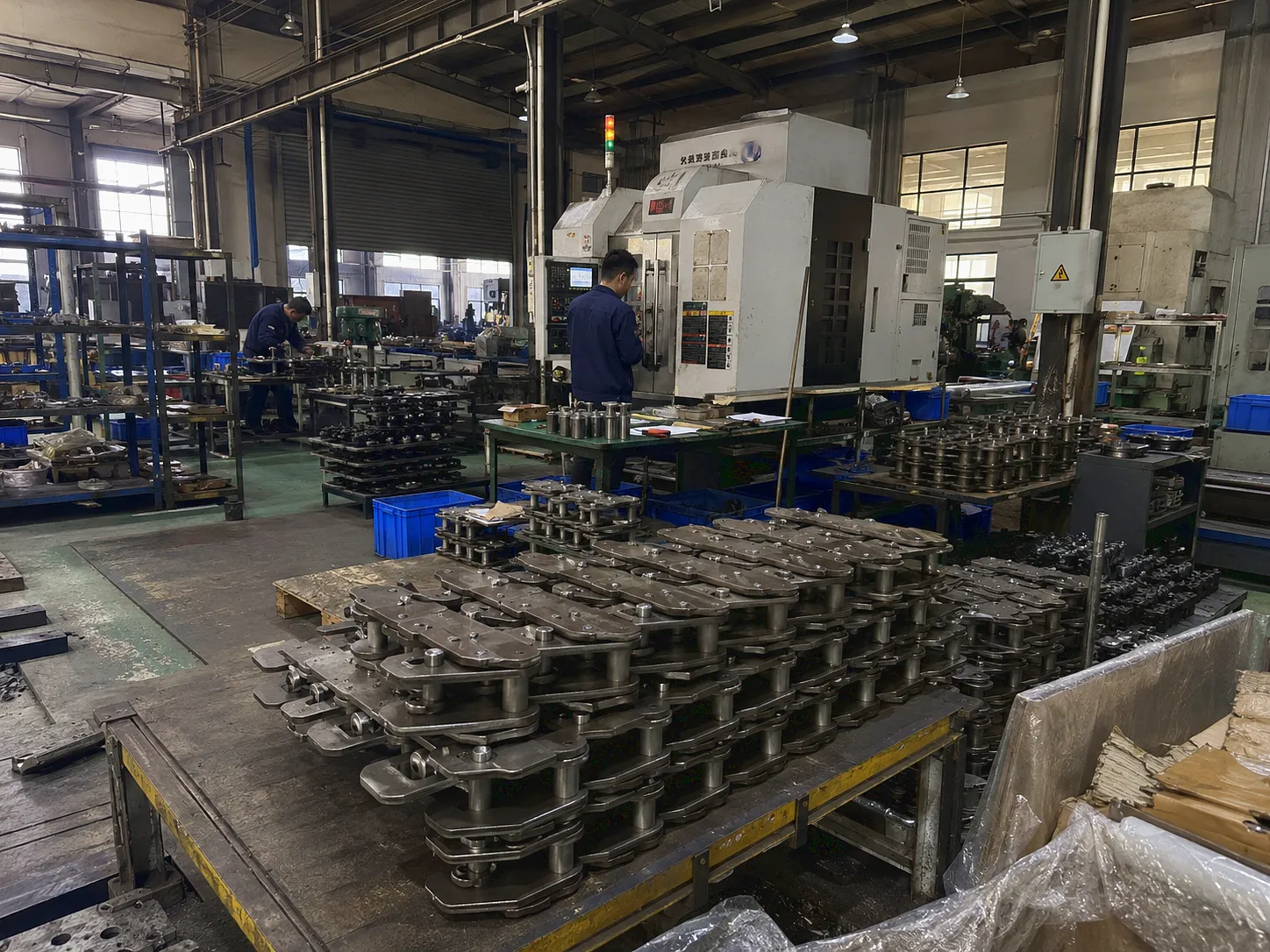
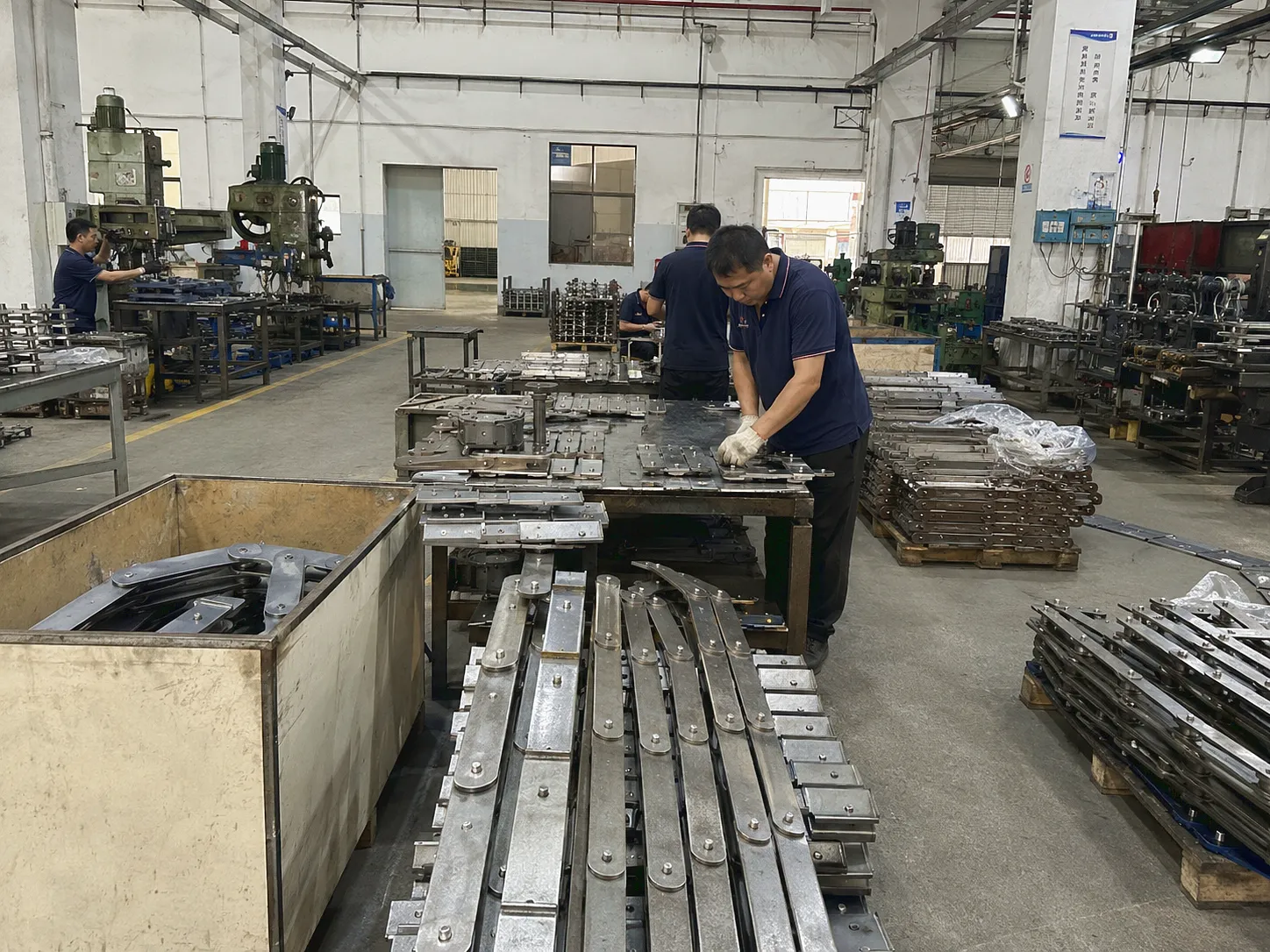 Ever Power operates a dedicated leaf chain production facility equipped with multi-station progressive stamping presses capable of producing link plates from coil steel in thicknesses ranging from 1.2 mm through to 6.4 mm, covering the full spectrum of BL and AL series dimensions as well as non-standard configurations. The CNC pin grinding line holds diameter tolerances of ±0.005 mm — far tighter than commodity manufacturing — ensuring that assembled chains meet the precise clearance specifications that determine wear rate and fatigue performance.
Custom configuration capabilities extend well beyond standard series modifications. Ever Power engineers can design and produce leaf chains with extended pin ends to accommodate non-standard attachment brackets, solid connecting links in specific materials for OEM integration, offset link sections for connecting odd-pitch assemblies, and special plate cutouts or reinforcements for specific mounting interfaces. For sugarcane harvester OEMs developing new machine platforms, the company offers full design consultation services — reviewing load calculations, recommending lacing configurations, and supplying prototype chains for test rig evaluation before series production commitments are made.
18+
Years in leaf chain engineering
40+
Countries supplied
ISO 9001
Certified quality management
100%
Custom OEM configurations available
Ready to discuss your sugarcane harvester chain requirements? Our engineering team can review your load specifications and recommend the optimal leaf chain configuration, coating, and length for your application.
Customer Success: UK Agricultural Machinery Exporter Case Study
Meridian AgroTech Solutions Ltd
Agricultural Machinery Exporter — Lincolnshire, UK
 Meridian AgroTech Solutions, a Lincolnshire-based exporter of refurbished and newly assembled agricultural equipment, was experiencing a recurring problem with elevator chain failures on the sugarcane harvesters it supplies to customers in Zambia and Zimbabwe. The chains being sourced from an existing European supplier were failing at 60–70% of their rated service life, with elongation rates accelerating rapidly after approximately 400 operating hours — far below the 800-hour target set by Meridian’s service agreement with its African clients.
After conducting a failure mode analysis with the support of an independent metallurgy laboratory, Meridian’s engineering director identified inconsistent pin hardness — with some pins falling as low as 52 HRC against a specification of 60–62 HRC — as the root cause. The softer pins were polishing rapidly under load, leading to rapid bore enlargement in the link plates and premature elongation. The problem was traced to batch variability in the previous supplier’s heat treatment process, which lacked the statistical process control documentation that Meridian’s QA team required for traceability.
The Solution
Meridian transitioned to Ever Power BL1044 leaf chain with zinc-nickel plating for all elevator assemblies on their Zambia-destined machines, and standard nickel-plated BL844 for the Zimbabwe fleet where maintenance access was better. Full batch certification and heat treatment records were provided with each delivery. After 18 months of field operation, failure-mode reviews showed zero premature chain failures in the new specification, and average measured elongation at 800 hours was 0.8% — within the normal wear range and well below the 2.0% replacement threshold. Meridian has since expanded its Ever Power partnership to cover balance chains for the discharge chute mechanism and is evaluating Ever Power roller chain for the base cutter gearbox drive.
| Metric | Previous Supplier | Ever Power Result |
|---|---|---|
| Avg. chain life (hours) | 420–460 | 820–890 |
| Elongation at 800 hrs | N/A (failed before 800 hrs) | 0.8% |
| Unplanned field stoppages | 3–5 per season | 0 per season |
| Batch certification provided | Partial (no SPC data) | Full ISO 9001 traceability |
What Our Customers Say
“
We rebuilt our entire sugarcane elevator specification around Ever Power BL844 after having two other suppliers let us down on consistency. The difference in pin hardness consistency alone — backed by actual SPC charts, not just a number on a certificate — justified the switch. Our service engineers in the field saw chain life more than double in the first season.
James Hartwell
Technical Director, Meridian AgroTech Solutions, Lincolnshire
“
As a UK-based parts distributor for harvesting equipment across West Africa, sourcing reliable leaf chain has always been a challenge. Ever Power’s willingness to supply small batch custom lengths — not just standard coil — meant we could stock exactly what our customers need without the waste of off-cutting. The zinc-nickel variants have been particularly well received for humid coastal regions.
Sandra Rotherham
Operations Manager, AgriParts International, Birmingham
“
We specified Ever Power leaf chain for the elevator drive on a new prototype harvester we’re developing here. Their engineering team reviewed our load calculations and suggested upgrading from BL1022 to BL1044 based on our peak torque data — a recommendation we’d not considered, but which made complete sense once they walked us through the safety factor analysis. That kind of proactive input is rare from a chain supplier.
Tom Nkrumah-Bailey
Lead Mechanical Engineer, GreenField Harvest Systems, Yorkshire
Serving the UK Agricultural Machinery Industry
The United Kingdom occupies a unique position in global sugarcane harvester supply chains. While sugarcane is not grown commercially in the UK itself, a number of important agricultural machinery manufacturers, component suppliers, and export traders with significant operations in England, Scotland, and Wales play vital roles in supplying and servicing sugarcane harvesting equipment across Africa, the Caribbean, and South Asia. Companies based in regions including Yorkshire, the Midlands, East Anglia, and the industrial corridors of the South West are active buyers of precision mechanical components — leaf chains among them — for incorporation into machinery bound for export markets.
The growing importance of sustainability credentials in UK-market machinery exports — driven by requirements from development finance institutions and corporate sustainability frameworks — has also increased demand for fully traceable, certified components. UK-based OEMs and traders increasingly require their suppliers to provide documentation supporting carbon footprint analysis, conflict mineral compliance, and quality management system certification. Ever Power’s ISO 9001-certified supply chain and comprehensive batch documentation position it well to meet these requirements.
For UK buyers requiring rapid delivery — whether for prototype build programmes or urgent field replacement orders — Ever Power maintains a UK-accessible stock programme with standard BL-series leaf chains available for next-working-day delivery to most mainland UK addresses. Custom-length orders and special surface treatment specifications typically ship within 10–15 working days from confirmed order, with express airfreight options available for urgent requirements. Payment terms, consignment stock arrangements, and blanket order agreements are available for established OEM accounts.
UK Supply Highlights
- 📦 UK-accessible stock: next-working-day delivery
- 🔧 Custom lengths: 10–15 working day lead time
- 📄 Full batch certification & SPC documentation
- ✈️ Airfreight express available for urgent orders
- 💼 OEM consignment stock arrangements
- 🤝 Blanket order / preferred supplier agreements

Installation, Tensioning, and Inspection: Field Best Practice
Even the highest-specification leaf chain will underperform if incorrectly installed or maintained. Drawing on accumulated experience across dozens of harvester OEM programmes and many thousands of field installations, Ever Power’s applications engineering team has developed the following guidance for chain installation and inspection teams working on sugarcane harvester elevator assemblies.
| Inspection Interval | Action Required | Acceptance Criterion | Tool Required |
|---|---|---|---|
| Daily (pre-shift) | Visual inspection of exposed chain sections; check for debris accumulation | No visible corrosion, cracked plates, or displaced pins | Visual only |
| 50 hours | Re-lubrication of all accessible chain articulation points | Lubricant penetration visible at all plate interfaces | Pressure gun / brush |
| 200 hours | Elongation measurement using calibrated pitch gauge over 10-link span | Elongation less than 1.0% over nominal pitch length | Vernier calliper / pitch gauge |
| 400 hours | Full visual + elongation check; check sprocket/sheave for wear | Elongation less than 1.5%; no plate cracking visible | Calliper + inspection light |
| At 2.0% elongation | Immediate replacement — do not return to service | N/A — replacement mandatory | Calliper |
Initial chain tensioning deserves particular attention during installation. A leaf chain installed with insufficient tension will develop catenary sag on the return strand, causing the chain to oscillate and contact guiding surfaces, accelerating edge wear on the link plates. Excessive tension, by contrast, increases the mean load on articulation points and reduces fatigue life. The correct tension for a given installation depends on chain weight per metre, span length, and the inclination angle — parameters that Ever Power’s engineering team can assist with calculating for specific harvester elevator geometries on request.
Frequently Asked Questions
Common questions from UK agricultural engineers and procurement teams
Ready to Source Leaf Chain for Your Sugarcane Harvester?
Whether you’re an OEM manufacturer based in the UK, a parts distributor, or a field maintenance engineer needing an urgent replacement specification — Ever Power’s team is ready to help you select and source the right leaf chain.
Ever Power | Precision Leaf Chain Manufacturing | ISO 9001 Certified | Supplying UK Agricultural OEMs & Global Export Markets | edit by gzl