
 Every harvest season in the UK brings the same relentless pressure: wheat in East Anglia, barley in Yorkshire, oilseed rape across the Midlands — all ripening within tight weather windows that grant farmers and contractors precious little margin for mechanical failure. At the mechanical heart of every combine harvester, a network of leaf chains manages the vertical lift of header assemblies, straw walkers, and elevator systems with a quiet efficiency that most operators take entirely for granted — until something goes wrong. A snapped chain during a 48-hour harvest window does not just cost the price of a replacement; it costs standing crop, contractor penalties, and the kind of reputational damage that takes seasons to recover from.
Leaf chain — also written as leaf-chain or lacing chain in older UK engineering documentation — is a specific class of link chain engineered for lifting and tension-balancing applications rather than power transmission. Unlike roller chain, which transfers rotational torque, leaf chain connects counterbalance systems, header height cylinders, and tension-equalising mechanisms where the primary load is axial pull under cyclic stress. Understanding what separates a well-specified leaf chain from a generic substitute matters enormously in the context of combine harvester engineering, and this guide covers every dimension of that question with the precision that agricultural equipment professionals across Britain deserve.
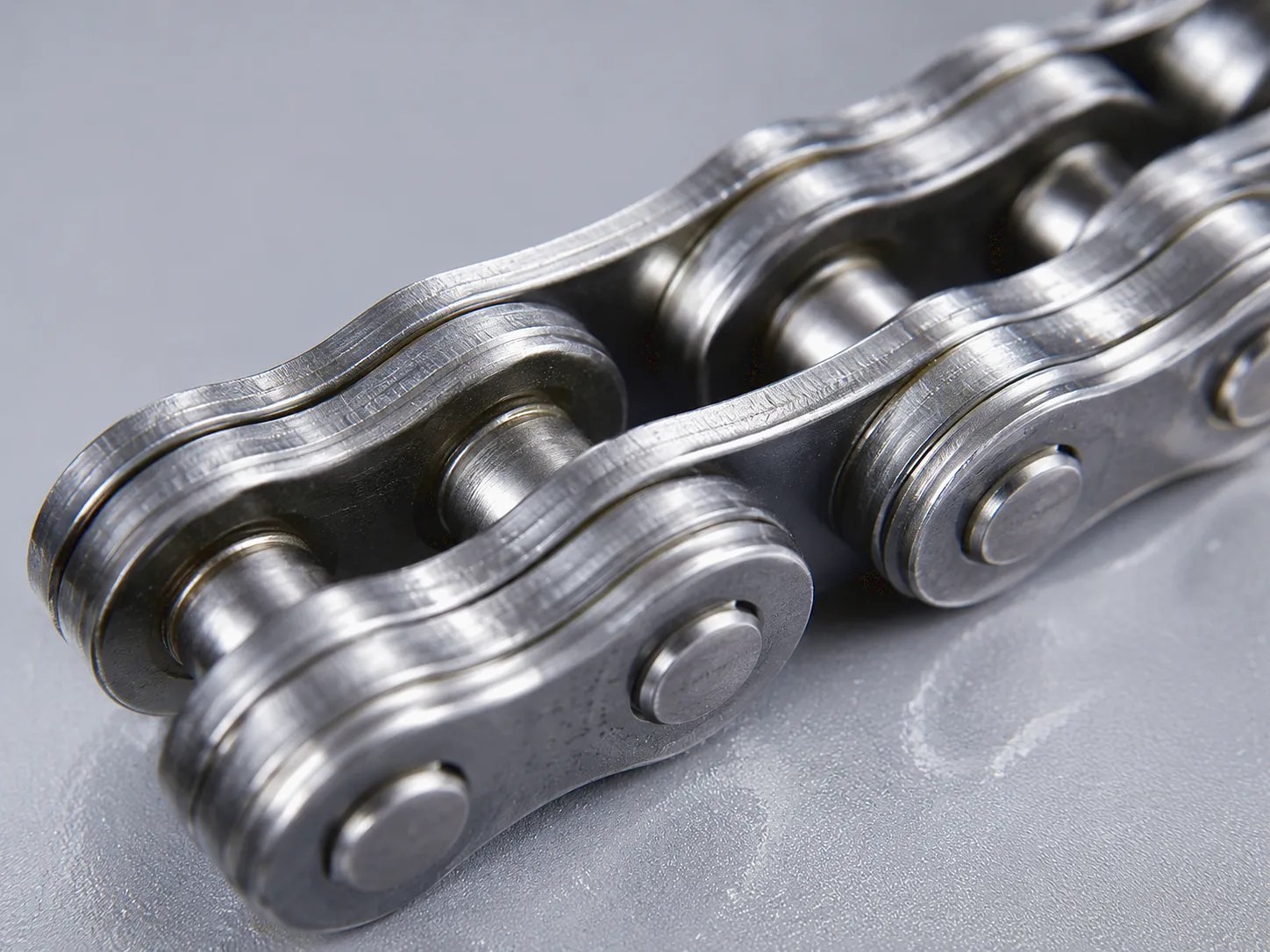
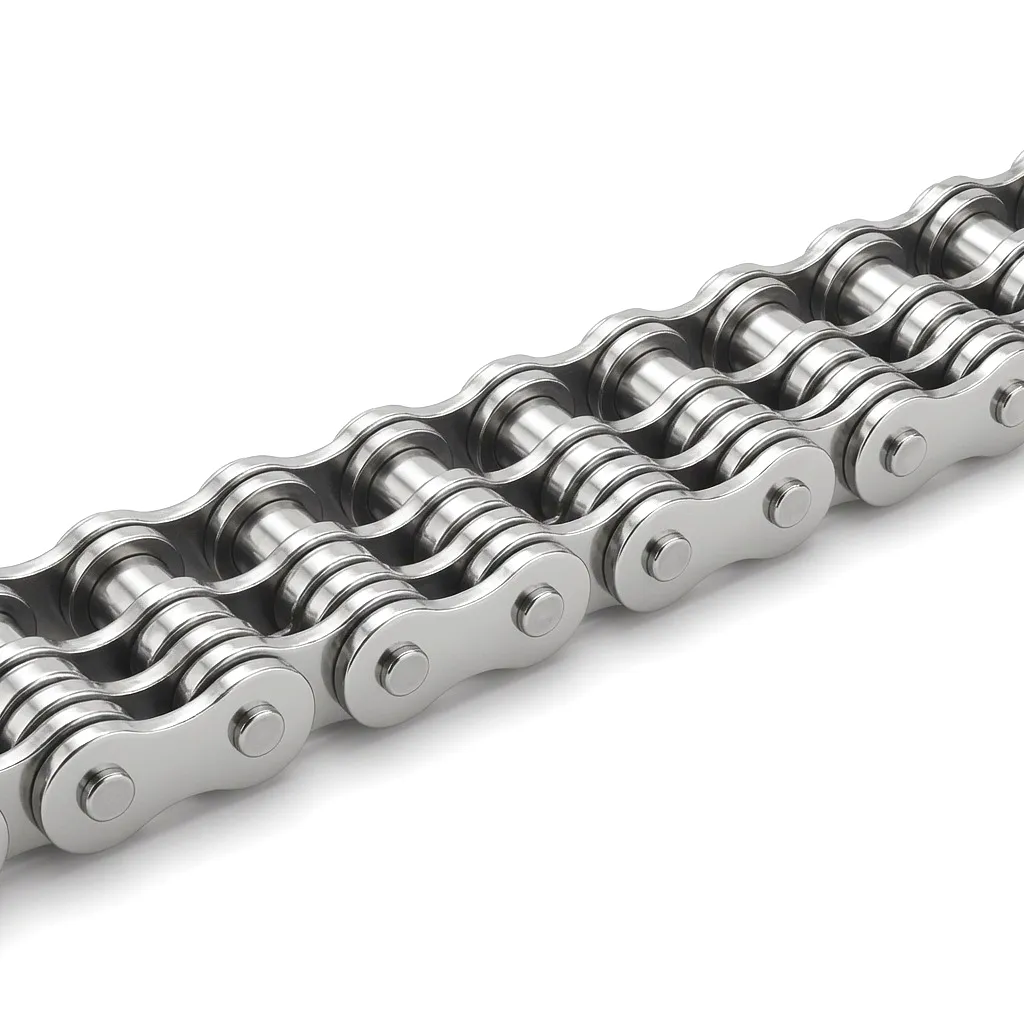
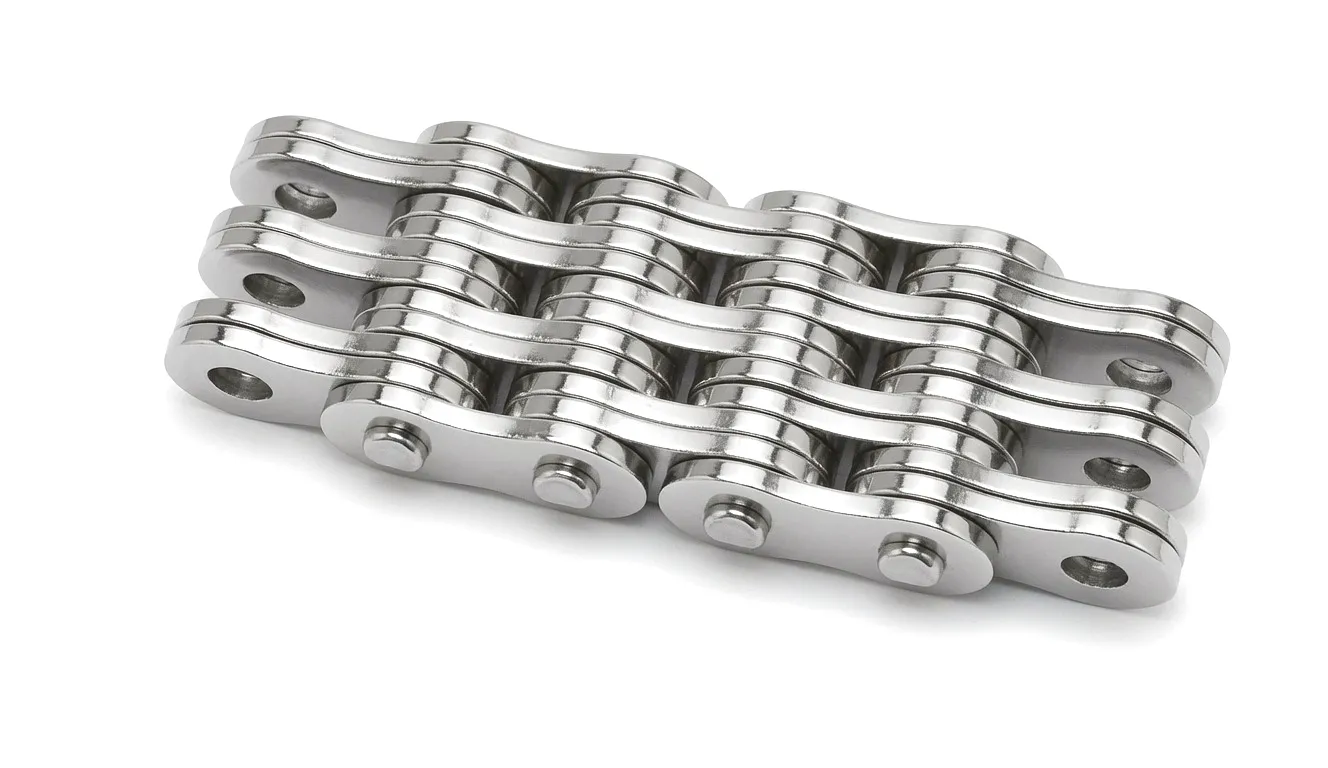
Ever Power leaf chain — engineered for high-cycle lifting duty in combine harvester header systems
What Is Leaf Chain and Why Does It Differ From Roller Chain?
Leaf chain is constructed entirely from interlocking link plates and pins — there are no rollers, no bushings, and no sprocket engagement geometry. The link plate configuration follows standardised AL and BL series designations under ISO 4347 and ANSI B29.8, where the numbers denote the pitch and the letter prefix indicates the plate lacing pattern. A BL 634 chain, for instance, has a 38.1 mm pitch with a 3×4 plate lacing, giving it a considerably higher minimum ultimate tensile strength than a simple laced alternative of similar pitch. This matters in combine harvester applications because the chain is often working under shock loading — every time the header drops or a stone guard triggers — rather than the smooth cyclic loading of a clean laboratory test environment.
 The absence of rollers is not a design limitation but a deliberate engineering choice that makes leaf chain uniquely suited to the lifting and counterbalancing role it plays inside agricultural machinery. Roller chain fatigues under axial pull because the roller and bushing interface was not designed for that loading mode. Leaf chain plates, by contrast, are heat-treated to specified hardness ranges and the pin-to-plate bearing area is optimised for tensile load distribution, which is precisely why ISO 4347 leaf chain has been the standard for forklift mast chains for decades — and why the same chain family serves equally well in combine harvester header lift and straw elevator tension systems.
How Leaf Chain Functions Inside a Combine Harvester
Header Lift & Counterbalance
Leaf chain forms the critical link between the hydraulic cylinder and the header assembly, transmitting lift forces while the counterbalance spring system equalises static load. Chain pitch and tensile strength must be matched to the specific header weight — modern draper headers can exceed 800 kg.
Elevator Tension Systems
Grain and straw elevator tensioning mechanisms use leaf chain to maintain consistent belt or paddle chain tension across changing crop volumes. Uniform tension prevents slippage and grain losses, protecting both throughput efficiency and sample quality in wet UK harvest conditions.
Straw Walker Linkages
The straw walker crankshaft assembly relies on precisely timed linkage chains to maintain separation efficiency. Leaf chain in this position must tolerate combined tensile and bending loads at elevated temperatures from the threshing drum, demanding superior fatigue resistance.
The operating environment inside a combine harvester is genuinely hostile to mechanical components in ways that are easy to underestimate when specifying chain from a catalogue. Ambient temperatures in the crop intake zone regularly reach 60–80°C during summer harvest. Fine crop dust and chaff create an abrasive slurry when mixed with lubrication residue, accelerating wear on pin-to-plate interfaces. Ground moisture variation — particularly relevant in the UK’s notoriously unpredictable harvest weather — can create humidity cycling that promotes corrosion on inadequately protected chain surfaces. And the shock loading from stone impacts or crop slug ingestion can apply instantaneous loads several times higher than the steady-state working load. A leaf chain specification that performs adequately in a forklift warehouse will not necessarily survive a full 600-hour season in a John Deere S790 working heavy barley straw in Lincolnshire.
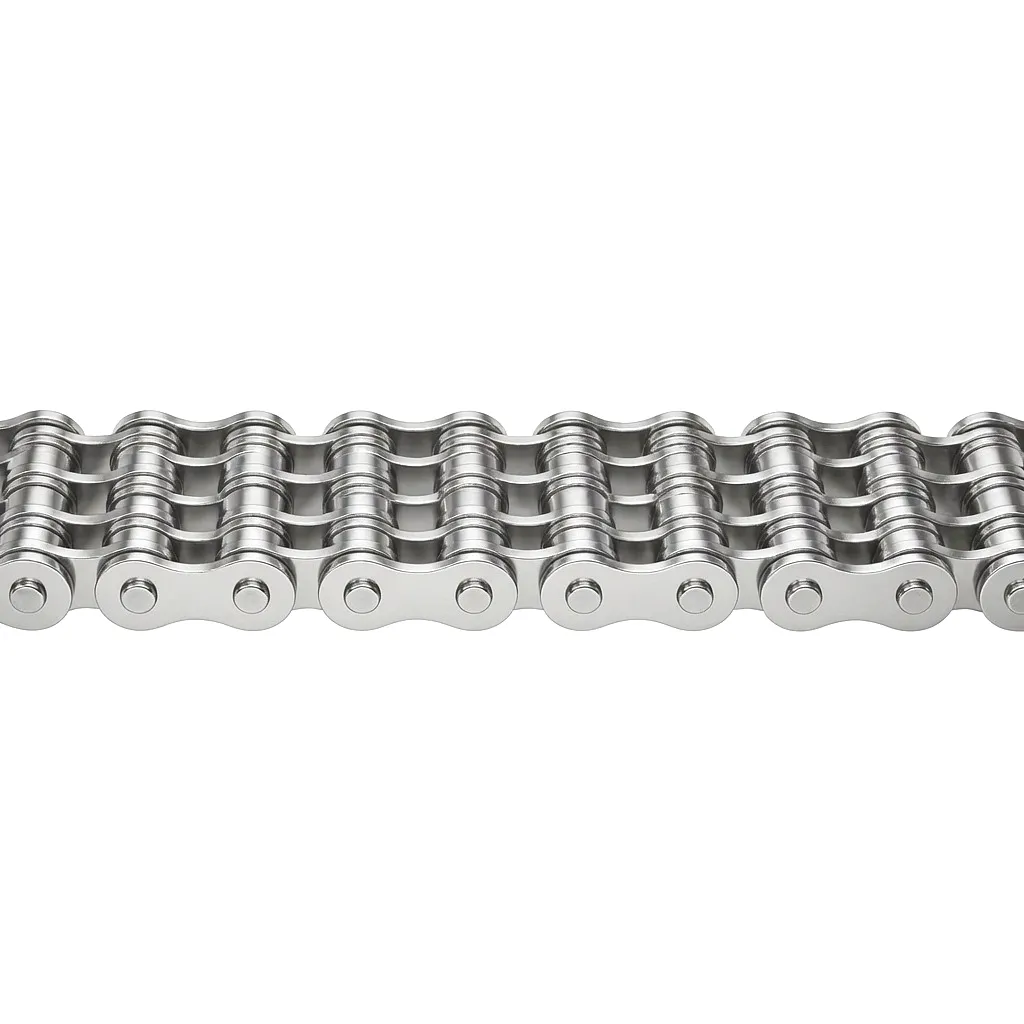
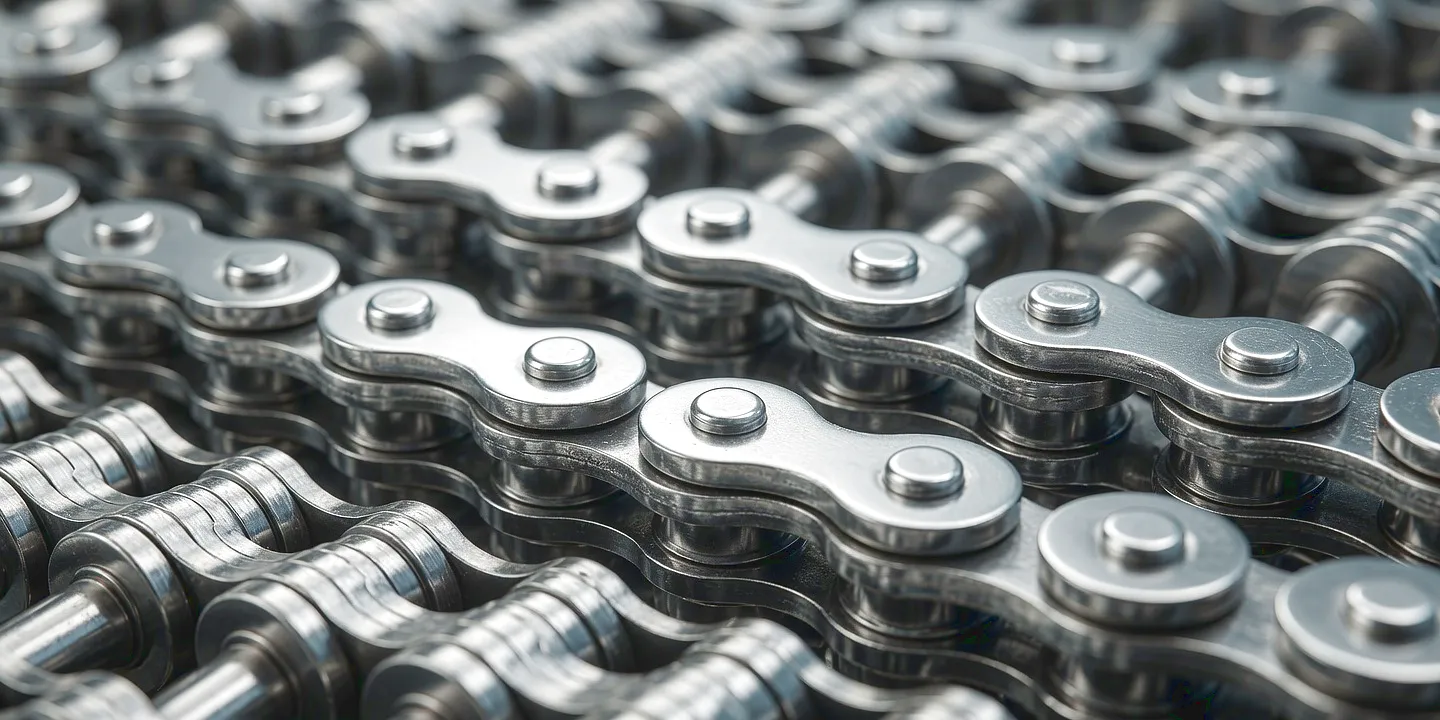
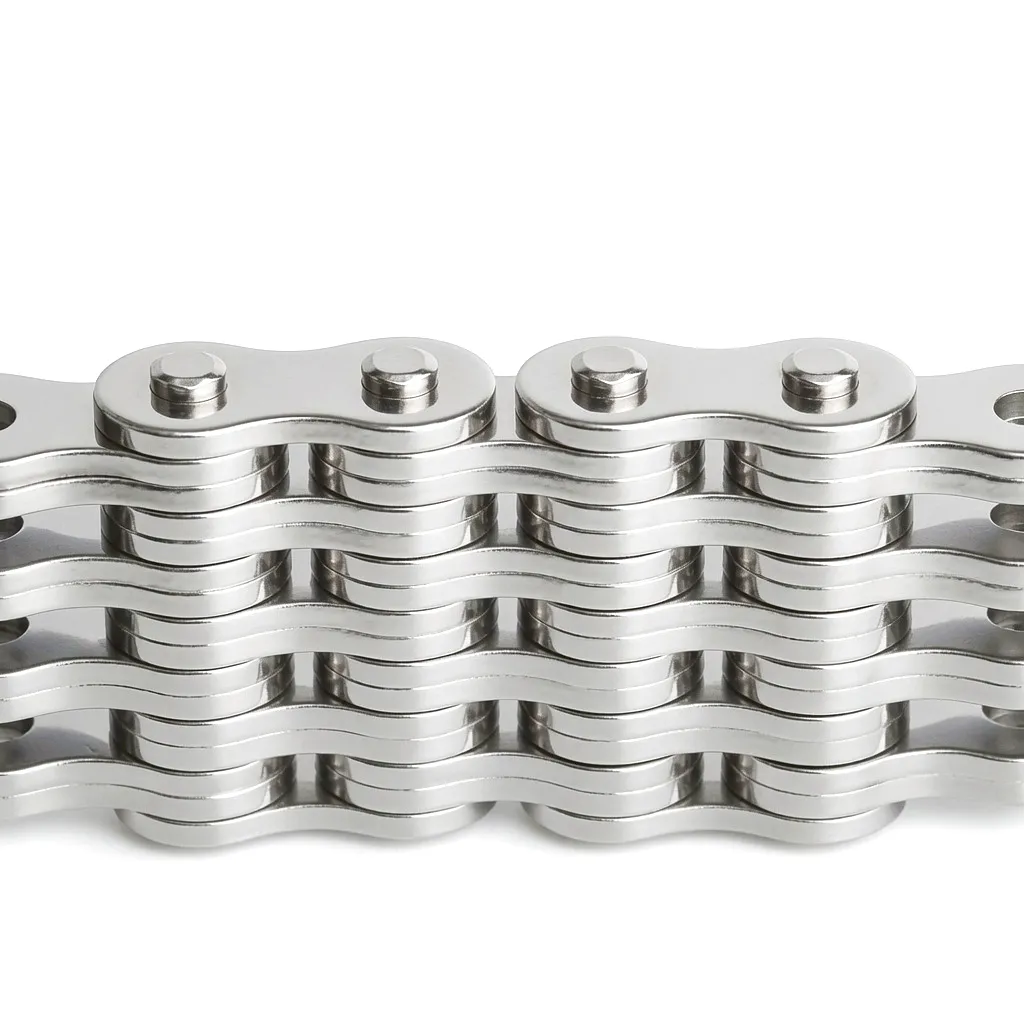
Leaf chain assemblies manufactured to ISO 4347 for heavy agricultural duty — tested for shock-load resistance
Technical Specifications: Leaf Chain for Combine Harvester Applications
Selecting the correct leaf chain specification for a combine harvester requires matching pitch, plate lacing, minimum breaking load, and material grade to the precise application point. The table below covers the most common sizes used across major combine platforms operating throughout the UK, from entry-level Class 5 machines to flagship Class 9 units running 14-metre headers.
All specifications conform to ISO 4347 and ANSI B29.8. Working load limits should be calculated at a minimum safety factor of 4:1 for agricultural lifting duty.
Materials, Heat Treatment, and Manufacturing Standards
The metallurgy of an agricultural-grade leaf chain starts with alloy steel link plates, typically produced from 10B21, 20MnTiB, or similar carbon-manganese alloys with boron micro-alloying for hardenability. Link plates are precision-blanked rather than shear-cut to maintain tight dimensional tolerances on pin hole geometry — a seemingly minor detail that has a substantial effect on fatigue life, because irregular hole geometry concentrates stress at predictable crack initiation sites. After blanking, plates are carbonitrided or case-hardened to achieve a surface hardness of HRC 58–62 while maintaining a tough, ductile core at HRC 30–40. This dual-hardness profile is what allows the chain to absorb shock loads without brittle fracture — a failure mode that is particularly dangerous in header lift applications where a sudden chain break can allow the header to drop without warning.
Pins are precision-ground to h6 or h7 tolerance class and are typically manufactured from 20Cr or 20CrMo alloy steel, case-hardened to HRC 58–64. The pin-to-plate interference fit is critical: too loose and fretting wear begins immediately; too tight and assembly creates pre-stress concentrations. Ever Power’s manufacturing process uses CNC-controlled press fitting equipment to maintain interference tolerances within ±0.003 mm across production batches, which delivers a chain population with consistent fatigue life rather than the scatter typical of batch-pressed assemblies.
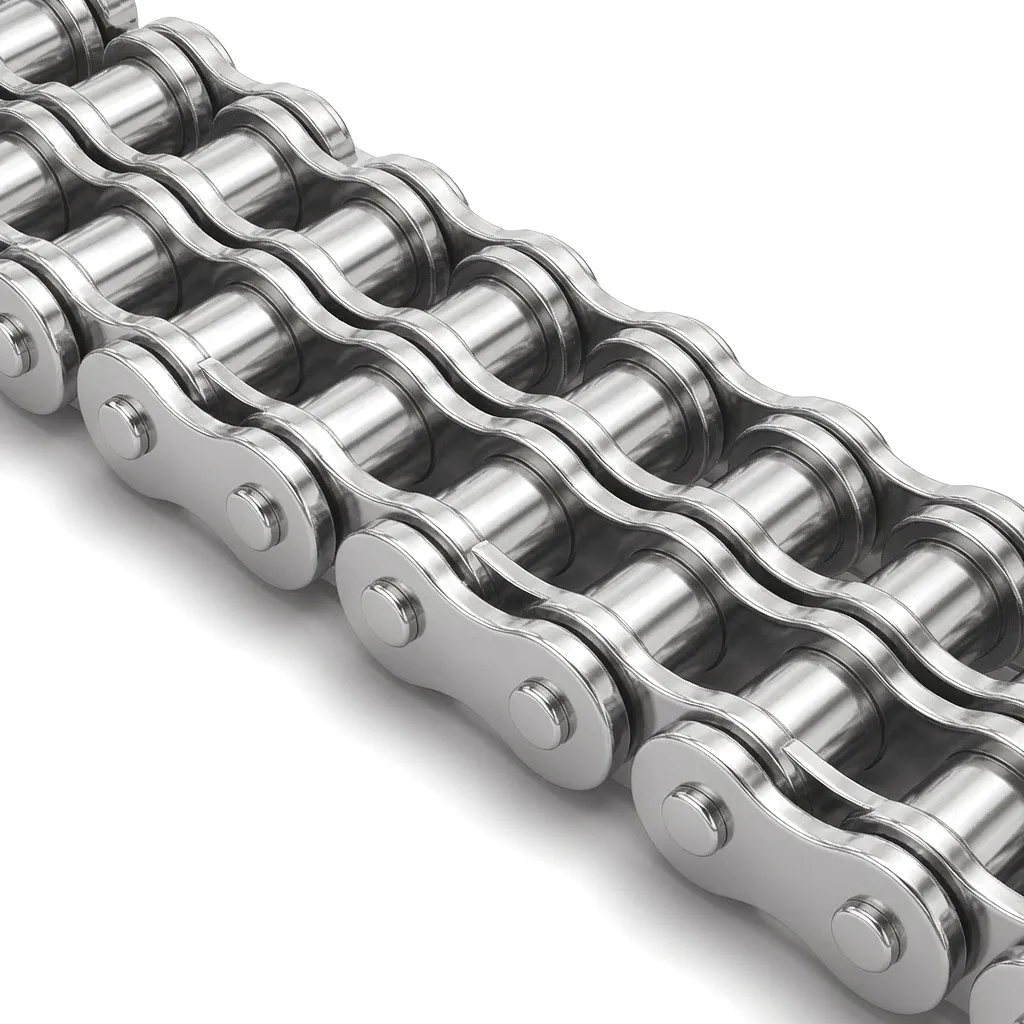
✅ Surface Hardness
HRC 58–62 on link plates; HRC 58–64 on pins via carbonitriding
✅ Corrosion Protection
Shot-peened surfaces, zinc-nickel or phosphate coating options for UK damp conditions
✅ Quality Standard
ISO 4347:2021 conformant; 100% break-load tested per batch
Leaf Chain in Action: Combine Harvester Application Scenes
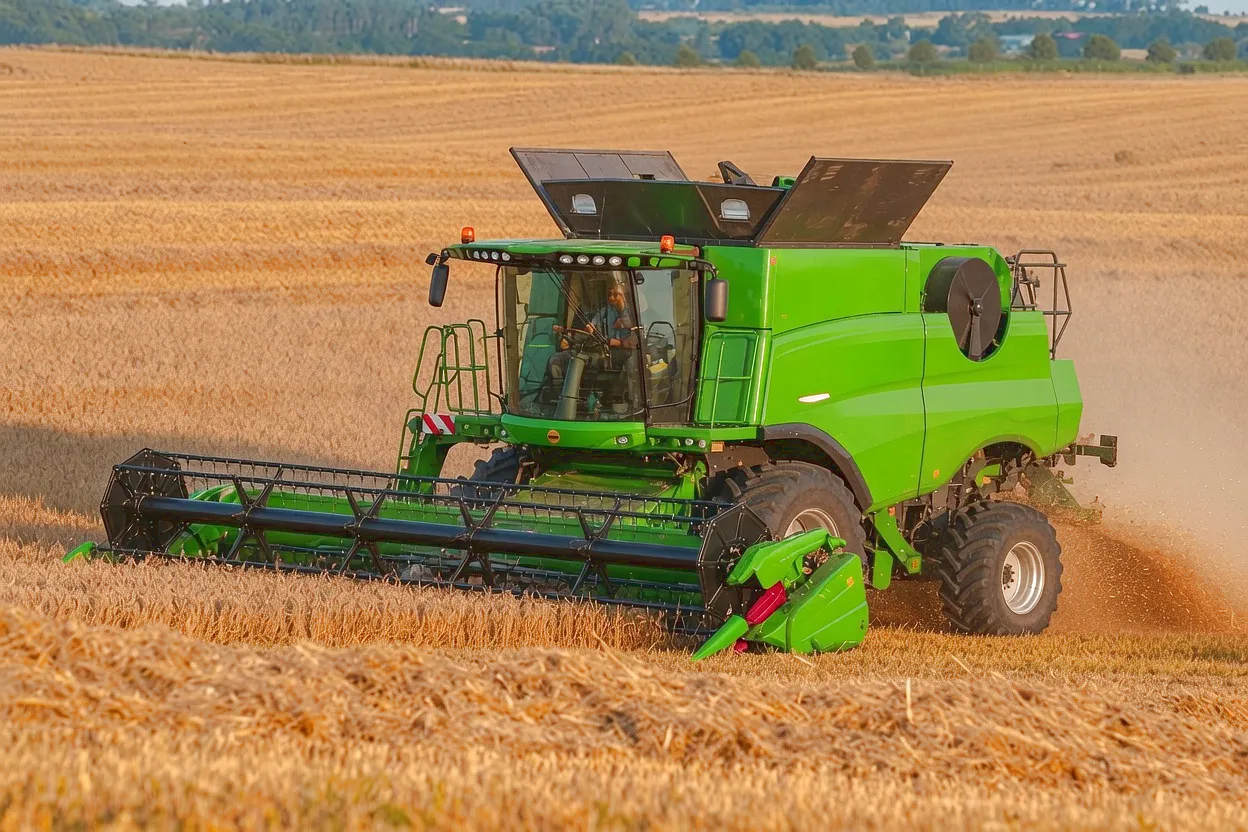
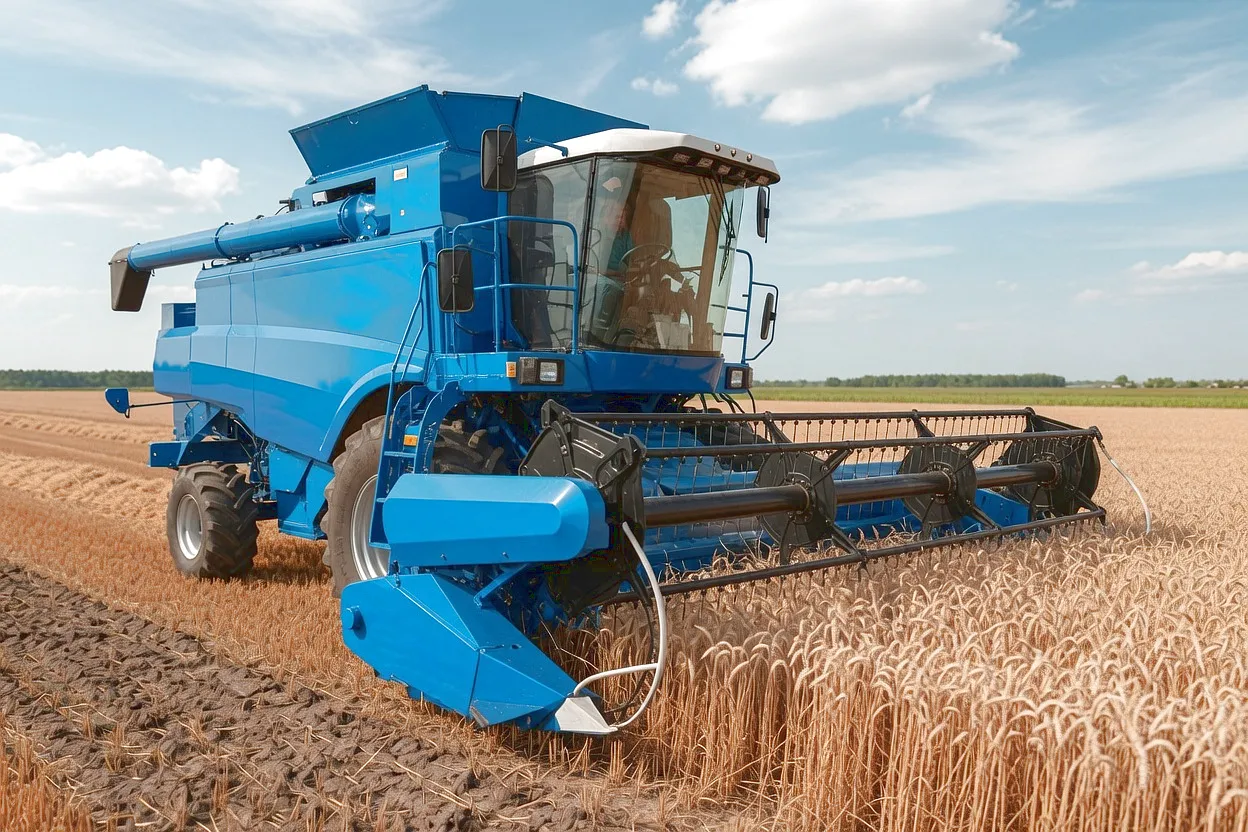
Leaf chain at work across header lift, elevator, and tension-balance roles in UK cereal and oilseed harvest operations.


Seven Reasons UK Agricultural Engineers Choose Ever Power Leaf Chain
Choosing a leaf chain supplier for combine harvester applications involves more than comparing catalogue prices. The total cost of ownership — factoring in chain replacement frequency, installation downtime, and the catastrophic cost of an in-field failure — strongly favours premium-specification chain. Here is what separates Ever Power leaf chain from commodity alternatives in the demanding UK agricultural market.
Proven Fatigue Life
Ever Power leaf chain undergoes dynamic fatigue testing to 5 million cycles at 40% of minimum breaking load before qualification. Real-world service data from UK contract farming operations shows average chain life exceeding 800 operating hours in cereal harvesting conditions — significantly above typical OEM replacement intervals.
ISO 4347 Compliance
Full dimensional and mechanical property conformance to ISO 4347:2021 is documented for every production batch. Certificate of conformance is available with every shipment — a requirement for OEM suppliers, service networks, and fleet maintenance operations operating under ISO 9001 quality management systems.
Shock-Load Resistance
The dual-hardness heat treatment profile — hard surface, tough core — gives Ever Power leaf chain a dynamic overload capacity approximately 2.5 times the static working load. This is particularly critical for stone guard trip events and slug-loading scenarios in heavy cereal conditions common across Lincolnshire, East Yorkshire, and the Cambridgeshire fens.
UK-Ready Supply Chain
Stock held at our European distribution partner enables 3–5 working day delivery to UK mainland agricultural dealers and OEM assembly plants. Express air freight options are available for harvest-critical emergencies, with orders placed before 14:00 UTC typically arriving next business day to agricultural machinery dealerships in England, Scotland, and Wales.
Custom Length & Connectors
Pre-assembled chains are supplied to exact length with customer-specified attachment types — from standard clevis connectors to custom weld-on brackets and hydraulic cylinder attachment plates. This eliminates field cutting and reduces installation time from 45 minutes to under 10 minutes for experienced agricultural mechanics.
Competitive Pricing for OEM Volume
Volume pricing structures are available for agricultural OEMs assembling combine harvesters and header attachments in the UK and EU. Annual blanket orders with call-off schedules allow procurement teams to fix leaf chain supply costs while maintaining responsive inventory. Contact our team for current OEM price lists and minimum order quantities.
Manufacturing Capability & Custom Chain Solutions
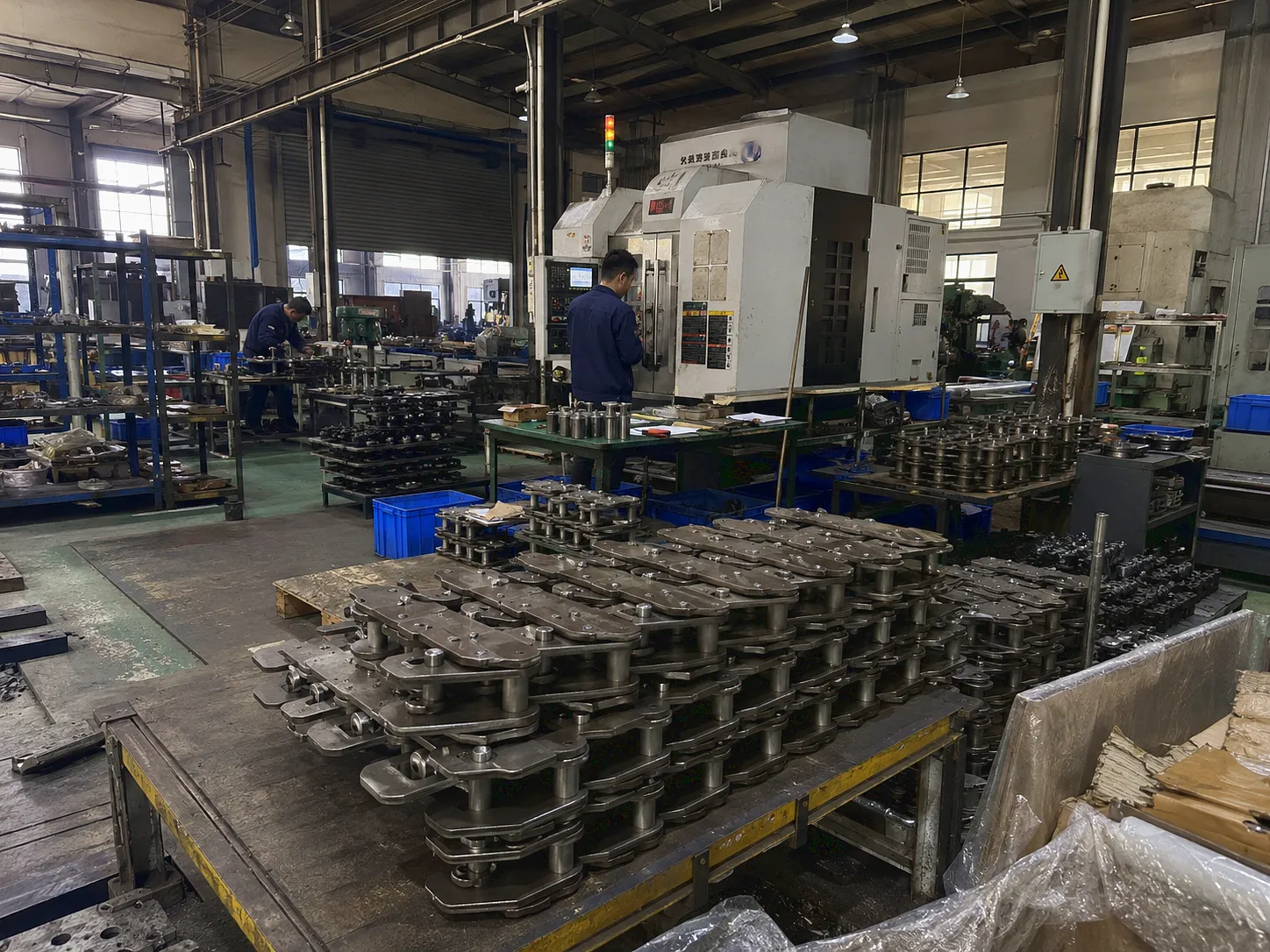
Ever Power operates manufacturing facilities equipped with CNC precision blanking lines, automated carbonitriding furnaces, and 100-tonne hydraulic press-fitting stations capable of producing leaf chain in pitches from 12.7 mm through to 76.2 mm across all standard AL and BL lacing configurations. Production capacity exceeds 2.5 million chain links per month, supported by in-house CMM dimensional inspection and tensile testing laboratory that validates every production batch against ISO 4347 before shipment.
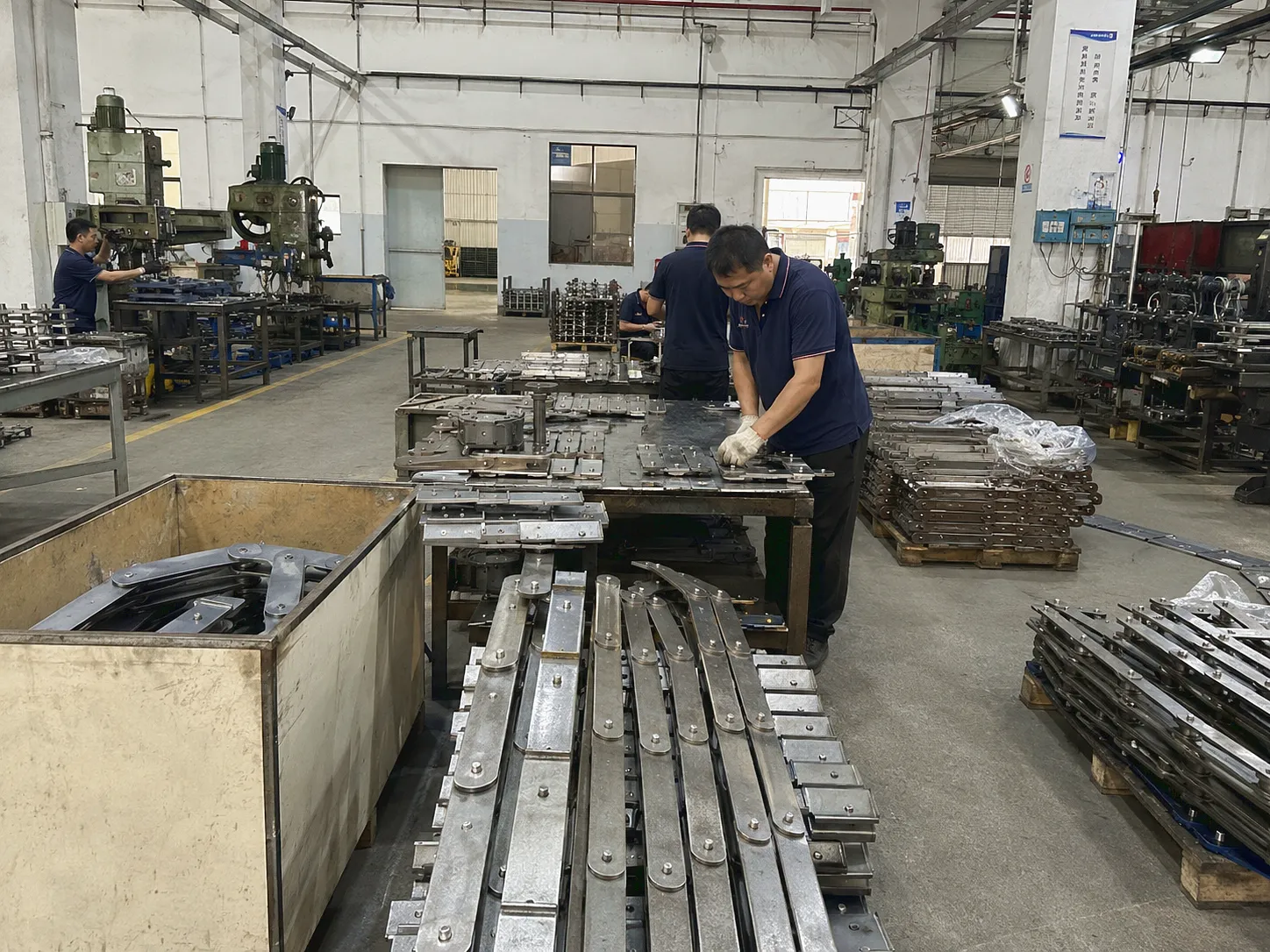
The company’s custom chain programme is particularly valued by UK combine harvester OEMs and speciality header manufacturers who require modifications that off-the-shelf catalogue chains cannot accommodate. Whether that means extended-length assemblies for wide-body machines, non-standard attachment plate geometries, modified pin-cotter configurations for specific access constraints, or corrosion-resistant surface treatments beyond standard phosphating — Ever Power’s engineering team works directly with customers’ design departments from initial sketch to validated pre-production samples. Lead times for custom assemblies typically run 15–25 working days from drawing approval, with expedited production available for harvest-critical scenarios at additional charge.
Agricultural machinery manufacturers across the UK increasingly specify Ever Power leaf chain as an OEM-validated component, driven by the combination of consistent batch quality, responsive technical support from application engineers familiar with combine harvester design, and supply chain resilience built on dedicated stock positions for high-runner agricultural sizes. The factory’s ISO 9001:2015 quality management system covers all agricultural chain production, with documented traceability from raw material heat numbers through to finished chain batch certificates.
Installation, Adjustment, and Inspection: Practical Guidance for UK Combine Engineers
Leaf chain installation on combine harvester header systems is a precision task that rewards methodical attention to detail. The most common error encountered in field service — and the most common cause of premature wear — is incorrect pre-tension. Header counterbalance chains need to be tensioned so the spring-loaded accumulator piston sits mid-stroke at the nominal working position, allowing equal spring force to be applied on lift and lower. Chain installed too short forces the piston to full extension immediately on lowering, eliminating the counterbalance effect; chain installed too long allows the piston to bottom out during lift, creating shock loads that fatigue the chain at pin-hole edges far faster than design intent.
The inspection protocol recommended for agricultural leaf chain used in combine header applications includes a visual elongation check at every 200-hour service interval. A chain that has elongated 3% from its nominal pitch length should be replaced without hesitation — that level of elongation indicates the bearing area between pin and link plate has worn sufficiently to allow significant load concentration at the link plate shoulder, the primary fatigue crack initiation site. A simple chain pitch gauge or a vernier caliper measuring across a known number of pitches provides adequate measurement accuracy for field inspection purposes. Discolouration, surface pitting, or stiff links are additional indicators warranting immediate replacement regardless of elongation measurement.
🔎 Pre-Season Inspection Checklist

Customer Success: Contract Harvesting Fleet, East Midlands, UK
Meridian Agri Services Ltd
Contract harvesting contractor — Nottinghamshire, East Midlands, UK — Fleet of 6 combine harvesters
 Meridian Agri Services runs a six-machine combine fleet covering approximately 4,200 hectares annually across Nottinghamshire, Lincolnshire, and Leicestershire, primarily wheat, barley, oilseed rape, and sugar beet bean crops. Prior to switching to Ever Power leaf chain in the 2023 season, the operation was experiencing an average of 2.3 header lift chain failures per machine per season — a failure rate that their workshop manager described as “just something you planned around” rather than a problem with a solution.
Following a consultation with Ever Power’s application engineering team, the fleet was converted to BL 634 specification chain on all main header lift positions and BL 534 on elevator tensioning circuits. The engineering team also identified that the previous chain had been supplied with standard soft-cotter pin connections that had been deforming under dynamic load — an issue resolved with Ever Power’s positive-locking cotter configuration. The 2024 harvest season was completed across all six machines with zero leaf chain failures and a single planned replacement at the 600-hour scheduled service interval. The workshop manager estimates the saving from avoided breakdown call-outs alone, excluding crop loss, at approximately £8,400 per season.
“We’ve not had a chain go down during harvest since we switched. That sounds like a small thing from the outside but when you’ve got a combine sitting on 800 acres of contracts and the next dry weather window is 48 hours away, a reliable chain is worth far more than the difference in purchase price.”
— Workshop Manager, Meridian Agri Services Ltd, Nottinghamshire
What UK Agricultural Engineers Say
“We supply parts to combine dealers across the north of England. The consistency between Ever Power chain batches is noticeably better than what we were sourcing previously — the customer returns on elongation issues have essentially stopped. For high-volume agricultural spares work, that batch consistency matters enormously.”
James Hartley
Procurement Manager, Northern Agri Parts Ltd, Leeds, West Yorkshire
“We run Claas Lexion and John Deere machines. The OEM chains are expensive and the lead times can stretch to two weeks at peak season. Ever Power BL 634 is dimensionally identical, the breaking load certificates stack up, and we’ve had them in stock and delivered within four days. It’s become our standard replacement specification.”
Andrew Beaumont
Fleet Engineer, Beaumont Agricultural Contracting, Cambridgeshire
“We had a custom requirement for a non-standard attachment bracket on an older Fendt header conversion — the OEM had discontinued the part. Ever Power came back with a custom assembly within three weeks from the drawing we sent. Quality was spot on first time. For niche applications where catalogue chains don’t cut it, these are the people to call.”
Simon Caldwell
Technical Director, Agrotech Fabrications Ltd, Norfolk
Where UK Agricultural Operations Rely on Leaf Chain
 The demand for high-specification leaf chain in combine harvester applications is concentrated in the UK’s principal cereal and oilseed growing regions, where combine fleets operate at the highest intensity and where unplanned downtime carries the most severe financial consequences. Agricultural machinery dealers and contract maintenance workshops throughout East Anglia, the East Midlands, Yorkshire, and the Scottish Borders regularly stock or order leaf chain in agricultural BL series sizes as part of their pre-season inventory planning. The pattern of UK harvest geography — wheat ripening progressively from Kent northwards through July and August — means that a chain failure in Lincolnshire in late July coincides with maximum demand on dealer parts networks, making reliable supply chain access critical.
Agricultural equipment manufacturers based in the UK — including header attachment specialists, grain cart manufacturers, and bespoke harvesting equipment builders working with AHDB-registered grain farms — increasingly specify leaf chain from manufacturers able to demonstrate ISO 4347 conformance, batch traceability, and flexible supply terms suited to agricultural procurement cycles. Wales and the South West, with their wetter harvest conditions and later wheat harvest windows, place additional emphasis on corrosion-resistant chain finishes that perform through the higher humidity cycling common in those regions. Northern Ireland and Scottish operations harvesting spring barley face the shortest harvest windows in the UK calendar and consequently the highest penalty for any mechanical delay — making chain reliability an even more acute concern for machinery managers in those markets.
Leaf Chain vs. Roller Chain: Why Agricultural Lifting Demands the Right Choice
Agricultural engineers managing combine fleet maintenance frequently encounter the question of whether a roller chain can substitute for leaf chain in a header lift or counterbalance application. The short answer is: it should not. The table below illustrates the key differences that make this substitution a false economy regardless of any apparent price advantage.
Need a leaf chain specification for your combine harvester or agricultural equipment application?
Frequently Asked Questions
Expert answers from our agricultural leaf chain application engineers
Ready to Source Leaf Chain for Your Combine Harvester Application?
Whether you need stocked BL or AL series chain for immediate delivery across the UK, a custom pre-assembled solution for a specialist header, or OEM volume pricing for agricultural equipment production — our application engineers are ready to help.
🏴 Ever Power — Leaf Chain Specialists — Serving Agricultural Equipment Manufacturers & Dealers Across the United Kingdom — ISO 4347 Certified