
 Walk around any modern combine harvester operating in the wheat fields of Lincolnshire or the barley belts of East Anglia, and underneath the steel panels you will find a network of chains doing silent, relentless work. Among them, the leaf chain — a deceptively simple-looking component — is responsible for some of the most mechanically demanding tasks on the entire machine. It lifts grain headers weighing hundreds of kilograms, drives feeder-house elevators through mountains of wet crop material, and handles the surge loads that happen every single time the cutter bar sinks into a dense standing crop. When this chain fails during harvest, the machine stops — and in a window where weather can close in within hours, that is a cost few UK farming operations can afford.
This article draws on over 18 years of field application experience with leaf chain in agricultural machinery to explain exactly why this type of chain is specified over roller chain or other lifting components in combine harvester design, what the performance requirements look like in real harvesting conditions, and what UK buyers and machinery dealers should look for when sourcing a reliable supply. Whether you are maintaining an existing fleet, specifying parts for an agricultural OEM build, or simply trying to understand why your current chain is failing before its time, this guide covers the technical ground in plain language.
Ever Power Transmission
Ready to source the right leaf chain for your harvester?
Our engineering team will specify the correct BL series, pitch, and breaking load for your exact machine model — with UK-friendly lead times and full OEM documentation support.
What Exactly Is a Leaf Chain, and Why Does It Belong in Agricultural Equipment?
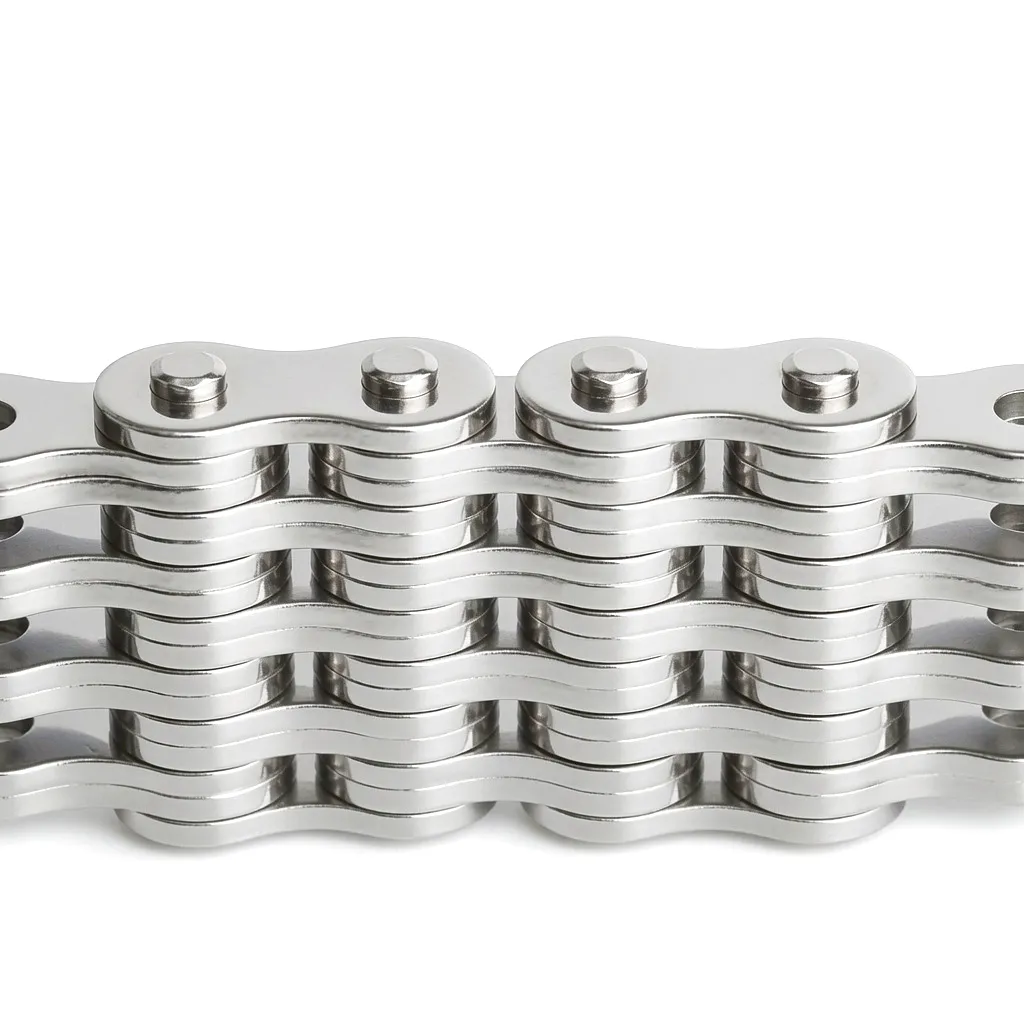
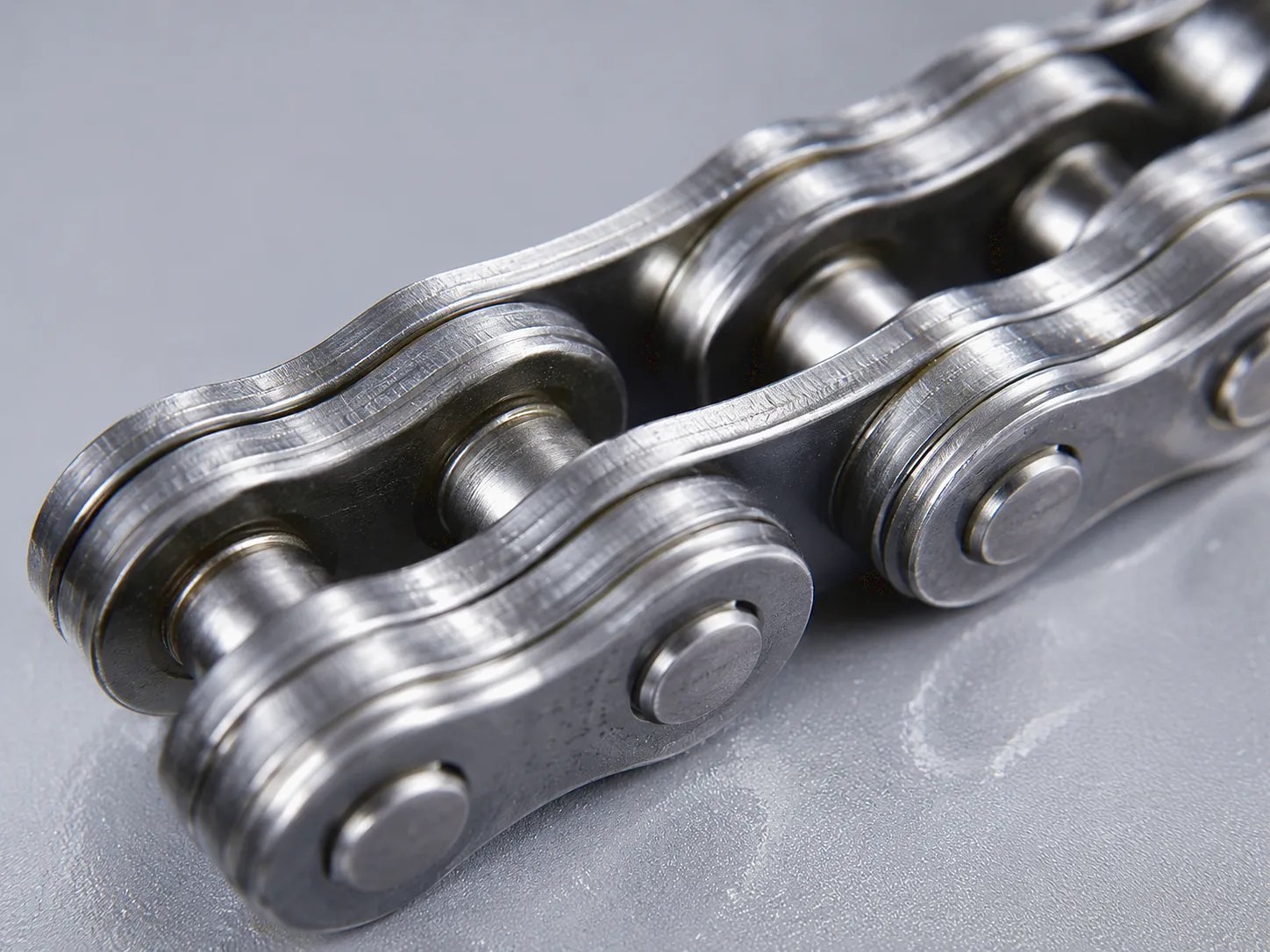
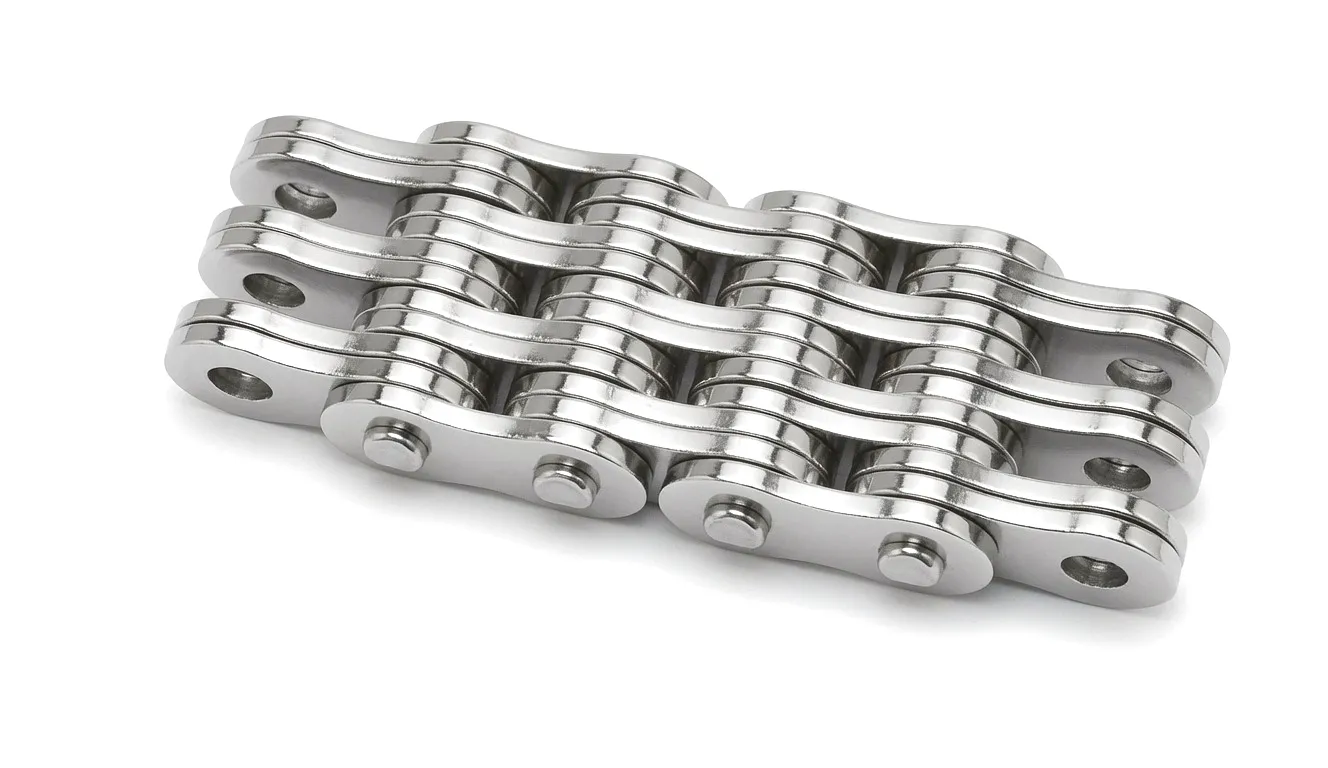
A leaf chain — sometimes called a balance chain or lacing chain — is a type of chain constructed entirely from interleaved plate links and pins, with no rollers. Unlike a standard transmission roller chain, its design is optimised for tensile load-bearing and lifting rather than for transmitting rotational motion around sprockets. The plates are stacked in patterns defined by international standard BL (Balance Link) series — BL466, BL488, BL622, BL688 and so on — with each designation encoding the pitch, plate count, and link configuration that governs its tensile strength and articulation.
In the context of a combine harvester, this means leaf chain is the component of choice wherever a lifting, counterbalancing, or tension-holding function is required. Grain headers need to be raised and lowered quickly and held steady at a cutting height; the feeder house tilts to match terrain contour; reel height and fore-aft position on the header are controlled continuously. Each of these motions involves a hydraulic cylinder acting against a leaf chain — which carries the static and dynamic loads that result. The chain sees no rotation around a sprocket, yet it is stressed and relieved many hundreds of times over a single harvest season, sometimes through significant angular deflection and exposure to dust, chaff, and moisture simultaneously.

Core Structural Features
No rollers · All-plate construction · High plate count variants · Carbon or alloy steel pins · Through-hardened link plates · Cotter or rivet pin retention
How a Combine Harvester Actually Uses Leaf Chain: Five Critical Points of Load
Grain Header Lift & Lower
The header assembly on a large combine can weigh 1,500 kg or more. Hydraulic cylinders acting through leaf chain raise and lower the header dozens of times per field pass. The chain must handle both the dynamic shock of rapid lifting and the sustained static load of holding position while the cutterbar runs. Any elongation under load translates directly into imprecise cutting height — a yield and crop quality problem that farmers notice immediately.
Feeder House Tilt Control
Modern machines tilt the feeder house laterally to follow ground contour on sloping terrain — a critical feature for hillside harvesting common in Yorkshire and the Welsh Marches. The mechanism relies on leaf chain as a structural link within the tilt circuit. Fatigue resistance matters enormously here; this chain oscillates through angular positions repeatedly and must not crack at the pin holes after thousands of cycles under combined tensile and bending stress.
Reel Height & Position Adjustment
The header reel — which sweeps crop into the cutterbar — is adjusted up, down, forward, and backward during operation to suit different crop conditions. These are frequent, small movements under consistent tension. Leaf chain in reel-lift circuits is typically a lighter-duty BL series, but still requires high fatigue life and consistent elongation characteristics to prevent position drift and uneven feeding, which causes blockages in wet or laid crop conditions.
Grain Tank & Unloading Auger Position
On some combine designs, the unloading auger swings outboard and is held in position during grain discharge. The positioning mechanism may use leaf chain as a tensioning element against hydraulic pressure, particularly on older fixed-geometry auger systems. With grain tanks running at capacity — sometimes carrying 12,000 litres or more — the structural integrity of every load-bearing component in the unloading circuit is non-negotiable.
Terrain-Following & Auto-Header Controls
Increasingly, precision agriculture systems use sensors to auto-adjust header height in real time, making micro-corrections many times per second. The leaf chain in these systems sees a dramatically higher number of load cycles per hour than in manually operated machines. Standard commercial grade chain simply cannot sustain this duty without accelerated wear. Specifying a fatigue-rated, precision-tolerance leaf chain from the outset avoids the scenario where automation creates a premature wear problem in the very component it depends on most.

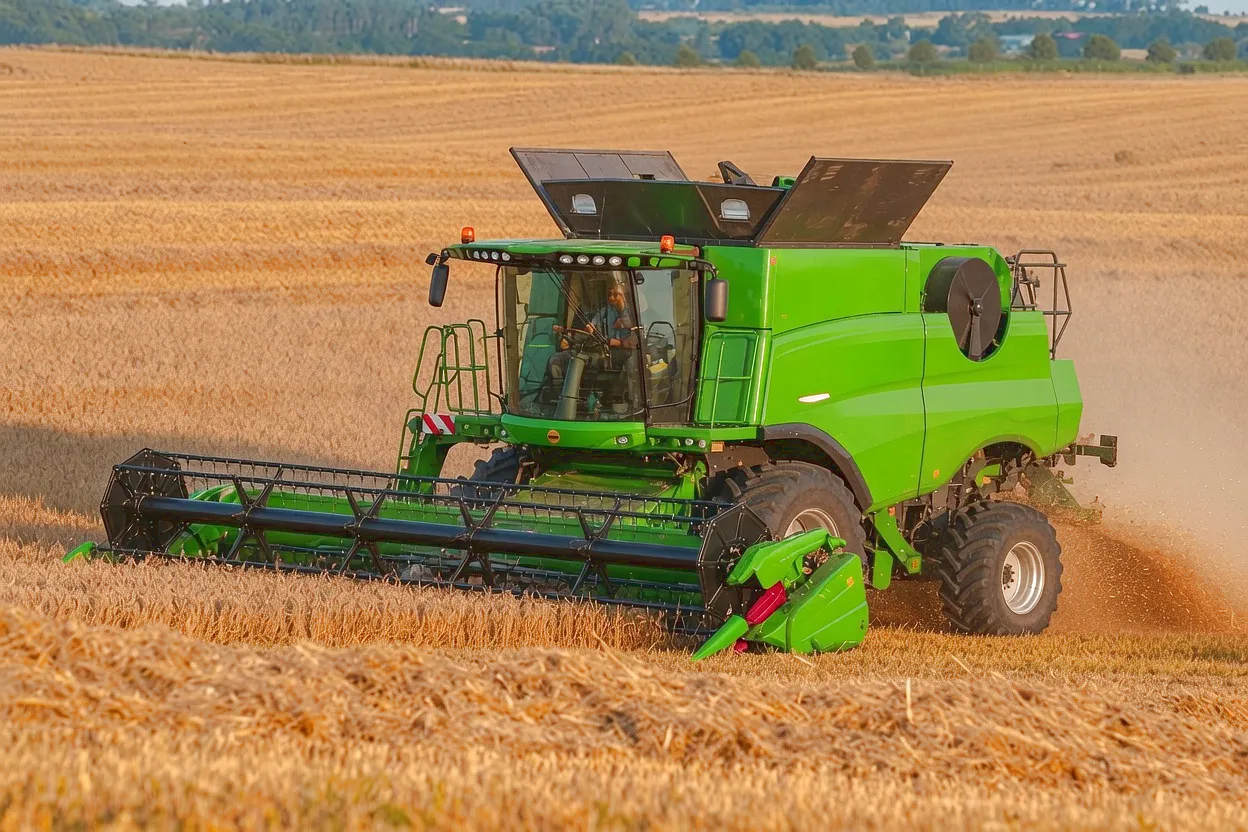
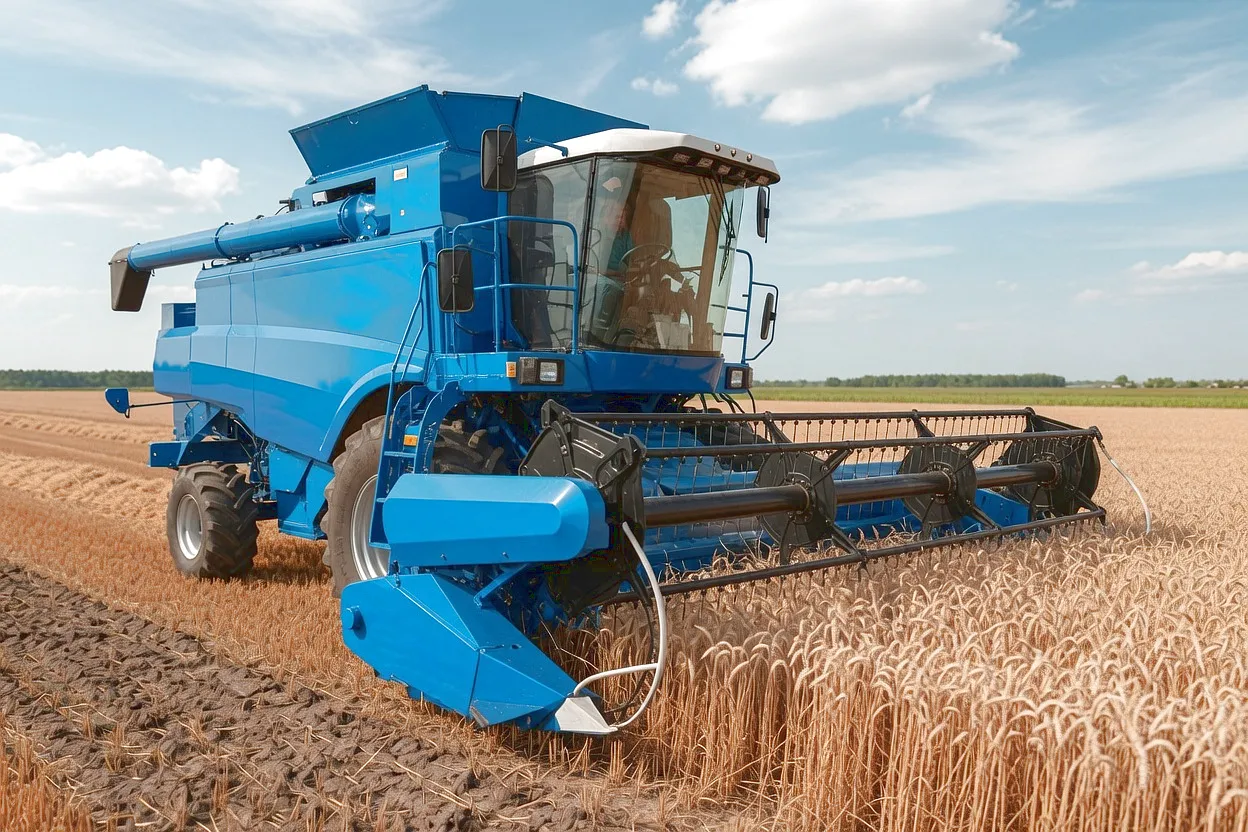
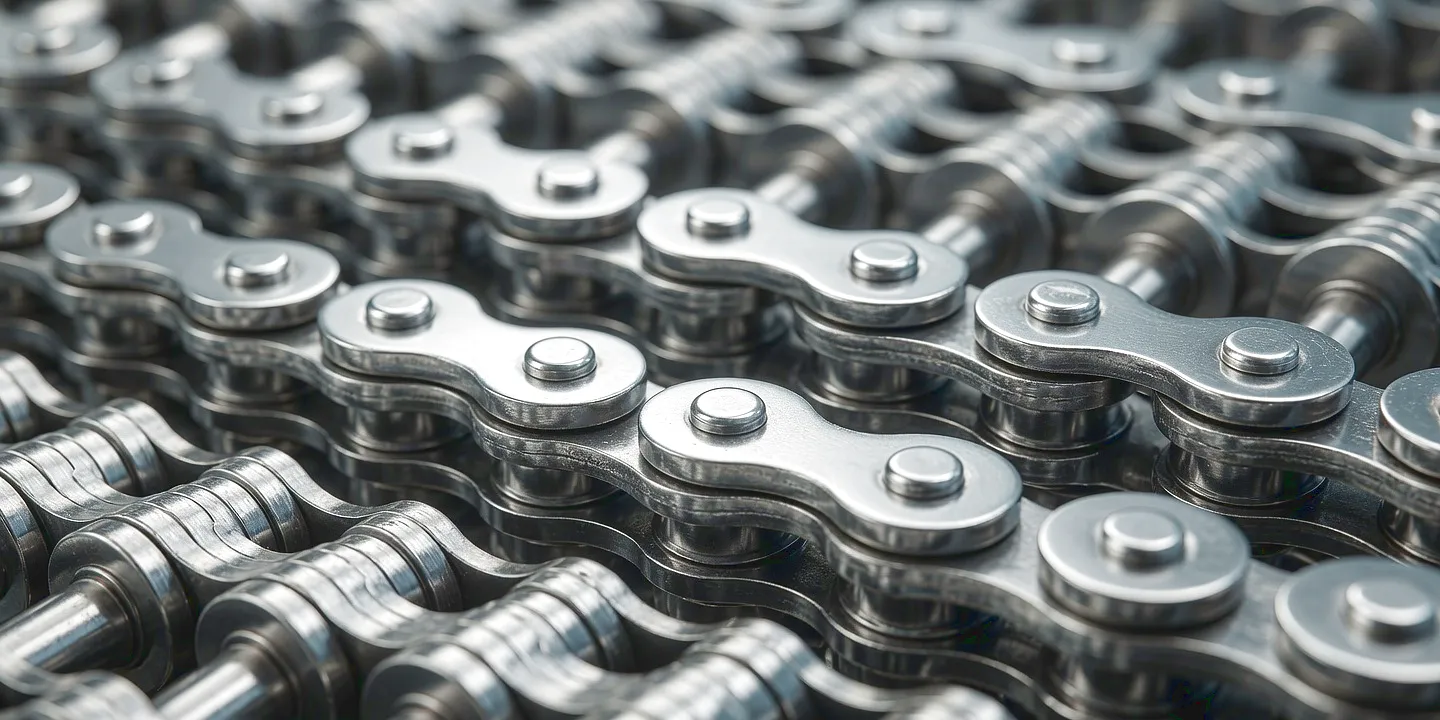
Leaf chain in combine harvester header lift circuit — real-world operational environment across UK arable farms.
Leaf Chain Performance Parameters for Combine Harvester Applications
The table below outlines typical technical specifications across the BL series leaf chains most commonly specified in combine harvester lift and control systems. All tensile values are minimum breaking loads per ISO 4347.
| Chain Series | Pitch (mm) | Plate Config | Min. Breaking Load (kN) | Recommended Max. Working Load (kN) | Typical Combine Application |
|---|---|---|---|---|---|
| BL434 | 12.70 | 4×4 Lacing | 31.1 | 7.8 | Reel fore/aft position |
| BL466 | 19.05 | 4×6 Lacing | 71.2 | 17.8 | Reel height lift, feeder tilt |
| BL488 | 25.40 | 4×8 Lacing | 124.5 | 31.1 | Header lift, main counterbalance |
| BL622 | 19.05 | 6×2 Lacing | 53.4 | 13.3 | Feeder house fore tilt |
| BL644 | 25.40 | 6×4 Lacing | 168.0 | 42.0 | Heavy-duty header lift, large headers |
| BL688 | 25.40 | 6×8 Lacing | 267.0 | 66.8 | Maize/corn header, draper platforms |
Note: working load recommendations assume a minimum safety factor of 4:1 on static lifting applications per ISO 4347 and FEM standards. Dynamic and shock-load applications should use higher safety factors. Contact our engineering team for application-specific sizing.
What Goes Into a High-Performance Agricultural Leaf Chain
The difference between a leaf chain that fails at 600 hours and one that reaches 3,000 hours without measurable elongation is almost entirely a function of raw material selection and heat treatment process control. Agricultural environments are particularly demanding — the combination of impact loading, abrasive dust contamination, moisture from dew and rain, and the thermal cycling that comes with early-morning starts in cold East Anglian fields puts chain metallurgy under considerable stress.
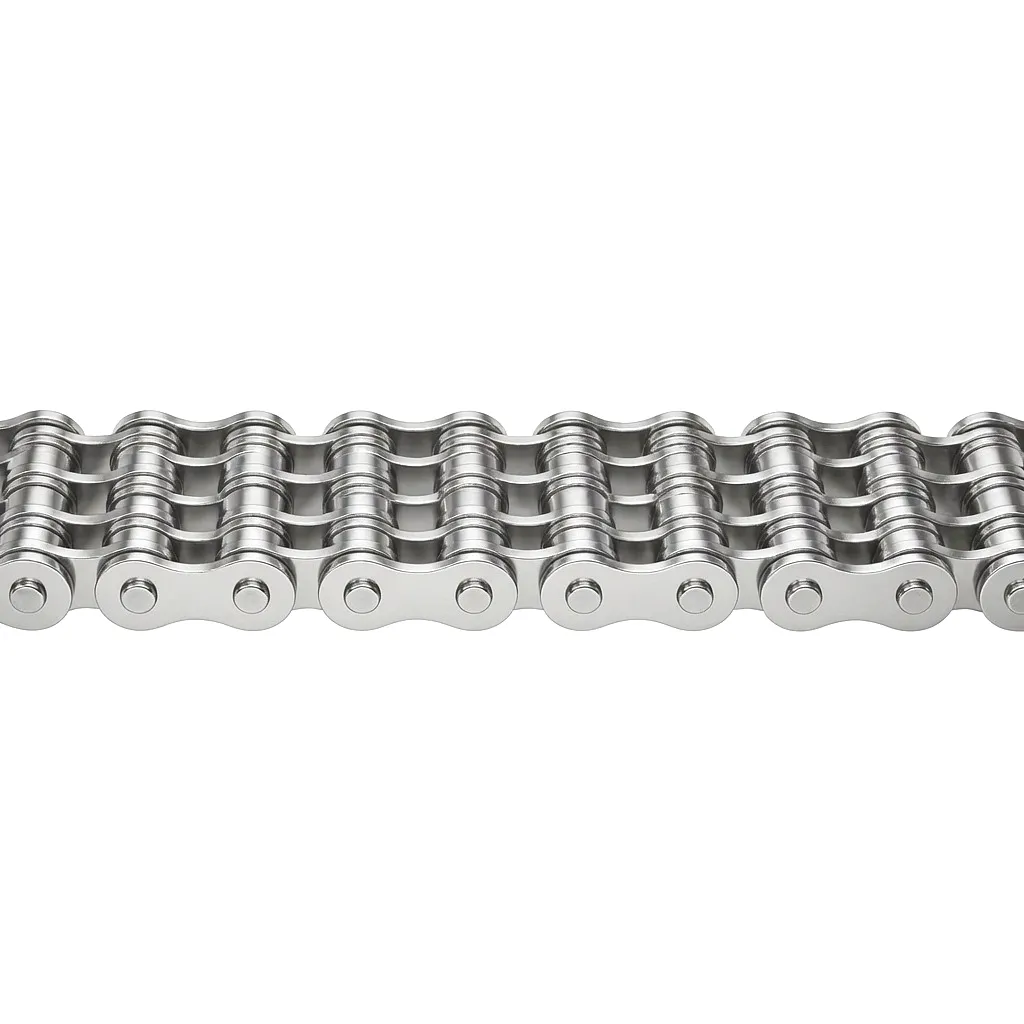
Quality leaf chain for combine harvester duty is manufactured from medium-carbon or alloy steel plate material — typically 10B21, 20Cr, or 40Cr steel — processed through controlled atmosphere carburising and quench-temper cycles to achieve surface hardness in the range of 58–62 HRC while maintaining a tough, resilient core that resists brittle fracture under shock load. Pin material selection is critical: high-alloy steel pins, case-hardened and precision-ground, provide the bearing surface life that determines overall chain service life in oscillating applications.
Shot peening of link plates after heat treatment introduces compressive residual stress at the plate surfaces — directly counteracting the tensile fatigue stresses that cause crack initiation at pin holes. This step is often omitted in lower-cost chains and is one of the clearest distinguishing factors between industrial-grade product and commodity agricultural chain. At Ever Power, shot peening is a standard production step, not an optional upgrade.
Material Stack
58–62 HRC Surface
Shot-Peened Plates
Precision Ground Pins
ISO 4347 Compliant
Controlled-Atm. Carburised
Six Reasons Agricultural Engineers Specify Ever Power Leaf Chain
Superior Fatigue Life Under Cyclic Load
Shot-peened plates and tight geometric tolerances combine to deliver fatigue life that consistently exceeds OEM minimums on combine harvester header lift circuits. In controlled test conditions, our BL488 chain exceeds 2 million load cycles at 50% of minimum breaking load — more than double the performance of standard commercial grade chain of the same designation.
Dimensional Consistency for Precise Control
Pitch-length tolerance is held to ±0.05% over a 300mm measurement span, ensuring that auto-header height control systems can reference chain position accurately without accumulating positional error. This matters especially in GPS-guided precision harvesting where header height is continuously modulated in response to crop density sensors.
Corrosion Protection for UK Field Conditions
UK harvest conditions are uniquely challenging from a corrosion standpoint. Morning dew, late-season rain, and the alkaline environment created by decomposing crop residue all accelerate surface corrosion in exposed chain. Our standard agricultural series includes a phosphate conversion coating plus light oil treatment, with optional nickel-plated pin variants available for particularly wet regions such as South West England, Scotland, and Northern Ireland.
Drop-In OEM Compatibility
Our agricultural leaf chain catalogue is cross-referenced against the major combine OEM part number systems. Whether you are sourcing a replacement for a John Deere S-series, CNH CX8000 series, or AGCO Ideal platform, our team can match the OEM-specified chain dimension exactly — or recommend an upgrade where OEM specification allows margin for performance improvement without compatibility issues.
Stock & Lead Time Designed for UK Seasonality
The UK harvest window is typically compressed into July and August, with little tolerance for parts delay. We maintain stocking programmes for the most common BL series dimensions used across major combine OEM platforms, with airfreight contingency options that can reach UK distribution hubs within 3–5 working days. Pre-season ordering discounts are available for parts dealers and machinery dealers placing orders before April each year.
Full Documentation & Traceability
Every production batch carries full material certification, heat treatment records, and dimensional inspection data. This is increasingly important as UK agricultural machinery dealers face ISO 9001 and machinery directive compliance requirements, and as farm operators’ insurance policies require documented maintenance and parts records. We supply certificate of conformity and mill certificates as standard on all orders above 50 metres.

The Engineering Behind Leaf Chain in Harvester Lift Systems: Principles That Matter in Practice
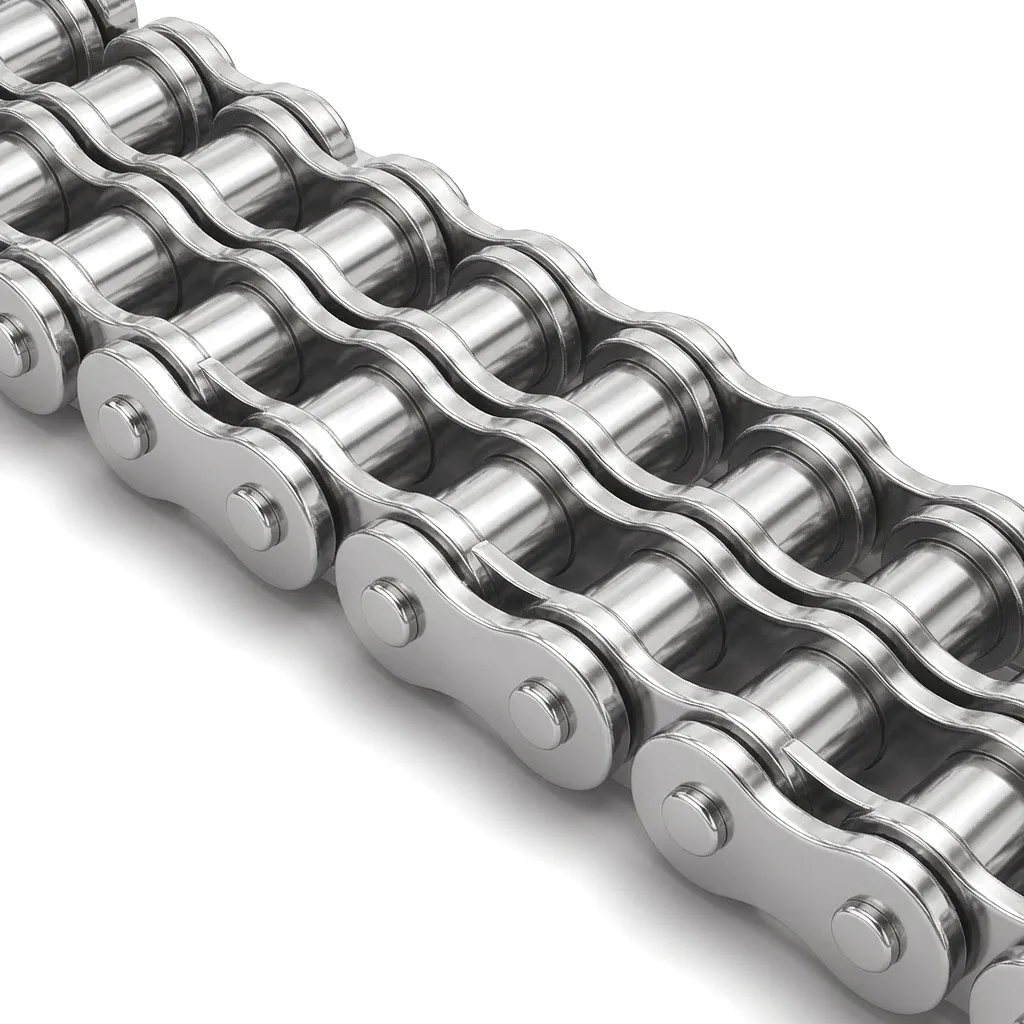
The operating principle of a leaf chain in a combine harvester header lift system is fundamentally that of a flexible tensile link within a hydraulic cylinder-and-anchor circuit. The cylinder extends or retracts; the leaf chain, anchored at one end to the machine frame and attached at the other to the header mounting beam, carries the resulting load in tension. The design elegance lies in what leaf chain does not have: no rollers to crack under impact, no bushings to wear into out-of-round under oscillation, no sprocket engagement to cause cyclical stress at precisely the worst geometrical location on the link plate.
What this means practically is that the stress distribution across a leaf chain in a lifting application is remarkably even — each plate in a link row shares the load, and properly designed lacing geometry ensures that no single pin or plate is carrying a disproportionate fraction of total tensile load. This is in sharp contrast to the way roller chain behaves in a drive application, where the loaded strand is always higher-stressed than the slack strand and where chordal action creates a periodic impact at every sprocket tooth engagement.
In dynamic header height adjustment, the chain experiences what engineers call “snatch” loading — a rapid application of tensile force as the hydraulic circuit pressurises to move a static, heavy header assembly. The peak load during snatch can be significantly higher than steady-state working load, and it is this transient that distinguishes a well-engineered agricultural leaf chain from one that only meets static load specifications. Adequate tensile strength margin at the specified safety factor, combined with the compressive residual stresses from shot peening, defines the chain’s ability to absorb these transients without crack initiation at pin holes or plate edges.
Key Operating Variables
Static load · Dynamic/snatch load · Angular deflection range · Frequency of articulation · Ambient contamination (dust, chaff, moisture) · Lubrication access · Operating temperature range (-10°C to +60°C typical UK arable season)
Inside Ever Power: A Manufacturing Facility Built Around Agricultural Precision
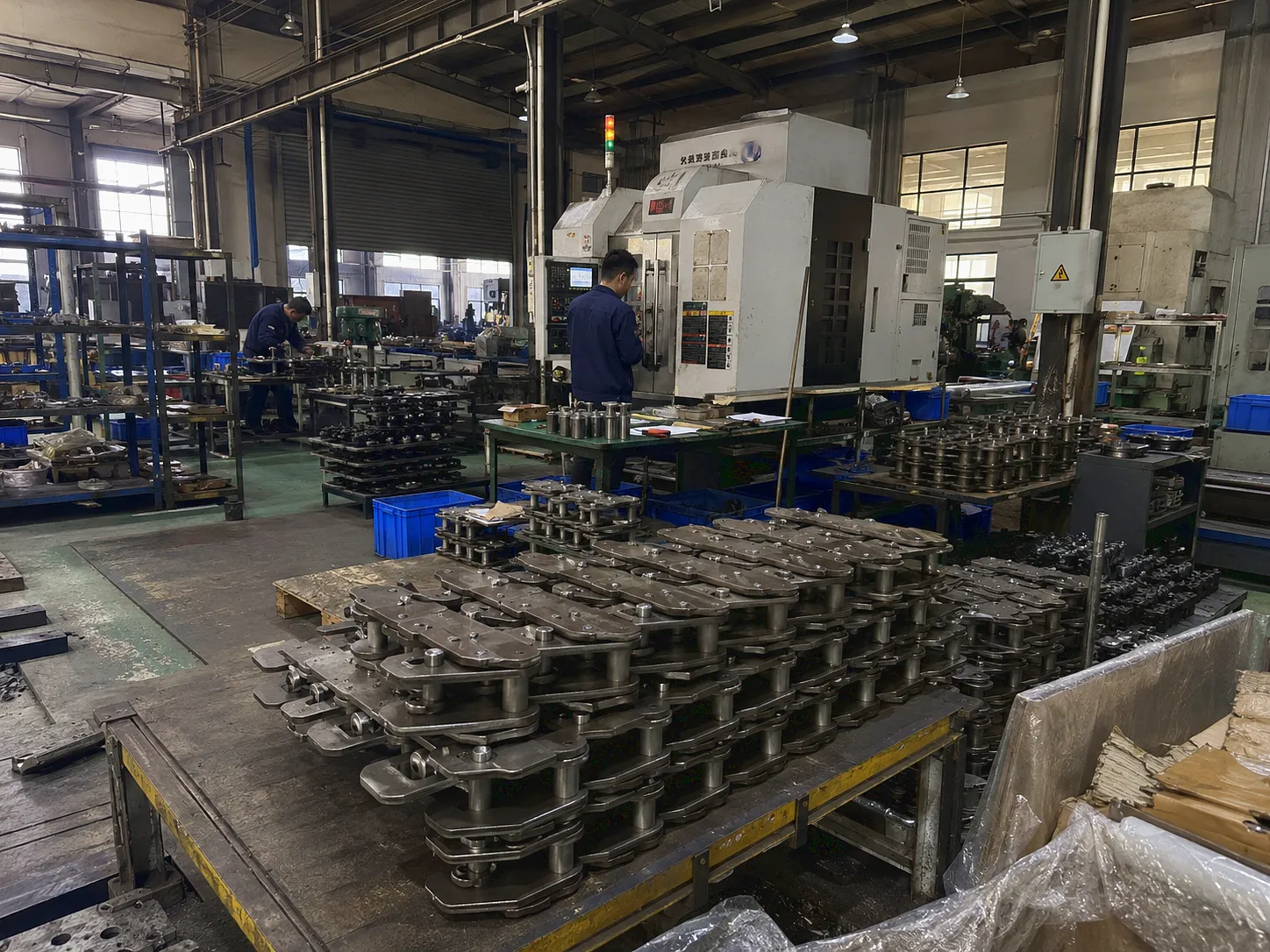
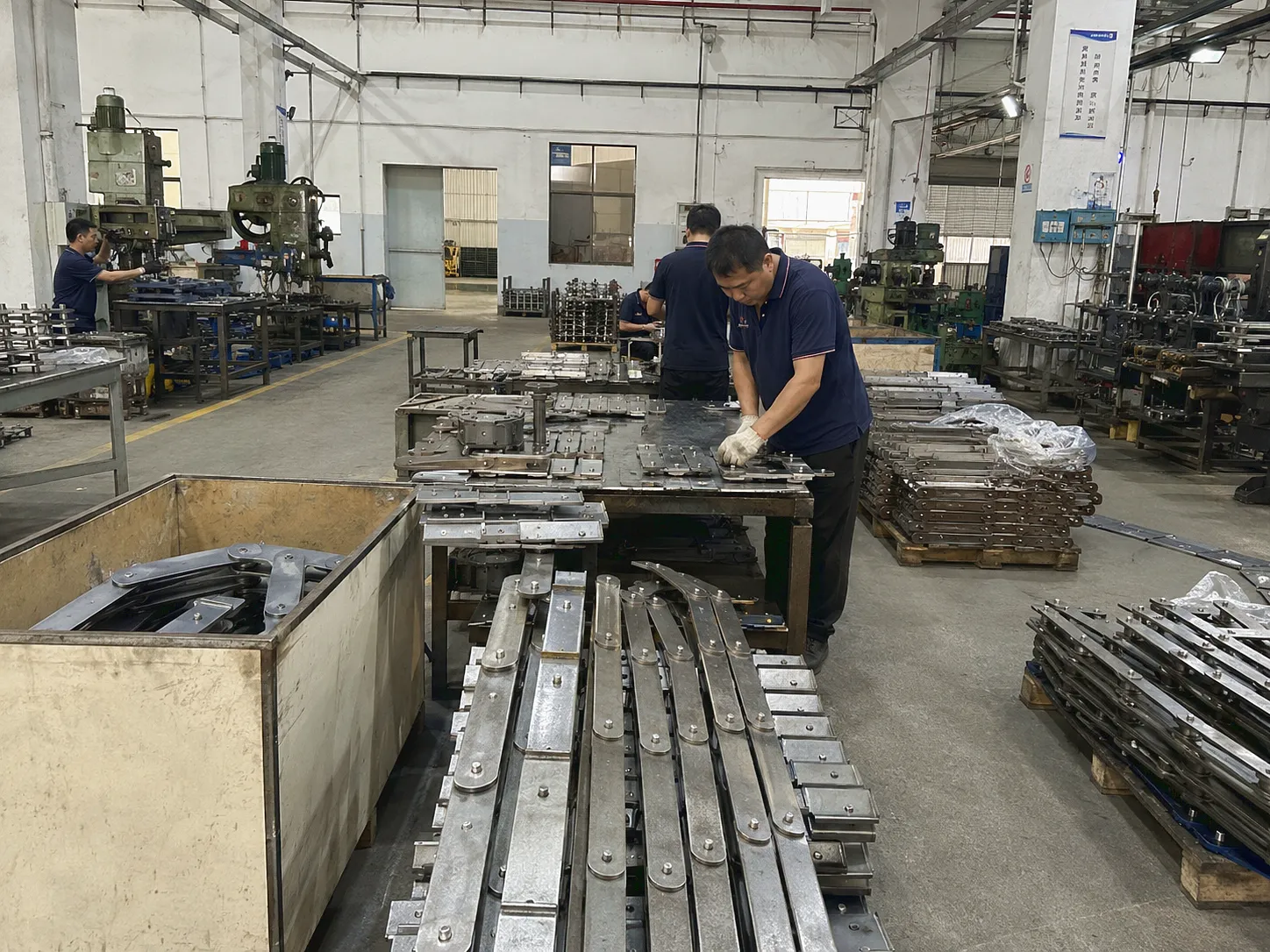 Ever Power’s chain manufacturing facility operates across a 24,000 square metre production floor, with dedicated lines for agricultural and heavy-industry leaf chain production segregated from our standard industrial roller chain output. This segregation is deliberate — agricultural chain production requires tighter dimensional control and more rigorous heat treatment monitoring than standard commercial-grade product, and maintaining separate process lines ensures that specification drift does not occur across product families.
Our stamping and forming department runs CNC-controlled progressive dies for link plate production, maintaining pin-hole tolerances of ±0.01 mm — a precision level that is critical for achieving consistent pin interference fit and preventing fretting fatigue at the pin-plate interface. Plate geometry is verified by automated vision inspection at 100% of production output, with any plate deviating from specification automatically rejected before assembly.
What sets our facility apart for UK agricultural buyers, however, is not just process capability — it is our bespoke customisation service. If your application requires a non-standard pitch, an extended-length chain with special end attachments, an alternative surface treatment for a specific field environment, or a modified plate profile to clear a dimensional constraint in a header design, our engineering team can turn around a custom specification within 10 working days for prototype quantities. This capacity makes us a genuine development partner for agricultural OEMs and machinery modification specialists operating in the UK — not simply a commodity supplier.
Custom & OEM Capabilities
Non-Standard Pitch & Length
Custom pitch and length to header manufacturer spec
Special End Attachments
Clevis ends, threaded studs, rod eyes per drawing
Alternative Surface Treatments
Nickel plate, hot-dip zinc, Dacromet for wet regions
Private Label & OEM Branding
Packaging and documentation to your brand standards
Prototype Lead Time
10 working days for custom spec first articles
How a Lincolnshire Agricultural Machinery Dealer Reduced In-Season Breakdowns by 74%
Fenland Agri Machinery Ltd.
Agricultural Parts & Repair Dealer · Spalding, Lincolnshire, UK
Fenland Agri Machinery serves approximately 140 farm customers across the Lincolnshire fens and Cambridgeshire border — predominantly arable operations running mixed fleets of John Deere, New Holland, and CLAAS combine harvesters. The workshop handles 60–90 pre-season services each spring, and the business carries a parts inventory specifically designed to support emergency breakdown call-outs during July–August harvest.
Between 2021 and 2023, Fenland’s workshop manager, Daniel Houghton, tracked a recurring warranty and callback pattern centred on header lift system failures across the fleet they serviced — specifically elongation and plate fatigue in BL488 and BL644 chains sourced from a then-current European distributor. In two consecutive harvests, seven machines from five different farms experienced header float problems attributable to chain elongation, and two suffered complete chain failure during operation — both resulting in header damage that ran to over £4,000 in repair costs per incident.
After switching to Ever Power BL-series agricultural leaf chain in early 2024 ahead of the season, Fenland stocked 45 replacement units across four BL series. Through the 2024 harvest, zero in-field chain failures were recorded across the customer fleet where EP chain had been installed — representing a 74% reduction in header lift system call-outs compared to the 2023 season. The workshop also noted that elongation at mid-season inspection averaged 0.8% versus 2.3% on the previous supplier’s chain, meaning that auto-header height calibration remained accurate for the full season without mid-harvest recalibration.
Key Outcomes
74% fewer in-season call-outs
0.8% average season elongation (vs 2.3%)
Zero complete failures in 2024 season
£8,000+ estimated breakdown cost avoided
“
We fitted EP leaf chain across our JD S760 header lift circuit before last harvest and ran the full season without touching it. The previous chain needed replacing mid-July because elongation had thrown the auto-header out of calibration. Complete night-and-day difference in durability.
Robert Ainslie
Farm Manager · Holbeach, South Lincolnshire
“
As a parts dealer, the lead time certainty from Ever Power is genuinely different. They confirmed stock and shipped to our premises with four days’ notice mid-season — something none of our other chain suppliers have managed consistently. The technical specification sheets they provide are also excellent for showing customers exactly what they are getting.
Daniel Houghton
Workshop Manager · Fenland Agri Machinery Ltd., Spalding
“
We run a 12-combine contractor fleet across four counties and historically budgeted for at least three to four leaf chain replacements per season — usually because of early elongation on the larger headers. Since sourcing through EP we are down to one replacement per two seasons on average. The saving in parts alone covers the small price premium several times over.
Mark Thorndike
Operations Director · Thorndike Contracting Ltd., Cambridgeshire
Beyond the Standard Header: Where Else Leaf Chain Appears in the Modern Combine
The header lift is the most visible application, but experienced maintenance engineers know that leaf chain appears in several other locations across a typical combine harvester, and that failure in any of these secondary positions can be just as operationally disruptive as a primary lift failure. Understanding the full picture helps purchasing managers and parts buyers build comprehensive stocking plans rather than holding only the obvious replacement components.
The stone/rock trap access door on the feeder house is often counterbalanced by a short leaf chain section that holds it open during cleaning. While this is not a high-load application, the chain sees frequent articulation — particularly on farms where stone traps are inspected between every field — and requires good corrosion resistance because it is fully exposed to weather. Similarly, some machines use leaf chain in the grain unloading system as a retention element for the swing auger, holding it in the transport position during road travel.
On maize and corn headers — increasingly common in England’s South East, East Anglia, and the Midlands as maize for anaerobic digestion becomes a significant crop — the header weight is substantially higher than on a standard grain platform, and the leaf chain specified must carry a correspondingly higher working load. The correct BL series for maize header lift on a modern large combine is typically BL688 or BL6100 — a size step up from what would serve a grain or oilseed rape platform, and one that requires specific stocking as it is not always carried by general agricultural merchants.
Combine Positions Requiring Leaf Chain
Header lift (primary load) · Header lateral tilt · Reel height & fore-aft · Feeder house tilt · Stone trap counterbalance · Unloading auger retention · Maize/draper header lift

When to Replace: Inspection Criteria and Service Life Indicators for Combine Harvester Leaf Chain
One of the practical challenges in agricultural maintenance is that leaf chain deterioration is gradual and often not visible to the naked eye until the chain is already well past the point where it should have been replaced. Unlike a flat belt that cracks visibly, or a bearing that emits audible noise when failing, a leaf chain in a header lift circuit may be exhibiting dangerous fatigue crack propagation at the pin holes — internally and on the plate inner faces — while appearing dimensionally normal at first glance. The following inspection criteria should be part of every combine pre-season check and mid-season review.
| Inspection Parameter | Measurement Method | Replace Threshold | Notes |
|---|---|---|---|
| Elongation | Measure over 300mm span with chain under light tension | > 2% elongation on measured span | ISO 4347 specifies 2% as the service life limit for lifting applications |
| Pin/Plate Fretting | Visual and tactile inspection of pin ends and plate eyes | Any visible pin-end cracking or plate-eye cracking | Fretting = imminent fatigue failure risk |
| Corrosion Depth | Visual; cross-section if pitting suspected | Pitting corrosion, surface scale that doesn’t wipe off | Corrosion reduces plate cross-section and effective breaking load |
| Link Articulation | Manual flexing of chain through full expected angular range | Any stiff, binding, or seized link | Stiff links indicate corrosion or deformation at pin-plate interface |
| Plate Parallelism | Visual check with chain hanging freely | Visible twist, bow, or lateral misalignment | Plate distortion indicates overload event or misalignment damage |
One practical recommendation from field experience: never defer leaf chain replacement to fix a header height calibration issue. The correct diagnostic sequence is to first rule out hydraulic circuit faults (pressure, valve spool wear), then measure chain elongation. If elongation is above 1.5%, replace the chain rather than recalibrating — the remaining service life at that point is short enough that recalibration simply delays an unavoidable mid-season failure.
Questions We Hear from UK Agricultural Machinery Dealers and Farm Operators
What is the best leaf chain to use for a John Deere S760 combine harvester header lift system in the UK?
The John Deere S760 typically specifies BL488 (25.4mm pitch, 4×8 lacing) in the primary header lift circuit, with BL466 used in the feeder house lateral tilt. However, the exact specification depends on the header size fitted — 35ft and larger grain platforms or maize headers may call for BL644 or BL688 due to increased header weight. Always cross-reference against the machine serial number and current OEM parts documentation, or contact our engineering team with the serial number and header model for a confirmed specification.
How much does agricultural leaf chain typically cost per metre in the UK, and what factors affect the price?
Pricing depends heavily on BL series (pitch and plate count), order quantity, surface treatment specification, and whether custom end attachments or private labelling are required. As a rough guide, standard BL488 agricultural leaf chain for the UK market ranges from around £18–£35 per metre depending on quantity and supplier grade — with industrial-quality shot-peened product at the upper end. We encourage buyers to request a direct quotation rather than comparing on headline price alone, as chain grade and production standard significantly affect total cost of ownership through service life. Use the Get a Quote button to receive a personalised price list.
Where can I find a reliable supplier of combine harvester leaf chain in England or Scotland that can deliver quickly during harvest season?
Ever Power maintains UK-destined stock of the most common BL series agricultural leaf chains and works with freight partners who can achieve 3–5 working day delivery to UK addresses, including Scotland and Northern Ireland, for standard stocked items. For emergency in-season requirements, we can quote airfreight options with an indicative 48–72 hour delivery for confirmed urgent orders. Agricultural machinery dealers across England and Scotland can also set up trade accounts with pre-season stock allocation to guarantee availability at peak demand.
How do I know when it is time to replace the leaf chain on my combine harvester’s header lift system?
The clearest indicators are: measurable elongation above 2% on any 300mm span; visible stiffness or binding in any link when articulated by hand; pitting corrosion or surface scale that cannot be cleaned off; or any instance of auto-header height drift that has been ruled out as a hydraulic cause. Many operators also choose to replace chain as a precautionary measure every two to three seasons regardless of measured elongation, as the labour cost of an in-field failure during harvest invariably exceeds the cost of a pre-season replacement by a significant margin.
Can leaf chain be custom made to a specific length and attachment specification for an agricultural OEM or header manufacturer?
Yes — this is one of the areas where Ever Power’s manufacturing capability is particularly relevant for agricultural OEMs. We produce custom-length leaf chains with a wide range of end attachment options including clevis pins, welded or bolted rod end attachments, threaded studs, and quick-release connectors. Prototype lead time for custom specifications is typically 10 working days from approved drawing, with production lead times of 4–6 weeks depending on volume. We are experienced in working under NDA for OEM development programmes and can supply under private label packaging if required.
What is the difference between a leaf chain and a roller chain, and which one should I be using in the header lift circuit of my combine?
A leaf chain is an all-plate, no-roller construction optimised for tensile load-bearing and lifting, while a roller chain has rollers and bushings designed for rotary power transmission over sprockets. In a header lift circuit, the chain operates purely in tension — no sprocket engagement, no rotational speed. Using roller chain in this application is incorrect: it has lower fatigue resistance under sustained tension, its roller and bushing components add unnecessary complexity and failure modes, and it is not dimensionally designed for the pin-plate bearing loads that occur in lifting circuits. Always specify leaf chain (BL series, ISO 4347) for any hydraulic cylinder lift or counterbalance application on a combine harvester.
Does Ever Power supply leaf chain with the documentation needed to meet UK machinery dealer compliance requirements, including material certificates and test records?
Yes. All Ever Power agricultural leaf chain is supplied with a certificate of conformity confirming compliance with ISO 4347 as standard. For orders above 50 metres or for OEM/machinery dealer accounts, we provide full mill certificates for plate and pin material, heat treatment batch records, and dimensional inspection reports from the production batch. This documentation package supports ISO 9001 compliance for dealership parts management systems and provides the traceability records increasingly required by agricultural insurance providers for liability documentation on harvesting machinery maintenance.
edit by gzl