
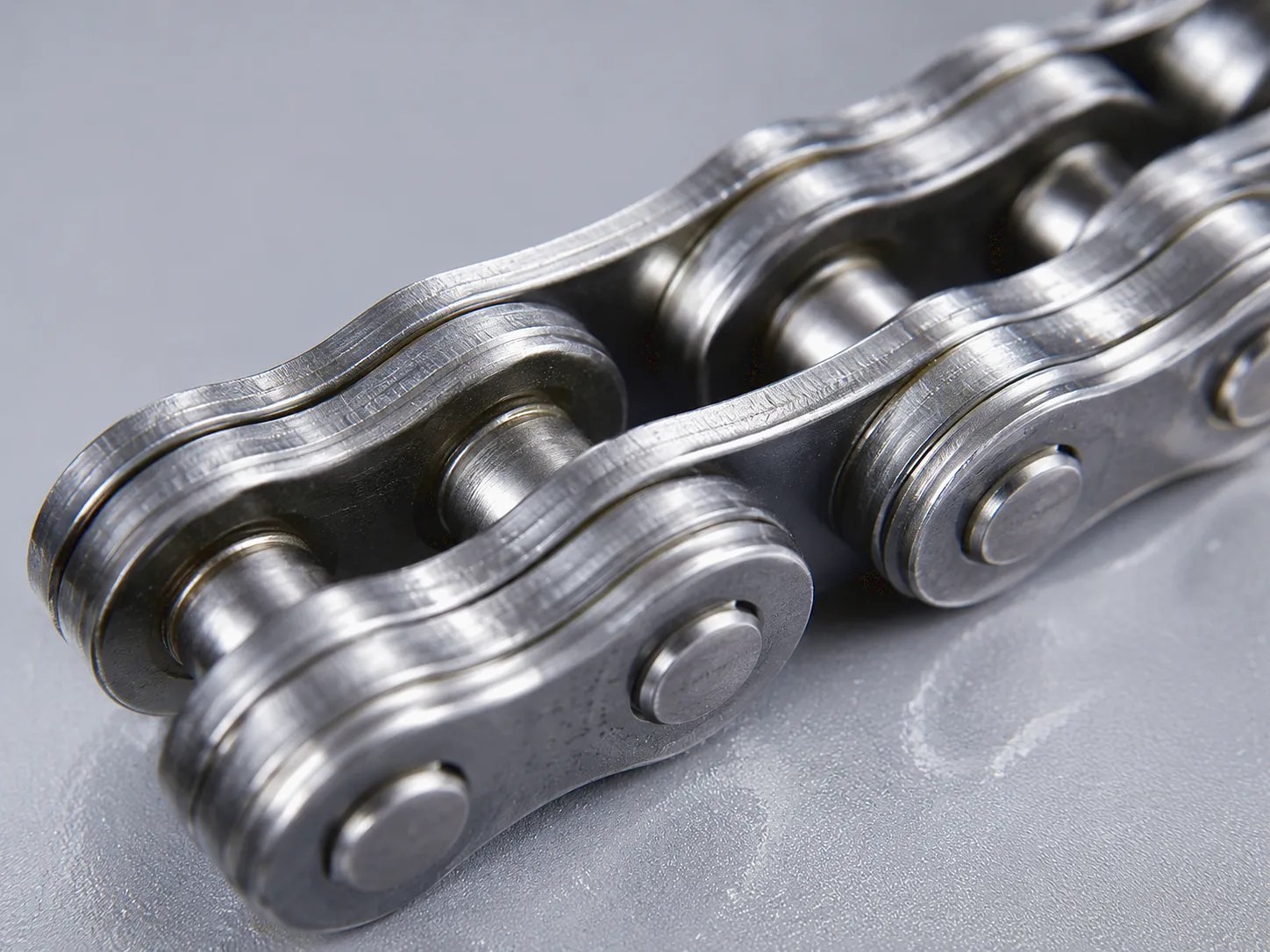
Ready to upgrade your beverage line with precision leaf chains? Our engineering team provides customised solutions for UK and global manufacturers — from single-strand light-duty chains to heavy-duty multi-strand configurations.
Response within 24 hours · Technical support included
Why Beverage Filling Lines Have Zero Tolerance for Chain Failure
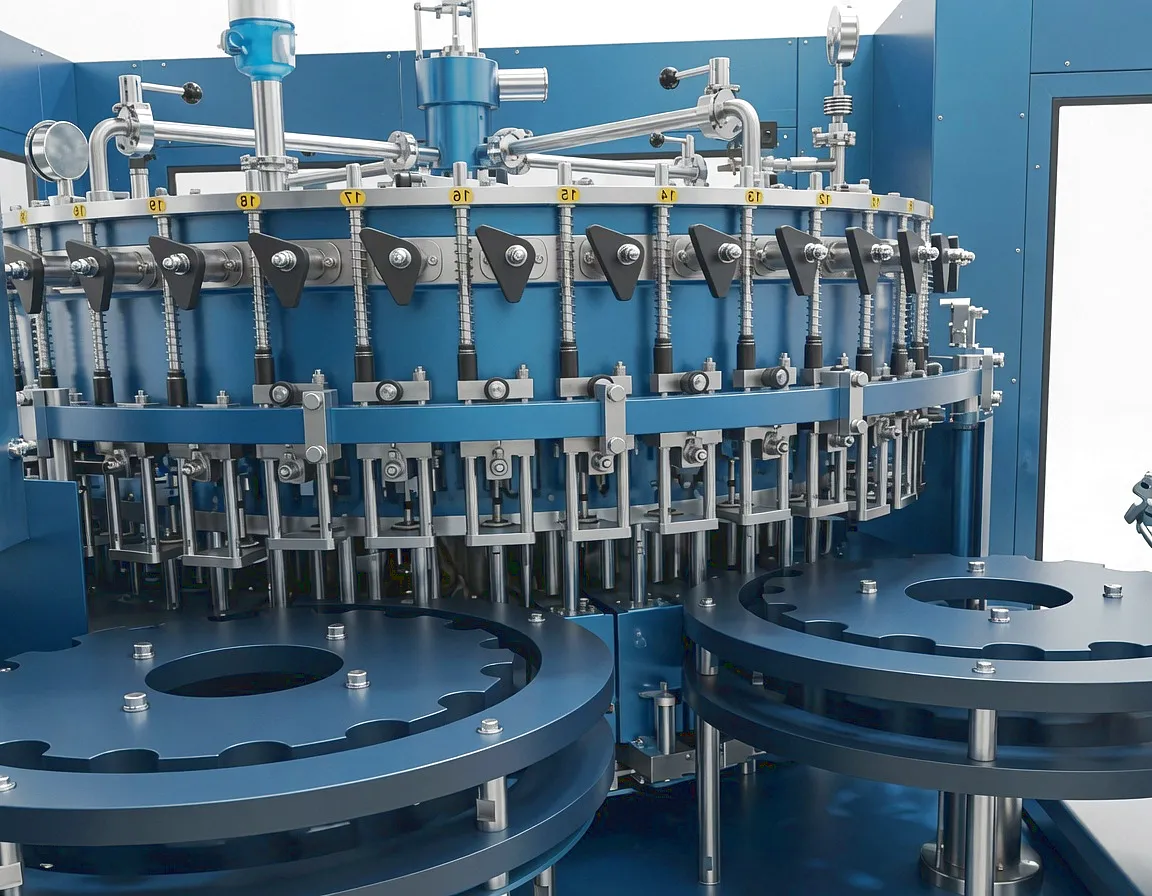
 Walk into any large-scale bottling plant in Birmingham, Manchester, or Glasgow and you will immediately sense the relentless rhythm of modern beverage production. Conveyor platforms accelerate, filling heads descend in rapid succession, cap torque stations spin at thousands of cycles per hour, and labelling units fire adhesive film with surgical precision — all tied together by a web of mechanical linkages that must never, under any circumstance, falter. At the heart of many of these linkages sits the leaf chain, a deceptively simple yet extraordinarily engineered component whose performance determines whether a shift meets production targets or descends into costly downtime.
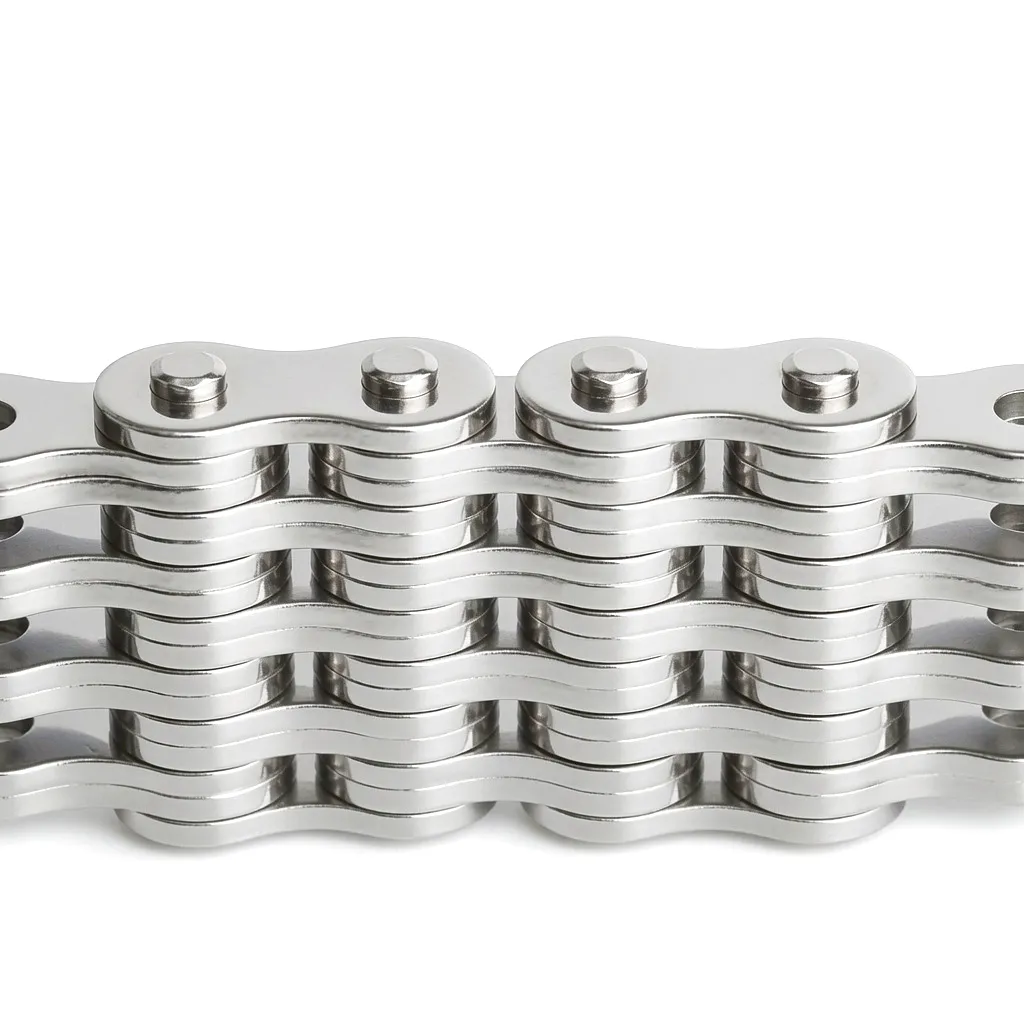
Unlike roller chains, which transfer torque through a sprocket-to-pitch relationship, leaf chains are designed primarily to bear tensile load along a defined path. In a beverage filling environment, this distinction matters enormously. Filling head counter-balance systems, elevator conveyors for heavy glass-bottle crates, pallet lift mechanisms, and multi-tier accumulation tables all impose sustained tensile forces rather than rotational torque. Leaf chains absorb these forces with a geometry derived from alternating link plates and precision-ground pins — a combination that delivers exceptional strength-to-weight ratios and predictable fatigue life that beverage engineers can build maintenance schedules around.
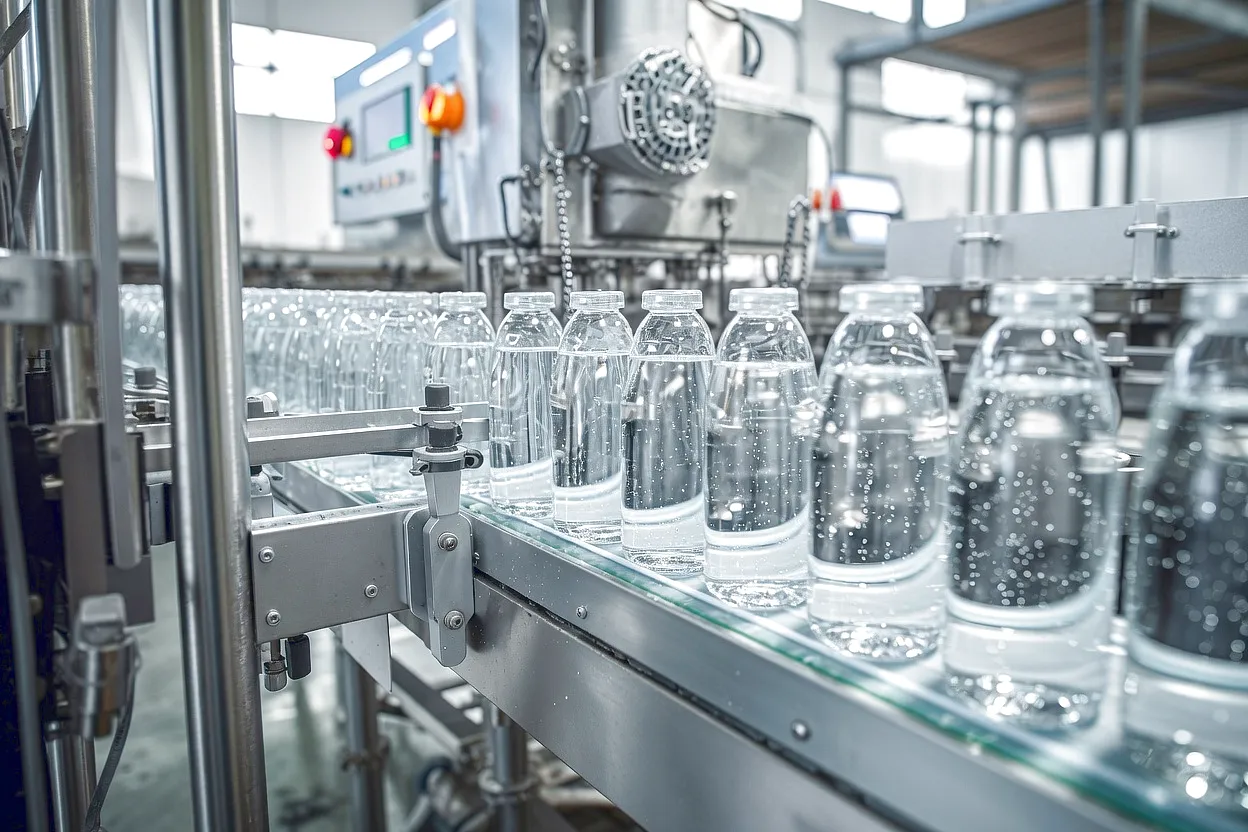
The global beverage market is projected to exceed USD 1.8 trillion by 2030, and nowhere is that growth more tangible than on the factory floor, where production speeds keep climbing and packaging formats keep diversifying. A single high-speed canning line running 2,000 cans per minute represents roughly £50,000 in lost revenue for every unplanned hour of stoppage. Against this backdrop, the selection of the right leaf chain — correct pitch, lacing pattern, plate thickness, and surface treatment — is not a procurement afterthought. It is a capital decision that experienced engineers treat with the same rigour they apply to gearbox specification or drive motor sizing.
The Engineering Behind Leaf Chain: How It Actually Works
Materials · Geometry · Load Mechanics
Link Plate Construction
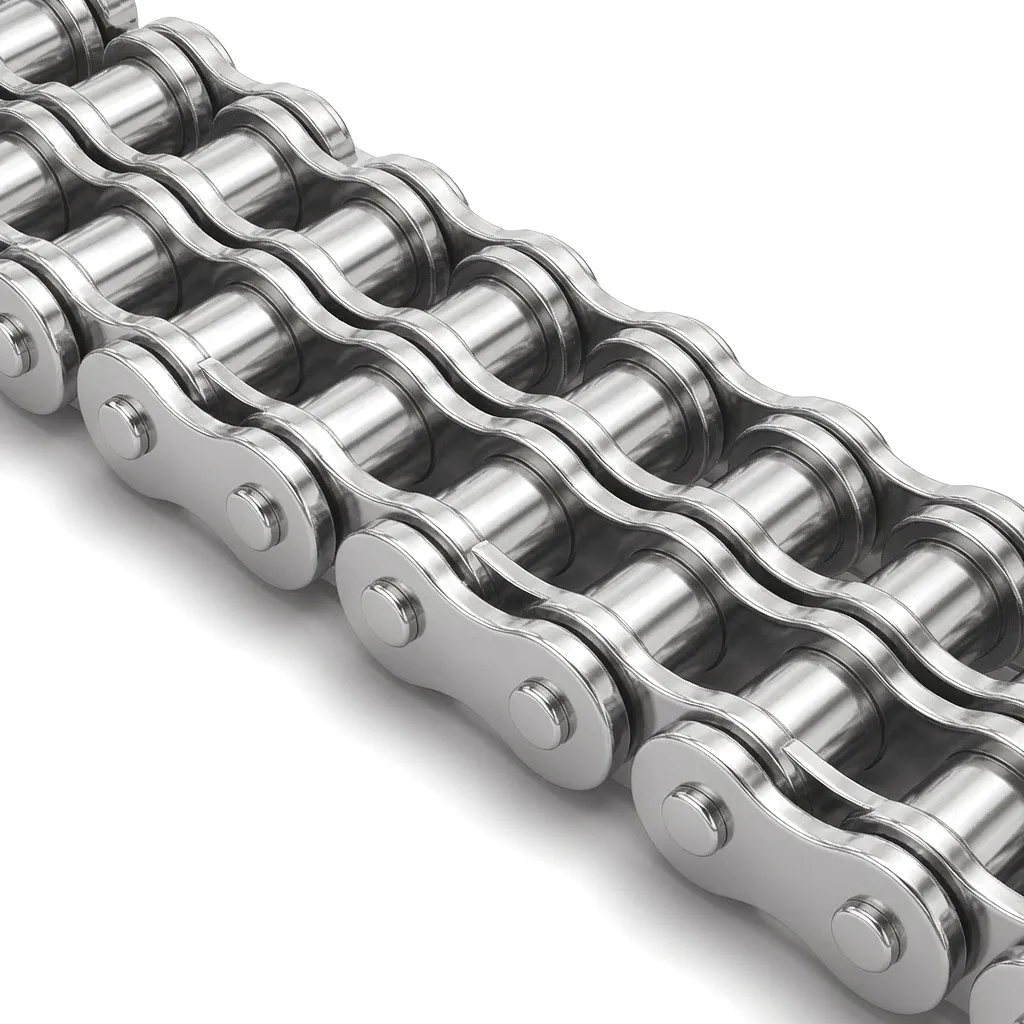
Each leaf chain consists of two types of link plates — outer plates and inner plates — arranged in alternating pairs and joined by hardened alloy-steel pins. The plates are precision-stamped from high-carbon steel (typically 50Mn or 60Si2MnA) and then case-hardened to achieve surface hardness values of HRC 58–62 while retaining a tough, ductile core. This dual-zone hardness profile is critical in beverage plants: the hard surface resists the abrasive particulates found in canning wash stations and CO2 environments, while the tough core prevents brittle fracture under the shock loads that arise when heavily laden pallet lifts accelerate from rest.
Lacing Patterns and Load Distribution
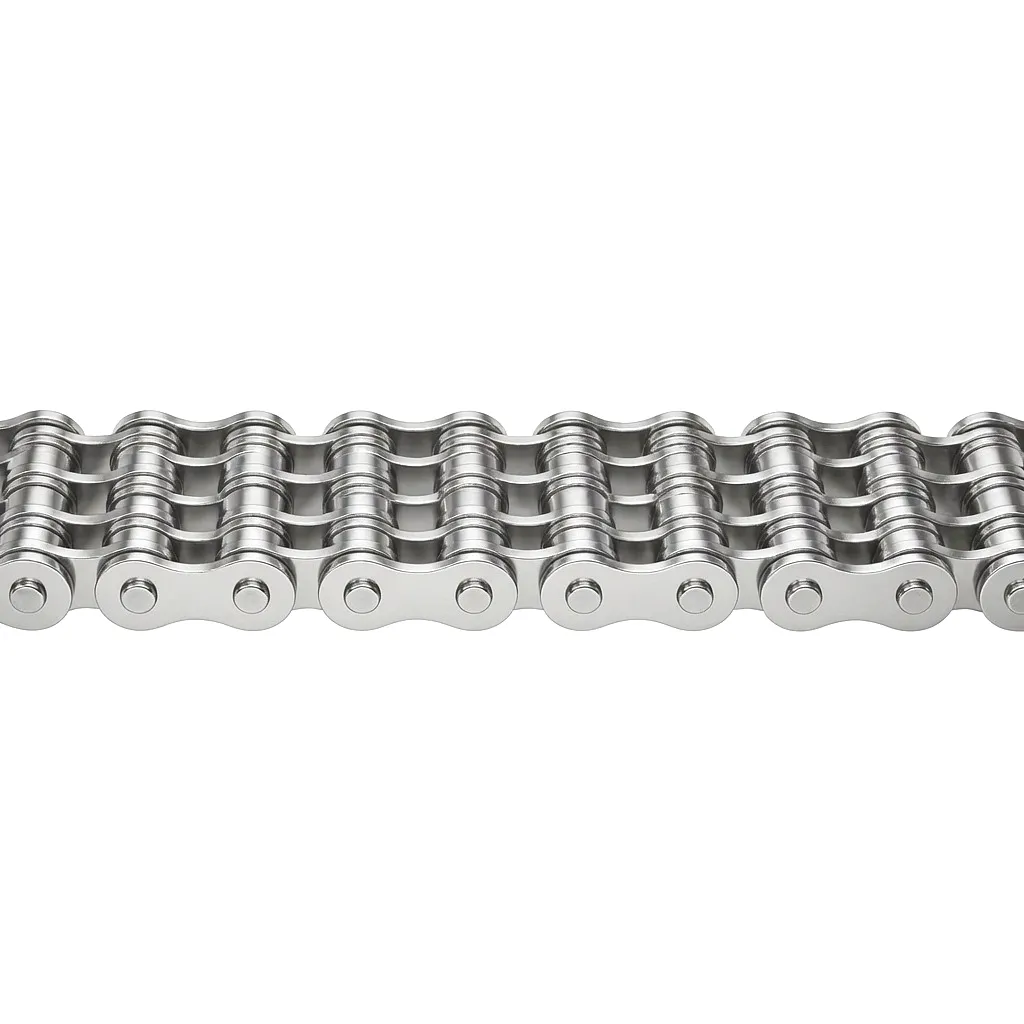
The lacing designation — BL, AL, and RL series — describes how many link plates are stacked at each pin location. A BL 634 chain, for instance, carries three inner plates and three outer plates per lacing, giving it exceptional tensile strength relative to pitch. In the context of beverage filling lines, selecting the right lacing pattern requires understanding the working load, the safety factor demanded by the application, and the dimensional constraints imposed by the machine frame. A counter-balance system on a glass-bottle filler running 30,000 bottles per hour imposes a very different load profile from a light-duty syrup-pump lift in a small-batch craft brewery, and the lacing must reflect that difference precisely.
Pin-to-Plate Articulation and Elongation
As a leaf chain accumulates fatigue cycles, the clearance between pin and inner plate bore gradually increases — a process measured as percentage elongation. Industry convention treats 3% elongation as the safe replacement threshold, because beyond this point the load-bearing cross-section of the pin-plate contact begins to deteriorate exponentially. Modern leaf chains from quality manufacturers like Ever Power are engineered for extremely slow elongation rates through tight manufacturing tolerances on pin diameter and bore finish (Ra 0.4 µm or better) and through the use of vacuum heat-treatment processes that ensure consistent through-hardness without distortion. In a beverage plant, predictable elongation behaviour is the difference between a planned chain change during a scheduled shutdown and an unexpected mid-shift failure that contaminates product and triggers an expensive line restart.

Technical Performance Parameters
Reference Values for Beverage Industry Applications
| Chain Series | Pitch (mm) | Tensile Strength (kN) | Working Load (kN) | Plate Material | Typical Beverage Use |
|---|---|---|---|---|---|
| BL 422 | 12.70 | 13.8 | 3.45 | 50Mn Steel | Craft brewery pump lifts |
| BL 534 | 15.875 | 31.8 | 7.95 | 50Mn Steel | Soft-drink counter-balance |
| BL 634 | 19.05 | 44.5 | 11.1 | 60Si2MnA Steel | Glass-bottle filler elevators |
| BL 834 | 25.40 | 80.1 | 20.0 | 60Si2MnA + NiCr | Heavy pallet lift systems |
| BL 1034 | 31.75 | 124.6 | 31.1 | Alloy + Stainless Option | High-capacity warehouse conveyor lifts |
* Values are reference figures. Contact Ever Power engineering team for application-specific calculations and UK-compliant safety factor verification.
Six Key Application Zones in Beverage Filling Lines Where Leaf Chain Makes the Difference
From Depalletiser to Palletiser
Filling Head Counter-Balance Systems
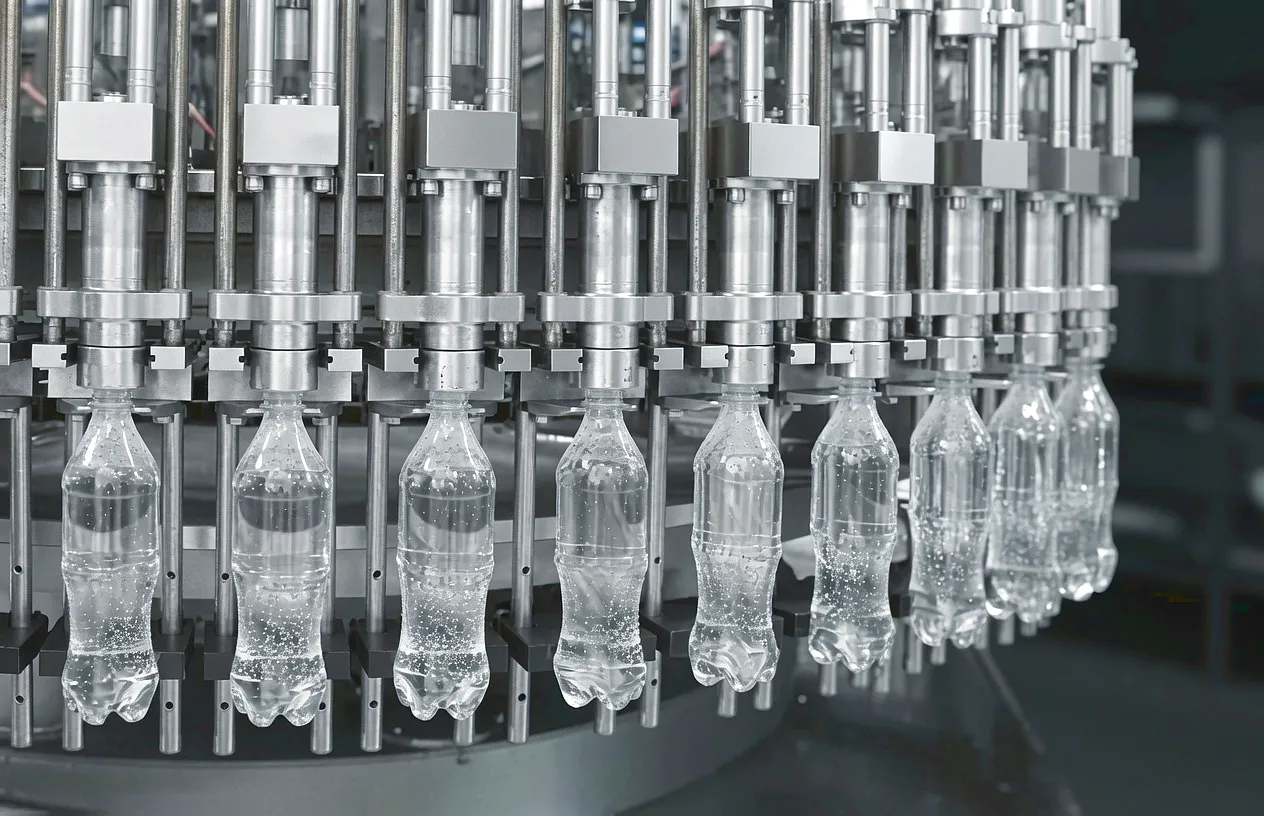
The filling carousel sits at the absolute epicentre of any bottling line. On rotary fillers — whether isobaric carbonated beverage fillers or gravity still-water fillers — the filling heads must rise and fall with controlled precision to accept incoming bottles and release filled ones. A leaf chain loop, typically running over a fixed pulley in the machine column, provides the counter-balancing tension that controls this vertical stroke. Any elongation or misalignment in this chain translates directly to inconsistent fill levels, potential overcapping damage, or catastrophic container breakage. Ever Power BL 534 and BL 634 series leaf chains are particularly popular in this role because their tightly controlled pitch tolerances (±0.025 mm per link) ensure smooth, judder-free head movement even at carousel speeds exceeding 80 rpm.
Depalletiser and Palletiser Lift Mechanisms
At both ends of the beverage filling line sit the depalletiser (which feeds empty containers into the process) and the palletiser (which stacks filled, sealed, and labelled product for despatch). Both machines rely on powered lift platforms that rise and descend repeatedly throughout a shift — hundreds, sometimes thousands, of cycles per day. The total dynamic load on these platforms can reach several tonnes when handling heavy glass bottles on multi-layer pallets. Leaf chains in this context must sustain high working loads, absorb impact shock at lift initiation, and resist the fatigue that accumulates from constant reversal of bending direction. Ever Power’s stainless-steel-option BL 1034 chains, with their superior corrosion resistance and enhanced fatigue life, are increasingly specified by UK palletiser manufacturers who must also comply with the Lifting Operations and Lifting Equipment Regulations (LOLER) 1998.
Multi-Tier Accumulation Conveyor Elevators
Modern high-speed beverage plants use multi-tier accumulation systems — sometimes called “super accumulators” — that buffer product between machine zones, smoothing out the micro-stoppages that inevitably occur on complex lines. These systems incorporate vertical elevator sections where containers move between levels. The leaf chains driving these vertical sections must operate with minimal noise (strict occupational health requirements apply in UK food-grade environments), low lubrication consumption (to protect against product contamination), and excellent lateral stiffness to prevent container-lane drift. Precision-ground pin diameters and matched bore tolerances in Ever Power chains reduce articulation noise by up to 18 dB(A) compared with standard commodity chains, a critical compliance consideration under the Control of Noise at Work Regulations 2005.
Bottle and Can Rinser / Washer Units
Before any filling takes place, containers must be rinsed or washed. High-speed rotary rinsers invert bottles through an arc, exposing the interior to pressurised water or sterile air jets. The mechanical index that drives the gripper turret — and in some designs the overhead take-up arm — relies on short leaf chain loops under constant tension reversal. These are particularly demanding applications because the chain environment combines elevated humidity, acidic rinse chemistry, and the lubricant-flushing action of the rinse water itself. Specifying a nickel-plated or stainless-steel option Ever Power leaf chain for this position extends service intervals from the typical 6–8 weeks of a standard carbon steel chain to 6–12 months, fundamentally changing the maintenance economics of the entire line.
Crate Washing and Empty Return Systems
Returnable glass bottle lines — still prevalent in the UK dairy, beer, and premium water sectors — incorporate large crate washers that subject the mechanical components inside to sustained steam exposure, caustic detergent spray cycles at temperatures up to 85 °C, and the physical shock of heavy polypropylene crates dropping onto conveyor flights. Leaf chains running the infeed and outfeed elevator sections of these washers experience thermal cycling, chemical attack, and impact loading simultaneously. Ever Power’s 60Si2MnA steel chains with phosphate surface treatment are engineered specifically for this environment, offering a working load safety factor of 5:1 even after prolonged exposure to caustic soda concentrations of 2% at 80 °C — conditions that rapidly degrade lighter chain grades.
Pasteuriser and Tunnel Cooler Chain Guides
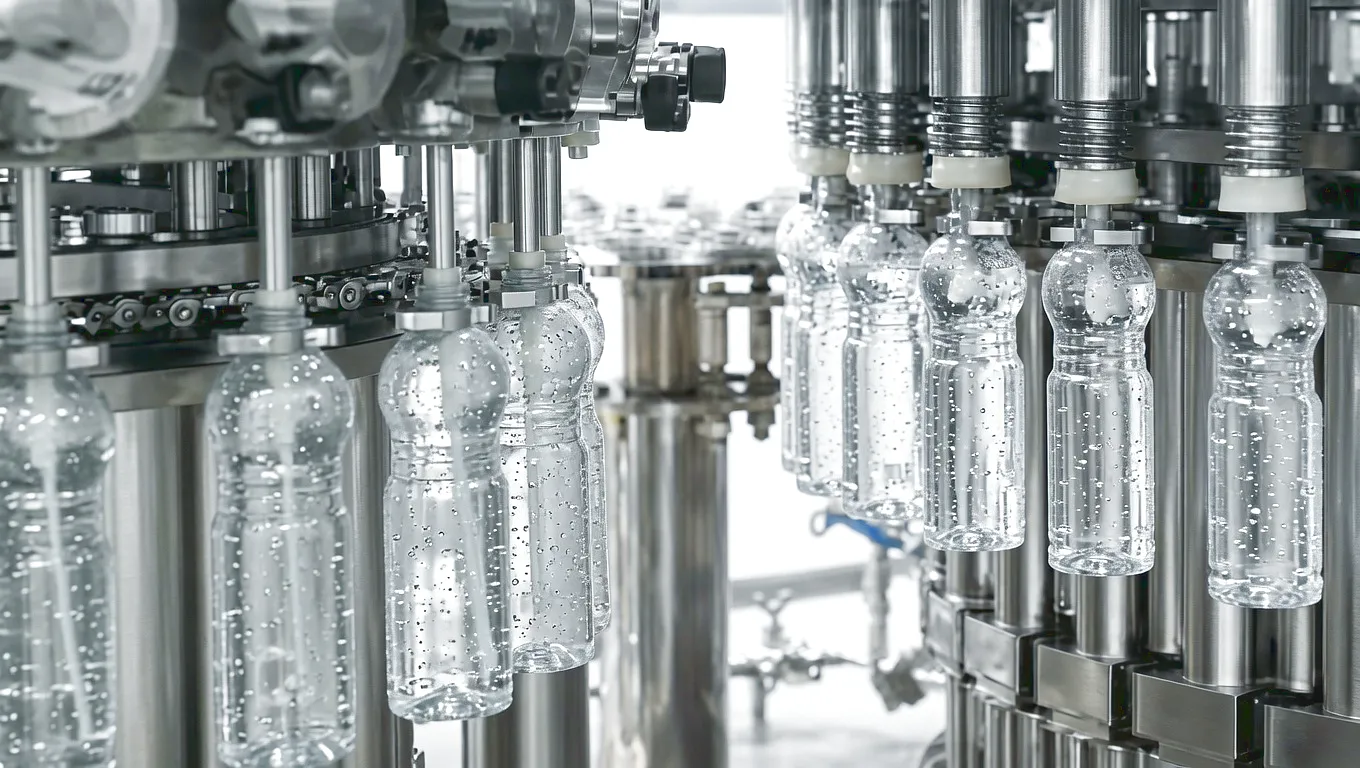
Flash pasteurisers and tunnel pasteurisers subject filled beverage containers to precisely controlled heat profiles over timed dwell periods. The conveyor bed that carries containers through the pasteuriser is tensioned at both ends by take-up systems that incorporate short leaf chain segments. Inside the tunnel, ambient temperatures range from ambient to 75 °C or beyond depending on the pasteurisation target for the specific beverage. Chain elongation rates increase non-linearly with temperature, so standard chain grades can develop excessive sag within weeks in this position. Ever Power’s high-temperature-grade leaf chains — produced with enhanced-purity steel and vacuum heat-treated to tighter carbide network standards — maintain elongation below the 1% threshold for up to 18 months of continuous pasteuriser operation, dramatically reducing the frequency of take-up adjustments and chain replacement in this notoriously difficult machine section.
Why Ever Power Leaf Chains Outperform in Beverage Production
Engineering Advantages That Translate to Operational Value
| Performance Dimension | Ever Power Leaf Chain | Standard Commodity Chain |
|---|---|---|
| Pitch Tolerance per Link | ±0.025 mm | ±0.10 mm or worse |
| Surface Hardness (HRC) | 58–62 | 50–56 |
| Pin Bore Finish (Ra) | 0.4 µm | 1.6 µm |
| Elongation to 3% Threshold | 18–24 months typical | 6–10 months typical |
| Corrosion Resistance Option | 316 SS / Nickel-plated | Carbon steel only |
| Custom Length Available | Yes — any pitch count | Standard lengths only |
The advantages listed above are not marketing abstractions — they map directly to measurable operational outcomes for UK beverage manufacturers. When a filling head counter-balance chain maintains pitch tolerance to ±0.025 mm after two years of service, the filling accuracy remains within specification without recalibration downtime. When a depalletiser lift chain reaches the 3% elongation threshold after 20 months instead of 8, the maintenance team gains back three chain-change shutdowns — each typically representing 4–6 hours of production loss — over a two-year period. Aggregated across a 20-station plant running six days a week, this kind of component reliability translates to hundreds of thousands of pounds in retained production value annually. That is the engineering argument for specifying quality leaf chains, and it is one that plant engineers, maintenance managers, and procurement directors across the UK beverage industry find increasingly compelling.
Customer Success: How a Yorkshire Brewery Cut Maintenance Costs by 41%
Real-World Case Study · UK Beverage Sector
Hartfield & Sons Brewery, Leeds, United Kingdom
Glass Bottle & Can Lines
250,000 hL/year
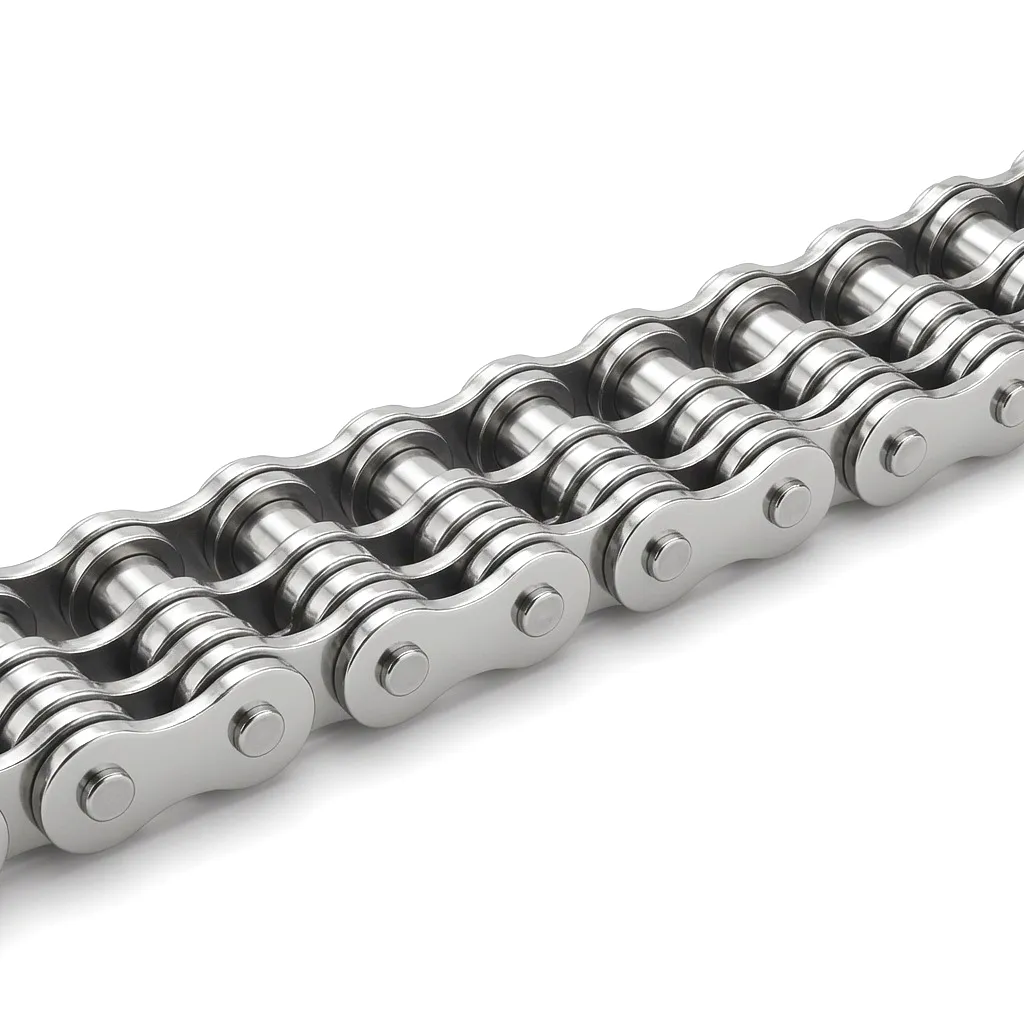 Hartfield & Sons, a fourth-generation regional brewer operating two high-speed bottling lines and one canning line out of their 1960s-era Leeds facility, had been experiencing chronic chain failures on their glass-bottle filler counter-balance systems. Operating at 24,000 bottles per hour, the lines were incurring unplanned stoppages averaging 6.2 hours per month, primarily attributable to leaf chain elongation and one catastrophic link-plate fracture that caused a partial filler carousel collapse in Q1 2023. The production team had been buying replacement chains from a local distributor — commodity-grade chains priced 35% below premium alternatives — and were changing them every 7–9 months.
In early 2024, the plant engineering manager engaged Ever Power’s UK technical representative to conduct a chain audit across all three lines. The audit identified five distinct positions where BL 634 chains were being substituted with lighter BL 534 equivalents, an underspecification driven by original-equipment-manufacturer price pressure rather than engineering rationale. Ever Power supplied correctly specified BL 634 chains in 60Si2MnA steel with enhanced vacuum heat treatment for the filler counter-balance positions, and phosphate-treated BL 534 chains with extended-pin master link configurations for the crate washer elevators. The nickel-plated BL 534 variant was specified for the rinser take-up positions due to the high-humidity, acidic rinse-water environment. Within twelve months of the retrofit, Hartfield & Sons reported unplanned chain-related stoppages reduced to 0.8 hours per month — an 87% reduction — and total chain-related maintenance expenditure, including labour, parts, and production loss attributable to changes, down by 41% year-on-year.
What Our Customers Say
“We have been specifying Ever Power BL 634 chains on our bottle filler counter-balance for two seasons now. The elongation rate is genuinely slower than anything else we have tried — our maintenance engineer measured 0.8% after 14 months on the beer line, which is exceptional. These are not cheap chains, but they are cheaper than downtime.”
“Our palletiser lift chain used to be a six-monthly headache. After switching to Ever Power’s BL 834 stainless-plate option, we are now 16 months in and still well inside the elongation limit. The custom length service was also genuinely useful — they cut to our exact pitch count with a clean master link finish, which saved us significant field-fitting time.”
“The technical support team at Ever Power walked us through the correct lacing specification for our pasteuriser take-up positions — something our previous supplier never thought to ask about. The correctly specified chain has now run for over a year without a take-up adjustment. That alone has saved us several hours of engineering time per quarter.”
Manufacturing Capability & Custom Engineering Services
Ever Power Production Facilities
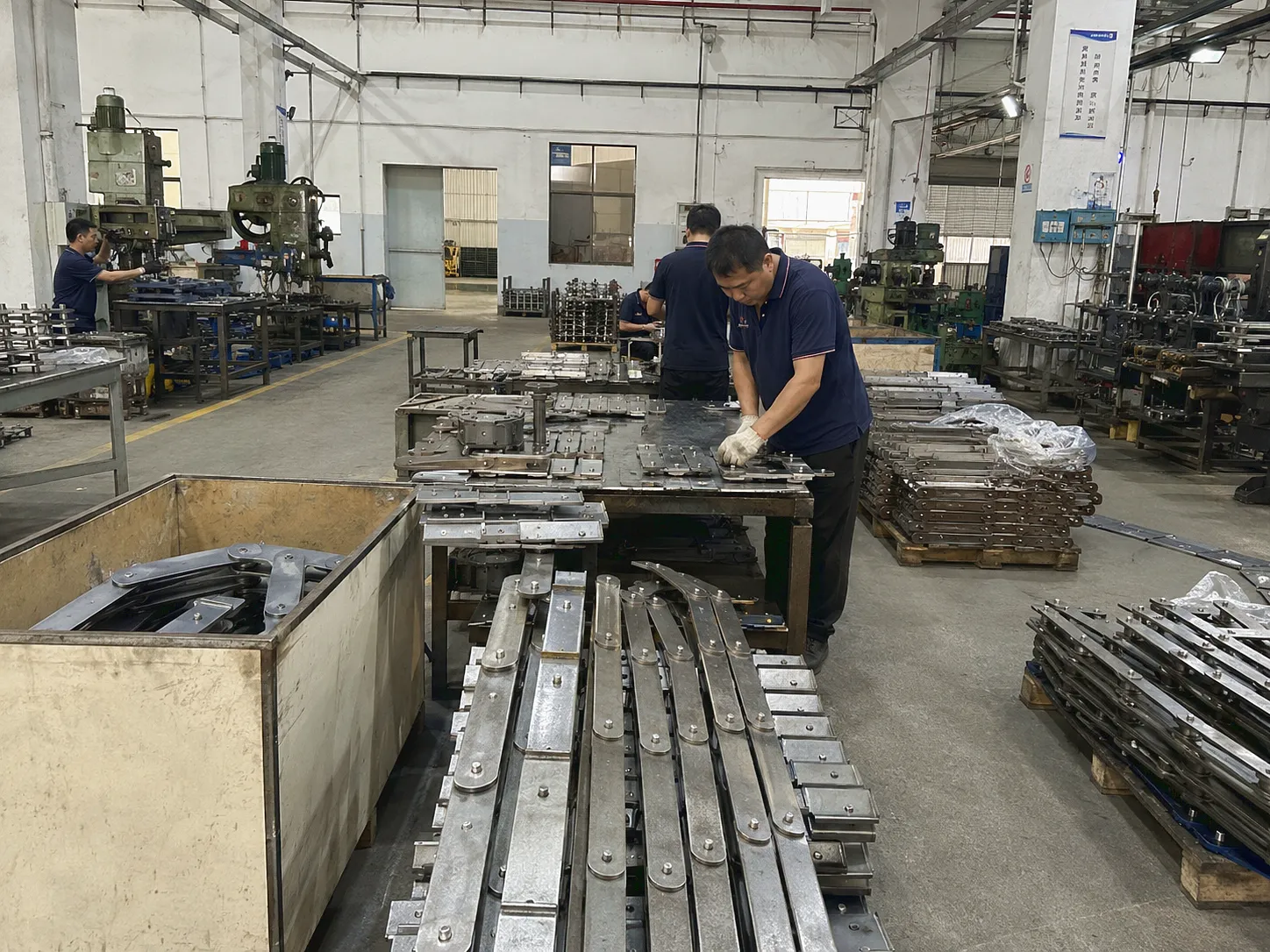
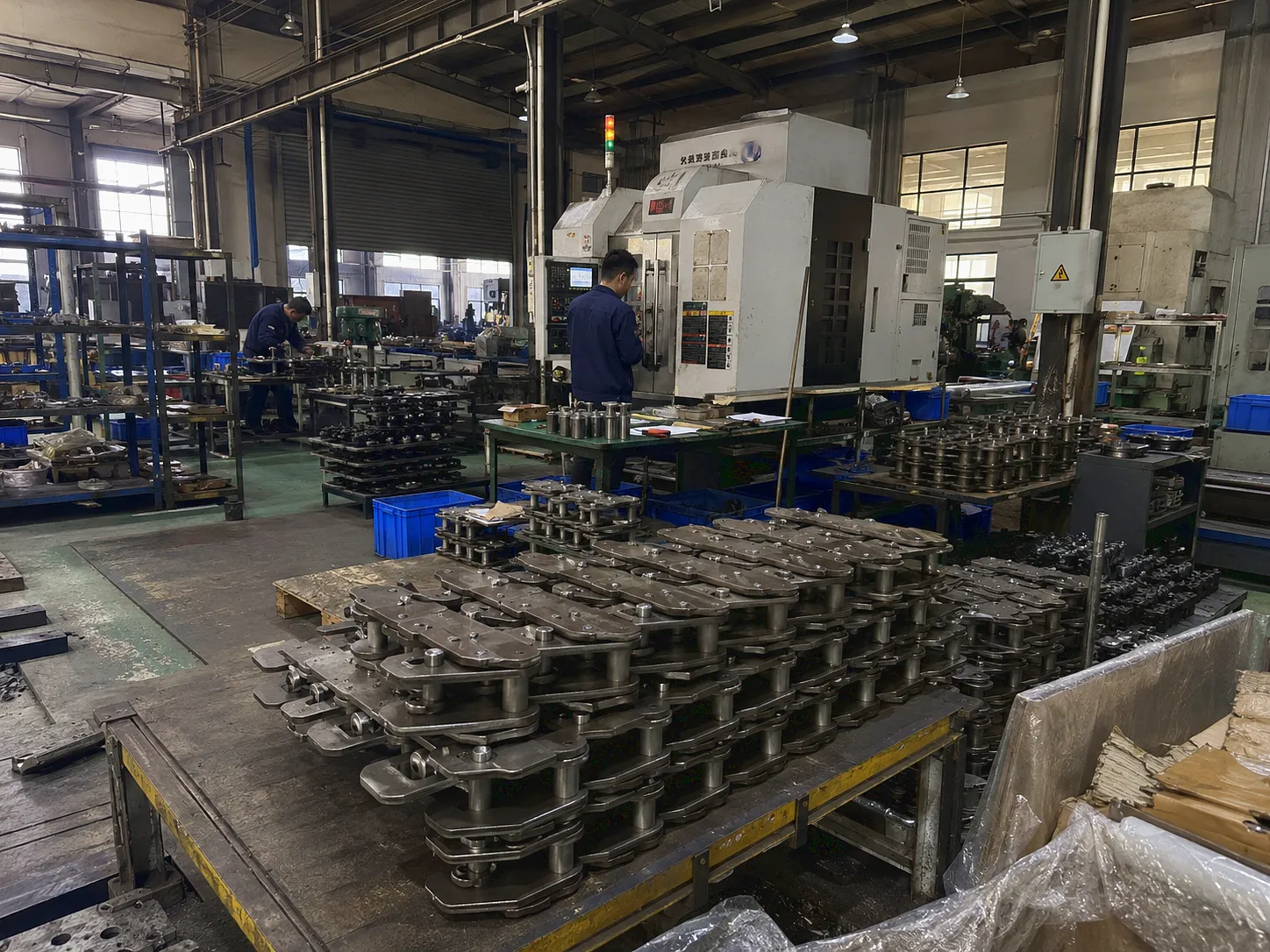
Ever Power’s manufacturing campus spans over 40,000 square metres of production floor space and houses more than 120 precision CNC machining centres, dedicated vacuum heat-treatment furnaces capable of processing 800-kilogram batches with ±2 °C temperature uniformity, and a custom chain-testing laboratory equipped with servo-hydraulic fatigue rigs capable of simulating up to 20 million load cycles at controlled amplitudes. Every batch of leaf chain produced for beverage industry customers is subject to 100% dimensional inspection using laser-gauging systems, followed by a statistical sample of destructive tensile testing to BS EN 818-6 and equivalent standards. This is not a quality-control process bolted on as an afterthought — it is the foundation on which our engineering team’s performance guarantees are built.
The custom engineering service capability at Ever Power sets us apart from distributors who simply repackage standard chains from a catalogue. Our technical team routinely handles orders for non-standard pitch chains, chains with extended-reach side tabs for guide rail applications, chains with inbuilt lubrication reservoirs for low-maintenance positions, and chains manufactured to individual customer-specified fatigue-life targets rather than generic published tensile strength figures. For UK beverage manufacturers navigating LOLER compliance requirements, we provide full material traceability documentation, test certificates to EN 10204 3.1, and application-specific safety factor calculations that can be submitted directly to third-party competent persons during LOLER assessments. Our customisation window covers minimum order quantities as low as 10 metres for specialised applications, with standard lead times of 10–15 working days and express manufacturing routes available for emergency replacements.
Custom Service Highlights for Beverage Industry Buyers
Speak to an Ever Power application engineer about your specific beverage line requirements. We supply across the UK — London, Manchester, Birmingham, Leeds, Glasgow, Cardiff, and beyond.

Selecting and Maintaining Leaf Chain in Beverage Plants: A Practical Framework
Engineer’s Decision Guide
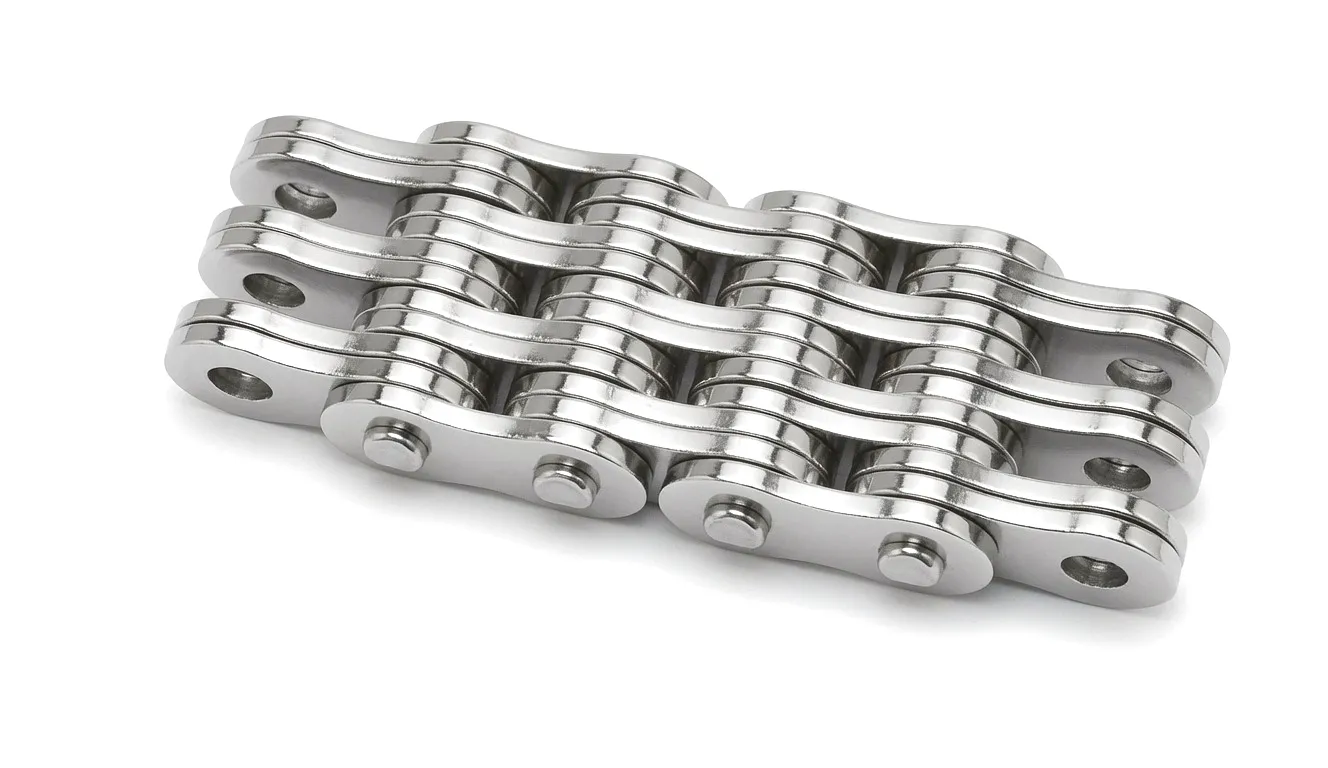 Selecting a leaf chain for a beverage filling application is a structured engineering process, not a catalogue search. The starting point is always the maximum tensile working load — the highest force the chain will experience under dynamic conditions, including acceleration, deceleration, and any impact loading at the extremes of travel. This working load must then be divided by the published minimum breaking load of the candidate chain to establish the actual safety factor. In most UK beverage applications, a minimum safety factor of 5:1 is appropriate; in higher-risk positions governed by LOLER, the competent person may specify 6:1 or even 8:1, which drives the engineer toward a heavier lacing or a larger pitch.
Environmental conditions layer additional constraints onto this baseline. Wash-down environments require corrosion-resistant surface treatments or base materials. High-temperature positions require enhanced heat-treatment grades. Positions where chain lubricant could contact product — filling carousels, rinser surrounds, cap-sorting chutes — require food-grade lubricants compatible with the chain’s surface chemistry, and in some cases the chain must be designed for minimal lubrication operation or operate with a sealed-joint configuration. These constraints are best addressed in dialogue with the chain manufacturer’s engineering team rather than through catalogue selection alone.
Once installed, leaf chains in beverage applications should be inspected at intervals no longer than three months, with elongation measured using a calibrated pitch gauge across a minimum of 12 links in the highest-tension zone of the chain path. Any measurement exceeding 2% elongation should trigger a scheduled replacement at the next available planned shutdown, and any measurement exceeding 3% should trigger immediate replacement regardless of production schedule. Equally important is inspection of the connecting pins and outer plates at the anchor point — a position that experiences stress concentration from the dead-end loading and is statistically the most common failure initiation site on beverage line counter-balance chains.
| Inspection Task | Frequency | Action Threshold | Tool Required |
|---|---|---|---|
| Elongation measurement | Every 3 months | Replace at 3% | Calibrated pitch gauge |
| Anchor pin / outer plate inspection | Every 3 months | Any cracking = replace | Visual + dye penetrant |
| Lubrication check | Monthly | Dry / discoloured = re-lube | Visual |
| Corrosion assessment | Every 3 months | Surface pitting = replace | Visual |
| Full chain replacement | As indicated by elongation | 3% elongation or 2 years max | Full toolkit + scaffold if req. |