
Leaf Chain for Corn Harvesters: Heavy-Duty Lifting Solutions for UK Agricultural Machinery
Published by Ever Power — Precision Leaf Chain Engineering Since 2006 | Reading Time: 12 min
 Modern corn harvesters push every mechanical component to its absolute limit. Working through dense stands of maize — often during damp UK autumns where moisture adds unexpected load to every lifting cycle — the raising and lowering mechanisms on these machines must deliver smooth, consistent force under punishing conditions. A single failure mid-field during a narrow harvest window can translate to thousands of pounds in lost crop value and emergency repair bills. That reality is what makes leaf chain so critical for corn harvester equipment. Unlike standard roller chain, which handles rotational power transmission, leaf chain is engineered specifically for linear reciprocating motion: lifting, lowering, and counterbalancing heavy assemblies. It runs over sheaves rather than sprockets, carrying pure tensile loads with minimal elongation. In corn harvesting machinery, this type of chain controls the header height adjustment, manages gathering chain tension, and supports critical conveyor systems that move cut crop through the machine. For UK-based agricultural OEMs, fleet operators in East Anglia and Lincolnshire, and independent service workshops across England, selecting the correct leaf chain specification is not a minor purchasing decision — it determines whether a harvester runs reliably through an entire season or suffers costly downtime at the worst possible moment.
What Exactly Is Leaf Chain, and Why Does It Matter for Corn Harvesters?
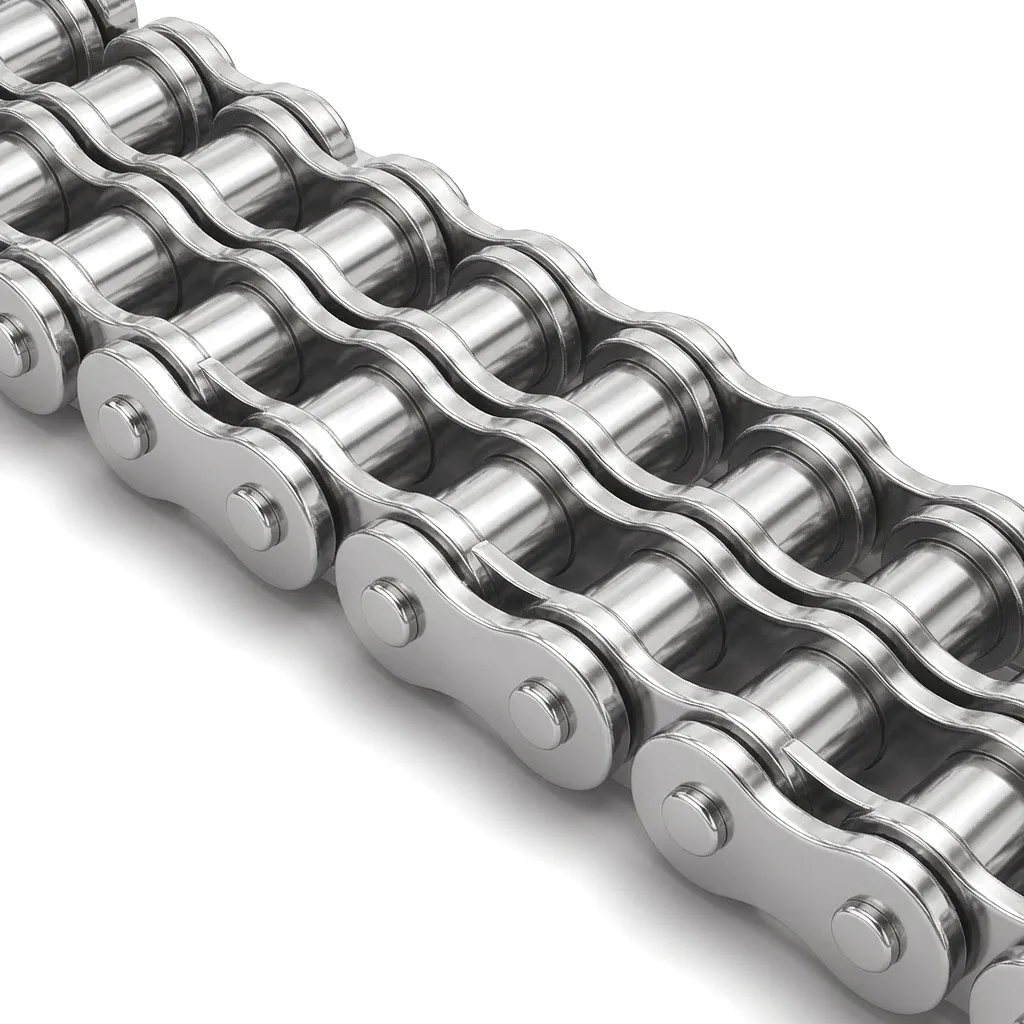
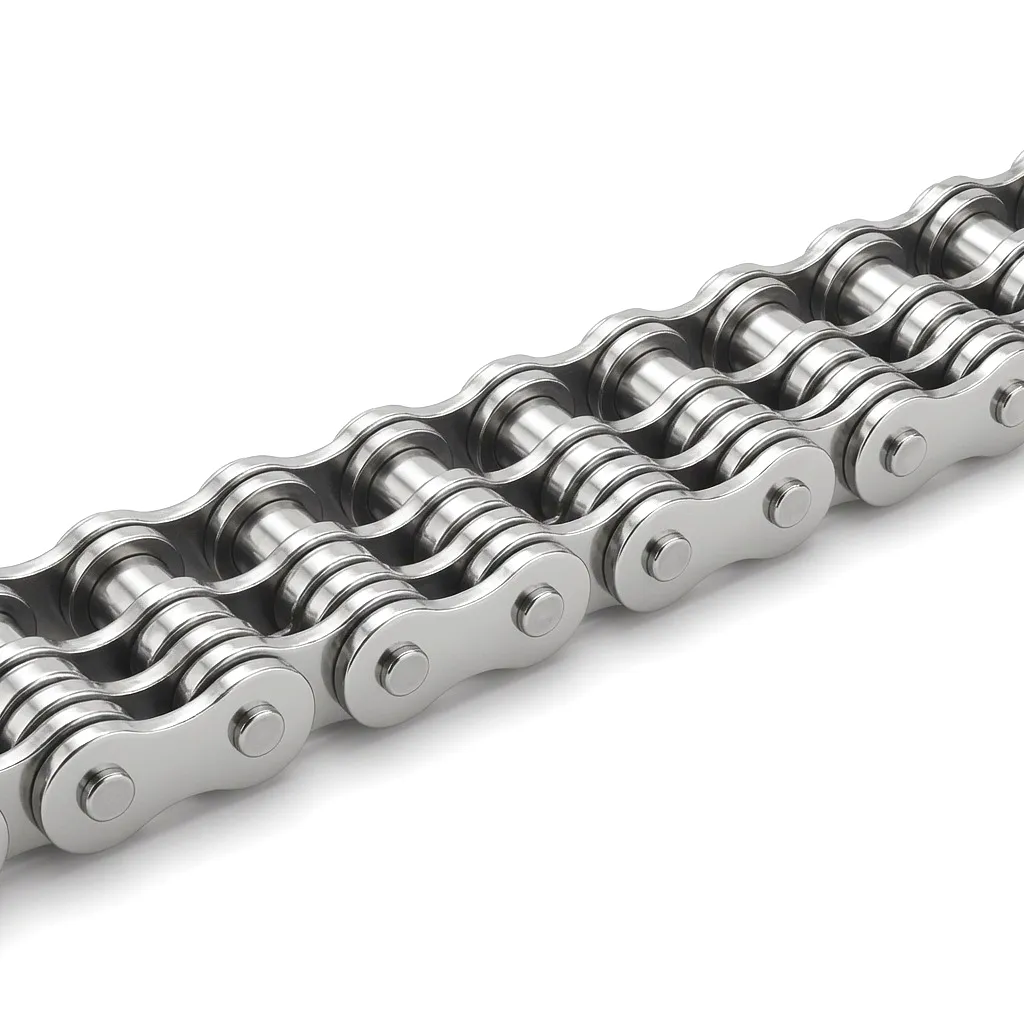
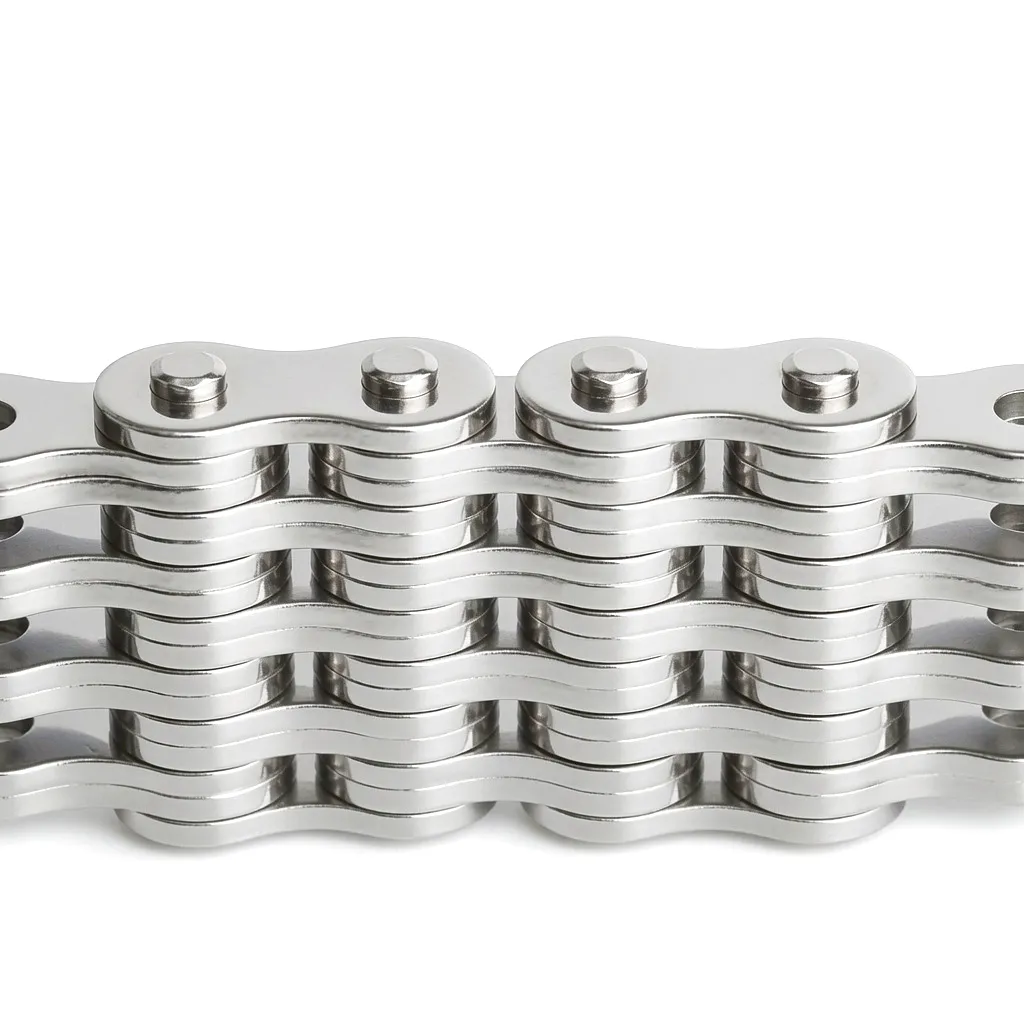
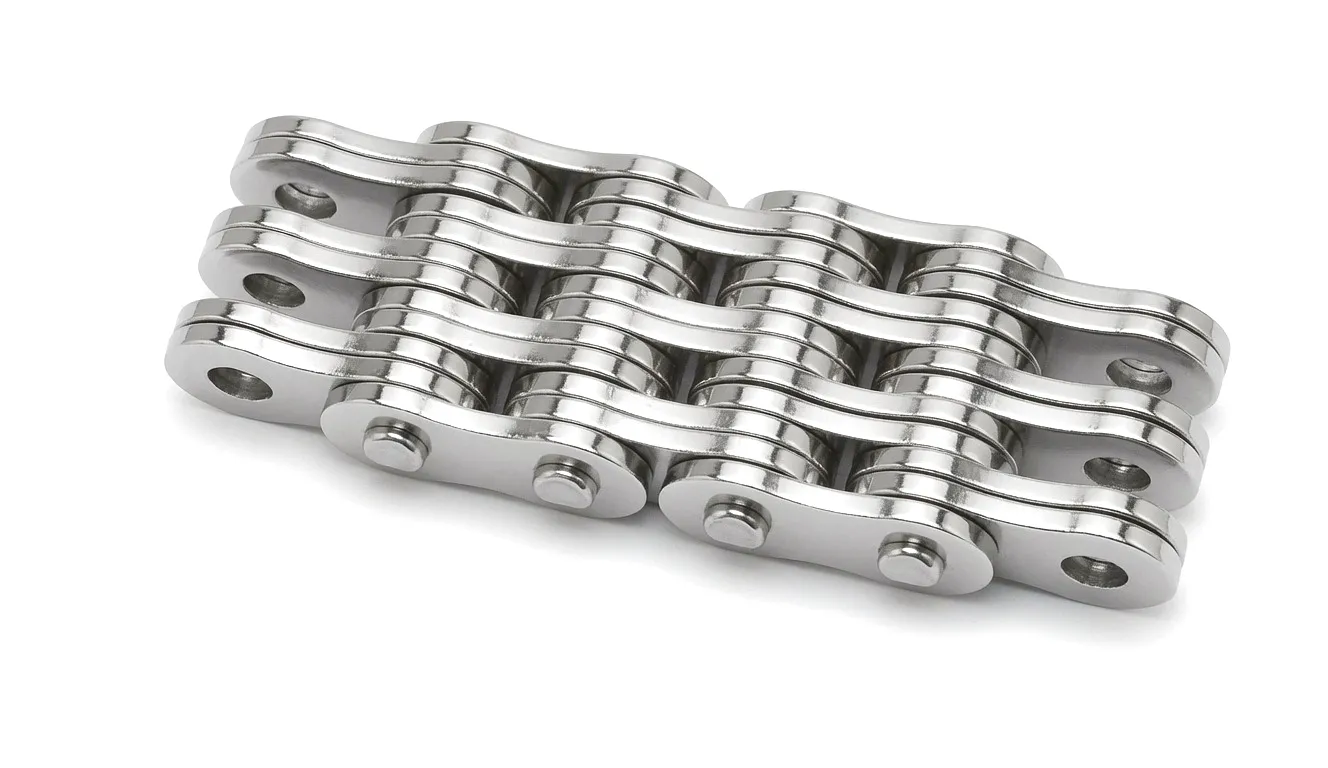
Leaf chain — sometimes called balance chain or lift chain — consists of interlaced steel link plates pinned together without the rollers and bushings found in standard drive chain. The design is deceptively simple, but that simplicity is where its strength lies. By eliminating the roller components, leaf chain concentrates its cross-sectional area entirely on tensile load-bearing plates. The result is a chain that handles significantly higher working loads within a more compact profile than roller chain of equivalent pitch. In engineering terms, leaf chain is manufactured to ISO 4347 and ANSI B29.8 standards, with the two most common designations being the BL series (British/ISO) and AL series (American). Both are available through Ever Power’s catalogue with full traceability documentation.
For corn harvester applications, the relevant property is fatigue resistance under cyclical tensile loading. A typical header lift mechanism may cycle hundreds of times per day during harvest season, raising and lowering a gathering unit that weighs several hundred kilogrammes. Each cycle applies tensile stress to the leaf chain, and over weeks of continuous harvesting, inferior chain will begin to elongate measurably — leading to sloppy header height control, uneven cutting, and eventually chain failure. Well-manufactured leaf chain resists this elongation because every plate is precision-stamped from medium-carbon alloy steel, heat-treated to achieve optimal hardness in the pin-hole bearing areas while retaining ductile core material that absorbs shock loads without cracking.

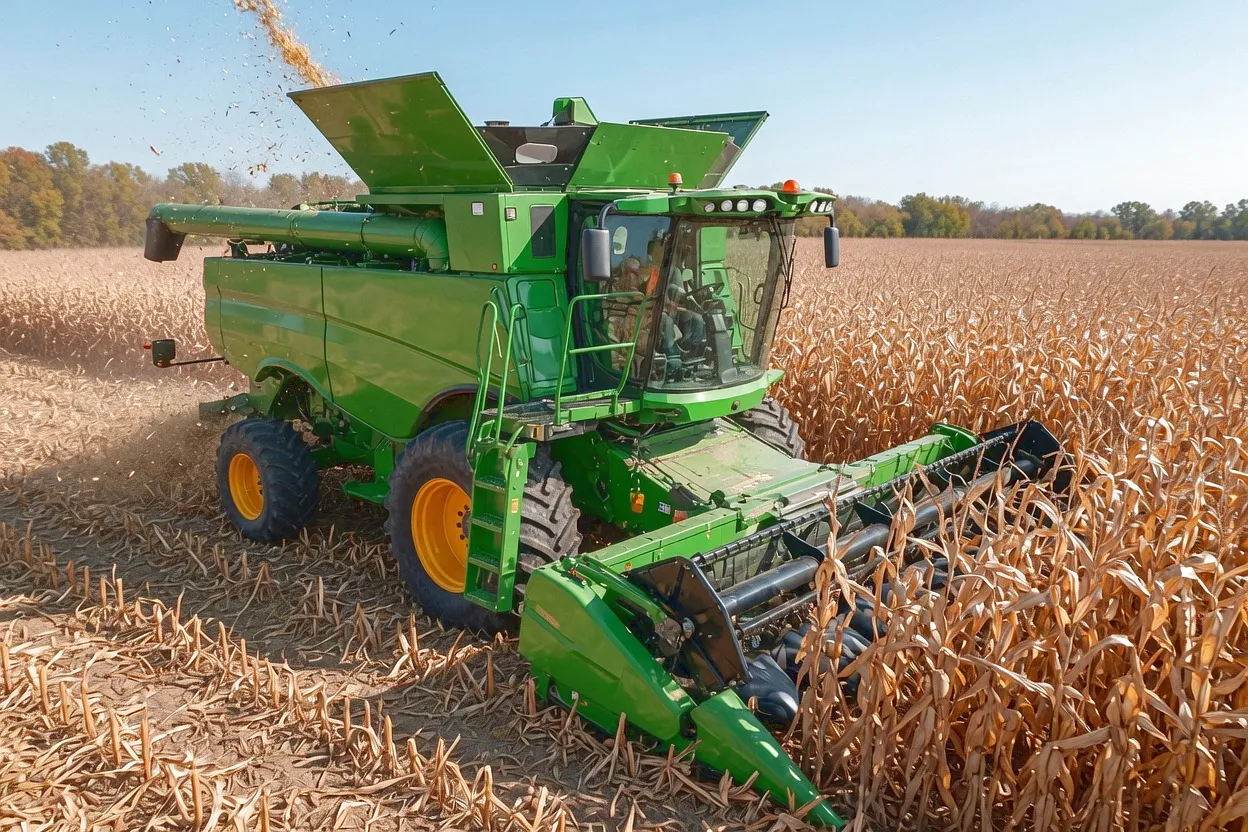
Modern corn harvesters rely on leaf chain for smooth, consistent header lifting under heavy field loads.
The Unique Demands Corn Harvesters Place on Lifting Chain
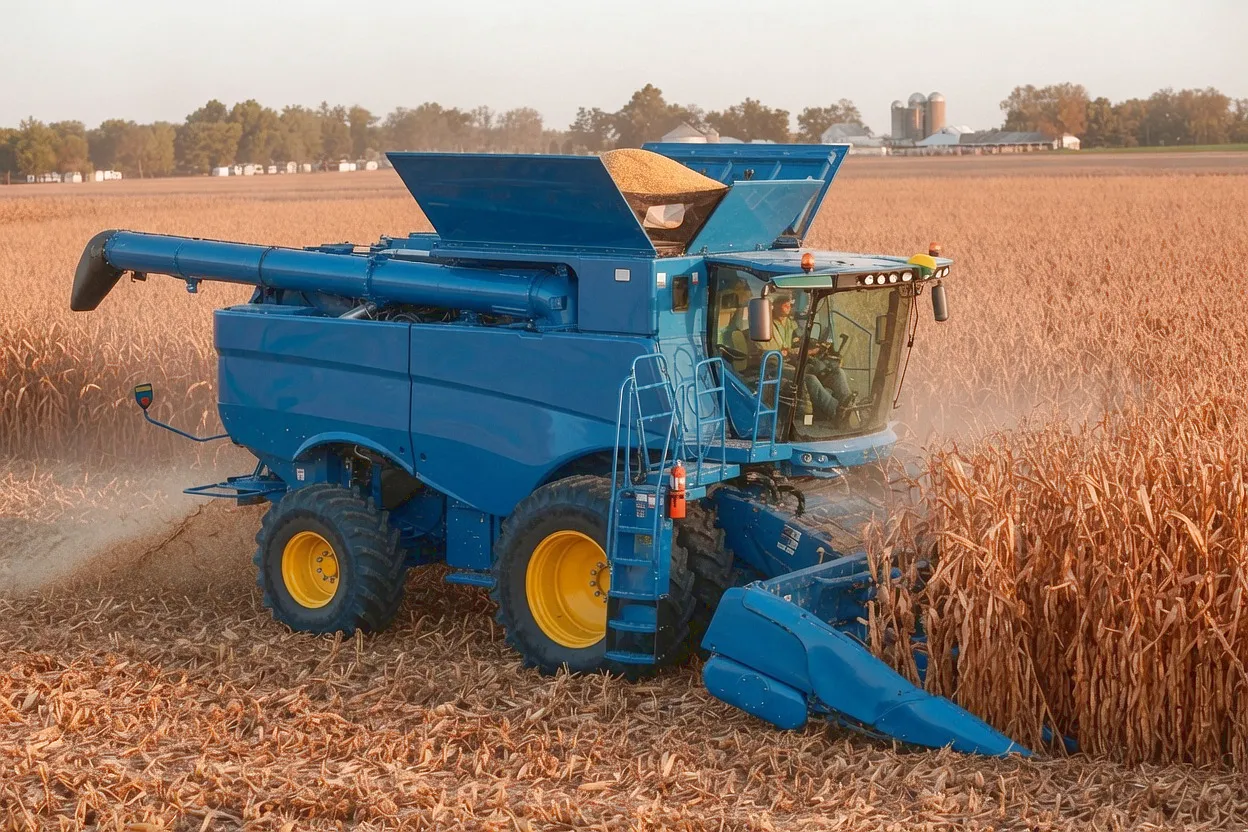 Corn harvesting equipment operates under a distinctive set of stresses that separate it from warehouse forklifts or general industrial lifting applications — the two environments where leaf chain is most commonly discussed. A forklift operates on flat, clean concrete. A corn harvester, by contrast, works across uneven terrain, absorbing ground-shock vibration through its entire chassis. The header unit — which can weigh anywhere from 400 kg to well over 1,200 kg depending on the row count — must respond instantly to hydraulic commands as the operator adjusts cutting height to follow contour changes in the field. Every bump, rut, and slope sends transient shock loads through the leaf chain assembly, far exceeding the smooth, predictable loading that a forklift chain experiences during shelf retrieval in a warehouse.
Environmental exposure compounds the challenge. UK maize harvest typically runs from late September through November — a period notorious for rain, heavy dew, and generally wet field conditions. Mud, crop residue, and moisture all contact the leaf chain during operation. Without adequate corrosion protection, pin joints can begin to pit within a single season, accelerating wear and reducing the chain’s rated working load. This is why Ever Power applies zinc plating, nickel plating, or dacromet coating to leaf chain destined for agricultural applications. The coating protects against corrosion during active field use and — equally important — during the off-season storage months when chains sit idle in unheated barns across the English countryside.
Key Advantages of Using Leaf Chain in Corn Harvester Equipment
Engineers and procurement managers across the UK agricultural sector choose leaf chain for corn harvester lifting systems based on a set of measurable performance benefits. Each advantage addresses a specific operational pain point that directly affects harvest productivity and total cost of ownership over a machine’s working life.
◆ Superior Tensile Strength
Leaf chain achieves higher working load limits per unit width than roller chain because every plate in the assembly carries load. A BL834 leaf chain, for instance, delivers over 106 kN of minimum tensile strength — enough to handle the heaviest 12-row corn header assemblies with a generous safety margin. This strength-to-size ratio allows machine designers to use more compact sheave housings, reducing weight on the harvester frame.
◆ Extended Fatigue Life
Cyclical loading is what kills lifting chain prematurely. Ever Power leaf chain plates undergo shot-peening after heat treatment, introducing compressive residual stresses at the pin-hole surfaces that dramatically improve fatigue resistance. Field data from corn harvester operators in Lincolnshire shows our chain maintaining elongation below 1.5% after three consecutive harvest seasons — well within the recommended 3% replacement threshold defined by ISO guidelines.
◆ Corrosion-Resistant Finishes
The wet, acidic environment of a corn field — where crop juices, soil moisture, and fertiliser residue all contact metal surfaces — demands more than bare carbon steel. Our agricultural-grade leaf chain is available with zinc plating, nickel plating, or dacromet coating. These surface treatments resist both active corrosion during the harvest window and dormant corrosion during months of winter storage in unheated farm buildings across the UK.
◆ Minimal Elongation Under Load
Precision matters when positioning a corn header. If the leaf chain stretches excessively, the header drops lower than the operator intends, risking ground contact that damages both the gathering points and the crop. Our leaf chain is pre-loaded during manufacture — each assembly is stretched to its rated working load before leaving the factory — so initial bedding-in elongation is virtually eliminated. The chain arrives ready for immediate, accurate service.
◆ Compact Profile for Tight Installations
Space inside a harvester chassis is always at a premium. Hydraulic cylinders, crop conveyors, and drivetrain components all compete for room. Leaf chain’s flat, plate-link construction bends tightly around sheaves with small diameters, allowing machine designers to route lifting mechanisms through confined spaces that would be impractical with bulkier roller chain assemblies. This design flexibility is particularly valuable on compact and mid-size harvesters popular with UK farms.
◆ Easy Visual Inspection
One overlooked advantage of leaf chain in agricultural settings is inspection simplicity. Because the chain is exposed plate construction without enclosed rollers and bushings, a trained mechanic can visually assess wear, plate cracking, and pin rotation during routine pre-harvest checks. Measuring elongation with a simple calliper takes minutes, giving farm workshops a quick, reliable method to determine remaining service life before the season begins.
Leaf Chain Technical Specifications for Agricultural Applications
Selecting the right leaf chain grade requires matching the chain’s rated capacity to your corn harvester’s specific header weight, lifting speed, and expected service life. The table below summarises key specifications for the most commonly used leaf chain designations in UK agricultural equipment. All values conform to ISO 4347 / ANSI B29.8 international standards, and every batch shipped from Ever Power includes a test certificate verifying minimum tensile strength and dimensional compliance.
| Chain Designation | Pitch (mm) | Plate Rows (Lacing) | Pin Diameter (mm) | Min. Tensile Strength (kN) | Typical Application |
|---|---|---|---|---|---|
| BL534 | 15.875 | 3 x 4 | 5.09 | 66.7 | Light header lift (4-6 row) |
| BL634 | 19.05 | 3 x 4 | 5.96 | 80.1 | Standard header lift (6-8 row) |
| BL834 | 25.40 | 3 x 4 | 7.94 | 106.8 | Heavy header lift (8-12 row) |
| BL846 | 25.40 | 4 x 6 | 7.94 | 177.9 | Counterweight/balance system |
| BL1046 | 31.75 | 4 x 6 | 9.54 | 222.4 | Extra-heavy forage harvester lift |
| AL844 | 25.40 | 4 x 4 | 7.94 | 142.3 | OEM mid-range corn harvester |
Materials, Manufacturing, and the Engineering Behind Reliable Leaf Chain
The performance gap between economy-grade leaf chain and genuinely well-engineered leaf chain comes down to three factors: raw material quality, heat treatment process control, and final assembly precision. At Ever Power, chain plates are blanked from cold-rolled medium-carbon steel strip — typically AISI 1045 or equivalent — sourced from mills that supply certified test reports with every coil. This grade of steel offers the ideal balance of hardness, ductility, and machinability. Plates are precision-stamped using progressive dies that maintain hole concentricity to within 0.03 mm, ensuring uniform load distribution across every pin joint when the chain is assembled.
Heat treatment follows a carefully controlled carburising or through-hardening cycle. The specific process depends on the chain series and its intended application. For agricultural leaf chain destined for corn harvesters, a through-hardening process at controlled temperature with oil quenching delivers plate hardness in the range of 38–45 HRC. This hardness provides excellent wear resistance at the pin-hole bearing surfaces without making the plates brittle. Pins are manufactured from alloy steel — often 20CrMnTi — and case-carburised to achieve a hard surface layer (58–62 HRC) over a tough core. This combination means the pin surface resists wear at the contact points with the sheave, while the core absorbs the shock and vibration transmitted through a corn harvester operating across rough terrain.
After assembly, every leaf chain undergoes pre-loading: the complete chain assembly is pulled to its rated working load on a hydraulic test bench. Pre-loading serves two purposes. It verifies that every pin joint, every plate, and every connecting link meets the rated specification. And it takes up the initial micro-slack in pin-plate clearances, eliminating the bedding-in elongation that would otherwise occur during the machine’s first few lifting cycles. When a UK farm workshop fits an Ever Power leaf chain to a corn harvester, it runs true from the very first header lift. No adjustment period, no recalibration.
Where Leaf Chain Works Inside a Corn Harvester
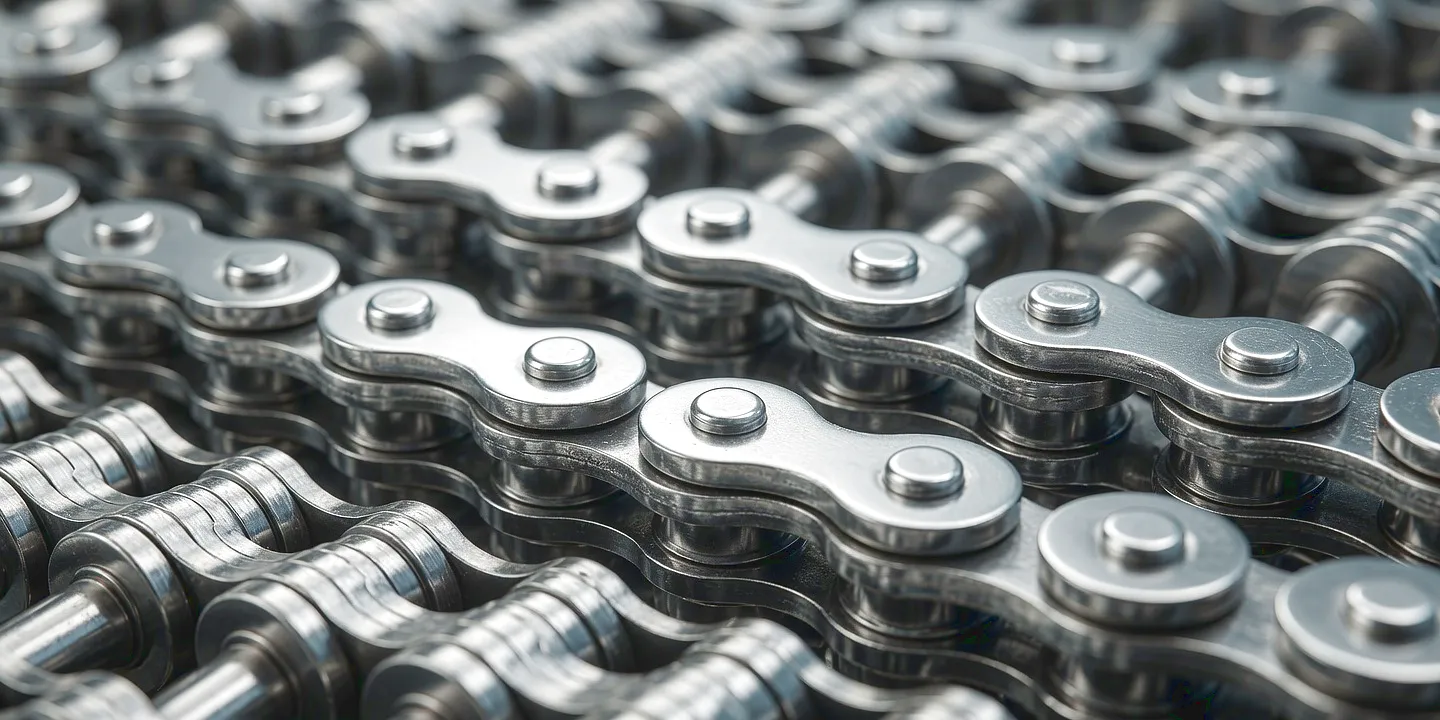
A modern corn harvester is more complex than many people outside the agricultural machinery sector realise. Multiple subsystems require controlled linear motion, and leaf chain serves each one with specific characteristics matched to the load and cycle requirements. Understanding these application points helps procurement teams and maintenance engineers specify the right chain for each position, rather than defaulting to a single grade across the machine.
Header Lift Mechanism
The primary leaf chain application on any corn harvester. Paired leaf chain assemblies run over sheaves connected to hydraulic cylinders, raising and lowering the entire gathering header. This is the highest-load, highest-cycle application, demanding BL834 or heavier grades. Chain lengths vary from 1.2 m to 3.5 m depending on the machine’s lift stroke. Ever Power supplies pre-cut, pin-fitted assemblies ready for direct installation.
Gathering Chain Tensioner
Inside the header, gathering chains pull corn stalks downward toward the snapping rolls. These gathering chains require precise tension to feed stalks smoothly. Leaf chain connects the tensioning mechanism to the adjustment assembly, maintaining constant pull even as the gathering chain wears and stretches during the season. A lighter-grade BL534 or BL634 typically handles this application adequately.
Feeder House Height Adjustment
The feeder house — the inclined conveyor section between the header and the threshing mechanism — often uses a leaf chain-driven height adjustment to match different header types. When operators swap between a corn header and a grain platform, the feeder house position must change. Leaf chain handles this adjustment with minimal backlash, ensuring the header attachment point stays precisely aligned.
Counterbalance Systems
Some larger self-propelled corn harvesters use leaf chain in counterweight mechanisms that offset header weight during transport mode. When the header tilts upward for road travel, leaf chain connects the counterbalance mass to the pivot assembly. The BL846 grade, with its higher plate count and increased tensile capacity, is a common choice here because it delivers the necessary load rating while still fitting within existing guide channels.

Customer Success: How UK Agricultural Businesses Rely on Our Leaf Chain
Case Study: Fenlands Grain Ltd — Lincolnshire, England
 Fenlands Grain operates a fleet of eight self-propelled corn harvesters across 2,400 hectares of arable land in South Lincolnshire. Their previous leaf chain supplier delivered chains that consistently exceeded 2% elongation within two seasons, requiring mid-season replacement on their busiest machines. Unplanned downtime during the October harvest window was costing the operation an estimated 4,500 GBP per machine per incident — including lost harvest capacity, emergency call-out charges, and the chain replacement itself.
After switching to Ever Power BL834 leaf chain assemblies across their fleet in 2024, Fenlands Grain recorded zero mid-season chain failures over two consecutive harvests. Elongation measurements taken at the end of the 2025 season showed an average of 0.9% across all eight machines — well below the 1.5% threshold that would trigger concern. The fleet manager estimated total savings of approximately 36,000 GBP over the two-year period, factoring in eliminated downtime, reduced replacement chain purchases, and fewer emergency service calls.
What Our Agricultural Customers Say
“We switched to Ever Power leaf chain on our three corn harvesters after a competitor’s chain snapped during peak harvest. Haven’t looked back. The quality difference is obvious when you handle the chain — the plates are heavier, the pins are tighter, and the whole assembly just feels more substantial. Two full seasons now with zero issues.”
— James Harrington, Fleet Workshop Manager, Norfolk Arable Partnership, East Anglia
“What sold us was the pre-loading. We’d always had issues with new leaf chain stretching during the initial hours of operation, requiring readjustment of the header lift mechanism. The Ever Power chain fitted perfectly from day one — our operators didn’t need to touch the tensioners at all. That saved us half a day of setup time per machine.”
— Sarah Blackwood, Maintenance Director, Midlands Harvest Contractors Ltd, Warwickshire
“We needed a non-standard length for a modified header lift on our forage harvesters — 2,870 mm with a specific anchor pin configuration. Ever Power quoted us within 48 hours and delivered the custom assemblies in under three weeks. The other suppliers we contacted either couldn’t do it or quoted 8-week lead times. Impressed all around.”
— David Chen, Engineering Manager, Yorkshire Farm Machinery Services, North Yorkshire
Ever Power Manufacturing: Custom Leaf Chain Built to Your Specification
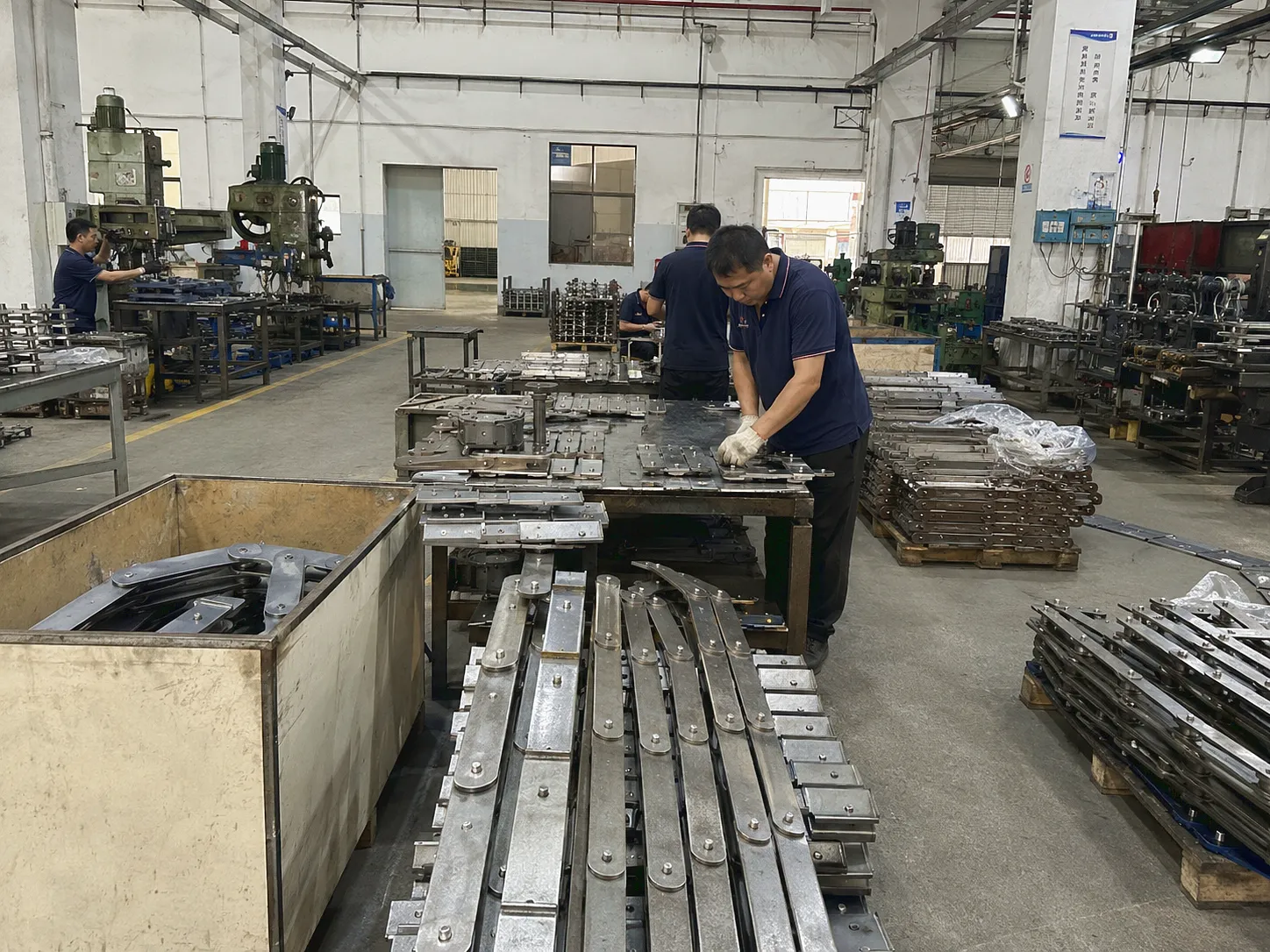
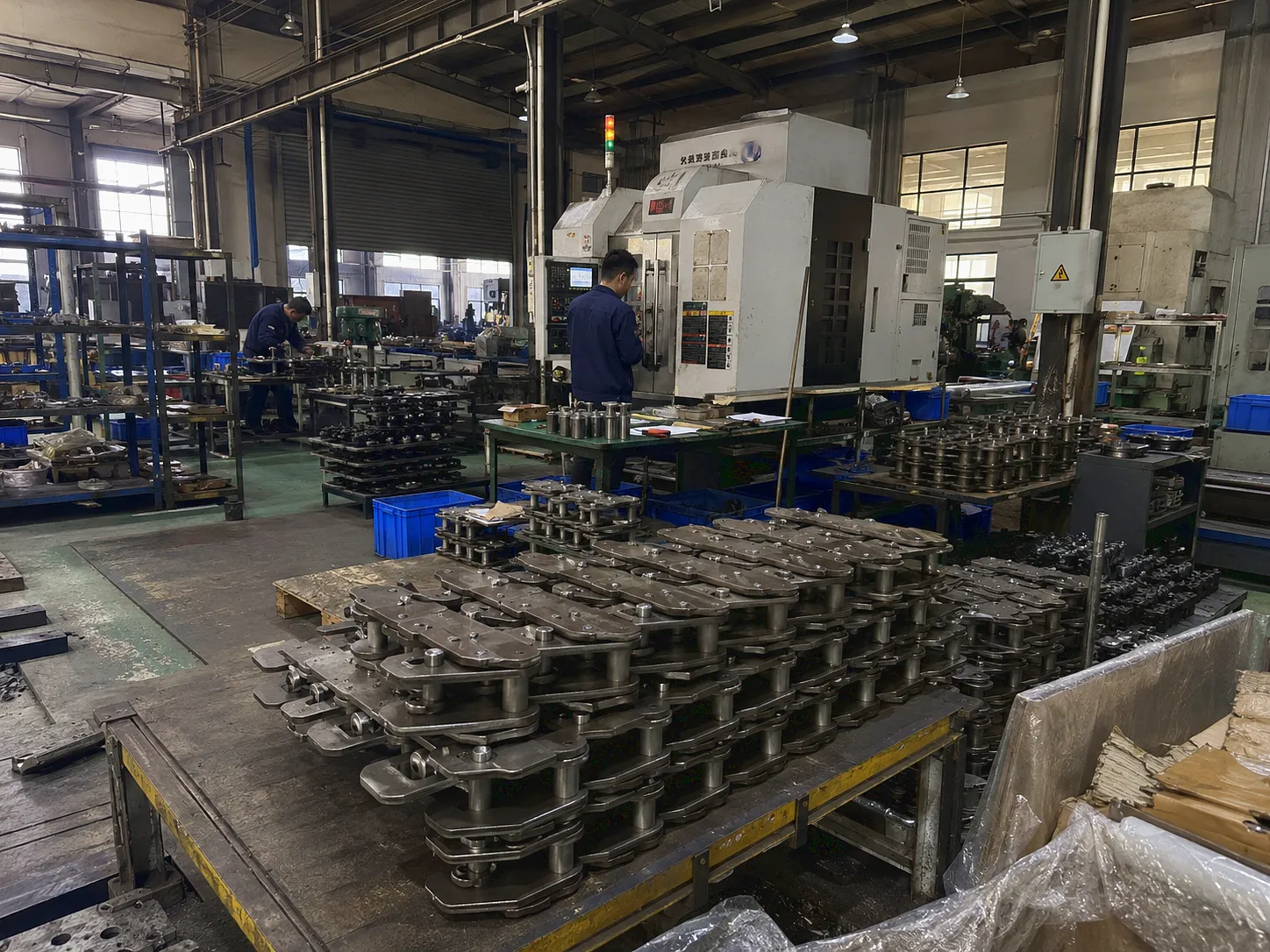
Ever Power operates a dedicated leaf chain production facility equipped with progressive stamping lines, automated heat treatment furnaces, precision pin-grinding stations, and hydraulic pre-loading test benches. Annual production capacity exceeds 5 million metres of finished leaf chain, serving OEM partners and aftermarket distributors across Europe, North America, and Asia-Pacific. The factory holds ISO 9001:2015 certification, and all leaf chain products are manufactured to ISO 4347 and ANSI B29.8 standards with full material traceability from steel coil to finished assembly.
What sets Ever Power apart for agricultural customers — particularly those running corn harvesters in the demanding UK climate — is the depth of customisation available. Standard catalogue chain covers most applications, but agricultural machinery often presents non-standard requirements. Modified header designs, retrofit lifting systems, and bespoke harvester builds all need leaf chain cut to exact lengths, fitted with specific anchor pins, and sometimes assembled with non-standard lacing configurations to achieve the precise load rating and flexibility profile required.
Our engineering team works directly with UK agricultural machinery manufacturers and fleet maintenance operations to develop custom leaf chain solutions. The process typically begins with a technical consultation: we gather details about the application — the load, the cycle frequency, the environmental conditions, the available space envelope — and recommend the optimal chain grade, surface treatment, and assembly configuration. Prototype quantities ship within 2-3 weeks, with production volumes following once the specification is approved. This turnkey approach has made Ever Power the preferred leaf chain partner for several major corn harvester OEMs serving the British market.
| Custom Service | Details | Lead Time |
|---|---|---|
| Cut-to-Length Assemblies | Exact chain lengths with pre-fitted clevis or cotterless connecting pins | 5-10 days |
| Special Surface Coatings | Zinc, nickel, dacromet, or PTFE coating for corrosion and wear protection | 10-15 days |
| Non-Standard Lacing | Custom plate configurations (e.g., 5×6, 3×6) for specific load requirements | 15-20 days |
| OEM Private Labelling | Branded packaging and documentation for agricultural machinery manufacturers | Agreed per contract |
| Matched Chain + Sheave Sets | Complete lifting kits with matched leaf chain and sheave assemblies | 15-25 days |
Serving the United Kingdom’s Agricultural Sector
The UK maize growing region stretches from the warmer counties of southern England — Devon, Somerset, Dorset — through the Midlands and up into the rich arable lands of East Anglia, Lincolnshire, and Yorkshire. Each of these areas supports significant corn harvesting activity between September and November, and each one demands reliable access to replacement parts when equipment needs attention during the harvest window. Ever Power maintains stocked inventory of the most commonly specified leaf chain grades for corn harvester applications, with warehousing arrangements that enable 2-3 day delivery to addresses across England, Scotland, and Wales. For urgent breakdown situations, we offer expedited shipping to get critical replacement leaf chain to your workshop or field location as quickly as possible.
We have developed long-standing relationships with agricultural dealership networks, independent service workshops, and large-scale farming operations throughout the UK. Our technical support team understands the particular challenges of corn harvesting in the British climate — the shorter days, the unpredictable weather, and the narrow harvest window that makes every hour of machine uptime valuable. When you contact us, you speak with engineers who understand your application and can recommend the correct leaf chain specification without lengthy back-and-forth. For agricultural shows and trade events across England, including Cereals, LAMMA, and regional county shows, our team regularly exhibits and can arrange face-to-face technical consultations.
Practical Maintenance Guide: Keeping Leaf Chain Performing on Your Corn Harvester
Even the highest-quality leaf chain requires proper inspection and maintenance to deliver its full service life. For corn harvester operators across the UK, establishing a structured maintenance routine is the single most effective way to avoid unplanned downtime during the critical harvest period. The following maintenance framework is based on recommendations from ISO 4347 and practical field experience gathered from agricultural operations across England.
🔎 Pre-Season Inspection
Before the September harvest window opens, measure leaf chain elongation across a span of 10 pitches using a calibrated vernier calliper. Record the measurement and compare against the chain’s nominal pitch length. If elongation exceeds 2%, schedule replacement. Visually inspect every plate for edge cracks, particularly near pin holes. Check pins for lateral displacement — any visible rotation indicates the chain has exceeded its wear limit and must be replaced regardless of elongation readings.
🛠 Mid-Season Checks
During active corn harvesting, perform weekly visual inspections of the leaf chain and sheave assemblies. Look for debris accumulation between plates — corn husks, stalk fibres, and mud can pack into the articulation points, accelerating wear. Clean the chain with a stiff brush and apply a light coat of agricultural chain lubricant. Check sheave alignment by observing the chain running under load; any lateral tracking indicates a misaligned sheave that must be corrected immediately to prevent uneven plate wear.
📦 Post-Season Storage
After the harvest concludes — typically by late November in most UK regions — thoroughly clean all leaf chain assemblies on the corn harvester. Remove mud, crop residue, and any abrasive material lodged between plates. Apply a corrosion-inhibiting oil or wax-based preservative to all exposed surfaces, paying particular attention to pin joints. If the harvester will be stored outdoors or in an unheated barn, consider removing the leaf chain entirely and storing it in a dry, indoor location to prevent condensation-driven corrosion over the winter months.
Leaf Chain vs. Wire Rope and Hydraulic Cylinders: Making the Right Choice

Agricultural engineers sometimes ask whether wire rope or direct-acting hydraulic cylinders could replace leaf chain in corn harvester lifting systems. Both alternatives have legitimate applications, but they come with trade-offs that typically make leaf chain the superior choice for this specific application. Wire rope offers excellent flexibility and can handle very long travel distances, but it requires regular inspection for broken wires, and the ferrule or swaged terminations are fatigue-sensitive points that can fail without external warning. Wire rope also stretches under load in a less predictable manner than leaf chain, making precise header height control more difficult.
Direct-acting hydraulic cylinders eliminate the chain entirely by providing lift force through an extending piston rod. This approach works well for short-stroke applications, but for the full lift range required by a corn harvester header — often 600 mm to 1,200 mm of travel — the cylinder length becomes problematic. A cylinder must be at least twice the stroke length when fully retracted, consuming valuable space inside the harvester frame. Leaf chain, by contrast, wraps compactly over a sheave, converting a relatively short cylinder stroke into a much longer chain travel. The mechanical advantage is significant, and it explains why the vast majority of corn harvester manufacturers worldwide specify leaf chain for their header lift systems.
| Criteria | Leaf Chain | Wire Rope | Direct Hydraulic Cylinder |
|---|---|---|---|
| Load Capacity (per unit width) | Excellent | Good | Excellent |
| Space Efficiency | Excellent | Good | Poor (long retracted length) |
| Positional Accuracy | Excellent (minimal stretch) | Fair (elastic stretch) | Excellent |
| Visual Inspection Ease | Easy (exposed plates) | Difficult (internal wire damage) | Moderate (seal wear hidden) |
| Replacement Cost | Low to Moderate | Moderate | High |
| Corn Harvester Suitability | ★★★★★ | ★★★ | ★★ |
How to Select the Right Leaf Chain Grade for Your Corn Harvester
Choosing the correct leaf chain specification is not a matter of picking the strongest available grade and fitting it to every position on the machine. Over-specifying wastes money and adds unnecessary weight. Under-specifying risks premature failure. The selection process involves four key variables, and getting each one right ensures the leaf chain delivers maximum service life with appropriate safety margins for agricultural field conditions.
The static load calculation comes from weighing the component being lifted — in most corn harvester applications, this is the header assembly. Include everything: the structural frame, the gathering chains, the snapping rolls, any attached sensors, and a realistic estimate of crop material clinging to the header during operation. Multiply this figure by the relevant safety factor — ISO recommends a minimum of 5:1 for lifting applications, though many agricultural OEMs specify 7:1 to account for shock loading on uneven terrain. The resulting figure is your minimum required tensile strength, which should be matched against the leaf chain specifications table above.
Chain pitch determines how the leaf chain articulates around the sheave. Smaller pitches flex more readily around smaller-diameter sheaves, while larger pitches handle heavier loads. For corn harvester header lift systems, the 25.40 mm pitch (1-inch) is the most common choice, offering a practical balance between load capacity and routing flexibility. The lacing pattern — the number of inner and outer plates per link — determines the chain’s load-bearing cross section. A 3×4 lacing suits most standard corn harvesters; upgrade to 4×6 only for the heaviest forage harvester applications or counterbalance duties. Ever Power’s engineering team can walk you through this selection process based on your specific machine data — contact us for a technical consultation.
Frequently Asked Questions About Leaf Chain for Corn Harvesters
Where can I source high-quality leaf chain for corn harvesters in the United Kingdom?
Ever Power supplies ISO 4347-certified leaf chain directly to UK agricultural businesses, with stocked inventory for the most popular corn harvester specifications and 2-3 day delivery across England, Scotland, and Wales. You can request pricing and technical datasheets by emailing [email protected]. We also supply through established agricultural dealership networks, so your local farm machinery dealer may already carry our products.
What does it cost to replace leaf chain on a corn harvester used for UK farming?
Replacement leaf chain costs depend on chain grade, length, surface treatment, and quantity. For a typical corn harvester header lift using BL834 leaf chain, expect to budget between 85 GBP and 250 GBP per assembly, including anchor pins and connecting links. Custom lengths or special coatings will affect pricing. Contact Ever Power for a specific quotation based on your harvester model and application requirements — we provide itemised pricing within 24-48 hours.
How do I choose the right leaf chain pitch size for my corn harvesting machinery?
The leaf chain pitch must match the sheave groove on your corn harvester — this is non-negotiable, as a mismatched pitch will cause the chain to ride improperly and fail prematurely. Check your harvester’s service manual for the OEM-specified chain designation. If the manual isn’t available, measure the distance between adjacent pin centres on the existing chain. Common pitches for corn harvesters are 15.875 mm (5/8 inch), 19.05 mm (3/4 inch), and 25.40 mm (1 inch). Ever Power can verify the correct specification from your harvester model number.
Which leaf chain specification works best for heavy-duty corn harvesters operating in wet UK field conditions?
For heavy corn harvesters working in typically wet British autumn conditions, we recommend BL834 or BL846 leaf chain with zinc plating or dacromet coating. The 25.40 mm pitch handles the load, the heavier lacing provides extra fatigue resistance for shock loading on uneven ground, and the surface coating protects against corrosion from moisture, crop acids, and soil contact. Dacromet coating offers superior salt-spray resistance compared to standard zinc and is worth the modest price premium for machines operating in particularly damp regions of England.
How often should I inspect and replace leaf chain on my agricultural corn harvesting equipment?
Perform a thorough leaf chain inspection before each harvest season, measuring elongation across a 10-pitch span with a calliper. Replace the chain if elongation exceeds 2% of nominal pitch length, or immediately if you observe cracked plates, turned pins, or visible corrosion pitting at pin holes. During active harvest, weekly visual checks are recommended. Well-maintained Ever Power leaf chain typically delivers 3-5 seasons of service on a corn harvester operating under normal UK conditions, though this varies with workload, terrain roughness, and maintenance diligence.
Can I get a custom leaf chain assembly quote for my corn harvester fleet in England?
Absolutely. Ever Power specialises in custom leaf chain assemblies for agricultural applications. Send us your requirements — chain designation, length, end fitting type, surface treatment preference, and quantity — and our engineering team will provide a detailed quotation within 48 hours. For fleet orders covering multiple corn harvesters, we offer volume pricing and can schedule deliveries to align with your pre-season maintenance calendar. Email [email protected] or use the quote request button on this page.
What makes ISO 4347 leaf chain more suitable for corn harvesters than standard roller chain?
ISO 4347 leaf chain is purpose-built for tensile lifting loads, while roller chain is designed for rotational power transmission. Leaf chain carries load through interlaced plates without rollers and bushings, which gives it a higher tensile capacity per unit width and a more compact cross-section. For corn harvester header lift mechanisms, where the chain must handle heavy static loads, absorb dynamic shock, and wrap around compact sheaves, leaf chain significantly outperforms roller chain in load capacity, fatigue life, and installation flexibility.
Where does Ever Power ship leaf chain for agricultural machinery within the United Kingdom?
Ever Power delivers leaf chain to all regions of the United Kingdom, including England, Scotland, Wales, and Northern Ireland. Our standard delivery service reaches most UK mainland addresses within 2-3 working days. For harvest-critical urgent orders, we offer next-day and same-day despatch options to agricultural regions including East Anglia, Lincolnshire, Yorkshire, the Midlands, and the South West — the primary corn-growing areas of England. Contact our logistics team to discuss delivery scheduling that aligns with your harvest preparation timeline.
Ready to Upgrade the Leaf Chain on Your Corn Harvester?
Ever Power supplies ISO 4347 / ANSI B29.8 certified leaf chain for corn harvesters and agricultural machinery across the United Kingdom. Custom lengths, specialised coatings, and fleet volume pricing are available. Our engineering team is ready to recommend the right specification for your application.
Email: [email protected] | Website: leaf-chain.com | edit by gzl