
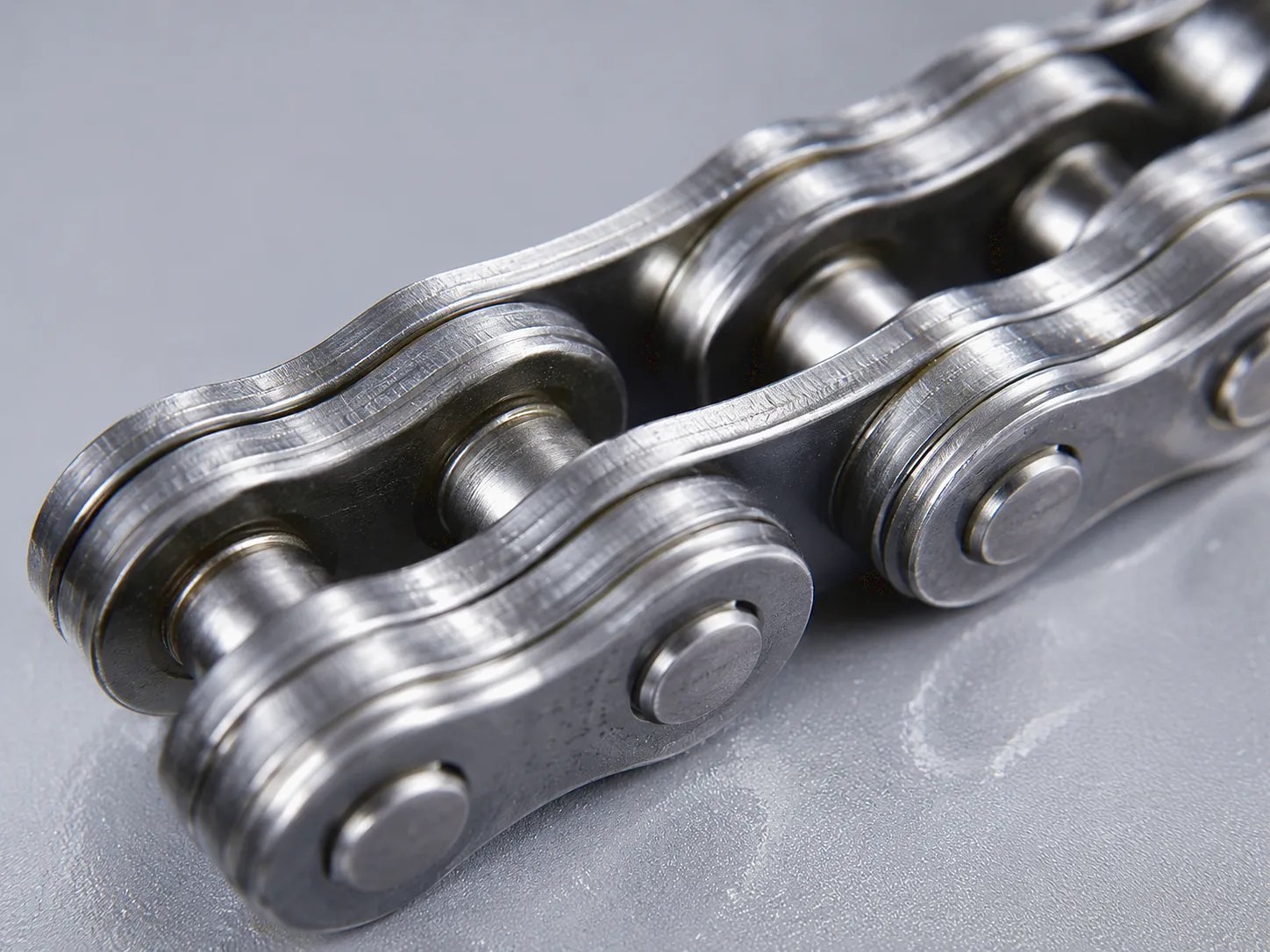
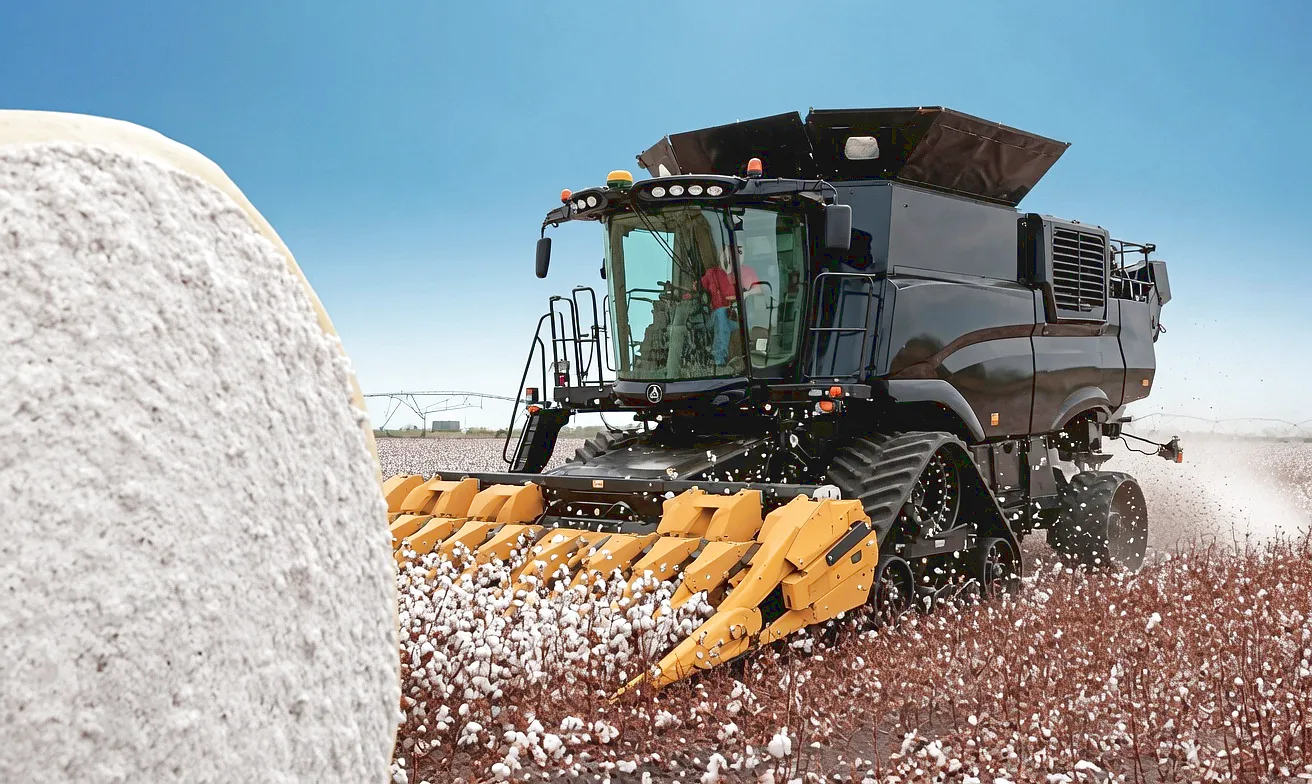
 Cotton picker machines operate under some of the most aggressive mechanical conditions in modern agriculture. Continuous dusty environments, sudden shock loads from dense bolls jamming the picking heads, and multi-shift harvesting seasons in regions from the American South to sub-Saharan Africa demand a chain that simply will not fail mid-row. Leaf chain — the flat, articulated link chain engineered for linear pull applications — has earned its place as the backbone of cotton harvesting machinery precisely because it offers unmatched tensile strength combined with the slim profile required inside cramped machinery housings.
For UK agricultural machinery engineers, service engineers, and OEM procurement teams sourcing components for cotton pickers — whether maintaining imported John Deere CP690s or Case IH Module Express platforms — understanding the correct leaf chain specification is the difference between a productive harvest and a catastrophic downtime event in the field. This guide walks through the engineering rationale, material science, selection criteria, and UK sourcing considerations in full detail.
Need a leaf chain quotation for your cotton picker project?
What Exactly Is Leaf Chain — And Why Does It Matter in Cotton Pickers?
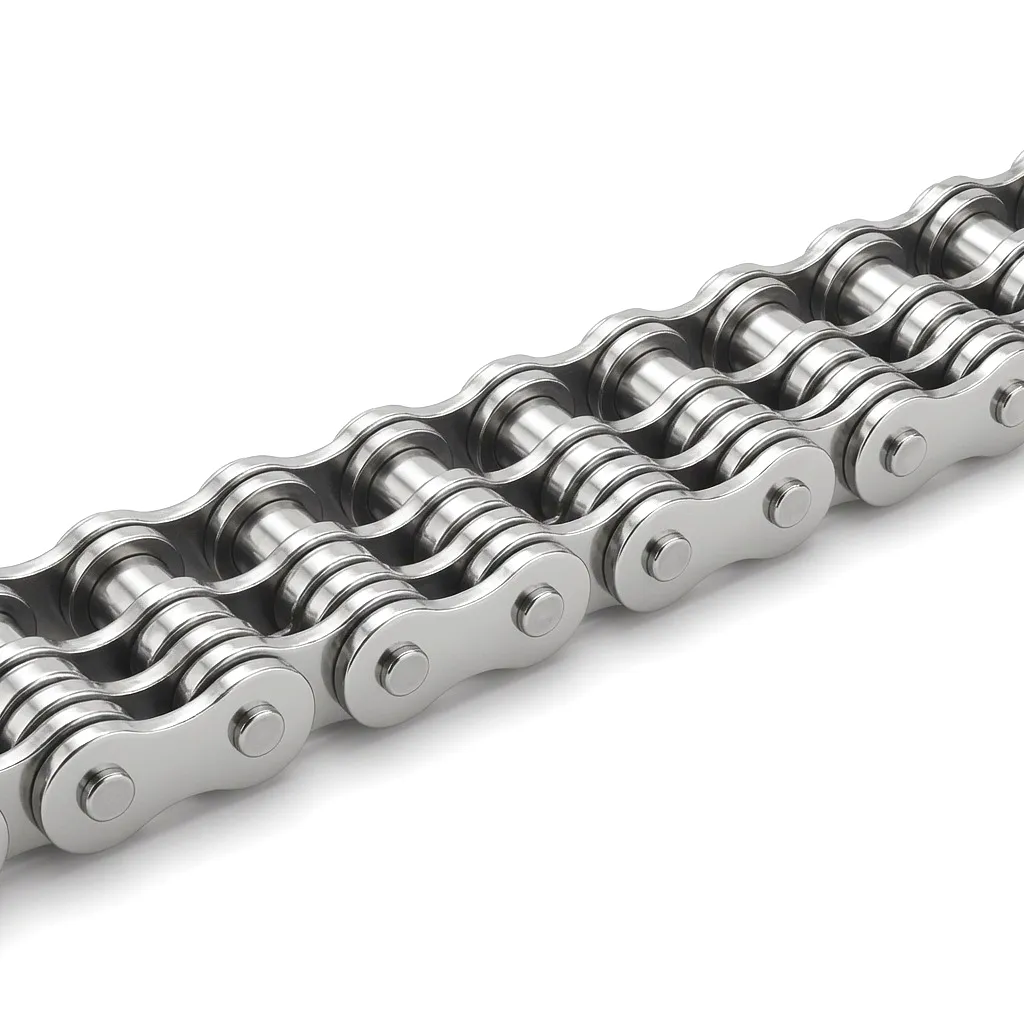
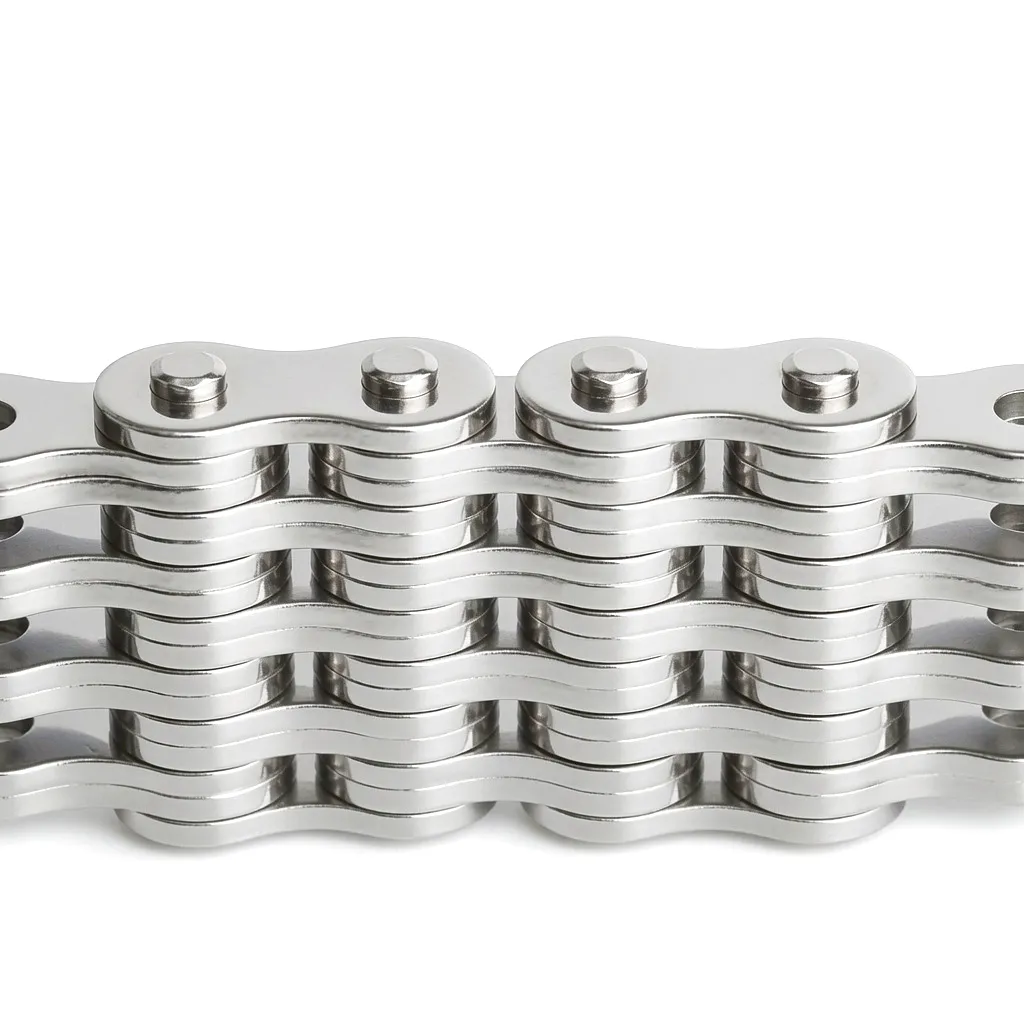
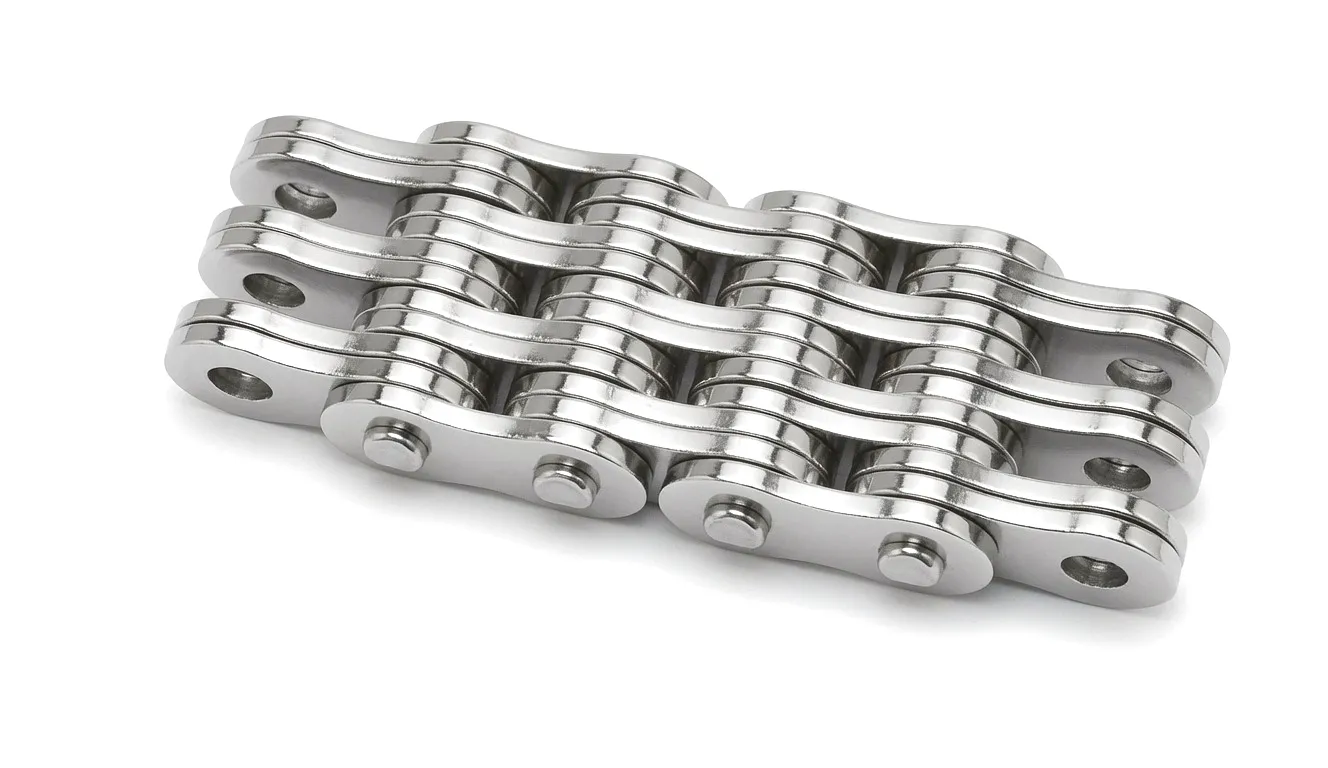
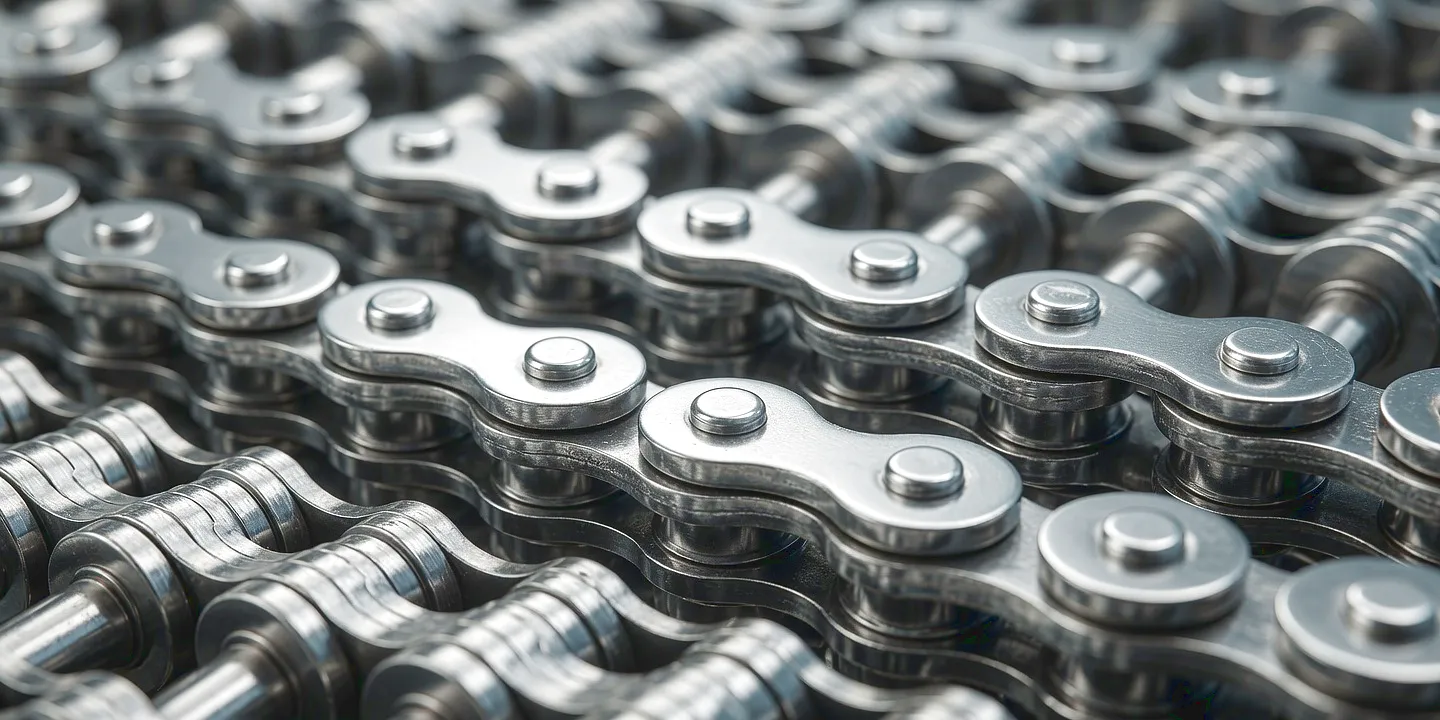
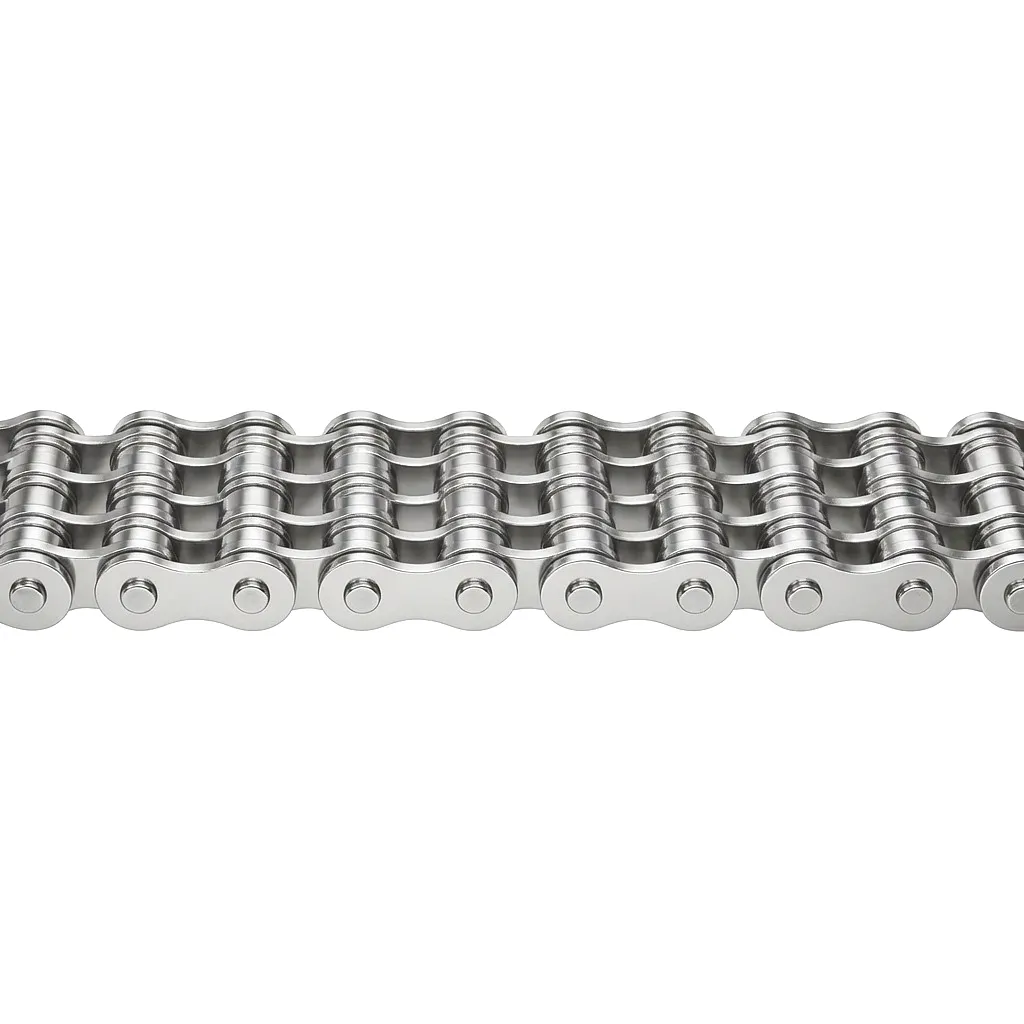 Leaf chain, also known as plate chain or lacing chain, is a type of chain manufactured exclusively from steel link plates and pins — there are no rollers or bushings as found in conventional roller chain. The entire load is carried directly through the link plates in tension, which is why leaf chain achieves tensile-to-weight ratios that roller chain simply cannot match in linear-pull service. Originally developed for forklift mast applications, this chain type has migrated into every industrial sector where controlled linear lift, pull, or tie-down is required, and cotton harvesting is one of the most demanding of them all.
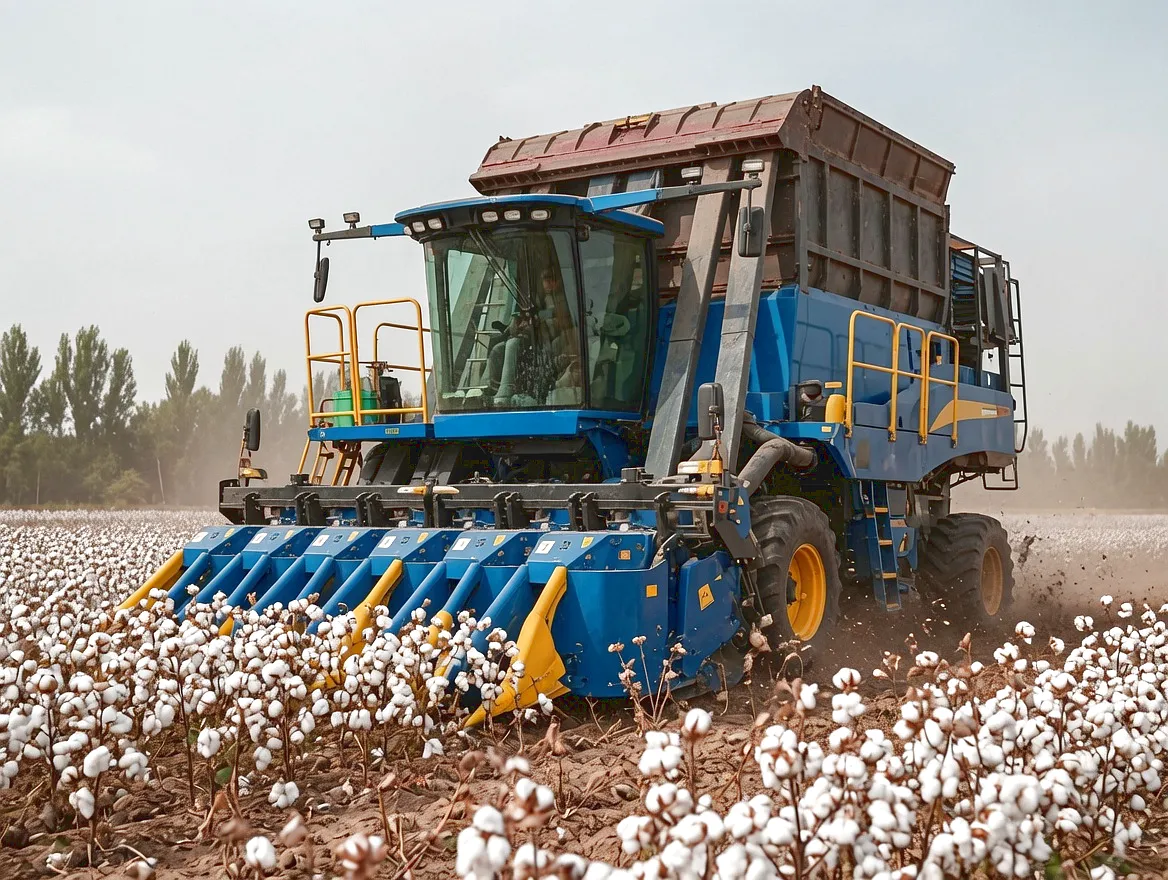
Inside a cotton picker, leaf chain performs three distinct jobs. It acts as the tensioning and drive element for the picking head spindle drives, it links the boll elevator mechanism that conveys harvested cotton up into the basket, and it provides the controlled tie-down and adjustment capability for the header height positioning system. Each of these duties involves a different combination of static load, dynamic shock load, and speed requirement — which is why selecting the correct leaf chain grade, lacing, and pitch is a genuinely specialist engineering task, not a simple part substitution.
The Engineering Principle: How Leaf Chain Handles Cotton Picker Loads
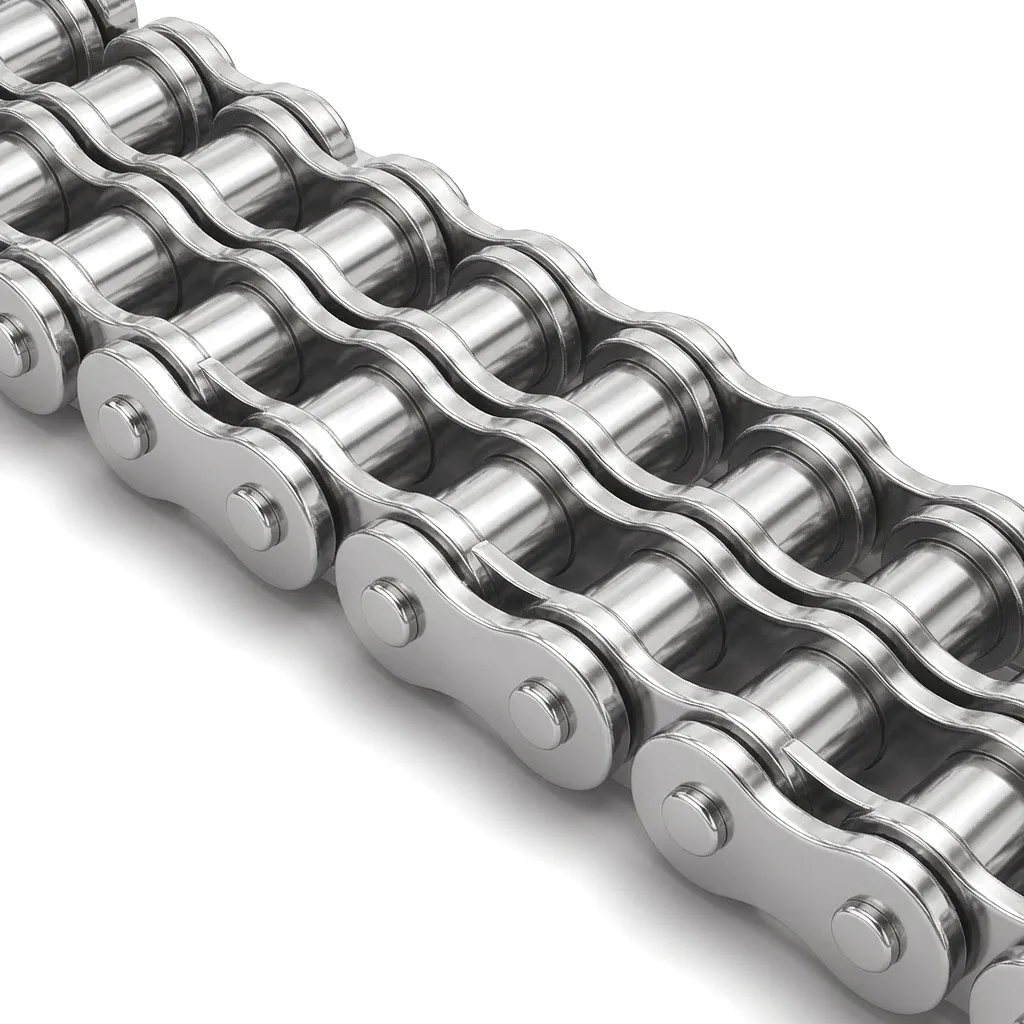 The fundamental mechanical advantage of leaf chain lies in its load-distribution geometry. Unlike roller chain where force must pass through a small contact zone between roller and sprocket tooth, leaf chain transfers tension across the full cross-sectional area of multiple parallel link plates. A standard BL844 leaf chain, for instance, carries tensile force through up to eight parallel plate rows simultaneously. This distributes stress far more evenly, dramatically reducing the peak stress at any single pin-to-plate interface and extending fatigue life in cyclically loaded applications like the elevator mechanism of a cotton picker operating at 800 to 1,200 boll-picking cycles per minute.
The articulation of leaf chain is also engineered differently from roller chain. Because there are no bushings to wear between pin and outer link, leaf chain maintains its pitch accuracy over a much longer service life under abrasive contamination. Cotton harvesting environments are notoriously dusty — fine lint fibres, cotton boll fragments, and field soil combine to create a highly abrasive slurry that accelerates bushing wear in conventional chains almost immediately. Leaf chain’s pin-to-plate bearing arrangement is inherently more tolerant of this contamination because the bearing area is larger and self-lubricating steel-on-steel contact is less sensitive to the ingress of fine particles than a roller-and-bushing assembly.
Technical Specifications: Leaf Chain for Cotton Picker Applications
The following table covers the most commonly specified leaf chain grades and sizes for cotton harvesting machinery, based on field application data from multiple OEM and aftermarket service programmes. Actual selection must be validated against the specific machine’s rated load and duty cycle.
| Chain Type / Grade | Pitch (mm) | Lacing | Min. Breaking Load (kN) | Pin Diameter (mm) | Typical Cotton Picker Application |
|---|---|---|---|---|---|
| BL422 (ASME B29.8) | 25.40 | 2×2 | 17.8 | 7.92 | Header height tie-down, light-duty picker head adjust |
| BL534 (ASME B29.8) | 38.10 | 3×4 | 48.5 | 11.07 | Boll elevator tensioning, single-row picker spindle drive |
| BL644 (ASME B29.8) | 38.10 | 4×4 | 71.2 | 14.27 | Multi-row picker elevator main drive, gin-stand feed chain |
| BL844 (ASME B29.8) | 50.80 | 4×8 | 142.3 | 19.05 | Module compress drive, heavy-duty 6-row picker head system |
| BL1044 (ASME B29.8) | 63.50 | 4×4 | 204.0 | 25.40 | Heavy basket lift system, self-propelled wide-body pickers |
* Data based on ASME B29.8 standard at ambient temperature (20°C). Agricultural applications with shock loading should apply a safety factor of 8:1 minimum on breaking load.
Six Critical Application Zones Inside a Cotton Picker
Picking Head Spindle Drive
The rotating spindles that extract cotton from open bolls are driven by a chain system that must endure thousands of start-stop cycles per hour. Leaf chain handles the acceleration shock without elongation.
Boll Elevator Mechanism
Harvested cotton travels from picking drums to the storage basket via a pneumatic or mechanical elevator tensioned and driven by leaf chain running in dusty, fibrous conditions continuously.
Header Height Adjustment
Precise, repeatable header positioning over uneven ground is managed by leaf chain tensioning systems that hold the header dead on the set point without creep under load reversals.
Module Compressor Drive
On-board module compressors generate enormous compressive forces to bale harvested cotton. The drive chains on these compressor mechanisms experience peak loads well above 100 kN, demanding the heaviest leaf chain grades.
Row-Unit Lift & Lower
The individual row units on multi-row pickers are raised and lowered hydraulically but constrained by leaf chain tension members that act as precise mechanical stops — preventing over-extension damage to the hydraulic rams.
Pre-Cleaner & Doff Mechanism
Doffer mechanisms that strip cotton from the spinning spindles run at high speed in close proximity to the picking drums. Leaf chain’s flat profile prevents fibre accumulation that would cause jamming in equivalent roller chain setups.
Materials, Metallurgy and Surface Treatment
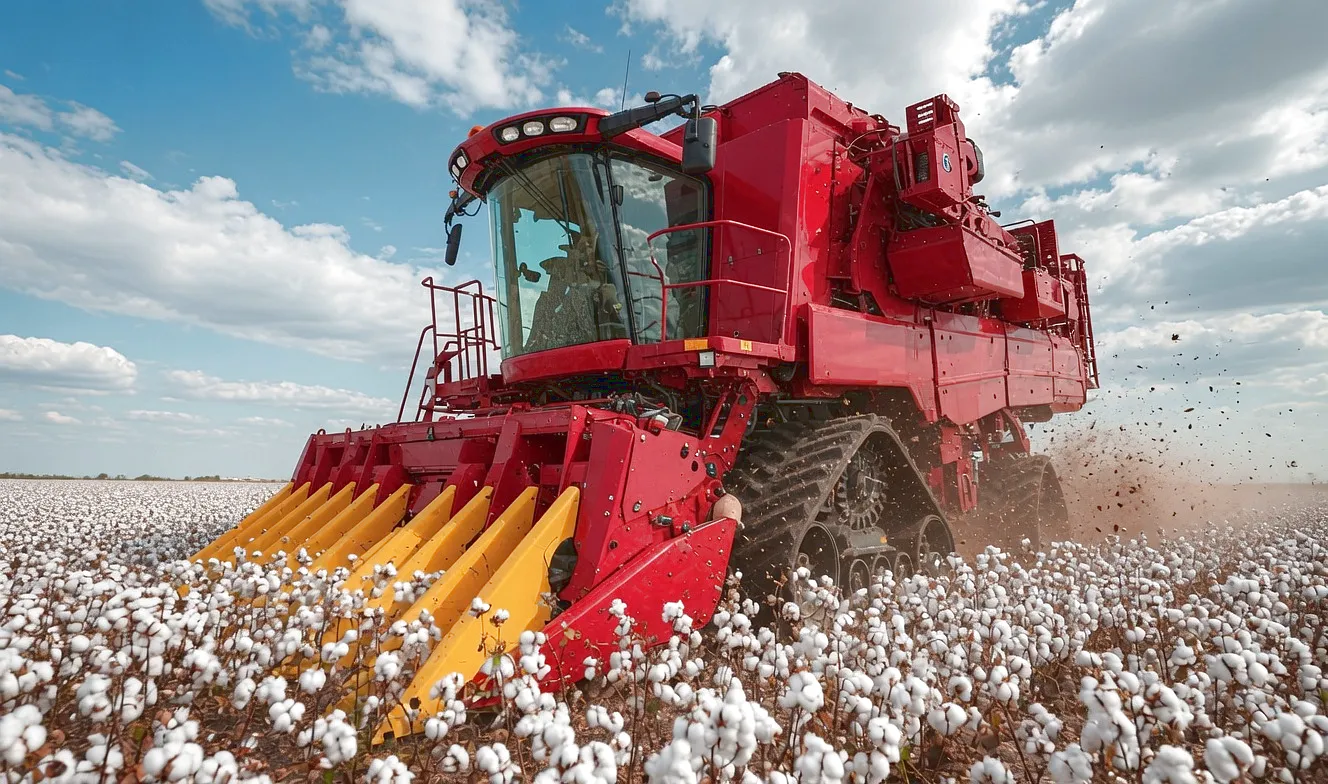
The link plates in a correctly specified agricultural-grade leaf chain are cold-formed from medium-carbon alloy steel, typically with a carbon content in the range of 0.35–0.55%, combined with manganese and chromium additions for hardenability and toughness. After forming, plates undergo a through-hardening process — oil-quench and temper — to achieve a core hardness in the range of 38–48 HRC, depending on the application’s shock-load requirements. Surface carburising to an additional case depth of 0.2–0.4 mm is applied in premium grades destined for cotton picker elevator service, creating a hard outer skin that resists abrasive wear from cotton seed grit while the tough core absorbs dynamic loading without brittle fracture.
Pins are machined from case-hardening steel rod (17CrNiMo6 or equivalent) and receive a carburised case depth of 0.5–0.8 mm at the bearing surface, with a surface hardness of 60–62 HRC. This combination of hard pin and semi-hard plate creates a bearing couple that exhibits predictable, controlled wear elongation rather than the sudden, catastrophic failure seen when both surfaces are through-hardened to maximum hardness.
For cotton picker applications in environments where corrosion is a concern — coastal growing regions, or machines stored outdoors between seasons — zinc-nickel electroplating or hot-dip galvanising can be applied. Stainless steel leaf chain grades (316L plates with 17-4PH pins) are available for highly corrosive environments, though these carry a cost premium of typically 3–4× over standard carbon steel grades and should only be selected where the corrosion risk genuinely justifies the expenditure.
Why Choose Ever Power Leaf Chain for Cotton Harvesting Equipment
Verified Tensile Consistency
Every batch is proof-loaded to 50% of minimum breaking load before despatch, with test certificate issuance as standard. No surprises when the chain goes into service mid-harvest season.
ASME B29.8 & ISO 4347 Dual Compliance
Meets both the American and international standard simultaneously, making our leaf chain fully interchangeable with OEM parts from John Deere, Case IH, and Claas harvesting platforms.
Extended Wear Life in Dusty Environments
Field data from cotton harvesting customers in the southern United States and Australia shows 30–45% longer service life versus equivalent imported commodity chain, directly reducing maintenance stops during the harvest window.
Custom Lengths & End Fittings
Pre-cut chains with specific connecting links, clevis end fittings, and anchor hooks are manufactured to order for OEM replacement and retrofit upgrade applications. No cutting, punching, or assembly required on-site.
UK Stocking & Fast Despatch
Core agricultural leaf chain grades are held in UK warehouse stock, enabling next-day despatch to agricultural machinery dealers and service workshops across England, Scotland, and Wales during the critical pre-harvest preparation period.
Traceability & Batch Documentation
Full material traceability from steel mill certificate through heat treatment records to finished product inspection is standard. Essential for machinery CE compliance documentation and warranty requirements in the UK market.

Customer Success: How a Texas Cotton Cooperative Reduced Harvest Downtime by 38%
A documented case from the 2024 harvest season demonstrates the tangible operational value of specifying the correct leaf chain grade from the outset.
Panhandle Harvesting Co-operative, Texas, USA
14× John Deere CP690 Cotton Pickers
Boll elevator & module compressor drive
The Challenge
Panhandle was experiencing unacceptably high leaf chain replacement intervals on their fleet — average chain life was only 280–320 operational hours before measurable elongation beyond the 3% maximum pitch wear limit specified by John Deere for the elevator drive application. With a 28-day harvest window and each machine covering 14–18 hours per day, chains were being replaced multiple times per season, costing the co-operative an estimated $187,000 in parts, labour, and lost harvesting capacity across the 2023 season alone.
The chain previously sourced through a local machinery dealer was of undisclosed Asian origin with no material certification, and field disassembly revealed under-hardened plates with surface pitting consistent with insufficient case depth — a known failure mode when surface treatment process controls are inadequate.
The Solution
Ever Power supplied BL644 leaf chain pre-cut to the specific elevator application length, with full material and heat treatment certification. The co-operative fitted the new chains at the start of the 2024 season and tracked operational hours via fleet telematics. Chain life reached an average of 487 hours before the 3% elongation limit was approached — a 52% improvement in service life. Across 14 machines and two harvesting shifts per day, the co-operative calculated a total season saving of $71,000 in reduced chain purchases, lower labour for change-outs, and an estimated 38% reduction in unscheduled maintenance stops.
What Our Agricultural Customers Say
We switched to Ever Power BL644 chains for our module express compressor drives three seasons ago and have not had a single unplanned chain failure since. The traceability documentation has also made our CE compliance paperwork far more straightforward.
As an importer of Case IH harvesting equipment into West Africa, sourcing reliable leaf chain replacements is genuinely difficult. Ever Power offer a pre-cut custom length service with certifications that our customers’ insurers and maintenance managers actually accept. That alone is worth the price premium.
Our engineering team spent two weeks evaluating leaf chain suppliers before approving Ever Power for our new spindle drive retrofit project. The combination of ASME B29.8 compliance, documented case hardening depths, and the ability to supply non-standard pitch lengths in the same lead time as standard was the deciding factor. Thoroughly recommended.
Manufacturing Capability: Custom Leaf Chain for Your Exact Cotton Picker Specification
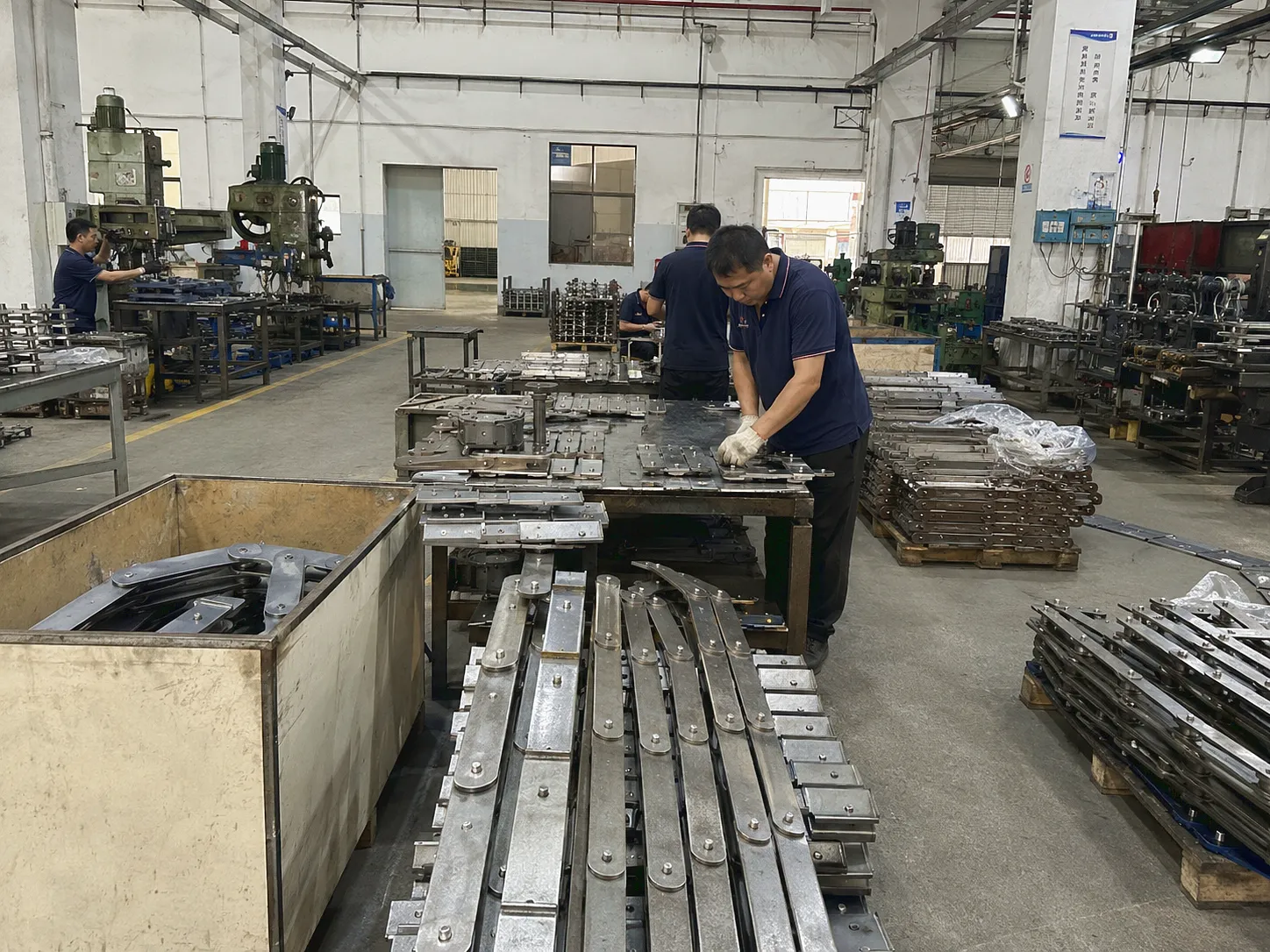
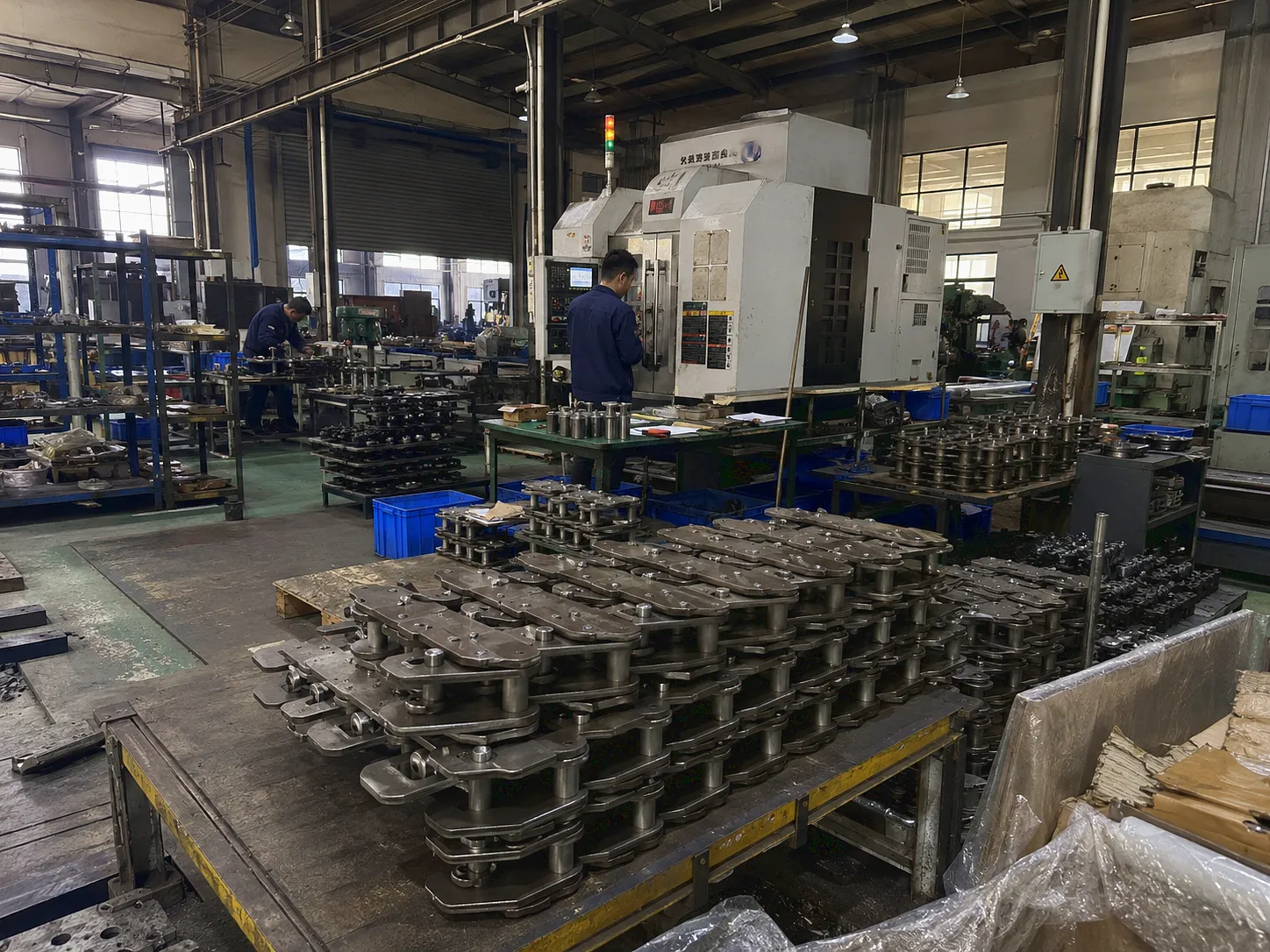
Ever Power’s manufacturing facility operates a dedicated αλυσίδα φύλλων production line equipped with precision CNC plate punching, controlled atmosphere heat treatment furnaces, and automated pin-turning lathes. The facility holds ISO 9001:2015 certification and runs statistical process control on every critical dimension — plate hole diameter tolerance is held to ±0.008 mm, and pin diameter to ±0.005 mm, ensuring the correct bearing fit that underlies consistent wear performance in the field.
Our custom manufacturing service goes well beyond simply cutting standard chain to length. For cotton picker OEM and large-scale aftermarket customers, we offer: non-standard pitch variants (pitch sizes between the standard ASME increments); modified plate width for compact head applications; solid bushing variants for extreme shock-load zones; pre-assembled anchor bracket and clevis end assemblies; laser-marked batch identification for full traceability across your service schedule. Minimum order quantities for custom specifications are discussed case by case — many of our agricultural customers are surprised by how accessible custom production runs are when working directly with the manufacturer.
UK-based agricultural machinery importers, OEM sub-assembly manufacturers, and national agricultural dealership chains are welcome to contact our technical team for a free specification review. We regularly work with UK machinery engineers to cross-reference OEM part numbers, identify equivalent leaf chain grades, and advise on upgrade specifications where the OEM chain has proven inadequate for actual field conditions.
Selecting the Right Leaf Chain: A Practical Guide for Cotton Picker Engineers
 Chain selection for cotton picker applications should follow a defined engineering process rather than simply matching a part number from an OEM parts book. The first parameter to establish is the maximum working load — this is not simply the static weight of the component being lifted or tensioned, but the dynamic load that occurs during acceleration, deceleration, and jam events. For cotton picker elevator applications, it is common to find that peak dynamic loads are 3–5× the calculated static load due to the shock loading from dense boll clusters entering the elevator at high harvesting speed.
Once maximum working load is established, apply the appropriate service factor. For clean, steady operation: service factor 1.0. For moderate shock (typical cotton elevator): 1.3–1.5. For heavy shock (module compressor drive): 1.7–2.0. Divide the minimum breaking load of the candidate chain by the service factor to obtain the allowable working load. Cross-reference this against the machine’s rated maximum working load — the selected chain should have a minimum breaking load at least 8× the maximum working load when shock conditions exist.
Pitch selection is driven by the existing anchor points and linkage geometry on the machine. Altering pitch in a retrofit context requires new anchor plates or modified clevis connections — our technical team can advise on the most practical approach. Where space allows, a larger pitch with fewer lacing rows is preferable over a smaller pitch with more rows because it reduces the number of articulation points that must remain lubricated under field conditions.
| Application Zone | Typical Load Range (kN) | Shock Category | Recommended Grade | Min. Safety Factor |
|---|---|---|---|---|
| Header height adjustment | 5–15 kN | Low | BL422 / BL522 | 8:1 |
| Single-row spindle drive | 18–35 kN | Moderate | BL534 | 8:1 |
| Boll elevator main drive | 40–65 kN | Moderate-Heavy | BL644 | 8:1 |
| Module compressor drive | 85–130 kN | Heavy | BL844 | 8:1 |
| Wide-body basket lift system | 140–200 kN | Very Heavy | BL1044 / BL1244 | 8:1 |
Sourcing Leaf Chain for Cotton Picker Equipment in the UK
The UK agricultural machinery sector sits in a unique position when it comes to cotton picker components. While the UK itself is not a cotton-growing nation, the country is a significant importer, re-exporter, and service hub for agricultural machinery destined for cotton-producing regions across Africa, the Middle East, and Central Asia. Birmingham, Sheffield, and Lincoln-based machinery importers regularly service and refurbish harvesting equipment for overseas customers — and sourcing the correct leaf chain components quickly and with full documentation is a persistent challenge that frequently delays scheduled refurbishment projects.
Ever Power maintains a UK distribution point with stocking agreements for the most commonly required agricultural leaf chain grades. Orders placed before 2pm UK time are typically despatched same-day for next-day delivery to mainland England, Scotland, and Wales addresses. For Northern Ireland and channel island addresses, two-day standard service is available, with express freight options for urgent harvest-related emergencies.
All products supplied into the UK market are accompanied by the documentation required for CE compliance, UKCA marking (where applicable), and import records suitable for VAT and customs purposes. Our technical team is UK-based and available Monday to Friday during normal business hours for specification support and urgent enquiries. We work regularly with agricultural engineering firms in the East Midlands, Yorkshire, and East Anglia where the agricultural machinery service sector is most concentrated.
Maintenance, Lubrication and Inspection: Field Best Practice
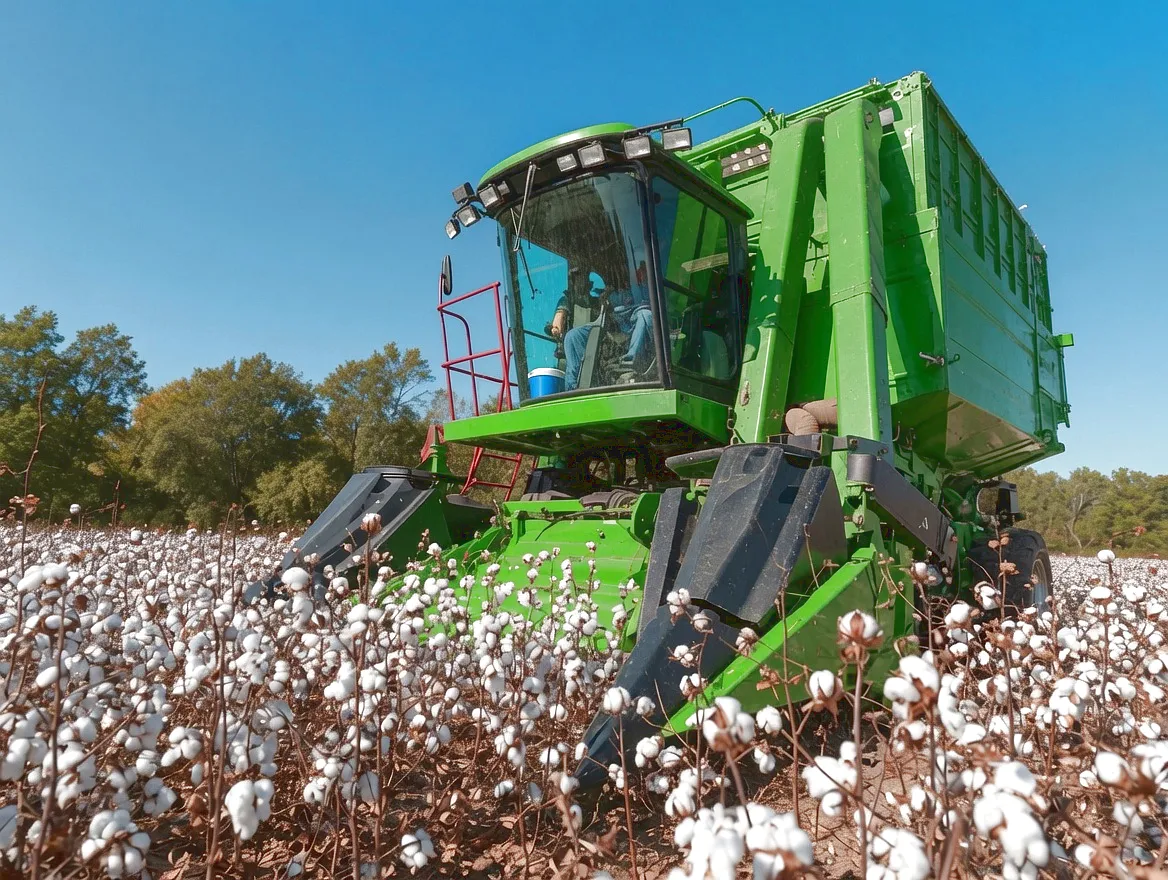
Even the best leaf chain will underperform if maintained incorrectly. Cotton picker operating conditions — with high temperatures, fine lint contamination, and the use of spindle lubricant — create a challenging lubrication environment that demands a specific maintenance approach rather than the generic advice often found in machinery manuals. The following practice has been validated across multiple cotton harvesting seasons in high-output operations.
Pre-Season Inspection
Measure pitch elongation with a calibrated chain wear gauge. Replace any chain showing greater than 2% elongation before the season begins. Inspect pin ends for corrosion or peening. A 15-minute inspection per machine can prevent hours of field downtime.
Lubrication Protocol
Use a semi-fluid chain grease (NLGI Grade 0 or 00) rather than oil in cotton picker applications — it adheres to the pin surfaces despite the centrifugal forces present at operating speed and does not wash away when spindle lubricant contacts the chain. Apply every 50–80 hours of operation in dusty conditions.
Wear Limit Monitoring
For elevator drive applications in cotton pickers, replace leaf chain at 2.5% elongation rather than waiting for the 3% OEM-stated limit. The additional margin accounts for the high shock loads during boll ingestion events that can cause rapid, uneven link plate wear progression in the final service period.
Post-Season Storage
Clean chains with a solvent-free degreasing solution, dry with compressed air, and apply a corrosion-inhibiting oil before the machine is stored for the off-season. Chains stored correctly on machines show 20–30% better retained tensile strength when re-inspected the following pre-season compared to chains left dirty and dry.
Frequently Asked Questions
Real questions from engineers, procurement managers, and agricultural machinery service professionals across the UK and internationally.
Ready to Specify the Right Leaf Chain for Your Cotton Picker?
Send your application details — machine type, application zone, existing part number, or load data — and our engineering team will respond with a specification recommendation and competitive UK supply price within one working day.
📩 Get a Quote — [email protected]
Ever Power · ISO 9001:2015 · ASME B29.8 · ISO 4347 · UK Stock Available
επεξεργασία από gzl