
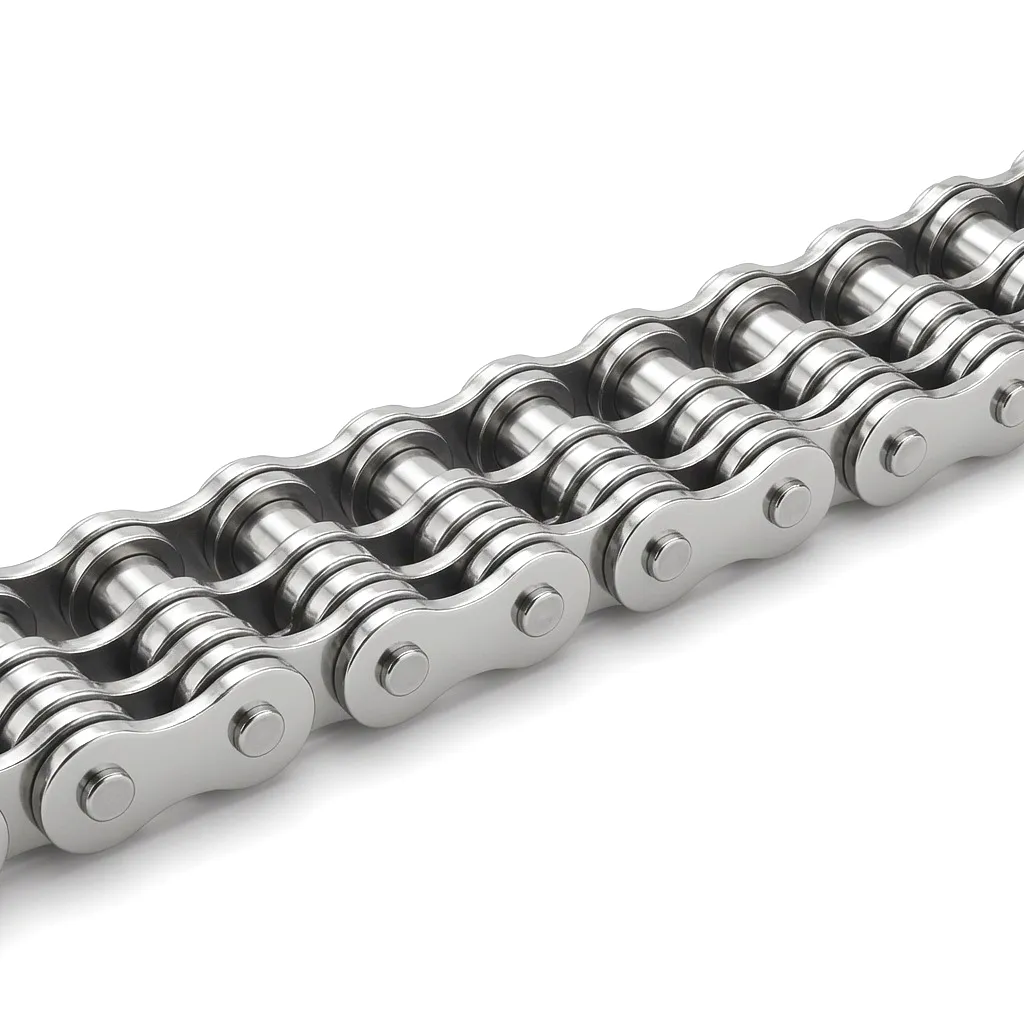
 Walk onto the floor of any large-scale bakery in the United Kingdom — a biscuit manufacturer in Birmingham, a craft bread plant outside Manchester, or a high-volume pastry facility in the Home Counties — and you will find the same engineering challenge running underneath every conveyor belt, prover tunnel, and oven transfer system: how do you transmit serious mechanical power through a food environment without failure, contamination risk, or unplanned downtime? The answer, increasingly, is leaf chain.
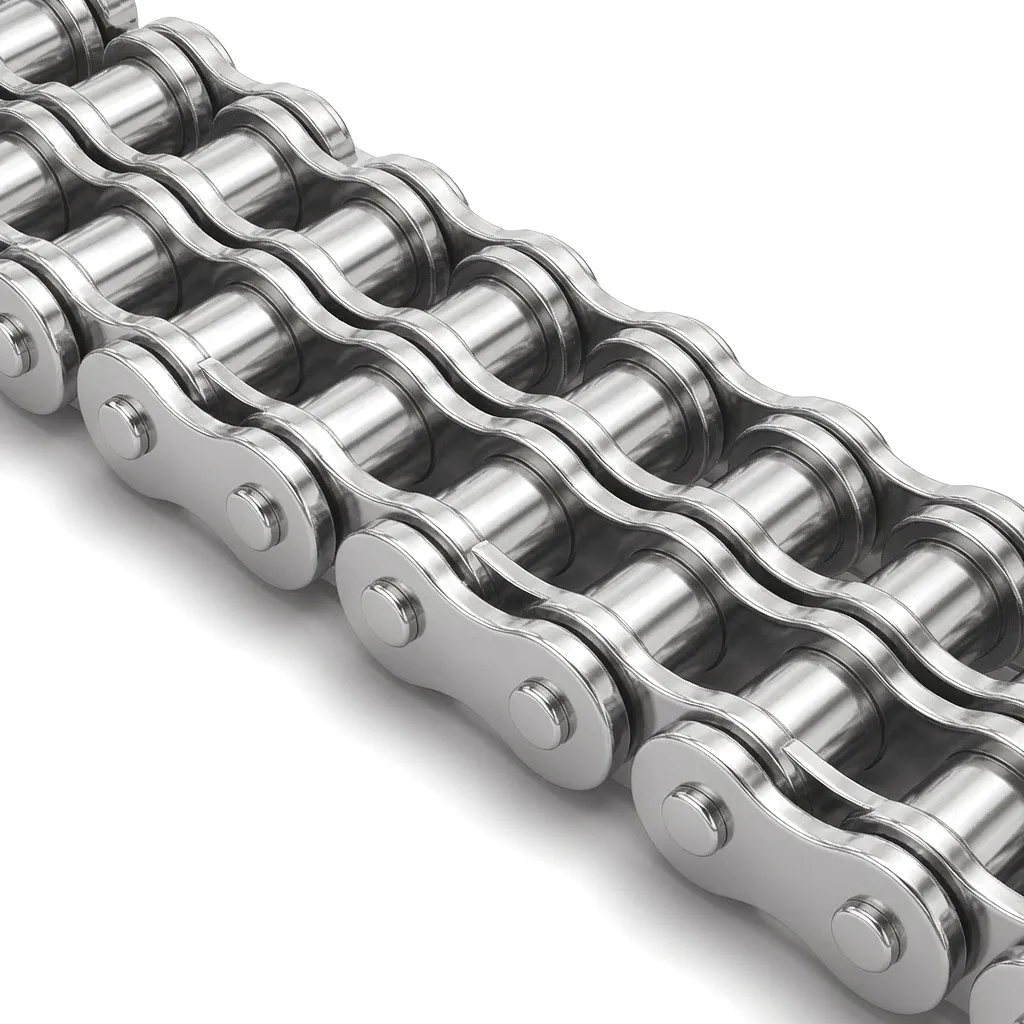
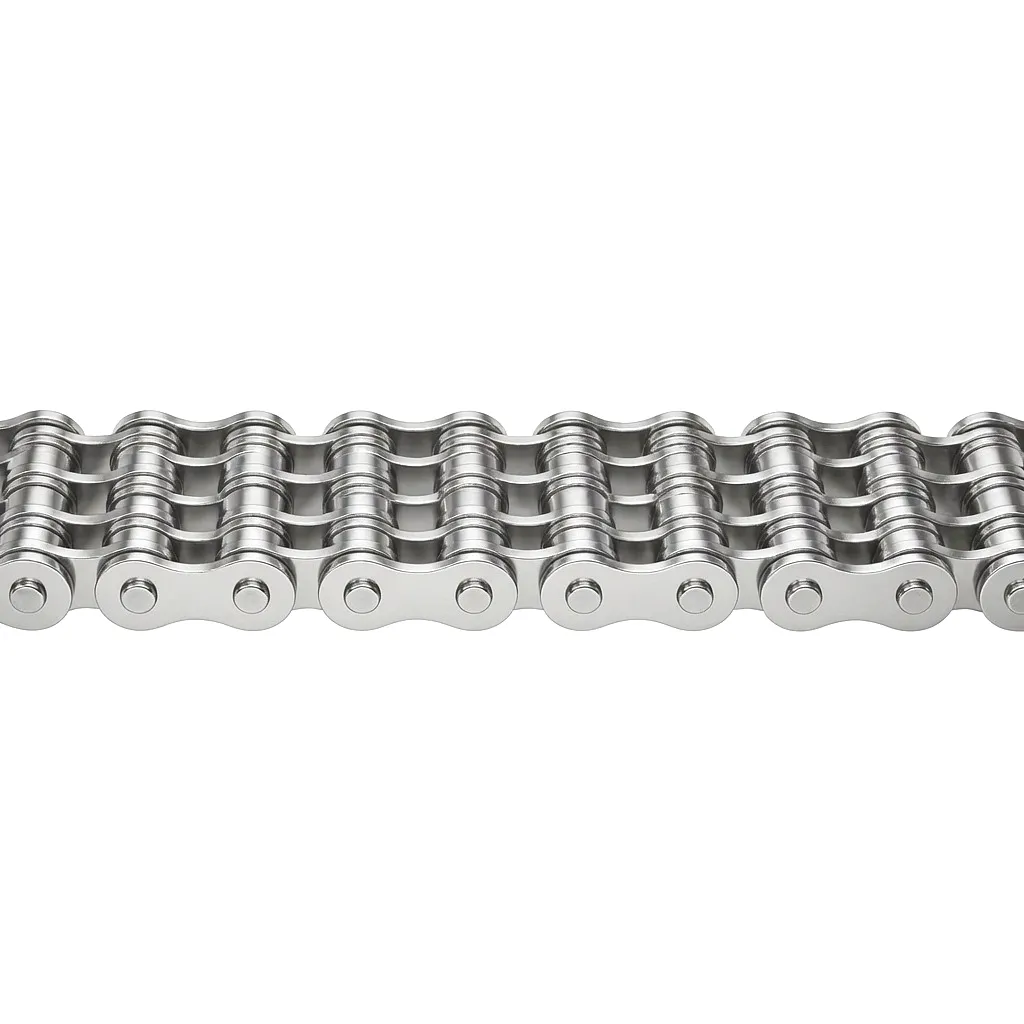
Leaf chain — also called lacing chain or flat-link chain in some specifications — is a high-strength power-transmission component built from interleaved link plates and precision pins. Unlike roller chain, there is no roller element; the load is carried entirely through the plate stack and pin assembly, giving leaf chain exceptional tensile strength for its cross-section. That characteristic makes it ideal anywhere a bakery production line must handle tension-dominated loads: counterbalance systems on vertical proofers, horizontal oven conveyors running at elevated temperatures, biscuit moulding press drives, and the wrapping and packing lines that sit at the end of every production flow.
This article draws on eighteen years of applied engineering experience with leaf chain across food manufacturing environments to give UK procurement managers, maintenance engineers, and plant designers a detailed, honest guide to why leaf chain belongs in your bakery specification — and how to select, size, and source it correctly.
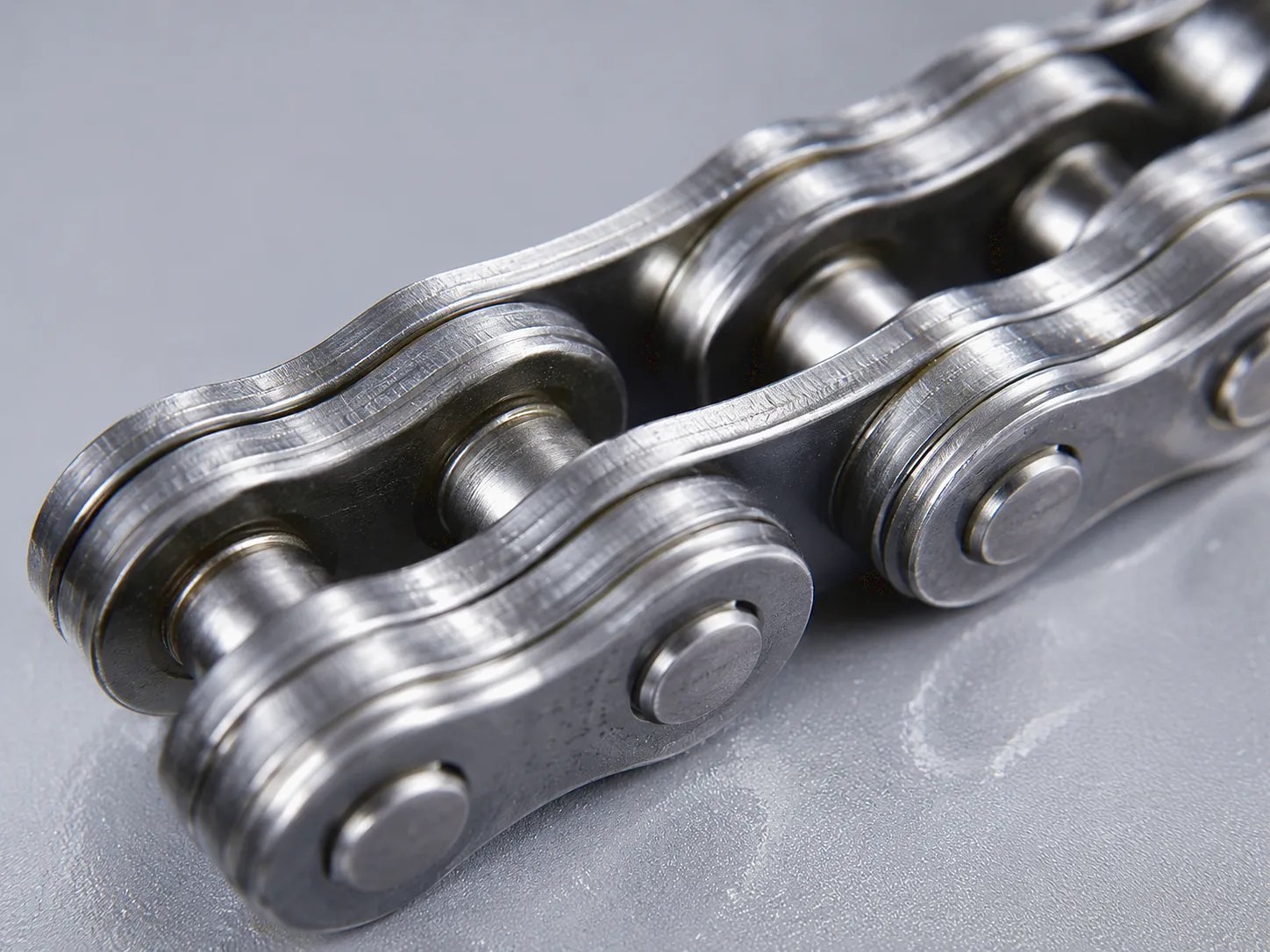
Ever Power leaf chain — engineered for continuous food-manufacturing environments
What Exactly Is Leaf Chain — and Why Does It Differ from Roller Chain?
Leaf chain, standardised under ANSI/ASME B29.8 and its ISO equivalents, is constructed entirely from flat steel plates — lacing plates and inner plates — locked together with hardened alloy-steel pins. There are no bushings and no rollers. Every external load passes straight through the plate-pin interface, which means the cross-section carries far more tensile force per unit width than an equivalent-pitch roller chain would.
The lacing pattern — expressed as the number of link plates per inner and outer link — defines the chain’s grade. A 4 × 4 lacing, for example, carries a significantly higher load than a 2 × 2 arrangement of the same pitch. This scalability is exactly what makes leaf chain so attractive for bakery equipment designers who need to dial tension capacity precisely to conveyor load without switching pitch.
Roller Chain vs Leaf Chain — At a Glance
- ⚙️ Drive type: Leaf chain = tension/counterbalance; Roller = sprocket-driven power
- 📐 Structure: Plates + pins only; no rollers, no bushings
- 🔩 Strength-to-size: Superior tensile strength per unit weight
- 🌡️ Temperature range: Suitable for oven-adjacent high-heat zones
- 🧼 Hygiene: Stainless-steel grades available; compliant with food-area standards
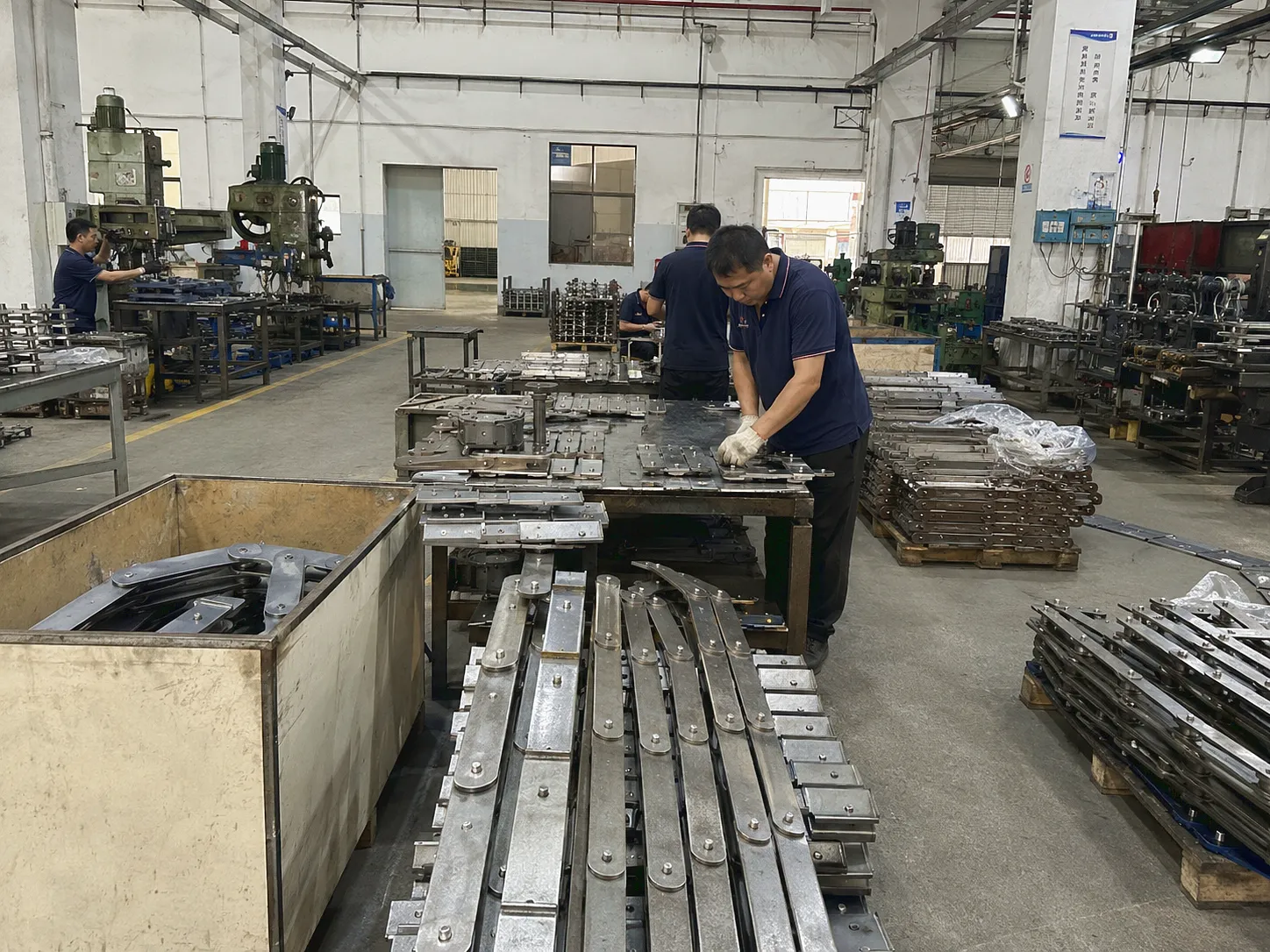
Precision manufacturing — heat-treatment bays for chain plates
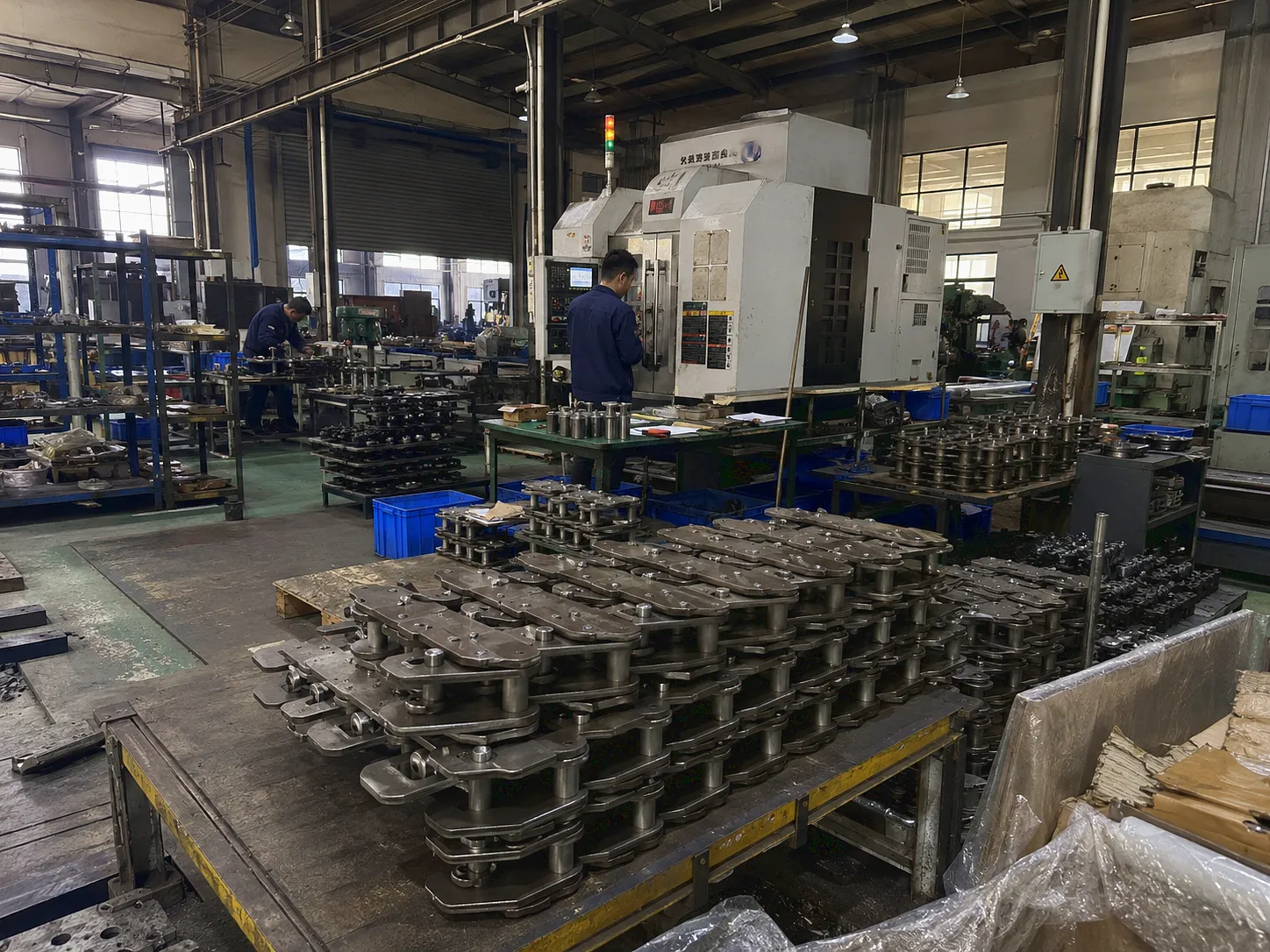
Dedicated QC team — every chain batch tested before despatch
Why Bakery Production Lines Create Uniquely Demanding Chain Applications
Bakeries might look gentle from the outside — flour, warmth, the smell of bread — but from an engineering standpoint, they are among the most hostile environments a mechanical drive component will ever face. The combination of heat, humidity, steam, airborne flour dust, food-grade lubricant restrictions, and the relentless 24-hour operating cycles that characterise modern food production pushes every chain specification to its limits.
Oven Zone Heat
Tunnel ovens typically operate at 180–250 °C at the belt. Transfer mechanisms and oven-entry conveyors regularly see radiated temperatures above 120 °C at the chain level — well beyond the safe continuous range for standard carbon-steel roller chain with conventional grease lubrication.
Steam & Humidity
Prover chambers and steam-injection ovens maintain relative humidity of 80–100%. Standard carbon steel oxidises rapidly in these conditions, leading to surface pitting, accelerated wear, and elongation that throws conveyor timing out of alignment — a critical failure mode in biscuit-cutting and portioning lines.
Continuous Operation
Larger bread plants often run three shifts with only one planned maintenance window per week. A leaf chain drive on a proofer counterbalance system may complete over 300,000 load cycles before its first scheduled inspection. Fatigue resistance is therefore not a desirable attribute — it is a baseline requirement.
Hygiene Compliance
UK food manufacturers must comply with Food Standards Agency (FSA) guidance and BRC Global Standard for Food Safety. Any lubricant or chain material that enters the food zone must be food-grade. Leaf chain in stainless steel or with food-grade lubricant coatings satisfies these requirements without compromising tensile performance.
These four pressure points — heat, humidity, cycle count, and hygiene regulation — converge to create a specification environment where leaf chain consistently outperforms alternatives. The plate-dominated structure has fewer internal voids to collect moisture and debris, the pin-plate joint tolerates thermal expansion without binding, and the scalable lacing system allows designers to add tensile margin without upsizing the chain pitch, keeping equipment footprint compact.
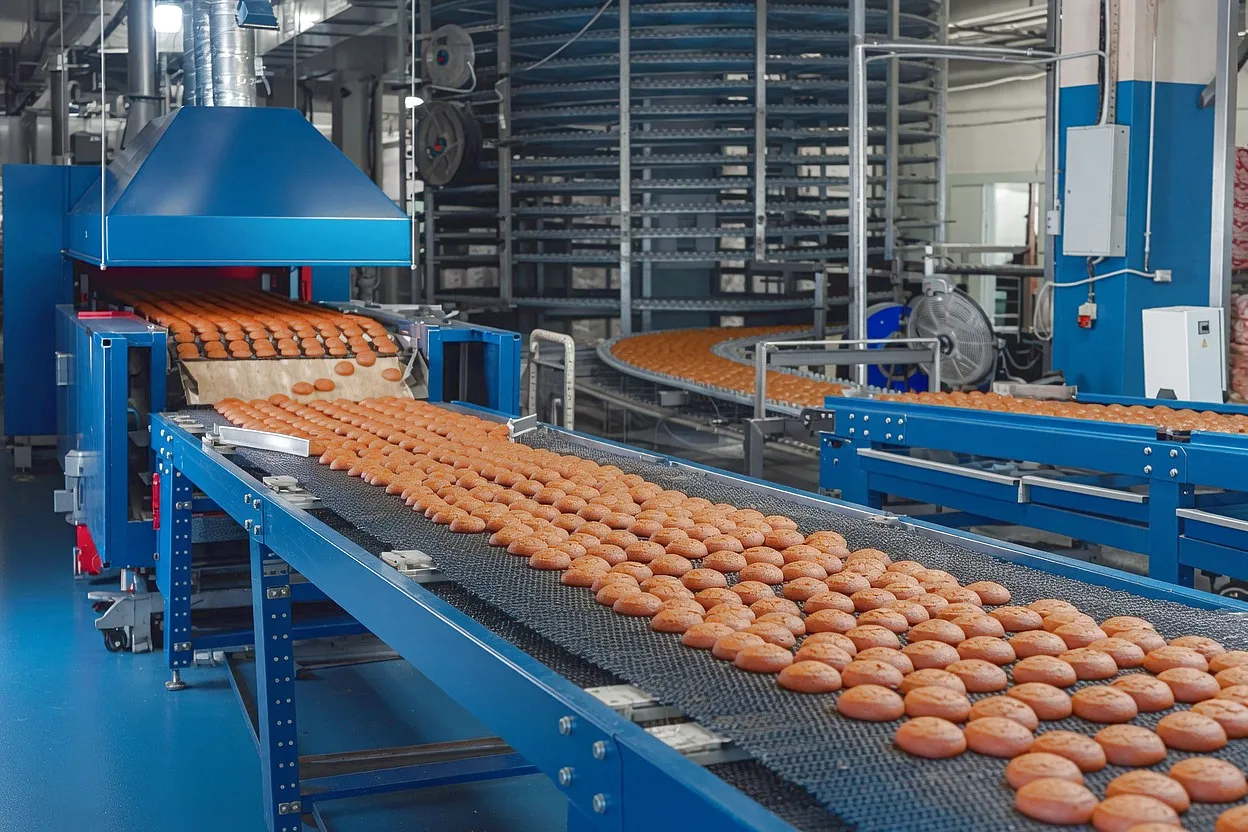
Leaf chain deployed in a continuous high-load conveyor application
Technical Specifications — Ever Power Leaf Chain for Bakery Applications
Selecting the right leaf chain grade is not a matter of picking the strongest available — it is about matching tensile capacity, pitch, and lacing to the actual static and dynamic loads in your system, then applying an appropriate safety factor for the operating environment. The table below covers the primary grades specified in bakery installations across the United Kingdom, using ANSI BL designations that align with common OEM documentation.
| Chain Grade (ANSI) | Pitch (mm) | Lacing | Min. Breaking Load (kN) | Max. Operating Temp. (°C) | Typical Bakery Use |
|---|---|---|---|---|---|
| BL 422 | 25.40 | 2 × 2 | 22.4 | 120 | Light conveyor tensioning, wrapping line returns |
| BL 444 | 25.40 | 4 × 4 | 44.5 | 150 | Spiral proofer counterbalance, oven-entry lift systems |
| BL 546 | 31.75 | 4 × 6 | 67.8 | 150 | Biscuit press drives, heavy panning system counterweights |
| BL 666 | 38.10 | 6 × 6 | 133.4 | 150 | Heavy-duty spiral proofer main counterbalance |
| BL 844 SS | 50.80 | 4 × 4 | 115.7 | 200 | Steam-injection zones, wash-down areas (stainless steel) |
| BL 1044 SS | 63.50 | 4 × 4 | 185.5 | 200 | Large-scale automated bakery lifts, multi-tier stacking systems |
SS = Stainless Steel grade · All values are nominal — consult Ever Power engineering team for application-specific safety factor guidance

Shot-blasted and heat-treated plates for maximum fatigue life
Six Critical Application Points on a Bakery Line Where Leaf Chain Delivers
1. Spiral Proofer Counterbalance Systems
The spiral proofer is the heart of any large bread plant. Inside, a continuous mesh belt carries hundreds of dough pieces through a controlled temperature and humidity environment for up to ninety minutes. The belt drive is counterbalanced by a heavy weight assembly to reduce motor load and keep tension uniform. This counterbalance is almost universally leaf-chain driven — the chain must carry a static tension of several tonnes continuously, with dynamic shock loads each time the line starts or emergency-stops.
A BL 666 or BL 846 leaf chain, specified with a safety factor of at least 5:1 on the maximum working load, is the standard choice for this application. In facilities operating above 1,500 loaves per hour, we typically recommend the stainless-steel equivalent to handle the persistent humidity without corrosion-induced fatigue cracking. Lubrication intervals extend significantly with stainless grades, reducing the frequency with which engineers must enter the proofer environment — a health-and-safety benefit that UK plant managers value highly.
2. Tunnel Oven Transfer and Entry Mechanisms
The entry point of a tunnel oven is where many production lines experience their most severe component degradation. Radiated heat from the oven mouth, cycling thermal loads as the belt enters and exits, and the physical shock of bread tins being loaded — all combine to create a brutal wear environment. Leaf chain used here is almost always a high-temperature, low-clearance variant running with a food-grade solid-film lubricant applied at the pin-plate interface.
The key engineering advantage of leaf chain at oven entry is its low cross-sectional profile. Because there is no roller element to accommodate, the chain can be routed through very tight clearance guides adjacent to the oven structure — often with less than 15 mm of side clearance — without contact between the chain body and guide rails. This matters enormously in retrofit projects where plant designers must integrate new chain drives into existing oven footprints with no freedom to widen the structure.
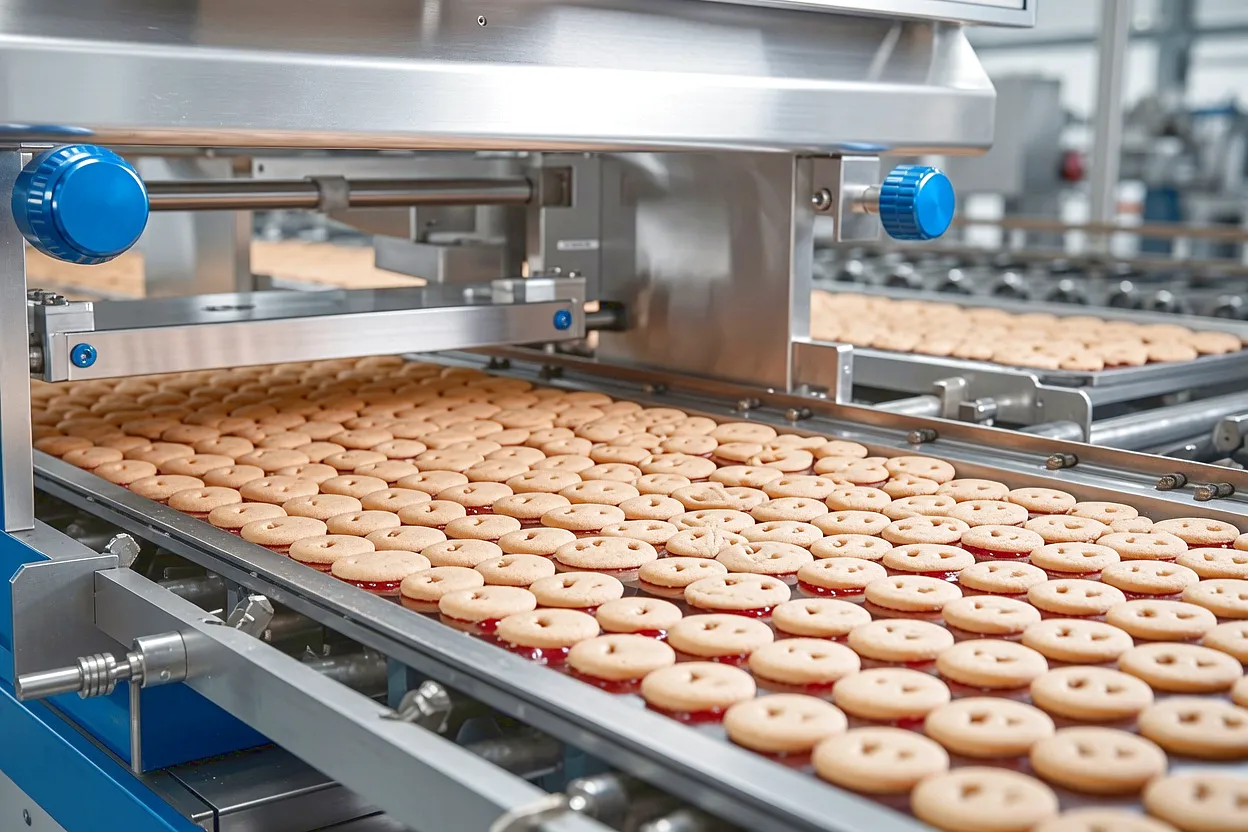
Leaf chain in high-temperature conveyor transfer — bakery oven sector
3. Biscuit and Cracker Rotary Moulding Press Drives
Rotary moulding presses used in biscuit manufacturing impose a characteristic pulsing torque load on their drive chains. Each time a moulding die engages the dough sheet, there is a brief but significant torque spike — in a typical 1.2-metre-wide rotary cutter running at 45 cuts per minute, these spikes can exceed the continuous torque by a factor of 2.5 to 3. A chain selected on continuous torque alone will be chronically overloaded at the pin-plate interface and fail prematurely, often through plate fatigue fracture on the outer lacing.
Leaf chain handles pulsing loads exceptionally well because the load path distributes across multiple plate thicknesses simultaneously. Specifying a BL 546 or BL 648 with a dynamic service factor applied to the peak torque — not the running average — is the correct engineering approach. The result is a drive that runs for 12 to 18 months between planned replacement intervals, compared with 4 to 6 months that roller chain alternatives typically achieve in the same position on the same equipment.
4. Bread Pan Stacking and Destacking Lifts
Automated pan-stacking towers at the discharge end of a cooling conveyor are a common leaf chain application that many plant engineers do not immediately associate with this component category. These lifts raise and lower stacks of bread pans — a loaded stack can exceed 400 kg — continuously through a cycle time of less than 15 seconds. The chain must withstand both the static weight and the inertial braking load when the stack decelerates.
What makes leaf chain specifically appropriate here — rather than wire rope or flat belt — is the combination of positive location, fatigue strength, and repairability. Unlike wire rope, leaf chain can be inspected visually for plate cracking and elongation during scheduled downtime, and a failed or borderline link can be replaced without changing the entire run. That maintainability reduces the mean time to repair significantly on production lines where every hour of downtime costs thousands of pounds.
5. Flow-Wrap and Bagging Machine Drives
The packaging hall is typically cooler and drier than the baking area, but leaf chain still earns its place there. High-speed flow-wrap machines sealing loaves or biscuit multipacks at 120+ packs per minute impose very rapid tension reversals on their drive systems. The vertical jaw mechanism — which seals the film between each pack — uses a crank-driven leaf chain to convert rotary motor output into synchronised jaw motion.
At these speeds, dimensional precision matters as much as tensile strength. A chain that has elongated by more than 3% will cause the jaw to arrive slightly early or late relative to the film seal point, producing misaligned seals — a quality-assurance rejection that can run to thousands of packs before the problem is caught. Ever Power supply leaf chains in this application to DIN 8152 tolerances on pin pitch, with guaranteed maximum elongation of 0.75% over the first 500 hours of operation, keeping seal timing within machine specification throughout the chain’s service life.
6. Depanner and Cooling Conveyor Tensioning
After the oven, bread must cool before slicing — typically from around 200 °C down to 28–32 °C over 90 to 120 minutes on a cooling spiral or flat-bed conveyor. Belt tensioning on these conveyors is achieved by a take-up mechanism driven or held by leaf chain. The chain operates in a thermal gradient environment as radiated heat from the fresh loaves warms the return strand — a condition that causes thermal elongation in the chain that must be accounted for in the anchor point design.
Specifying a leaf chain with a measured thermal expansion coefficient and building that into the take-up travel calculation prevents over-tensioning during cool-down at shift end — one of the most common causes of premature link-plate fatigue in this position. The Ever Power engineering team provides thermal expansion data for each grade on request, alongside a simple calculation worksheet that UK maintenance engineers can use to verify their take-up settings without specialist software.
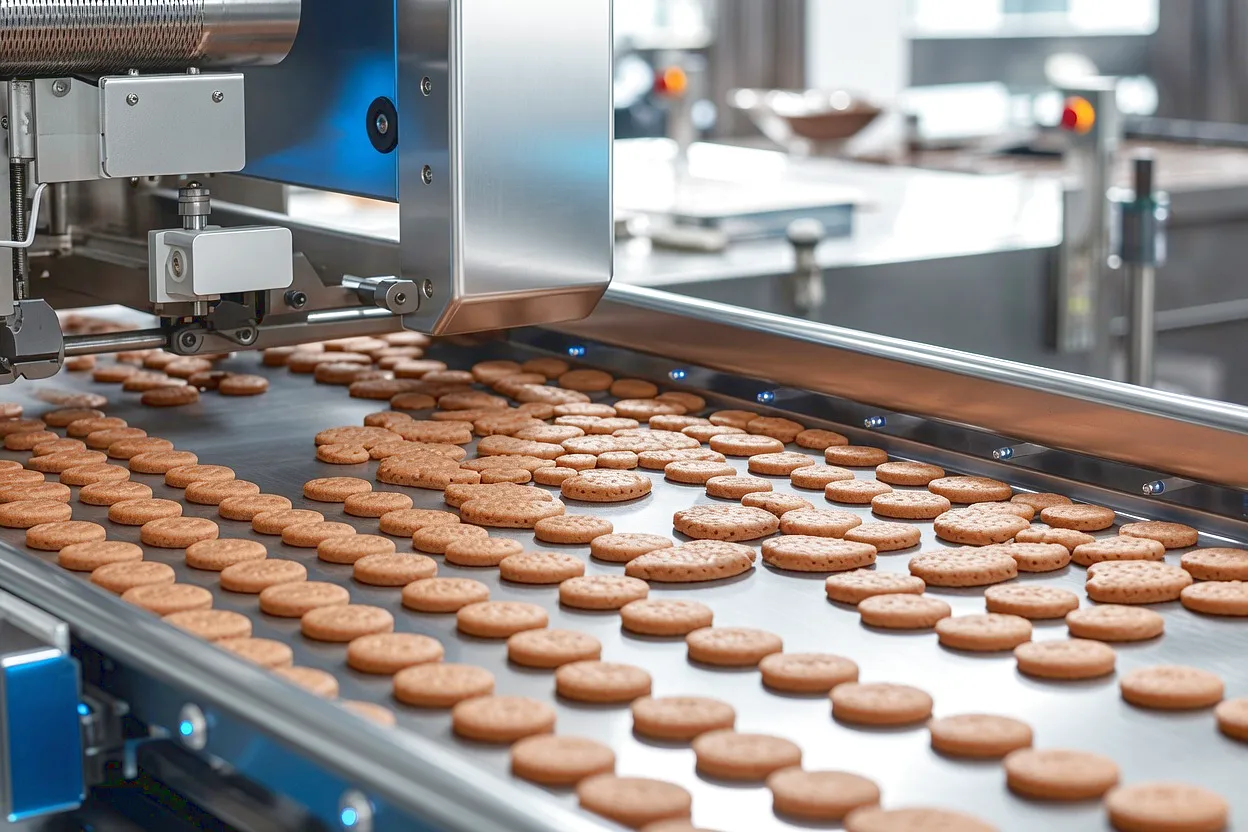
High-load industrial chain applications in food processing
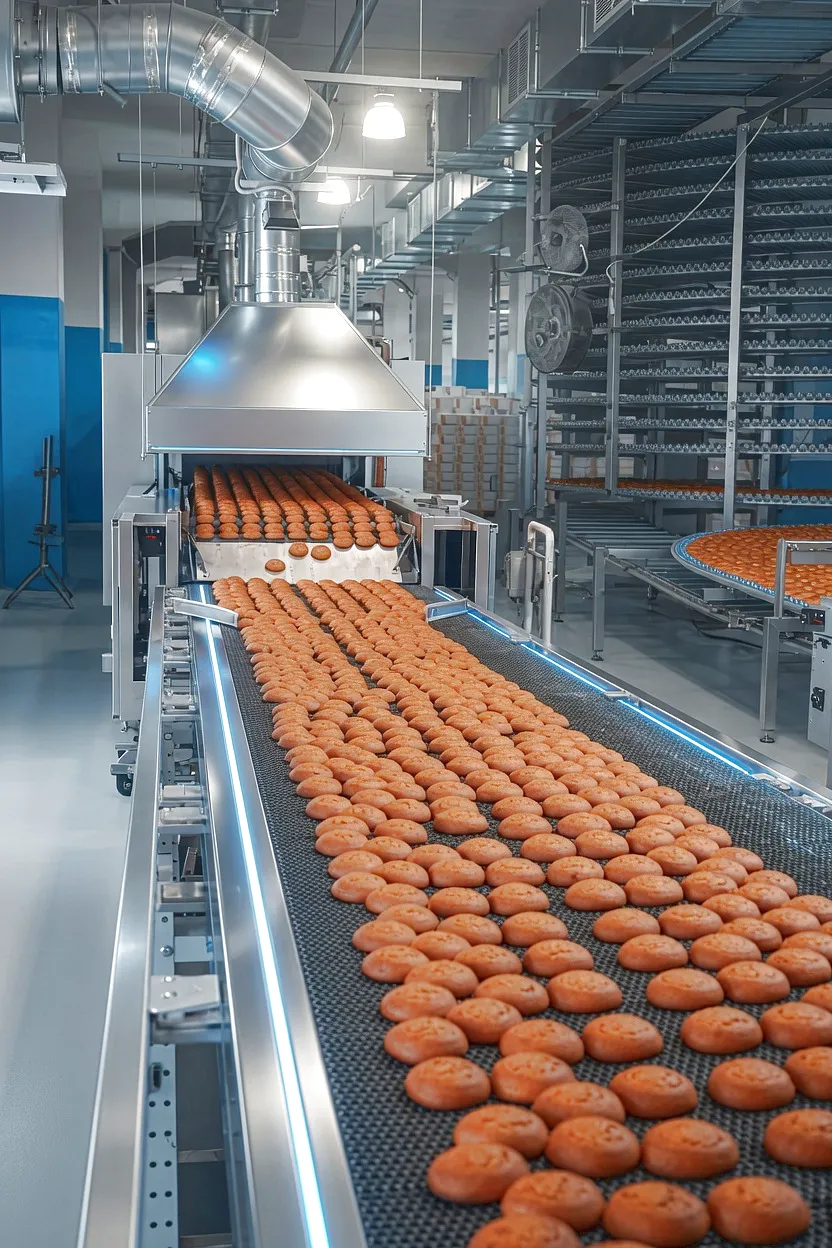
Leaf chain deployed in bakery conveyor drive systems
Seven Reasons UK Bakeries Choose Ever Power Leaf Chain
Superior Tensile-to-Mass Ratio
No rollers or bushings means every gram of steel in the chain contributes to tensile capacity. For suspended load applications, this translates to a lighter drive that places less dynamic loading on bearings and frames.
High-Temperature Stability
With pin diameters hardened to 58–62 HRC and plates processed through controlled atmosphere heat treatment, Ever Power leaf chain maintains its mechanical properties up to 200 °C continuous — covering the full range of oven-adjacent bakery positions without special alloy premiums.
Food-Safe Material Options
316L stainless steel grades pass BRC and FDA 21 CFR requirements for incidental food contact. NSF H1-registered grease is available pre-applied at the pin-plate interface to satisfy UK FSA and retailer audit standards without additional on-site treatment.
Precision Pitch Tolerance
ISO 4347 and DIN 8152 manufacturing tolerances are applied as standard on all Even Power leaf chains, not as a premium option. Consistent pitch is essential for jaw-synchronisation in packaging machines and for conveyor tracking in multi-strand configurations.
Extended Service Intervals
Field data from UK food manufacturing clients shows average chain replacement intervals 40–60% longer than roller chain in equivalent positions. The reduction in planned maintenance events has a measurable effect on overall equipment effectiveness (OEE) scores — a metric that purchasing managers and plant directors track directly.
Field-Repairable Design
Individual links can be extracted and replaced on-site without removing the entire chain from the machine — a critical advantage in production environments where a full chain change-out might require eight hours of labour. Ever Power supply matched link packs enabling targeted repairs during short planned maintenance windows.
Custom-Length Supply
Ever Power manufacture and cut leaf chain to exact customer-specified lengths, including non-standard link counts and special pin configurations for bespoke proofer and oven equipment. OEM-matched replacements are produced using original design drawings where available, eliminating the risk of incompatible substitute components being fitted.
Customer Success: 34% Reduction in Unplanned Downtime at a Midlands Bread Plant
Case Study
Midlands Large-Scale Bread Manufacturer
📍 Coventry, West Midlands, UK
🏭 Production: 2,400 loaves/hour across three spiral proofer lines
📅 Partnership established: 2021
Results Achieved
✅ 34% reduction in unplanned chain-related stoppages
✅ Proofer counterbalance chain life extended from 8 months to 14 months
✅ BRC hygiene audit passed first time after switching to SS grades
✅ Annual chain procurement cost reduced by £22,000
The plant’s engineering team had been replacing the spiral proofer counterbalance chains every eight months on average, with two unexpected failures causing unplanned stoppages over an eighteen-month period. Each stoppage cost approximately £8,000 in lost production — not counting the emergency maintenance labour and the food-safety concern of chain debris entering the product zone.
After an application review with the Ever Power engineering team, the existing grade was replaced with BL 666 stainless steel leaf chain, pre-lubricated with NSF H1-registered grease, and sized with a 6:1 safety factor on the peak counterbalance load. The new chain was also cut to a custom length that eliminated the compromise link position that had been a historical failure initiation point on the original design.
Within the first contract year, the plant recorded zero unplanned chain failures on the proofer lines. The scheduled replacement interval was extended from eight to fourteen months after elongation monitoring confirmed the chain remained within specification at the twelve-month inspection point. The maintenance team now monitors chain elongation quarterly using a simple go/no-go gauge supplied by Ever Power as part of the service package.
What Our Customers Say
★★★★★
“We had been fighting proofer chain issues for three years before switching to Ever Power stainless leaf chain. The difference in maintenance burden was immediately obvious — we went from worrying about that counterbalance system every month to trusting it completely. The custom-length supply was exactly what we needed.”
— Engineering Manager
Large bread manufacturer · Coventry, UK
★★★★★
“The technical support from Ever Power was outstanding — their engineer reviewed our biscuit press drive calculations and identified that we were running at less than 3:1 safety factor on peak torque. Switching to the correct leaf chain grade removed that risk entirely. Lead times for custom-cut lengths are consistently within two weeks, which fits our planned shutdown schedule.”
— Maintenance Director
Premium biscuit manufacturer · Edinburgh, Scotland
★★★★★
“We operate a multi-site pastry production network across the South East of England, and Ever Power have become our preferred leaf chain supplier for all sites. The consistency of quality between orders — something we really could not take for granted with previous suppliers — means our maintenance teams can follow a single chain-management protocol across every facility. The pricing for the volumes we order is also very competitive.”
— Group Procurement Manager
Multi-site pastry production group · South East England
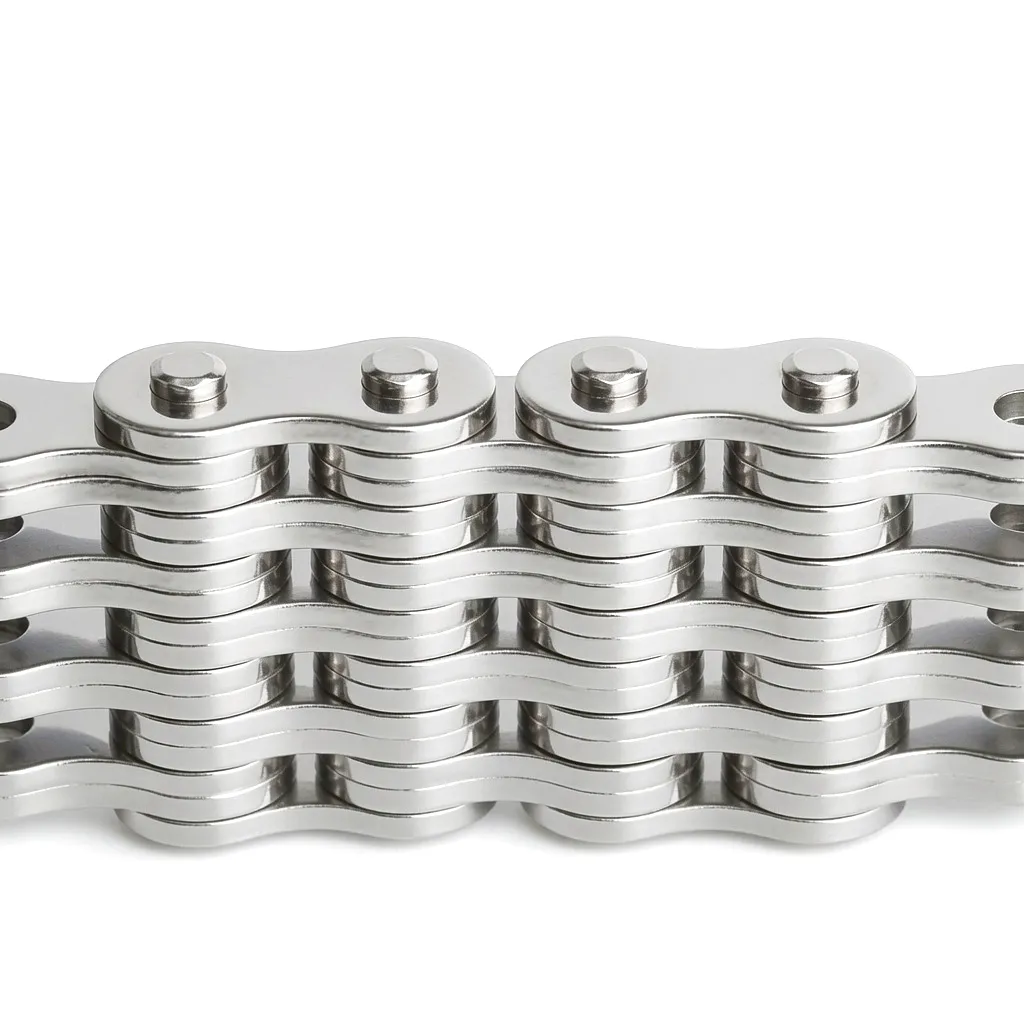
In-house heat treatment and tensile testing — full quality traceability
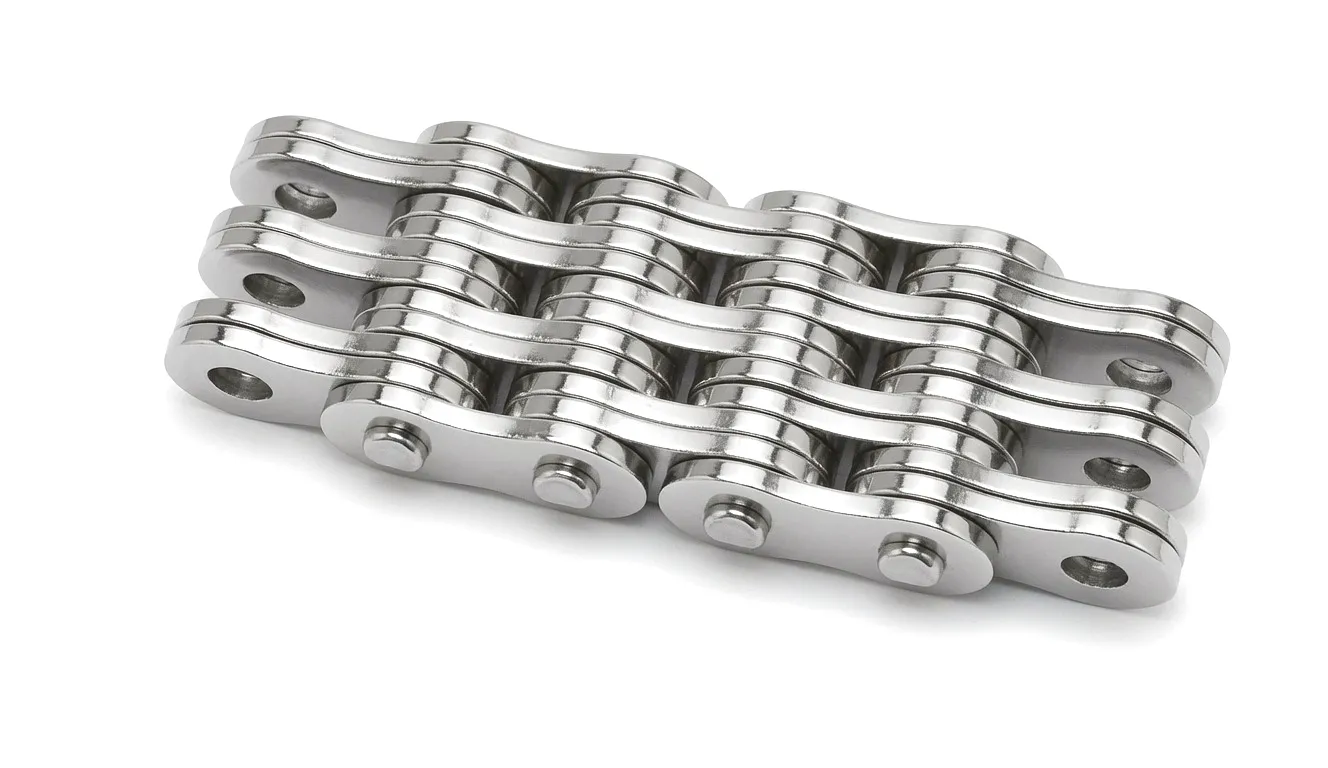
Stainless steel and carbon steel grades — full range available to UK stock
Manufacturing Capability & Custom Leaf Chain Services
Why OEM-Grade Customisation Matters for Bakery Chain Applications
Off-the-shelf chain lengths rarely match the exact pin count required by bespoke proofer or oven equipment. A compromise link — a half-link added to achieve the specified centres — introduces an asymmetric stress point that, in high-cycle bakery applications, becomes a reliable failure initiation site. Ever Power eliminate this risk entirely by manufacturing leaf chain to the exact link count specified in the customer’s design drawings.
Beyond simple length customisation, the Ever Power production facility offers: custom pin alloy specifications for corrosive wash-down environments; modified plate thickness for fatigue-critical applications; special end fittings including swaged rod ends, clevis attachments, and direct-weld plate anchors; and dual-strand chain assemblies where lateral rigidity is required in addition to tensile capacity. Every custom order is supplied with a full material certificate and tensile test certificate to a minimum of 10% of the batch, with full batch testing available on request.
The factory operates to ISO 9001:2015 quality management standards with a dedicated food-industry chain cell that keeps food-grade material segregated from general industrial production. Typical lead time for custom food-industry leaf chain orders is 10–15 working days from drawing approval to despatch, with an express service available for critical breakdowns at competitive additional cost.
Custom Services Available
- Exact-link-count manufacturing — any pitch, any lacing
- 316L stainless steel (food-grade) with NSF H1 lubricant pre-applied
- Special end fittings: rod ends, clevis, anchor plates, custom bores
- Anti-corrosion coatings: zinc-nickel, Geomet, Dacromet
- OEM-matched replacement chains from customer drawings
- Full material traceability and test certificates
- ISO 9001:2015 factory · Express breakdown service

Ever Power leaf chain — trusted across UK food manufacturing for precision, reliability, and hygiene compliance
Serving the UK Food & Bakery Manufacturing Sector
The United Kingdom is home to one of Europe’s most technically demanding food manufacturing sectors. From the large-scale bread plants concentrated in the East Midlands and Yorkshire, to the premium biscuit and shortbread manufacturers of Scotland, to the growing craft artisan bakery sector clustered around London and the South East — every tier of the industry places serious demands on its mechanical components. Ever Power leaf chain is available to the UK market through direct supply, with stock maintained in formats appropriate to the most common British bakery OEM equipment: APV Baker, Reading Bakery Systems, Bühler, and AMF Bakery Systems configurations are all catered for within the standard range.
For buyers sourcing leaf chain for food-industry applications across the UK, the regulatory context is important: the BRC Global Standard for Food Safety (Issue 9), BRCGS Packaging Materials, and the UK Food Standards Agency all require documented evidence that materials contacting or near food meet defined hygiene and safety standards. Ever Power supply documentation packages including declaration of conformity, material certificates, and lubricant safety data sheets pre-formatted for BRC audit evidence folders — saving procurement teams significant administrative effort during third-party certification audits.
Whether you are managing a single bakery site in Birmingham or a national distribution network with production facilities across England, Scotland, and Wales, the Ever Power supply chain is structured to maintain consistent product quality and delivery performance across all orders. Minimum order quantities are kept flexible to accommodate smaller maintenance-driven orders alongside large planned-procurement contracts, making Ever Power a practical choice for purchasing teams of every scale.
Frequently Asked Questions
What type of leaf chain is best for a spiral proofer counterbalance system in a UK bread factory, and what minimum breaking load should I specify?
For a spiral proofer counterbalance, the standard specification is BL 666 or BL 846 leaf chain in stainless steel grade, with a minimum breaking load that provides at least a 5:1 safety factor over the maximum static counterbalance weight plus a 1.5× dynamic service factor for start-stop loads. In practice, most UK proofer applications in the 1,000–3,000 loaves/hour range sit between 44.5 kN and 133.4 kN minimum breaking load. The Ever Power engineering team will calculate the correct grade for your specific proofer model at no charge.
How much does food-grade stainless steel leaf chain cost for bakery applications compared with standard carbon steel grades, and can I get a price online?
Stainless steel leaf chain (316L grade) typically carries a price premium of 60–90% over equivalent carbon steel grades at the same pitch and lacing. However, when total cost of ownership is calculated — factoring in extended service life, reduced maintenance labour, fewer unplanned stoppages, and the elimination of BRC audit risk from non-compliant lubricants — stainless almost always delivers a lower 36-month cost. Online pricing is not available as every order is project-specific; contact Ever Power directly at [email protected] with your grade, length, and lacing requirements for a same-day quotation.
Where in the UK can I find a reliable supplier of custom-length leaf chain for biscuit manufacturing equipment with short lead times?
Ever Power supply custom-length leaf chain to biscuit manufacturers and other food-industry clients across the UK, including Scotland, England, and Wales. Standard custom orders ship in 10–15 working days from drawing approval. For confirmed breakdown emergencies, an express service is available with expedited production and priority despatch. All custom food-industry orders include material certificates and NSF-compliant lubricant documentation. Contact [email protected] with your drawing or original chain sample reference.
How do I know when a leaf chain on my bakery conveyor needs replacing, and what elongation percentage should I use as the replacement threshold?
The industry-standard replacement threshold for leaf chain is 3% elongation over the nominal pitch length, measured across a minimum of 12 pitches. Beyond 3%, the plate-pin contact geometry changes sufficiently to accelerate wear exponentially. Visual inspection for plate cracking, rust streaking from pin holes, and visible pin movement under load should also be conducted quarterly. Ever Power supply a simple go/no-go elongation gauge calibrated to your specific chain pitch on request — this makes routine checks fast enough to complete during a 15-minute planned maintenance slot.
What is the difference between ANSI BL series leaf chain and DIN 8152 leaf chain, and which standard do most UK bakery equipment manufacturers specify?
ANSI BL (B29.8) and DIN 8152 leaf chains share the same pitch series and are dimensionally interchangeable for the most common grades. The primary difference lies in lacing designation conventions and some minor tolerance variations. Most UK food-industry OEM equipment — particularly APV Baker and Spooner-derived designs — references ANSI BL designations in maintenance manuals, but the physical chain is cross-compatible. Ever Power manufacture to DIN 8152 tolerances as standard and can provide both ANSI and DIN certificates to satisfy any OEM specification requirement.
Which lubricant should I use on leaf chain inside a proofer chamber to comply with BRC and UK FSA food safety requirements, and how often should I relubricate?
Use only NSF H1-registered lubricants — greases or oils certified for incidental food contact under 21 CFR 178.3570. In proofer environments, a high-viscosity NSF H1 grease (NLGI 2 or 3) applied to the pin-plate interface every 250–500 operating hours is standard practice. Avoid mineral-oil-based products unless they carry current NSF H1 registration, as some older products remain in circulation without updated certification. Ever Power supply chains pre-packed with an approved NSF H1 grease and include the lubricant’s safety data sheet as part of the standard order documentation for BRC audit compliance.
Ready to Solve Your Bakery Chain Challenge?
Send us your chain grade, length, application details — or just a photograph of the existing chain and nameplate. We’ll come back within 24 hours with a detailed specification recommendation and a competitive UK-supply price.
επεξεργασία από gzl