
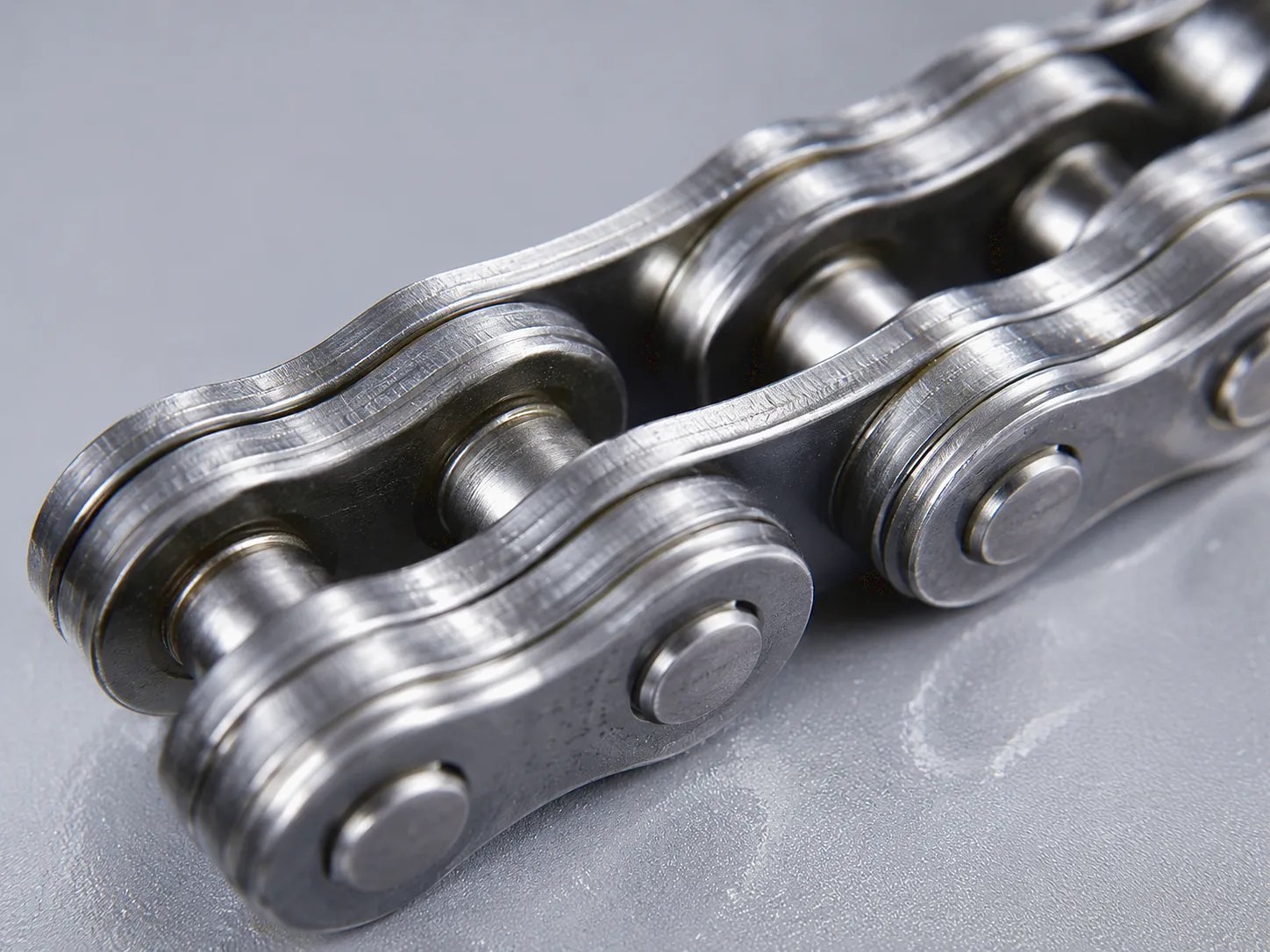
 Walk into any large-scale sugarcane harvesting operation — whether in the fields of Queensland, the Cerrado of Brazil, or indeed the expanding sugar beet operations across Lincolnshire and East Anglia — and the sheer mechanical violence of the process becomes immediately clear. Stalks are cut, lifted, chopped, conveyed, and elevated in a continuous, high-speed chain of mechanical events where every link matters. The leaf chain running through these machines is not merely a component; it is the backbone of continuous production.
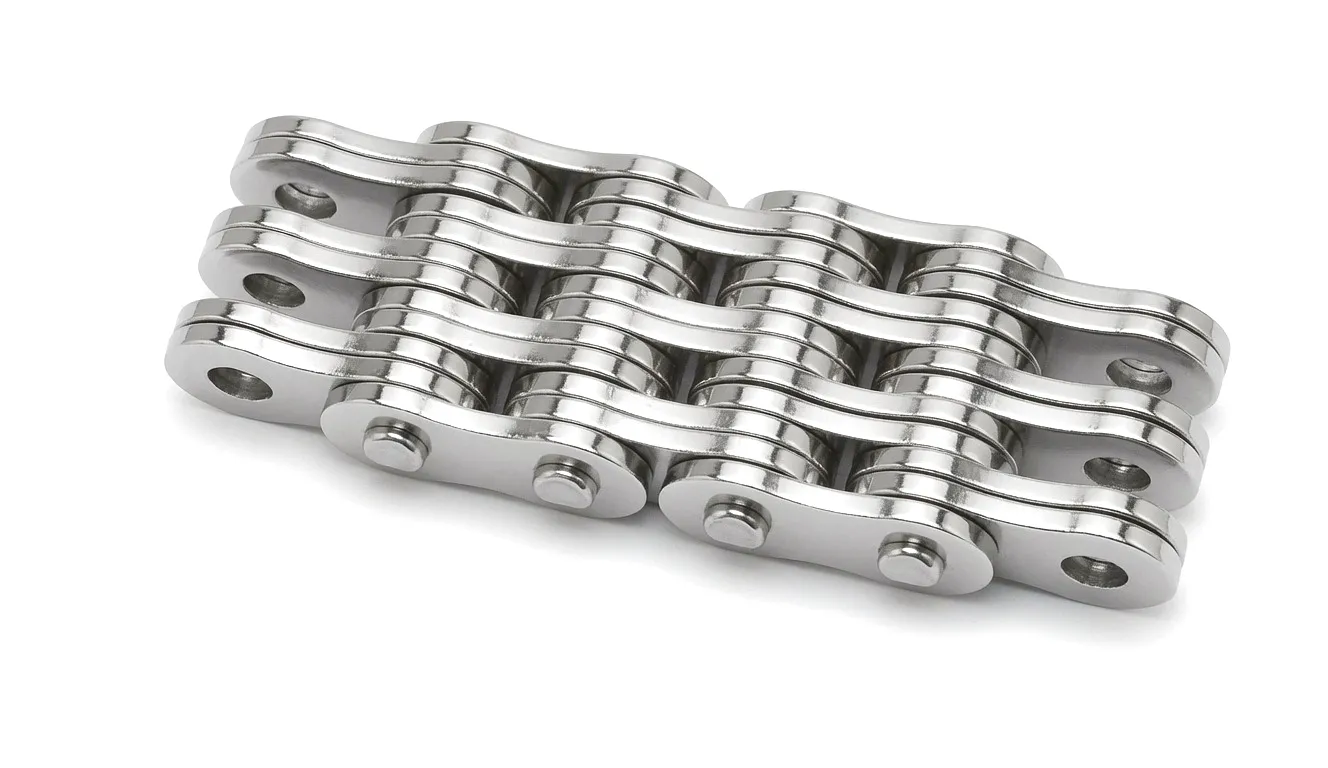
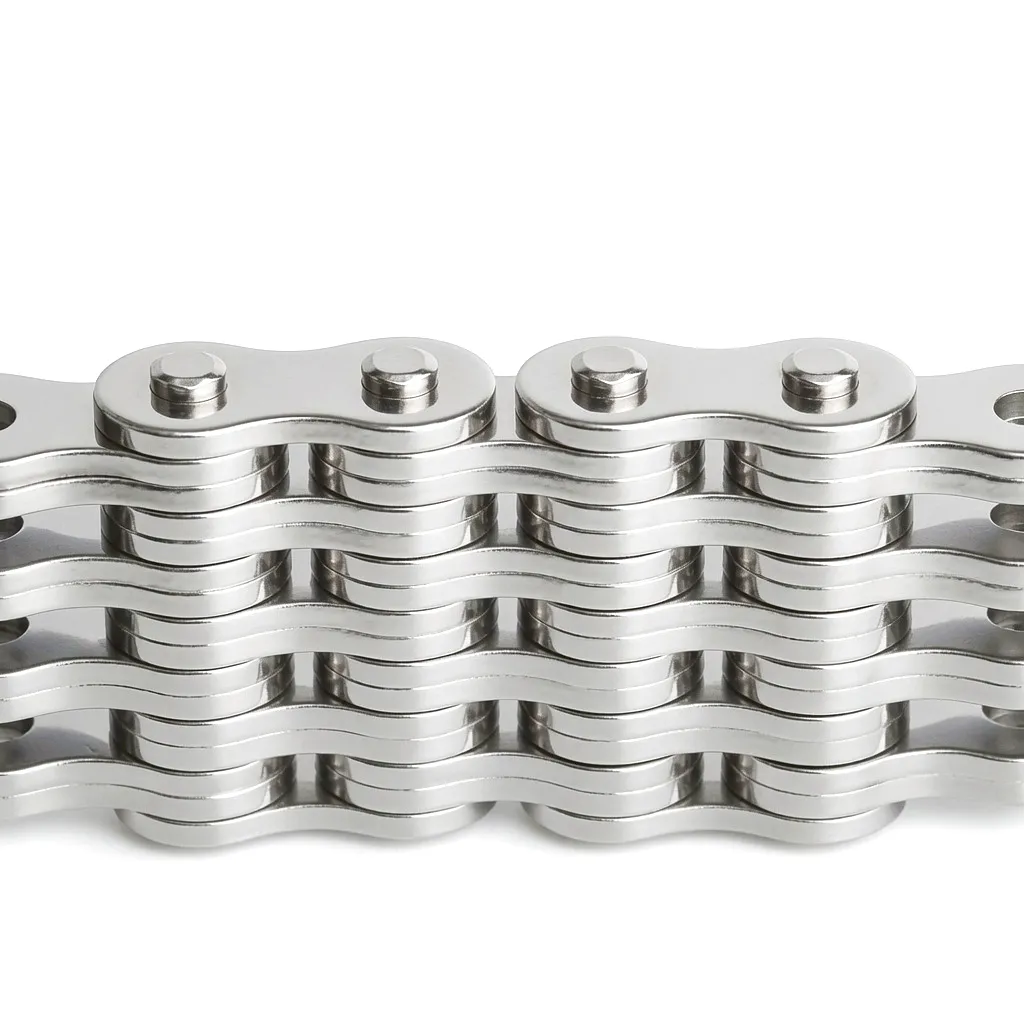
A leaf chain — also known as a plate link chain or balance chain in some engineering circles — differs fundamentally from the roller chains used in power transmission. Built entirely from interleaved link plates and pins, with no rollers or bushings, leaf chains are engineered for one primary purpose: pure tensile load bearing under conditions of continuous flexion. In sugarcane harvesters, this means surviving shock loads from tough stalk material, constant vibration from chopping mechanisms, abrasive contact with soil and plant debris, and relentless cycle fatigue — all while maintaining dimensional precision.
Ever Power has supplied leaf chain solutions to agricultural equipment manufacturers and maintenance engineers across the United Kingdom and internationally for nearly two decades. Our engineering team has accumulated real-world knowledge from applications ranging from forklift masts to combine headers, and sugarcane harvesting presents some of the most demanding conditions any leaf chain will ever face. This article explores exactly why standard chains fail in these machines, what makes a properly specified leaf chain perform differently, and how to select the right solution for your operation or equipment build.
Need a leaf chain for your sugarcane harvester?
Custom specifications, fast UK delivery, ISO-certified quality
Inside the Machine: What a Sugarcane Harvester Actually Does to a Chain
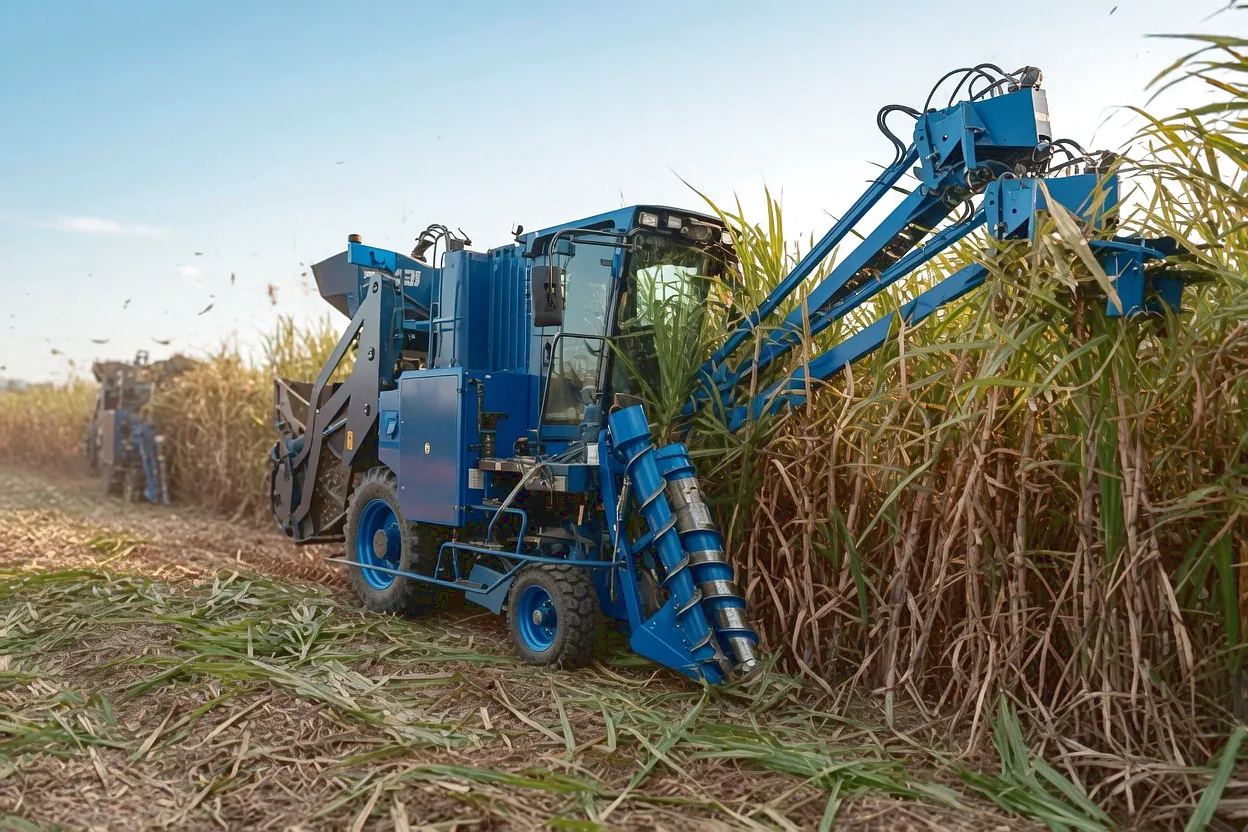
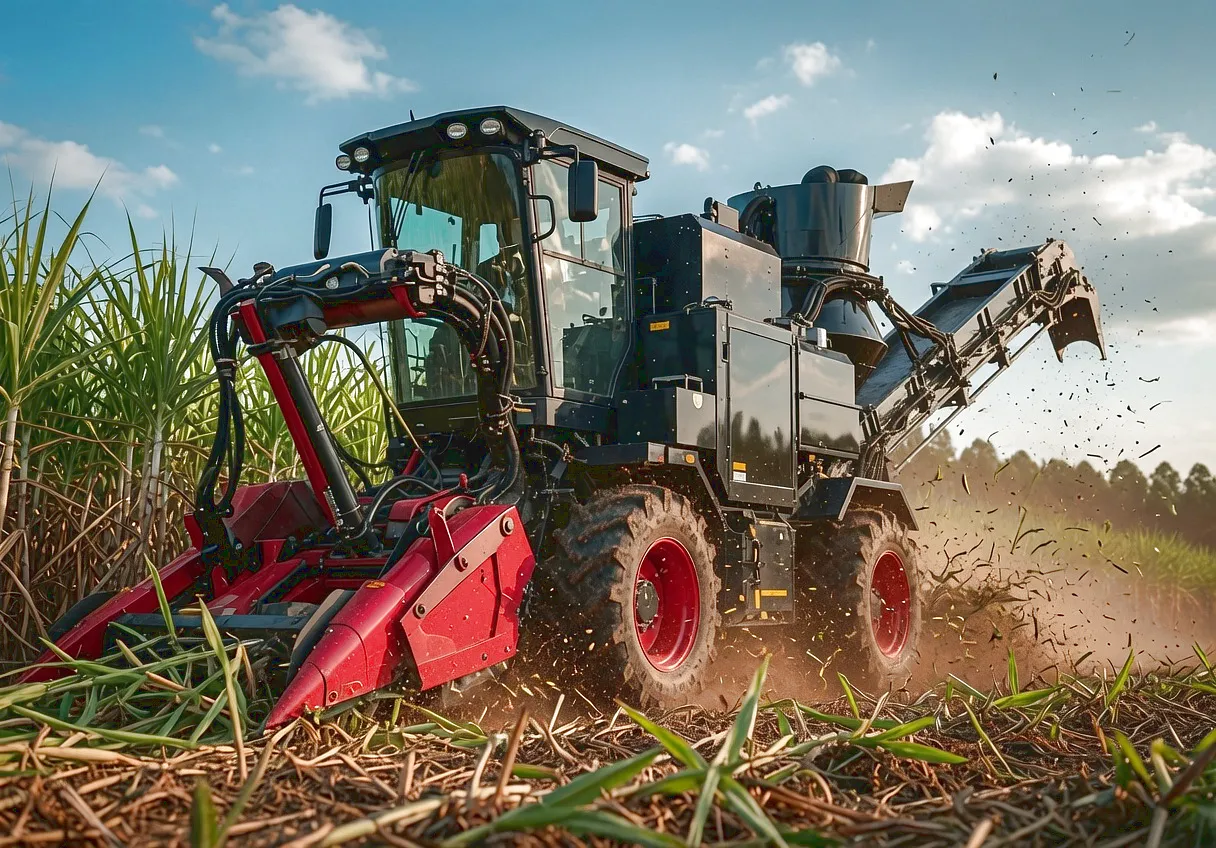
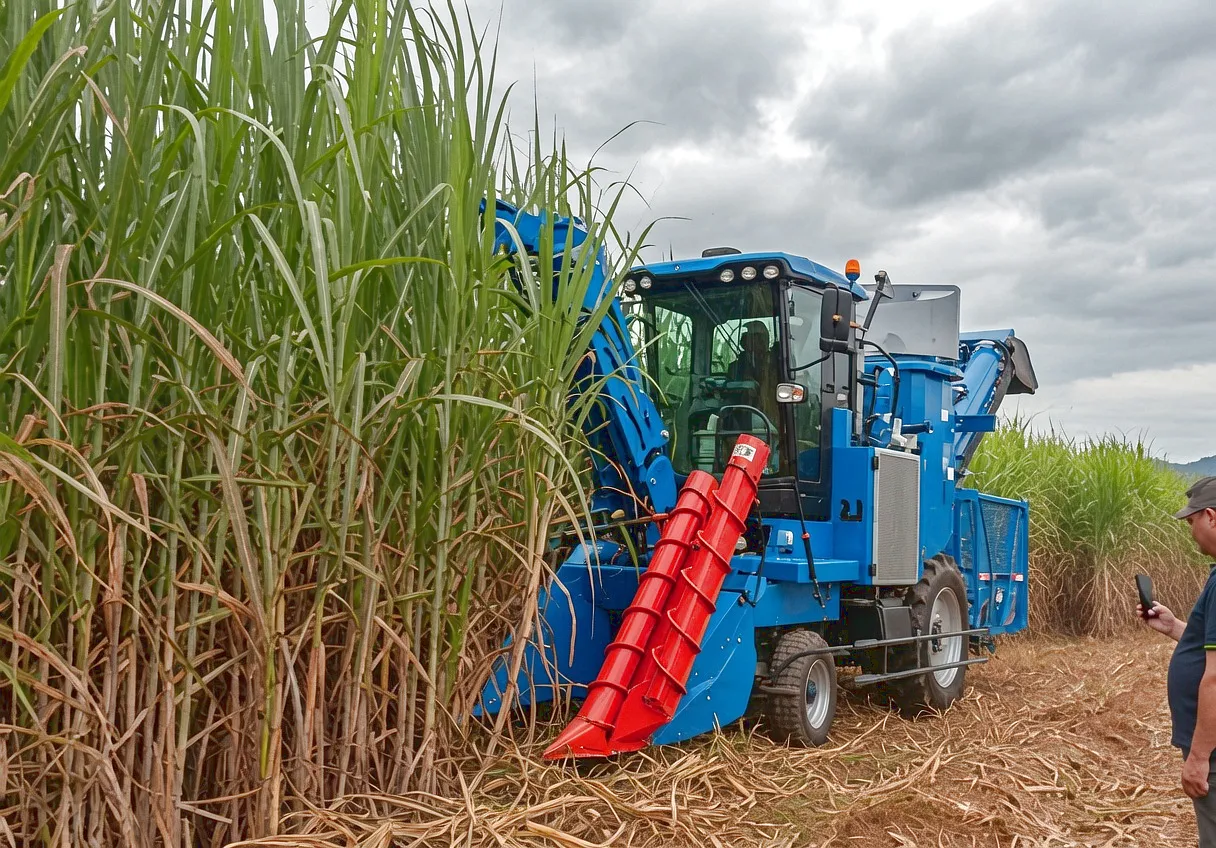 Modern chopper harvesters — the dominant design used across global sugarcane operations — process entire standing stalks in a continuous one-pass operation. The machine drives into rows of cane, uses base-cutter blades to sever stalks at ground level, then feeds the cut material upward through a series of topper, chopper, and elevator mechanisms before depositing chopped billets into a trailing trailer or bin. Each of these stages involves rotating and oscillating mechanical systems, and many of them rely directly on leaf chain for their load-bearing and positional functions.
The primary elevator — the inclined conveyor that carries chopped material from the crop-flow system up and over into a receiving vehicle — is the highest-demand leaf chain application in these machines. Operating at angles exceeding 45 degrees in many designs, the elevator chain must bear not only the continuous weight of the crop load but also absorb the shock impulses generated every time a fresh batch of chopped material drops onto the conveyor bed. In a machine processing 80–100 tonnes per hour, this is a relentless mechanical punishment.
Shock Load Resistance
Sudden impact loads from dropped crop material can reach 3–5× the static working load. Leaf chains with high plate lacing density absorb these impulses without fatigue cracking.
Abrasion & Contamination
Fine soil particles, sugarcane juice, and chopped fibre create an abrasive paste that accelerates pin and plate wear. Hardened pins and tight plate tolerances dramatically extend service intervals.
Temperature Cycling
From early morning cold starts to midday heat, thermal expansion and contraction stress chain pins and link plates. Precisely controlled heat treatment ensures dimensional stability across working temperature ranges.
Continuous Flex Fatigue
Elevator chains articulate across sprockets thousands of times per hour during a harvest shift. Fatigue life directly determines whether a chain lasts one season or three — the difference between profit and costly downtime.

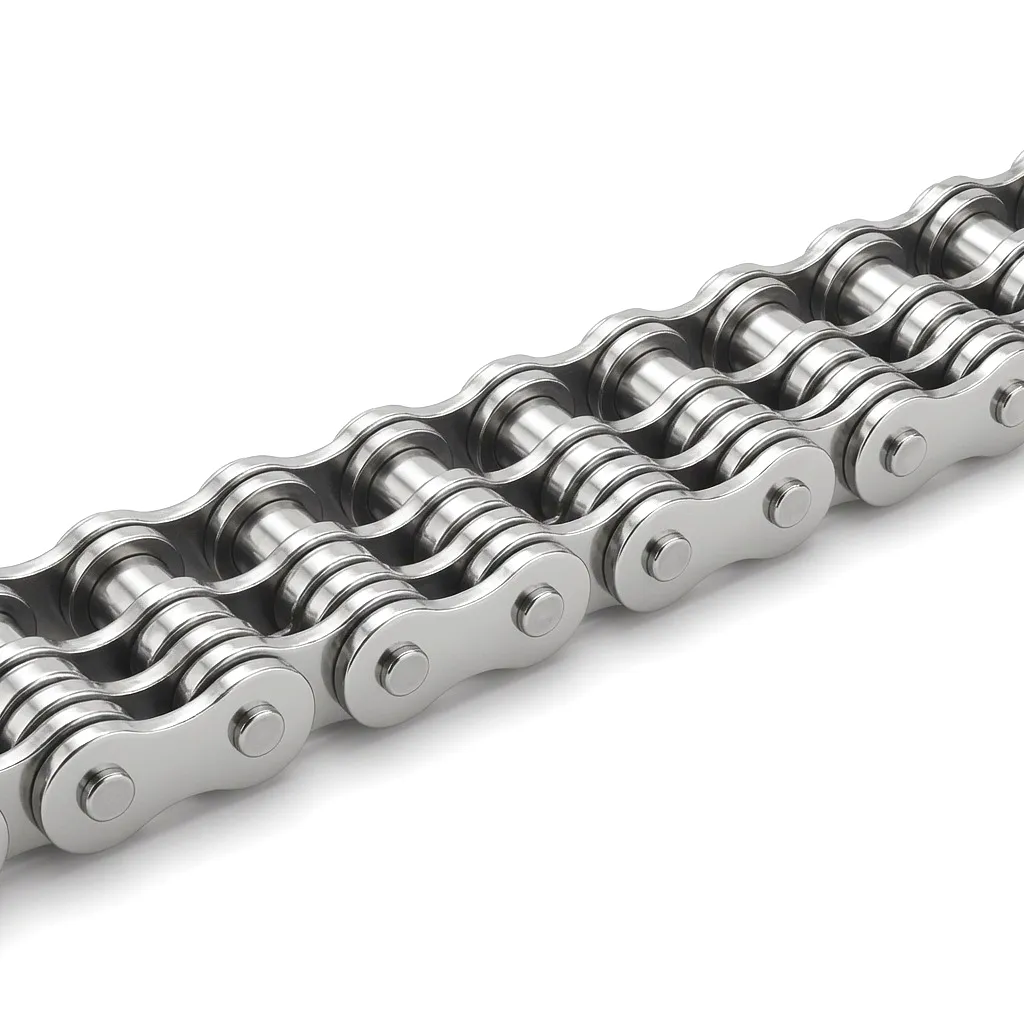
Material Science and Engineering Principles Behind Every Link
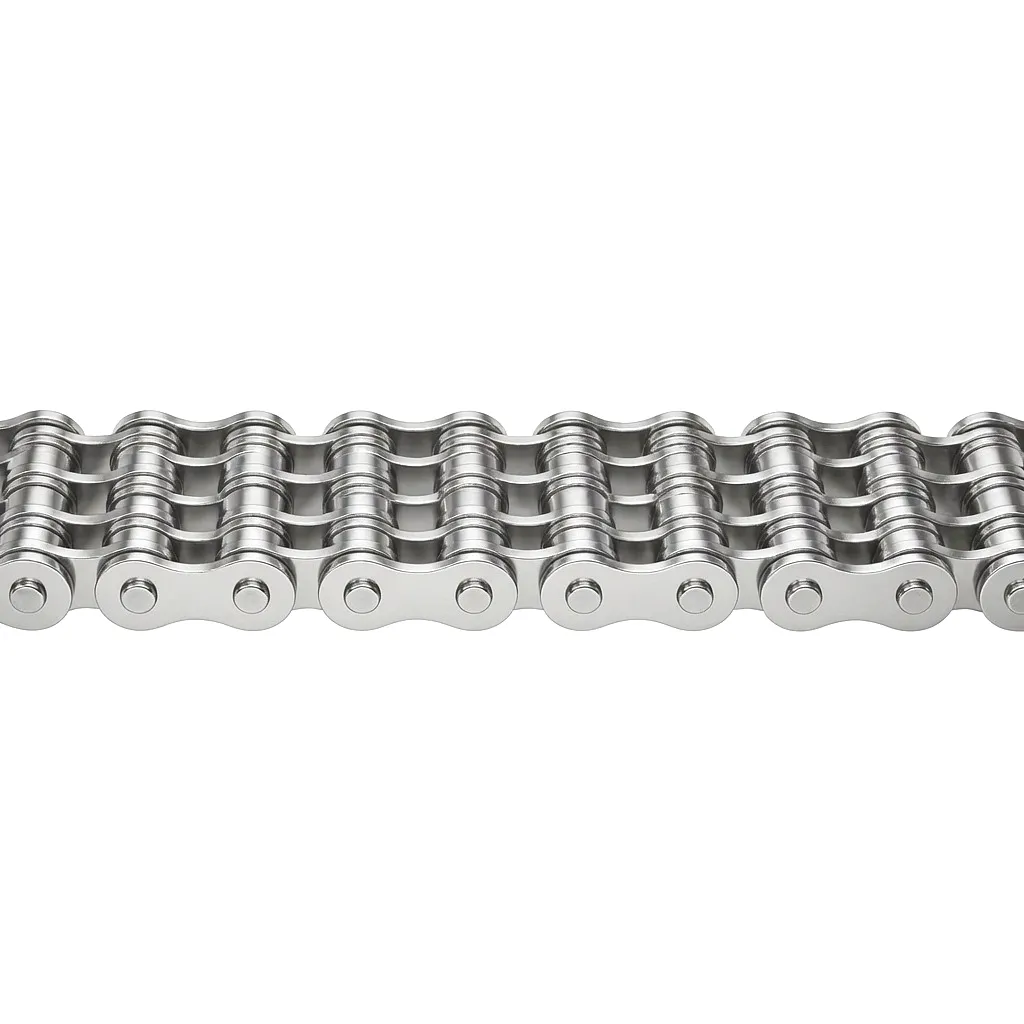
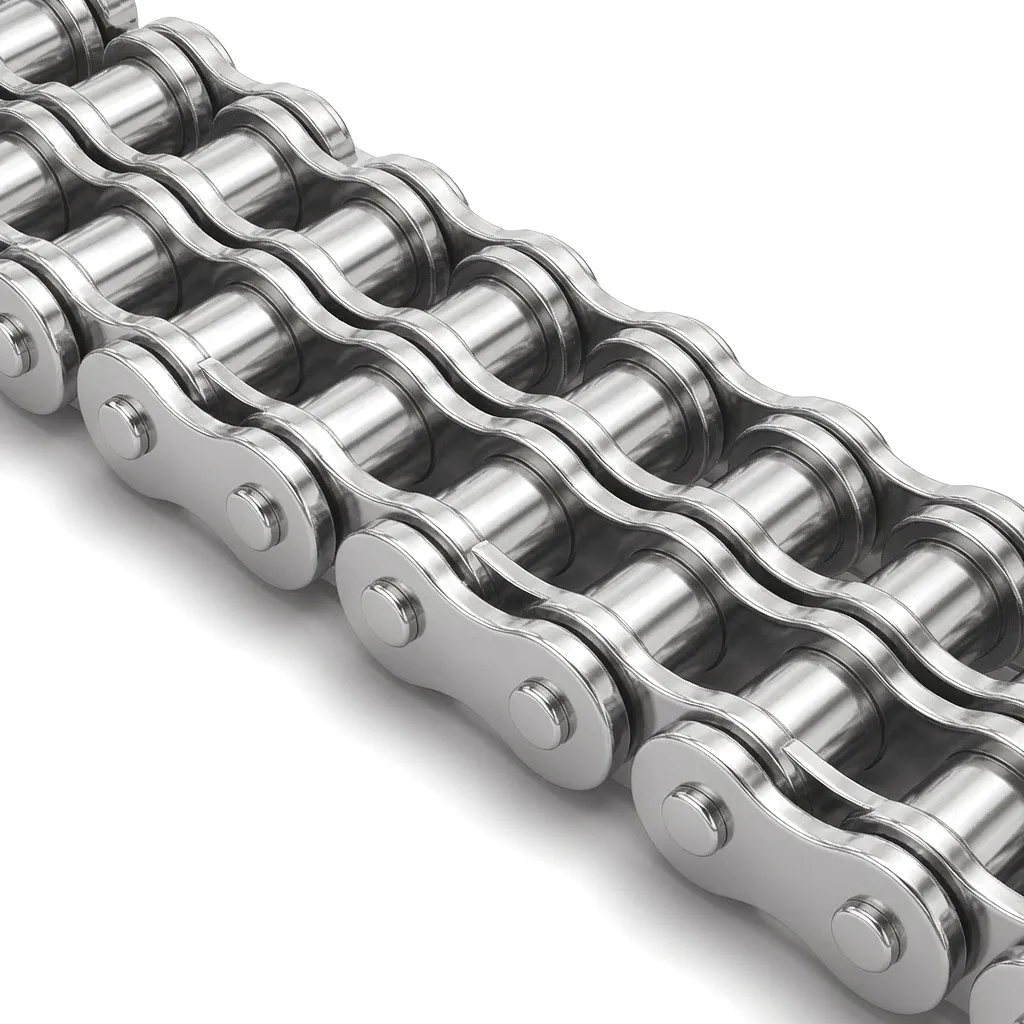
The engineering that goes into a quality agricultural leaf chain is considerably more involved than the component’s simple appearance suggests. Every Ever Power leaf chain begins with precisely drawn, high-carbon alloy steel strip stock, with carbon content typically ranging from 0.45% to 0.55% depending on the targeted strength class. This base material undergoes controlled through-hardening or case-hardening processes — chosen according to plate thickness and intended application — before the blanking and forming operations that create the characteristic link plate profile.
Pin manufacturing receives equally careful attention. Sugarcane harvester applications subject pins to combined bending and shear stresses during shock loading events, so surface hardness must be balanced with core toughness. Pins manufactured from case-hardened chromium-molybdenum steel (often 20CrMo or equivalent) provide a hard, wear-resistant outer surface while retaining a ductile core that absorbs impact without brittle fracture. This combination is what separates chains that last through a full harvest season from those that fail mid-field.
Assembly tolerances are held to fractions of a millimetre. Hole diameter consistency across all link plates in a single chain run directly affects fatigue life — inconsistent hole geometry creates stress concentrations that initiate cracking under cyclic load. Every production batch at Ever Power undergoes statistical process control monitoring at the blanking stage to maintain the tight tolerances that agricultural OEM specifications demand.
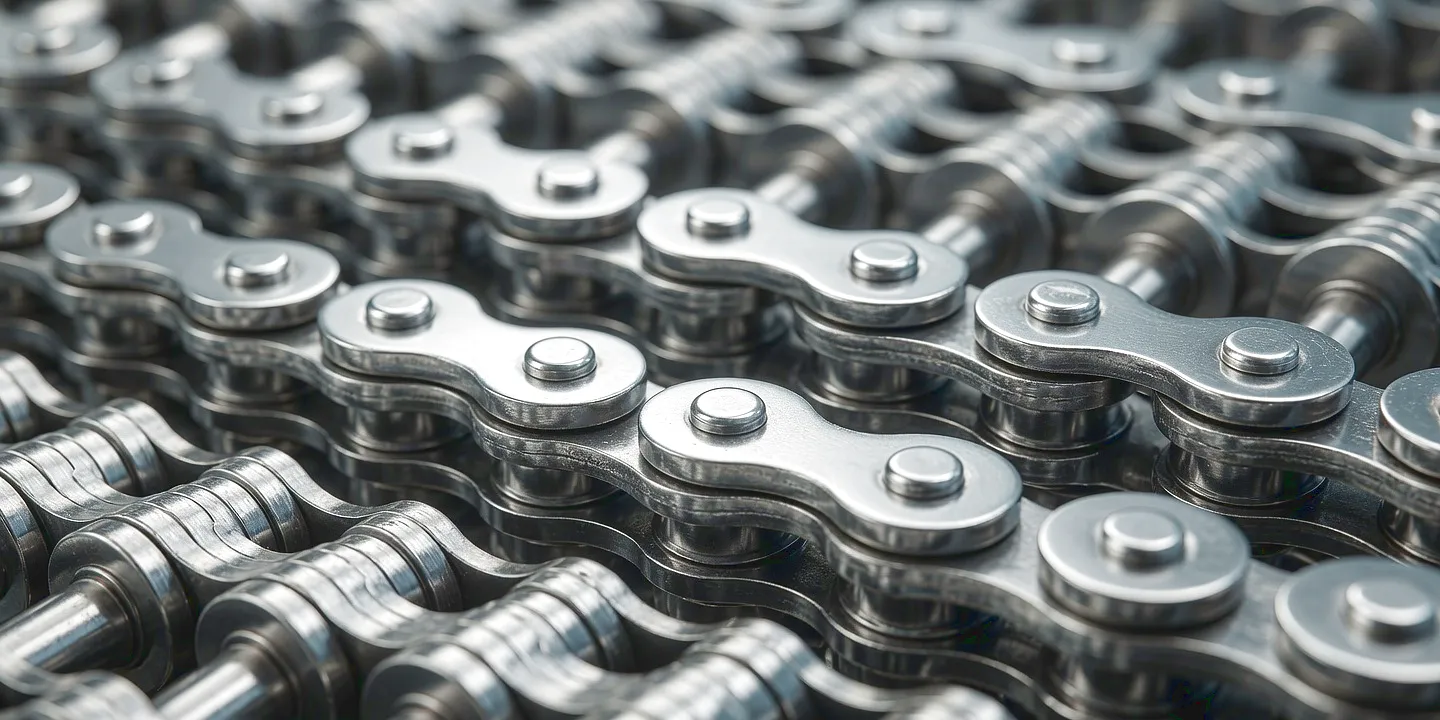
Material Highlights
- High-carbon alloy steel plates (0.45–0.55% C)
- Case-hardened CrMo pins (58–62 HRC surface)
- Electrolytic zinc or nickel plating options
- Shot-peened plates for fatigue life enhancement
- Phosphate coating for initial lubrication retention
- Available in stainless steel for corrosive environments
Technical Performance Parameters
The following table covers the principal specification parameters for Ever Power leaf chains most commonly specified in sugarcane harvester elevator and crop-flow applications. All values reflect ISO 4347 compliance and are verified against batch test certificates issued with each production lot.
| Chain Series | Pitch (mm) | Lacing | Breaking Load (kN) | Working Load (kN) | Pin Dia. (mm) | Plate Thickness (mm) | Mass (kg/m) |
|---|---|---|---|---|---|---|---|
| AL444 | 19.05 | 4×4 | 89 | 22.3 | 7.92 | 3.25 | 2.10 |
| AL644 | 19.05 | 6×4 | 133 | 33.3 | 7.92 | 3.25 | 2.90 |
| AL844 | 25.40 | 8×4 | 178 | 44.5 | 9.52 | 3.96 | 4.30 |
| AL1066 | 25.40 | 10×6 | 267 | 66.7 | 9.52 | 4.75 | 6.40 |
| BL1244 | 38.10 | 12×4 | 356 | 88.9 | 14.27 | 6.35 | 9.80 |
| BL1266 | 38.10 | 12×6 | 534 | 133.5 | 14.27 | 7.15 | 13.60 |
All breaking load figures per ISO 4347. Working load = breaking load / 4 (minimum safety factor). Custom specifications available on request.
Why Ever Power Leaf Chain Outperforms the Competition
After nearly two decades supplying leaf chains into demanding applications — forklift trucks, industrial elevators, construction equipment, and agricultural machinery alike — several clear performance differentiators have emerged that our customers consistently cite when explaining why they continue to specify Ever Power product over alternative suppliers.
Superior Fatigue Life
Shot-peening of link plates induces compressive residual stress that measurably improves fatigue crack initiation resistance. In accelerated fatigue bench testing, our BL-series chains for harvester elevator applications consistently exceed DIN 8152 minimum fatigue life requirements by 30–45%.
Tight Dimensional Tolerances
Pitch accuracy and plate hole tolerances are maintained within ±0.05 mm through process-controlled blanking. This consistency means chains track smoothly on sprockets without the side loading and edge wear that result from cumulative tolerance stack-up in lower-quality product.
Corrosion Protection
Sugarcane juice is mildly acidic and combines with soil moisture to create a corrosive environment that rapidly attacks bare steel. Our standard agricultural grade chains receive zinc electroplating with chromate passivation; for high-corrosion environments we offer nickel plating and full stainless variants.
Batch Traceability
Every production batch is assigned a unique lot number, with material certificates, dimensional inspection records, and proof-load test results retained and available on request. For OEM customers and UK equipment importers requiring full supply chain documentation, this traceability is an operational necessity, not an optional extra.
Broad Series Range
From compact AL series for topper and chopper mechanism sub-assemblies through to heavy BL series for primary elevator drives, Ever Power holds a comprehensive stock range in standard lacing configurations. Non-standard pitches and custom lacing patterns are available through our engineering customisation service, with lead times matched to your maintenance schedules.
Competitive UK Pricing
Direct factory supply with no unnecessary distribution markup means UK buyers — from independent agricultural engineers in Norfolk to large equipment dealership networks — receive high-specification product at a cost point that makes planned replacement economically viable, reducing the tendency to run chains to failure.
Specific Application Positions Within Sugarcane Harvesting Systems
Understanding exactly where leaf chains appear in the mechanical architecture of a cane harvester helps maintenance engineers and parts buyers specify the right product for each position. The machine can be broken into several functional zones, each with distinct chain duty requirements.
Primary Elevator Chain
The main crop elevator is the highest-load position in most harvester designs. Operating as an inclined flight conveyor, the leaf chain here carries a continuous carpet of chopped billets — each elevator cycle carrying between 20 and 40 kg of crop in many full-cut harvester configurations. The leaf chain must sustain this load continuously at operating speeds of 1.8–2.5 m/s over shifts that often run 10 to 14 hours. BL1244 and BL1266 series chains, assembled to the machine’s specific pitch and attachment requirements, are typically specified for this position due to their high working load capacity and excellent fatigue characteristics under sustained dynamic loading.
Topper Raise/Lower Mechanism
The topper — which cuts the leafy top growth from the standing cane before harvesting begins — must be height-adjusted as ground conditions and crop height vary. Leaf chains in the topper actuator assembly operate primarily in tension under static and quasi-static conditions rather than continuous cycling, but must resist shock loads generated when the topper strikes unexpected obstructions. AL644 and AL844 series chains provide appropriate load capacity for this duty with a more compact profile than the primary elevator chain.
Crop Flow Transfer Points
At transfer points between the chopper and primary elevator, and between the elevator and trash separator in some designs, leaf chain sub-assemblies guide and tension the conveying mechanism. These positions involve high contamination levels from crop juice and fine soil, making corrosion resistance a key selection criterion alongside load capacity. Our zinc-electroplated AL series chains with phosphate-coated pins are well suited to these positions.
| Application Position | Load Type | Recommended Series | Key Requirement | Service Interval (Hours) |
|---|---|---|---|---|
| Primary Elevator | Dynamic, shock | BL1244 / BL1266 | High breaking load, fatigue life | 250–500 |
| Topper Actuator | Quasi-static, shock | AL644 / AL844 | Compact profile, reliability | 500–800 |
| Crop Flow Transfer | Continuous, moderate | AL444 / AL644 | Corrosion resistance | 400–600 |
| Feed Roll Drive | High torque, cyclic | AL1066 / BL1244 | Torsional fatigue resistance | 300–500 |
| Bin/Basket Tipping | Static, infrequent | AL844 / AL1066 | Working load, dimensional accuracy | 1000+ |
Serving Agricultural Machinery Operators Across the United Kingdom
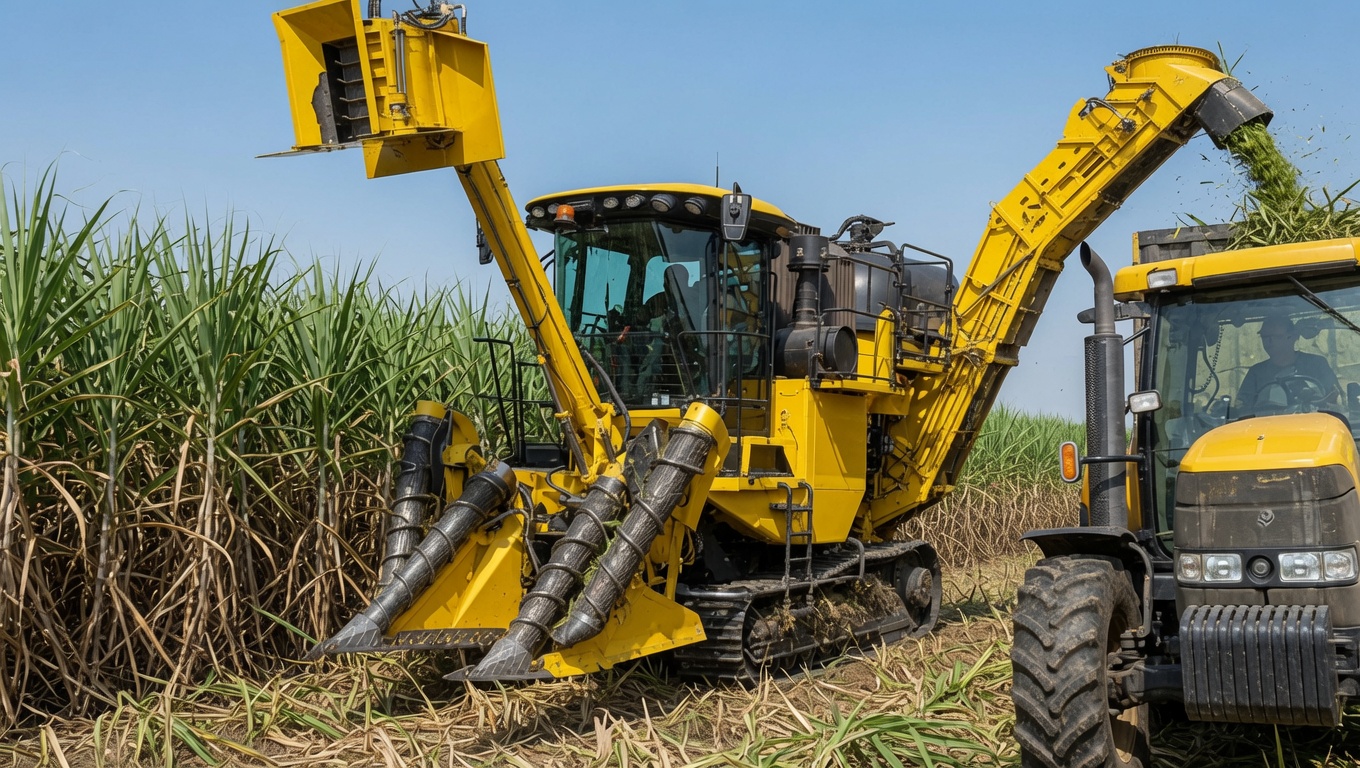 While sugarcane is not grown domestically in the UK’s climate, British agricultural engineering businesses are deeply involved in the global sugarcane industry. UK-based OEM manufacturers export harvesting machinery to tropical and subtropical markets across Africa, Southeast Asia, Latin America, and the Indian subcontinent. Agricultural engineering companies based in East Anglia, Yorkshire, and the Midlands regularly require leaf chain supply for machine manufacture and service parts programs supporting machines operating thousands of miles away.
Furthermore, the mechanical principles that govern leaf chain selection for sugarcane harvesters translate directly to sugar beet harvesting operations, which are substantial within the UK’s domestic agricultural sector. The Fens, Lincolnshire, East Yorkshire, and the East Midlands host significant sugar beet acreages that are harvested with machinery presenting comparable chain duty requirements — particularly in the elevator and root-cleaning mechanisms where root weight and soil contamination create demanding leaf chain operating conditions.
Ever Power’s UK customers range from independent agricultural engineers offering maintenance and repair services to equipment dealerships holding service parts inventories, and manufacturing companies building specialist harvesting attachments. We offer both stocked standard product for fast dispatch and a full engineering customisation service for non-standard applications. UK buyers benefit from consolidated freight solutions and responsive technical support from our English-speaking engineering team, with no minimum order quantity restrictions on standard catalogue items.
Manufacturing Capability and Custom Engineering Services
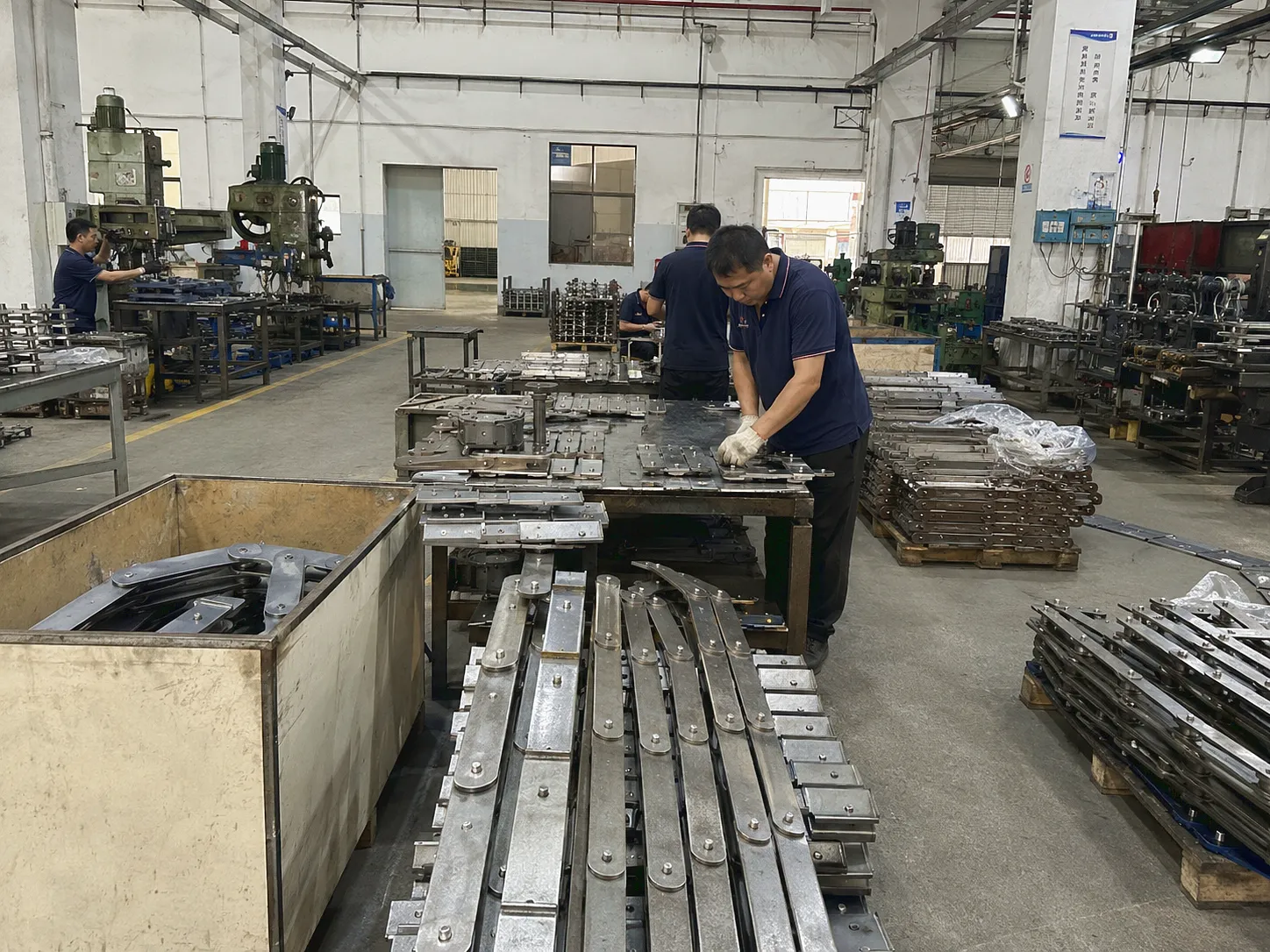
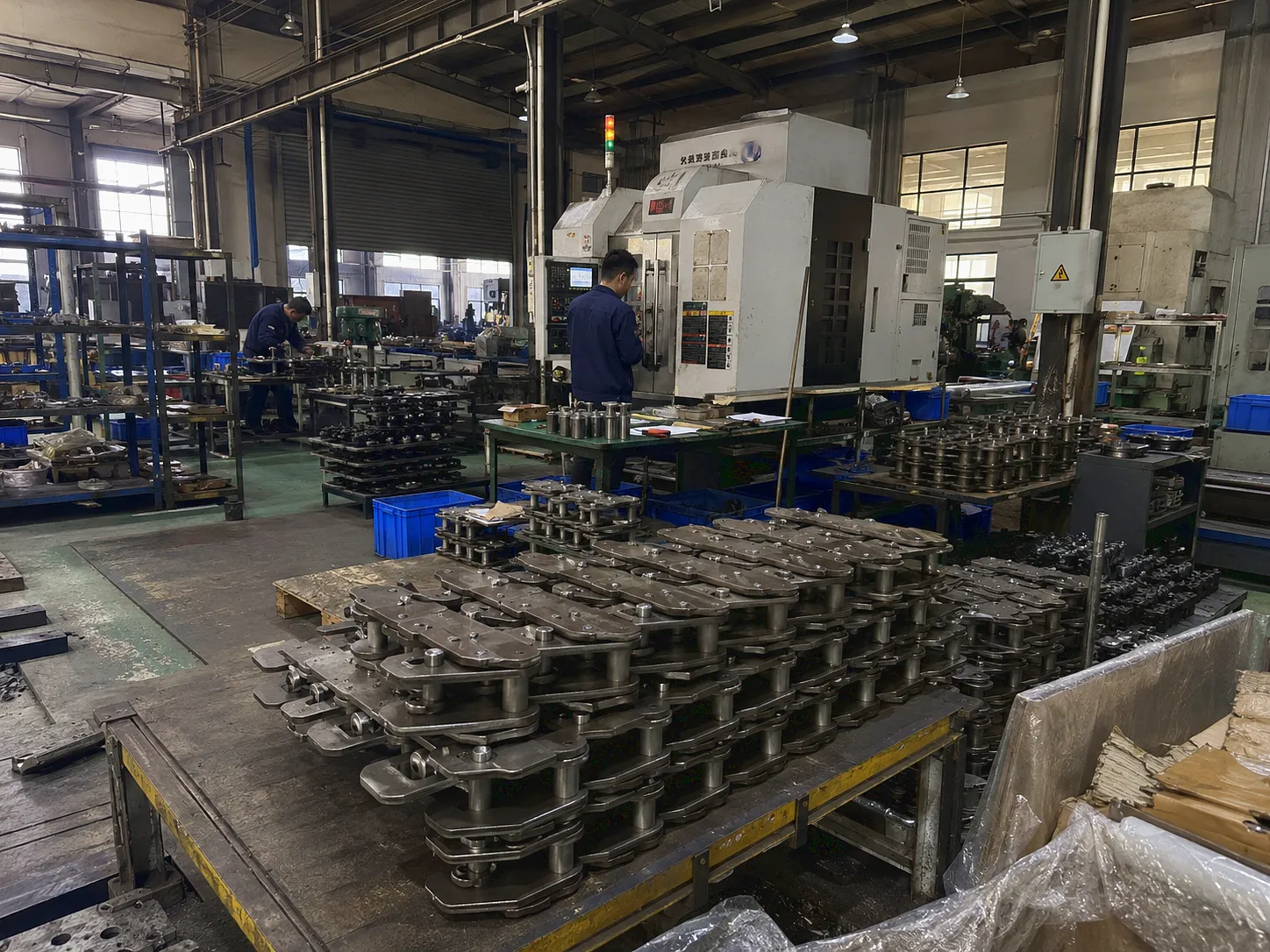
The factory behind the Ever Power leaf chain range spans over 22,000 square metres of manufacturing and quality control space, equipped with a production line capable of handling everything from small-pitch precision chain for instrumentation applications through to heavy-duty agricultural and materials handling grades. CNC blanking presses with servo-controlled feeds maintain consistent plate dimensions across high-volume production runs, while automated assembly and riveting systems ensure uniform pin retention force and joint integrity throughout each batch.
Custom engineering is not a peripheral service — it is central to how Ever Power supports OEM customers. When a sugarcane harvester manufacturer requires a leaf chain with a non-standard pitch, specific attachment plate profiles, or extended pin ends for connection to machine-specific links, our engineering team works directly from customer drawings or sample chains to produce matched product. This includes reverse engineering of obsolete specifications where original manufacturer documentation no longer exists, which is particularly relevant for older harvester models still in service in developing markets.
Surface treatment customisation is another area where factory capability adds genuine value. Tropical sugarcane environments — high humidity, organic acid contact, UV exposure — can compromise chain service life through external corrosion even when the internal fatigue properties are adequate. Ever Power offers hot-dip zinc, electrolytic nickel, and PTFE-impregnated coating options as factory-applied finishes, eliminating the need for customers to source secondary treatment from third parties and ensuring coating adhesion meets the base material preparation standards that field service life depends on.
Custom Chain Capabilities
- Non-standard pitch in any ISO series
- Custom attachment plate design and machining
- Extended pin and special end fittings
- Mixed-material plate configurations
- Pre-lubricated sealed assemblies
- Proof-load tested batch certification
- OEM private label available
- MOQ from 1 metre for standard; 10m for custom
Customer Success: Real Applications, Measurable Results
Eliminating Costly Mid-Season Breakdowns on 1,400-Hectare South African Cane Estate
 Thornvale Estate, a family-owned sugarcane operation covering approximately 1,400 hectares in the Eston area of KwaZulu-Natal, had been experiencing recurring elevator chain failures on their Austoft 8800 harvesters during peak season harvesting. With two machines operating on overlapping schedules to meet mill delivery windows, each unplanned stoppage carried direct financial consequences — not only the cost of replacement chains and labour, but potential penalties for missed delivery appointments at the processing facility.
Investigation revealed that the chains being used had been sourced from a regional agricultural supplier carrying undocumented product of uncertain specification. Pin surface hardness measurements on failed chains showed values below 48 HRC — significantly below the 58–62 HRC range required for adequate wear resistance in this application. The wear progression was rapid and asymmetric, indicating inconsistent hardness across pin batches and poor lubrication retention from the chain’s surface finish.
Thornvale switched to Ever Power BL1244 elevator chains following a recommendation from a UK-based agricultural machinery consultant familiar with our product. The change to properly specified, batch-certified chain with verified pin hardness and phosphate-coated surface finish eliminated the in-season failures completely in the following harvest year. Planned replacement intervals moved from reactive (failure-driven) to scheduled maintenance at 350 operating hours — a transition that allowed pre-season stock ordering and eliminated the premium pricing associated with emergency parts procurement.
0
In-season failures in year 1
350h
Planned replacement interval achieved
~£4,200
Estimated annual downtime saving
What Our Customers Say
We were burning through elevator chains every 150 hours and treating it as normal. Switching to Ever Power’s BL series and adopting their recommended greasing schedule took us to 380 hours between changes on the same machines. The quality difference is immediately obvious when you compare the two products side by side.
James Whitmore
Head of Machinery, Whitmore Agricultural Services — Lincolnshire, UK
As an exporter of harvesting equipment to East Africa, supply chain reliability is everything for us. Ever Power delivers on lead times, provides full test certificates without chasing, and their engineering team actually understood our custom attachment requirement the first time we described it. That kind of technical competence is rare at this price point.
Sarah Chen
Procurement Manager, AgriMech Export Ltd — Cambridge, UK
The custom lacing configuration we needed for the retrofit elevator project wasn’t in any standard catalogue. Ever Power turned around a prototype sample in three weeks and had production quantities ready within six. Quality was spot on from the first batch — I did not have to send anything back. That’s exactly the kind of supplier relationship we need for export machine builds.
Tom Gallagher
Production Engineer, Gallagher Harvester Systems — Norfolk, UK

Maintenance Practices That Extend Leaf Chain Life in Harvester Applications
The quality of the chain itself accounts for perhaps 60% of service life outcomes; the remaining 40% is determined by how the chain is maintained once installed. In the demanding environment of a sugarcane harvester, good maintenance discipline is not optional — it is the difference between planned replacement and emergency repair at the worst possible moment.
Lubrication Frequency
In the aggressive contamination environment of cane harvesting, leaf chain lubrication intervals should be no longer than every 8–10 operating hours. Use penetrating chain lubricant, not heavy grease, applied with a brush to ensure penetration between plates. Heavy grease traps abrasive particles and accelerates wear.
Elongation Monitoring
Leaf chain elongation results from pin-hole wear, not stretching of the link plates. Measure elongation over a 300–500mm section using calipers. Ever Power recommends replacement when elongation exceeds 2% of the nominal pitch over any measured section — this corresponds approximately to 3% of measurable pitch length, a threshold widely recognised in industrial αλυσίδα φύλλων standards.
Sprocket Inspection
A worn sprocket will destroy a new chain in a fraction of normal service life. Inspect sprocket tooth profiles at every chain change. Hooked or undercut tooth profiles must be replaced before a new chain is fitted. Running a £180 chain on a £40 worn sprocket is a false economy that experienced maintenance teams learn quickly to avoid.
End-of-Season Storage
Chains that will sit idle during the off-season should be cleaned, dried thoroughly, and coated with a preservative oil or wax-based corrosion inhibitor before storage. Chains left contaminated with crop juice, mud, and crop fibre through an extended off-season period will emerge significantly degraded even before a single operating hour in the new season.
Frequently Asked Questions
What is the best leaf chain specification for a sugarcane harvester elevator operating in tropical conditions with high soil contamination?
For primary elevator applications in tropical sugarcane harvesters, we recommend BL1244 or BL1266 series leaf chains with zinc electroplating and phosphate-coated pins. The BL series provides high breaking loads (356–534 kN) suited to the sustained dynamic loading of an inclined elevator, while the surface finish combination offers corrosion resistance in humid, organic-acid environments. Pin hardness should be verified at 58–62 HRC. For machines with particularly aggressive soil contamination, we also offer PTFE-impregnated variants that repel abrasive particle ingress more effectively than standard coatings.
How much does a replacement leaf chain for a sugarcane harvester elevator cost, and where can I get a quote for supply to the UK agricultural market?
Pricing varies by chain series, lacing configuration, surface treatment, and quantity. Standard BL-series harvester elevator chains typically range from £85–£220 per metre depending on specification, with significant volume discounts available for OEM and annual supply agreement orders. UK buyers benefit from consolidated freight with typical lead times of 10–15 working days for stocked sizes. To get an accurate price for your specific application, please contact us with your chain pitch, lacing, length requirement, and any surface treatment needs — we will provide a formal quotation within one working day.
Which leaf chain supplier in the UK can supply custom attachment plates for a non-standard sugarcane harvester elevator chain configuration?
Ever Power offers full custom leaf chain engineering, including non-standard attachment plate profiles, extended pins, and mixed lacing configurations. Our engineering team works directly from customer drawings, sample chains, or dimensional specifications to produce matched product. UK-based buyers — including manufacturers building harvesting equipment for export, agricultural engineers maintaining imported machines, and dealers holding service parts — can access this service with no excessively high minimum order requirements. Send your drawing or sample details to our sales team and we will confirm feasibility and lead time within 48 hours.
How do I know when to replace the leaf chain on my sugarcane harvester before it fails during the harvest season?
The most reliable indicator is pitch elongation measured with calipers over a 300–500mm section of the chain. Replace the chain when elongation reaches 2% of nominal pitch over any measured section. Visual signs such as side-plate cracking, visible pin wear channels, corrosion-induced plate pitting, or stiff links that do not articulate freely are also grounds for immediate replacement. We recommend establishing a scheduled replacement interval based on operating hours — typically 250–400 hours for primary elevator chains in high-throughput operations — rather than waiting for visible deterioration, which by that point often means the chain is already near failure.
What is the difference between a leaf chain and a roller chain, and why does it matter when choosing parts for agricultural harvesting machinery?
A leaf chain is constructed entirely from interleaved link plates and pins — no rollers, no bushings. This makes it much stronger in tension per unit weight than a roller chain of equivalent pitch, and it is designed specifically for load-bearing applications where the chain operates primarily under tension rather than transmitting rotary power. Roller chains transfer power through engagement between rollers and sprocket teeth; leaf chains bear loads through direct plate tension. In a sugarcane harvester elevator, the chain is primarily a load-bearing member under tensile stress, making the leaf chain design the correct choice. Using a roller chain in a leaf chain application would be a category error likely to result in rapid failure.
Does Ever Power ship leaf chains directly to agricultural engineering businesses and farm operations in England, Scotland, and Wales?
Yes. Ever Power supplies directly to UK-based customers across England, Scotland, and Wales, including agricultural engineering companies, farm machinery dealers, OEM manufacturers, and end-user farming operations. Stocked standard items are dispatched on 10–15 working day lead times via consolidated freight with UK delivery. Custom and non-standard items carry longer lead times that are confirmed at order placement. We accept orders by email and provide formal pro forma invoices for UK business purchasing processes. There is no minimum order quantity restriction on standard catalogue sizes.
Ready to Specify the Right Leaf Chain for Your Harvesting Application?
Get a tailored quotation from our engineering team. Custom specifications, ISO-certified quality, and UK-ready supply — all from a manufacturer with 18+ years in demanding industrial chain applications.
© Ever Power Chain Manufacturing — ISO-certified leaf chain supplier for agricultural and industrial applications. Serving the United Kingdom and global markets. All specifications subject to engineering review. Contact our technical sales team for application-specific advice. | edit by gzl