
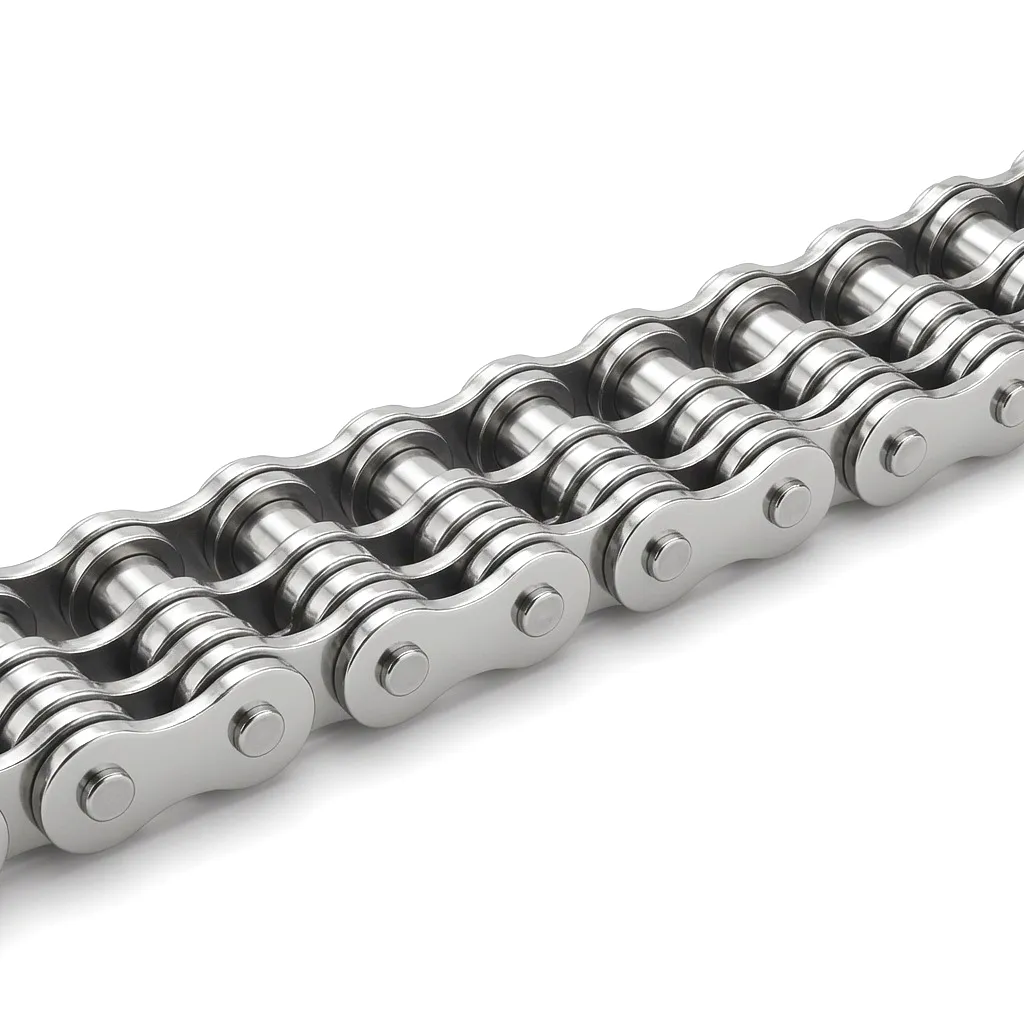
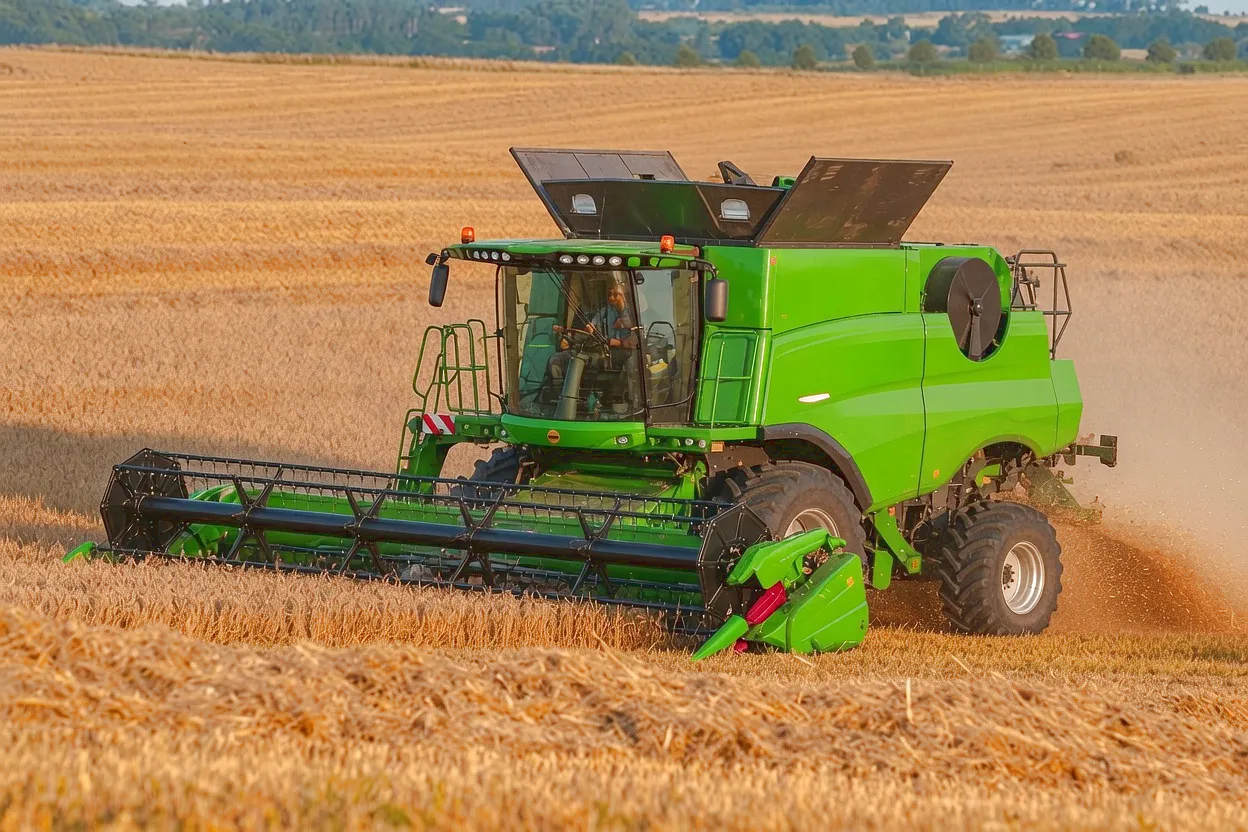
Walk through the grain stores of any large arable farm in East Anglia or the Yorkshire Wolds during harvest season and you’ll find the same story — every lost hour of combine downtime translates directly into thousands of pounds of unharvested crop. What the operators on the cab rarely see is what holds the entire machine together under the bonnet: the leaf chain. A deceptively simple transmission component, leaf chain has been the unsung workhorse inside combine harvesters for decades, governing everything from header lift cylinders to straw walkers, unloading auger drives and grain elevator systems. In the past few years, as combine designs have grown more complex and throughput demands have risen sharply, the specification of the right leaf chain has become a genuine engineering priority rather than an afterthought.
This article takes an in-depth look at how leaf chain — also called plate chain, balance chain, or forklift chain — is engineered and applied specifically for combine harvester environments. Drawing on more than 18 years of hands-on application engineering, we cover materials, load ratings, lubrication strategies, UK-specific operating conditions, and how leading manufacturers across Britain are specifying chains that survive full harvest seasons without failure.
Custom Leaf Chain for Your Combine Harvester
From standard BL/AL series to fully bespoke configurations — tell us your load requirements, pitch, and operating conditions. Our engineers will specify the exact chain for your machine.
What Exactly Is a Leaf Chain — and Why Does It Matter Inside a Combine?
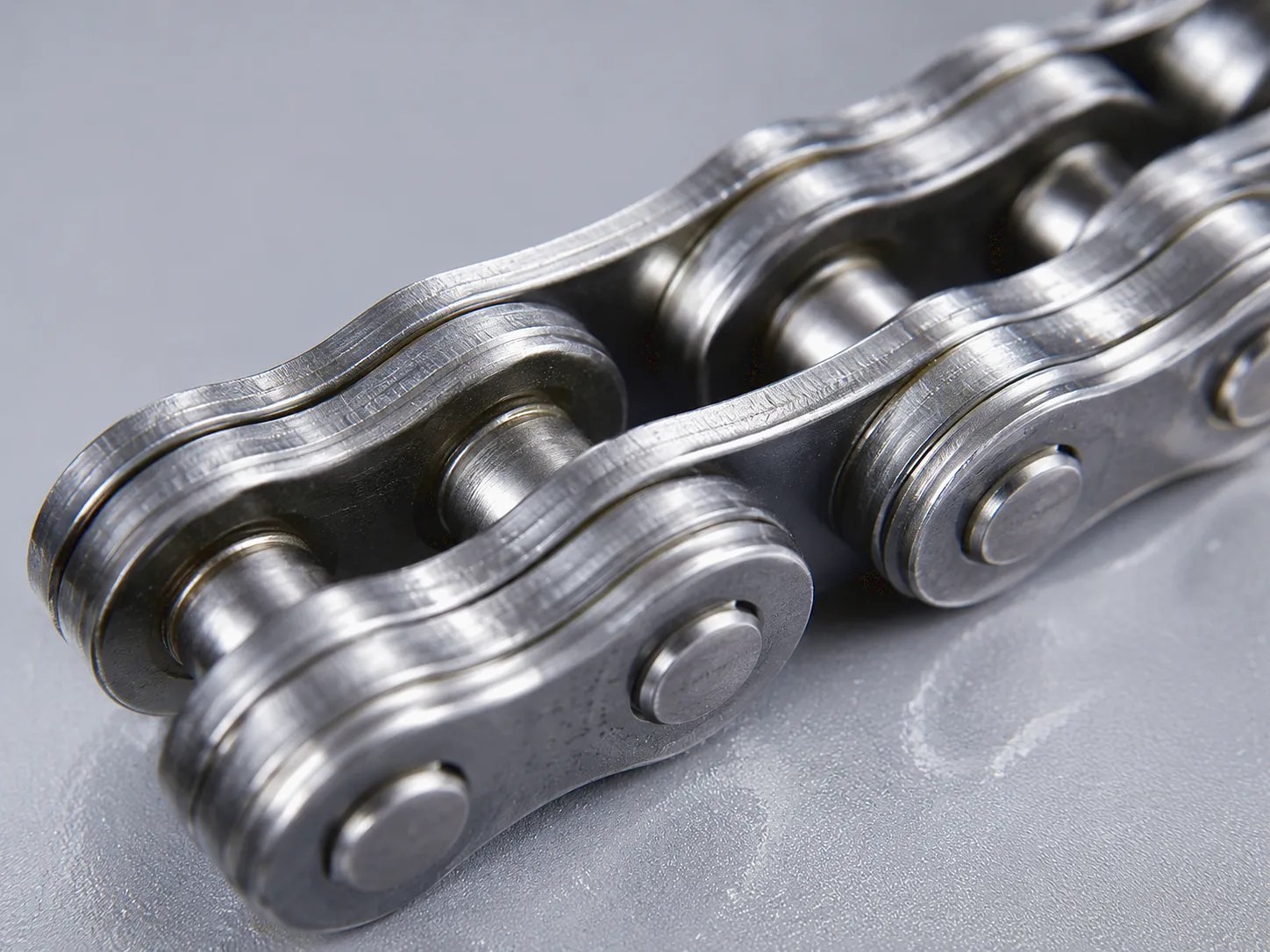
A leaf chain is a link-plate style chain composed entirely of interlinking lacing plates connected by hardened pins — there are no rollers and no bushings. This deceptively simple construction gives it extraordinary tensile strength-to-weight ratios and allows it to handle pure tension loads with minimal elongation over time. The design traces its lineage back to the forklift truck industry, where chains of this type are specified to BS EN 15011 and ISO 4347 standards. But the combine harvester environment has its own brutal demands that standard forklift chain specifications only partially cover.
Inside a modern 14-metre cutting-header combine, the leaf chain most commonly appears in the header lift and float control systems, where hydraulic cylinders are balanced and guided via chains anchored to the mainframe. The chain absorbs shock loads when the header rides over undulating ground — and British farmland, with its clay-heavy soils and field headland ridges, delivers those shocks in abundance. A chain that fatigues after one season costs not just the price of replacement, but potentially the entire grain harvest if it fails mid-cut.
Beyond the header, leaf chain appears in straw chopper tension systems, grain elevator tensioning assemblies, and — on some designs — the main concave adjustment mechanisms. Each of these applications has slightly different load profiles: some are predominantly static tension, others see regular cyclic loading, and a few must operate in environments flooded with crop dust and moisture. The engineer’s job is to match the chain specification to each application’s actual stress signature, not simply to use whatever happened to be fitted from the factory.

✓ BS EN 15011 Compliance
✓ DIN 8152 / ANSI B29.8
✓ AL & BL Series Available
✓ Custom Pitch Options
Material Science Behind Agricultural-Grade Leaf Chain
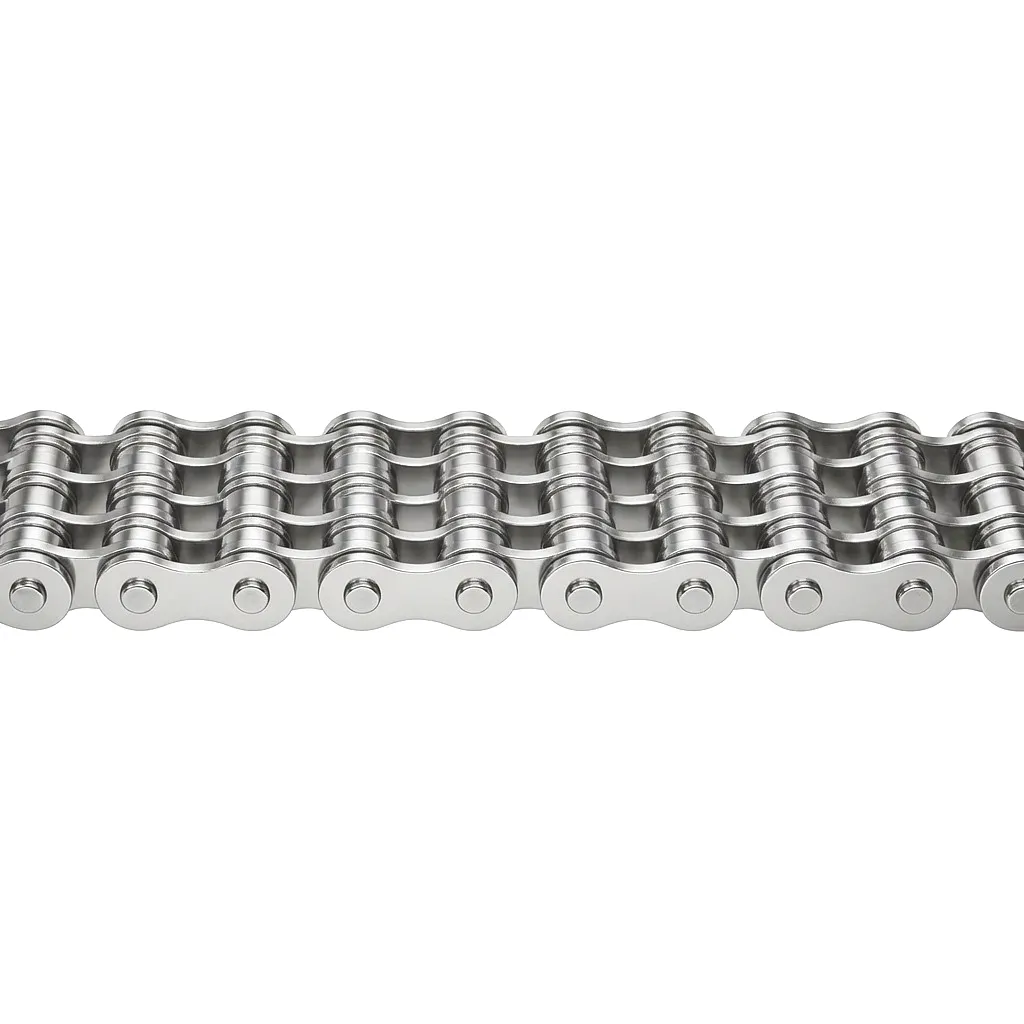 The structural integrity of any leaf chain begins with its steel specification. Agricultural-grade chains manufactured to a serious standard use carbon-alloy steel plates — typically 20MnCr5 or equivalent — that are case-hardened to a surface hardness of 56–62 HRC while retaining a tough ductile core. This dual-zone hardness profile is what makes the chain resistant to both abrasive wear on the plate edges and the high-cycle fatigue that comes from repeated loading and unloading during a harvest day that might run 16 hours.
The pins deserve equal attention. In a combine environment, pins are constantly subjected to shear forces combined with bending moments — a stress combination that causes premature failure in under-specified products. Premium-grade combine harvester leaf chains use cold-drawn alloy steel pins with a minimum tensile strength of 1200 MPa, precision-ground to tolerances of ±0.005 mm. These tolerances matter because the pin-to-plate fit directly governs how uniformly load is distributed across the lacing plates — poor tolerances lead to stress concentration and early plate cracking.
Surface treatment rounds out the material picture. In the UK, autumn harvesting means operating in conditions that range from fine dust in August to near-rain humidity in September and October. Zinc-nickel plating or dacromet coating provides meaningful corrosion resistance without the brittleness problems associated with hard chrome — an important distinction when the chain will also be handling shock loads. Some customers opt for stainless-steel variants for grain elevator sections where food-hygiene standards apply.
Technical Performance Parameters
| Chain Series | Pitch (mm) | Plate Lacing | Min. Tensile Strength (kN) | Typical Combine Application |
|---|---|---|---|---|
| BL 522 | 15.875 | 2×2 | 23.6 | Grain elevator tensioning |
| BL 634 | 19.05 | 3×4 | 58.0 | Header lift cylinder balance |
| BL 844 | 25.40 | 4×4 | 124.0 | Main header float control (heavy headers) |
| AL 1022 | 31.75 | 2×2 | 44.5 | Straw chopper tensioner |
| BL 1046 | 31.75 | 4×6 | 222.0 | Large-scale rapeseed harvesting headers |
| Custom Series | On request | Variable | Up to 600+ | OEM & specialist builds |
Values shown represent minimum tensile breaking loads per ISO 4347. Working load limits are typically applied at a 4:1 safety factor for combine harvester applications.
Where Leaf Chain Works Inside the Combine
Understanding the specific mechanical environment of each application point helps explain why proper chain specification — rather than a generic parts catalogue selection — matters so much. Below are the four primary zones where leaf chain performs critical work inside a combine harvester.


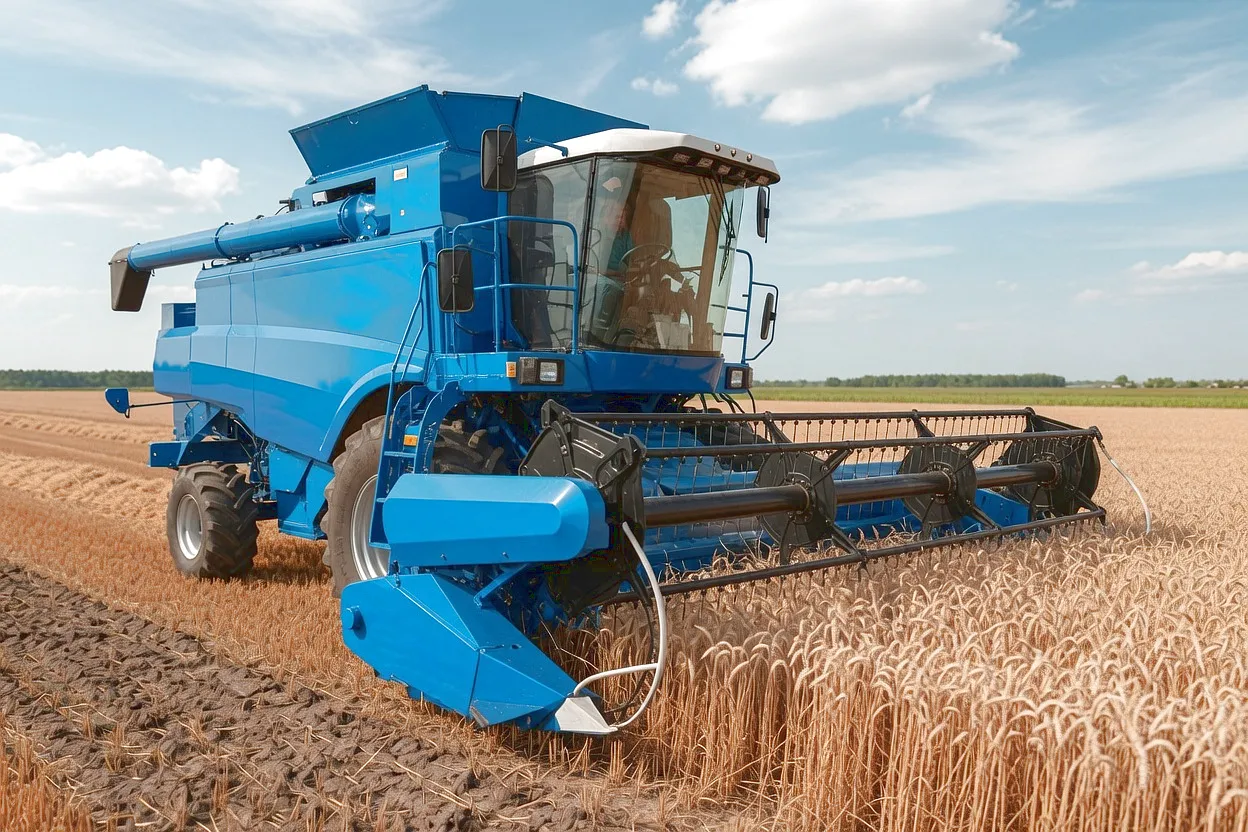
Ever Power Leaf Chain — Made for the Field
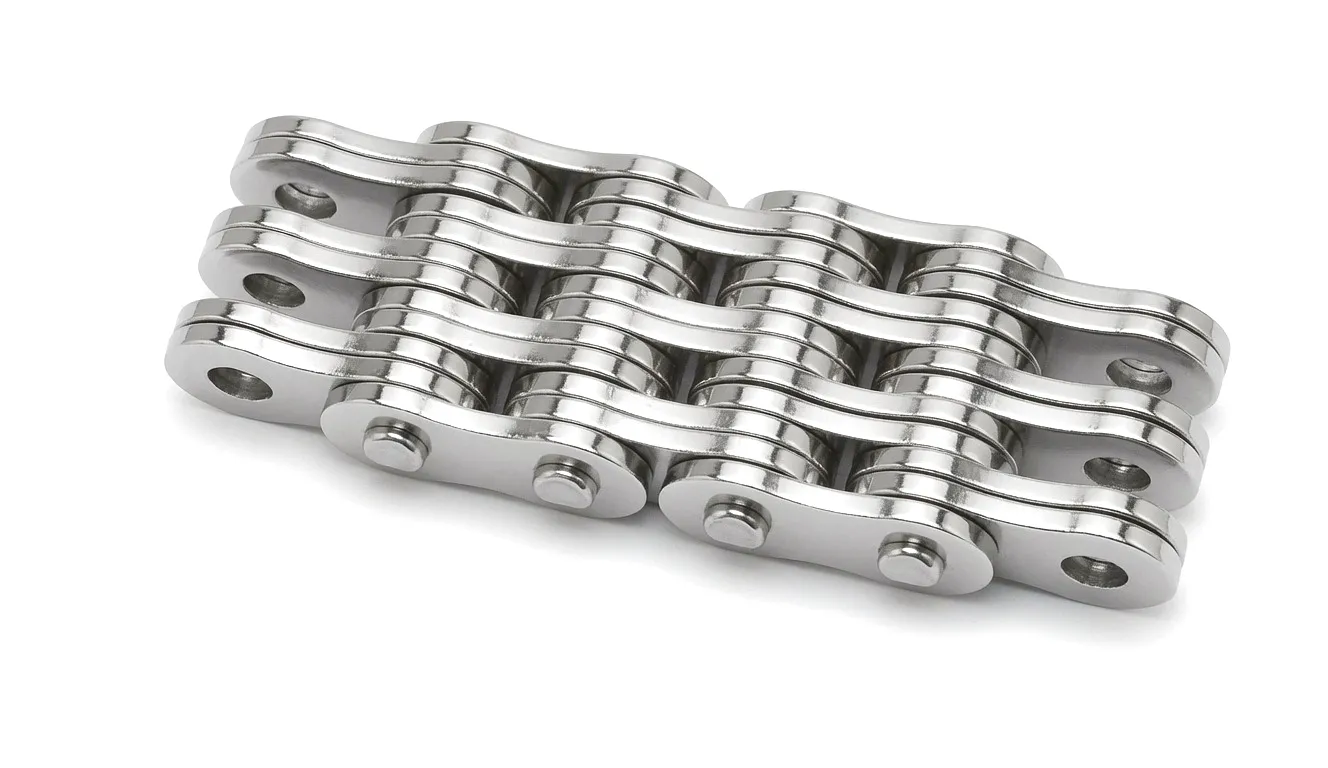

Why Ever Power Leaf Chain Outperforms Generic Alternatives
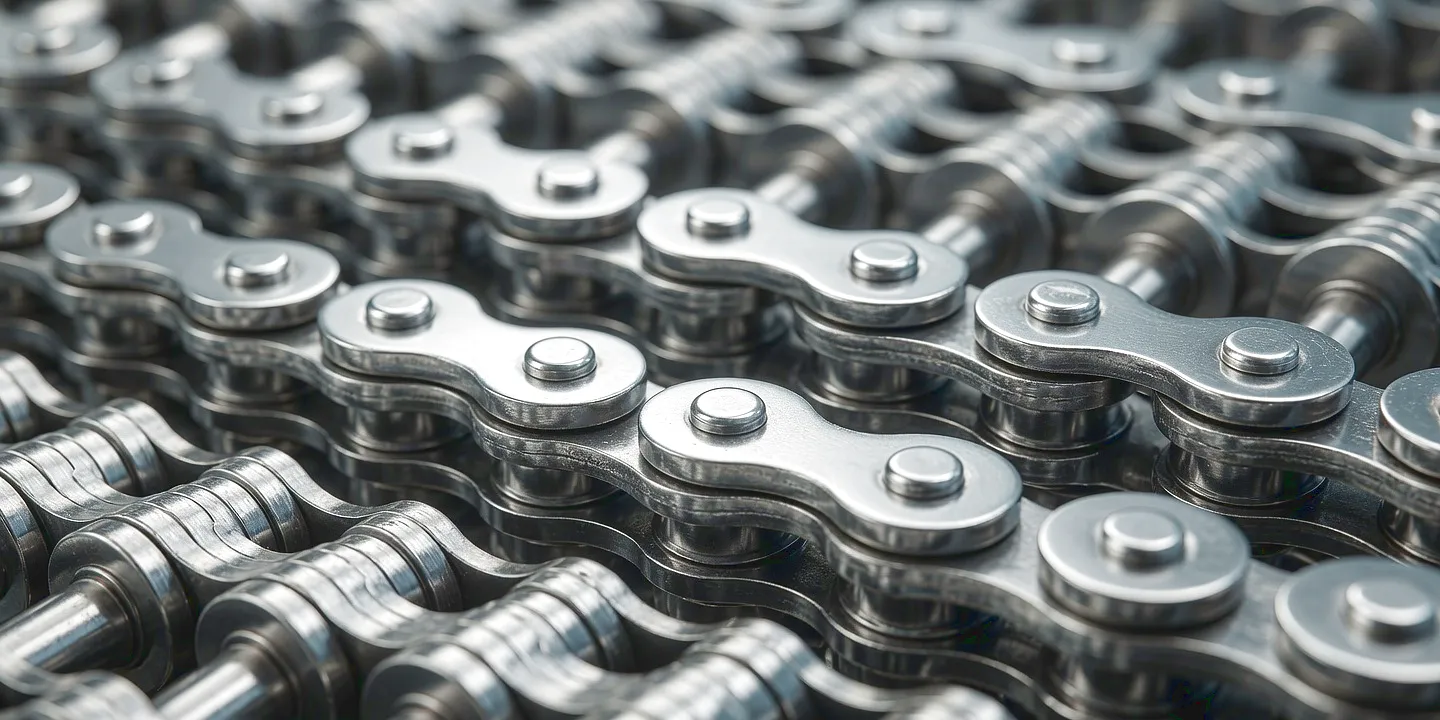
Not all leaf chains are created equal — and nowhere does that inequality show more starkly than in a combine harvester running 80 hectares a day during a five-week window that defines the farm’s entire financial year. Here is where Ever Power’s manufacturing approach makes a measurable difference in the field.
Extended Fatigue Life
The combination of controlled case-hardening depth (0.3–0.6 mm) and precision shot-peening of plate surfaces gives our chains a fatigue life that consistently exceeds standard chain products by 40–60% in cyclic loading tests. On a combine running two harvests per year, that difference typically means the chain survives the full OEM service interval rather than failing mid-season.
Low Elongation Under Load
Elongation is the primary failure metric for leaf chains in service. Our manufacturing process controls pin-to-hole clearances to ISO 4347 Class A tolerances, limiting initial elastic stretch and slowing the subsequent plastic wear elongation that eventually takes the chain out of service. Customers report 15–20% lower elongation at 12 months versus commodity chain products from non-specialist suppliers.
Consistent Dimensional Accuracy
Dimensional consistency matters when a chain must work reliably with OEM clevises, sheaves, and anchors. Every batch is CMM-inspected against drawing tolerances, and each chain undergoes a pre-tensioning proof load cycle before dispatch. This removes the initial settling elongation that causes new chains to require re-tensioning within hours of installation — a frustrating and time-consuming issue on machines with difficult chain access points.
UK-Stock & Rapid Dispatch
A combine down in August is not a scheduled maintenance event — it is a genuine operational emergency. We hold a comprehensive range of AL and BL series chains in UK-accessible stock, with same-day dispatch available for standard sizes before 14:00 GMT. For non-standard configurations, our pre-production sample process typically delivers within 10–14 working days, and volume orders are processed through a dedicated agricultural accounts team familiar with harvest season urgency.
Manufacturing Capability & Custom Engineering Services
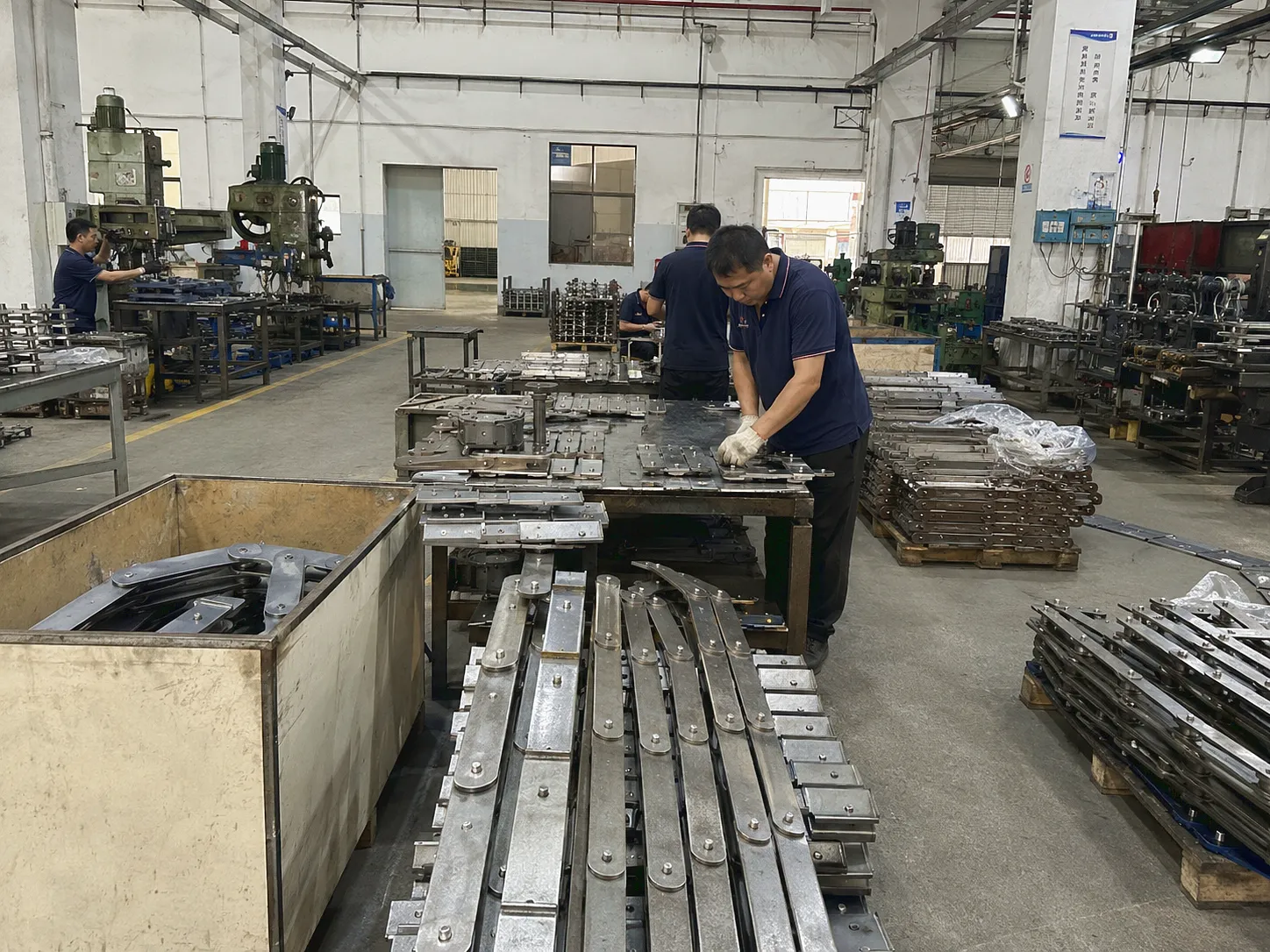 The breadth of combine harvester designs sold into the UK market — spanning John Deere, CLAAS, New Holland, Case IH, Fendt, and Massey Ferguson platforms across a decade-long age range — means that a one-size-fits-all catalogue product rarely achieves optimal results. Our manufacturing facility operates a fully integrated custom chain production capability, from raw material sourcing through to final proof-load testing, allowing us to produce bespoke configurations that no standard distributor can offer.
Custom engineering services include: non-standard pitch lengths for proprietary OEM assemblies, special plate thicknesses for high-cycle fatigue applications, pre-assembled kits with OEM-compatible end attachments and clevises, nickel-plated or zinc-flake coated chains for corrosion-sensitive applications, and extended-length chains for modified or rebuilt combine platforms. Our engineering team will work from your drawings, a sample chain, or even a machine model number to identify the correct specification and produce a verified replacement.
Volume pricing is available for agricultural machinery dealers and OEM supply chain partners across England, Scotland, and Wales. We regularly supply both independent machinery dealers servicing farms across the East Midlands, East Anglia, and Yorkshire — the UK’s most intensive cereal growing regions — as well as direct to farm workshops with in-house maintenance capability. Minimum order quantities are intentionally kept low to support smaller operations, with no surcharge on custom configurations under 50 metres.
Custom plate thickness
OEM end attachments
Special coatings
Extended lengths
Full kits
UK Harvesting Conditions and Chain Specification Considerations
British arable farming has several characteristics that meaningfully influence how leaf chain should be specified for combines operating here. The growing regions of England — from the Cambridgeshire fens through to the rolling wolds of Lincolnshire and North Yorkshire — have their own soil types, crop mixes, and seasonal rhythms that determine the stress environment for every component on the machine.
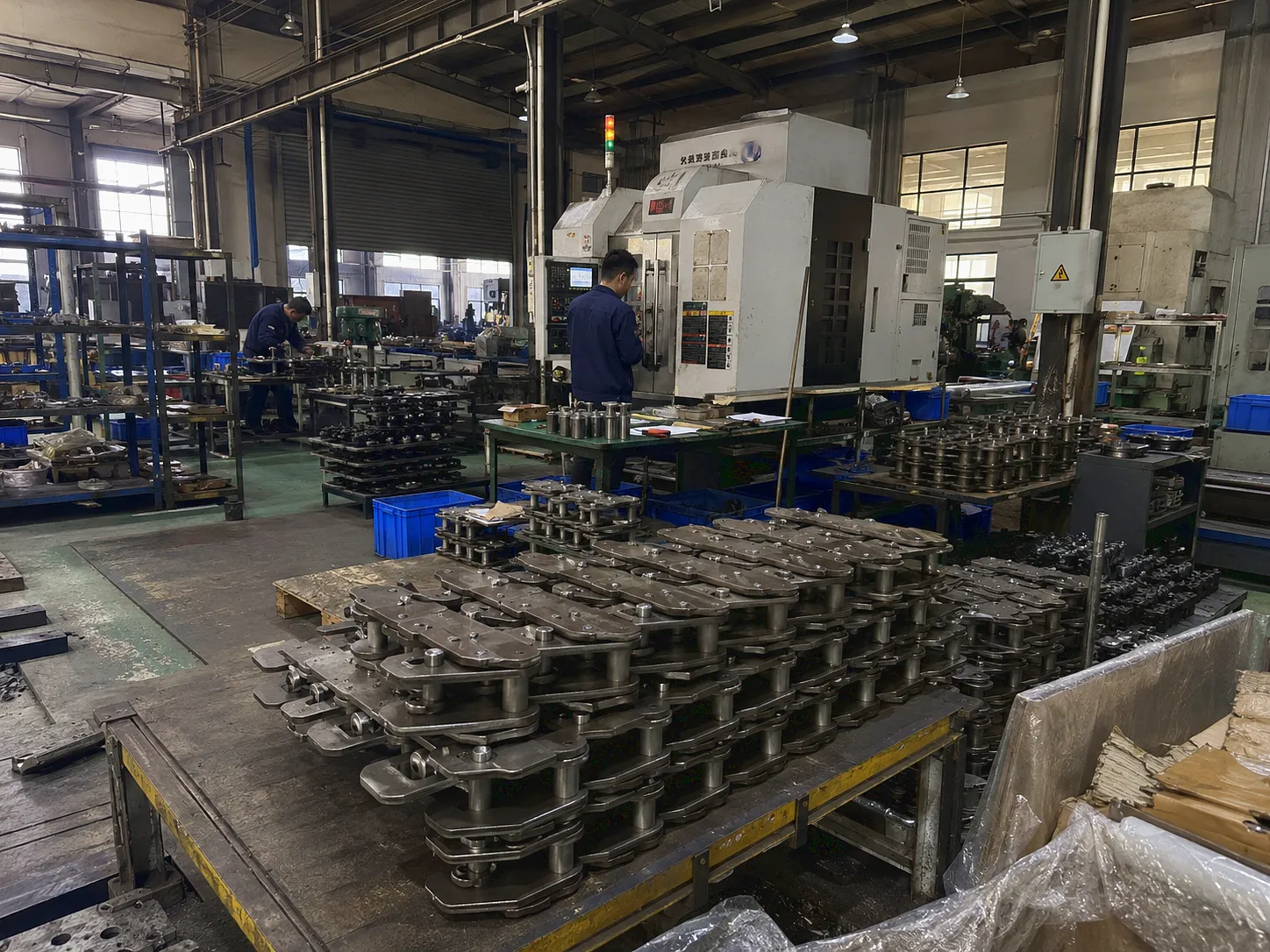
UK harvest windows are notoriously compressed. In most years, the window from early July (winter barley) through to mid-September (late spring barley and oilseed rape) rarely exceeds ten weeks, and within that period favourable harvesting conditions may be available for only 40–50 days depending on the region. This creates a culture of very high daily utilisation during the season — 12 to 18 hour days are common on larger farms — which means chains accumulate annual operating hours that might represent two or three years of harvest operation in other countries. Annual leaf chain inspection and targeted replacement is therefore not a premium maintenance choice; it is the baseline standard for responsible combine ownership in the UK.
The prevalence of oilseed rape in the English rotation also creates specific demands. Rape headers are substantially heavier than cereal headers of equivalent cutting width — the additional conditioning and transport mechanisms add 300–500 kg to the header mass — and the stiff, wiry rape straw creates impact loads in the intake that are transmitted directly into the header lift chain assembly. We routinely uprate the leaf chain specification by one nominal size when customers are operating rape headers on machines originally specced for cereal use only.
How UK Farming Operations Have Benefited
Arable Contractor Eliminates Mid-Season Chain Failures Across a 12-Machine Fleet
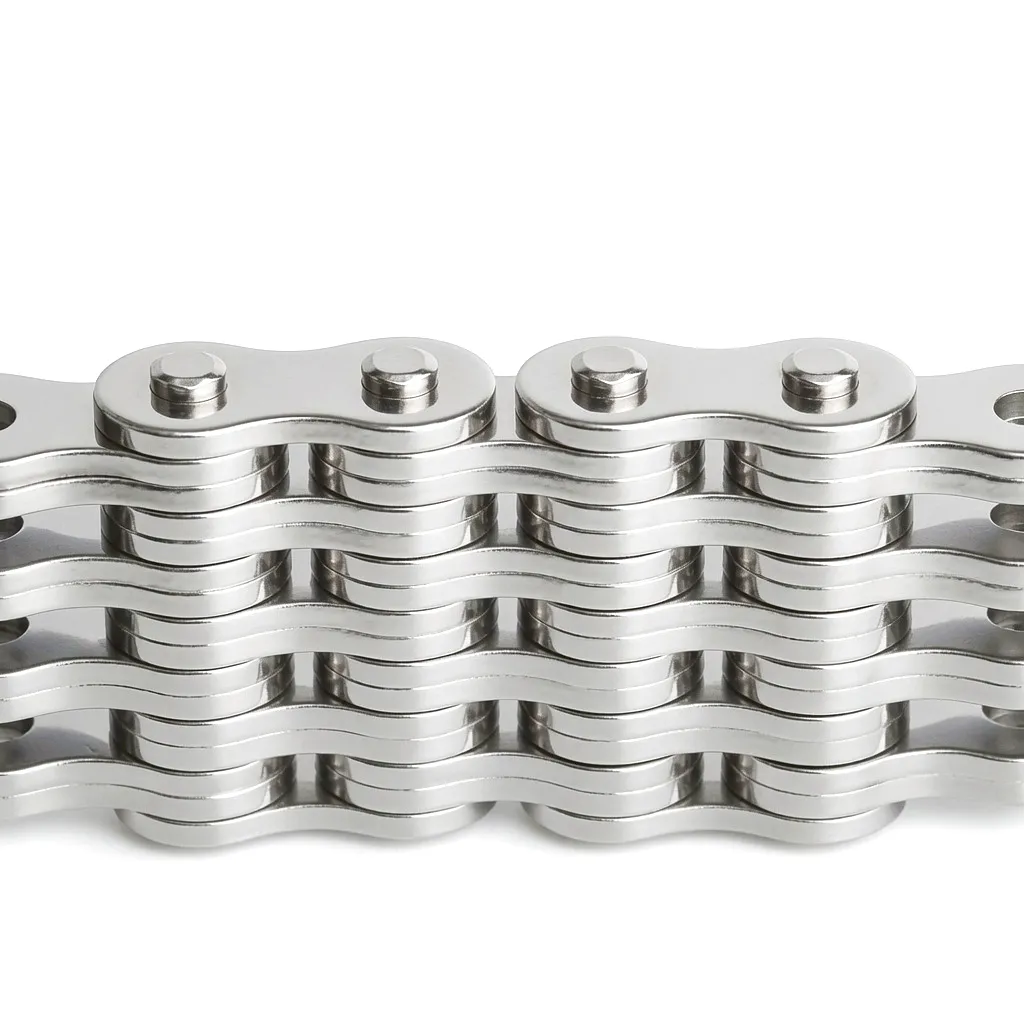
The Challenge: A specialist arable contracting business operating across the Lincolnshire Wolds and Fens was experiencing between two and four header lift chain failures per season across their fleet of 12 combines — primarily CLAAS Lexion and John Deere X Series machines. Each failure meant a minimum two-hour repair time and crane-assist access in several cases, with total downtime losses estimated at £8,000–12,000 per season in lost capacity fees.
The Solution: Following a technical audit of the failed chains, our engineers identified a pattern of fatigue cracking initiating at the outer plate chamfer — a manufacturing artefact from an inferior cold-forming process on the plates used in the competitor chains previously specified. We recommended upgrading all 12 machines to our BL 844 agricultural series with shot-peened plates and zinc-nickel anti-corrosion treatment. The entire fleet was re-specced using our blanket supply agreement, with pre-season delivery in March and a standing order for emergency replacements available same-day.
The Outcome: In the following two harvest seasons, the contractor recorded zero header lift chain failures across all 12 machines. The machines operated an average of 430 hours each over the two-season period. End-of-season elongation checks showed all chains within the OEM replacement threshold, and 9 of the 12 were deemed fit for a further season’s service after lubrication and re-tensioning — delivering a substantial reduction in annual chain replacement costs.
“We’d been replacing the header lift chains on our two CLAAS Trions every season without fail — literally every season. After switching to Ever Power’s BL 844 series on both machines, we went through last year’s rape harvest and winter barley without a single issue. The custom-length chains with the pre-fitted OEM clevis saves us an hour of faffing about every time as well.”
“As an agricultural machinery dealer we get asked for leaf chain replacements all through harvest. Ever Power’s response time and the quality of the technical advice is genuinely better than anything else available to us in the UK. When a customer rings at seven in the morning with a down combine, it matters that we can put a chain on a courier van by nine. These people understand that urgency.”
“The grain elevator tensioner chain on our New Holland CR was an ongoing problem — kept failing every couple of hundred hours. Ever Power supplied a modified version with a heavier lacing and self-lubricating sintered pins. That was three seasons ago and it’s still within spec. The technical support was excellent — they actually sent us a load calculation based on our throughput data before recommending a product.”
Maintenance, Inspection & Lubrication — Maximising Chain Life
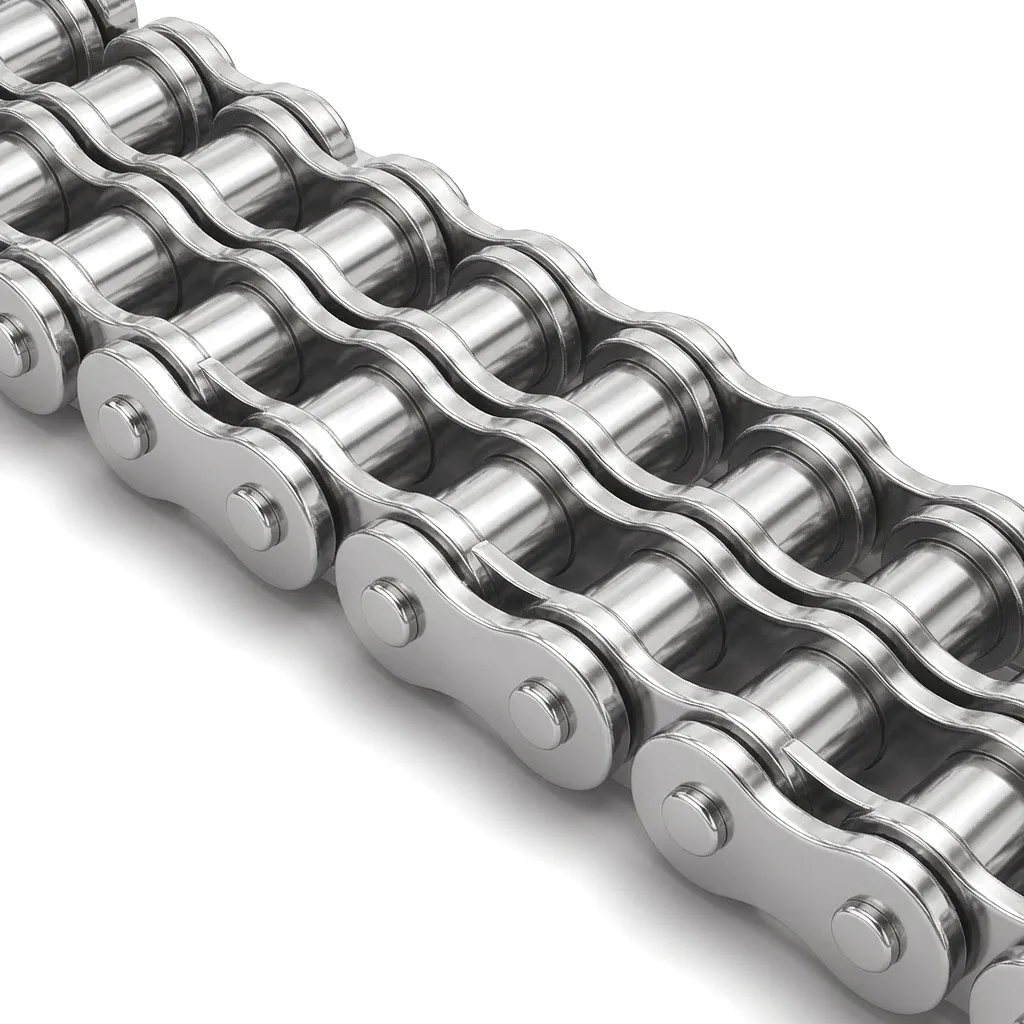
A high-quality leaf chain fitted incorrectly or maintained inadequately will fail prematurely just as surely as a poor-quality chain fitted correctly. The two most common causes of early leaf chain failure in combine harvesters that we see during failure analysis work are inadequate lubrication and over-tensioning — and both of these are entirely preventable with a disciplined inspection and service routine.
Lubrication is particularly important because leaf chains — unlike roller chains — have no oil-retaining bushings. The pin-to-plate contact surface is directly exposed, and once the factory-applied lubricant has been displaced by centrifugal action or washed out by crop debris, pin wear accelerates rapidly. We recommend applying a penetrating chain oil — applied while the chain is stationary and clean — every 50 hours of operation during harvest, or at each daily pre-start check if the machine is operating in dusty conditions. Over-tensioning is a subtler problem: operators who have experienced chain rattle from a slack chain sometimes over-correct by tensioning far beyond the manufacturer’s specification, dramatically increasing pin bending stress and plate fatigue.
| Inspection Point | Frequency | Action Threshold | Notes |
|---|---|---|---|
| Elongation check | Pre-season & 250 hr | 3% over OEM nominal | Measure over 10 pitches for accuracy |
| Pin wear / side play | Pre-season | Visible lateral movement | Indicates pin or hole wear |
| Plate corrosion | Post-season storage | Any pitting or rust blistering | Clean and re-lubricate before winter storage |
| Plate cracking | 50 hr during harvest | Any visible crack = immediate replace | Use dye penetrant in safety-critical zones |
| Lubrication | 50 hr or daily in dust | Maintain continuous film | Penetrating oil, apply to stationary chain |
Ready to Specify the Right Leaf Chain for Your Combine?
Whether you need a standard stocked replacement urgently for this week’s harvest or a fully custom-engineered solution for a specialist OEM build — our agricultural engineering team is ready to help. Send your machine model, application details, or a sample chain photo and receive a confirmed specification and quotation within one business day.
Serving agricultural machinery operators, dealers, and OEMs across England, Scotland, and Wales.
edit by gzl