
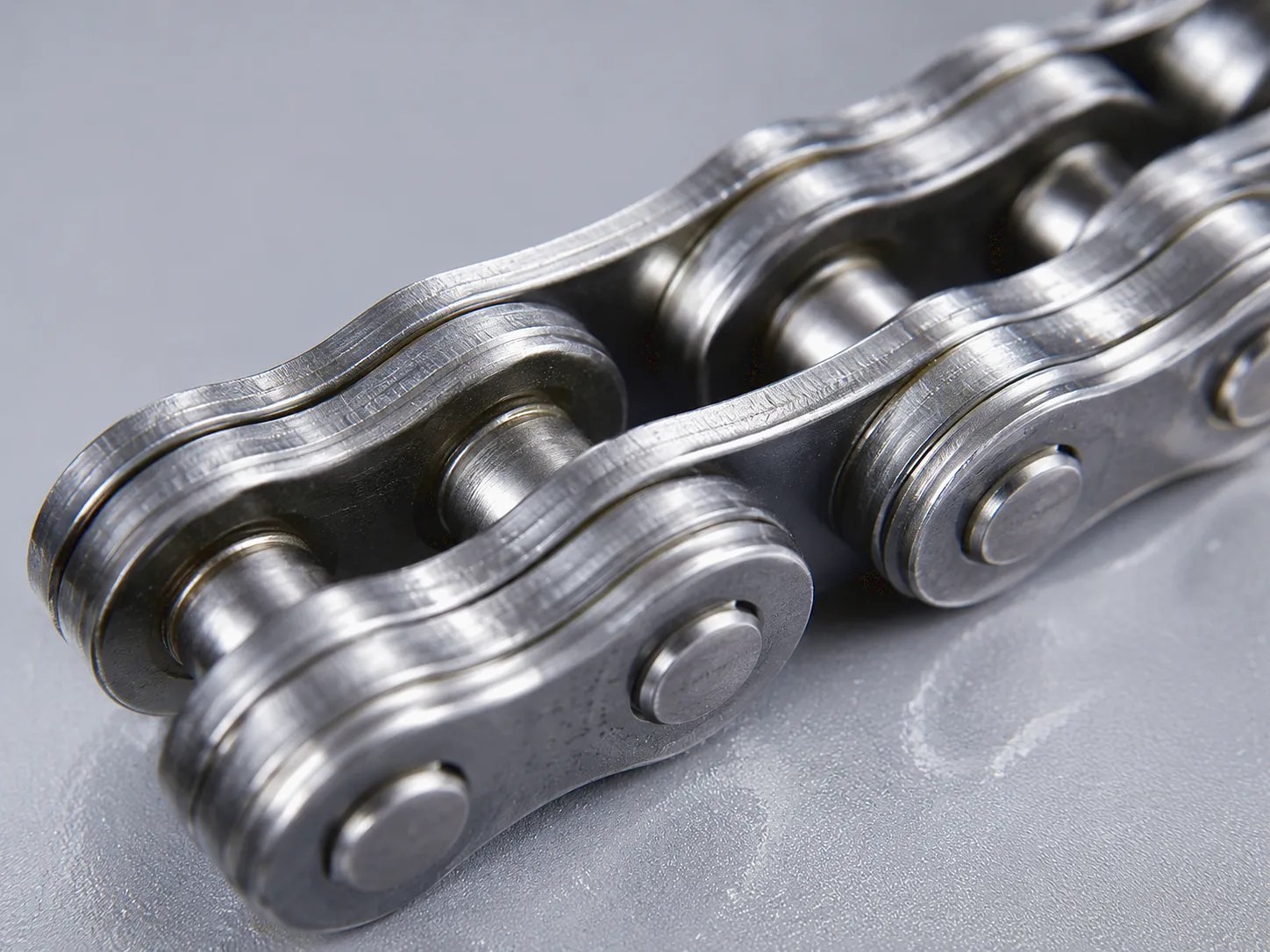
 Walk the floor of any ring spinning mill in Lancashire, Yorkshire, or the East Midlands and you will hear a very particular sound — tens of thousands of spindles turning in near-perfect unison, each one drawing, twisting, and winding fibre at speeds that strain the imagination. Behind that mechanical symphony sits a chain drive system that most engineers take for granted until the day it fails. That component is the leaf chain, and in the context of the ring spinning frame, it is far more than a simple power transmission link. It is the mechanical heartbeat of the entire machine.
A ring spinning frame converts drafted fibre rovings into spun yarn by rotating a spindle at speeds routinely exceeding 15,000 to 25,000 RPM while simultaneously oscillating a ring rail that traverses a precise vertical stroke to build the correct yarn package geometry. The ring rail lift mechanism — that rhythmic rise and fall over the spindle tube — is almost universally driven by a leaf chain arrangement. Getting that chain wrong introduces vibration, uneven yarn tension, package defects, and in worst cases catastrophic spindle damage. Getting it right means millions of trouble-free revolutions, consistent textile quality, and maintenance intervals measured in years rather than weeks.
This article draws on 18 years of field experience supplying and specifying leaf chain for ring spinning frames to textile manufacturers across the UK and across Europe. It covers the mechanical demands the spinning frame places on its chain, the material and dimensional standards that matter most, proven installation and tensioning techniques, and the signals that tell you a replacement is overdue. Whether you manage a single heritage spinning mill in Bradford or source components for a group of modern high-speed facilities, the information below will help you make better-informed, longer-lasting chain decisions.
Understanding Leaf Chain: Principles, Materials & Construction
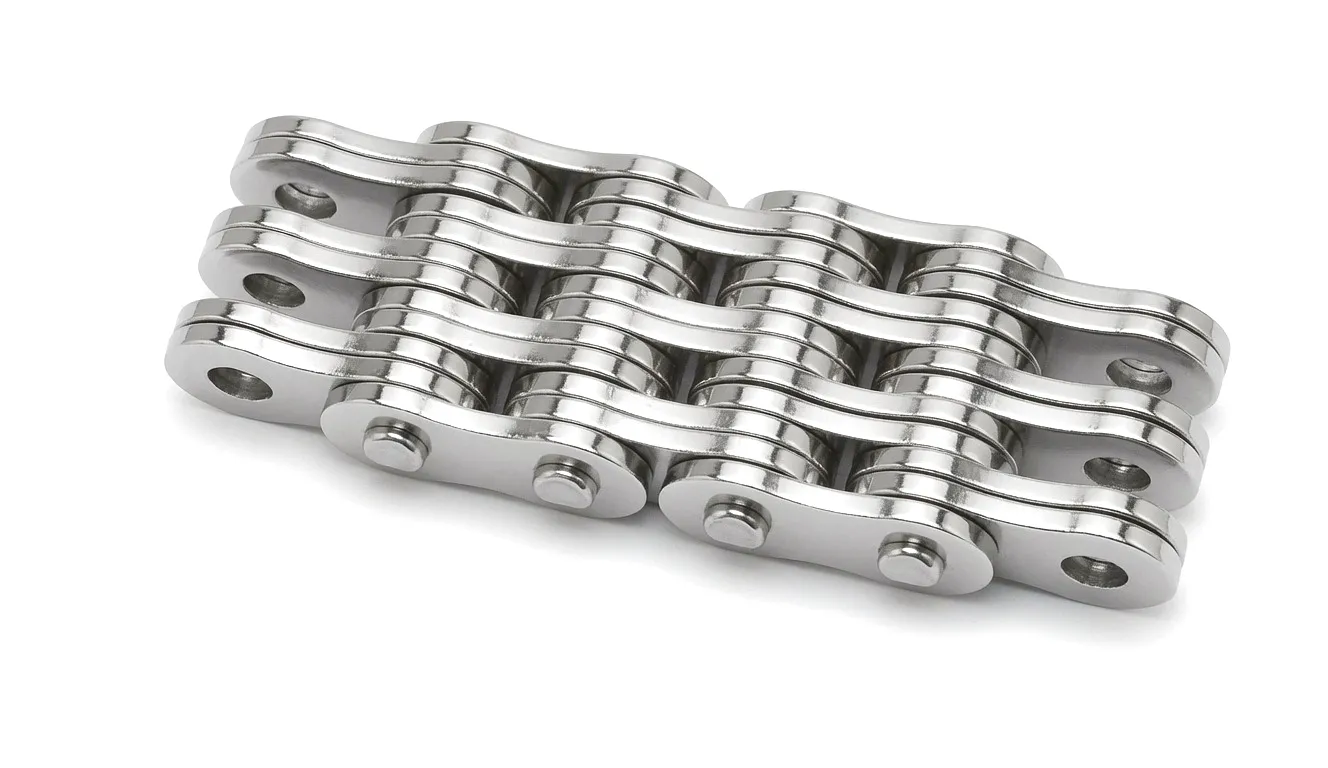
 A leaf chain — standardised under ISO 4347 and ANSI B29.8 — is a pin-link assembly with no rollers. Unlike a roller chain where the outer link rotates a roller over a sprocket tooth, the leaf chain uses flat link plates that articulate directly on hardened steel pins, distributing load across the full pin length. This construction gives leaf chain its primary advantage: an exceptional tensile-strength-to-weight ratio, superior fatigue resistance under repeated bending loads, and a predictable elongation pattern that lets maintenance engineers schedule replacements before failure rather than after it.
The link plates themselves are stamped from carbon steel or alloy steel strip that has been through-hardened and shot-peened to close residual surface stresses. On quality leaf chains intended for textile service, the pin material is case-hardened alloy steel with surface hardness in the region of 58–62 HRC while the core remains tough enough to absorb shock without brittle fracture. This combination — hard exterior, resilient interior — is exactly what a ring rail drive requires because the load on the chain reverses every time the ring rail changes direction, placing alternating tension and near-zero-load cycles on every link in rapid succession.
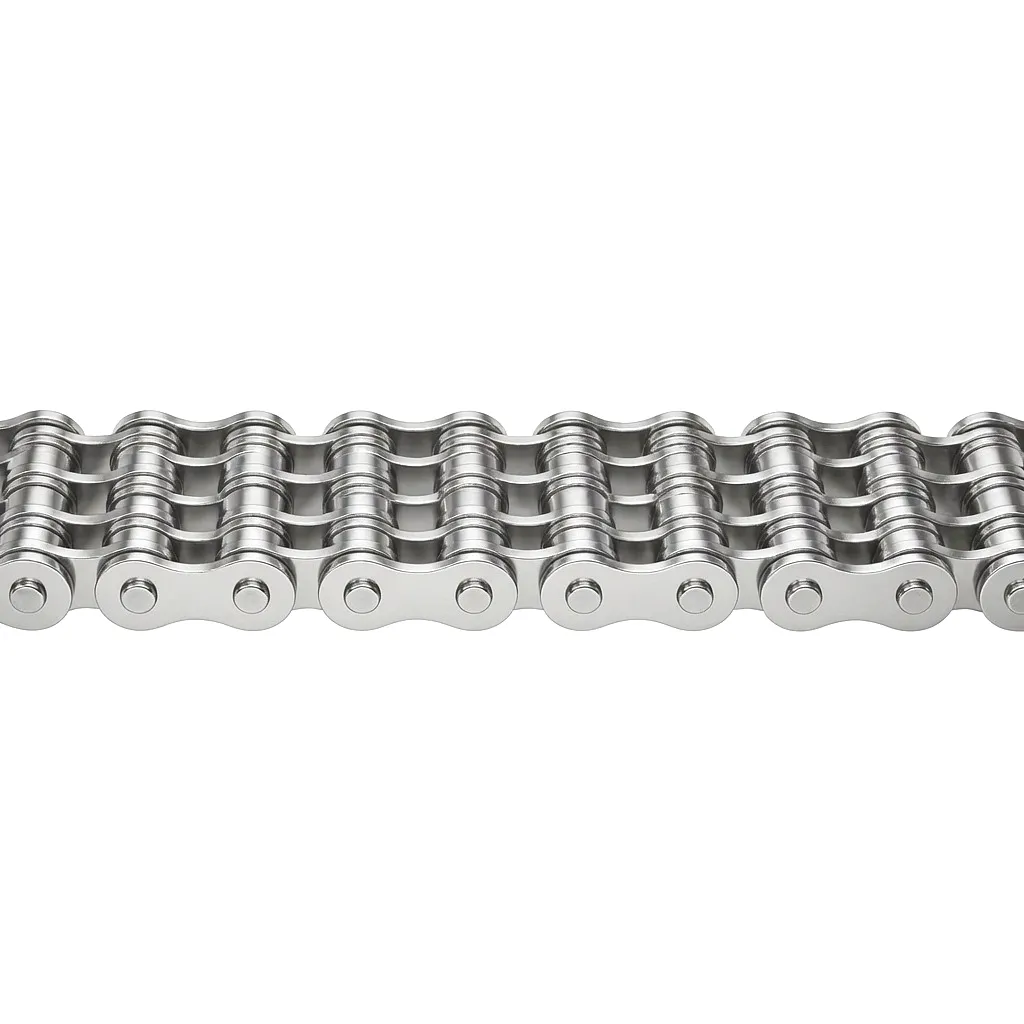
Lacing pattern matters enormously in textile applications. A 2×4 lacing (two link plates per lace, four laces per outer link) is the most common configuration for ring spinning frame ring rail drives because it offers a good balance of flexibility and load capacity. More heavily laced patterns — 3×4 or 4×6 — may be specified when a mill is running an extended-frame machine (600 spindles or more per side) where the cumulative weight of the ring rail assembly and the rapid inertia reversals during doffing demand a step up in safety factor. Understanding which lacing configuration your spinning frame was originally designed for is the starting point for any chain specification exercise.
The Ring Spinning Frame: Mechanical Demands on the Chain Drive
 The ring spinning frame has remained the dominant yarn manufacturing technology worldwide for well over a century, not because engineers have been slow to innovate, but because its fundamental operating principle — drafting fibres, inserting twist through a rotating spindle and ring-traveller assembly, and winding the resulting yarn onto a tube — delivers a combination of yarn quality, flexibility of count range, and capital cost that alternatives have struggled to match. Modern frames running Rieter G 38, Toyota RX330, or Zinser 451 platforms have refined and accelerated this century-old principle to a remarkable degree, but the underlying mechanical demands on the chain remain very similar.
The ring rail must travel vertically through a stroke of typically 150–200 mm during winding, then return rapidly (a “lift change”) to begin building the next layer of yarn. This rail carries the full weight of the ring assemblies — which on a long machine may amount to several hundred kilograms distributed across its length — while being driven from a single chain pick-up point. The chain therefore experiences a combination of quasi-static tension from the rail weight, dynamic shock loading at direction reversals, and torsional loading caused by any twisting or misalignment in the rail guides. Textile maintenance engineers who have seen a leaf chain failure mid-shift understand immediately why chain quality is not a place to economise.
Why Leaf Chain Outperforms in Textile Applications
High Fatigue Resistance
Shot-peened link plates resist the cyclic bending loads imposed by constant ring rail direction reversals, extending service life dramatically compared to standard roller chain in the same duty.
Precision Pitch Tolerance
Tight manufacturing tolerances on pin diameter, hole diameter, and plate parallelism ensure the chain runs true on its guide wheels, eliminating lateral oscillation that would translate directly into yarn tension variation.
Low Elongation Under Load
Quality leaf chain elongates predictably and slowly, allowing maintenance engineers to measure pin-to-pin length and track wear progression before it reaches the 1.5–2.0% elongation threshold that signals imminent replacement.
Lint & Fibre Compatibility
Unlike roller chains that can accumulate fibre in the roller cavity and cause accelerated wear, the simpler geometry of a leaf chain sheds textile waste more reliably, reducing maintenance intervention between scheduled cleandowns.
Customisable Link Count
Leaf chain can be cut and joined to any required length using standard connecting links, making it straightforward to match exactly the rail stroke and frame geometry of Platts, Rieter, Trutzschler, or any other OEM platform.
Corrosion-Resistant Options
For mills running with high humidity to control fibre moisture regain, zinc-plated or stainless-steel plate variants extend service life in environments where standard carbon steel would oxidise between maintenance cycles.
Technical Parameters: Leaf Chain for Ring Spinning Frame Applications
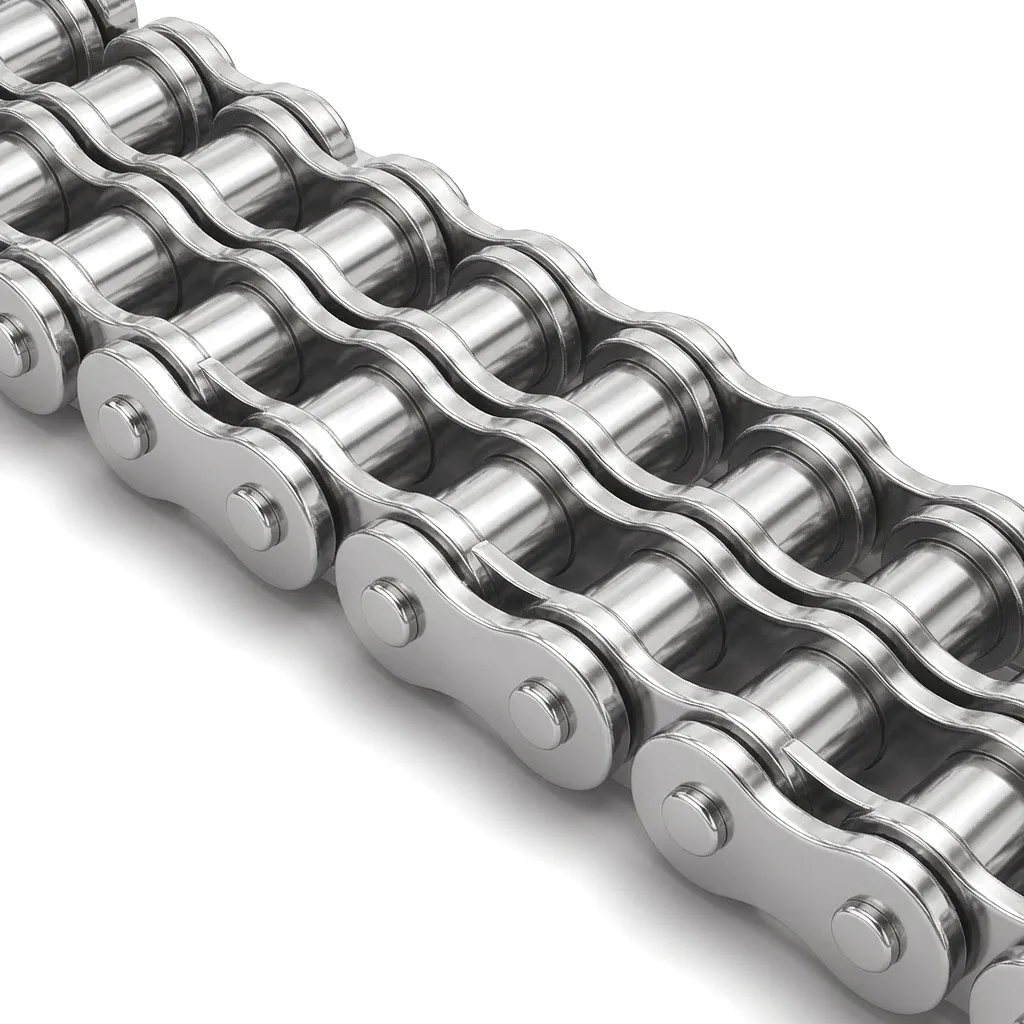
The table below summarises the principal technical parameters that govern leaf chain selection for ring rail drive duties on modern and legacy spinning frames. Values represent the standard range; exact specifications are confirmed at order stage based on frame model, rail weight, and stroke data supplied by the customer.
| Parameter | Typical Range | Notes |
|---|---|---|
| Chain Pitch | 12.7 mm – 38.1 mm (1/2″ – 1½″) | 19.05 mm (3/4″) is most common on Rieter G 32/38 platforms |
| Lacing Configuration | AL422 to AL1244 | AL644 and AL844 cover majority of ring rail lift applications |
| Minimum Tensile Strength | 17.8 kN – 222 kN | Per ISO 4347; actual working load typically 1/6 to 1/8 of MTS |
| Pin Material & Hardness | Case-hardened alloy steel, 58–62 HRC surface | Core hardness 35–42 HRC for shock resistance |
| Link Plate Material | Carbon steel (standard); 304 / 316 SS (option) | SS recommended for humid mill environments above 75% RH |
| Surface Treatment | Shot-peened; zinc-plated or self-colour options | Shot-peening increases fatigue strength by up to 20% |
| Operating Temperature | -10 °C to +120 °C | Standard lubricant compatible; consult for high-temp grades |
| Wear Elongation Limit | 2.0% maximum over reference length | Replace at 1.5% in critical high-speed applications |
| Standard Compliance | ISO 4347, ANSI B29.8, DIN 8152 | Interchangeable with OEM chains from Tsubaki, Renold, Iwis |
Where Leaf Chain Works Hardest in Ring Spinning Operations
Ring Rail Lift Mechanism
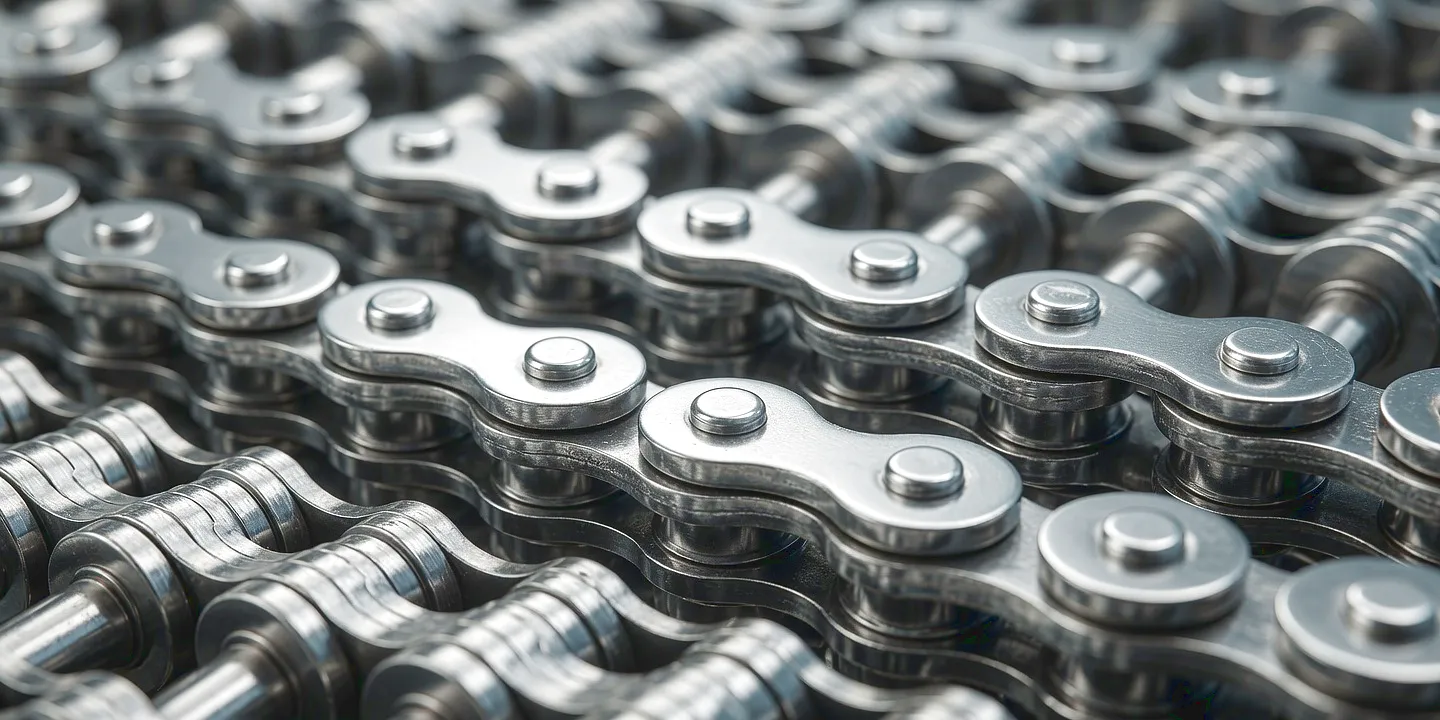
This is the primary and most demanding application for leaf chain on a ring spinning frame. The ring rail — a continuous horizontal beam carrying hundreds of individual ring holders and travellers — must traverse a precise vertical stroke as the yarn builds layer upon layer on the spindle tube. The cam-driven or servo-driven cam box imparts this motion through a chain and lever system. Any chain stretch, slack, or lateral instability introduces discontinuities in the stroke profile, which show up immediately as variation in yarn package density, uneven winding angle, and ultimately increased end breakage rates. The leaf chain must maintain dimensional consistency across tens of millions of reciprocating cycles without developing perceptible elongation.
Lappet and Creel Drive Systems
Beyond the ring rail, leaf chain appears in the drive trains that power the lappet-bar oscillation mechanism on frames fitted with lappet guides, and in the roving creel positioning systems that some modern frames use to auto-advance the roving bobbins. These are lower-load but equally precision-sensitive applications where a chain that is out of pitch tolerance will introduce noise, vibration, and irregular motion that operators find difficult to trace back to the chain itself. A systematic audit of all chain locations on the frame — not just the ring rail — is worthwhile at every major maintenance interval.

Doffer and Builder Motion Chains
On fully automatic doffing machines, where spindles are braked to rest and full bobbins extracted before empty tubes are inserted, a secondary chain system controls the doffing arm sweep and the builder mechanism reset. The shock loading here is significant: inertia from rapid deceleration and re-acceleration of the doffing assembly can momentarily spike chain loads to three or four times the steady-state running tension. Leaf chains specified for doffing duty therefore need a higher nominal safety factor — typically 10:1 against minimum tensile strength — compared to the 6:1 or 7:1 that ring rail drives typically require.

Installation, Tensioning, and Lubrication: Field-Tested Best Practice
STEP 01
Measure Before You Order
Count link pitches on the removed chain, measure pin-to-pin over at least 20 pitches (never fewer) on the worn chain to establish actual pitch, and check the existing lacing designation stamped on the side plates. Ordering by the OEM part number alone risks getting a chain built to older drawings; always verify current dimensions.
STEP 02
Inspect Guide Sheaves and Clevis Pins
Before fitting the new chain, examine every guide sheave groove for ridging or asymmetric wear. A sheave worn to a knife-edge profile will eat through new chain at many times the normal rate. Check clevis pin bores for ovality — more than 0.15 mm out-of-round on the ring rail attachment points warrants bushing or bore repair before the new chain is installed.
STEP 03
Set Initial Tension Correctly
A ring rail leaf chain operates most of its life in the loaded (tensioned) state. Correct initial sag on the slack side should be approximately 1–2% of the free span between guide wheels. Too tight causes accelerated joint wear and bearing overload; too loose allows chain slap, which introduces vibration into the ring rail and ultimately into the yarn package being built.
STEP 04
Lubrication: Type, Quantity, and Interval
Light machine oil (ISO VG 46 or ISO VG 68) applied to the inner side of the chain — where pins articulate inside link plate holes — is the most effective lubrication strategy. In textile environments, oils must be chosen carefully to avoid staining or contaminating the yarn overhead; food-grade clear mineral oils are acceptable and widely used. Apply by brush or drip oiler at every scheduled cleandown. Oil-bath or forced-circulation systems are not typically practical on ring spinning frames given the proximity to the yarn path.

Recognising When the Chain Needs Replacing: Practical Wear Indicators
Scheduled replacement based on operating hours or spindle revolutions is more reliable than condition-based replacement on ring spinning frames, because the early stages of leaf chain wear are almost invisible to a casual inspection. However, there are definite physical signals that indicate the chain has reached or passed its service limit. A chain elongation measuring tool — essentially a calibrated template or a simple vernier caliper referenced against a standard pitch gauge — is an inexpensive investment that pays for itself in avoided unplanned stoppages.
⚠ Elongation Exceeding 1.5–2.0%
Measure over 20 pitches. If the measured length exceeds the nominal length by 1.5% or more, schedule replacement within the next maintenance window. At 2.0% elongation the chain should be regarded as failed and replaced immediately.
⚠ Visible Side-Plate Cracks
Any visible cracking on the flat face or through the edges of a link plate is grounds for immediate shutdown and replacement. Plate cracks propagate rapidly under repeated loading and can result in complete chain fracture within hours of detection.
⚠ Stiff or Seized Links
When you pick the chain up and articulate it through the guide path by hand, every link should flex freely and smoothly. A stiff link — one that resists bending and stays bent at an angle — indicates corrosion, severe pin wear, or a cracked plate. The link will cause a perceptible jerk in the ring rail motion.
⚠ Increased Yarn End-Breakage Rate
While end-breakage has many causes, a sudden step-change increase localised to one side of the machine should trigger an inspection of the ring rail chain on that side. Chain-induced ring rail vibration is a well-established cause of elevated end-breakage that is frequently misattributed to traveller, roving, or drafting problems.
Sourcing Leaf Chain for Ring Spinning Frames in the United Kingdom
The UK textile industry — centred historically on Lancashire, the West Riding of Yorkshire, and the East Midlands but with modern spinning operations distributed more widely — has very particular requirements when it comes to chain procurement. Lead times, technical support, and the ability to specify a non-standard chain length without paying for a full reel are all considerations that purchasing managers at spinning mills raise consistently. Many mills run a mix of OEM frames from Rieter, Zinser, Toyoda, and older Platt Brothers machinery, and the chain specifications across those platforms are not always compatible. A supplier who can cross-reference part numbers, recommend equivalents, and supply cut-to-length chains with the correct connecting link type is infinitely more valuable than one who ships from a catalogue.
UK spinning mills also operate under BS EN ISO quality frameworks and must be able to produce material traceability documentation for maintenance records. Requesting a certificate of conformity with batch number, material certificate, and dimensional inspection data at point of order is entirely standard practice, and a quality supplier will provide this documentation routinely, not as an exceptional request.
Procurement teams at mills in Bradford, Huddersfield, Blackburn, and Leicester regularly source chain through engineering distributors, but increasingly are moving to direct supplier relationships that give them better pricing on repeat orders, agreed kanban stock-holding arrangements, and direct access to application engineering support when a non-standard specification is needed. If you are reviewing your leaf chain supply chain, direct supplier engagement is the route that consistently delivers better value over a three-to-five-year horizon than spot purchasing through a distributor margin stack.
🇬🇧 UK Mill Compatibility
All chains available in imperial pitch (ANSI) and metric pitch (ISO/DIN) to match OEM frames from Rieter, Platt Brothers, Toyoda, Zinser, and Howa across West Yorkshire, Lancashire, and the Midlands.
📄 Material Traceability
Certificate of conformity, EN 10204 3.1 material certificates, and dimensional inspection reports supplied as standard to meet ISO 9001-aligned quality documentation requirements.
⚡ Cut-to-Length Service
No minimum order on cut-to-length chains for UK customers. Specify your pitch, lacing, length in pitches, and connecting link requirement, and receive ready-to-install chain with no workshop preparation required.
Manufacturing Capability & Custom Chain Solutions
Ever Power — specialist leaf chain manufacturer with comprehensive in-house customisation services
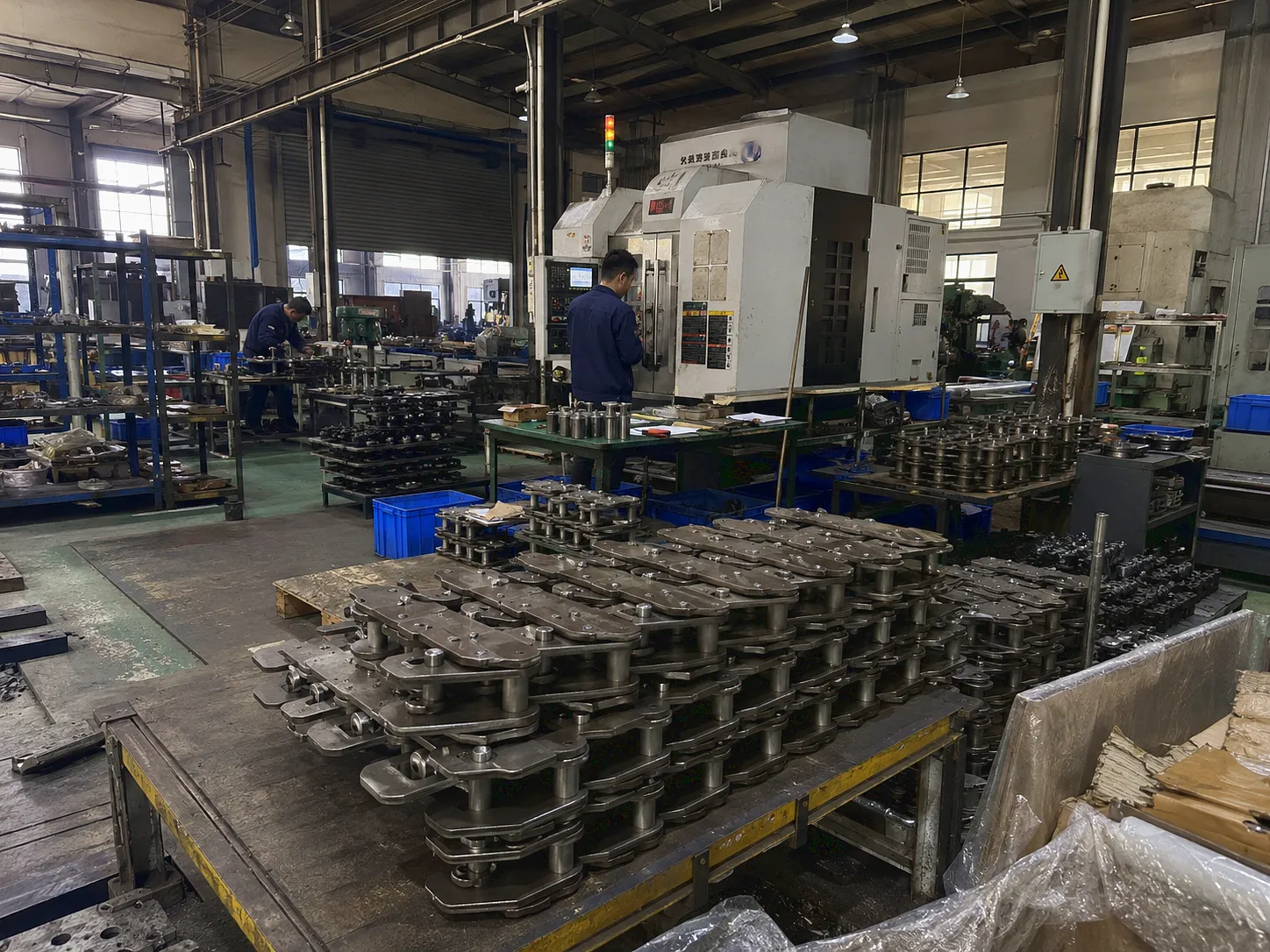
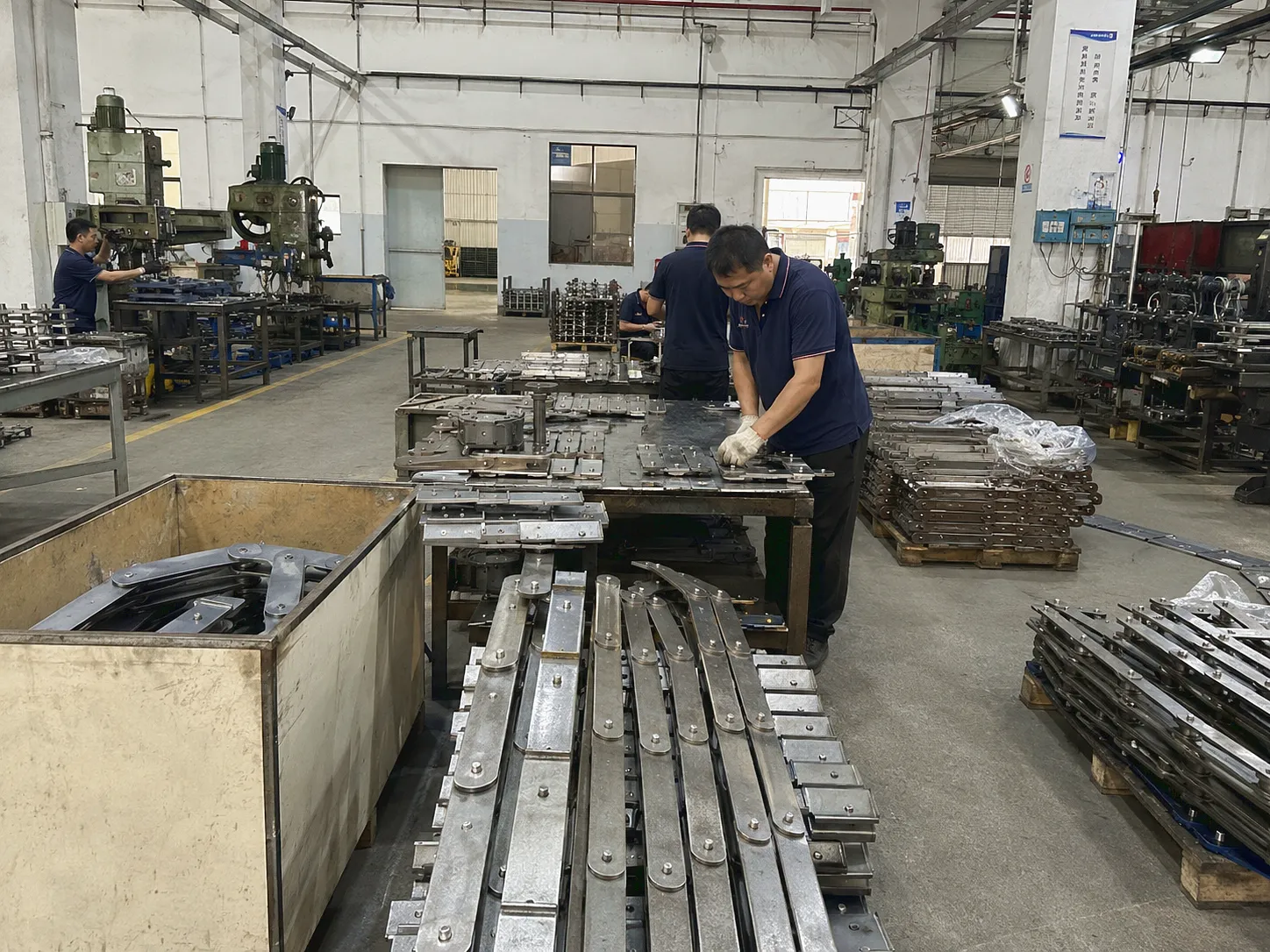 The Ever Power manufacturing facility produces leaf chain across the full ISO 4347 and ANSI B29.8 range on precision transfer presses and automated assembly lines that maintain dimensional tolerances well within the standard requirements. But it is the factory’s customisation capability that sets it apart for textile machine applications. Many of the requests that arrive from UK spinning mills are for specifications that fall outside the standard catalogue — a pitch that bridges between two nominal sizes to match a worn sheave profile that has been running for decades, a modified connecting link geometry to suit a proprietary clevis attachment, or a chain assembly in a specific corrosion-resistant alloy for a high-humidity section of the plant.
The engineering team at Ever Power works through these requirements systematically: reviewing the application loads, the existing hardware dimensions, and any performance constraints from previous chain failures, then recommending a specification with the supporting calculations. This is a service that has genuine value — it is not uncommon for a first-time enquiry to reveal that the previous chain supply was a slightly incorrect lacing configuration that had been accepted because it fitted visually, but was running at a higher fraction of its safe working load than the maintenance team realised. Custom chain design, prototype fabrication, and production lot supply are all available under a single point of contact.
Non-Standard Pitch
Any pitch from 9.525 mm to 76.2 mm
Special Lacing Patterns
Custom inner/outer plate counts to order
Stainless & Alloy Options
SS304, SS316, nickel-plate, zinc, self-colour
Custom End Terminations
Clevis, anchor, safety pins, bent plates

Customer Success: Real-World Results from Ring Spinning Operations
Case Study
Worsted Spinning Mill – West Yorkshire, England
62% reduction
in chain-related stoppages
 A family-owned worsted spinning operation in the Colne Valley, West Yorkshire, was running 18 Rieter G 33 ring spinning frames at the time they approached Ever Power. Their maintenance records showed an average of 2.4 unplanned ring rail chain failures per month across the machine population, each resulting in a minimum four-hour stoppage to access, replace, and re-tension the chain and reset the ring rail position sensors. The total annual downtime cost attributed to chain failures was estimated by the maintenance manager at over £35,000 including lost production, overtime, and replacement parts from a local distributor at spot prices.
An application review identified that the chains previously in use were manufactured to ANSI B29.8 with a standard 2×4 lacing at 19.05 mm pitch — nominally correct — but material certification was inconsistent between supply batches and pin hardness on tested samples fell below the lower acceptable limit. A supply transition to Ever Power AL644 19.05 mm chains with full EN 10204 3.1 certification and a verified pin hardness range of 59–61 HRC was implemented across all 18 frames during a planned summer maintenance shutdown.
In the twelve months following the transition, chain-related unplanned stoppages fell to an average of 0.9 per month across the entire machine fleet — a 62% reduction. The procurement team also secured a blanket order arrangement that reduced unit chain cost by 11% against previous spot purchase pricing, with agreed 48-hour despatch on all reorder quantities.
We changed our entire machine population over to Ever Power leaf chain after two successive chain failures on the same machine within a single month. Eighteen months on, we haven’t had a single ring rail chain failure. The quality of the material is visibly different — the plates are sharper, the pins are more consistent, and the chains simply run quieter. The technical support on specification was first-rate.
David Hartley
Engineering Manager, Worsted Yarn Manufacturer — Bradford, West Yorkshire
As a procurement manager sourcing components for three spinning sites across Lancashire and the Midlands, supplier consolidation is always on my agenda. Ever Power now supplies all ring rail and builder motion chains across all three sites. The consistency between batches and the documentation they provide has made our internal quality audits significantly easier. Their cut-to-length service saves us a small amount of workshop time per machine, but across 200-plus frames that adds up very quickly.
Sarah Clifton
Group Procurement Manager, Cotton Spinning Group — Lancashire & Midlands, UK
We run a fairly unusual mix of older Platt frames alongside modern Zinser 351s and the pitch requirements are different across the two machine generations. Ever Power’s engineering team cross-referenced our part numbers and gave us a clear recommendation within 24 hours. The stainless steel variant they recommended for our humid finishing end has been running for 16 months without any of the surface corrosion we saw on the previous chains. Very impressed with both the product and the service level.
Michael Forsyth
Plant Maintenance Director, Speciality Yarn Manufacturer — Huddersfield, West Yorkshire
Leaf Chain vs Alternative Drive Solutions for Ring Rail Applications
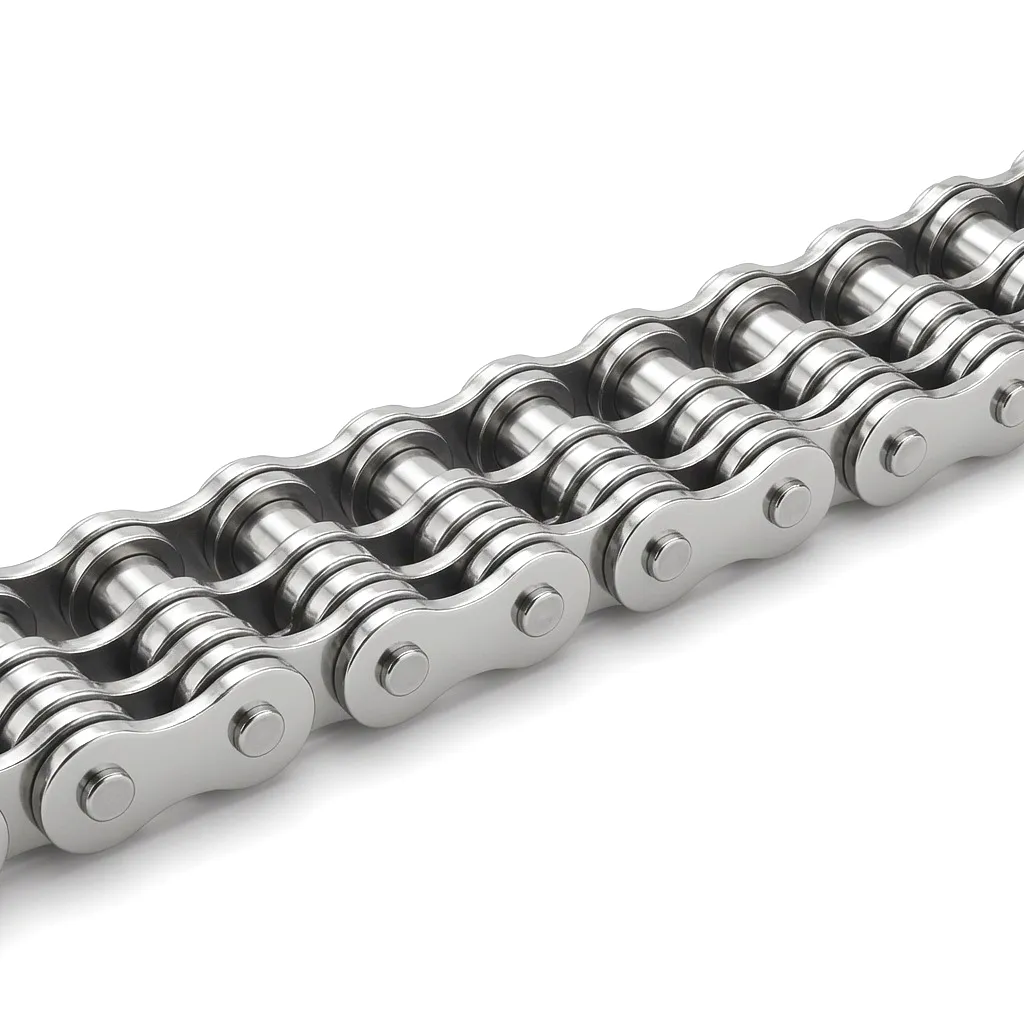
Mill engineers occasionally ask whether roller chain, wire rope, toothed belt, or a direct servo-drive eliminates the need for leaf chain in the ring rail application. The table below summarises the practical comparison based on field experience across modern and heritage ring spinning frames.
| Drive Type | Load Capacity | Fatigue Life | Lint Tolerance | Replacement Cost |
|---|---|---|---|---|
| Leaf Chain (ISO 4347) | ★★★★★ High | ★★★★★ Excellent | ★★★★ Very good | ★★★★★ Low |
| Roller Chain | ★★★★ Good | ★★★ Moderate | ★★ Poor (roller cavity traps lint) | ★★★★ Low |
| Wire Rope | ★★★★ Good | ★★★ Moderate | ★★★ Moderate | ★★★ Moderate |
| Toothed Belt | ★★★ Moderate | ★★★★ Good | ★★★ Moderate | ★★ Moderate-high |
| Direct Servo Drive | ★★★★★ Excellent | ★★★★★ Excellent | ★★★★★ Excellent | ★ Very high (capital cost) |
The direct servo drive eliminates the mechanical drive train entirely and delivers exceptional performance, but the capital cost and control system complexity make it the exclusive preserve of new high-end installations. For the large installed base of existing ring spinning frames in the UK, quality leaf chain remains the most technically appropriate and economically sensible solution for the ring rail lift application.
Frequently Asked Questions
Ready to Specify Leaf Chain for Your Ring Spinning Frames?
Tell us your frame model, ring rail stroke, spindle count, and running speed. Our application engineers will recommend the correct chain specification, provide dimensional drawings, and give you transparent pricing — usually within 24 hours.
✉ Get a Quote — Email Us Today
Ever Power | Specialist Leaf Chain Manufacturer | Serving the UK Textile Industry | edit by gzl