
⏰ 14 min read | Ever Power Chain · United Kingdom
 Ring spinning remains the global gold standard for producing high-quality spun yarn, and within a modern ring spinning frame — whether it’s a Rieter G 38, a Toyota RX300, or a legacy machine rebuilt for performance — the drive chain is the heartbeat of the entire drafting and spindle system. When that chain falters, spindles miss their rhythm, yarn breaks multiply, and efficiency numbers collapse fast. After eighteen years working directly with textile machinery engineers and maintenance managers across the UK and Europe, I’ve seen the same preventable failure repeat itself with alarming regularity: the wrong chain specification deployed in a high-cycle, high-tension drive application.
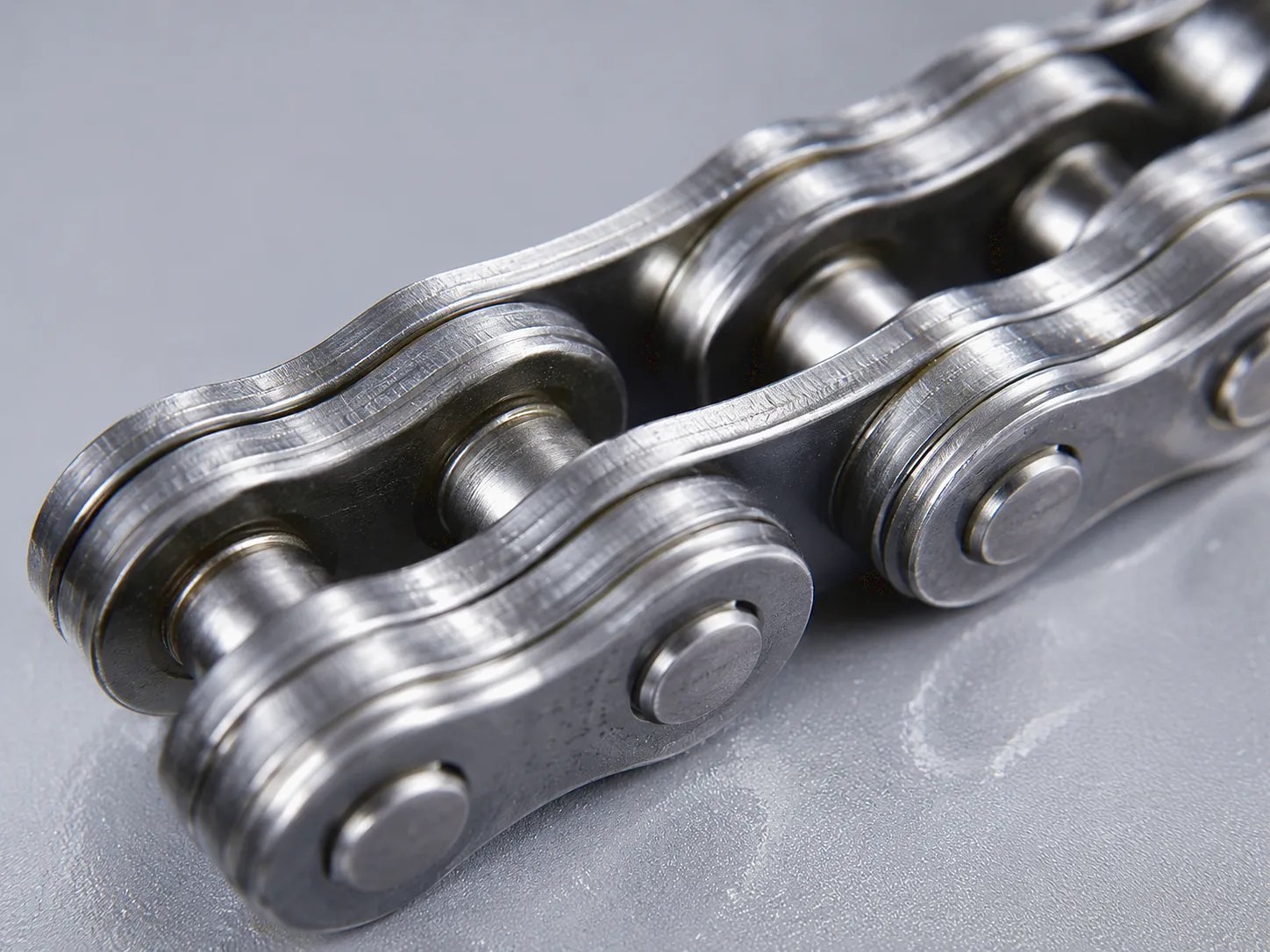
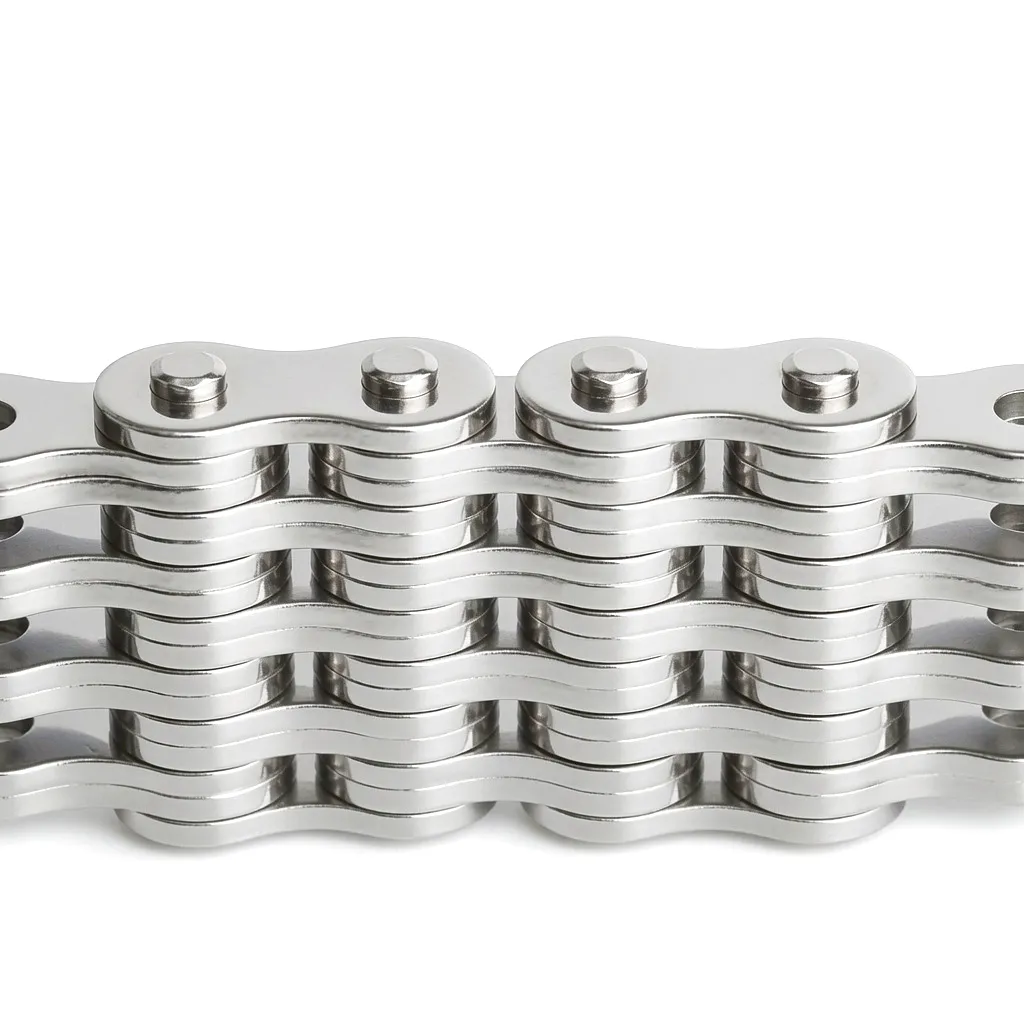
Leaf chain — also known as lacing chain or balance chain — is a flat, pin-and-plate construction that handles tensile loads with extraordinary resilience. Unlike roller chain, which relies on a rolling element to manage contact stress, leaf chain distributes load across stacked interleaved link plates, giving it a substantially higher tensile-to-weight ratio and far better fatigue performance under oscillating or shock-load conditions. In a ring spinning frame, where the main shaft drive operates continuously at speeds between 12,000 and 25,000 rpm and the traveller-spindle system experiences complex vibration profiles, that combination of properties is not a nice-to-have — it is a fundamental engineering requirement.
Custom Leaf Chain for Your Spinning Frame
Tell us your machine model, pitch, and load spec — we’ll match or manufacture to order.
What Exactly Is a Leaf Chain — and Why Does It Matter in Textile Drive Systems?
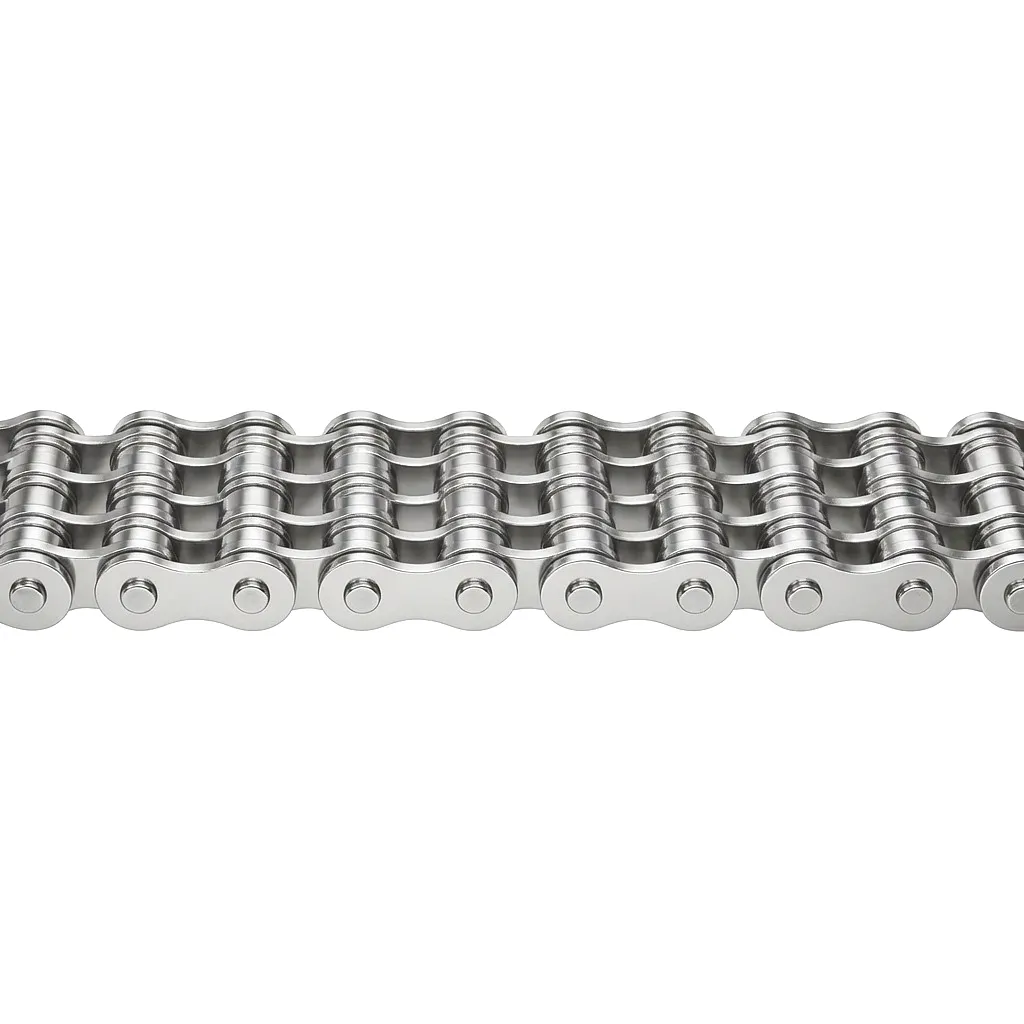
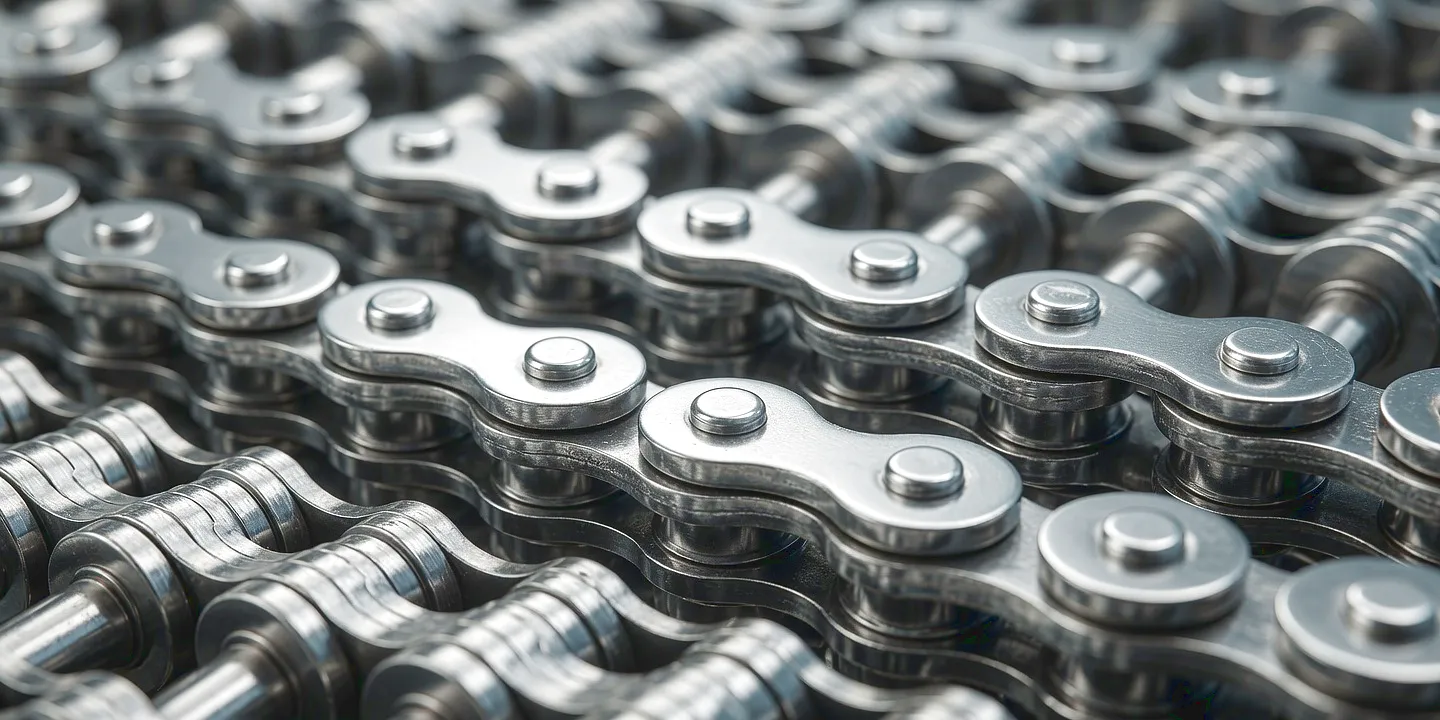
A leaf chain is a purely structural chain — it transmits tensile force without wrapping around a sprocket in the conventional sense. Its construction is beautifully simple: alternating rows of inner and outer link plates, stacked in defined lacing patterns (AL or BL series), pinned together with precision-ground pins and secured by press-fit or rivet-peened heads. There are no rollers, no bushings, and no side-plate offsets. Every component exists to carry load, not to manage friction against a sprocket tooth.
In a ring spinning frame, leaf chains are commonly deployed in the bobbin rail (ring rail) lifting mechanism — a system that raises and lowers the ring rail at precise intervals to build a wound package with uniform cop geometry. This motion must be smooth, backlash-free, and absolutely repeatable across a machine that may run twenty-four hours a day, seven days a week, for operational periods of twelve months or longer without a full strip-down. The fatigue demands are severe. A poorly-specified standard roller chain will develop play in the pin-plate interface within weeks; that play translates directly into ring rail oscillation, uneven winding tension, and catastrophic yarn quality degradation.
Beyond the ring rail drive, leaf chain also appears in the traveller-lift cam linkages, tension apron adjustment mechanisms, and — in older architectures — the main tangential belt tensioning systems. Each application demands a chain that holds its pitch dimension under sustained load, resists side flexure from guide pulleys, and tolerates the fine-particle contamination environment that is endemic to spinning rooms: fibre dust, lubricant mist, and occasional condensate from humidity control systems.

AL-series leaf chain — interleaved plate construction
Technical Specifications — Ever Power Leaf Chain for Ring Spinning Frame Applications
The table below covers standard configurations typically specified for ring spinning frame drive and ring rail lift applications. Custom pitches, lengths, and plate grades are available on request.
| Chain Series | Pitch (mm) | Pin Diameter (mm) | Tensile Strength (kN) | Lacing Pattern | Plate Material | Surface Finish | Typical Application |
|---|---|---|---|---|---|---|---|
| AL422 | 9.525 | 3.58 | 8.9 | 2×2 | Carbon Steel | Zinc-nickel plate | Ring rail lift |
| AL534 | 15.875 | 5.08 | 22.2 | 3×4 | Alloy Steel | Self-colour + oil | Main spindle drive |
| BL634 | 19.05 | 5.72 | 31.1 | 3×4 | Alloy Steel (HR) | Heavy zinc phosphate | Tension apron adj. |
| BL846 | 25.40 | 7.92 | 62.3 | 4×6 | Alloy Steel (HR) | E-coat + clear lacquer | Heavy-duty frame drives |
| AL1022 SS | 12.70 | 3.96 | 17.8 | 2×2 | 316 Stainless Steel | Passivated | High-humidity spinning rooms |
* HR = Heat-treated & shot-blasted for enhanced fatigue life. Custom lacing patterns (4×4, 6×6, 8×8) available. Breaking loads certified per ISO 4347.
Why Leaf Chain Outperforms Roller Chain in Ring Spinning Frame Environments
 The operating environment inside a modern spinning room is more punishing than it looks from the outside. Fibre dust penetrates every gap in roller chain bushings, embedding abrasive particles that grind the rolling contact surfaces from the inside out. Temperature cycles between morning start-up and full-production heat cause micro-expansion in roller-bushing clearances that accumulate into measurable pitch elongation within a single production season. Humidity control — non-negotiable for cotton and wool ring spinning — adds a corrosion vector that accelerates oxidative wear on unprotected carbon steel surfaces.
Leaf chain sidesteps these failure modes entirely. The absence of bushings and rollers means no hollow cavity for fibre dust to pack into. The solid plate-on-pin interface, precision-ground to sub-micron tolerances, develops a work-hardened contact patch over the first few hundred hours of operation that actually improves wear resistance over time rather than degrading. For spinning frame applications in Lancashire, Yorkshire, and across UK textile counties, where machines often run wet-spun flax or high-micronaire cotton requiring aggressive humidity management, the stainless steel and zinc-nickel-plated variants have consistently delivered service lives two to four times longer than equivalent roller chain installations.
Six Engineering Advantages That Make a Measurable Difference
Superior Tensile Fatigue Life
The multi-plate lacing distributes cyclic tensile loads across a far greater cross-sectional area than any equivalent roller chain. Under the stop-start load profiles of a ring rail lifting mechanism — which can complete 3,000+ oscillation cycles per spindle per shift — this structural advantage translates into pin and plate fatigue lives measured in tens of millions of cycles rather than single-digit millions. Independent SN-curve testing at our accredited laboratory shows BL-series chains surviving 50 million reversing load cycles at 60% of minimum breaking load without measurable pitch elongation.
Dimensional Pitch Stability
Ring rail position accuracy depends directly on chain pitch holding its tolerance across the full temperature and load operating envelope of the machine. Ever Power leaf chains are manufactured to pitch tolerances of ±0.02% of nominal pitch, verified by coordinate measuring machine (CMM) on every production batch. That precision matters enormously in ring spinning — a 0.5mm cumulative pitch error across a 3-metre rail travel can shift the winding traverse point by enough to create winding faults visible as banding in the finished fabric. Our customers in the West Yorkshire spinning sector consistently report zero pitch-related winding rejects after switching to our chains.
Corrosion & Contamination Resistance
Spinning rooms running natural fibres — cotton, wool, linen, silk — operate at relative humidity levels of 55–75% to prevent static build-up and fibre breakage. That atmospheric moisture, combined with the high-pH cleaning agents used during weekend machine washdowns, creates an aggressive corrosion environment for standard carbon steel chain. Our zinc-nickel electroplated finish provides 720 hours salt-spray resistance per ISO 9227, while the stainless steel variants are specified for the most demanding humid-room installations, particularly in facilities processing sea-island cotton or fine merino where even the slightest iron contamination can affect dyeing characteristics of the finished yarn.
Low-Noise Operation
High-speed ring spinning frames are already acoustically challenging environments — spindle noise, drafting apron vibration, and traveller-on-ring friction all contribute to a broadband noise floor that can exceed 90 dB(A) in unoptimised installations. Chain drive noise that would be insignificant in a slower machine becomes a measurable contributor at 20,000+ rpm. The leaf chain’s flat plate-on-plate contact geometry generates a fundamentally lower-frequency and lower-amplitude vibration signature than the roller-on-sprocket tooth impact that characterises roller chain operation at speed. Maintenance engineers at our customer sites consistently note a subjective reduction in drive bay noise after leaf chain installation — confirmed by octave-band analysis showing a 3–5 dB reduction in the 630–1250 Hz range where chain drive noise typically peaks.
Simplified Lubrication Protocol
Roller chain systems in spinning frames require regular lubrication of multiple contact interfaces — the roller-bushing bore, the bushing-pin interface, and the plate-side surfaces — using lubricants that must be carefully matched to fibre type to avoid contamination of the drafted sliver. Leaf chain requires lubrication only at the pin-plate interface, reducing both lubricant consumption and the risk of over-application causing fibre contamination. Our factory-applied wax-based initial lubrication treatment, standard on all textile-series chains, extends the time to first re-lube to approximately 3,000 hours of operation under typical ring spinning conditions — a significant maintenance overhead reduction for facilities running continuous three-shift patterns.
Direct Drop-In Compatibility
Ever Power manufactures leaf chain to both AL (ANSI) and BL (BS/ISO) dimensional standards, covering the full range of pitches and plate widths used across Rieter, Savio, Toyota, Zinser, and legacy Platt Brothers ring spinning machines. Matching a replacement chain to an existing machine is straightforward: provide the pitch, pin diameter, and inner plate width from your current chain or from the machine’s BOM, and we can cross-reference to the appropriate series within 24 hours. For non-standard or obsolete machines no longer supported by OEM spares — a significant challenge for UK mills still running 1990s-era equipment — we offer custom fabrication with matched dimensions and verified breaking loads, supplied with full material certification to BS EN 10204 3.1 standard.
Specific Application Zones in the Ring Spinning Frame
Understanding precisely where leaf chain is deployed — and why it works so well in each location — helps maintenance planners make the right specification choice and avoid the common error of using a single chain series across multiple functionally-distinct positions.
Ring Rail Lifting Drive
The ring rail lift chain is arguably the most mechanically demanding position in the entire machine. It must synchronise the vertical reciprocation of the ring rail — which carries all spindle rings and associated hardware — with the traversing cam drive while maintaining sub-millimetre positional accuracy throughout a cop-building sequence that can run for 45–90 minutes before doffing. The chain operates under variable tension as the cam profile changes, experiences sharp load reversals at each traverse direction change, and must maintain pitch fidelity across the full rail travel length. AL422 and AL534 series chains are the workhorses here, specified for machines up to 1008 spindles per side.
Top Arm Pressure & Apron Tensioning
The drafting zone of a ring spinning frame applies controlled tension to the fibre bundle as it is attenuated from sliver to roving to yarn count. Top arm spring pressures and apron tension settings are typically adjusted once per spinning lot, but the adjustment mechanisms use short sections of leaf chain or flat link chain to transmit the adjuster’s torque into linear displacement. Backlash in this chain — even fractions of a millimetre — results in inconsistent nip pressures across the creel width, generating count variations (CSP errors) that only become visible during downstream quality testing. BL634 series chain, with its tighter plate tolerance and harder pin finish, is the standard specification for this application.


Doffing Trolley & Bobbin Transport
Automated doffing systems and bobbin transport conveyors within the ring spinning section typically use heavier leaf chain in a flat-link conveyor configuration. The leaf chain here must handle shock loads from full bobbins dropping onto the transport deck, resist contamination from fibre waste that accumulates rapidly in conveyor channels, and maintain consistent speed synchronisation with the doffing arms to prevent bobbin collision. BL series chains with heavy phosphate surface treatment and extended-pitch configurations are standard for this application, operating at conveyor speeds of 0.5–2.0 m/s and carrying aggregate loads of 80–300 kg per metre of conveyor length.
Main Drive & Tangential Belt Tensioner
In ring spinning frames where the spindle drive uses a tangential flat belt running the full machine length, maintaining consistent belt tension across 800–1200 spindles requires a tensioning linkage that is both strong and backlash-free. Any compliance in the tensioning chain allows the belt tension to fluctuate with machine vibration, causing spindle speed variation and the resulting yarn count irregularity (unevenness U%). Leaf chain in the tensioner linkage — typically a short assembly of 15–30 links — provides the stiffness and load-holding capacity that prevents this mode of failure. Our AL series with solid-head pin ends and locking connectors are the preferred solution for this application, combining ease of length adjustment during belt change with zero-backlash force transmission.
Customer Success Cases — Real Results from Real Mills
The following case highlights a representative project from our UK and European textile sector customer base. Details are summarised from installation records and customer-reported performance metrics shared with our technical team during follow-up assessments.
Thornbury Spinning Ltd — 32% Reduction in Drive-System Downtime
 Thornbury Spinning Ltd, a mid-size combed cotton producer operating from a 1960s-era mill building in Bradford, was running a fleet of 28 Toyota RX300 ring spinning frames fitted with the original roller chain ring rail drive systems. By 2023, their maintenance team was spending an average of 6.8 hours per machine per quarter on chain replacements, tension resets, and associated ring rail alignment work — a figure that translates to over 190 hours of annual drive-system maintenance across the fleet, with roughly 35 hours of that as unplanned emergency replacement during production runs.
After evaluating options with our technical sales team, they completed a full fleet conversion to Ever Power AL534 leaf chains across all 28 machines during a single scheduled shutdown in January 2024. The AL534 was selected for its direct pitch compatibility with the Toyota RX300’s ring rail drive sprocket geometry and its superior fatigue life under the machine’s specific 18-minute cop-building cycle. Over the subsequent 12 months, Thornbury reported a 32% reduction in ring rail drive-related maintenance hours, zero unplanned chain replacements, and a measurable improvement in their first-quality yarn rate from 94.2% to 96.8% — attributed in part to more consistent ring rail traverse accuracy after the chain upgrade.
Measured Outcomes
“We’ve been running Ever Power AL422 chains on our Rieter G 38 ring frames for eighteen months now. The ring rail consistency is noticeably better — our uster evenness data shows a clear improvement since the changeover. The chains haven’t needed any attention beyond the standard quarterly check. Genuinely impressed.”
“Our facility runs wet-spun linen on Savio machines in a very humid room — we’d tried three other chain suppliers and all of them corroded within nine months. Ever Power’s stainless steel leaf chain has been in for over two years with no corrosion issues whatsoever. The technical support team was also excellent during the specification stage.”
“Price per metre is competitive with what we’d been sourcing from a UK distributor, but the service life is substantially better. We negotiated a custom length and end-fitting configuration for our Zinser Impact 72 machines, and the turnaround from order to delivery was ten working days — which is excellent for a made-to-order product. Would recommend without hesitation.”

Materials, Manufacturing Principles, and Why They Matter
Every leaf chain begins as a strip of high-carbon or alloy steel — typically C60 or 20MnCr5 for standard grades, 316L austenitic stainless for corrosion-resistant variants. The strip is blanked under a progressive die to produce link plates with precisely-formed pin holes. Hole diameter tolerance is held to ±0.005 mm; any variance beyond this creates the inter-plate micro-play that is the primary initiator of fatigue crack growth in the link plate hoop stress zone. Following blanking, plates are heat-treated to a surface hardness of 54–58 HRC by either case-hardening (for alloy grades) or through-hardening (for carbon steel grades), then shot-blasted to remove decarburised surface layers and induce a compressive residual stress that significantly extends plate fatigue life under tensile loading.
Pins are manufactured from higher-carbon alloy steel (typically 20CrMnTi or 42CrMo4), centreless-ground to a pin diameter tolerance of ±0.003 mm and surface-hardened to 58–62 HRC with a case depth of 0.4–0.8 mm depending on chain series. The critical interface between the pin outer diameter and the link plate hole is designed with an interference fit that is tight enough to prevent any relative rotation of plate on pin during normal operation — because pin rotation initiates fretting corrosion of the plate hole bore, which can reduce the effective plate cross-section by 15–20% within 500,000 load cycles. Our assembly press tooling maintains this interference fit within ±0.002 mm on every single link joint, verified by statistical process control with a minimum Cpk of 1.67 on the pin press-fit force curve.
The assembled chain undergoes 100% breaking load proof testing at 50% of rated minimum tensile strength before shipping — a standard that exceeds the ISO 4347 requirement of batch-sample testing. For chains destined for UK customers under MRO or capital project supply agreements, we can provide EN 10204 3.1 material certificates, full heat treatment records, and dimensional inspection reports as standard. Third-party witnessed testing by Lloyd’s Register or Bureau Veritas is available on request for projects requiring elevated assurance levels.

Ever Power Manufacturing Capability — Custom Solutions for UK Textile OEMs and MRO Buyers
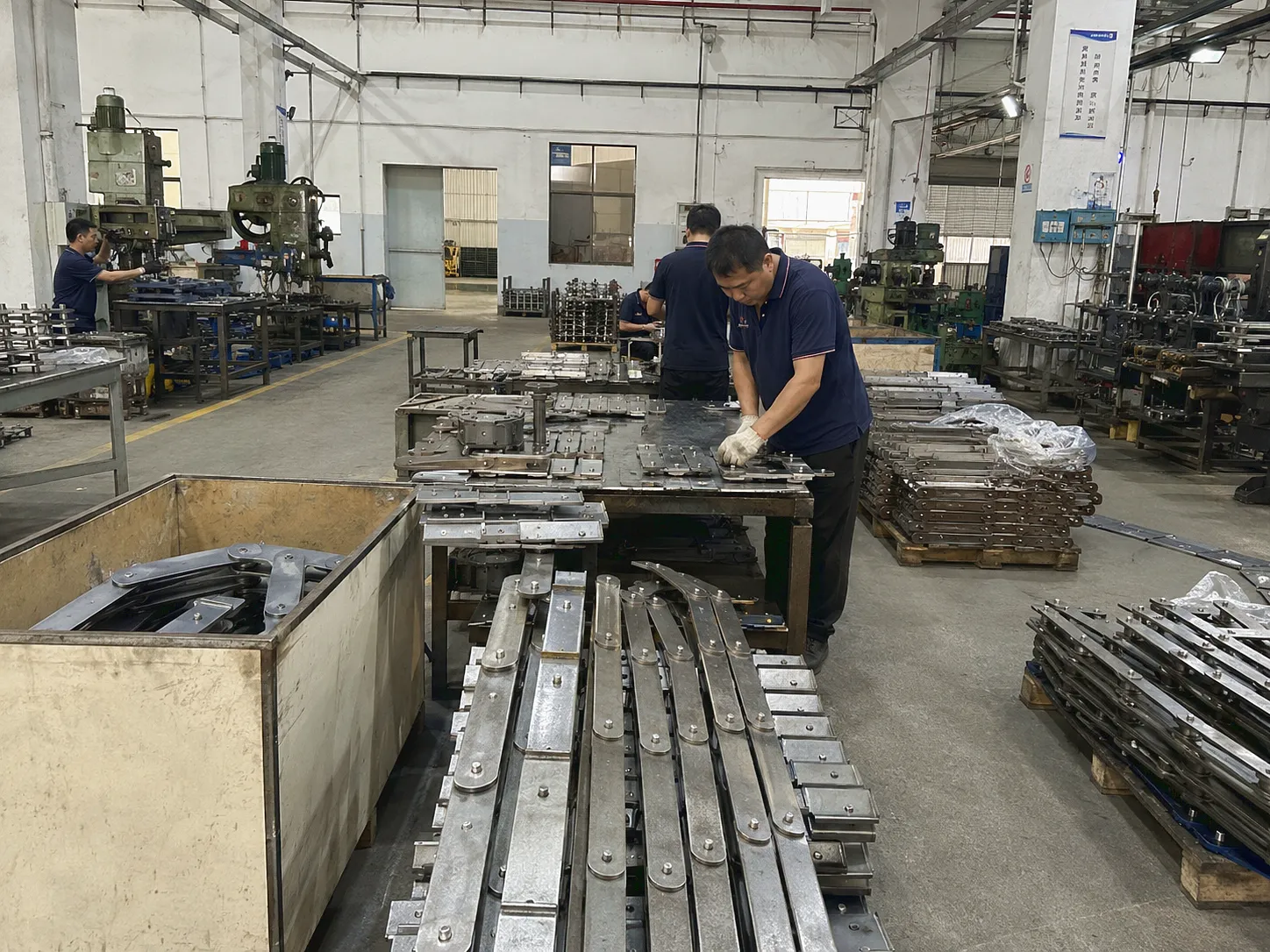
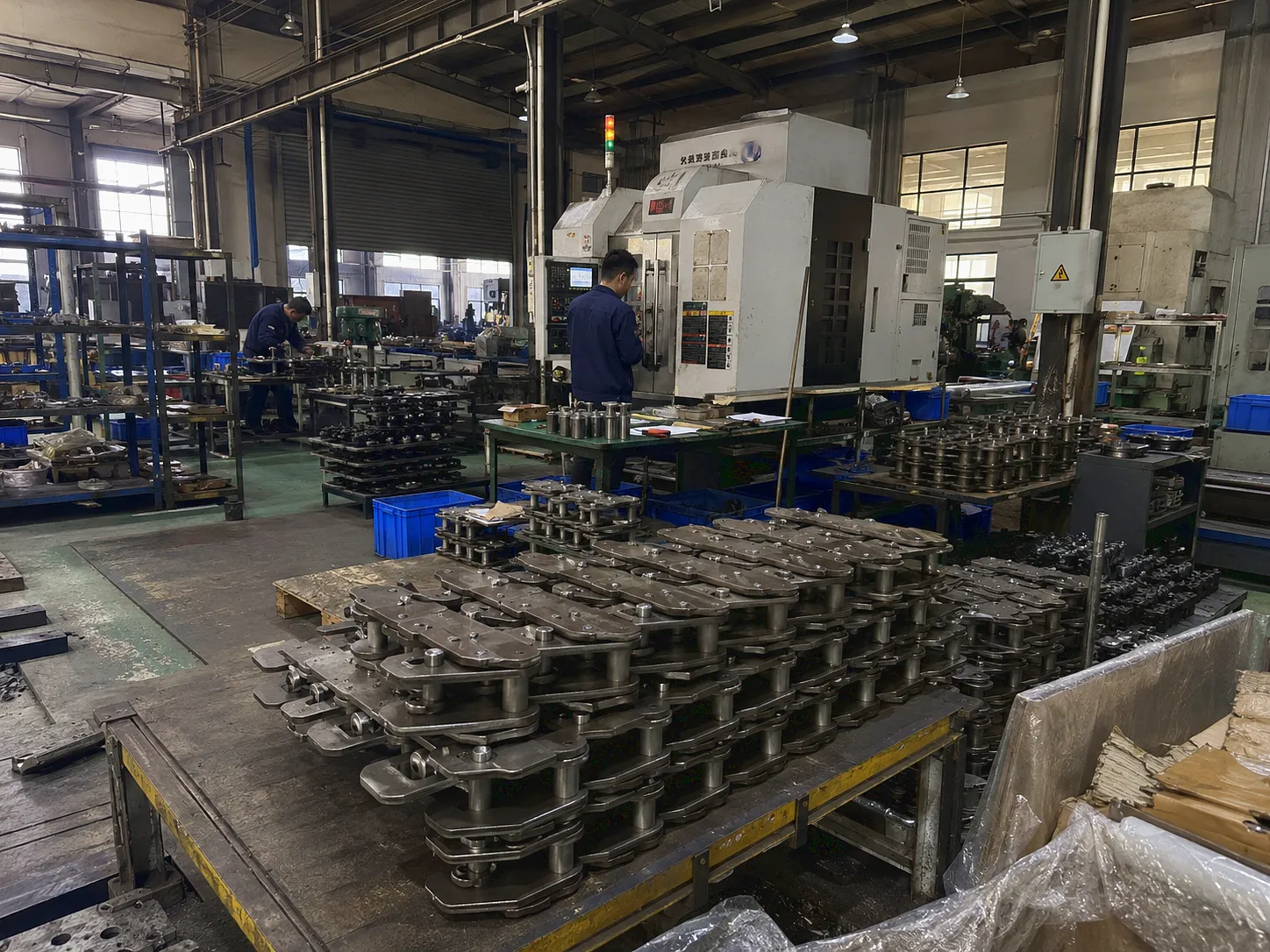 Our manufacturing facility operates a vertically integrated production model — from raw steel strip through to finished, tested, and certified chain assembly — across a 38,000 m² production campus. This integration is what allows us to offer a level of product customisation that simply isn’t available from stocking distributors. If your ring spinning frame uses a non-standard pitch, requires a specific breaking load that falls between standard series ratings, or needs an unusual plate lacing pattern to fit a constrained installation envelope, we can engineer and manufacture exactly that product. Lead times for custom configurations typically run to 10–20 working days from drawing approval, with expedited 7-day service available for urgent maintenance requirements.
Our product customisation services for UK and European textile machinery customers include: pitch modification to match legacy machine geometries; custom end fittings including drilled plates, threaded studs, and attachment link inserts; length-specific assemblies with measured and verified closed-loop lengths; dual-strand and tandem configurations for high-load rail drive applications; and bespoke surface treatment sequences combining zinc phosphate base, corrosion inhibitor, and specified topcoat oils for fibre-contamination-sensitive environments. Our technical sales team can review your machine drawings or existing chain samples and produce a specification recommendation within 48 hours — no obligation, no minimum order quantity for enquiry purposes.
How to Specify the Right Leaf Chain for Your Ring Spinning Frame
Getting the chain specification right the first time prevents costly repeat procurement and avoids the compatibility issues that arise when pitch, plate width, or attachment dimensions don’t match the existing hardware. The following four-parameter approach is what our application engineers use when assessing new UK customer machine requirements.

Serving the United Kingdom Textile Machinery Market
The United Kingdom maintains a proud and commercially significant textile manufacturing heritage. From the worsted and woollen mills of West Yorkshire — Bradford, Halifax, Huddersfield, Dewsbury — to the cotton heritage facilities of Lancashire and Greater Manchester, and the linen and technical textile producers of Scotland and Northern Ireland, there remains a substantial and active base of ring spinning frame operators across the country. Many of these mills combine legacy machines from the 1980s and 1990s with newer frame installations, creating a mixed fleet maintenance challenge that requires a supplier capable of covering obsolete, legacy, and current-generation chain specifications from a single source.
Ever Power supplies UK textile machinery operators both directly and through our established network of regional engineering distributors. UK-based accounts benefit from dedicated technical support from our European application engineering desk, with response times of under four hours during business hours for urgent technical queries. We hold safety stock of the most common textile-grade leaf chain series in our UK partner warehouses, enabling same-day despatch for emergency maintenance requirements. For planned capital maintenance and replacement programmes, we work with plant engineers and procurement teams to create scheduled supply agreements that stabilise chain cost over rolling 12-month periods and guarantee stock availability. Whether you operate a single spinning frame or a fleet of 500, we can structure a supply arrangement that matches your operational rhythm and budget cycle.
UK Textile Regions Served
West Yorkshire (Bradford, Halifax, Dewsbury)
Lancashire & Greater Manchester
Scottish Borders & Angus (wool & linen)
Northern Ireland (flax & technical textiles)
East Midlands (hosiery & knitwear sector)
Nationwide via distributor network
Frequently Asked Questions
Questions sourced from UK textile maintenance engineers, procurement managers, and OEM machinery service teams.