

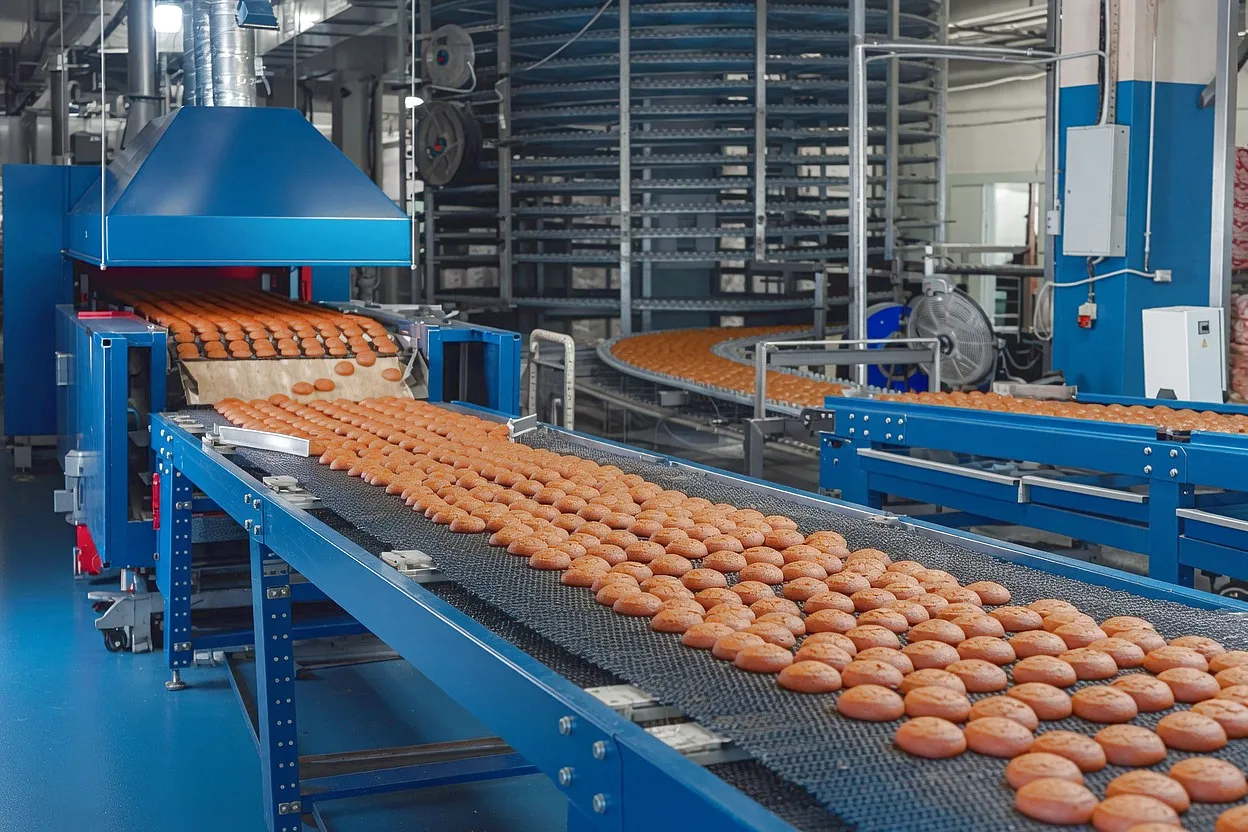
Walk into any large-scale commercial bakery in Birmingham, Manchester or Glasgow, and you will find the same challenge repeated in every production bay: the need for a chain system that can endure relentless heat, flour-saturated atmospheres, frequent washdowns with high-pressure water and corrosive cleaning agents, all while transmitting the precise, consistent torque required to move product-laden conveyor decks hour after hour. Standard roller chains were never designed for this. Leaf chain was.
The bakery environment sits at a peculiar intersection of industrial engineering challenges. Temperatures inside tunnel ovens can exceed 250 °C. Proofing chambers maintain near-100% relative humidity. Cooling conveyors generate rapid thermal cycling. Mixing and depositing lines impose sudden shock loads when dough batches change consistency. Through all of this, the chain connecting drive sprockets to conveyor shafts, oven bands, proofer decks and spiral coolers must never hesitate, never skip a link and never leave a fragment of itself in the product stream. The consequences of that last failure are not merely mechanical — in a Food Standards Agency (FSA)-regulated facility, a chain fragment in finished product triggers a full-line shutdown, a product recall, and a regulatory investigation that can result in facility closure.

Why Bakery Lines Demand More From Every Chain Link
Environmental Stress Analysis · Industrial Food Processing
Most plant engineers working outside the food sector underestimate just how aggressive a large-scale bakery is as a mechanical environment. The combination of stressors is unlike any other manufacturing context. You are not dealing with one harsh condition — you are dealing with five or six simultaneously, each of which alone would be enough to shorten a standard chain’s service life significantly. Together, they make component selection a genuinely critical engineering decision rather than a purchasing formality.
Extreme Thermal Range
Tunnel ovens operate at 230–260 °C. Cooling conveyors then bring product to ambient temperature within minutes. Steel components experience repeated thermal expansion and contraction cycles across this full range every production shift, accelerating fatigue in any poorly specified chain.
High-Pressure Washdowns
UK food hygiene regulations require regular full-line washdowns using hot water at up to 85 °C combined with alkaline detergents or peracetic acid solutions. These wash cycles strip lubrication from chain components and introduce corrosive chemistry that accelerates pin and bush wear if the chain material selection is incorrect.
Continuous Shock Loading
Industrial depositors, moulders and dividers create sudden load spikes every time a dough mass is transferred onto a moving deck. Proofer conveyor systems carry trays weighing in excess of 80 kg each. The instantaneous torque surges that occur when drives start up under full load place enormous tensile stress across every link in the chain.
Abrasive Flour Dust
Flour is a surprisingly effective abrasive. Suspended in ambient air and settling onto chain surfaces, flour particles migrate into pin-to-bush clearances and accelerate wear at rates that can be three to four times higher than in a clean industrial environment. This is the single most underestimated wear mechanism in bakery chain engineering.
The Engineering Behind Leaf Chain: Principle, Material & Construction
Product Technology · Material Science · Manufacturing Standards
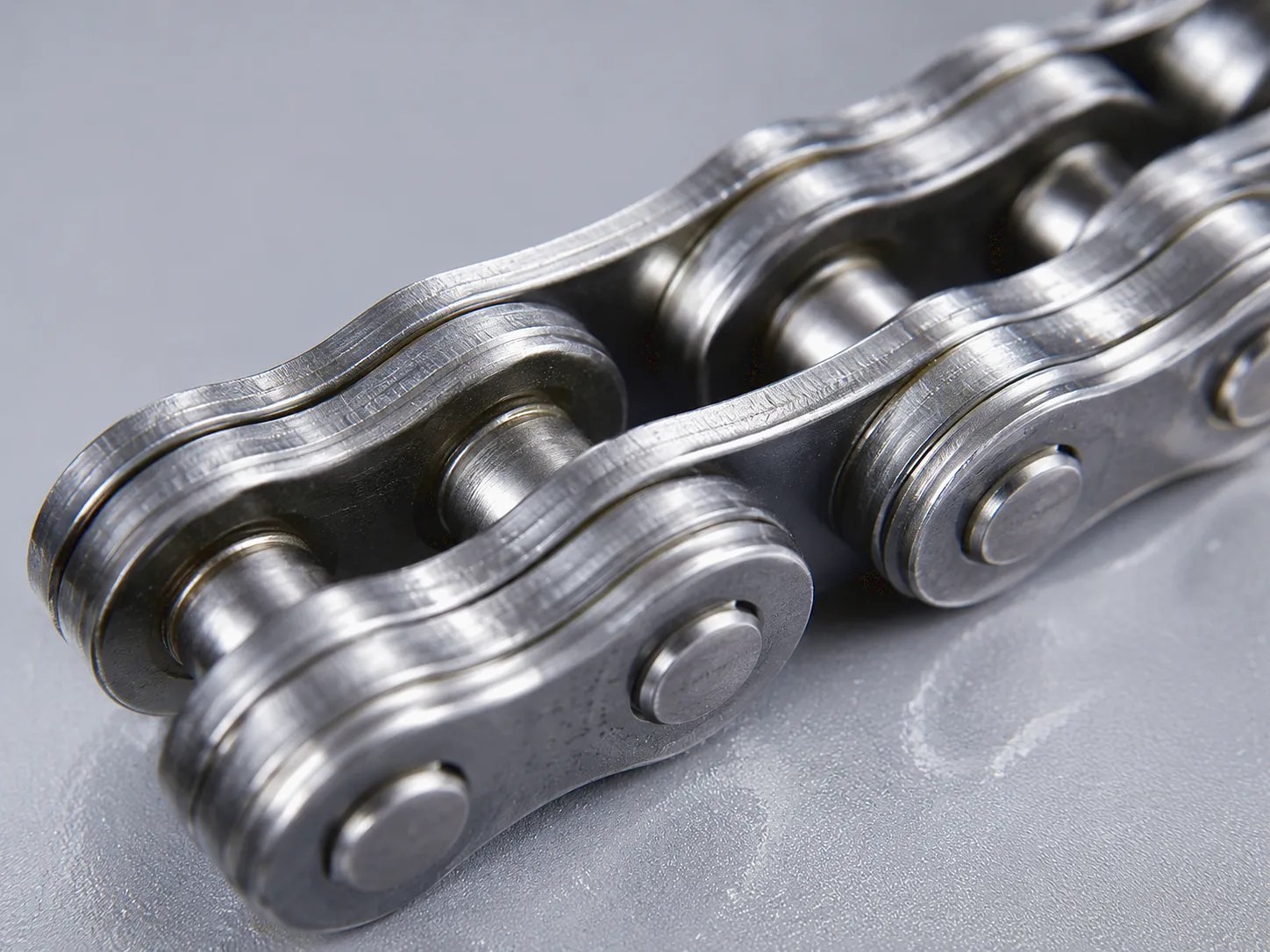
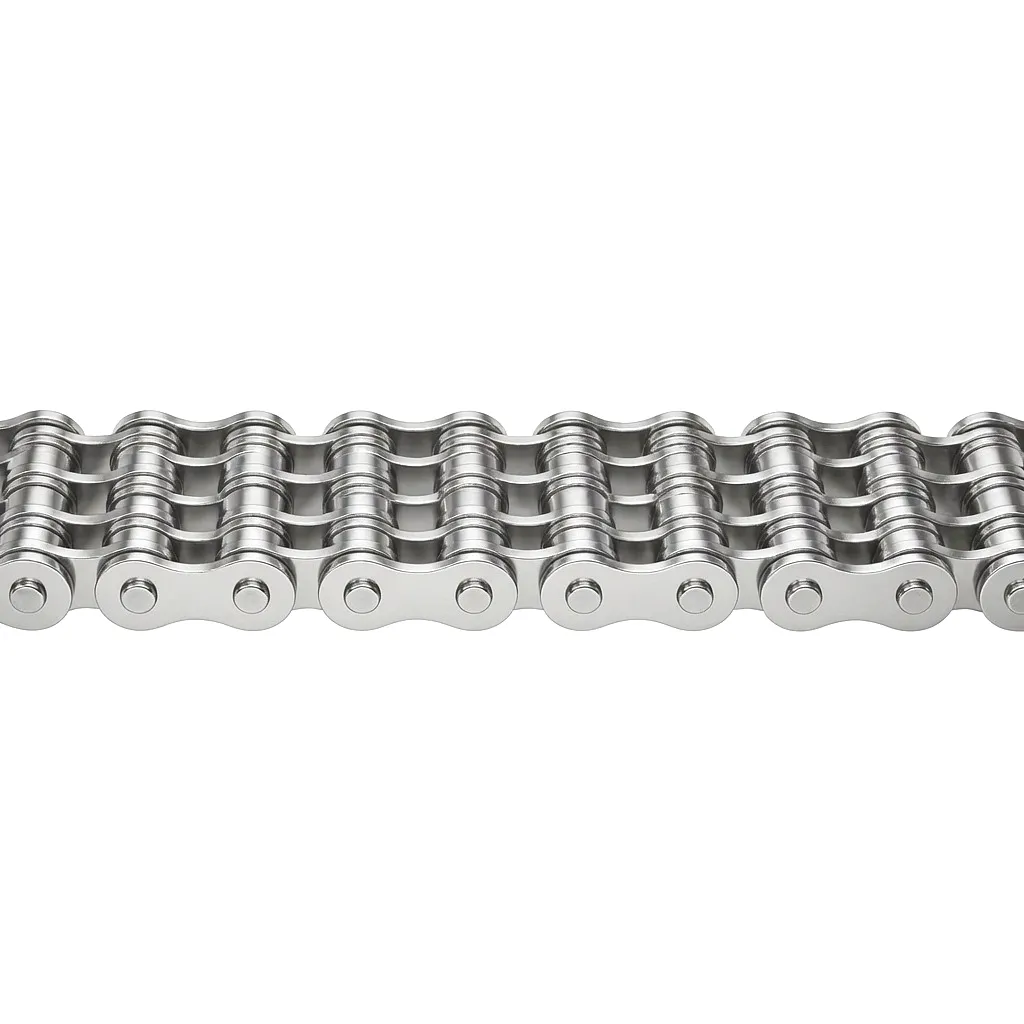
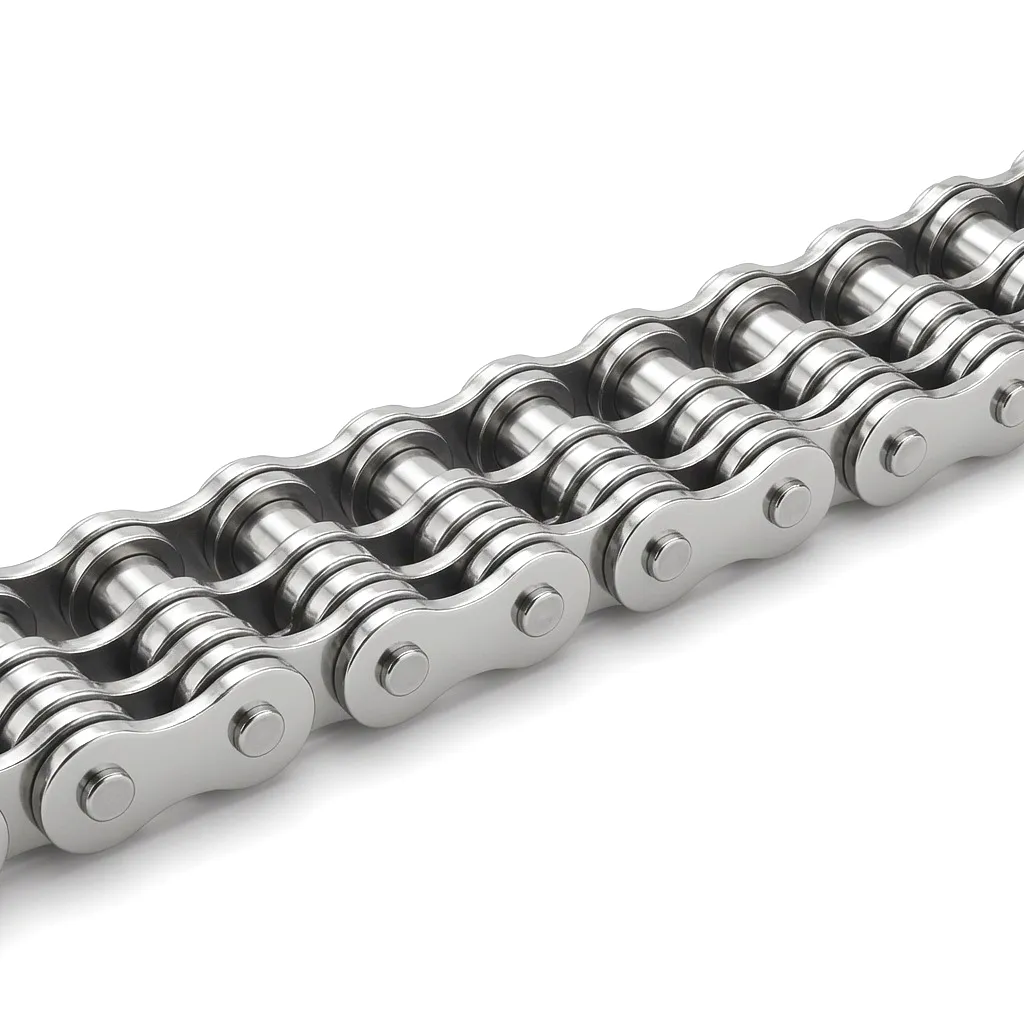
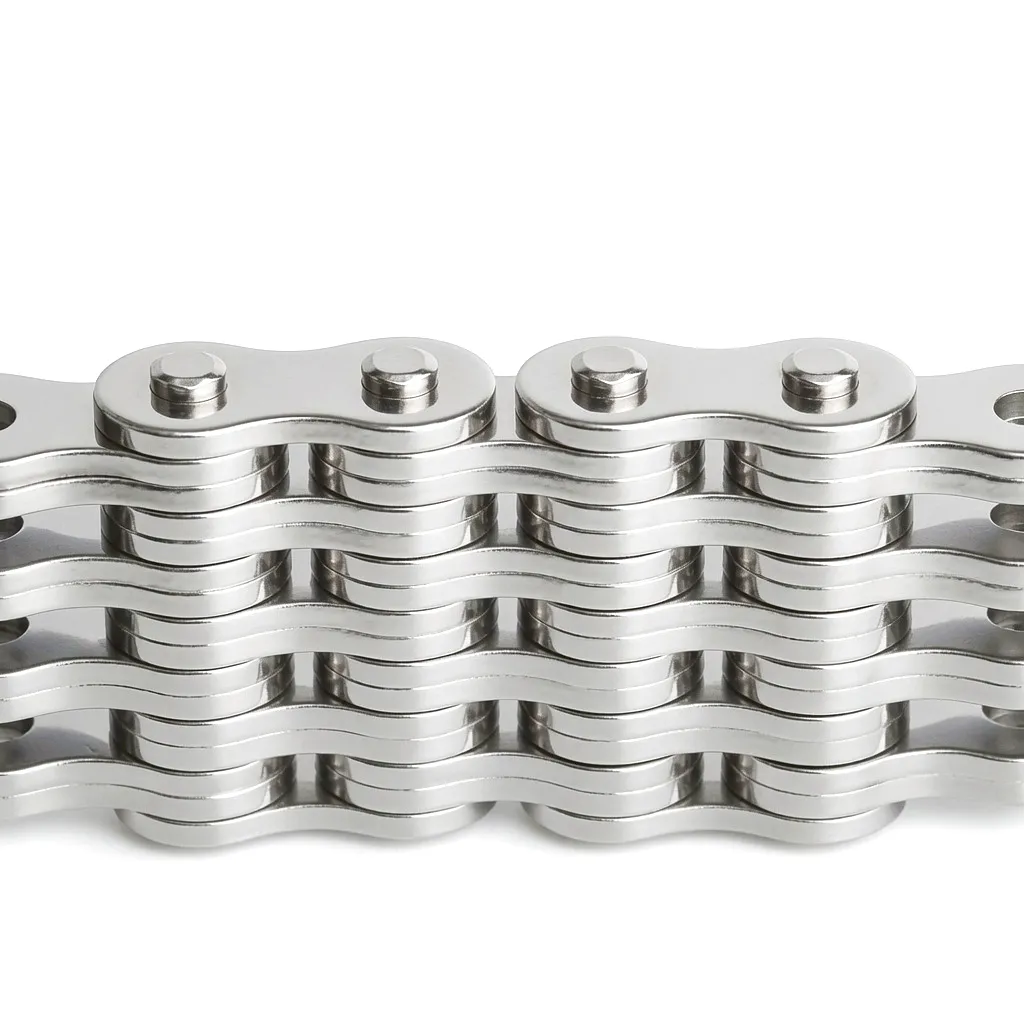
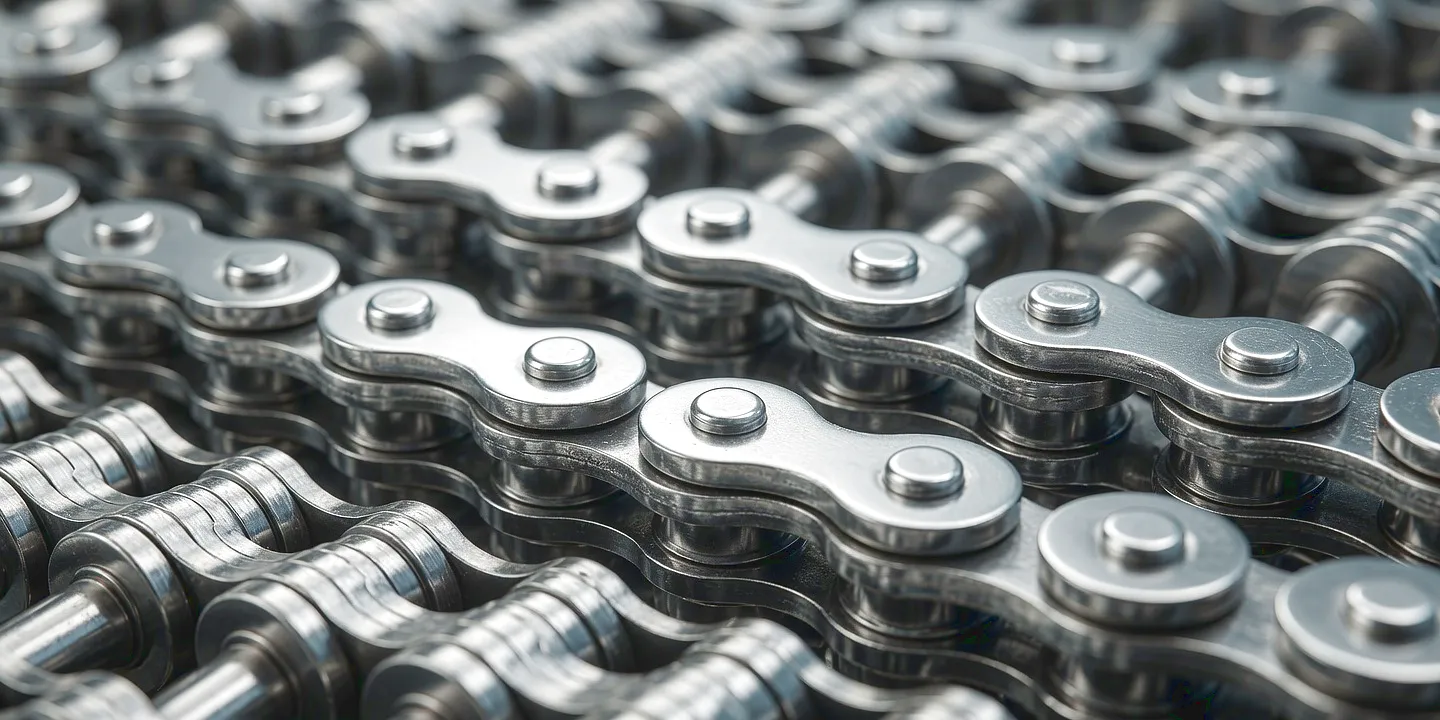
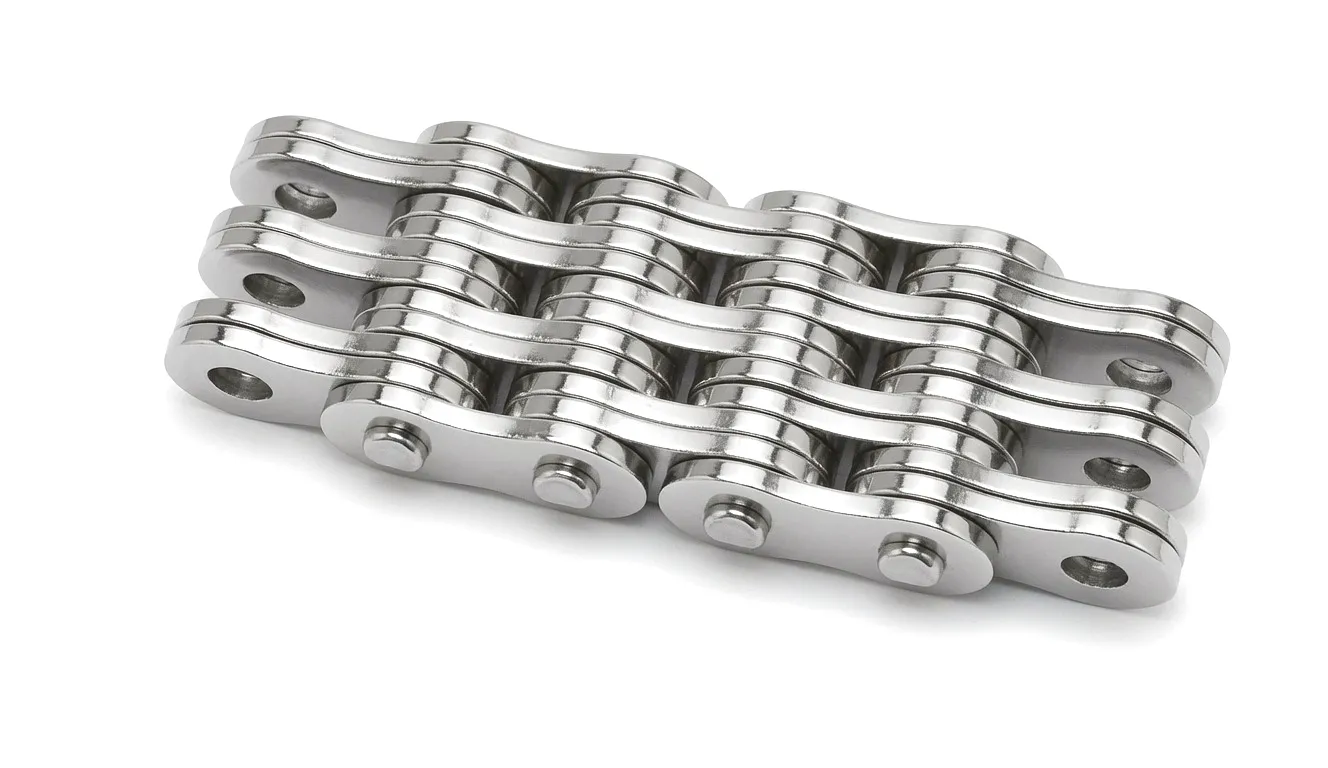
A leaf chain — also written as leaf-chain or leafchain — functions on a fundamentally different structural principle from a conventional roller chain. Where roller chains rely on tubular bushes and separate rollers to manage sprocket engagement, a leaf chain uses a series of interlocked lace plates pinned together in alternating inner and outer link configurations. This means there are no hollow rollers or bushes to collapse under high load, and the load-bearing cross section is dramatically larger relative to the chain’s overall dimensions. The result is a tensile strength-to-weight ratio that makes leaf chain the preferred selection wherever high static or dynamic loads must be managed in a compact envelope.
The plate configuration — typically expressed as 2×2, 3×3, 4×4, 6×6 or 8×8 (indicating the number of inner and outer plates per link joint) — directly determines the chain’s ultimate tensile strength. For demanding bakery applications such as multi-deck proofer drives, spiral cooling tower drives and heavy-duty oven conveyor systems, higher-lace configurations provide the reserve load capacity needed to handle both the dead weight of loaded trays and the dynamic surges generated during start-stop cycling.
Material selection for bakery-grade leaf chain centres on two primary considerations: corrosion resistance and food-contact safety. Ever Power’s bakery-specification leaf chains are manufactured from selected grades of carbon steel with precision heat treatment to achieve optimal hardness profiles — typically HRC 55–62 on pin surfaces and HRC 45–55 on inner plate contact faces. For installations where direct product contact is possible or where stainless steel is specified in the facility’s HACCP plan, a fully austenitic 304 or 316L stainless steel option is available, providing excellent resistance to both alkaline cleaning agents and chlorinated sanitation solutions used across UK food production sites.
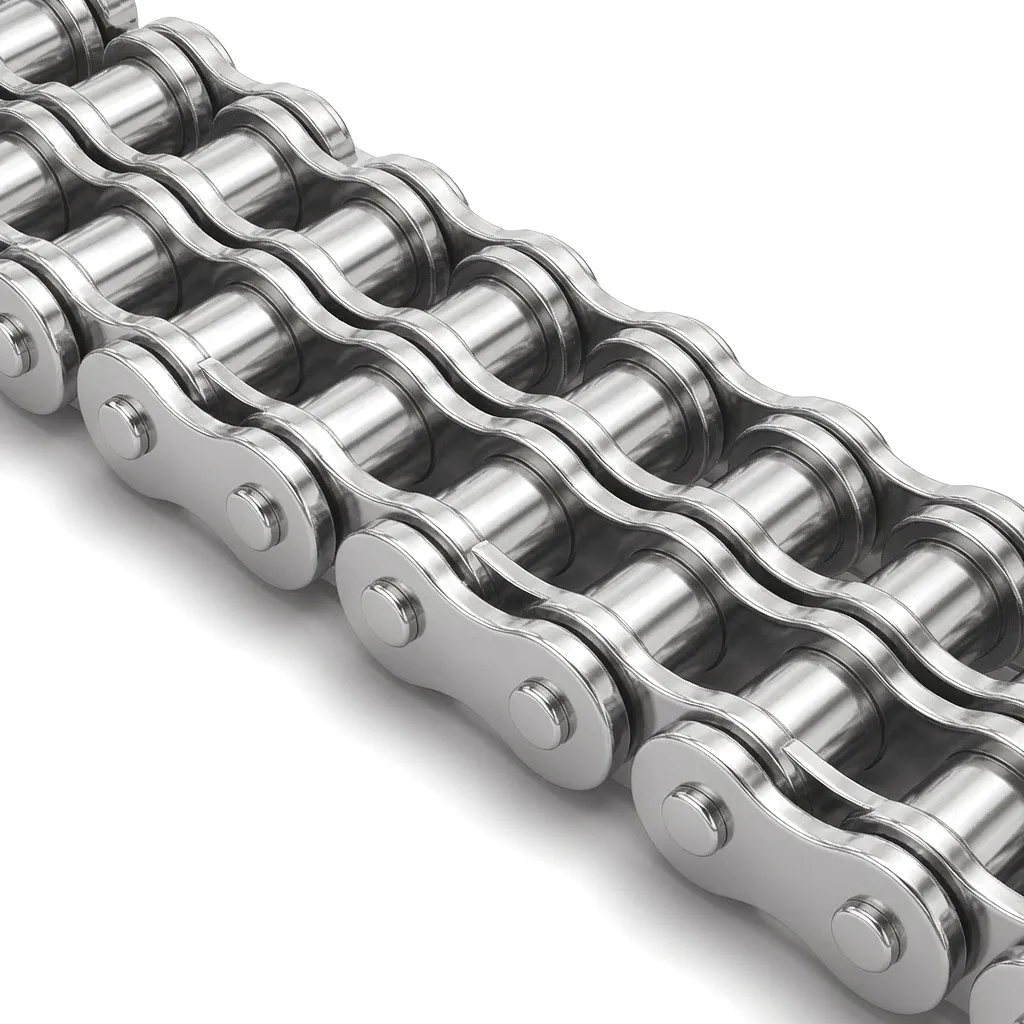
Pin hardness: HRC 58–62 · Plate material: C45 / 304SS
Technical Performance Parameters — Ever Power Bakery-Grade Leaf Chain
| Parameter | Standard Carbon Steel | Stainless 304 Grade | Stainless 316L Grade |
|---|---|---|---|
| Working Temperature Range | -20 °C to +230 °C | -40 °C to +260 °C | -40 °C to +260 °C |
| Ultimate Tensile Strength (BL-634 / 2×2) | 88 kN | 72 kN | 70 kN |
| Pin Hardness | HRC 58–62 | HRC 52–56 | HRC 50–54 |
| Corrosion Resistance | Zinc-plated / self-colour | Excellent (neutral pH) | Superior (chloride environments) |
| Pitch Range Available | 12.7 mm – 50.8 mm | 12.7 mm – 50.8 mm | 12.7 mm – 50.8 mm |
| Applicable Standard | ISO 4347 / DIN 8152 | ISO 4347 / DIN 8152 | ISO 4347 / DIN 8152 |
| Food Safety Compliance | Non-direct contact zones | HACCP compatible | FDA / EU 10/2011 compatible |
Where Leaf Chain Works Hardest in Your Bakery
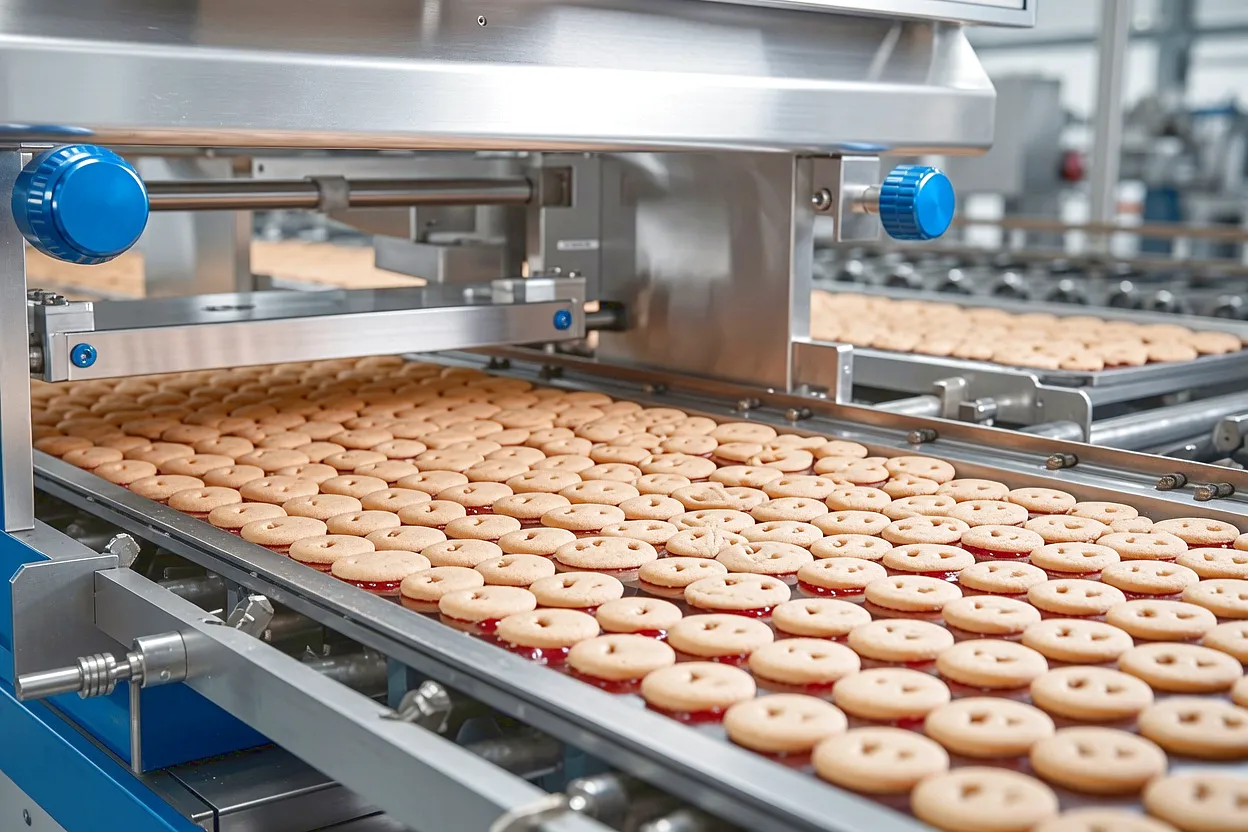
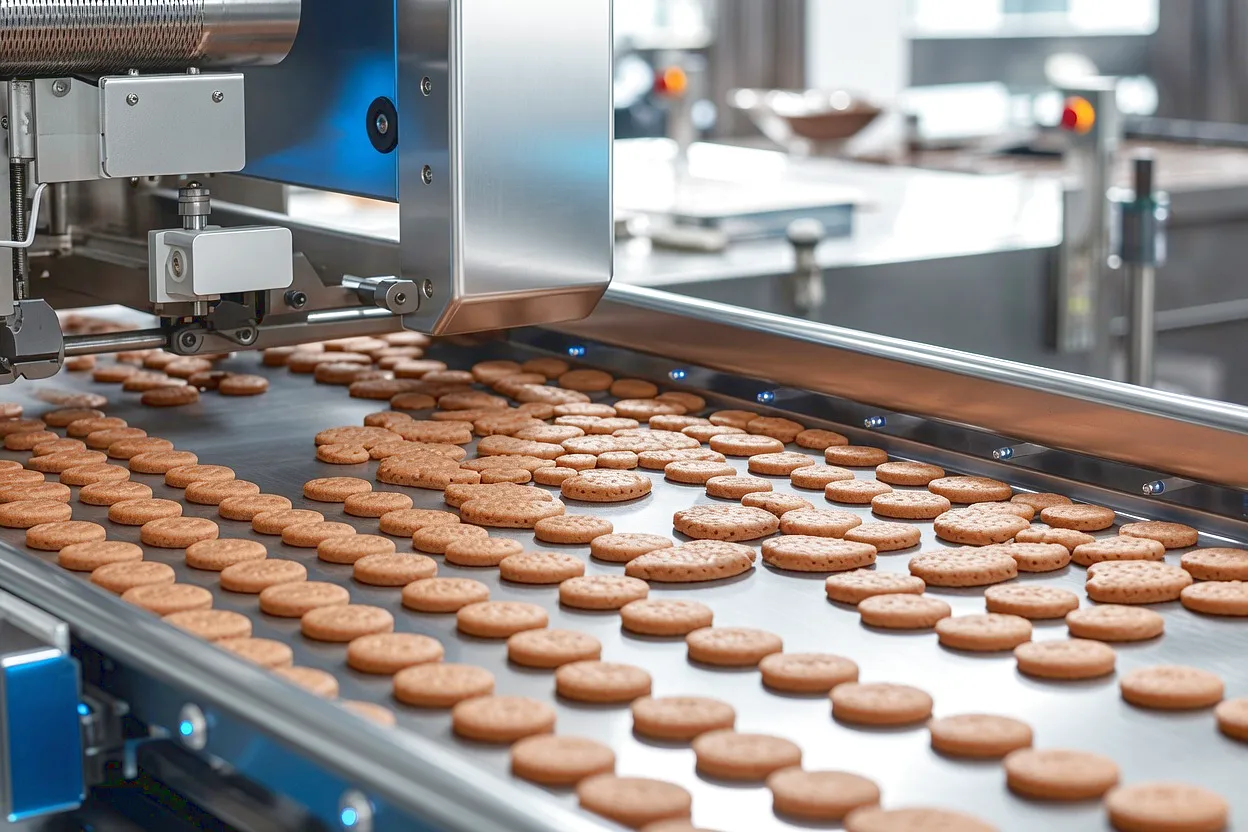
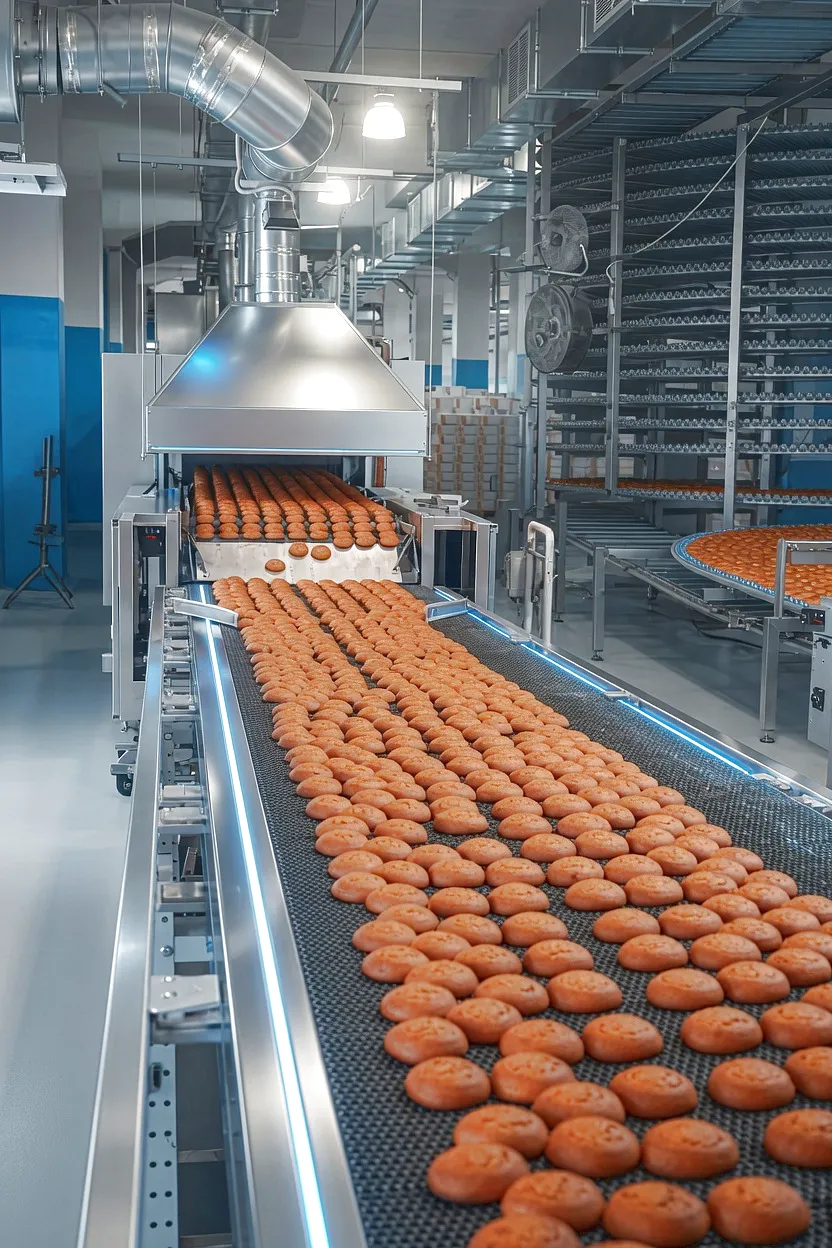
From raw dough handling through to final cooling and packaging dispatch, leaf chain appears at each critical drive point in a modern commercial bakery production line.
Tunnel Oven Conveyor Drive
The oven conveyor drive is typically the most demanding single chain application in any bakery. A stainless steel leaf chain rated to the correct pitch and lace configuration transmits drive power from the gearmotor assembly through the full oven length — which in an industrial direct-fire bread oven can exceed 25 metres — maintaining precise, slip-free belt speed control at temperatures that would cause ordinary chains to seize within hours. The continuous nature of this application means service life of the chain directly determines the bakery’s planned maintenance interval, making initial specification decisions exceptionally high-stakes for plant engineers and production managers alike.
Multi-Deck Proofer Systems
Industrial proofers — the climate-controlled chambers in which dough undergoes its final fermentation before entering the oven — often use a multi-deck conveyor design to maximise dwell time within a compact footprint. The drive chains for these multi-deck systems carry considerable dead weight from the conveyor structure itself, plus the live load of loaded trays. In a modern spiral proofer processing 6,000 bread rolls per hour, the tray system alone may weigh several tonnes when fully loaded. Leaf chain selected to BL or AL series specifications — with the lace count matched to the calculated working load with an appropriate safety factor — provides the structural reliability these systems demand without the chain stretch that causes deck synchronisation errors.
Spiral Cooler Drive Systems
After exiting the oven, baked product must be cooled uniformly before packaging to prevent moisture migration and microbial risk. Modern spiral cooling towers achieve this by carrying product through multiple revolutions of a slowly ascending spiral track. The drive chain for a spiral cooler operates at low speed but under constant heavy load, as the track itself is heavy and the drive must overcome the static friction of a long, product-loaded conveyor belt. Leaf chain’s high tensile strength at the relatively low chain speeds used in cooling applications means that a correctly sized chain can operate for extended periods between scheduled maintenance inspections, reducing planned downtime costs significantly for UK bakeries operating continuous three-shift patterns.
Moulding & Dividing Machine Drives
Dough dividers and moulding machines impose highly impulsive loads on their drive systems. Each division cycle involves the sudden compression and shearing of a dough mass, creating momentary load spikes that can reach four to five times the steady-state drive load. Over tens of thousands of cycles per production day, these impulse events accumulate fatigue damage in any underspecified chain component. The compact, high-strength construction of leaf chain handles these shock loads without the elongation and fatigue cracking that conventional roller chains are prone to in this application, making it the preferred specification for OEM machinery builders supplying the UK and European baking equipment market.
Seven Reasons UK Bakeries Specify Leaf Chain Over Other Drive Solutions
Product Advantages · Competitive Differentiation · ROI Analysis
Superior Tensile Strength
The multi-plate lace construction delivers tensile ratings 30–60% higher than equivalent-pitch roller chain, allowing a smaller chain to handle loads that would require significantly larger roller chain components, saving space and reducing drive system mass.
High-Temperature Performance
Tested and certified for continuous operation at up to 260 °C in stainless steel grades, making leaf chain the reliable choice for oven conveyor and other high-heat bakery drive applications without recourse to exotic or fragile alternative technologies.
Extended Service Life
Ever Power bakery-grade leaf chains achieve service lives of 18,000–28,000 operating hours in correctly specified oven conveyor applications, compared with industry averages of 8,000–14,000 hours for equivalent roller chain installations in similar environments.
HACCP & FSA Compliance Support
Stainless 316L options meet Food Standards Agency requirements and support HACCP plan documentation for metal contamination control points. Full material traceability certificates provided with every supply order.
Minimal Elongation Under Load
The solid-plate lace construction produces far less elongation under working load than hollow-pin roller chains, which is critical for maintaining correct oven band tension and preserving positional accuracy on depositor feed belts where product spacing is tightly controlled.
Lower Total Cost of Ownership
Despite a higher unit purchase price compared with standard roller chain, the dramatically extended service life and reduction in unplanned failure events produce measurable TCO savings across a typical five-year bakery asset depreciation period, particularly when the cost of reactive maintenance and product loss is accounted for.
Direct Retrofit Compatibility
Ever Power leaf chains manufactured to ISO 4347 and DIN 8152 dimensional standards are directly compatible with existing sprocket tooling designed for these specifications, enabling straightforward retrofitting without modification to existing drive arrangements — a significant advantage when upgrading older bakery equipment to achieve improved reliability standards.
Customer Success Cases Across UK Food Manufacturing
These examples represent the kinds of improvements bakery and food production clients have achieved by transitioning to Ever Power leaf chain drive systems.
We’d been through three different suppliers trying to solve our proofer conveyor chain issue. Since fitting the Ever Power BL-series leaf chain, we’ve had 14 months of clean running with not a single unscheduled stop on that section of line. The technical advice from the application team was the most thorough we’ve received from a chain supplier.
As a plant engineer working across three bakery sites in the Midlands, standardising on Ever Power stainless leaf chain for our oven conveyors has simplified our spares management enormously. The chains arrived with full material certs and correct lengths as ordered. What impressed us most was how they handled the spec queries — proper engineers, not sales people.
The cost justification for upgrading to leaf chain was straightforward once we put actual downtime numbers against it. One reactive repair event on our spiral cooler drive was costing us more in lost production than two full sets of Ever Power chain. The decision made itself. The lead time from enquiry to delivery was also impressively short for a custom-length order.
Ever Power: Where Precision Manufacturing Meets Application Engineering
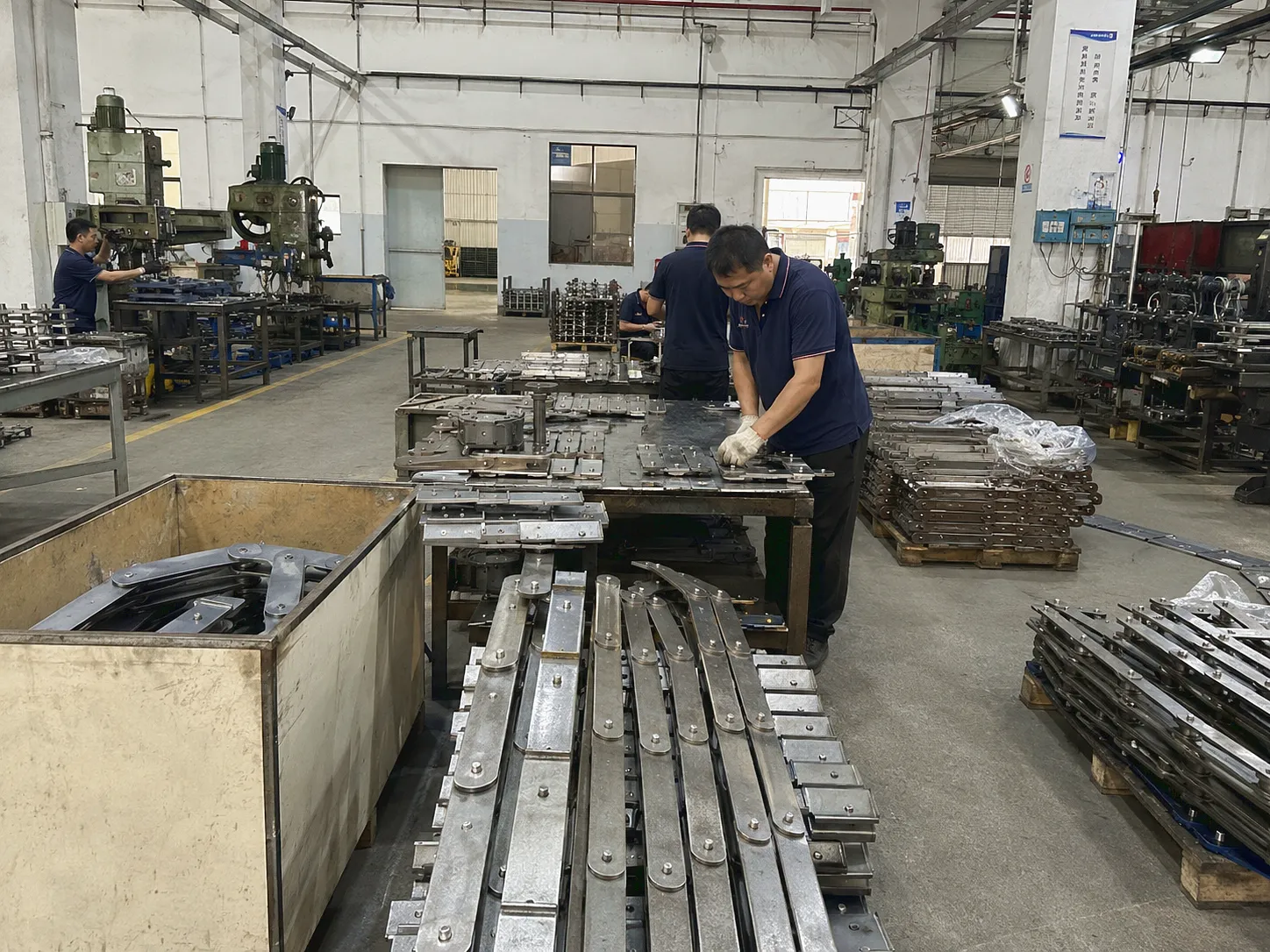
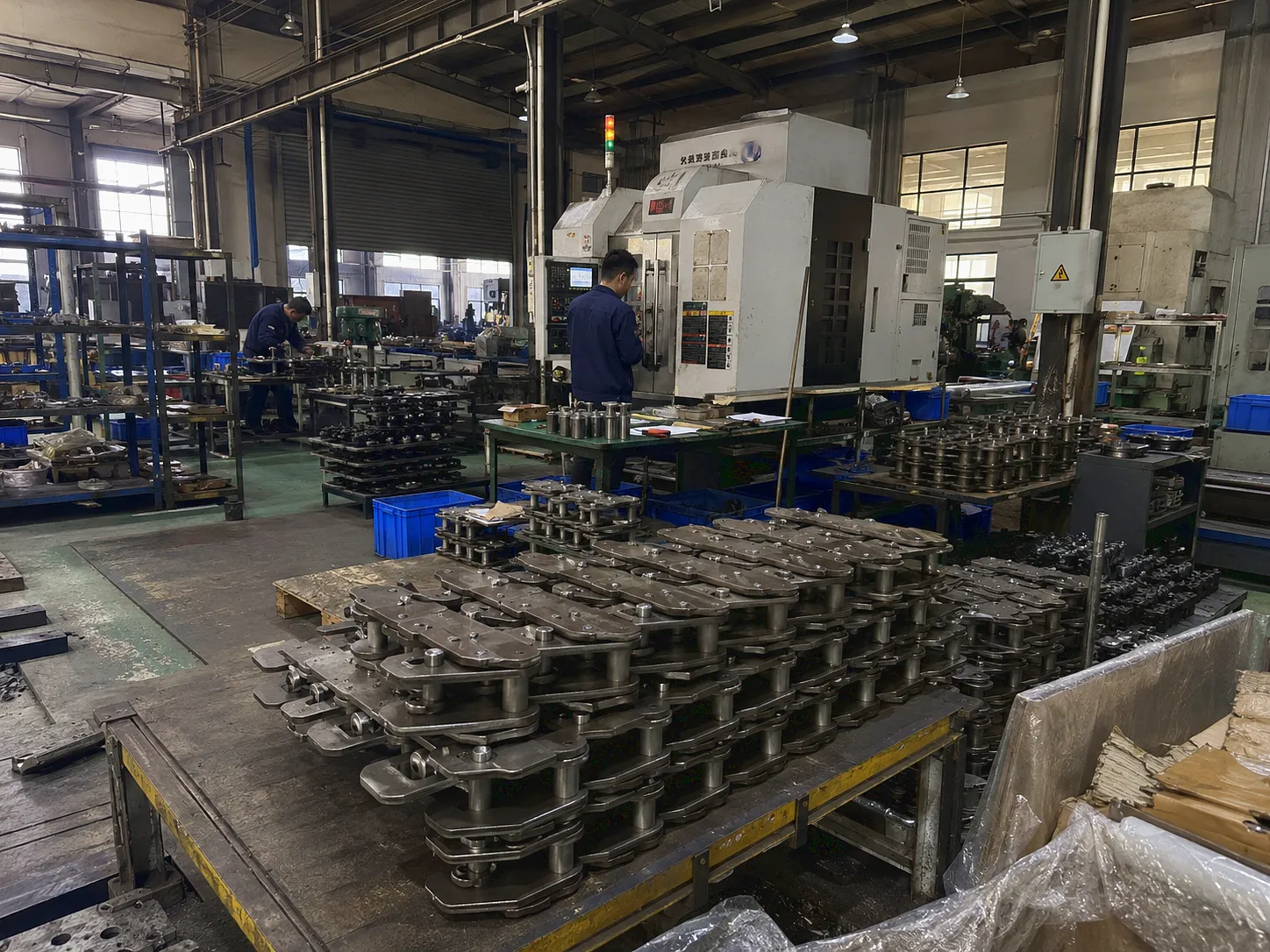
Ever Power’s manufacturing facility operates with CNC-controlled precision machining centres, automated heat treatment lines and in-house tensile testing equipment capable of verifying chain performance to the ultimate breaking load declared on every product batch. This level of internal quality assurance is what allows Ever Power to provide material certificates and test data that satisfy the documentation requirements of ISO 22000-audited food production facilities across the United Kingdom.
Beyond standard catalogue supply, Ever Power’s custom product engineering capability is a genuine differentiator for bakery clients with non-standard requirements. Custom pitch dimensions outside standard ISO series, non-standard lace plate configurations for extreme load applications, surface finishes for enhanced corrosion resistance in particularly aggressive washdown environments, custom hole-drilled or attachment plates for bespoke conveyor integration, and proprietary connecting link designs for client-specific assembly requirements — all of these are deliverable within Ever Power’s normal manufacturing workflow without project-level minimum order quantities. For UK bakery OEM machinery builders who need to specify and guarantee performance for a specific machine design, this custom service capability removes the compromise that comes from trying to adapt standard catalogue parts to a non-standard application.
Custom Engineering Services
Serving UK Bakery and Food Production Sites: Supply, Support & Compliance
United Kingdom · Food Manufacturing · Supply Chain
The United Kingdom’s commercial baking sector — which includes major industrial bread producers operating facilities across West Yorkshire, the East Midlands and the Home Counties, as well as mid-scale artisan production operations increasingly common in Scotland and Wales — shares a consistent set of engineering priorities: maximising uptime on continuous production lines, maintaining full compliance with Food Standards Agency (FSA) regulations and British Retail Consortium (BRC) Global Standards, and managing maintenance costs against a background of rising ingredient and energy prices that leave little margin for unbudgeted reactive repairs.
UK Regulatory Alignment
All stainless steel leaf chain supplied by Ever Power is accompanied by material conformance certificates traceable to BS EN 10204 Type 3.1, meeting the material traceability requirements common to BRC Global Standard audits and SALSA-accredited production facilities throughout England, Scotland and Wales.
Fast UK Delivery
Standard catalogue items from stocked range can be dispatched for next-working-day delivery to UK mainland addresses. Custom-specification and cut-to-length orders are manufactured and dispatched within confirmed lead times agreed at the point of order placement, providing the scheduling certainty needed for planned maintenance shutdowns.
Technical Application Support
Ever Power’s application engineers are available to UK clients for pre-purchase specification consultation — reviewing application parameters, calculating correct working load factors, safety margins and recommending the most cost-effective chain solution for the intended duty cycle. This engineering support is provided without charge as part of the standard service offered to B2B clients.
For biscuit production facilities in Reading, crumpet manufacturers in the West Midlands, pastry lines in Edinburgh or breakfast cereal operations in Yorkshire, the fundamental chain engineering requirements are consistent across product types: reliable torque transmission in high-temperature, high-humidity, high-contamination environments, with full traceability documentation that supports regulatory compliance. Ever Power leaf chain is engineered and supplied specifically to meet these requirements, and the company’s B2B supply model — with competitive pricing for volume supply contracts and direct engineering contact — makes it a straightforward decision for procurement teams working within the UK food manufacturing sector.
Frequently Asked Questions
Questions UK bakery and food production engineers most commonly ask when specifying leaf chain for their production lines.
Ready to Specify the Right Leaf Chain for Your Bakery Production Line?
Send your application details — oven temperature, conveyor length, line speed and current chain specification — to Ever Power’s engineering team. You will receive a confirmed product recommendation, competitive price and lead time within one working day.
[email protected] · Leaf chain specialists for UK food & bakery manufacturing · Custom orders welcome
edit by gzl