
 Combine harvesters are among the most mechanically intense machines working British and European farmland today. During a peak harvest window — which in the UK typically spans only four to six weeks across July and August — these machines can run eighteen or more hours a day, pushing every drivetrain component to its limit. The leaf chain, often overlooked in favour of more visible components, is the backbone of the lifting and tensioning systems that keep the cutting header, straw walkers, and elevator conveyors operating with precision. When a leaf chain fails in the middle of a harvest run, the consequences go far beyond a simple part replacement. Downtime during harvest can cost a UK arable farm thousands of pounds per day in lost yield, contractor fees, and potential grain-quality penalties. That is why the engineering specification of a leaf chain for combine harvester applications is not a minor procurement decision — it is a critical element of whole-machine reliability.
At Ever Power, we have spent over eighteen years engineering and supplying leaf chains to OEM manufacturers and agricultural equipment dealers across the United Kingdom, Germany, France, and beyond. Our BL-series and AL-series leaf chains are purpose-built to handle the shock loads, contamination exposure, and continuous cycling that define combine harvester service environments. This article explores the technical reasons why leaf chain design matters so profoundly in this application, how to select the right specification for your machine, and what separates a chain that survives one season from one that delivers five years of trouble-free service.
What Is a Leaf Chain and Why Does It Matter in Agricultural Machinery?
Fundamental Engineering Concepts
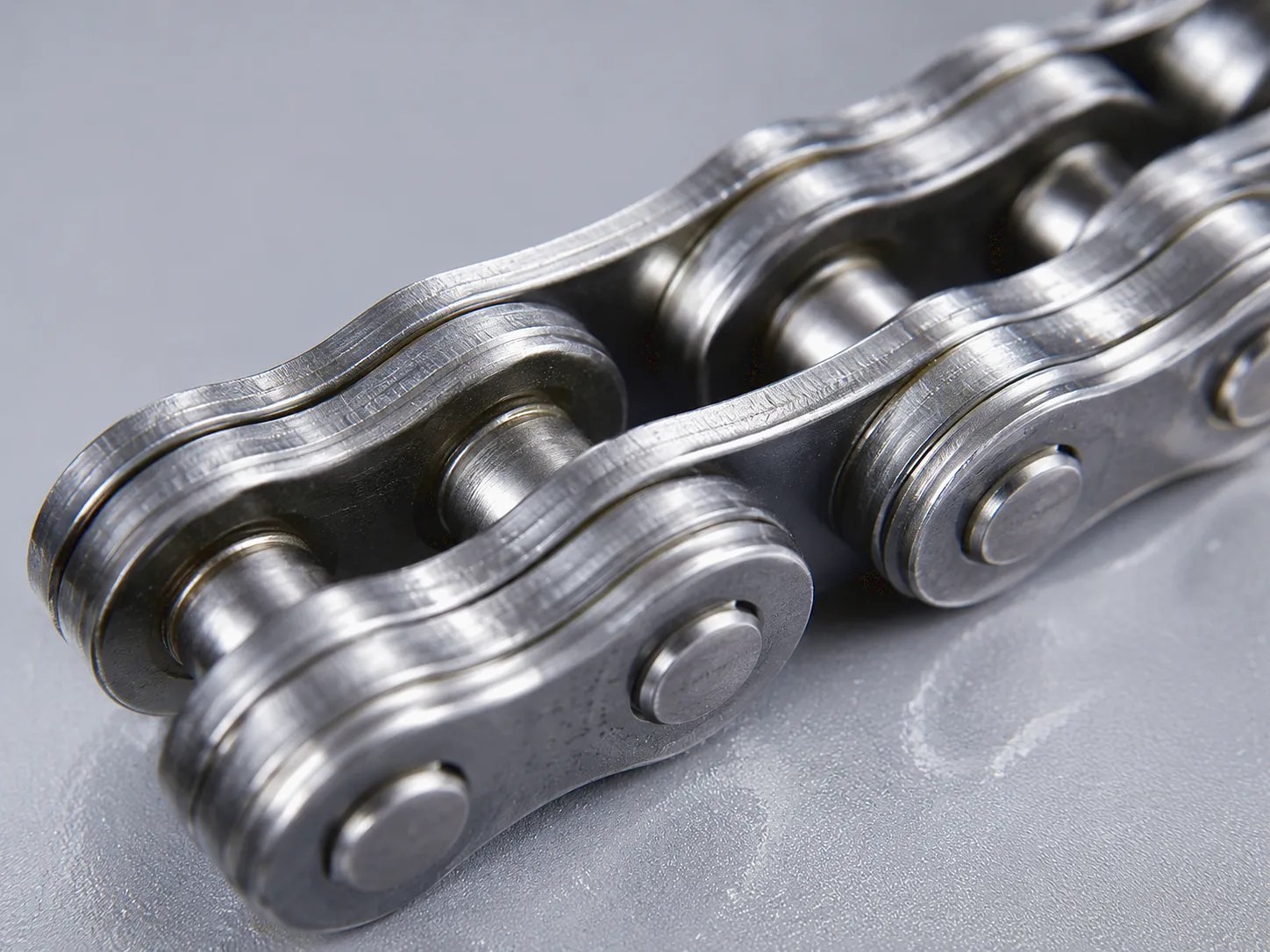
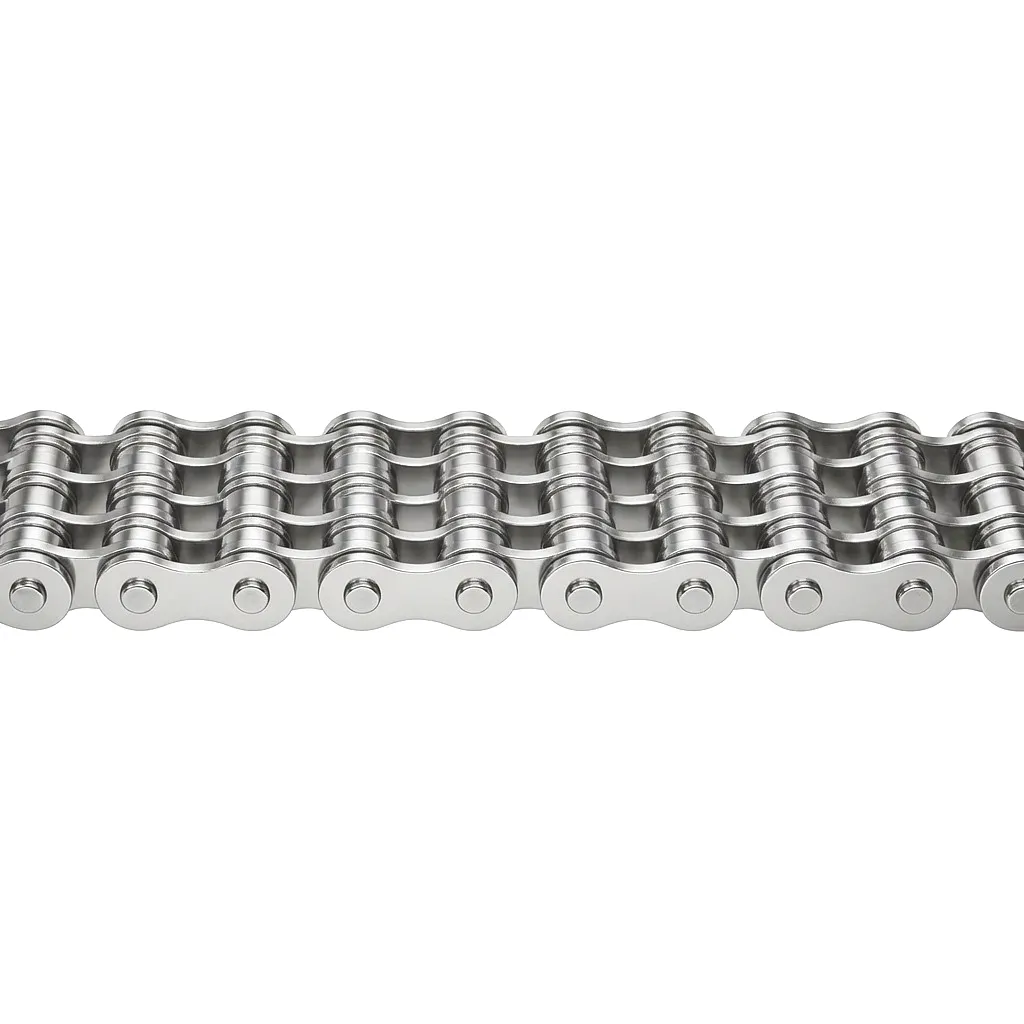
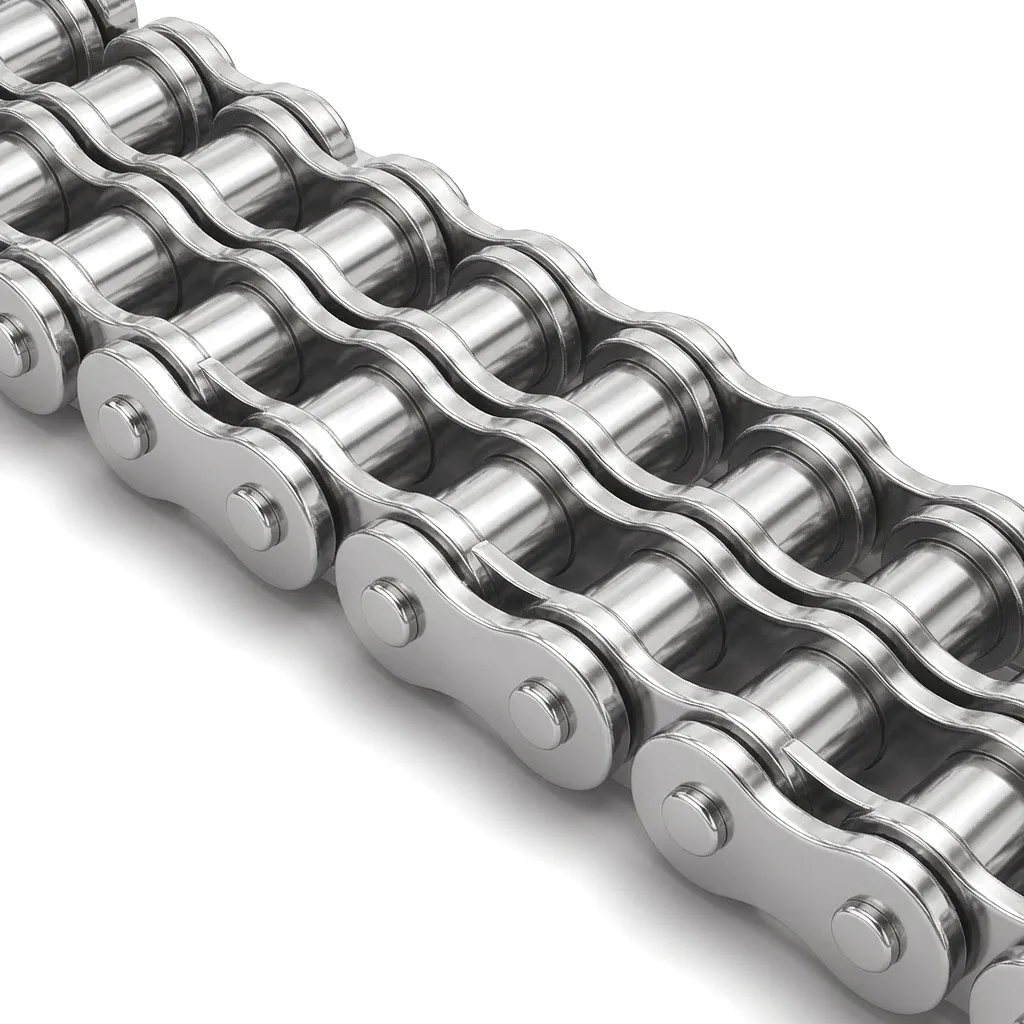
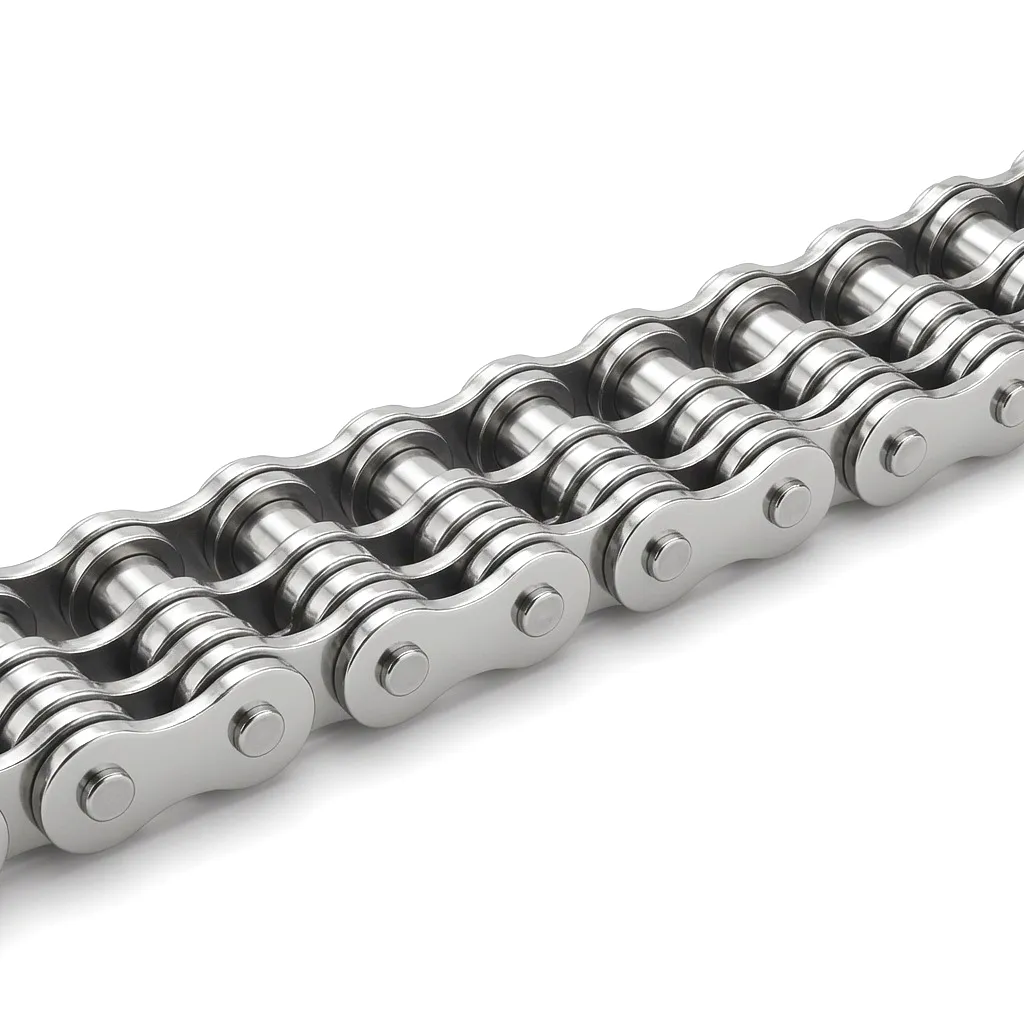
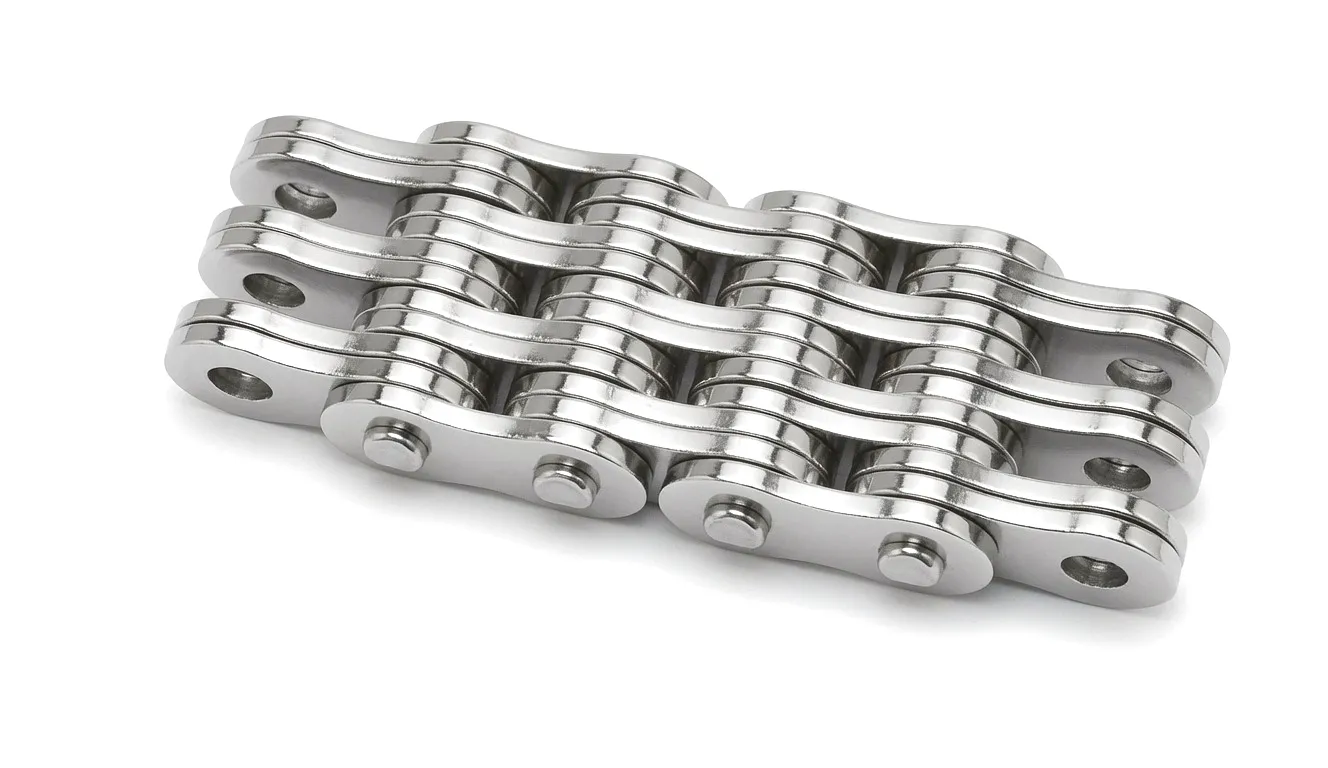
 A leaf chain — also known as a balance chain or fork-lift chain — differs fundamentally from a roller chain in its construction and intended purpose. Where a roller chain transmits rotary motion between sprockets, a leaf chain is designed to handle tensile loads in linear tension applications: lifting, counterbalancing, and guiding heavy assemblies through repeated vertical or angular movement. It achieves this through a straightforward but highly engineered design: alternating layers of flat link plates are interleaved and connected by hardened steel pins, creating a structure with exceptional tensile strength in relation to its cross-sectional profile. There are no rollers, no bushings to wear through, and no hollow pin centres to fatigue — the entire load is shared across a broad plate area, making the chain inherently more durable under high, sustained tension than a roller chain of equivalent pitch.
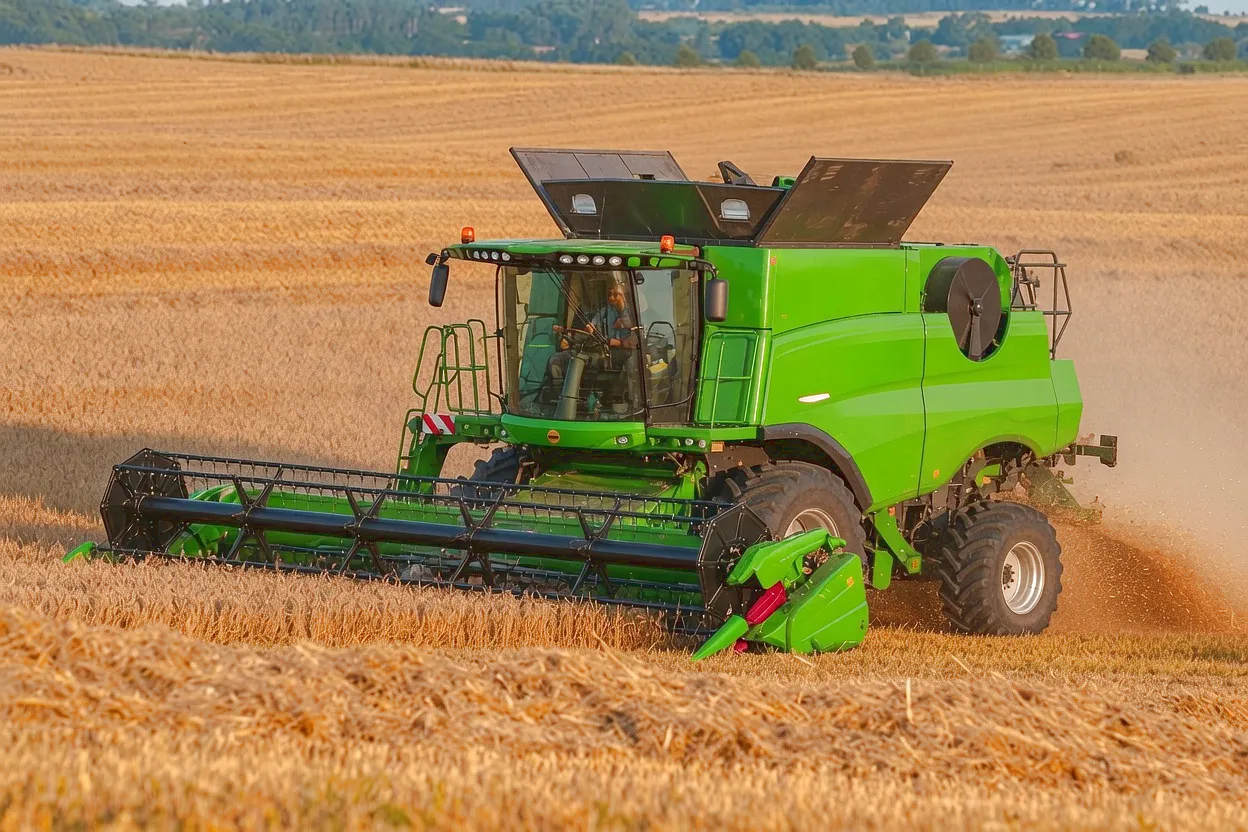
In a combine harvester, leaf chains appear in several critical positions. The most common application is the header lift system, where a pair of leaf chains connects the hydraulic cylinder or mechanical lift linkage to the cutting header assembly — a component that can weigh anywhere from 800 kg on a small grain header to over 3,500 kg on a wide maize or rapeseed header. These chains must not only support this dead weight but absorb the dynamic shock loads generated when the header drops and re-engages with the ground during field contour following. Additional applications within the combine include the stone trap or stone ejector mechanisms, some designs of elevator tensioning systems, and specific header tilt and lateral float adjustment linkages. Each of these positions places distinct and demanding requirements on the leaf chain specification, making a generic one-size-fits-all approach inadequate for serious agricultural engineering.
Technical Performance Specifications
Ever Power BL & AL Series — Combine Harvester Grade
| Chain Series | Pitch (in / mm) | Min. Tensile Strength (kN) | Working Load Limit (kN) | Plate Material | Pin Hardness (HRC) | Surface Treatment |
|---|---|---|---|---|---|---|
| BL 534 | 3/4 / 19.05 | 27.1 | 6.8 | Alloy Steel 40CrNiMo | 58–62 | Shot-peened + zinc |
| BL 634 | 3/4 / 19.05 | 35.4 | 8.9 | Alloy Steel 40CrNiMo | 58–62 | Shot-peened + zinc |
| BL 844 | 1 / 25.40 | 72.1 | 18.0 | Alloy Steel 40CrNiMo | 60–64 | Shot-peened + phosphate |
| AL 1044 | 1-1/4 / 31.75 | 111.2 | 27.8 | High-carbon Steel 45# | 60–64 | Phosphate + oil |
| AL 1244 | 1-1/2 / 38.10 | 155.7 | 38.9 | High-carbon Steel 45# | 60–64 | Phosphate + oil |
*All tensile strength values tested to ISO 4347 and ASME B29.8 standards. Working load limit = tensile strength / 4 (safety factor). Custom specifications available on request.
How Leaf Chain Functions Inside a Working Combine Harvester
System Integration & Load Dynamics
Header Lift System
The primary application. A hydraulic cylinder raises and lowers the cutting header through a mechanical advantage linkage. Two leaf chains — one on each side of the chassis — carry the tensile load and ensure perfectly synchronised header height. The chains must handle both static header weight and the dynamic impact force every time the header contacts uneven ground at working speed.
Floating Header Tensioning
Modern combine headers use a float mechanism that allows controlled vertical movement relative to the chassis as the machine traverses undulating terrain. Leaf chains in this system act as controlled-tension members, absorbing header bounce and preventing excessive header drop that would cause soil ingestion or feeder house plugging. Getting this tension calibration right is a precise engineering task.
Stone Ejector Mechanisms
On many European combine models designed for heavy arable soils — including the chalky, flint-laden farmland found across East Anglia, Lincolnshire, and Yorkshire — stone ejector or pre-separation systems use leaf chain linkages to open and close trap doors under the feeder house. These chains experience highly variable shock loads as the trap mechanism activates suddenly to eject stones or foreign objects from the crop stream.
 Understanding the load cycle experienced by a leaf chain in header lift service reveals why standard transmission chain is wholly inadequate for this role. A typical combine working a 250-hectare block in Lincolnshire will perform between 600 and 900 header raise-lower cycles per day during normal harvesting, field turns, and transport positioning. At each transition, the leaf chain experiences a tensile impulse as the hydraulic pressure builds, followed by a sustained static load as the header sits at transport height, then a controlled release as the header descends. Over a 40-day harvest season, this equates to more than 36,000 full load cycles — and this figure does not account for the micro-cycles caused by ground undulation during float operation, which may add hundreds of thousands of smaller fatigue events. A leaf chain engineered for agricultural service must therefore demonstrate both high ultimate tensile strength and, critically, excellent fatigue endurance across this enormous number of stress cycles.
Material Science & Construction Methods
What goes into an agricultural-grade leaf chain that genuinely performs
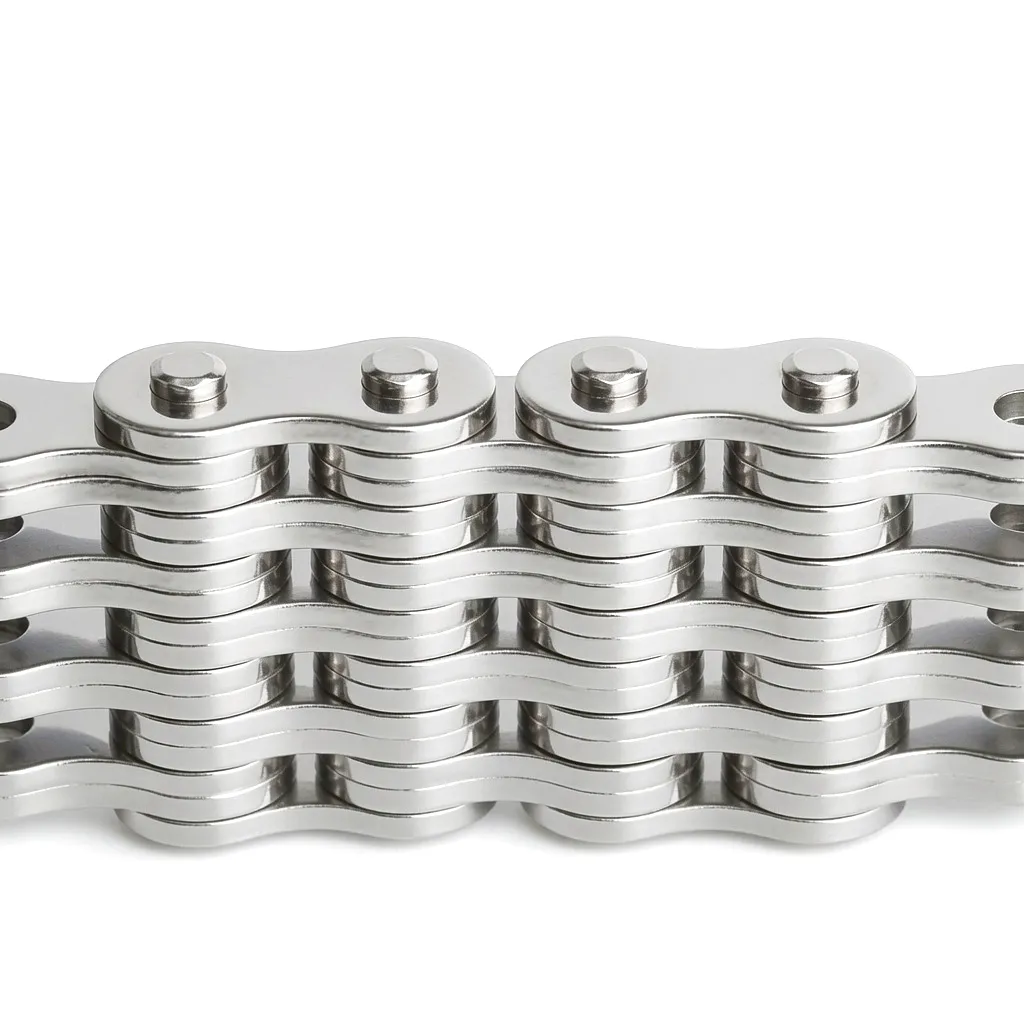
Cold-punched from 40CrNiMo or equivalent alloy steel strip, then heat-treated to achieve a surface hardness that resists wear at the pin apertures. The critical element is a controlled through-hardening profile that provides maximum fatigue resistance across the plate body, which is the section most stressed in tension. Plates are shot-peened after heat treatment to induce beneficial compressive surface stresses that further extend fatigue life — a process borrowed from aerospace engineering and now standard in premium agricultural chain manufacture.
Manufactured from case-hardened alloy steel, ground to tight diameter tolerances (typically h6 tolerance class), and carburised to achieve a hard outer case with a tough, ductile inner core. This combination prevents brittle fracture under shock loading — a failure mode that catastrophically removes the entire chain from service at once — while the hard surface resists fretting wear at the pin-plate interface. Pins in our agricultural-grade chains are additionally treated with zinc-phosphate conversion coating to provide baseline corrosion protection in field conditions.
The lacing configuration — expressed as the number of inner and outer plate rows — directly determines the chain’s breaking strength and working load. A BL 634 with 3×4 lacing provides a distinctly different performance profile to a 4×4 or 6×6 configuration at the same pitch. For combine header applications, we typically recommend a minimum 4×4 or 4×6 lacing on mid-sized headers and move to 6×6 or 8×8 for wide headers or self-propelled machines with header weights exceeding 2,000 kg. The lacing must also be matched to the pin diameter and plate thickness to ensure that the weakest element is never the pin — it should always be the plate in tension.
Agricultural environments are among the most corrosively aggressive encountered by mechanical components outside of marine service. Combine harvesters operate in crop dust, chaff, moisture, soil acids, and — in UK conditions — persistent damp air that accelerates surface corrosion on any unprotected steel. Our agricultural leaf chains are finished with either electrodeposited zinc coating (minimum 8 microns) or manganese phosphate conversion coating followed by oil impregnation. Both treatments provide sacrificial corrosion resistance and reduce surface friction, extending both service life and re-lubrication intervals under field conditions.
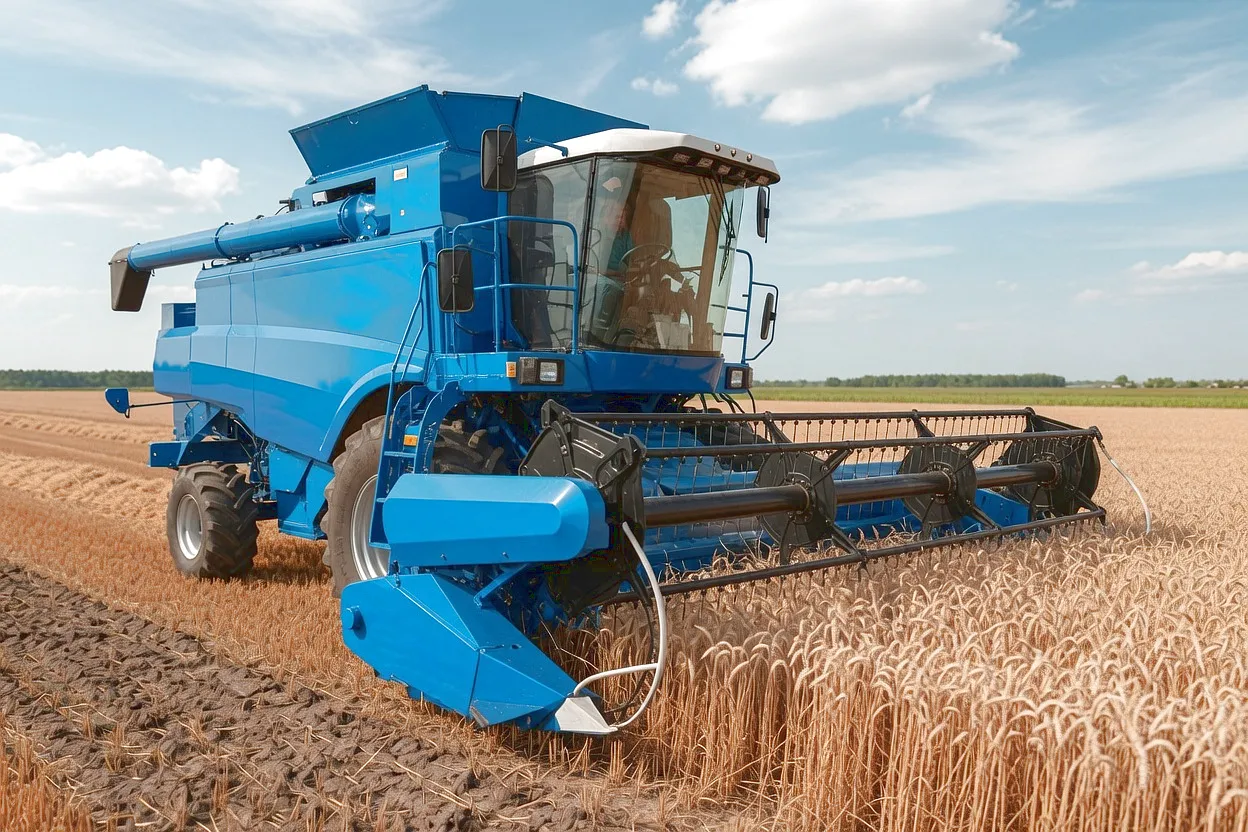
Leaf Chain in Action — Agricultural Field Applications
Real-world deployment across UK arable and farming sectors


Why Ever Power Leaf Chain Outperforms in Harvester Service
Proven Product Advantages
Superior Fatigue Endurance
Our shot-peening process combined with controlled quench-and-temper heat treatment delivers fatigue life that regularly exceeds 1.5x the published working load cycle count of standard commercial chain. Independent laboratory testing at 60% of minimum tensile strength shows no plate cracking after 500,000 cycles — a result that translates directly to multi-season service life in header lift applications without emergency mid-harvest replacement.
Corrosion Resistance for UK Conditions
British harvest conditions are notoriously unpredictable. Combines operating in Scotland, Wales, and the wetter western counties of England regularly encounter rain mid-harvest, leaving chains exposed to standing moisture for days at a time. Our zinc-plus-phosphate dual-layer protection scheme passed 480-hour salt spray testing per ISO 9227 without red-rust formation — a performance level that maintains chain integrity and prevents the stress-corrosion cracking that prematurely degrades unprotected agricultural chain.
Tight Manufacturing Tolerances
Dimensional accuracy at the pin hole and plate profile is not merely a quality metric — it is a direct determinant of how evenly load is distributed across the chain width during operation. Uneven load distribution, caused by loose manufacturing tolerances, leads to asymmetric plate fatigue and premature failure of individual link rows. Our pins are ground to h6 tolerances and plates are punched and precision-reamed to ensure interference-free yet snug pin fitting across all lacing rows.
Full OEM Interchangeability
All Ever Power agricultural leaf chains are manufactured to ASME B29.8 and ISO 4347 dimensional standards, ensuring direct interchangeability with OEM leaf chains from John Deere, Case IH, New Holland, Claas, and Fendt combine models. No modification, no adaptation, no guesswork — the chain fits first time. This interchangeability also means that dealers and agricultural engineers can hold a single chain specification in stock and supply it as a replacement across multiple machine makes and models.
Full Material Traceability
Every batch of Ever Power leaf chain is produced from steel with a material certificate traceable to the originating mill and heat number. Tensile testing, hardness verification, and dimensional inspection reports are available on request for each production run. For OEM customers and agricultural machinery manufacturers requiring full supply chain documentation for CE marking, UKCA marking, or machinery directive compliance, we provide complete documentation packages as standard.
Rapid Custom Length Cutting
Agricultural OEMs and dealer workshops rarely need round numbers of chain pitches. Our facility can supply custom-cut lengths with anchor pins or clevis connectors pre-fitted to exact pitch counts, reducing installation time in the field. For large dealer orders or workshop stocking programmes, we also offer pre-bent master link packs and repair link kits bundled with each supply of chain to ensure a complete repair capability is available at the point of use during harvest.
Leaf Chain Selection Guide for Common Combine Harvester Models
OEM-Compatible Specification Reference
| Machine Model | Header Weight Range | Recommended Chain | Lacing Config. | Replacement Interval |
|---|---|---|---|---|
| John Deere W Series (W540–W660) | 900 – 2,200 kg | BL 634 / BL 844 | 4×4 / 4×6 | 3 seasons or 1,500 hrs |
| Case IH 5130 / 6130 / 7130 | 1,100 – 2,800 kg | BL 844 / AL 1044 | 4×6 / 6×6 | 3 seasons or 1,200 hrs |
| New Holland CX7 / CX8 Series | 1,000 – 3,000 kg | BL 844 / AL 1044 | 4×6 / 6×6 | 3 seasons or 1,200 hrs |
| Claas LEXION 7 / 8 Series | 1,400 – 3,500 kg | AL 1044 / AL 1244 | 6×6 / 6×8 | 2–3 seasons or 1,000 hrs |
| Fendt IDEAL 7T / 9T | 1,600 – 4,000 kg | AL 1244 | 6×8 / 8×8 | 2 seasons or 800 hrs |
| Massey Ferguson 7274 CEREA | 800 – 1,800 kg | BL 634 / BL 844 | 4×4 / 4×6 | 3–4 seasons or 1,600 hrs |
*Replacement intervals are guidelines based on standard UK harvesting conditions. Actual wear rate depends on lubrication frequency, soil abrasivity, and operating loads. Always inspect chains for elongation (max 3% increase in measured pitch length over 10 pitches) before each harvest season.
Customer Success Case Study
How a Lincolnshire Arable Contractor Eliminated In-Harvest Chain Failures
Fenwick Arable Services Ltd — Lincolnshire, East Midlands
Fenwick Arable Services is a family-run agricultural contracting business based near Sleaford, Lincolnshire, operating a fleet of four large combine harvesters — two Claas LEXION 770s and two Case IH 8250 Axial-Flows — across approximately 4,200 hectares of winter wheat, oilseed rape, and spring barley under contract harvest each season. The East Midlands region, while one of England’s most productive arable zones, presents specific challenges for combine maintenance: the heavy clay soils and regular headland moisture mean combine components endure above-average contamination loads.
Prior to 2022, Fenwick Arable was sourcing replacement leaf chains through a regional machinery dealer using budget-grade, Far Eastern chain of undisclosed material specification. Over the 2021 harvest season alone, they suffered three separate header-lift chain failures across the fleet — one during a critical period of peak output on a large estate contract, which resulted in an eight-hour repair delay and an estimated cost of £4,800 in lost billing plus emergency courier charges for replacement parts.
Following an introduction through a machinery dealer contact, the company trialled Ever Power AL 1044 chains on both LEXION machines during the 2022 harvest. Results through three full seasons have demonstrated zero in-harvest chain failures and a measurable reduction in pre-season chain replacement frequency. The company has since standardised on Ever Power leaf chain across all four combines, achieving total chain-related downtime of zero across the 2023 and 2024 seasons. The fleet manager, Robert Fenwick, noted that beyond the reliability improvement, the consistent dimensional accuracy of the chains reduced installation time by approximately 20 minutes per machine at the start of each season — a small but appreciated reduction in pre-harvest preparation time.
✅ 0 in-harvest chain failures (2022–2024)
✅ £4,800+ saved in first year avoided downtime
✅ 4,200 ha / season across 4 combines
✅ 20 min saved per machine at pre-season prep
✅ 100% fleet standardised on Ever Power
— Robert Fenwick, Fleet Manager
“We run three John Deere S780s in the Scottish Borders and the damp conditions up here are brutal on chain components. Ever Power BL 844 has been running our header lifts for two full seasons now with no sign of the pitting corrosion we used to see by August. Genuinely impressed by the finish quality.”
“We distribute agricultural spare parts across the East of England and Ever Power is the only leaf chain brand we now stock. The tolerance consistency from batch to batch means we never have a fitting issue, and the documentation they provide for our dealer customers is exactly what’s needed for compliance purposes. Excellent supplier to work with.”
“I manage the maintenance programme for a large estate farming operation in Cambridgeshire. We were going through header lift chains on our Claas LEXION machines every other season. After switching to Ever Power AL 1044, we’ve now completed three seasons without a single chain replacement. The upfront cost is marginally higher but the lifecycle cost is significantly lower. Good engineering decision.”
Manufacturing Capability & Custom Engineering Services
Ever Power Production Facility
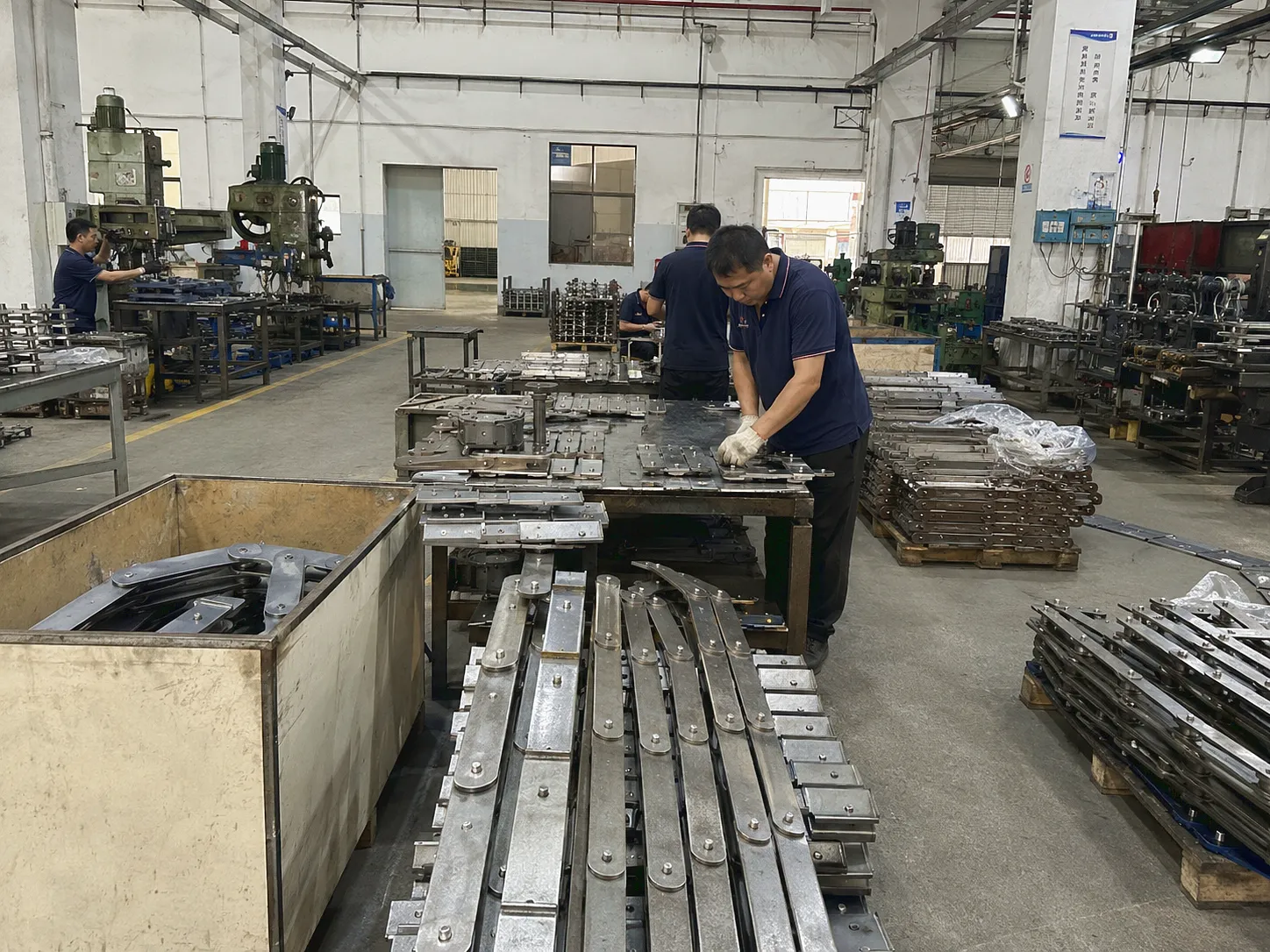 The Ever Power manufacturing facility operates 24 dedicated leaf chain production lines, each configured for specific pitch ranges from 3/4 inch through to 3 inch. Our production floor covers over 28,000 square metres and is equipped with CNC plate-forming presses, automated heat treatment furnaces with controlled atmosphere and quench systems, precision pin grinding lines, and fully automated assembly equipment with in-line pitch-length verification. We hold ISO 9001:2015 certification for design, manufacture, and supply of power transmission chain, and our quality management system is audited annually by Bureau Veritas on behalf of our OEM customer base.
Our custom engineering capability is a core differentiator that sets Ever Power apart from catalogue-only suppliers. For agricultural OEM customers — combine harvester manufacturers, header specialists, and precision farming equipment designers — we offer a full suite of customisation services that most chain suppliers are not equipped to provide. Modified pin diameters, special plate width dimensions, non-standard lacing configurations, integrated connector blocks, painted or powder-coated finishes for high-visibility applications, stainless steel pin options for chemically aggressive environments, and special pre-loaded assembly states for specific installation geometries are all available from our engineering team on project-by-project basis. Lead times for custom specifications typically run to four to six weeks for initial prototype, with full production lead time of eight to twelve weeks for first batch depending on volume.
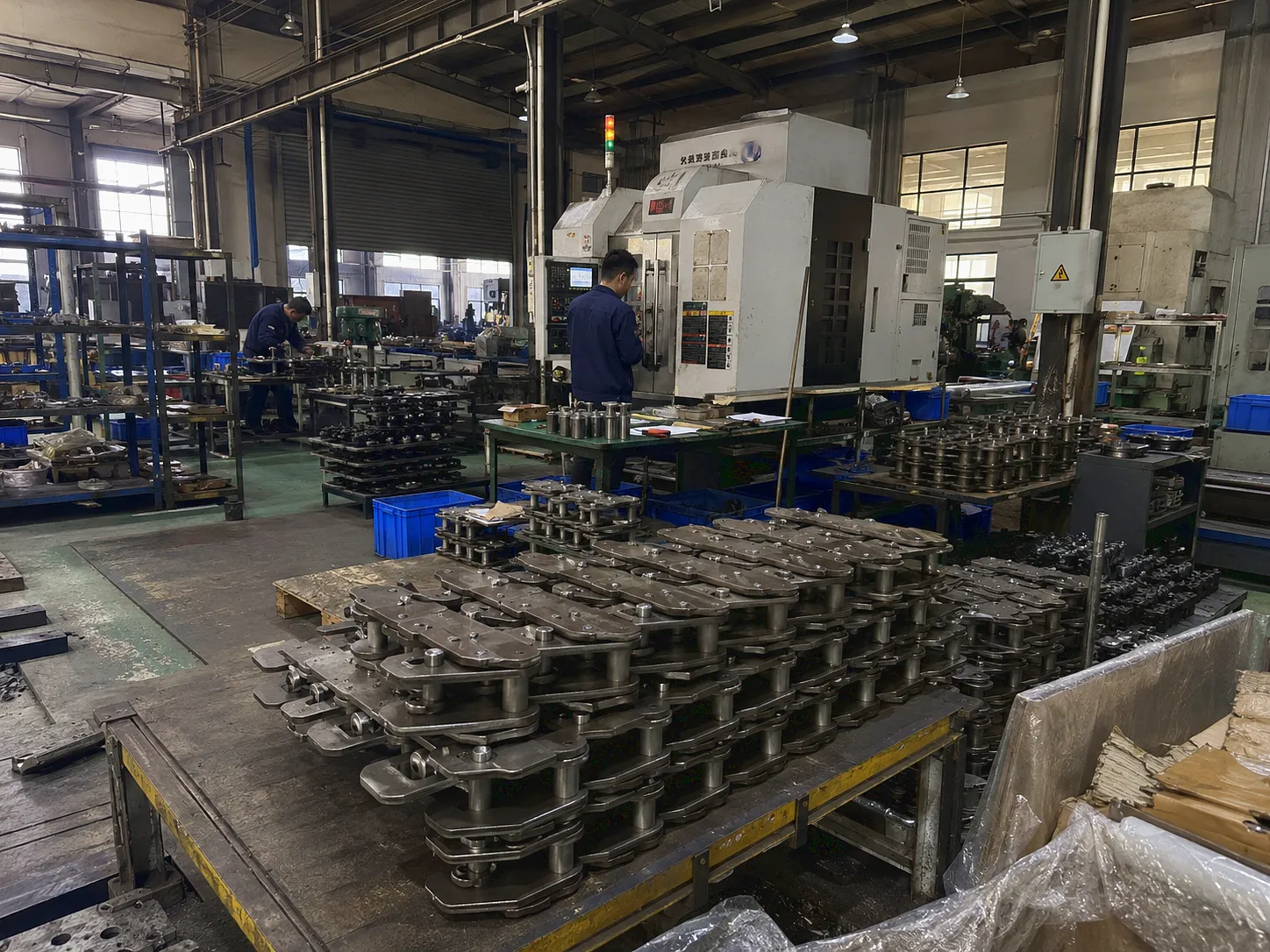 For UK-based agricultural equipment dealers and OEM procurement teams, we provide dedicated account management, with a European logistics hub enabling standard lead times of five to eight working days for stocked sizes and twelve to fifteen working days for custom configurations. All shipments to the United Kingdom are compliant with current UKCA marking requirements where applicable, and our product documentation fully supports CE marking for agricultural machinery sold into the European market. We understand that procurement decisions in the agricultural chain sector are rarely purely transactional — relationships with suppliers who understand the seasonal urgency of harvest supply chains and can respond quickly when needs arise are genuinely valued. That understanding is embedded in how we structure our service offering to UK and European customers.

Inspection, Lubrication, and Replacement — Practical Field Guidance
Maintenance Best Practices
Even the best leaf chain will underperform if maintenance practices are neglected. In combine harvester service, the hostile operating environment — crop dust loading, moisture ingress during field operation and overnight standing, and the physical vibration of the machine — places constant attritive pressure on chain components. Developing a disciplined pre-season, in-season, and post-season maintenance routine is the most effective way to extend leaf chain service life and avoid the unwelcome surprise of a field failure.
Pre-Season Inspection
Measure pitch elongation across ten consecutive pitches using a calibrated steel rule or chain gauge. Any measurement more than 3% above the nominal ten-pitch length indicates end-of-life and the chain should be replaced before harvest commences. Visually inspect all plates for cracking, pitting corrosion deeper than 0.5 mm, or deformation. Check anchor pins and clevis connectors for wear and correct pin retention. Apply fresh lubricant to all joint surfaces before storage chains are put back into service.
In-Season Lubrication
Leaf chains in header lift service do not self-lubricate, and the penetration lubricant applied at manufacture has a limited service life under field conditions. We recommend re-lubricating header lift chains every 50 to 75 operating hours during harvest using a penetrating chain oil applied to the inner plate surfaces — not a thick grease which blocks the joint but a low-viscosity oil that flows into the pin-plate interface. In wet harvesting conditions, increase lubrication frequency to every 25 hours to prevent moisture displacement at the joint surfaces.
Post-Season Storage
After the harvest season, clean chains with a solvent degreaser to remove chaff, soil, and oxidised lubricant residues, then dry thoroughly before applying a storage-grade corrosion inhibitor oil. If the machine is to be stored outside or in an unheated building through winter, wrap chains in a closed plastic bag with a desiccant pouch to prevent condensation formation. This simple procedure can add one or more additional service seasons to chains that would otherwise show advance surface degradation from unprotected winter storage.
| Action | Frequency | Trigger Condition | Replace If… |
|---|---|---|---|
| Pitch elongation check | Pre-season | Before harvest commences | >3% elongation over 10 pitches |
| Visual plate inspection | Pre-season + mid-season | Start of harvest + 200 hrs | Any visible cracking or deep pitting |
| Lubrication (penetrating oil) | Every 50–75 hrs (dry); 25 hrs (wet) | During harvest season | N/A — preventive action |
| Connector pin check | Pre-season | Before harvest commences | Any wear flat or movement on pin |
| Full chain replacement | See OEM guidance | Interval or inspection trigger | Per elongation, visual, or hour criteria above |
Frequently Asked Questions
Common questions from UK agricultural engineers and equipment procurement teams
Ready to Specify the Right Leaf Chain for Your Combine Fleet?
Talk to our agricultural chain engineering team. Whether you need a standard stocked specification shipped to your UK dealer address within the week, or a fully custom engineered chain for a challenging OEM or retrofit application, we have the manufacturing capability and application knowledge to get it right.
Ever Power Chain — Supplying UK agricultural dealers, OEM manufacturers, and farming businesses since 2006. ISO 9001:2015 certified. UKCA & CE compliant documentation available.