
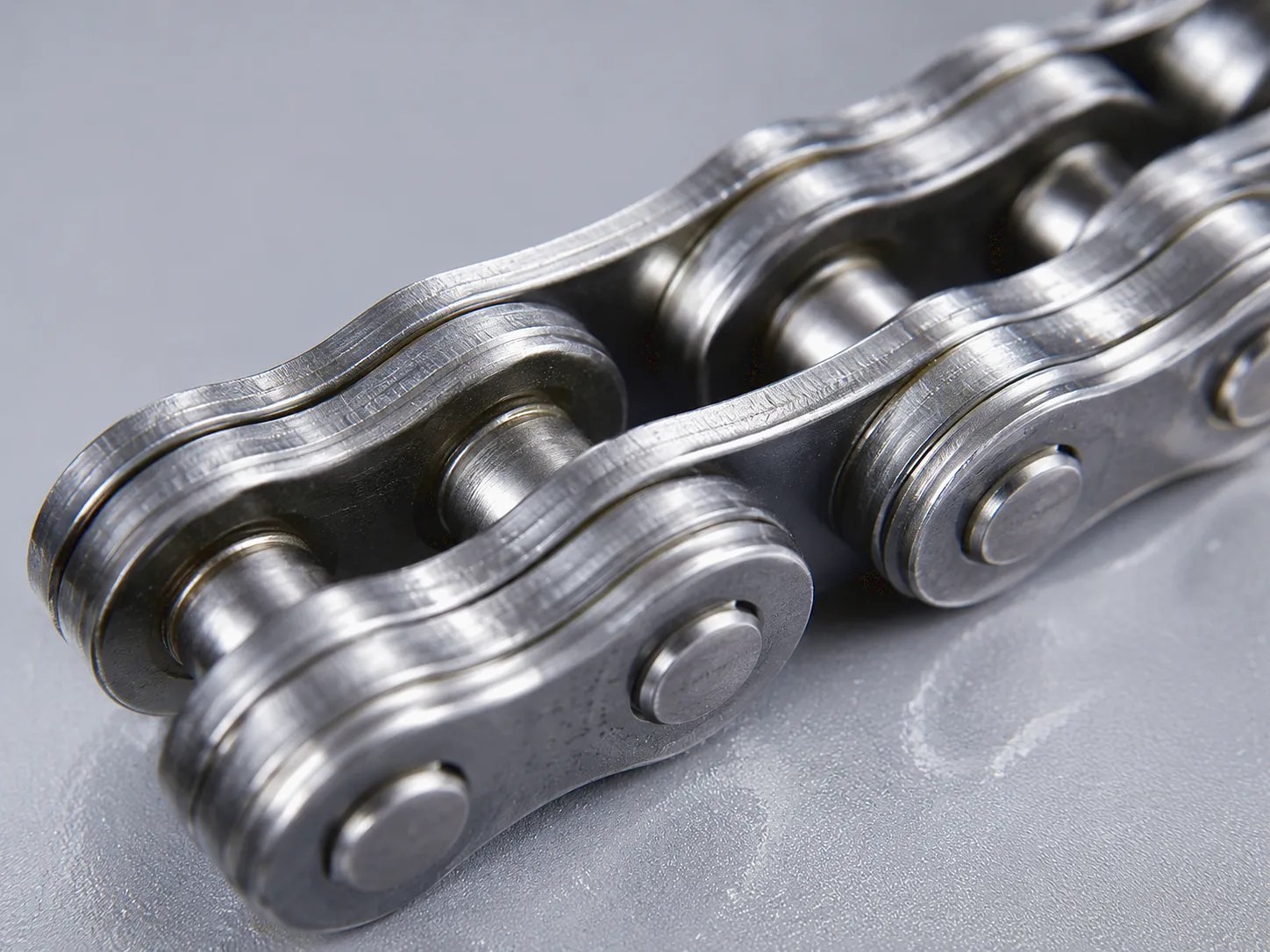
 Walk past any mid-rise construction site in Birmingham, Manchester, or across Greater London and you will almost certainly spot a builder’s hoist climbing the scaffolding — steady, relentless, carrying bricks, plasterboard, and steel reinforcement up to floors that would otherwise require hours of manual labour. What most site managers never think about is what actually drives that cage upward: the leaf chain. Without it, the entire vertical transport system simply does not work.
A leaf chain — known in the industry as a plate chain or flat-link chain — is a steel articulated chain built from interleaved flat plates and precision pins. Unlike roller chains used in general machinery, the leaf chain carries load in pure tension with no meshing teeth involved. That makes it exceptionally well-suited to the brutal, repetitive, shock-loaded environment inside a construction elevator mast section. The chain connects the carriage counterweight system to the drive unit, and every metre of vertical travel places enormous cyclic stress on each individual link. Get the specification wrong and you face premature failure, unscheduled downtime, costly replacements, and — in the worst case — a safety incident that shuts the site.
This guide draws on over 18 years of hands-on application engineering — specifying, installing, and troubleshooting leaf chains in construction hoists from Scotland to the South East of England. Whether you are a hoist manufacturer, a plant hire company, or a procurement engineer sourcing replacement chains for a fleet of builders’ lifts, this article covers everything you need to make the right decision.
Need a leaf chain quote for your construction hoist?
Our engineers respond within 24 hours — custom sizes available.
What Exactly Is a Leaf Chain and How Does It Work in a Builder’s Hoist?
The engineering definition is straightforward: a leaf chain is an assembly of flat steel plates (called leaves or link plates) connected by hardened steel pins and retained with either cotters, peening, or press-fit end plates. There are no rollers, no bushings, and no sprocket engagement. The entire load-carrying capacity comes from the tensile strength of the plates and the shear resistance of the pins.
In a rack-and-pinion construction elevator — by far the dominant type found on UK building sites — the leaf chain is not the primary drive mechanism. Instead it acts as the safety and balancing element in the counterweight assembly. The drive pinion meshes with the mast rack to propel the cage, while the leaf chain runs over a sheave at the top of the mast, connecting the car on one side to a counterweight on the other. This arrangement dramatically reduces the net load the motor must handle, extending equipment life and cutting electricity consumption per lift cycle.
In older drum-hoist and friction-hoist configurations — still seen on smaller scaffolding hoists and material lifts — the leaf chain is the primary load-bearing member, wrapped around a drum or reeved through a sheave system. Here the chain must carry the full rated payload on every single lift. The engineering demands are substantially higher, and chain selection becomes even more critical.
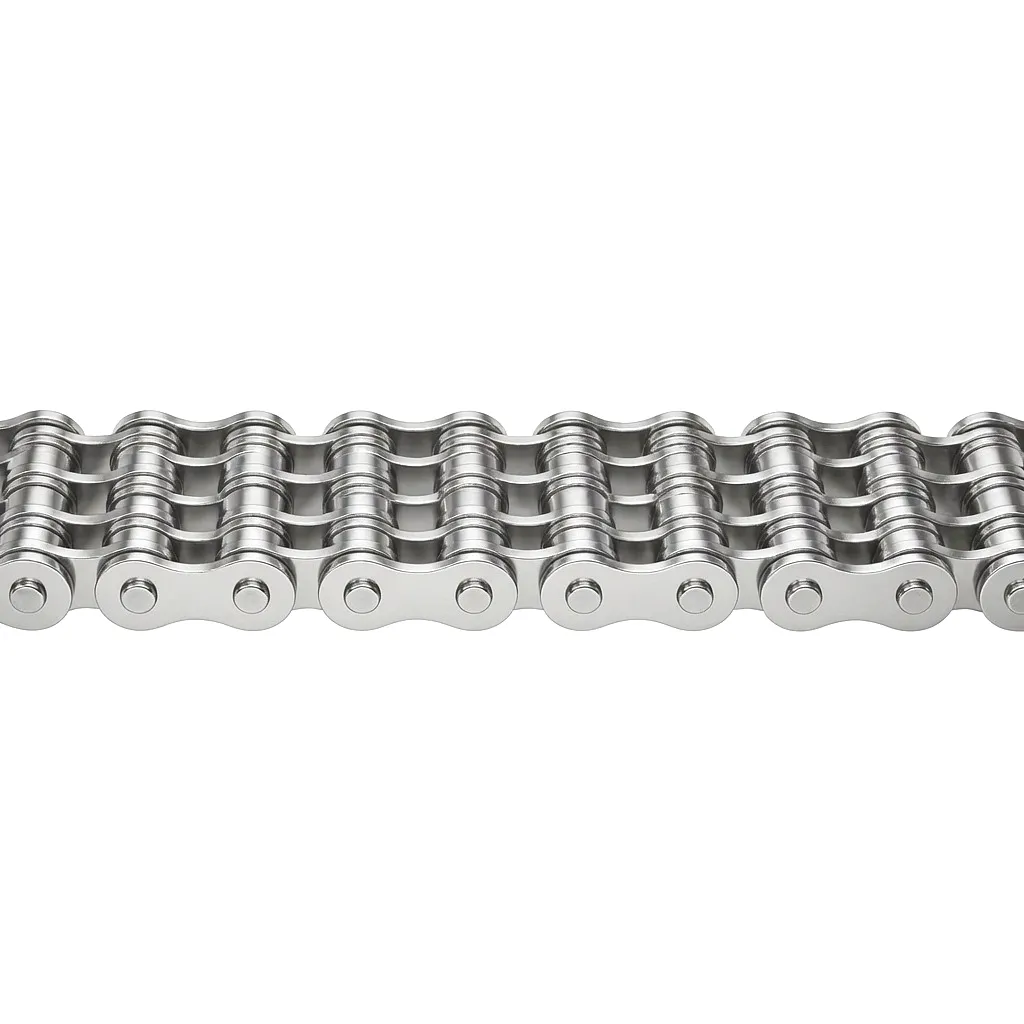
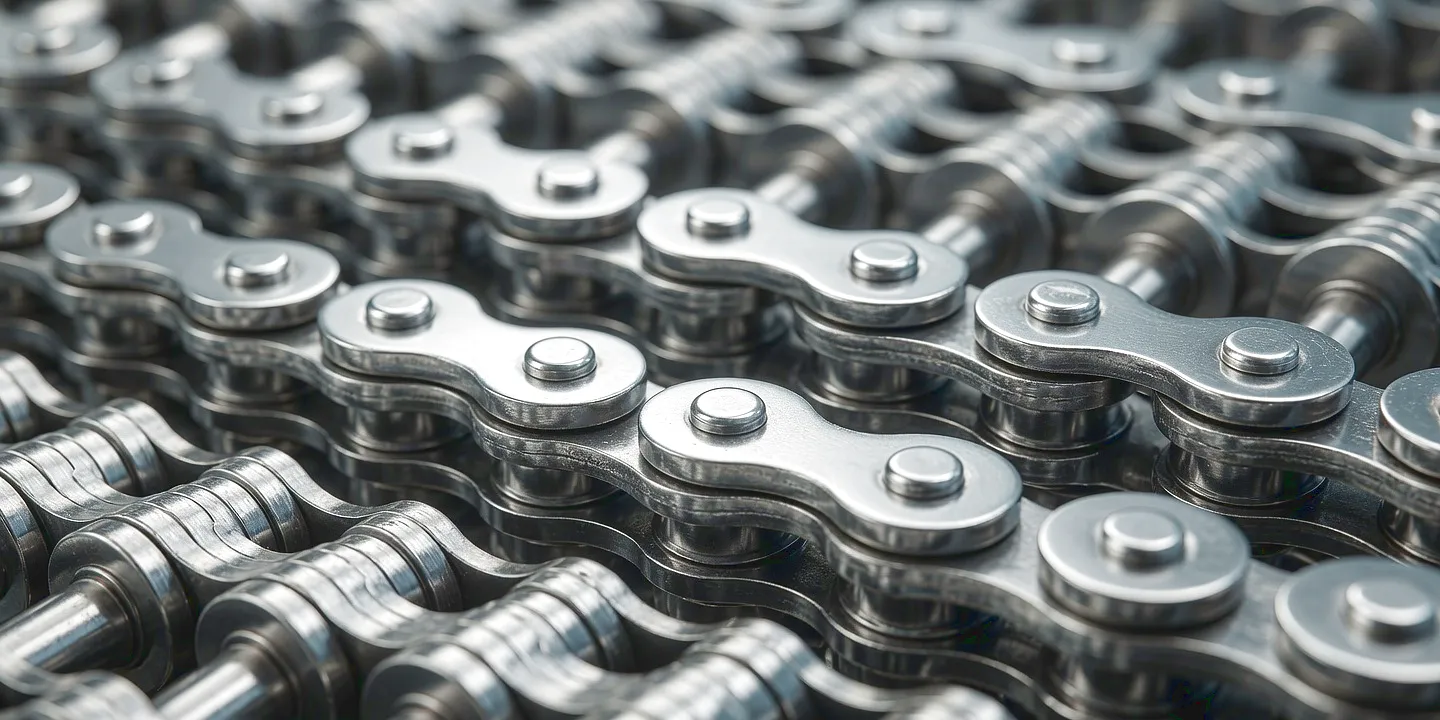
Close-up of plate link assembly — note the interleaved lacing pattern
Pure Tension Design
No sprocket engagement — load carried entirely through plate and pin tensile strength, making it ideal for lift and hoist applications.
AL & BL Series Standards
Available in ANSI AL (American standard) and BL (British/ISO) series. Most UK hoist OEMs specify BL series per BS EN ISO 4347.
High Fatigue Life
Shot-peened plates and induction-hardened pins extend fatigue endurance by up to 40% over standard grades — critical in high-cycle hoist duty.
Technical Specifications: Leaf Chain Performance Parameters for Construction Hoists
Selecting the right chain grade is not a matter of picking the heaviest option and hoping for the best. It requires matching the chain’s mechanical properties to the actual duty cycle, temperature range, and environmental conditions on site. The table below covers the key grades we supply for construction elevator applications — all compliant with BS EN ISO 4347 and available with full material traceability documentation for UK Lifting Operations and Lifting Equipment Regulations (LOLER) compliance.
| Chain Series | Pitch (mm) | Lacing | Min. Breaking Load (kN) | Working Load Limit (kN) | Pin Hardness (HRC) | Typical Hoist Application |
|---|---|---|---|---|---|---|
| BL 422 | 12.70 | 2 x 2 | 31.3 | 7.8 | 58–62 | Light material hoists (<500 kg) |
| BL 623 | 19.05 | 2 x 3 | 88.5 | 22.1 | 58–62 | Rack-and-pinion car counterweight |
| BL 834 | 25.40 | 3 x 4 | 196.0 | 49.0 | 58–62 | Standard twin-cage hoists (1000–2000 kg) |
| BL 1046 | 31.75 | 4 x 6 | 374.0 | 93.5 | 60–64 | Heavy-duty personnel/material lifts |
| BL 1256 (Heavy) | 38.10 | 5 x 6 | 556.0 | 139.0 | 60–64 | High-rise hoists, off-shore platforms |
* Working Load Limits quoted at 4:1 safety factor per LOLER 1998 & BS EN ISO 4347. Contact our engineering team for site-specific calculations.
Why Leaf Chain Outperforms Every Alternative in Construction Elevator Duty
A question I encounter regularly from plant hire managers and site engineers is why they cannot simply substitute wire rope or a heavy roller chain. The answer lies in the unique mechanical demands of a vertical hoist running 200 to 500 cycles per day, exposed to British weather, concrete dust, hydraulic oil mist, and the occasional direct impact from dropped materials. Each alternative has specific failure modes that the leaf chain avoids by design.
🔥 Shock Load Resistance
Every time a loaded cage starts and stops, it generates dynamic shock loads that can reach 2.5x the static payload. The laced plate construction of a leaf chain absorbs and distributes these impulse forces across hundreds of load-bearing surfaces simultaneously. Wire rope fatigues rapidly under the same cycling conditions — particularly at the termination points — and roller chains experience accelerated wear on bushings that simply do not exist in a leaf chain design.
🔒 Predictable Wear Monitoring
Unlike wire rope — where internal strand corrosion is invisible until catastrophic failure — a leaf chain wears externally on the pin diameters and inner link plate faces. This means wear can be monitored with a simple gauge check during routine LOLER inspections. When pitch elongation reaches the 3% service limit defined by BS EN 818-7, the chain is replaced before any safety risk arises. This predictability is the single most important reason why UK hoist manufacturers continue specifying leaf chain over wire rope alternatives.
🌎 Corrosion Tolerance
British construction sites are notoriously wet. Rain, standing water, and sea-salt spray on coastal projects create a relentless corrosion challenge. Our leaf chains for construction elevator use are produced in boron-alloyed steel with hot-dip galvanising or zinc-nickel plating options. Self-lubricating pin treatments further reduce the ingress of water between plates. The result is a chain that maintains structural integrity across the full range of conditions seen from Aberdeen to Plymouth.
Flat Geometry = Minimal Sheave Wear
 One underappreciated advantage of the leaf chain’s flat profile is the contact geometry on the return sheave at the mast head. Because the chain bends over a large-radius sheave pin rather than engaging teeth, side loads on the sheave bearing are dramatically reduced. On a hoist running 400 cycles per day over an 18-month project, this translates to a measurable reduction in sheave bearing replacement costs — something experienced plant managers track closely in their maintenance budgets.
The flat profile also means the chain stacks cleanly in the counterweight guide channel, preventing the kind of twisting and snagging that occasionally plagues wire rope systems when the cage is rapidly reversed under load. On busy mixed residential and commercial sites, where operators are under constant pressure to maximise lift cycles per hour, this mechanical reliability translates directly into programme savings.
Real-World Application Scenarios: Leaf Chain Across UK Construction Hoist Types
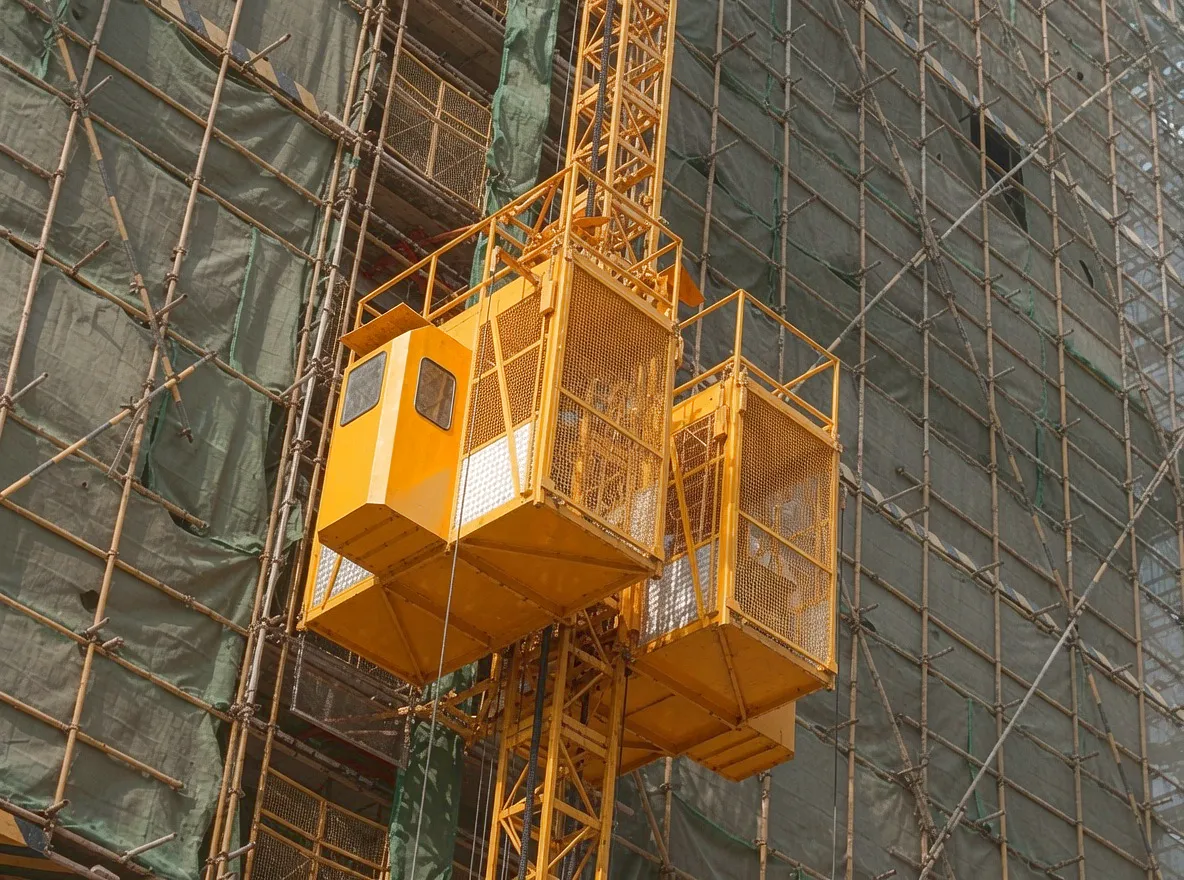
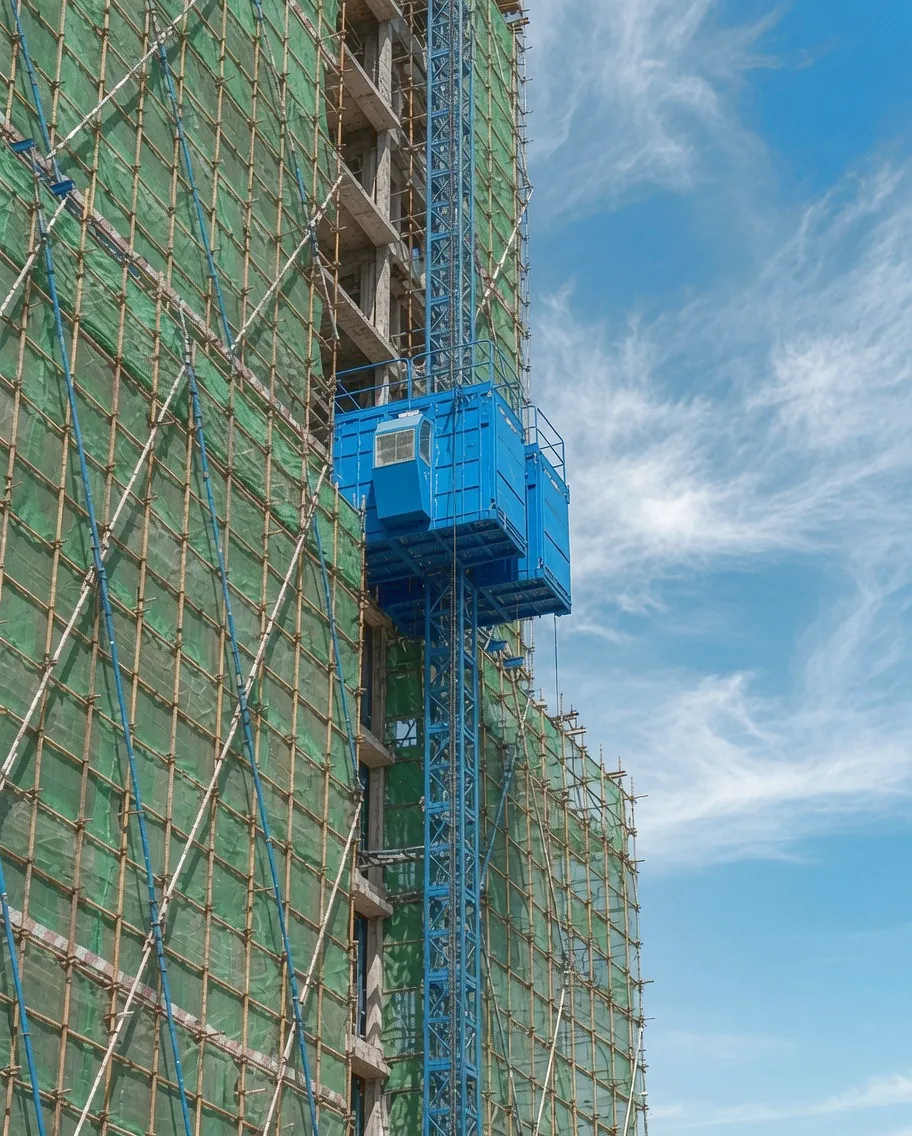
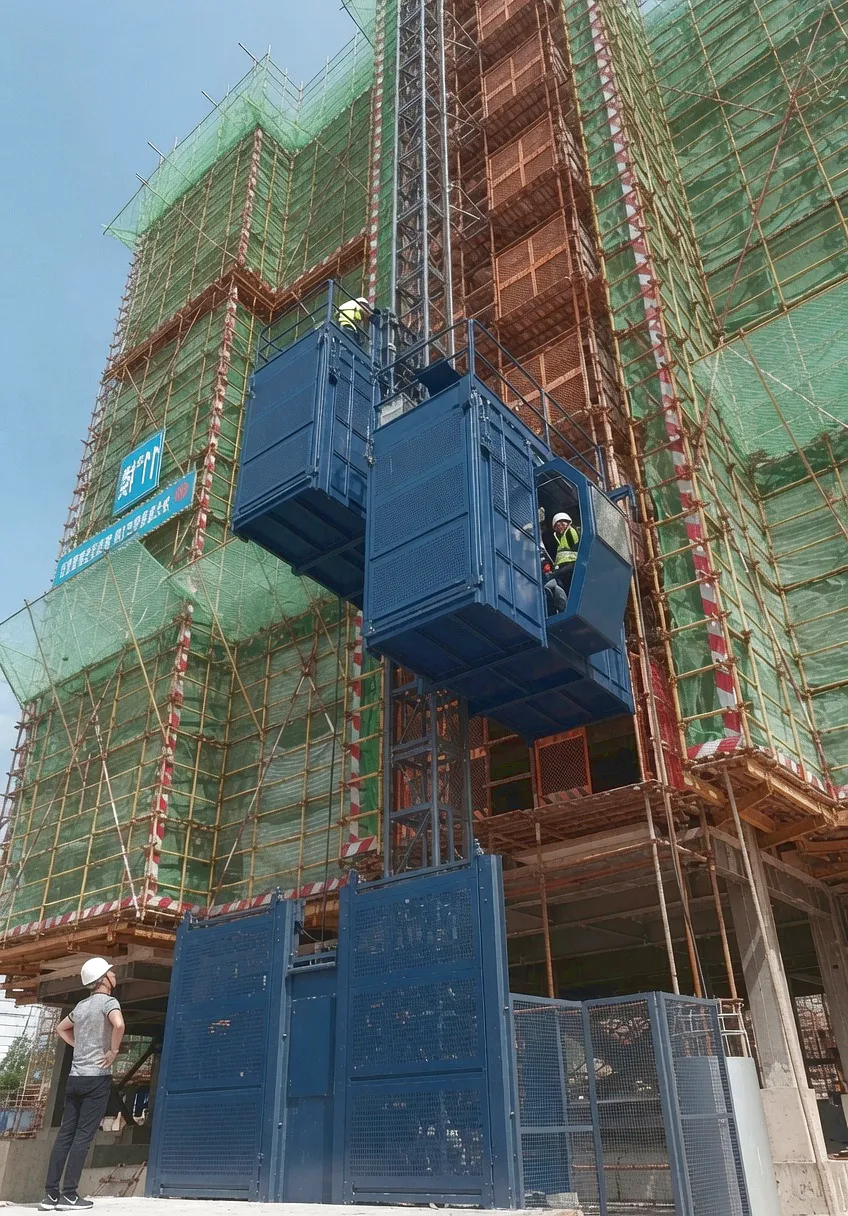
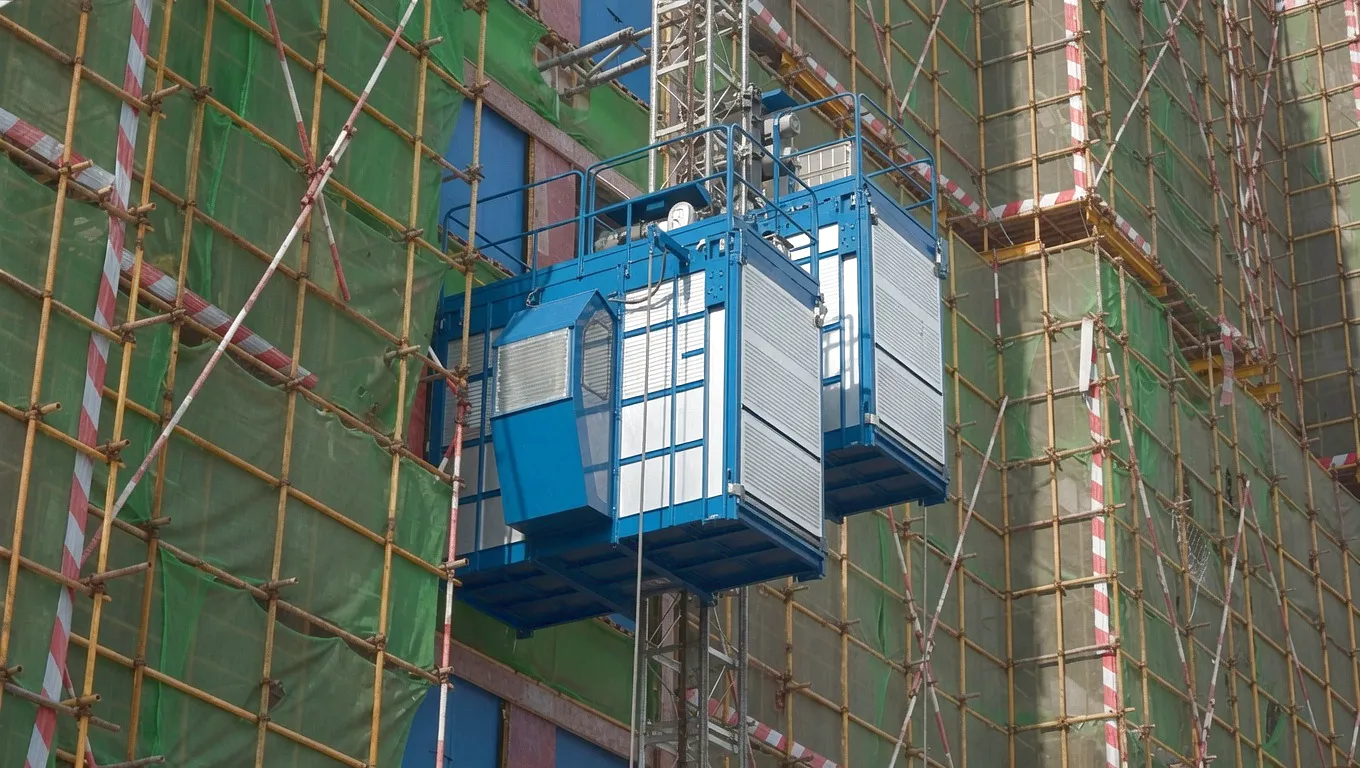
Not all construction elevators are created equal. The UK market supports a broad range of hoist types, from simple single-mast goods hoists to sophisticated twin-cage rack-and-pinion personnel lifts used on skyscraper projects in the City of London or Canary Wharf. Each application places different demands on the chain, and a good application engineer needs to understand those nuances before recommending a grade.

Materials, Manufacturing & Quality Standards: What Goes Into Our Construction Hoist Chains

The performance gap between a budget-grade imported chain and a properly specified engineering-grade leaf chain is not marketing rhetoric — it is measurable in tensile test data, fatigue life curves, and ultimately in service life on site. Our manufacturing process for construction elevator leaf chains follows a strict sequence designed to eliminate the three most common failure modes seen in field returns: fatigue cracking at the plate aperture, pin wear leading to elongation, and corrosion-induced embrittlement.
Boron-Alloy Steel Plates
Link plates are cut from boron-alloyed steel (typically 20MnB4 or equivalent). Through-hardening to 40–45 HRC followed by controlled tempering delivers the correct combination of tensile strength and toughness. Plates are then shot-peened to introduce compressive surface stresses that extend fatigue life by 35–50% compared to un-peened equivalents.
Induction-Hardened Pins
Pin blanks are ground to h8 tolerance, induction-hardened to 58–64 HRC on the working surfaces while retaining a tougher core, then finish-ground to h6 for precise fit in the link plate apertures. Pin diameter tolerances are held to ±0.005 mm across production batches, ensuring consistent articulation resistance and wear characteristics throughout the chain’s service life.
Surface Protection Options
Standard grade chains ship with a pre-lubricated zinc phosphate coating. For UK coastal and marine construction projects — such as offshore platform maintenance lifts on the North Sea or cross-Estuary projects on the Thames — we offer hot-dip galvanised and zinc-nickel electroplated variants. Both have been salt-spray tested to 1,000 hours per ISO 9227 before the base steel is affected, giving predictable corrosion performance in even the harshest British environments.
Full Traceability & LOLER Documentation
Every chain shipped for a UK lifting application includes a certificate of conformity traceable to the production batch, an elongation measurement record, a proof load test certificate at 2x WLL, and material certification to EN 10204 3.1 standard. This documentation package is specifically structured to satisfy the requirements of LOLER 1998 thorough examination records and the HSE guidance on chain and lifting accessory inspection intervals.
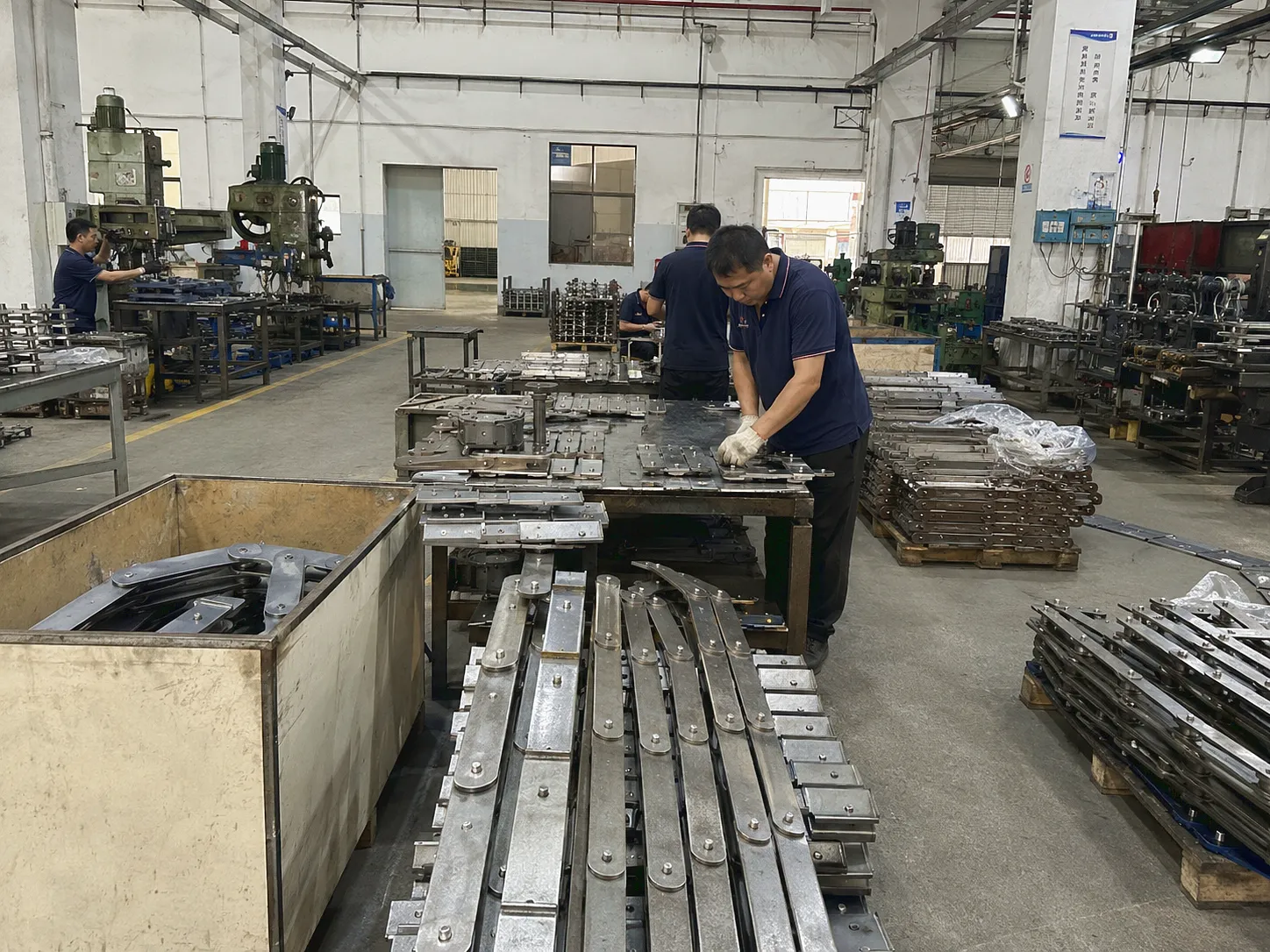
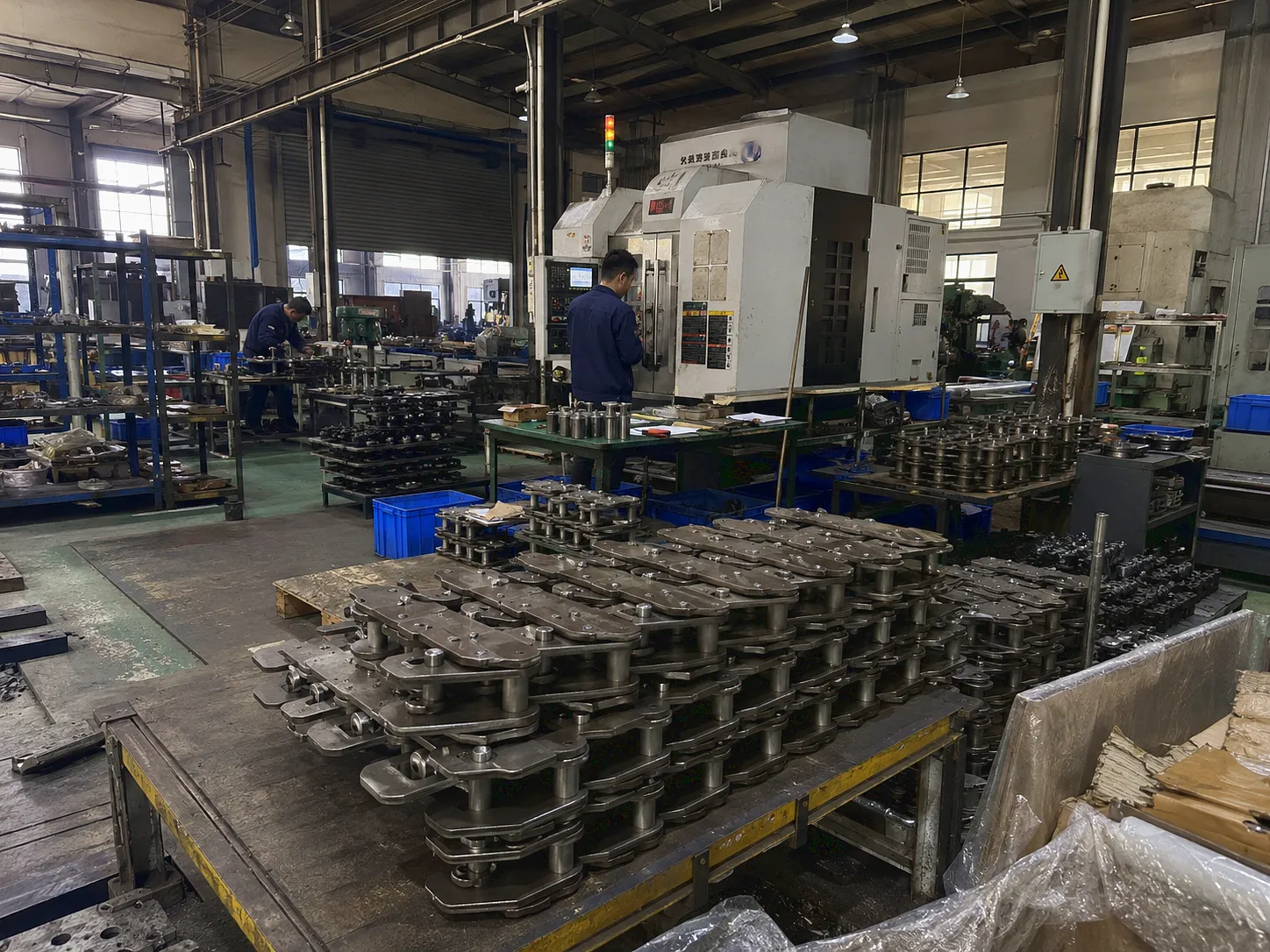
Our Manufacturing Facility & Custom Chain Engineering Capability
Standard catalogue chains handle the majority of construction elevator applications, but the reality of modern UK construction procurement is that OEMs, plant hire companies, and specialist lift manufacturers increasingly need bespoke solutions. Chain length, terminal fittings, anchor pin configuration, surface treatment, and documentation package all vary between projects and customers. Our manufacturing plant is purpose-built for this kind of flexibility.
We operate a dedicated custom engineering cell capable of producing leaf chains to virtually any pitch, lacing pattern, and length. CNC plate stamping allows us to cut non-standard plate widths and aperture geometries within 48-hour turnaround for urgent replacement orders. Our custom pin turning centre handles diameters from 6 mm to 40 mm, covering everything from lightweight scaffolding hoists to the heavy-duty anchor chains used in offshore construction lifts.
For customers integrating our chain into new hoist designs, we provide a full application engineering service: fatigue life calculation, sheave diameter recommendation, lubrication system design, and on-site inspection training. This engineering partnership approach is what differentiates us from commodity importers — we do not just ship chain, we help you make the design work reliably in service.
🛡 Custom Chain Services We Offer
- Non-standard pitch and lacing configurations to match existing hoist OEM specs
- Bespoke anchor pin and swaged end termination assemblies
- Batch-matched elongation sets for multi-tower mast climbers
- Stainless steel grade (316L) chains for food-grade and clean-room construction projects
- Expedited LOLER-ready documentation packages for urgent replacement orders
- Extended-life self-lubricating pins with PTFE-impregnated bushlets for hostile environments
Key Advantages of Our Leaf Chain for Construction Elevator Applications
Higher Tensile Strength per kg
Leaf chain delivers up to 30% more breaking load per kilogram of chain mass than equivalent-pitch roller chain, reducing counterweight mass and drive motor load.
Visible Wear Monitoring
External wear progression means LOLER inspectors can gauge chain condition accurately during mandated 6-monthly thorough examinations, with no hidden failure modes.
Compact Profile, Long Reeving
The flat, narrow profile allows efficient stacking in counterweight channels and over small-diameter sheaves without the kinking risk associated with wire rope at equivalent loads.
Long Service Intervals
Properly specified and lubricated chains routinely achieve 18–24 months service on standard UK commercial site duty, reducing the overall maintenance burden for plant hire fleets.
LOLER & BS EN Compliance Ready
All chains ship with EN 10204 3.1 mill certs, proof load records, and elongation data — everything a UK competent person needs for thorough examination sign-off with no additional paperwork chase.
Fast Replacement Supply
UK-warehoused stock of the most common BL series grades means we can dispatch same-day for standard lengths. Custom orders have a 5-day production lead time, minimising hoist downtime on programme-critical projects.

Customer Success: How UK Hoist Companies Are Using Our Leaf Chains
Northern Lifts & Access Ltd: 18-Month Zero-Failure Record on 24-Storey Project
 Northern Lifts & Access Ltd, a Manchester-based plant hire company operating a fleet of 47 rack-and-pinion hoists across the North West of England, approached us in early 2023 with a recurring problem. Their existing chain supplier was providing BL 834 grade chain that was reaching the 3% elongation limit within 9–11 months on high-cycle commercial projects — well below the 18-month service target built into their maintenance contracts.
We conducted a detailed review of their hoist cycle data, finding that two 24-storey sites in Manchester city centre were logging 380–420 lift cycles per day — roughly double the duty assumed in standard chain selection charts. We recommended a transition to our heavy-duty BL 1046 grade with induction-hardened pins, combined with a switch to a drip-feed automatic lubrication system on the sheave housing. We also supplied matched-elongation pairs for their dual-cage configurations, ensuring equal load sharing across both chain positions.
The result, measured over the 18-month project completion period, was a zero chain replacement record across the 6 hoists deployed on those sites. Northern Lifts calculated a direct saving of £14,200 in parts and labour against the previous supplier’s performance. The LOLER inspection records for all 6 hoists showed pin elongation still within 1.8% at project close — leaving significant residual life for redeployment on a subsequent project.
What Our UK Customers Say
We switched our entire hoist fleet from wire rope to leaf chain specification three years ago. The difference in inspection predictability alone was worth the change. Our LOLER examiner can now gauge actual chain condition in minutes rather than spending half a day probing for internal rope corrosion. We have not had a chain-related stoppage since.
The custom anchor pin terminations saved us two days of site fabrication time on the Canary Wharf project. The engineering team at Ever Power understood our interface requirement immediately and had the finished chains on site in under a week. Documentation was exactly what our LOLER examiner required — no back-and-forth chasing missing certificates.
As a hoist manufacturer, I need a chain supplier who can turn around non-standard specifications quickly. Ever Power have consistently delivered matched-elongation sets for our mast climber range within 5 working days. The batch traceability on the certs is excellent — our quality assurance team signs them off without any queries. I would not hesitate to recommend them to any UK hoist OEM.
Installation, Lubrication & LOLER Inspection: A Practical Site Guide
Even the best leaf chain will underperform if installed or maintained incorrectly. From my experience visiting construction sites across the UK — from Liverpool dockland redevelopments to Edinburgh city centre residential towers — the same four maintenance errors appear again and again. Understanding them takes less than ten minutes and can double the working life of your chain investment.
Never Run a Dry Chain
A leaf chain relies on oil film between the inner plate faces and the pin surface to prevent metal-to-metal contact wear. Once lubrication is lost, pin wear accelerates exponentially. Use a high-viscosity chain oil (ISO VG 220 minimum) or a purpose-formulated open-gear lubricant for outdoor hoist applications. On high-cycle hoists, install an automatic drip-feed system rather than relying on manual greasing schedules.
Measure Elongation Correctly
Always measure pitch elongation over a minimum of 12 links under tension, comparing to the stamped original pitch × number of links. Single-link measurements are unreliable due to dirt lodged between plates temporarily reducing apparent elongation. The 3% discard criterion from BS EN 818-7 applies to the average over the measured length — not to any individual link.
Replace Both Chains Simultaneously
In a dual-chain counterweight system, never replace only one chain. A new chain and a worn chain will have different elongation characteristics, creating uneven load distribution that can overload the new chain immediately. Always replace as a matched pair — which is why our paired elongation sets include documentation confirming the elongation of both chains is within 0.1% of each other at the point of despatch.
Inspect Sheave & Pin Condition Together
A worn sheave pin will accelerate chain wear dramatically by creating high spot contact pressure on the inner plates at the bend point. When replacing chain, always inspect sheave groove profile and bearing condition. If the groove has worn an asymmetric profile, replace the sheave rather than running a new chain against the old wear pattern. This single step has the highest return on maintenance spend of any intervention we recommend.
LOLER Inspection Intervals
Every 6 months
Every 12 months
3% per BS EN 818-7
Weekly manual / auto drip
Product Gallery: Leaf Chain for Construction Elevator Applications
Frequently Asked Questions: Leaf Chain for Construction Elevators in the UK
What is the average price or cost of a replacement leaf chain for a rack-and-pinion construction elevator in the UK?
Pricing depends on chain series, total length, surface treatment, and documentation requirements. For standard BL 834 grade chains used in most UK rack-and-pinion hoists, replacement sets typically run between £180 and £480 per 3-metre pair, depending on the configuration and whether matched elongation certification is required. Heavy-duty BL 1046 grade for larger twin-cage systems is priced at a premium reflecting the higher material and processing costs. Contact our team for a site-specific quote — we respond within 24 hours and can supply a formal quotation with LOLER documentation pricing included.
Where can I find a reliable UK-based supplier of LOLER-compliant leaf chain for builder’s hoists and construction lifts?
Ever Power supplies leaf chains to hoist manufacturers, plant hire companies, and maintenance contractors across the United Kingdom, including sites in London, Birmingham, Manchester, Glasgow, Leeds, Bristol, and Edinburgh. All chains are supplied with EN 10204 3.1 material certificates, proof load test records, and elongation measurement data structured for LOLER thorough examination filing. UK stock is maintained for the most common BL series grades, with same-day despatch available on orders placed before midday. Custom and non-standard configurations have a 5-working-day production lead time.
How do I know when my construction hoist leaf chain needs replacing and what does the BS EN standard require?
BS EN 818-7 and the guidance published alongside LOLER 1998 specify that a leaf chain used in lifting applications must be withdrawn from service when pitch elongation exceeds 3% of its nominal length, measured over a minimum of 12 pitches under a standardised tension load. Additionally, any chain showing cracked link plates, bent plates, corroded pitting beyond Grade 2 on the HSE corrosion scale, or damaged pin heads should be replaced immediately regardless of elongation. During a LOLER thorough examination, a competent person must record both the measured elongation and any visual defects. Our chains ship with a baseline elongation measurement record that makes this comparison straightforward at each subsequent inspection.
Which leaf chain grade should I specify for a twin-cage rack-and-pinion hoist running at 1,600 kg rated load on a high-rise UK commercial project?
For a 1,600 kg rated twin-cage hoist in a high-cycle commercial site environment — typical of city centre office or residential developments in London, Birmingham, or Manchester — we generally recommend BL 1046 grade with 4 x 6 lacing as the starting point. This grade provides a 93.5 kN working load limit at 4:1 safety factor, with sufficient margin for the dynamic shock loads generated during acceleration and deceleration cycles. For very high-cycle duty above 350 cycles per day, we recommend upgrading to our induction-hardened pin variant and fitting an automatic lubrication system. Always provide us with your actual duty cycle data — cycles per day, travel height, payload, and start/stop frequency — for a site-specific recommendation backed by fatigue life calculation.
What is the difference between AL series and BL series leaf chain and which one do UK construction hoist manufacturers typically use?
AL (American Leaf) and BL (British Leaf) series chains share the same pitch dimensions as their equivalent ANSI and BS roller chain series, but the lacing pattern — the number of interleaved plates — differs between the two standards. BL series chains generally have a heavier lacing density for the same pitch, giving a higher working load limit in a similar envelope. The overwhelming majority of UK hoist OEMs specify BL series to align with BS EN ISO 4347, the harmonised European standard for leaf chains. ANSI AL series chains are used on equipment designed to North American standards, occasionally seen on imported hoist platforms from the US or Canada. If you are unsure which series your existing hoist specifies, we can identify the correct replacement from a photograph of the current chain or the original equipment serial plate — contact our engineering team.
Can I get a custom-length or non-standard leaf chain for my specific construction hoist model and how quickly can it be supplied to a UK site?
Yes — custom-length and non-standard specification chains are a core part of our service offering. We produce leaf chains to virtually any combination of pitch, lacing, length, and end termination. For urgent replacement orders — for example, an unscheduled chain failure that has put a hoist out of service on a live construction project — we operate a priority production track that can ship custom chains within 5 working days, with same-day despatch possible for standard grades from UK stock. We serve sites across England, Scotland, and Wales with overnight freight. Contact our team with your hoist model, current chain grade, and required length for an immediate quotation.
Get a Leaf Chain Quote for Your UK Construction Elevator Project
Our engineering team provides chain selection support, fatigue life calculations, and LOLER documentation — all included in your quotation. Whether you need standard stock or fully bespoke chains, we respond within 24 hours.
Serving hoist manufacturers, plant hire companies & construction contractors across England, Scotland, Wales and Northern Ireland.
© 2026 Ever Power Chain — Leaf Chain for Construction Elevator Applications | UK Supplier
edit by gzl