
 Walk around any active construction site in the UK — from the infrastructure projects reshaping Birmingham’s canal quarter to the offshore platform maintenance yards along the Thames estuary — and one machine commands attention above all others: the excavator. Hydraulic, powerful, and relentless, modern excavators bear extraordinary mechanical loads cycle after cycle, hour after hour. The chains buried deep within their lift and crowd systems don’t just transfer force; they carry the entire operational integrity of the machine. When they fail, everything stops. When they perform flawlessly, projects stay on schedule and margins stay intact.
The leaf chain — also referred to as a plate link chain or balance chain in certain engineering circles — is not simply an afterthought in excavator design. It is the sinew that connects hydraulic force to mechanical output in the most demanding lift and counterbalance applications. Unlike roller chains designed for rotary drive transmission, leaf chains are engineered exclusively for the high-tensile, linear-load environments created inside forklift masts, crane jibs, and critically, excavator boom and stick cylinders. At Ever Power, our engineers have spent 18+ years refining leaf chain geometry, material science, and surface treatment specifically for the kind of punishing duty cycles that excavators operate under on British infrastructure projects, mining sites across Wales and Scotland, and demolition contracts throughout the South East.
Understanding why a specific type of chain performs better inside an excavator than alternatives requires drilling into the mechanics of what actually happens during a dig cycle. As the bucket bites into compacted soil or fractured rock, the crowd cylinder extends, pushing the arm forward. Simultaneously, the boom cylinder manages the vertical arc of the whole assembly. The forces involved are not constant — they are shock-loaded, variable in direction, and affected by ground conditions that change with every pass. A chain running inside these cylinders or through the linkage system must absorb sudden tension spikes without deforming, resist fatigue cracking under millions of flex cycles, and maintain dimensional stability so that hydraulic calibration remains accurate. The leaf chain’s flat-plate laminate structure, engineered pin-and-plate interlock, and precisely controlled tensile tolerance make it uniquely suited to meet all three demands simultaneously.
What Is a Leaf Chain and How Does It Differ from a Roller Chain?
Laminated Plate Architecture
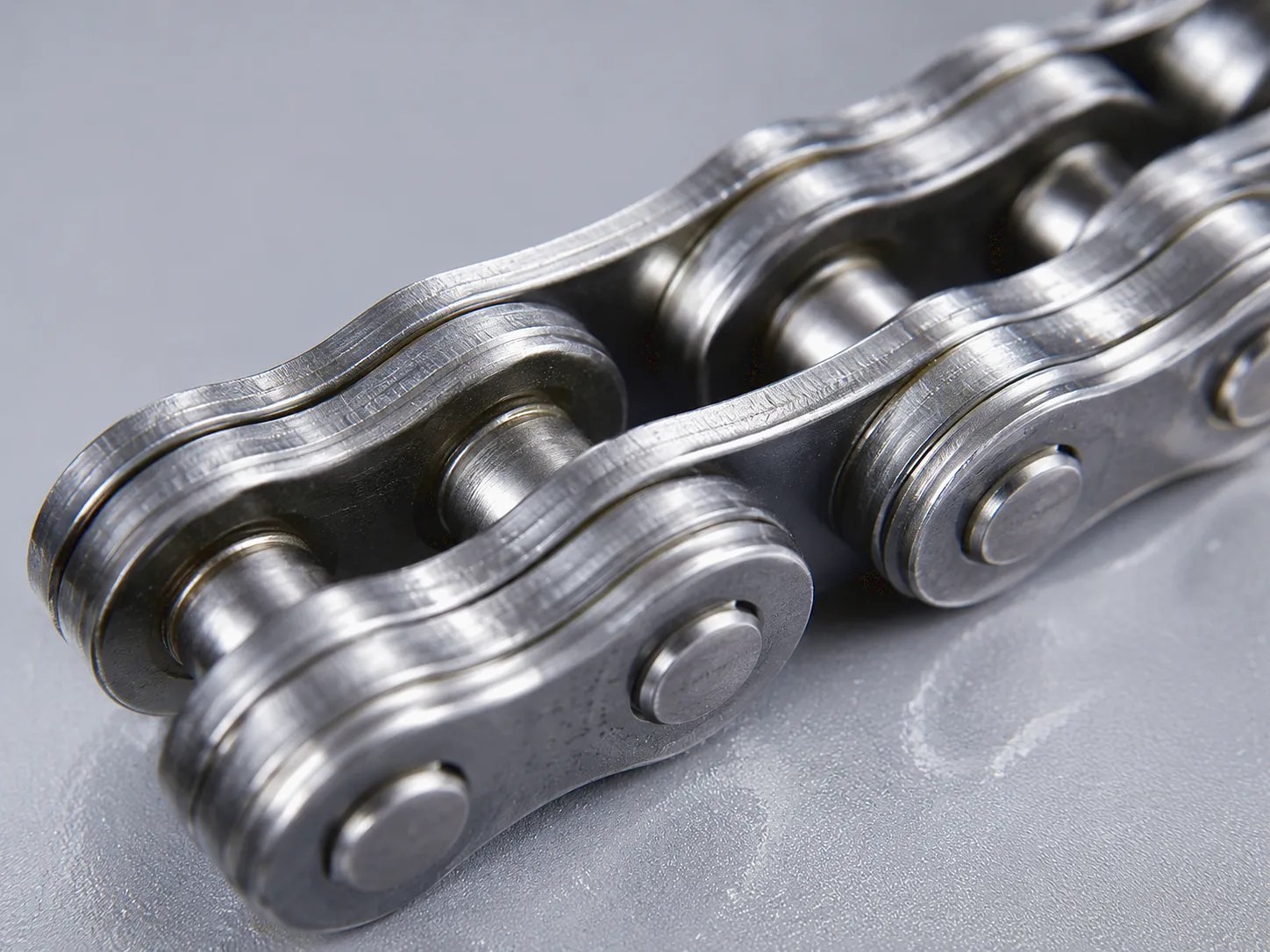
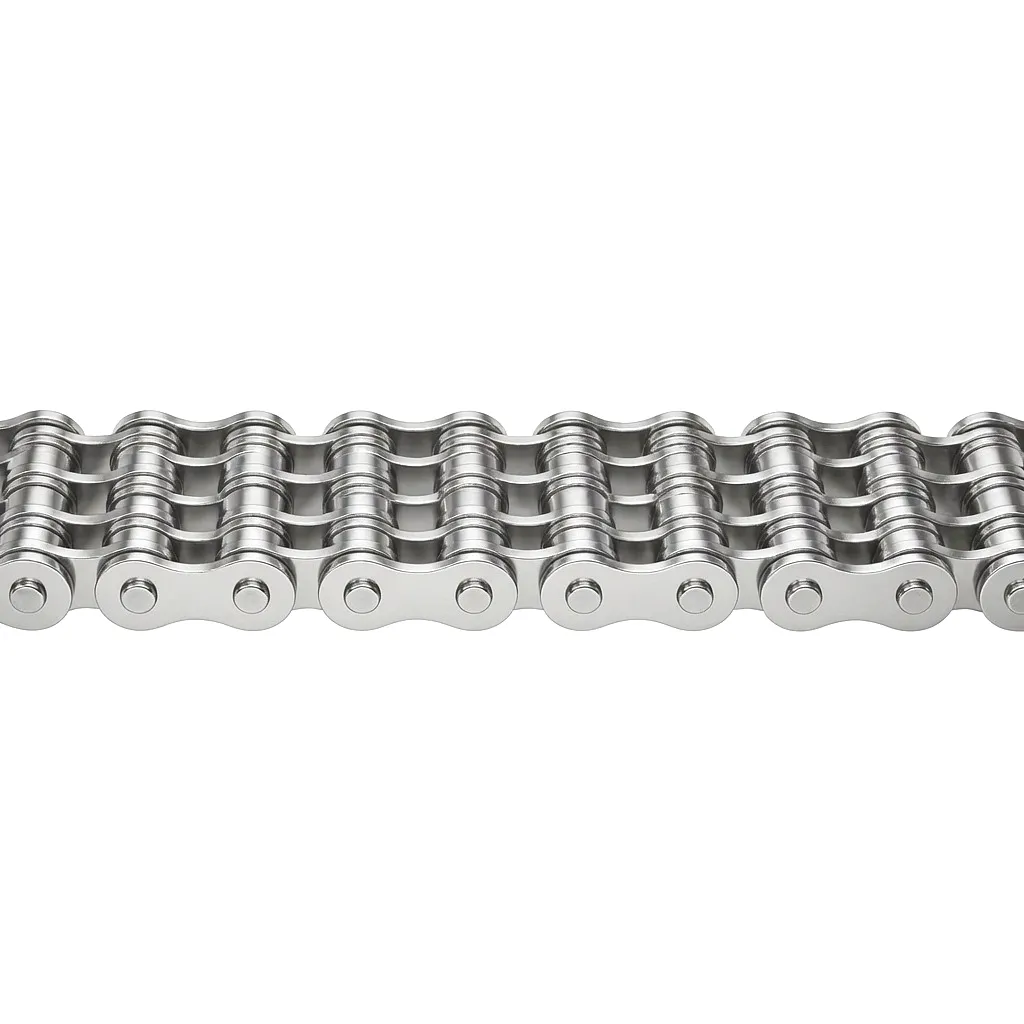
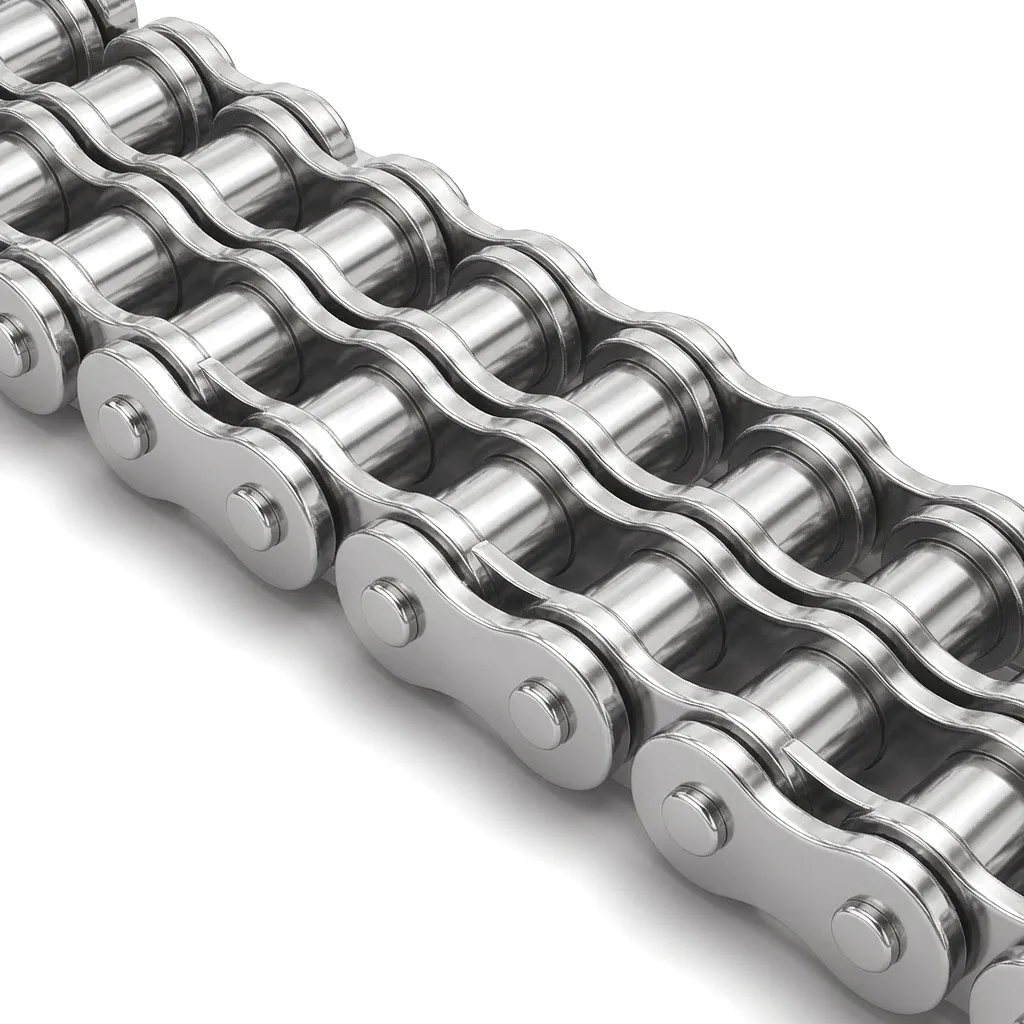
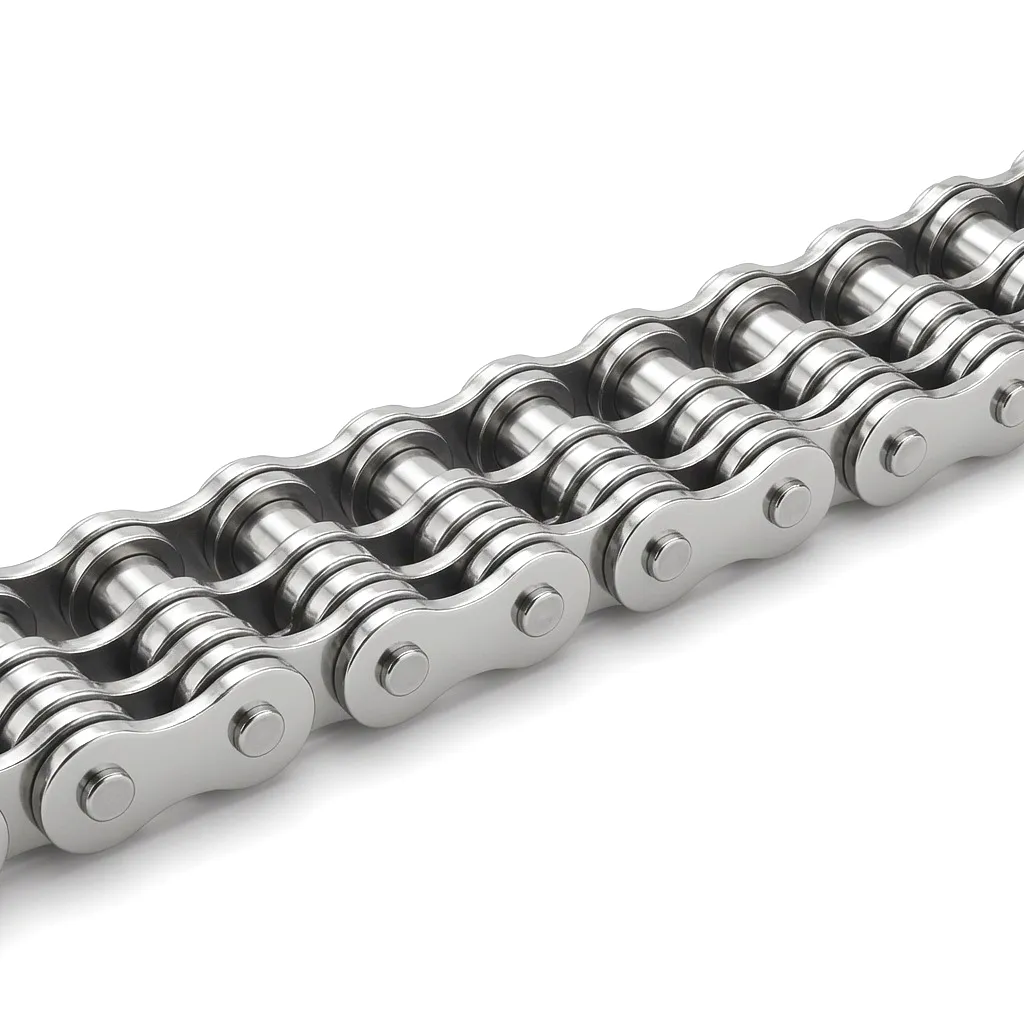
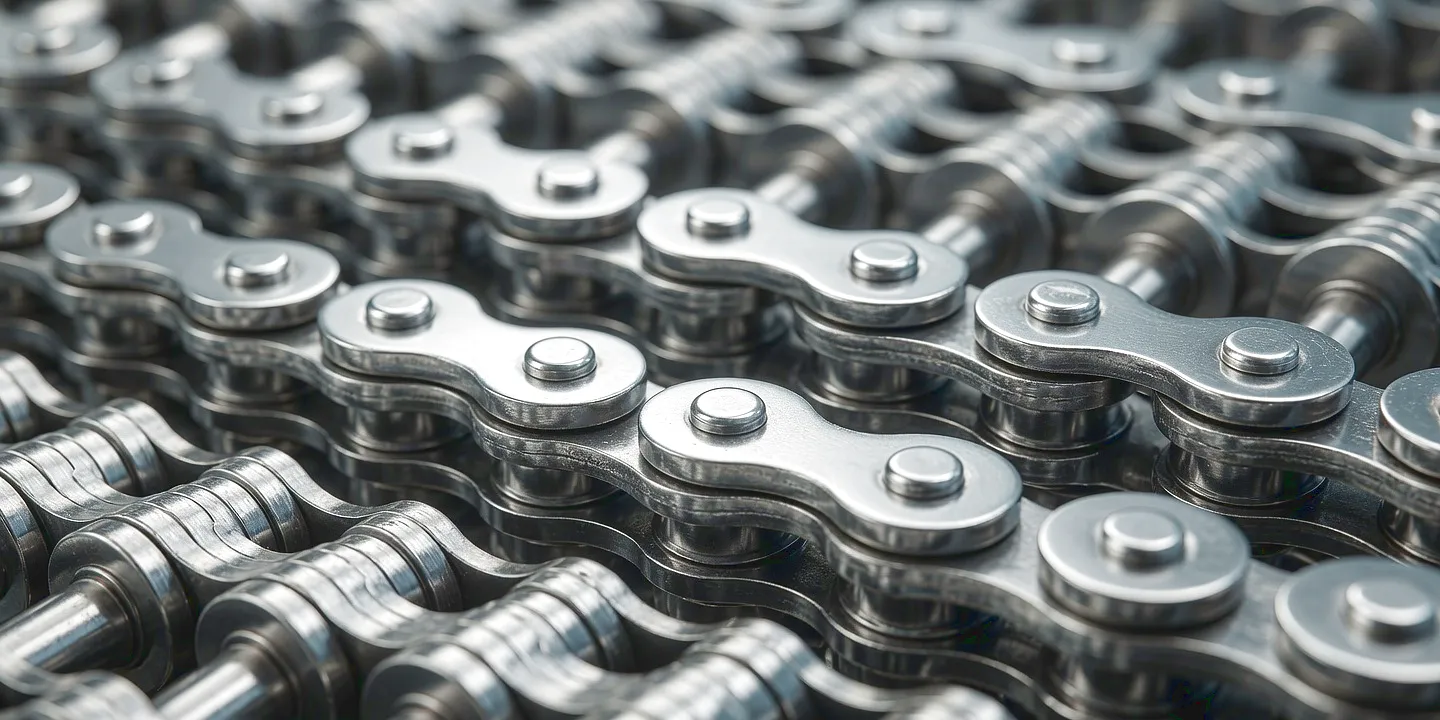
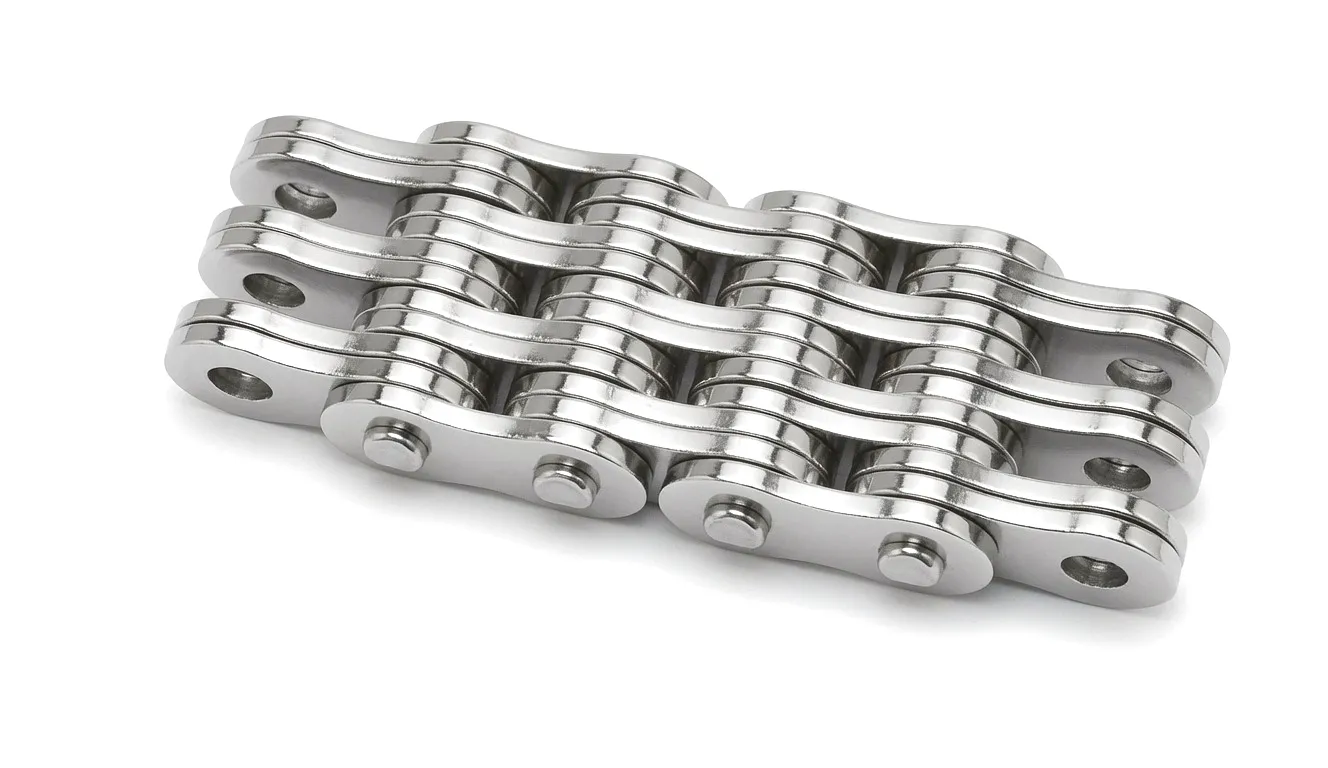
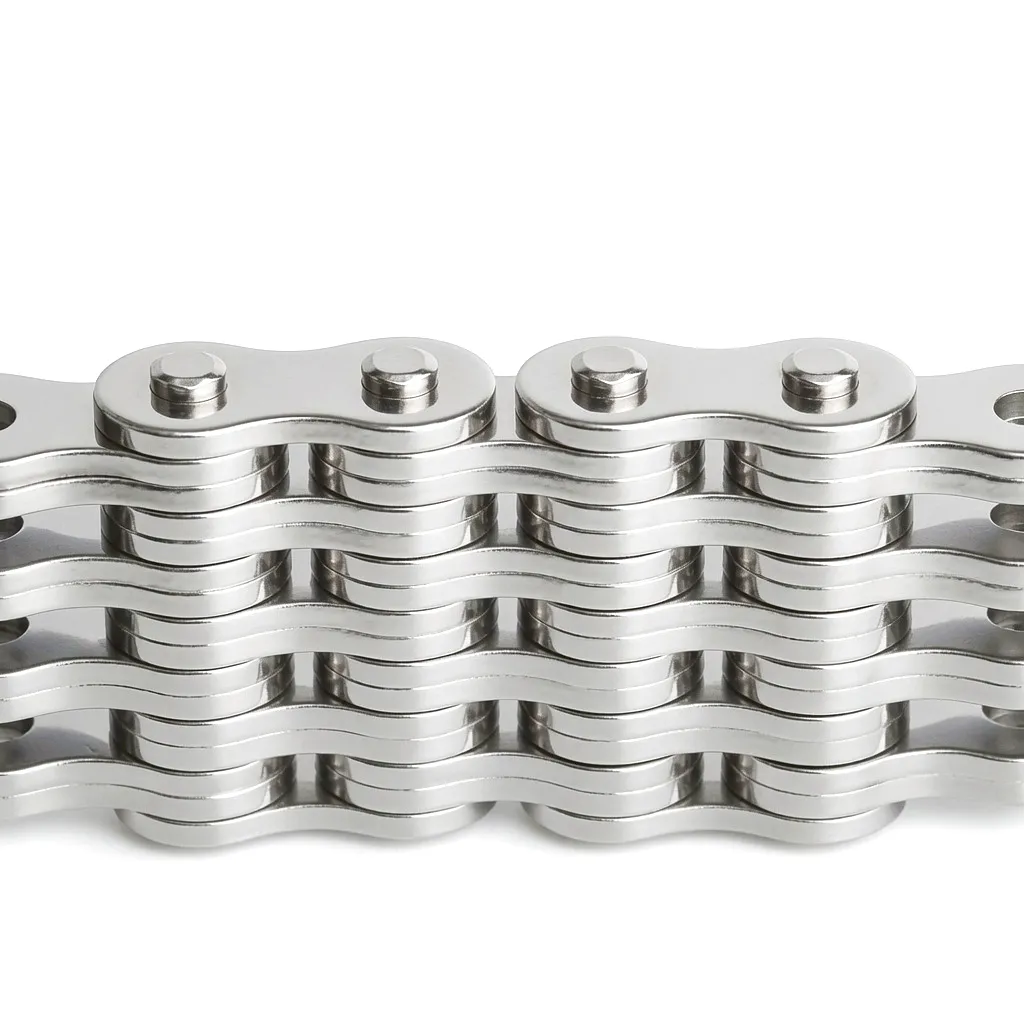
A leaf chain consists of multiple layers of flat link plates — called lacing — stacked and connected by hardened steel pins. There are no bushings, no rollers, and no sprocket engagement function. The entire design prioritises pure tensile load transfer along a straight path, which is exactly what cylinder rod end applications require.
ISO & ANSI Standardised Geometry
Leaf chains are manufactured to ISO 4347 and ANSI/ASME B29.8 standards, which define plate thickness, pin diameter, breaking load, and fatigue strength across the full BL and AL series. This standardisation means that a correctly specified Ever Power leaf chain is a drop-in replacement for OEM chains in Caterpillar, Komatsu, Volvo CE, and JCB excavators — without bespoke engineering on the customer’s side.
High-Carbon Alloy Steel Construction
Plates and pins are produced from high-carbon alloy steel, typically 40Cr or equivalent, heat-treated to achieve a surface hardness of 58–62 HRC on pins and 40–46 HRC on plates. This dual-hardness approach preserves pin wear resistance while keeping plates tough enough to resist brittle fracture — a critical balance in impact-load environments like bucket strikes and sudden crowd-cylinder reversals in excavator operations.
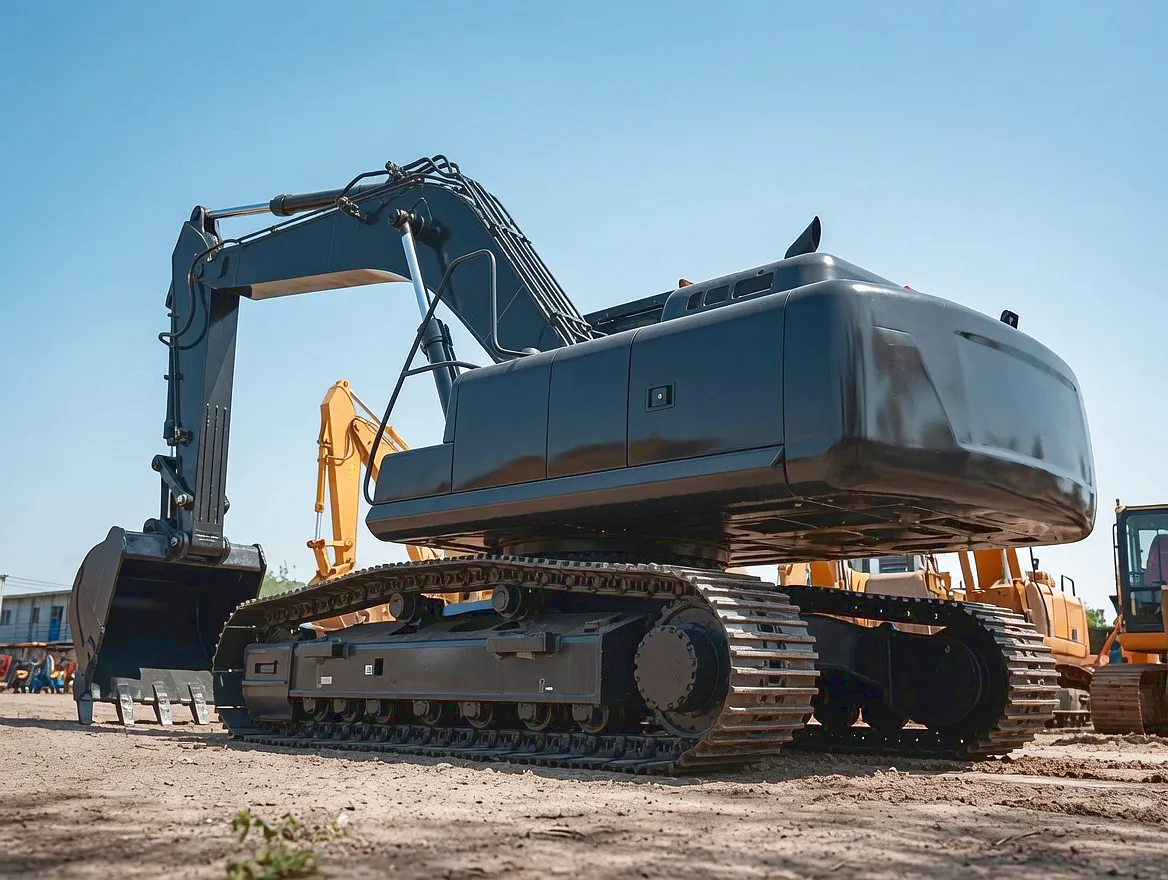 The key differentiator between a leaf chain and a conventional roller chain becomes obvious under load analysis. A roller chain’s hollow bushings and outer rollers are designed to engage sprocket teeth under rotary motion — they rely on lubrication between all moving interfaces. A leaf chain pin rotates only slightly within its plate holes during the small angular change of a cylinder clevis joint, meaning it generates far less frictional heat per cycle and retains its dimensional stability over a far longer service life when used in linear-load applications. For excavator applications specifically, where the chain may be mostly stationary under sustained hydraulic pressure but then subject to rapid shock loading when the bucket strikes a boulder or frozen ground layer, the leaf chain’s solid-plate construction with maximum metal cross-section for its pitch class cannot be matched by any roller chain product of equivalent weight.
Technical Performance Parameters
Ever Power leaf chain series — applicable to excavator boom, stick, and bucket cylinder systems
| Chain Series | Pitch (mm) | Lacing | Min. Breaking Load (kN) | Pin Diameter (mm) | Plate Thickness (mm) | Typical Excavator Class |
|---|---|---|---|---|---|---|
| BL 623 | 19.05 | 2×3 | 89 | 6.35 | 3.0 | 1–3 Tonne Mini |
| BL 634 | 19.05 | 3×4 | 156 | 6.35 | 4.0 | 3–6 Tonne Compact |
| BL 846 | 25.40 | 4×6 | 356 | 7.92 | 4.8 | 8–14 Tonne Mid |
| BL 1234 | 38.10 | 3×4 | 489 | 11.11 | 6.4 | 20–30 Tonne Large |
| BL 1646 | 50.80 | 4×6 | 890 | 15.88 | 9.5 | 40–70 Tonne Heavy |
| BL 2044 (Custom) | 63.50 | 4×4 | 1,120+ | 19.05 | 12.0 | 80–120 Tonne Mining |
All values are nominal minimums per ISO 4347. Custom lacing configurations and extended pitch variants available on request.
How Leaf Chain Functions Inside an Excavator’s Hydraulic System
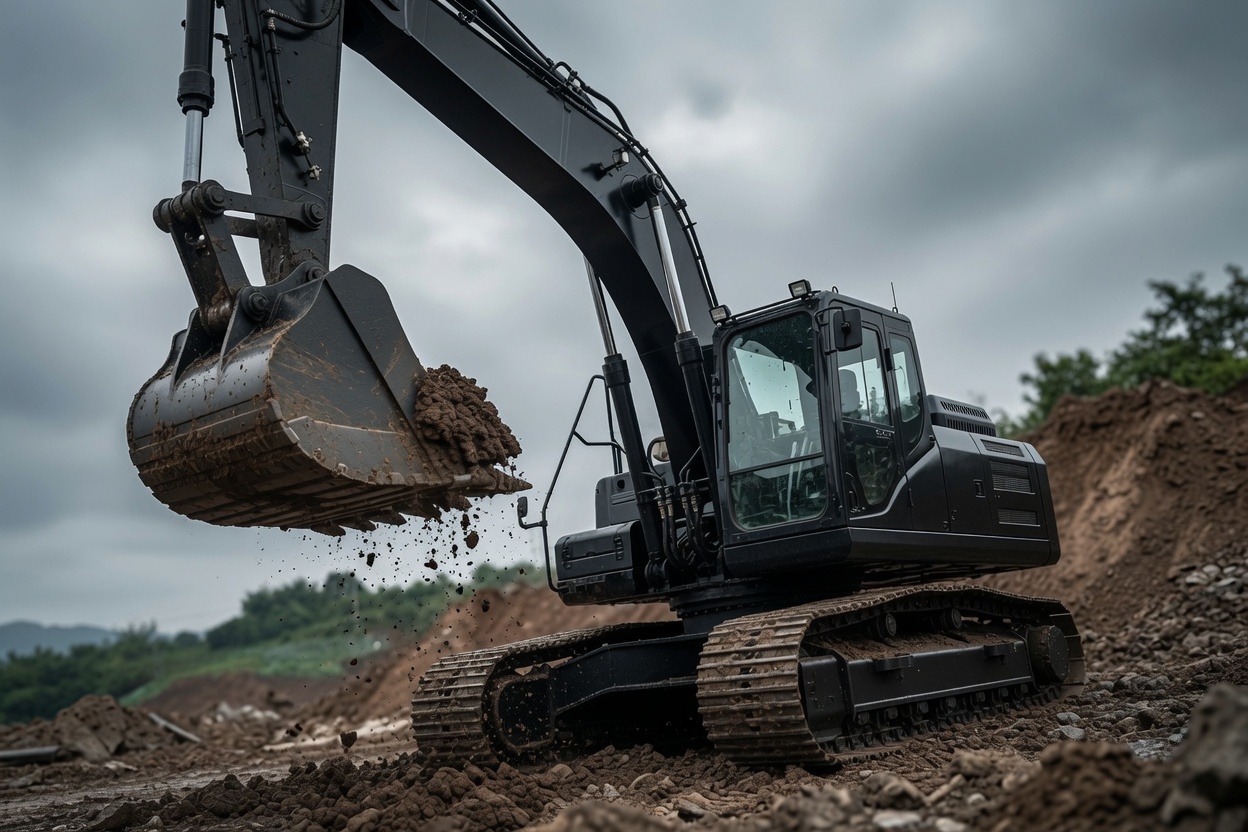 Inside a modern hydraulic excavator, leaf chains are most commonly found in two distinct mechanical roles. The more significant of the two is the boom suspension and counterbalance system on large crawler excavators, where a chain loop connects the boom cylinder rod end to the sheave block that manages load distribution across the slew ring assembly. In this position, the leaf chain carries a working load that is a direct function of the machine’s rated lifting capacity — on a 30-tonne excavator, that can mean sustained loads well above 120 kN with dynamic shock peaks reaching 200–250 kN during hard-ground penetration cycles.
The second application is within the stick (arm) cylinder linkage on certain OEM designs where a short leaf chain section absorbs the misalignment tolerance between the cylinder barrel and the arm pivot point. This is an elegant solution that eliminates the need for a purpose-built misalignment coupling while providing a service-replaceable wear element that gives a reliable indication of remaining service life through measurable elongation — typically 2% elongation signals imminent replacement per ISO 4347 guidance.
What makes this service-replacement model commercially attractive for UK plant hire companies and construction fleet managers is the predictability it introduces into maintenance scheduling. Rather than facing sudden, catastrophic cylinder rod failure — which in a large excavator can mean a £12,000 to £40,000 repair bill including hydraulic system flush and possible structural inspection — the operator simply monitors chain elongation through the cylinder inspection port using a simple chain gauge tool. When the 2% threshold is reached, a leaf chain replacement can typically be completed on-site in under four hours with standard hand tools, at a component cost that is a fraction of any cylinder rebuild. This is the kind of engineered predictability that health and safety managers on UK construction sites have come to expect as standard practice, and it is a strong selling point for any plant procurement manager evaluating long-term total cost of ownership.
The Role of Lubrication and Surface Treatment
 One area where Ever Power’s leaf chain engineering advances beyond standard catalogue offerings is in surface treatment technology. Standard leaf chains rely on conventional oil lubrication maintained through grease nipples in the cylinder clevis assembly. While effective when maintained properly, this system is vulnerable in the muddy, debris-rich environments typical of UK ground-works and civil engineering projects. Our enhanced-surface leaf chains feature a proprietary zinc-nickel alloy electroplating treatment applied after heat treatment, providing corrosion resistance equivalent to hot-dip galvanising in accelerated salt-spray testing (1,000 hours at 5% NaCl solution per ISO 9227) without the embrittlement risk that hot-dip processes introduce to high-hardness steel components.
For excavators operating in tidal or near-coastal environments — common in UK port construction, flood defence projects, and North Sea maintenance work — this corrosion protection can double the effective service interval between leaf chain inspections while maintaining full tensile performance, making the slightly higher initial investment clearly worthwhile on any lifecycle cost analysis.
Why Ever Power Leaf Chain Outperforms the Competition
Superior Fatigue Life
Fatigue testing to ISO 4347 Annex B demonstrates a minimum 2 million load cycles at 33% of minimum breaking load — a benchmark that generic import chains rarely achieve on independent third-party verification. Our plates undergo controlled shot-peening after heat treatment to introduce compressive residual stresses that actively resist fatigue crack initiation.
Dimensional Precision
Pitch tolerance is held to ±0.05 mm across a full 12-pitch measuring span, ensuring that hydraulic cylinder travel calibration remains accurate throughout the chain’s service life. In excavator applications, this directly affects bucket positioning accuracy for tasks like grading, pipe laying, and trench profiling where millimetre-level precision matters commercially.
Wide Temperature Range
Standard steel grade performs from -30°C to +150°C without special precautions. For UK winter ground conditions — frozen chalk in the South Downs, permafrost-adjacent peat in the Scottish Highlands — this matters. The alloy grade maintains a Charpy impact toughness exceeding 45 J at -20°C, preventing the brittle cold-cracking failures that cheaper chains exhibit during first-dig strikes on winter mornings.
Drop-In OEM Compatibility
Full compliance with ISO 4347 and ANSI B29.8 means our chains fit directly into Caterpillar, Komatsu, Hitachi, Volvo CE, Doosan, and JCB excavator models without adaptation hardware. UK plant hire companies running mixed fleets can simplify their spare parts inventory to a smaller range of Ever Power leaf chains covering the majority of their equipment portfolio.
Fast UK Delivery & Stock
Standard BL series chains ship from our UK distribution partner within 2–3 business days. Custom configurations — non-standard lacing, extended pitch, special surface treatments, bespoke anchor plates, and adjustable end fittings — are manufactured on a 10–18 working day lead time with full quality documentation including material certification, hardness test reports, and proof load records.
Full Compliance Documentation
Every batch ships with EN 10204 3.1 material certificates, dimensional inspection reports, and breaking load test records. For UK lifting operations governed by LOLER 1998 and BS EN 818, having full chain traceability is not merely good practice — it is a regulatory requirement for any lifting accessory used on a construction site, and we make compliance straightforward.
Excavator Application Scenarios Across UK Industries
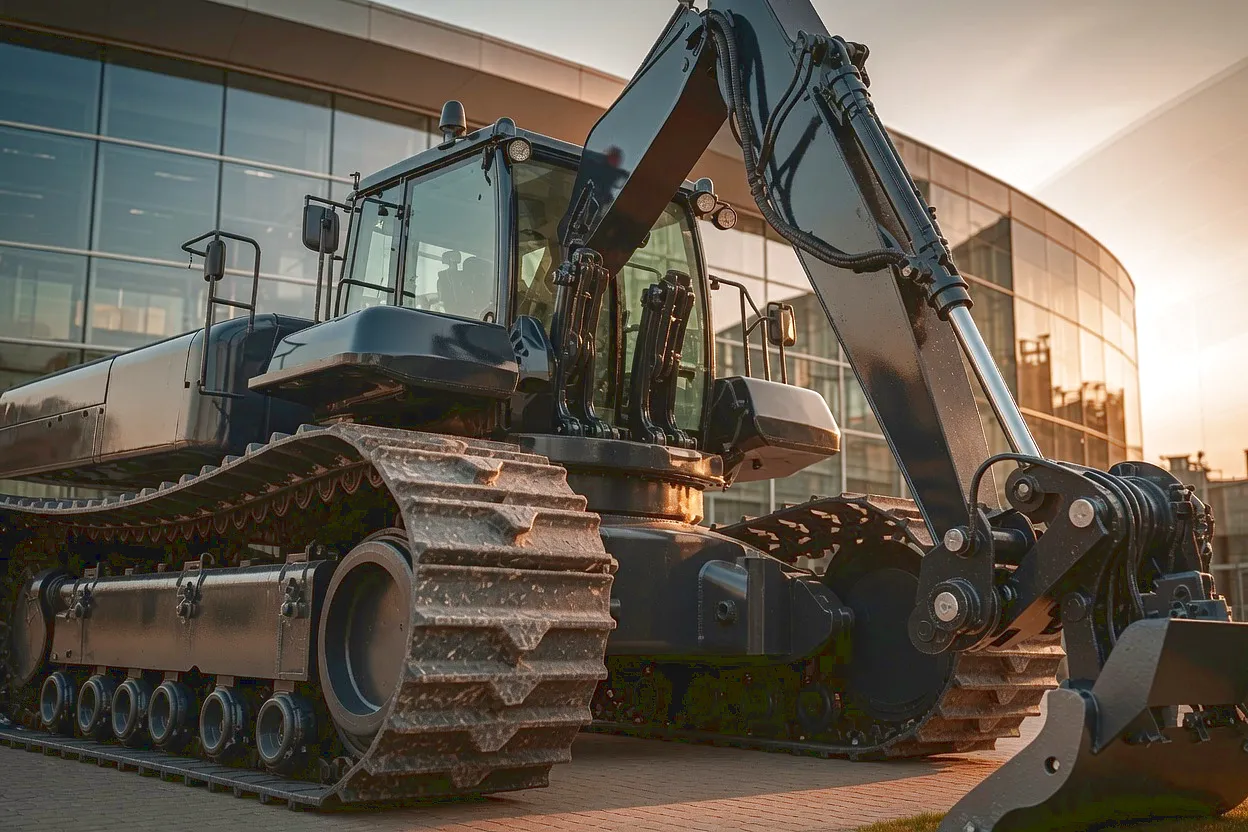
Quarrying & Surface Mining
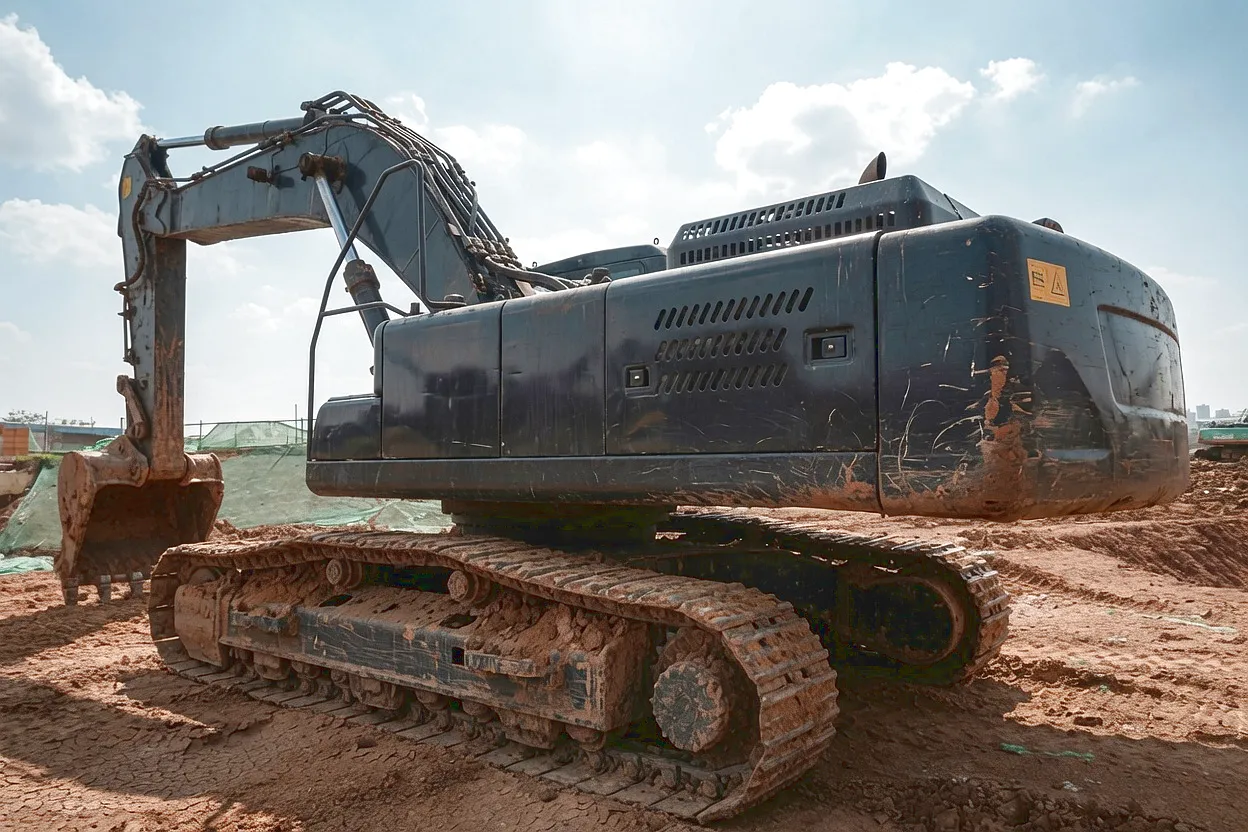
Quarrying operations in the Derbyshire limestone belt, the Mendips, and North Wales slate country use large excavators for face-loading duties where sustained boom loads from dense rock fragments push cylinder systems to their rated limits for extended periods. The combination of high static load and abrasive debris ingestion makes quarrying one of the most demanding leaf chain environments. We recommend a sealed anchor fitting kit alongside our standard BL 1234 or BL 1646 chains for quarry applications, providing an additional barrier to fine mineral dust ingestion at the pin-plate interface, measurably extending service life in gritty quarry environments.
Port, Marine & Coastal Construction
From the Forth estuary dredging contracts to sea-wall construction projects along the Kent coast and flood-defence earthworks on the Somerset Levels, excavators operating in marine and tidal environments face both the mechanical demands of heavy lifting and the chemical aggression of salt-laden atmospheres. Our zinc-nickel plated leaf chain series carries a 1,000-hour salt-spray test certification and is the correct specification for any excavator regularly operating within 500 metres of tidal water in the UK climate.
Waste Management & Landfill
Waste-handling excavators, including models fitted with orange-peel grabs and sorting grabs at UK materials recovery facilities, perform extremely high cycle counts — often exceeding 1,000 lift cycles per shift — in corrosive, wet, chemically complex environments. Our stainless-pin variant of the BL 846 series was specifically developed after field feedback from a large UK waste management operator whose standard chains were failing prematurely due to crevice corrosion at the pin-plate interface from leachate exposure.
Ever Power Leaf Chain — Product Range
Customer Success Case Study
Real results from real projects across the UK
Graham Construction Ltd, Yorkshire
Civil Infrastructure — A1(M) Motorway Widening Scheme, North Yorkshire
Graham Construction deployed a fleet of twelve 30-tonne Komatsu PC290 excavators on the A1(M) widening scheme between Wetherby and Walshford over an 18-month construction programme. Running double shifts through the Yorkshire winter of 2023–24, the machines encountered heavily compacted glacial till and carboniferous sandstone seams that put cylinder systems under sustained shock-loading well above normal civil dig cycles. After experiencing three premature failures of OEM replacement leaf chains from a different supplier — each requiring a full-day equipment shutdown and hydraulic flush — the fleet manager contacted Ever Power based on a recommendation from a Scottish plant hire company.
We supplied BL 1234 leaf chains with enhanced shot-peened plates and zinc-nickel pin treatment across all twelve machines. Over the remaining fourteen months of the programme, zero premature leaf chain failures were recorded. The fleet completed a combined 68,000 operating hours across the programme without unscheduled chain replacement. Full EN 10204 3.1 documentation provided to the main contractor for LOLER compliance records, accepted without query by the HSE-regulated site inspection team.
Zero
Unscheduled failures
68,000h
Combined fleet hours
12 Units
Komatsu PC290 fleet
Full LOLER
Compliance accepted
“We run 22 excavators across Scotland’s central belt on utilities contracts. Switched to Ever Power leaf chains two seasons ago and the difference in service intervals is dramatic. We’ve pushed scheduled chain replacements from 2,000 hours to 4,000 hours and not had a single unexpected failure. The certification pack they provide is exactly what our HSE team needs.”
— D. McCallum, Plant Manager
Morrison Utilities Services, Glasgow
“We source leaf chains for a demolition fleet of Liebherr and Hitachi machines working in London. The shock loads from our shear attachments destroy standard chains. Ever Power’s enhanced fatigue treatment grade is the only product we’ve found that consistently reaches the service intervals we need. Lead times are reasonable and the support from their technical team is genuinely helpful.”
— S. Patel, Procurement Director
Erith Contractors Ltd, London & South East
“Our Welsh quarry operation runs Volvo EC380 excavators for face loading and secondary breaking work. The combination of high static loads and fine limestone dust was killing chains at 1,800–2,000 hours. Ever Power recommended their sealed anchor fitting kit alongside the BL 1234 series. We’re now consistently achieving 5,000-hour intervals. The cost saving per machine per year is material.”
— R. Hughes, Quarry Operations Manager
Hanson Aggregates, Mid Wales
Manufacturing Capability & Custom Engineering Services
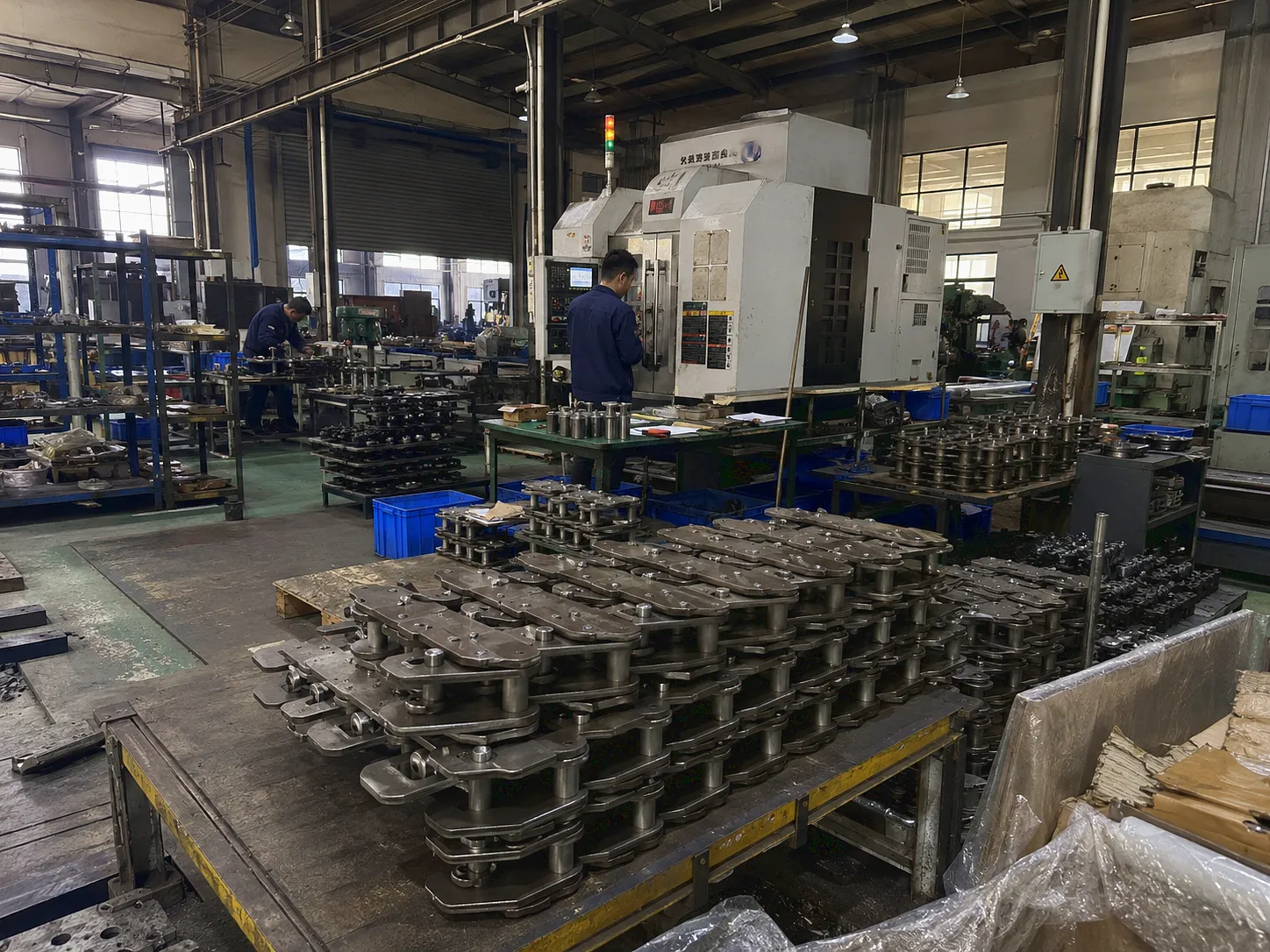
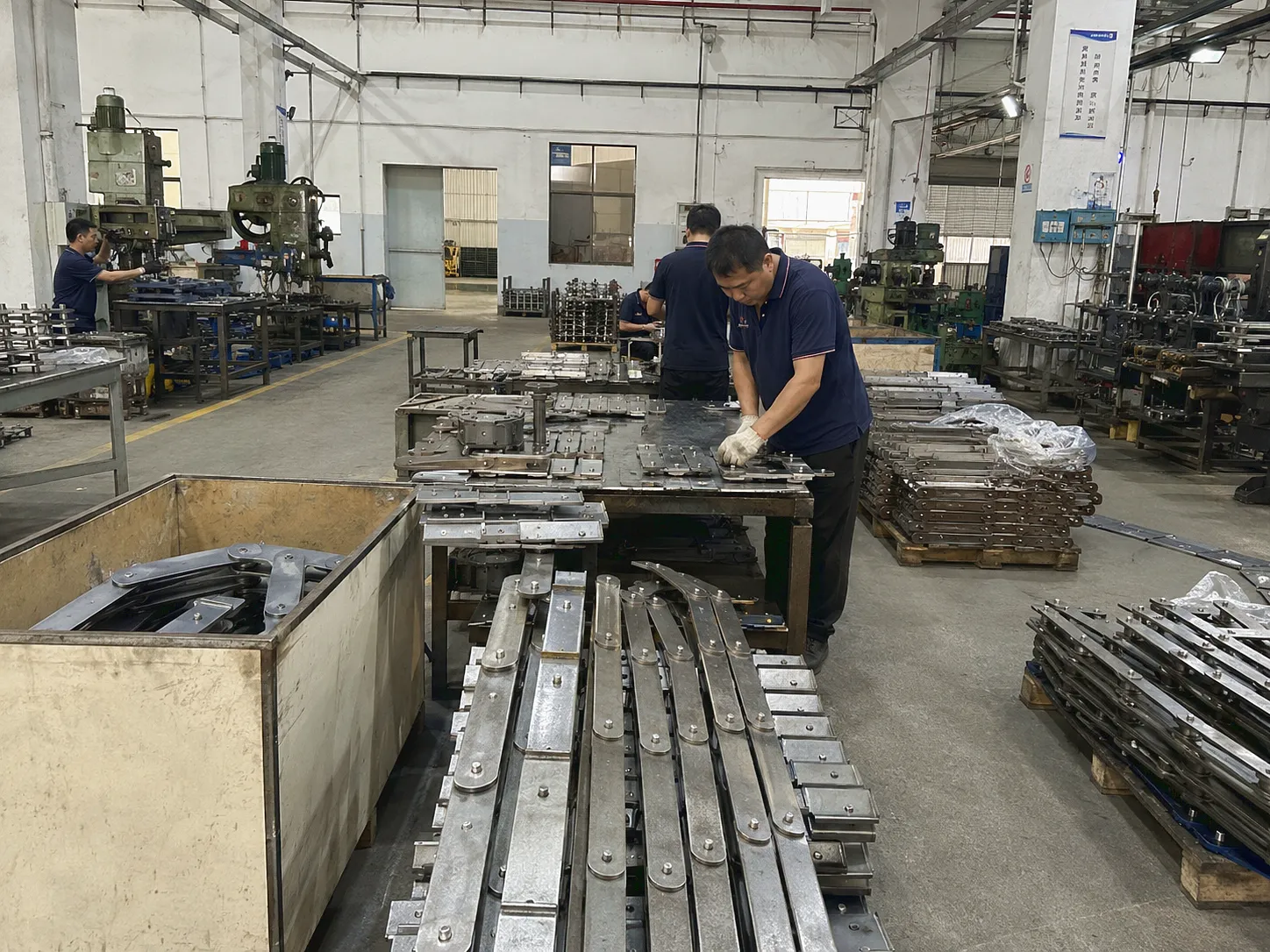 The Ever Power manufacturing facility operates on a closed-loop quality system that begins with incoming raw material verification and ends with 100% proof load testing of every finished chain length. Our production line incorporates CNC pin turning centres with tolerance control to ±0.005 mm, automated plate blanking lines producing consistent hole geometry across every plate in a production run, and a dedicated heat treatment zone with individually logged temperature profiles for each batch, ensuring hardness uniformity that manual batch processes simply cannot achieve.
What distinguishes Ever Power from catalogue-only chain distributors is our genuine custom engineering capability. Our applications engineers can work from a customer’s excavator maintenance manual, OEM spare parts drawing, or simply a worn chain sample to develop a bespoke replacement specification. Custom services available to UK buyers include: non-standard lacing configurations (2×3 through to 6×8 and beyond), special-length chains with anchor links at specified positions, tailor-made connecting pins with flanged or threaded ends, complete cylinder anchorage assemblies with clevis forks, and special surface treatment packages for specific environmental conditions.
For UK OEM excavator manufacturers and specialist attachment makers — companies developing novel excavator-based platforms for the growing autonomous and remote-operated machine sector — we also offer prototype and pre-production batch services with accelerated lead times and priority quality reporting, supporting the kind of intensive development cycle that modern equipment innovation demands.
Custom Specification Capabilities at a Glance
| Capability | Standard Range | Custom Maximum |
|---|---|---|
| Pitch (mm) | 12.70 – 50.80 | Up to 100.00 |
| Lacing Width | 2×2 – 4×6 | 6×8 or wider |
| Breaking Load | Up to 890 kN | 1,500+ kN |
| Surface Treatment | Zinc phosphate / Oil | Zn-Ni / Stainless pin / PTFE |
| Lead Time (custom) | 10–18 working days | 7 days (express) |
| Min Order (custom) | 5 metres | 1 piece (prototype) |

Leaf Chain vs Alternative Chain Types: Selection Guide for Excavator Engineers
Understanding why leaf chain is the correct selection for excavator cylinder applications
Maintenance & Inspection Guidance for UK Plant Managers
Leaf chains in excavator applications are categorised as lifting accessories under LOLER 1998 when used in certified lifting configurations, or as safety-critical components under the Provision and Use of Work Equipment Regulations 1998 (PUWER) in all other applications. Either way, UK operators have a legal obligation to carry out regular thorough examinations by a competent person, and to maintain records of these examinations. Ever Power supplies full technical documentation to support these obligations, but the inspection methodology itself requires understanding at the fleet management level.
🔴 REPLACE IMMEDIATELY
- Elongation exceeding 2% of nominal pitch length over 12 links
- Any visible cracking in plate or pin material
- Pin rotation visible during load cycle
- Corrosion pitting penetrating plate surface
- Any lateral bend in the chain assembly
🟡 MONITOR CLOSELY
- Elongation between 1.5% and 2.0%
- Rust staining without visible pitting
- Uneven wear pattern across lacing width
- Stiff links that do not flex freely under hand force
- Lubrication dry or contaminated with abrasive debris
🟢 SATISFACTORY
- Elongation below 1.5% of nominal pitch length
- Surface coating intact, no rust staining
- Uniform plate appearance across width
- Flexible articulation without stiffness
- Adequate lubrication visible at pin-plate interface
Inspection frequency guidance under LOLER recommends thorough examination at intervals not exceeding six months for lifting accessories in general use. For excavator leaf chains operating in heavy quarrying, demolition, or high-cycle waste-handling applications in the UK, our engineering team recommends a practical interval of 1,000 operating hours or six months — whichever comes sooner — with a pre-season full inspection when machines are returned to service after winter lay-up periods common in UK construction. All inspection records should note the chain batch number stamped on the anchor link for full traceability back to Ever Power manufacturing and test records.
Frequently Asked Questions
Common questions from UK plant engineers, procurement managers, and fleet operators
Ready to Specify the Right Leaf Chain for Your Excavator Fleet?
Talk to an Ever Power applications engineer today. Whether you need a catalogue replacement for a Caterpillar 320 or a bespoke chain for a custom demolition rig in Manchester, we have the manufacturing capability and technical depth to deliver a solution that works — backed by full UK-compliant documentation and genuine application experience.
Ever Power Chain Co. | Leaf Chain Specialists | UK & Global Supply | ISO 4347 Compliant | edit by gzl