
 Walk into any busy distribution centre in Birmingham, Bristol, or Glasgow, and the forklift trucks working those aisles have one thing in common: buried inside every mast assembly is a set of leaf chains quietly doing some of the hardest work in the building. These are not glamorous components. They sit in the upright channels, coated in grease, invisible to the operator — yet they carry the entire rated load every single time the forks rise. When a leaf chain fails, the forks drop. That is not a nuisance; it is a serious safety event and a costly operational shutdown.
For engineers and procurement managers sourcing replacement or OEM-spec leaf chains for forklift applications in the United Kingdom, the market can appear confusing. Multiple standards exist, chain pitch and lacing configurations vary widely, and the difference between an adequately specified chain and a correctly specified chain can mean thousands of pounds in unplanned downtime. This guide cuts through that complexity. Over the course of roughly 3,000 words, we examine exactly how leaf chains function within forklift mast systems, what material and manufacturing properties matter most, how to read technical data tables with confidence, and what to look for in a UK-accessible leaf chain supplier with genuine engineering capability.
“The leaf chain is the single most safety-critical moving component in a counterbalanced forklift. Getting the specification right is not optional — it is a legal and operational obligation.”
— Ever Power Senior Applications Engineer, 18+ years in industrial chain systems
What Is a Leaf Chain — and Why Is It Different from Other Industrial Chains?
A leaf chain is a type of link chain constructed entirely from flat plate links and connecting pins — there are no rollers and no bushings. This seemingly simple design difference is actually the reason leaf chains are specified almost universally for forklift mast systems rather than roller chains. Without rollers and bushings acting as stress concentrators under bending loads, the leaf chain distributes tensile force across the full width of multiple parallel link plates. The result is an extraordinarily high strength-to-weight ratio and remarkable resistance to the kind of dead-load tensile stress that a mast cylinder imposes on the chain assembly continuously throughout a working shift.
The lacing pattern — the arrangement of inner and outer link plates — determines the chain’s designation. AL-series chains (also sometimes called BL-series in some catalogues) use a specific number of plate pairs per link. A 4×4 lacing means four plates on each side, providing very high tensile strength in a relatively compact cross-section. The pitch, measured pin-centre to pin-centre, determines compatibility with the sheave diameter and the geometry of the mast anchor pockets. Selecting the wrong pitch is a common and costly mistake in the field; chains must be ordered to match the specific forklift model’s mast specification rather than simply swapped for a “close enough” alternative.
In the United Kingdom, leaf chain standards are governed primarily by ISO 4347, which aligns closely with the American National Standards Institute (ANSI) B29.8 specification. Most forklift OEMs operating in Britain — Toyota, Linde, Jungheinrich, Hyster, Crown, and others — specify chains to ISO 4347, making it straightforward to source ISO-conformant replacements. What varies between manufacturers is the quality of the steel, the precision of the heat treatment, the pin interference fit, and the surface finishing — all of which determine actual service life in a real warehouse environment.

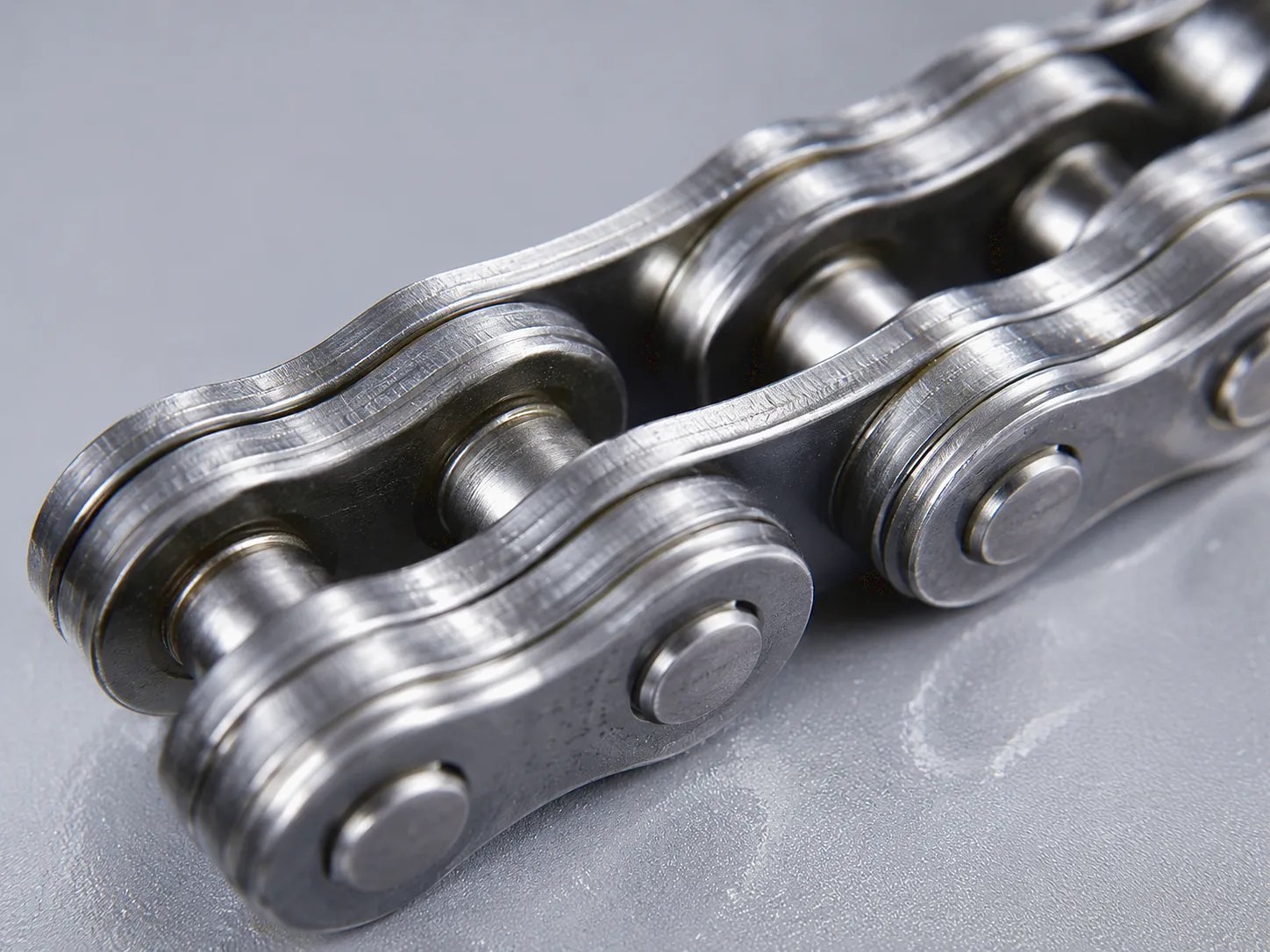
AL-series leaf chain showing precision plate lacing and hardened pins
How the Leaf Chain Functions Inside a Forklift Mast Assembly
The mast of a forklift truck is a deceptively complex mechanical system. In a triple-mast configuration — common in high-rack warehousing applications across the UK’s logistics sector — there are typically two free chains connecting the carriage to the inner mast section, and two lift chains connecting the outer mast to the inner mast through a sheave arrangement at the top of the upright. Each of these chains operates under a significantly different load profile, and each requires a chain that has been dimensioned accordingly.
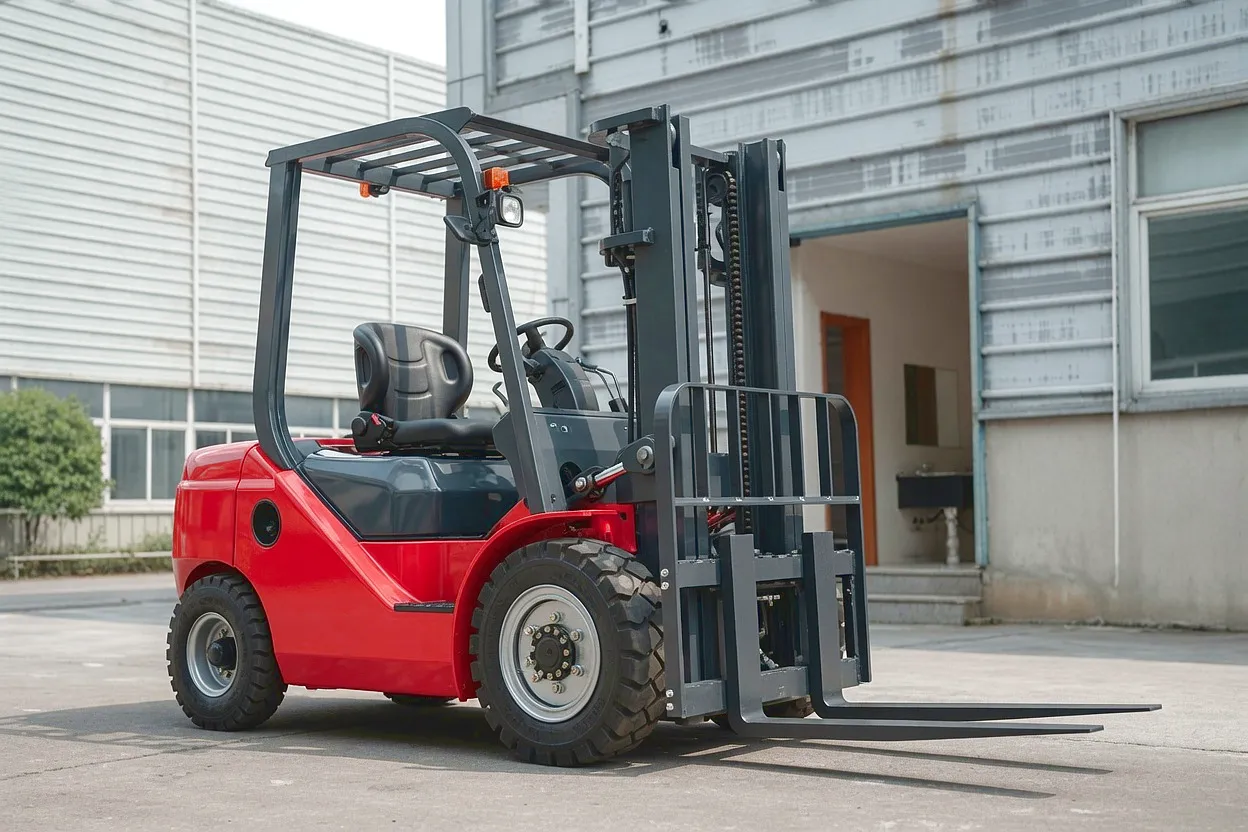
Leaf chain running through forklift mast sheave — the chain must flex cleanly around the sheave without binding
The fundamental mechanical principle is straightforward: when the lift cylinder extends, the chain — running over the sheave at the top of the mast — converts that vertical cylinder motion into carriage lift. The ratio of cylinder stroke to carriage travel is determined by the mast geometry and the number of chain passes. In a duplex mast, carriage travel is roughly twice the cylinder stroke. In a triplex free-lift mast of the type found in very narrow aisle (VNA) operations, the relationship is more complex, but the leaf chain remains central to it.
What makes this demanding from a chain engineering perspective is that the leaf chain must repeatedly flex around the sheave, which is typically quite small relative to the chain pitch, while carrying the full load weight. Every articulation cycle introduces fatigue stress at the pin-plate interface. Over time, pin wear elongates the chain — measured as a percentage increase in the nominal chain length. ISO 4347 and most forklift OEM service manuals specify a maximum elongation of 3% before the chain must be replaced. Beyond this threshold, the chain no longer seates correctly on the sheave, load distribution becomes uneven, and the risk of catastrophic link failure rises sharply.
Leaf Chain Technical Specifications for Forklift Applications
The table below covers the most commonly specified Ever Power leaf chain grades for forklift mast applications ranging from 1.5-tonne pedestrian stackers through to 10-tonne counterbalanced trucks and 16-tonne reach trucks used in distribution hubs across England, Scotland, and Wales. Tensile strength figures represent the minimum breaking load of a full chain assembly tested to ISO 4347, not individual link plate data.
| Chain Series | Pitch (mm) | Lacing | Min. Breaking Load (kN) | Pin Dia. (mm) | Plate Width (mm) | Typical Truck Class |
|---|---|---|---|---|---|---|
| AL622 | 19.05 | 2×2 | 62 | 9.52 | 12.0 | 1.5–2.5 t Stacker |
| AL844 | 25.40 | 4×4 | 187 | 14.27 | 28.4 | 3–5 t Counterbalanced |
| AL1022 | 31.75 | 2×2 | 125 | 19.05 | 19.5 | 5–7 t Heavy Duty |
| AL1044 | 31.75 | 4×4 | 222 | 19.05 | 35.0 | 7–10 t Counterbalanced |
| AL1266 | 38.10 | 6×6 | 412 | 22.23 | 52.5 | 12–16 t Port/Steelworks |
Data based on ISO 4347 standard chain grades. Custom specifications are available. All figures are minimum values; actual chain performance may exceed these. Contact Ever Power for application-specific recommendations.
Material Science and Manufacturing: What Separates a Good Leaf Chain from a Great One
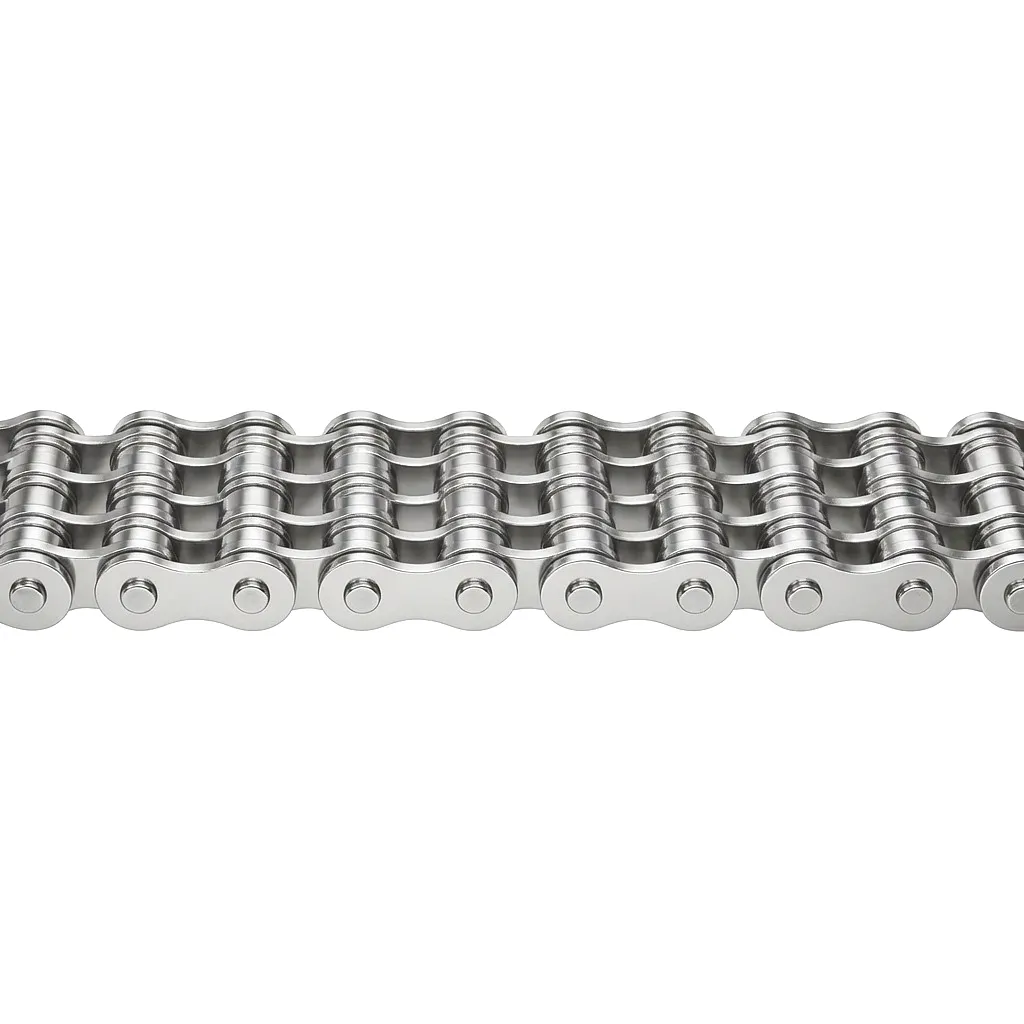
Precision-stamped alloy steel link plates before assembly
The steel grade used for link plates and pins is the single most consequential manufacturing decision in leaf chain production. Ever Power uses carburising-grade alloy steels such as 20MnCr5 and 16MnCr5 for link plates, and case-hardened carbon steel for pins — grades that allow the surface to be hardened to HRC 58–62 while maintaining a tough, ductile core. This combination is critical. A pin that is hard all the way through will resist wear well but fracture under shock loads. A core-ductile, surface-hard pin bends before it snaps, giving operators and engineers a visible warning before failure rather than a sudden catastrophic break.
Heat treatment must be tightly controlled. The carburising atmosphere, time at temperature, quench medium, and tempering cycle all affect the final hardness profile. Poorly controlled heat treatment produces inconsistent hardness from chain to chain and even link to link within a single chain — a problem that manifests as premature, unpredictable elongation in service. Ever Power’s heat treatment is conducted in computer-controlled batch furnaces with regular metallurgical QC sampling, verified against ISO 4347 requirements at each production stage.
Precision Pin-Hole Tolerances
Plate holes are punched and reamed to ±0.01 mm, ensuring consistent pin press-fit interference and eliminating play that leads to accelerated wear.
Controlled Carburising
Case depth of 0.5–1.0 mm on pins delivers optimal wear resistance without sacrificing core toughness under fatigue loading.
Corrosion-Resistant Finishes
Zinc-phosphate pre-treatment with oil impregnation as standard; hot-dip zinc plating and stainless alternatives available for cold-store and food-grade environments.
100% Proof-Load Testing
Every manufactured chain assembly is proof-loaded to verify integrity before despatch — not sampled statistically, but tested individually as standard practice.
Forklift Operating Environments Across the UK — and How They Change the Specification
The United Kingdom’s forklift fleet works across an exceptionally diverse range of environments, and this diversity has a direct bearing on leaf chain specification. A chain running in a chilled distribution facility outside Coventry faces challenges completely different from one fitted to a reach truck working a heated automotive parts warehouse near Sunderland, or a rough-terrain telehandler operating on a construction site in rural Scotland. Understanding these environment-specific stresses is essential when selecting the right leaf chain grade, lacing configuration, and surface treatment.
Cold-store operations — particularly the refrigerated distribution centres that serve major UK supermarket supply chains — subject leaf chains to temperatures as low as -30°C. At these temperatures, standard carbon steel loses a significant portion of its impact toughness, increasing susceptibility to brittle fracture. Ever Power’s cold-store-specified leaf chains use low-temperature impact-tested alloy steels with verified Charpy values at -40°C, combined with specialist low-temperature lubricants that do not congeal and deprive the chain of lubrication in cold conditions. This is not an optional upgrade for cold-store applications; it is an engineering requirement.
Port and steelworks environments — including facilities on Teesside, South Wales, and the Humber — present a different challenge: high ambient moisture, salt-laden air, chemical contamination from coatings and process fluids, and shock loading from uneven surfaces or over-loaded lifts. For these applications, heavier lacing configurations such as 6×6 or 8×8 provide reserve strength, and hot-dip zinc or electrolytic nickel plating options substantially extend the maintenance interval by resisting the corrosion that accelerates wear at pin-plate interfaces.

Environment Selector
Why Ever Power Leaf Chains Outperform Generic Alternatives in UK Forklift Fleets
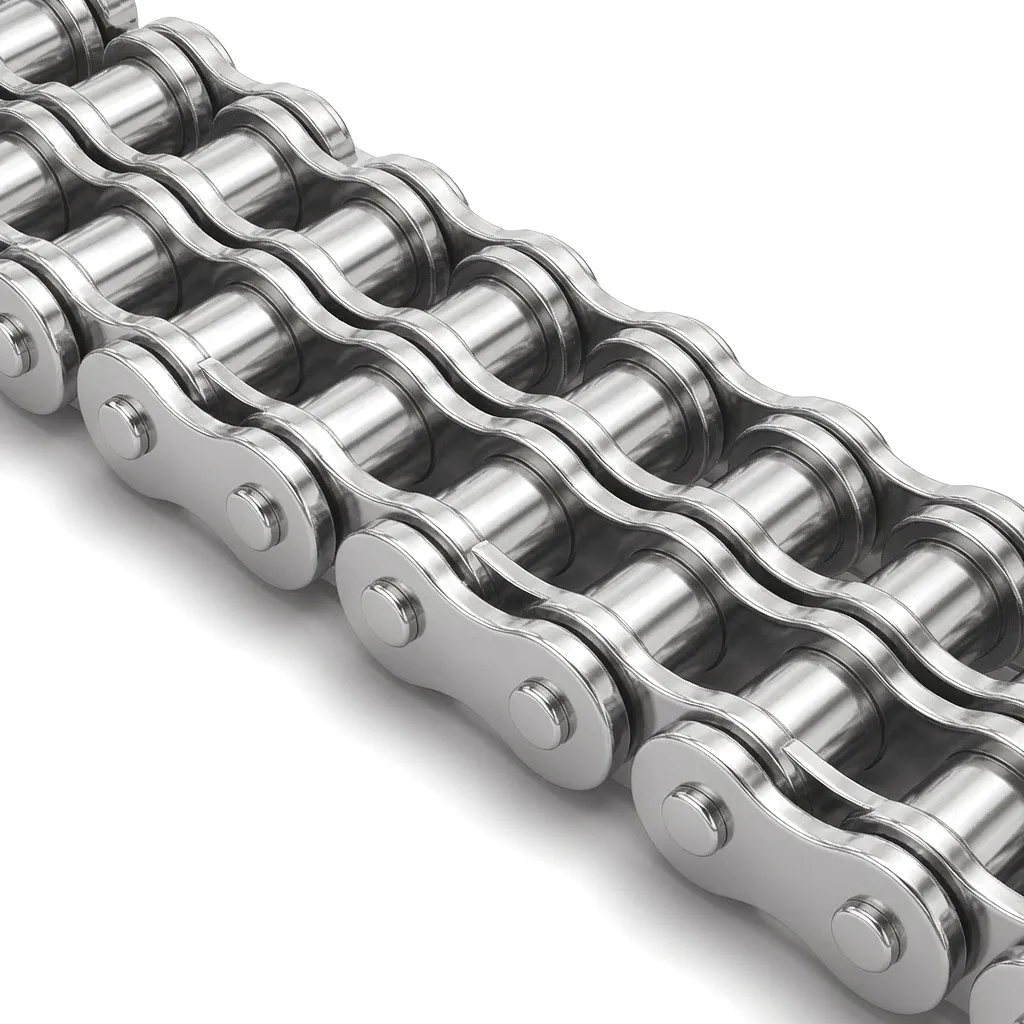
There is an enormous spread of quality among leaf chains available in the UK market. At the lower end sit mass-produced chains where dimensional conformance to ISO 4347 is met on paper, but the underlying steel chemistry, heat treatment consistency, and pin-hole tolerances fall short of what the standard actually demands in terms of real service life. The problem is not immediately apparent. A substandard chain will install correctly, pass a cursory visual inspection, and operate without complaint for several months — until elongation accelerates, sheave wear increases, and the maintenance engineer finds themselves ordering a replacement far sooner than the expected interval.
Ever Power’s leaf chains are made from alloy steel grades specifically selected for fatigue strength, not just tensile strength. Fatigue strength determines how many load cycles a chain will survive before a pin or plate crack initiates — and it is the true determinant of service life in a forklift that may perform 200+ lift cycles per hour over a two-shift day. By specifying higher carbon-equivalent alloy steels and rigorously controlling heat treatment, Ever Power chains consistently achieve two to three times the operational life of economy alternatives in monitored fleet trials, even when the initial purchase price is only 20–30% higher.
Extended Service Life
Independently verified to achieve 2–3× longer elongation intervals vs. budget alternatives. Fewer replacements, less downtime per truck per year across your fleet.
Full ISO 4347 Traceability
Mill certificates, heat treatment records, and dimensional inspection reports supplied as standard. Supports LOLER and PUWER compliance documentation requirements in UK facilities.
Custom Lengths and Configurations
Cut-to-length chain with pre-fitted anchor pins, clevis attachments, and special end terminations available. Minimum order quantities suit both fleet operators and independent service centres.
Fast UK Despatch
Popular sizes held in buffer stock for same-week despatch to UK addresses. Urgent replacement orders processed with priority scheduling from our European distribution partner.
Manufacturing Excellence & Bespoke Customisation Capability
Ever Power operates a purpose-built leaf chain production facility equipped with CNC stamping lines, automated heat treatment furnaces, and a calibrated tensile testing laboratory. But manufacturing capability alone does not distinguish us from a crowded market. What sets Ever Power apart is a genuine commitment to custom engineering — the ability to take a forklift application with non-standard requirements and develop a chain solution that no catalogue entry covers.
This is particularly valuable for UK customers managing ageing forklift fleets where the original OEM may no longer supply the exact chain specification, or for fleet operators who have modified or uprated their trucks beyond original rated capacity. Ever Power’s applications engineers work directly from mast drawings and load cycle data to specify appropriate chain grades, cross-sections, and end fittings — a process that typically requires no more than a week for standard customisations and three to four weeks for entirely bespoke designs with new tooling.
Customisation capability extends to surface treatments, lubrication pre-packs for specific operating environments, anti-corrosion coatings certified for food-contact environments, and special marking for maintenance tracking. For fleet managers running 50+ trucks, Ever Power can batch-code chains to individual machine numbers for lifecycle tracking — a service that supports planned preventative maintenance programmes and reduces the administrative burden of LOLER thorough examination records.
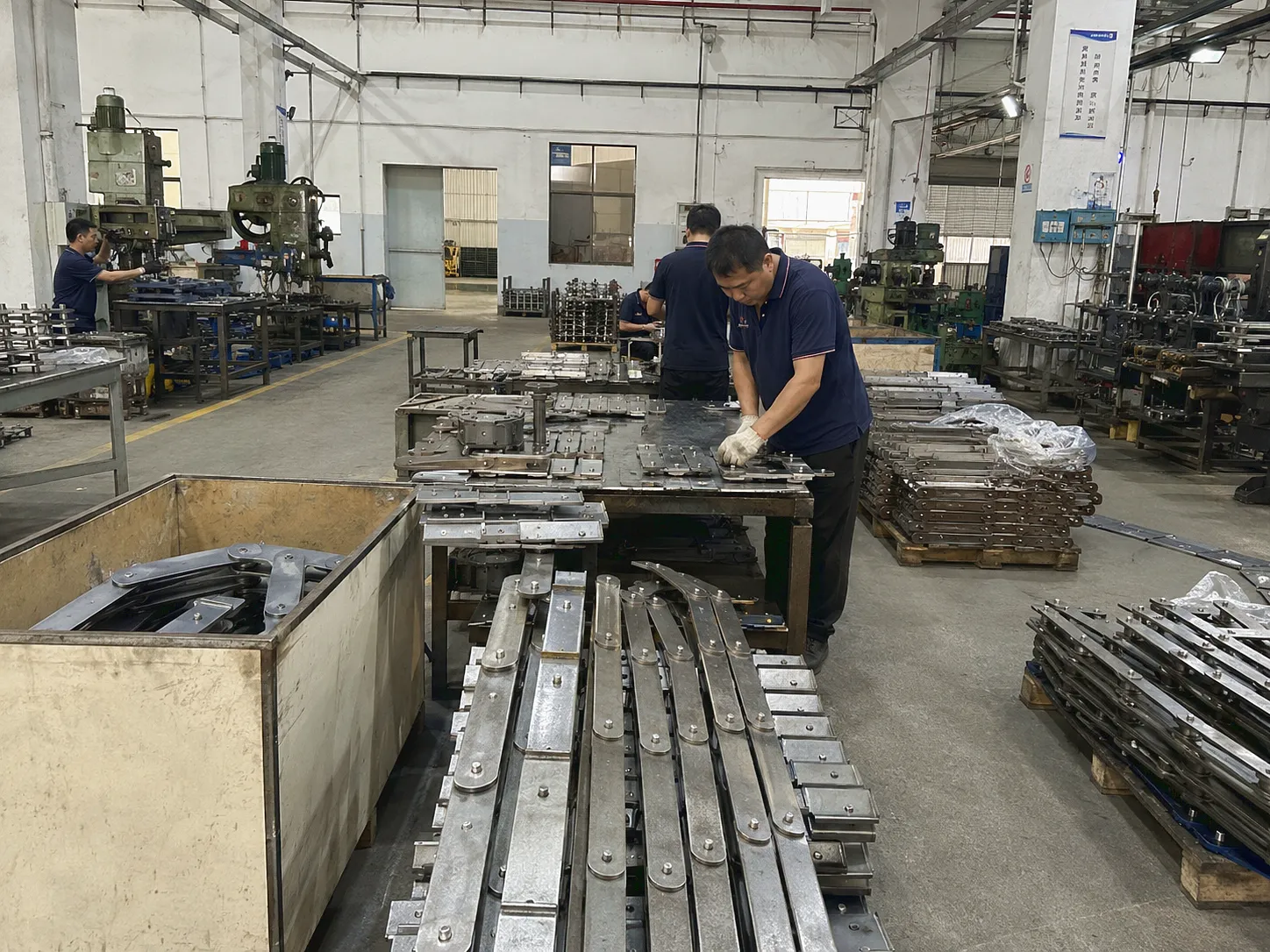
Ever Power’s chain assembly and inspection area — precision at scale
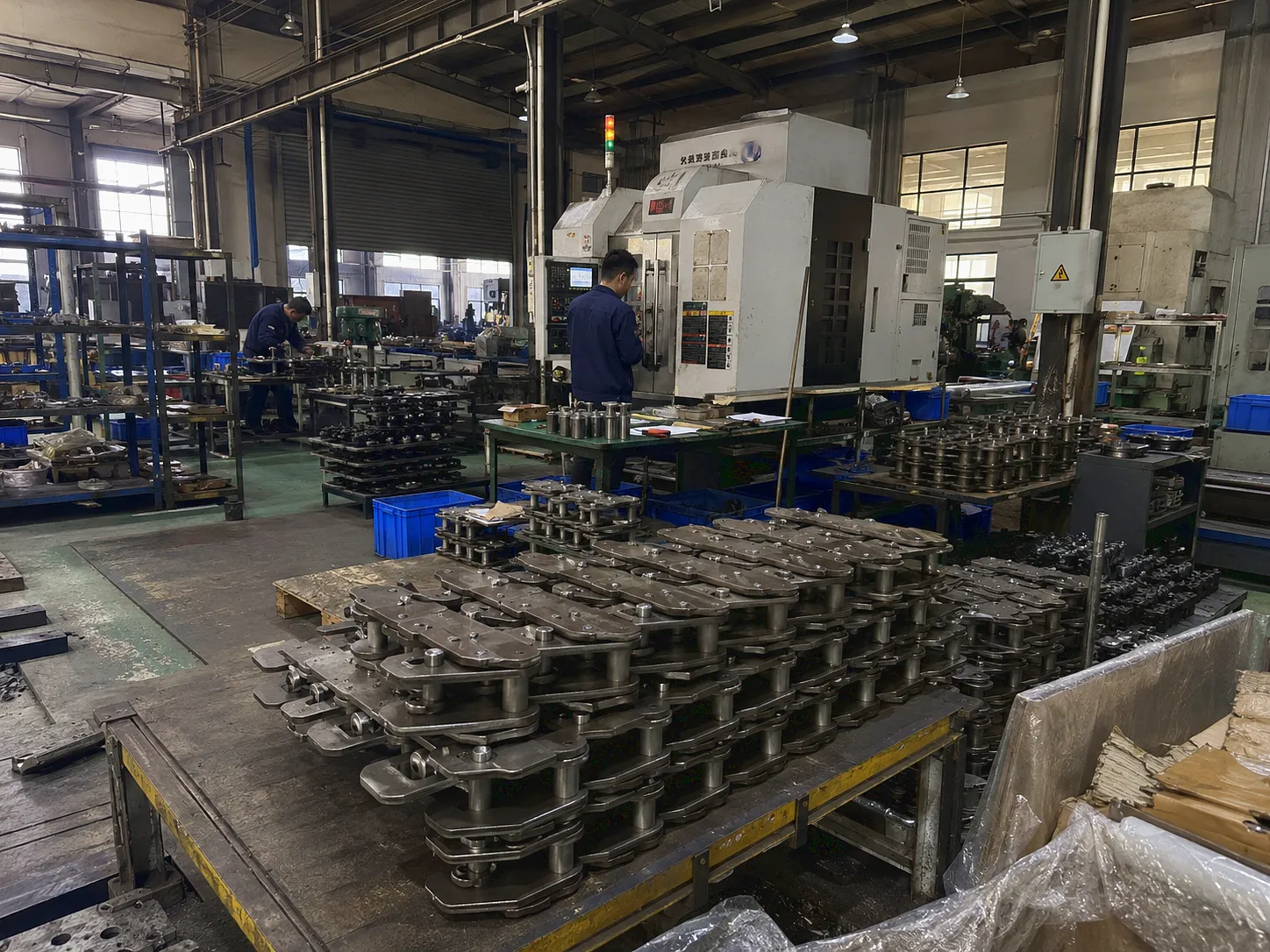
Chain tensile strength verification testing prior to despatch
Custom Chain Service: What We Can Do for You
Leaf Chain Application Scenarios: Forklift Truck Types Across UK Industries

Counterbalanced forklift in multi-shift logistics operation
Counterbalanced forklift trucks (1.5–10 tonnes) represent the largest segment of the UK forklift fleet, operating in general warehousing, retail distribution, manufacturing plants, and construction materials handling. These trucks typically require AL-series chains in 4×4 or 6×6 lacing for the 3-tonne-and-above capacity range, with chain lengths cut precisely to the mast specification. The high cycle rates in distribution — particularly in sites running FMCG operations with multiple shifts and continuous pick-and-pack activity — mean these chains may need inspection at 1,500-hour intervals rather than the 2,000-hour standard.
Reach trucks and very narrow aisle (VNA) trucks are found in high-bay warehousing facilities, particularly the 40m+ clear height racking systems becoming increasingly common in the UK’s logistics sector as land costs rise. These trucks operate in extremely tight aisles and require precise mast guidance — any chain elongation that introduces carriage sway becomes a safety and throughput issue rapidly. Reach truck chains are also subjected to high lateral loads during the reach function, adding to the fatigue demand. Ever Power recommends conservative safety factors of 6:1 or above for VNA applications and provides extended traceability documentation to support the thorough examination regimes these sites operate.
Heavy-duty counterbalanced trucks and large rough-terrain forklifts — operating in steelworks, ports, timber yards, and quarrying operations — require AL1266 or larger AL-series chains with fully heat-treated assemblies. In these applications, shock loading from rough surfaces or sudden load shifts can apply dynamic forces two to three times the static rated load to the chain, making adequate safety margin the most critical design parameter. Ever Power’s applications engineers calculate fatigue life for these applications using the ASME B30.1 approach, providing customers with a quantified service interval recommendation rather than a generic “inspect regularly” instruction.

Heavy-duty leaf chain assembly for large counterbalanced trucks in port and steelworks environments
Customer Success: Real Results from UK and European Operations
The following case describes a verified operational outcome with a European logistics customer. Customer name and precise volume figures are withheld under our standard supplier NDA, but the operational and financial metrics have been reviewed and confirmed.
Reducing Planned Maintenance Costs by 38% Across a 120-Truck Fleet
A major UK retail distribution operator in the East Midlands ran a fleet of 120 counterbalanced forklifts, predominantly Toyota 8-series 3.5-tonne trucks, across two sites serving a large supermarket chain’s frozen and ambient supply chain. Their previous leaf chain supplier was delivering chains that required replacement at an average 14-month interval — below the 18–24-month target the fleet manager had established based on the manufacturer’s expected service life.
After switching the ambient-warehouse trucks to Ever Power AL844 4×4 chains and specifying cold-store-rated AL844 LT-grade for the refrigerated facility, the fleet achieved an average replacement interval of 22 months — a 57% improvement over the previous supplier. Chain inspection failures (detecting elongation above 3% threshold) at interim checks dropped from 18% of chains inspected to 4%, dramatically reducing unplanned downtime events. Over a two-year monitoring period, the savings in labour, chain cost, and truck downtime were calculated at approximately £126,000 across the two sites.
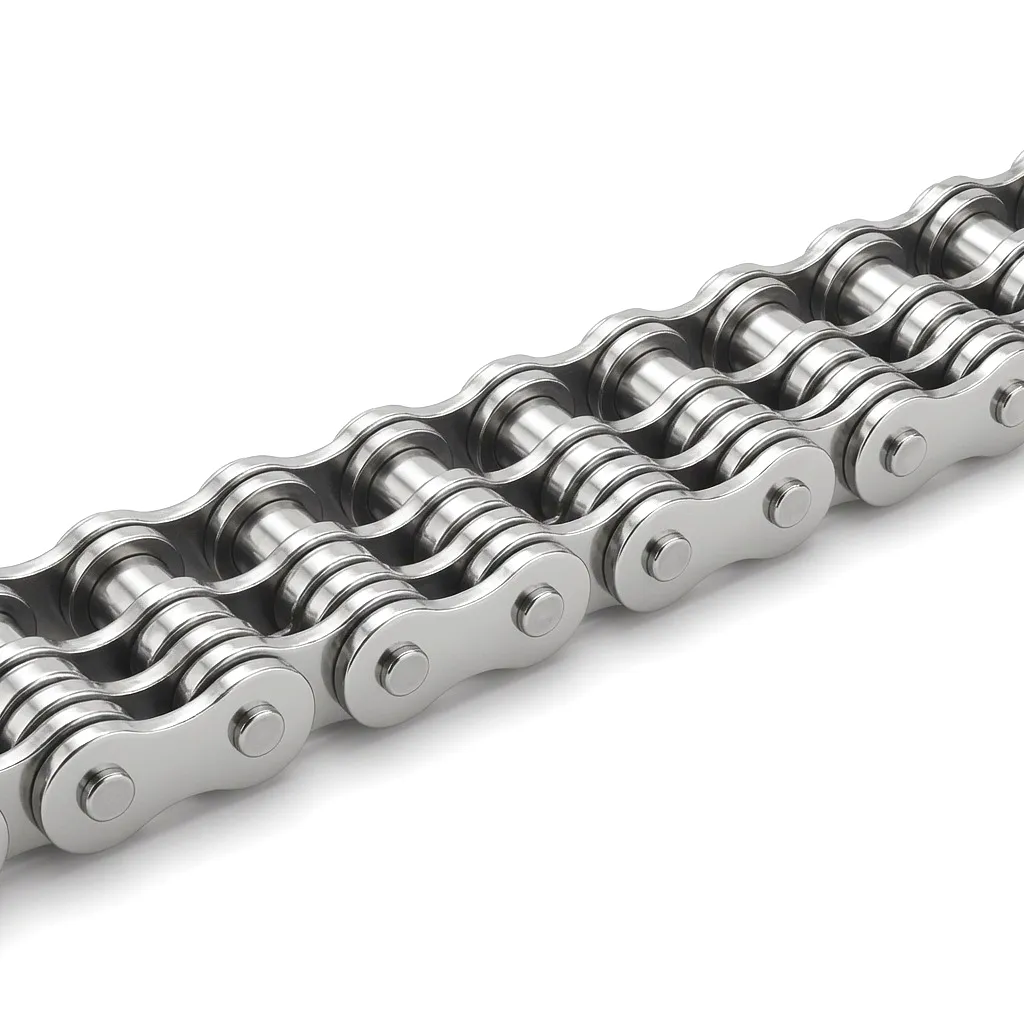
What Our Customers Say
“We manage a mixed fleet of 80 Linde and Jungheinrich trucks across three logistics sites. Ever Power’s AL844 chains have consistently outlasted anything we’ve used before. The documentation pack is a bonus for our LOLER records.”
“Running 14 reach trucks in a -22°C frozen food facility is challenging for any chain. Ever Power specified the right cold-temperature grade without us having to ask. No cracking, no unexpected elongation in 18 months of continuous operation.”
“Our port operation runs 8-tonne counterbalanced trucks in a heavily salt-laden environment near the Bristol Channel. The zinc-coated AL1044 chains have transformed our maintenance costs. We went from six-monthly replacements to annual inspection cycles.”
Maintenance, Inspection, and LOLER Compliance for UK Forklift Operators
The Lifting Operations and Lifting Equipment Regulations 1998 (LOLER) impose specific requirements on UK employers using forklift trucks. Under LOLER, every item of lifting equipment must undergo thorough examination at defined intervals — typically every six or twelve months for forklift masts, depending on whether the truck lifts people. The chains within the mast form part of this examination, and the examining engineer must assess both the visible condition and the elongation measurement against the OEM’s maximum permitted figure.
For fleet operators, this creates a documentation requirement: chains must be identifiable by specification and manufacture date, and replacement records must be retained. Ever Power supports LOLER compliance directly by supplying chains with batch-referenced documentation that includes the chain type, ISO standard, breaking load, and manufacturing date — all the information a LOLER examination report requires. Operators using unidentifiable or undocumented chains risk not just an HSE intervention but an inability to demonstrate compliance if a mast incident occurs.
The practical inspection guide is straightforward: measure chain elongation using a calibrated chain wear gauge over a 10-link span; check for corrosion, cracking, and pin rotation; inspect for tight links and verify lubrication is present across the chain’s working length. Any elongation above 3%, or visible cracking, requires immediate chain replacement — not monitoring, not greasing, not continued operation. The replacement interval is a safety boundary, not a cost optimisation point.
Frequently Asked Questions
Answers to the questions UK forklift fleet managers, maintenance engineers, and procurement teams ask us most often about leaf chain selection, pricing, and sourcing.
Ready to Upgrade Your Forklift Fleet’s Leaf Chains?
Ever Power’s engineering team is ready to review your fleet requirements, cross-reference OEM specifications, and provide a competitive quotation with full ISO 4347 documentation — typically within 24 hours of your enquiry.
Serving fleet operators, independent service engineers, and forklift dealers across England, Scotland, and Wales · ISO 4347 Certified · LOLER Documentation Included · edit by gzl