
 When an excavator swings its boom through a twelve-hour shift in a live construction trench, the mechanical components carrying those loads are under constant, cyclical stress. Among all the parts that could theoretically give way — hydraulic seals, pivot pins, boom cylinders — the leaf chain running through the boom hoist and counterbalance system is arguably the most safety-critical flexible element on the machine. A leaf chain failure on an excavator doesn’t just mean downtime. It can mean uncontrolled load drop, catastrophic structural damage, and, in the worst cases, serious injury to operators and ground workers nearby.
The UK’s construction and civil engineering sector operates some of the most demanding excavator fleets in Europe. From soft coastal ground in East Anglia to the hard granite of Scottish Highland quarries, British operators push their machines hard, often in wet, abrasive, or chemically aggressive environments. That’s why understanding how a purpose-engineered leaf chain for excavator applications performs under these real-world conditions matters far more than simply picking the cheapest replacement part off a catalogue.
This guide covers everything a fleet manager, procurement specialist, or senior plant engineer in the UK needs to know: the engineering principles behind leaf chain design, how to read performance specifications, material differences, correct selection criteria, and how Ever Power’s custom-manufactured leaf chains serve excavator OEM and aftermarket requirements with precision and confidence.
What Exactly Is a Leaf Chain — and Why Do Excavators Need One?
Engineering Fundamentals
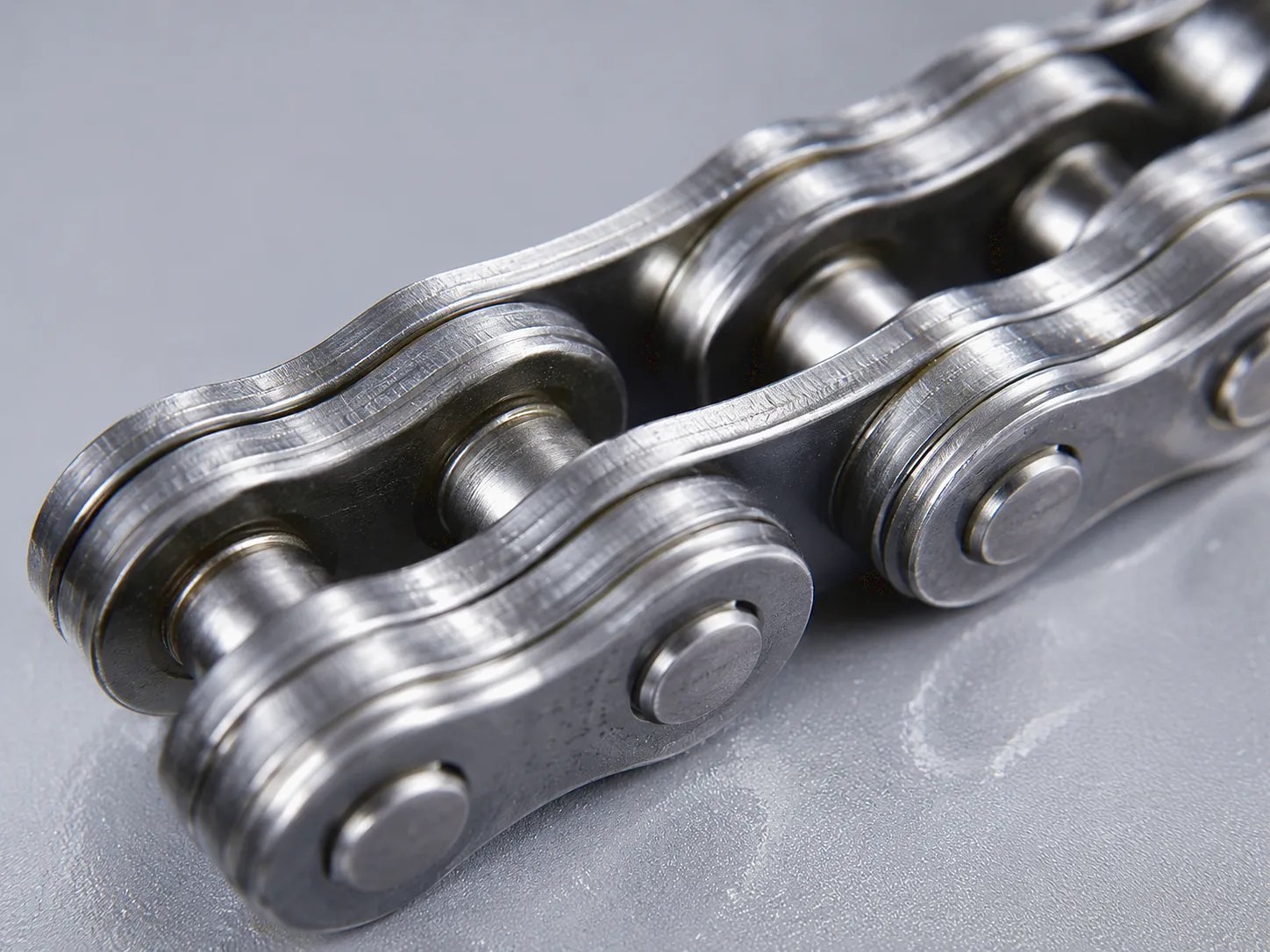
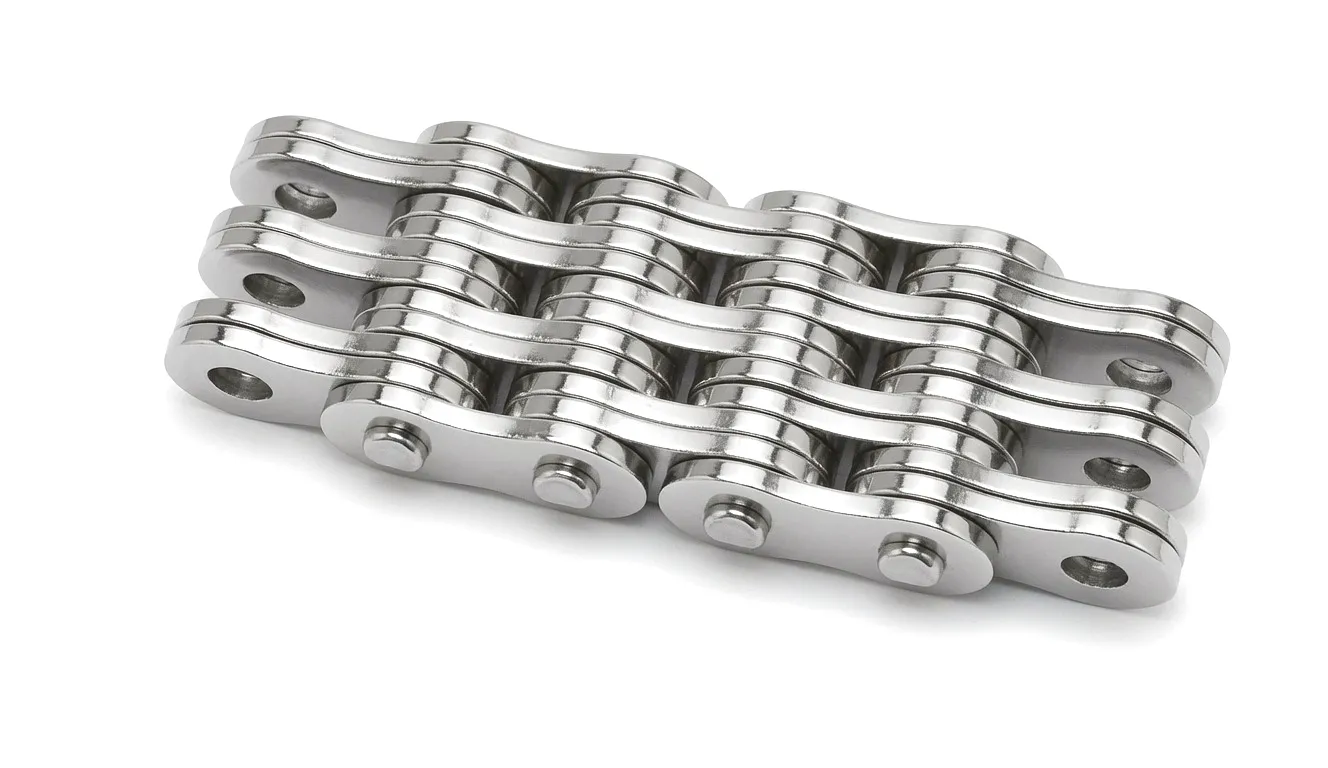
A leaf chain, also called a flat-link chain or lacing chain, is a form of roller-less drive chain constructed entirely from interlocked steel plates held together by precision-ground pins. Unlike roller chains — which are designed primarily for rotary sprocket power transmission — leaf chains are engineered specifically for tensile load-bearing in linear lifting, hoisting, and counterbalancing applications. They have no rollers, no bushes, and no sprocket engagement geometry. Their entire architecture is optimised for pure tensile strength and fatigue resistance across millions of load cycles.
In an excavator, the leaf chain appears most commonly in the boom hoist mechanism — the system that raises and lowers the dipper arm — and in any counterbalance or safety restraint circuit that must hold or control a hanging load. On certain mid-size excavator designs, leaf chains also feature in the bucket crowd mechanism and in attachment quick-coupler actuation systems. The critical common factor in all these locations is that the chain must resist high static loads, absorb shock impulses from digging impacts, and do so repetitively across a service life measured in thousands of operating hours.
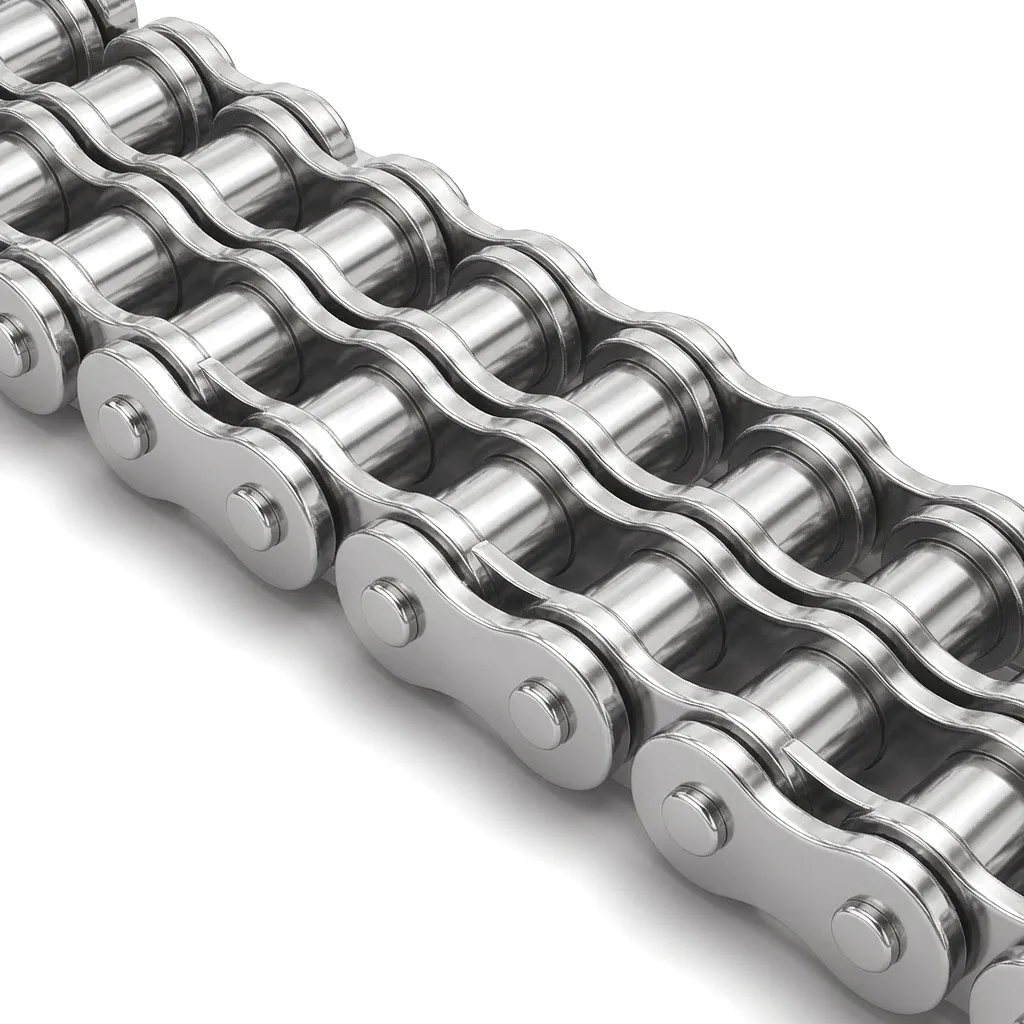
Rantai Ever Power Leaf — Galeri Produk
Manufactured to ISO 4347 · Available in AL and BL series · Custom fabrication welcomed

Technical Specifications: Leaf Chain for Excavator Applications
Performance Parameters
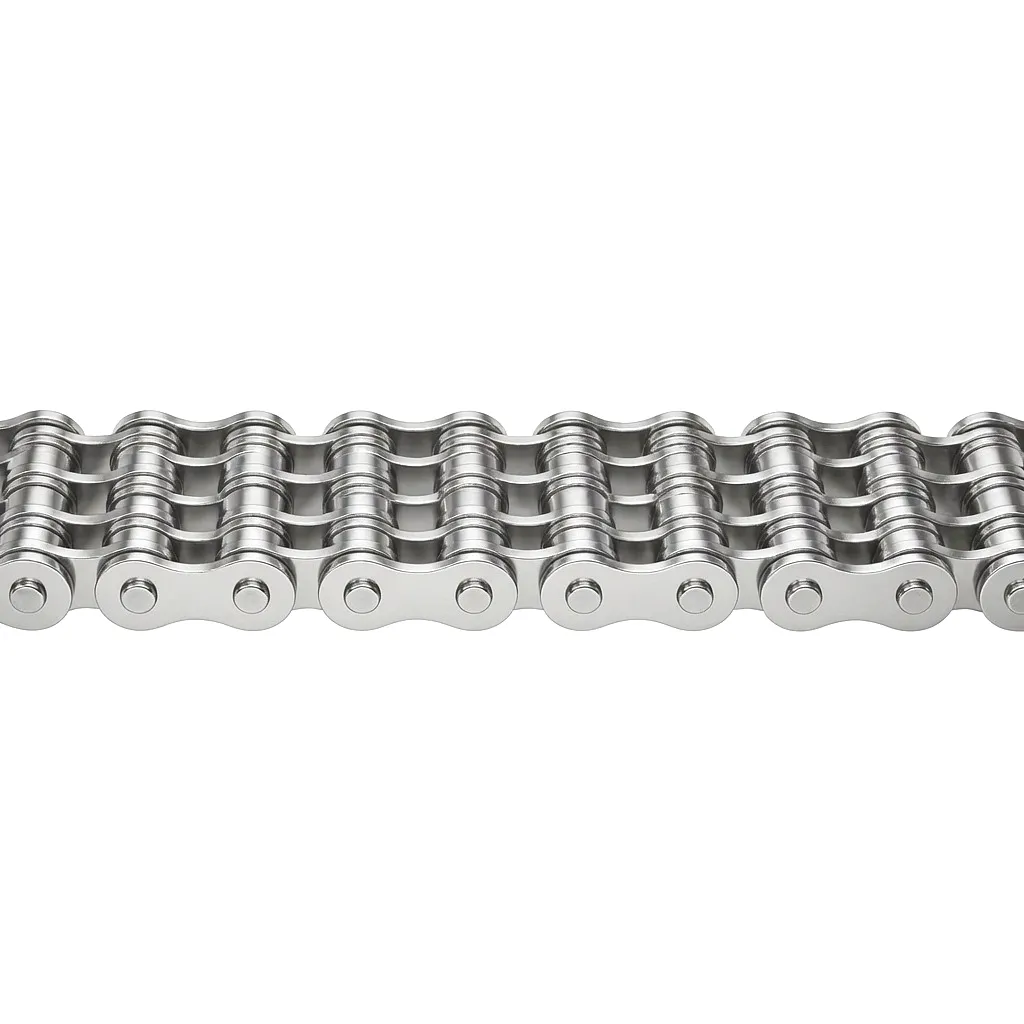
Selecting the correct leaf chain size for an excavator requires matching breaking load to the maximum working load of the hoist circuit, with a minimum safety factor of 5:1 for dynamic lifting applications. The table below covers the most commonly specified grades for excavator use, from compact 5-tonne machines to large mining-class excavators operating in UK quarries and construction projects.
| Chain Size | Hantaman | Pin Dia. (mm) | Inner Width (mm) | Breaking Load (kN) | Excavator Class | Plate Material |
|---|---|---|---|---|---|---|
| AL622 | 2×2 | 9.5 | 12.7 | 88 | Mini (1–3 t) | 45# Q&T Steel |
| BL623 | 3×3 | 9.5 | 19.0 | 130 | Compact (3–8 t) | 40Cr Alloy |
| BL834 | 4x4 | 12.7 | 25.4 | 320 | Standard (14–22 t) | 40CrMnTi Alloy |
| BL1046 | 6×6 | 15.9 | 38.1 | 640 | Large (30–45 t) | 40CrMnTi Alloy |
| BL1248 | 8×8 | 19.1 | 50.8 | 1120 | Mining (50–90 t) | Custom Alloy Grade |
Values shown are nominal. Always consult machine OEM documentation and apply applicable safety factors. Custom specifications available on request.
Where Leaf Chain Works Inside an Excavator: Application Zones
Real-World Application Mapping
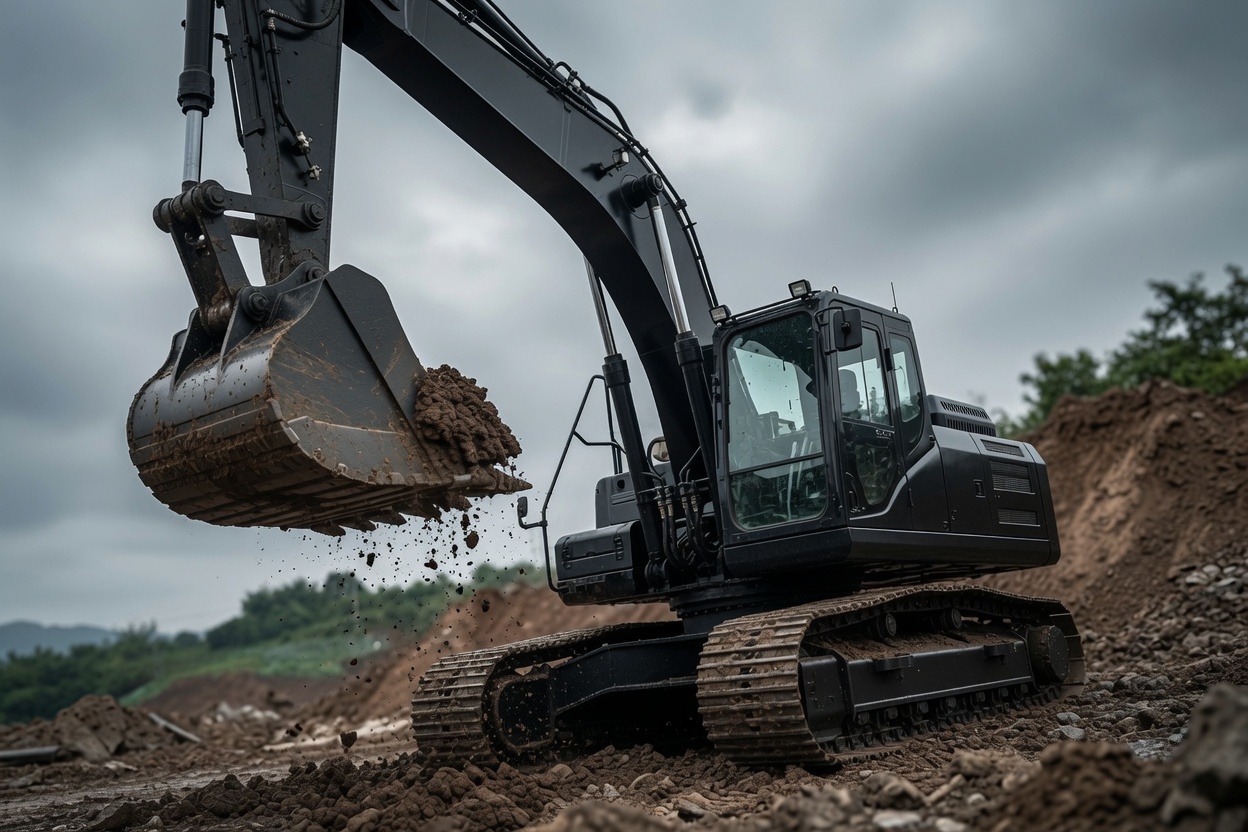
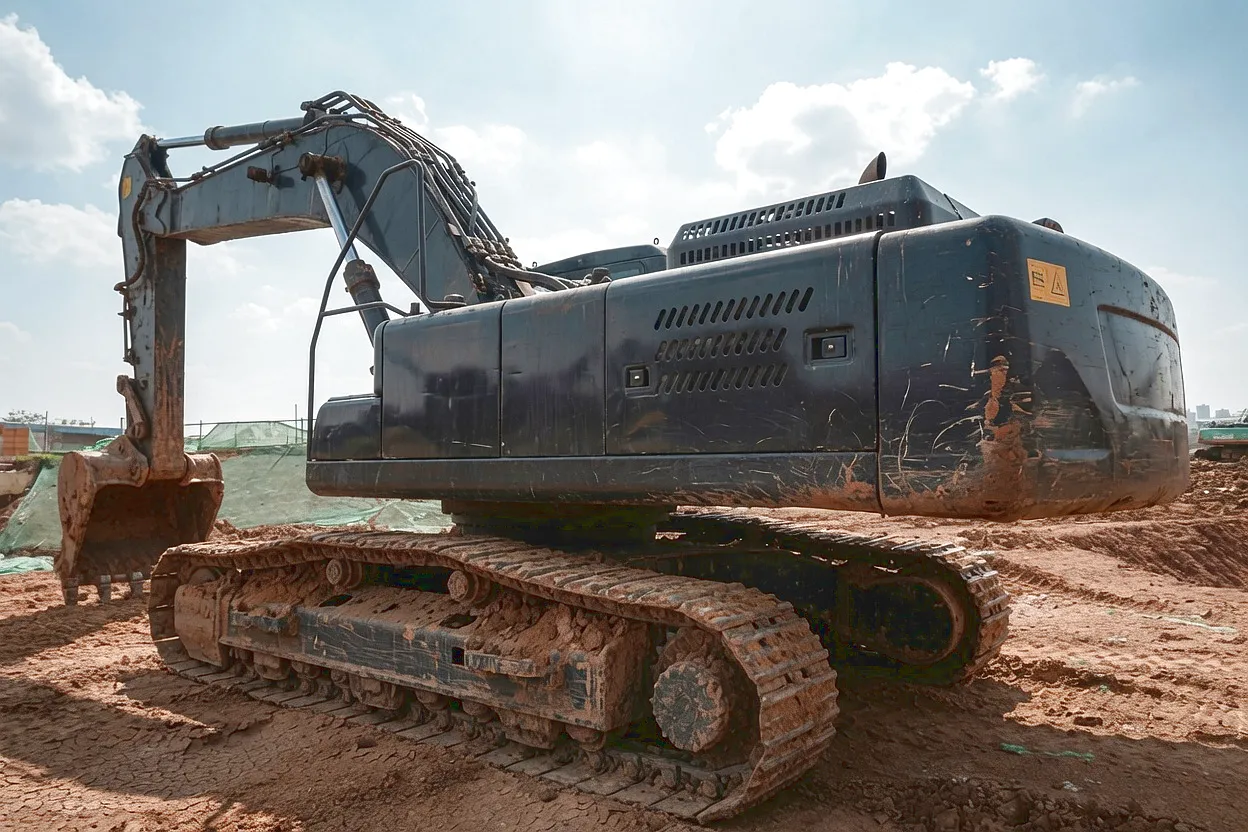
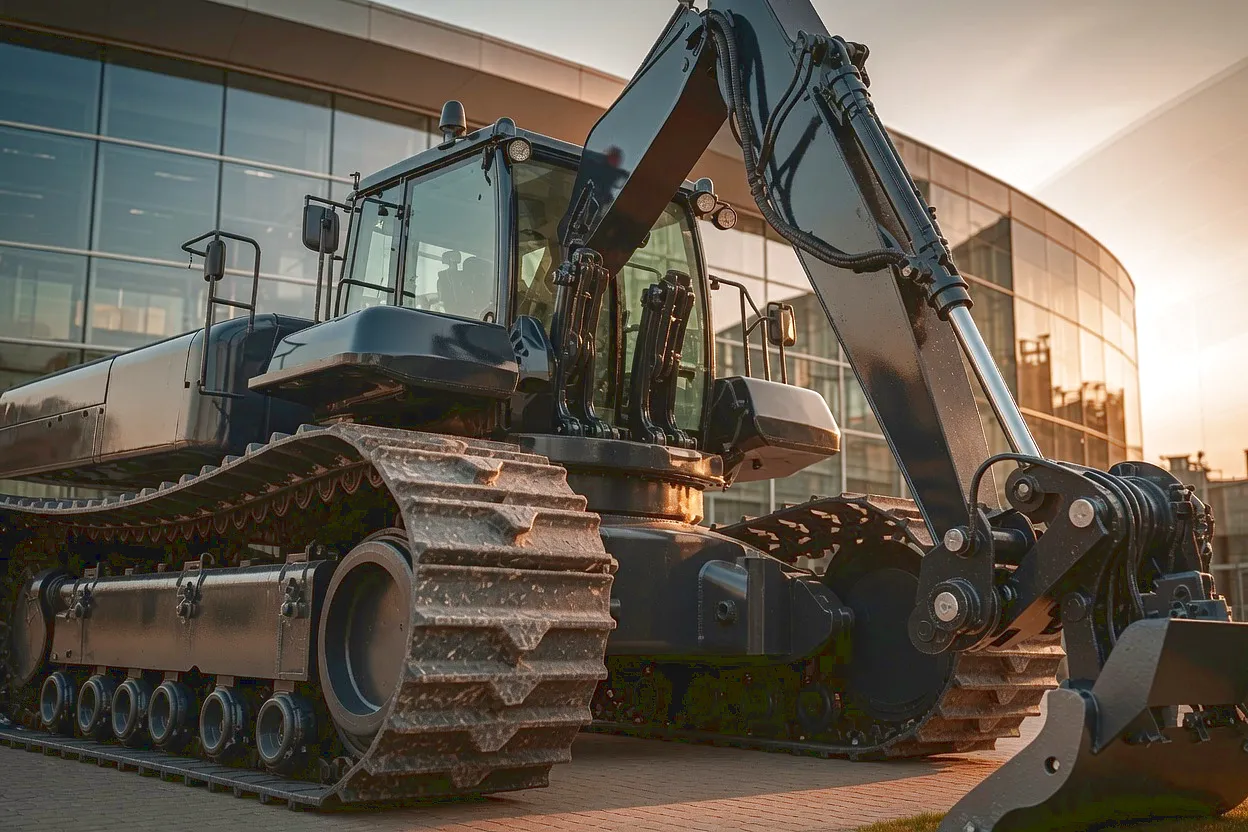
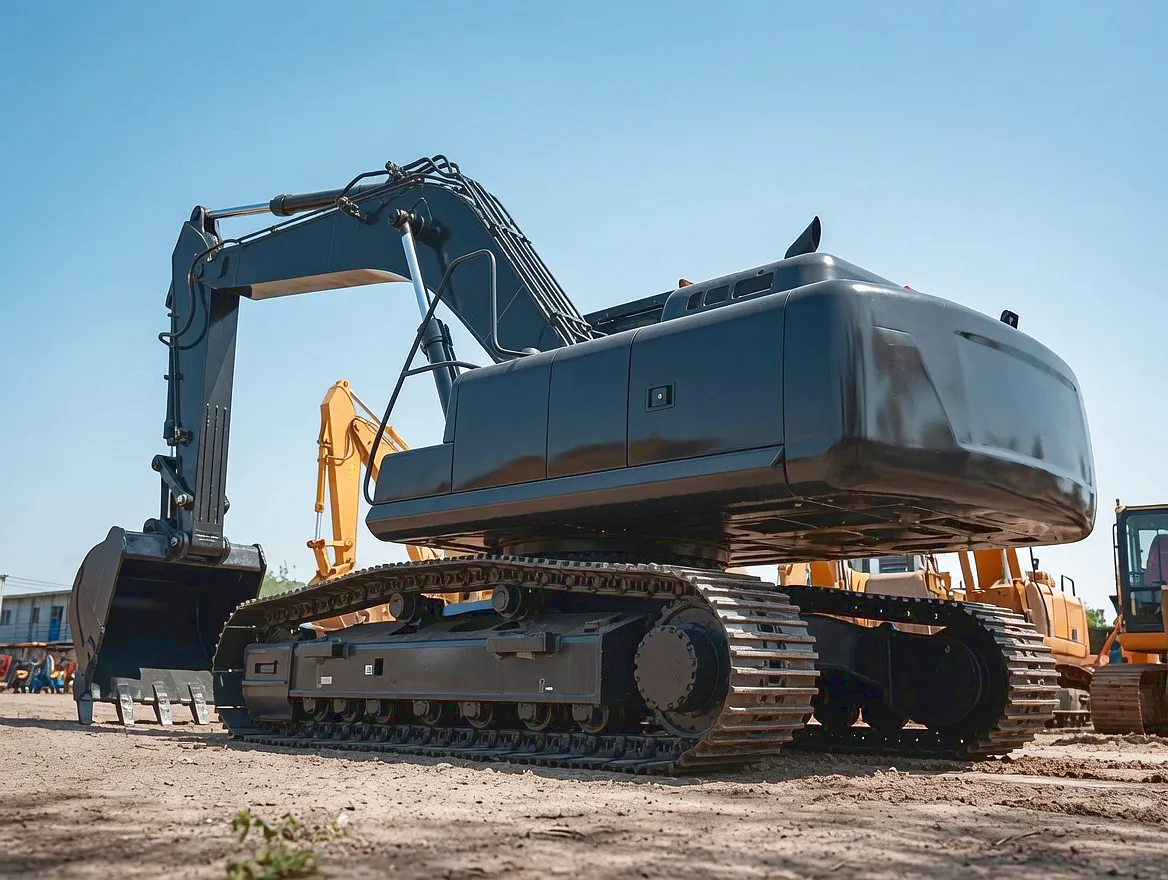 Modern excavators — whether tracked hydraulic machines on a UK motorway widening scheme or wheeled excavators working urban basement digs in central London — rely on leaf chains in several critical kinematic loops. The most structurally important of these is the boom hoist circuit. As the hydraulic cylinder extends and retracts to raise the boom, a leaf chain reeved over a set of sheave pulleys multiplies the mechanical advantage, allowing the cylinder to lift loads that would otherwise exceed its direct force capacity. The leaf chain in this circuit must absorb both the static weight of the boom and bucket plus material load, and the dynamic shock loading that occurs when the bucket strikes rock or frozen ground.
The second major application zone is the dipper arm crowd system on certain excavator models — particularly older cable-crowd designs still found on larger drag-line and cable excavators used in UK opencast mining. Here, the leaf chain operates under sustained tensile load as the crowd mechanism forces the dipper arm into the working face. Shock loading in this application is severe, and the chain must also resist abrasive contamination from dust and rock fines that inevitably infiltrate the sheave housings. A well-sealed, correctly lubricated leaf chain specified to the right BL grade is the engineering solution that makes these machines viable for long-duration shifts without mid-shift maintenance stops.
Why Ever Power Leaf Chains Outperform Generic Alternatives
Product Advantages
In the UK plant hire sector, where the cost of unexpected downtime on a £1,200-per-day tracked excavator can quickly outstrip the cost of the chain itself, the specification of the chain matters enormously. Fleet managers at major UK plant hire companies — including independent operators across Yorkshire, the Midlands, and the South East — have consistently found that investing in correctly-specified, high-quality leaf chains reduces total maintenance costs, not just replacement part costs. The following advantages explain why.
Material Engineering: What Goes Into Every Link
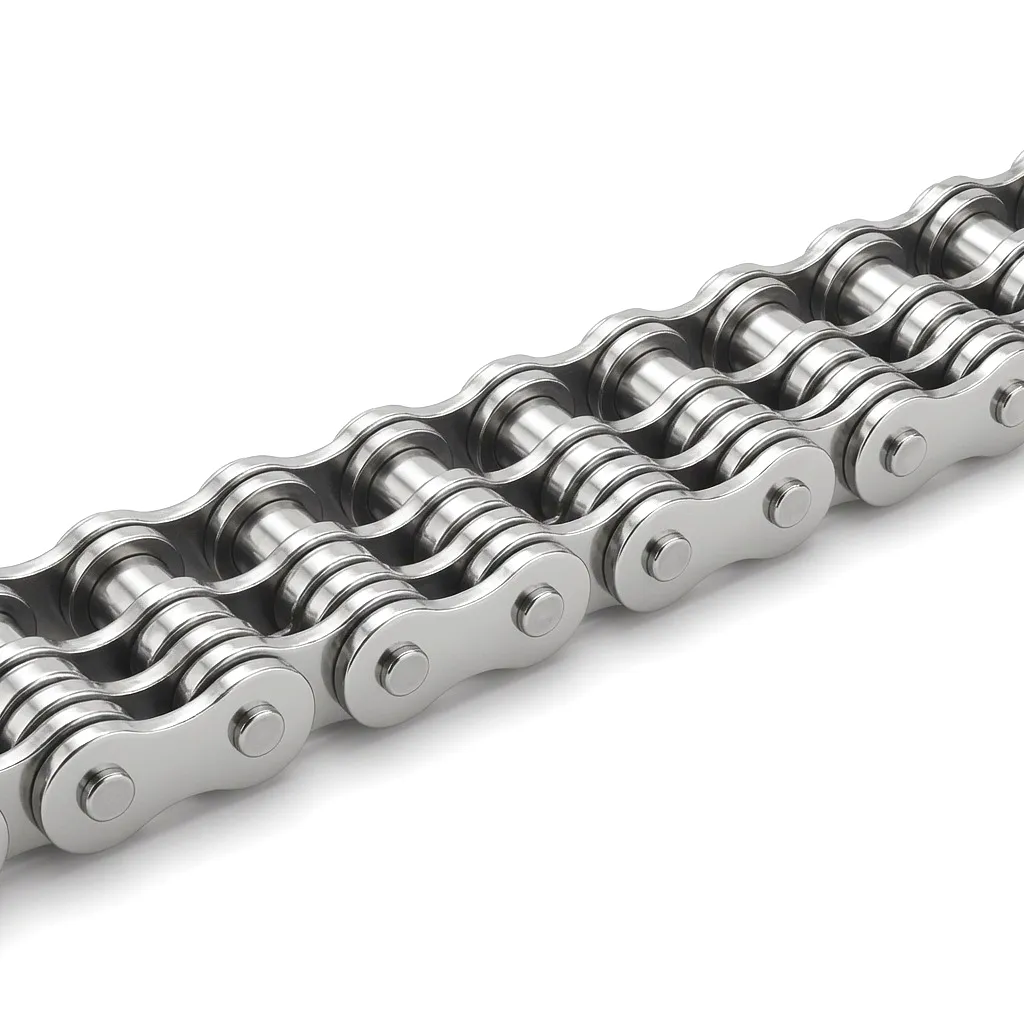 The steel grades used in Ever Power leaf chains are not off-the-shelf structural steel. The link plates start as 40CrMnTi or 40Cr alloyed bar stock, which is precision-cut to width, then undergo a controlled quench-and-temper heat treatment cycle. The resulting microstructure achieves the dual property requirement of excavator leaf chains: high tensile strength — typically 950–1100 N/mm² for BL-grade plates — combined with sufficient toughness to absorb impact energy without brittle fracture.
The connecting pins are manufactured from through-hardened alloy steel and ground to ISO h6 tolerance on the bearing journal diameter. This ensures a controlled interference fit with the link plate holes — tight enough to prevent rotation in service but within limits that avoid stress concentration at the pin shoulder. It’s a detail that looks minor on a technical drawing but makes a measurable difference to chain life in high-cycle excavator applications.
Material Properties Comparison: Leaf Chain Grades for Excavator Use
| Property | Standard Grade (45#) | Alloy Grade (40Cr) | High-Alloy (40CrMnTi) |
|---|---|---|---|
| Tensile Strength (N/mm²) | 600–750 | 850–950 | 950–1100 |
| Pin Surface Hardness (HRC) | 50–55 | 55–58 | 58–62 |
| Impact Toughness (J) at -20°C | 25–35 | 40–55 | 55–70 |
| Fatigue Life (×10⁶ cycles) | 0.8–1.2 | 1.5–2.0 | 2.5–3.5+ |
| Recommended Application | Mini excavators, light duty | Standard 14–22 t excavators | Large / mining class |
Leaf Chain in the UK Excavator Market: Industry Context
UK Market Intelligence
The United Kingdom hosts one of Europe’s largest and most active civil engineering sectors. The £19 billion annual construction plant hire market includes approximately 145,000 registered tracked and wheeled excavators, ranging from 1-tonne micro-excavators used in urban domestic groundworks to 90-tonne mining excavators deployed in the opencast coal and aggregate quarrying industries of Yorkshire, Nottinghamshire, and Wales. This fleet scale translates into consistent, high-volume demand for leaf chain replacement parts and OEM-supply components across the country.
The Lifting Operations and Lifting Equipment Regulations 1998 (LOLER) impose a statutory duty on UK plant operators to maintain thorough examinations of lifting equipment — including the chains within excavator hoist circuits — at intervals not exceeding six months for equipment in use. This regulatory framework has a direct positive effect on replacement chain demand, as LOLER examinations routinely identify chains that have reached the 0.5% elongation wear limit defined in manufacturers’ service manuals, prompting scheduled replacement even in the absence of visible damage.
UK plant dealers and independent service workshops look for leaf chain suppliers who can provide not just the chain itself, but the documentation trail — material certifications, test load reports, and manufacturer declarations — that LOLER compliance demands. This is an area where Ever Power’s batch traceability system, which assigns a unique production lot number to every chain assembly, provides a genuine differentiator over anonymous, document-free imports that offer lower prices but create significant compliance exposure.
Ever Power Manufacturing: Built for Precision, Configured for You
Factory & Customisation
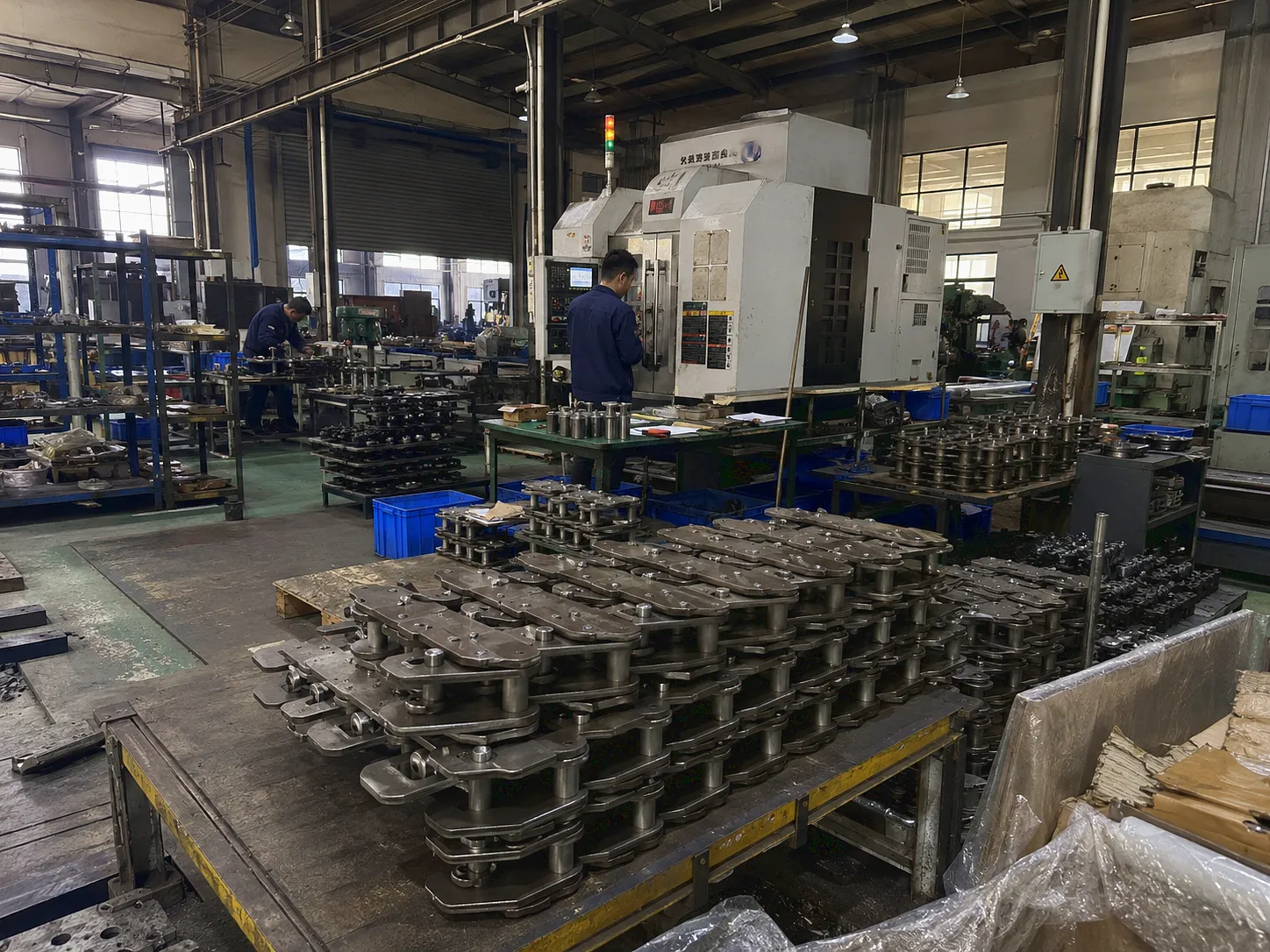
Ever Power’s leaf chain manufacturing facility operates a vertically integrated production model — meaning the entire value chain, from raw steel bar cutting through heat treatment, shot peening, assembly, and final tensile testing, takes place within a single controlled environment. This vertical integration gives the quality team direct visibility over every process variable, eliminating the inter-supplier quality gaps that afflict manufacturers who subcontract heat treatment or pin grinding to third parties.
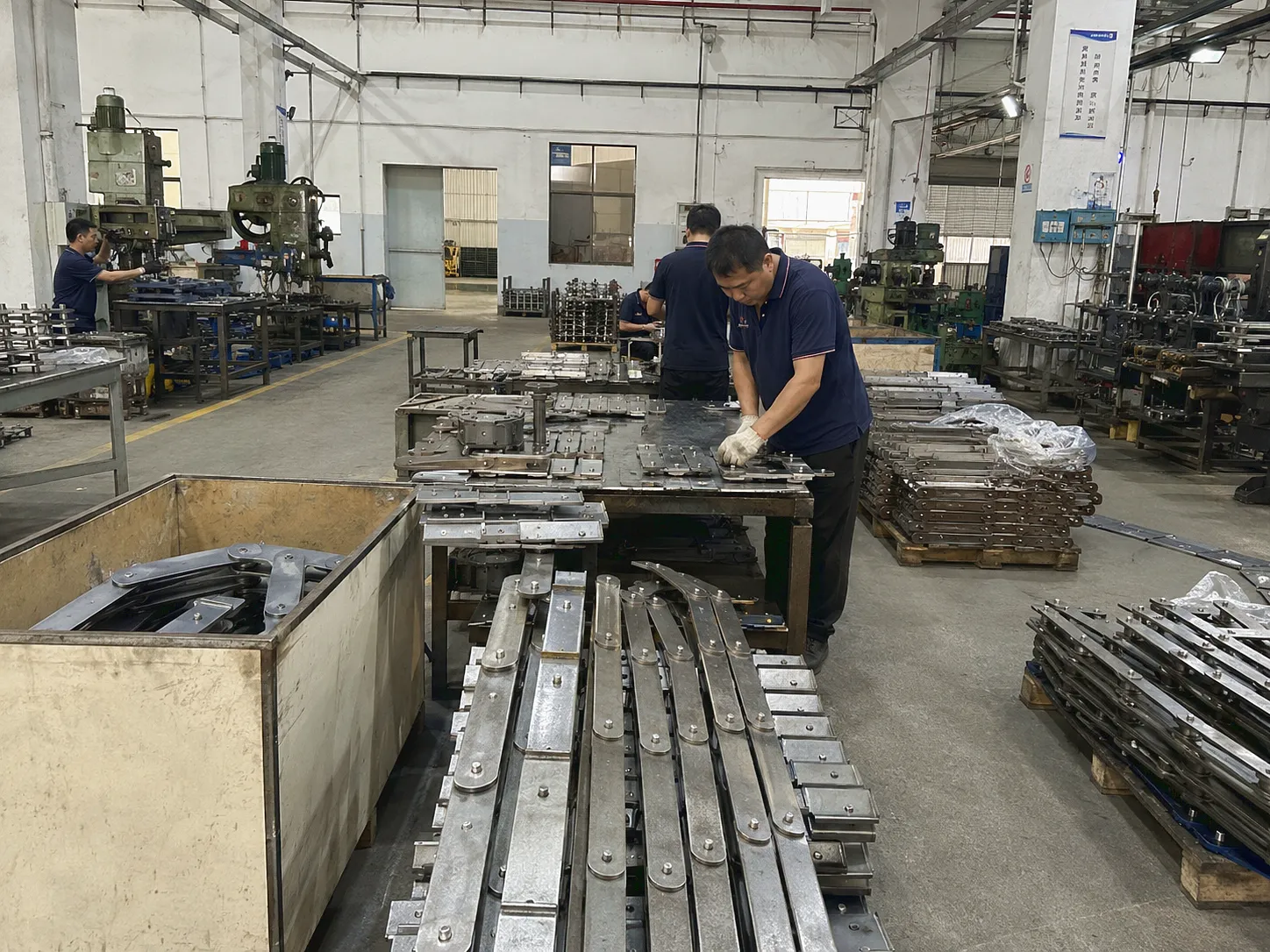 The facility’s custom fabrication capability is particularly relevant for UK excavator operators and rebuilders. Ever Power can manufacture leaf chains to non-standard pitches, custom lacing configurations (such as asymmetric plate stacking for specific load path requirements), extended lengths without joints, special end attachments including clevis ends, anchor plates, and threaded rod assemblies, and can match pitch to within ±0.1 mm of an OEM reference sample provided by the customer. For fleet managers rebuilding older Komatsu, Hitachi, Liebherr, Doosan, or JCB excavators where the original chain specification is no longer catalogued, this capability is the difference between a fast, accurate replacement and a month-long procurement nightmare.
Each production run is supported by a material test certificate traceable to the specific heat number of steel used, a dimensional inspection report, and a proof-load test certificate. These documents travel with every order, providing UK buyers with the documentation package they need for LOLER records, equipment insurance requirements, and plant hire fleet maintenance logs.
Customer Success: How a Yorkshire Plant Hire Operator Saved 34% on Chain Maintenance
Studi Kasus
Hargreaves Plant Services operates a 38-machine tracked excavator fleet across active civil engineering contracts in West Yorkshire and South Yorkshire, covering road widening, utilities infrastructure, and housing development groundworks. Their machines run up to 60 hours per week during peak construction season, with the 20-tonne class machines working in particularly demanding conditions on culvert and drainage contracts where continuous digging in wet gravel and clay is the norm.
Prior to switching to Ever Power leaf chains, Hargreaves had been sourcing replacement chains from a regional agricultural machinery supplier who stocked a limited range of BL-series chains — adequate for some applications, but not always the correct grade for the heavier end of the fleet. The consequence was an average chain life of 1,400–1,800 operating hours on the 20-tonne machines, with several premature failures requiring emergency hire of replacement machines at a significant day-rate cost.
After switching to Ever Power BL834 (4×4 lacing, 40CrMnTi alloy grade) leaf chains with custom clevis-end fitting assemblies matched to their Komatsu PC200-8 fleet, Hargreaves saw average chain life on the 20-tonne machines climb to 2,950–3,200 operating hours — a 68% improvement. The company’s maintenance director estimated an annualised saving of approximately £38,000 across the 38-machine fleet, accounting for parts, labour, and the elimination of emergency replacement hire. LOLER documentation supplied with every Ever Power order also simplified the six-monthly thorough examination process, reducing the administrative burden on the fleet compliance team.
What UK Plant Operators Say
“We run 12 JCB JS220s on a major highway contract in the M62 corridor. Switched to Ever Power BL chains 14 months ago. Not one unplanned stop since. The documentation package they supply is exactly what our LOLER records need — clean, complete, no chasing.”
“We needed a non-standard BL1046 assembly with extended clevis fittings for a mid-life rebuild on a Hitachi EX550. Sent the spec by email on Monday morning. Quote back same day, chain dispatched four days later. Fitted perfectly. Couldn’t ask for better lead time from a custom item.”
“Running three 30-tonne Doosan DX300s on a land reclamation scheme near the Swansea waterfront — salt air, marine clay, the works. The zinc-phosphate treated leaf chains have handled the corrosive environment noticeably better than what we were using before. Two years in and still well within the wear tolerance.”
How to Select the Right Leaf Chain for Your Excavator: A Practical Guide
Selection Methodology
Chain selection for excavator applications is not simply a matter of matching the catalogue number to a machine model. While that works for a straightforward like-for-like replacement on a current-production machine, many real-world situations — rebuilt machines, uprated attachments, non-standard operating cycles — require a more methodical approach. The following framework reflects how experienced plant engineers and procurement specialists think through the selection process.
| Selection Step | What to Determine | Why It Matters |
|---|---|---|
| 1 — Working Load | Maximum static + dynamic load in the circuit (kN) | Defines the minimum breaking load requirement (apply min. 5:1 safety factor for dynamic lifting) |
| 2 — Pitch & Width | Measure or reference OEM drawing for chain pitch and inner plate width (mm) | Must match sheave groove geometry; incorrect pitch causes rapid sheave and chain wear |
| 3 — Lacing (BL vs AL) | BL (wide lacing) for high-load; AL (narrow) for lighter duty and space-constrained circuits | BL series has higher breaking load for the same pitch; AL more flexible in tight sheave radii |
| 4 — Environment | Operating environment: wet/abrasive/chemical/marine — affects surface treatment spec | Coastal UK sites need zinc-phosphate or stainless-pin options; abrasive quarry work needs sealed joints |
| 5 — End Fittings | Confirm connecting link style, anchor plate dimensions, pin diameter at chain attachment points | Incorrect end fittings are the single most common cause of misfitting chains on excavator rebuilds |
| 6 — Compliance Docs | Confirm material test certificate and proof-load test are supplied with order | Mandatory for UK LOLER inspection records; required by most plant insurance policies |
Maintenance and Inspection: Keeping Your Excavator Leaf Chain in Service
Service Guidance
Even the highest-quality leaf chain fitted to an excavator will reach the end of its service life prematurely if the maintenance regime is neglected. The single most important maintenance action is lubrication — not surface oiling with a thin lubricant spray, but pressure-delivery of a medium-viscosity gear oil or dedicated chain oil into the pin-plate interfaces. On a busy UK construction site, contamination with abrasive silt, sand, and aggregate fines is continuous. Lubricant displaces this contamination from the bearing surfaces, preventing the “lapping” wear that rapidly elongates a chain and corrupts its pitch geometry. UK plant operators running excavators on sand-heavy alluvial deposits — common across East Anglia and parts of the Midlands — should consider shortening the lubrication interval to 150 hours from the standard 250, given the increased abrasive contamination rates those environments create.
Visual inspection should accompany every lubrication service and must look for five specific warning signs: plate cracking or corrosion pitting, pin rotation relative to the plates, significant elongation detectable by ruler measurement against a new chain section, uneven wear on plate edges indicating misalignment through the sheave, and any bending or kinking of the chain body that indicates an impact overload event has occurred. Any of these findings triggers immediate replacement, regardless of where the chain falls in its scheduled maintenance calendar. In the UK LOLER framework, a thorough examination by a competent person remains the formal requirement, and Ever Power’s documentation package is structured to support exactly this process.

Frequently Asked Questions: Leaf Chain for Excavators in the UK
FAQ — Speakable & Voice Search Optimised
Ready to Order or Need a Technical Consultation?
Whether you need a standard stock replacement for your UK excavator fleet, a fully custom chain assembly for a machine rebuild, or pre-sales technical advice on the right specification — Ever Power is ready to help. Our engineering team responds to technical queries within one working day.
[email protected] · UK orders dispatched within 3–5 working days (stock sizes) · Custom lead time 15–20 working days
© Ever Power Leaf Chain · ISO 4347:2015 Certified Manufacturer · Supplying UK & Export Markets · leaf-chain.com · edit by gzl