
Why the Chain Inside Your Corn Harvester Matters More Than You Think
 Most corn harvester operators focus on header knives, concaves, and sieves when evaluating machine reliability. The leaf chain — quietly doing its work inside the header lift cylinder assembly, the grain elevator, and the straw chopper drive — tends only to attract attention when it fails. And that failure rarely happens at a convenient time. In the UK, maize harvesting typically runs from late September through November, a period when weather windows are unpredictable and field conditions can change within hours. A snapped or stretched chain means lost harvesting days, costly call-outs, and potential crop losses that dwarf the price of a quality replacement chain several times over.
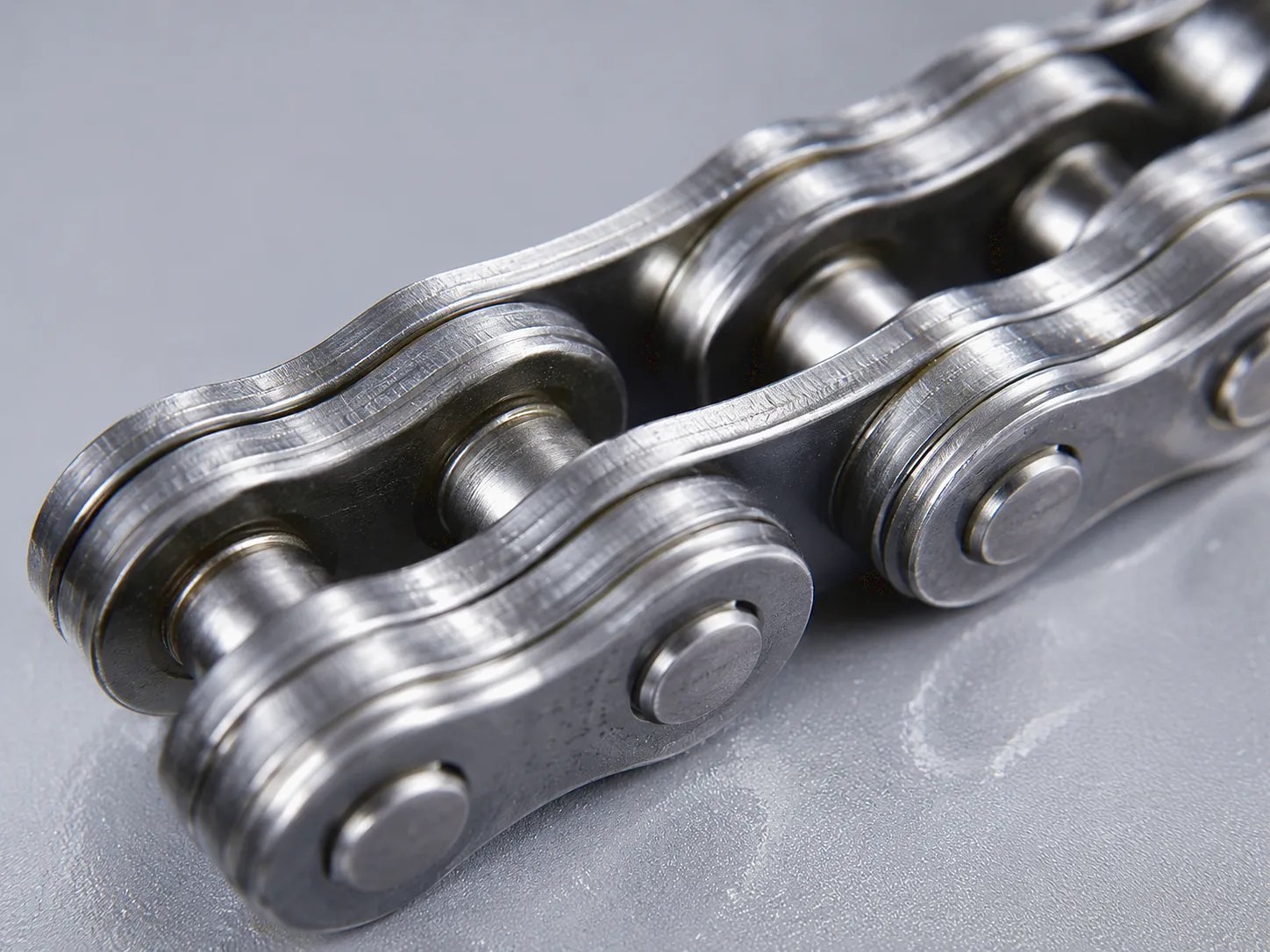
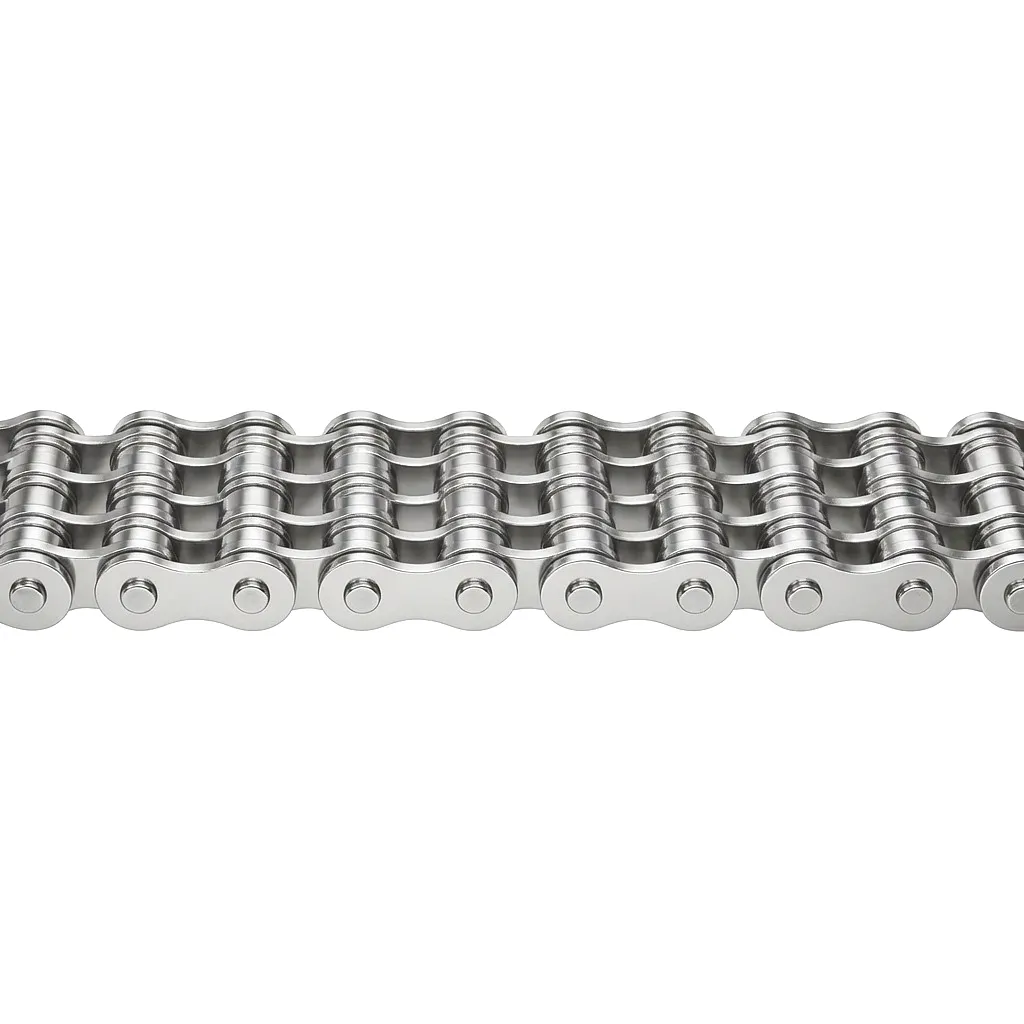
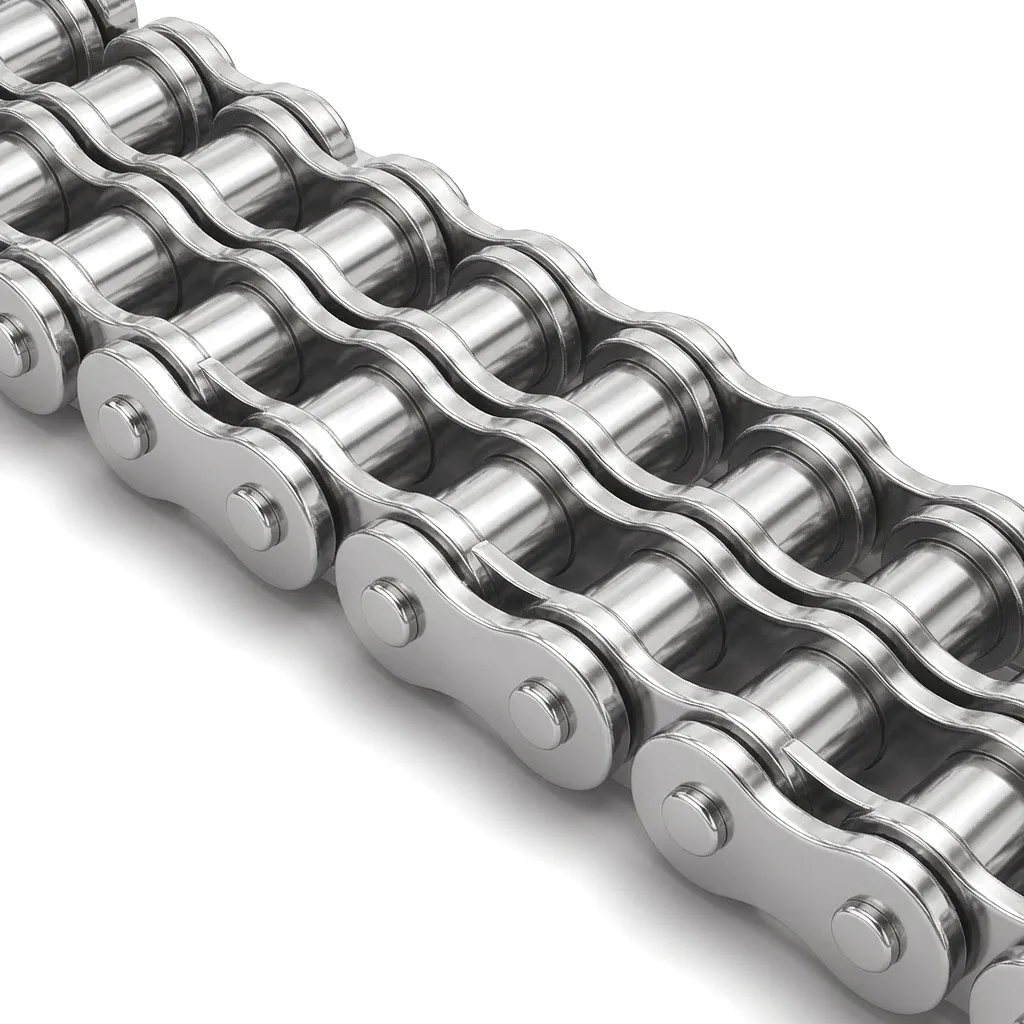
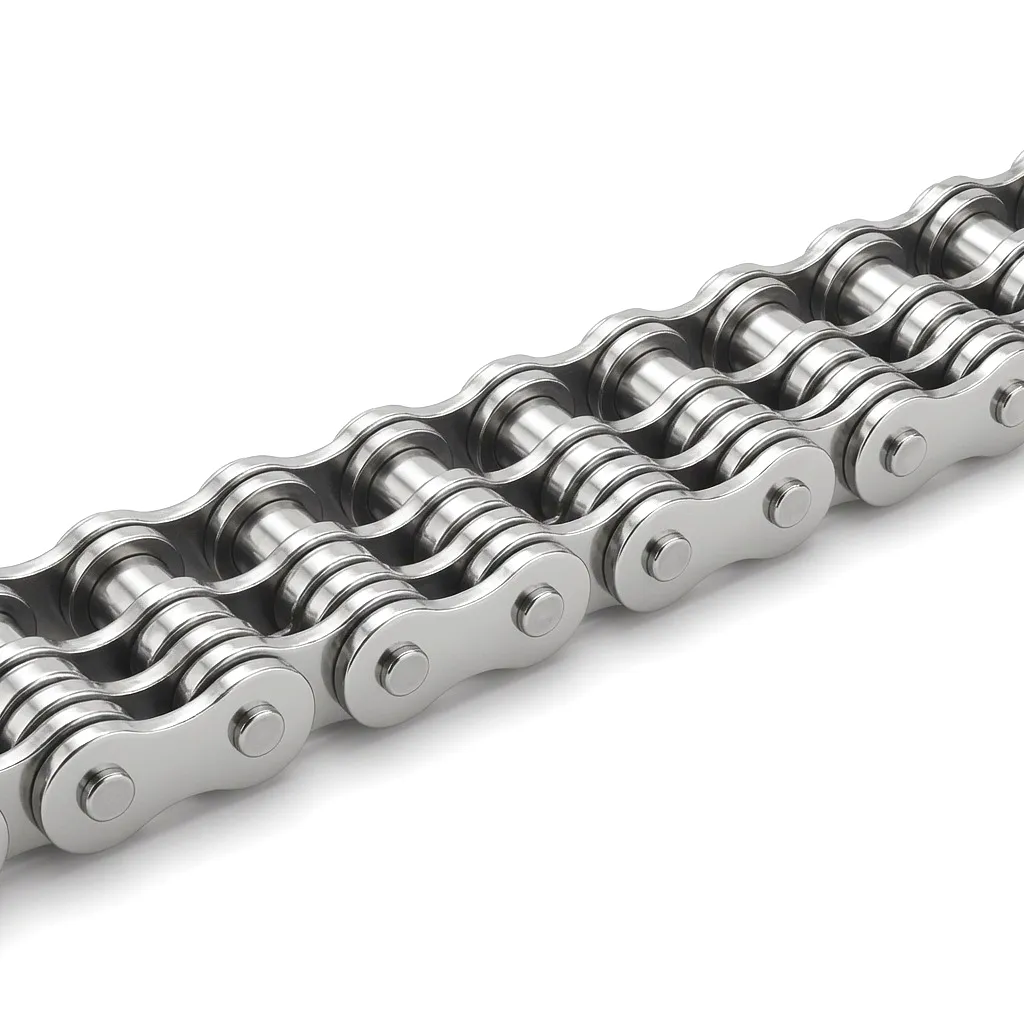
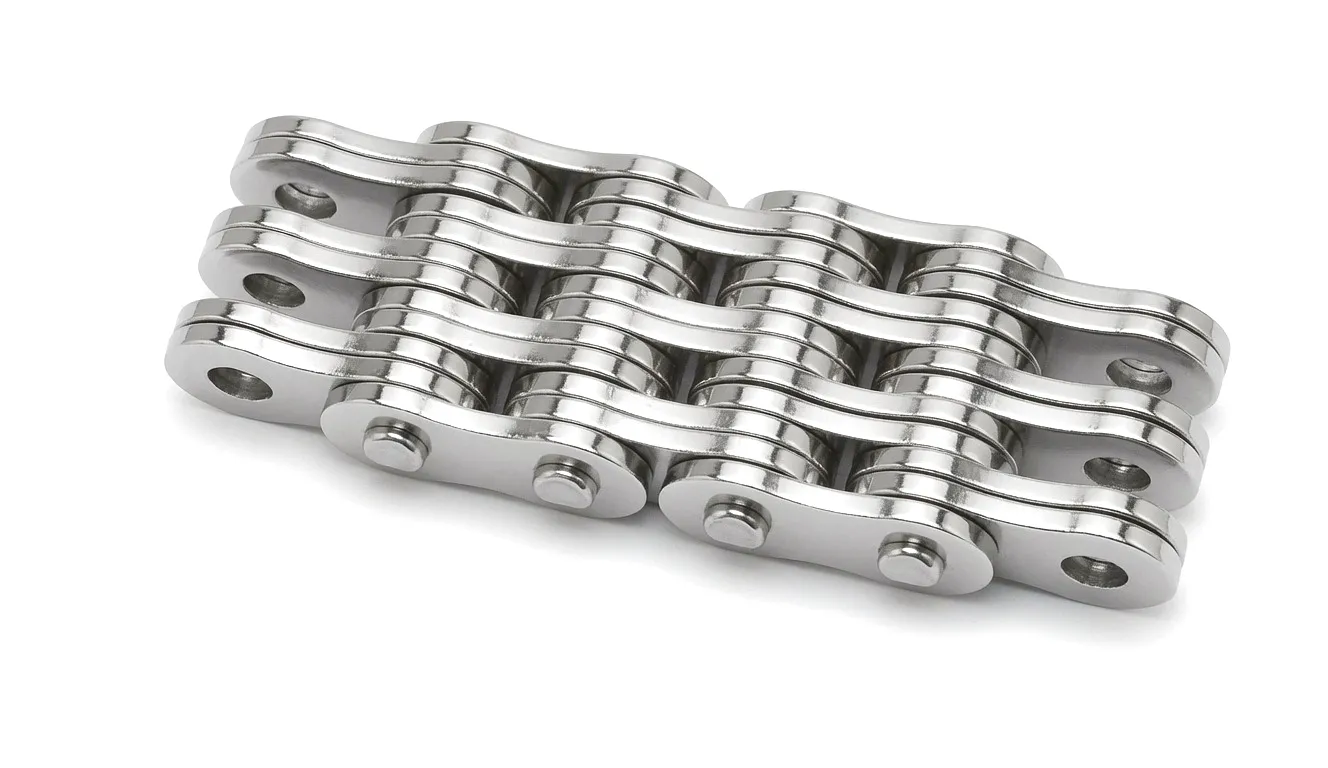
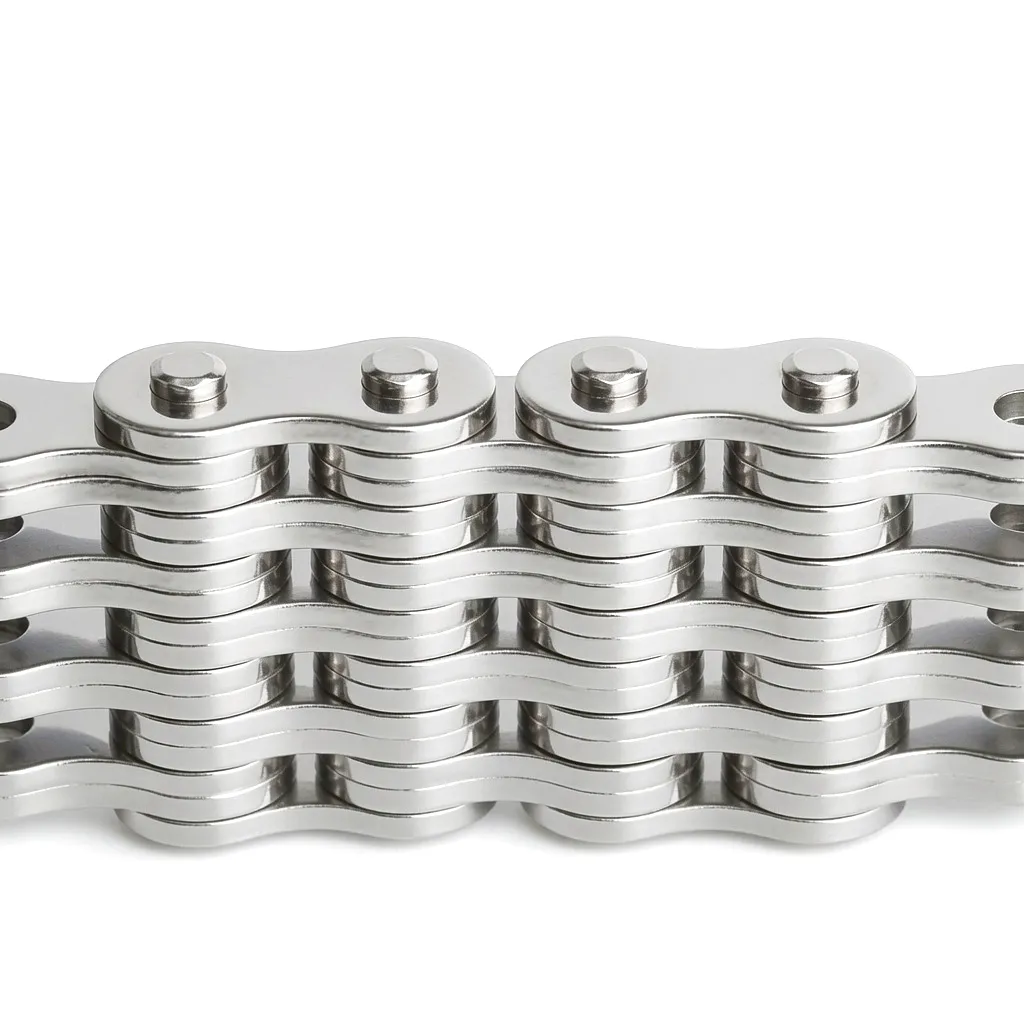
Leaf chain — also called plate chain or balance chain in agricultural contexts — is a specific form of link chain constructed from interlaced flat plates and pins, designed to transmit high static and dynamic loads with minimal elongation. Unlike roller chains, leaf chains carry force rather than transmit rotary motion, making them ideally suited to the lift and tensioning roles they fill inside combine harvesters and forage harvesting equipment.
The Engineering Behind Agricultural Leaf Chain
Plate-Link Construction
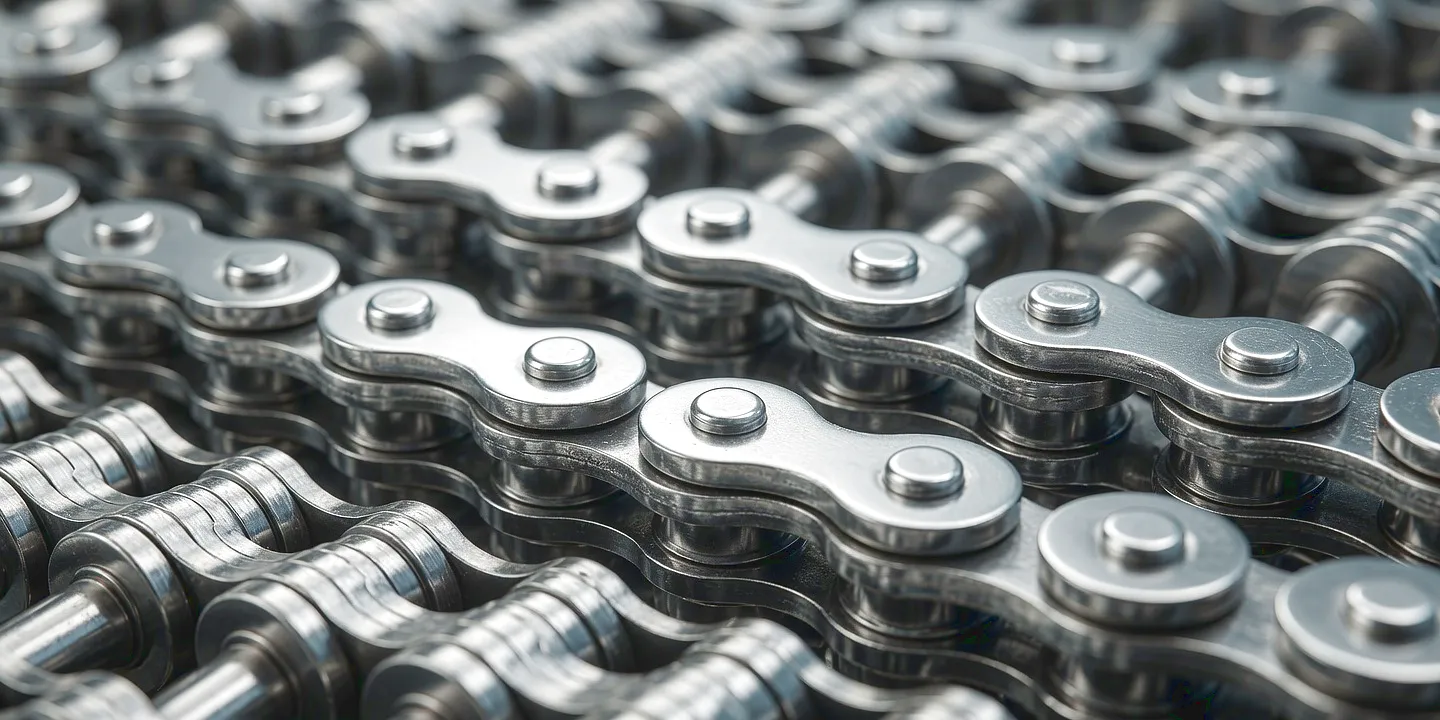
Leaf chain is assembled from multiple rows of pressed steel plates (lacing), connected by hardened pins. The number of plate rows — typically BL422 through BL834 in agricultural grades — determines the breaking load. Each individual link transfers tensile force directly through the plates, not through roller-to-sprocket contact, which is why leaf chain delivers far superior load capacity per pitch length compared with equivalent roller chain.
Material Selection
Plates are cold-punched from low-alloy steel strip, typically with carbon content in the 0.40–0.55% range, then heat-treated to achieve case hardness and a tough ductile core. Pins are manufactured from higher-alloy steel (often 20CrMnTi or equivalent European grades), hardened and ground to tight tolerances. This combination resists both fatigue fracture at the link holes and adhesive wear on the pin-plate contact surfaces — the two dominant failure modes in harvester chain applications.
Trattamento superficiale
Standard agricultural leaf chain receives zinc phosphate pretreatment followed by a rust-inhibiting oil coating. For corn harvester applications where early autumn condensation, crop juices, and muddy field conditions create a persistently corrosive environment, Ever Power offers nickel-plated and dacromet-coated variants. These surface finishes can extend service intervals by up to 40% under UK field conditions, where humidity and overnight dew are routine.
Technical Performance Parameters
Standard agricultural leaf chain grades commonly used in corn harvester applications (BL series, ANSI/ISO compliant)
| Chain Series | Passo (mm) | Plate Rows | Min Break Load (kN) | Pin Dia. (mm) | Typical Harvester Use |
|---|---|---|---|---|---|
| BL422 | 12.70 | 4×2 | 22.2 | 4.45 | Small header cylinders, light tension rollers |
| BL534 | 15.875 | 5×3 | 48.9 | 5.08 | Grain elevator side chains, intermediate lift |
| BL646 | 19.05 | 6×4 | 88.5 | 6.35 | Main header lift, combine unloading auger drive |
| BL823 | 25.40 | 8×2 | 96.0 | 7.94 | Heavy-duty self-propelled forage harvester lift |
| BL834 | 25.40 | 8×3 | 133.4 | 7.94 | Large combine header cylinders, heavy lift frames |
All values are indicative. Contact Ever Power for application-specific selection and certification documentation.
Where Leaf Chain Operates Inside a Corn Harvester
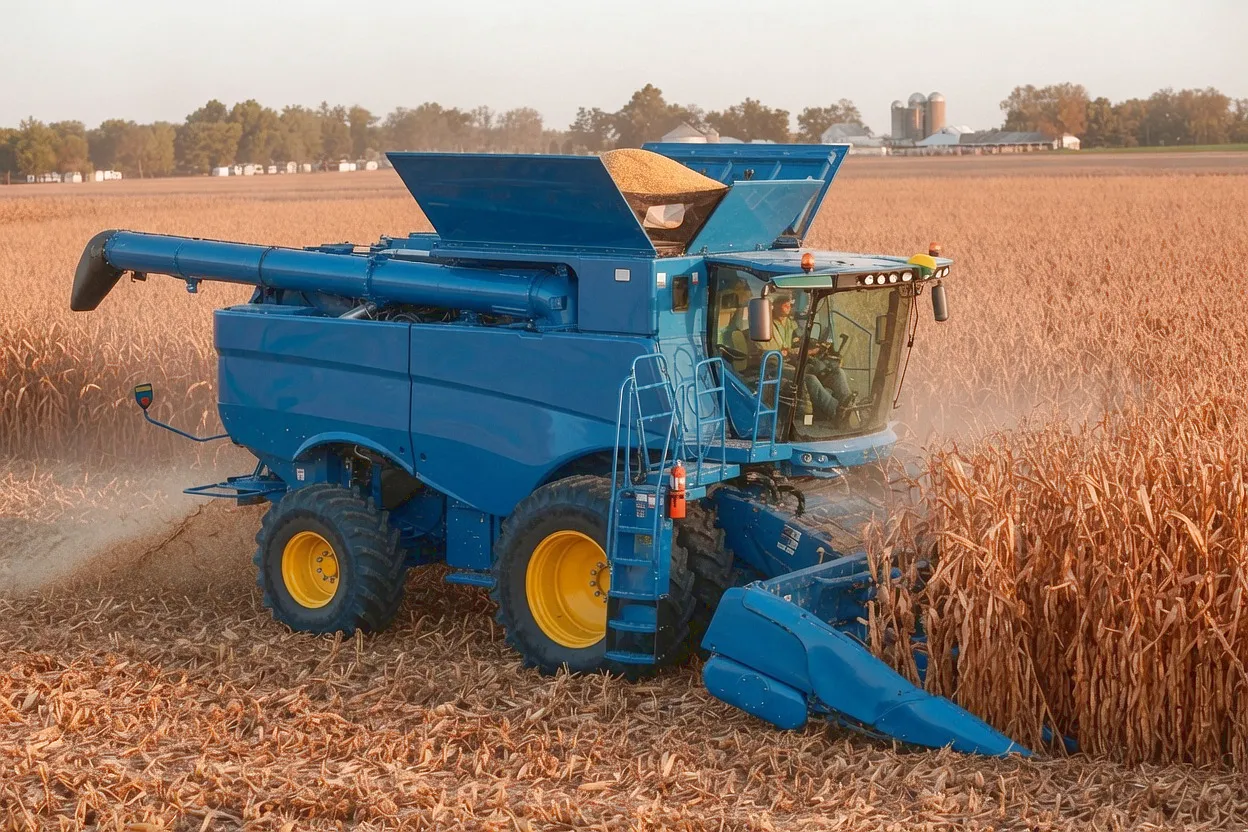
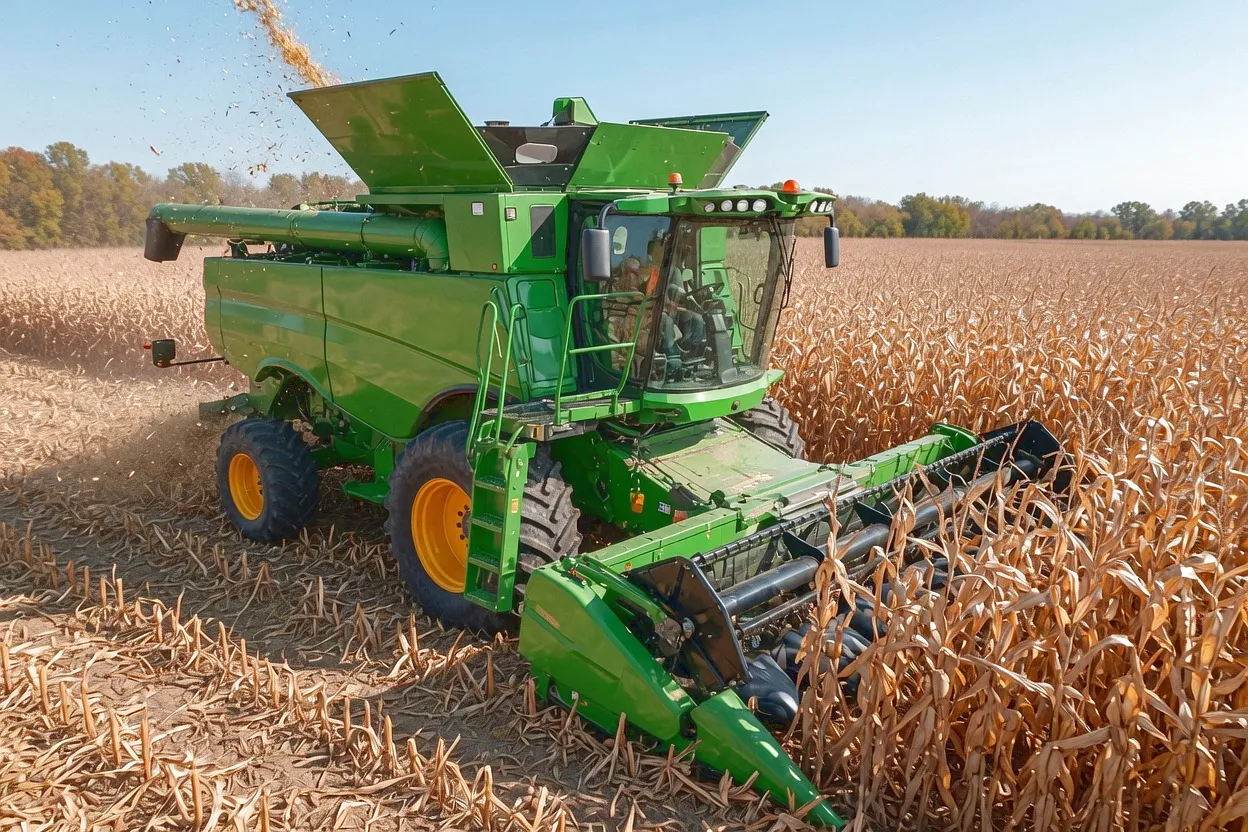
A modern corn harvester — whether a dedicated maize header on a combine or a self-propelled forage harvester running a corn cracker unit — is a complex machine with multiple power transmission points. Understanding exactly where leaf chain sits in that system helps explain why the specification of that chain matters enormously. Across the main functional zones of a typical machine, you will find leaf chain operating under very different load profiles and environmental exposures.
Header Lift Cylinder Assembly
The header — the wide cutting platform at the front — must be raised and lowered hundreds of times per day as the operator navigates headlands, road crossings, and uneven ground. The hydraulic cylinder lifting this mass is guided and load-balanced by leaf chain running over sheaves. Here the chain sees repeated tensile loading as the full weight of a maize header (often exceeding 2,000 kg on large combines) is lifted and held. Fatigue resistance and consistent elongation behaviour under cyclic loading are the paramount requirements.
Grain Elevator Drive
Inside the combine, harvested maize grain travels from the threshing drum through the cleaning shoe and up through the grain elevator — a continuously operating conveyor that deposits grain into the tank above. The drive chain on this elevator must resist the weight of a full column of grain while running continuously for many hours. Abrasion from fine dust and starch particles is severe, and any elongation of the chain causes misalignment of the elevator paddles, reducing throughput and eventually causing clogging — a particularly disruptive failure during peak harvest flow.
Row Unit Drives
On dedicated corn headers, each row unit (typically 6 to 12 across the header width) contains gathering chains or snapping roll drives. These compact, high-torque drives operate in direct contact with corncob debris, soil, and plant sap. The chain in these positions must combine high strength-to-size ratio with resistance to corrosive organic compounds. Leaf chain in BL422 to BL534 grades are commonly used here, selected specifically because their flat plate geometry sheds crop debris rather than packing it into roller cavities.
Straw Chopper and Spreader
After threshing, corn stalks pass into the chopper at the rear of the machine. The chopper drum and the spreader disc behind it are driven through belt and chain combinations designed to absorb shock loads. When a piece of stalk tangles with the chopper, the sudden impulse load can be several times the normal running tension. Leaf chain with its high instantaneous break load and shock-resistance profile is preferred for the drive connections in this system, where the alternative — a chain failure — would mean stalk ingestion into the combine’s rear housing and potentially a fire risk in dry conditions.


The UK Corn Harvesting Challenge — and How Chain Spec Solves It
British and Irish maize farmers face a distinctive combination of conditions that puts unusually heavy demands on harvesting machinery. The UK harvest season typically runs from late September into November across the main growing counties — Lincolnshire, East Yorkshire, Herefordshire, Devon, and the English Midlands. By October, overnight temperatures regularly drop to near-freezing while daytime conditions can bring morning fog, mid-day sunshine, and afternoon showers within the same working day. This cycling between humidity and cold is particularly hard on unlubricated chain: corrosion at the pin-plate interfaces accelerates, and any moisture that penetrates the joint will freeze during overnight storage, causing localised stress fractures in brittle plate steel.
The heavy clay soils prevalent in much of southern England compound this problem. Combine harvesters working in muddy October conditions pick up significant quantities of clay-rich soil through the auger and intake systems. This abrasive material carries silica particles that score both pins and plate holes, accelerating the wear elongation that eventually triggers chain failure or excessive sag. A standard chain meeting DIN 8152 minimum tensile requirements may simply not be durable enough for a full UK harvest season; a chain built to tighter tolerances and from harder plate material will still be within specification when the machine returns to the shed in November.
UK agricultural machinery dealers report that early autumn breakdowns — particularly header lift chain failures — account for a disproportionate share of call-outs compared to other chain positions. This is partly because header lift chains are often replaced less frequently than drive chains (operators can see and measure drive chain wear; lift chain condition is harder to assess without disassembly). Specifying a higher-grade leaf chain with zinc-nickel plating and pre-stretched treatment can effectively eliminate this failure mode, at a cost difference that is trivial compared to a single call-out during peak harvest.
Why Operators Choose Ever Power Leaf Chain for Their Corn Harvesters
Performance advantages built into every chain manufactured at our facility

Customer Success: How a Lincolnshire Arable Farm Eliminated Harvest Downtime
What Customers Say
We’ve tried three different chain suppliers over the years. The Ever Power chains are noticeably better finished — you can see the precision on the pin surfaces. We’re now into our second season on the same header lift chains and they’re still well within spec.
As a machinery dealer serving the Yorkshire Wolds area, we stock Ever Power leaf chain as our first-choice replacement for CNH and Claas harvesters. Lead time is predictable and the technical support when customers need non-standard lengths is excellent. Several farms have switched to them specifically after hearing about the corrosion-resistant options.
We grow maize under contract for a local anaerobic digestion plant — every day we’re delayed has a financial impact. We specified the nickel-plated BL646 series across our John Deere S780 header lift after a recommendation from our agronomist. One season in and the chain looks like new. Happy to recommend them to any commercial maize grower.
Custom Leaf Chain Manufacturing for Agricultural OEMs and Dealers
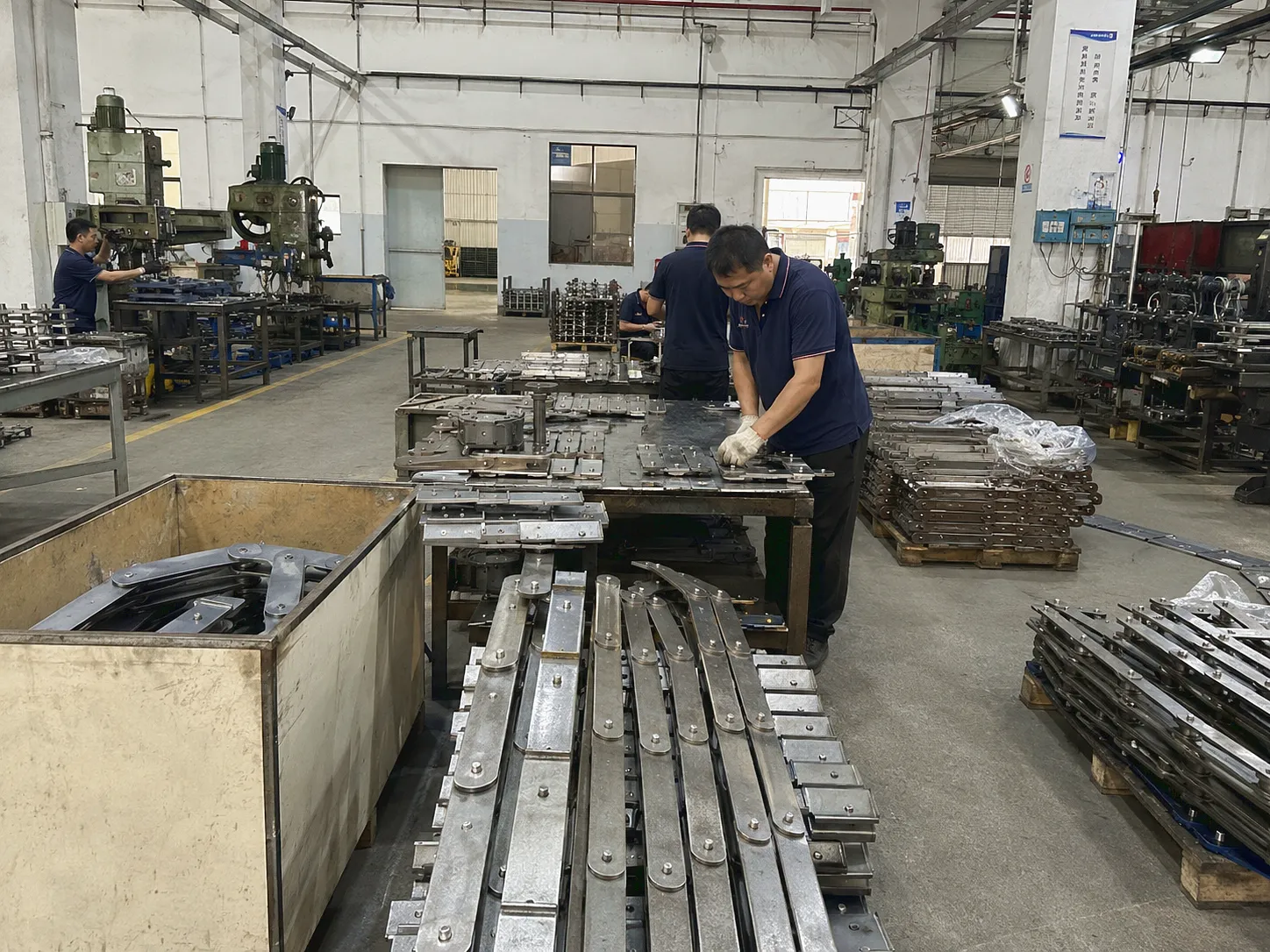
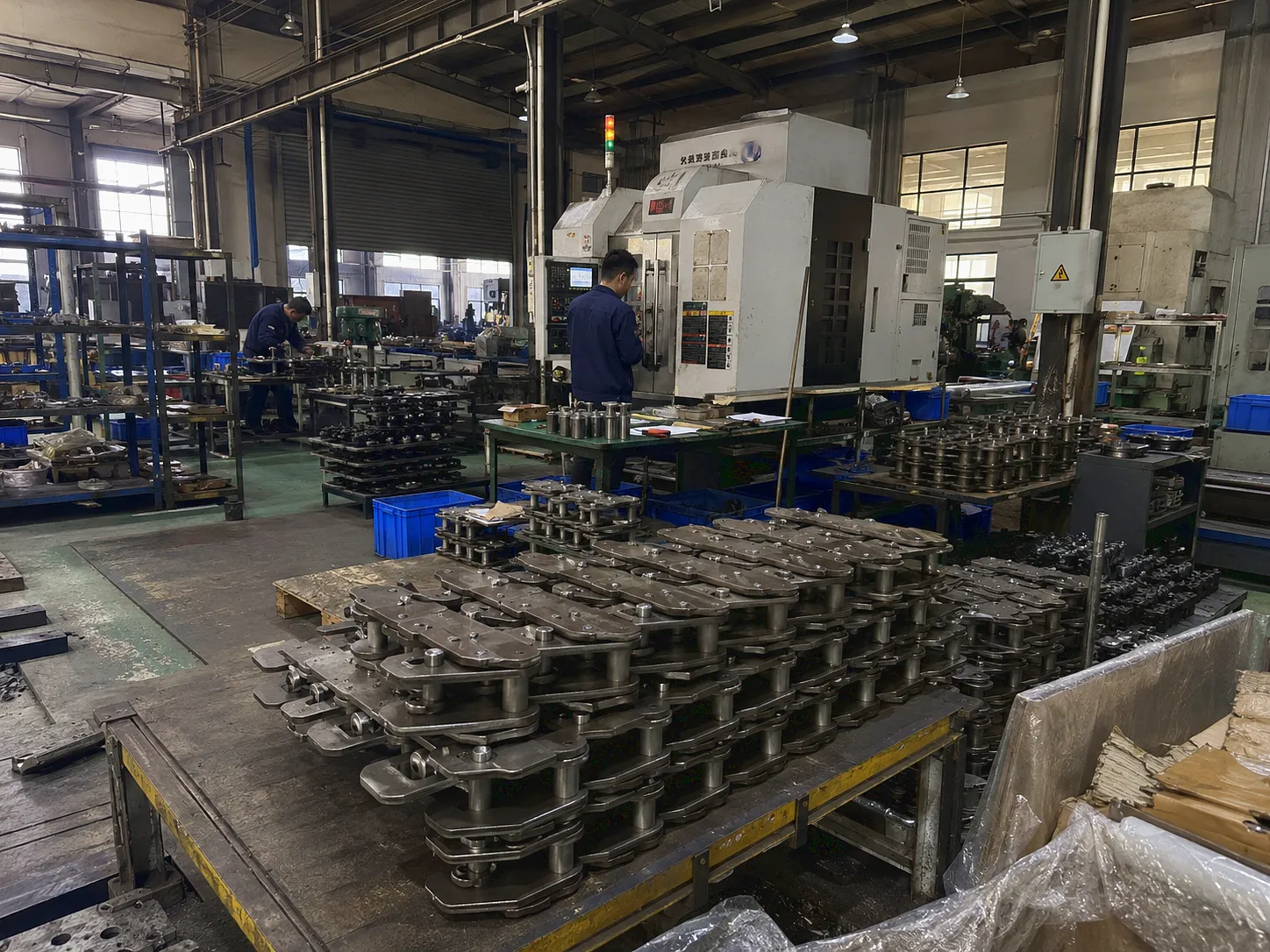
Ever Power operates a dedicated chain manufacturing facility equipped with precision stamping presses, automated assembly lines, and in-house heat treatment furnaces capable of processing all plate grades from 0.8 mm through 8 mm thickness. Our quality control laboratory performs tensile testing, hardness verification, pitch accuracy measurement, and salt spray corrosion testing on every production batch, with full traceability documentation available for B2B supply chain requirements.
What sets Ever Power apart from catalogue distributors is our genuine custom production capability. If your corn harvester application requires a non-standard pitch, a specific lacing combination not covered by BL series standards, attachment plates for paddled elevator chains, or special end connection hardware, our engineering team can develop and manufacture to your drawing. We have produced bespoke catena di foglie solutions for major agricultural equipment manufacturers operating across Europe, including custom lengths pre-assembled with pins and cotters for direct line-fit installation.
British and European agricultural machinery dealers benefit from our stocking programme: we maintain inventory of the 12 most common agricultural leaf chain specifications in our UK-accessible distribution network, with typical lead times of 3–5 working days for standard lines. For custom or volume orders, production lead times of 4–6 weeks apply. All chains are exported with full CE conformity documentation where applicable, and material certifications (EN 10204 3.1 or 2.2) are available on request.
Selecting the Right Leaf Chain Grade for Your Corn Harvester — A Practical Guide
Choosing the correct leaf chain specification involves balancing several variables: the working load in each application position, the operating environment, the acceptable service interval, and the cost constraints of the machine owner. The following framework is designed to help agricultural machinery dealers and farm workshop managers make informed decisions rather than simply replacing like-for-like from the original parts book.
| Application Position | Voto consigliato | Surface Finish | Expected Service (UK Conditions) | Key Reason for Upgrade |
|---|---|---|---|---|
| Header lift cylinder | BL646 / BL834 | Dacromet or Nickel | 2–3 seasons | Cyclic fatigue + condensation |
| Grain elevator drive | BL534 | nichelato | 1–2 seasons | Continuous abrasive dust load |
| Row unit gathering drive | BL422 / BL534 | Zinc phosphate + oil | 1 season | Crop sap corrosion + debris packing |
| Straw chopper drive | BL646 | Zinc phosphate + oil | 1–2 seasons | High shock impulse loads |
| Unloading auger drive | BL646 / BL823 | Nickel or Dacromet | 2+ seasons | Heavy intermittent load + outdoor exposure |

Extending Leaf Chain Service Life in Corn Harvesters — Practical Maintenance
Even the highest-specification leaf chain will underperform if basic maintenance practices are not followed. The agricultural environment is uniquely hostile to chain — combining dust, organic acids, moisture, shock loading, and months of outdoor storage — and the maintenance regimes appropriate for, say, a forklift chain are insufficient here. The following recommendations are drawn from field experience across multiple UK and European maize growing regions.
Pre-Season Inspection
Measure pitch over 10+ links against the new nominal pitch. If elongation exceeds 1.5% for header lift chains or 2% for drive chains, replace before the season begins. Inspect for rust pitting, cracked plates (visible as bright lines across the dark treated surface), and stiff joints. Any stiff joint indicates corrosion or deformation and warrants chain replacement.
In-Season Lubrication
For leaf chains used in low-speed lift applications (header cylinders), lubrication is less critical than for roller chains — the pin surfaces are not rotating at speed. However, a light application of chain oil or corrosion inhibitor spray at the start of harvest and again midway through the season significantly reduces the rate of corrosion-induced wear on pin surfaces exposed to plant sap. Use a penetrating chain oil rather than a thick grease, which will trap abrasive dust.
Post-Season Storage
After the last field day, power-wash the machine thoroughly and allow to dry before applying a heavy protective spray to all exposed chains. If the combine is stored outdoors or in a poorly ventilated building, the six months of UK winter represent a significant proportion of total chain corrosion load. A corrosion inhibitor applied in November can prevent the type of surface rust that scores pin surfaces during the first days of the following season’s operation.
Elongation Monitoring
Keep a simple log of chain elongation measurements taken at the same point on each chain position at the start and end of each season. This data tells you exactly how fast each position is wearing and allows you to plan replacement on a predictive basis rather than a reactive one. A chain that elongated 0.8% in season one and 0.7% in season two can reliably be expected to remain in service for a third season — avoiding an unnecessary pre-season replacement cost.