
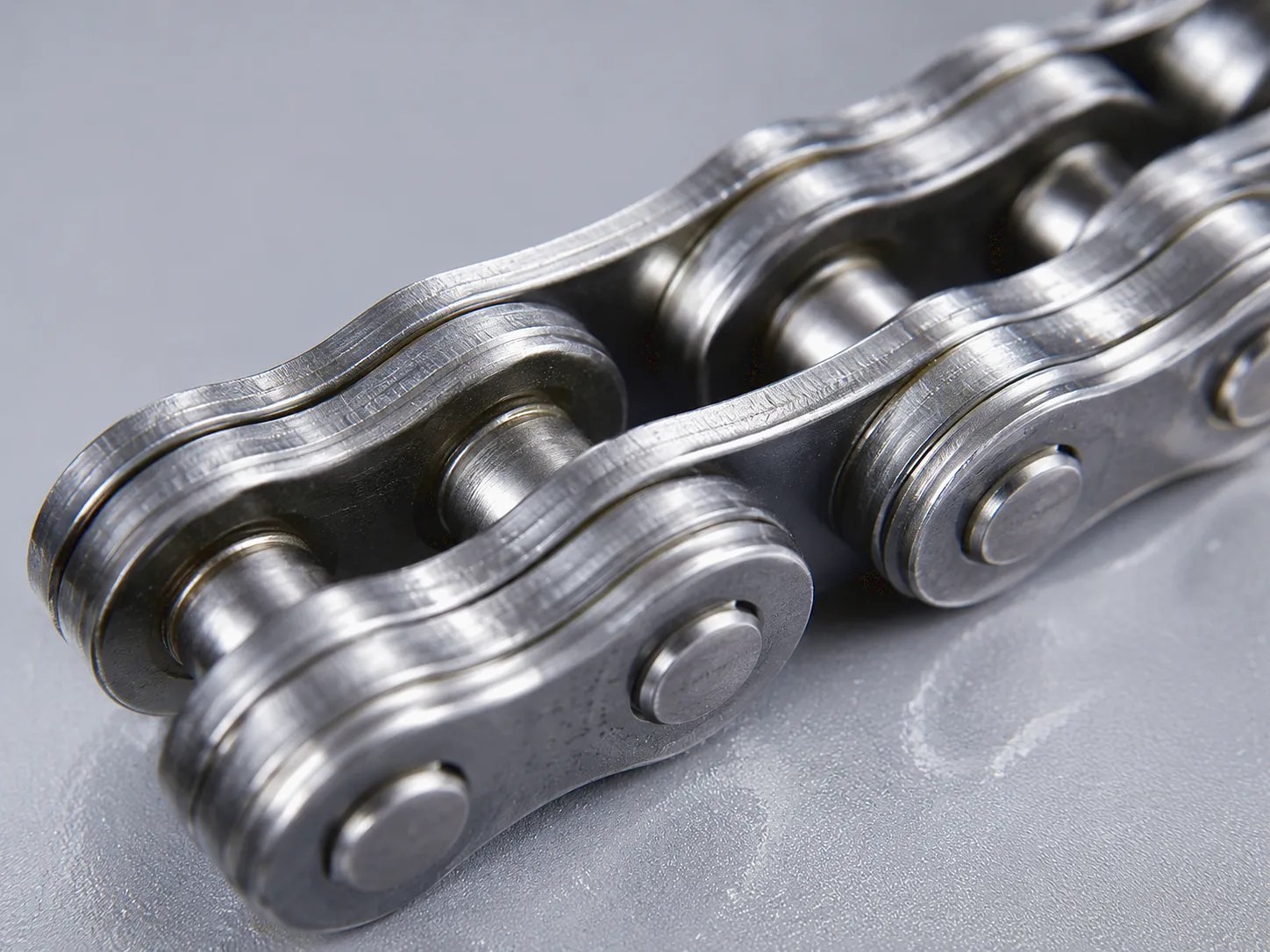
What Does Leaf Chain Actually Do Inside an Excavator?
Most people picture the hydraulic cylinders when they think about what drives an excavator boom, arm, and bucket. But inside each of those cylinders — particularly in the crowd mechanism and lift cylinder assemblies — a leaf chain is doing the quiet, unglamorous work of translating hydraulic pressure into controlled mechanical tension. The chain connects the cylinder rod end to the frame anchor point, allowing the cylinder to shorten and lengthen while the chain maintains continuous load transfer without slack. This is a fundamentally different job from roller chain or bush chain used in drives; leaf chain in an excavator never wraps around a sprocket. It articulates under load, bends around guide pulleys at shallow angles, and holds static tension for extended periods — sometimes hours at a time while a hydraulic hammer attachment pounds at bedrock.
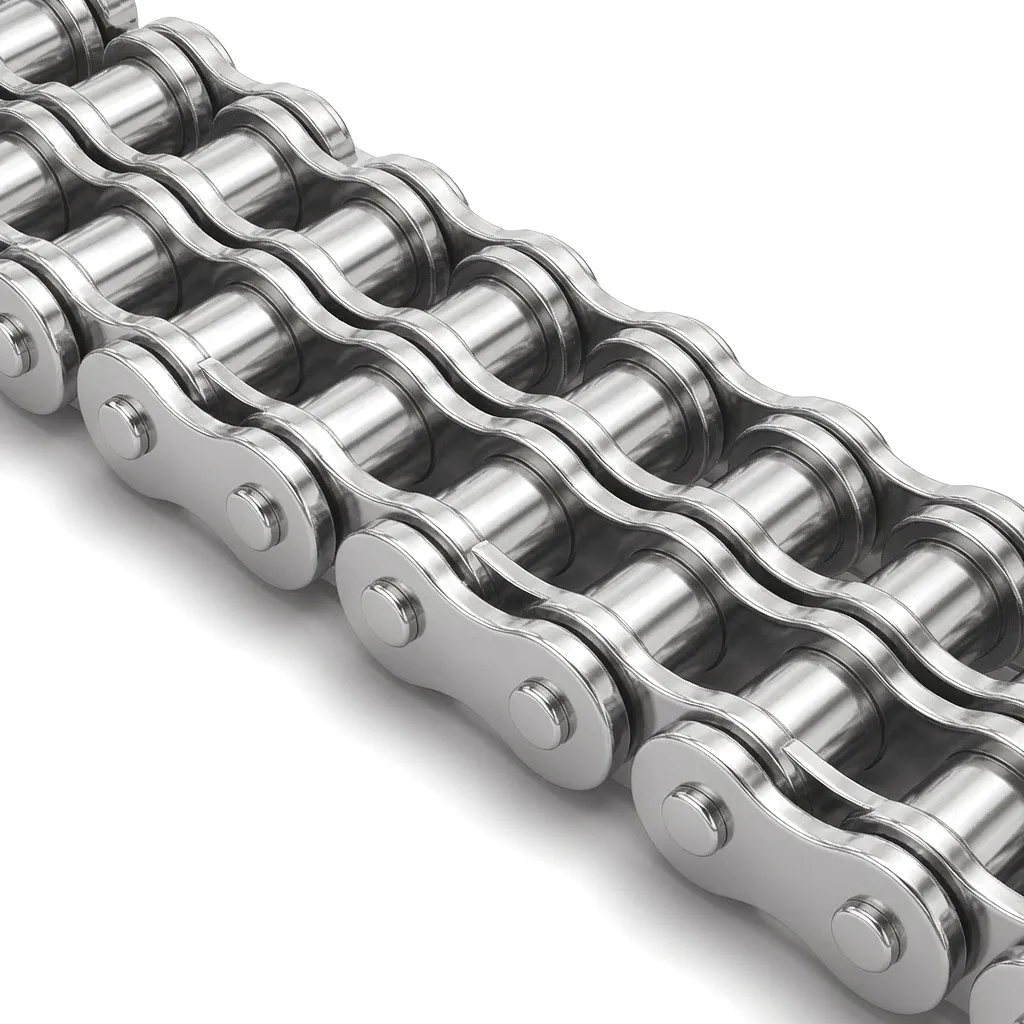
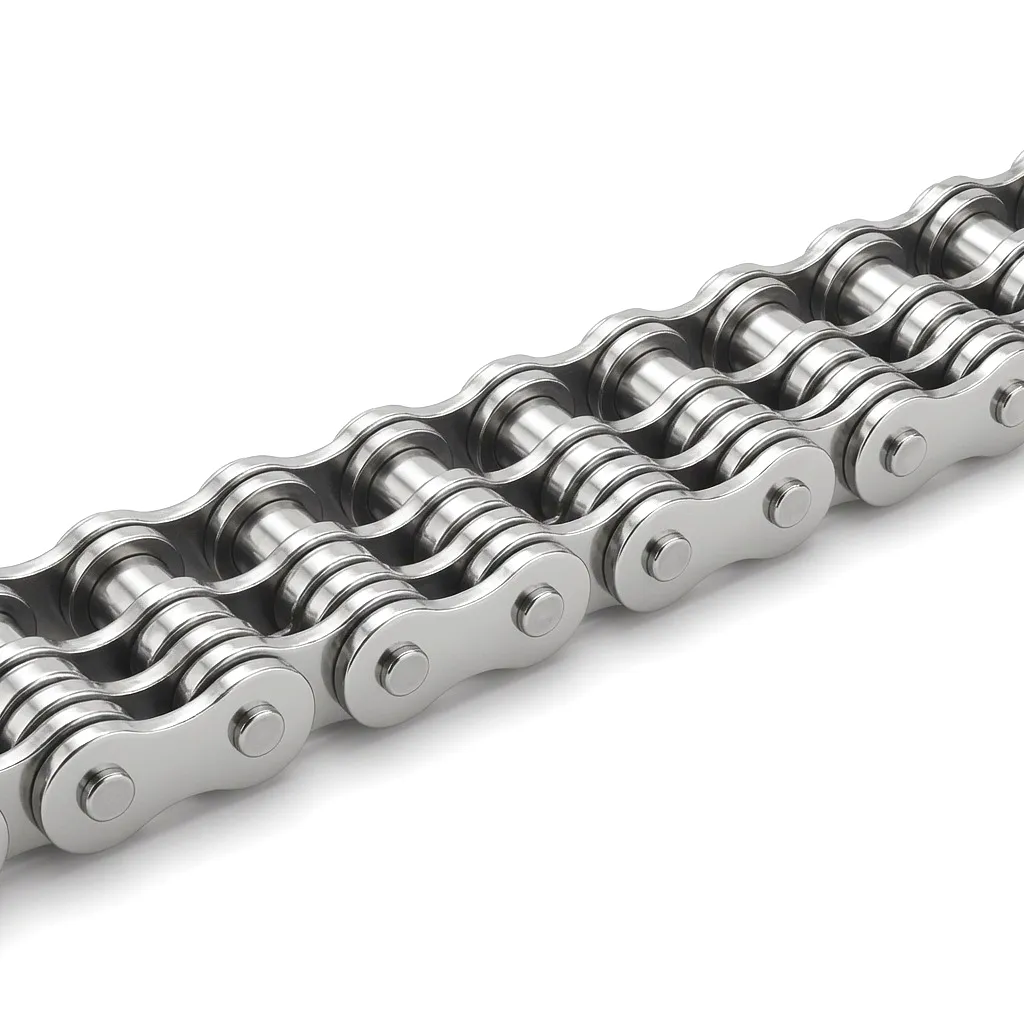
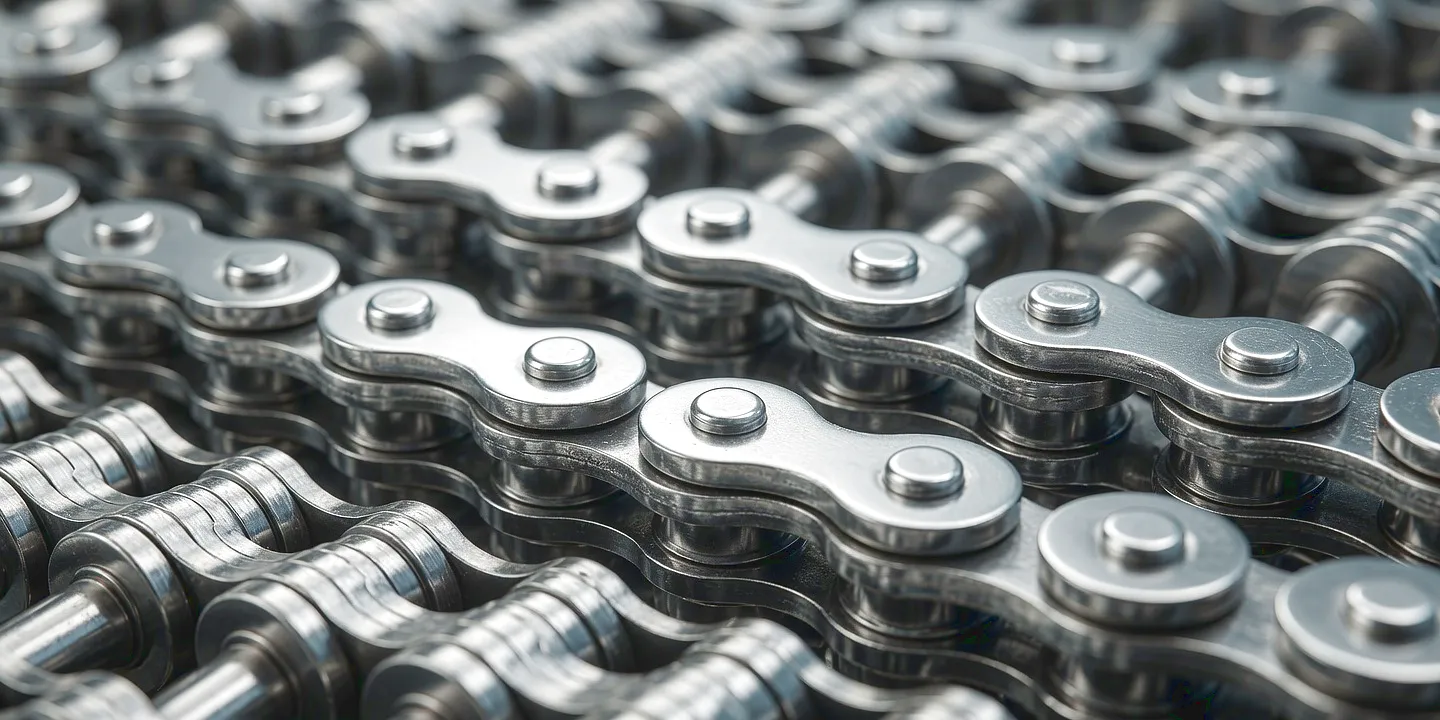
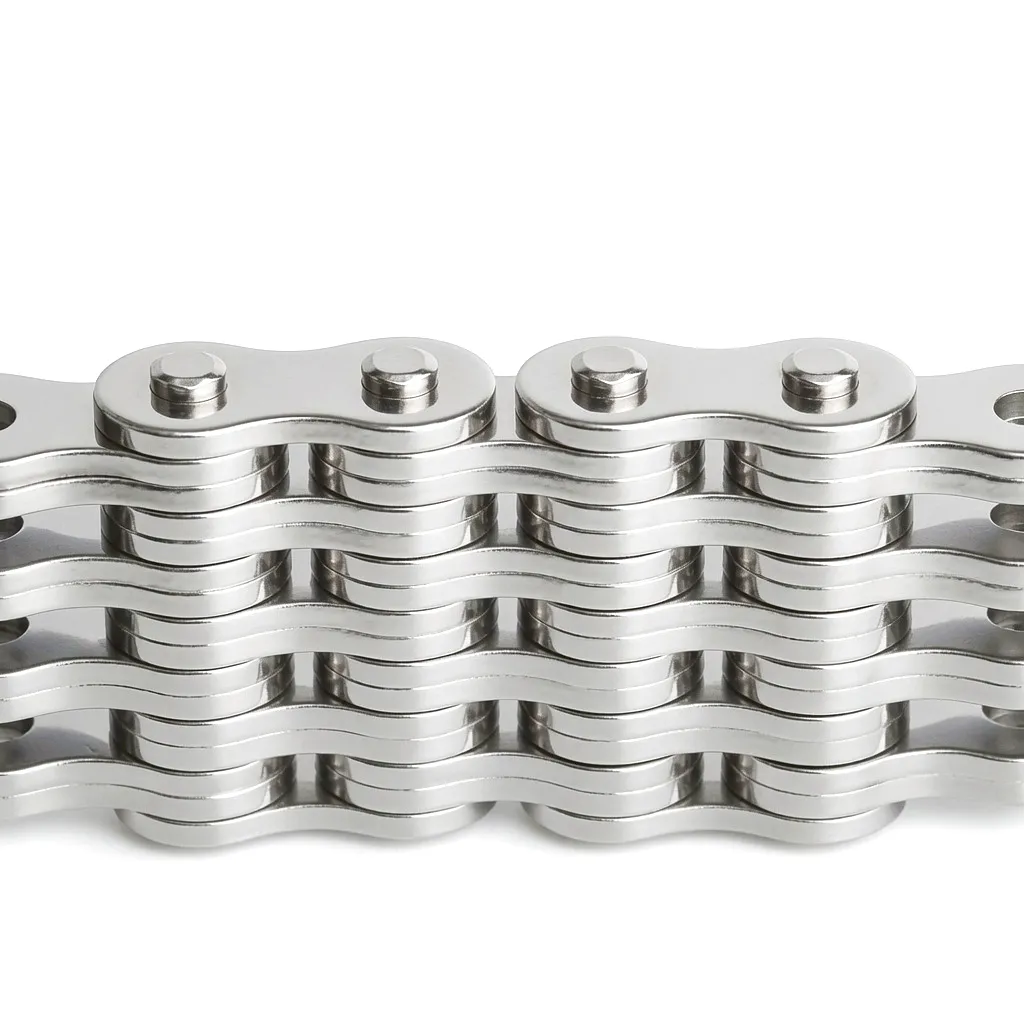
The defining structural characteristic of a leaf chain is its plate-pin construction. Multiple overlapping plates — anywhere from two to ten per side depending on the lacing grade — are joined by hardened alloy steel pins. There are no rollers, no bushings, no sprocket engagement. The plates bear the tensile load; the pins allow articulation. This deceptively simple architecture is what allows leaf chain to achieve breaking loads measured in hundreds of kilonewtons while remaining compact enough to fit inside cylinder housings that were designed thirty years ago. When you’re sourcing a leaf chain for a 30-tonne excavator operating on a London groundwork project, understanding this architecture is not academic — it’s the difference between a chain that lasts a full season and one that fails at a critical depth during a piled raft foundation pour.

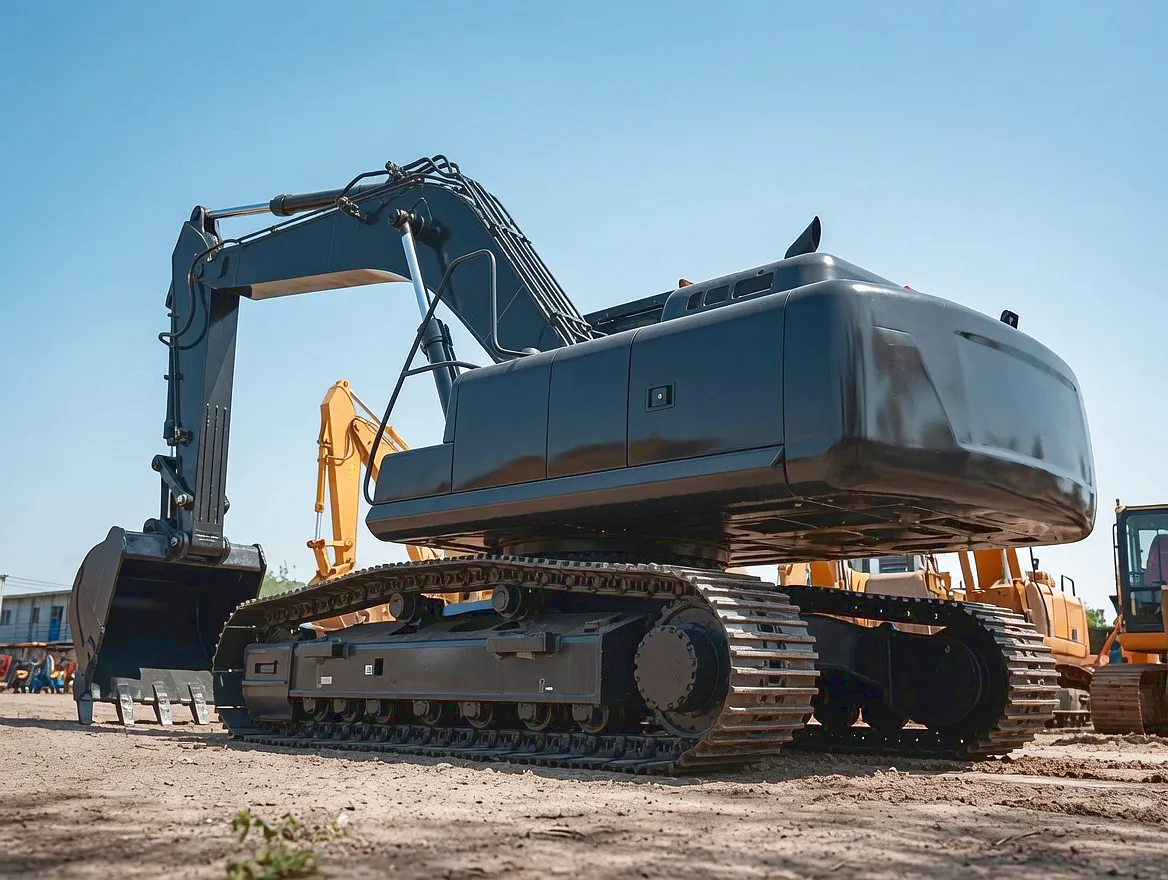
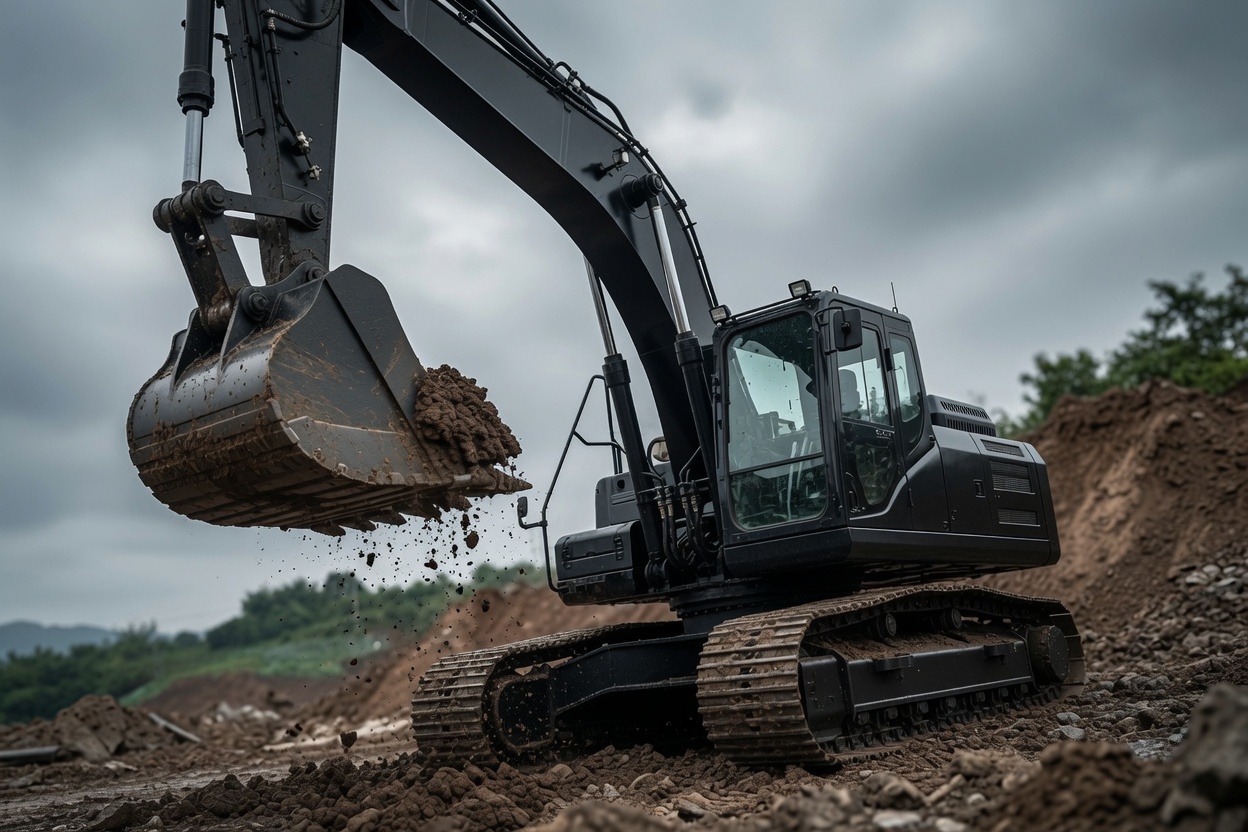
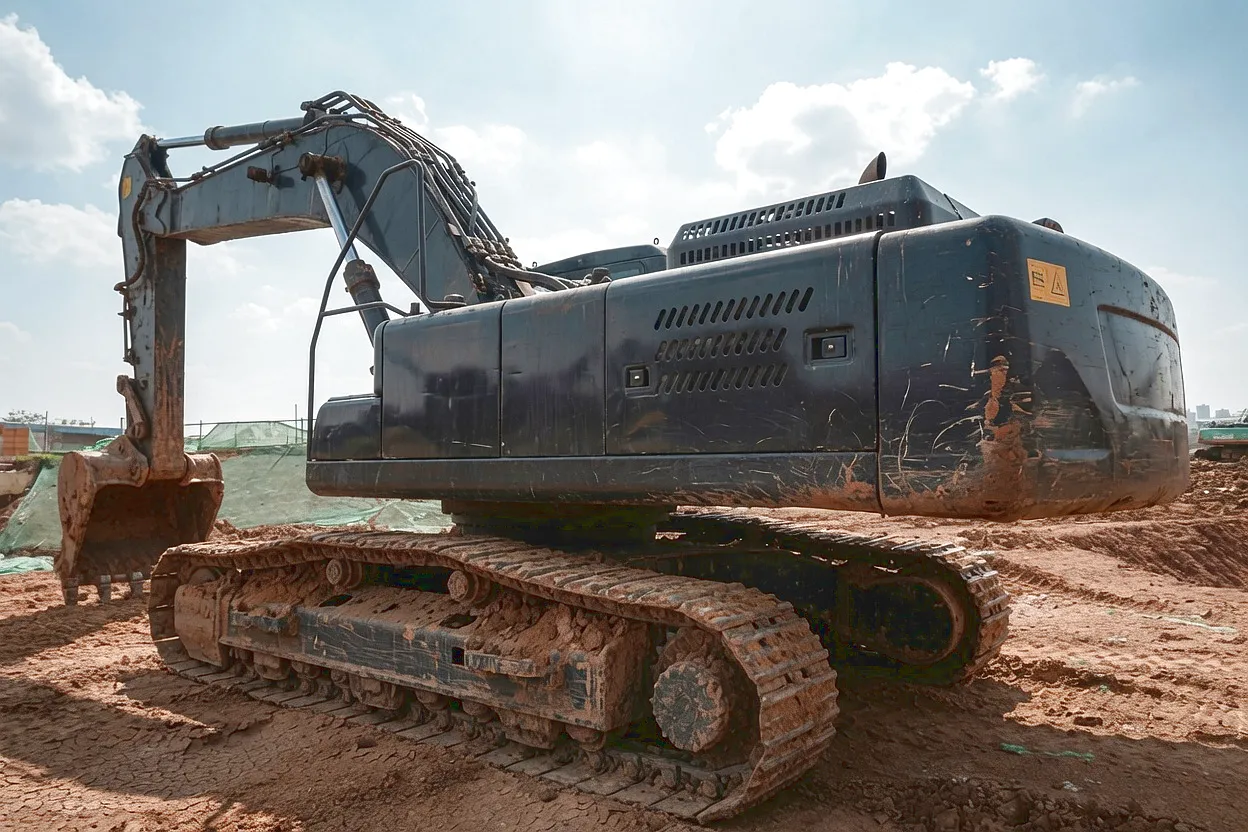
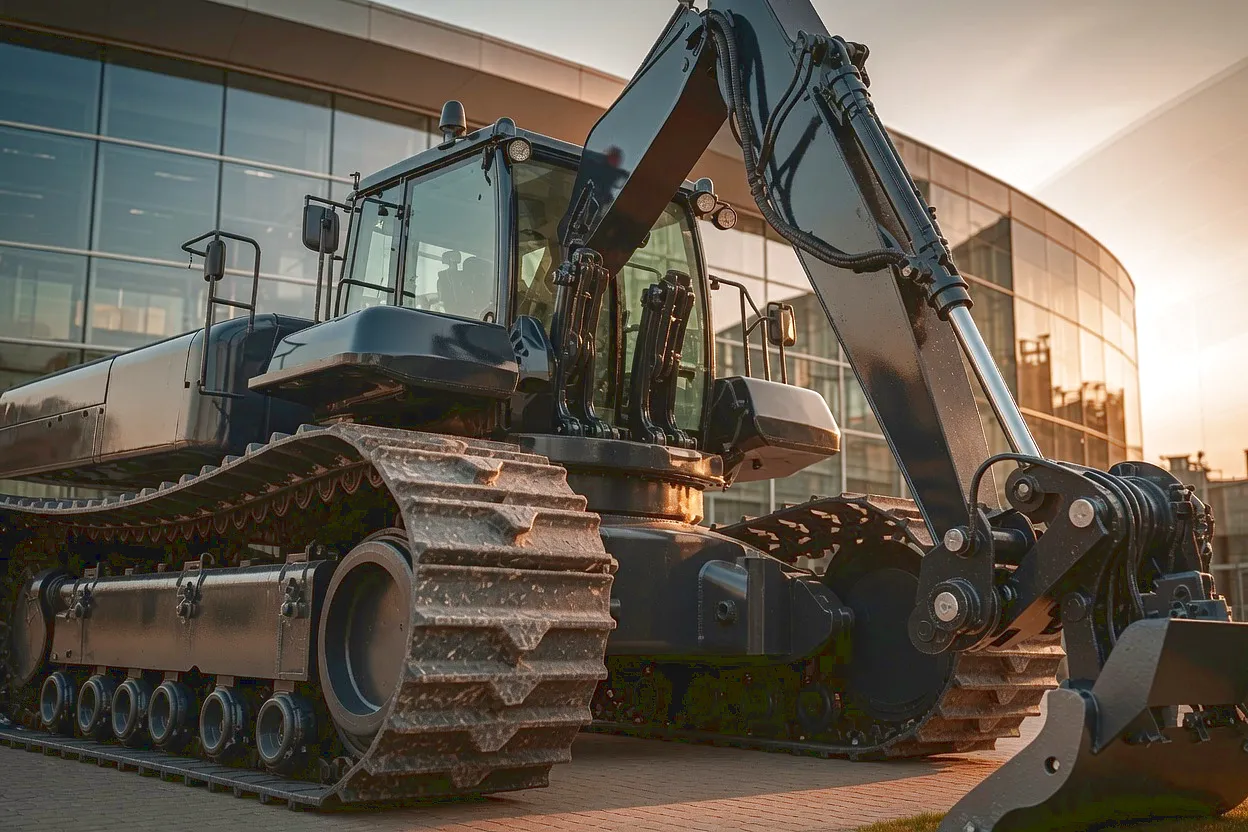
Leaf Chain Performance Specifications for Excavator Use
The table below covers the most common leaf chain grades specified for excavator crowd and lift cylinders in UK plant — from 5-tonne compact machines used on restricted urban sites to 70-tonne mining shovels working limestone quarries in the Peak District.
| Chain Size / Pitch | Lacing Grade | Breaking Load (kN) | Carico di lavoro (kN) | Typical Excavator Class | Pin Dia. (mm) |
|---|---|---|---|---|---|
| AL422 / 12.70 mm | 2 × 2 | 54.0 | 18.0 | Mini (1–5 t) | 4.45 |
| AL644 / 19.05 mm | 4 × 4 | 136.0 | 45.3 | Mid (10–20 t) | 6.35 |
| AL866 / 25.40 mm | 6 × 6 | 287.0 | 95.7 | Large (20–40 t) | 9.53 |
| AL1088 / 31.75 mm | 8 × 8 | 450.0 | 150.0 | Heavy (40–70 t) | 12.70 |
| BL1634 / 50.80 mm | 2 × 4 | 222.0 | 74.0 | Mining Shovel (70+ t) | 19.05 |
Working load = 1/3 of breaking load (safety factor 3:1 minimum per ISO 4347). Custom lacing and non-standard pitches available — contact Ever Power for engineered solutions.
What Makes a Leaf Chain Strong Enough for Excavator Abuse?
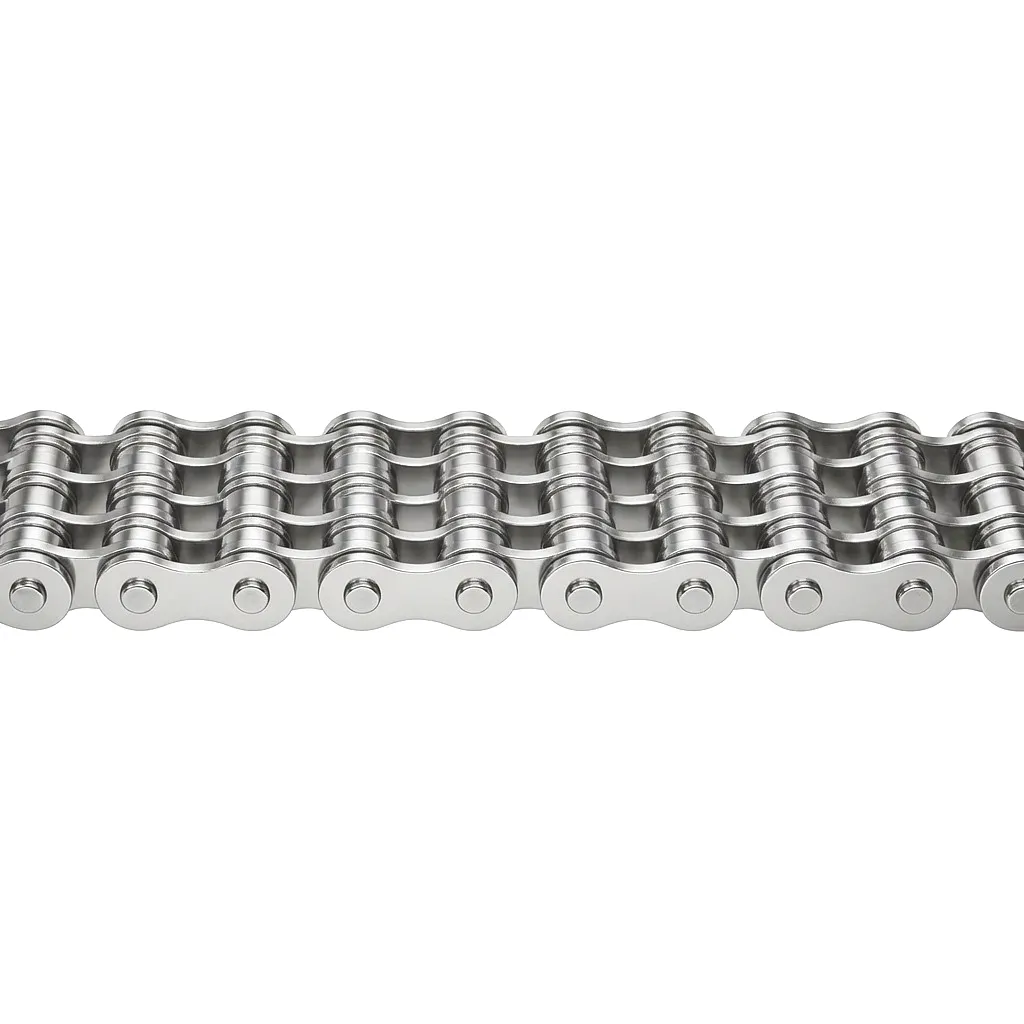 The raw material story begins with the steel specification. Ever Power leaf chains destined for excavator service are manufactured from low-alloy steel plate — typically a chromium-manganese grade — that is cold-worked to improve tensile strength before being stamped into link plates. Cold-working introduces compressive residual stresses in the plate surface that partially cancel the tensile stresses generated under load, meaningfully extending fatigue life in the oscillating-tension environment typical of excavator crowd cycles. The punched pin holes are then precisely sized to give a controlled interference fit with the connecting pins.
Pin material is equally critical. Pins are turned from high-carbon alloy steel bar, then case-hardened by carburizing to produce a surface hardness of approximately 60 HRC while maintaining a tough, ductile core. This gradient hardness profile means the pin resists wear at the bearing surface — where it contacts the plate hole edge under lateral load — while absorbing shock without brittle fracture. On a UK quarry site where the excavator attachment is constantly changed between buckets, rippers, and hydraulic hammers, that shock tolerance is tested several times a day. A pin that’s hard all the way through becomes a time bomb; a correctly case-hardened pin runs season after season.
Leaf Chain vs Wire Rope vs Roller Chain in Excavator Cylinders
UK plant engineers frequently debate why excavator manufacturers specify leaf chain rather than wire rope or roller chain for hydraulic cylinder tensile members. The answer sits in three performance dimensions: bending radius tolerance, inspection accessibility, and failure mode predictability.
| Property | Leaf Chain | Wire Rope | Roller Chain |
|---|---|---|---|
| Tensile load capacity | ★★★★★ Excellent | ★★★★☆ Good | ★★★☆☆ Moderate |
| Visual inspection ease | ★★★★★ Excellent | ★★☆☆☆ Difficult | ★★★★☆ Good |
| Predictable wear warning | ★★★★★ Measurable elongation | ★★☆☆☆ Often sudden failure | ★★★☆☆ Roller wear visible |
| Tight-clearance cylinder fit | ★★★★★ Flat, low-profile | ★★★☆☆ Requires sheave space | ★★☆☆☆ Bulky for cylinders |
| Shock load absorption | ★★★★★ High plate flexibility | ★★★☆☆ Some elasticity | ★★☆☆☆ Brittle under peak load |
Six Reasons UK Plant Operators Trust Ever Power Leaf Chain
After eighteen years working alongside plant managers, OEM engineers, and hydraulic rebuild specialists across Scotland, Wales, and the East Midlands, the advantages that matter most are rarely the ones listed first in a brochure.
High-Cycle Fatigue Life
An excavator crowd cylinder can complete 2,000 to 5,000 full extension cycles per shift on a busy groundwork project. Ever Power leaf chain plates are shot-peened after hardening to extend plate fatigue life by inducing compressive surface stresses — the same engineering logic used on turbine blades. This matters enormously when you’re pricing up a long-term plant maintenance budget and need a chain specification that won’t require mid-season replacement.
Predictable Wear Indication
Unlike wire rope, which can fail suddenly with minimal external warning, leaf chain elongates progressively as pin-and-plate bearing surfaces wear. A 3% elongation reading during a scheduled inspection tells a plant manager the chain has perhaps two months of normal operation remaining — not two minutes. This predictability is especially valuable in UK civil engineering contracts where programme delay costs are substantial and replacement windows must be pre-planned.
Corrosion Resistance in UK Conditions
British weather inflicts salt spray in coastal counties, persistent moisture in Scottish Highlands operations, and acidic clay soils across much of the Midlands and South East. Ever Power leaf chains for excavator service receive a zinc-phosphate pre-treatment followed by a rust-inhibiting oil coating as standard. For customers in particularly aggressive environments — sea-dredging operations in the Solent, peat extraction in Northern Ireland — nickel-plated and stainless variant plates are available to further extend corrosion resistance without sacrificing tensile integrity.
ISO 4347 Dimensional Compliance
Every leaf chain dimension — pitch, pin diameter, plate thickness, width across plates — is manufactured to ISO 4347 tolerances. This means an Ever Power AL644 chain will drop into a Komatsu, Caterpillar, or JCB cylinder housing that was engineered decades ago with the same ease as the original OEM part. There’s no guesswork about whether the chain will fit, and no need to modify existing anchor pins or clevis ends. For UK plant hire companies managing mixed fleets, this dimensional interoperability is worth its weight in saved workshop hours.
Documentazione completa sulla tracciabilità
UK plant operators working under LOLER (Lifting Operations and Lifting Equipment Regulations 1998) have a legal duty of care that requires documented evidence of equipment specification and maintenance. Ever Power supplies material certificates, proof-load test records, and batch traceability documentation as standard with all leaf chain deliveries. This paper trail matters not only for compliance audits but for defending liability positions when incidents are investigated by the Health and Safety Executive.
Rapid Custom Length & Assembly
Standard reel stock is one thing; what actually stops production on a rebuild is the inability to get a chain cut to a precise overall length and pre-fitted with the correct end terminations. Ever Power machines custom-length leaf chains to ±1 link precision and can attach master links, clevis pins, and bracket ends to drawing. Turnaround for urgent UK excavator rebuild orders is typically 5–7 working days ex-factory for non-stock sizes, with express 72-hour options available on request for high-value plant downtime situations.
Where Exactly Does Leaf Chain Sit in an Excavator?
The answer is nuanced. Different excavator types use leaf chain in slightly different locations and roles, each with distinct load profiles. Understanding these roles helps procurement teams specify the right leaf chain grade, length, and termination before the machine arrives in the workshop.
⚙ Crowd Cylinder (Arm / Dipper)
The crowd cylinder drives the dipper arm (also called the stick or arm) inward and outward. On a standard backhoe excavator working in London clay, the crowd force at full extension can reach 8 to 15 tonnes depending on machine class. The leaf chain inside this cylinder endures both high static hold forces — when the arm pauses during a precision grading pass — and dynamic shock loads when the bucket impacts unexpected buried obstructions like old Victorian brick drains. AL644 or AL866 lacing grades are standard here, with AL1088 specified on 30-tonne-plus machines.
☔ Boom Lift Cylinder
The boom lift cylinder raises and lowers the entire boom assembly, which on a 20-tonne machine can itself weigh 800 to 1,200 kg. The leaf chain in a boom lift cylinder works in a more sustained static tension mode — the boom hovers at height for extended periods while the arm cycles below. This sustained static loading demands excellent stress relaxation resistance in the plate steel; without it, a chain will elongate progressively even with no additional wear, eventually triggering the hydraulic compensator and consuming pilot pressure. Ever Power heat treatment protocols are specifically tuned to minimize this static creep.
🔨 Hydraulic Hammer / Attachment Circuits
When a hydraulic breaker attachment is fitted to a large excavator working on a quarry blast-face trim or road reconstruction, the impact frequency can exceed 900 blows per minute. Every blow transmits a shock wave back through the arm assembly. The leaf chain in the crowd cylinder must absorb these repeated micro-impulses without plate fretting. Inadequate plate surface finish — a rough bore at the pin hole — allows fretting corrosion to initiate fatigue cracks at the worst possible location: the plate hole edge. Ever Power burnishing of plate holes to Ra 0.8 µm is non-negotiable for hammer service chains.
🐙 Long-Reach & Demolition Excavators
High-reach demolition excavators operating on UK city-centre projects — the kind of work that has defined the regeneration of Manchester, Birmingham, and East London — use extended boom and arm configurations that increase effective cylinder loads dramatically due to the increased leverage. Leaf chains in long-reach machines frequently operate at utilisation ratios above 60% of safe working load, meaning the safety factor is compressed and chain condition must be assessed more frequently. Ever Power offers pre-engineered long-reach packs with matched chain grade, length, and termination hardware in a single ready-to-fit assembly.
Ever Power Factory: Where Custom Leaf Chain Begins
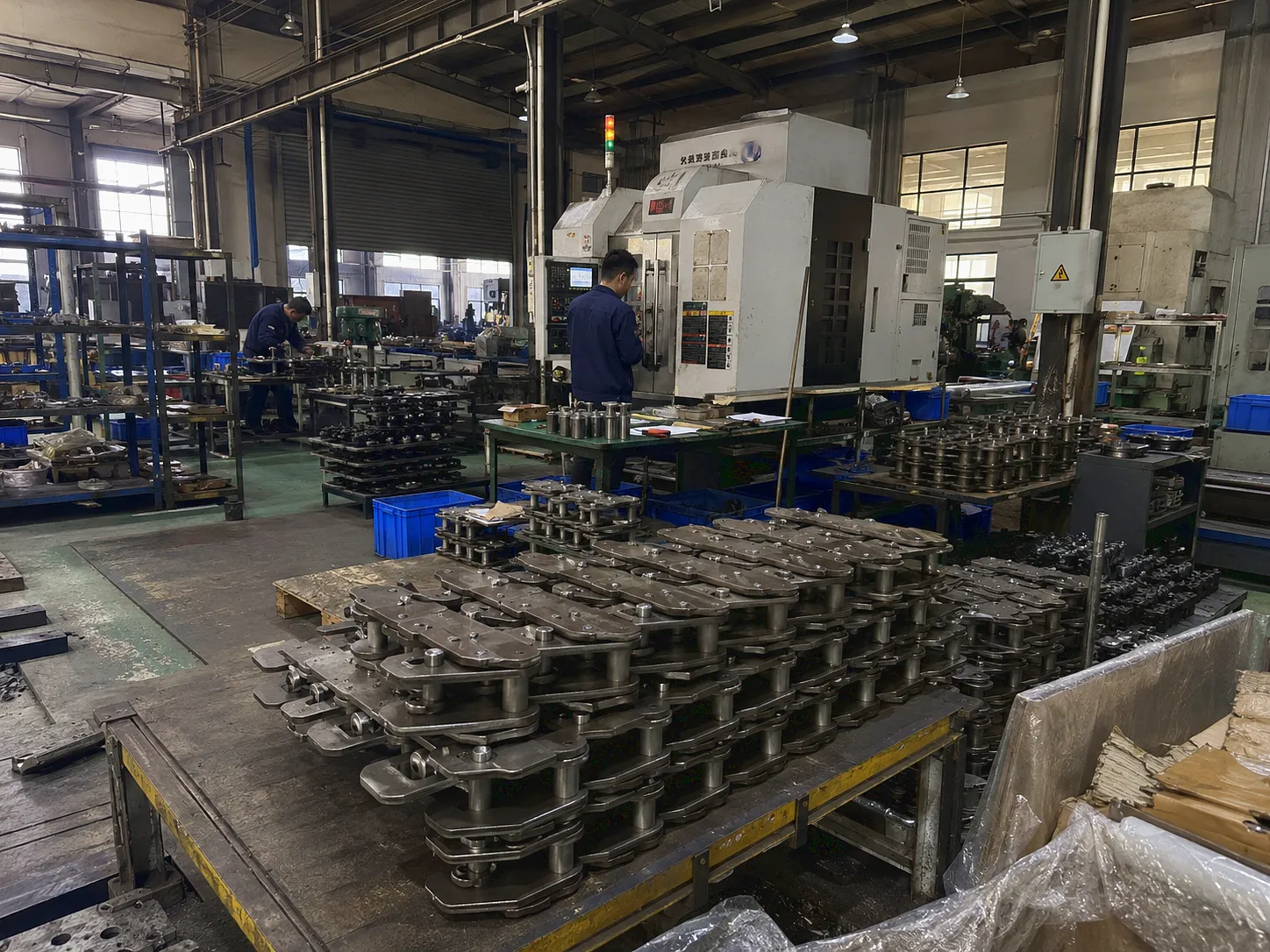
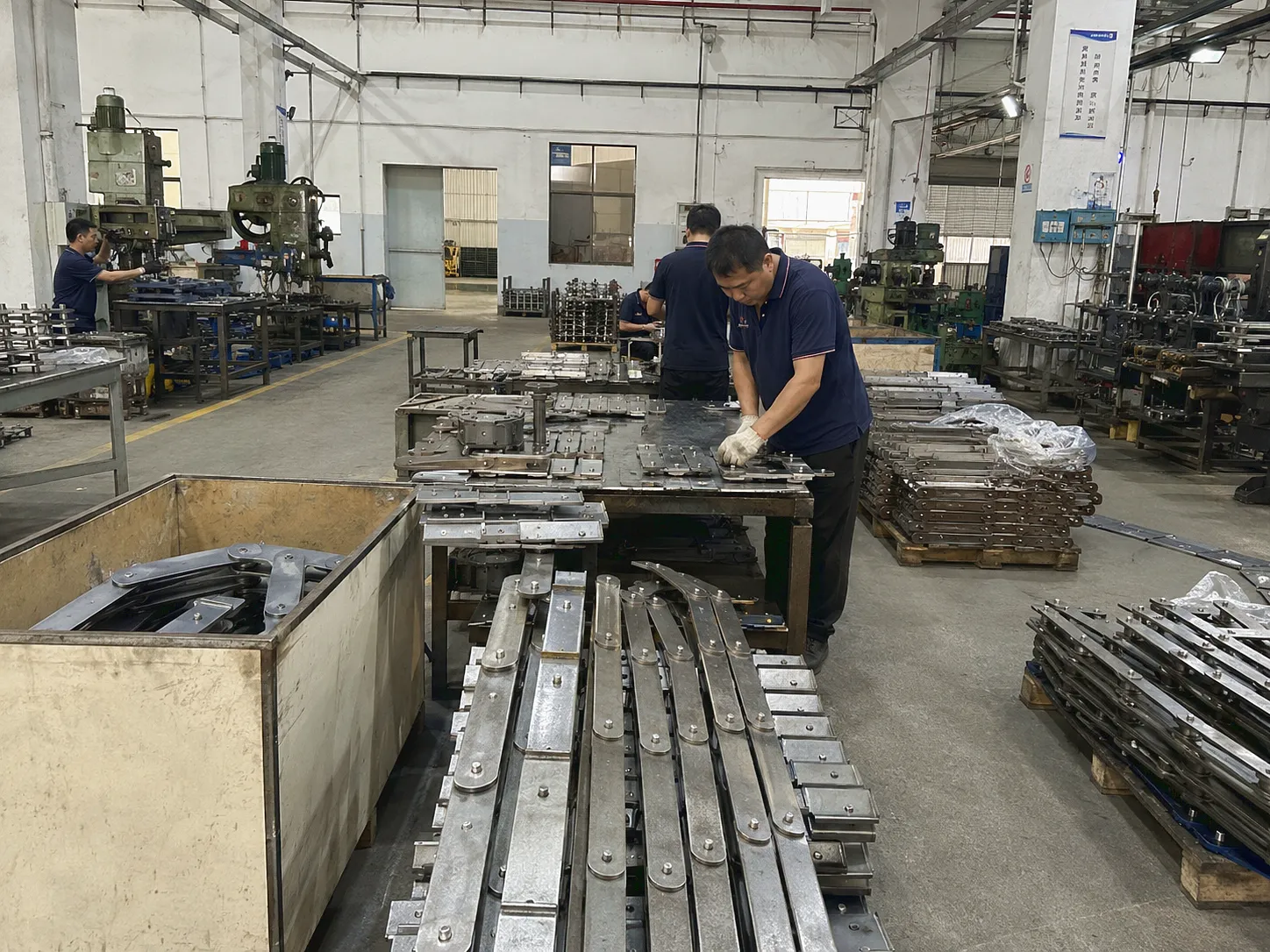 The Ever Power manufacturing facility runs on a philosophy of controlled precision rather than volume throughput, and that philosophy shows in the dimensional consistency of every chain that leaves the building. CNC plate-stamping centres hold plate hole pitch to ±0.05 mm across a reel of 100 links — variation that compound into dimensional drift would affect how the chain seats in an excavator cylinder pulley. Assembly lines use press-controlled riveting tooling that delivers consistent pin flare geometry, eliminating the inconsistent hand-riveting that is still common among smaller manufacturers and which is a principal cause of premature pin migration under lateral load.
The real differentiator for UK buyers sourcing excavator leaf chain is Ever Power’s custom engineering service. If you’re running a non-standard excavator model — perhaps an older Liebherr or a specialist attachment machine — and the OEM has discontinued the exact chain assembly, Ever Power’s applications team can reverse-engineer from a sample or drawing, produce the appropriate tooling, and manufacture matched replacement assemblies. This is not a bespoke workshop operation; it’s a production-capable facility that can produce single units for a critical rebuild or 500-piece batches for OEM supply contracts. Custom end terminations, special-pitch variants, heat-treated-to-order grades, and corrosion-protected assemblies for marine excavation work are all routine. There is no minimum order for custom designs, and every custom order ships with a full test certificate.
How UK Plant Teams Have Used Ever Power Leaf Chain
The following case study describes a representative project — the kind of scenario we encounter regularly when working with plant hire and civil engineering firms across Britain.
Hardstone Aggregates Ltd — Reducing Unplanned Downtime by 68%
Hardstone Aggregates Ltd operates a fleet of eight Komatsu PC360LC-11 excavators at their limestone quarry near Harrogate. Before switching to Ever Power leaf chain, the maintenance team was replacing crowd cylinder chains on a 1,400–1,600 operating-hour cycle — consistent with the manufacturer guideline but shorter than they believed the application demanded. More critically, two machines experienced in-service chain failures within a single quarter, causing combined downtime costs of approximately £47,000 and triggering a safety review under UK Health and Safety Executive guidance. The failure analysis identified the previous chains had a substandard plate hole finish that initiated fretting fatigue at low cycle counts under the high-impact loading from hydraulic hammers used in secondary breaking.
After switching to Ever Power AL866 (standard crowd) and AL1088 (hammer service) leaf chain with the burnished plate hole specification, the first service interval was extended to 2,200 hours without measurable elongation exceeding 1.5%. By month eighteen, no unplanned leaf chain failure had occurred across the fleet. The maintenance manager estimated annual savings of £31,000 in reduced chain spend and eliminated production losses — a return on investment well inside six months on the slightly higher per-metre chain cost. Ever Power also supplied custom-length cut-to-order assemblies pre-fitted with Komatsu-pattern clevis ends, cutting workshop assembly time from two hours per machine to under thirty minutes.
“We’ve been burning through leaf chain faster than the OEM schedule ever suggested on our long-reach demolition machine in Manchester. Ever Power’s application team specified a beefed-up AL1088 assembly with a nickel plate option for the damp inner-city conditions. We’re eighteen months in and the chain looks better than anything we’ve put in before at the same mileage.”
“Procurement of leaf chain had always been an afterthought in our maintenance budget — we just ordered whatever came up cheapest. After one failure on the A14 corridor job that stopped progress for two shifts, we switched supplier to Ever Power and started ordering proper spec chains with LOLER-ready test certs. Honestly the cost difference is negligible compared to the headache we’ve saved.”
“I manage an OEM supply line for hydraulic rebuild kits targeting the Scottish Highlands groundwork market. Ever Power is the only supplier we’ve found willing to do a custom lacing grade in a modest volume — 50 assemblies — at a commercial price. The dimensional consistency batch to batch means we never have to measure and sort on arrival.”
How to Inspect and Maintain Leaf Chain on an Excavator
A leaf chain that is maintained properly can outlast its nominal design life by 30–50%. The investment in inspection time is almost always recovered many times over in extended service intervals, particularly in a UK regulatory environment where LOLER requires documented evidence of condition assessment regardless of whether replacement occurs.
| Inspection Item | Method | Replace Threshold | Frequency |
|---|---|---|---|
| Chain elongation | Measure across 20 links, compare to new nominal length | > 3% elongation | 500 hr or 3 months |
| Plate cracking / corrosion | Visual, clean chain with solvent before inspection | Any crack; heavy rust pitting | Every 250 hr |
| Pin rotation / migration | Check rivet head flush; any axial movement | Any measurable pin movement | 500 hr or 3 months |
| Lubrication condition | Wipe clean, check for dry pin-plate contact | Any dry metal-metal contact | 100 hr; relubricate immediately |
| End termination integrity | Inspect anchor pins, clevis bolts, split pins / circlips | Any deformation, missing retainer | Every 250 hr |
Lubrication recommendation: use a high-pressure grease with EP (extreme pressure) additive on exposed chain sections. For sealed cylinder installations, the chain is oil-bath lubricated by hydraulic fluid — ensure no contamination of hydraulic oil enters the chain cavity. Under LOLER, a competent person must sign off inspection records.
Domande frequenti
Questions commonly asked by plant engineers, fleet managers, and procurement teams across the UK.
Get a Leaf Chain Quote for Your Excavator Fleet
Whether you need a single replacement assembly for a breakdown recovery or a full OEM supply agreement for a UK plant hire fleet, Ever Power’s applications team is ready. Send your excavator model, cylinder reference, and required chain length — we’ll respond with a full technical recommendation and competitive price within 24 hours.