
Why the Conveying Chain Is the Heartbeat of Every Filling Line
 A beverage filling production line is one of the most mechanically demanding environments in food and drink manufacturing. Bottles, cans, or pouches move continuously — often at speeds exceeding 1,200 units per minute — through rinsing, filling, capping, labelling, and palletising stations. Every one of those containers depends on precision timing from the conveying system underneath. A chain that stretches by even a fraction of a millimetre introduces phase errors that cascade across the entire line, triggering jams, misfills, and label misalignment. That is where leaf chain — also known as plate chain or flat-link chain — establishes a decisive advantage over roller chain, table-top chain, and other conveying alternatives.
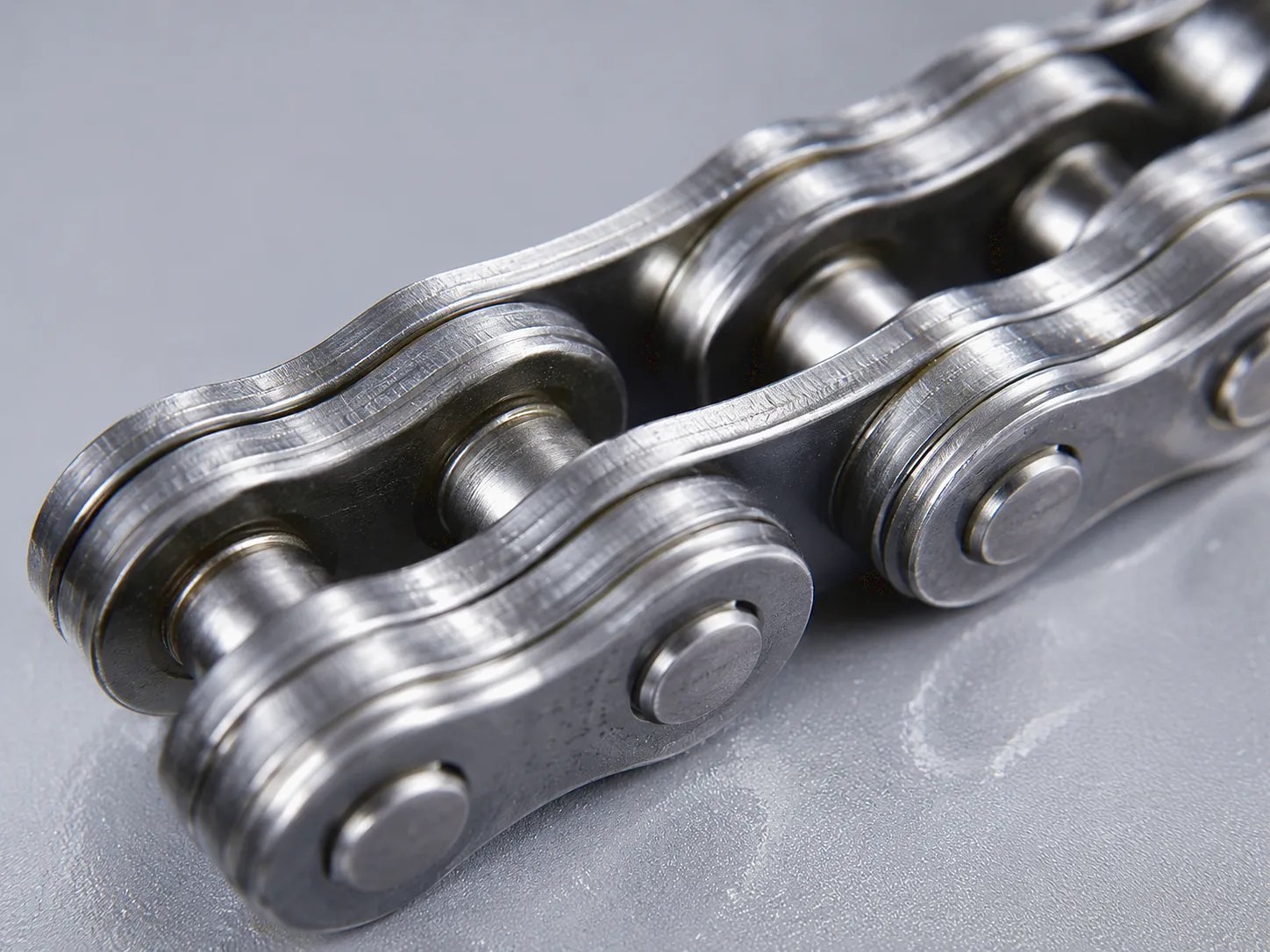
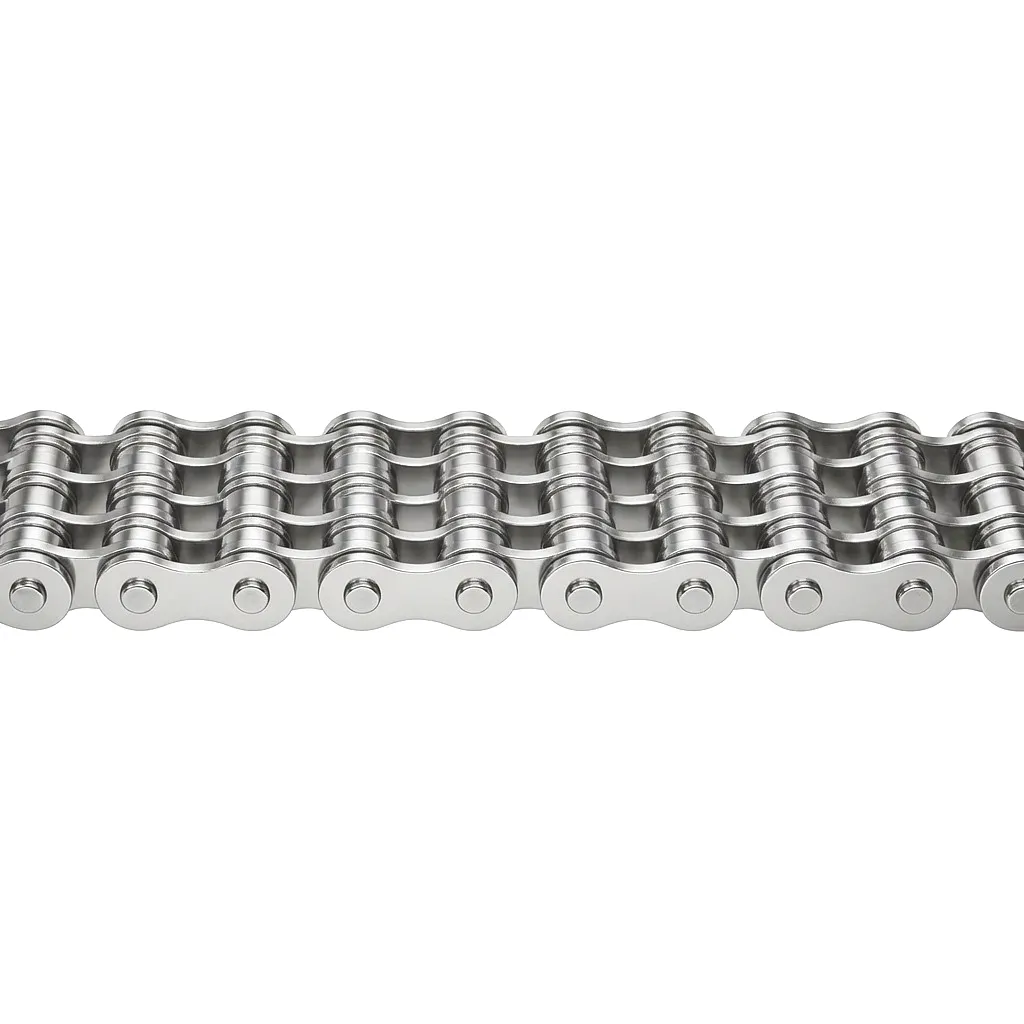
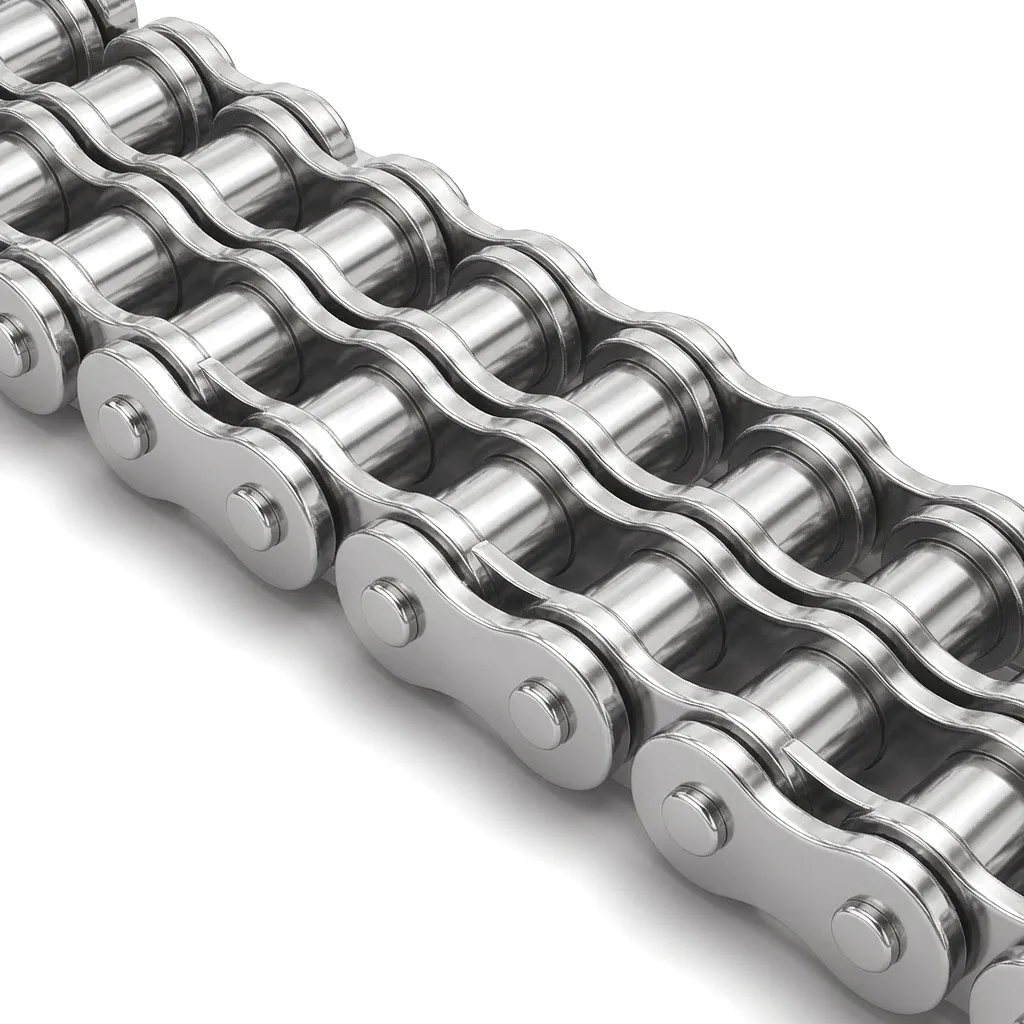
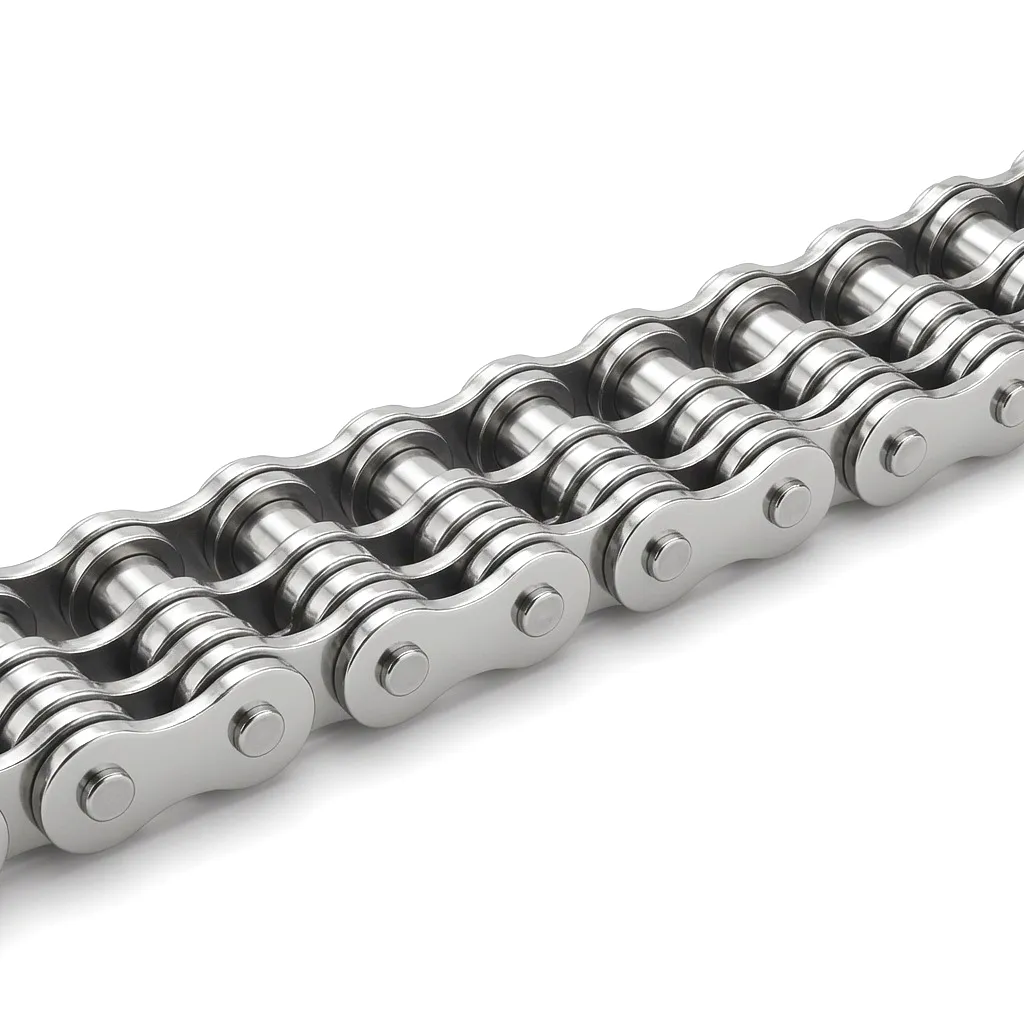
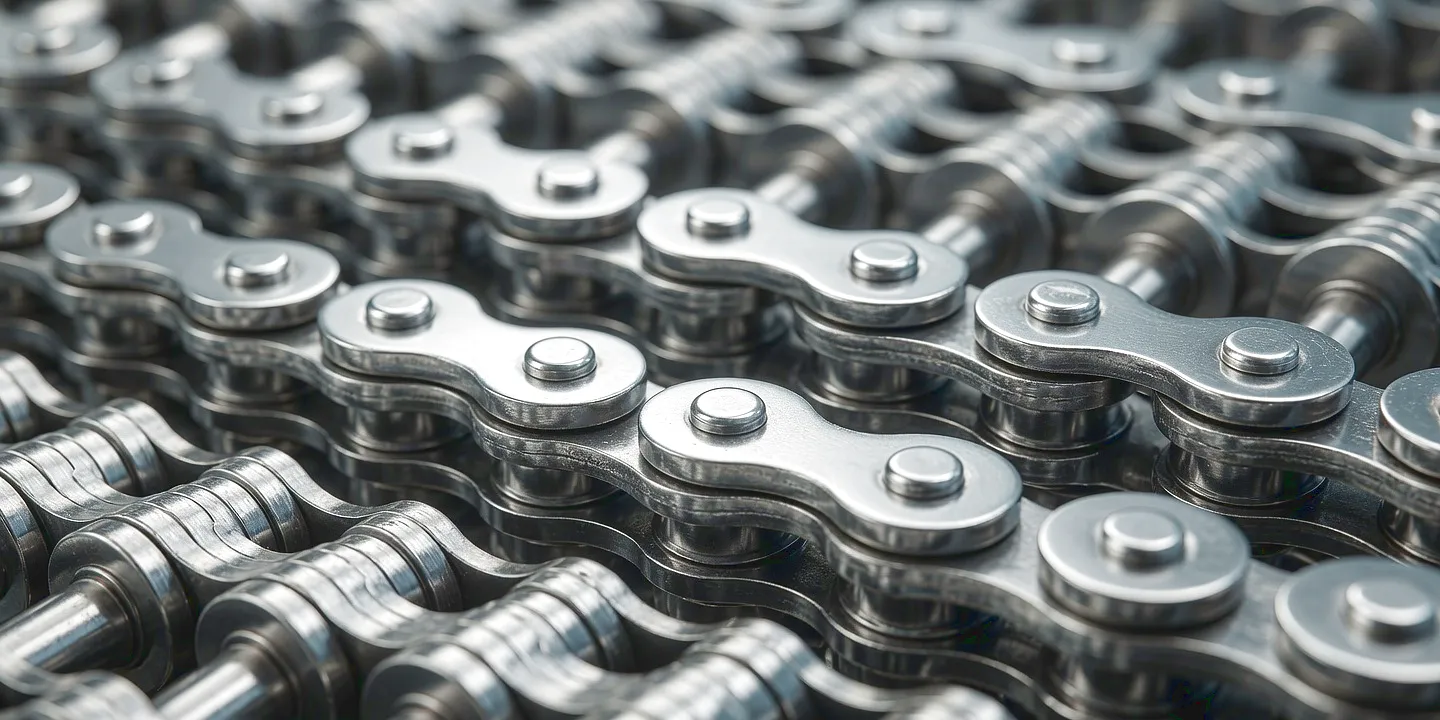
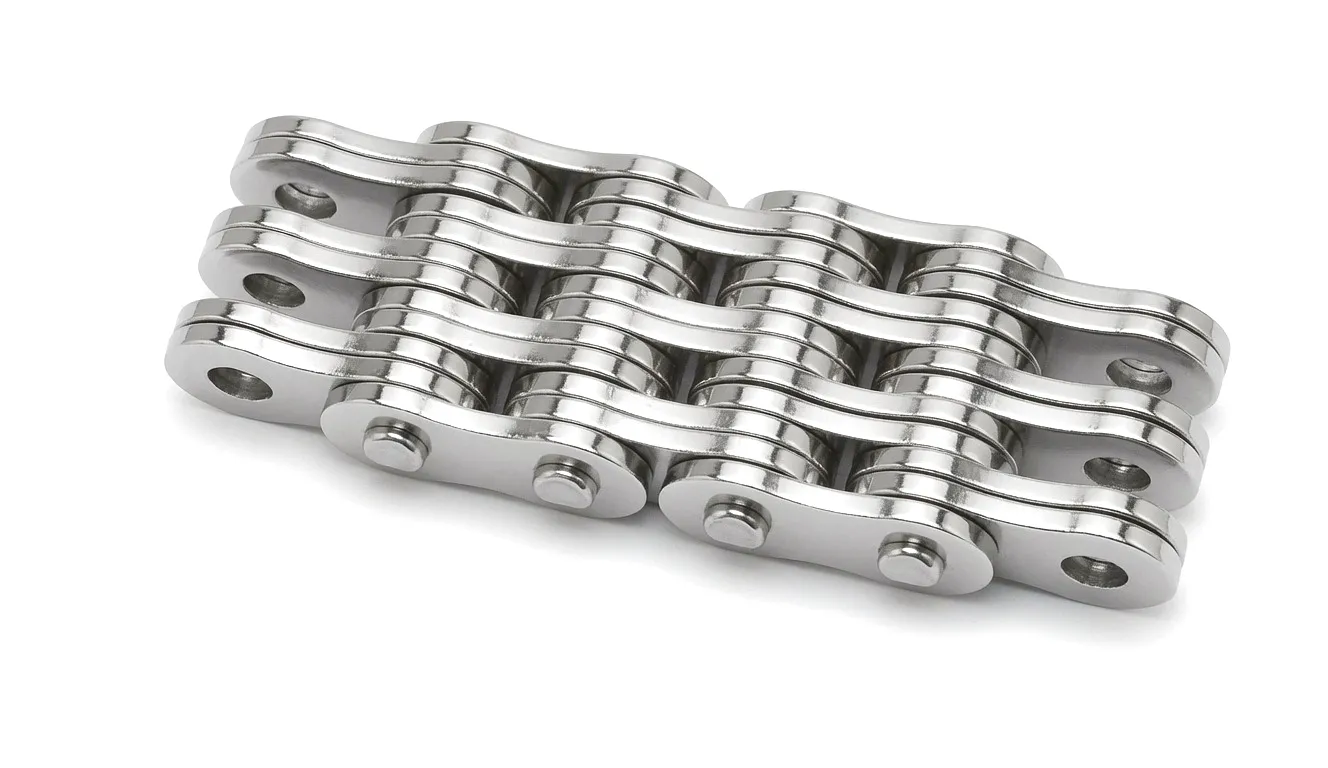
The fundamental structure of a leaf chain consists of interleaved link plates pinned together without rollers. This seemingly simple geometry produces an extraordinarily high tensile strength-to-weight ratio, exceptional resistance to fatigue loading, and a pitch accuracy that remains stable across millions of cycles — qualities that make it the preferred choice for the high-load, high-cycle conveying zones on modern beverage lines in the UK and worldwide.
Engineering Fundamentals
Leaf Chain: Material, Structure & Working Principle
Understanding what goes inside the chain explains why it lasts longer and runs more accurately than alternatives.
Link-Plate Construction
Multiple rows of high-carbon or alloy steel plates are interleaved and held together by hardened, precision-ground pins. No outer rollers means less mass in motion and fewer wear surfaces. The lacing pattern — BL, AL, or custom — determines tensile rating and fatigue life. On a beverage filling line, this translates into a chain that stays true to pitch even after years of continuous operation.
Material Grades
Standard leaf chains use carbon steel (typically 0.4–0.6% C) for general-purpose conveying. For wet zones — rinsers, pasteurisers, wash-down tunnels — Ever Power offers 304 or 316L stainless steel variants, as well as nickel-plated versions that combine a cost advantage with superior corrosion resistance. The pin and plate hardness is controlled through heat treatment (case hardening to 58–62 HRC surface) to maximise wear life without sacrificing impact toughness.
How It Works Under Load
When tensile load is applied, it distributes evenly across all link plates simultaneously. This shared-load geometry is why a properly specified leaf chain can sustain loads four to five times higher than its roller chain equivalent of the same pitch, without entering plastic deformation. On beverage lines, where sudden inertia spikes occur during line surges, jams, and emergency stops, this structural reserve prevents chain failure and protects downstream equipment from shock loads.

Performance Data
Technical Specifications — Ever Power Leaf Chain for Beverage Lines
The following table covers the most commonly specified series for filling line applications. Custom dimensions and pitches are available on request.
| Series | Pitch (mm) | Min. Tensile Strength (kN) | Material | Lacing | Recommended Application Zone |
|---|---|---|---|---|---|
| AL-422 | 25.40 | 17.8 | Carbon Steel | 4 x 2 | Dry conveying, labelling |
| AL-644 | 25.40 | 44.5 | Carbon Steel | 6 x 4 | Filler drive, heavy pallet conveying |
| BL-646 SS | 38.10 | 53.0 | 316L Stainless | 6 x 4 | Rinser, pasteuriser, wash-down zones |
| BL-866 | 38.10 | 88.0 | Alloy Steel | 8 x 6 | High-load elevator, case packer drive |
| AL-844 NP | 25.40 | 62.3 | Nickel-Plated | 8 x 4 | Humid capping, light wash-down |
| Custom Series | On request | Up to 300+ | Per spec | Any | OEM / bespoke machine builds |
*All values measured per ISO 4347. SS = Stainless Steel; NP = Nickel-Plated. Custom configurations available for UK and international OEM orders.
Line-by-Line Analysis
Where Leaf Chain Makes the Difference on a Beverage Filling Line
🚿 Rinser & Bottle-Washing Zone
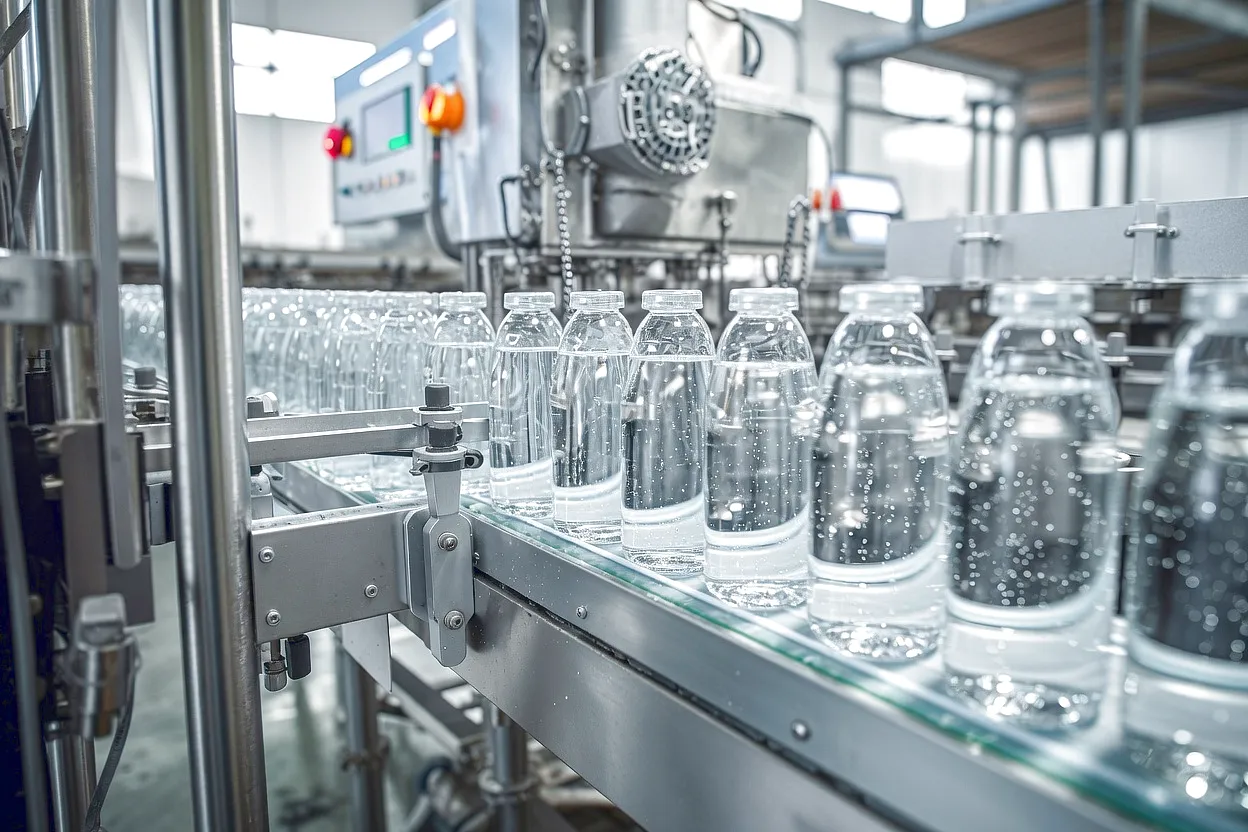
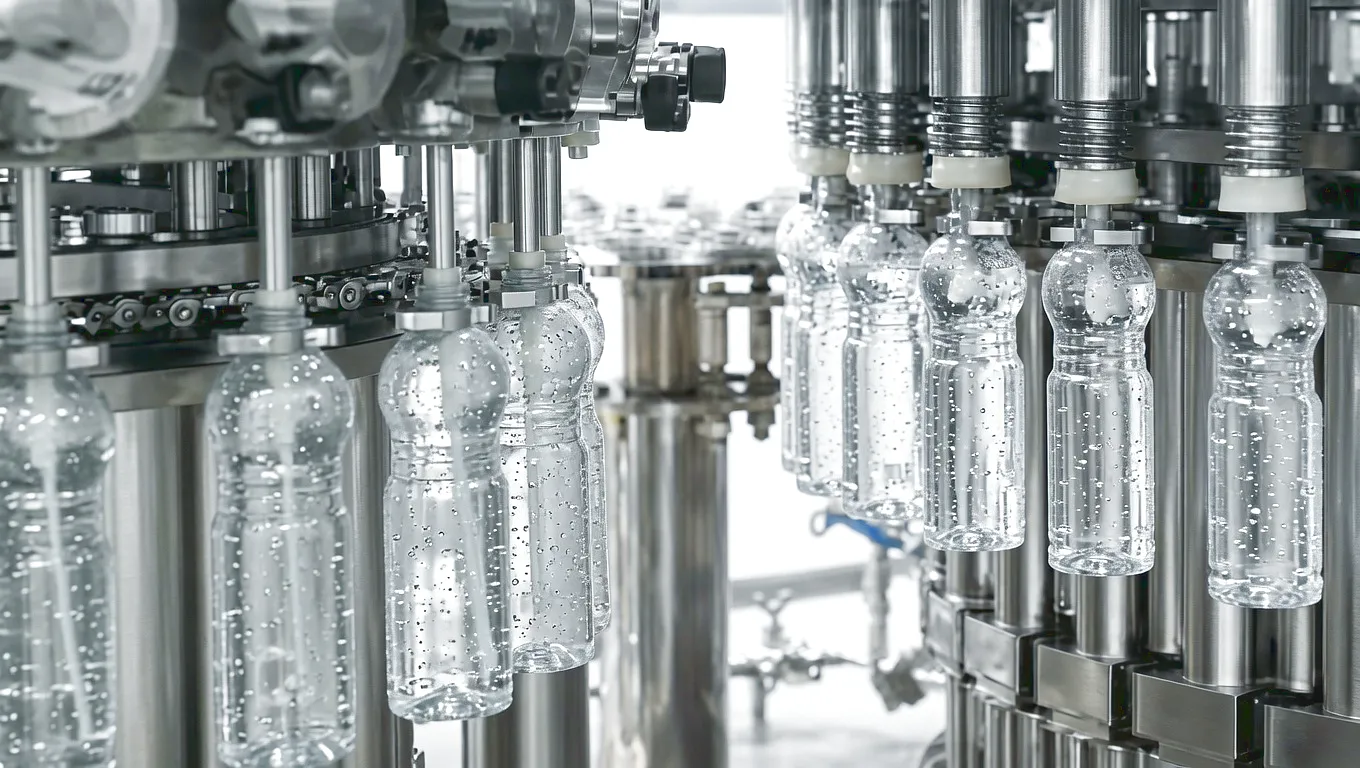
Before a single millilitre of liquid product contacts the inside of a PET or glass bottle, the container passes through high-pressure water or chemical rinsing. In this zone, conveying chains are subjected to continuous moisture, detergent residue, and water temperatures that can reach 80 °C. Standard carbon steel chains corrode rapidly under these conditions, leading to red rust contamination — a critical food safety concern. Ever Power’s 316L stainless steel leaf chains are specified for this zone specifically because the material is inherently resistant to chloride attack from cleaning agents, maintains dimensional integrity in thermal cycling, and meets FDA and EU food-contact material directives. The absence of rollers also means there are fewer pockets where pathogens or scale can accumulate, simplifying CIP (Clean-in-Place) validation for UK food safety audits under BRCGS standards.
🍺 Filling Station Drive Chain
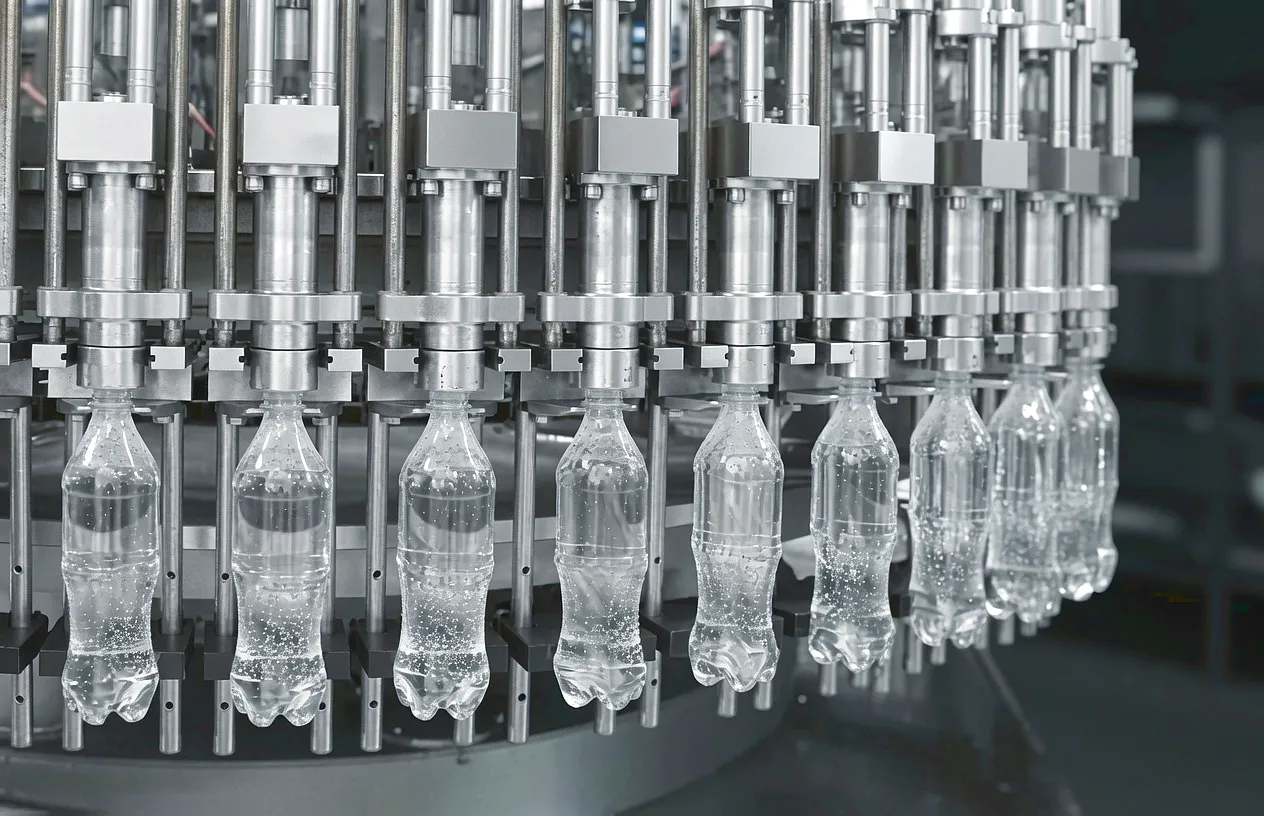
The rotary filling carousel is arguably the highest-precision mechanism on the entire line. It must position each bottle mouth within ±0.5 mm of the filling nozzle and maintain constant speed to prevent foaming in carbonated drinks or overflow in still beverages. The drive chain linking the servo motor to the carousel must therefore have extremely tight pitch accuracy and zero perceptible elongation at operating loads. A leaf chain’s solid pin design eliminates bushing and roller wear-related pitch growth seen in conventional roller chains, meaning the filler runs at the same synchronisation point after two years of continuous operation as it did on commissioning day. For UK craft breweries and high-volume soft drink plants alike, this directly reduces product giveaway and out-of-spec fill volumes.
🔁 Pasteuriser Conveying System
Tunnel pasteurisers subject conveying chains to sustained temperatures between 60 °C and 80 °C for dwell times of 15 to 30 minutes, combined with the weight of densely loaded bottles or cans on a wide multi-strand platform. This thermal and mechanical load combination causes standard chains to creep and stretch far more aggressively than at ambient temperatures. Ever Power’s leaf chains for pasteuriser applications use elevated-temperature lubricants and alloy steel pins with a higher softening point, preserving hardness and therefore wear resistance through hundreds of pasteurisation cycles. The result is a dramatically extended replacement interval that reduces planned maintenance shutdowns — a key metric for beverage plants in Scotland, England, and Wales operating on thin maintenance windows during peak production seasons.
🏷️ Labelling & Date-Coding Section
Label application and ink-jet date coding demand that each container arrives at the applicator head at precisely the correct position relative to the previous container. Any pitch variation in the conveying chain creates gaps or overlaps that either skip containers entirely or apply labels off-centre — a packaging defect that triggers retailer complaints and product recalls in the UK market. Nickel-plated leaf chains are increasingly used here because they combine good corrosion resistance for occasional wash-down with the pitch precision of carbon steel construction. The slightly higher initial cost compared to bare carbon steel is recovered within six months through reduced label waste, fewer rejects, and the elimination of label applicator re-calibration labour.
📦 Case Packer & Palletiser Drive
At the end of the line, case packers and robotic palletisers must handle the accumulated weight of full bottles in multi-layer patterns at high cyclic rates. The chain drives in these machines carry loads many times higher than upstream conveyors and must start, stop, and reverse frequently to synchronise with robotic pick cycles. Here, the BL-866 alloy steel leaf chain excels: its eight-row lacing provides tensile strength in excess of 88 kN while the solid pin design absorbs repeated shock loads without developing the internal fatigue cracks that would, over time, cause roller chain links to snap catastrophically. For a palletiser running at 60 to 80 cycles per minute across three shifts, the mean time between failures on a properly specified leaf chain is measured in years, not months.
Competitive Edge
Six Reasons Beverage Engineers Choose Leaf Chain Over Alternatives
Superior Pitch Accuracy
Ground pins and precision-punched link plates hold pitch tolerances to within ±0.05 % over service life, maintaining fill-head synchronisation on carousel fillers.
Higher Load Capacity per Pitch
Multiple link plate rows distribute load across all plates simultaneously. An AL-644 leaf chain carries the same load as a comparably pitched roller chain that is 40 % heavier.
Thermal Stability
Alloy steel variants retain hardness and dimensional accuracy up to 120 °C, covering pasteuriser, hot-fill, and steam-sterilisation environments without heat-induced stretch.
Hygiene-Friendly Design
No bushing cavities or roller crevices means fewer harbourage sites for organic residue. Stainless grades comply with EU Regulation 1935/2004 on food-contact materials.
Extended Service Life
Field data from UK bottling plants shows Ever Power leaf chains achieving 3–5 times the service life of roller chain alternatives in identical applications, when correctly specified and lubricated.
Low Maintenance Interval
The simple plate-pin geometry requires only periodic re-lubrication and stretch measurement, versus bushing inspection, roller replacement, and side-plate checking required for complex conveying alternatives.
Specification Guide
Selecting the Right Leaf Chain Grade for Each Filling Line Zone
Customer Success
Real-World Results: How a UK Craft Brewery Eliminated Unplanned Stoppages
Caledonian Peak Brewing Co., Edinburgh
The challenge: Caledonian Peak operates a 24,000 cans-per-hour aluminium can filling line across three shifts, six days a week. By mid-2023, the OEM-supplied roller chains in their pasteuriser section had stretched to the replacement limit after just seven months of service. Each chain change required a full eight-hour shift shutdown and involved four maintenance engineers. With three replacement events per year across two parallel lines, the cumulative downtime was costing the brewery an estimated £186,000 annually in lost production and labour.
The solution: After a technical site audit by an Ever Power application engineer, the brewery replaced all pasteuriser conveying chains with BL-646 SS 316L stainless leaf chains, lubricated with a food-grade synthetic grease rated for continuous service at 90 °C. Simultaneously, the filler carousel drive was upgraded to AL-644 carbon steel leaf chain, eliminating the pitch elongation that had been causing ±1.2 mm fill-level variation across the 24-head filler.
The outcome: The first set of Ever Power leaf chains completed 22 months of uninterrupted service before first inspection — at which point the stretch was measured at 0.4 %, well below the 3 % replacement threshold. Projected annual chain change events fell from three to fewer than one. Fill-level standard deviation dropped from 1.2 mm to 0.2 mm, bringing the line inside the brewery’s quality specification for the first time. The total value delivered in the first year exceeded £210,000 against a chain investment under £14,000.
We had been fighting pasteuriser chain stretch for two years. After switching to the Ever Power stainless leaf chain, we haven’t touched the pasteuriser conveying system in nearly two years. It’s the single best maintenance decision we made in 2023.
Our PET bottle filling line in Birmingham was losing almost three minutes of production every hour to chain-related microstops. Ever Power’s technical team matched the exact leaf chain specification to our machine drawings and the issue disappeared. Lead time was nine days to our site. Exceptional service.
As an OEM supplying filling lines to UK dairy processors, getting the conveying chain right from the start is essential — our warranties depend on it. Ever Power provides custom leaf chain lengths, attachment plates, and certifications that we can hand directly to our end clients. The quality documentation alone saves us days of paperwork on each project.
Manufacturing Capability
Custom Leaf Chain Manufacturing — Built to Your Filling Line Specification
Ever Power operates a vertically integrated manufacturing facility with in-house heat treatment, precision grinding, and full metrology capability. Every leaf chain leaves the factory with a batch-traceable quality certificate.
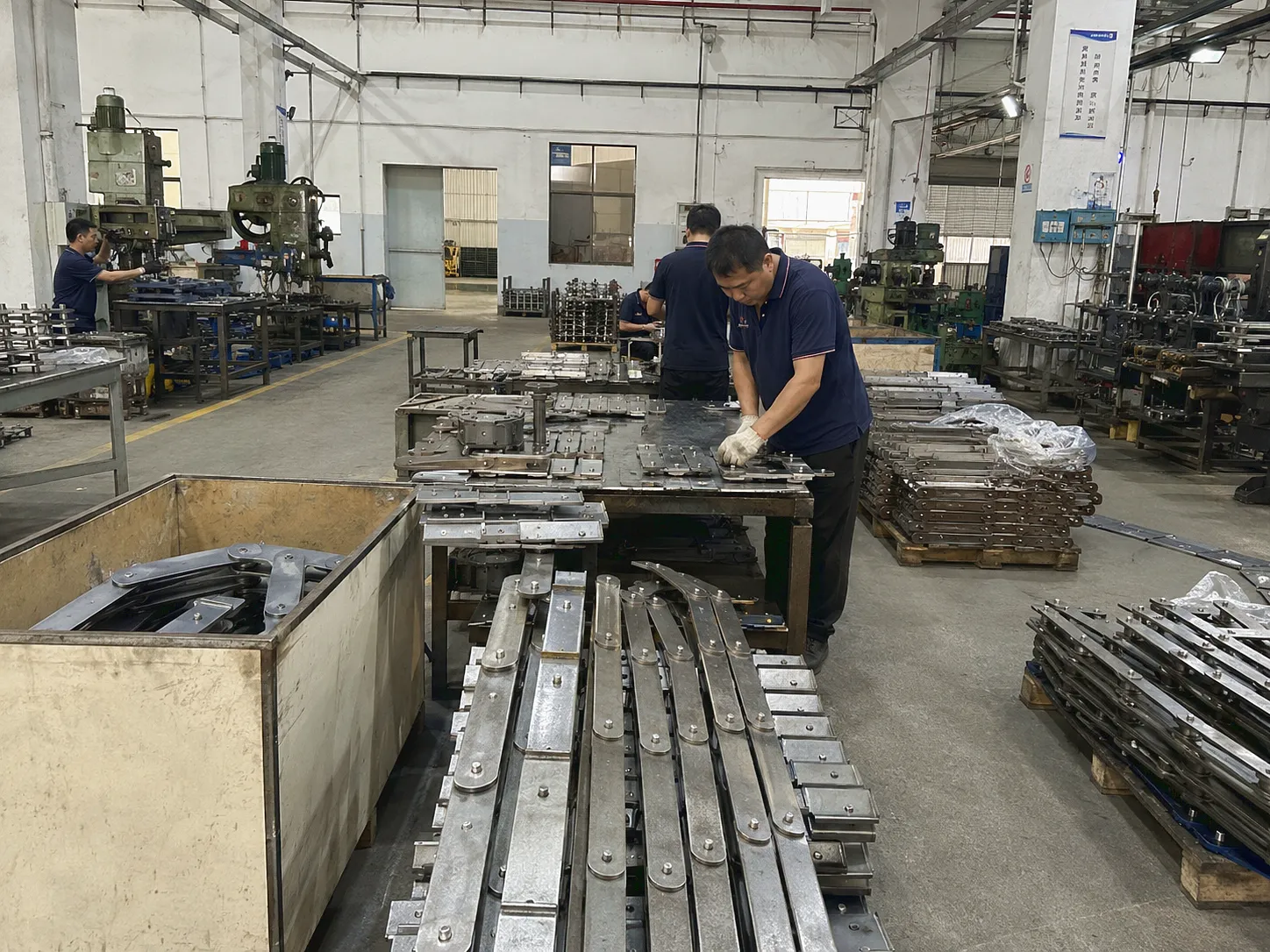
Advanced CNC machining and heat-treatment lines
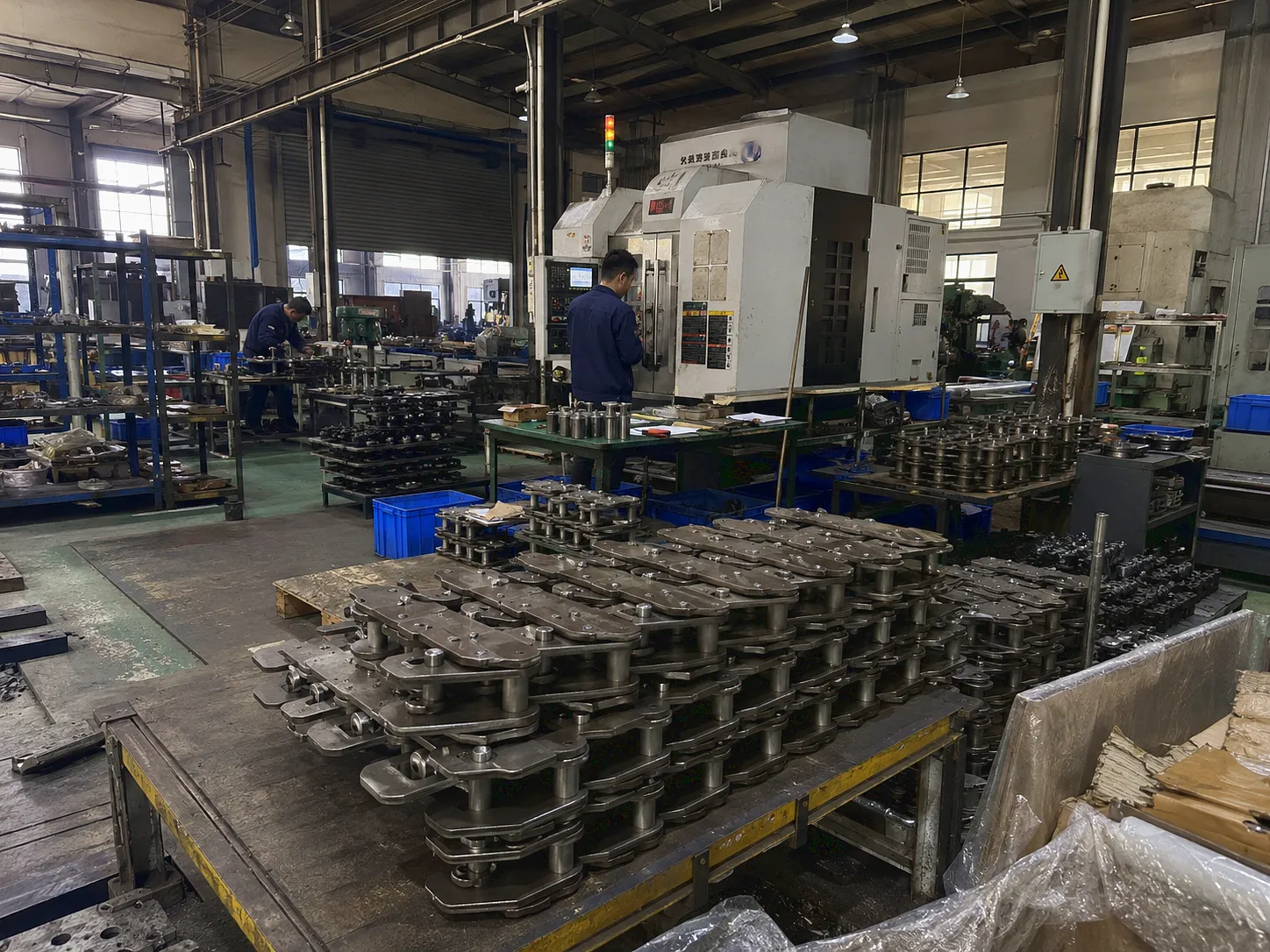
100% tensile test and dimensional inspection before despatch
Custom Pitch & Length
Non-standard pitches from 12.70 mm to 76.20 mm and any continuous chain length produced to customer DXF or machine manual dimensions. OEM replacement chains matched without line modification.
Special Attachment Plates
K1, K2, extended-tab, and fully bespoke carrier plates for bottle neck guides, label applicator timing, and case packer indexing. All attachment plates manufactured in the same material grade as the base chain.
Full Quality Documentation
Every order ships with material certification (EN 10204 3.1 on request), dimensional inspection report, tensile test certificate, and compliance declaration for EU and UK food regulations. Ready for BRCGS and retailer audits.
Fast Delivery to UK Sites
Standard series stocked for express despatch with typical delivery to England, Scotland, and Wales within 5–8 business days. Custom fabrications typically 10–14 working days from drawing approval. Emergency break-down supply available on request.
Contact our UK team at [email protected] — we respond within one business day.
UK Beverage Industry Focus
Serving Beverage Manufacturers Across England, Scotland, and Wales
The UK beverage industry spans everything from large-scale spirits distilleries in the Scottish Highlands to soft drink co-packers in the Midlands and craft cider producers in the West Country. Each of these operations shares a common challenge: conveying systems that must deliver food-grade reliability while keeping pace with the throughput demands of a competitive retail market. UK regulations, including Food Standards Agency guidance and BRCGS Global Standard for Food Safety, place particular obligations on manufacturers to demonstrate chain cleanliness, traceability, and allergen cross-contamination control — all of which are addressed directly by Ever Power’s stainless and food-grade leaf chain range.
Whether your filling line is in London, Manchester, Leeds, Glasgow, or Cardiff, our technical sales team can provide remote line analysis and on-site application surveys for larger projects. We work directly with plant engineers, maintenance managers, and procurement teams, and our pricing is always transparent with no hidden fees for documentation or certifications. Beverage producers in Northern Ireland can also be supplied via the same despatch centre, with delivery times equivalent to mainland GB for standard items held in stock.
For OEM machinery builders supplying filling lines to UK food and drink customers, we offer confidential supply arrangements, consistent batch-to-batch quality, and the ability to co-brand documentation where required. We understand that your reputation rests on the reliability of every component inside your machine, and we take that responsibility seriously.

Frequently Asked Questions
Everything Buyers and Engineers Ask About Leaf Chain for Beverage Filling Lines
Ready to Upgrade Your Beverage Filling Line Conveying?
Send us your chain pitch, application zone, and machine details, and we will recommend the optimal leaf chain specification with pricing within one business day.
Serving beverage manufacturers across England, Scotland, Wales & Northern Ireland | Fast delivery | BRCGS-ready documentation
edit by gzl