
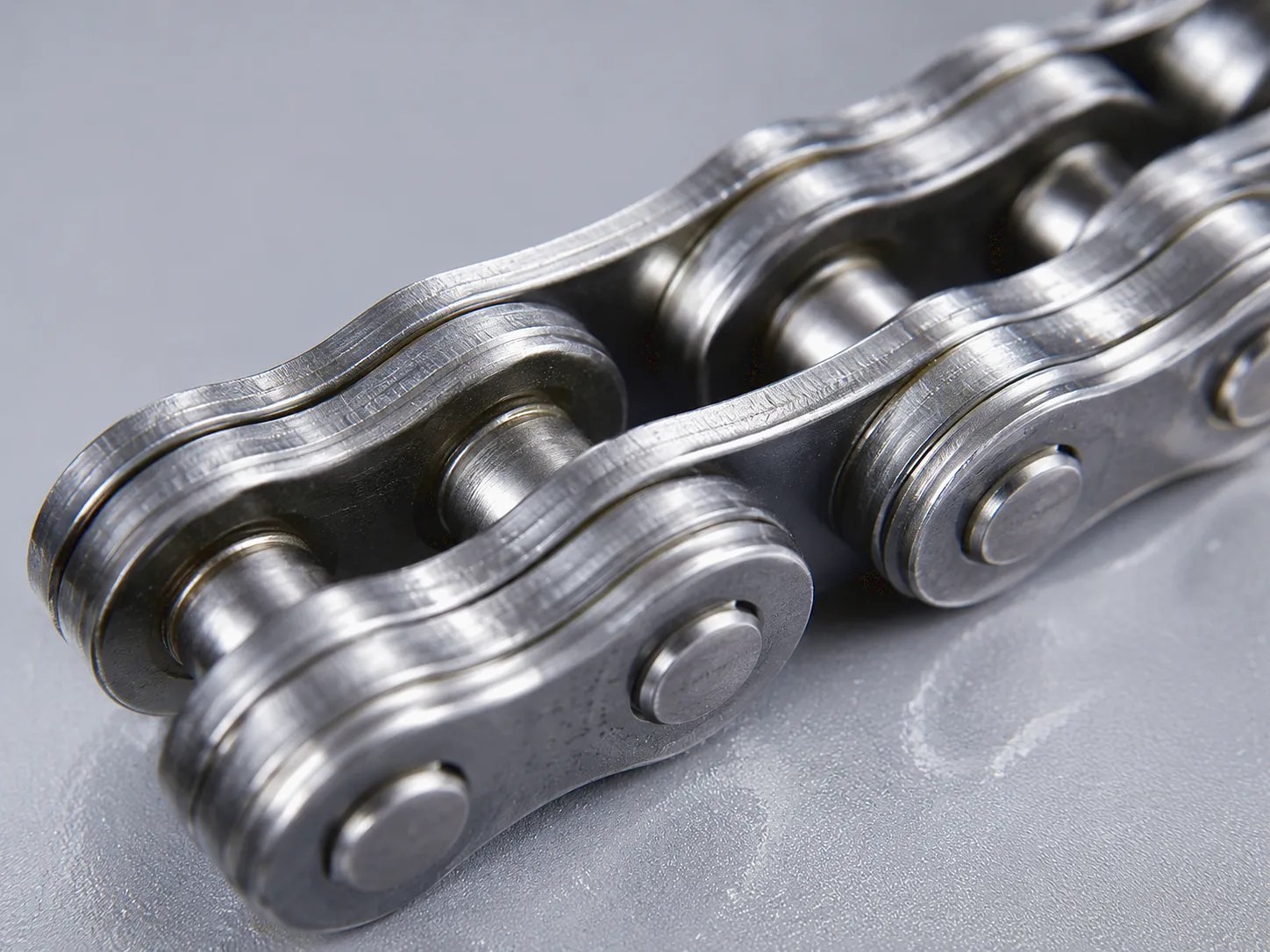
 Walk through any large-scale bakery in the UK — from Warburtons in Bolton to a specialist artisan facility in Edinburgh — and behind the scenes, every conveying system, tunnel oven, and packaging line depends on one unsung mechanical component to keep product moving without interruption. That component is the leaf chain, and its performance characteristics make it uniquely suited to the demanding, moisture-laden, flour-dusted reality of commercial bread, biscuit, and pastry production.
Unlike roller chains used in light conveying, leaf chain — also referred to as forklift chain or balance chain — is engineered exclusively for tensile load applications. It carries no sprocket teeth on its outer plates; instead, its entire geometry is optimised to resist elongation, side flex, and fatigue fracture under sustained tension. In bakery environments where ovens run 24 hours a day, where steam-injection tunnels push ambient humidity above 90%, and where hygiene standards demand regular washdown cycles, a leaf chain rated to EN 13107 and manufactured from food-grade compatible materials can mean the difference between continuous throughput and a €50,000-per-hour production shutdown.
This guide is written for procurement engineers, maintenance managers, and production directors at UK food manufacturers who want a technically grounded understanding of how leaf chain is specified, maintained, and optimised for bakery-specific duty cycles. We cover everything from the metallurgical composition of the link plates to the precise elongation tolerances that signal replacement time, drawing on over 18 years of application engineering experience across food processing plants in England, Scotland, and Wales.
Need a leaf chain specification for your bakery line? Our engineers will size and source it for you.

What Exactly Is Leaf Chain — and Why Does It Matter in Food Production?
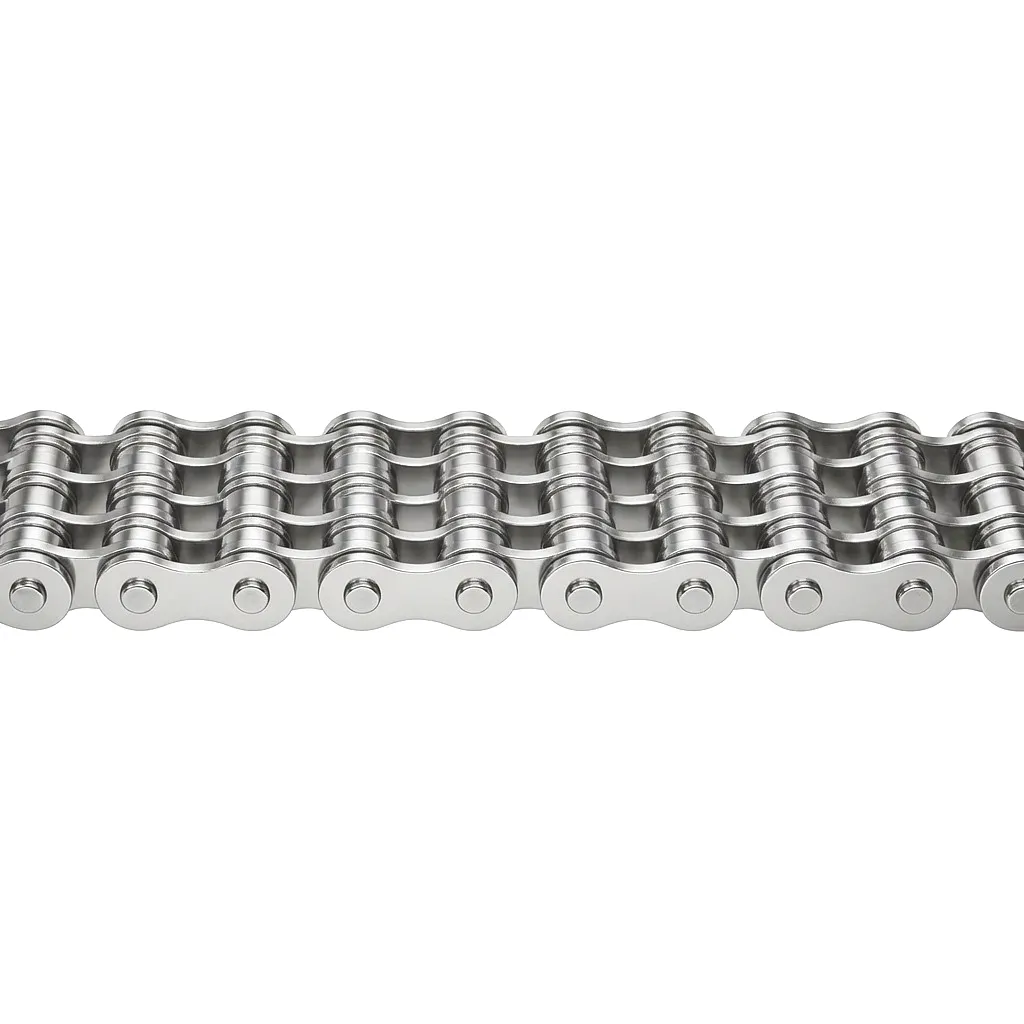
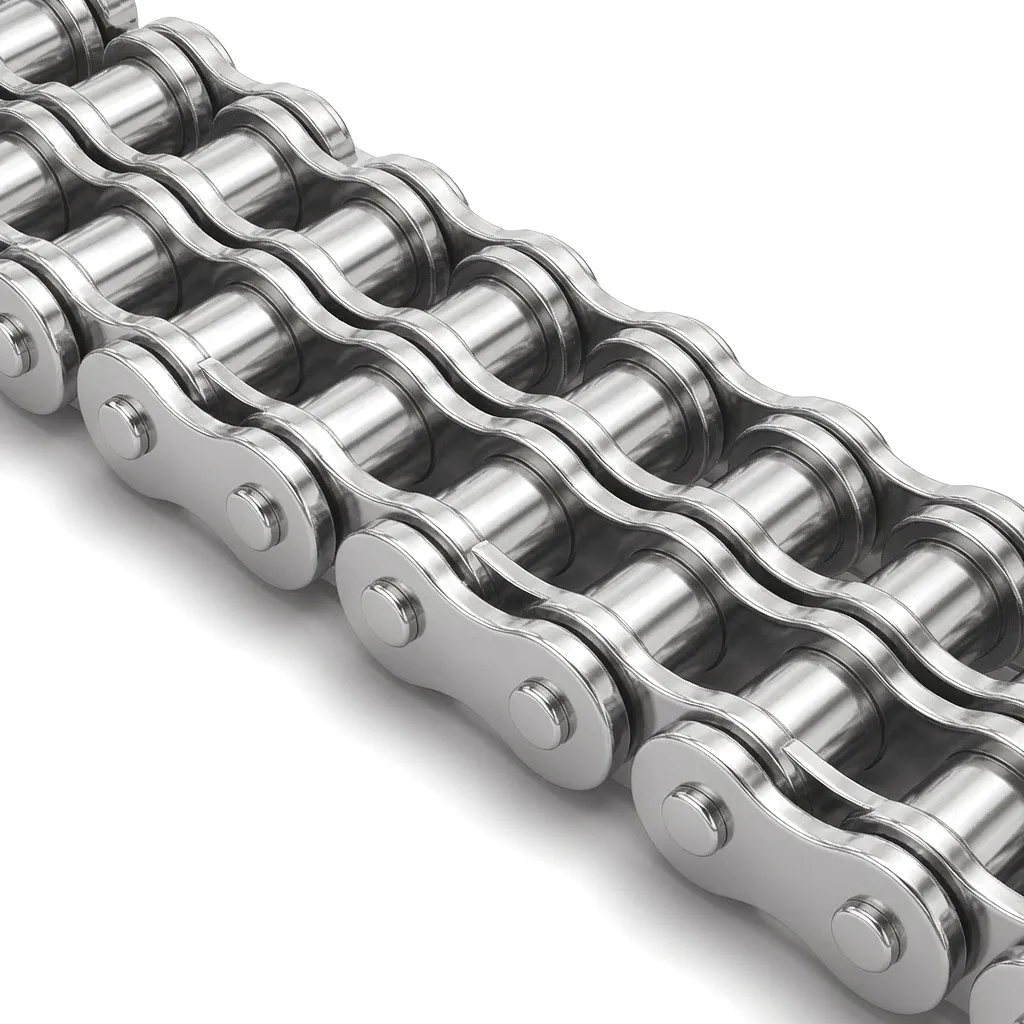
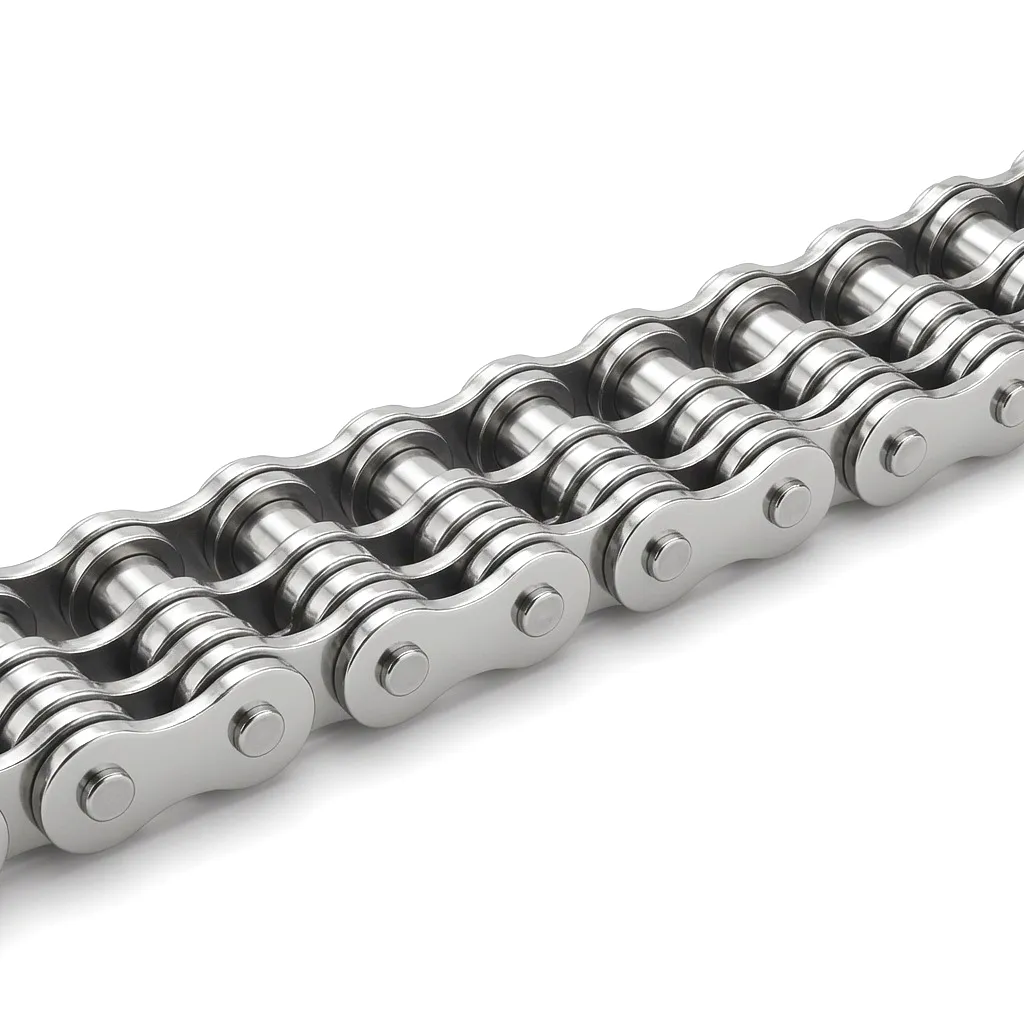
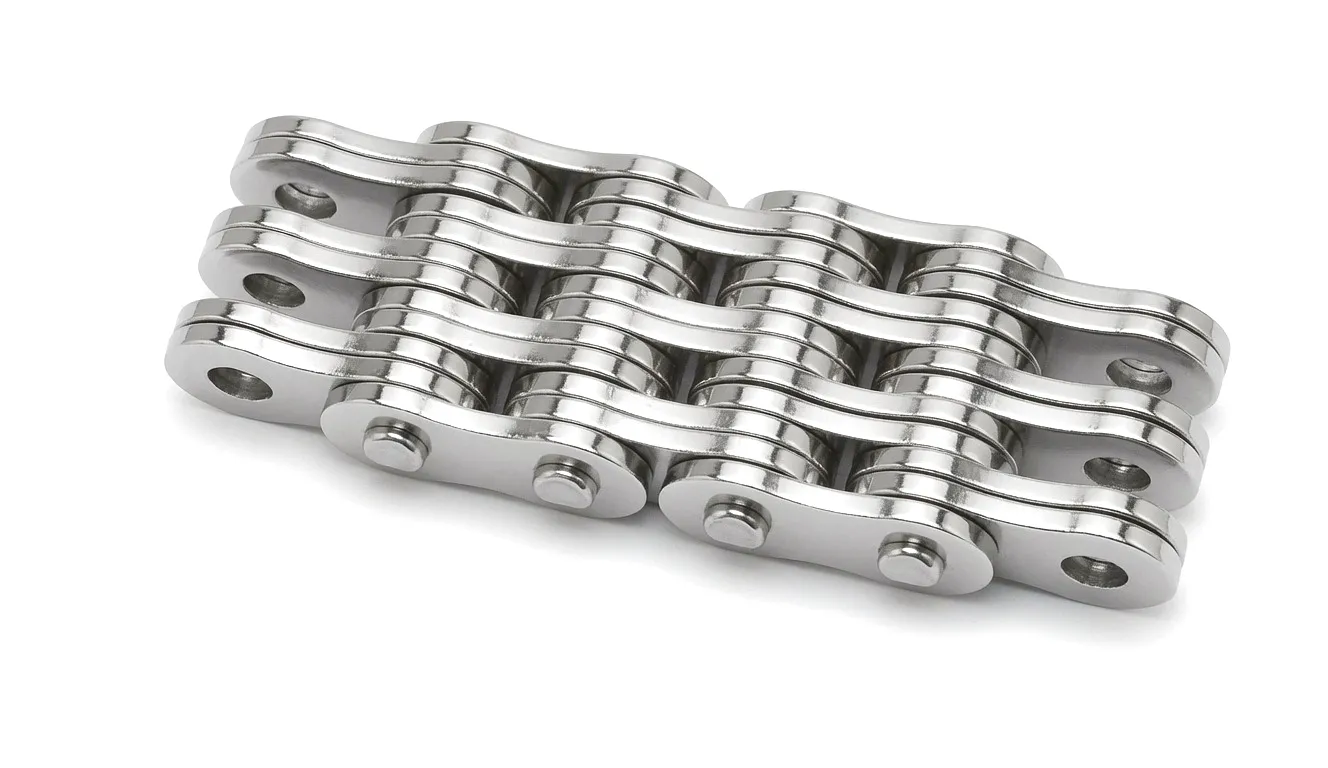
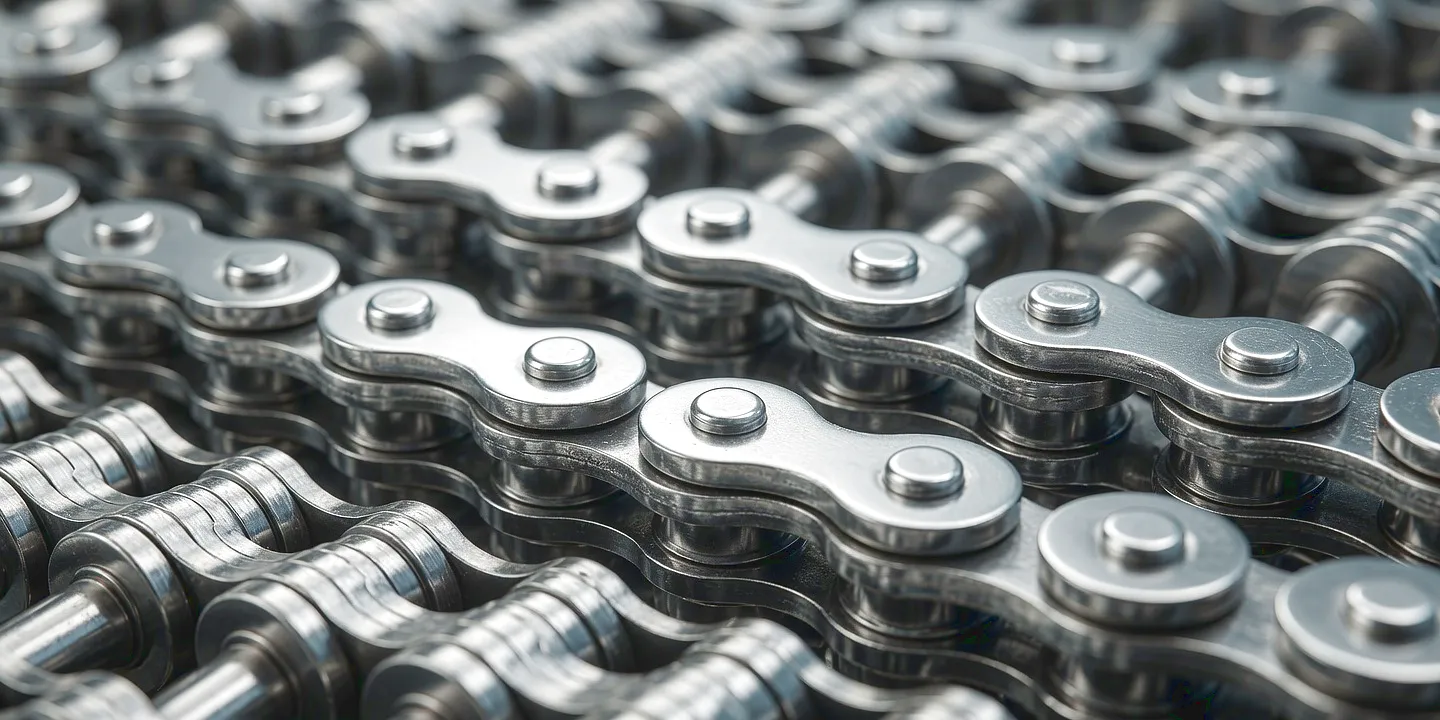
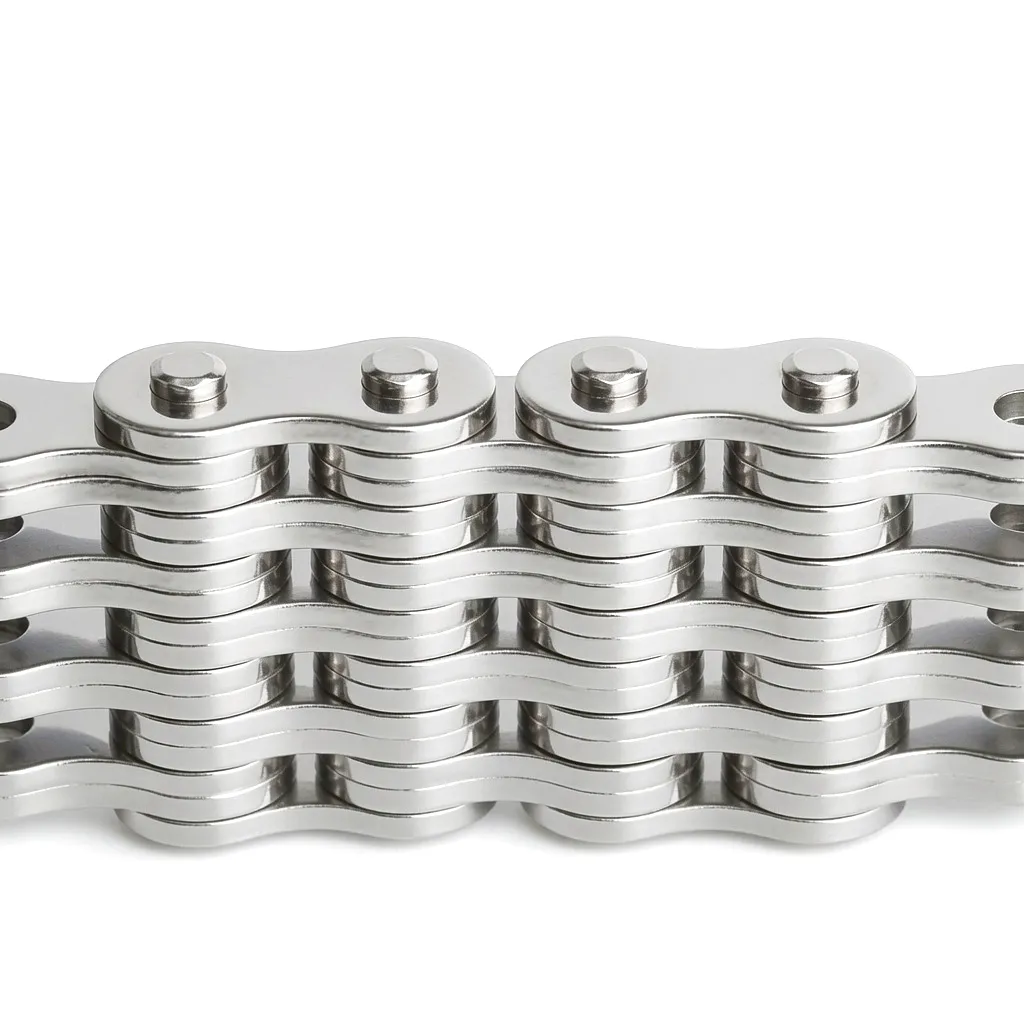
 Leaf chain is a link chain constructed entirely from interleaved flat link plates and solid cylindrical pins, with no rollers or bushings between them. The structural simplicity is the source of its strength. With every pitch carrying the load across multiple interlocking plates, the chain achieves a tensile strength-to-weight ratio that no equivalent roller chain can match at the same pitch. Standard leaf chain grades follow ISO 4347, with classifications like AL422, AL623, BL534, and BL846 defining the lacing pattern — the number of link plates per pitch and the number of plates per link — along with pin diameter and plate thickness.
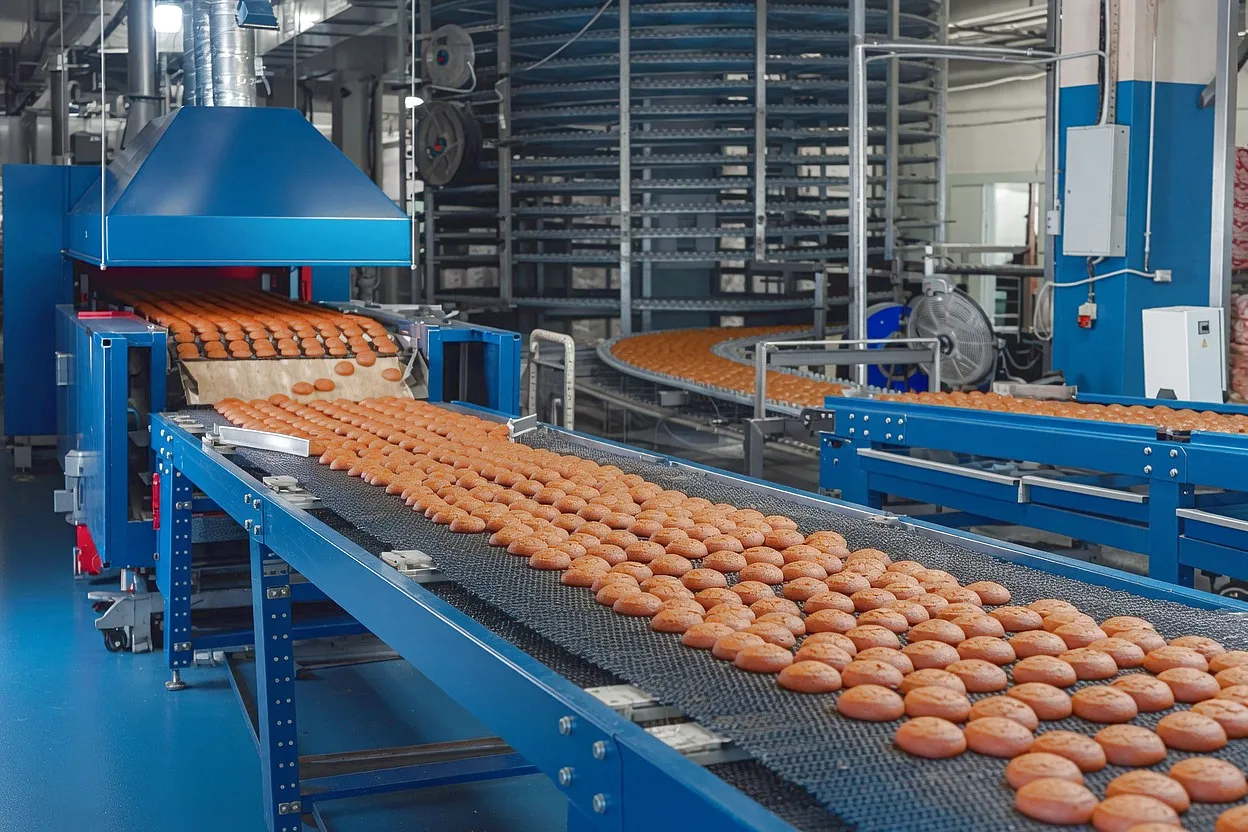
In bakery production lines, leaf chain predominantly appears in oven elevator systems — those vertical or inclined conveyors that move panned dough trays from the proofer into the tunnel oven entrance — in tray-return conveyors on the discharge end, and in the counterweight and tension systems of continuous band ovens. Its resistance to heat distortion and its predictable elongation behaviour under cyclic loading make it the preferred choice in environments where replacement is difficult and production stoppages are extremely costly.
The Engineering Principles Behind Leaf Chain Performance
The operating principle of leaf chain is elegantly straightforward: tensile loads are distributed across a stack of hardened steel plates connected by interference-fit pins. When the chain is placed under tension — supporting a counterweight in an oven elevator, for example — the load path travels from the anchor point through each plate uniformly. Because there are no bushings or rollers to wear and compress, the primary wear mechanism is pin-to-plate hole contact, which is highly predictable and measurable. An experienced engineer can pull a chain from service, measure its elongation with a calibrated pitch gauge, and immediately determine whether it has crossed the 2% or 3% elongation threshold that defines replacement time.
Heat treatment is central to the performance story. The link plates in a quality leaf chain are manufactured from medium-carbon steel — typically SAE 1045 or equivalent — that is carburised or through-hardened to achieve a surface hardness of HRC 40–48 while retaining a tough, crack-resistant core. The pins undergo separate heat treatment to a higher surface hardness, typically HRC 58–64, creating a hard-on-soft contact interface that distributes wear preferentially on the pin surface rather than the plate bore — an arrangement that is far easier to monitor through elongation measurement. This metallurgical pairing is not accidental; it is a deliberate engineering decision that has evolved over decades of industrial application.
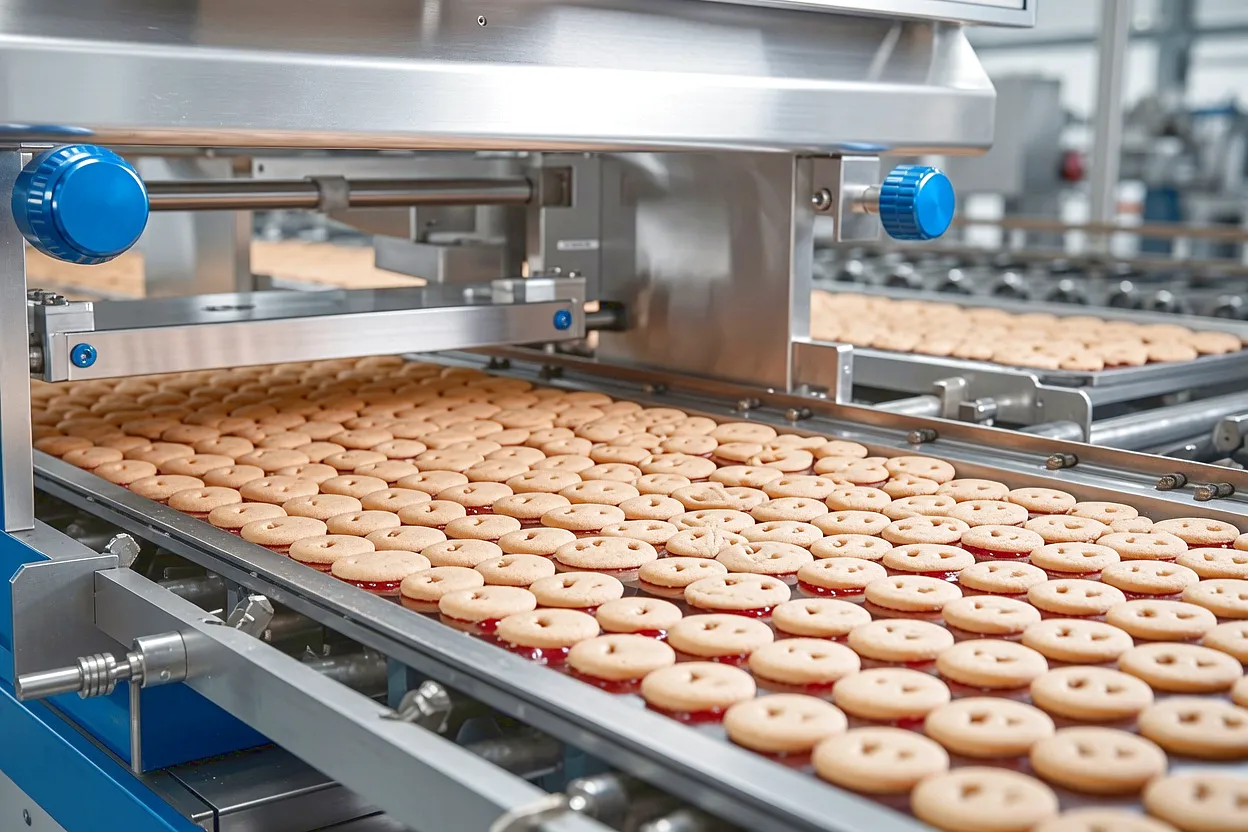
Lubrication strategy is equally critical in bakery settings, and this is where generic chain specifications frequently fail production teams. Standard petroleum-based oils are incompatible with food-contact zones; chain running directly above an open conveyor belt that carries bread product cannot be lubricated with anything that would constitute a contamination risk. The solution — which we specify for all our bakery customers — is NSF H1-registered food-grade lubricants applied through automatic lubrication systems with calibrated metering pumps. These lubricants maintain a consistent film thickness between pin and plate hole through thermal cycling from ambient temperatures at the oven entrance to operating temperatures of 180–220°C inside the baking tunnel.
Technical Specifications: Leaf Chain for Bakery Applications
The table below covers the primary leaf chain grades most commonly specified in UK bakery facilities, from lightweight biscuit-line applications through to heavy-duty industrial bread oven elevators running multiple shifts daily.
| Chain Grade | Pitch (mm) | Min. Tensile Strength (kN) | Pin Dia. (mm) | Plate Thickness (mm) | Typical Bakery Use |
|---|---|---|---|---|---|
| AL422 | 12.70 | 22.2 | 3.96 | 1.5 | Biscuit / cookie tray conveyors |
| BL534 | 15.875 | 44.5 | 4.76 | 2.0 | Proofer elevator, mid-weight |
| BL646 | 19.05 | 88.9 | 5.94 | 2.5 | Tunnel oven entrance elevator |
| BL834 | 25.40 | 124.6 | 7.92 | 3.2 | Heavy bread oven counterweight |
| BL1034 | 31.75 | 195.7 | 9.52 | 4.0 | Industrial tray-return elevators |
All grades per ISO 4347. Tensile strength values are minimum breaking loads. Contact us for stainless steel or food-grade variants.
Ever Power Leaf Chain — Product Range
Where Leaf Chain Works in a Bakery: Specific Application Zones
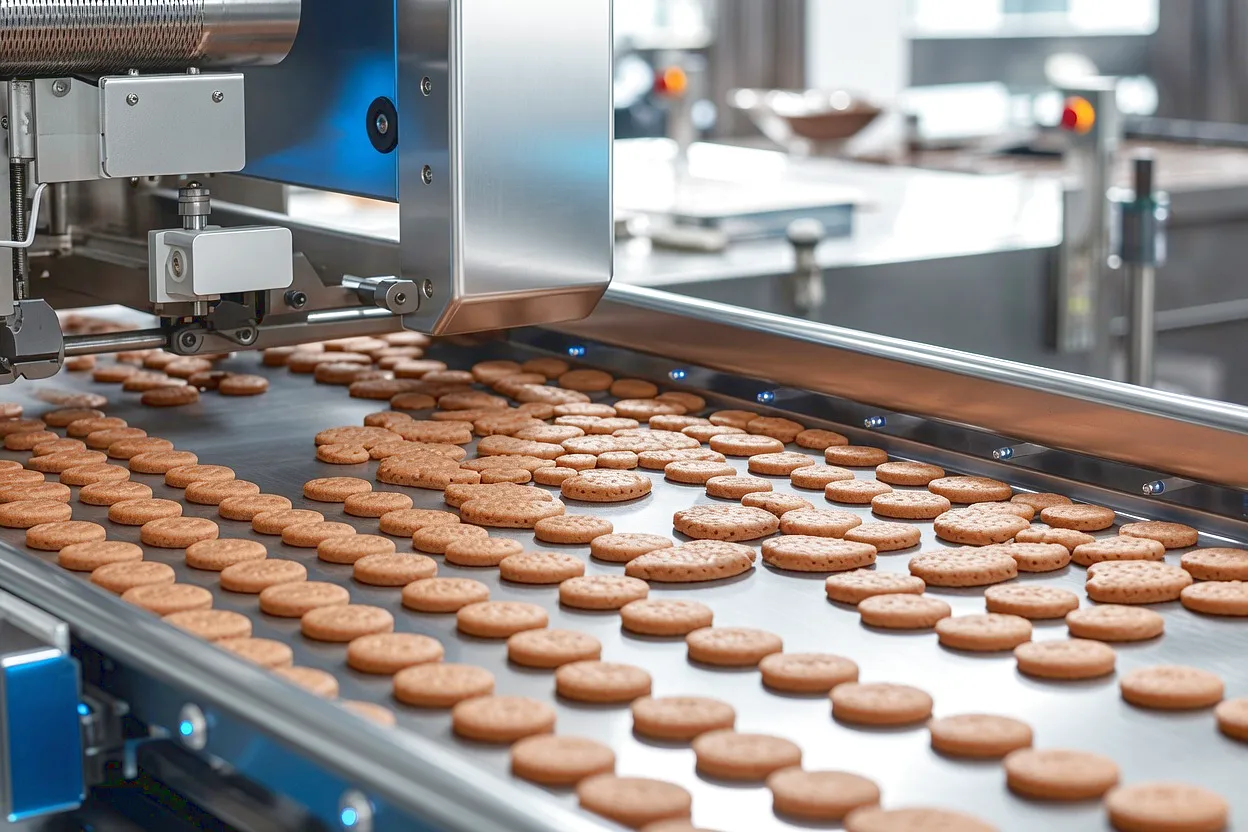
A modern high-capacity bakery is essentially a series of linked thermal and mechanical processes, each with its own chain duty cycle. Understanding the demands at each station is how you specify the right leaf chain grade and avoid both over-engineering (unnecessary cost) and under-engineering (premature failure).
Tunnel Oven Elevator Systems
These are the highest-stress applications in any bakery. The elevator lifts loaded baking trays — often 80–120 kg of combined tray, pan, and dough weight — from a ground-level loading station up to the oven band entry point, which may be 3–6 metres above floor level. The leaf chain pair supporting this load operates under sustained tension with short cyclic shock loads each time a loaded carrier engages the lifting mechanism. BL646 or BL834 grade chains running in matched pairs are the standard specification here, typically with a safety factor of 5:1 or greater over working load. The chains must be paired within 0.5 mm of each other in length to prevent differential elongation, which would cause the lifting beam to tilt and potentially drop or jam the tray carrier.
Proofer Counterweight Systems
Industrial proving ovens — the large multi-deck chambers where portioned dough rests at controlled temperature and humidity before baking — use counterweight systems to balance the weight of internal carrier frames. These counterweights may be 400–800 kg, and the leaf chains that suspend them operate in an environment of continuous warmth (35–45°C) and high relative humidity (80–90%). This is precisely the environment where corrosion initiates at unprotected steel surfaces, making surface treatment and lubrication selection absolutely critical. We recommend hot-dip zinc-phosphate pre-treatment combined with NSF H1 food-grade lubricant applied by an automated drip-feed system. Under these conditions, a BL834 or BL1034 chain running at modest velocity (under 0.3 m/s) will typically deliver 24–36 months of service before elongation measurement indicates replacement.
Packaging Line Tensioning
Flow-wrap and tray-seal packaging machines at the end of a bakery production line use leaf chain in the tensioning mechanisms of their conveyor infeed systems. Here the loads are lower — typically 10–30 kg working tension — but the cycling rate is much higher, with the chain making tens of thousands of oscillations per day. AL422 or BL534 grade chains are common in these positions. The critical factor is not tensile strength but fatigue resistance, and this is where the heat treatment quality of the link plates becomes decisive. Inferior chain plates that are not properly carburised will develop surface micro-cracks under high-cycle fatigue that propagate to fracture within months. Quality-assured leaf chain from a reputable UK supplier with full material traceability and batch testing certificates is non-negotiable in BRC or SQF-audited production environments.
High-Temperature Oven Band Tensioning
Continuous band ovens — the backbone of large-scale bread and cracker production — use leaf chain in their band tensioning mechanisms. The steel baking band must be held at precisely controlled tension across its full 50–120 metre run, and any variation causes uneven baking. The leaf chains in these tensioning frames operate at oven ambient temperatures up to 240°C at the hot zone boundary, with thermal cycling stresses added to the constant mechanical tension. At these temperatures, standard lubricants flash off immediately, and the chain must rely on the metallurgical properties of its base material — specifically, the retained hardness of the link plates and pins at elevated temperature — for its wear resistance. Specially formulated dry-film lubricants or graphite-based chain grease applied at service intervals are the appropriate solution for this application, and the chain specification should include elevated-temperature tensile verification testing.
Why Ever Power Leaf Chain Outperforms Standard Market Options
Matched-Pair Precision
All paired elevator chains are length-matched to within 0.3 mm, preventing beam tilt and tray misalignment in vertical lifting applications.
Full Material Traceability
Every batch ships with mill certificates for raw steel, heat treatment records, and tensile proof-load test certificates. BRC-auditable documentation included as standard.
Food-Grade Compatible
Stainless steel (SS304/SS316) variants available for washdown zones. NSF H1 lubricant packs available for all food-contact proximity applications.
Custom Length Manufacture
Non-standard lengths, special connecting links, and bespoke attachment plates manufactured to drawing. Typical lead time 10–15 working days ex-factory.
Extended Service Life
Through-hardened pins and carburised plates deliver 30–45% longer service intervals than generic imported chain in comparable applications.
UK Stock & Fast Dispatch
Common BL and AL grades held in UK stock for same-day or next-day despatch. Reducing emergency downtime costs for food manufacturing plants across England, Scotland, and Wales.
Selecting the Right Material: Carbon Steel vs Stainless Steel Leaf Chain
The choice between carbon steel and stainless steel leaf chain in a bakery environment is not simply a question of corrosion resistance. It involves balancing mechanical strength, operating temperature, lubrication constraints, cleanability, and purchase cost against total installed lifetime cost. The table below summarises the key decision factors for bakery engineering teams.
| Property | Carbon Steel (Standard) | SS304 Stainless | SS316 Stainless |
|---|---|---|---|
| Tensile Strength | ★★★★★ | ★★★☆☆ | ★★★☆☆ |
| Corrosion Resistance | ★★☆☆☆ | ★★★★☆ | ★★★★★ |
| Max Cont. Temp. | ~300°C | ~400°C | ~400°C |
| Washdown Suitability | Moderate (requires lube) | Good | Excellent (CIP compatible) |
| Relative Cost Index | 1.0x | 2.8–3.2x | 3.5–4.0x |
| Recommended Zone | Oven elevator, proofer counterweight | Wet or humid areas | Chlorinated washdown zones |
Manufacturing Capability & Custom Chain Solutions
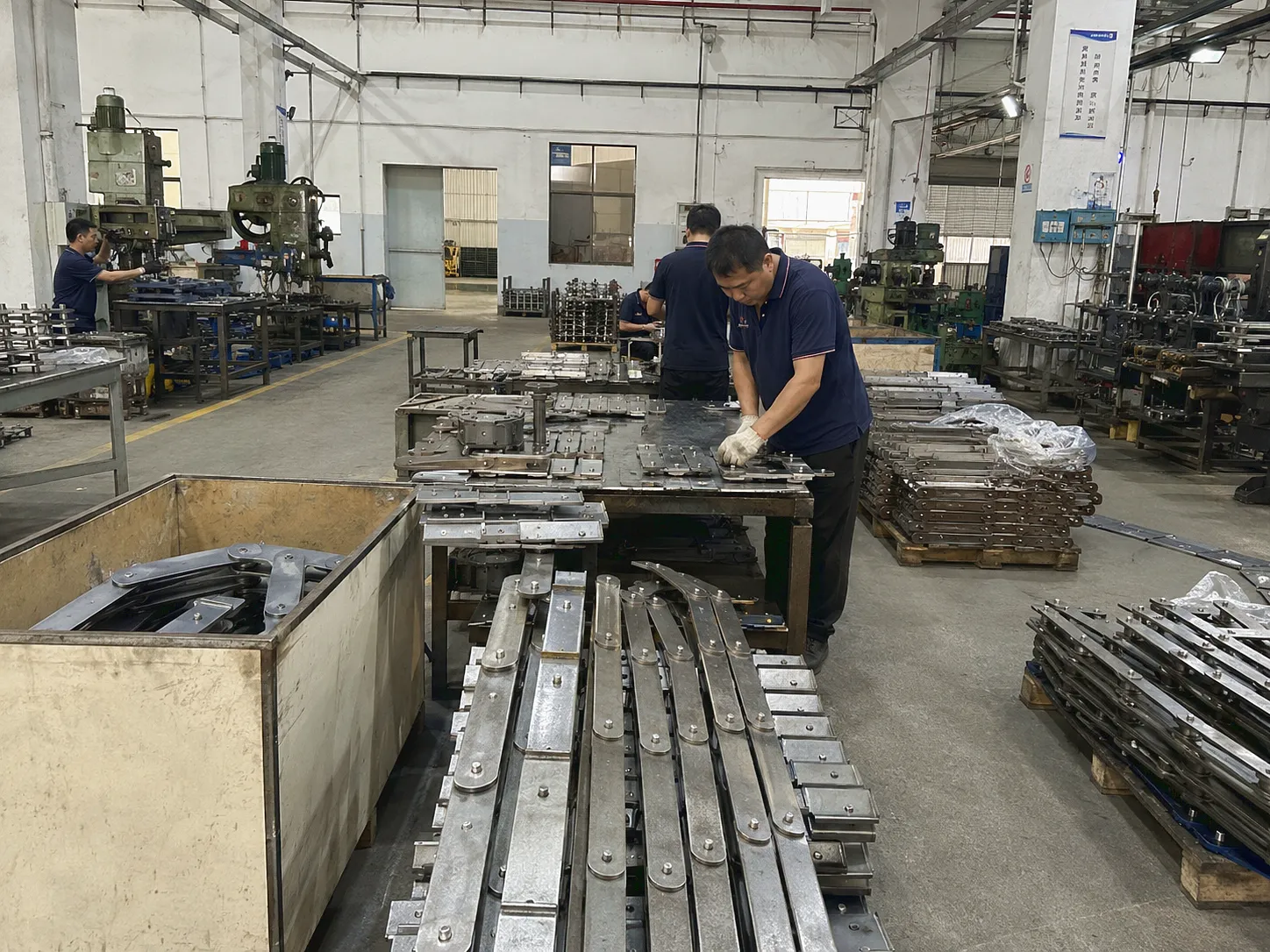
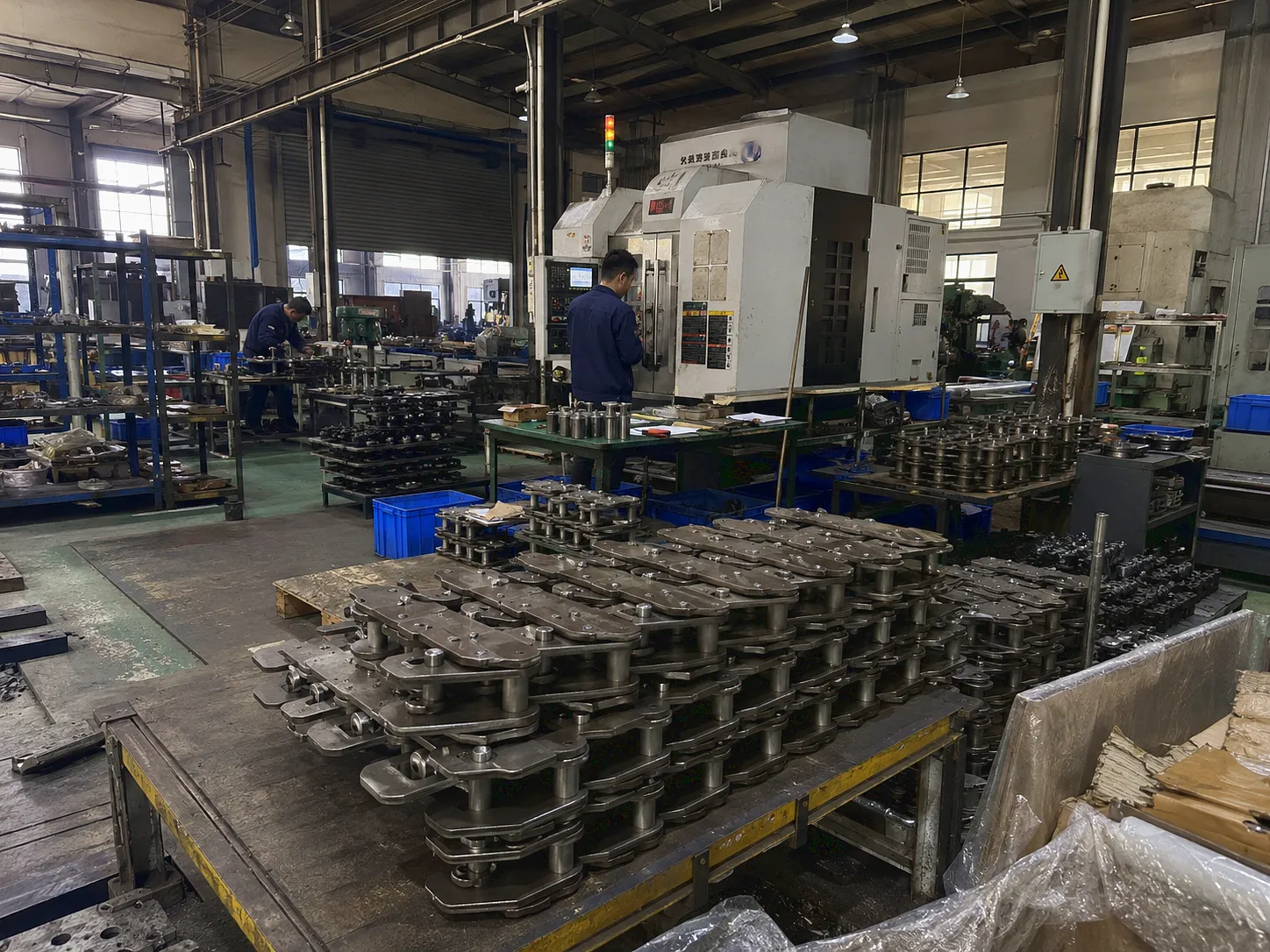
Ever Power operates a purpose-built chain manufacturing facility equipped with CNC precision machining centres, automated heat treatment lines with computer-controlled atmosphere furnaces, and dedicated quality control laboratories with coordinate measuring machines. This vertical integration means we control every step of the manufacturing process — from steel bar receipt and incoming inspection through to finished chain assembly, proof load testing, and despatch.
For bakery and food processing customers, this translates directly into a comprehensive custom manufacturing service. Our engineering team will work from your existing OEM chain dimensions — or from a worn chain sample if drawings are unavailable — to produce a direct replacement or an upgraded specification. Common custom requirements we fulfil include: non-standard pitch lengths, special connecting link designs, through-hole attachment plates for sensor mounts, extended pins for guide roller fitment, and hard-chrome plated pins for abrasive flour-dust environments.
We have supplied custom leaf chain to bakery OEMs and plant engineering teams across England, Scotland, Wales, and Northern Ireland, with export capability to the Republic of Ireland, the Netherlands, Germany, and the wider EU. Our minimum order quantities for custom work are designed to be accessible to smaller independent bakeries as well as major FMCG food groups running multiple sites.
Customer Success: Real Results from Bakery Installations
Across the UK food manufacturing sector, bakeries running Ever Power leaf chain consistently report extended maintenance intervals, reduced emergency call-out frequency, and improved uptime at tunnel oven entry points. Below is a detailed case study from one of our long-standing customers.
Reducing Unplanned Downtime at a High-Volume Bread Plant in Wolverhampton
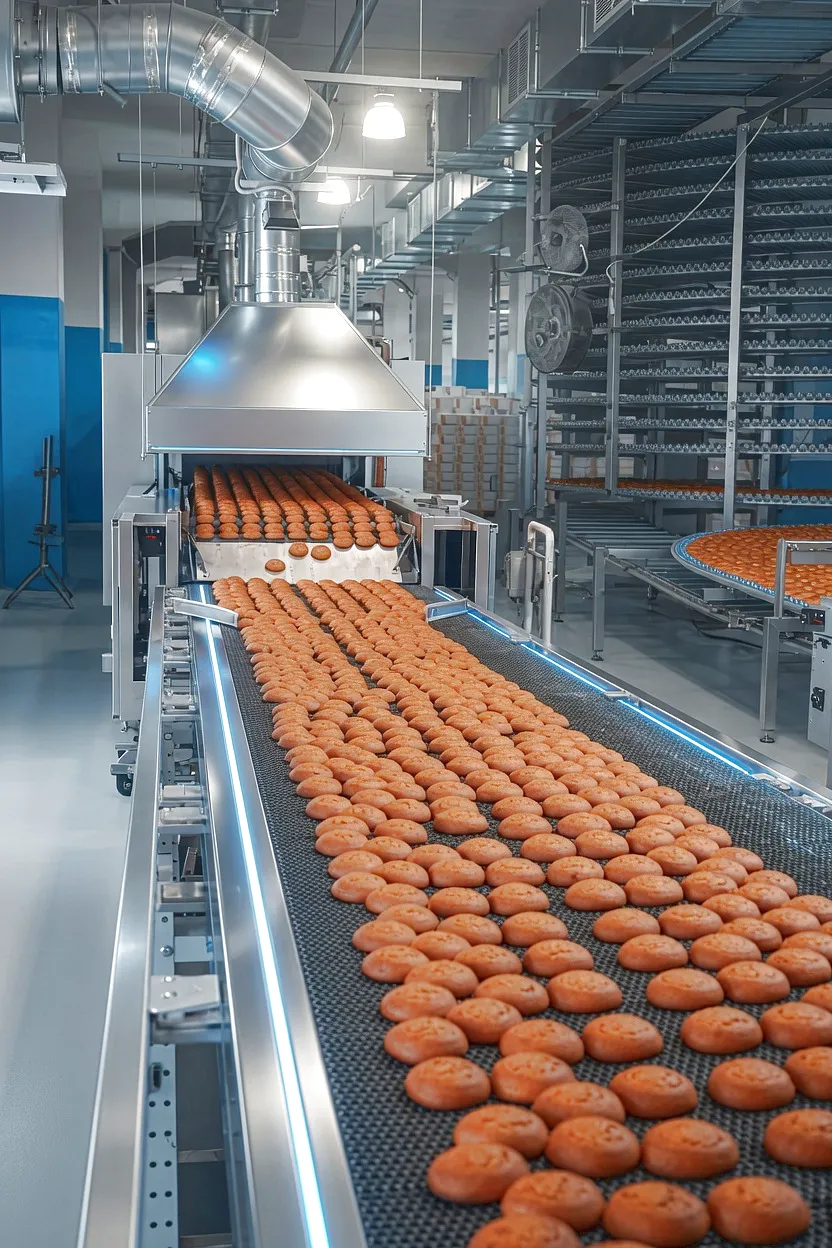 A major independent bakery group operating two tunnel ovens in Wolverhampton, West Midlands, was experiencing recurring łańcuch liściowy failures on their oven entrance elevator systems. Running three shifts daily and producing approximately 85,000 loaves per 24-hour period, even a 20-minute unplanned stoppage represented significant lost production value. Their existing chain — sourced from a general industrial distributor — was failing at an average interval of 7–9 months, well below the 18–24 months they expected based on their preventive maintenance schedule.
Our application engineer visited the plant, reviewed the worn chain samples under magnification, and identified the root cause: the link plate hardness was inconsistent — a clear indicator of poor atmosphere control during heat treatment, resulting in under-hardened plates that wore rapidly in the pin-to-plate contact zone. Additionally, the chain had not been matched as pairs before installation, leading to a 1.2 mm differential elongation between the left and right chains within six months, causing the lifting beam to run skewed and generating side-loading that accelerated fatigue damage.
We supplied BL646 matched-pair chains with full hardness verification certificates, pre-stretched and length-matched to within 0.25 mm, along with an automatic NSF H1 lubricator kit calibrated for the operating cycle. After 22 months of continuous operation, the chains were inspected and measured at 1.6% elongation — comfortably within the 3% replacement limit — and were returned to service with a projected remaining life of 8–10 further months.
Outcome: Chain service life extended from approximately 8 months to a projected 30+ months. Zero unplanned chain-related stoppages in the 22-month monitoring period. Maintenance team briefed on elongation measurement protocol for in-house monitoring going forward.
We have trialled several leaf chain suppliers over the past decade. Ever Power is the only one who matched chains as pairs and provided actual hardness test data with the shipment. That level of technical rigour is what our engineering team needs.
When our oven elevator chain failed on a Friday afternoon, Ever Power had a matching replacement to us in Glasgow by Monday morning. That responsiveness — and the fact the replacement fitted first time — is why we have made them our preferred supplier.
The custom stainless chain Ever Power produced for our CIP washdown conveyor eliminated the corrosion failures we had been managing twice a year. ROI on the higher initial cost was clear within eight months. Highly professional team from first enquiry to delivery.
Maintenance and Inspection Protocol for Bakery Leaf Chain
Establishing a structured inspection and measurement regime is the single most effective action a bakery maintenance team can take to avoid unplanned leaf chain failures. The core measurement is chain elongation, which is assessed by placing a calibrated pin-pitch gauge across a fixed number of pitches — typically 30 or more — and comparing the measured length against the original nominal pitch length. An increase of 2% indicates that replacement should be scheduled at the next planned maintenance window; an increase of 3% means immediate replacement to avoid risk of catastrophic failure.
| Inspection Task | Frequency | Method / Tool | Action Threshold |
|---|---|---|---|
| Pitch elongation check | Monthly | Pin-pitch gauge over 30+ pitches | Schedule: ≥2%; Replace: ≥3% |
| Visual plate inspection | Weekly | Visual + 10x loupe | Any crack → immediate replacement |
| Pin corrosion check | Monthly | Visual + pin flex test | Any seized joint → lubricate or replace |
| Lubrication check | Weekly | Visual film check / drip counter | Dry appearance → relubricate immediately |
| Pair differential check | Quarterly | Measure both chains simultaneously | Difference >1 mm → replace as matched pair |
One aspect that is frequently overlooked by bakery maintenance teams is the importance of replacing matched-pair chains simultaneously, even if only one chain has reached the elongation limit. A new chain paired with a worn chain will have different elongation rates, and the differential will recur faster than if both chains are replaced together. The short-term cost saving of replacing only one chain is invariably cancelled out by the accelerated wear of the new chain and the risk of alignment failure from unequal elongation.
Leaf Chain Supply for UK Food Manufacturers: Coverage and Lead Times
Bakery operations across the United Kingdom — from the large-scale bread plants of the East Midlands and Yorkshire, to the cracker manufacturers on the M4 corridor, to the specialist confectionery producers in the Scottish central belt — all face the same procurement challenge: sourcing technically specified leaf chain with documentation that satisfies BRC, BRCGS, or SQF food safety audit requirements, from a supplier who can respond rapidly to emergency replacement needs. Ever Power is structured to meet this requirement. We maintain common AL and BL grade stock at our UK distribution point, with same-day despatch available for orders placed before 2pm and next-day courier delivery to all mainland UK postcodes as standard. For Scotland, Northern Ireland, and the more remote parts of Wales, we offer tracked 48-hour delivery as standard and can arrange same-day emergency courier where the production risk justifies it.
Same-day despatch (order before 2pm)
Emergency courier available
Next-day available on request
Full UK stock range
Full documentation pack
Export documentation available
EUR1 / EUR-MED certificates
DDP incoterms available