
✍️ By Ever Power Chain Engineering Team
⏱️ 12 min read
Agricultural Machinery
Why Drive Chain Selection Makes or Breaks Your Corn Harvest
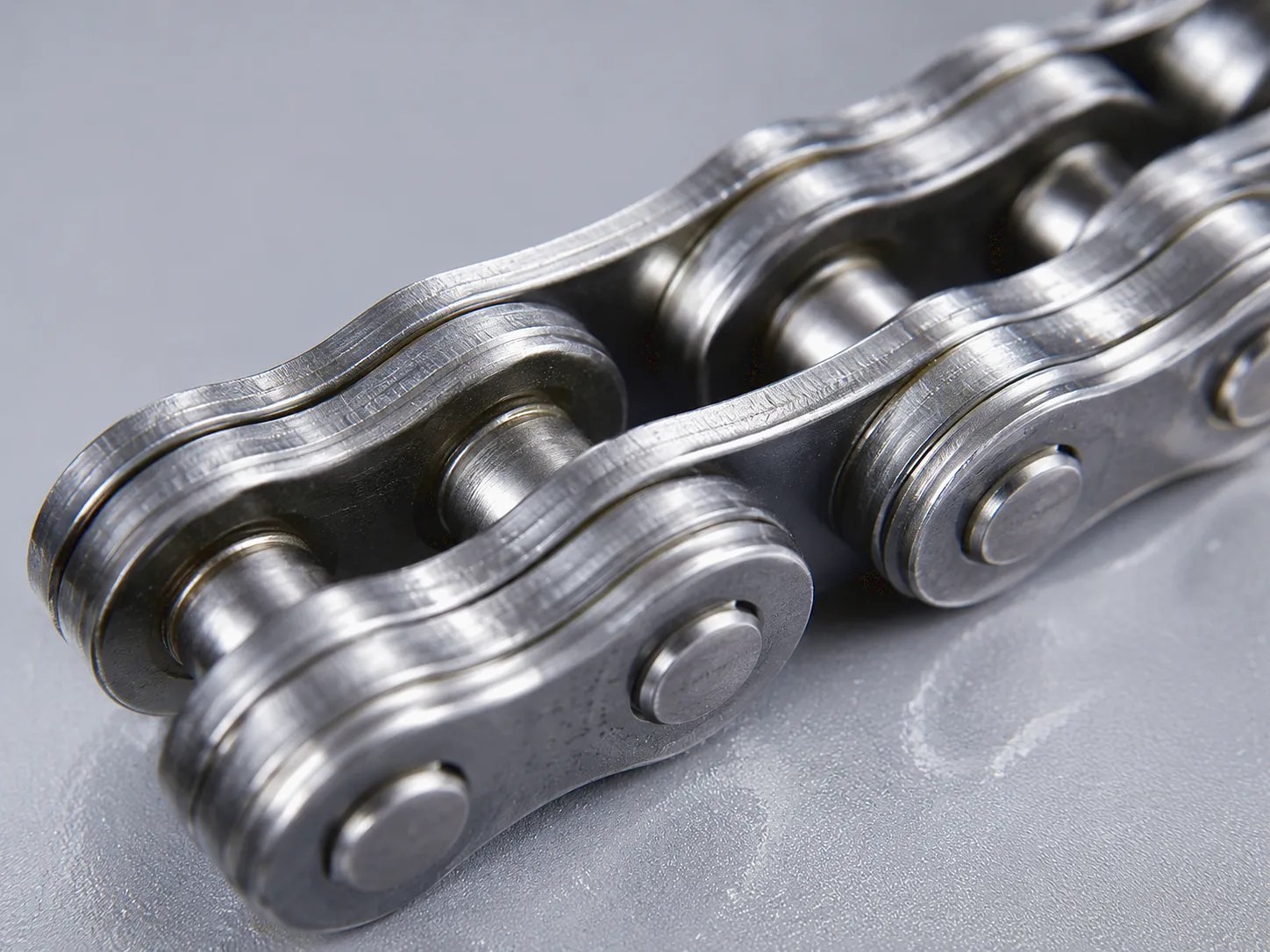 A corn harvester is not a gentle machine. The moment a crop header engages standing stalks at field speed, instantaneous shock loads travel through every link, bearing, and shaft in the drivetrain. Elevator conveyors carry grain vertically at sustained high speed; feeder house chains must pull cracked stalks and stripped cobs through choking volumes of biomass without a single hesitation. In this environment, the leaf chain for corn harvester applications has proved itself across decades of field use, delivering tensile strengths, wear resistance, and articulation tolerances that competing solutions simply cannot match over a full season.
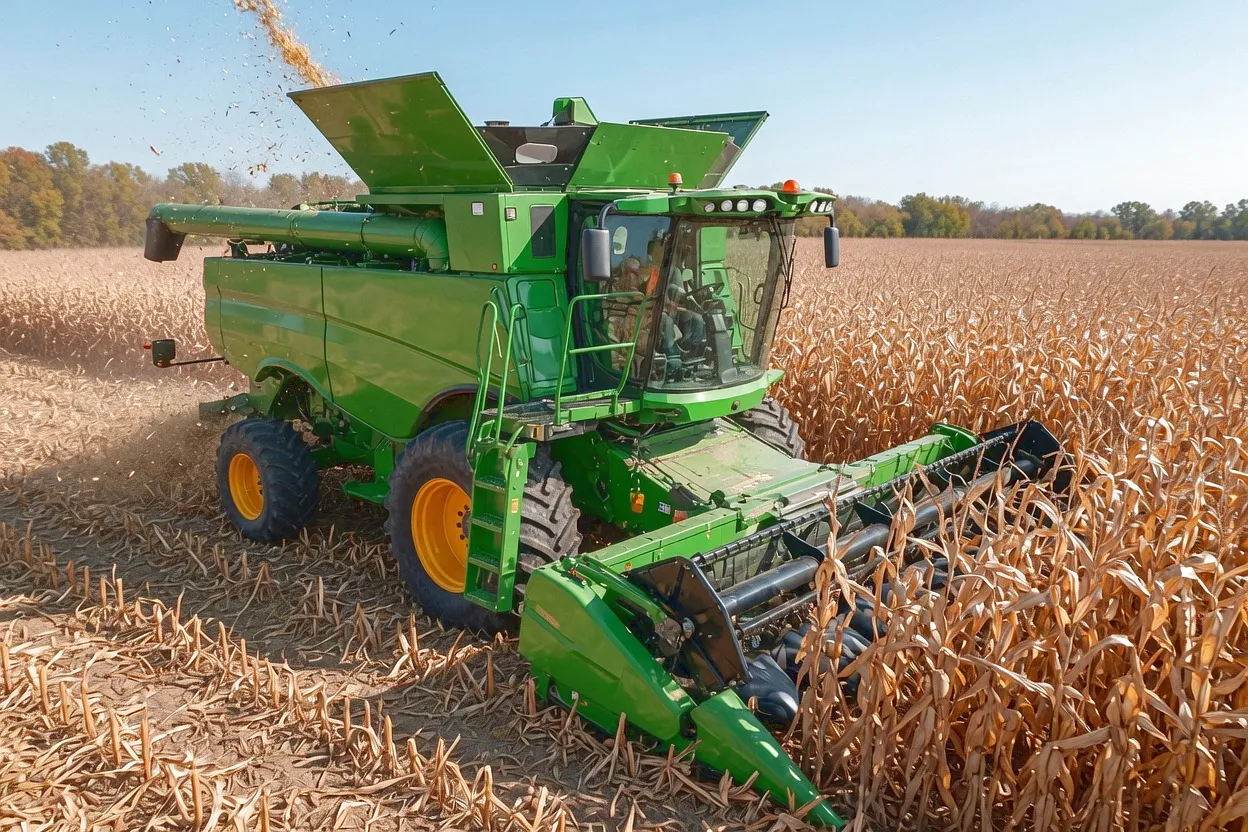
The United Kingdom harvests upwards of 2.7 million tonnes of grain maize annually, with key growing regions concentrated across the East Midlands, East Anglia, and parts of southern England. Operators running John Deere, CLAAS, Case IH, and New Holland self-propelled combines — as well as tractor-mounted two-row and six-row corn headers — are under constant pressure to minimise unplanned downtime during the narrow late-September to November harvest window. A broken drive chain at 7pm on a Friday before a bank holiday is not just a technical inconvenience; it represents lost yield, quality penalty risk, and frustrated farm managers looking at expensive field delays.
Free technical consultation · Custom sizing available · UK-based technical support
What Exactly Is a Leaf Chain — and How Is It Different?
Understanding the anatomy before specifying the application
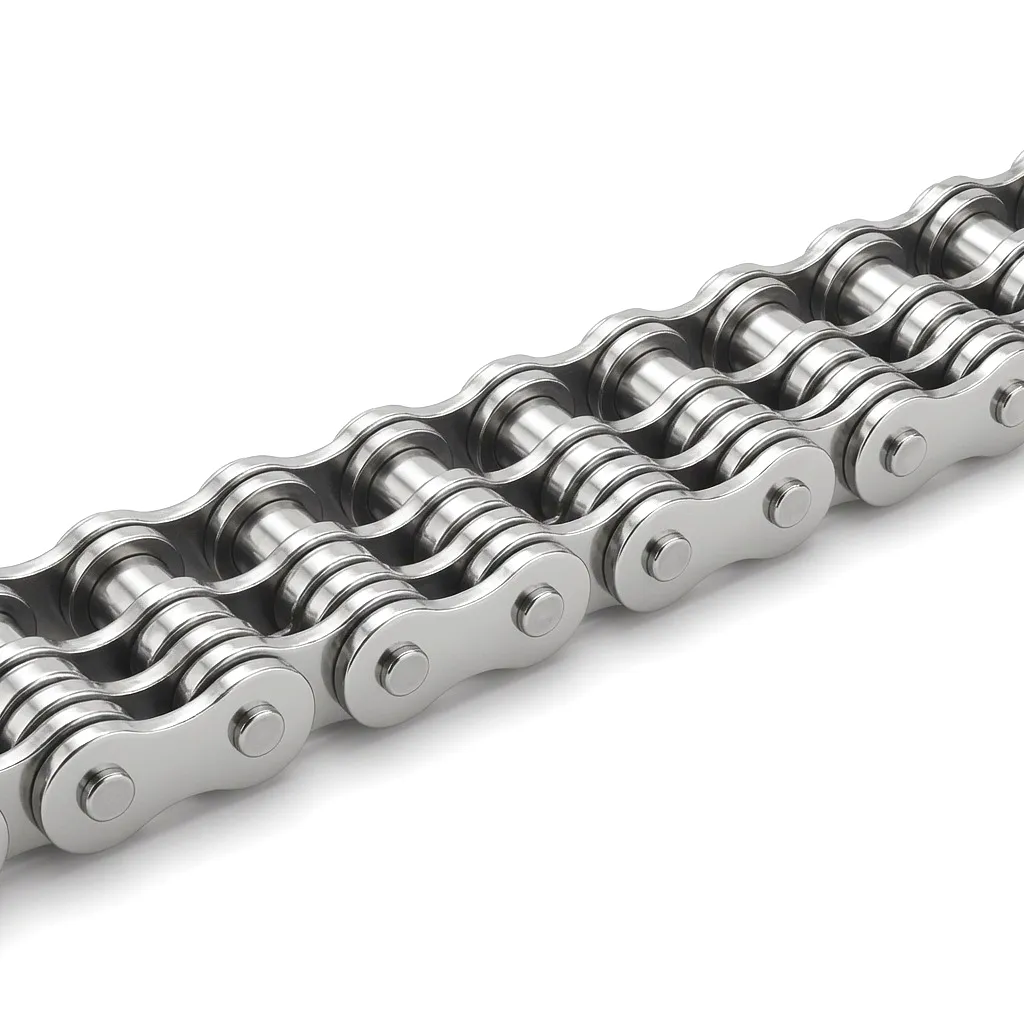
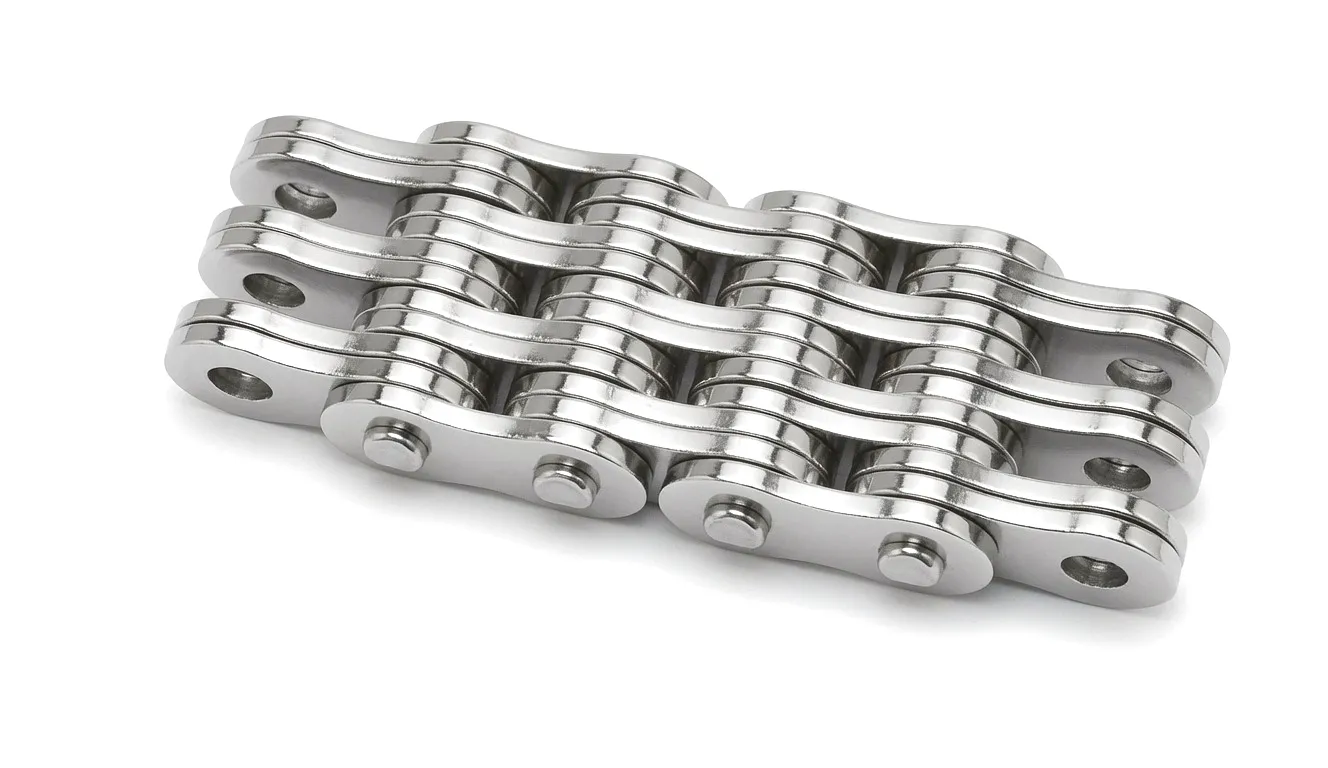
A leaf chain — also referred to as a balance chain or lacing chain in certain engineering circles — is a type of mechanical chain composed entirely of interleaved link plates (leaves) pinned together without any rollers. Unlike standard roller chains designed primarily for sprocket-driven power transmission, the leaf chain is engineered for linear load bearing, tensile cycling, and articulation under sustained axial stress. The absence of rollers means the entire structural integrity derives from the plate lamination and pin shear strength, which in premium-grade products reaches tensile loads exceeding 400 kN for heavy-series variants.
In corn harvesters, this architecture translates directly into three performance advantages that no other chain type replicates simultaneously: extreme tensile strength-to-weight ratio, tight articulation pitch for small-radius bending in confined header mechanisms, and predictable wear elongation patterns that allow maintenance teams to schedule replacement during pre-harvest servicing rather than responding reactively to catastrophic failure during harvest. Agricultural engineers familiar with self-propelled harvester platforms will recognise leaf chains in feeder house tensioning systems, lateral header tilt cylinders, and grain elevator tensioning rails — all positions where cyclic loading and axial precision are non-negotiable.
Chain Type Comparison
| Feature | Leaf Chain | Roller Chain | Drive Belt |
|---|---|---|---|
| Tensile Strength | ★★★★★ | ★★★☆☆ | ★★☆☆☆ |
| Shock Load Resistance | ★★★★★ | ★★★☆☆ | ★★☆☆☆ |
| Wear Predictability | ★★★★★ | ★★★★☆ | ★★★☆☆ |
| Dust/Debris Tolerance | ★★★★★ | ★★★☆☆ | ★★☆☆☆ |
| Compact Form Factor | ★★★★★ | ★★★★☆ | ★★☆☆☆ |
Specific Applications of Leaf Chain Inside Corn Harvesters
From feeder house to grain tank — where leaf chain works hardest

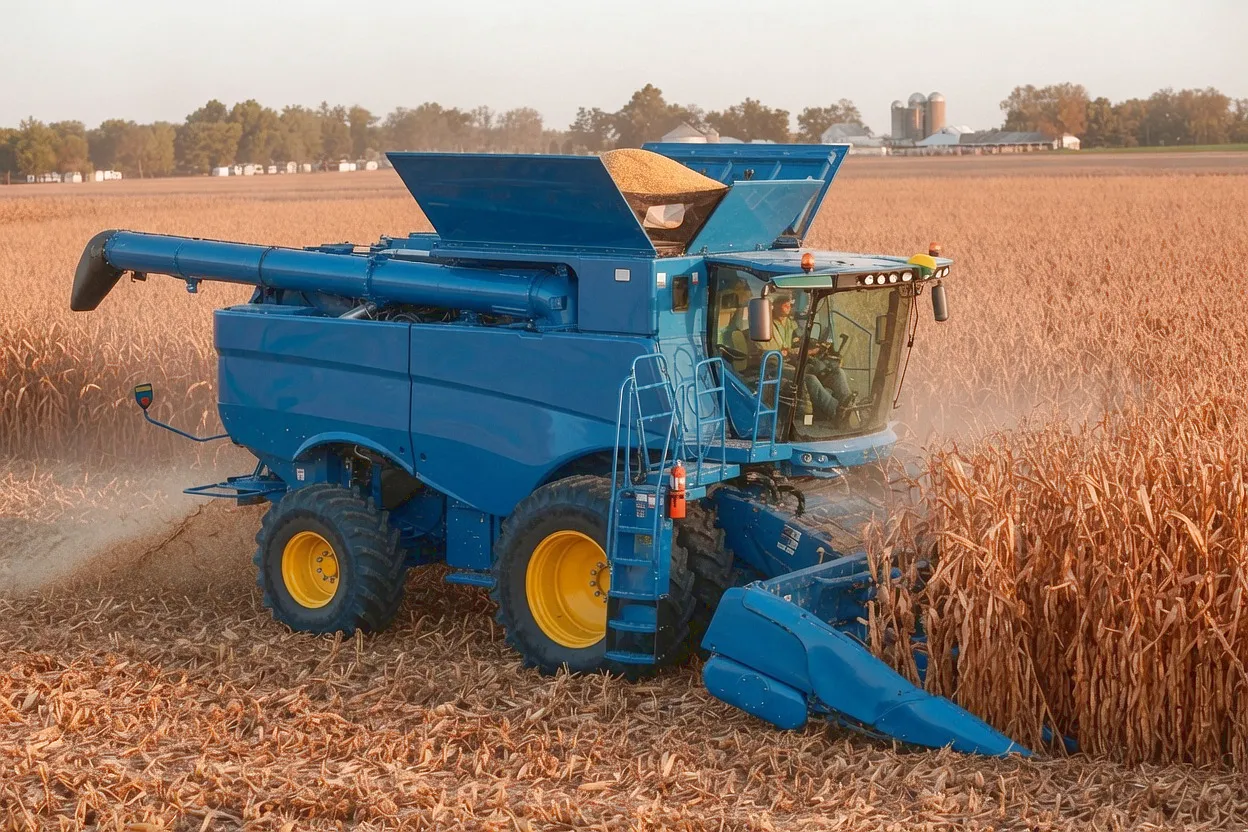
Feeder House Tensioning
The feeder house on a self-propelled corn combine is the single highest-stress mechanical zone in the entire machine. Stalk material enters at rates exceeding 30 tonnes per hour on six-row platforms, creating cyclical impact loads that spike well above rated capacity for milliseconds at a time. Leaf chains deployed in the tensioning mechanism absorb this shock without yielding, maintaining consistent feeder drum engagement and preventing the stone-trap bypass failures that plague inferior chain grades. The flat plate geometry also prevents cob material and stalk fibres from becoming embedded between rollers — a common failure mode with standard roller chain in this location.
Corn Header Row Units
Multi-row corn headers — whether two-row pull-type units used on smaller UK holdings or eight-row self-propelled configurations common on larger Lincolnshire and Cambridgeshire farms — rely on leaf chains to transfer power to individual row unit snap rolls. Each snap roll pair must rotate at precisely synchronised speeds to strip cobs from stalks cleanly without dropping grain to the ground. The high tensile rigidity of leaf chain maintains this synchronisation even when individual row units encounter soil ridges, embedded stones, or previously harvested stalk rows at off-angle entry. The measurable result is lower header loss and higher grain recovery per pass.
Grain Elevator Tensioning Rails
Once stripped from the cob, shelled grain travels vertically inside the combine’s clean grain elevator — a high-speed paddle conveyor that must maintain continuous throughput without grain kernel damage. The tensioning rails on either side of this elevator use leaf chain to apply consistent lateral force across the elevator’s full height, ensuring paddle spacing remains constant regardless of throughput volume changes. If tensioning chain elongates excessively or loses plate-to-plate contact, paddle misalignment follows, with immediate consequences for grain damage percentage and eventual elevator bearing failure. Premium leaf chains with controlled elongation rates address this directly.

Technical Specifications & Performance Parameters
Ever Power leaf chain series — standard agricultural grades for corn harvester OEM and aftermarket
| Chain Series | Pitch (mm) | Link Lacing | Min. Tensile (kN) | Pin Dia. (mm) | Material | Primary Application |
|---|---|---|---|---|---|---|
| AL422 | 12.7 | 4×2 | 17.8 | 4.45 | C45 Steel | Row unit, light tensioning |
| AL444 | 12.7 | 4×4 | 26.7 | 4.45 | C45 Steel | Grain elevator tension rail |
| AL622 | 19.05 | 6×2 | 35.6 | 6.25 | 20CrMnTi | Feeder house mid-load |
| AL644 | 19.05 | 6×4 | 53.4 | 6.25 | 20CrMnTi | Feeder house high-load |
| AL822 | 25.4 | 8×2 | 71.2 | 7.92 | 20CrMnTi + HT | Header tilt cylinder |
| AL1244 | 38.1 | 12×4 | 222.4 | 11.1 | 20CrMnTi + HT | Heavy-duty combine primary |
HT = Heat Treatment. All values per ISO 4347 / ASME B29.8M. Custom grades available on request.

Eight Reasons Why Agricultural Engineers Specify Leaf Chain
Not every benefit makes it into the product brochure
🔩 Superior Tensile-to-Weight
The multiple laminated plates distribute load across the entire cross-section, achieving tensile values that single-strand roller chains cannot match at equivalent chain widths. This means a narrower, lighter assembly handles the same duty, reducing header weight and improving fuel efficiency across a full harvest day.
🌾 Dirt-Resistant Geometry
Corn harvesting generates considerable volumes of leaf debris, fine chaff, and silage dust. The rollerless plate construction eliminates the internal cavities where these materials accumulate in roller chain, maintaining bend articulation under dry dusty conditions where roller chain seizes within hours. Field operators regularly report 40–60% longer service intervals when switching to leaf chain in header applications.
📐 Predictable Elongation
Premium leaf chains elongate at a measurable, linear rate tied to cumulative tensile cycle count. This is fundamentally different from the variable elongation seen with roller chain, which accelerates unpredictably when roller wear begins. Maintenance teams can accurately forecast replacement intervals, scheduling during winter overhaul rather than being caught out mid-harvest by sudden chain failure.
🛡️ Case-Hardened Pins
Ever Power agricultural leaf chains use alloy steel pins subjected to carburising and quenching to achieve surface hardness of 58–62 HRC with a tough core that absorbs impact without brittle fracture. The combination extends pin wear life by a factor of 2–3x compared to unprocessed mild steel pins common in low-cost imports found in some agricultural supply catalogues.
⚡ Shock Load Absorption
The interlocked plate geometry acts as a natural shock dampener. When a corn header strikes a partially-buried stone or a dense matted stalk bed, the load spike is distributed across multiple plates simultaneously rather than concentrating at a single roller-bushing interface. This inherent resilience is why leaf chains remain the standard in demanding OEM specifications from CLAAS Harvest Centre, CNH Industrial, and AGCO Corporation.
🔄 ISO 4347 Interchangeability
Every Ever Power leaf chain is manufactured to ISO 4347 and ASME B29.8M dimensional standards. This ensures complete interchangeability with OEM-fitted chains across CLAAS Lexion, John Deere S Series, Case IH Axial-Flow, and New Holland CR platforms. UK dealers and farm mechanics can replace chains without machining or adaptor hardware, cutting roadside repair time significantly.
🌡️ Low-Temperature Performance
UK corn harvesting often runs into November mornings when overnight temperatures drop well below 5°C. Standard mineral lubricants thicken at low temperatures, dramatically increasing internal friction and accelerating wear in conventional roller chain. Leaf chains tolerate temperature-induced viscosity changes better due to their open geometry, and are compatible with synthetic PAO-based chain lubrication that remains fluid at -30°C, critical for pre-dawn harvest starts.
📊 Traceable Quality Control
Every production batch carries full material traceability documentation including raw steel mill certificate, heat treatment batch records, and dimensional inspection reports. For UK agricultural machinery importers and dealerships managing warranty obligations, this documentation chain provides the assurance required when fitting aftermarket components to manufacturer-warranted machines operating in professional farming contexts.
Materials, Metallurgy & Operating Principles
The working principle of an agricultural leaf chain is deceptively straightforward: alternating sets of inner and outer link plates are pinned together to form a flexible, articulating tensile member capable of bending around sheaves or pulleys while withstanding sustained axial loads. The real engineering sophistication lies in the material selection and processing steps that determine whether a chain lasts one season or four.
Ever Power specifies 20CrMnTi alloy steel for demanding agricultural grades — a chromium-manganese-titanium alloy widely used in European gear and transmission manufacturing for its combination of excellent surface hardenability and retained core toughness after carburising. Following cold stamping to tight dimensional tolerances, link plates undergo carbonitriding at temperatures between 850–930°C in a controlled atmosphere furnace, producing a case depth of 0.2–0.5mm with surface hardness of HRC 58–62. This hard wear surface sits over a core hardness of HRC 35–45, which is soft enough to absorb sudden impact without crack propagation — the defining property separating quality agricultural chain from budget imports.
Pins are produced from high-carbon chrome steel rod, precision-ground to h8 tolerances and press-fitted into outer plates with interference fits calculated to prevent relative motion under dynamic load cycling. The assembly sequence follows a controlled interleave pattern specified by the lacing ratio — a 6×4 lacing, for example, consists of six pairs of plates alternating between two and four plates wide at each link position — which directly governs the overall tensile capacity and flexibility of the finished chain.
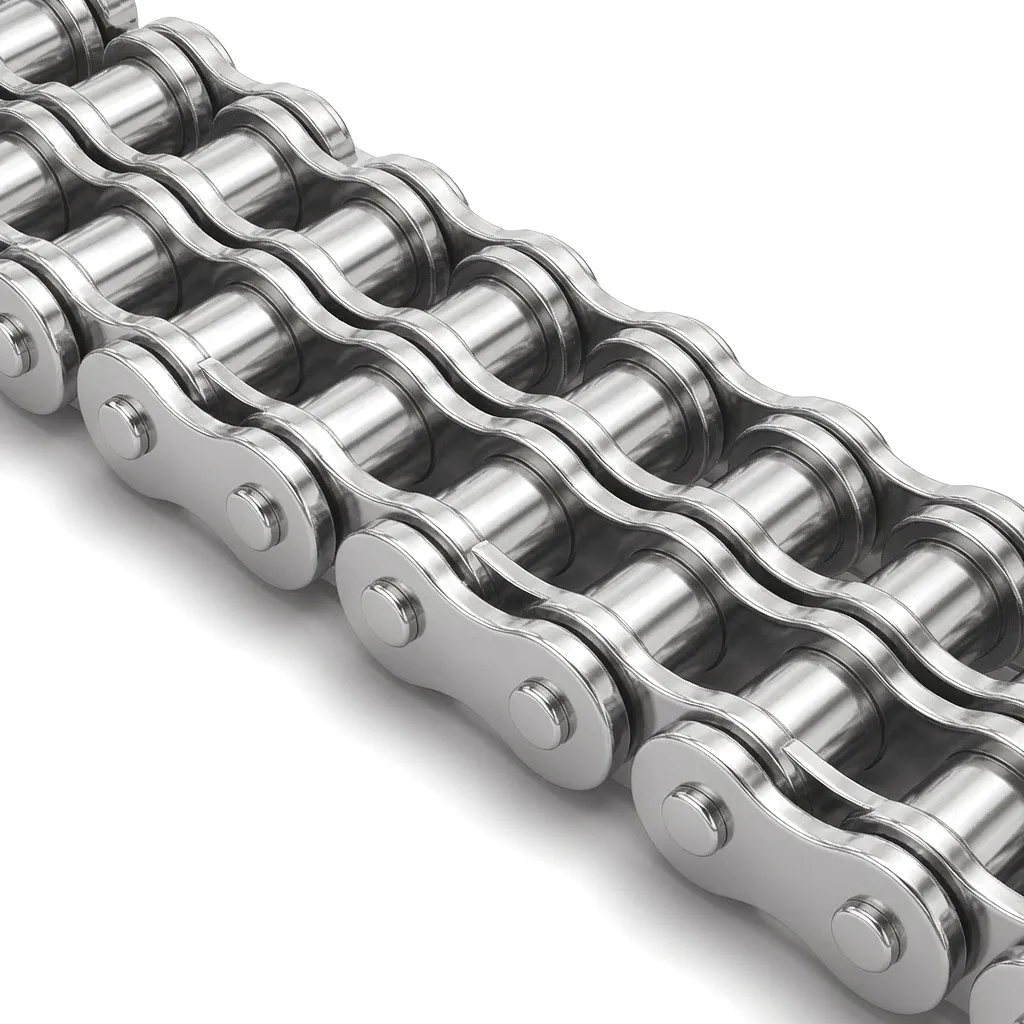
Material Grade Summary
| Link Plate | C45 / 20CrMnTi alloy |
| Pin | GCr15 chrome steel |
| Surface HRC | 58 – 62 HRC |
| Core HRC | 35 – 45 HRC |
| Case Depth | 0.2 – 0.5 mm |
| Standard | ISO 4347 / ASME B29.8M |
| Max Elongation | ≤ 2% at service limit |
Supplying Corn Harvester Leaf Chain Across the United Kingdom
 The United Kingdom’s corn-growing landscape is concentrated in specific geographic belts where soil type, growing degree days, and rainfall patterns align to support high-yielding maize crops. Lincolnshire and East Yorkshire host some of the UK’s largest arable holdings, running CLAAS Lexion and John Deere S-series combines fitted with six-to-eight-row corn headers that demand high-performance drivetrain components capable of delivering full-season reliability without mid-harvest intervention. Norfolk and Suffolk growers, many supplying AD biogas plants with whole-crop maize silage, depend equally on consistent chain performance — silage maize harvesting imposes even higher throughput demands than grain maize due to the higher moisture content and bulk material volume involved.
Ever Power maintains stock of the most commonly specified leaf chain for corn harvester applications — including AL422, AL444, AL622, and AL644 grades — available for rapid dispatch to UK agricultural machinery dealers, independent repair workshops, and farm direct purchasers. Custom-length orders, specific lacing configurations, and non-standard attachment plates can be produced to drawing within agreed lead times. Our technical team, with direct experience supporting agricultural OEM clients across Europe, can specify the optimal chain grade for any corn harvester platform based on duty cycle, operating environment, and seasonal maintenance schedule requirements.
Scotland and Wales also see growing areas of maize cultivation, particularly for cattle feed and renewable energy feedstock, expanding the geographic footprint of UK corn harvester operations northward and westward into conditions that place additional demands on drivechain wear resistance. Wetter harvesting conditions in these regions increase the importance of corrosion-resistant surface treatments, and Ever Power offers zinc-nickel plated leaf chain grades specifically for operators working in consistently high-moisture field conditions.
Real-World Performance
Customer Success Story
How a Lincolnshire farming cooperative eliminated mid-harvest leaf chain failures
📍 Lincolnshire, England
Fenland Agricultural Cooperative Ltd. — Spalding, Lincolnshire
Fenland Agricultural Cooperative Ltd., operating across approximately 4,200 hectares of prime arable land in South Lincolnshire, runs a fleet of three CLAAS Lexion 8900 combines fitted with CORIO 670 eight-row corn headers. Prior to the 2022 season, the cooperative’s engineering manager Dave Thornton had been dealing with recurring leaf chain failures inside the feeder house tensioning systems — typically occurring during the second or third week of the October harvest window, precisely when throughput rates peak and operator fatigue is highest.
The cooperative had been purchasing replacement leaf chain from a local agricultural merchant stocking generic imported product. Tensile testing of the failed chains revealed consistent plate deformation at loads significantly below the stated rated tensile, suggesting non-compliant material or heat treatment. After contacting Ever Power directly, the cooperative trialled AL644 leaf chain sets across all three machines for the 2022 harvest season — approximately 680 hours of combined operating time across a six-week period.
The results were quantifiably different. Zero feeder house leaf chain failures occurred during the 2022 season. Post-season elongation measurement across all three machines showed an average of 0.9% extension across AL644 chains that had completed the full harvest period — well within the 2% service limit — indicating the chains were suitable for a further full season before replacement. The cooperative calculated a combined saving of approximately £18,400 across the 2022 season when accounting for avoided breakdown callouts, lost harvest time, and reduced parts procurement frequency. Fenland Agricultural Cooperative has maintained its supply relationship with Ever Power through four subsequent harvest seasons.
Results at a Glance
Season failures (prev. avg.)
3–4 /season
Season failures (2022–2025)
0 /season
Post-season elongation
0.9%
Est. annual saving
£18,400
“We went from resigning ourselves to at least one breakdown per machine per season to completing four back-to-back harvests without a single feeder house chain failure. The material quality is genuinely different.”
Dave Thornton
Engineering Manager, Fenland Agricultural Cooperative Ltd., Lincolnshire
More Customer Voices
“We run a CLAAS Tucano 570 with a RU600 corn cracker for forage maize on dairy contracts in Cheshire. Replaced the OEM elevator tensioning chains with Ever Power AL622 last season. Fourteen weeks of silage cutting without a single chain-related stop. Worth every penny.”
James Hartley
Farm Manager, Hartley Contracting Ltd., Macclesfield, Cheshire
“As an agricultural machinery dealer in Norfolk, I’ve been recommending Ever Power leaf chain to customers for two years now. The dimensional consistency is excellent — they genuinely fit first time on CLAAS and John Deere headers without modification. Returns on warranty have been essentially zero.”
Robert Simmons
Parts Manager, Simmons Farm Machinery Ltd., King’s Lynn, Norfolk
“We needed custom-length leaf chain with extended attachment plates for a bespoke corn header conversion on a Case IH combine. Ever Power handled the custom order with a lead time of three weeks, drawings were signed off promptly, and the delivered chains were exactly to spec. Highly recommended for non-standard applications.”
Andrew Mackenzie
Senior Engineer, Grampian Agricultural Engineering, Aberdeen, Scotland
Custom Leaf Chain Fabrication — Built Precisely for Your Corn Harvester
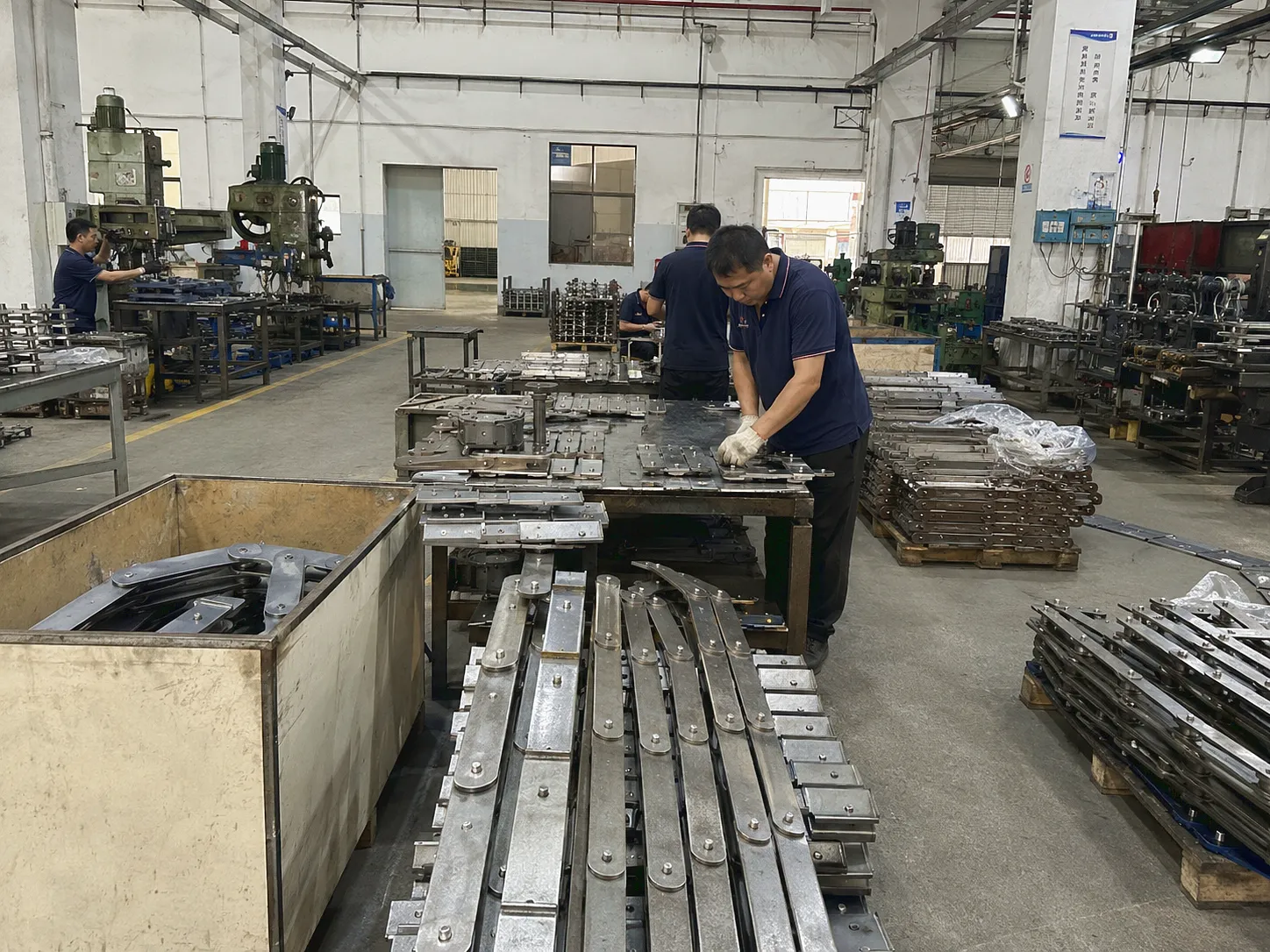
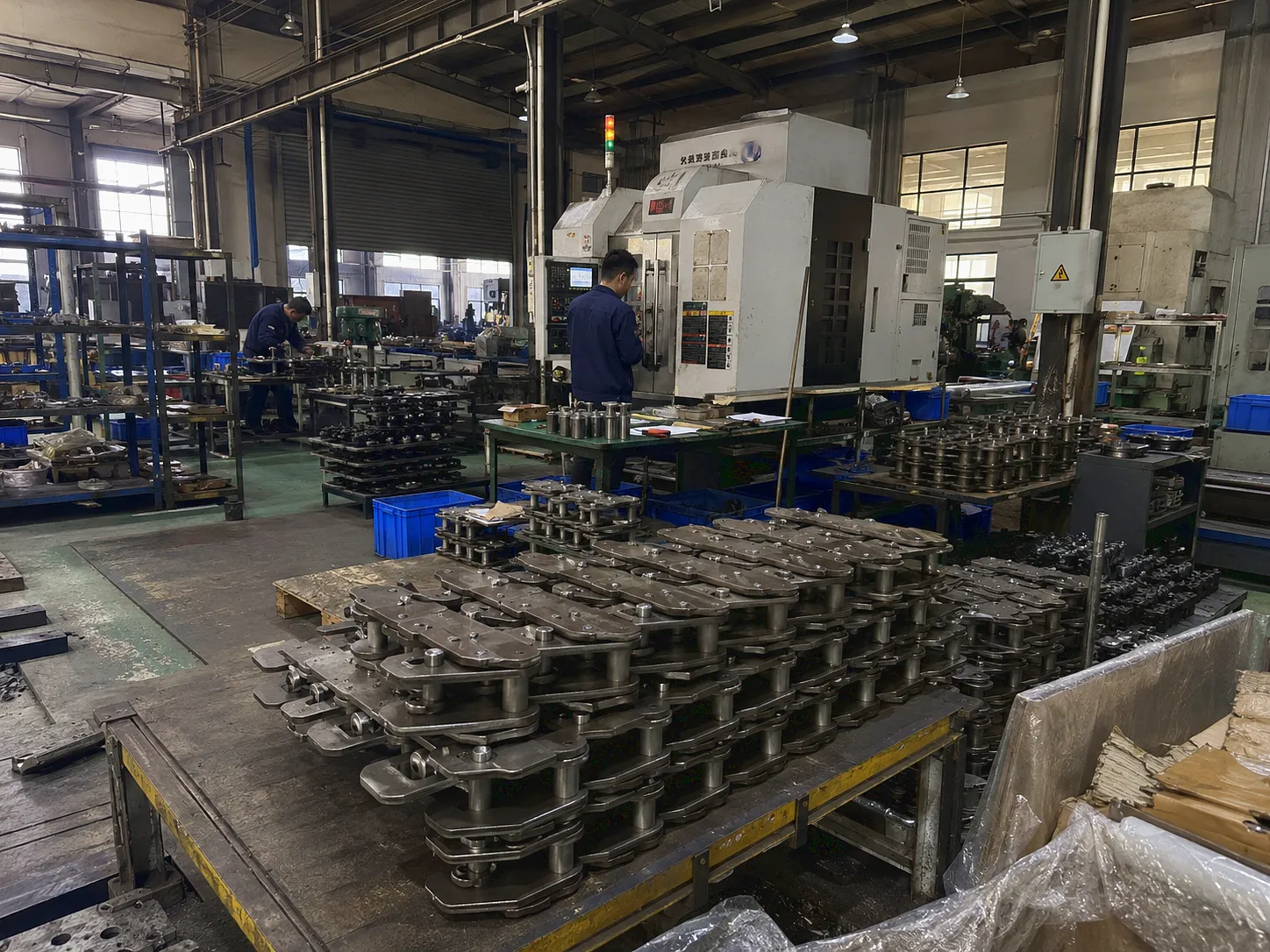
Ever Power operates a dedicated chain manufacturing facility equipped with CNC stamping presses, automated heat treatment furnaces, and precision assembly lines capable of producing leaf chains to full ISO 4347 compliance across the complete standard pitch and lacing range. The manufacturing process runs from raw alloy steel coil to finished, tested, and certified chain without subcontracting, giving us full quality control across every production step. This vertical integration is the foundation of our ability to guarantee consistent tensile performance across batch after batch.
Our custom design and manufacturing service is where we separate from generic catalogue suppliers. Agricultural machinery manufacturers and large contracting operations regularly approach us with requirements that fall outside standard catalogue offerings — non-standard pitch combinations for retrofit header conversions, extended-barrel pins for guide rail applications, attachment plates with custom hole patterns for snap roll mounting brackets, and shot-peened link plates for applications subject to extreme fatigue cycling. Our engineering team works from customer drawings, worn original parts, or detailed dimensional specifications to produce custom leaf chains that install without modification and perform to the same quality standards as our standard product range.
For UK agricultural machinery importers seeking a reliable long-term supply partner, Ever Power offers annual supply agreements with fixed pricing, guaranteed stock allocation ahead of the pre-harvest servicing season, and technical support including chain wear analysis and specification reviews. Contact our team to discuss your specific corn harvester leaf chain requirements — whether that is a one-off custom fabrication or a recurring supply arrangement for an agricultural dealer network.
Ready to Specify the Right Leaf Chain?
Custom fabrication · Fast UK dispatch · ISO-certified
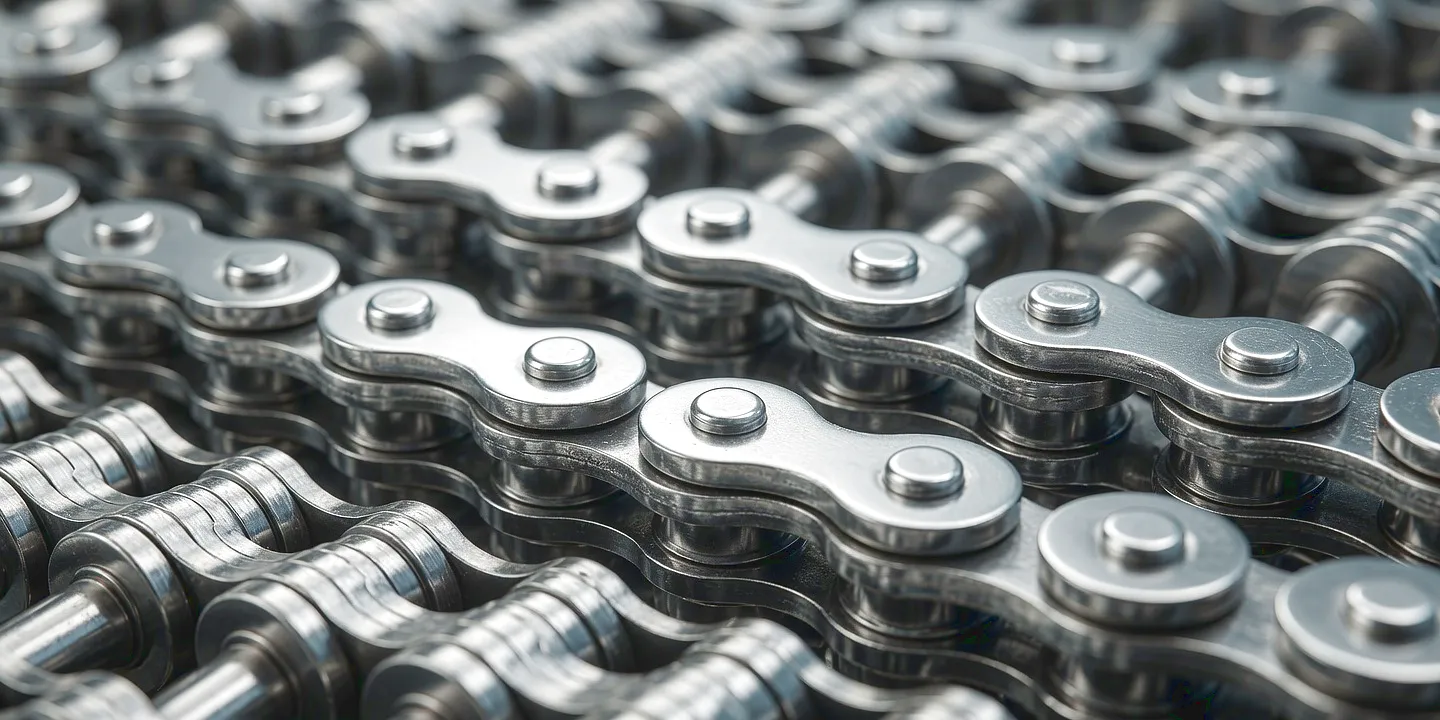
Product Gallery — Ever Power Leaf Chain Series
Seasonal Maintenance Guide for Corn Harvester Leaf Chains
Pre-season, in-season, and post-season servicing protocols for UK arable operators
🔍
Pre-Season Inspection
August — before harvest campaign begins
Measure all accessible leaf chains with a calibrated pitch gauge or ruler. Compare current pitch to the original specification. Any chain showing more than 1.5% elongation from nominal pitch should be replaced before harvest commences, as elongation accelerates non-linearly as chains approach the 2% limit.
Visually inspect all link plate side faces for fatigue cracking, particularly at the pin hole perimeter. Any visible surface cracks, even hairline, require immediate chain replacement — crack propagation under load is rapid and catastrophic. Check guide rail contact surfaces for uneven wear patterns that indicate chain misalignment.
⚙️
In-Season Monitoring
Weekly during harvest campaign
During the harvest season, daily chain lubrication with a mineral or synthetic chain oil applied to the inner plate surfaces is the single most effective maintenance action. Leaf chains in corn harvester applications operate in an environment of continuous chaff and fine dust contamination, which acts as an abrasive between pin and plate bore surfaces. Consistent lubrication displaces contamination and reduces pin wear dramatically.
Listen for irregular noise — a clicking or grinding sound from feeder house drive components during operation is frequently the first indication of advanced pin-to-bore wear or a developing crack in a link plate. Investigate immediately rather than completing the current bout, as chain failure under load in a feeder house assembly can cause secondary damage to bearings, shafts, and tensioning hardware costing multiples of the chain replacement cost.
🛠️
Post-Season Overhaul
November — winter workshop period
Winter overhaul is the right time to make replacement decisions based on post-season elongation measurements rather than visual appearance alone. Record elongation data from each chain location and compare with previous seasons’ data to identify locations that are consuming chain life faster than expected — this often reveals a misalignment or sheave wear issue that, if left uncorrected, will destroy a new replacement chain in a single season.
Order replacement chains during the November–January period to ensure stock is available for March–April combine preparation. Ever Power can supply pre-cut, connected chains in exact operational lengths with master links fitted to reduce installation time for workshop teams working against pre-spring drilling deadlines.
Frequently Asked Questions
Real questions from UK agricultural machinery operators and dealers
Secure Your Corn Harvest Season — Spec the Right Leaf Chain Now
With 18+ years in agricultural drive chain applications, our engineering team can specify the exact leaf chain grade, length, and lacing configuration for your corn harvester platform. UK operators — don’t wait until harvest to discover a chain problem.
[email protected] · ISO 4347 / ASME B29.8M Certified · Free Technical Consultation
© Ever Power Chain Technology · Leaf Chain for Agricultural Machinery · UK Supplier · edit by gzl
Content verified by senior application engineers with 18+ years in leaf chain and agricultural drivetrain applications.