
Why Leaf Chain Matters in Ring Spinning
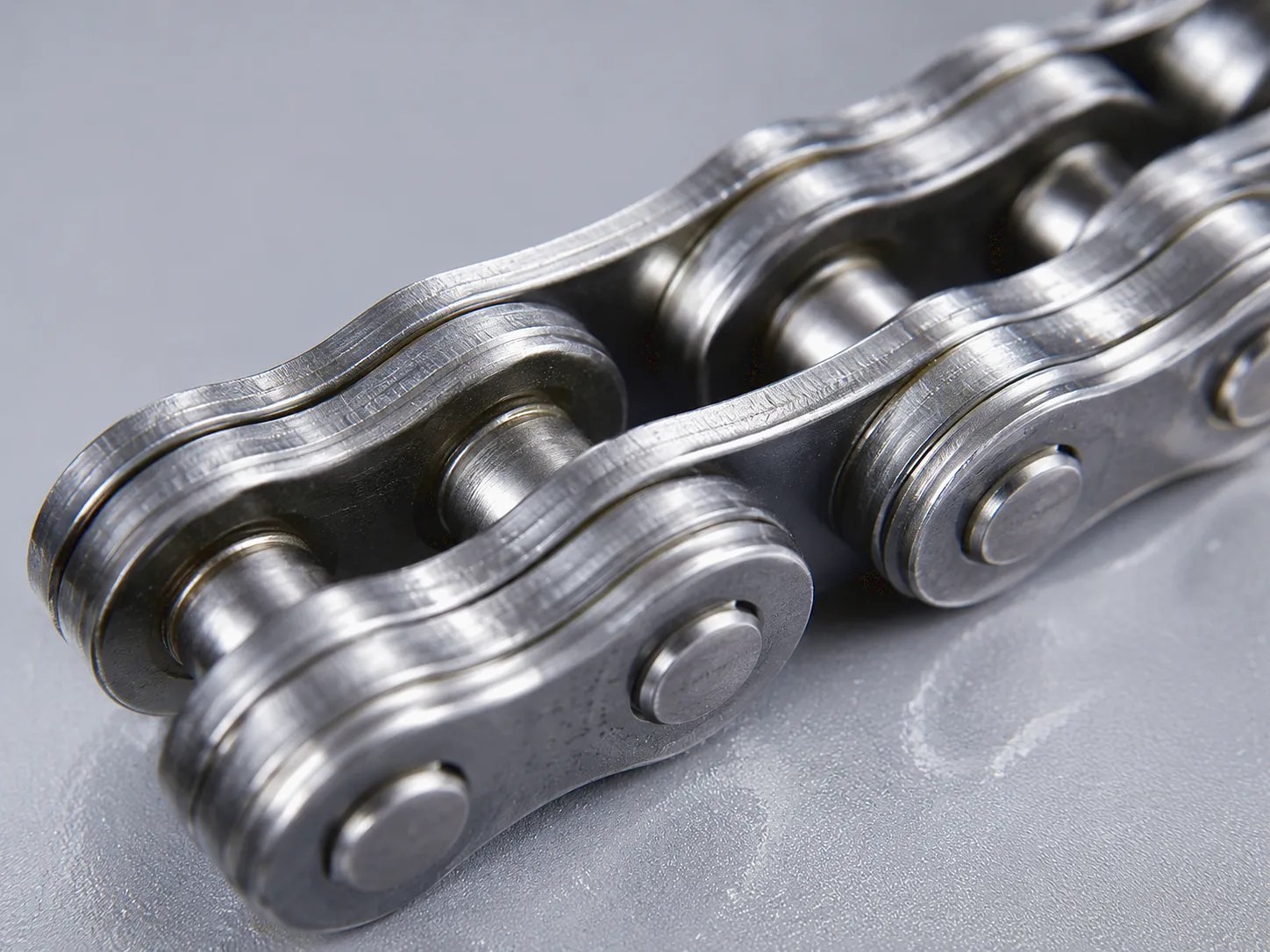 Walk the floor of any working cotton or synthetic fibre mill in Lancashire, Yorkshire, or further north, and you will find ring spinning frames running around the clock under relentless production pressure. At the heart of the ring frame’s drive mechanism is a component that is easy to overlook until it fails: the leaf chain. Also known as a plate chain or balance chain, leaf chain is a robust form of lifting and tensioning chain built entirely from interlocking flat link plates and hardened pins — no rollers, no bushings. That absence of inner parts is precisely what makes it so well-suited to the reciprocating tension loads found in spinning frame lappet motions, ring rail drives, and builder motion systems.
Over eighteen years of working with textile machinery manufacturers across the UK and Europe, one pattern becomes unmistakably clear: mills that specify the correct grade, pitch, and surface treatment for their leaf chain specification experience dramatically lower downtime compared to those that treat the chain as a generic commodity buy. A ring spinning frame running at 18,000 to 25,000 rpm subjects its drive components to vibration, temperature variation, and lint ingress that would destroy an inferior chain in months. Choosing correctly from the outset is an engineering decision, not a purchasing decision.
Looking for a leaf chain supplier for your ring spinning frame? Our engineers are ready to help with specification, sizing, and custom production.
What Is a Leaf Chain and How Does It Differ from Roller Chain?
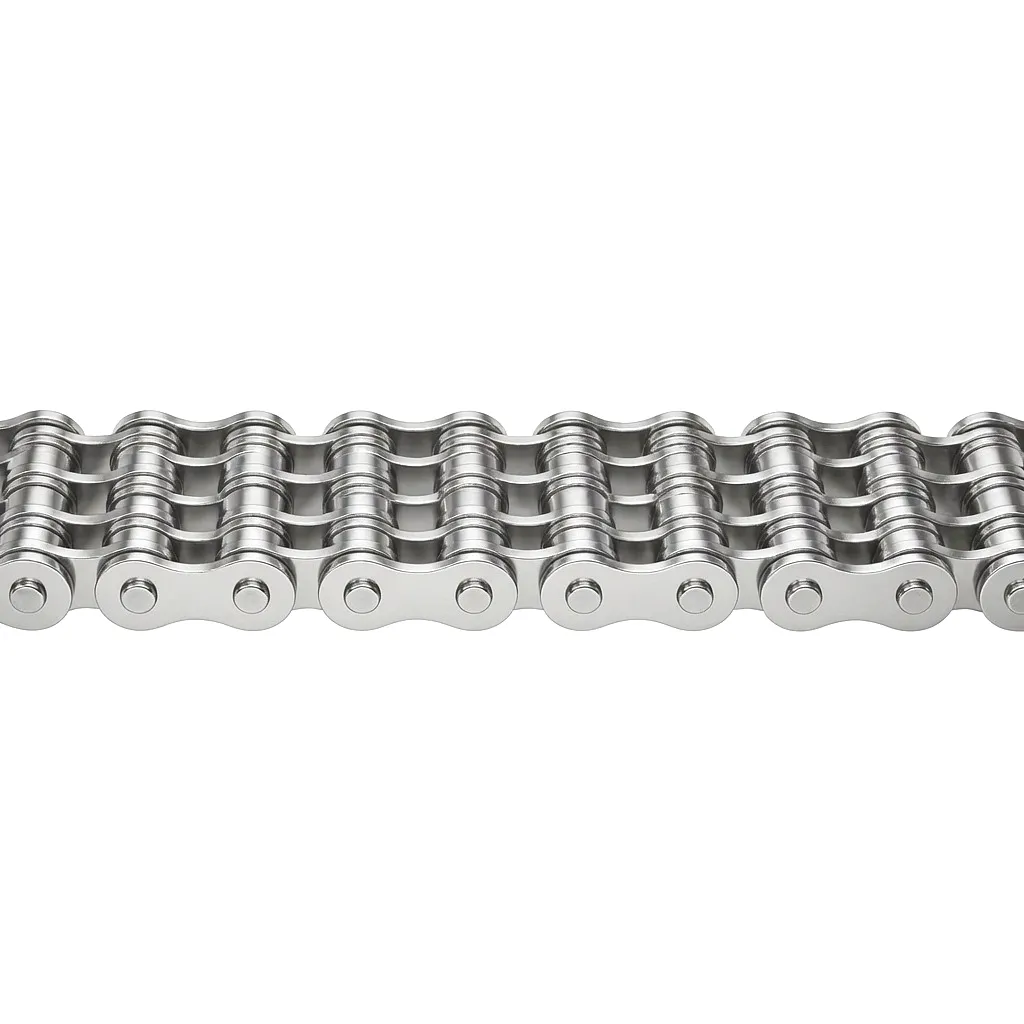
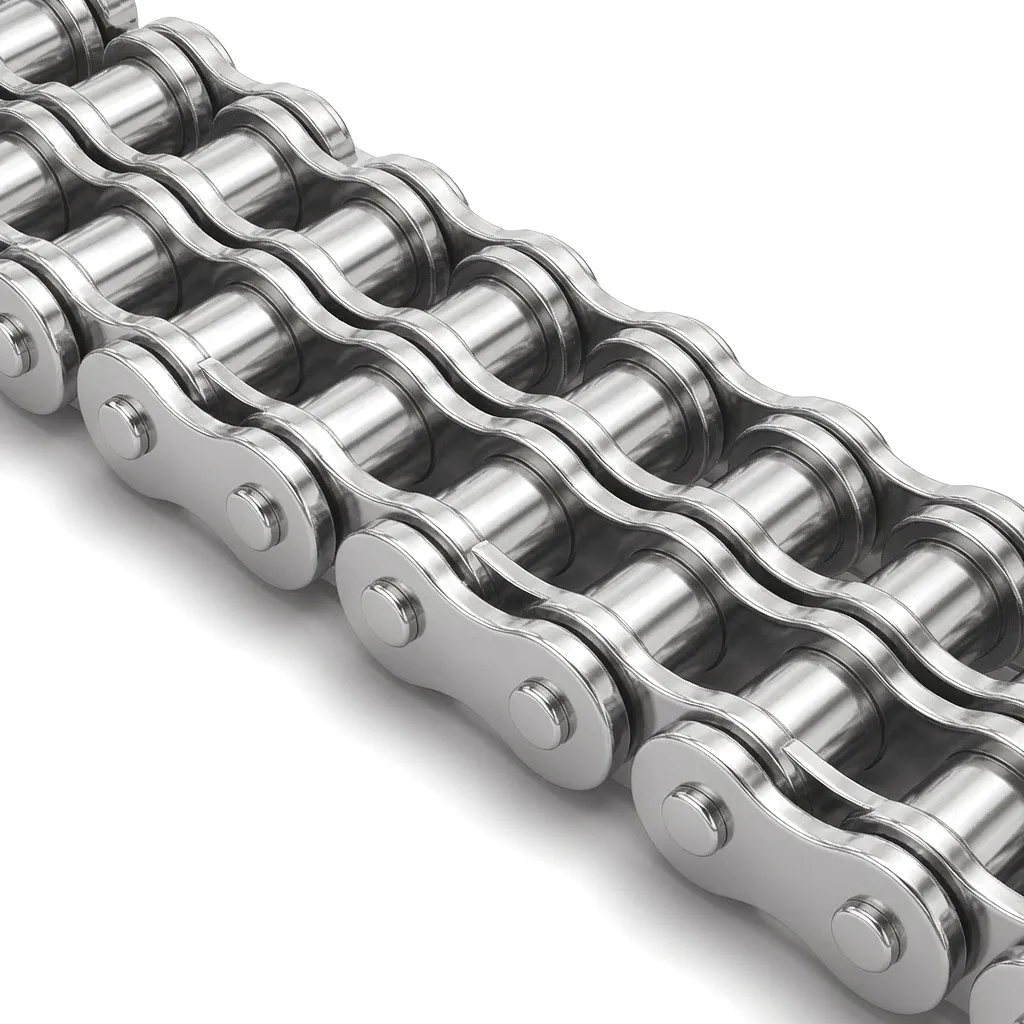
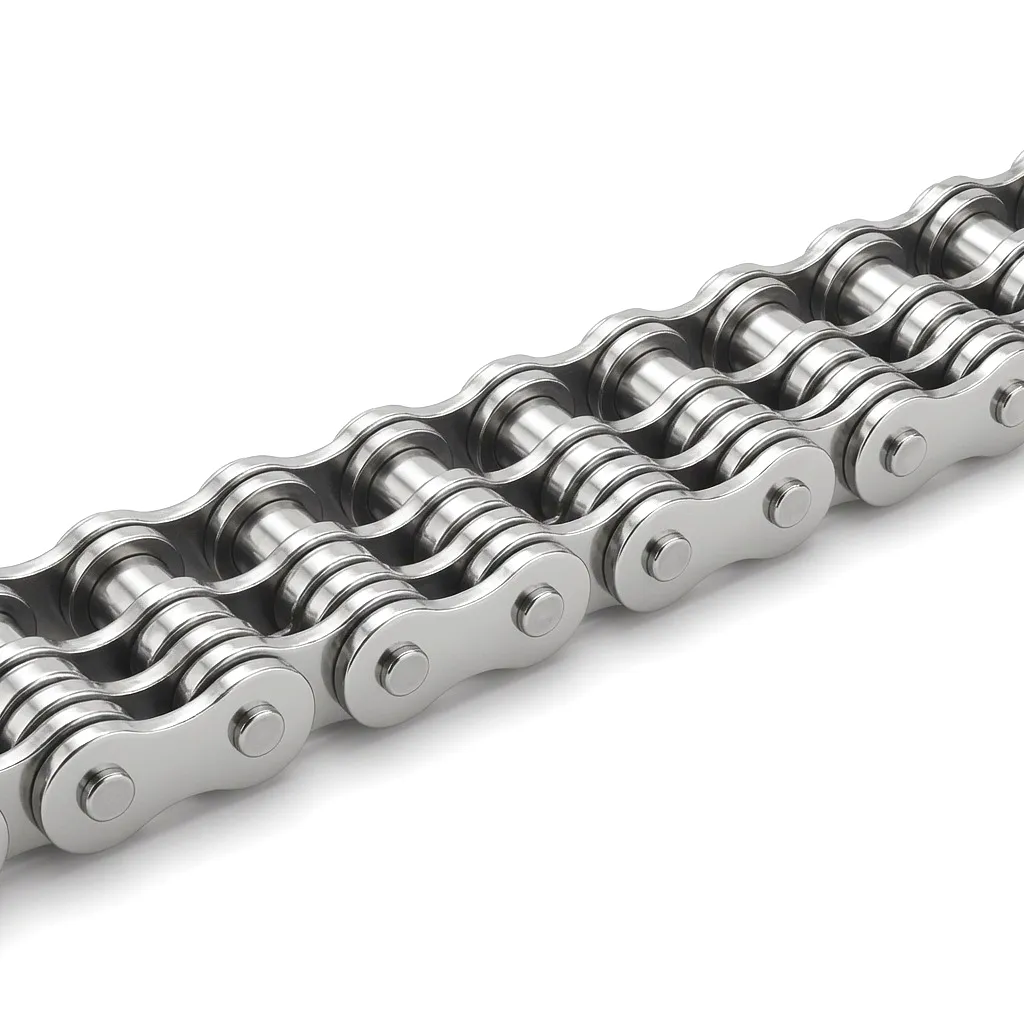
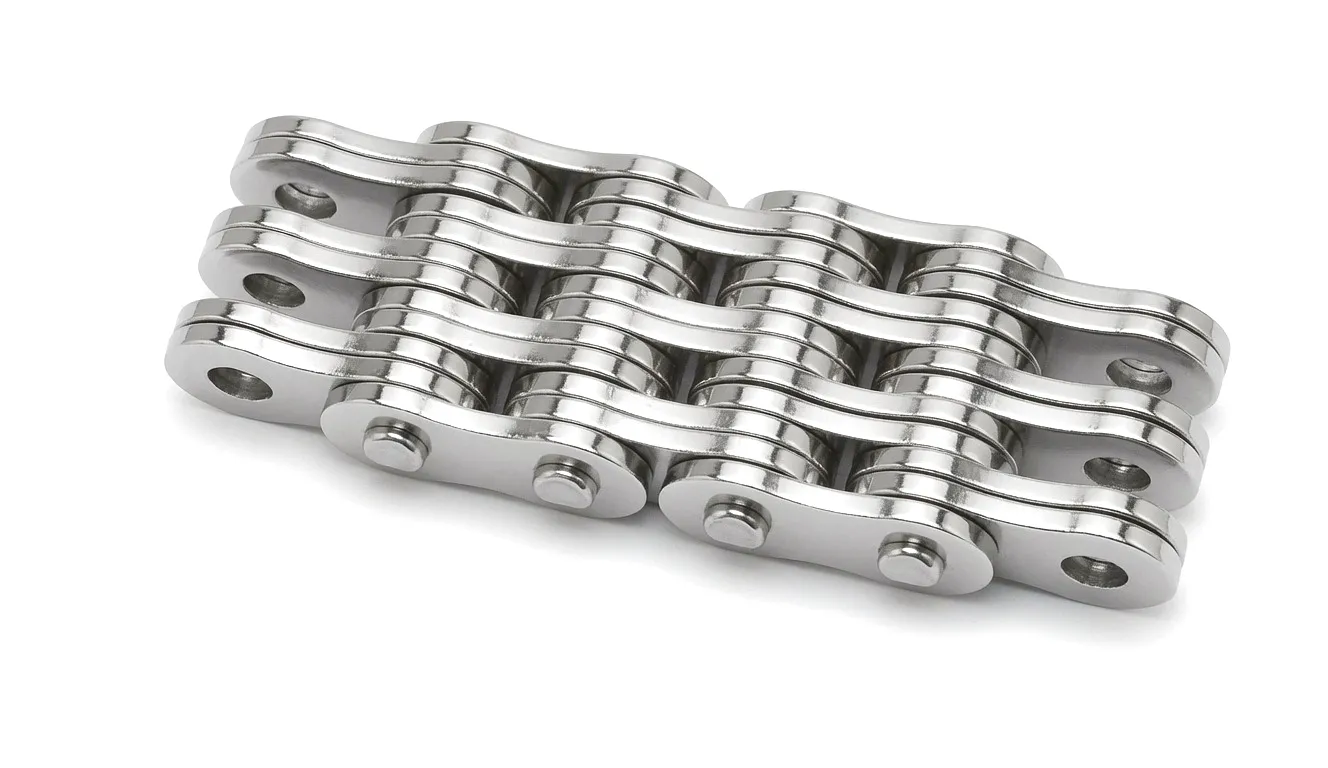
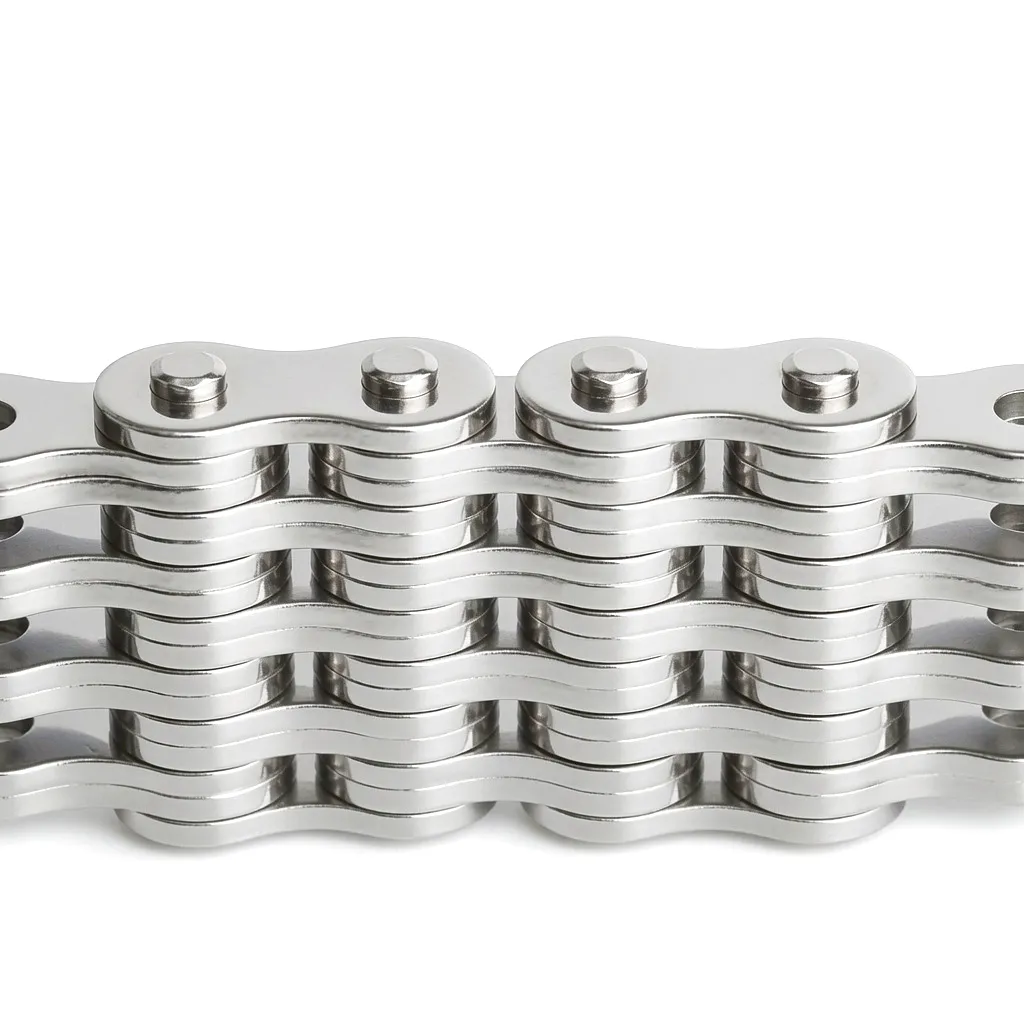
A leaf chain is constructed solely from an alternating pattern of outer link plates, inner link plates, and solid through-pins — all hardened and precision-ground. Unlike a roller chain, which employs hollow bushes and rollers riding on sprocket teeth, a leaf chain engages with a clevis pin or a guide bracket and relies entirely on the tensile strength and fatigue resistance of its plates. This makes it the first choice wherever the application demands a high tensile load in a compact cross-sectional profile, repeated reversals of tension, and resistance to stretch accumulation over thousands of operating hours.
 In ring spinning frames, the leaf chain is most commonly found in the ring rail drive — the mechanism responsible for lifting and lowering the ring rail to build the cop or bobbin package. The chain must absorb shock at each reversal of direction while maintaining precise tension calibration. Any elongation beyond the manufacturer’s tolerance translates directly into inconsistent package build, yarn tension variation, and ultimately end breakage rates that eat into production efficiency. This is not a theoretical concern; it is the daily reality of mills running legacy Rieter, Toyota, or Lakshmi ring frames across the UK.
The Ring Spinning Frame: A Demanding Environment for Any Chain
Continuous High-Speed Operation
Modern ring frames run spindle speeds exceeding 20,000 rpm and operate for 20+ hours per day. The leaf chain in the ring rail drive cycles through thousands of reversals every shift, accumulating fatigue that can only be managed with correct material specification and surface treatment.
Temperature and Humidity Extremes
Spinning rooms maintain elevated humidity (often 60–70% RH) to prevent yarn breakage, while friction heat from spindles raises ambient temperatures. Leaf chain steels must be selected and treated to resist corrosion in this environment without sacrificing fatigue strength or dimensional stability.
Lint and Airborne Fibre Contamination
Cotton and synthetic lint are pervasive in spinning rooms. It penetrates every gap in mechanical assemblies, including chain joints, accelerating abrasive wear if the chain design or lubrication approach does not account for it. Leaf chain’s minimalist construction with no internal rollers reduces contamination trapping compared with conventional roller chain.
The ring rail drive mechanism translates rotational motor torque into the precise vertical oscillation of the rail carrying the ring traveller assembly. The builder motion cam or electronic controller governs the stroke length change that builds the characteristic taper at the base and shoulder of the cop. Throughout this process, the leaf chain must remain dimensionally stable. Any elongation — even fractions of a millimetre per link — cascades into position inaccuracy that affects yarn tension, patterning, and package density. For mills targeting count consistency and quality assurance certifications such as Oeko-Tex or ISO 9001, chain wear management is not optional maintenance, it is quality control.
 British textile manufacturers working with fine-count wools in West Yorkshire or synthetic technical yarns in the East Midlands both encounter these same fundamental engineering challenges, though the specific operating parameters differ. A worsted mill spinning 80s count wool may run its ring frames at slightly lower speed but will demand extreme cleanliness and avoid any risk of chain lubricant contaminating the fibre. A technical yarn producer using nylon or polyester at high twist factors will face higher shock loads. In either case, the right leaf chain specification begins with understanding the actual load cycle, not just the machine manufacturer’s generic replacement part number.
Technical Specifications: Leaf Chain Series for Textile Applications
Common grades used in ring spinning frame ring rail drives and builder motion systems. Custom specifications are available — contact our engineering team for bespoke sizing.
| Chain Series | Pitch (mm) | Plate Lacing | Min. Breaking Load (kN) | Pin Diameter (mm) | Weight (kg/m) | Typical Application |
|---|---|---|---|---|---|---|
| AL422 | 12.70 | 4×2 | 22.2 | 3.96 | 0.41 | Ring rail balance, lightweight builder motion |
| AL444 | 12.70 | 4×4 | 44.4 | 3.96 | 0.74 | Standard ring rail drive, mid-frame lengths |
| AL622 | 19.05 | 6×2 | 31.1 | 5.94 | 0.71 | Long-frame ring rail, heavier ring rail assemblies |
| AL644 | 19.05 | 6×4 | 62.2 | 5.94 | 1.31 | Heavy-duty ring frame, long spindle count machines |
| AL822 | 25.40 | 8×2 | 44.4 | 7.92 | 1.34 | Industrial builder motion, frame elevation systems |
| AL1022 | 31.75 | 10×2 | 71.2 | 9.53 | 2.28 | High-tension ring frame crane, integrated doffing system |
Specifications follow ISO 4347 and ANSI B29.8 standards. Values are nominal; actual production tolerances available on request. Surface treatments (shot-peened, zinc-plated, Dacromet-coated) are applied per customer specification.
Materials, Construction, and Surface Treatments
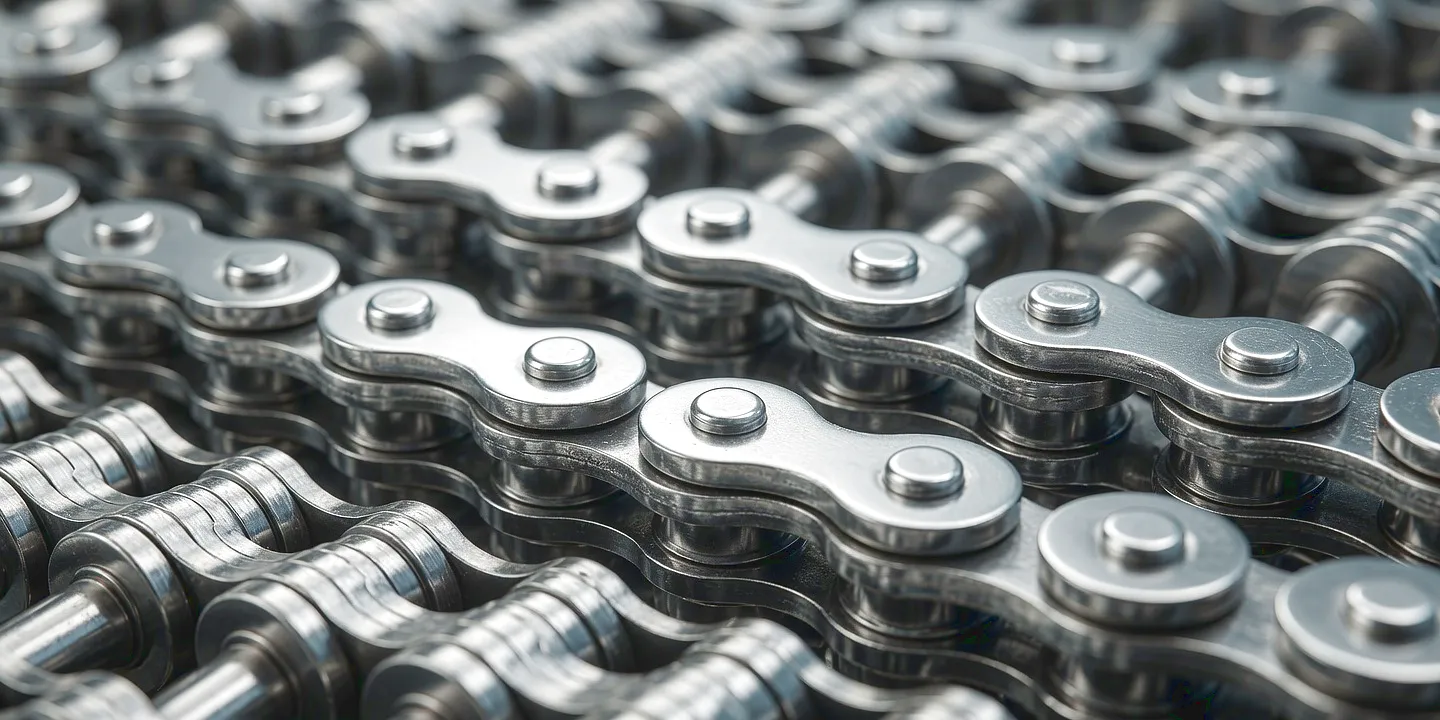
The performance of a leaf chain in ring spinning applications depends almost entirely on three factors: the base steel grade of the link plates, the heat treatment process applied to pins and plates, and the surface finish chosen to handle the specific mill environment. Ever Power manufactures its leaf chain link plates from low-alloy, high-carbon steel (typically 40Cr or 20CrMnTi equivalent grades) with controlled carbon content that allows for deep case-hardening while retaining a ductile core. This combination gives the chain excellent tensile strength without the brittleness that would cause catastrophic link plate cracking under shock loading at the builder motion reversal point.
Pins are through-hardened to 58–62 HRC and ground to h6 tolerance to ensure consistent fit within the link plate bores. This precision matters in textile applications because pin-to-plate bearing area is the primary wear surface in leaf chain — any slop in this fit accelerates elongation and accelerates the point at which the chain must be replaced. Our manufacturing process controls pin-hole punch tolerances to ±0.01 mm, a figure that represents genuine engineering investment rather than marketing language.
For spinning rooms with high-humidity environments — a common condition in UK cotton spinning mills — we recommend our zinc-nickel plated series, which provides superior corrosion resistance compared to standard electro-zinc plating while adding negligible friction penalty. In applications where any lubricant contamination of fibre is absolutely prohibited, we also supply a PTFE-coated leaf chain variant that significantly extends re-lubrication intervals and reduces the risk of oil migration onto the yarn path.
Available Surface Treatments
- Standard (black oxidised)
- Electro-zinc plated
- Zinc-nickel plated (high corrosion resistance)
- Shot-peened (enhanced fatigue life)
- Dacromet-coated (chemical-resistant environments)
- PTFE/dry-film lubricated (oil-free zones)
- Stainless steel pin variant (for food-grade adjacent applications)
Specific Application Points on a Ring Spinning Frame
Where exactly does leaf chain appear in a ring spinning frame layout? Understanding each position helps maintenance engineers specify replacements with the correct load and environmental requirements.
Ring Rail Drive Chain
The primary leaf chain that lifts and lowers the ring rail. Subject to the highest cycle count and most demanding reversal loads. Typically an AL444 or AL622 series in standard British frame configurations.
Builder Motion Link Chain
The chain connecting the builder cam output to the ring rail positioning mechanism. Shorter in length but critical for package geometry accuracy. Often an AL422 or AL444 with close-tolerance pin holes.
Counterweight Balance Chain
Some frame designs use a counterweight system to reduce net drive load on the ring rail motor. The leaf chain in this system runs over fixed guides and must resist lateral bending fatigue as well as direct tensile load.
Integrated Doffing System
Automated doffing systems on modern ring frames use heavier leaf chain (AL822 or AL1022 series) to handle the combined weight of the full bobbin rail, gripper bars, and empty tube carrier in a single synchronised lift.


Why Ever Power Leaf Chain Outperforms in Textile Applications

These advantages are not marketing claims. They reflect eighteen years of field data from ring spinning customers across the UK, India, Bangladesh, and Turkey.
Exceptional Fatigue Resistance
Shot-peening compressive stress on the link plate surface extends fatigue life by 40–70% compared with non-peened equivalents. This is the single most important treatment for ring rail drive applications where reversal cycles number in the millions per year of operation.
Minimal Chain Elongation
Our precision-controlled pin-to-plate clearances result in elongation rates that remain within 0.5% of nominal pitch for up to 12,000 operating hours under typical ring spinning loads. Competing products from lower-specification suppliers often reach this threshold in 4,000–6,000 hours, requiring replacement twice as often.
Corrosion and Humidity Resistance
With zinc-nickel plating or Dacromet coating, our leaf chain withstands 500+ hours in salt spray testing (ISO 9227), exceeding the requirements of even the most humid spinning rooms. This is particularly relevant in UK mills where seasonal temperature swings create persistent condensation cycles on uninsulated machine frames.
Low-Noise Operation
Textile mills have strict noise management obligations under UK Health and Safety Executive guidelines. Our precision-ground pins and consistent bore geometry reduce chain articulation noise by a measurable margin compared to stamped pin designs. This also reduces vibration transmission into the ring rail, which directly benefits yarn tension stability at the traveller.
Cross-Compatible Replacement
Our leaf chain series are dimensionally compatible with ISO 4347 and ANSI B29.8 standards, meaning they serve as direct replacements for OEM chains from Rieter, Toyota Industries, Marzoli, and Lakshmi Machine Works frames without modification to anchor pins, clevis forks, or guide rails. For legacy British-built frames such as Platt, Dobson & Barlow, or Howard & Bullough machines, we manufacture custom-length bespoke chains to your exact specification.
Fast UK Delivery
We maintain UK-accessible inventory for the most common AL series leaf chain grades, ensuring next-working-day despatch to mainland UK addresses for emergency replacements. For custom lengths and specifications, our standard lead time is 3–5 working days from approved drawing — significantly faster than OEM supply chains which often quote 4–6 weeks for non-stock items.

Maintenance Intervals and Wear Inspection in Ring Spinning Environments
A well-maintained leaf chain should need inspection rather than replacement on a routine basis, but in ring spinning frames, the consequences of missing the replacement threshold are immediate and expensive. A chain that elongates beyond 2% of its nominal pitch length in the ring rail drive section will cause the ring rail position control system to lose calibration. If the machine is running an electronic builder motion, this triggers faults and forced stops. If it is running a mechanical cam system, the problem manifests as inconsistent package taper — something a trained fixer or quality controller will notice from the feel of the cop before it reaches the winding room, but not before several thousand metres of yarn have been built under incorrect conditions.
| Inspection Item | Interval | Action Limit | Tool Required |
|---|---|---|---|
| Chain elongation measurement | Every 2,000 operating hours | > 2% of 30-link span | Chain wear gauge / vernier |
| Pin-hole wear (rocking test) | Every 2,000 operating hours | Visible angular play in pin | Visual / hand rocking |
| Link plate cracking inspection | Every 1,000 operating hours | Any visible crack: immediate replacement | Visual / dye penetrant |
| Lubrication application | Every 500 operating hours | Dry or discoloured pin shoulders | Brush or drip oiler |
| Corrosion / pitting assessment | Every 1,000 operating hours | Pitting on link plate faces | Visual under bright light |
| Anchor pin and clevis check | Every 4,000 operating hours | Wear exceeding 0.3 mm diameter | Micrometer |
Lubrication is the single most controllable variable in leaf chain life management. In ring spinning applications, the preference is always for a light, penetrating oil applied to the inner link plate faces — not a heavy grease, which will attract and retain lint to create an abrasive paste. ISO VG 68 or VG 100 turbine oil applied sparingly with a wick oiler or fine-nozzle applicator is the industry standard approach in UK textile engineering practice. For zones where oil contamination risk is higher, a dry PTFE spray applied more frequently achieves an acceptable compromise between lubrication performance and cleanliness.
Customer Success: Yorkshire Mill Reduces Unplanned Downtime by 64%
A documented case from one of our ongoing supply partnerships in Northern England.
Challenge: Westfield operates 24 Rieter G 35 ring spinning frames, each with 1,200 spindles, running 20 hours per day, 6 days per week producing 40s–80s count worsted yarn for the high-end suiting and knitwear markets. In 2022–2023, the mill experienced an average of 3.4 unplanned stoppages per frame per month attributable to ring rail drive chain failure or elongation-related position errors. At an average revenue loss of £620 per stoppage hour and downtime events averaging 2.1 hours each, this represented a direct production cost of approximately £52,000 per month across the fleet.
Solution: After a site survey in January 2024, Ever Power’s application engineering team recommended transitioning from the previous OEM-supplied AL444 chain (standard carbon steel, non-treated) to our AL444 shot-peened zinc-nickel series with a revised 500-hour lubrication schedule using VG 68 turbine oil. The change also included replacement of worn clevis pins and ring rail chain anchor brackets, which were found to have 0.4–0.6 mm wear that was accelerating chain elongation at the end attachment points.
Result: By June 2024, unplanned chain-related stoppages had reduced to 1.2 per frame per month — a 64.7% reduction. Chain elongation at the 2,000-hour inspection was measured at 0.61% on average across 20 frames, compared to 1.8–2.4% observed on the previous chain at the same interval. The mill’s maintenance manager estimated net annual savings of approximately £340,000 when accounting for reduced labour time, fewer replacement chain purchases, and improved yarn quality consistency (end-breakage rate fell by 8% in the ring spinning section as a secondary benefit of more stable ring rail positioning).
What Our Customers Say
Before we switched to Ever Power, we were replacing chains on half our frames every six months. Now we’re comfortably past twelve months on the first set. The elongation figures at the 2,000-hour inspection were genuinely surprising — we expected to see more wear. The technical support from their team made the transition straightforward.
We run a mix of ring spinning and rotor frames for technical yarns. The leaf chain Ever Power supplied for our ring rail systems has been excellent — particularly the PTFE-coated version we trialled in a high-tension synthetic section. No visible lint build-up on the chain after three months, which is remarkable given the environment. Lead time for our custom-length order was four days, which beat every other supplier we approached.
Getting proper technical documentation — load ratings, elongation data, material certs — from a chain supplier used to be a battle. Ever Power sent complete certificates with the first order, including mill certificates for the steel plate grade. For our ISO 9001 maintenance records that level of traceability matters. Price was competitive with Far East alternatives but the quality is visibly better and delivery was reliable.
Our Manufacturing Capability and Custom Engineering Services
Ever Power is not a catalogue distributor. We manufacture leaf chain in-house with a fully equipped production facility, and we treat every customer enquiry as an engineering conversation, not a transaction.
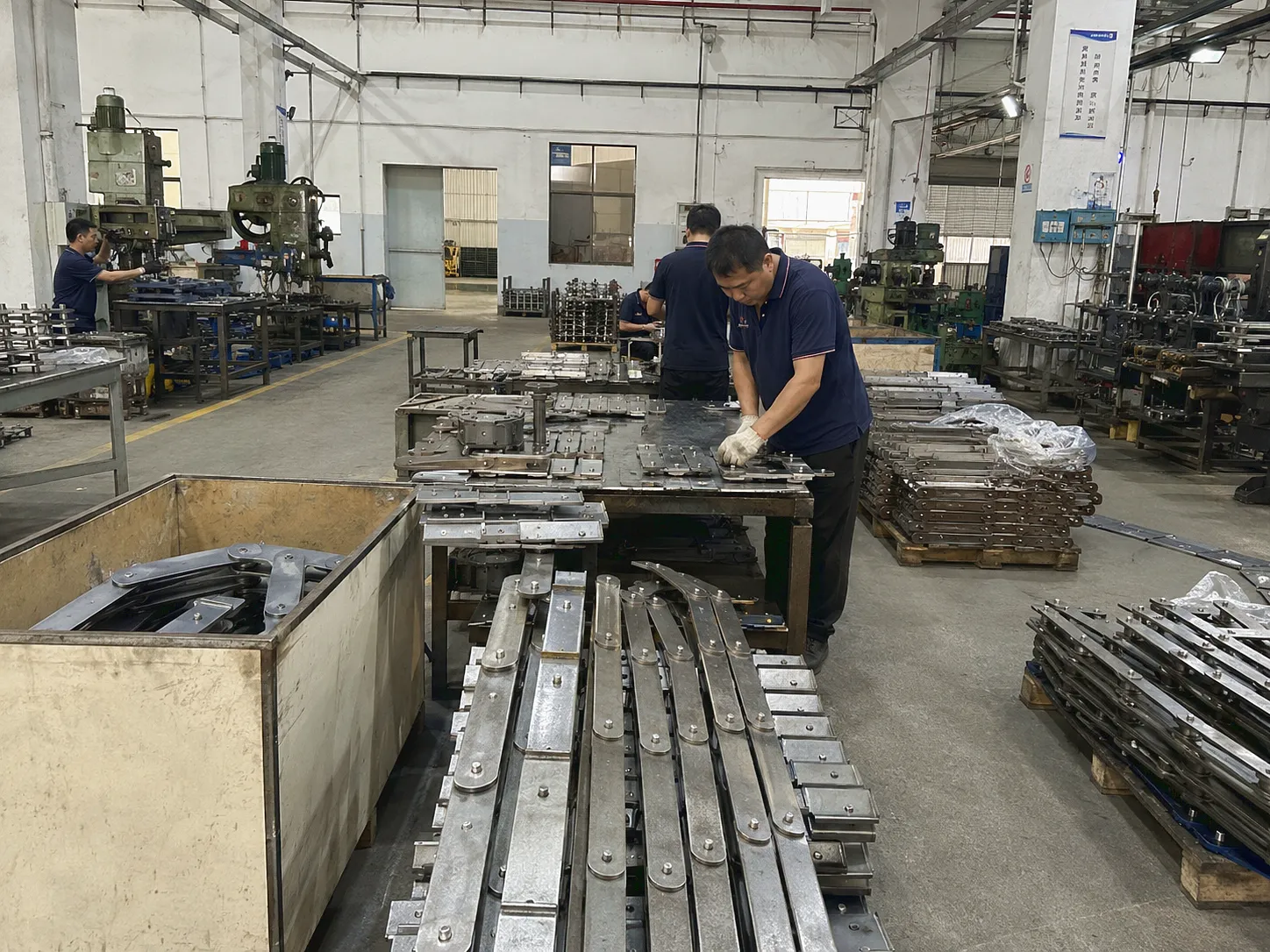
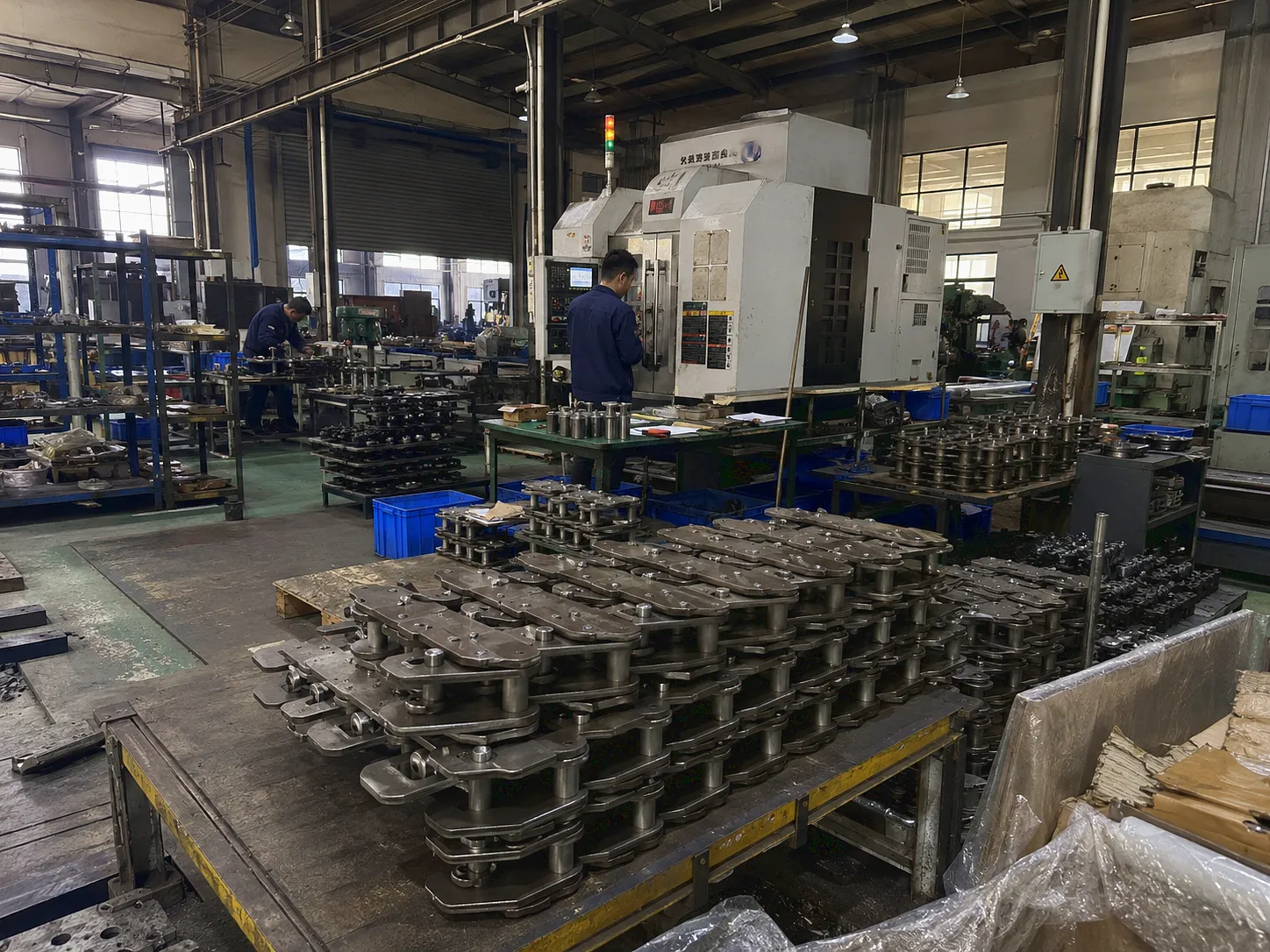
Our production facility operates CNC link-plate blanking presses with ±0.008 mm repeatability, controlled atmosphere heat treatment furnaces for consistent through-hardening, and closed-loop inspection with laser measurement of pin-hole geometry on every batch. We maintain calibrated chain-testing equipment capable of proof-load testing to 500 kN, and all batch production is traceable to raw material mill certificates. This level of process control matters to our customers in UK textiles because it translates directly into consistent product — not the batch-to-batch variation that is common when buying commodity chain from spot market importers.
Our custom service capability is extensive. For ring spinning frame applications, we regularly produce bespoke leaf chain assemblies that include pre-installed anchor pin fittings, custom connecting links, and specific cut lengths matched to the frame’s original design. For UK mills running legacy or discontinued ring frame models — including machines where OEM spare parts supply has ended entirely — our reverse-engineering service allows us to produce a replacement chain from a sample or drawing within 5–7 working days. We can also produce matched pairs of chains for twin-drive ring rail systems, ensuring identical elongation characteristics on both sides of the frame.
Serving UK Ring Spinning Operations: From Bradford to Brechin
The United Kingdom has a long and technically distinguished history in ring spinning. West Yorkshire remains one of Europe’s most significant concentrations of worsted and semi-worsted spinning capacity, with mills in Bradford, Huddersfield, Halifax, and Keighley producing fine yarns for the global luxury fashion market. The Scottish Borders — particularly the areas around Galashiels, Hawick, and Selkirk — maintain specialist cashmere and lambswool spinning operations that demand the very highest standards from every component in the production chain, including the leaf chain in their ring frames. Further south, the East Midlands hosts a concentration of technical yarn producers in Nottinghamshire and Derbyshire working with high-performance synthetic and composite fibres for industrial, medical, and aerospace end uses.
All of these operations share a common challenge: they are running ring spinning frames in a difficult commercial environment, where margins are under pressure from lower-cost producing countries, and any unplanned downtime that could have been prevented by proper component specification is genuinely costly. Our UK supply capability — with accessible stock for common AL series grades, fast custom production turnaround, and technical support from engineers who understand the specific machine models running in British mills — positions Ever Power as a meaningful alternative to both OEM supply chains and commodity importers.
Whether you are managing maintenance for a 20-frame cotton spinning operation in Lancashire, procuring spares for a single high-count worsted line in Yorkshire, or sourcing leaf chain for a technical fibre producer in the Midlands, our team can respond to your enquiry within one working day with a specific recommendation backed by load calculations and a firm price. We work directly with mill engineering teams, maintenance managers, and engineering contractors — no intermediaries, no offshore call centres, and no minimum order quantities for standard series stock.
Frequently Asked Questions
Questions from UK textile engineering teams, maintenance managers, and procurement teams — answered directly.
What is the best leaf chain specification for a Rieter G 35 ring spinning frame ring rail drive in the UK?+
How much does leaf chain for ring spinning frames cost in the UK, and is there a minimum order quantity?+
Where can I find a reliable leaf chain supplier for ring spinning machinery in the United Kingdom who can also provide technical support?+
How do I know when the leaf chain on my ring spinning frame needs to be replaced rather than just re-lubricated?+
Which leaf chain grade is most suitable for a fine-count cotton or worsted yarn ring spinning mill in Yorkshire where contamination of fibre is a concern?+
Can I get a custom-length leaf chain quickly in the UK for an emergency ring spinning frame breakdown?+
What is the difference between AL series and BL series leaf chain, and which one should I be using in a ring spinning frame builder motion?+
Ready to Improve Your Ring Spinning Frame Performance?
Our engineering team will review your machine model, operating conditions, and current chain specification — and give you a clear recommendation with pricing, usually within one working day.