
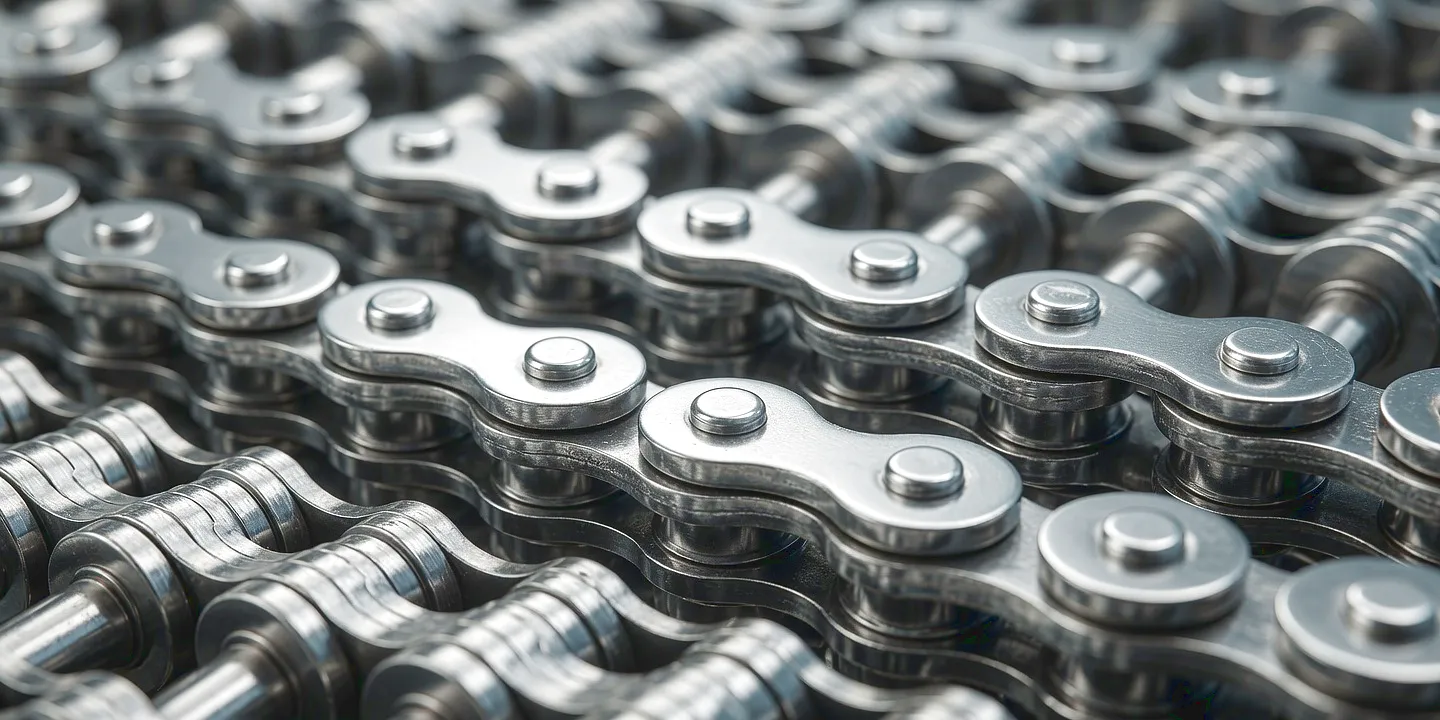
 Walk into any busy UK distribution centre — a Lidl regional hub in the Midlands, a Screwfix depot in the South East, or a steel-processing yard outside Sheffield — and one machine is almost always in motion: the forklift truck. It is the circulatory system of modern warehousing, shifting palletised goods from ground level to racking heights that can exceed eight metres. What most people never see is the single component that makes safe, repeatable vertical travel possible: the leaf chain. Mounted inside the mast assembly, the leaf chain connects the hydraulic ram to the carriage and forks. Every lift, every descent, every inching movement of load transfers stress directly through that chain. Choose the wrong chain — or let a worn one run too long — and the consequences range from costly downtime to catastrophic load drop.
This guide examines why leaf chain is the engineering standard for forklift masts, how to select the right specification for your fleet, and what differentiates a competitively priced commodity product from a chain engineered for real-world UK industrial conditions. Whether you manage a mixed fleet of counterbalance trucks, reach trucks, or very-narrow-aisle (VNA) machines, the information below is intended to help you make decisions grounded in metallurgy, mechanics, and proven field performance.
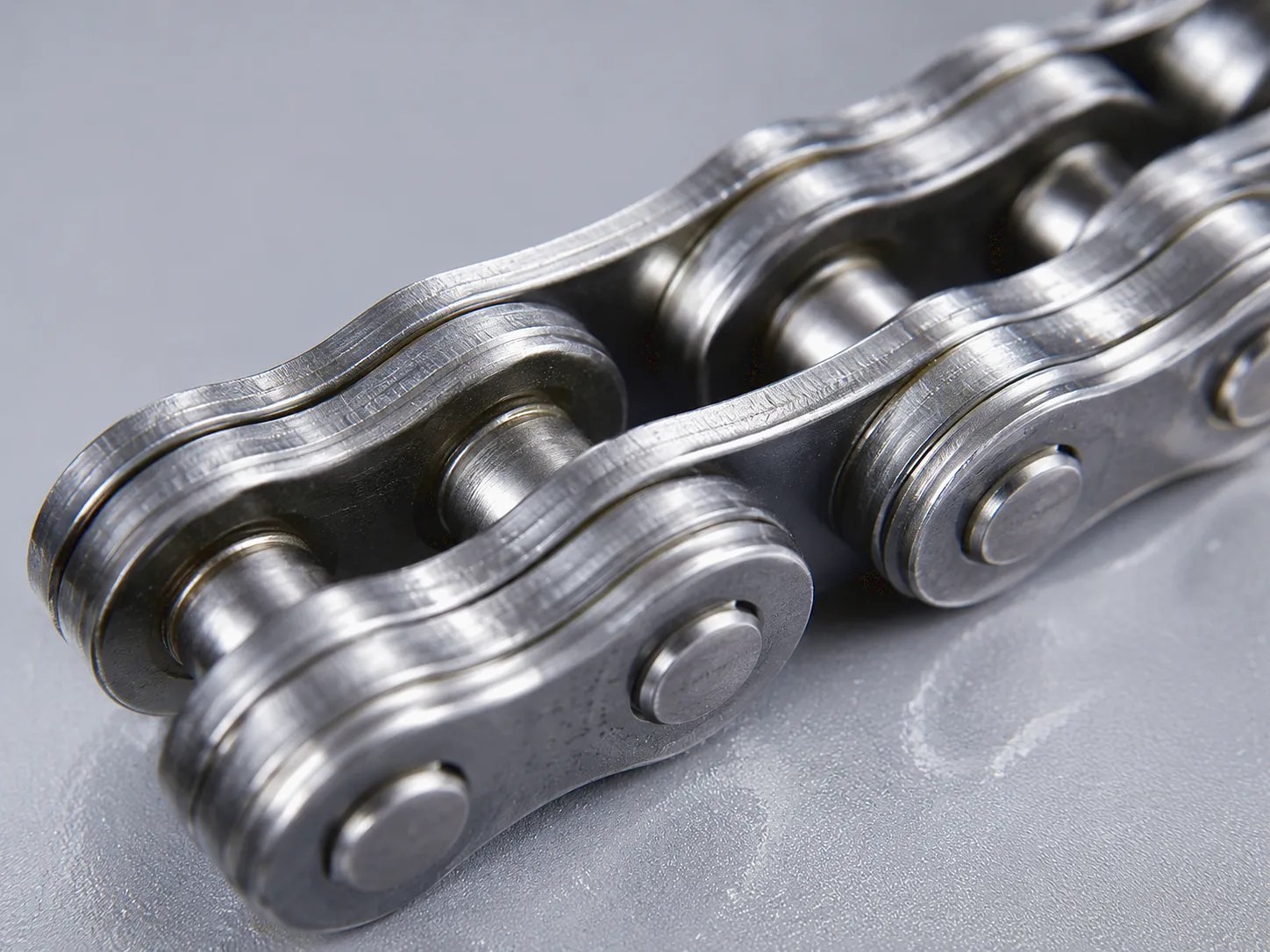
Sourcing Leaf Chain for Your Forklift Fleet?
Ever Power supplies BL and AL series leaf chains to warehousing, logistics, and manufacturing operators across the United Kingdom. Customised pitches, break loads, and surface treatments available.
What Exactly Is a Leaf Chain — and Why Does Every Forklift Depend on One?
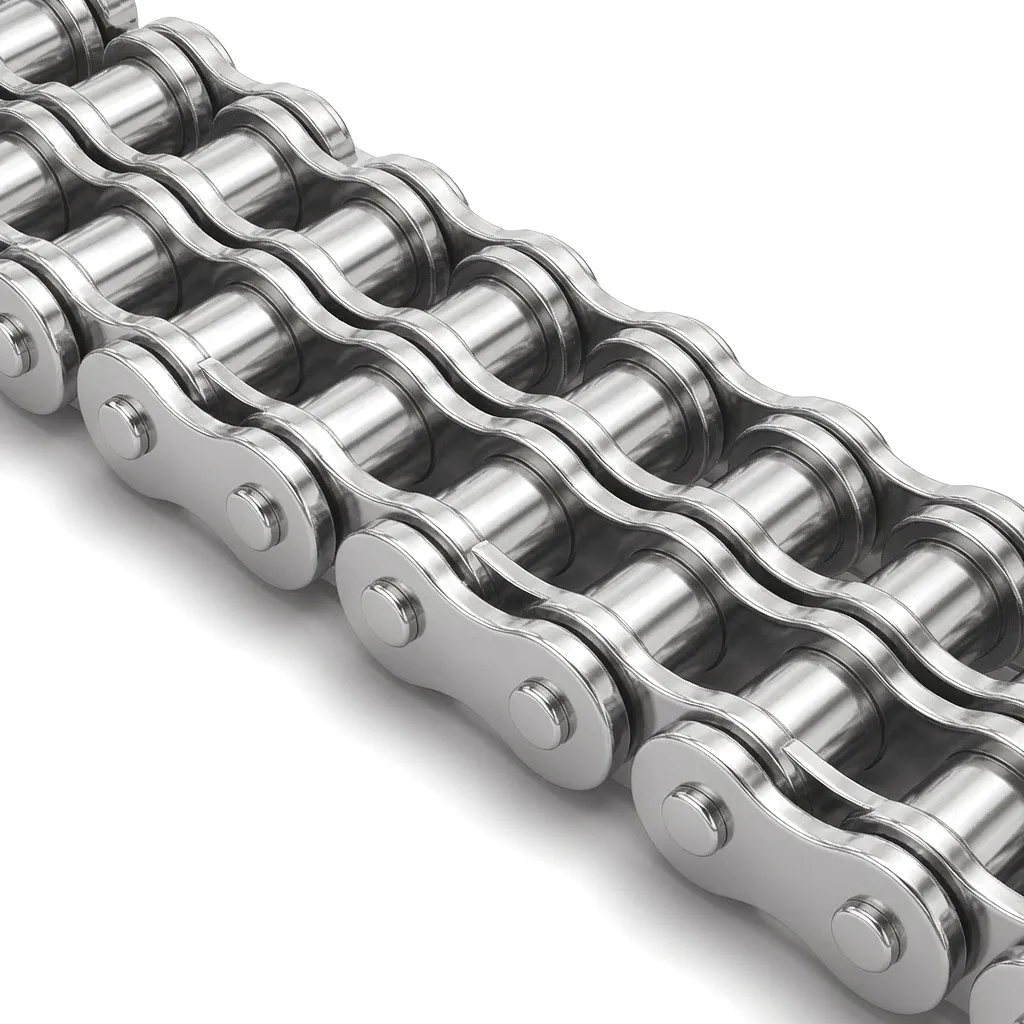
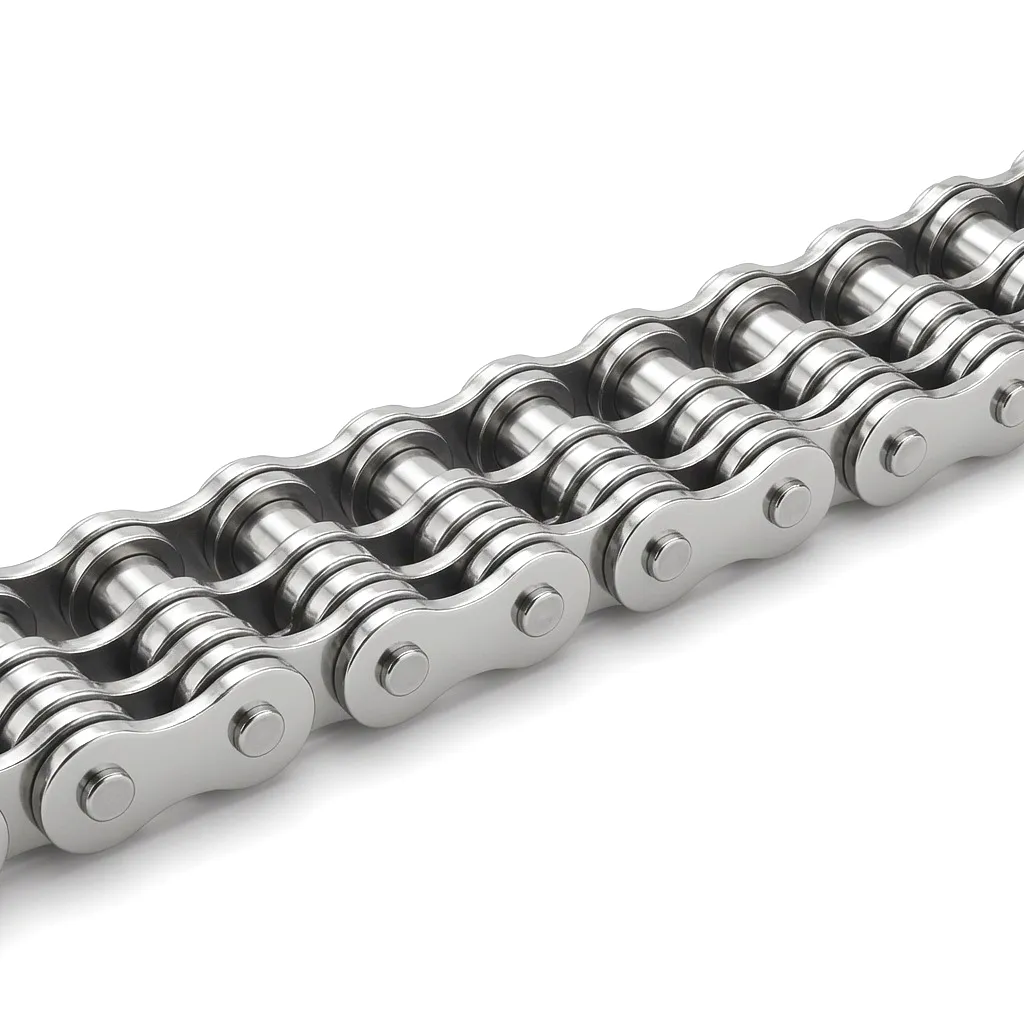
 A leaf chain is a type of link chain manufactured exclusively from flat, interlocking plates and precision-ground pins. Unlike roller chains — which carry a cylindrical roller on each link to engage a sprocket — leaf chains are designed purely for tensile load: they connect two points and transmit pulling force in a straight line. This structural simplicity is precisely what makes them ideal for the mast system of a forklift truck. The mast contains one or more hydraulic cylinders. As the cylinder extends, it lifts the inner mast sections. The leaf chain routes over a sheave (pulley) anchored to the cylinder head and connects, at each end, to a fixed anchorage point and to the carriage respectively. The result is a 2:1 mechanical advantage — the carriage travels twice the distance the cylinder rod extends, and the chain carries the full rated load of the truck plus the weight of the carriage and forks.
Leaf chains are standardised under ISO 4347 and ASME B29.8, which define two main families relevant to forklift applications. The BL (Block) series uses an alternating arrangement of single-link inner plates and multi-plate outer blocks, offering a compact cross-section and excellent resistance to articulation fatigue. The AL (Assembly Link) series — sometimes called lacing chains — uses uniform plate counts throughout the link, delivering a stiffer, higher-break-load chain suited to heavy industrial and high-stack applications. Both series are available in a range of lacing configurations (2×2, 3×3, 4×4 up to 8×8 and beyond) that allow engineers to match tensile strength to the specific duty cycle of the truck without oversizing the mast assembly.
Technical Specifications: BL & AL Leaf Chain for Forklift Masts
The table below covers the most commonly specified sizes for counterbalance and reach truck applications in UK warehousing and manufacturing environments.
| Chain No. | Series | Pitch (mm) | Lacing | Break Load (kN) | Pin Dia. (mm) | Plate Material | Typical Forklift Capacity |
|---|---|---|---|---|---|---|---|
| BL422 | BL | 12.70 | 2×2 | 22.2 | 4.45 | 45C Alloy Steel | 1.0 – 1.5 t |
| BL534 | BL | 15.88 | 3×4 | 67.8 | 5.08 | 45C Alloy Steel | 2.0 – 2.5 t |
| BL634 | BL | 19.05 | 3×4 | 102.3 | 7.92 | 40Cr Alloy Steel | 3.0 – 4.0 t |
| BL834 | BL | 25.40 | 3×4 | 178.0 | 9.53 | 40Cr Alloy Steel | 5.0 – 6.0 t |
| AL844 | AL | 25.40 | 4×4 | 223.0 | 9.53 | 40CrMo Alloy Steel | 7.0 – 9.0 t |
| AL1066 | AL | 31.75 | 6×6 | 450.0 | 12.70 | 40CrMo Alloy Steel | 12.0 – 16.0 t |
All break loads quoted at minimum tensile strength per ISO 4347. Working load limit = break load / 4 (safety factor). Custom pitches and lacing configurations available on request.
Inside the Forklift Mast: How Leaf Chain Operates Under Real Working Conditions
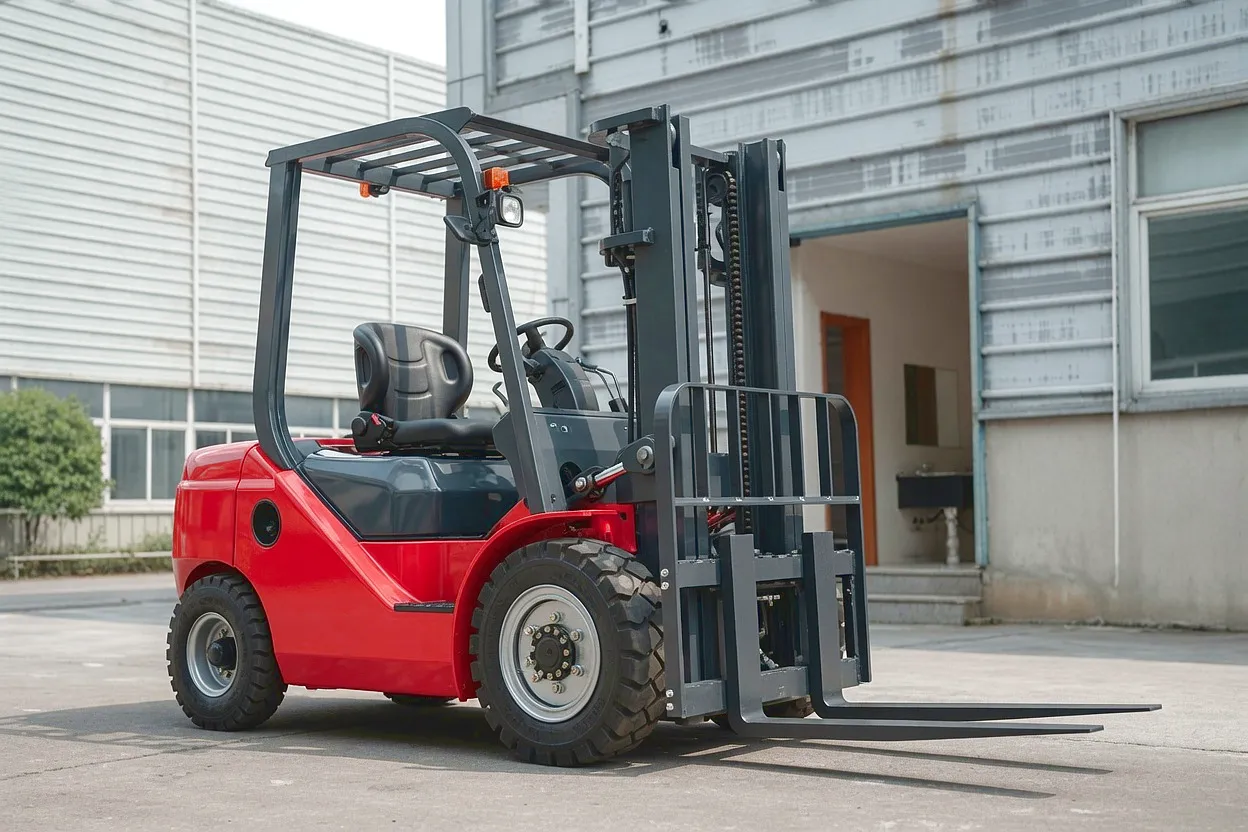 The forces acting on a forklift leaf chain are more complex than a simple vertical pull. On a standard counterbalance truck operating in a UK retail distribution warehouse — say, handling 1,500 kg pallets across 10-hour double shifts — each chain will undergo tens of thousands of load cycles per year. The stress is not static. As the operator tilts the mast forward to engage a pallet, the chain must accommodate an angulation change at the sheave. As the loaded forks are raised to maximum height, the chain is under maximum tension and bending simultaneously. When the load is lowered rapidly, the chain transitions from high tension to near-zero load in fractions of a second, introducing fatigue at the pin-plate interface. Every one of these events accumulates micro-damage in the metal.
High-quality leaf chain addresses these stresses through three engineering choices. Pin hardness is controlled to sit within a range — typically 58–64 HRC — that resists wear without becoming brittle under bending loads. Plate material is selected for a combination of yield strength and elongation, so the chain gives a measurable warning (elongation exceeds 2% of the gauge length per ISO 4347 inspection criteria) before reaching a critical failure state. And the link geometry is machined to tolerances that ensure uniform load distribution across all plates in a given lacing, preventing stress concentration in any single plate. When any of these parameters drifts outside specification — as commonly happens with lower-cost substitute chains — the failure mode shifts from graceful elongation to sudden fracture.
In the UK, the Lifting Operations and Lifting Equipment Regulations 1998 (LOLER) impose a statutory inspection regime on forklift trucks. Leaf chain, as a safety-critical lifting component, falls under Schedule 1 of LOLER and must be thoroughly examined at intervals not exceeding six months — or every twelve months for equipment used exclusively to lift non-persons. Understanding the engineering behind chain wear helps maintenance teams make informed decisions at each examination, rather than simply replacing chains on a time-based schedule that may be either too conservative (wasting money) or not conservative enough (creating risk).
Materials Science Behind Ever Power Leaf Chain
Alloy Steel Plates
Plates are cold-punched from 40Cr or 40CrMo alloy steel strip, heat-treated to achieve a core hardness of 32–42 HRC — providing the ideal balance of tensile strength (typically 900–1100 MPa) and ductility. The controlled grain structure resists crack propagation under cyclic bending stress.
Case-Hardened Pins
Connecting pins are ground to h6 tolerance and case-hardened to 58–64 HRC on the surface, preserving a tough low-carbon core. This dual-layer hardness prevents galling between pin and plate hole while absorbing shock loads without snapping. Pin straightness is verified to within 0.05 mm per 100 mm length.
Surface Treatments
Standard chains receive a corrosion-inhibiting oil bath pre-treatment. For cold-store or outdoor yard applications — both common in UK logistics — nickel-plated and stainless-steel variants are available. A zinc-phosphate pre-coat option improves paint adhesion for customers integrating chains into OEM mast assemblies requiring colour coding.
Quality Verification
Each production batch undergoes destructive tensile testing to confirm break load meets or exceeds ISO 4347 minimums. Dimensional inspection uses co-ordinate measuring machines (CMM) to verify pitch cumulative error within ±0.05% over 300 mm measurement lengths. Material certificates are issued with every consignment.
Leaf Chain Application Scenarios Across UK Forklift Types
Not all forklifts place the same demands on a leaf chain. The operating environment, duty cycle, and mast geometry each influence which specification will perform best over a three-to-five-year service interval. Below are the principal forklift categories encountered in UK industry, with notes on the chain selection factors specific to each.


Product Overview
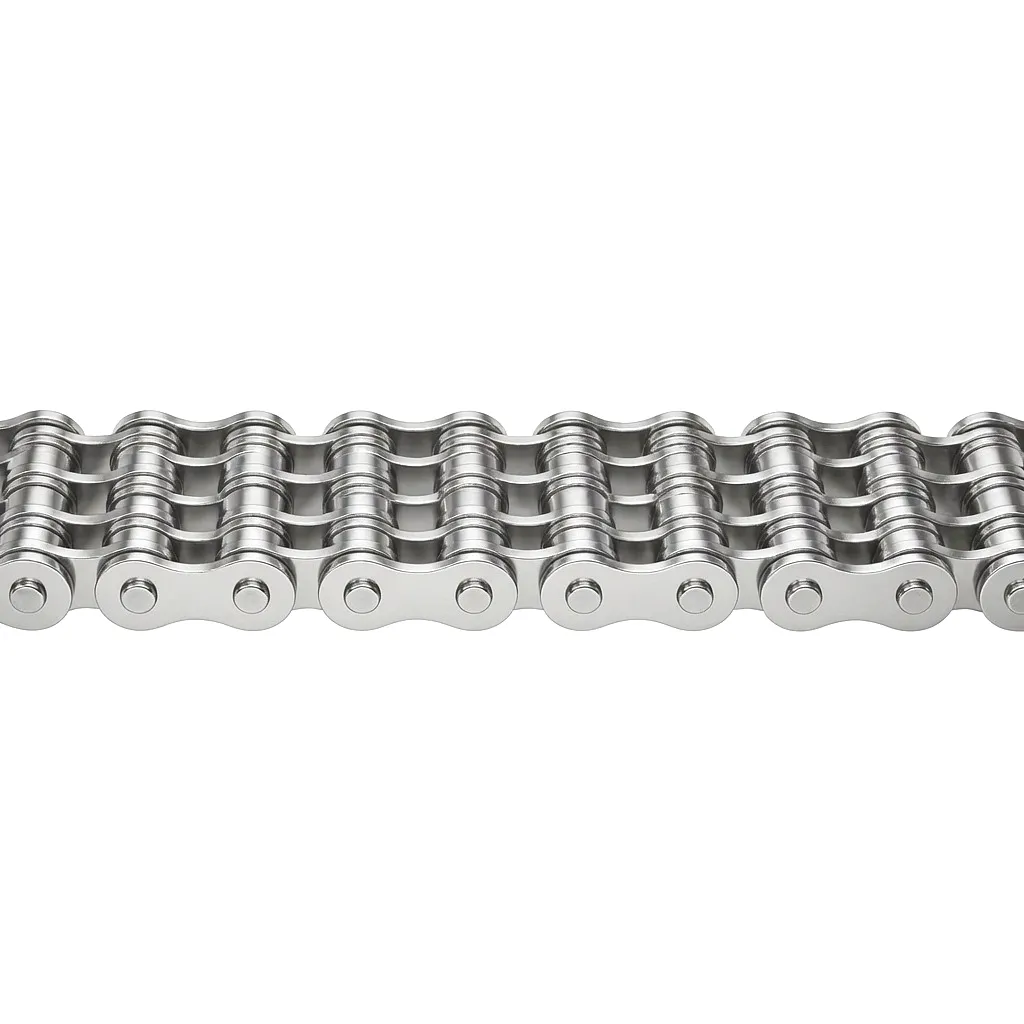
Why Maintenance Engineers Specify Ever Power Leaf Chain
Across eighteen years of supplying lifting chain to UK and European OEMs and aftermarket buyers, the same product advantages come up repeatedly in customer feedback. These are not marketing claims — they reflect measurable, documented outcomes from fleet maintenance data.
Extended Service Life
Controlled heat treatment and precision plate geometry reduce pin-hole elongation rates by up to 30% compared with standard market alternatives under equivalent duty cycles. Documented 18-month service intervals on three-shift warehouse operations, versus the 12-month intervals typical of lower-grade chains.
LOLER-Compliant Documentation
Every chain ships with a material conformity certificate referencing the specific heat-treatment batch, dimensional inspection report, and destructive tensile test result. This documentation package satisfies the Thorough Examination records requirement under LOLER 1998 and simplifies audit trails for UK Health and Safety Executive inspections.
Broad Cross-Reference Coverage
Ever Power maintains cross-reference data for major forklift OEMs including Toyota, Linde, Crown, Jungheinrich, Hyster, and Yale. When ordering for a specific truck model, our engineering team verifies pin diameter, overall width, and anchorage hole geometry before despatch — eliminating the costly returns that arise when generic catalogue chains require adjustment on-site.
Competitive UK Supply Pricing
Direct-from-manufacturer pricing eliminates distributor margin layers. For fleet operators managing 20 or more forklifts, annual chain spend reductions of 18–25% have been achieved by switching from branded OEM replacements to Ever Power equivalents meeting or exceeding the same ISO specifications. Volume blanket orders and consignment stocking agreements are available for UK buyers.
Customer Success Story
Real results from a UK distribution operation
Midlands Ambient Distribution — Grocery Logistics
Coventry, West Midlands, UK · Fleet: 34 counterbalance forklifts (Toyota 8-series, 2.5 t)
The Challenge: The fleet manager at a major ambient grocery distribution contractor operating out of Coventry was experiencing unexpected chain failures on twelve trucks within a single quarter. The chains in service were standard market replacements sourced through a local tool merchant. Three failures involved detachment of the chain from the upper anchorage point due to pin shear, resulting in two LOLER non-conformances and a temporary HSE improvement notice. Downtime per incident averaged 11 hours when factoring in the mandatory engineer callout required before the truck could return to service under the site’s safety protocol.
The Solution: Ever Power’s UK technical sales team conducted a mast-load analysis on the Toyota 8FBE25 platform, identifying that the site’s duty cycle — 420 lifts per truck per shift across 2.5 shifts per day — was placing the chains in a regime classified as “severe” under ISO 4347 cycle count definitions. The standard BL634 in the previous supplier’s catalogue was rated for this load but manufactured to a pin hardness specification 4–6 HRC below the optimum window, causing accelerated pin wear. Ever Power supplied BL634 chains with verified pin hardness of 60–62 HRC and an upgraded involute plate hole geometry, along with a co-ordinated chain inspection schedule aligned to the site’s LOLER Thorough Examination calendar.
The Result: Over the following twelve months, zero chain-related failures were recorded across the 34-truck fleet. Average chain service life extended from 9.3 months to 15.7 months — a 69% improvement. Annual chain replacement cost fell from £18,400 to £9,100. The site’s LOLER examination records now show consistent wear rates that allow planned replacement to be scheduled two weeks in advance, eliminating emergency procurement and associated premium freight costs.
Key Results
📈 Service life +69%
💰 Annual saving £9,300
✅ Zero LOLER non-conformances
⏱ Planned replacement scheduling achieved
What UK Customers Say
“We manage 47 forklifts across two logistics sites in the East Midlands. Since switching to Ever Power BL series chains two years ago, our planned maintenance intervals have become genuinely predictable. The material certs make LOLER documentation straightforward, and the pricing is considerably sharper than what we were paying through the OEM dealer network.”
— Andrew S., Fleet Maintenance Manager
3PL Logistics Operator, Nottingham
“Our cold-store trucks work in a particularly brutal environment — constant temperature cycling between -22 °C and +15 °C, exposure to brine from the freezer floor drainage. The nickel-plated Ever Power chains with synthetic grease have shown almost no corrosion after fourteen months. Our previous supplier’s chains were visibly pitting at six months. The technical support pre-order was also genuinely useful, not just a sales pitch.”
— Claire H., Engineering & Compliance Lead
Frozen Food Distributor, Grimsby, Lincolnshire
“We specified AL series chains for our 10-tonne diesel trucks handling structural steel plate at our Yorkshire facility. The custom anchorage pin dimensions we needed aren’t stocked anywhere in the UK — every other supplier wanted an 8–10 week lead time for a custom order. Ever Power turned around a bespoke batch in four weeks with full dimensional inspection reports. That responsiveness is what keeps us coming back.”
— Mark T., Procurement Manager
Steel Stockholder & Processor, Rotherham, South Yorkshire
Practical Maintenance: How to Assess Forklift Leaf Chain Condition
Under LOLER 1998, the “Thorough Examination” of a forklift’s lifting chain must be conducted by a competent person — typically a qualified fork truck engineer or a specialist inspector from an accredited examination body. However, fleet maintenance teams can add significant value through routine operator checks and periodic engineering assessments between formal examinations. Understanding what to look for, and why each indicator matters, turns routine chain inspection from a compliance tick-box into a genuine reliability management tool.
The most important measurement is elongation. ISO 4347 specifies that a leaf chain should be withdrawn from service when its measured length over a defined number of links exceeds 2% of the nominal length. In practice, a 300 mm gauge length measurement that returns 306 mm or more is a clear withdrawal indicator regardless of visual appearance. This matters because chains at the 2% elongation threshold have not necessarily lost significant residual break load — but the geometry change means load is redistributing unevenly across the plate holes, and fatigue crack propagation from the pin-hole edges accelerates exponentially once this point is passed.
Beyond elongation, inspectors should look for plate cracking — particularly at the pin holes and at the inner radius of plates that have been loaded in a bent configuration for extended periods. Under bright side-lighting, fatigue cracks appear as hairline marks perpendicular to the direction of loading. Any visible plate cracking is an immediate withdrawal trigger. Corrosion is assessed by visual inspection and by attempting to flex individual links by hand — a chain that cannot be articulated freely is at high risk of brittle fracture under load. And pin rotation — visible when the pin end markings, if present, have rotated relative to the outer plates — indicates that pin-to-plate press fit has been compromised, another immediate withdrawal indicator.
Chain Withdrawal Criteria (ISO 4347)
Serving UK Industry: Leaf Chain Supply from Birmingham to Edinburgh
 The United Kingdom hosts one of Europe’s most concentrated forklift populations relative to its industrial footprint. The West Midlands automotive supply chain, the South Yorkshire and Humberside steel and processing industries, the Thames Valley and M25 corridor distribution parks, the Scottish central belt’s food and drink sector — all rely heavily on forklift trucks, and all require compliant, reliable листовая цепь. Ever Power has built its UK supply channel specifically around the service expectations of this market, which differ in important ways from continental European or North American procurement norms.
Lead time expectations in the UK aftermarket are short. A warehouse operating on 24/7 fulfilment cycles — a profile now standard across major UK e-commerce and grocery operators — cannot tolerate a four-week chain lead time when a LOLER examination results in an unexpected withdrawal notice. Ever Power holds forward inventory of the most common BL and AL chain sizes for the UK market, enabling standard-size despatches within 3–5 working days. For custom lengths or non-standard anchorage configurations — common when servicing older Linde H-series or Jungheinrich EFG machines — a dedicated application engineer works through the specification with the customer’s maintenance team before the order is placed, eliminating rework on delivery.
UK health and safety legislation also creates documentation requirements that not all overseas suppliers appreciate fully. CE marking under the Machinery Directive, UK Conformity Assessed (UKCA) marking post-Brexit, and LOLER Schedule 1 material certification are all expected as standard by UK procurement and compliance teams. Ever Power provides a complete conformity documentation package with each UK order as standard, not as an optional extra — a practical response to the regulatory environment in which our UK customers operate.
UKCA Compliant
Post-Brexit UK marking as standard
LOLER Documentation
Full cert pack, every consignment
3–5 Day UK Despatch
Standard sizes held in forward stock
OEM Cross-Reference
Toyota, Linde, Crown, Jungheinrich & more
Manufacturing Capabilities & Custom Chain Services
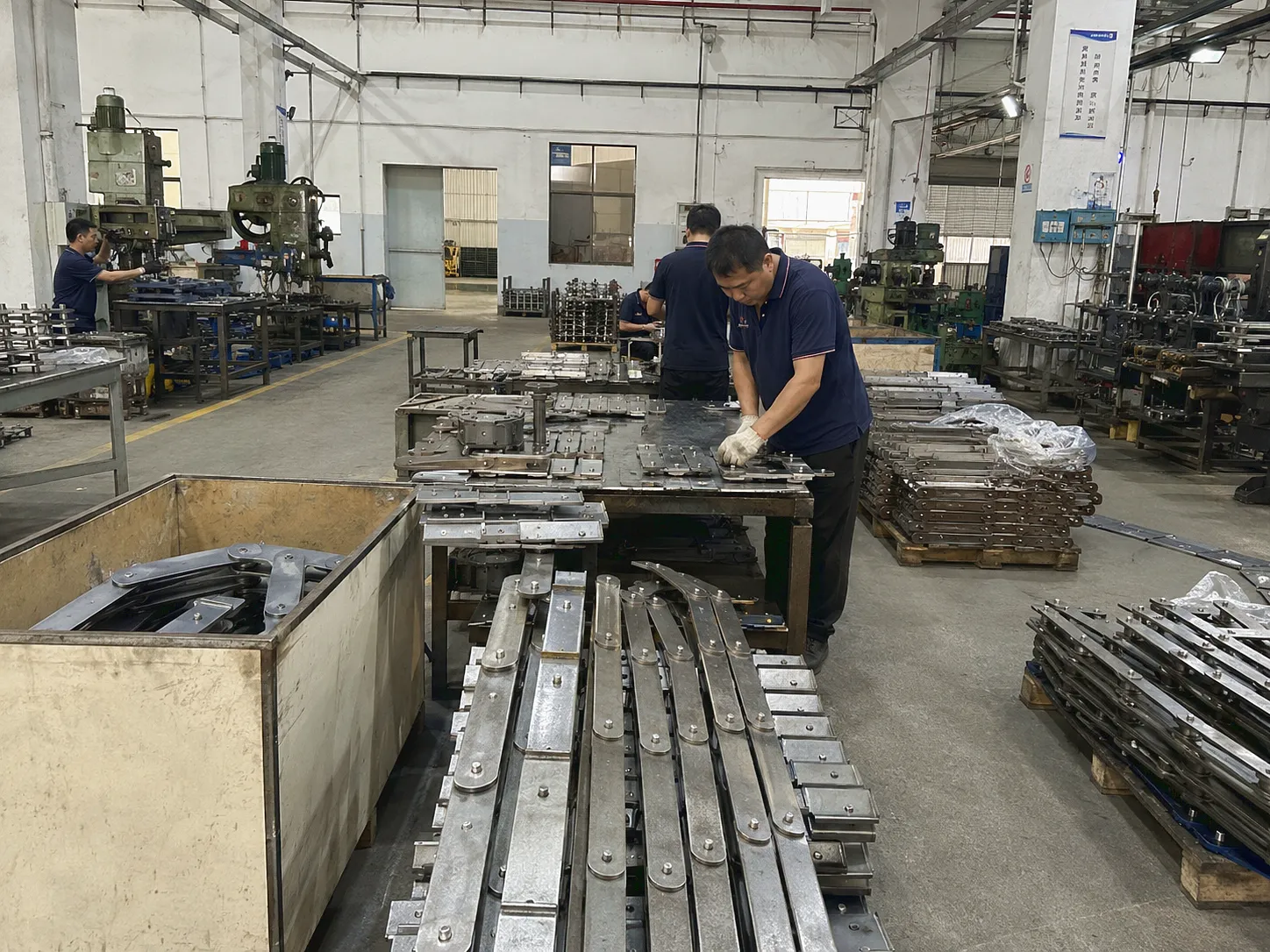
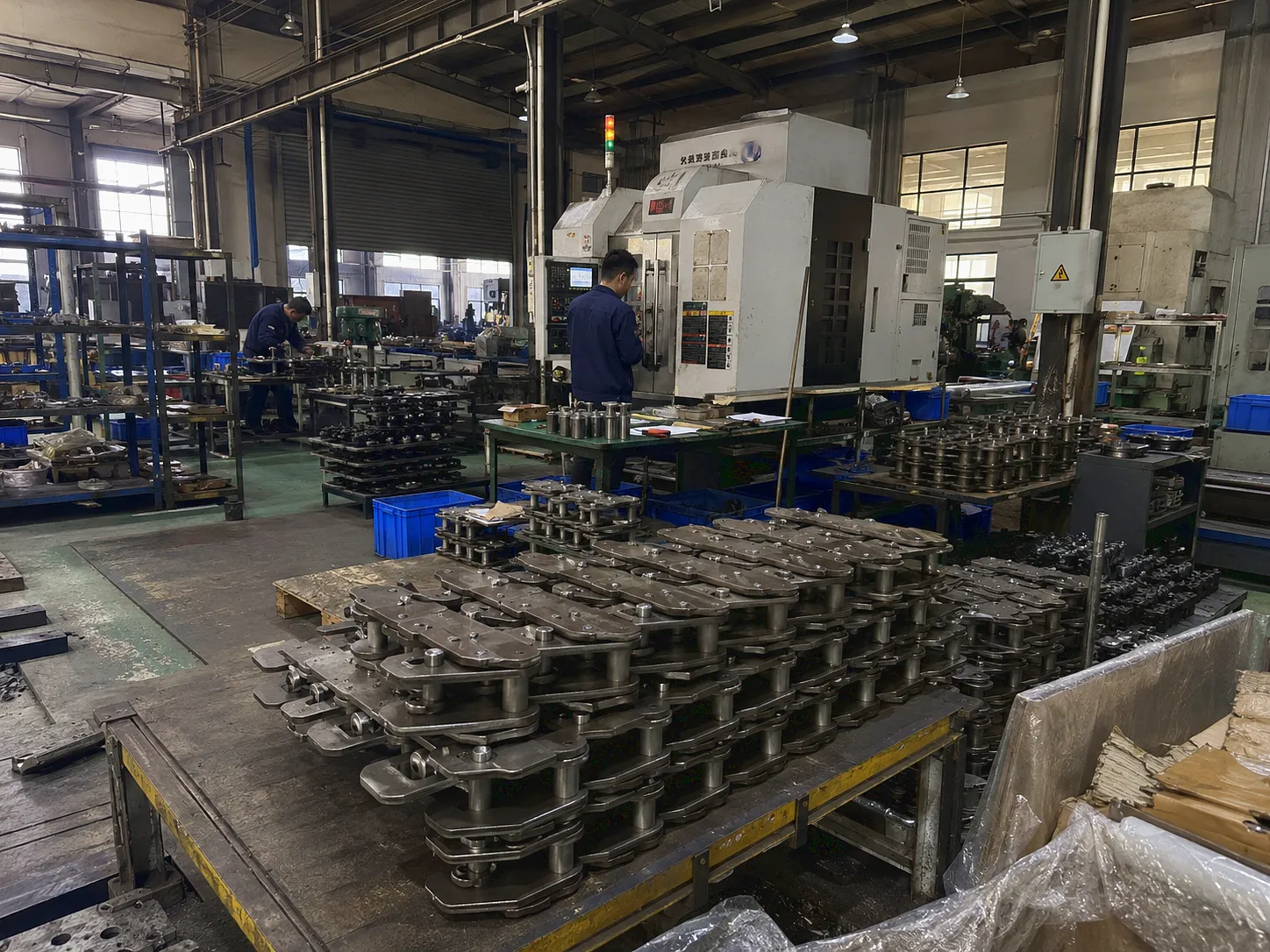
Ever Power’s manufacturing facility operates a vertically integrated production process for leaf chain, covering steel strip sourcing, plate blanking, heat treatment, pin grinding, assembly, and final inspection under a single roof. This integration — rare among chain suppliers who typically assemble from bought-in components — gives our engineering team precise control over every metallurgical variable that influences chain performance. When a UK customer needs a chain that deviates from standard catalogue specifications, that capability makes the difference between a four-week lead time from a sub-assembler and a two-to-three-week turnaround on a genuinely engineered custom product.
Custom chain services available to UK forklift OEMs, aftermarket service providers, and fleet operators include non-standard pitch dimensions to suit legacy mast designs not covered by current ISO catalogue numbers; custom lacing combinations that deliver a specific break load target within a constrained envelope width; special end attachments including threaded rod, clevis, and swaged sleeve terminations; bespoke surface treatments including electroless nickel plating, hard chrome, and PTFE-impregnated coatings for specialist environments; and custom cut lengths with individual tagging and documentation for fleet management systems that track chain identity by truck serial number. For OEM customers supplying into the UK market, we offer private-labelling and white-label packaging as standard.
The factory holds ISO 9001:2015 quality management system certification. All measuring equipment used in final inspection is calibrated annually to national standards traceable to the UK National Physical Laboratory (NPL). Batch material certificates reference spectrographic analysis confirming alloy composition to within ±0.02% of nominal values for the key alloying elements (Cr, Mo, C, Mn).
Quick Selection Guide: Leaf Chain by Forklift Type and UK Application
| Application / Environment | Forklift Type | Capacity Range | Recommended Chain | Surface Treatment |
|---|---|---|---|---|
| Ambient warehouse / distribution | Counterbalance electric | 1.5 – 3.5 t | BL534 / BL634 | Standard oil bath |
| High-bay racking (8–12 m) | Reach truck | 1.4 – 2.5 t | BL634 (involute profile) | Standard oil bath |
| Cold store (-30 °C to +5 °C) | Counterbalance / reach | 1.5 – 3.5 t | BL634 SS316L or Ni-plated | Synthetic food-grade grease |
| Steel / heavy manufacturing yard | Counterbalance diesel | 5 – 10 t | AL844 / AL1044 | Zinc phosphate + EP grease |
| Port / container handling | Heavy counterbalance diesel | 12 – 32 t | AL1066 / AL1288 custom | Marine-grade corrosion inhibitor |
| Pharmaceutical / cleanroom | Electric counterbalance | 1.0 – 2.5 t | BL534 SS316L | Dry PTFE-impregnated |
Ready to Specify the Right Leaf Chain for Your Forklift Fleet?
Our application engineers can review your truck models, duty cycles, and compliance requirements and recommend the exact chain specification — including cut lengths and end fittings — to match. UK stock, fast despatch, full LOLER documentation included.
Frequently Asked Questions
Leaf chain for forklift trucks — UK buyers’ most common questions answered
Ever Power Transmission Co., Ltd. · Leaf Chain Division · UK Enquiries: [email protected]
BL Series · AL Series · ISO 4347 · LOLER Compliant · UKCA Marked
edit by gzl