
 Walk into any busy cotton or synthetic fibre mill in Lancashire, Yorkshire, or across the East Midlands and you will hear the same rhythmic mechanical pulse — thousands of spindles turning simultaneously, drawing out and twisting fibres into yarn at speeds that would have seemed impossible a generation ago. At the heart of every ring spinning frame, buried inside the drive system, is a component that rarely makes the headlines but without which modern yarn production simply would not function at scale: the leaf chain.
Unlike roller chains, which are optimised for sprocket-driven rotational power transmission, leaf chain — also known as plate chain or balance chain — is engineered for the sustained, cyclical, linear tensile loads that define the operating environment of a ring frame’s ring rail reciprocating mechanism. The difference matters enormously. A component that fails to distinguish between these duty cycles is a component that will fail prematurely, triggering costly unplanned downtime, thread breaks, and production losses that can run into thousands of pounds per shift in a medium-scale spinning operation.
This article draws on over 18 years of hands-on application engineering experience in plate chain selection, installation, and performance optimisation. It covers the mechanical demands of ring spinning frames, the specific properties that make a well-manufactured leaf chain the correct choice, the technical parameters you should verify before specifying a chain, and the real-world evidence from mills across the UK and internationally that confirms this approach works — not in theory, but on the factory floor.
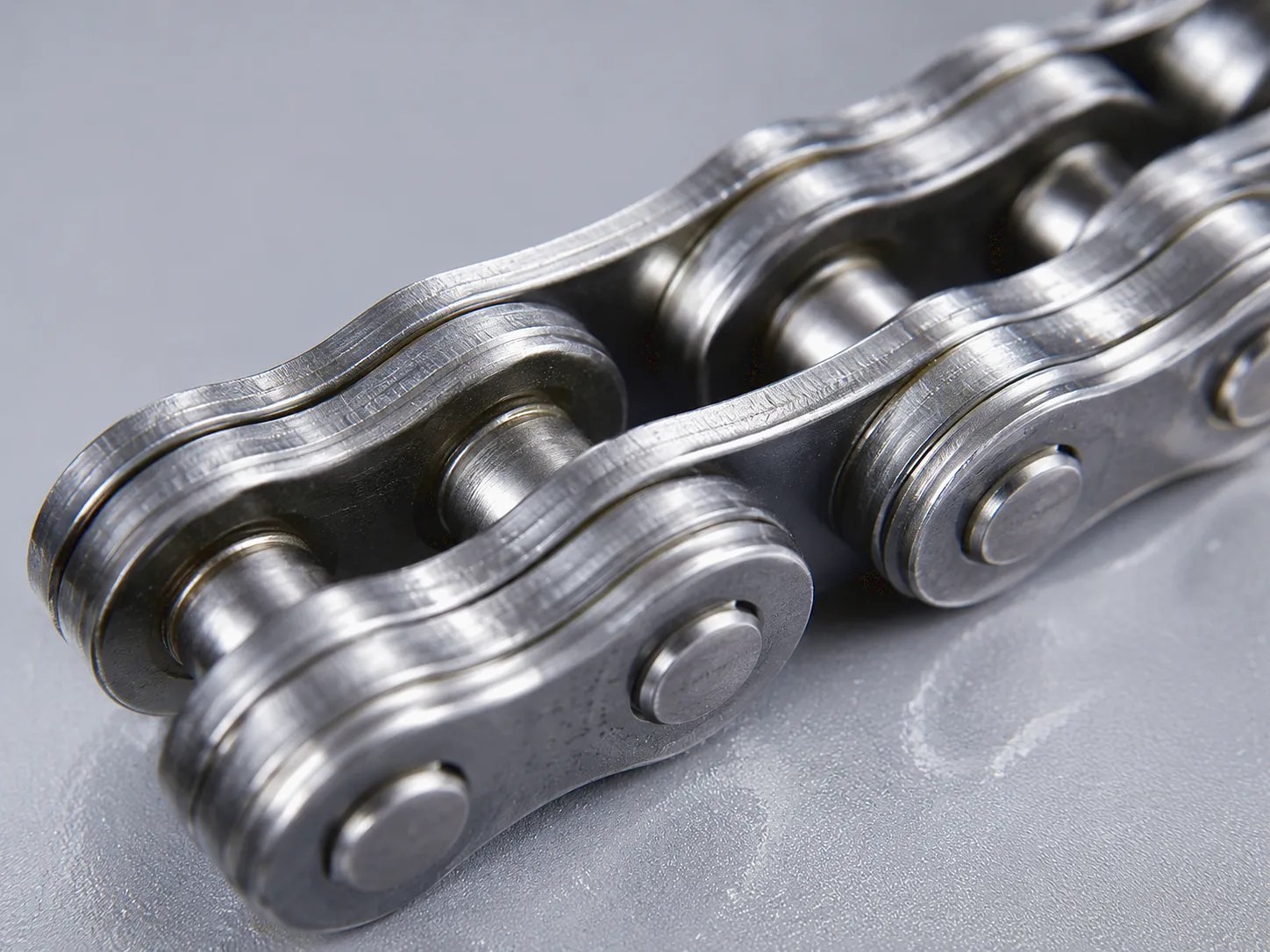
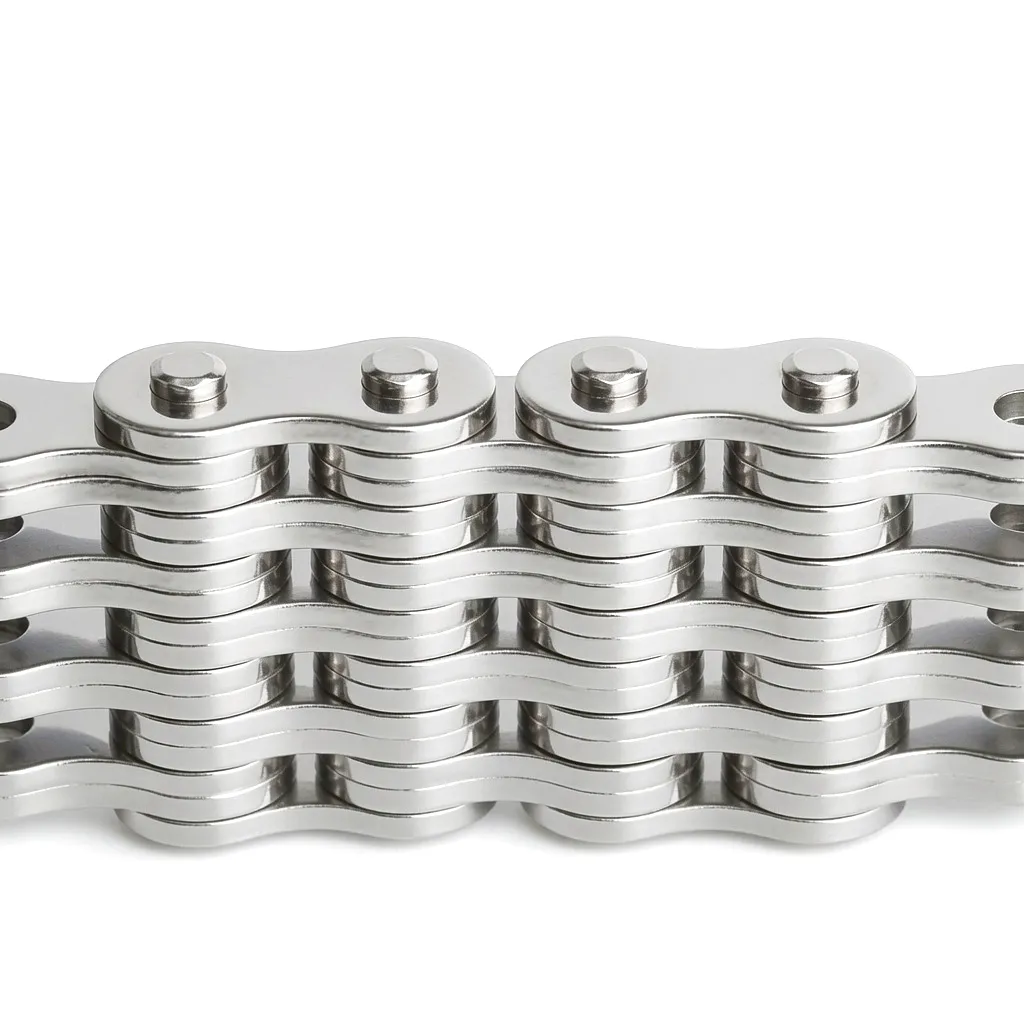
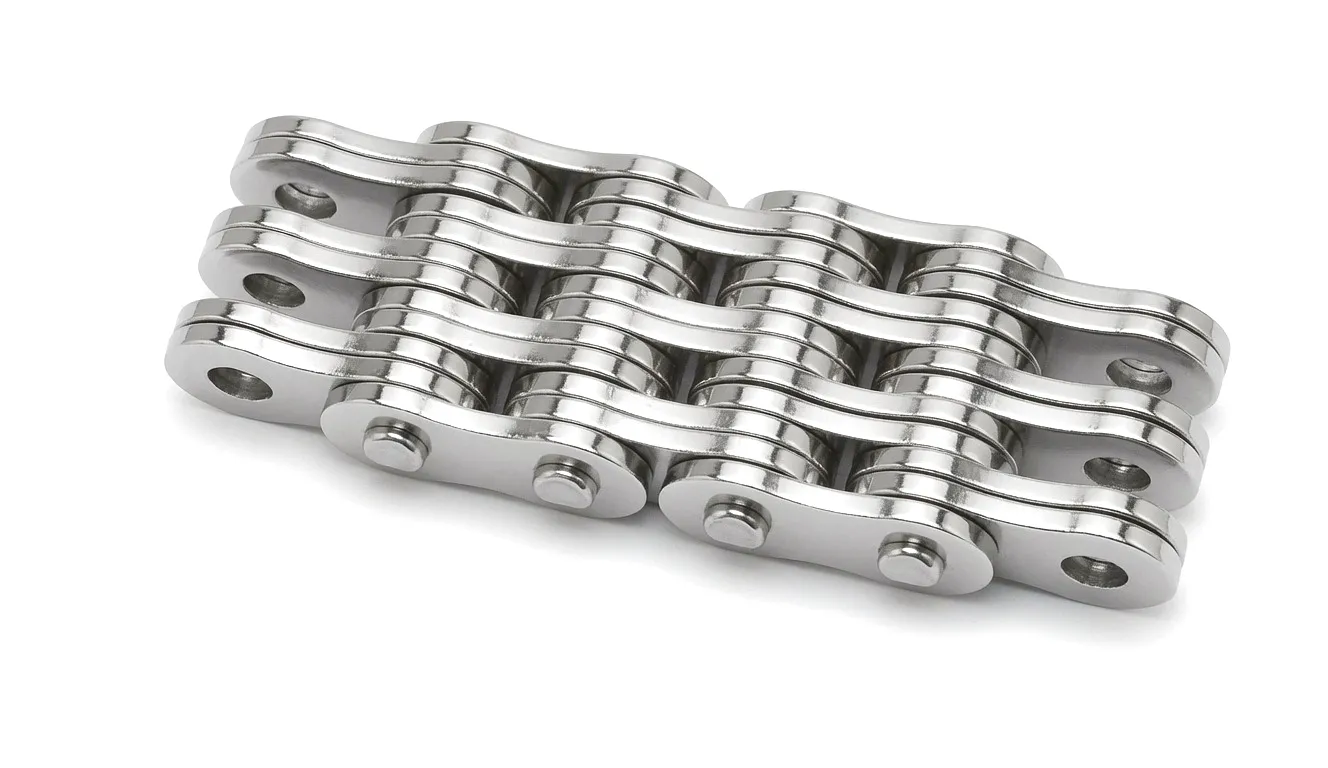
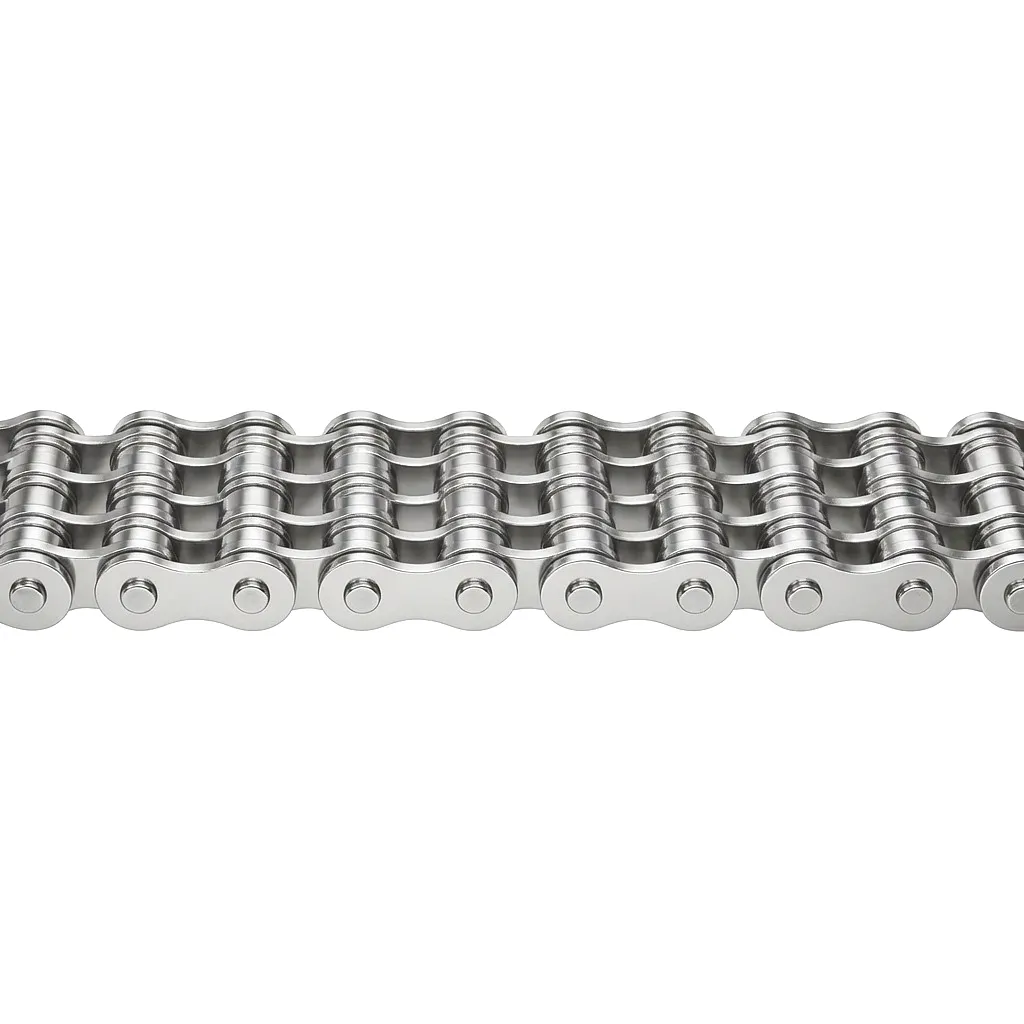
Ever Power’s BL-series leaf chain is precision-manufactured to exacting dimensional tolerances for direct fitment into ring spinning frame drive systems. Each link plate is stamped from medium-carbon alloy steel, heat-treated for surface hardness, and assembled with interference-fit pins that resist rotational loosening under cyclic tension reversal.
Why Ring Spinning Frames Demand a Specialist Chain Solution
Ring Rail Reciprocating Mechanism
The ring rail on a modern ring frame moves vertically in a controlled reciprocating stroke — typically 150 mm to 220 mm — thousands of times per hour across the full width of the machine. This vertical movement is driven by a cam-and-lever system that transfers load directly to the leaf chain. The chain must absorb both the tension at the top of the stroke and the compression-reversal dynamic at the bottom, without any backlash that would cause yarn layering irregularities.
Continuous Cyclic Loading
A ring frame running at 20,000 rpm spindle speed with a stroke rate of 200 strokes per minute subjects its drive chain to approximately 288,000 load cycles per day — every day, every shift. Standard roller chains or lesser-grade flat chains suffer fatigue cracking in the link plates and wear elongation in the pin bores under these conditions far sooner than a properly graded leaf chain engineered to BL or AL standards.
Textile Mill Environment
British textile mills, whether in the traditional belt from Bradford to Nottingham or in newer, climate-controlled facilities in Scotland and Wales, share a common ambient challenge: elevated humidity, fibre particulate suspension in air, and lubricant contamination from neighbouring oil-bath drives. Leaf chain manufactured with sealed or self-lubricating pin bushings handles this environment considerably better than open-pin designs that wick fibre particles into bearing surfaces.
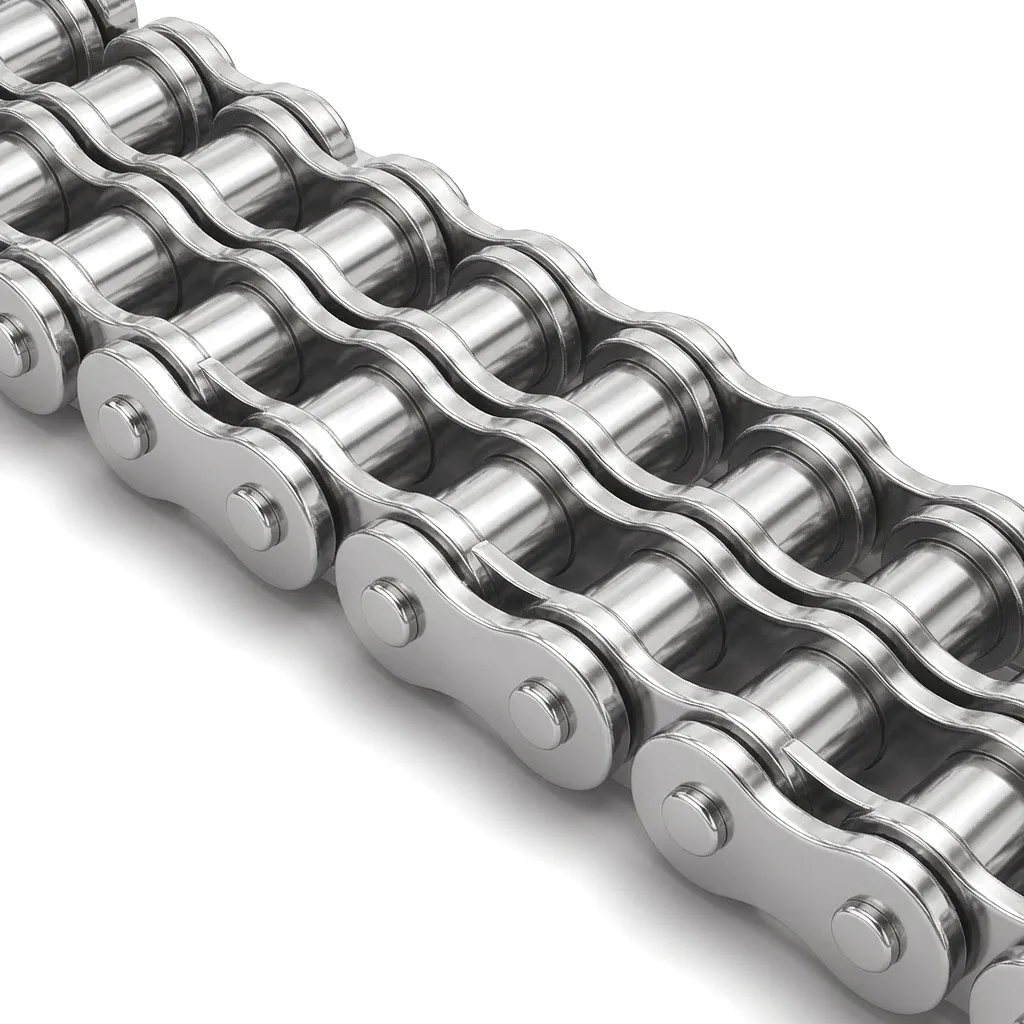
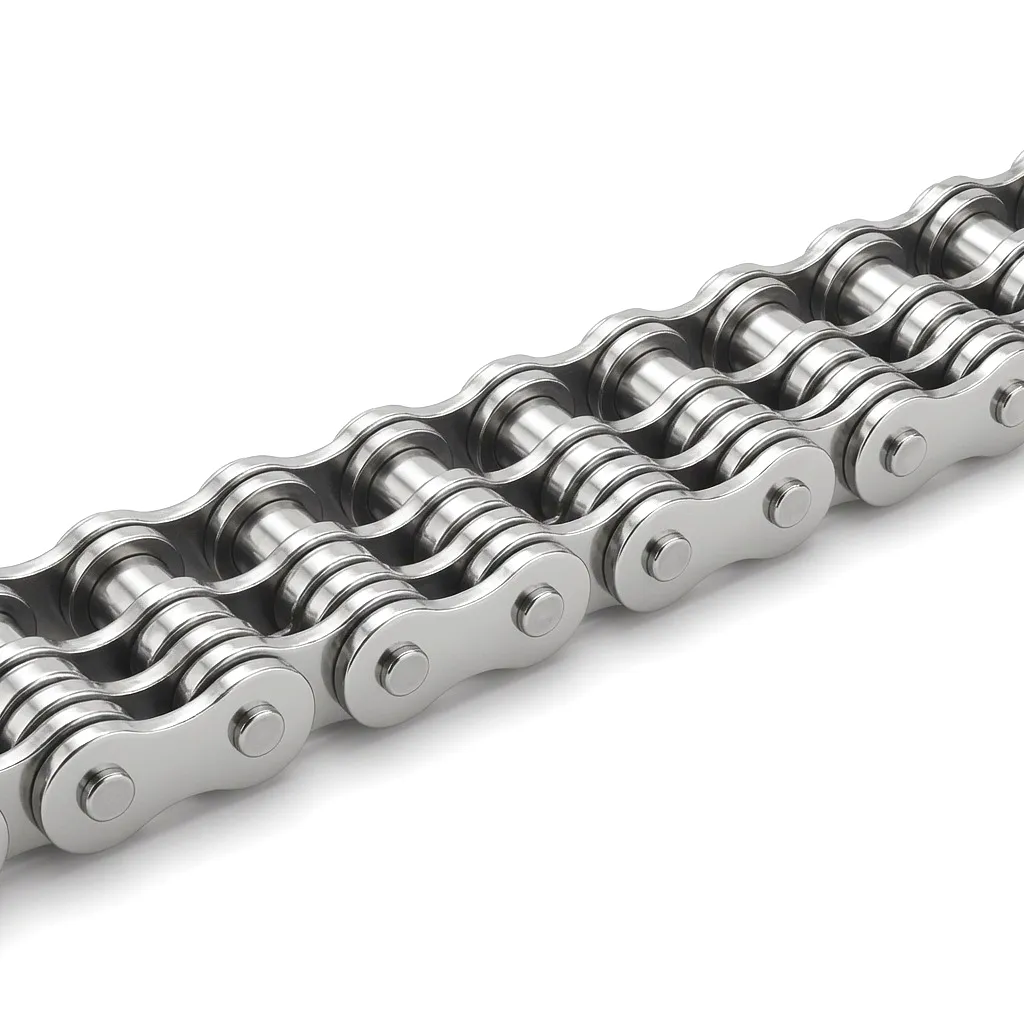
The combination of these three factors — high-frequency cyclic loading, direction reversal, and a contaminated operating environment — creates a specification envelope that eliminates most general-purpose chain options from contention. Leaf chain, specifically the BL (balance lace) configuration defined under ISO 4347 and ANSI B29.8 standards, was developed precisely for this class of application. Its flat-plate, multi-strand laminate construction distributes stress across multiple parallel plates simultaneously, giving the chain an inherent fatigue strength advantage over single-strand alternatives.

Leaf chain in active ring spinning frame service
What Goes Into a High-Performance Leaf Chain
The performance gap between a budget-grade flat chain and a precision leaf chain built to industry standards is not a marketing abstraction — it is measurable in tensile strength, elongation-at-failure, and mean time between replacements. Understanding the material choices and manufacturing steps behind a quality leaf chain helps procurement engineers and maintenance managers make better purchasing decisions, and avoid the expensive trap of choosing on unit price alone.
Link Plates: Medium-Carbon Alloy Steel
Ever Power link plates are cold-stamped from 40Cr or 45# medium-carbon steel sheet, which delivers a tensile strength in the region of 650–800 MPa before heat treatment. After carbonitriding or induction hardening, surface hardness reaches 50–58 HRC while core toughness is preserved. This dual-phase property profile is what prevents fatigue cracks from propagating through the plate under cyclic bending stress.
Connecting Pins: Case-Hardened Precision Ground
Pins are manufactured from 20CrMo or equivalent chromium-molybdenum steel, case-hardened to 60–64 HRC on the outer surface to resist bore wear while retaining a ductile core that absorbs shear loading. Ground to h6 or h7 tolerance, pins are press-fitted into the outer plates with interference fits of 0.005 mm to 0.015 mm — tight enough to prevent rotational slippage, but controlled so as not to induce hoop stress cracking in the plate bore.
Surface Finish: Nickel-Plated or Phosphate Coated
For ring spinning frame environments where humidity exceeds 70% RH — common in UK cotton processing facilities — Ever Power offers electroless nickel-plated variants that provide a corrosion protection layer of 10–25 µm without appreciably affecting dimensional tolerances. Manganese phosphate coating is the alternative for applications where oil-film retention between plate surfaces is a priority, as the micro-porous phosphate layer holds lubricant by capillary action.
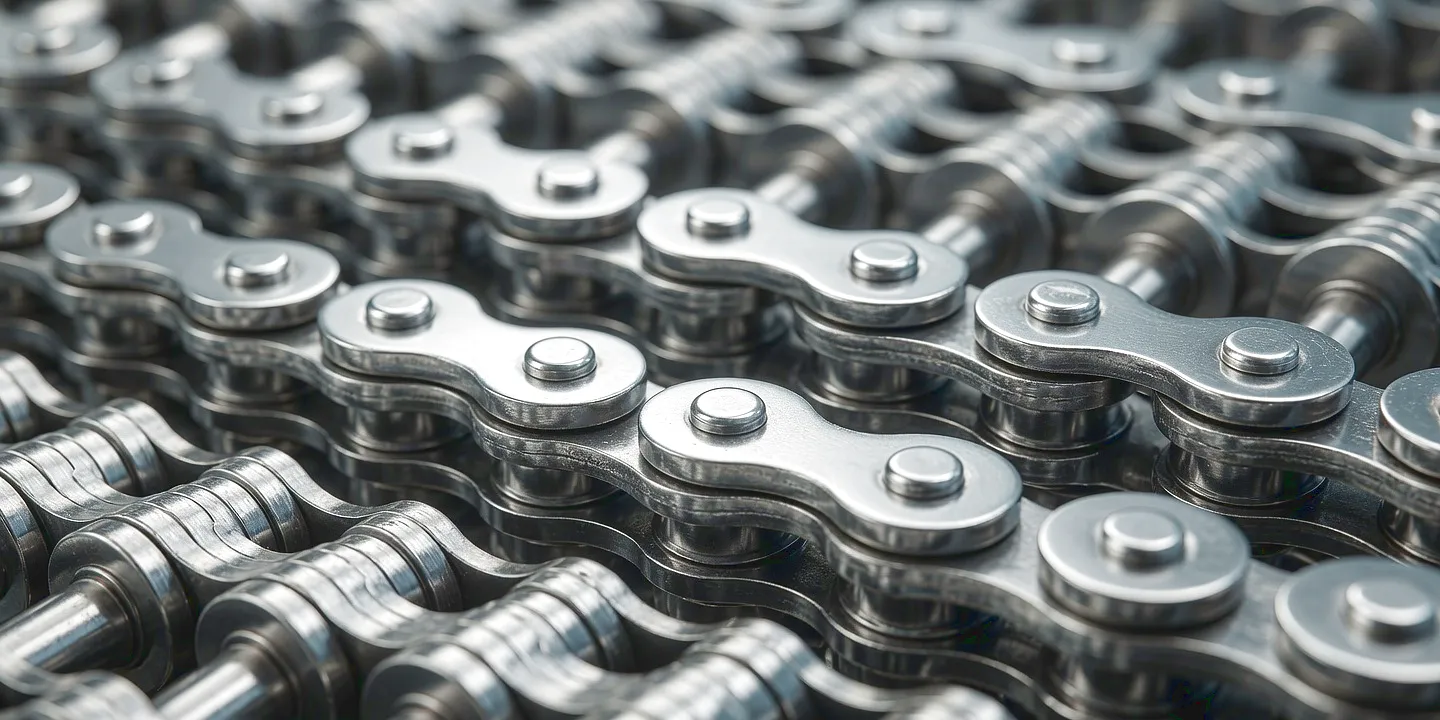
Leaf Chain Performance Parameters for Ring Spinning Frame Applications
The table below summarises the key technical parameters for the BL-series leaf chains most commonly specified for ring spinning frame ring rail drives. All figures are for Ever Power standard production; customised specifications are available on request — see the enquiry contact at the end of this article.
| Chain Type | Pitch (mm) | Plate Lacing | Min. Tensile Strength (kN) | Working Load (kN) | Pin Dia. (mm) | Weight (kg/m) |
|---|---|---|---|---|---|---|
| BL 434 | 12.70 | 2×2 | 17.8 | 4.45 | 7.92 | 0.48 |
| BL 534 | 15.875 | 2×2 | 27.0 | 6.75 | 9.53 | 0.76 |
| BL 634 | 19.05 | 2×2 | 35.6 | 8.90 | 11.10 | 1.15 |
| BL 646 | 19.05 | 3×3 | 53.4 | 13.35 | 11.10 | 1.70 |
| BL 734 | 22.225 | 2×2 | 48.9 | 12.23 | 12.70 | 1.55 |
| BL 834 | 25.40 | 2×2 | 64.5 | 16.13 | 15.88 | 2.25 |
All values to ISO 4347 / ANSI B29.8M. Custom pitch, plate count, pin material, and surface treatment available. Contact Ever Power for bespoke specification.
Six Reasons Ever Power Leaf Chain Outperforms Alternatives in Ring Spinning Applications
Superior Fatigue Life
Multi-laced plate construction distributes stress uniformly, extending fatigue life to over 2 million cycles at rated working load — typically 3–4× longer than single-strand alternatives in ring rail service.
Minimal Elongation
Tight dimensional tolerances on pin diameters and bore sizes limit cumulative wear elongation to under 0.5% over the first 8,000 service hours, maintaining consistent ring rail stroke accuracy and preventing yarn-count drift.
Drop-In Compatibility
BL-series leaf chains from Ever Power are manufactured to the same ISO 4347 pitch and width standards as the original equipment chains on Lakshmi, Rieter, Toyota, and Zinser ring spinning frames, enabling direct cross-reference and replacement without modification.
Moisture-Resistant Variants
Nickel-plated and stainless-steel-pin options provide corrosion resistance rated to ISO 9227 salt-spray testing at 96 hours, addressing the elevated humidity conditions typical of cotton-processing environments in the UK’s northern mill towns.
Low Noise & Vibration
The flat-plate, pin-pivot articulation of leaf chain produces significantly lower dynamic impact noise than roller chain engagement/disengagement. In open-floor spinning rooms with hundreds of machines, this translates to measurably lower ambient noise levels and reduced vibration transmission into the frame structure.
Custom Specification Service
Non-standard pitches, extended plate widths, modified end-fitting configurations, and speciality surface treatments are all available through Ever Power’s in-house engineering team. Bespoke chains are typically deliverable within 15–25 working days from confirmed specification.
Where Leaf Chain Meets the Ring Spinning Frame: Specific Use Points
The ring spinning frame is a mechanically complex machine with multiple chain-dependent sub-systems. Understanding exactly where and how leaf chain operates within each sub-system is essential for correct specification. The following breakdown covers the three primary application zones.

Ring spinning production environment — chain performance is critical 24/7

Drive system integration — leaf chain at work inside a high-speed spinning frame

Pre-planned replacement of ring rail leaf chains — minimising unplanned downtime
How to Select the Correct Leaf Chain for Your Ring Spinning Frame
Chain selection is not a catalogue exercise — it requires actual knowledge of operating conditions and a proper engineering calculation. The following five-step process is how Ever Power application engineers approach every ring spinning frame chain project, whether it is a single machine replacement or a whole-mill standardisation programme.
Identify the Working Load
Establish the static weight of the ring rail assembly plus any dynamic overload factor arising from acceleration at stroke reversal. For most long-set ring frames (>400 spindles per side), ring rail weights run from 80 kg to 240 kg. Apply a service factor of 1.5–2.0 for cyclic loading to determine the design working load.
Confirm the Pitch Requirement
The pitch of the replacement chain must match the OEM specification. If the original nameplate or maintenance manual is unavailable, measure the existing chain directly — pitch is measured between the centres of three consecutive pins, divided by two. Mismatched pitch causes uneven load distribution and accelerated wear at the anchor fitting.
Choose the Plate Lacing Configuration
Leaf chains are specified as 2×2 (two inner, two outer plates), 3×3, 4×4, or higher lacing configurations. Higher lacing increases tensile strength proportionally, but also increases chain mass and joint stiffness. For ring rail applications with moderate loads (<20 kN design load), 2×2 BL 534 or BL 634 is typically sufficient and preferable from a mass perspective.
Specify Surface Treatment for Your Environment
In UK ring spinning mills where ambient humidity regularly exceeds 65–75% RH and fibre dust loadings are significant, surface treatment is not optional — it is a service life multiplier. Electroless nickel plating is the preferred choice for humid environments; phosphate coating with API-grade gear oil is preferred where mechanical lubrication access is available at planned intervals.
Define the End Fitting & Length
Ring rail leaf chains are typically supplied with one fixed anchor plate and one adjustable clevis or fork fitting to allow tensioning during installation. Ever Power supplies precision-machined end fittings in 304 stainless or EN8 carbon steel, sized to match the anchor block dimensions on Toyota, Lakshmi (LMW), Rieter G33/G37/G38, and Zinser 351/451 series ring frames. Chain lengths are cut to 0.5-link accuracy.
Maintaining Your Leaf Chain to Maximise Service Life
A well-specified leaf chain will not deliver its rated service life if maintenance practices are inadequate. Based on field surveys conducted across ring spinning mills in Lancashire, West Yorkshire, and the East Midlands, the following maintenance intervals and practices are recommended for extending leaf chain service life and reducing unplanned replacement costs.
| Task | Interval | Method | Rejection Criterion |
|---|---|---|---|
| Visual Inspection | Weekly | Check plates for surface cracking, scoring marks, plate misalignment | Any visible crack or plate bend |
| Elongation Check | Monthly | Measure over 20 pitches under light tension; compare to nominal | >0.5% elongation |
| Lubrication | Every 250 operating hours | Apply SAE 30–40 mineral oil by brush to all pin/plate interfaces; wipe excess | — |
| Anchor Fitting Check | Quarterly | Check fork/clevis bore wear; verify pin cotter or circlip retention | Bore wear >0.2 mm |
| Full Replacement | Every 3–4 years or 25,000 h | Proactive replacement before condition rejection; replace fittings simultaneously | — |
The most common premature failure mode observed in ring spinning frame leaf chains is not tensile overload — it is neglected lubrication causing accelerated pin-bore wear and subsequent elongation. A single unplanned chain replacement, including production downtime, labour, and the secondary costs of thread breaks and yarn lot contamination, typically costs 8–15 times the cost of a planned replacement. The economics of proactive maintenance are not ambiguous.
Ever Power Factory: Where Precision and Customisation Come Together
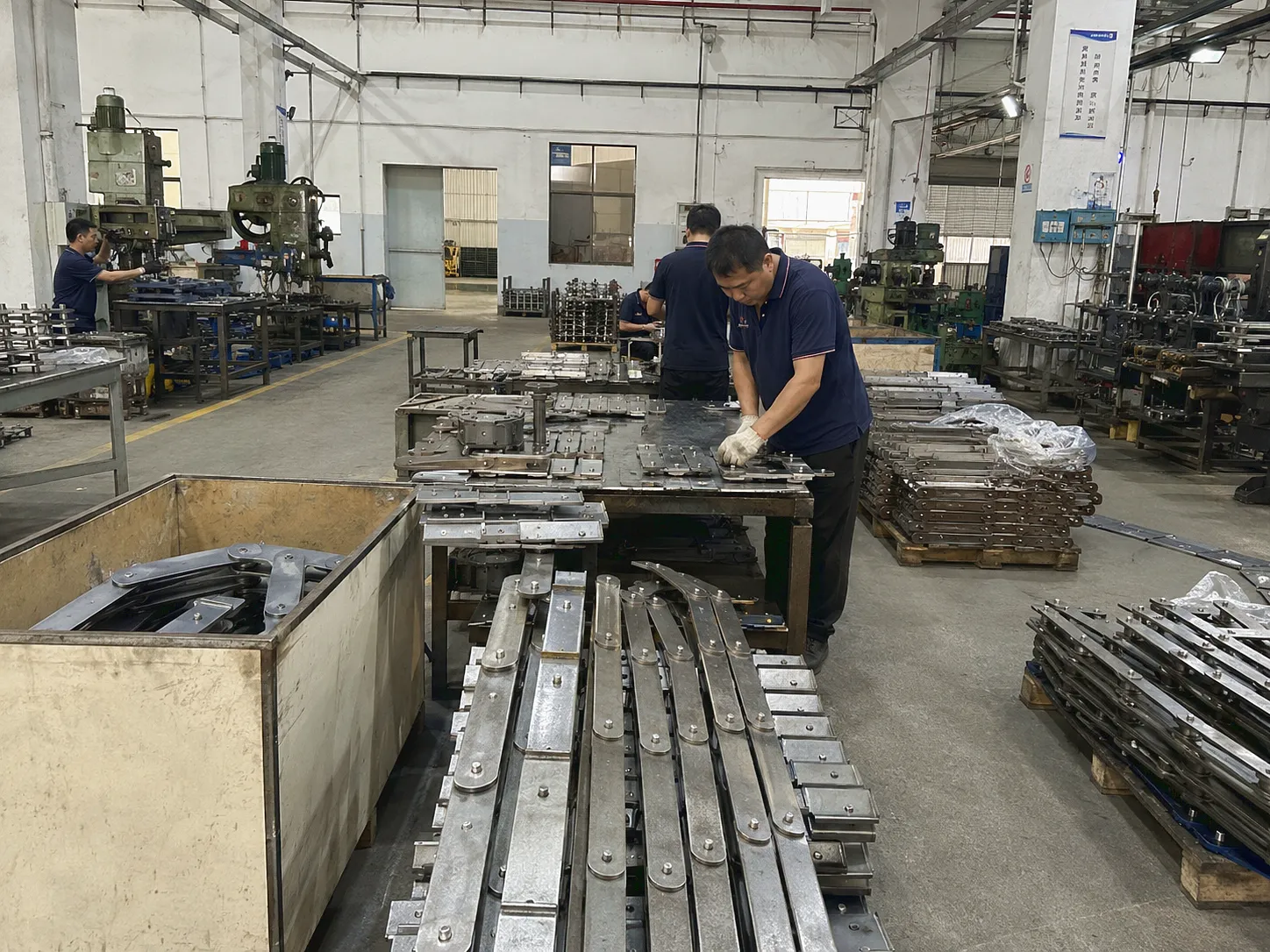
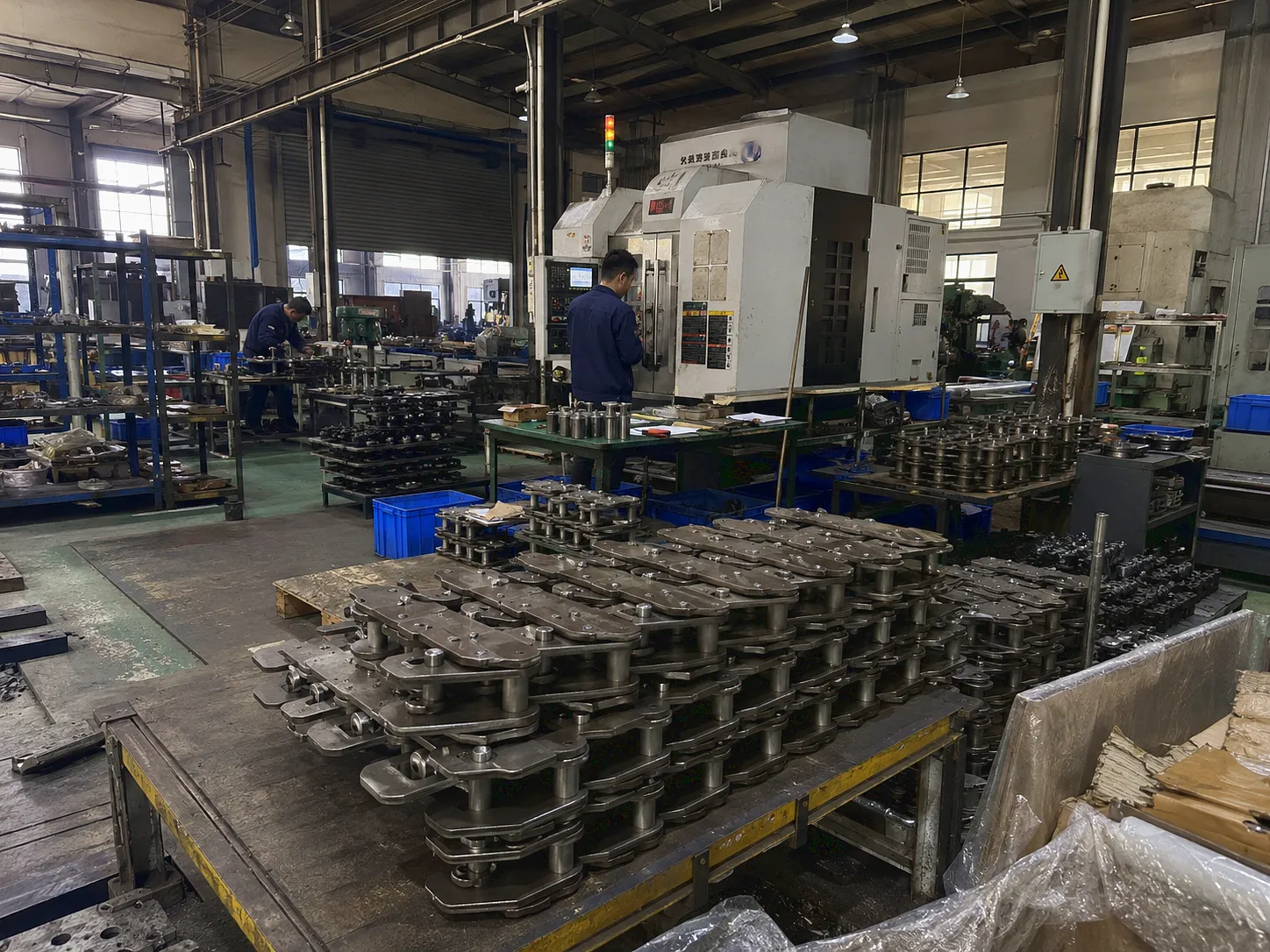
Ever Power operates a fully integrated leaf chain manufacturing facility equipped with automated stamping presses, CNC pin-grinding centres, computer-controlled heat-treatment furnaces, and coordinate measuring machines for 100% dimensional verification on critical dimensions. The factory currently produces over 2 million metres of leaf chain annually, serving customers across the UK, Continental Europe, South Asia, and Southeast Asia.
What distinguishes Ever Power from catalogue-only distributors is the depth of genuine manufacturing customisation available. The engineering team can develop and produce non-standard pitch sizes (from 9.525 mm to 38.1 mm), extended-width plate configurations, modified anchor-end geometries, and entirely bespoke assemblies for OEM ring spinning frame manufacturers or mill operators running legacy equipment that is no longer supported by the original machine builder. Customised tooling for new chain designs is typically produced within 10–15 working days, with first article inspection samples dispatched for customer approval before production quantities are committed.
For UK customers, Ever Power maintains a dedicated stock programme for the five most common ring spinning frame листовая цепь specifications, with same-day despatch on standard orders received before 14:00 GMT. International shipping to EU, Indian Subcontinent, and East Asian destinations is handled through established freight partnerships with DHL Industrial and Kuehne+Nagel, with typical transit times of 5–12 working days depending on destination.

Real Results from Real Ring Spinning Operations
🏭
Case Study: Stranded Cotton Mill, Lancashire, UK
The Challenge
A mid-sized combed cotton spinning facility in Lancashire, running 48 Lakshmi LMW LR6 ring frames with 1,200 spindles each, was experiencing repeated unplanned ring rail chain failures — averaging one failure per machine every 14 months. Each failure caused 6–8 hours of downtime per machine for chain removal, sourcing, and re-installation. The plant maintenance manager calculated that chain-related stoppages were costing the business approximately £38,000 per year in lost production and emergency procurement costs. The chains in use were a generic roller-type from an Eastern European catalogue supplier.
The Solution
Following a site audit in which Ever Power application engineers measured the ring rail assembly weight and stroke dynamics, BL 634 leaf chain with electroless nickel plating and custom-length clevis fittings was specified as the replacement. The ever-power application team provided a first batch of 48 complete chain assemblies within 18 working days, along with a written maintenance guide for the mill’s engineering team covering lubrication intervals, elongation check methodology, and the visual failure signatures to watch for between planned checks.
The Outcome
Over the following 24 months, zero unplanned ring rail chain failures were recorded across all 48 machines. Two planned replacements were carried out during scheduled maintenance shutdowns at 22 and 24 months respectively, with no production disruption. The plant’s maintenance manager reported a verified saving of £29,500 against the previous annual failure cost, even after accounting for the higher unit price of the specification chain. The mill subsequently standardised all ring frame leaf chain procurement on Ever Power BL series across the entire site.
What Our Customers Say
“We had been through three different chain suppliers in four years before we tried Ever Power. The BL 634 nickel-plated chains have now been running for over 26 months on our Toyota RX300 frames without a single unplanned stop. The technical support from their engineers was also far above what we had experienced with previous suppliers.”
— Engineering Manager, Woollen Yarn Manufacturer, West Yorkshire, UK
“Sourcing leaf chain for older Rieter G33 frames is a challenge because those machines are no longer in production and OEM spares availability has effectively ceased. Ever Power were able to produce a matched set of BL 534 chains with the correct anchor fork dimensions within three weeks. The price was competitive and the quality was noticeably better than the last batch of generic replacements we had sourced from a European distributor.”
— Maintenance Supervisor, Synthetic Fibre Mill, Nottingham, UK
“We operate a mixed fleet of ring spinning frames across two sites in Tirupur, India, and were recommended Ever Power by a UK-based machinery consultant. The BL 646 chains specified for our high-spindle-count machines have shown less than 0.3% elongation at 12 months under continuous three-shift operation. Delivery was prompt and the technical documentation provided with the order was thorough and professional.”
— Production Director, Integrated Spinning & Knitting Group, Tamil Nadu, India
The UK Textile Spinning Sector and the Chain Supply Challenge
 The British textile manufacturing sector — concentrated in the traditional spinning belts of Lancashire, West Yorkshire, the East Midlands, and with modern facilities in Scotland and Wales — continues to operate a substantial base of ring spinning equipment. According to UKFT (UK Fashion & Textile Association) industry data, there are still over 200 active spinning installations in the UK using ring frame technology, ranging from heritage wool-spinning operations in the Pennines to high-specification technical yarn producers serving aerospace and defence contracts.
For these businesses, the challenge of sourcing reliable leaf chain has intensified over the past decade. Many of the ring frames in current UK service were manufactured between 1980 and 2005, meaning OEM spares supply chains from the original builders are attenuated or completely discontinued. Maintenance teams are increasingly reliant on independent specialist suppliers who can manufacture or cross-reference the correct chain specification from measured samples or engineering drawings. Ever Power’s manufacturing capability and technical support infrastructure is structured precisely to fill this gap — providing the same precision and traceability that a major OEM would offer, at competitive pricing and with the short lead times that a production-focused mill operation demands.
UK customers benefit from dedicated English-language technical support, sterling-denominated pricing, and familiarity with UK and EU certification requirements including CE marking considerations for machinery components. Ever Power’s quality management system is certified to ISO 9001:2015, with product testing conforming to ISO 4347 and BS EN standards applicable to leaf chain in industrial machinery service.
200+
Active ring spinning installations in the UK
288K+
Daily chain load cycles per ring frame
25,000 h
Typical service life target for ring rail leaf chains
15–25
Working day lead time for custom chain assemblies
Frequently Asked Questions About Leaf Chain for Ring Spinning Frames
Which type of leaf chain is best for the ring rail drive on a Lakshmi LMW ring spinning frame in a UK cotton mill?
▼
For LMW LR6 and LR60 series frames, the standard ring rail chain is BL 534 or BL 634 depending on the frame length and rail loading. In UK cotton mills where humidity is typically 65–75% RH, we recommend the electroless nickel-plated variant. If you can provide the machine model number and ring rail weight (or frame length and cotton count range), our application engineers can confirm the exact specification and current stock availability within 24 hours.
How much does a replacement leaf chain cost for a ring spinning frame, and can I get a price quote from a UK supplier?
▼
The cost of a ring spinning frame leaf chain assembly varies depending on chain series, plate lacing, length, and surface treatment. Standard BL 534 assemblies for a typical mid-length frame typically range from £35 to £75 per assembly; BL 634 and BL 646 assemblies with nickel plating and custom end fittings run from £65 to £140. Volume pricing is available for whole-mill standardisation orders. Contact us at [email protected] with your frame model and quantity to receive a detailed quote within 24 hours.
How do I know when the leaf chain on my ring spinning frame needs replacing before it causes a breakdown?
▼
The primary indicator is chain elongation measured over 20 pitches. Measure the chain length under a light tension load and compare it to the nominal length (20 × the chain pitch in mm). If elongation exceeds 0.5%, the chain should be scheduled for replacement at the next planned stop. Secondary indicators include visible plate surface scoring, reddish-brown corrosion staining between the plates, any lateral play in the clevis fitting, and irregular ring rail motion causing visible yarn-layering irregularity on the cops. Do not wait for visible cracking — by that point, catastrophic failure is imminent.
Where can I find a reliable leaf chain supplier in the UK for older Rieter and Zinser ring frames that are no longer in OEM production?
▼
Legacy ring frame maintenance is a specialism in itself. Ever Power manufactures custom leaf chains to measured sample or engineering drawing, meaning we can replicate OEM-equivalent specifications for Rieter G33, G37, G38 and Zinser 351, 451 frames even where the original manufacturer no longer supplies spares. Send a sample chain (or photographs with pitch measurements) to our engineering team and we will identify the correct specification within 48 hours. We also hold a library of known specifications for common discontinued frame models.
What is the difference between a leaf chain and a roller chain, and why does it matter for ring spinning frame maintenance?
▼
Roller chains use hollow rollers and bushings to engage with sprocket teeth, making them ideal for rotational power transmission. Leaf chains have no rollers — they consist entirely of interleaved link plates connected by hardened pins, and are designed specifically for linear, reciprocating, or balancing tension applications. Using a roller chain in a ring rail application is a technically incorrect substitution that will result in premature pin-bore wear, accelerated elongation, and frequent failures because the chain is not engineered for the cyclic tension reversal duty cycle that the ring rail imposes.
Can I get a custom-length leaf chain assembly with specific end fittings for a non-standard ring spinning machine configuration?
▼
Yes — custom-length leaf chain assemblies with specified end fitting types (clevis fork, anchor plate, rod-end, or threaded pin adaptor) are a core part of Ever Power’s product offering. You can specify the required free-hanging length between fitting attachment points, the chain series, and the end fitting type and bore size. Standard custom assemblies are typically ready within 15–25 working days. For urgent maintenance situations, expedited production is possible for a schedule-priority charge — contact us to discuss lead times for your specific requirement.
Ready to Eliminate Unplanned Ring Frame Downtime?
Send your ring frame model number, frame length, and current chain specification to our engineering team — we will cross-reference, confirm, and provide a competitive quotation within 24 hours. Custom assemblies available for all major ring spinning frame brands.
Ever Power · ISO 9001:2015 Certified · BL Leaf Chain to ISO 4347 & ANSI B29.8M · Supply to UK, EU & Global Markets
Article written by an Ever Power application engineering specialist with 18+ years of industrial chain selection and installation experience. Technical data current as of 2026. Specifications subject to product development updates — confirm current data sheet values before final specification. edit by gzl