
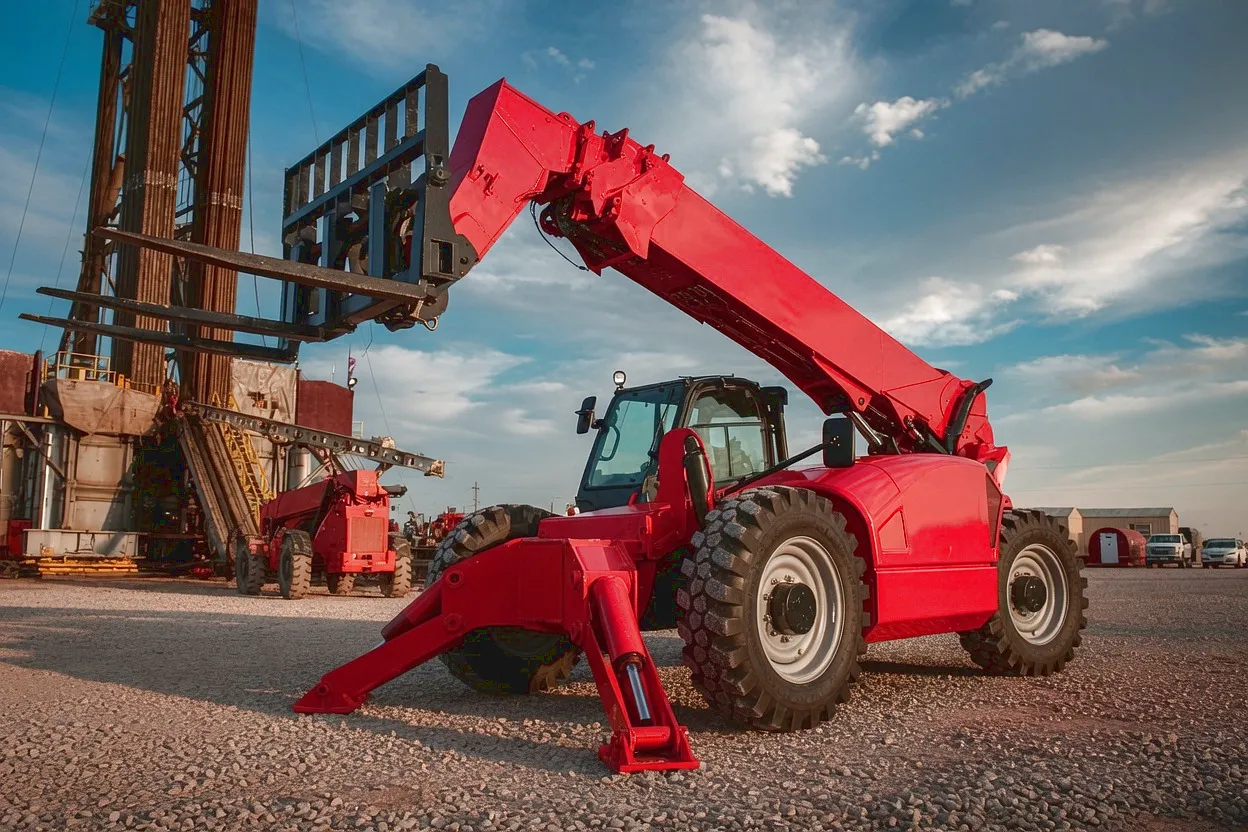
 Walk onto any construction site across England, Scotland, or Wales today and the probability of spotting at least one telescopic handler — or telehandler — is close to certainty. These versatile machines lift, reach, and place materials at heights and distances that no conventional forklift can manage. They are the workhorses of housebuilding, agriculture, quarrying, and civil infrastructure. Yet for all the engineering sophistication visible in a modern telehandler’s cab, hydraulic system, and extendable boom, there is a component that quietly determines whether the machine delivers its rated load at full extension without incident: the leaf chain.
A leaf chain is not a sprocket-driven transmission chain. It carries no rotational torque. Its entire purpose is tensile load transfer — linking the hydraulic cylinder rod to the mast or carriage assembly so that the force generated by hydraulics translates cleanly and efficiently into vertical or angled movement. In a telehandler, that function is even more demanding because the chain must accommodate both the primary lift motion and the complex geometry shifts that occur as the boom extends and the load moment arm changes. Understanding why leaf chain specification matters — and what separates a correctly specified chain from a generic replacement — is the starting point for any engineer responsible for telehandler maintenance, procurement, or design.
Need a Leaf Chain for Your Telehandler Fleet?
Ever Power supplies high-specification leaf chains for telehandlers across the UK and Europe. We offer standard catalogue sizes and fully custom-engineered solutions with rapid turnaround. Our team can match or exceed OEM specifications for all major telehandler brands.
What Exactly Is a Leaf Chain — and Why Does It Differ from Roller Chain?
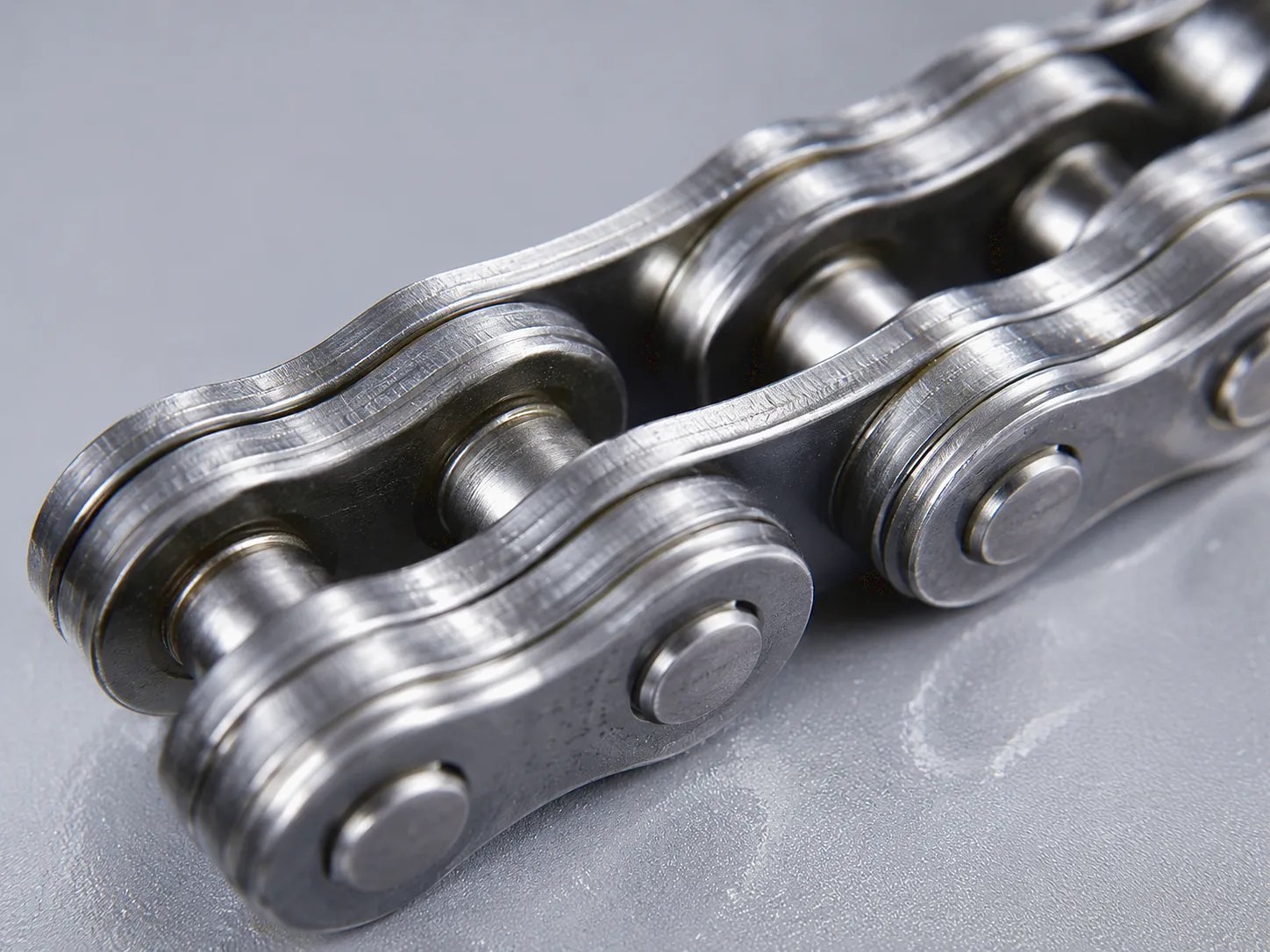
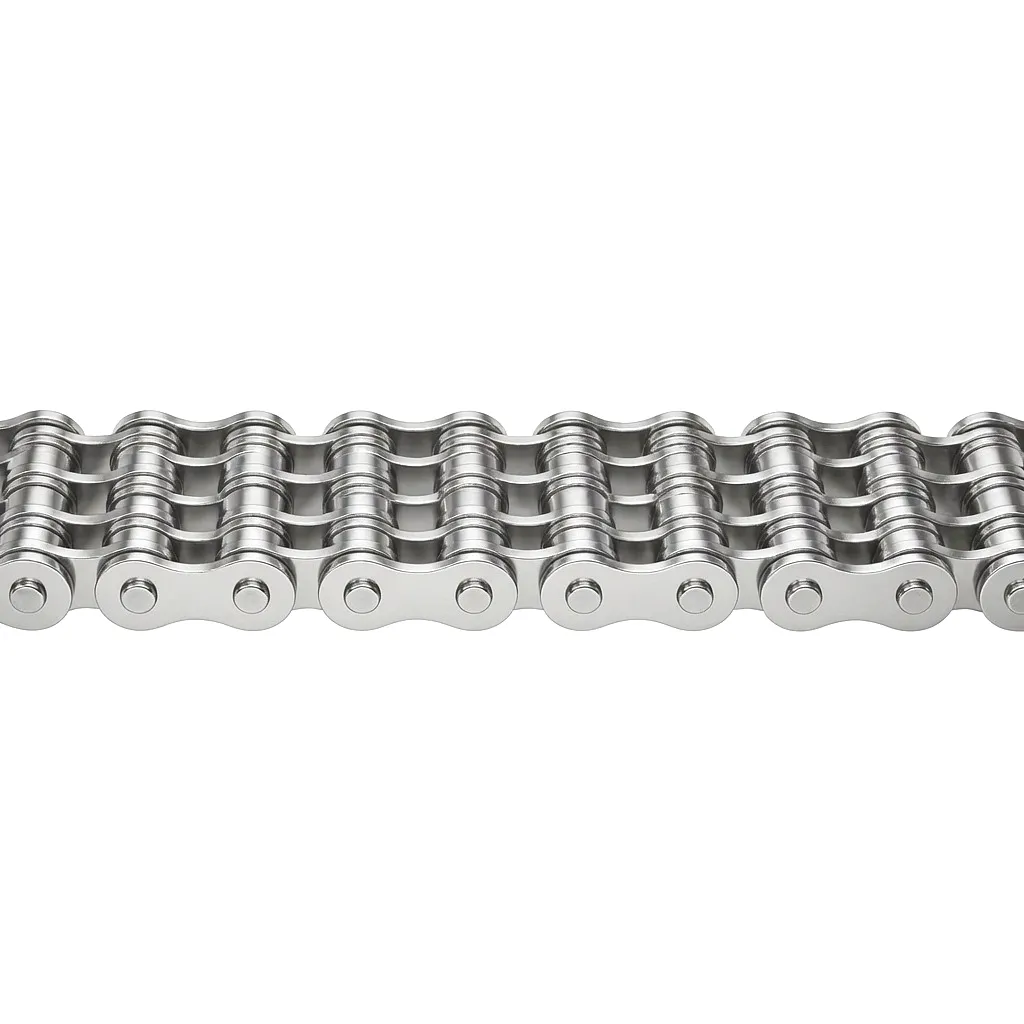
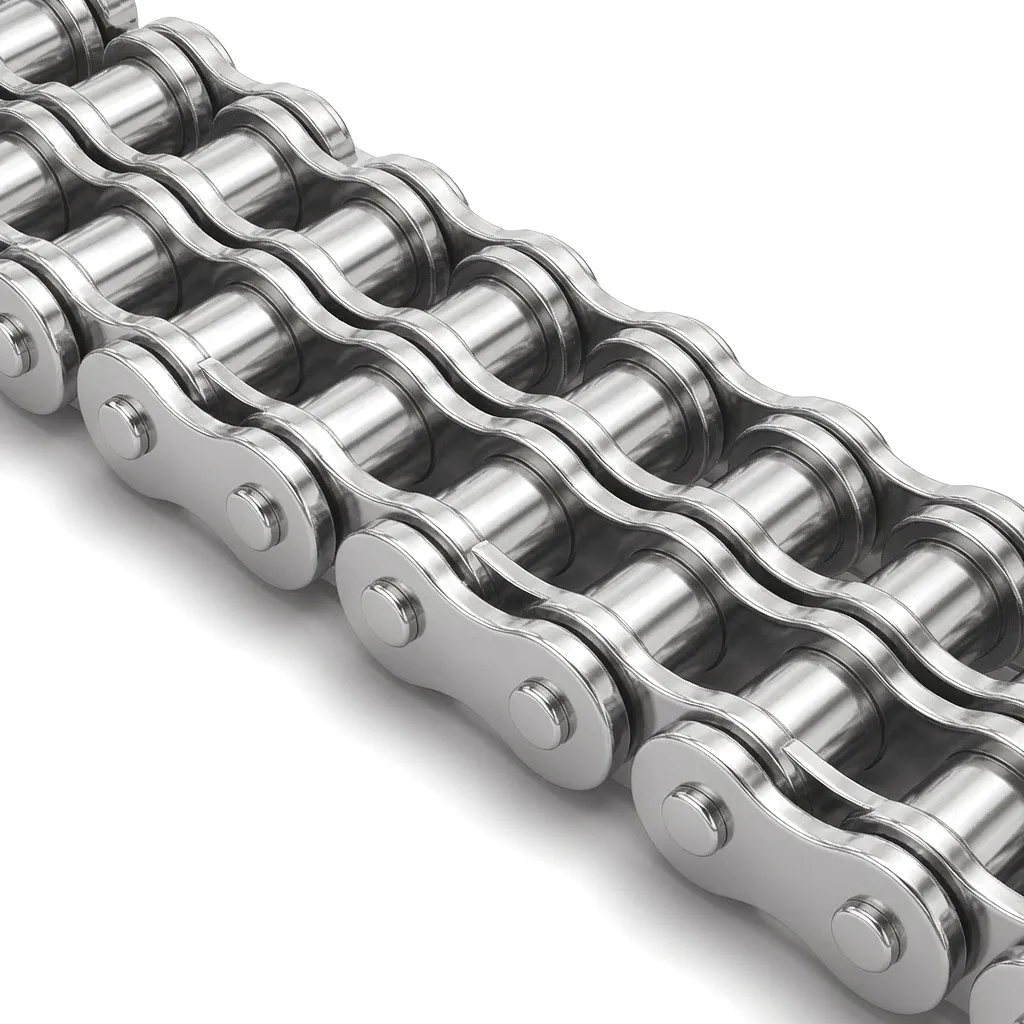
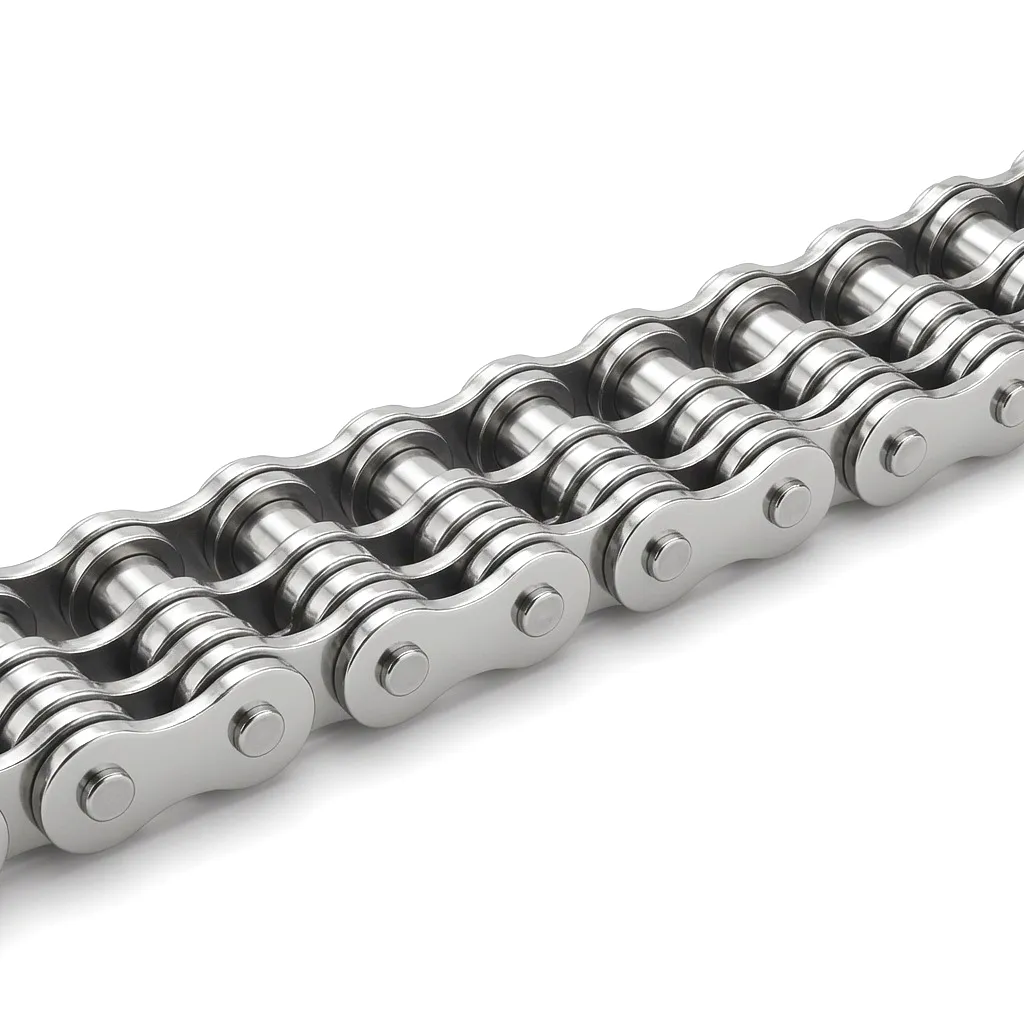
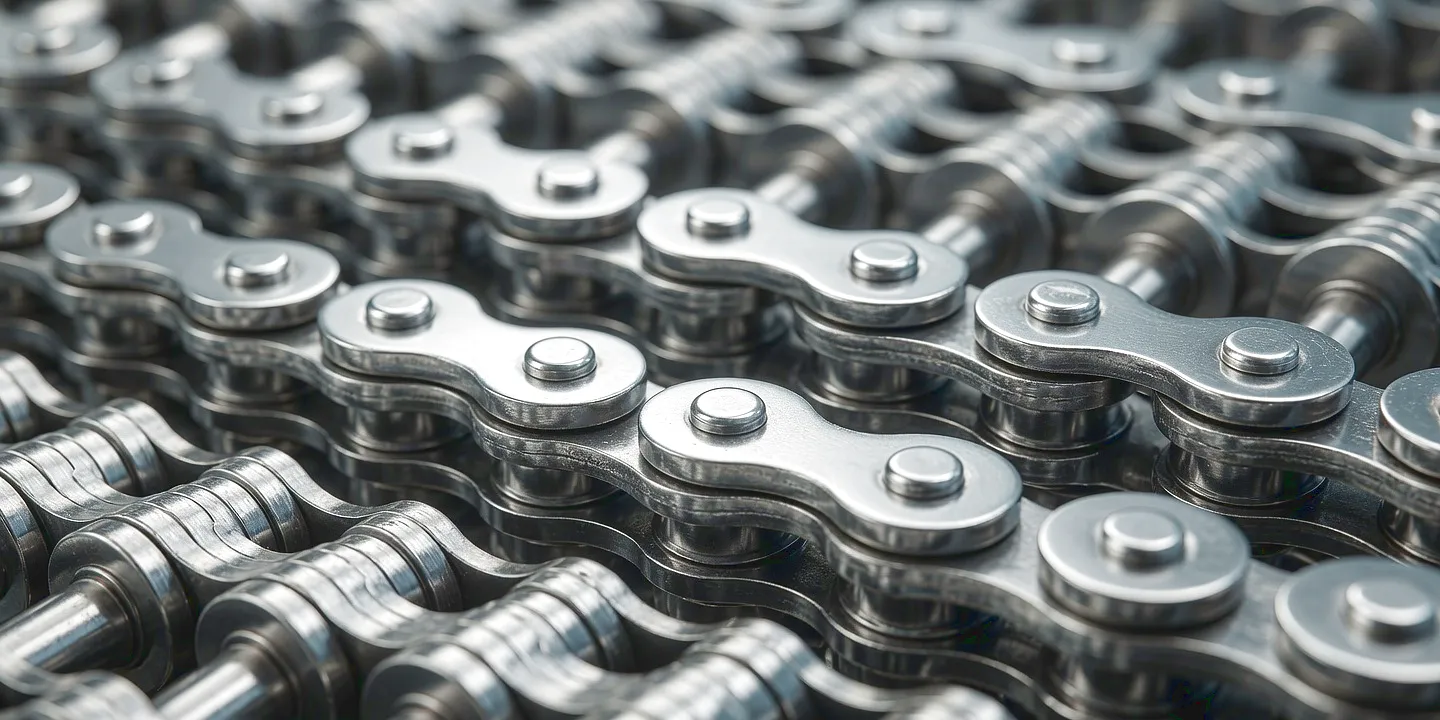
A leaf chain, designated under the ISO 4347 standard (and corresponding BS and ANSI counterparts), consists entirely of interleaved steel link plates joined by precision-ground pins. There are no rollers, no bushings, and no sprocket engagement surfaces. The design is architecturally simple but dimensionally exacting: the plates are stacked in alternating inner and outer sets, the pin diameter and plate thickness are calculated to distribute tensile stress evenly, and the pin-to-plate fit is controlled to tolerances measured in microns.
This construction gives leaf chain extraordinary tensile strength relative to its cross-section. A properly specified AL1044 leaf chain, for example, achieves a minimum breaking load well above 1,000 kN while remaining compact enough to thread through the sheave assemblies and anchor points inside a telehandler mast. Roller chain, by contrast, is optimised for sprocket engagement and continuous rotational power transmission; its roller and bushing components introduce failure modes — roller wear, bushing fatigue, lubrication channel blockage — that are irrelevant to but would be catastrophic in a load-carrying chain application.
The leaf chain’s lacing pattern (expressed as the ratio of inner link plates to outer, e.g., 4×4, 6×6, 8×8) also governs flexibility across the sheave. A telehandler boom mechanism requires a chain that can negotiate relatively tight sheave radii while under live load — something that determines not just performance but fatigue life under repeated duty cycles.

Inside a Telehandler: Where Leaf Chain Does Its Work
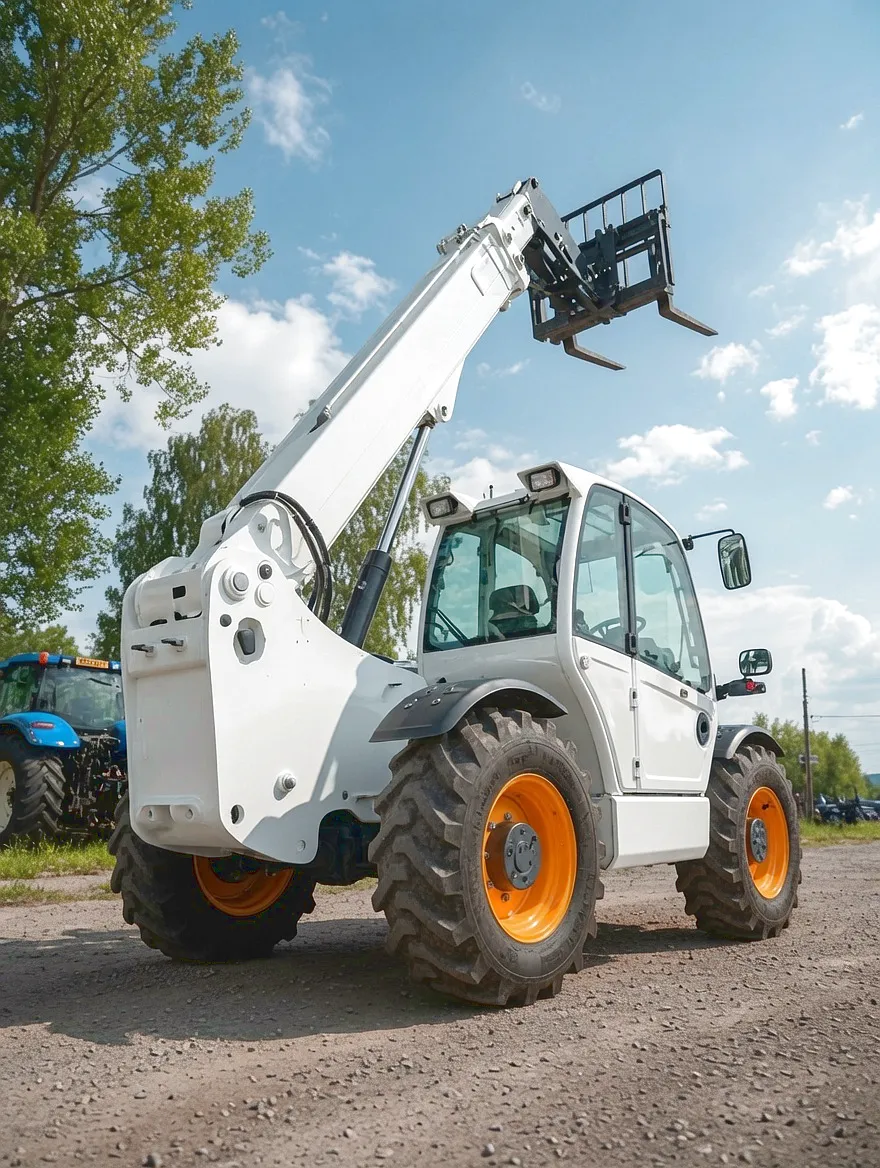
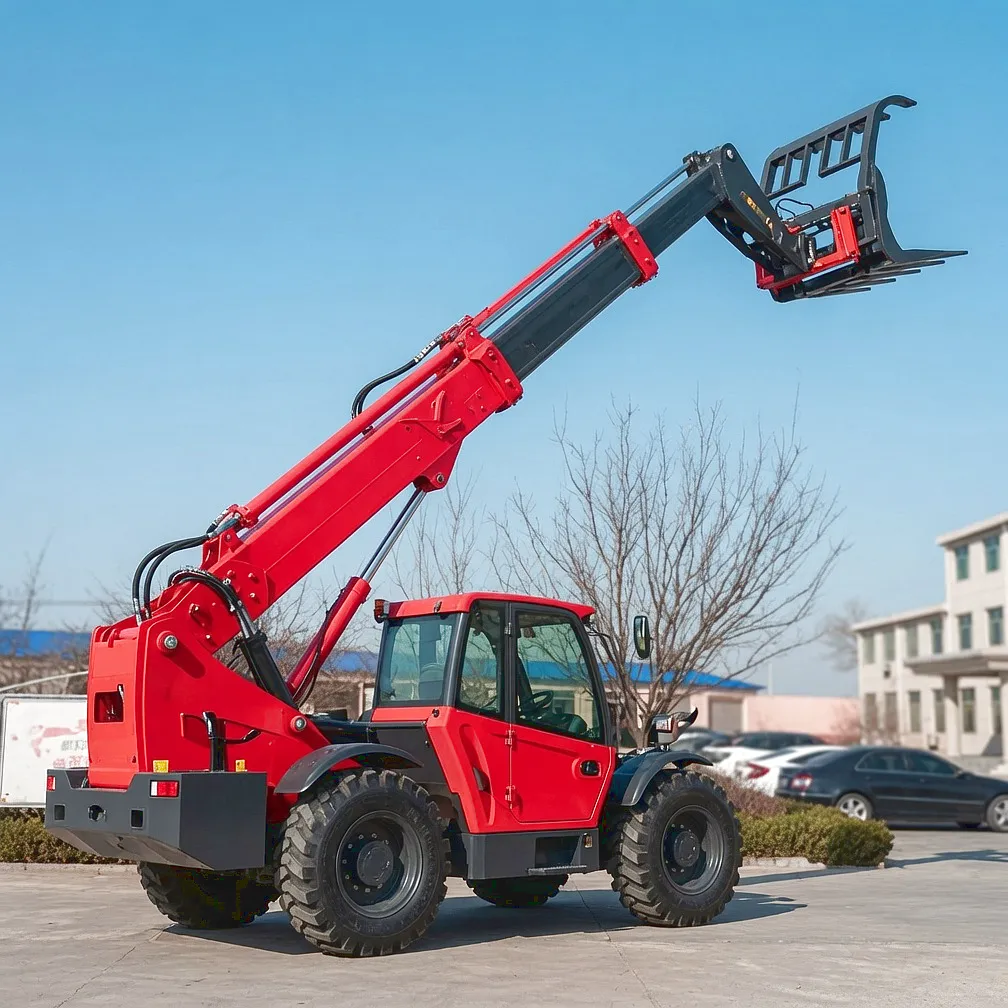
Modern telehandlers used in UK construction and agriculture typically offer lift heights from 6 m to over 20 m, with maximum rated loads from 2.5 t to 5 t at the centre of gravity. The telescopic boom extends in two, three, or sometimes four stages, each stage nested within the previous. Raising a pallet of concrete blocks to the fifth floor of a housing development, or placing a round bale at height in a grain store — these everyday tasks create the cyclical tensile loading that leaf chain must manage, reliably, for tens of thousands of duty cycles.
Within the mast and boom assembly, leaf chain connects the hydraulic cylinder’s rod clevis to a fixed anchor point and routes over a sheave (pulley) at the upper end of the mast or inner boom. As the cylinder extends, the chain is tensioned and the carriage or outer boom section rises. A 2:1 reeving ratio — common in telehandler designs — means the chain speed is twice the cylinder rod speed, and the chain load is approximately half the cylinder force. However, dynamic shock loads from uneven terrain, rapid hydraulic valve actuation, or sudden load swing can momentarily multiply the static working load by significant factors, making generous safety margins in chain selection non-negotiable.
The boom’s angular range — telehandlers typically depress to around -20° and elevate to +70° — means the chain anchor and sheave geometry shifts throughout the working envelope. Chain specification must account not just for maximum static load but for the peak load vectors that arise at extreme boom angles, where mechanical disadvantage increases and the chain tension required to hold the load rises accordingly.
Technical Specifications: Ever Power Leaf Chain for Telehandler Applications
The table below outlines representative performance data for the most common leaf chain series used in telehandler mast and boom assemblies. All values represent minimum guaranteed performance at ambient temperature (20°C). Working load limits (WLL) incorporate a safety factor of 4:1 over the minimum breaking load, in accordance with EN ISO 4347 and LEEA COPSULE guidance relevant to UK lifting equipment regulations.
| Chain Series | ISO Designation | Pitch (mm) | Lacing | Min. Breaking Load (kN) | WLL (kN) | Pin Dia. (mm) | Plate Material |
|---|---|---|---|---|---|---|---|
| AL422 | 4×2 Laced | 25.40 | 4×2 | 178 | 44.5 | 7.94 | Alloy Steel (case-hardened) |
| AL622 | 6×2 Laced | 25.40 | 6×2 | 267 | 66.8 | 7.94 | Alloy Steel (case-hardened) |
| AL844 | 8×4 Laced | 31.75 | 8×4 | 534 | 133.5 | 9.53 | Carbon alloy, through-hardened |
| AL1044 | 10×4 Laced | 38.10 | 10×4 | 934 | 233.5 | 11.11 | Carbon alloy, through-hardened |
| AL1266 | 12×6 Laced | 38.10 | 12×6 | 1,200 | 300 | 11.11 | Carbon alloy, through-hardened |
WLL = Working Load Limit at 4:1 safety factor. Data representative; contact Ever Power for project-specific engineering review.
Material Engineering: What Goes Into a Telehandler-Grade Leaf Chain
Through-Hardened Link Plates
Our plates are manufactured from alloy carbon steel with precise heat treatment to achieve consistent through-hardness across the entire cross-section — not just the surface. This eliminates the delamination risk seen in case-hardened plates under peak dynamic loads typical of telehandler boom impacts on rough terrain.
Precision Ground Pins
Pin-to-hole fit is controlled to ISO Grade 6 tolerances. Every pin is centreless-ground after heat treatment to achieve surface finish Ra 0.4 µm or better. This matters in telehandler applications because pin/plate contact stress is the primary fatigue initiation site; a smoother surface dramatically extends crack initiation life.
Corrosion Protection Options
UK telehandlers operate in environments ranging from coastal salt air on Scottish fish farms to clay-rich construction sites in the South East. We offer standard phosphate and oil finish, zinc-nickel electroplating for aggressive environments, and hot-dip galvanising for chains operating in permanent outdoor exposure — without compromising mechanical performance.
100% Proof-Load Testing
Every leaf chain assembly leaves our facility with a documented proof-load test at 1.5× WLL, accompanied by a traceable certificate of conformity. For UK customers, we can provide documentation directly compatible with LOLER (Lifting Operations and Lifting Equipment Regulations 1998) inspection records.
Application Scenarios: Where Telehandler Leaf Chain Works Hardest
The UK construction and agricultural sectors each place distinct demands on telehandler leaf chain. Understanding these demands — and matching the chain specification accordingly — is where years of application engineering experience create real value rather than simply supplying a catalogue number.
 On residential and commercial construction sites across England, telehandlers are used to place roofing materials, brick packs, and structural steelwork at height. These applications involve relatively controlled, planned lifts but with high cycle counts across a working day. A bricklayer’s supply telehandler on a large housebuilding development might complete 200 or more load cycles in a single shift, placing the leaf chain into a high-cycle fatigue regime rather than a static overload scenario. Specification must prioritise fatigue endurance over peak breaking load alone.
Agricultural telehandlers in Wales, Yorkshire, and Scotland face a fundamentally different challenge: shock loading. Moving large round bales from field to storage involves driving at speed over uneven ground while carrying load, then rapid boom elevation. The leaf chain sees transient overloads that can exceed 2× the steady-state working load, demanding material with high impact toughness — not just static strength.
Residential Construction
High daily cycle count, moderate loads (2–3 t), enclosed-site working with clean lubrication conditions. AL622 or AL844 series typically specified. Fatigue endurance is the primary selection criterion.
Agricultural Handling
Shock-load dominant, wet and dusty environments, wide temperature range (-15°C to +40°C). AL1044 or AL1266 specified with corrosion-resistant finish. Impact toughness is the primary concern.
Quarrying & Mining
Maximum static and dynamic loads, highly abrasive dust, acid drainage water in some sites. Stainless steel leaf chain or zinc-nickel plated AL1266 with extended-interval lubrication systems.
Port & Logistics
Salt-air corrosion, heavy container handling, 24/7 operation requiring minimal maintenance downtime. Corrosion-resistant finish essential. Traceable certification supports port authority compliance.
Industrial Warehousing
Cleaner operating environment, predictable load profiles, pallet and racking system integration. Standard phosphate-oil finish with programmed lubrication schedules. AL844 series common.
Renewables Installation
Wind and solar construction in exposed coastal or upland UK sites. Extended-service intervals demanded. Galvanised or stainless leaf chain with enhanced corrosion certification for offshore or near-shore projects.
Why Ever Power Leaf Chain Outperforms Generic Alternatives
The UK market for telehandler replacement components has, in recent years, seen an increase in low-cost imports that meet the numerical specification on a datasheet but fail in service due to inconsistent heat treatment, variable pin diameter, or inadequate plate edge quality. Chain failures in lifting applications are not simply a maintenance inconvenience — under LOLER 1998 and PUWER 1998, a UK employer has a legal duty to ensure lifting equipment is safe. An uninvestigated chain failure that causes an incident will draw Health and Safety Executive scrutiny and can result in significant enforcement action.
Ever Power’s manufacturing process uses closed-die forged and precision-stamped link plates, produced from certified steel coil with traceable mill certificates. Our in-house heat treatment furnaces are calibrated to AMS 2750 (Nadcap aerospace standard) requirements, providing process assurance that goes well beyond what many industrial chain manufacturers achieve. Each production batch undergoes hardness verification sampling, dimensional audit, and breaking-load testing on a calibrated tensile test machine before shipment.
For telehandler OEM supply or fleet replacement programmes, we can provide part number cross-reference to the original manufacturer’s chain specification, dimensional drawings in DXF and PDF formats, and — where required by the customer’s QMS — PPAP documentation to AIAG Level 3. These are the kinds of capabilities that underpin long-term supply partnerships rather than transactional spot purchasing, and they reflect a company that has been engineering chains for demanding industrial applications for nearly two decades.
Key Competitive Advantages
- ✔ Traceable steel mill certificates included as standard
- ✔ 100% proof-load testing with LOLER-compatible documentation
- ✔ OEM cross-reference and dimensional drawing support
- ✔ Bespoke lacing, length, and anchor configuration available
- ✔ Multiple corrosion protection levels for UK field conditions
- ✔ Fast delivery to UK addresses, stocked in common telehandler sizes
Customer Success: From Recurring Failures to Zero Unplanned Downtime
West Yorkshire, UK · Agricultural Contractor
Barrowcliff Farm Contracting: Eliminating Telehandler Chain Failures Across a 12-Machine Fleet
Barrowcliff Farm Contracting operates a fleet of 12 telehandlers across arable and livestock farming contracts in West Yorkshire and North Yorkshire. The majority of the machines handle silage bales, grain hoppers, and fertiliser pallets — applications demanding repeated high shock loads in muddy, wet conditions typical of northern English farm environments.
Prior to working with Ever Power, Barrowcliff was experiencing an average of three to four leaf chain replacements per machine per year, with several incidents involving chain elongation beyond the 3% discard limit within just eight months of fitment. The chains in use were sourced opportunistically from a general agricultural merchant, with no consistent specification or batch traceability.
After engaging Ever Power’s application team, a fleet survey identified that the existing chains were undersized for the peak shock loads generated during fast bale handling, and that the phosphate finish was being stripped rapidly by alkaline cleaning products used in the farm’s washdown area. Ever Power specified AL1044 series chains with zinc-nickel plating and supplied fleet-level batch documentation for the company’s LOLER inspection records.
Documented Outcomes (12-month post-switch review):
What Our Customers Say
“We’ve standardised on Ever Power leaf chain across our entire plant hire fleet. The documentation support for our LOLER records is something we genuinely couldn’t get from our previous suppliers. The chains outlast what we had before by a comfortable margin.”
Fleet Maintenance Manager · Plant Hire Company, Midlands, UK
“The custom-length chains with pre-fitted anchor bolts saved us two hours of installation time per machine in our last fleet refurbishment. Their team understood the telehandler geometry requirements straight away — no back-and-forth or wrong deliveries. Highly recommended.”
Workshop Controller · Construction Equipment Dealer, Bristol, UK
“We operate telehandlers on wind farm construction across Scotland. The zinc-nickel plated chains have now been in service for 18 months on coastal site conditions with no measurable corrosion. The price was competitive and the lead time was shorter than the OEM part. We’ll be placing our next order shortly.”
Equipment Procurement Lead · Renewables Civil Contractor, Scotland
Ever Power Manufacturing: Custom Leaf Chain Solutions Built to Your Exact Requirements
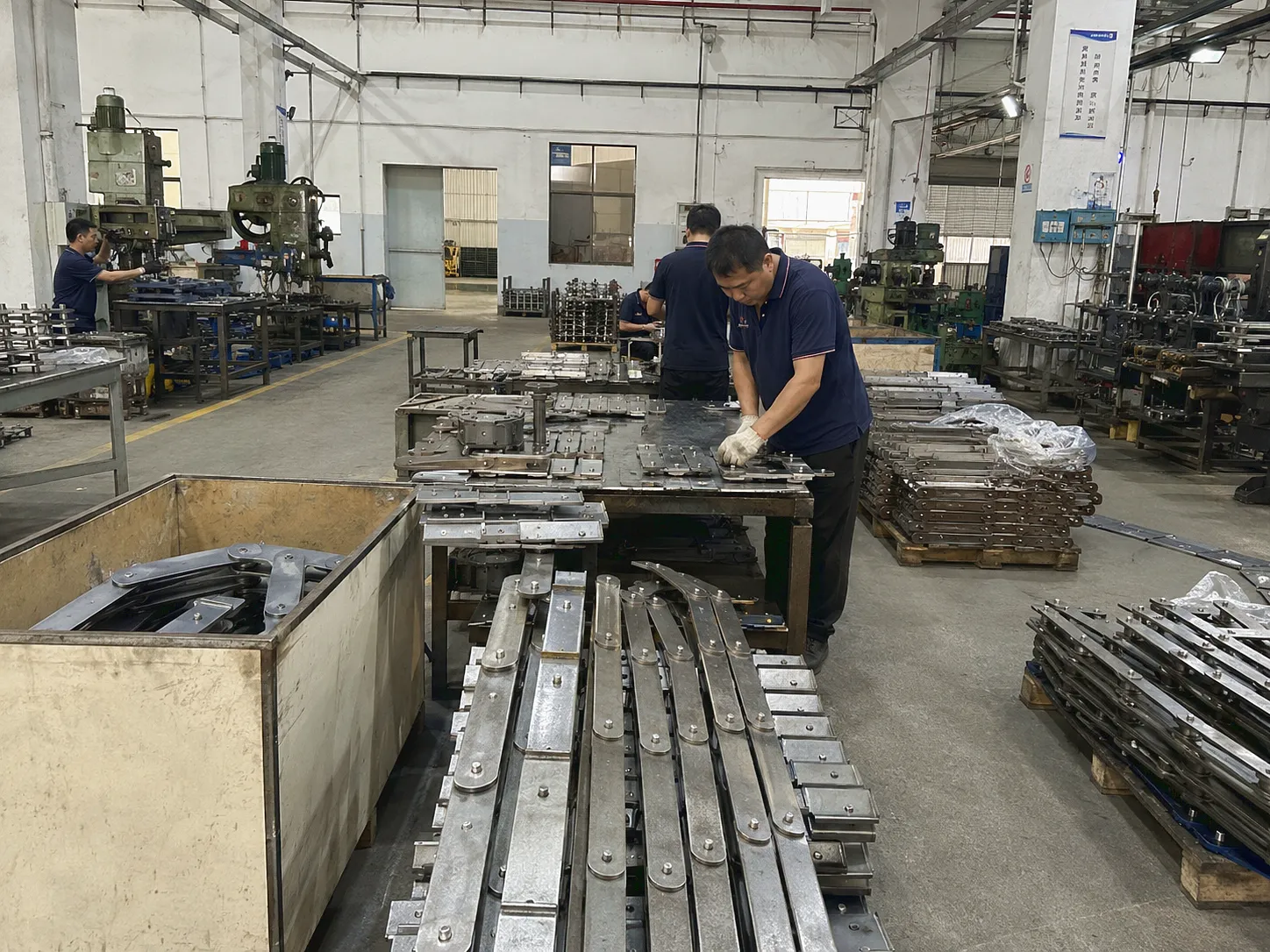
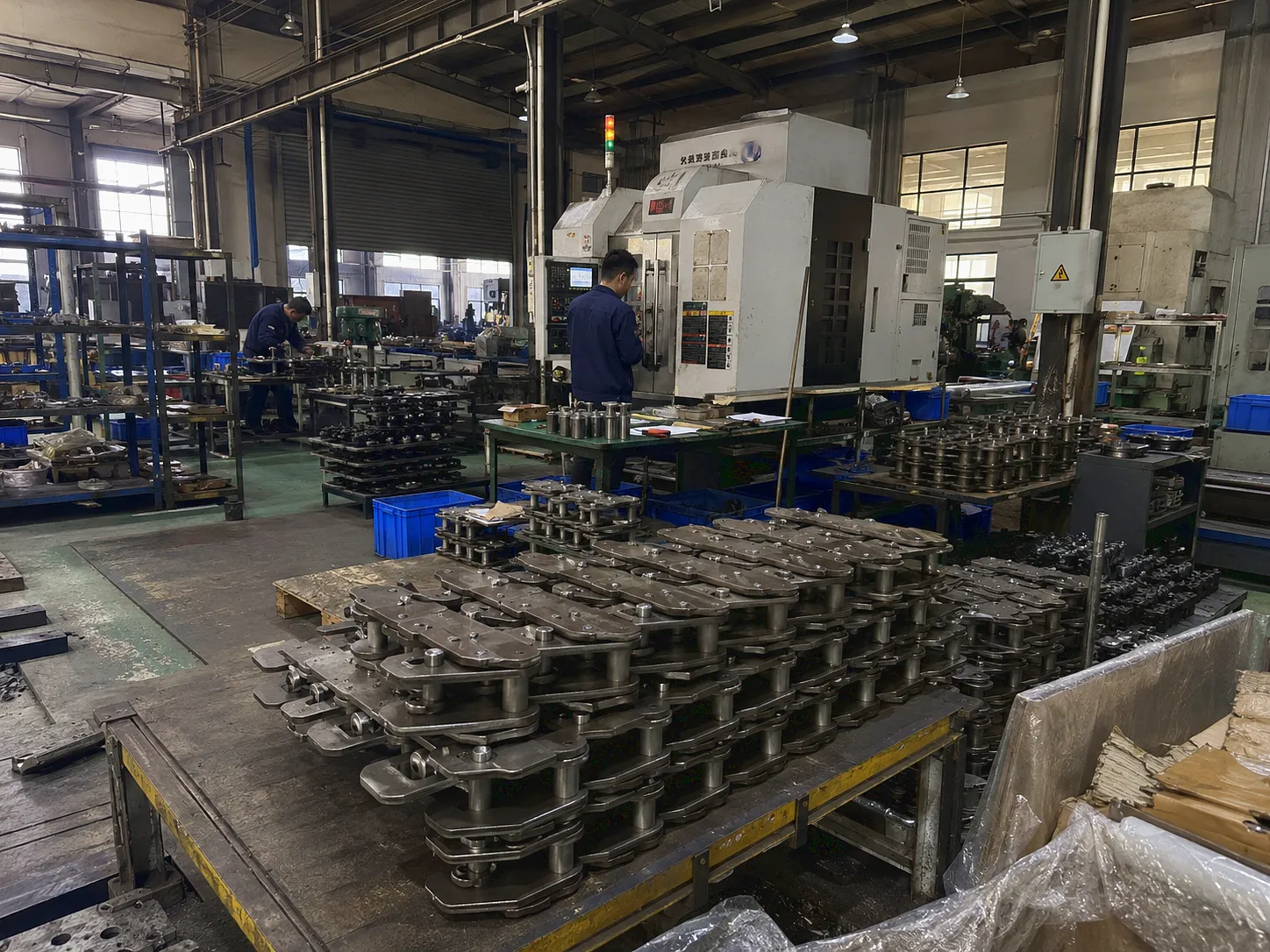
Our manufacturing facility operates CNC plate-stamping presses, precision centreless grinding machines, and continuous mesh belt heat treatment furnaces — all under an ISO 9001:2015 quality management system with documented process control at every stage. This isn’t assembly from bought-in sub-components; we control the chain-making process from raw steel coil to finished, tested assembly.
For telehandler applications specifically, our custom service capability means we can supply chains in non-standard pitches, with custom overall lengths (including half-pitch adjustment), with any combination of anchor pin, clevis, or bracket end fittings, and with mixed lacing patterns where the application geometry demands varying flexibility. OEM telehandler manufacturers working on new platform development can work with our applications team from the design stage to optimise chain specification before tooling is committed.
UK plant hire companies, agricultural machinery dealers, and construction equipment workshops benefit from our stocked programme of common telehandler leaf chain sizes — typically available for next-working-day despatch to any UK mainland address. For scheduled fleet refurbishment programmes, we offer blanket order agreements with fixed pricing and call-off delivery, eliminating the price volatility that affects spot purchasing.
Maintenance, Inspection & UK Regulatory Compliance
In the UK, telehandlers used in lifting operations are subject to LOLER 1998, which requires thorough examination by a competent person at intervals not exceeding six months for lifting equipment used to lift persons, and twelve months for other lifting equipment — or following any exceptional circumstances that may affect safe use. Leaf chain condition is a specific inspection point in any thorough examination, and a competent examiner will check for elongation beyond the 3% discard limit, plate cracking, pin rotation, corrosion, and lubrication condition.
Elongation measurement is the most reliable field indicator of leaf chain service life remaining. The ISO 4347 standard specifies that a leaf chain worn to 3% elongation has consumed approximately 80% of its fatigue life and must be replaced regardless of visual appearance. Owners should establish a documented measurement programme using a calibrated chain gauge, recording measurements at each inspection and tracking the elongation rate over time. Rapid elongation acceleration — seen when wear accelerates in the final phase of chain life — is an important warning sign that justifies immediate replacement.
Lubrication is the single most effective maintenance action available for extending leaf chain service life. The pin/plate interface operates under boundary lubrication conditions; without adequate lubricant film, metal-to-metal contact at this interface generates accelerated adhesive wear and fretting damage. Ever Power recommends mineral-oil-based chain lubricants applied to the inner link plate/pin interface at the frequency specified in the telehandler OEM service manual — typically every 50–100 hours in clean indoor conditions, and every 25–50 hours in dusty or wet outdoor environments.
⚠️ UK LOLER Compliance Summary
- Thorough examination every 6–12 months
- 3% elongation = mandatory discard limit
- Competent person must conduct inspection
- Written report required, records retained
- Any defect affecting safety must result in non-use pending repair
🔧 Recommended Inspection Intervals
| Environment | Lubrication | Elongation Check |
|---|---|---|
| Clean indoor | Every 100h | Every 500h |
| Outdoor construction | Every 50h | Every 250h |
| Agricultural / wet | Every 25h | Every 125h |
| Quarry / coastal | Every 25h | Every 100h |
Leaf Chain Selection Guide for Common UK Telehandler Models
The table below provides orientation guidance for the most common telehandler platforms operating across the UK. Verification against OEM service data and specific operating conditions is always recommended before procurement. Ever Power’s technical team can confirm the correct specification for any machine using the original part number or dimensional data.
| Machine Category | Typical Max Load (t) | Typical Max Height (m) | Recommended Series | Preferred Finish (UK outdoor) |
|---|---|---|---|---|
| Compact telehandler (<4 m height) | 1.5–2.5 | 3.5–4.5 | AL422 / AL622 | Phosphate + oil |
| Mid-range construction (6–9 m) | 2.5–3.5 | 6–9 | AL844 | Zinc-nickel |
| Agricultural handler (bale/forage) | 3.0–4.0 | 7–11 | AL1044 | Zinc-nickel |
| Heavy construction (>12 m) | 4.0–5.0 | 12–20 | AL1044 / AL1266 | Zinc-nickel / Galvanised |
| Coastal / offshore wind support | 3.0–5.0 | 12–18 | AL1044 / Stainless | Hot-dip galvanised / Stainless |
Frequently Asked Questions
Ready to Specify the Right Leaf Chain for Your Telehandler Fleet?
Send us your machine model, OEM part number, or chain dimensions. Our engineering team responds within one working day with a specification recommendation, full pricing, and delivery lead time — backed by nearly two decades of leaf chain application experience.
© Ever Power Industrial Chains · UK B2B Supply
ISO 9001:2015 · ISO 4347 · LOLER Documentation · Custom Engineering · edit by gzl