
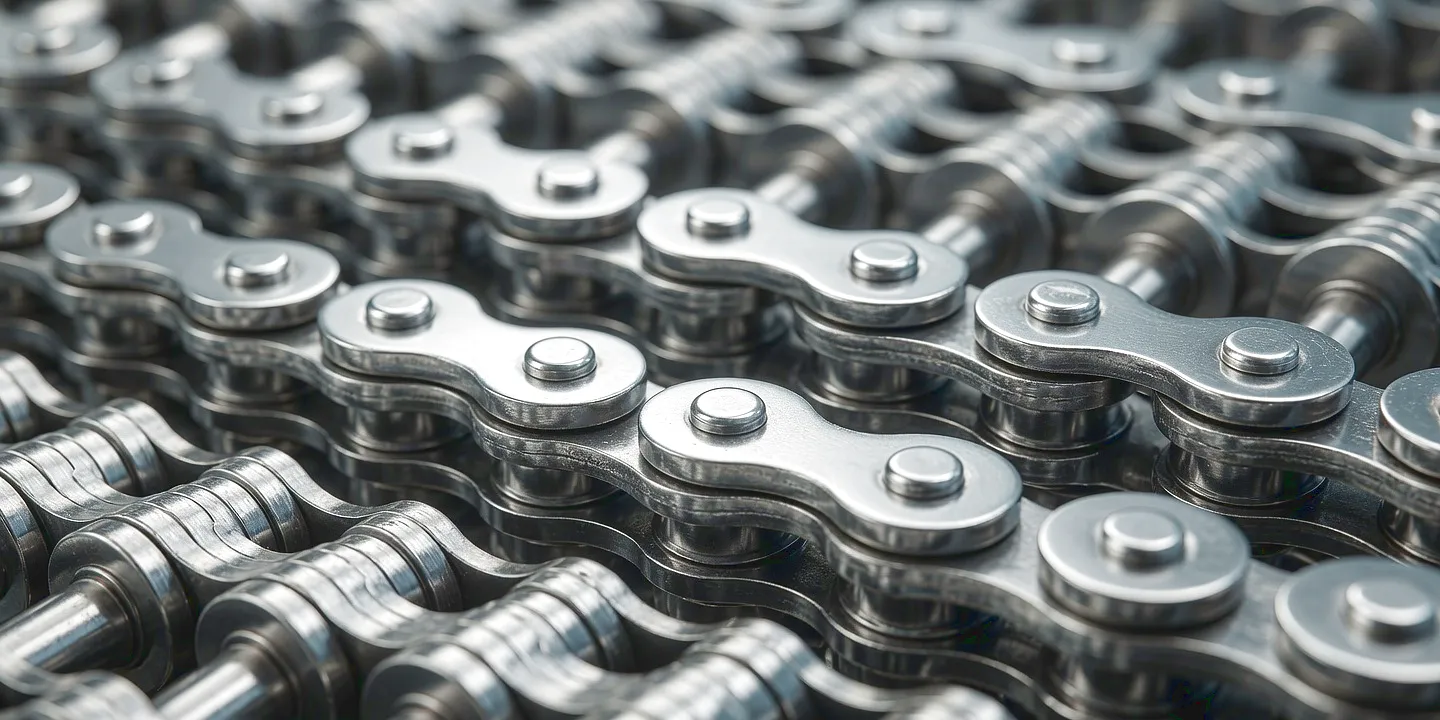
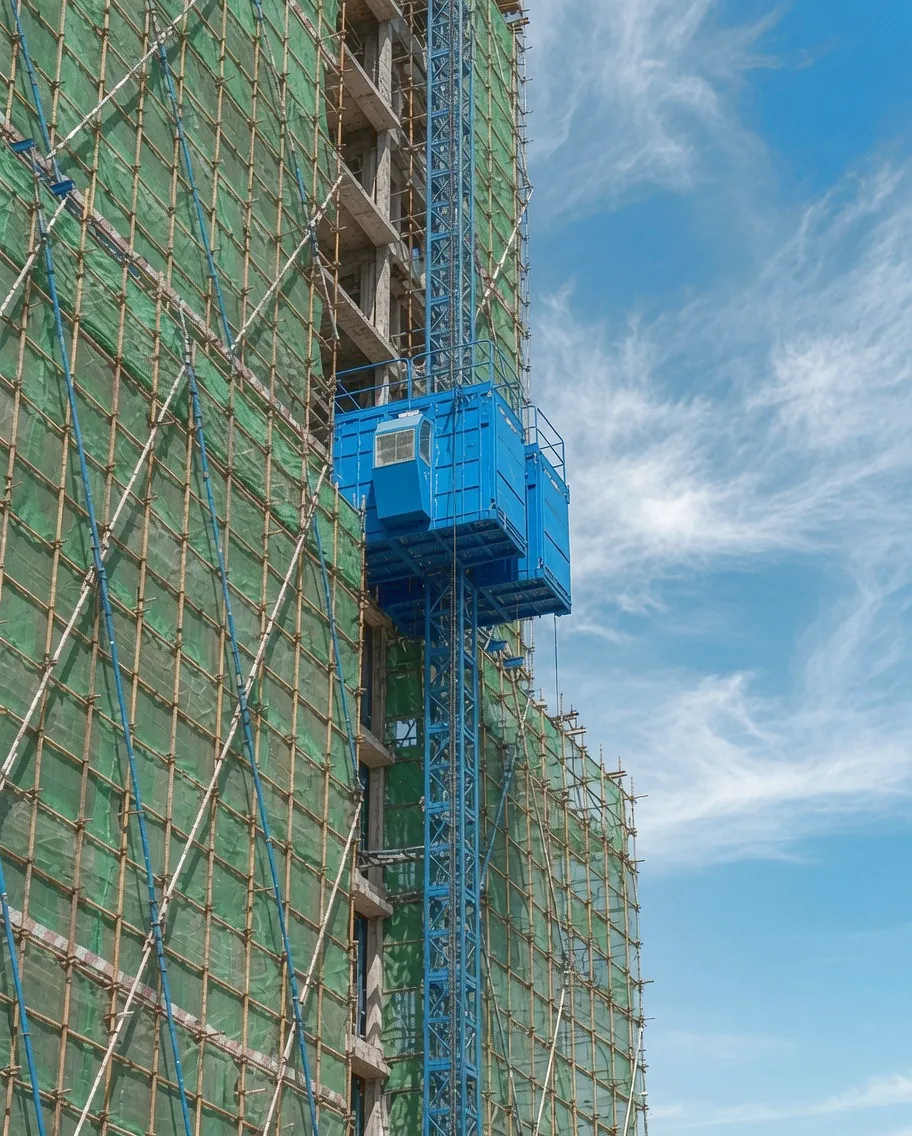
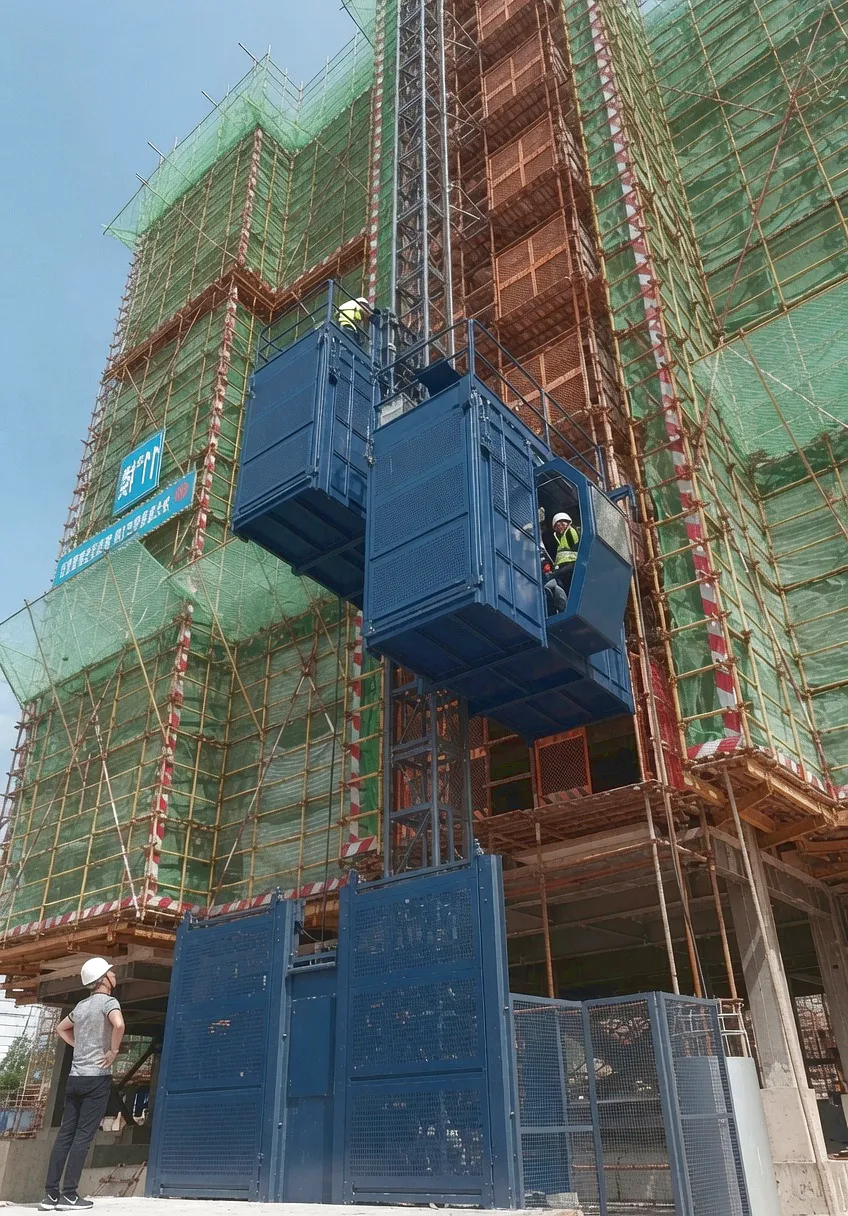
 Walk onto any major construction site in Birmingham, Manchester, or central London, and you will almost certainly see a builder’s hoist standing alongside the structure, shuttling materials and personnel vertically throughout the working day. What you might not immediately appreciate is the critical role that leaf chain plays inside that machine — working inside the counterbalance and load-sensing system, absorbing shock, resisting stretch, and maintaining dimensional integrity shift after shift in conditions that would destroy a lesser component inside weeks.
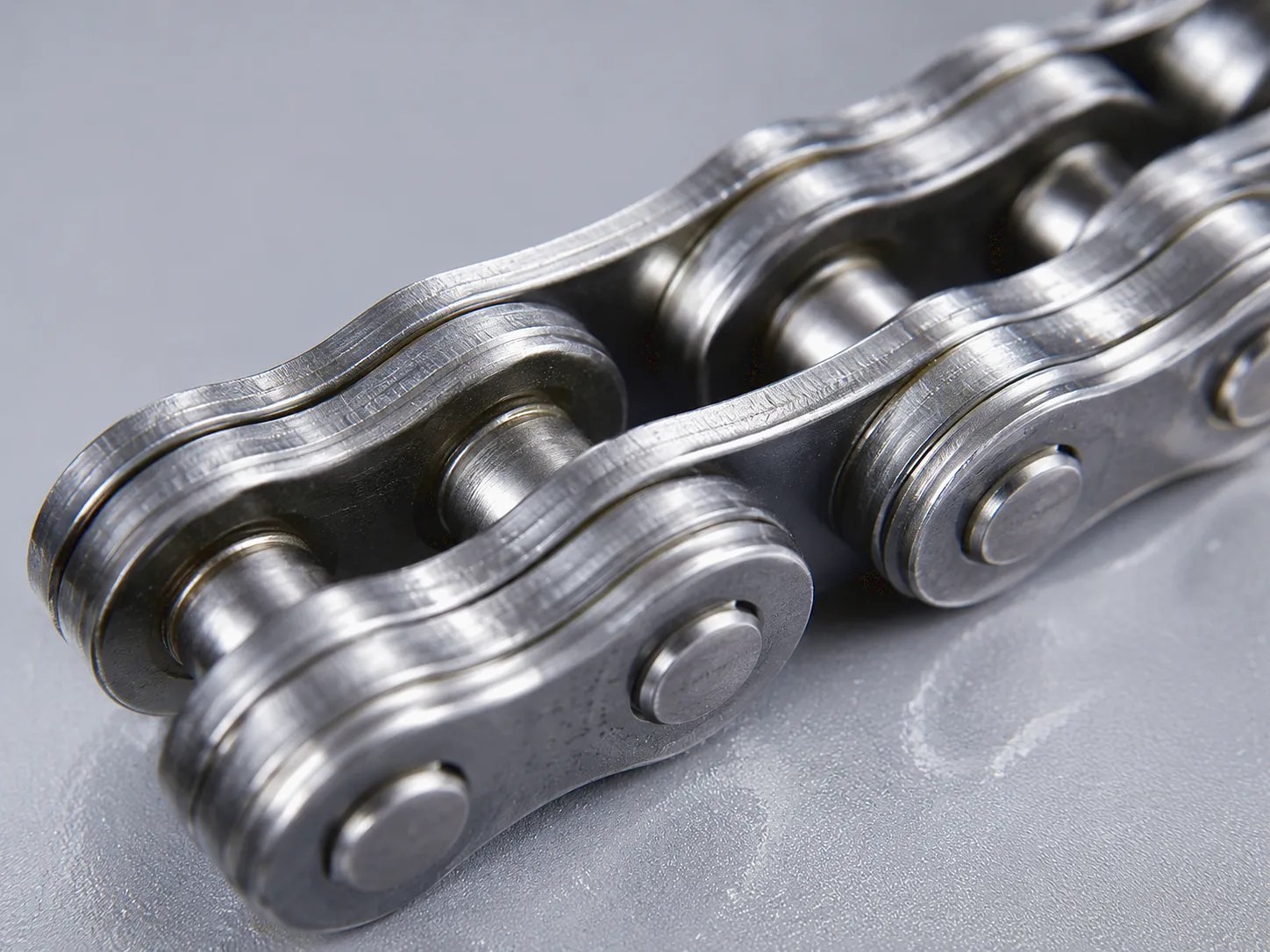
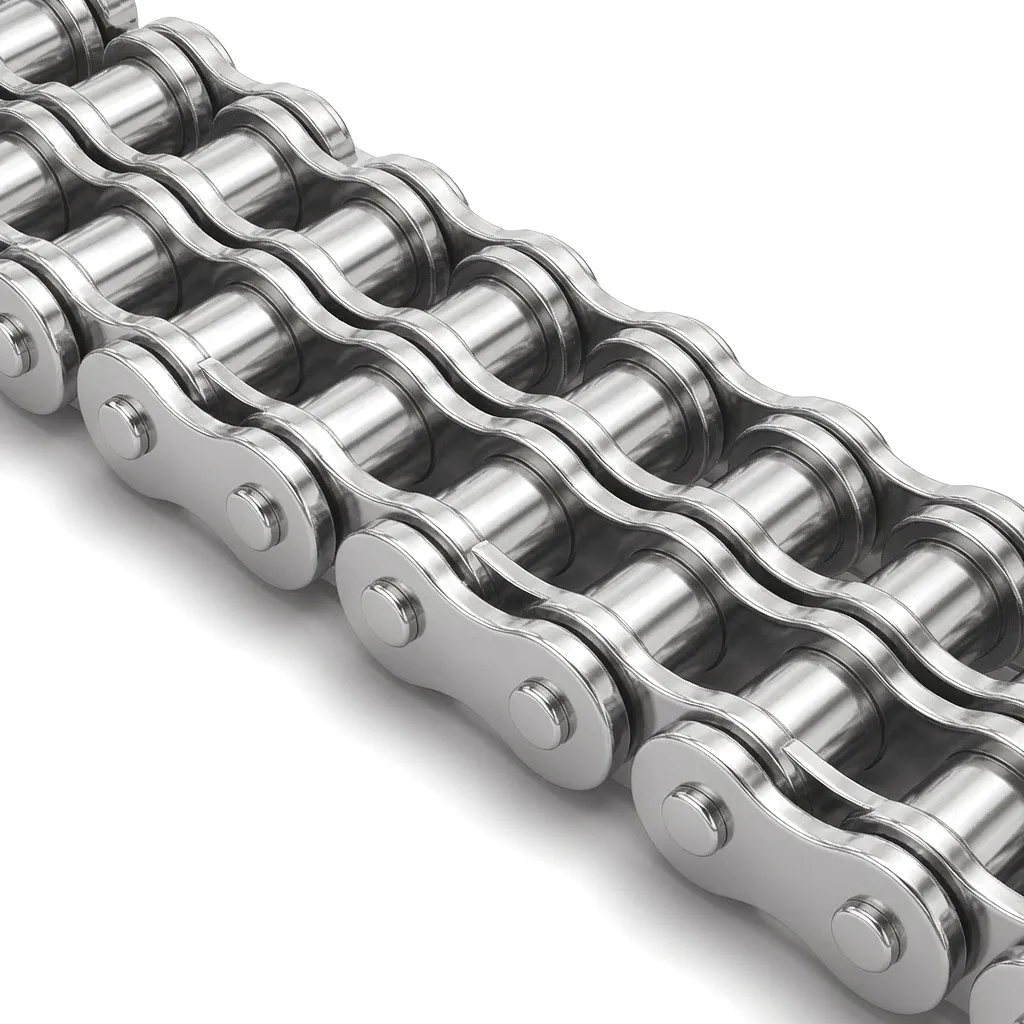
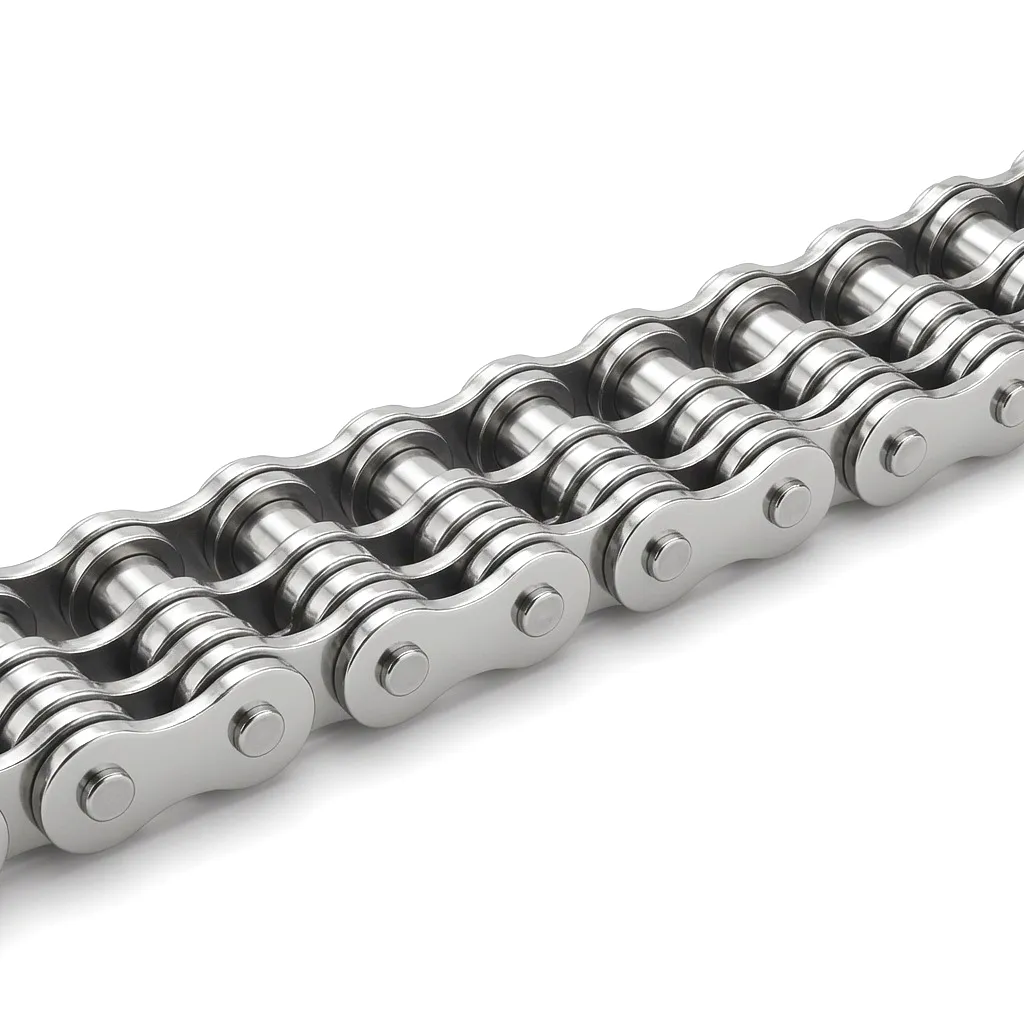
Leaf chain — also written as plate link chain or lacing chain, and governed internationally by ISO 4347 — is a pin-and-plate assembly that evolved specifically for high-tensile lifting and balancing duties rather than power transmission. Its architecture, built from stacked link plates interlocked by hardened pins with no rollers, gives it a working load capacity per cross-section that outperforms roller chain substantially and makes it the default engineering choice wherever a hoist or counter-balance system demands a high-strength, fatigue-resistant, articulating tension member.
Why Leaf Chain Is the Standard for Construction Hoists
Since first specifying leaf chain for mast-climbing work platforms in the late 1990s, engineers across the UK construction supply chain have recognised that no other tension element combines the required tensile strength, flexibility over small-diameter sheaves, and resistance to lateral bending that hoist applications demand daily.
Need leaf chain for your UK construction hoist project? Get a tailored technical quotation from our engineers.
How Leaf Chain Works Inside a Builder’s Hoist
Mechanical principle and load path analysis
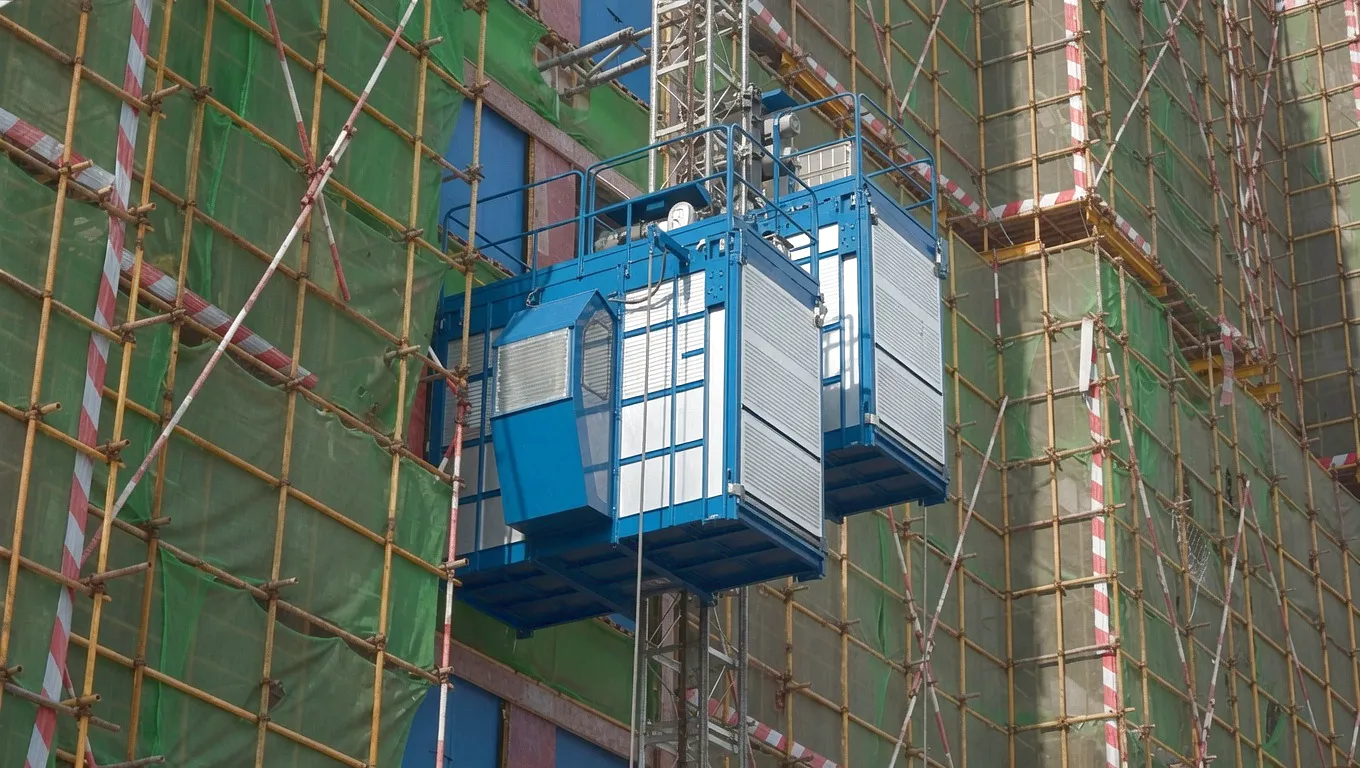
A rack-and-pinion construction hoist — the dominant type found on UK commercial and residential building sites — uses a drive unit that climbs a toothed mast. The cage itself is constrained by a set of guide rollers, and the entire load of the cage plus its payload must be suspended and controlled through a mechanical system that absorbs both static weight and dynamic shock as the unit starts, stops, and receives uneven loading from workers stepping on or materials being dropped in.
Within that system, leaf chain appears in the counterbalance arrangement and in the safety overspeed detection mechanism. In counterbalanced hoists, the chain connects the cage to a counterweight running in a parallel track channel. The chain must articulate over sheaves that are often compact in diameter — sometimes as small as 150 mm — which means the chain must bend repeatedly without developing internal stress concentrations that would otherwise cause plate fatigue and crack initiation. The plate-link design of leaf chain handles this bending far more gracefully than round-link chain, because the geometry of the stacked plates distributes bending stress across a much wider cross-section of material.
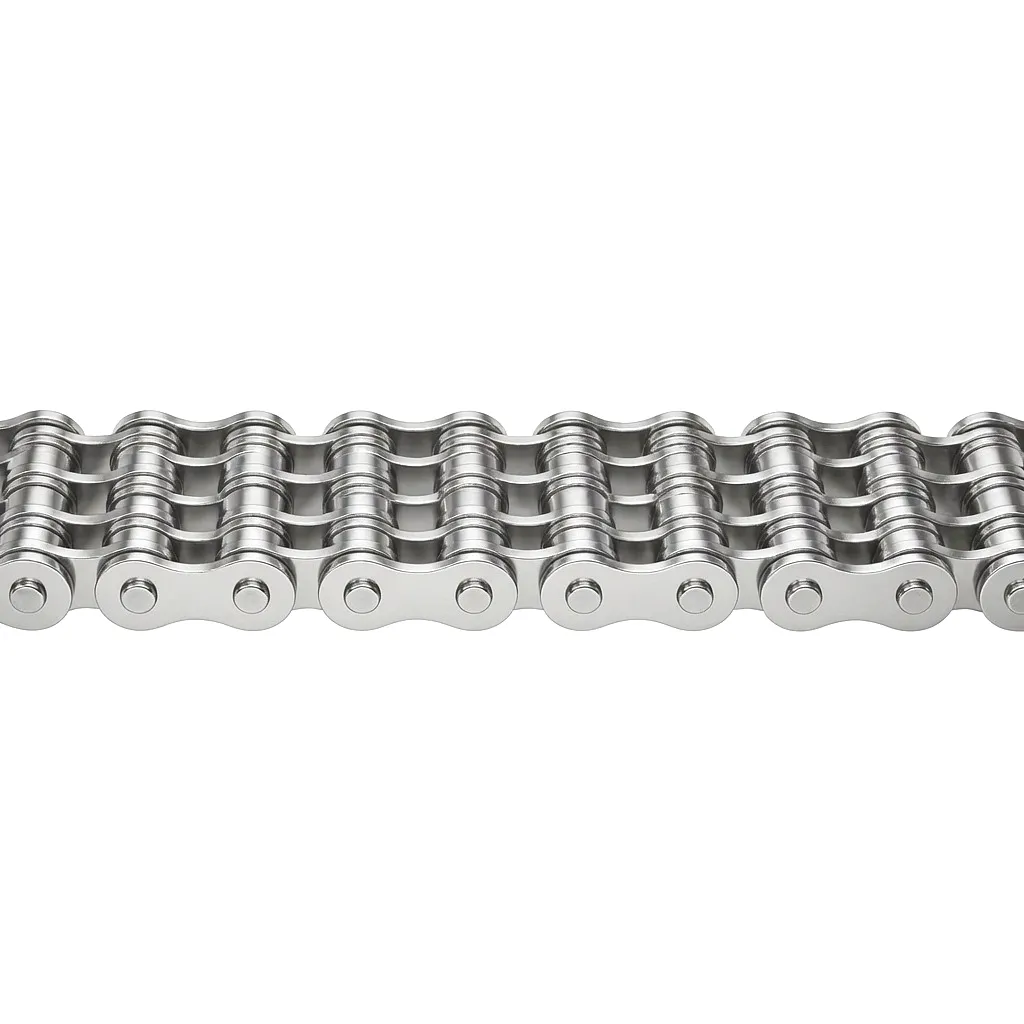
Key insight: Leaf chain’s articulation radius is optimised for sheaves as small as 150 mm — a critical dimensional constraint in compact hoist counterbalance systems commonly specified across UK construction plant.
The overspeed governor — a safety device required under the UK Lifting Operations and Lifting Equipment Regulations 1998 (LOLER) and the related Provision and Use of Work Equipment Regulations (PUWER) — frequently uses a secondary leaf chain segment to transmit the signal from the centrifugal governor to the safety wedge clamping mechanism. When the cage descends beyond the set speed limit, this chain tightens sharply, and the resulting tension must be absorbed without permanent deformation. This is a textbook shock-load application, and leaf chain’s solid pin-and-plate architecture means that an impulse load of three to five times the working load can be absorbed elastically without fracture, provided the chain is correctly sized and maintained.
Real-World Application on UK Construction Sites
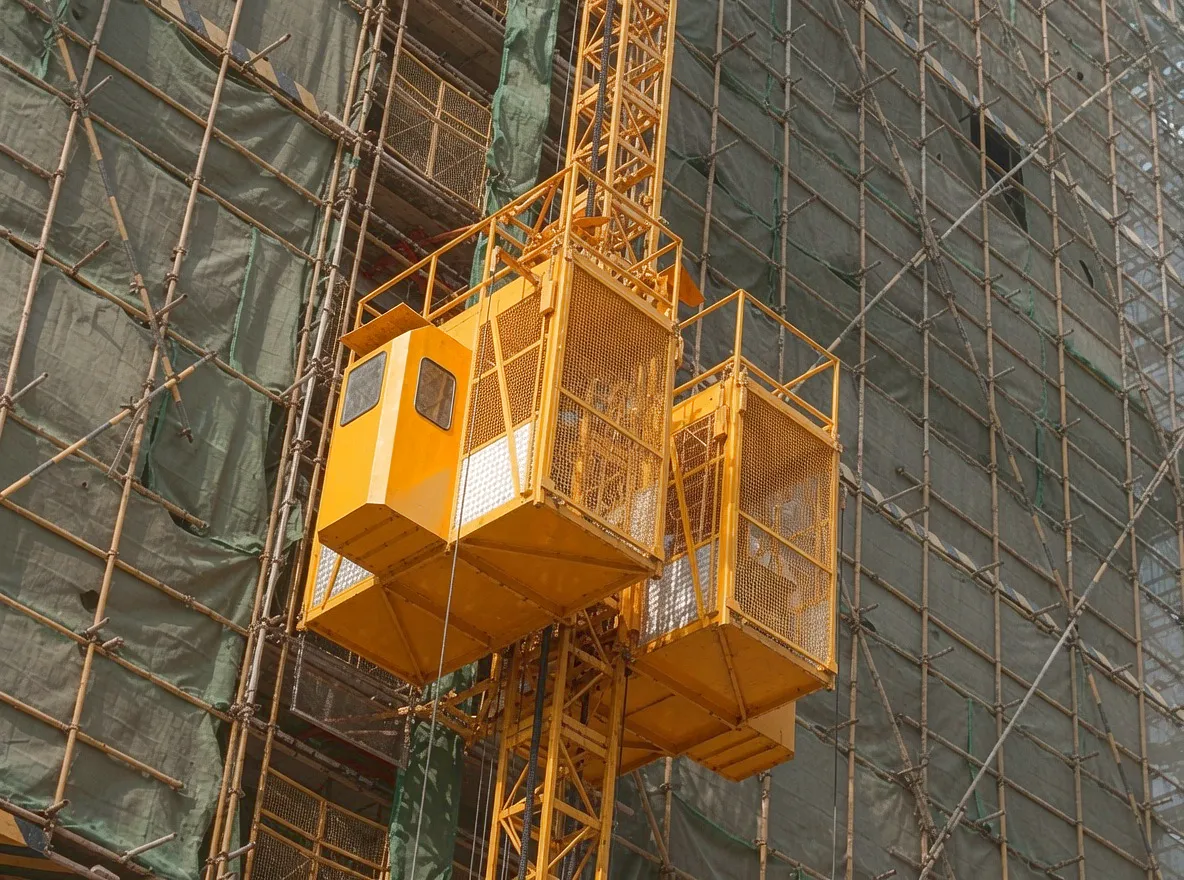

Technical Specification & Performance Parameters
ISO 4347 compliant leaf chain — construction hoist duty ratings
| Chain Type | Pitch (mm) | Breaking Load (kN) | Safe Working Load (kN) | Pin Diameter (mm) | Plaka Bağlama | Typical Application |
|---|---|---|---|---|---|---|
| BL 422 | 12.7 | 31.1 | 7.8 | 4.45 | 2×2 | Light-duty hoist governor |
| BL 534 | 15.875 | 58.0 | 14.5 | 5.08 | 3×4 | Counterbalance, mid-capacity hoist |
| BL 634 | 19.05 | 88.5 | 22.1 | 5.72 | 4×4 | Standard builder’s hoist, 1.0t–2.0t SWL |
| BL 844 | 25.4 | 160.0 | 40.0 | 7.95 | 4×4 | Heavy plant hoist, twin-cage systems |
| BL 1046 | 31.75 | 222.0 | 55.5 | 9.53 | 6×6 | High-rise infrastructure, 4.0t–6.0t SWL |
All figures per ISO 4347. Custom breaking loads available to order. Safe working load assumes a safety factor of 4:1 per BS EN 818-6 and LOLER guidance. Contact our engineering team for project-specific sizing calculations.
Materials, Heat Treatment & Surface Finish
Metallurgical fundamentals behind hoist-grade leaf chain
The link plates in a construction-grade leaf chain are stamped from medium-carbon alloy steel, typically a chromium-molybdenum grade offering a base tensile strength in the range of 900–1,100 MPa before heat treatment. After blanking and profiling, the plates are carburised and hardened to a surface hardness of approximately 56–62 HRC, creating a hard wear-resistant skin over a tough, ductile core. This case-hardening treatment is essential for two reasons: it prevents pin-bore wear under the oscillating loading seen in an operational hoist, and it suppresses fatigue crack initiation at the plate apertures — the locations where stress concentration is highest during the tension phase of the lift cycle.
Pins are manufactured from alloy steel bar stock, straightened, precision-ground to tolerances of ±0.005 mm, and through-hardened to 58–62 HRC throughout their cross-section. On construction site applications where the chain may be exposed to cement dust, aggregate particles, and moisture, a zinc-nickel alloy electroplating finish or hot-dip galvanising process can be specified. The zinc-nickel coating in particular gives a salt-spray endurance exceeding 500 hours under ISO 9227 testing, which translates meaningfully to extended service life on exposed hoist installations in coastal UK cities such as Bristol, Portsmouth, or Aberdeen.

Material Specification Summary
Plate Steel Grade
Cr-Mo Alloy
Surface Hardness
56–62 HRC
Coating Option
Zn-Ni / HDG
Operating Temp
-30 °C to +150 °C
Why Construction Engineers Across the UK Choose Our Leaf Chain
Seven performance advantages verified in UK hoist applications
Superior Tensile-to-Weight Ratio
By eliminating rollers entirely, leaf chain concentrates load-bearing material into the plates and pins. For a given pitch, the plate-link design achieves breaking loads 40–60% higher than equivalent-pitch roller chain, directly reducing the installed chain weight per kN of safe working load — an important factor when designing the counterbalance of a tall mast hoist where chain dead weight itself contributes to the balance calculation.
Exceptional Fatigue Resistance
A busy UK construction hoist completes several hundred full lift cycles per working day. Across a typical 12-month building contract, that accumulates to more than 150,000 tension-release cycles. Our leaf chain undergoes pulsating tension fatigue testing to ISO 4347 Annex B requirements, confirming fatigue life well beyond the calculated duty cycle, with plate aperture stress concentrations engineered to remain below the material’s endurance limit throughout the rated service period.
Shock Load Absorption
Impact loading is an unavoidable reality on construction sites. A pallet of bricks dropped hard onto a hoist platform, or a sudden drive motor brake engagement, generates transient tension spikes well above the nominal working load. The solid cross-section of leaf chain plates absorbs these shocks without permanent elongation up to 3–5× the SWL — a safety margin that round-link chain at equivalent weight cannot replicate. This characteristic is precisely why LOLER-governed systems demand chain rather than wire rope in the overspeed governor mechanism.
Dimensional Stability Under Sustained Load
Unlike wire rope which undergoes progressive lay-in during its early service life, leaf chain achieves virtually all its initial pitch extension within the first 0.2–0.5% elongation during a brief running-in period, after which pitch stability is essentially constant. For hoist designers, this predictability simplifies the specification of take-up adjusters and electrical limit switch setpoints — both of which are safety-critical functions that require consistent chain behaviour throughout the entire working season.
Easy Field Inspection & Replacement
The open plate structure of leaf chain gives maintenance engineers clear visual access to pin condition, plate edge wear, and corrosion pitting during routine LOLER inspection — all of which are mandatory under UK law on lifting equipment. A trained inspector can measure chain extension with a simple steel rule against a reference template and make a serviceable/retire decision in minutes, without specialist tools. This compares favourably to wire rope, where wire-by-wire inspection demands trained eyes and a magnifying loupe.
All-Weather Performance
British construction sites operate year-round in conditions ranging from summer dry heat to winter ice, coastal salt spray, and persistent autumn rain. Leaf chain specified with an appropriate surface treatment — HDG for maximum corrosion resistance, or a stainless steel plate grade for the most demanding coastal exposures — maintains its rated mechanical properties across a temperature window from -30 °C to +150 °C, covering every operational scenario found on a UK building site without derating.
Full Regulatory Compliance
Our construction hoist leaf chain is manufactured and tested to comply with ISO 4347, BS EN 818-6, and the relevant annexes of the UK Supply of Machinery (Safety) Regulations. Every batch leaves the factory with a traceable test certificate recording breaking load, elongation at break, and batch material certification. For projects where a Conformité Européenne mark or UK Conformity Assessed (UKCA) certificate of conformity is required by the principal contractor, our documentation package supports full lifting equipment file compilation.

Specific Application Scenarios for UK Construction Sites
Where leaf chain is found in and around the builder’s hoist
1. Rack-and-Pinion Personnel & Materials Hoists
This is the most common hoist type across UK commercial construction and the application where leaf chain sees the greatest demand. In a rack-and-pinion system, the drive motor engages a pinion against a toothed rack bolted to the mast. The cage travels with the drive unit, and a separate counterweight — connected via leaf chain over guide sheaves — offsets a proportion of the cage and load weight. The leaf chain assembly in this application is typically a matched pair of BL 634 or BL 844 chains running in parallel, allowing the counterweight mass to be evenly divided and the sheave diameter to be kept manageable within the mast section geometry. Chain lengths of 50–150 metres are common on high-rise UK projects, and our factory can supply pre-cut, pre-assembled lengths with swaged end anchors ready for direct installation.
2. Mast Climbing Work Platforms (MCWPs)
MCWPs — governed in the UK under BS EN 1495 and the work at height regulations — use a motorised platform that climbs a freestanding mast anchored to the building structure. The platform can span the full face of a building facade, making them the dominant choice for cladding, rendering, and glazing installation on tall structures across London, Edinburgh, and major UK city centre developments. The drive mechanism on modern MCWPs incorporates leaf chain in the load sensing and emergency lowering circuit, where predictable elongation behaviour under sustained load is critical for the dead-man safety function. Our BL series chains for this duty are available with additional plate lacing configurations — 6×6 and 8×8 lacing — to accommodate the high-span, heavyweight platforms used on the largest UK projects.
3. Suspended Access Platforms & BMUs
Building maintenance units (BMUs) and permanently installed suspended access platforms on commercial towers use leaf chain in their fall-arrest and secondary suspension backup systems. The primary suspension is typically wire rope, but the secondary safety backup — required under LOLER for personnel-carrying platforms — is most reliably delivered by leaf chain due to its consistent elongation curve and ease of inspection after a load event. Building owners and facilities managers responsible for the ongoing inspection and re-certification of these systems favour leaf chain because the chain’s condition is transparent and the replacement decision is unambiguous, reducing the risk of a missed defect that could otherwise go unnoticed until a failure occurs.
4. Tunnel & Underground Construction Cages
Deep shaft sinking and tunnel construction — active in the UK through Crossrail successor works, HS2 tunnelling contracts, and water infrastructure renewal projects — uses vertical cages or kibble systems to lower personnel and equipment into shafts extending 40–150 metres below ground. The environment combines extreme humidity, ground-seeping water, and total absence of natural ventilation — conditions that destroy standard carbon steel chain within months through crevice corrosion between plate faces. Our stainless steel leaf chain option, manufactured from AISI 316 plates and pins, provides a corrosion-resistant alternative that passes the same ISO 4347 breaking load tests as the carbon steel equivalent while offering dramatically extended service life in below-ground applications. UK tunnelling contractors including those working on major infrastructure rehabilitation projects have specified this variant with positive inspection outcomes over multi-year contract periods.
Client Success: Real Projects, Measurable Results
Construction hoist deployments across the UK and Europe
Featured Case Study · UK
Canary Wharf Mixed-Use Development — London, UK
Hoist contractor SkyLift Plant & Logistics Ltd was engaged to supply, erect, and operate a fleet of four twin-cage personnel and materials hoists on a 42-storey mixed residential and commercial tower in East London. The specification required hoists capable of carrying a 3,200 kg payload per cage, operating up to 200 metres of travel height, in a tidal Thames environment where salt-laden air and humidity presented significant corrosion challenges to all exposed mechanical components.
Following consultation with their hoist OEM technical support team, SkyLift specified BL 1046 hot-dip galvanised leaf chain for the counterbalance runs on all four hoists — a total of 2,400 linear metres of leaf chain. The chain was supplied pre-measured and cut to length by our factory, with swaged clevis-pin end connectors already fitted and proof-tested at 150% of SWL before dispatch. This eliminated the need for field fabrication of end terminations, reducing installation time per hoist by approximately four hours.
42 storeys
Building Height
4 hoists
Units Deployed
2,400m
Leaf Chain Supplied
0 failures
Over 18 months
Over the 18-month construction programme, all four hoists completed their full operational cycles without a single chain-related downtime event. Routine LOLER six-monthly inspections recorded less than 0.3% pitch elongation across all chains — well within the 2% retirement threshold — and no corrosion pitting exceeding 0.1 mm depth was recorded despite persistent coastal exposure. The hoist contractor documented a 22% reduction in scheduled maintenance costs compared with their previous project, where a competitor’s chain product had required mid-contract replacement at significant unplanned cost and programme delay.
What Our Clients Say
“We have been sourcing leaf chain from this supplier for four consecutive high-rise projects in Manchester city centre. The pre-cut, pre-terminated lengths save us a full day of rigging preparation per hoist, and the chain has never let us down during LOLER inspection. If you are tendering for UK construction hoist work, this is the chain specification you want on your drawings.”
James Hartley
Plant Manager, Northern Hoist Services Ltd — Manchester, England
“Our MCWP fleet operates on facade restoration contracts across Scotland, including coastal projects in Aberdeen and Dundee where salt exposure is severe. Switching to the stainless plate option from this manufacturer cut our chain-related maintenance calls by more than half in the first year. The inspection documentation package they provide is excellent for our LOLER file management as well.”
Fiona MacDonald
Operations Director, Caledonian Access Solutions — Edinburgh, Scotland
“We were designing a custom tunnel cage for a deep shaft sinking contract on a water treatment infrastructure project near Birmingham. The standard BL sizes were not quite matching our geometry requirements, so we asked for a custom plate configuration. The engineering team came back within 48 hours with a full proposal including load calculations and manufacturing lead time. The chain performed perfectly over a 14-month shaft-sinking programme.”
Dr. Priya Anand
Head of Mechanical Engineering, Midlands Infrastructure Drilling Ltd — Birmingham, England
Ever Power Manufacturing: Your Custom Leaf Chain Partner
Eighteen years of precision chain engineering for global construction OEMs
Not every hoist project can be solved with a standard catalogue chain. Chain OEMs designing new platforms, construction companies retrofitting legacy equipment, and rental fleet operators maintaining aging hoists regularly encounter situations where a custom-configured leaf chain assembly offers a significantly better technical and economic outcome than adapting standard designs to an imperfect fit.
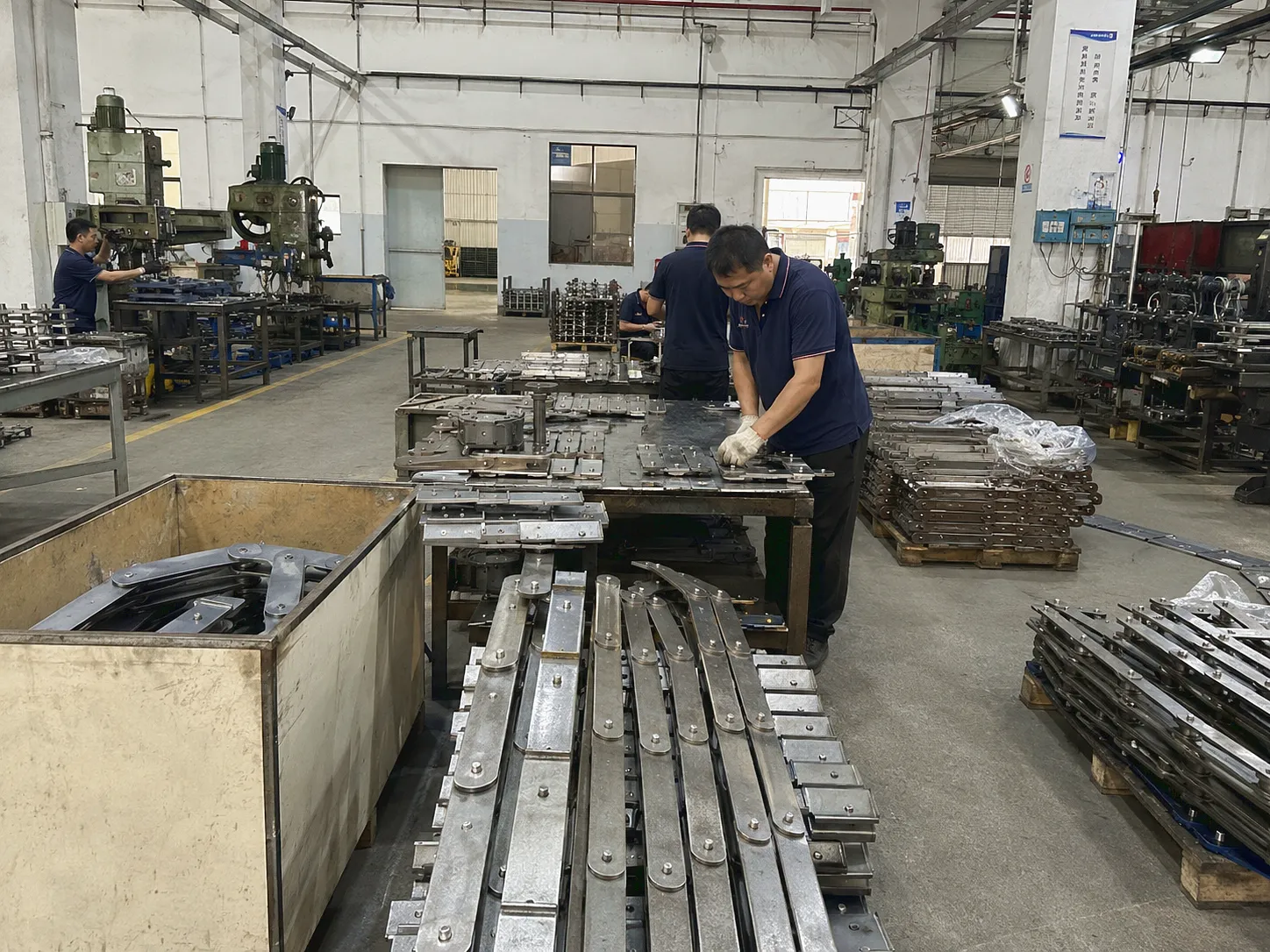
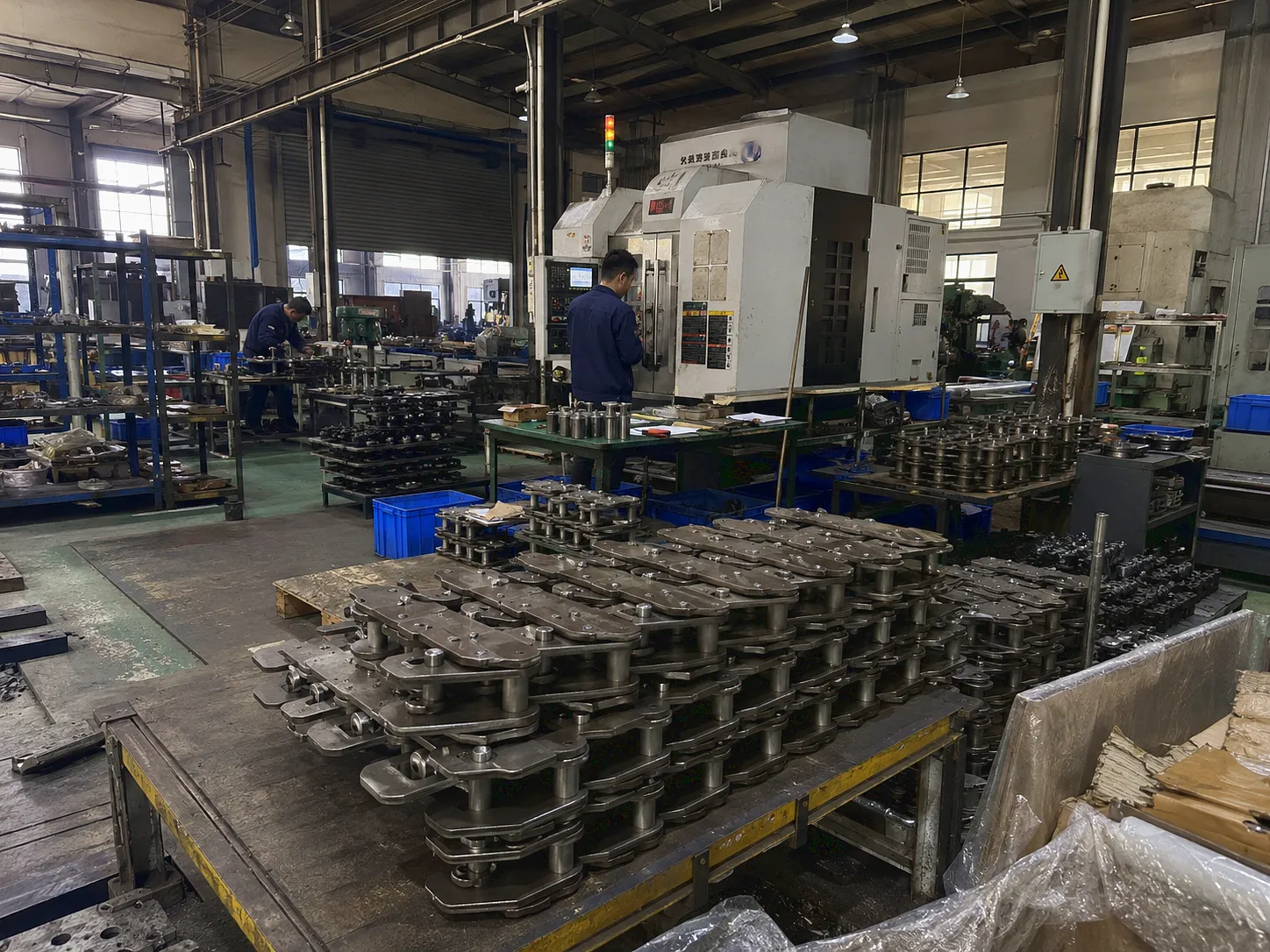
Our facility operates precision blanking presses, multi-station progressive tooling, automated pin grinding, and continuous belt carburising furnaces that allow us to produce non-standard plate profiles, custom pitches outside the ISO 4347 series, mixed-lacing configurations, extended-reach pins for wide counterbalance sheave frames, and asymmetric plate shapes required by specialist hoist designs. Our metallurgical laboratory verifies hardness and case depth on every production batch, and our dedicated test machine generates breaking load certificates traceable to UKAS-accredited reference equipment.
For construction clients sourcing leaf chain for UK projects, we offer pre-cut lengths with factory-fitted end terminations, proof-tested and certified as a complete assembly, eliminating site fabrication risk. Our minimum order for standard items is one metre; for custom configurations, we work with clients from prototype stage (typically 2–5 metre sample quantities) through to full production volumes. Lead times for standard stock items run at 3–7 working days ex-works with UK-direct shipping options available. Custom engineered specifications typically carry a 3–6 week lead time depending on tooling requirements.
Custom Configuration Options
Custom lacing (2×2 to 12×12)
Stainless steel plates
HDG / Zn-Ni coatings
Pre-cut & terminated lengths
Test certificates included
OEM private labelling
UKCA documentation
Request Custom Leaf Chain for Your UK Hoist Project
Send us your chain type, required length, pitch specification, and duty conditions. Our engineering team will respond within one working day with a technical proposal and indicative price.
UK Regulatory Framework for Construction Hoist Chain
What procurement managers, site engineers and hoist hire companies need to know

The use of lifting equipment on UK construction sites is regulated under a framework of statutory instruments that places specific obligations on equipment owners, users, and the companies that hire and sell lifting gear. Understanding where leaf chain sits within that framework is important for both procurement and compliance purposes, particularly when submitting a construction phase health and safety plan or responding to a principal contractor’s lifting study requirements.
LOLER 1998 — the Lifting Operations and Lifting Equipment Regulations — defines lifting equipment as any work equipment used for lifting or lowering loads, including the attachments used for anchoring, fixing or supporting it. Leaf chain within a hoist falls unambiguously under this definition. LOLER requires that lifting equipment is thoroughly examined by a competent person at intervals not exceeding six months for equipment used to carry persons, and 12 months for equipment used solely for lifting loads. The results must be recorded in a written report retained for the life of the equipment.
For yaprak zinciri specifically, the primary inspection criteria are: pitch elongation (retire at 2% or the OEM-specified limit, whichever is less); plate edge wear (retire if any plate is visibly worn through to the hardened case layer); pin protrusion (retire if any pin is migrating outside the plate outer face); corrosion pitting; and cracking of any kind, which is cause for immediate withdrawal. Our chain products are supplied with a dimensional reference card that gives the inspector the nominal pitch measurement and the retirement-length measurement for their specific chain size, simplifying the inspection record process and reducing the risk of measurement error during a busy site inspection round.
Beyond LOLER, the Provision and Use of Work Equipment Regulations (PUWER) 1998 apply to all work equipment on UK sites, including hoists, and require that equipment is suitable for its intended use, maintained in good repair, and inspected at appropriate intervals. Our technical data sheets for each chain size provide the inspection criteria in PUWER-compatible language, making it straightforward for a competent person to complete the required documentation without having to interpret raw ISO standard text into a workable maintenance checklist.
| Regulation | Requirement | How Our Chain Supports Compliance |
|---|---|---|
| LOLER 1998 | 6-month examination for personnel-carrying hoist | Inspection data sheet, retirement criteria card, traceable batch certificate supplied with every order |
| PUWER 1998 | Equipment suitable for purpose, maintained in good repair | Duty-rated BL series with breaking load certificate and application-specific selection guidance |
| ISO 4347 | International leaf chain dimensional and performance standard | Full conformity; test data available on request for lifting equipment technical file |
| BS EN 818-6 | Chain for general lifting purposes — safety requirements | Safety factor not less than 4:1 applied in all SWL ratings across the product range |
| UKCA / CE Marking | Required for machinery components placed on UK/EU market | Declaration of Conformity and UKCA documentation pack available; suitable for inclusion in lifting equipment technical file under SMSR |
Sıkça Sorulan Sorular
Construction hoist leaf chain — technical and commercial questions answered
What is the correct leaf chain size to use on a 2-tonne SWL rack-and-pinion construction hoist operating at 100 metres height in the UK?
▾
For a 2-tonne SWL counterbalance chain on a standard rack-and-pinion builder’s hoist operating to 100 m in the UK, BL 634 at 4×4 lacing is the most commonly specified size, with a safe working load of approximately 22.1 kN and a breaking load of 88.5 kN giving a safety factor exceeding 4:1 against the design load. However, the exact selection must account for the dynamic load factor applicable to the hoist’s acceleration profile, the sheave diameter in the counterbalance head, and the dead weight of the chain run itself over 100 metres. We recommend contacting our engineering team with these parameters so a duty-specific selection can be confirmed before procurement.
How much does leaf chain for a UK construction elevator cost, and how quickly can I get a price quote from your company?
▾
Leaf chain price depends on the chain type, pitch, lacing configuration, surface treatment, and total length required. Standard BL series chain in carbon steel without special coatings represents the most cost-effective option and is usually the right specification for inland UK construction sites with covered or semi-protected chain runs. For coastal projects in cities like Bristol, Aberdeen, or Southampton, the marginal additional cost of HDG or stainless specification is typically recovered within the first inspection cycle through avoided replacement. To get a quote tailored to your specific project, send your requirements to [email protected] — our standard response time for quotations is one working day, and for complex custom projects no longer than three working days.
Which leaf chain supplier in the UK can provide pre-cut, pre-terminated lengths with LOLER-compatible test certificates for construction hoist applications?
▾
Ever Power supplies pre-cut leaf chain assemblies with swaged or bolted end terminations, proof-tested as complete assemblies at 150% of the specified safe working load, with test certificates that include batch material certification, breaking load data, and dimensional conformance to ISO 4347. These documents are specifically formatted to be included in a lifting equipment technical file and are compatible with the written report requirements under LOLER 1998. Deliveries to UK addresses are managed through our logistics partner, with typical transit times of 2–4 working days from our factory to most UK construction sites.
How often does leaf chain on a construction hoist need to be replaced, and what are the LOLER inspection intervals I should be aware of?
▾
LOLER requires thorough examination by a competent person at six-month intervals for hoists carrying persons and 12-month intervals for load-only hoists. Leaf chain should be retired when pitch elongation reaches 2% of the nominal length over any 12-link measurement, or immediately if cracking, heavy pitting, or pin displacement is identified. In practice, well-lubricated leaf chain on a standard-duty UK commercial site hoist completing 200–300 cycles per day will often serve 24–36 months before reaching the elongation retirement criterion — but this varies significantly with lubrication frequency, contamination exposure, and shock load history. Our technical team can provide duty cycle calculations for your specific application on request.
Where can I find a reliable leaf chain supplier for construction elevator maintenance contracts across multiple sites in London, Manchester, and Birmingham?
▾
For multi-site hoist maintenance contractors operating across London, Manchester, Birmingham, and other major UK cities, Ever Power offers framework supply agreements that fix pricing across agreed chain sizes for a contract period, guarantee minimum stock availability, and provide consistent documentation packages to support LOLER file management across the fleet. We can also consolidate dispatch to a central depot or arrange direct-to-site delivery to individual construction addresses. Contact [email protected] to discuss a framework arrangement tailored to your fleet size and geographic spread.
What is the difference between leaf chain and wire rope for a builder’s hoist counterbalance in the UK, and which one should I specify?
▾
Leaf chain and wire rope both have valid uses in construction lifting, but they are suited to different design roles. Leaf chain offers higher tensile strength per unit cross-section, better resistance to the lateral forces that occur when a hoist cage lands slightly off-centre, simpler and more reliable visual inspection, and a far more predictable elongation curve — which matters for setting limit switches accurately. Wire rope is better suited for very long travel distances where its lighter weight per metre becomes a decisive advantage, and for applications where the termination geometry demands a continuously flexible connection rather than an articulated one. For UK counterbalanced hoists up to 200 m travel with SWL up to 6 tonnes, leaf chain is the dominant and recommended specification. For longer travel or heavier duty, a combined system or wire rope reeving arrangement may be more appropriate, and our engineering team can help with this selection.
Can leaf chain be customised for a non-standard UK mast climbing platform where standard BL sizes do not fit the existing sheave geometry?
▾
Yes, custom configurations are one of our core competencies. If the sheave diameter, groove profile, or structural clearance in your platform does not accommodate a standard ISO 4347 BL chain, our engineering team can design a bespoke plate width, pin length, and lacing configuration that satisfies your geometry while maintaining the required breaking load and fatigue life. We ask for the sheave diameter, the available articulation width, the maximum chain thickness permitted within the housing, and the required SWL or breaking load — from this information we will propose a configuration with full load calculations within 48 hours. Prototype quantities can be manufactured within 3–6 weeks depending on tooling requirements.