
✍️ By: Ever Power Technical Team
🏷️ Construction · Leaf Chain · Builder’s Hoist · UK
📖 ~3000 words · 12 min read
Walk past any major construction site in Birmingham, Manchester, London, or Edinburgh, and you will almost certainly spot a builder’s hoist — that workhorse vertical conveyor that hauls materials, tools, and sometimes workers up and down the scaffold or mast structure hour after hour. What you probably won’t notice, yet what determines whether that machine runs safely and reliably throughout its service life, is the leaf chain tensioned inside its lifting mechanism. This single component, often overlooked in procurement, is in reality the backbone of every construction elevator system worthy of the name.
Leaf chain — sometimes written as leaf-chain or plate chain — belongs to the flat-link bearing chain family and has been engineered specifically for applications where tensile strength, fatigue endurance, and dimensional precision must coexist under relentless cyclic loading. Unlike roller chain, leaf chain carries no rollers; its load-bearing plates and precision pins are oriented purely to absorb tension, which is exactly what a construction elevator demands as it cycles thousands of times per project. In the UK market, where the Construction (Design and Management) Regulations 2015 and BS EN 818/ISO 4347 standards govern lifting equipment, specifying the right leaf chain grade, pitch, and lacing is not just an engineering preference — it is a legal and safety obligation.
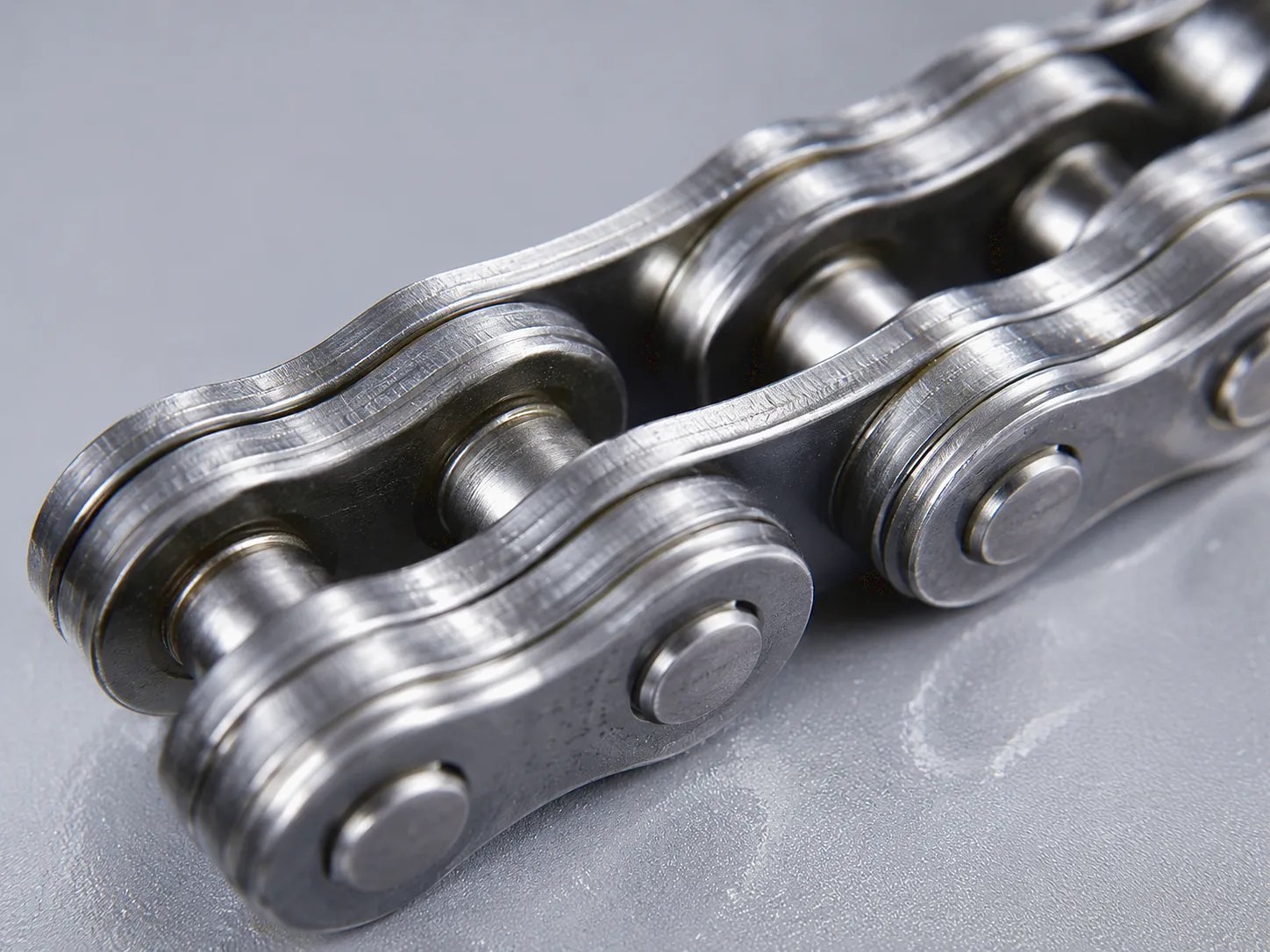
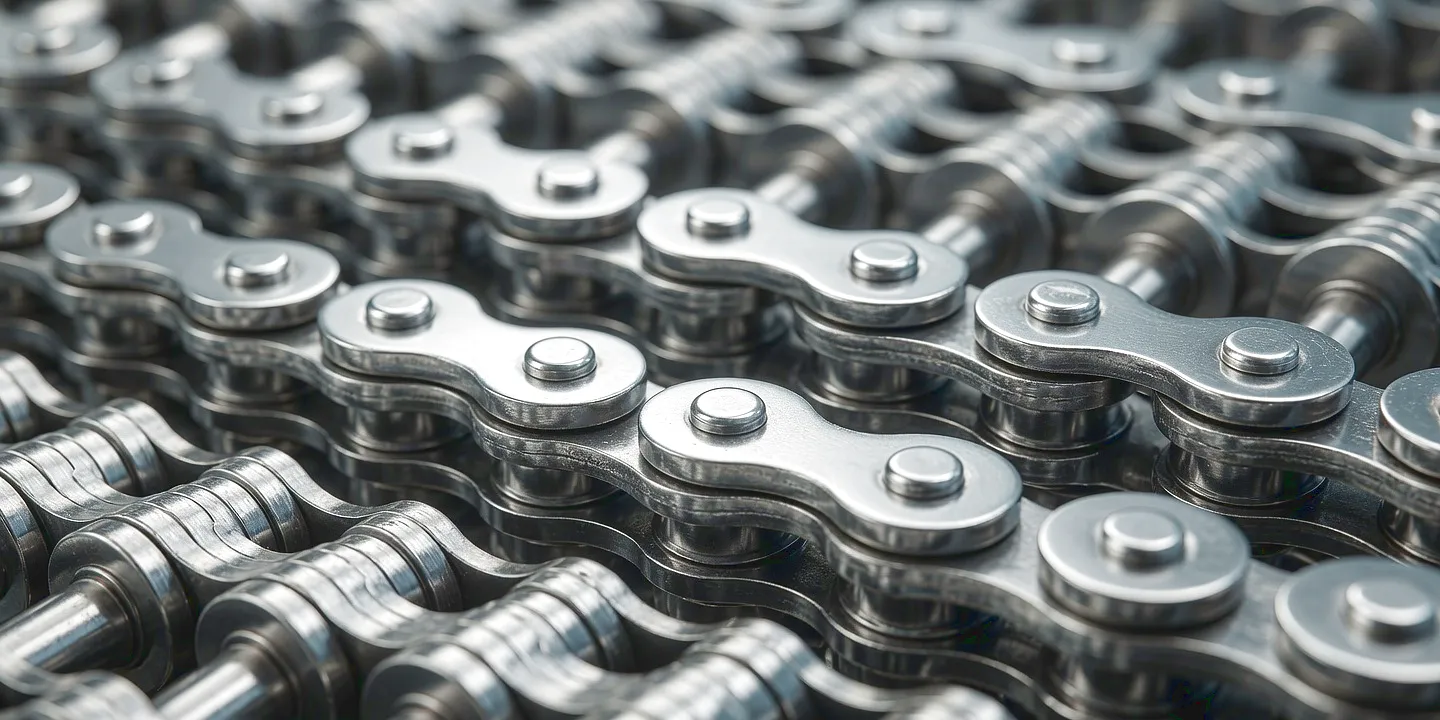
Ever Power leaf chain — engineered for construction elevator applications
What Is Leaf Chain and Why Does It Matter in Construction Hoists?
Flat-Link Architecture
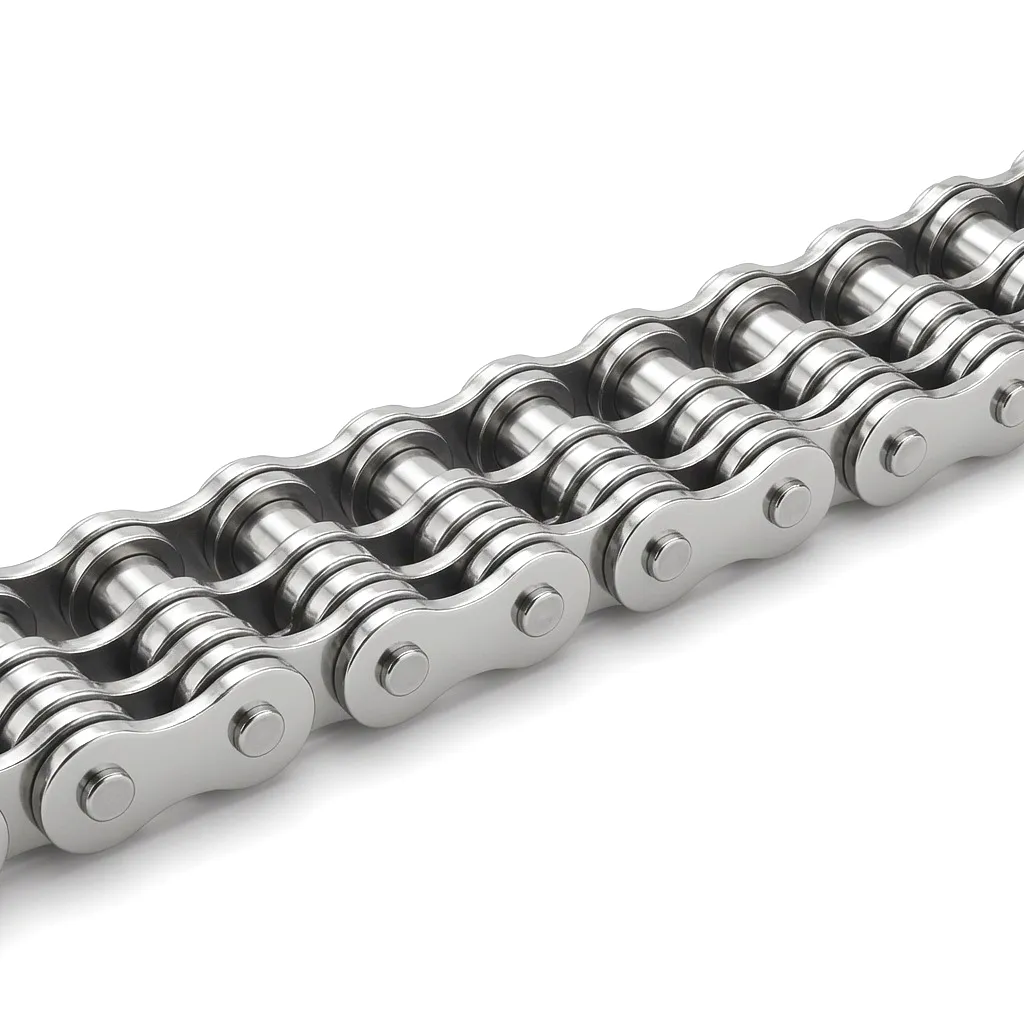
Leaf chain is constructed from multiple rows of precision-punched steel plates — known as link plates or leaves — assembled alternately and secured by hardened pins. With no rollers involved, the entire cross-section is devoted to tensile load transfer, making leaf chain anywhere from 20 to 40 percent stronger in pure tension than an equivalent-pitch roller chain. This architectural difference is precisely why industrial designers consistently choose leaf chain over roller chain when the primary duty is lifting rather than power transmission.
Lacing Patterns and Pitch
Leaf chains are described by their lacing (the number of link plates side by side at each link) and by their pitch (the centre-to-centre distance of pin holes). Common designations such as LH1234, BL series, or AL series encode both dimensions. For builder’s hoists operating in the UK market, pitches of 25.40 mm to 50.80 mm with lacing from 2×2 to 6×6 are typical depending on the Safe Working Load of the cage. Selecting the correct combination directly affects both the minimum breaking force and the fatigue life — a miscalculation in either direction costs money and, in a worst case, lives.
Material Composition
High-grade leaf chain plates are pressed from carbon steel or low-alloy steel — typically equivalent to Grade 8.8 or 10.9 fastener strength classes — then heat-treated to achieve a carefully balanced hardness profile: hard enough to resist wear at the pin holes, yet tough enough to resist crack propagation at fatigue stress concentrations. Pins are ground to tight tolerances and may be case-hardened separately. The result is a chain that can endure millions of load cycles in the demanding outdoor environment of a construction site, where rain, dust, concrete slurry, and temperature swings are all part of daily life.

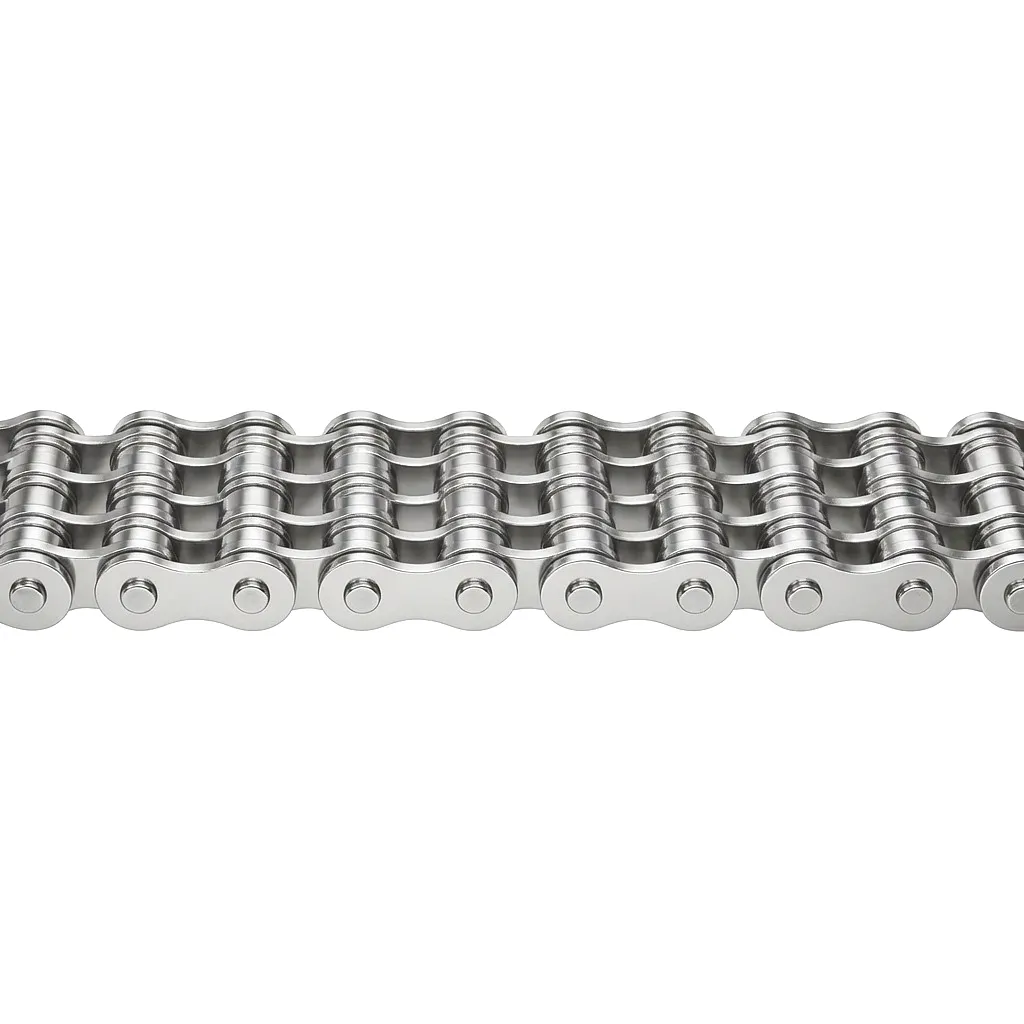
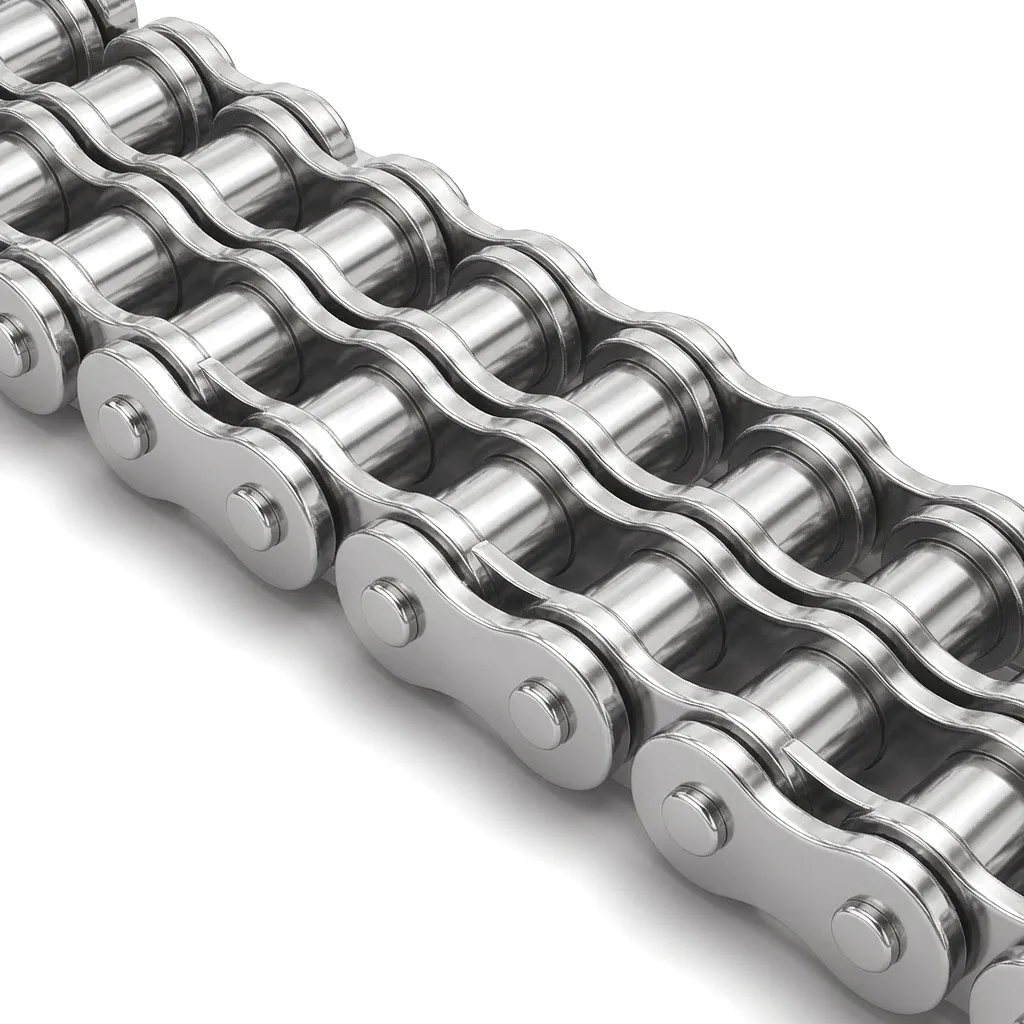
Technical Performance Parameters — Leaf Chain for Construction Elevator
The following table presents representative technical specifications for Ever Power leaf chains commonly specified in UK construction elevator and builder’s hoist applications. Custom configurations and extended series are available on request — contact our engineering team for project-specific sizing.
* Safety factor 4:1 applied to SWL per BS EN 818-4 / ISO 4347. Custom pitch, lacing, and surface treatment available — request technical datasheet.
How Leaf Chain Functions Inside a Builder’s Hoist
A construction elevator — whether it is a single-cage SC200 type or a twin-cage SC100/100 configuration common on London high-rise developments — relies on a rack-and-pinion drive mechanism to move the cage up and down the mast sections. The leaf chain’s role within this system is not to replace the rack and pinion, but rather to serve as the static or dynamic tie element that maintains the structural continuity of the cage’s counterweight system, the overrun buffer, or in some designs the primary suspension element of the cage frame itself.
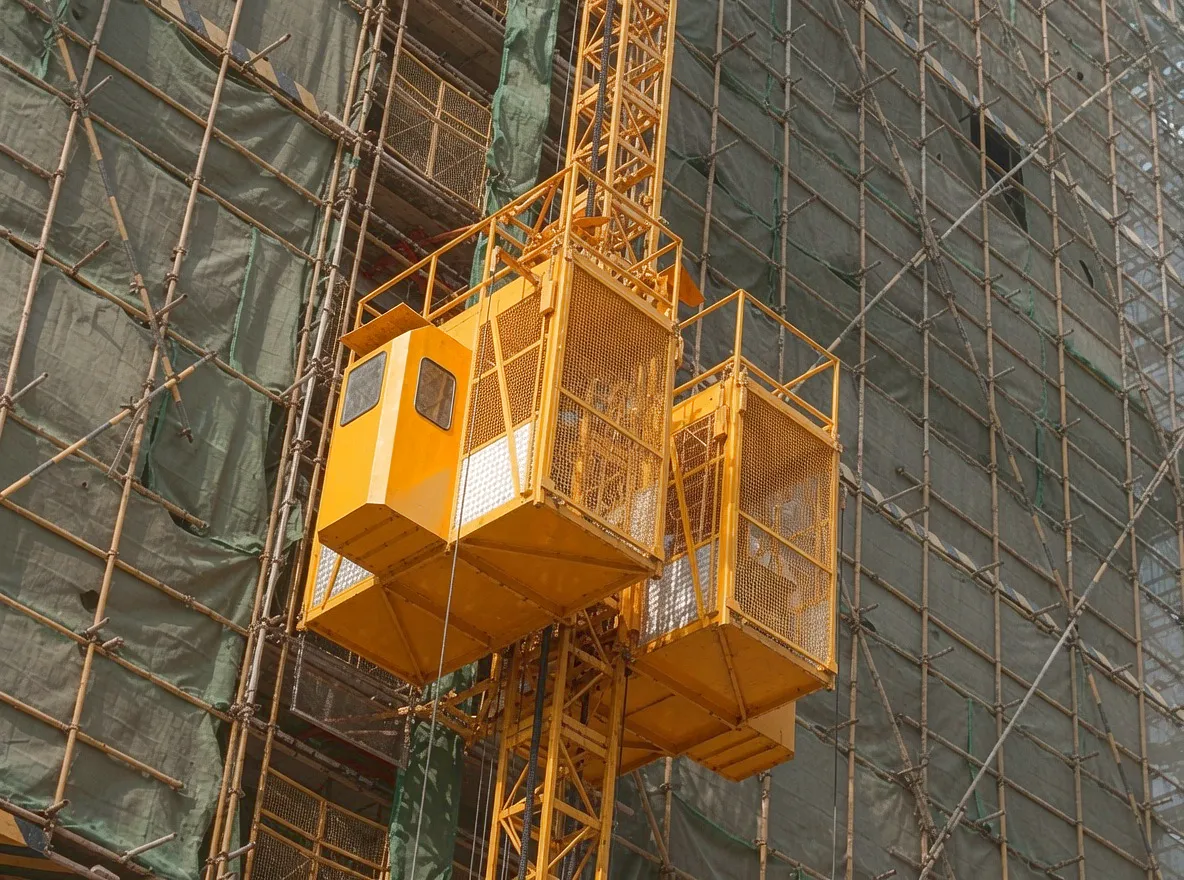 In practice, leaf chain on a builder’s hoist is under constant tension, released and re-tensioned with each cage cycle. A typical inner-city tower project in Leeds or Glasgow might cycle its hoist 80 to 120 times per ten-hour working day. Over a twelve-month project, that translates to between 21,000 and 32,000 full load cycles — each one imposing a peak tensile stress at the pin-hole root radius of the inner link plate. This is why fatigue strength, not just static breaking force, is the engineering property that separates a premium leaf chain from a commodity product. Ever Power leaf chains are manufactured with controlled shot-peening on the plate surfaces, a process that induces beneficial compressive residual stresses and can increase fatigue life by 30 to 50 percent compared to chains produced without surface treatment.
The environmental conditions on a UK building site compound the fatigue challenge. Rain, wind-blown mortar dust, and the occasional chemical splash from concrete plasticisers all attack the chain’s surface and lubrication film. Ever Power leaf chains can be specified with corrosion-resistant surface coatings, or in fully stainless-steel variants for particularly aggressive site environments such as coastal regeneration projects in cities like Bristol, Liverpool, or Aberdeen.
Six Real-World Application Scenarios for Leaf Chain in Construction Hoists
Leaf chain does not perform just one job on a construction site. The following scenarios reflect the breadth of applications that our engineering team has supported across the UK, demonstrating where the right chain specification makes a measurable operational difference.
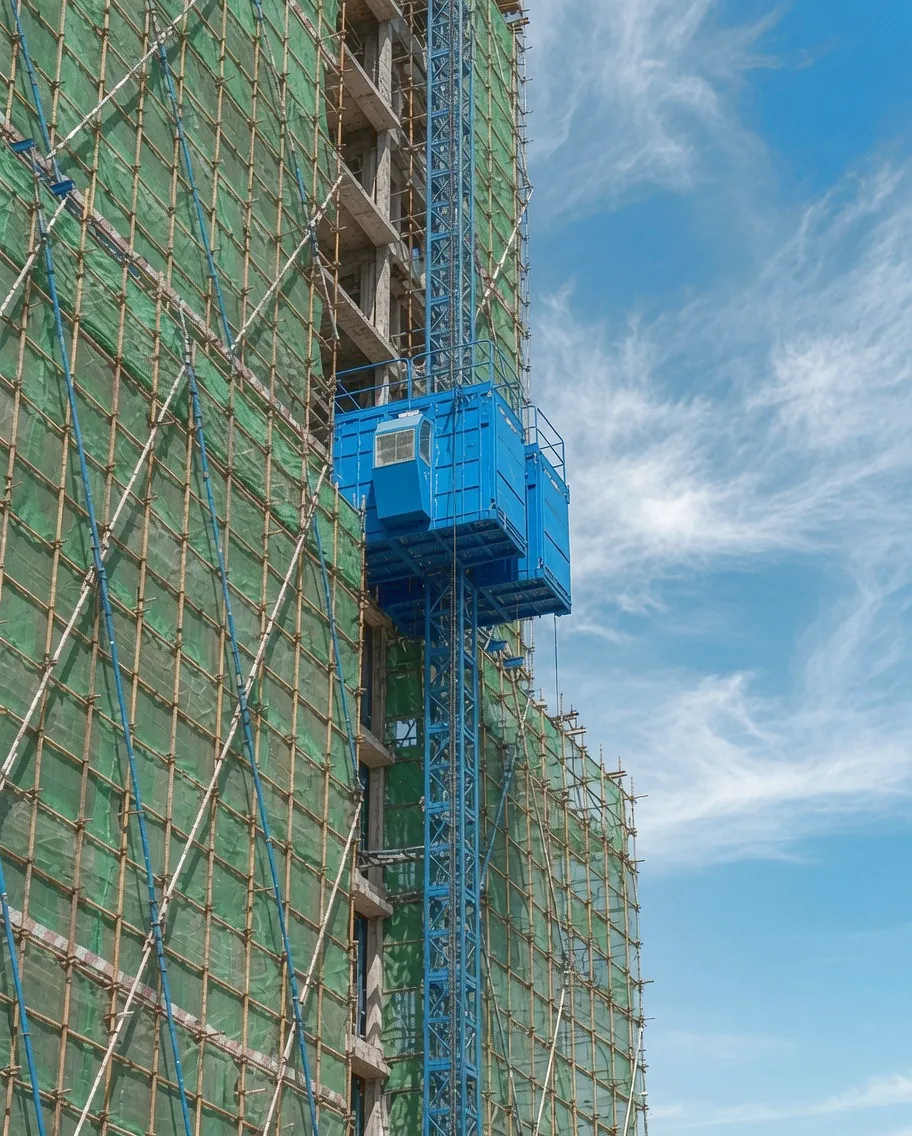
1. Single-Cage Material Hoist (Residential Refurbishment)
On medium-scale residential refurbishments — brick re-pointing, roof replacement, or window replacement on Victorian terraced housing common across northern English cities — single-cage SC100 or SC150 class hoists are the workhorses. These machines typically carry loads of 500 kg to 1,200 kg and operate at speeds of 0.65 m/s to 1.0 m/s. Leaf chain in the LH series 25.4 mm to 38.1 mm pitch range with 2×2 or 3×3 lacing handles these duties comfortably, provided the chain is inspected and lubricated on a weekly maintenance schedule as required by LOLER 1998 (Lifting Operations and Lifting Equipment Regulations).

2. Twin-Cage Personnel & Cargo Hoist (High-Rise Tower)
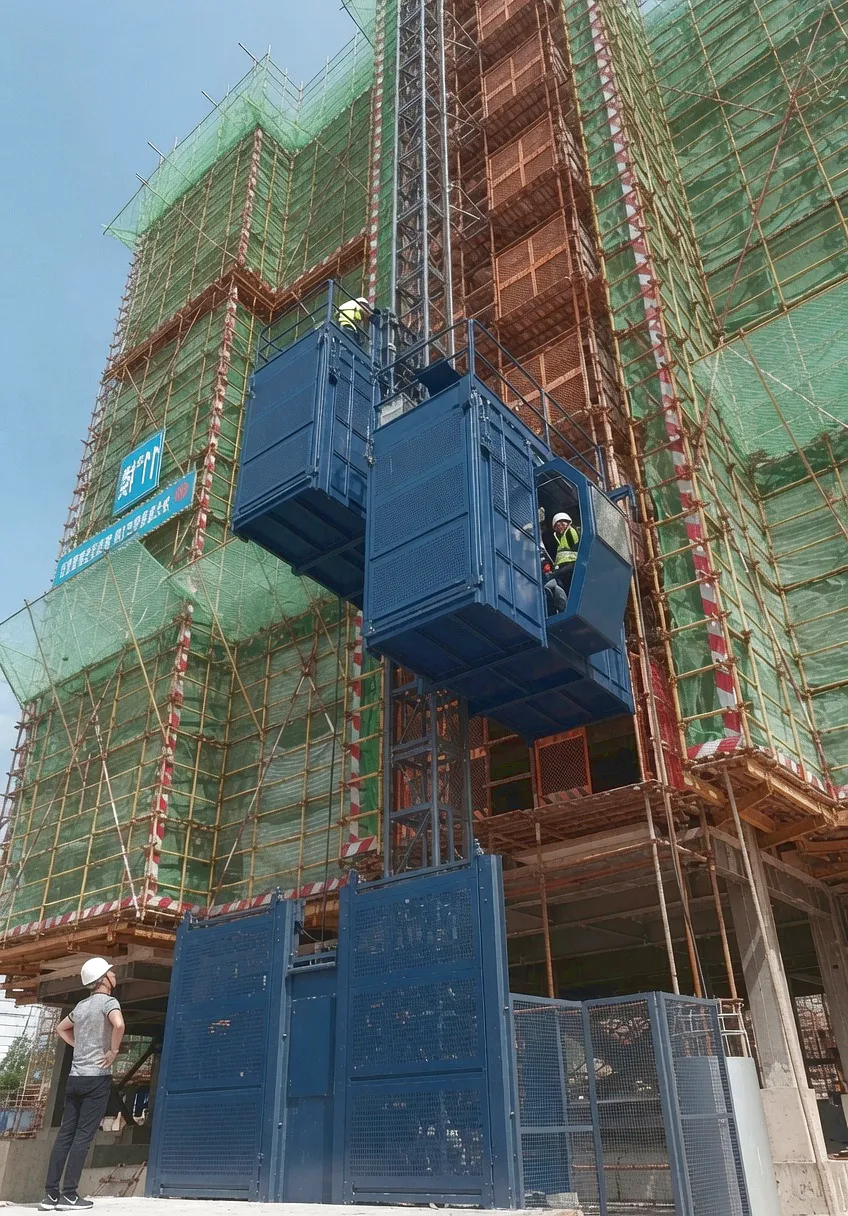
High-rise residential and commercial towers rising above 60 metres — as found in London’s regeneration zones, Manchester Deansgate, or Leeds South Bank — demand twin-cage SC100/100 or SC200 hoists capable of carrying mixed personnel and cargo loads simultaneously. Here, leaf chain specifications escalate significantly. A twin-cage hoist carrying 2,000 kg per cage at 1.0 m/s to 1.5 m/s will typically require AL or LH 38.1 mm to 50.8 mm pitch chains with 4×4 or 6×6 lacing, delivering minimum breaking forces above 300 kN. Any chain underspecification on a hoist serving workers daily at height would constitute a criminal breach of the Work at Height Regulations 2005 — the stakes could not be higher.
3. Counterweight Suspension in Elevated Work Platforms
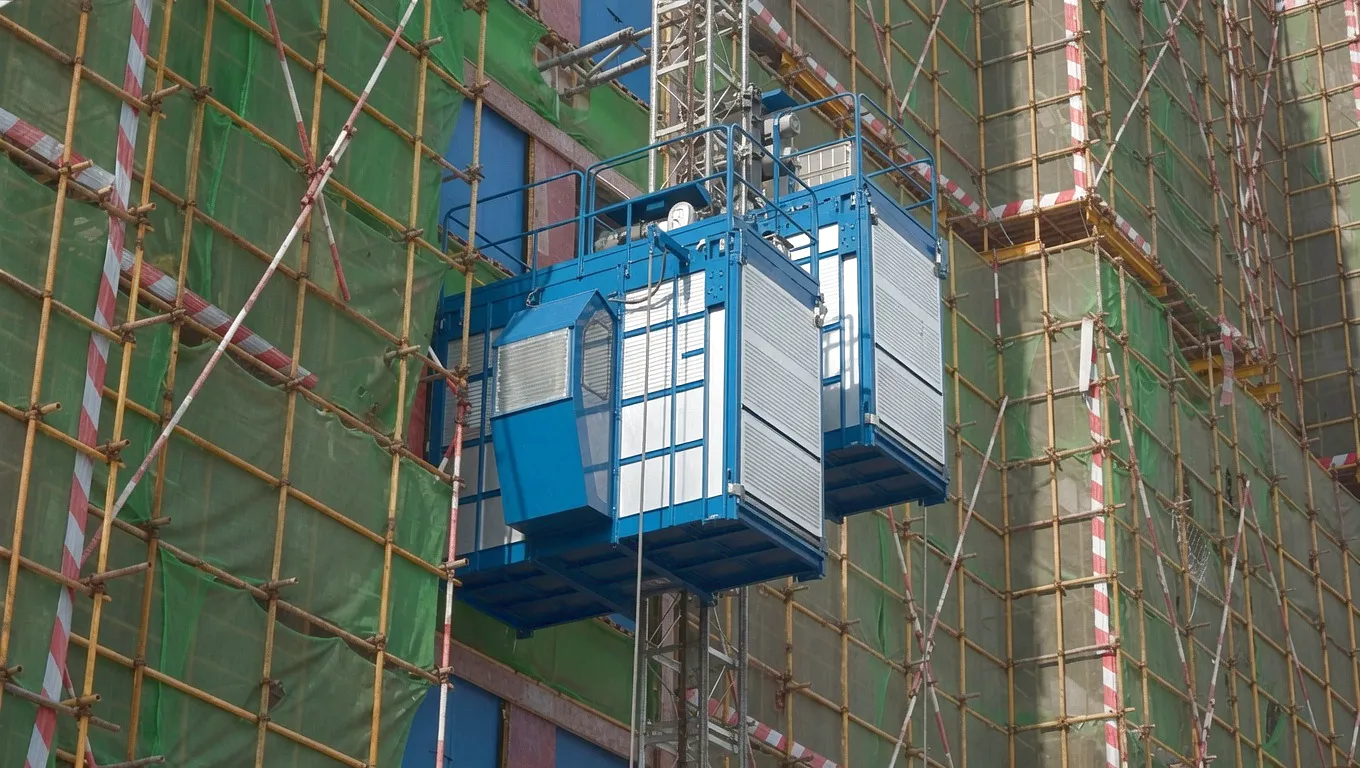
Mast-climbing work platforms (MCWPs) — increasingly common on UK façade-installation and curtain-walling contracts — use leaf chain as the primary counterweight suspension element. The counterweight chain in these machines is in permanent tension, cycling through small amplitude vibrations as wind loads are transmitted through the structure. Fatigue at micro-crack level is therefore the critical failure mode, and the shot-peened, heat-treated plates of premium leaf chain are the engineering answer. Projects in Edinburgh’s Haymarket district and Cardiff Bay have successfully used Ever Power BL534 series chains in this application with verified service lives exceeding 18 months of continuous operation.
4. Tunnel Construction Vertical Access Shaft Hoists
Below-ground infrastructure works — Crossrail extensions, HS2 approach structures, Thames Tideway sections — involve deep shaft access hoists operating in extremely humid, chemically aggressive underground environments. Stainless-steel leaf chain or chain with specialist electroless nickel coating is the specified solution in these conditions. The chain must deliver reliable performance in environments where salt from subterranean groundwater, hydrogen sulphide from decomposing organic matter, and mechanical abrasion from silica-laden air conspire to destroy unprotected steel surfaces within months rather than years. Our engineering team can specify the correct surface treatment for any underground application, backed by laboratory corrosion testing data.

Why Ever Power Leaf Chain Outperforms Alternatives in Construction Hoists
Superior Fatigue Resistance
Shot-peened plates and controlled heat treatment deliver fatigue lives 30–50% longer than standard chains. On a 12-month UK construction project with 25,000+ load cycles, this translates to zero unplanned downtime — and zero LOLER compliance headaches for the principal contractor.
Tight Dimensional Tolerances
Pin holes punched to ±0.02 mm tolerance ensure accurate articulation around sheaves and smooth engagement with tensioning devices. Loose-tolerance chain from lesser suppliers causes audible rattling, accelerated wear on sheave flanges, and premature elongation that demands more frequent and costly replacement.
Full Compliance with UK Standards
Every batch of Ever Power leaf chain is manufactured in compliance with ISO 4347 and BS EN 818 and ships with a full material certificate, dimensional inspection report, and proof-load test certificate. Documentation packages suitable for LOLER thorough examination files are prepared as standard — reducing your HSE compliance burden on every project.
Factory-Customised to Your Hoist OEM Spec
Whether your fleet runs Alimak, Scanclimber, GEDA, or Böcker hoists, our engineering team can supply leaf chain pre-cut to length, fitted with OEM-compatible clevis or swivel end connectors, and packaged for fast site installation. Custom surface coatings, stainless variants, and extended-length assemblies are produced in our ISO 9001-certified factory with lead times from 5 working days.
Lower Total Cost of Ownership
On a 24-month construction programme in central London, a principal contractor switching from a budget chain to Ever Power premium leaf chain typically saves between £3,500 and £8,000 per hoist in reduced maintenance labour, fewer emergency replacement events, and avoided lost-time incidents. The chain’s purchase price is a fraction of the lifecycle saving — a compelling case that resonates with any quantity surveyor reviewing programme cost plans.
British Weather-Ready
The UK’s temperate maritime climate delivers an average of 160+ wet days per year in many regions. Our leaf chains are available with zinc-phosphate pre-treatment and heavy-duty oil impregnation, or with a full hot-dip zinc coating for long-duration outdoor exposure. Chains destined for coastal projects in areas such as Sunderland, Aberdeen, or Swansea can be further specified with an additional sealing coat to resist salt-spray corrosion.
Our Factory & Custom Engineering Capability
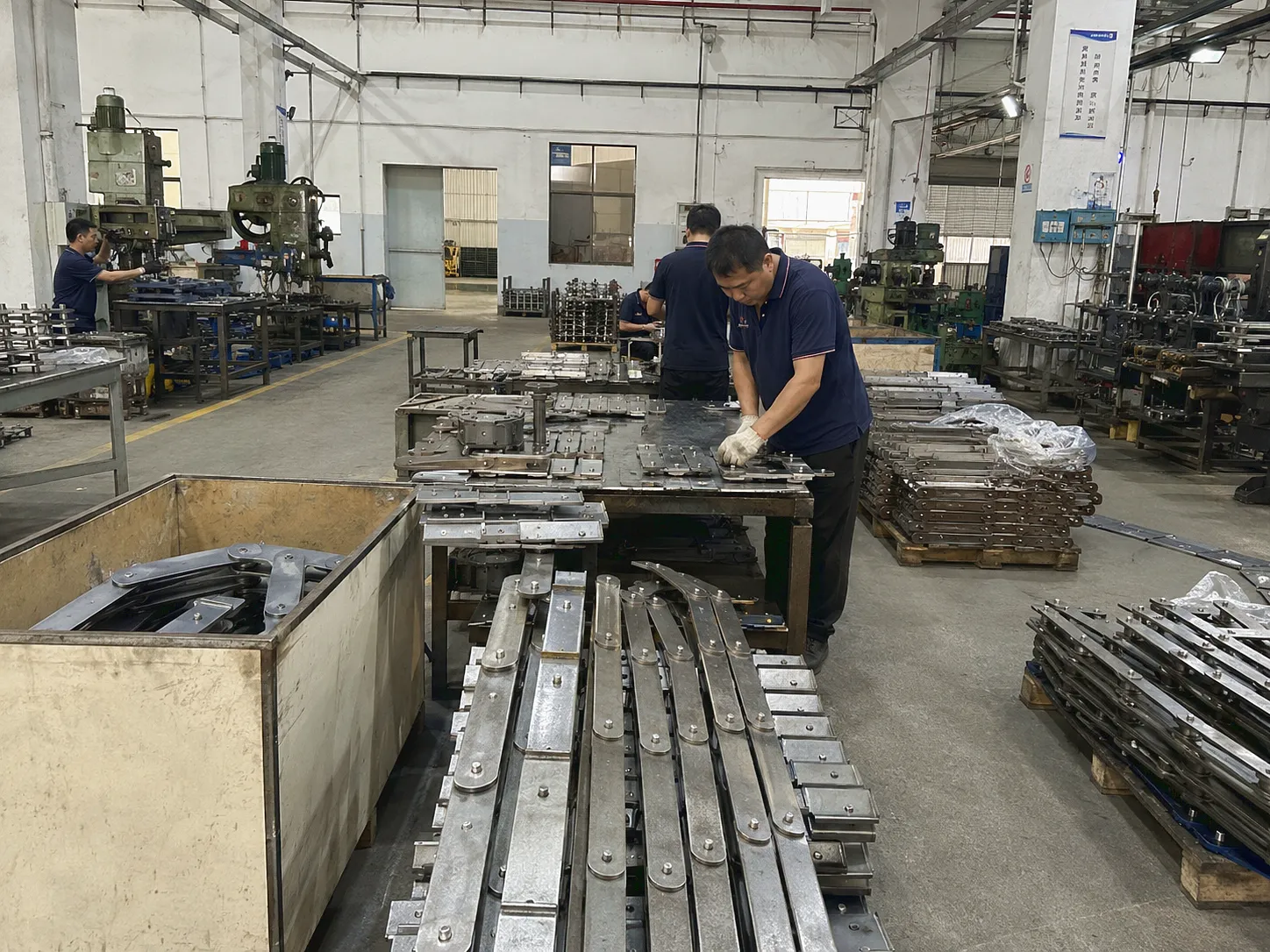
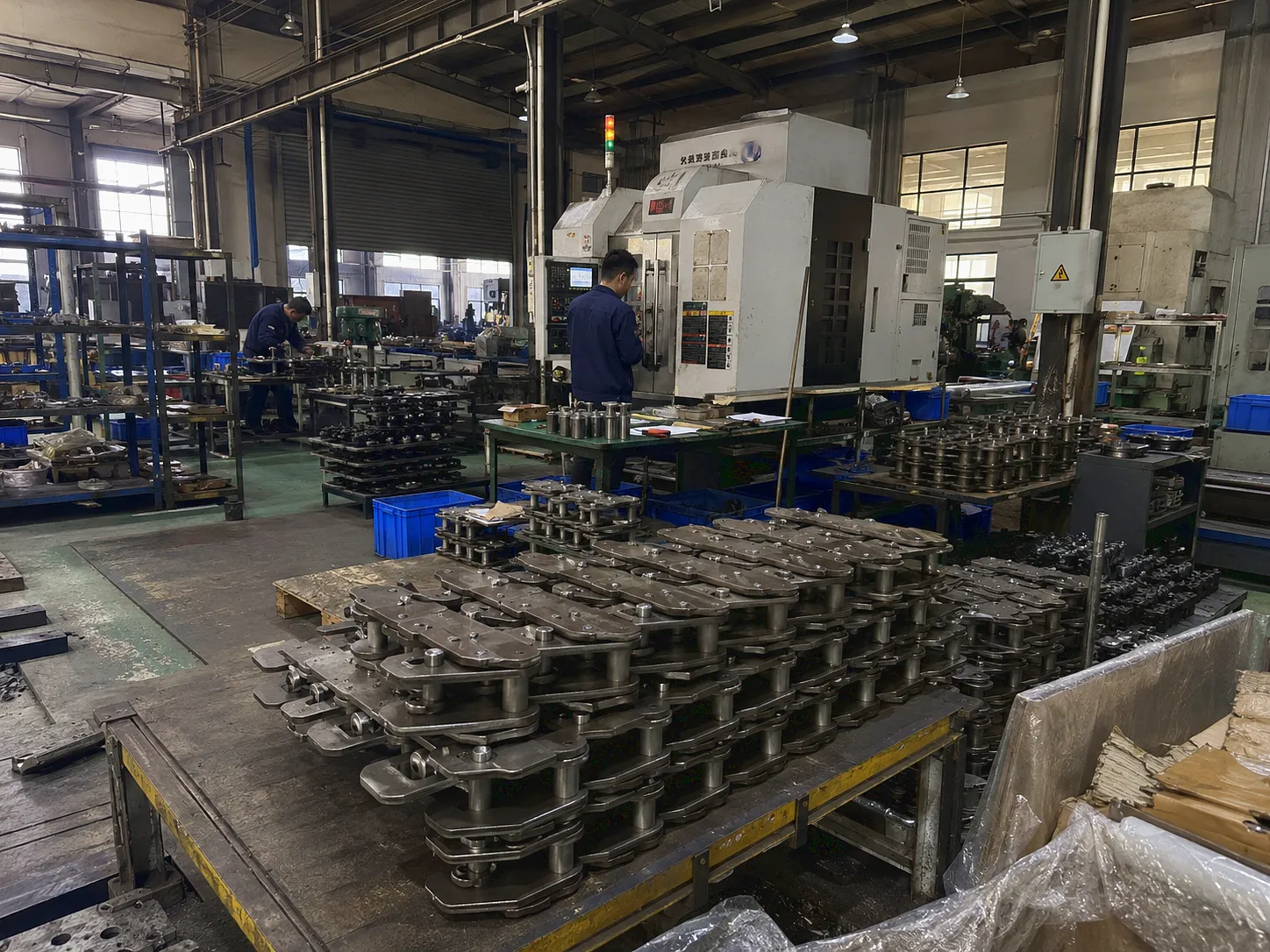
Ever Power’s production facility operates a full chain manufacturing process under one roof — steel coil procurement and inspection, precision punch pressing of link plates, pin grinding, heat treatment, assembly, and final proof load testing. The plant holds ISO 9001 quality certification and runs a statistical process control programme on all critical dimensions, ensuring that every chain leaving our factory meets or exceeds its published specification. Our quality management team maintains full traceability from raw material heat number to finished chain serial number, providing the documentation chain required by UK principal contractors and their LOLER thorough-examination competent persons.
What genuinely distinguishes our operation from commodity chain importers serving the UK market is our product customisation capability. Our in-house applications engineering team works directly with hoist OEMs, construction hire companies, and large main contractors to develop chain assemblies that go beyond catalogue items. We have engineered bespoke chain solutions including: pre-fitted swaged end terminations matching OEM interface specifications; colour-coded length marking for rapid site identification; integrated RFID tags for digital asset-tracking compatible with BIM Level 2 workflows; and split-link designs for field-installation in confined access points. If your project has a chain challenge that a standard catalogue product cannot solve, our team welcomes the opportunity to engineer a solution.
Custom Engineering Options — Available for UK Construction Projects
Customer Success Story: Manchester City Centre Mixed-Use Tower
Multiplex Construction (North West) Ltd. was contracted to deliver a 28-storey mixed-use development at Salford Quays in 2023–2024. The project required two SC200 twin-cage hoists to operate simultaneously over a 22-month programme, transporting workers, concrete reinforcement cages, mechanical and electrical plant, and fit-out materials to heights up to 94 metres. The hoist operator’s previous chain supplier had delivered a batch of sub-specification chain eight months into a comparable project the previous year — an event that caused a single-day shutdown, an emergency LOLER examination, and an HSE improvement notice. Understandably, the project team was determined to avoid any repetition.
Ever Power supplied AL1266 50.8 mm pitch, 6×6 lacing leaf chains pre-cut to 28-metre operational lengths with integrated swivel end connectors matching the Alimak SC200’s specification. Full material certificates, proof load test reports, and initial LOLER-compatible thorough examination records were delivered with the chains. Over 22 months and an estimated 38,000 combined cage cycles across both hoists, zero chain-related downtime events occurred. The project completed two weeks ahead of programme — a result the site manager directly attributed, in part, to the uninterrupted reliability of the hoist systems. Total chain expenditure across the programme was £14,200 — representing less than 0.003% of the contract value while securing a critical path asset for the entire vertical supply chain operation.
What UK Construction Professionals Say
“We’ve been running Ever Power leaf chains on our three Alimak hoists for the past 18 months across projects in Leeds and Sheffield. The wear rates are noticeably better than what we were getting before, and the certification pack they supply makes LOLER examinations genuinely straightforward. Would not hesitate to recommend to any lifting equipment manager in the UK.”
“As a hoist hire company operating a fleet of 40+ machines across Scotland, chain quality and traceability are non-negotiable for us. Ever Power’s ability to supply custom-length assemblies with full documentation, at competitive prices and with a five-day lead time, has made them our go-to supplier for replacement chain. The stainless option they offer is a real differentiator for our Aberdeen clients.”
“Our Bristol waterfront regeneration project ran a GEDA 1500Z comfort hoist for 14 months in an environment that was basically salt air and concrete dust 24/7. The hot-dip zinc leaf chain Ever Power supplied for us lasted the entire programme without any replacement. Previous projects using budget chain had needed three replacements in similar conditions. The cost saving justified the slightly higher upfront price within three months.”
Maintenance Guidance for UK Sites
 LOLER 1998 requires that lifting equipment used for work purposes is thoroughly examined at regular intervals — for construction hoists, this typically means every six months or after any exceptional occurrence. However, the daily visual inspection of the leaf chain by a competent person is an operational necessity, not merely a regulatory obligation. Site supervisors should look for: visible elongation beyond 3% of original pitch length (measured over a 20-link reference span); surface cracking or pitting of link plates; pin corrosion or seizure; and any distortion of plates caused by overloading events. At Ever Power, we supply a laminated quick-reference chain inspection guide with every order, covering the LOLER-relevant wear criteria specific to the chain series supplied.
Lubrication is the single most impactful maintenance action available to a site team operating a construction hoist in the UK climate. We recommend a penetrating oil application to the chain every 40 operating hours, or whenever the chain is washed by rain and subsequently dried. In practice, a five-minute lubrication round during a shift change costs almost nothing and can extend chain service life by 40 to 60 percent — a return on time investment that no procurement manager should ignore.
Frequently Asked Questions
Answers to the questions UK construction procurement teams, hoist operators, and plant managers ask most often about leaf chain for builder’s hoists and construction elevators.
What is the typical price of a replacement leaf chain for a construction elevator operating in the UK, and how much should I budget per hoist per year?
Leaf chain pricing for UK construction elevator applications varies significantly by pitch, lacing, length, and surface treatment. As a rough guide, a standard LH1244 4×4 lacing chain in a 10-metre assembly for a mid-range single-cage hoist starts from approximately £280 to £450 ex-works, while a heavy-duty AL1266 6×6 assembly for a twin-cage SC200 hoist typically ranges from £600 to £1,200 per assembly depending on length. For annual budgeting, most UK sites on 12-to-18-month programmes replace chains once per programme — so chain is rarely the dominant maintenance cost. Request an itemised quotation from our team at [email protected] for project-specific pricing.
How do I know which leaf chain grade is right for my construction elevator or builder’s hoist model — and where can I find a reliable supplier in the UK who stocks the right spec?
The correct specification is determined by your hoist’s Safe Working Load, cage speed, design life in cycles, and whether the chain operates as a suspension element, a counterweight tie, or a drive element. The hoist OEM’s maintenance manual will specify the chain pitch and lacing as a minimum. Our application engineering team can cross-reference your hoist model number and confirm the correct Ever Power series equivalent — often we can improve on OEM specification through higher-grade plate material, providing a longer service life at comparable or lower cost. Contact us with your hoist model and we’ll respond with a full technical recommendation within 24 hours.
Does leaf chain for a construction hoist in the UK have to comply with a specific British Standard, and what documentation do I need for LOLER thorough examinations?
Yes. Leaf chain used in lifting applications in the UK should be manufactured in accordance with BS EN 818 or ISO 4347, and the hoist assembly as a whole must comply with PUWER 1998 and LOLER 1998. For LOLER thorough examination purposes, the competent person needs: a Declaration of Conformity (or Certificate of Conformity for chain components), full dimensional inspection records, and a proof load test certificate showing the chain has been tested to a minimum of twice the Safe Working Load. Ever Power supplies all three documents as standard with every chain order — pre-packaged specifically to support UK thorough examination records.
How long does leaf chain typically last on a construction site builder’s hoist, and what are the warning signs that it needs replacing before the next scheduled LOLER examination?
Service life depends heavily on operating intensity, lubrication regime, and environmental conditions. On a well-maintained, fully lubricated hoist on a 12-month project in central England, premium leaf chain typically lasts the full programme without replacement. Warning signs requiring immediate removal from service include: chain elongation exceeding 3% of the manufacturer’s original gauge length over any 20-pitch reference span; visible plate cracking, especially at pin holes; pin corrosion causing stiff joints; or any plate distortion. In wet coastal areas like Plymouth, Swansea, or Aberdeen, inspect at least monthly even on well-lubricated chains, as salt deposition under the lubricant film can cause intergranular corrosion that is not visible externally until the chain is close to failure.
Where can I find a construction hoist leaf chain supplier in England who can deliver quickly to site, with full compliance documents and custom lengths for emergency replacement?
Ever Power supplies leaf chain to UK construction sites nationwide, including emergency replacement orders for sites in London, Manchester, Birmingham, Bristol, Leeds, and Edinburgh. Our standard lead time for catalogue items with full documentation is 5 working days. For genuine emergencies, we offer an expedited 72-hour service for selected chain series. All orders include full compliance documentation as standard. Email [email protected] with your chain spec, required length, and site delivery address, and our team will confirm availability and lead time within four business hours.
What is the difference between leaf chain and roller chain in a builder’s hoist, and why does it matter when I’m getting quotes from different construction equipment suppliers?
Leaf chain is a flat-link, tension-only bearing chain with no rollers — every steel cross-section is devoted to carrying tensile load. Roller chain, by contrast, uses cylindrical rollers and is designed for sprocket-drive power transmission, not pure lifting loads. In a builder’s hoist, using roller chain where leaf chain is specified would result in higher stretch rates, much lower fatigue life, and the risk of catastrophic failure at far lower cycle counts. The two chain types are not interchangeable in lifting applications. Any supplier quoting roller chain for a leaf chain application either does not understand hoist engineering or is cutting corners on specification — either way, it represents an unacceptable safety and compliance risk on a UK regulated lifting operation.
Ready to Specify the Right Leaf Chain for Your UK Construction Project?
Send your hoist model, required chain length, and project location. Our engineering team will respond within 4 business hours with a full technical recommendation, compliance documentation list, and competitive quotation — with delivery across England, Scotland, and Wales.
© 2026 Ever Power Chain Co., Ltd. | Leaf Chain Specialists | Serving the UK Construction Industry | ISO 9001 Certified | edit by gzl