
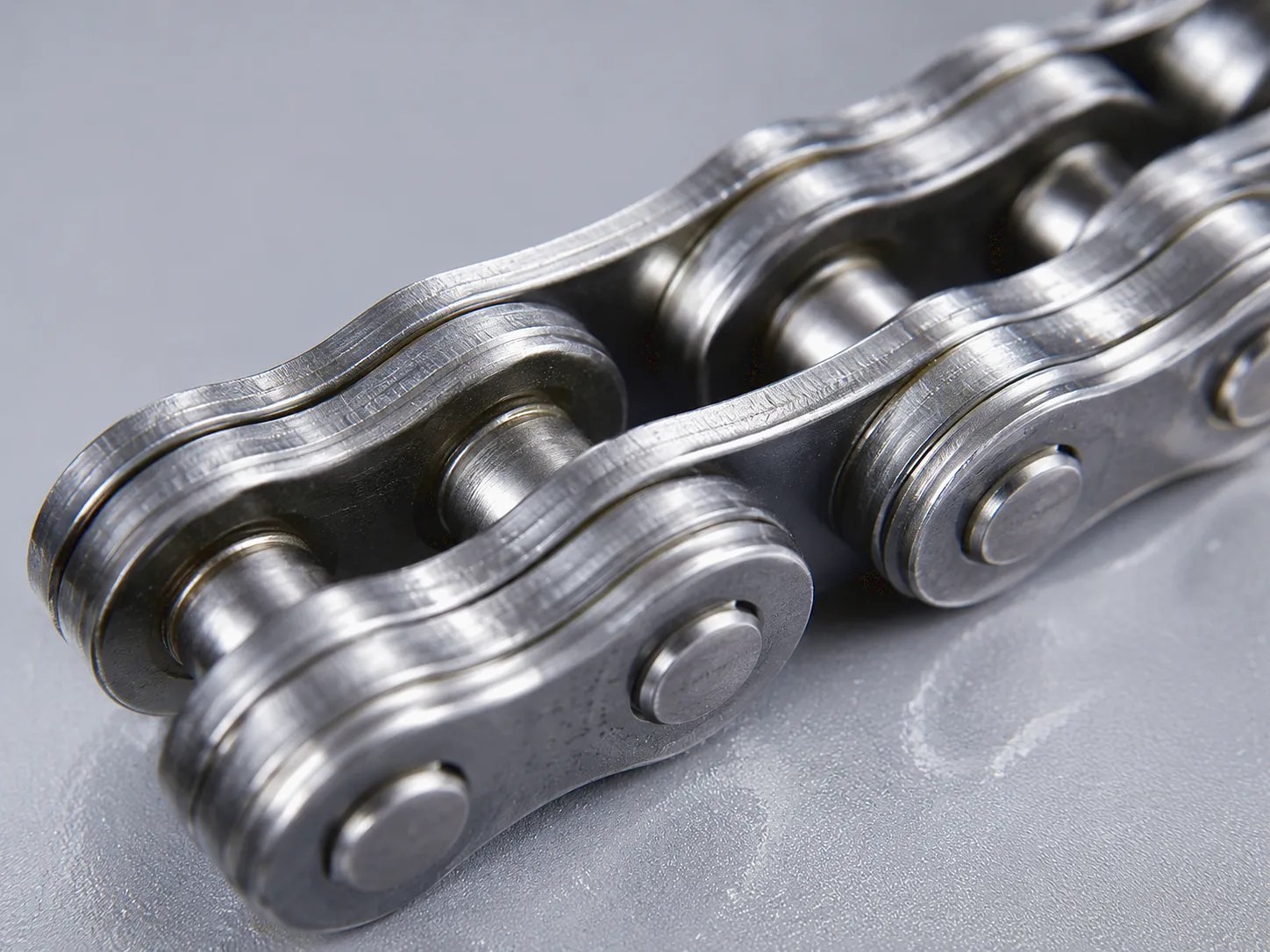
What Exactly Is a Leaf Chain — and Why Does It Matter in Cotton Harvesting?
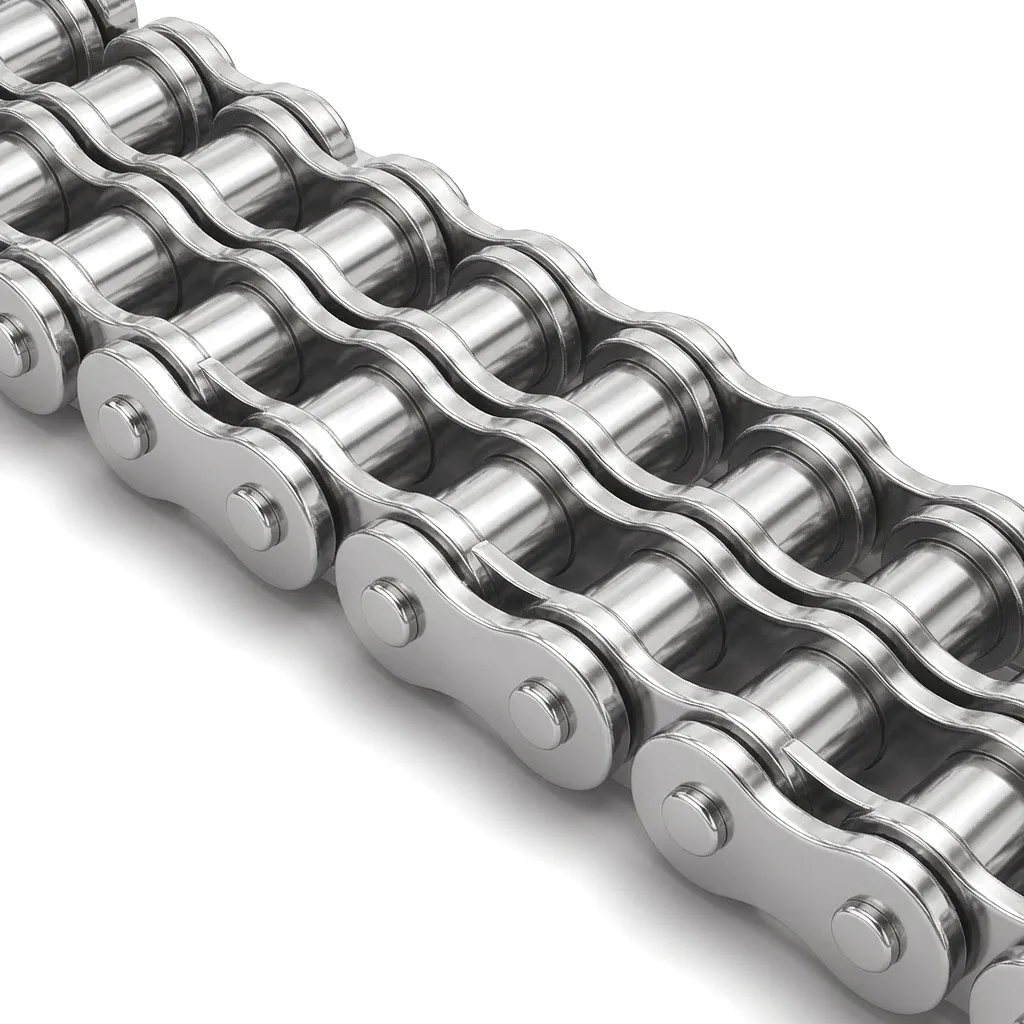 A leaf chain — also referred to in British engineering circles as a plate chain or bar chain — is a type of transmission chain composed of interlaced link plates connected by precision-ground pins, without any rollers. Unlike roller chains that transfer power through tooth engagement, leaf chains are designed primarily to handle tension loads. In a cotton picker machine, this distinction is critical. The harvesting drum lifts, the conveyor elevator rises, the bale compressor descends — every one of these movements places a sustained tensile force on the chain assembly, not a rotational one.
Cotton pickers operate in some of the most demanding environments imaginable for mechanical components. Dust from harvested bolls, moisture from morning field conditions, and constant mechanical shock from plant stalks all combine to accelerate wear in standard chains. Leaf chains, when built to the correct specification from the right materials, resist these conditions far more effectively. The absence of rollers actually reduces the number of contact surfaces where debris can accumulate, while the flat plate construction distributes tensile loads evenly across all link plates simultaneously.
For equipment managers at UK-based cotton gin plants, machinery importers supplying John Deere or Case IH cotton pickers into British farms, and OEM manufacturers designing next-generation harvesting platforms, choosing the right leaf chain supplier is a decision that directly influences uptime, maintenance intervals, and total cost of ownership across a full harvest season.
Technical Specifications & Performance Parameters
Reference values for standard leaf chain grades commonly specified in cotton picker drivetrains. Custom specifications available on request.
| Параметр | BL 623 | BL 846 | BL 1034 | BL 1246 |
|---|---|---|---|---|
| Крок (мм) | 19.05 | 25.40 | 31.75 | 38.10 |
| Діаметр штифта (мм) | 5.94 | 7.94 | 9.54 | 11.10 |
| Plate Thickness (mm) | 2.42 | 3.25 | 4.00 | 4.80 |
| Tensile Strength (kN) | 31.1 | 62.3 | 88.5 | 124.5 |
| Working Load Limit (kN) | 7.8 | 15.6 | 22.1 | 31.1 |
| Material | Carbon steel / Alloy steel (40Cr, 20MnTiB) — case-hardened | |||
| Surface Treatment | Shot peened, zinc-phosphate coated or nickel-plated (custom) | |||
| Standard Compliance | ASME B29.8M, ISO 4347, DIN 8152 | |||
| Operating Temperature (°C) | -40 to +120 (standard); up to +200 (high-temp alloy grade) | |||
How Leaf Chain Functions Inside a Cotton Picker Drivetrain
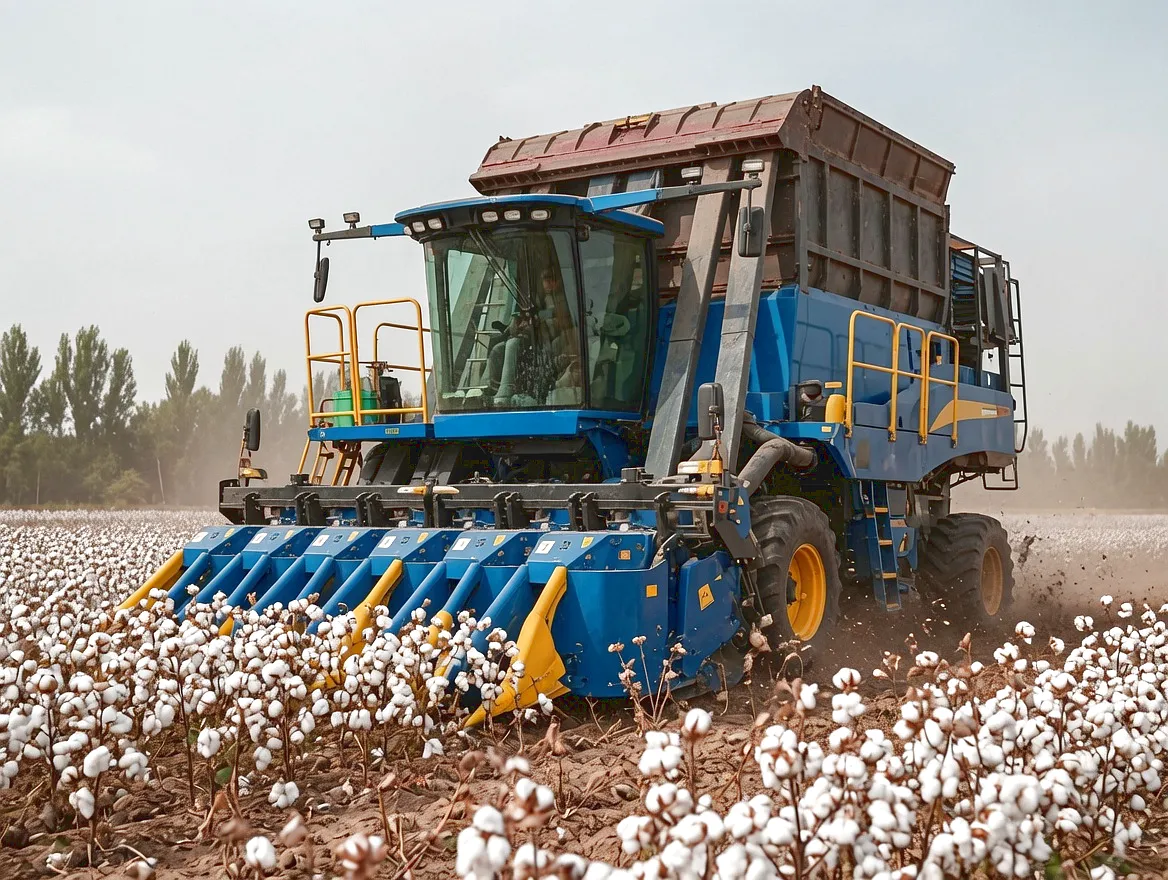 Modern cotton pickers — whether self-propelled units like the John Deere CP690, Case IH Module Express or equivalent platforms operated across UK and European markets — rely on a complex system of mechanical drives to coordinate the picker bars, doffer columns, basket conveyors, and bale compression chambers. Within this system, leaf chain serves as the primary tensile link in at least three distinct sub-assemblies.
The harvesting head lift mechanism uses a leaf chain pair threaded over a series of sheave pulleys to raise and lower the picking header across varying row heights. As the machine crosses undulating terrain — common in British fields — this chain undergoes rapid load fluctuation. Standard roller chain would deform under these combined bending and tensile stresses. The flat-plate geometry of a leaf chain, however, allows the load to be shared simultaneously across all active link plates in the load path, dramatically reducing peak stress per plate.
Cotton conveyor elevators use vertical or inclined chain runs where leaf chain again outperforms alternatives. The absence of rollers means there are fewer rotating elements to jam when wet cotton fibres or debris enter the chain joint area. Equally important, the pin-and-plate construction of a leaf chain allows it to articulate smoothly through the tight-radius sheaves used in compact elevator housings on modern harvester platforms, without the plate-to-roller interference that would cause premature wear on roller chain in the same geometry.
Bale compression systems present perhaps the most demanding use case. Here, the chain must hold a static load — the compressed bale — while also cycling repeatedly as bale ejection occurs. A correctly specified leaf chain with the appropriate safety factor (generally 4:1 to 6:1 for this application) will maintain its pitch length and articulation quality across the many thousands of bale cycles required in a single UK harvest season.
Why Ever Power Leaf Chain Outperforms Generic Alternatives
Seven engineering advantages that directly translate into longer service life and lower total maintenance cost on your cotton harvesting equipment.
Case-Hardened Alloy Plates
Heat treatment to 58–62 HRC surface hardness creates a wear-resistant shell over a tough ductile core, preventing sudden brittle failure under shock loading from plant-stalk impact during cotton harvesting.
Precision-Ground Pins
Ground to h6 tolerance, our pins provide a consistent bearing surface that maintains lubrication film integrity over extended service intervals — vital when a cotton picker operates for 12+ hours per day during peak harvest.
Multi-Strand Lacing Flexibility
Available in 2×2 through 8×8 lacing configurations, allowing engineers to match the exact tensile requirement of each cotton picker sub-assembly without over-engineering the assembly or adding unnecessary weight to the machine.
Debris-Resistant Joint Design
The rollerless structure of a leaf chain eliminates the cavity spaces where cotton fibres, seed hulls, and field grit typically accumulate in roller chains, dramatically reducing the abrasive wear that shortens chain life in harvesting applications.
Drop-In OEM Compatibility
Manufactured to ASME B29.8M and ISO 4347 dimensional standards, our leaf chains are direct replacements for OEM chains on major cotton picker platforms, eliminating modification costs and reducing spare parts lead times for UK-based service workshops.
Extended Fatigue Life
Shot-peening of link plates introduces beneficial compressive residual stress at the most fatigue-critical locations — the pin hole boundaries — extending safe working life by 30–50% compared to non-peened equivalents under equivalent load cycling conditions.
Full Documentation Package
Every batch ships with material certificate, heat treatment records and tensile test data — meeting the documentation requirements of UK agricultural machinery regulations and CE marking obligations for European equipment manufacturers.
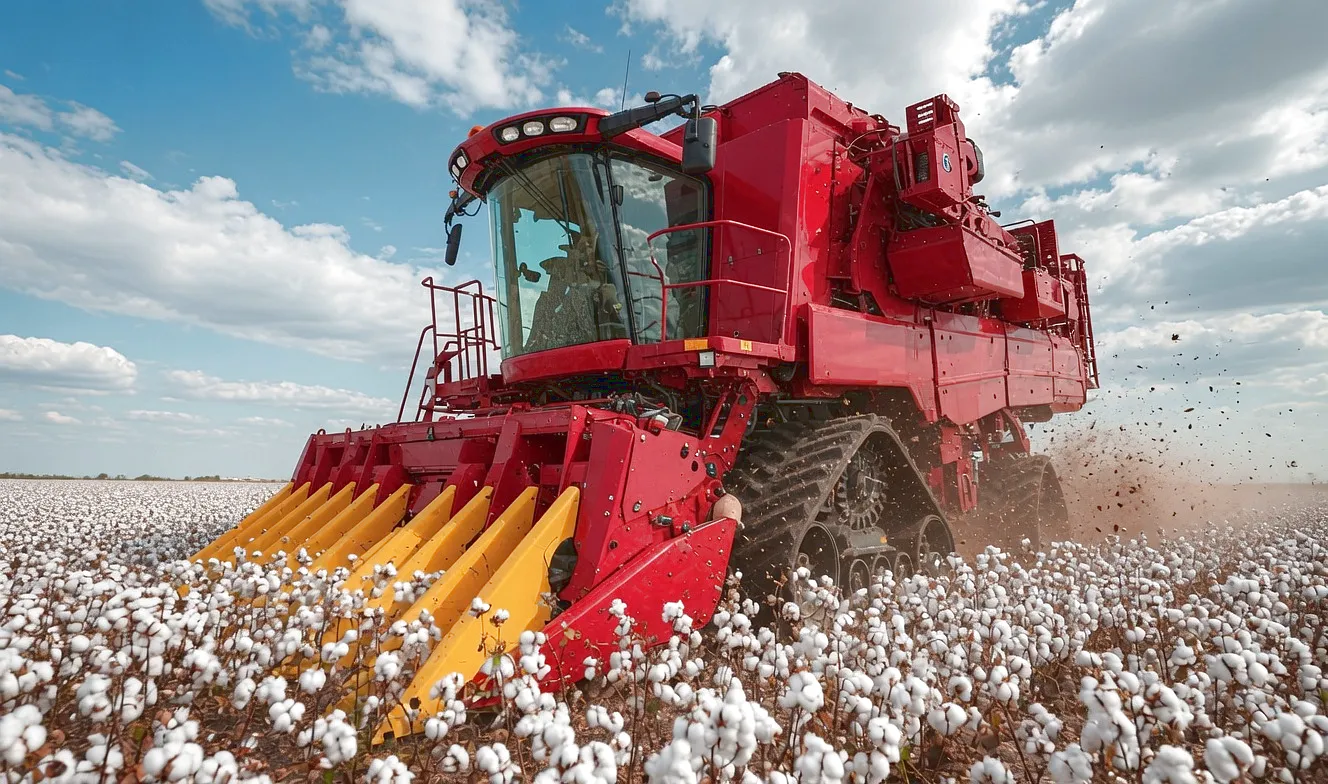
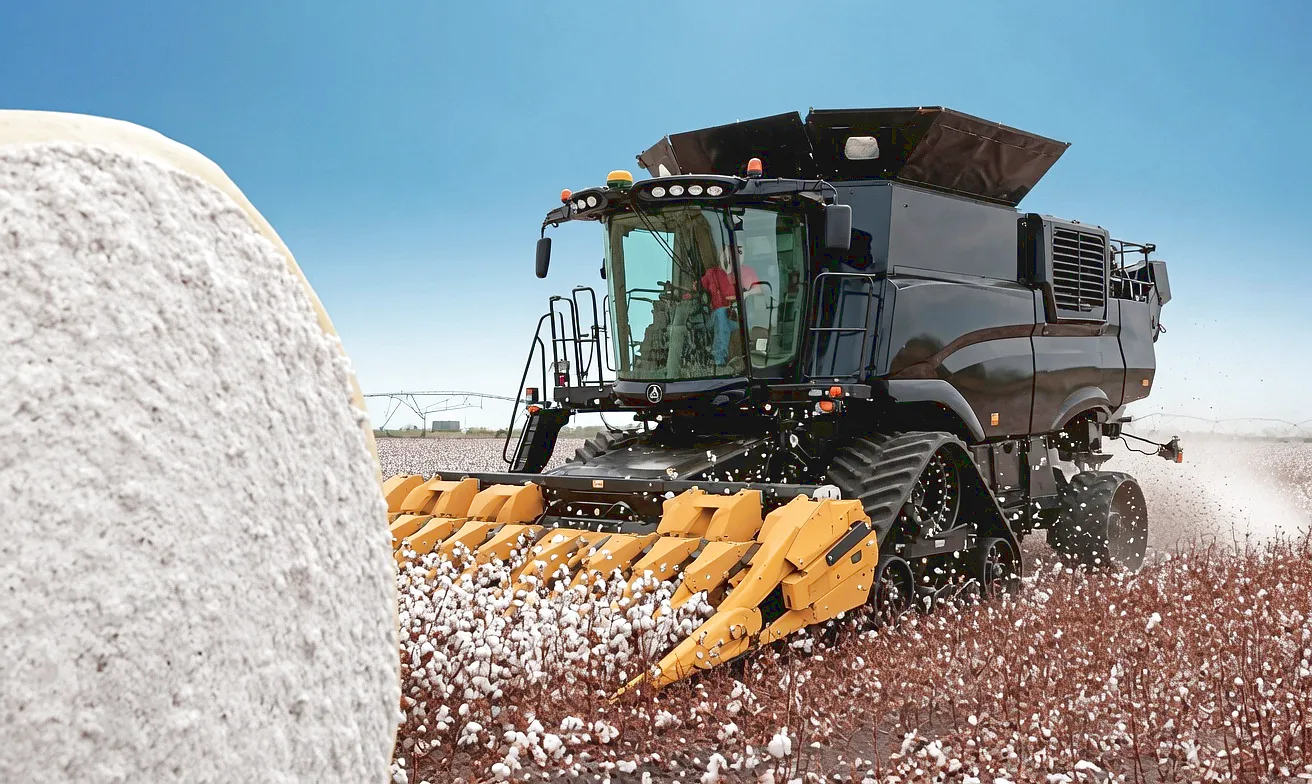
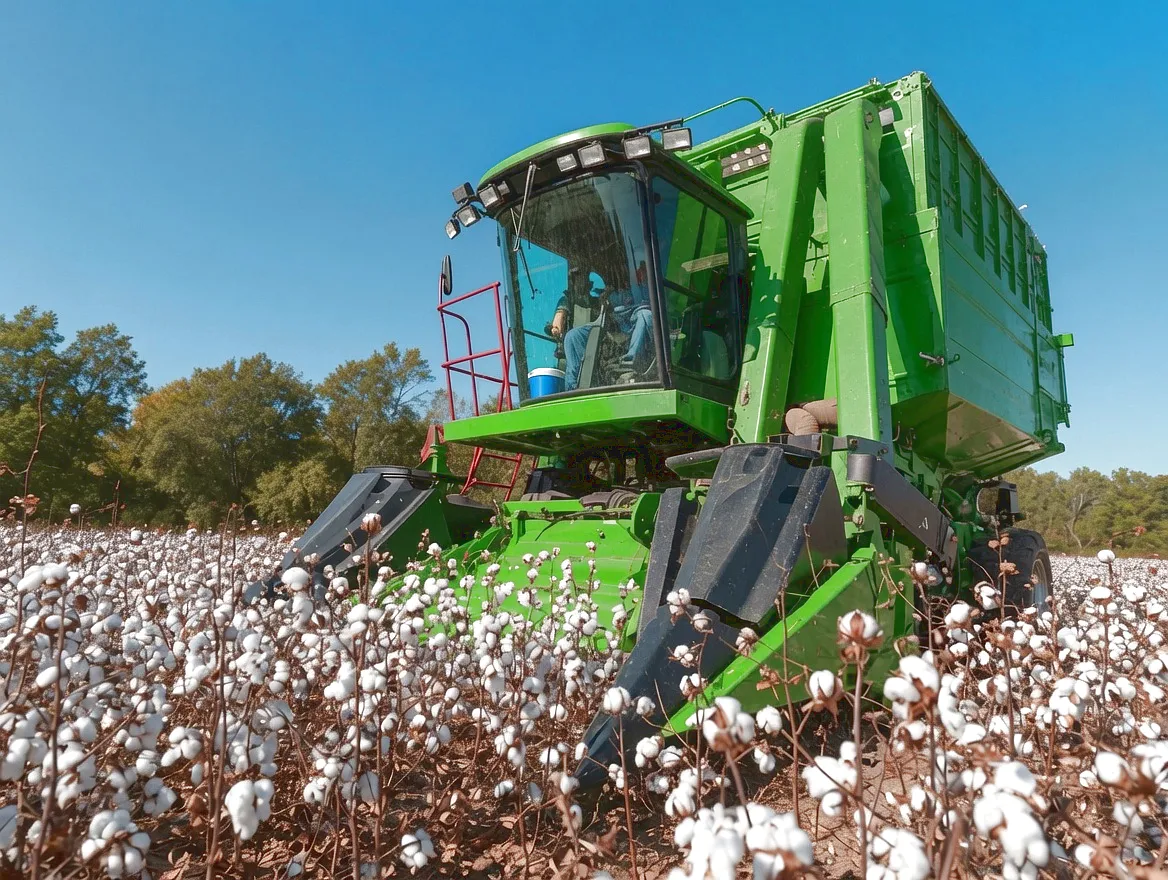
Leaf Chain in Action: Cotton Picker Application Scenes
Real-world operating environments where our leaf chain products have proven their reliability across harvesting seasons.
Material Science Behind Every Link: Why Metallurgy Matters
When engineers at Ever Power design a leaf chain intended for cotton picker applications, the selection of base material is not an afterthought — it is the foundation upon which every other performance parameter depends. The link plates in our agricultural-grade leaf chains are stamped from cold-rolled 40Cr alloy steel or, for higher-load applications, from 20MnTiB boron-manganese steel. Both grades offer an excellent balance between tensile strength, fatigue resistance and machinability that is difficult to achieve with lower-grade materials.
Following stamping, plates undergo a carburising and quenching heat treatment cycle that creates a hard wear-resistant case (58–62 HRC) over a tough, shock-absorbing core (28–35 HRC). This dual-hardness profile is precisely what a cotton picker demands. The outer surface resists the abrasive contact with pins and the fine grit that infiltrates from field dust, while the softer core absorbs the impact energy from sudden load spikes without propagating cracks. Tempering after quenching relieves internal stress, further reducing the risk of hydrogen embrittlement — a failure mode that has been responsible for unexpected chain breaks on machinery using cheaper imported chain.
Pins receive a separate heat treatment to achieve a surface hardness of 60–64 HRC with a hardness depth of 0.4–0.8mm. After heat treatment, each pin is ground and finished to h6 tolerances across its entire bearing length, ensuring that the radial clearance between pin and plate hole remains within the tight range required to maintain lubrication film under load. Where customers in UK markets request additional corrosion protection — relevant for machines stored outdoors between seasons or operating in coastal regions — we offer zinc-phosphate base coatings, electroless nickel plating, or specialist agricultural lubricant pre-treatment as part of the finishing package.

“The key differentiator in leaf chain for cotton harvesters is not just tensile strength — it is the ratio of core toughness to surface hardness. Getting that balance right is what separates a chain that lasts one season from one that delivers three.”
— Senior Metallurgist, Ever Power R&D
Ever Power Manufacturing: Custom Leaf Chain Built to Your Exact Specification
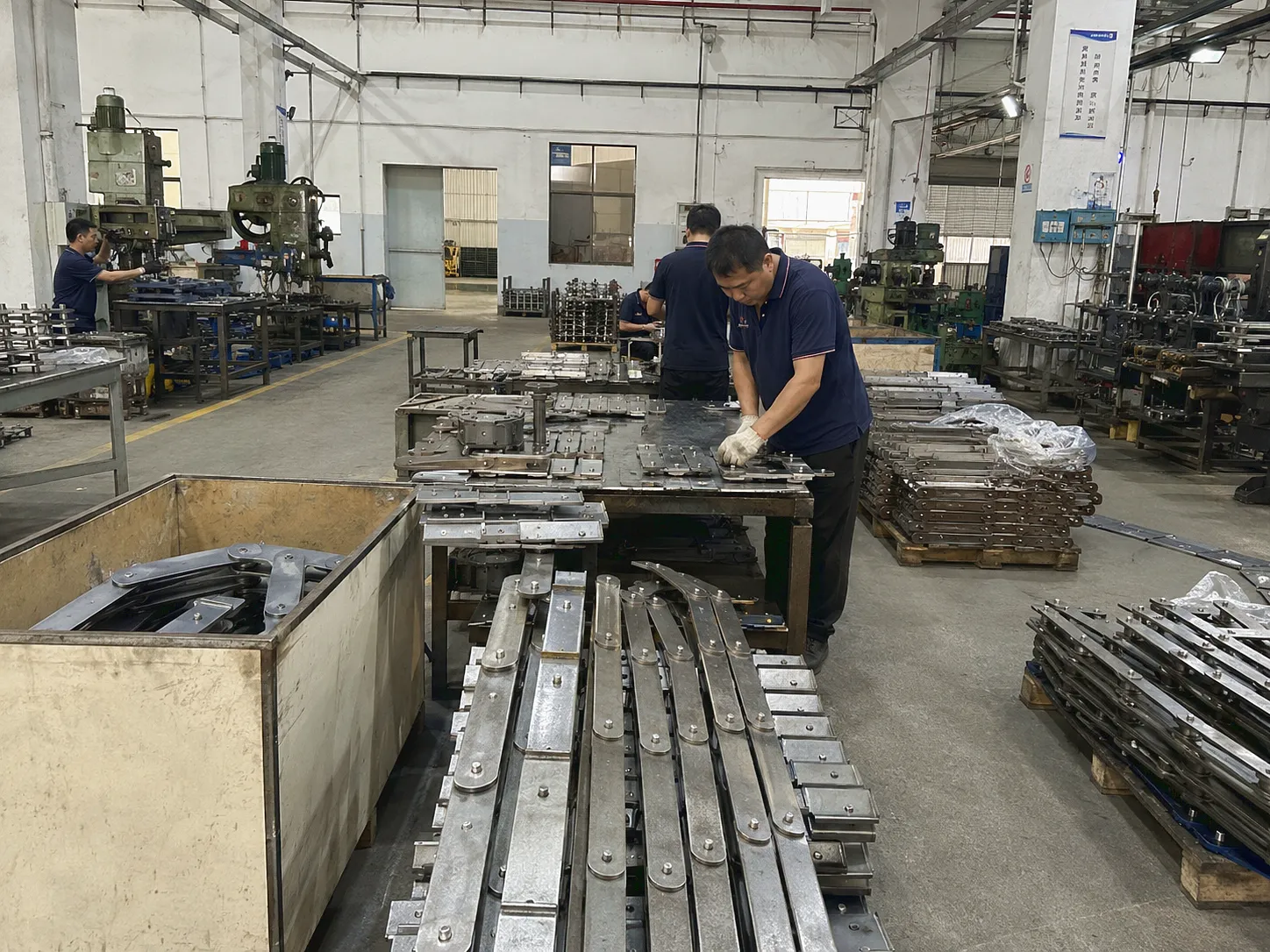
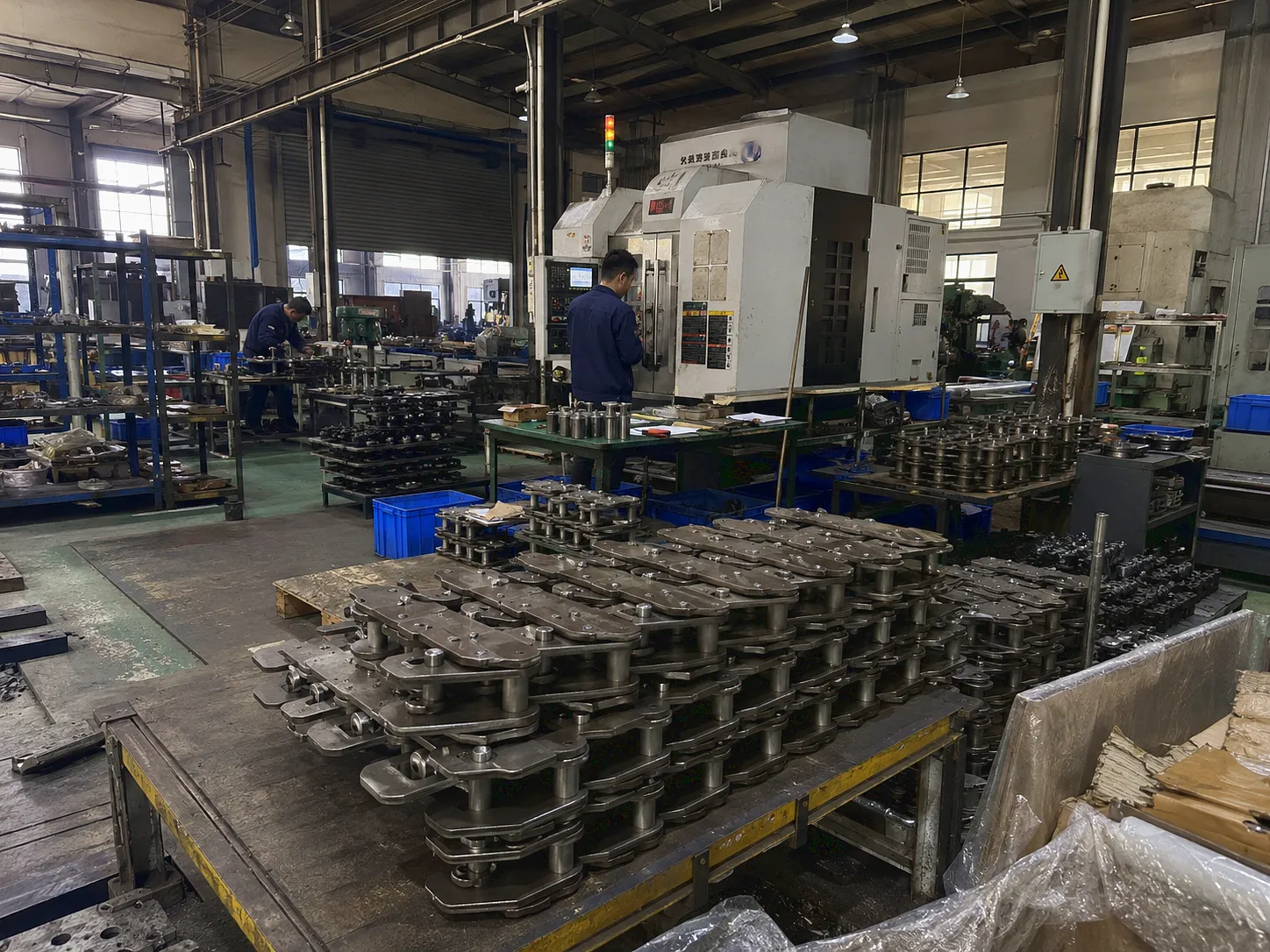
Our manufacturing facility operates over 24,000 square metres of production space equipped with fully automated stamping presses, CNC pin-turning centres, continuous mesh belt hardening furnaces and multi-axis CMM inspection stations. This infrastructure was built with a single objective: to produce leaf chains that match or exceed OEM quality at competitive wholesale prices — with the flexibility to accommodate non-standard dimensions that catalogue suppliers simply cannot offer.
For UK agricultural equipment manufacturers and aftermarket distributors, this customisation capability is not a luxury — it is a practical necessity. Many cotton picker models use proprietary chain lengths, non-standard pin diameters or unique attachment configurations that are not available from stock. Ever Power’s engineering team can reproduce or improve upon any existing leaf chain design based on sample chains, engineering drawings or even dimensional measurements taken in the field. Our minimum order quantity for custom production runs is deliberately kept low to accommodate prototype requirements from UK start-up manufacturers and regional equipment dealers alike.
Beyond dimensional customisation, we can modify material specifications — switching from standard 40Cr to 20MnTiB for higher-load variants, or upgrading to stainless steel grades for coastal applications. Surface treatments, attachment plate configurations, connecting link designs and specific heat treatment profiles can all be adjusted. This level of service is typically only available from large-volume OEM suppliers, but we extend it to orders as small as 50 metres through our dedicated custom chain programme.
Beyond the Cotton Field: Leaf Chain in Related Agricultural & Industrial Applications
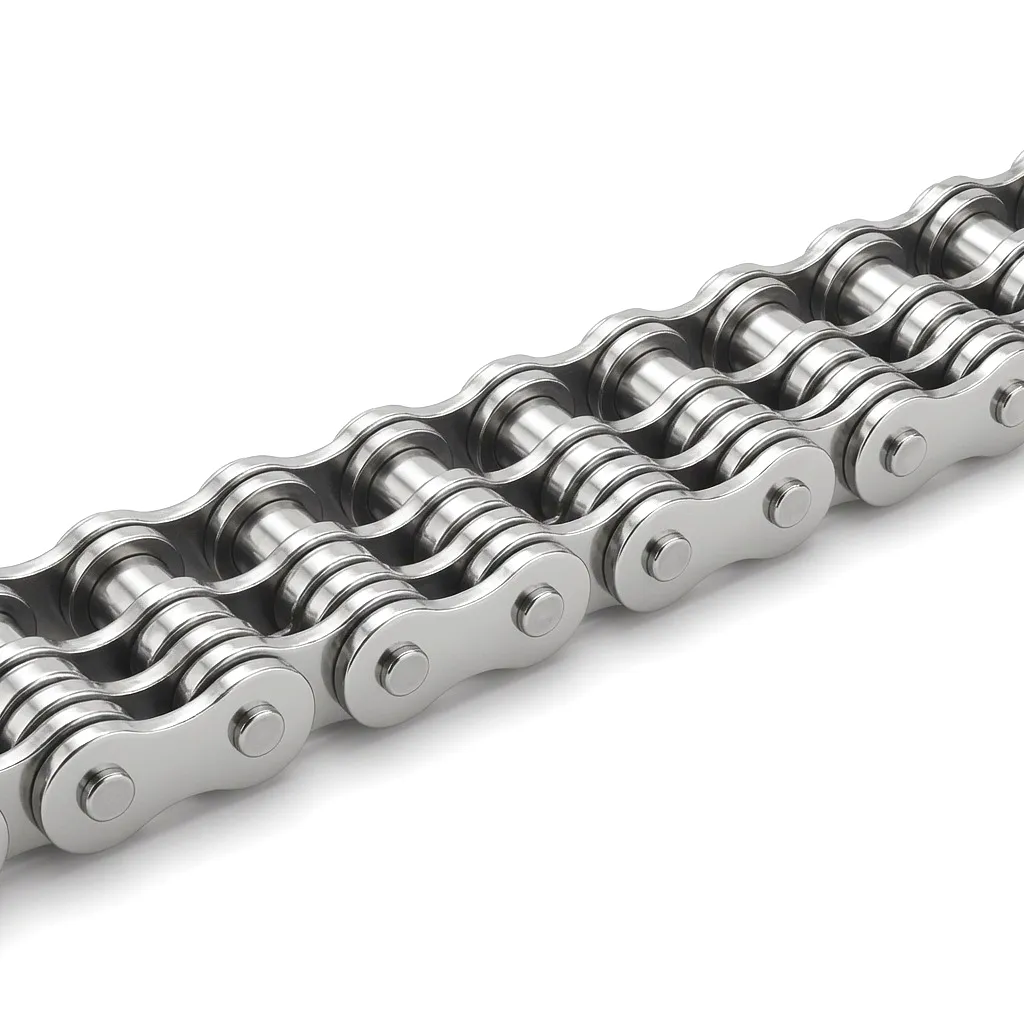 The design principles that make a leaf chain ideal for cotton picker machinery translate directly into performance advantages across a wide range of adjacent applications. UK-based machinery distributors and OEM designers increasingly specify our leaf chains not just for cotton harvesters but for the complete range of agricultural, textile processing and materials handling equipment that forms the broader supply chain around cotton production and processing.
In forklift truck mast assemblies — one of the highest-volume applications for leaf chain in the UK — the same tensile load-carrying characteristics that protect a cotton picker’s header lift system provide reliable mast elevation across millions of load cycles. Textile processing machinery including carding frames, draw frames and ring spinning machines use smaller-pitch leaf chains in their drafting zone drive systems, where consistent tension control directly affects yarn quality. Agricultural conveying systems for grain, sugar beet and root crops employ leaf chain in elevator legs and bucket conveyors operating in similarly harsh, debris-laden environments to those found in cotton harvesting.
For UK industrial distributors looking to consolidate their chain supply base, this cross-sector applicability of leaf chain is a significant commercial advantage. A single supplier relationship with Ever Power can cover agricultural, industrial and logistics applications under a single quality management framework, simplifying procurement, documentation and warranty management across your customer base. This is particularly relevant for regional distributors in the East Midlands, Yorkshire and East Anglia — regions where agricultural equipment servicing, textile manufacturing legacy and warehouse logistics intersect.
Leaf Chain vs Roller Chain in Cotton Picker Applications: A Direct Comparison
For maintenance managers and procurement engineers making replacement chain decisions, this table clarifies the practical trade-offs.
| Performance Attribute | Leaf Chain | Standard Roller Chain |
|---|---|---|
| Tensile load capacity (same pitch) | ✓ Higher | Lower |
| Resistance to cotton debris ingress | ✓ Excellent | Poor (roller cavity) |
| Static load holding (bale compression) | ✓ Ideal | Acceptable |
| Power transmission (rotary drive) | Not recommended | ✓ Superior |
| Fatigue life under shock loading | ✓ Superior | Moderate |
| Weight per metre (same strength) | ✓ Lighter | Heavier |
| Maintenance interval in dusty environments | ✓ Longer | Shorter |
Customer Success: How a Suffolk Machinery Distributor Reduced Chain-Related Downtime by 68%
Fenland Agricultural Parts Ltd — Ely, Cambridgeshire, UK
East of England
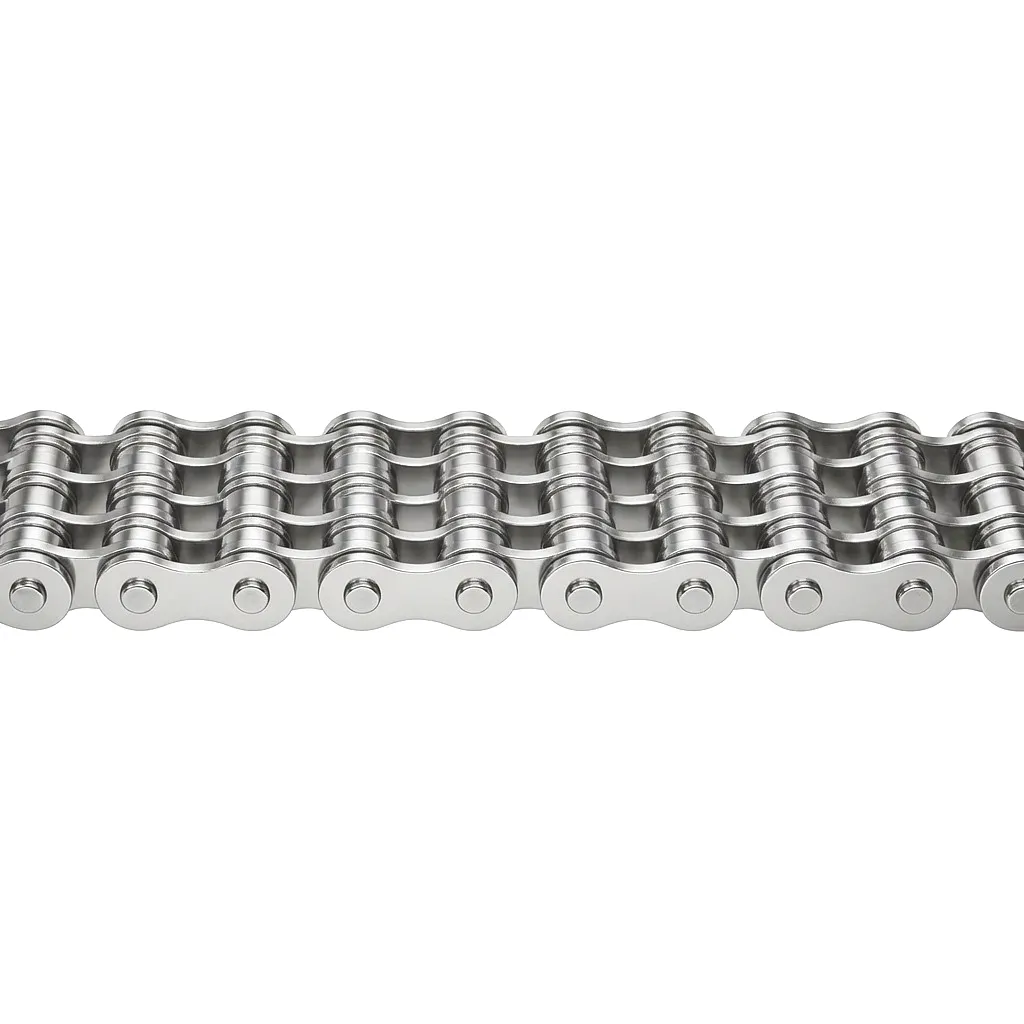 The Challenge: Fenland Agricultural Parts supplies replacement components to cotton-gin operators and cotton picker service workshops across the East of England. Their customers were experiencing repeated mid-season leaf chain failures on Case IH Module Express 635 cotton pickers — the chains being sourced from a generic catalogue supplier were failing at 40–60% of their rated service life, causing up to three unplanned stoppages per machine per harvesting season. Each breakdown in the field cost operators an estimated £1,800–£2,400 in downtime, labour and emergency parts logistics.
The Solution: After reviewing test data and material certification documentation from Ever Power, Fenland’s technical director elected to trial our BL 1034 leaf chain with 20MnTiB alloy plates and shot-peened finish across a fleet of 14 machines over one full harvest season. Ever Power provided a dedicated application engineering consultation to verify correct chain selection, tension setting and lubrication schedule for the specific header lift and bale ejection assemblies on the 635 platform.
The Result: Zero mid-season chain failures across all 14 machines. End-of-season chain elongation measurements showed an average pitch elongation of 0.7% — well within the 3% condemn limit — suggesting a viable second season of service on most chains. Fenland’s customers recorded a 68% reduction in chain-related downtime costs compared to the previous season. Fenland Agricultural Parts now holds Ever Power leaf chain as their standard stocked product for all cotton picker applications and has expanded the relationship to include forklift and grain conveyor chain supply.
What Our Customers Say
“We switched our cotton picker header chain supply to Ever Power two seasons ago. The difference in service life is genuinely remarkable — we’ve gone from replacing chains every season to what looks like a two-season minimum, even on our heaviest machines. The documentation pack was exactly what we needed for our ISO audit as well.”
“The customisation capability was the deciding factor for us. We needed a non-standard chain length for a prototype harvesting attachment we were developing, and Ever Power’s engineers turned around a confirmed quotation with full material specs within 48 hours. Lead time on the actual production run was four weeks from drawing approval — competitive with anything else we’d seen in the market.”
“I’ve been sourcing agricultural chain components for over twelve years, and the consistency of Ever Power’s product is genuinely above average. Batch-to-batch variation in pin hardness and plate dimensions is tighter than most European catalogue suppliers we’ve tested. For cotton harvester applications where a chain failure mid-field means real money lost, that consistency is worth a premium.”
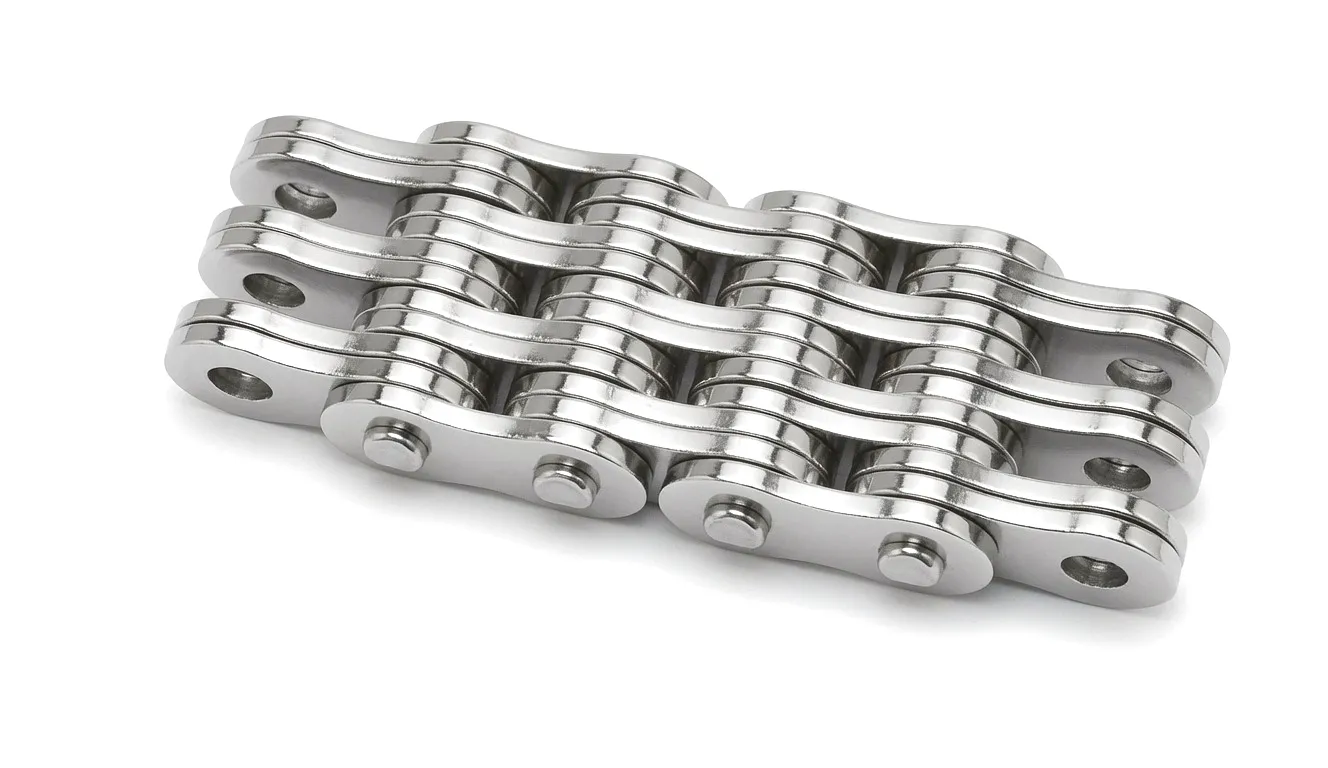

How to Select the Right Leaf Chain Grade for Your Cotton Picker
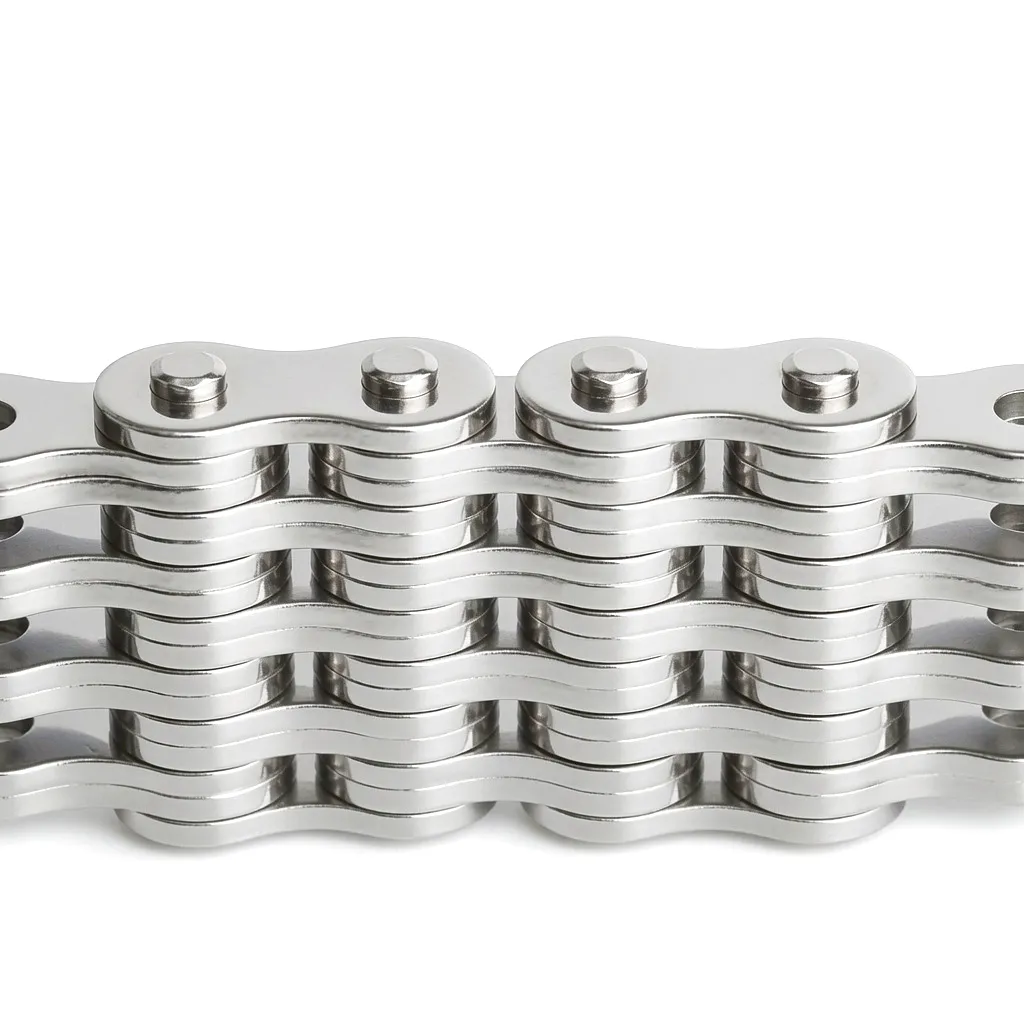 Selecting an appropriate листовий ланцюг for a cotton picker application requires more than matching the pitch to the existing chain. Engineers and procurement managers need to evaluate the complete operating profile — and in our experience working with agricultural equipment teams across the UK and globally, getting this process right at the specification stage can halve the total chain consumption cost over a machine’s service life.
The process begins with identifying the maximum static working load the chain must hold — typically the weight of the fully loaded header assembly on the lift chain, or the maximum bale compression force on the ejection chain. Add a minimum safety factor of 4:1 for standard applications, 6:1 where shock loading is anticipated. Then cross-reference the required tensile capacity against the space envelope available in the chain housing to select the appropriate lacing width. Finally, confirm that the selected pitch fits the existing sheave geometry, or specify sheave modifications if a pitch change is being made. Our UK-based technical support team can assist with each step of this process, and we regularly provide application engineering support to equipment designers and aftermarket service teams operating across England, Scotland and Wales.
Measure or calculate the maximum tensile load the chain must support at peak harvest conditions, including dynamic loads from machine motion on uneven terrain.
Multiply the working load by your chosen safety factor (minimum 4:1). For cotton picker header lift with significant shock, we recommend 5:1–6:1 to account for field terrain variability.
Select a leaf chain pitch and lacing combination whose minimum tensile strength exceeds your factored load. Check that the assembled chain width fits within the housing groove or guide channel.
For UK field conditions — wet autumns, morning dew, coastal salt exposure — specify zinc-phosphate or nickel-plated finish. Confirm lubrication schedule to maintain pin/plate contact surfaces.
Часті запитання
Answers to real questions from UK agricultural equipment buyers and machinery engineers.
Ready to Upgrade Your Cotton Picker’s Leaf Chain?
Talk to our application engineering team today. We supply UK agricultural distributors, OEM manufacturers and service workshops with precision leaf chain built to your exact specification — with material documentation, competitive wholesale pricing and rapid dispatch from stock.
© Ever Power Leaf Chain — Professional Agricultural & Industrial Chain Solutions | UK B2B Enquiries: [email protected] | edit by gzl