
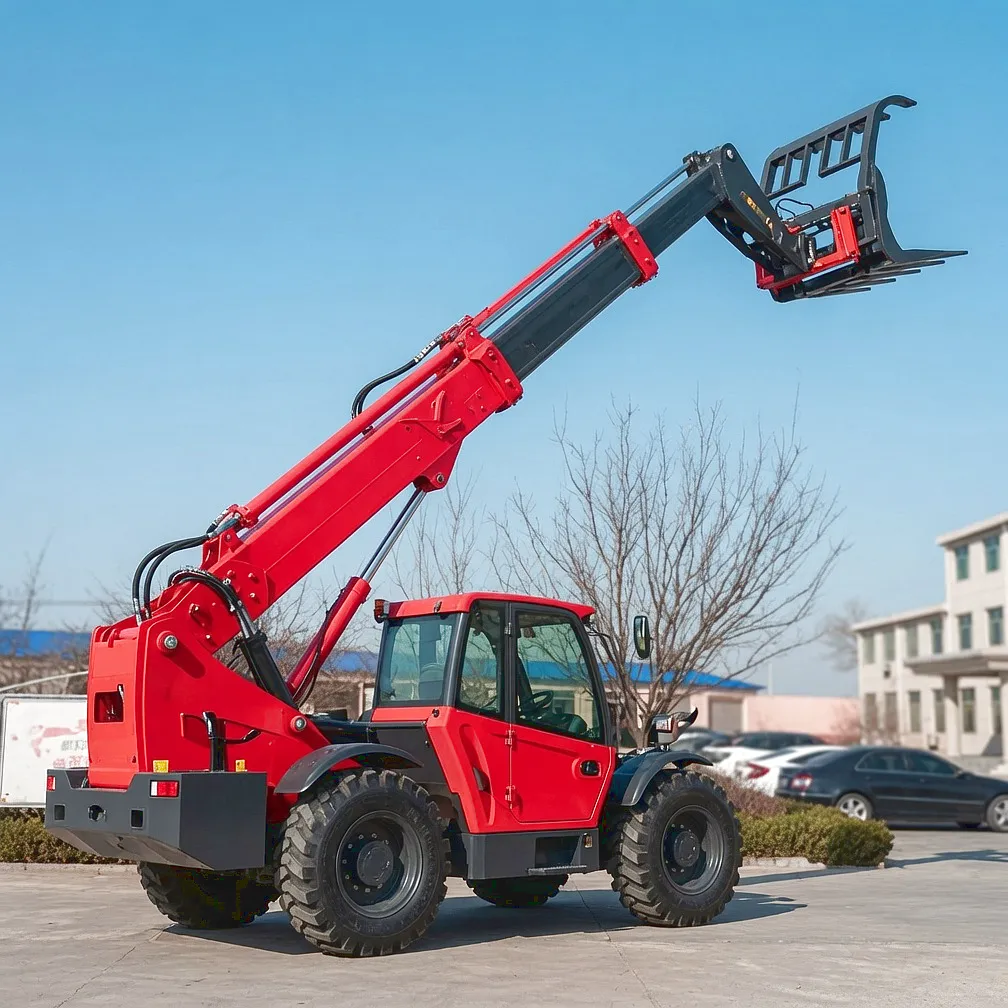
 Walk around any construction site in the UK — from housing developments in Manchester to agricultural yards across Yorkshire — and the telehandler has become as fundamental as the digger. These versatile machines have quietly replaced dozens of specialist pieces of equipment, and their ability to work at height while carrying substantial loads is what makes them irreplaceable. But this versatility creates a unique engineering challenge: the mast and boom cylinder must be guided by a chain that can handle asymmetric loading, sudden shock forces, and years of outdoor exposure without a single point of failure.
That chain is the leaf chain — sometimes called a flat-link chain, laminated chain, or forklift balance chain. It is the component specified by every major OEM from JCB to Manitou, from Merlo to Caterpillar, precisely because nothing else delivers the combination of tensile strength, flexibility, and fatigue resistance that a working telehandler demands. This article examines why leaf chain is the correct engineering choice, how to specify it accurately, and how Ever Power’s manufacturing capability supports UK-based operators, hire companies, and distributors who need reliable supply and genuine customisation.
What Exactly Is a Leaf Chain and Why Does the Telehandler Need It?
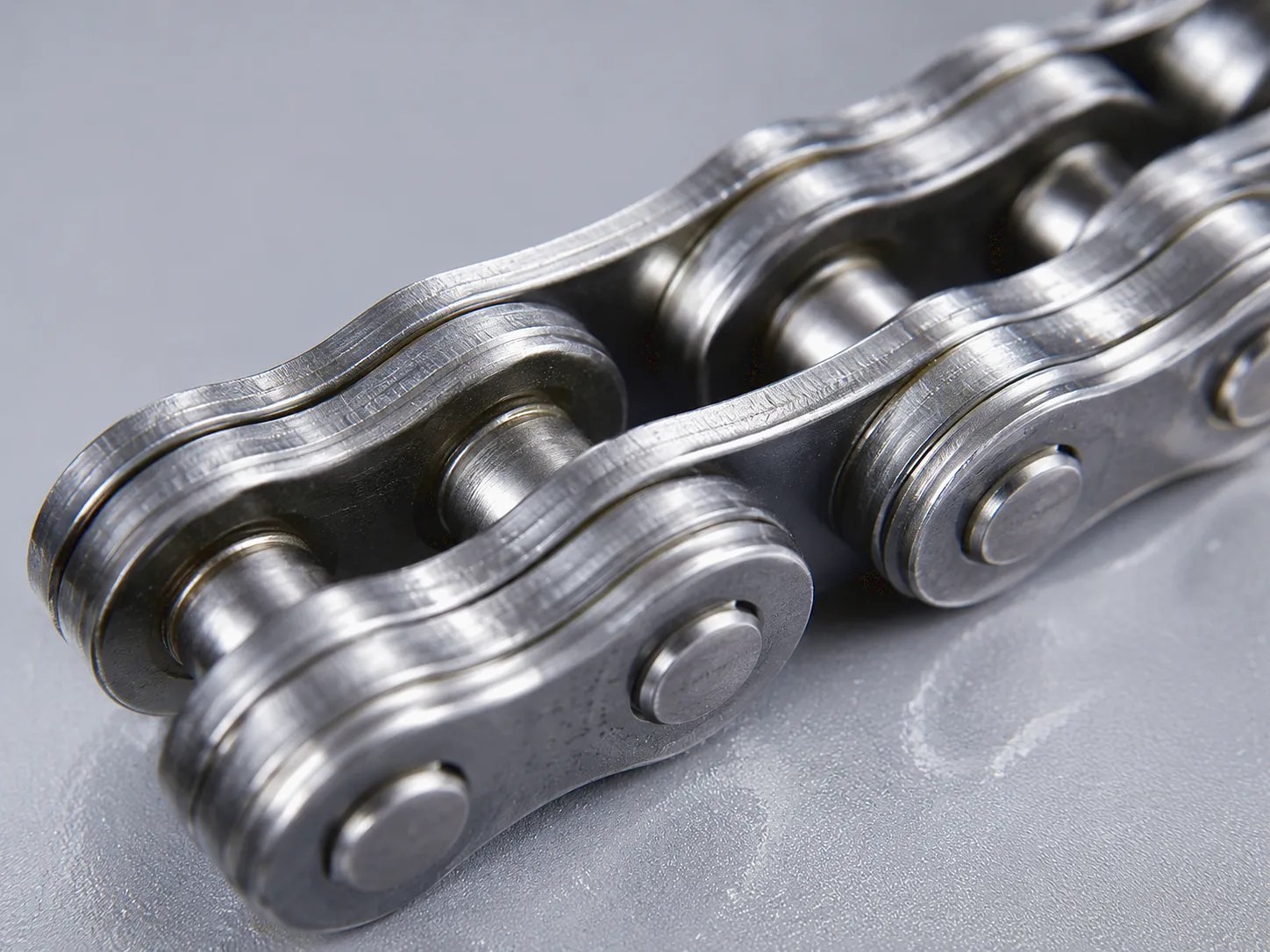
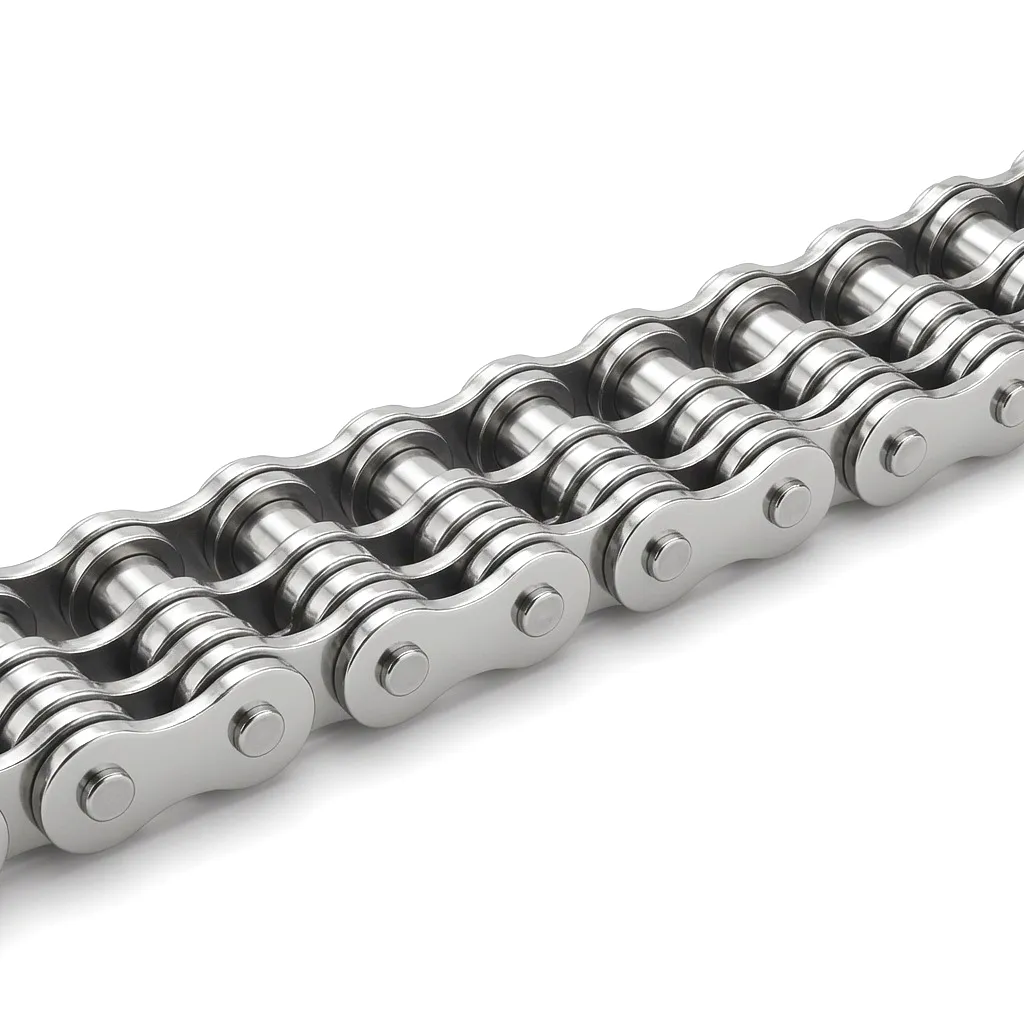
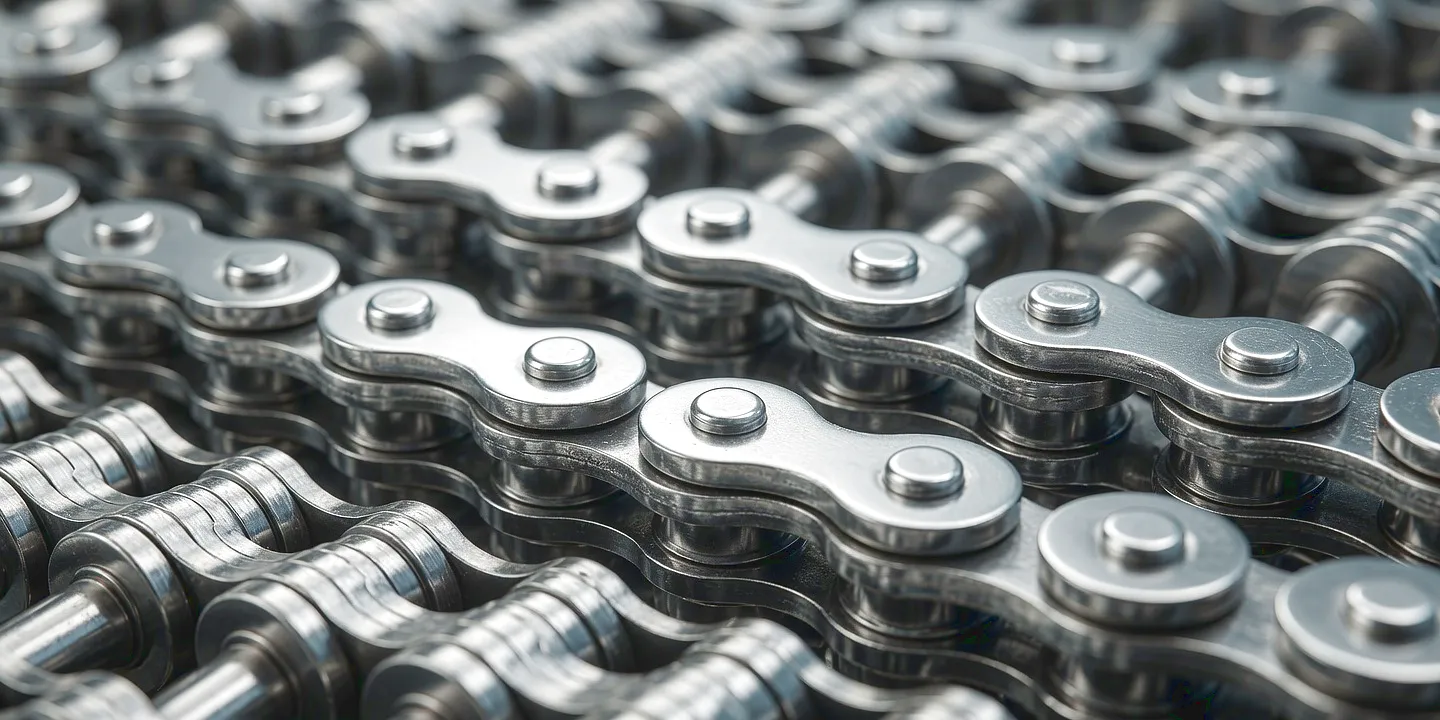
 A leaf chain is a type of power transmission chain constructed entirely from interleaved flat steel plates — called link plates or lacing — secured by precision-machined pins. Unlike roller chain, there are no rollers or bushings. The design is deliberately simple, and that simplicity is its greatest engineering virtue. Every element of the cross-section contributes to tensile strength. There are no hollow components to deform under shock loading and no rotating parts to wear out unevenly. When a load is applied, force distributes evenly across all lacing plates in parallel, making the assembly extraordinarily resistant to sudden spikes — exactly the loading profile generated when a telehandler driver raises a loaded pallet quickly or brakes on a slope.
In a telehandler, the leaf chain connects the boom cylinder rod end to a fixed anchor point, running over a sheave to create a mechanical advantage that multiplies the cylinder’s force while controlling movement. The chain must flex cleanly around the sheave radius — which is often tighter than many engineers expect — while maintaining zero elongation under load. Any stretch introduces positional error that the machine’s load management system may not compensate for, creating tilt instability. This is why the leaf chain specification is not interchangeable across models: sheave diameter, pin diameter, and breaking load are all matched precisely during OEM design.
How the Telehandler’s Boom System Actually Works — and the Chain’s Role Within It
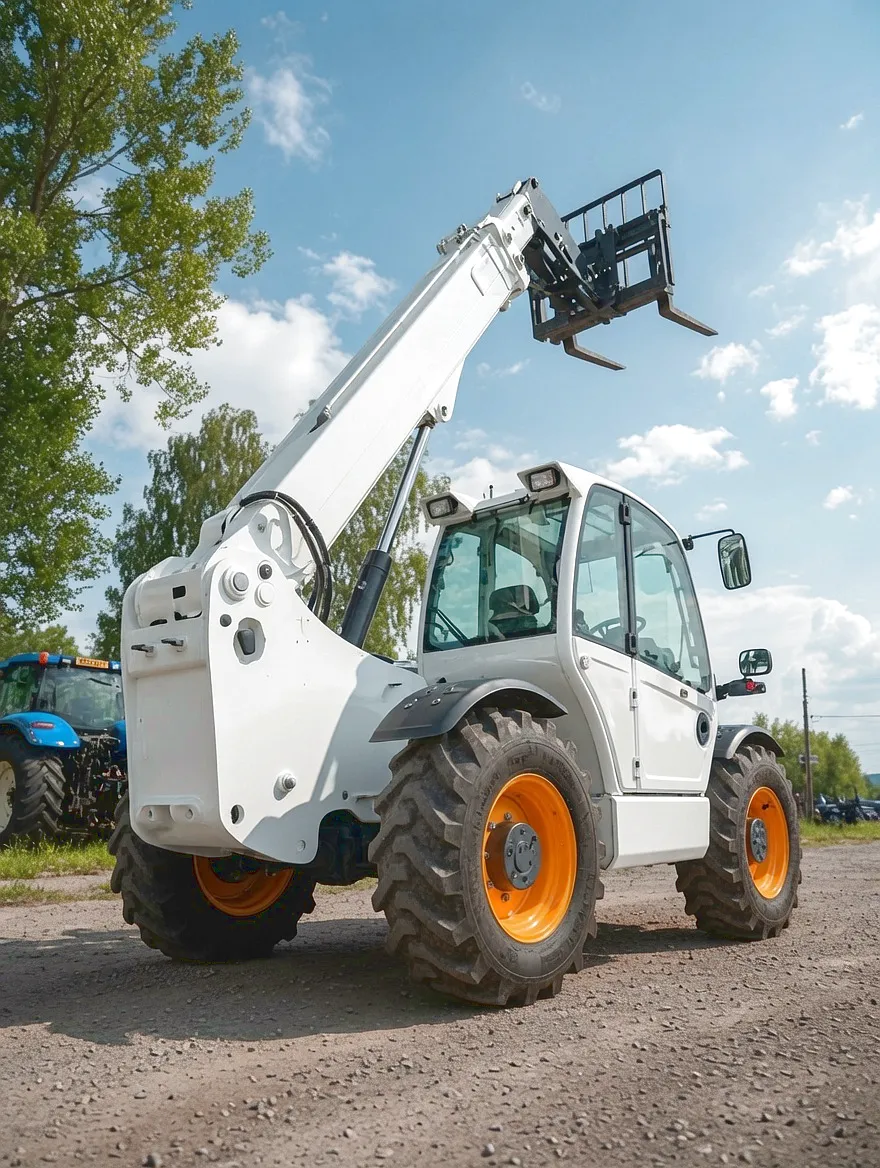
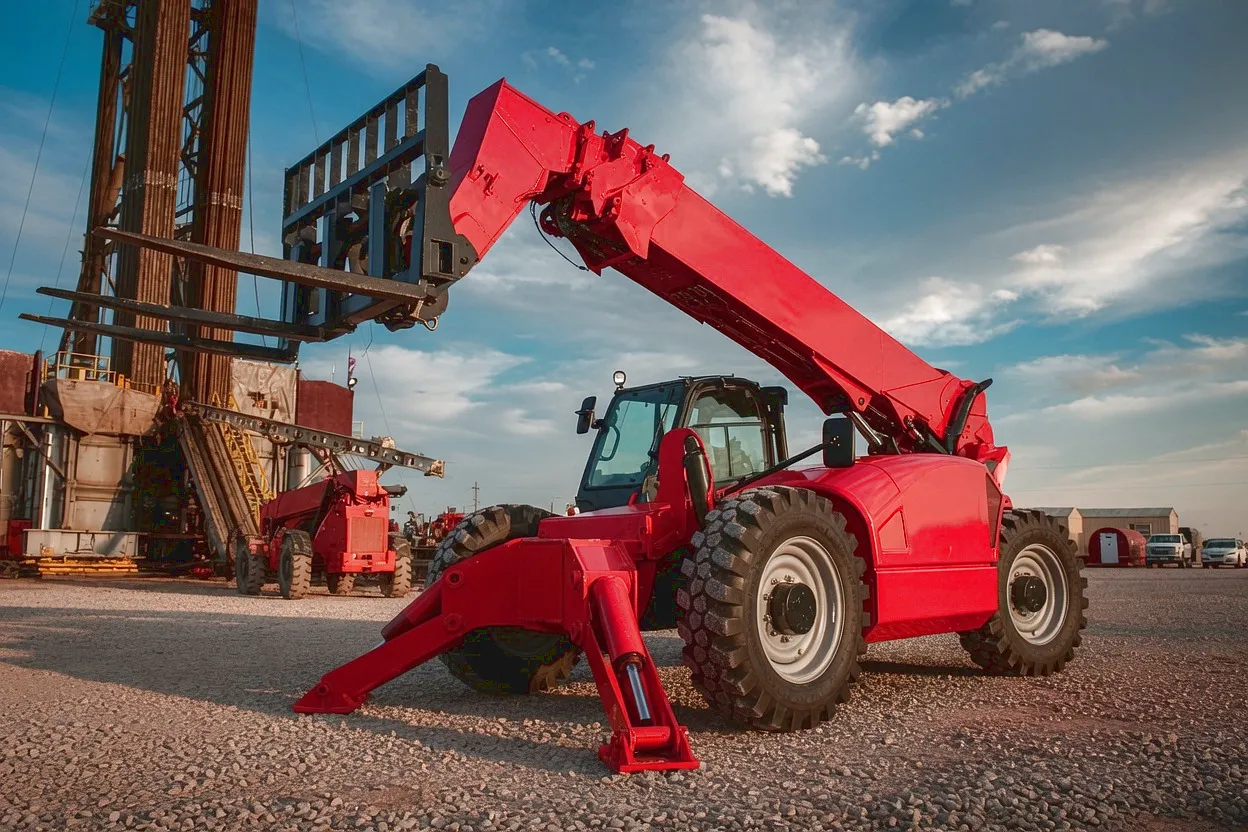
Modern telehandlers are available in rotating and fixed-boom configurations, with lifting capacities typically ranging from 2.5 tonnes to over 6 tonnes and maximum working heights stretching beyond 20 metres on specialist machines. Regardless of the specific design, every model relies on hydraulic cylinders to extend the boom sections and raise the load. These cylinders produce linear force, but the geometry of the telescoping boom means that force must be translated, reversed, and multiplied as each boom section deploys. The mechanism that accomplishes this across multiple stages is the leaf chain and sheave assembly.
As the inner boom section extends, the leaf chain — anchored to the outer boom on one end and to the inner boom on the other, routed over a sheave attached to the hydraulic cylinder rod — moves at twice the cylinder’s speed. This double-reeving arrangement is what allows a relatively compact cylinder to produce boom extension almost double its own stroke. The chain therefore cycles through millions of bend-and-straighten events over the machine’s service life. Fatigue resistance in the pin-plate interface is the single most important property the chain must possess, and it is the parameter that separates premium-grade leaf chain from commodity replacements.
Technical Specifications: Ever Power Leaf Chain for Telehandler Applications
The table below covers the primary leaf chain series available from Ever Power’s manufacturing facility, covering the BL (Balanced Lacing) series most frequently specified for telescopic handler boom and mast cylinders. All chains conform to ISO 4347 dimensional standards and are produced under a quality management system aligned with ISO 9001. Tensile values quoted are minimum breaking loads; working load limits should be applied with the safety factor appropriate to the application’s duty cycle and shock loading profile.
| Chain Series | Pitch (mm) | Pin Dia. (mm) | Min Break Load (kN) | Plate Material | Surface Treatment | Typical Application |
|---|---|---|---|---|---|---|
| BL534 | 15.875 | 5.0 | 16.8 | Carbon Steel | Shot Blast + Oiled | Light-duty telehandler inner stage |
| BL646 | 19.05 | 6.35 | 31.1 | Alloy Steel | Zinc-Nickel Plated | Medium telehandler, 2.5t–3.5t class |
| BL1046 | 31.75 | 9.53 | 68.9 | Alloy Steel | Heavy Zinc Phosphate | Standard 4t–5t telehandler boom |
| BL1622 | 50.8 | 14.29 | 160.1 | High-Alloy Steel | Industrial Corrosion Inhibitor | Heavy-duty 6t+ rotating telehandler |
| BL2022 | 63.5 | 19.05 | 231.8 | High-Alloy Steel | Custom Per Spec | Industrial crane-telehandler hybrid / special vehicles |
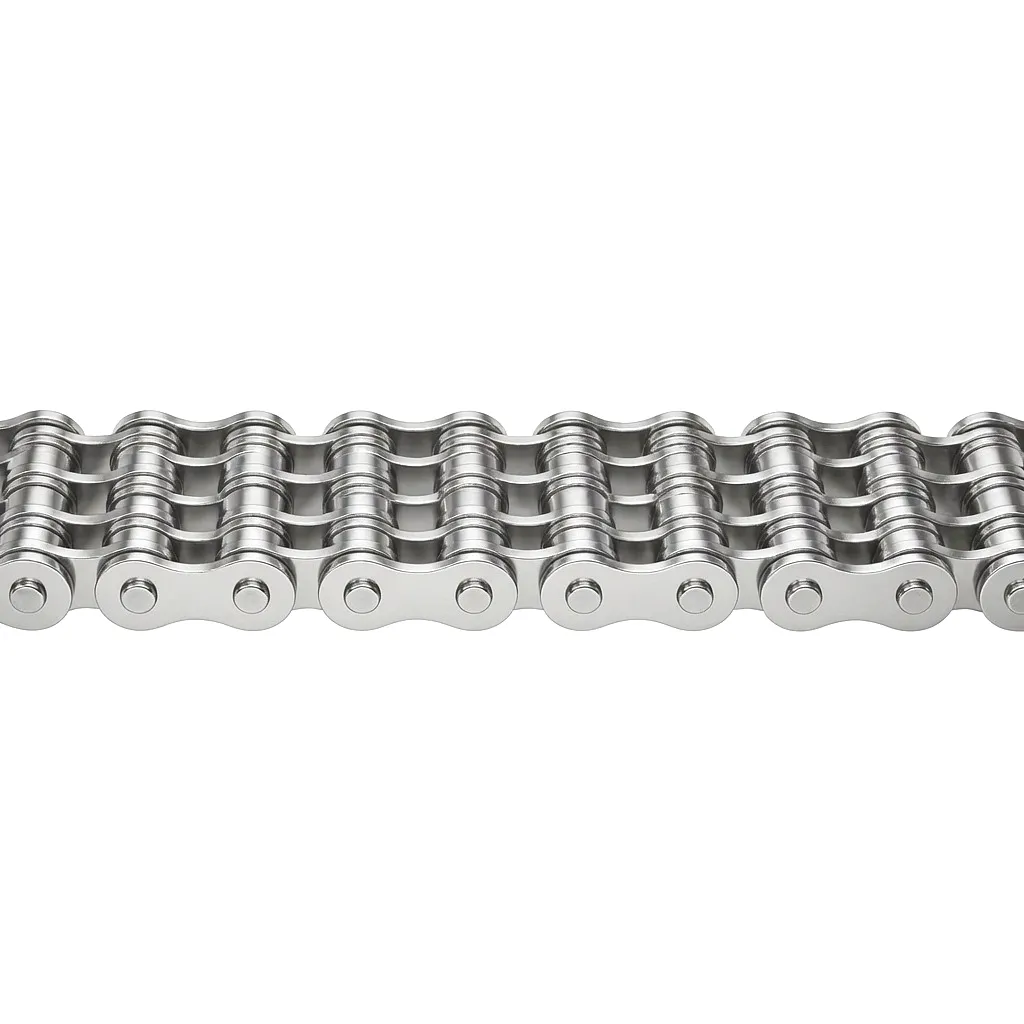
All specifications subject to verification at point of order. Custom lacing configurations (e.g. 2×4, 4×4, 6×6) available on request. Contact Ever Power for application-specific sizing assistance.

Material Science Behind the Chain: What Makes a Good Telehandler Leaf Chain
The link plates that form the backbone of a leaf chain are typically stamped from medium-carbon alloy steel strip — usually conforming to grades equivalent to 40Cr or 42CrMo4 in European standards. The exact chemistry is carefully controlled to achieve the right balance between hardness after heat treatment (which delivers tensile strength) and residual ductility (which provides the fatigue life that prevents brittle fracture). A plate that is too hard will crack under cyclic bending; one that is too soft will yield under shock loading. Heat treatment control — particularly the quench rate and temper temperature — is where experienced chain manufacturers differentiate themselves from lower-cost alternatives.
The connecting pins are typically manufactured from case-hardened alloy steel with a carburised outer layer of typically 0.8mm–1.2mm depth. This creates a very hard wear surface to resist the sliding contact with the plate holes, while retaining a tough core that can absorb bending stress without brittle fracture. Pin straightness tolerance is critical: any deviation introduces a stress concentration at the plate bore contact edge that can initiate fatigue cracks well below the nominal breaking load. Ever Power manufactures pins to a cylindricity tolerance of 0.005mm across full production batches, verified by 100% dimensional checking on CMM equipment.
ISO 4347 · ISO 9001 Aligned · 100% CMM Dimensional Check · Full Material Traceability
Why Engineers and Fleet Managers Choose Ever Power Leaf Chain
Superior Fatigue Resistance
Precisely controlled heat treatment produces link plates with a fatigue strength that exceeds ISO 4347 minimum requirements by a verified margin, proven through third-party fatigue testing at rated load cycles.
Corrosion Protection for UK Conditions
UK construction and agricultural environments are notoriously harsh — high rainfall, de-iced roads, and coastal salt air accelerate rust on unprotected steel. Ever Power’s zinc-nickel plating option delivers 500+ hours to red rust in neutral salt spray testing, far exceeding standard hot-dip zinc coatings.
Dimensional Accuracy for Drop-In Replacement
Every batch is dimensionally verified against ISO 4347 tolerances before shipment. UK telehandler service centres and OEM parts distributors can specify Ever Power chains with full confidence that pin diameter, plate width, and assembled pitch length will match original equipment exactly.
Custom Lengths and End Fittings
Cut-to-length chains with swaged or clevis end fittings are manufactured to customer-supplied drawings. This service is especially valued by UK telehandler re-manufacturers and specialist hire companies rebuilding machines to a non-standard configuration.
Fast Lead Times and Global Logistics
Standard series items are held in finished goods stock, enabling dispatch within 48 hours of order confirmation. Ever Power works with established freight partners to ensure consistent transit times to UK ports and distribution centres, with full documentation for customs clearance.
Full Traceability Documentation
Every shipment is accompanied by a material certificate (EN 10204 3.1), dimensional inspection report, and batch traceability number. This documentation is essential for OEM-supplier qualification, machine re-certification, and LOLER compliance recording in the UK.
Where Telehandler Leaf Chains Are Used Across UK Industries
The telescopic handler has penetrated virtually every sector of UK industry that moves materials over height. Each application environment imposes slightly different demands on the leaf chain, and understanding these nuances is essential when specifying replacement or upgrade chains. The table below maps the key UK industries against the specific challenges their environments present to the chain assembly.
| UK Sector | Typical Machine Class | Environmental Challenge | Recommended Chain Treatment |
|---|---|---|---|
| House Building / Construction | 3t–4t Fixed Boom | Mud, cement slurry, constant rainfall | Zinc phosphate + heavy lube |
| Agriculture / Farming | 4t–6t Fixed Boom | Fertiliser dust, slurry, seasonal freeze-thaw | Stainless pin option or Zn-Ni plate |
| Steel Stockholding / Warehousing | 4t–5t Rotating | Indoor dust, occasional shock load | Standard oiled, high fatigue grade |
| Ports and Dockside | 5t–7t Heavy Rotating | Salt air, sea spray, high cycle rate | Marine-grade corrosion inhibitor + Zn-Ni |
| Waste and Recycling | 3t–5t Fixed Boom | Acidic leachate, abrasive grit, UV exposure | Epoxy-coated plates + case-hardened pins |
| Events / Stage Rigging | 2.5t Compact Rotating | High aesthetic demand, indoor | Bright zinc / polished finish available |
LOLER Compliance, Inspection Intervals, and Chain Life in UK Operations
In the UK, telehandlers fall under the Lifting Operations and Lifting Equipment Regulations 1998 (LOLER), which requires thorough examination of lifting equipment at intervals not exceeding 6 months when used to lift people, or 12 months for general lifting operations — unless a written examination scheme specifies otherwise. The leaf chain is specifically identified as a safety-critical component that must be examined as part of this process. Inspectors check for elongation, plate cracking, corrosion, pin rotation (an indicator of extreme wear), and any visible surface damage.
Industry guidance, including that from the Construction Plant-hire Association (CPA) and the Fork Lift Truck Association (FLTA), typically recommends immediate chain replacement if visible elongation exceeds 3% of a measured section length, if any plate cracking is visible, or if pin rotation is detected. In practice, many UK fleet operators working construction sites or agricultural applications are replacing chains every 2,000–3,000 operational hours as a planned maintenance action to avoid unplanned downtime. This is exactly the kind of repeat-purchase relationship that Ever Power’s stocked inventory and rapid dispatch capability is designed to support.
Ever Power Manufacturing: Where Precision Meets Scale — and Customisation Is Standard
Ever Power operates a purpose-built manufacturing facility where the entire leaf chain production process — from raw steel strip incoming inspection through to final testing and packaging — is controlled under a single quality management system. This vertical integration is not common in the chain industry, where many suppliers are traders rather than manufacturers. For customers needing genuine product customisation, the distinction is critical: Ever Power can actually change the metallurgy, the surface treatment, the pin geometry, and the end fitting design, not merely relabel a standard product.
The facility’s custom fabrication department handles non-standard chain assemblies for OEM programmes, re-manufacturing operations, and specialist applications that simply cannot be served by off-the-shelf products. UK customers have requested everything from chains with integrated wear sensors to assemblies with specific pre-set lengths for drop-in fitment to a particular machine model. The engineering team works from customer-supplied drawings or from dimensional data taken from a sample assembly, and prototype sign-off typically takes 3–4 weeks before production commences.
For UK telehandler hire companies managing fleets of 50 or more machines, the ability to establish a standing supply agreement with fixed pricing, agreed lead times, and guaranteed dimensional conformance transforms the chain from a reactive maintenance purchase into a managed inventory item. This kind of supply partnership is exactly what Ever Power is structured to deliver, with dedicated account management and a documented change-control process so that any modification to the product specification is captured and agreed in writing before production.
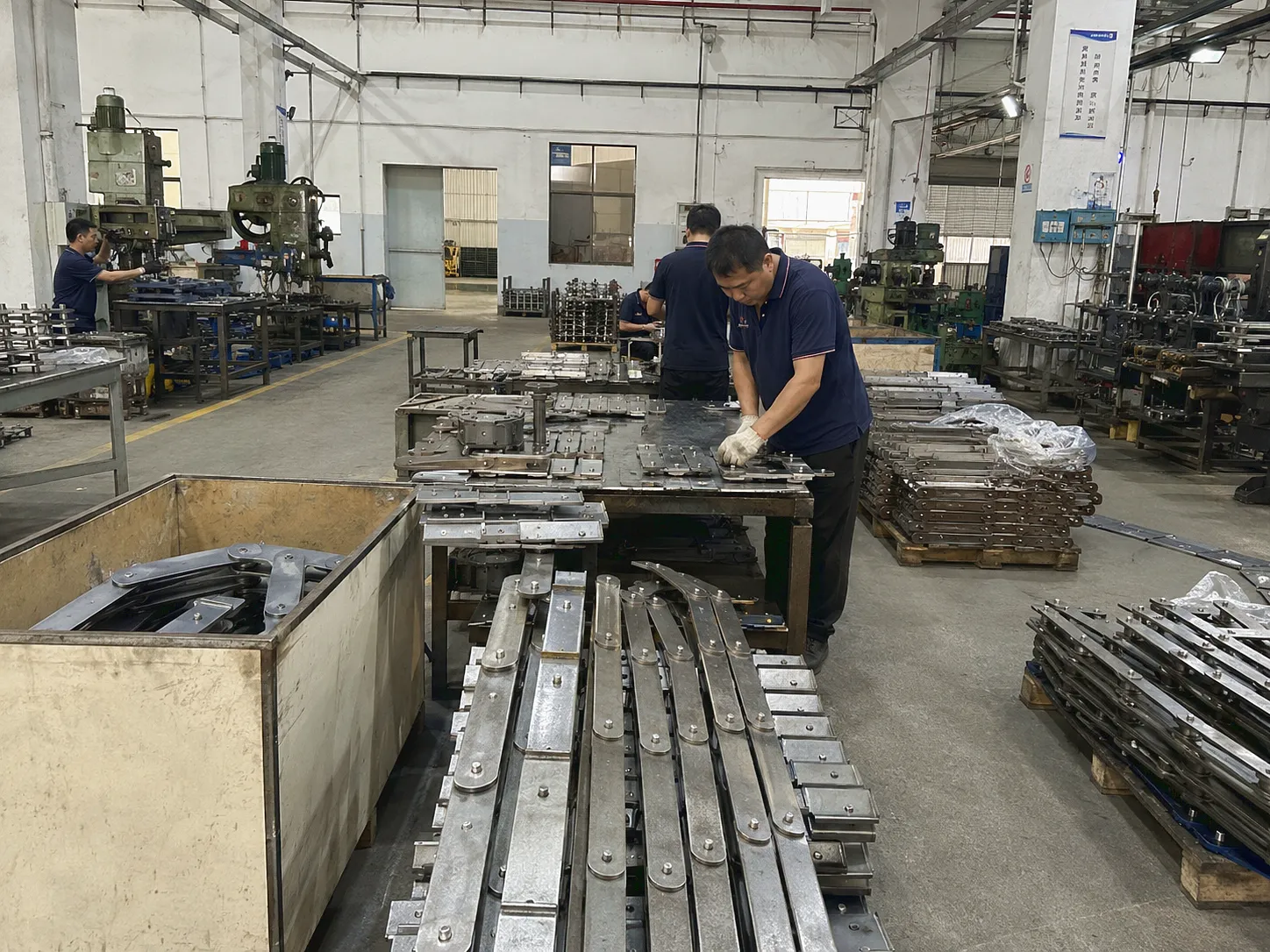
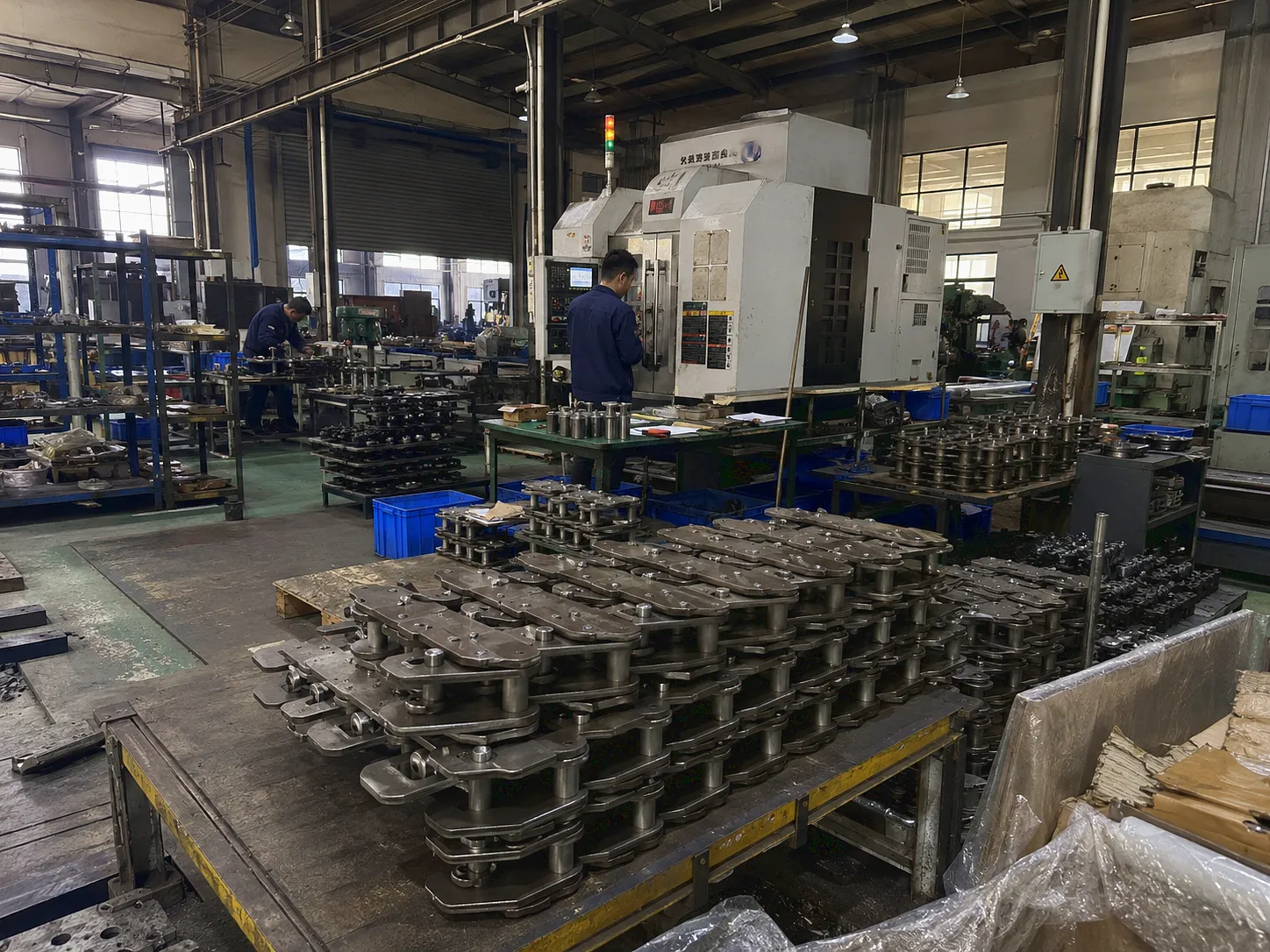
Whether you need 10 chains urgently for a breakdown repair programme or 500 assemblies quarterly for an OEM production line, Ever Power’s production planning team can accommodate the volume and lead time requirements specific to your business.
Customer Success: Real Results from UK Operations
Northern Hire Co. operates a fleet of 87 telehandlers across Yorkshire and the wider North of England, supplying machines predominantly to the house-building and infrastructure sectors. Prior to partnering with Ever Power, the company sourced chuỗi lá replacements from a regional distributor who could not guarantee consistent dimensional accuracy across deliveries. Chain elongation rates were higher than expected and two machines required unplanned downtime within 18 months of receiving new chains from an unknown origin.
After switching their standard telehandler boom chain supply to Ever Power’s BL1046 grade with zinc-nickel plating, Northern Hire Co. tracked a 34% reduction in chain-related workshop visits over the following 24-month period. The EN 10204 3.1 material certificates supplied with each order also simplified their LOLER documentation audit, which had previously been a time-consuming process when dealing with suppliers who could not provide full traceability.
Key Outcomes:
Full LOLER traceability achieved
Drop-in dimensional compatibility confirmed
“We run a large hire fleet and chain quality is absolutely critical for LOLER compliance. Ever Power’s documentation package takes the stress out of our thorough examination process. The chains themselves have outlasted everything else we have tried at a comparable price point.”
“Our Manitou MT1440 telehandlers work hard on a 700-hectare arable operation. We have coastal fields and exposure to fertiliser through the year, so corrosion on the boom chains is a real issue. Since switching to Ever Power zinc-nickel chains, we have not had to replace a chain mid-season, which is a big deal during harvest.”
“As a parts distributor supplying independent workshops across the Midlands, we need a chain supplier who can provide consistent quality and accurate delivery windows. Ever Power ticks every box — competitive price, reliable lead times, and the kind of technical backup that means our customers trust us when we recommend a replacement part.”
How to Specify and Order the Right Leaf Chain for Your Telehandler
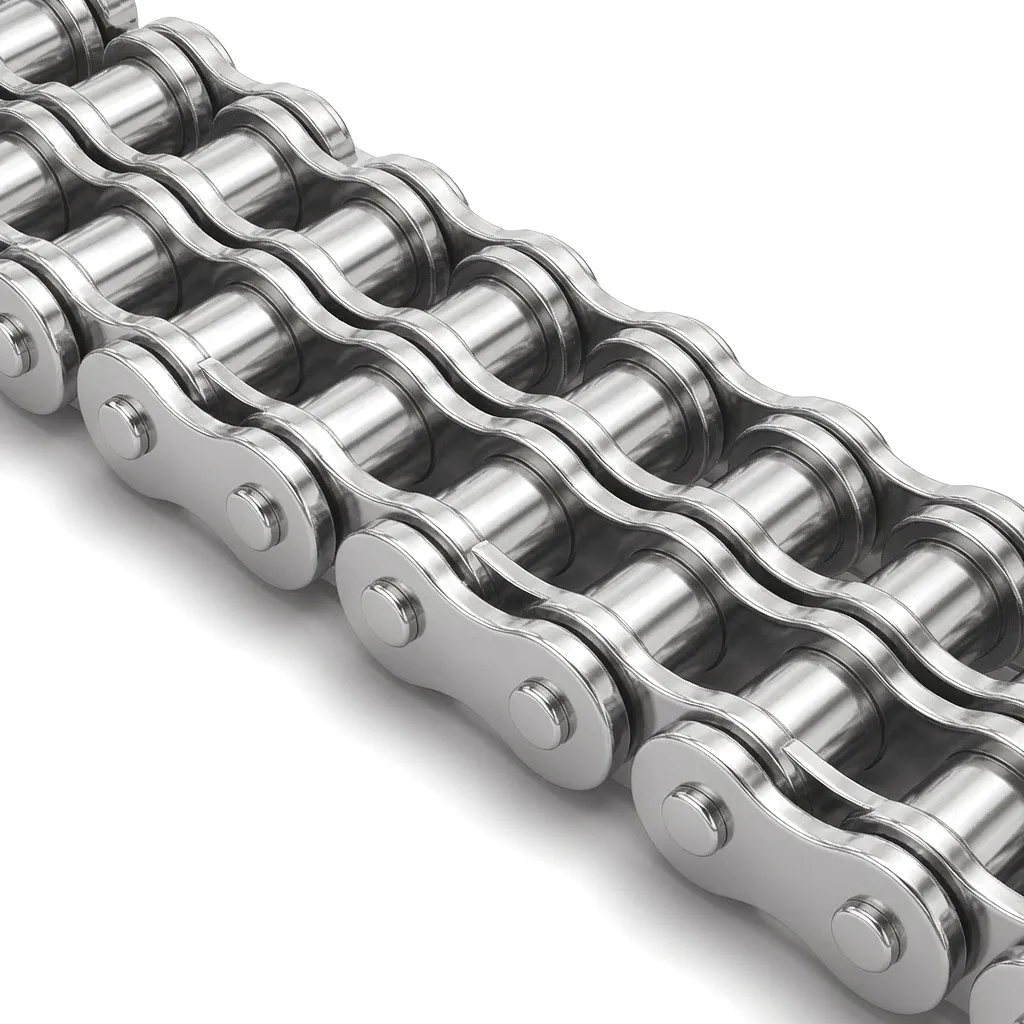 Getting the chain specification right matters far more than simply matching the part number on the old chain. Many machines in UK service have had non-standard replacements fitted at some point in their working life, meaning the chain currently installed may not be the originally specified item. The safest approach is to measure the chain directly and cross-reference against ISO 4347 series designations. The key measurements required are pitch (centre-to-centre distance between pin holes, measured over a number of pitches and divided for accuracy), pin diameter, plate thickness, inner and outer width of the assembled chain, and overall length including end fittings.
If you have the machine model and serial number, Ever Power’s technical team can often identify the original specification from the OEM service documentation library, or from accumulated data on the most common variants in UK service. Where a machine has been modified or where the application involves non-standard loading, Ever Power’s application engineers can work through the load analysis with you to recommend the correct grade and lacing configuration.
Step 1: Measure
Record pitch, pin diameter, plate width, overall length, and end fitting type
Step 2: Identify
Match to ISO 4347 BL series or send measurements to Ever Power’s team
Step 3: Enquire
Contact Ever Power with your specification for a price and lead time within 24 hours
Step 4: Receive
48-hour dispatch on stocked items, with full documentation and tracked delivery
Premium-Grade vs Low-Cost Leaf Chain: A True Cost Comparison for UK Operators
The temptation to reduce chain replacement costs by purchasing from the cheapest available source is understandable, especially for hire companies managing tight maintenance budgets. However, the total cost of ownership calculation consistently favours premium-grade chain over budget alternatives. The table below illustrates the key differences that translate into real operational costs in a UK construction hire environment, based on an assumed fleet of 20 telehandlers each operating 1,800 hours per year on active sites across England.
| Factor | Budget Chain | Ever Power Premium |
|---|---|---|
| Typical service life (construction) | 1,200–1,800 hrs | 2,500–3,500 hrs |
| Annual replacements per machine | 1–1.5 | 0.5–0.7 |
| LOLER documentation available | Often incomplete | Full EN 10204 3.1 cert |
| Dimensional conformance risk | Moderate–High | Negligible (100% CMM checked) |
| Unplanned downtime risk | Higher | Significantly reduced |
| Custom specification available | Rarely | Yes — including OEM programmes |
Unplanned machine downtime on an active UK construction site carries direct costs — hire fleet lost revenue, site delay penalties, and emergency call-out charges — that dwarf the price difference between budget and premium chain. When the full cost picture is assembled, specifying Ever Power premium leaf chain is not the premium option: it is the economically rational one. The engineering case and the financial case point in exactly the same direction.