
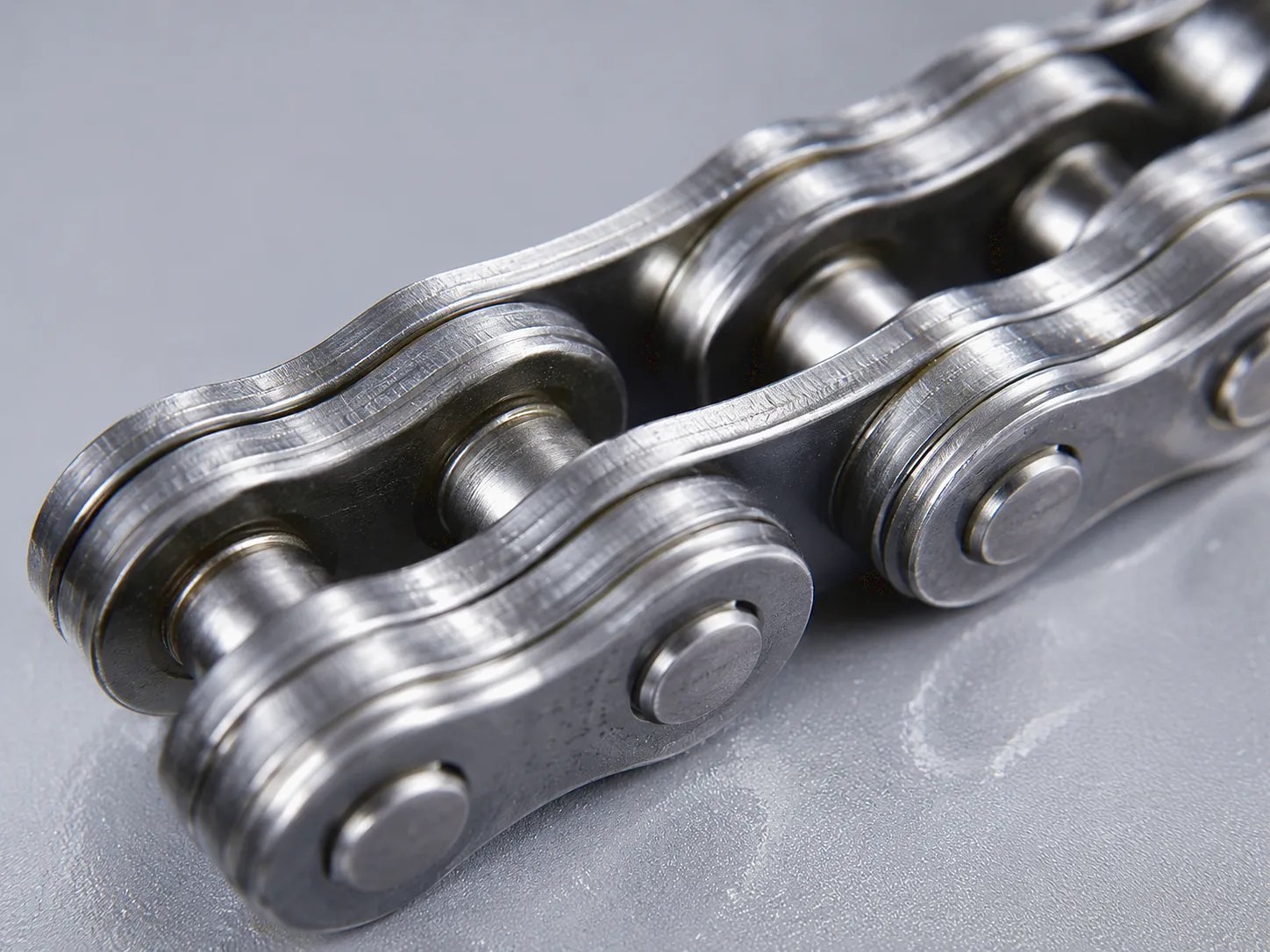
 Walk around any UK construction site, agricultural yard, or industrial facility and you will almost certainly see a telescopic handler at work. These machines — whether a JCB Loadall stretching its boom toward a roof truss, a Manitou MT operator stacking pallets in a cramped warehouse, or a Merlo Panoramic lifting equipment on a Scottish wind farm — all share one critical mechanical dependency: a precisely engineered leaf chain buried inside the boom cylinder assembly.
The leaf chain transmits the enormous tensile forces generated during boom extension and load-bearing cycles. It is not a component that tolerates compromise. An undersized or fatigued leaf chain does not give gradual warning before failure — it snaps, and the consequences for operators, bystanders, and equipment are severe. This is why specifying the right leaf chain from the outset, and maintaining it correctly throughout service life, is a non-negotiable engineering priority for anyone involved in telehandler design, procurement, or fleet management in the United Kingdom.
This guide draws on over 18 years of hands-on application experience with BL and AL series leaf chains across European lifting equipment sectors. Whether you are an OEM engineer finalising a boom specification, a plant hire company evaluating replacement suppliers, or a maintenance team trying to extend chain life in harsh British conditions, you will find the technical depth and practical guidance you need here.
How Leaf Chain Works Inside a Telescopic Boom
Mechanical Principle · Load Path · Failure Modes
Inside every telescopic handler boom, hydraulic cylinders provide the extending force, but it is the leaf chain — looped over a sheave at the cylinder rod end — that translates that hydraulic push into precise, proportional boom extension. The classic 2:1 reeving arrangement means that for every unit of cylinder stroke, the boom extends two units. The leaf chain must sustain the full working load multiplied by the reeving factor, plus dynamic shock loads generated during travel over rough terrain — conditions that are all too common on UK construction sites and Scottish highland farms.
Unlike roller chains, which transmit motion through sprocket engagement, leaf chains work in pure tension across a sheave. This means the load is distributed across the link plates in a fundamentally different way. The interleaved plate construction — with link plates assembled in alternating pairs — creates a structure that is both flexible enough to articulate around the sheave and rigid enough to resist the lateral forces that arise when a telehandler carries a side-offset load or traverses a gradient.
Failure typically initiates at the pin-plate interface rather than in the plates themselves. Fretting fatigue — a micro-motion wear mechanism at pin holes under repeated cyclic loading — gradually removes material from the bore, increasing pin clearance. Once clearance exceeds a critical threshold, individual links begin to carry disproportionate loads, fatigue cracks propagate, and catastrophic fracture becomes inevitable. Understanding this failure mechanism is what drives every design decision in a properly engineered leaf chain.
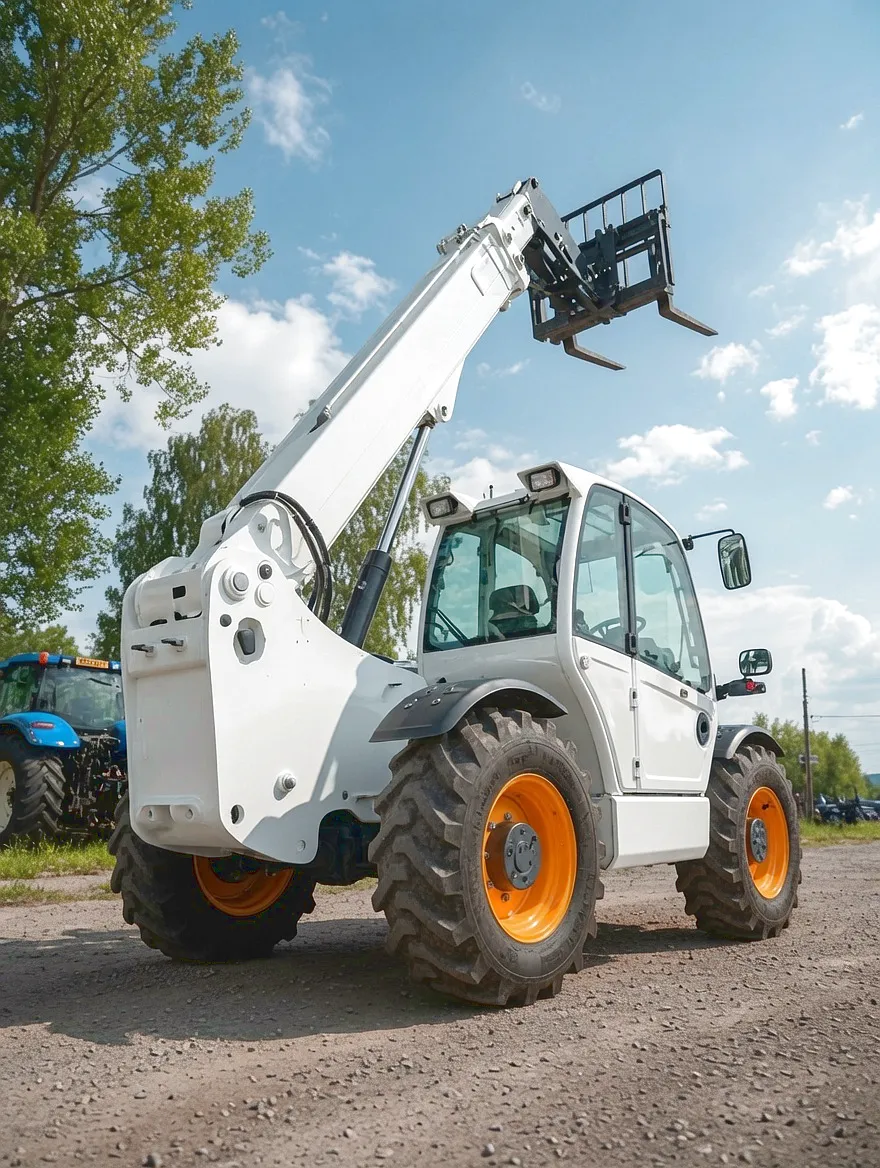
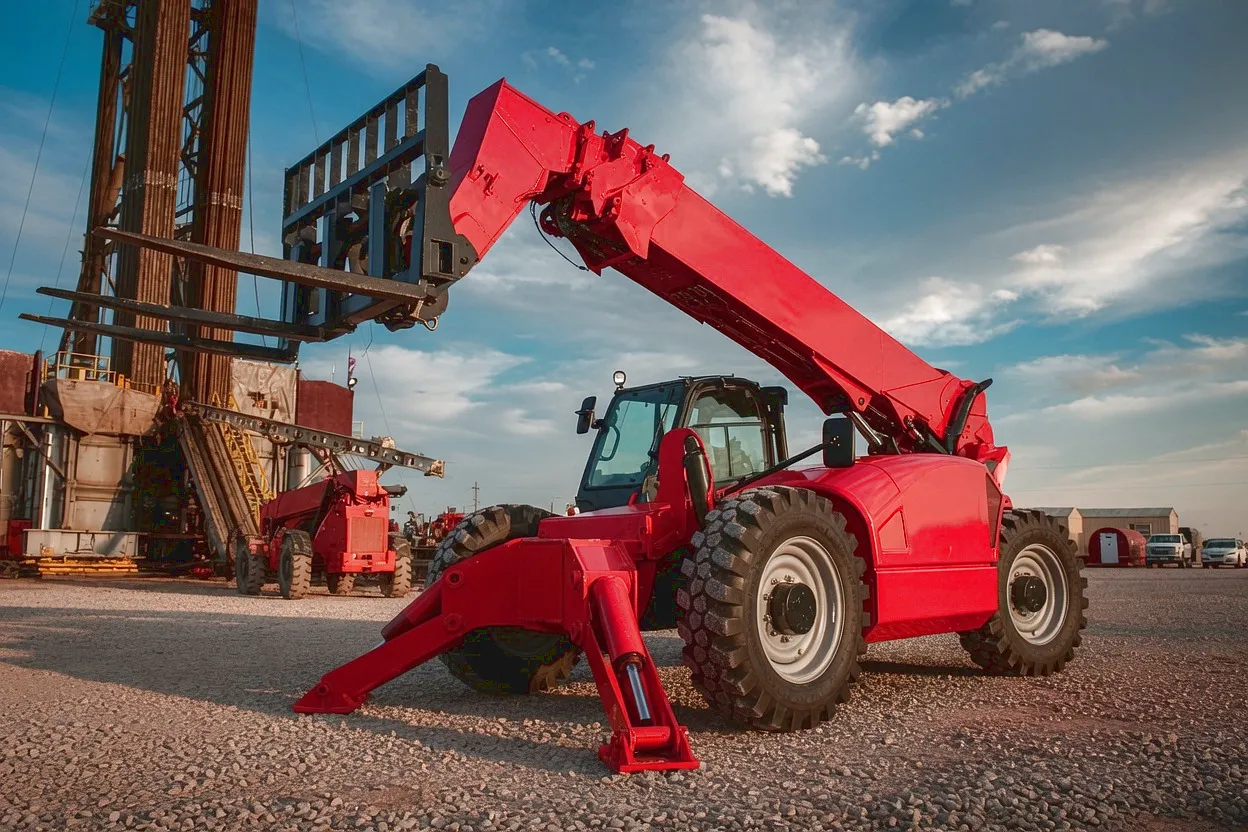
Leaf chain in telescopic handler boom — real-world application
Interleaved Plate Architecture
Multiple link plate pairs share load across the full chain width, distributing stress far more evenly than a single-strand design. The plate count — 2×2, 2×3, 4×4 — is matched to the maximum working load of the application.
Precision Pin-and-Bore Fit
Tight manufacturing tolerances at pin-to-plate bore interfaces minimise fretting fatigue initiation. Ever Power maintains h6/H7 tolerance classes on all pins and bores, validated through CMM inspection at source.
Shot-Peened Fatigue Resistance
Compressive residual stresses induced by shot peening of link plates significantly extend fatigue life under the cyclic loading profiles typical of telehandler boom operation — particularly important for machines working multi-shift in agricultural harvest seasons.

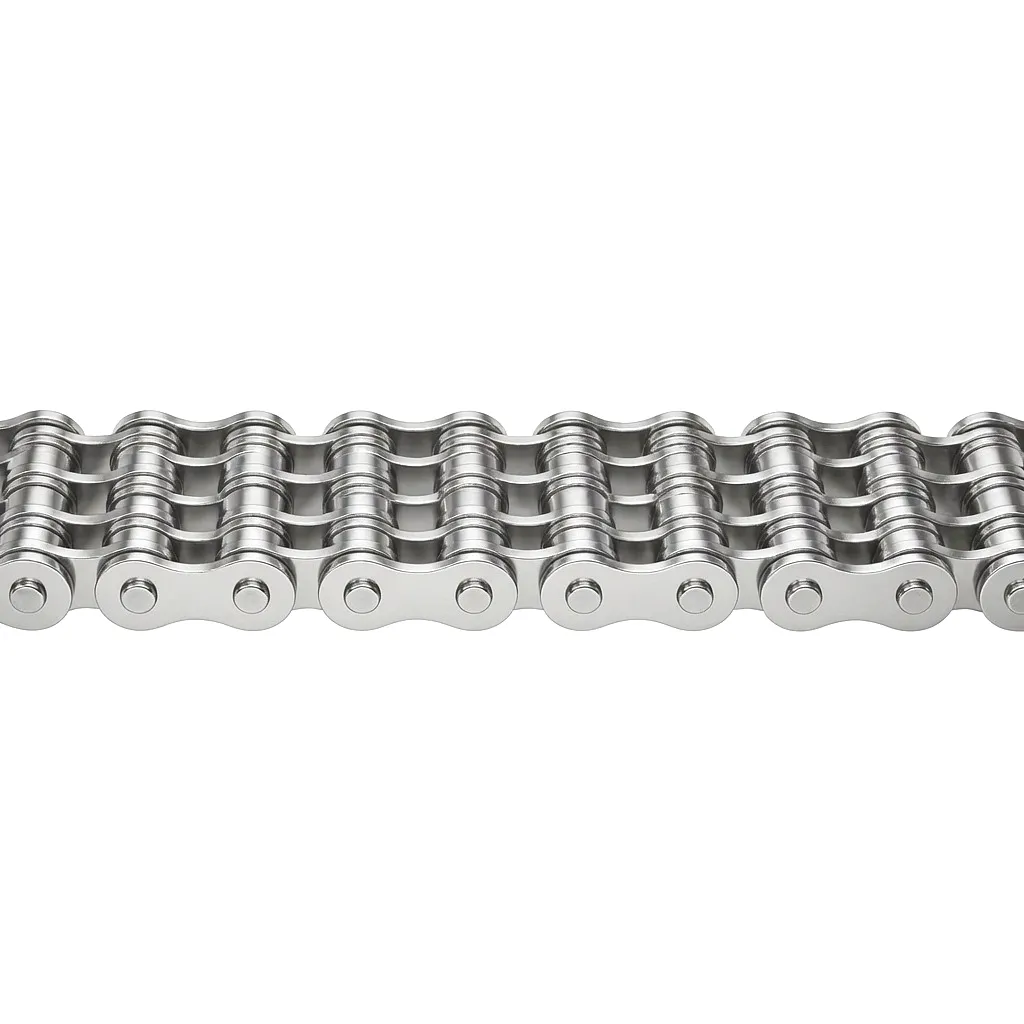
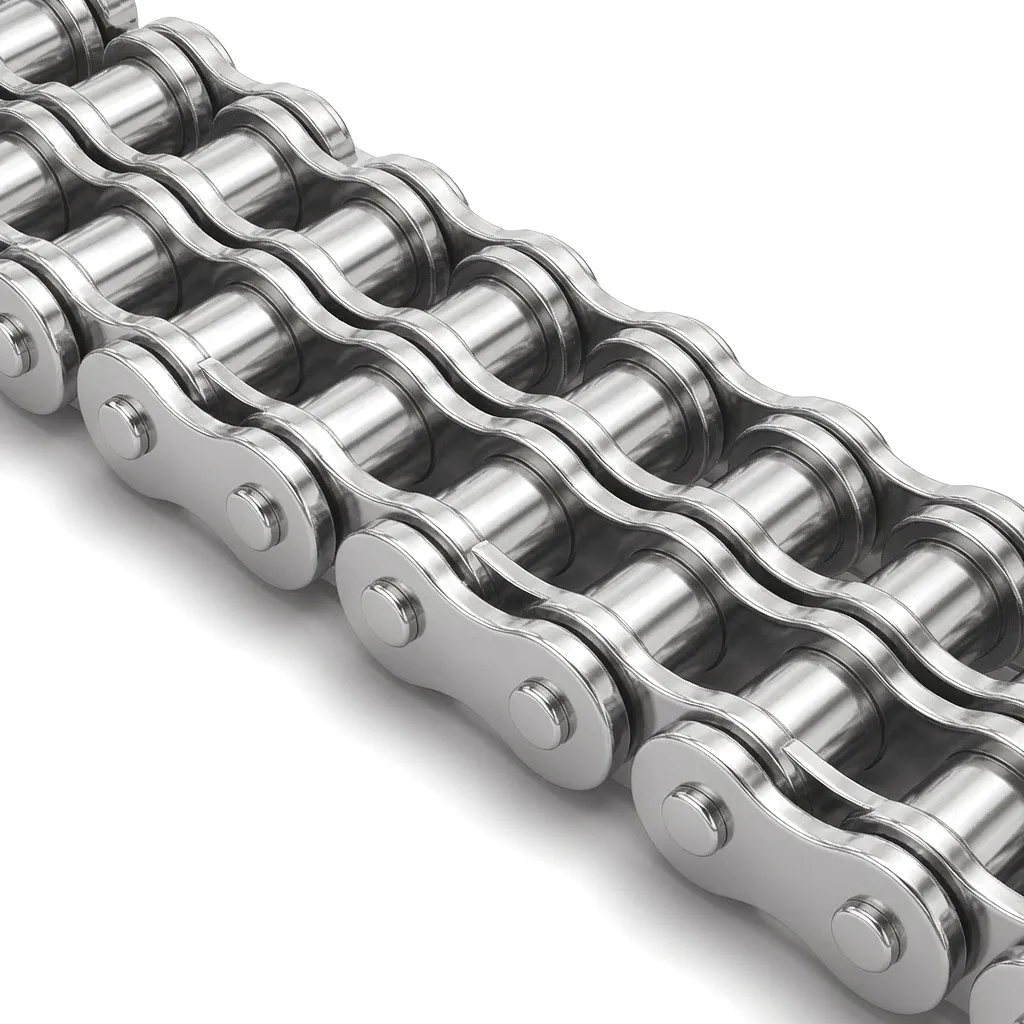
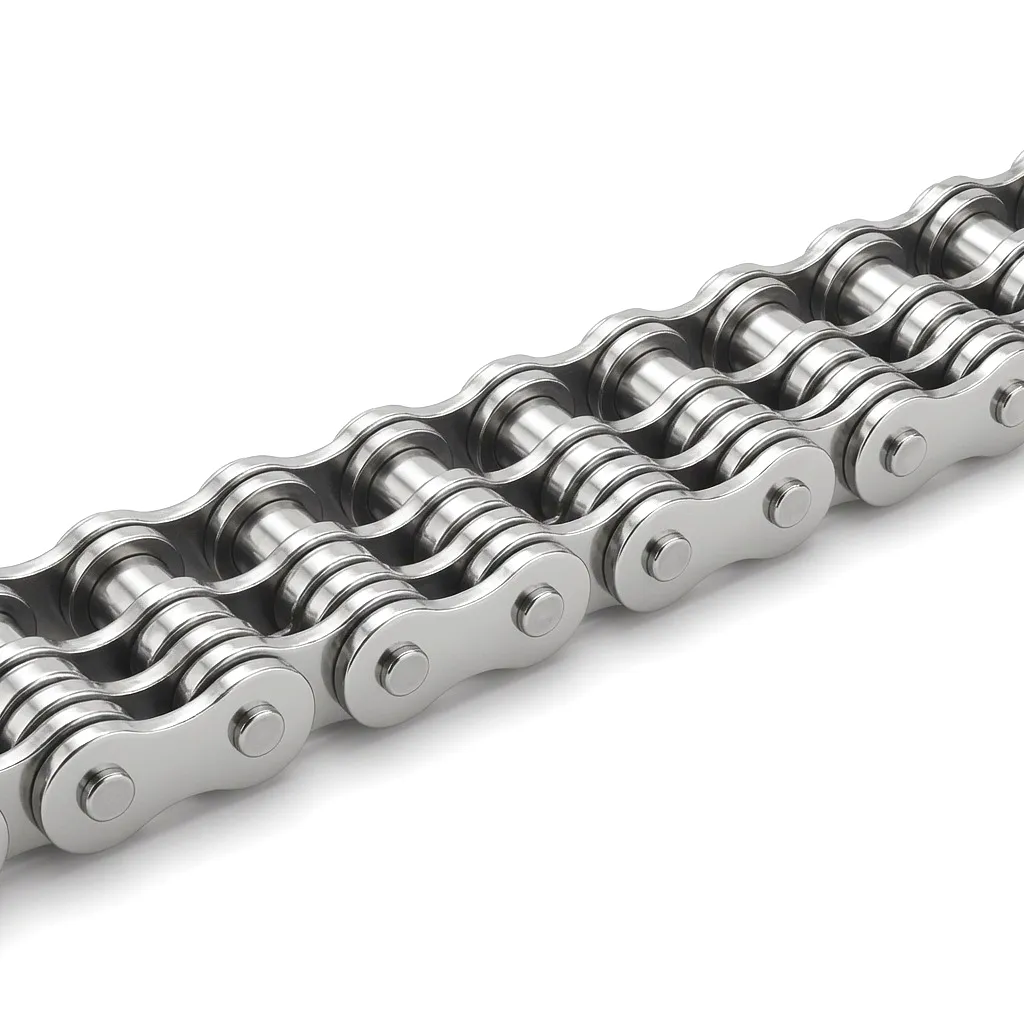
Ever Power BL series leaf chain — manufactured for demanding lifting applications
Leaf Chain Technical Performance Parameters for Telehandler Applications
BL Series · BS EN ISO 4347 Compliant
The following table presents key technical parameters for BL series leaf chains most commonly specified in telescopic handler boom assemblies across the UK. These values represent standard production grades; custom breaking load and elongation specifications are available on request from Ever Power’s engineering team.
| Chain Type | Pitch (mm) | Plate Config | Breaking Load (kN) | Max Working Load (kN) | Material Grade | Typical Telehandler Use |
|---|---|---|---|---|---|---|
| BL 422 | 12.7 | 2 × 2 | 31.1 | 7.8 | Alloy Steel | Compact 2.5T tele units |
| BL 444 | 12.7 | 4 × 4 | 62.3 | 15.6 | Alloy Steel | 4T–5T mid-range models |
| BL 523 | 15.875 | 2 × 3 | 71.2 | 17.8 | Alloy Steel (G80) | JCB 530/540 series boom |
| BL 534 | 15.875 | 3 × 4 | 124.5 | 31.1 | Alloy Steel (G80) | Manitou MT940–970 range |
| BL 634 | 19.05 | 3 × 4 | 177.9 | 44.5 | High Alloy Steel | Merlo heavy-duty P60–P80 |
| BL 644 | 19.05 | 4 × 4 | 222.4 | 55.6 | High Alloy Steel | Offshore, mining telehandlers |
* Breaking load values per BS EN ISO 4347. Working load = breaking load ÷ 4 (minimum safety factor). Custom grades available on request.
Materials and Construction: What Separates a Premium Leaf Chain from a Standard One
Metallurgy · Heat Treatment · Surface Engineering
The quality difference between a commodity leaf chain and a premium-grade unit destined for a heavy telehandler is rooted in three areas: alloy steel selection, heat treatment discipline, and surface finishing. These are not abstract quality claims — they translate directly into measurable differences in fatigue life, elongation resistance, and corrosion performance under the wet, muddy, and occasionally saltwater-adjacent conditions that UK telehandlers routinely encounter.
Link plates in Ever Power’s BL series are manufactured from low-alloy carbon steel with chromium and molybdenum additions that increase through-hardening response and resist temper embrittlement at elevated temperatures. Achieving consistent tensile strength of 900–1100 MPa across the plate cross-section requires tight control of austenitising temperature, quench rate, and tempering soak time — variations of even 10°C in the tempering furnace can shift final hardness by 5–8 HRC, directly affecting fatigue performance.
Pins receive induction hardening to achieve a case depth of 0.8–1.2 mm with surface hardness of 58–62 HRC while preserving a tough core below 40 HRC. This dual-zone structure resists both surface wear at the pin-bore contact and impact-induced brittle fracture at the pin shoulders — two competing failure modes that a single uniform hardness cannot simultaneously address. The chain is finished with either an oil-bath rust inhibitor for standard applications or a zinc-nickel electrolytic coating for corrosion-critical installations such as coastal construction sites in Wales, Scotland, and the North Sea offshore supply sector.
Leaf Chain Application Scenarios Across the UK Telehandler Market
Construction · Agriculture · Industrial · Offshore
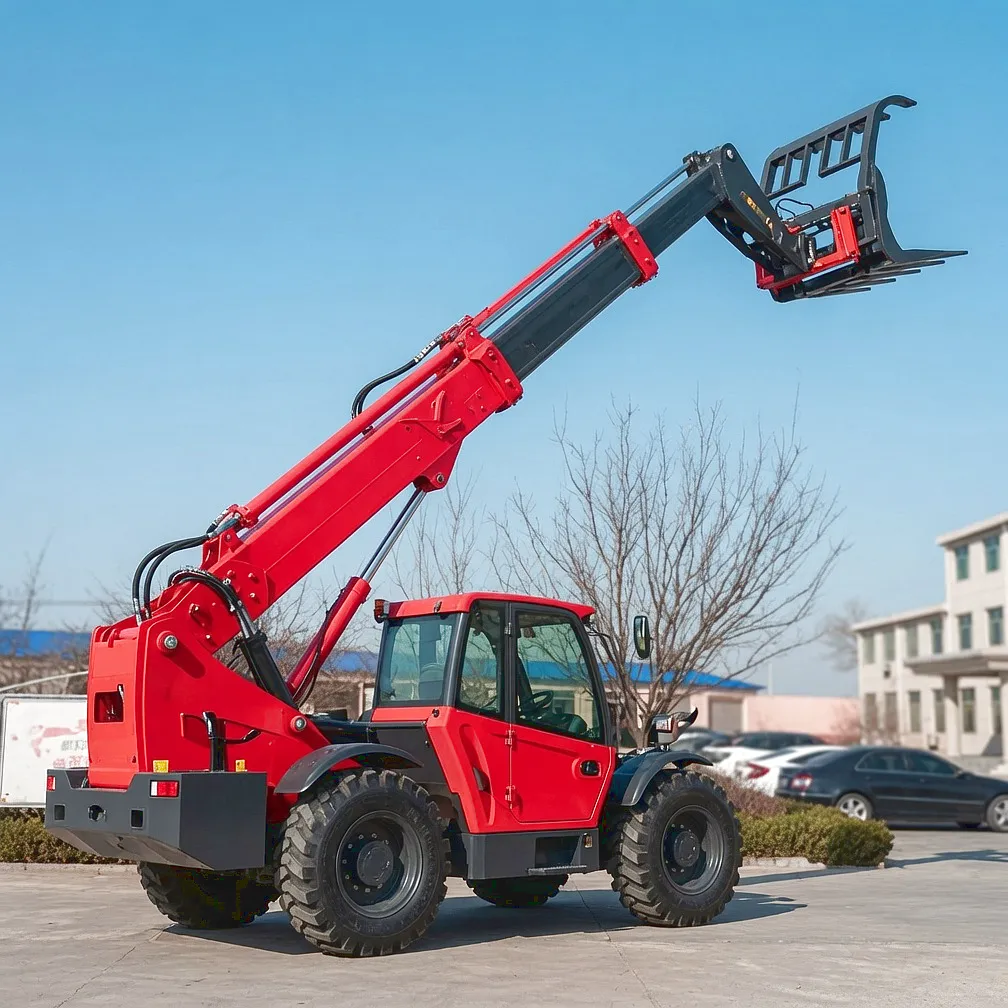
The telescopic handler is arguably the most versatile machine in the UK lifting equipment fleet, and that versatility creates a wide range of leaf chain duty cycles. A telehandler working on a housing development in the Midlands faces very different conditions from one serving a poultry farm in East Anglia or lifting casing strings on an oil-support yard in Aberdeen. Getting the leaf chain specification right means understanding the specific demands of each environment.

Why Ever Power Leaf Chains Outperform in Telehandler Applications
Six Core Product Advantages
Superior Fatigue Life Under UK Operating Cycles
Tested to 2 million load cycles at 50% of breaking load before reaching 3% elongation limit — exceeding standard industry benchmarks by a substantial margin and reducing replacement frequency for high-utilisation plant hire fleets.
Precision-Cut End Attachments as Standard
Clevis pins, anchor brackets, and weld-on end plates machined to exact OEM dimensions remove fitment ambiguity. For JCB, Manitou, and Merlo boom geometries, Ever Power maintains a dimensional library built from direct measurement of production machines.
Full BS EN ISO 4347 Certification
Third-party tested and certified to BS EN ISO 4347, with batch-level test certificates supplied as standard. This documentation is essential for CE marking of lifting equipment and for meeting UK LOLER (Lifting Operations and Lifting Equipment Regulations) inspection requirements.
Corrosion Protection Options for British Climates
Standard phosphate-and-oil, zinc-nickel electrolytic, hot-dip zinc, and stainless pin variants are all available. No single coating fits every UK environment — Ever Power’s engineering team will recommend the appropriate treatment based on your specific site conditions and expected service intervals.
Rapid Custom Cutting and Dispatch
Machine downtime is expensive. Ever Power holds pre-production stock of the most common BL series chains and can cut, attach end fittings, and despatch bespoke lengths within 48–72 hours for urgent replacement orders. This capability is particularly valued by the UK plant hire sector, where each idle machine day translates directly to lost revenue.
OEM-Level Engineering Support
Application engineers with over 18 years of hands-on leaf chain experience are available to review your boom geometry, duty cycle data, and load ratings. This is not call-centre support — it is a structured technical consultation that results in a chain specification you can have confidence in, backed by load test data and engineering signoff.
Ever Power Manufacturing & Custom Chain Services
OEM Partnerships · Bespoke Fabrication · Quality Assurance
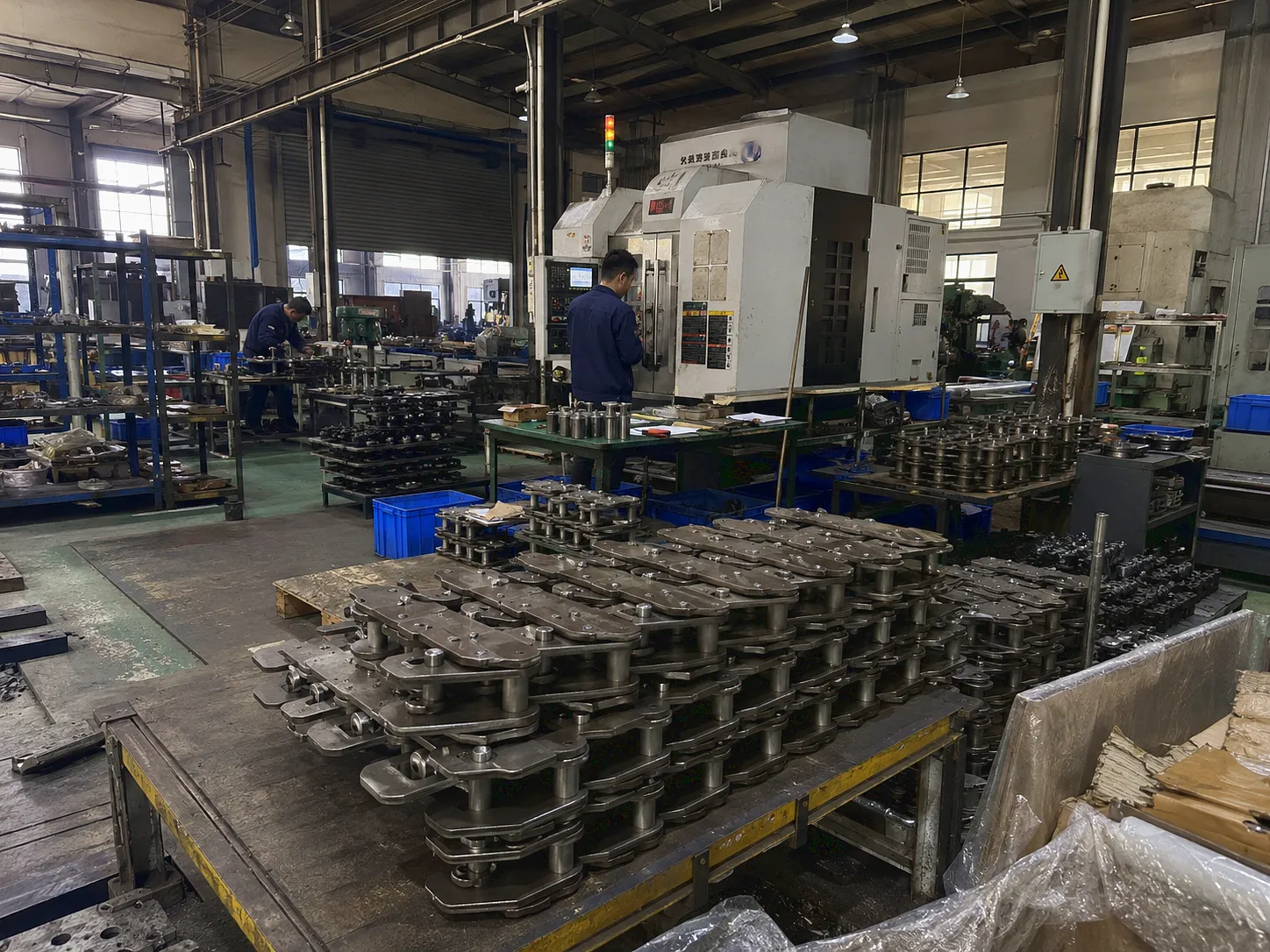
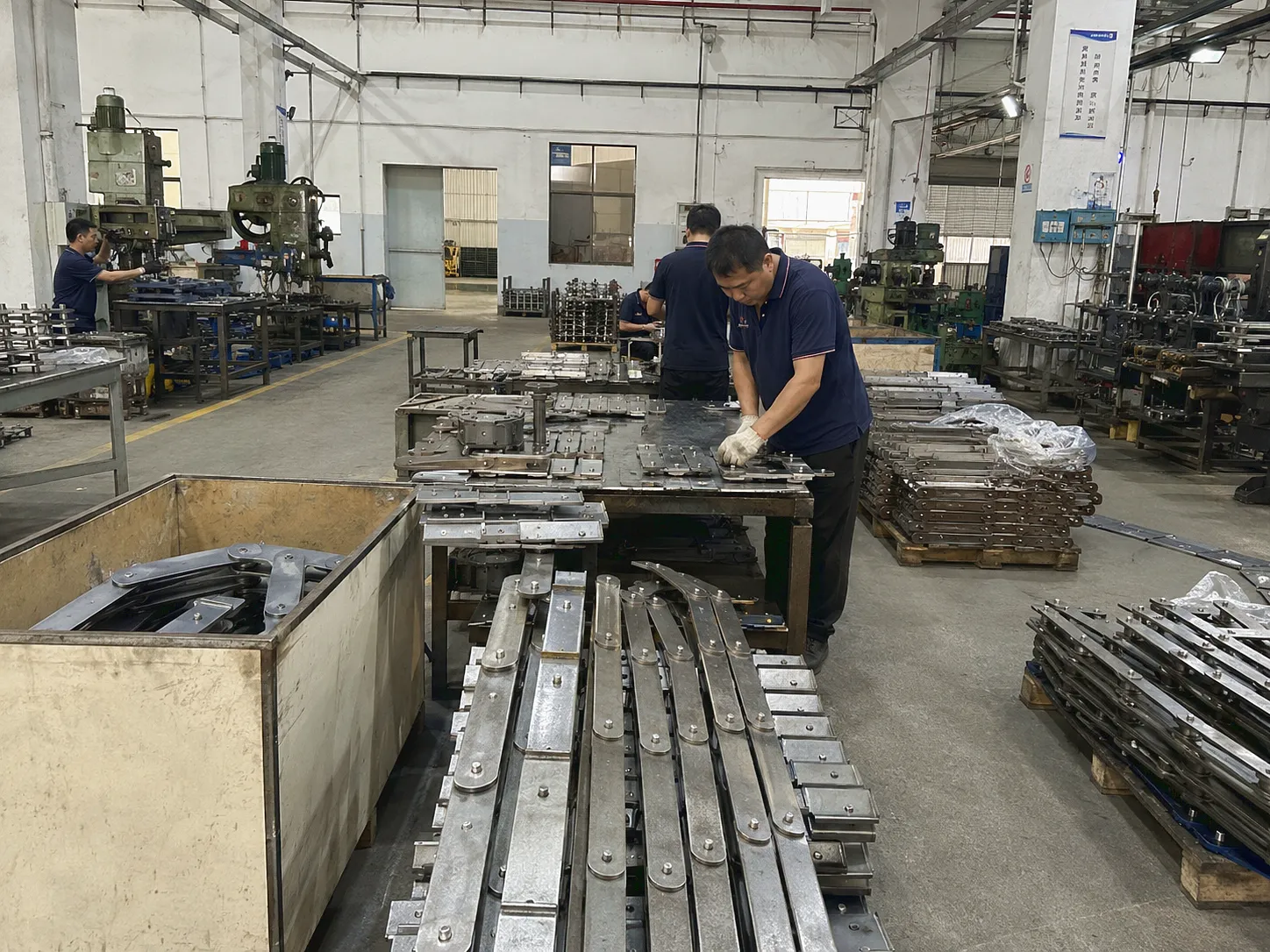 Ever Power’s manufacturing facility operates across three dedicated production lines for leaf chain fabrication, with an annual capacity exceeding 2 million metres of chain across all pitch and lacing configurations. The facility is equipped with precision stamping presses, automated heat treatment lines, CMM inspection stations, and a dedicated chain testing laboratory capable of static proof loading up to 500 kN and dynamic fatigue testing to BS EN ISO 4347 protocols.
What genuinely distinguishes Ever Power in the telehandler market is the depth of customisation available without minimum order quantity penalties. The team regularly works directly with OEM boom designers to develop chain specifications that are not available from catalogue. This includes non-standard pitches to suit machine-specific sheave diameters, asymmetric lacing configurations to accommodate unusual boom geometries, and integrated load monitoring anchor brackets with sensor mounting provisions for smart telehandler applications.
For UK-based plant hire companies managing large mixed fleets, Ever Power offers a chain rationalisation service: submit your full fleet list with OEM make and model data, and the engineering team will return a consolidated chain specification that reduces SKU count while maintaining or improving performance across every machine type. Fleet managers consistently report 20–35% reductions in inventory holding costs following this process.
Client Success Story: Yorkshire Plant Hire Cuts Leaf Chain Downtime by 67%
Case Study · UK Construction Sector
Northern Heights Plant Hire operates one of the larger independent telehandler fleets in West Yorkshire, supplying machines primarily to housebuilding contractors across the M62 corridor and to agricultural clients in the Yorkshire Dales and North York Moors. Their fleet of 38 machines includes JCB 535-125 and 540-170 models alongside Manitou MT625 and MT732 units, all of which use BL series leaf chains in the boom assembly.
Prior to 2023, Northern Heights sourced replacement leaf chains from three different distributors, resulting in inconsistent quality, mismatched end attachments, and unpredictable service life. Their maintenance manager, David Hartley, estimated the team was losing 4–6 machine-days per month to unplanned leaf chain replacements — predominantly on the agricultural fleet units that operated in livestock housing environments.
After a fleet audit conducted jointly with Ever Power’s application engineering team in early 2023, Northern Heights consolidated their entire leaf chain supply to Ever Power, specifying BL 523 for the JCB units and BL 534 with zinc-nickel coating for agricultural machines. By the end of 2023, unplanned chain-related downtime had fallen to 1.8 machine-days per month — a reduction of approximately 67%. The consolidated specification also reduced spare parts inventory SKUs from 11 to 4, freeing significant working capital and simplifying maintenance scheduling.
What Our Customers Say
We had been through three different leaf chain suppliers in four years and always ended up with the same story — inconsistent quality, wrong end fittings, or chains that wore out too quickly on the farm machines. Ever Power sorted all of that out in one conversation. The zinc-nickel coated BL 534s we now run on the agricultural fleet have been outstanding, even on the piggery sites where corrosion used to kill a chain in under six months.
As a telehandler manufacturer supplying the UK housing sector, we need chain suppliers who can respond quickly to engineering changes and hold stock of our specific chain lengths. Ever Power ticks both boxes. Their custom cutting service has saved us weeks on two separate product launches where we needed non-standard chain lengths for new boom configurations. The test certificates are detailed and readily accepted by our CE notified body.
We operate telehandlers on three North Sea supply base yards in Aberdeenshire. The salt and moisture exposure here is as aggressive as it gets for lifting equipment. Since switching our leaf chains to Ever Power’s marine-grade zinc-nickel coated BL 644 series, we have had zero corrosion-related chain failures in 18 months. That is a significant improvement over the position we were in before, and the LOLER inspection paperwork they provide is first class for our offshore compliance audits.
Inspection, Maintenance, and Replacement Criteria Under UK LOLER Requirements
Compliance · Safety · Planned Maintenance
Under the Lifting Operations and Lifting Equipment Regulations 1998 (LOLER), telehandler booms — including their leaf chain assemblies — are classified as lifting equipment and must undergo thorough examination at intervals not exceeding six months for equipment used to lift persons, or 12 months for other lifting equipment. In practice, most reputable plant hire companies and fleet operators inspect leaf chains every 500 operating hours or annually, whichever comes first.
The inspection protocol recommended for telehandler leaf chains involves measuring chain elongation across a minimum of 12 pitches under a reference tension of 1–2% of breaking load. When elongation exceeds 3% of nominal length across any measured section, the chain must be replaced regardless of visible condition — internal fretting fatigue often advances faster than external wear, and a chain that looks acceptable at 3% elongation may be close to failure within the next service cycle.
Visual inspection should look for plate surface cracking (typically initiating at pin holes and propagating transversely), corroded or pitted pin ends, stiff links that do not flex freely through the full sheave arc, and deformation of link plates indicating that the chain has been subjected to shock loads exceeding its design limits. Any of these conditions requires immediate replacement — there is no borderline assessment in LOLER; a leaf chain is either within service limits or it is not.
LOLER Leaf Chain Inspection Checklist
✓
✓
✓
✓
✓
✓
Ready to Specify the Right Leaf Chain for Your Telehandler?
Ever Power’s application engineers are available to review your boom specification, duty cycle data, and operating environment to recommend the precise leaf chain solution for your telehandler fleet. From a single replacement chain to an OEM supply agreement covering thousands of units annually, the process starts with one straightforward conversation.
Specify with Confidence. Enquire Today.
Ever Power leaf chains — engineered for UK telehandler demands, backed by 18+ years of application expertise.
chỉnh sửa bởi gzl