
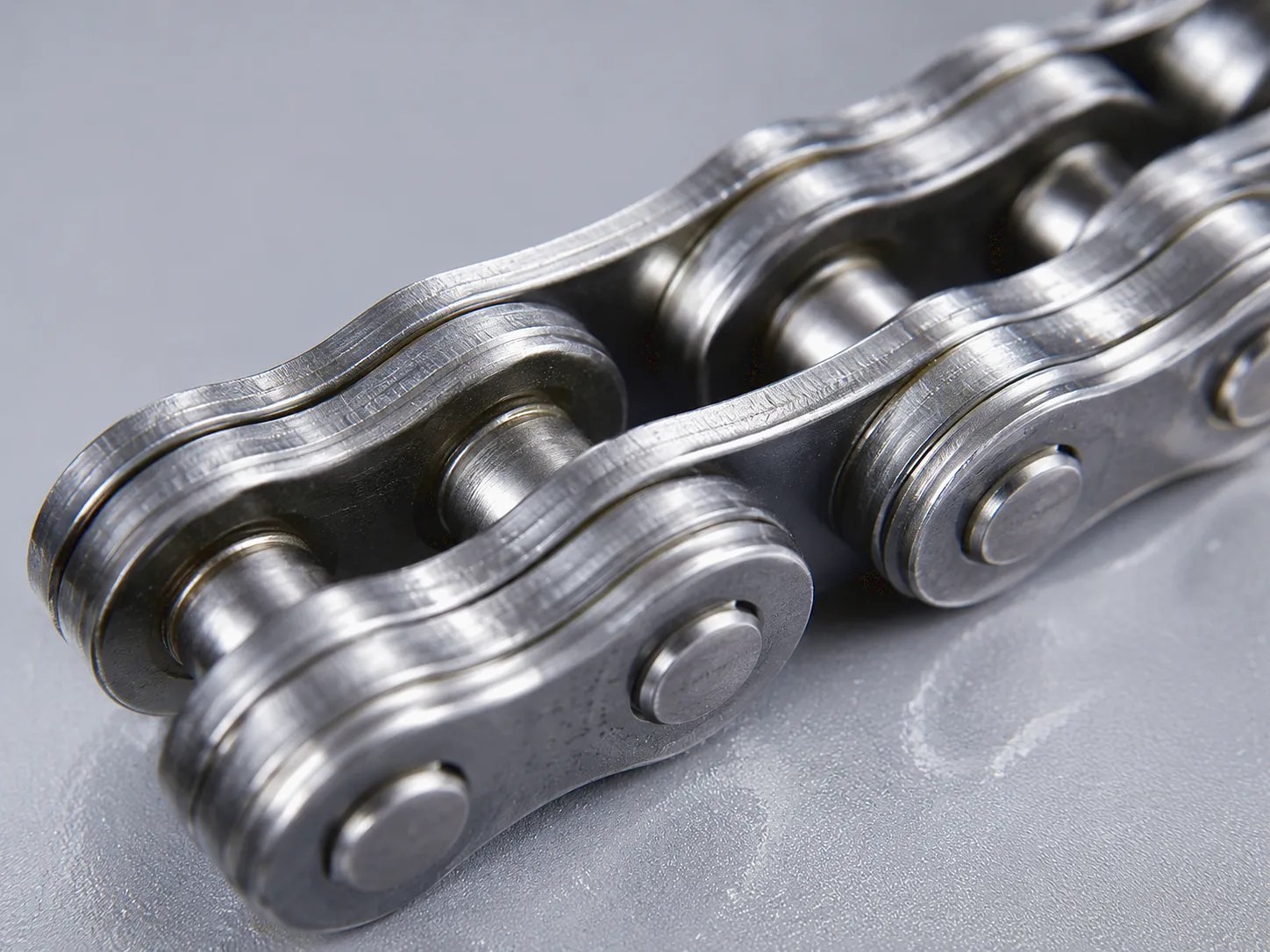
 Walk up to a working sugarcane harvester on a plantation in Queensland or the sugar belt of Brazil, and the first thing that strikes you is not the chopper drums or the extractor fans — it is the relentless mechanical energy traveling through every drive and lift circuit. At the heart of those circuits, quietly bearing loads that would destroy conventional roller chain within a season, sits the leaf chain. Known in British engineering circles as balance-link chain or BL chain, this laminated-plate design has been the preferred solution for high-load, low-speed oscillating drives since the mid-20th century, and today it remains irreplaceable in modern sugarcane harvesting machinery.
The global sugar industry processes approximately 1.9 billion tonnes of raw cane annually, and mechanised harvesting now dominates production across the major growing regions. The United Kingdom, while not a cane-growing nation, is home to a significant cluster of agricultural equipment distributors, OEM spare-parts importers, and sugar-processing machinery specialists concentrated around East Anglia, Yorkshire, and the South West — all actively sourcing precision leaf chain components for export fleets and domestic processing lines alike. Choosing the wrong chain at procurement stage is not merely a cost issue; it translates directly to downtime during the brief harvesting window when every operational hour counts.
This guide draws on more than 18 years of applied engineering experience across multiple chain architectures and harvester platforms. It covers materials science, load calculations, UK sourcing considerations, field-proven maintenance schedules, and the specific reasons why a purpose-built leaf chain outperforms every alternative in the demanding environment of a sugarcane harvester. Whether you are a UK-based fleet buyer, an OEM design engineer, or a plantation maintenance manager, the data here will sharpen your procurement decisions and extend your equipment’s operational life.
🔩 Get a Free Quote — Contact Us Now
Response within 24 hours · Custom specifications welcome · UK enquiries prioritised
What Is Leaf Chain and Why Does It Dominate Harvester Drives?
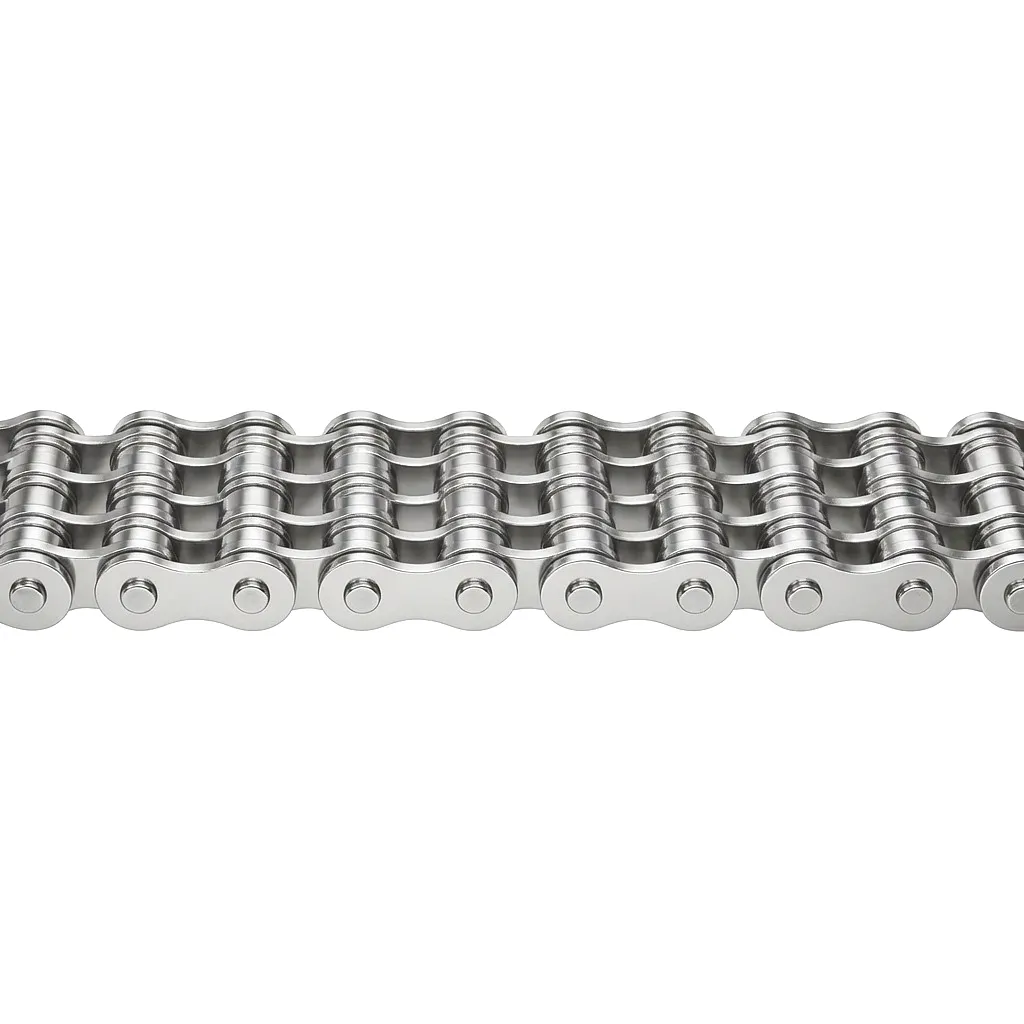
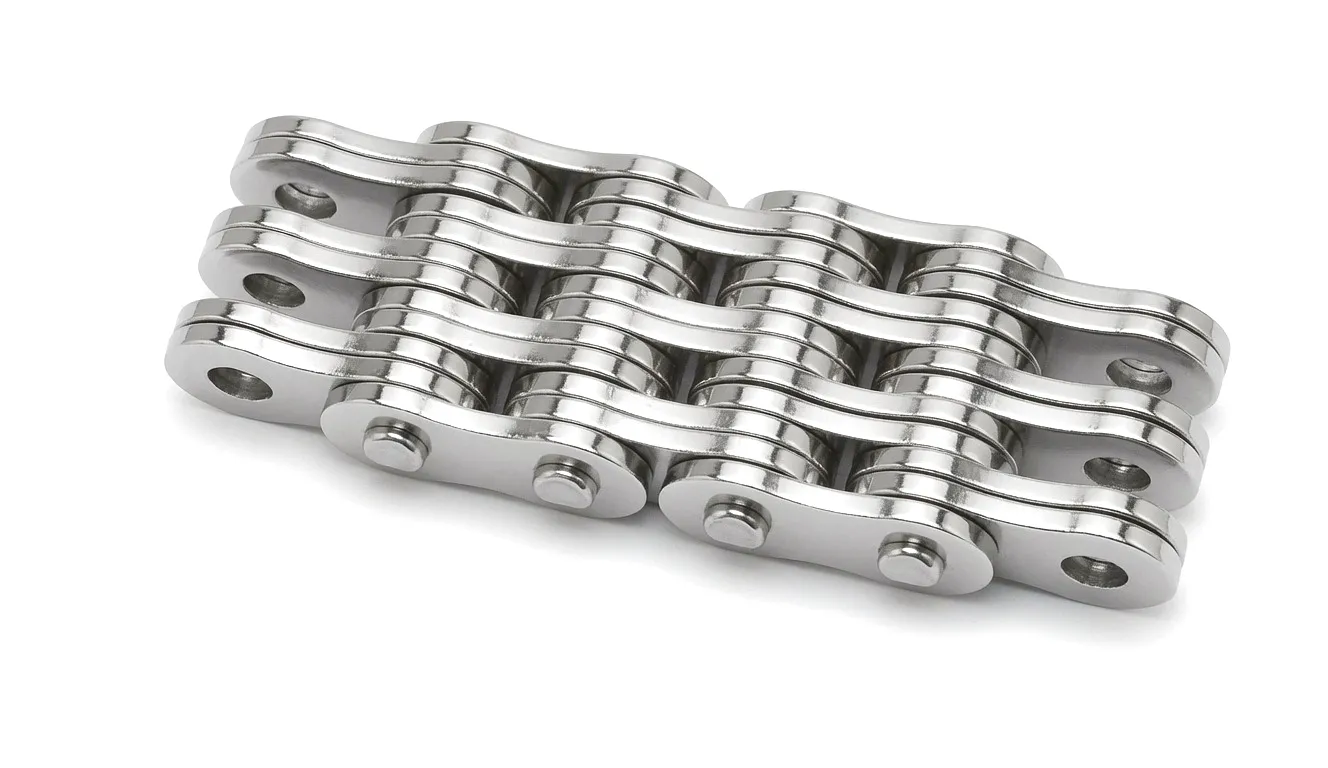
Leaf chain is a pin-and-plate assembly built entirely from interlocked flat link plates — there are no rollers, no bushings, no hollow pins in the conventional sense. Every link plate is precision-punched from alloy steel, hardened and tempered, then stacked in specific lacing patterns defined by international standard ISO 4347. The most common lacing series you will encounter in harvester applications are BL 422, BL 444, BL 488, BL 544, BL 566, BL 644, BL 666, and BL 688 — the numbers encoding plate width, pitch, and lacing ratio simultaneously.
 The design advantage is simple but profound: by eliminating the roller and bushing interface, the chain removes the most common failure mode in high-load, slow-cycle applications. In a sugarcane harvester’s elevator, the chain does not rotate continuously at high speed — it reciprocates, oscillates, and bears sudden shock loads as fibrous cane stalks are cut, chopped, and conveyed. Under these conditions, a roller chain’s bushings would wear rapidly and its hollow pins would fatigue. A leaf chain absorbs those loads directly through its enlarged bearing area, distributing stress across many plates simultaneously.
The tensile-strength-to-weight ratio of a well-manufactured leaf chain is outstanding. A BL 644 series chain with a pitch of 25.4 mm delivers a minimum tensile strength of 355 kN — more than enough to handle the combined weight of a full elevator charge plus the inertial shock of crop material being thrown against the paddles. British and European procurement standards demand ISO 4347 compliance as a baseline; beyond that, the quality of steel choice, heat treatment consistency, and pin-to-plate press-fit tolerances separates adequate chain from genuinely reliable chain.
Technical Specifications: Leaf Chain for Agricultural Applications
The table below compares the key series used across sugarcane harvester elevator, header, and chopper-drive assemblies. All data conforms to ISO 4347 and reflects Ever Power’s production standards, which consistently exceed the minimum values stipulated by the international standard through tighter manufacturing tolerances and premium-grade alloy steel sourcing.
| Series | Pitch (mm) | Pin Dia. (mm) | Min. Tensile (kN) | Weight (kg/m) | Cadarço | Harvester Application |
|---|---|---|---|---|---|---|
| BL 422 | 12.70 | 4.45 | 22.2 | 0.28 | 2×2 | Header height-adjustment linkages |
| BL 444 | 12.70 | 4.45 | 31.1 | 0.38 | 4×4 | Divider arm positioning |
| BL 534 | 15.88 | 5.08 | 53.4 | 0.57 | 3×4 | Extractor fan drive tensioning |
| BL 644 | 25.40 | 7.92 | 222.4 | 1.62 | 4×4 | Primary elevator drive chains |
| BL 666 | 25.40 | 7.92 | 333.6 | 2.38 | 6×6 | Heavy-duty elevator & lift systems |
| BL 688 | 25.40 | 7.92 | 444.8 | 3.15 | 8×8 | Overloaded billets, rocky terrain ops |
| BL 1022 | 31.75 | 9.53 | 88.9 | 0.77 | 2×2 | Counterbalance & stabiliser circuits |
* All figures conform to ISO 4347:2021. Ever Power manufacturing tolerances typically exceed minimum requirements by 8–12%.
Materials, Construction & Heat Treatment
The material story of a high-quality leaf chain begins at the steel mill, not the chain factory. Ever Power specifies low-alloy steel grades with controlled carbon content in the range of 0.18–0.23%, chromium addition of 0.8–1.1%, and manganese at 0.60–0.90%. This composition delivers the precise combination of case-hardenability and core toughness that agricultural applications demand. After punch-press blanking, every link plate undergoes carburising to a case depth of 0.4–0.6 mm, followed by oil quenching and tempering at 180°C minimum. The result is a surface hardness of 58–62 HRC — resistant to abrasive cane ash and grit — backed by a tough core that absorbs impact without brittle fracture.
Pins receive a slightly different treatment. High-alloy pins are through-hardened to 58–64 HRC across their full cross-section, then ground to h6 tolerance — critical because the quality of the pin-to-plate press-fit determines both static breaking strength and, more importantly, fatigue life under oscillating loads. A sloppy fit allows micro-movement that generates fretting wear at the interface; a correct interference fit makes the assembly behave as a single structural element. In harvester elevator duty, where cycles can reach 50,000 per operating day, that fretting protection is not a luxury.
Corrosion protection matters enormously in cane-growing regions where ambient humidity often exceeds 85%, harvest debris contains organic acids, and irrigation water contributes chlorides. Ever Power’s standard finish for agricultural-export leaf chain is a zinc-nickel electroplate applied to a minimum 12 µm thickness, providing salt-spray resistance exceeding 720 hours to ASTM B117. For customers operating in coastal Queensland, West Indian, or Southern African cane districts, a stainless-steel pin variant and polymer-coated plate option are available — important differentiators that UK-based distributors frequently specify as standard.
Leaf Chain Application Scenarios in a Sugarcane Harvester
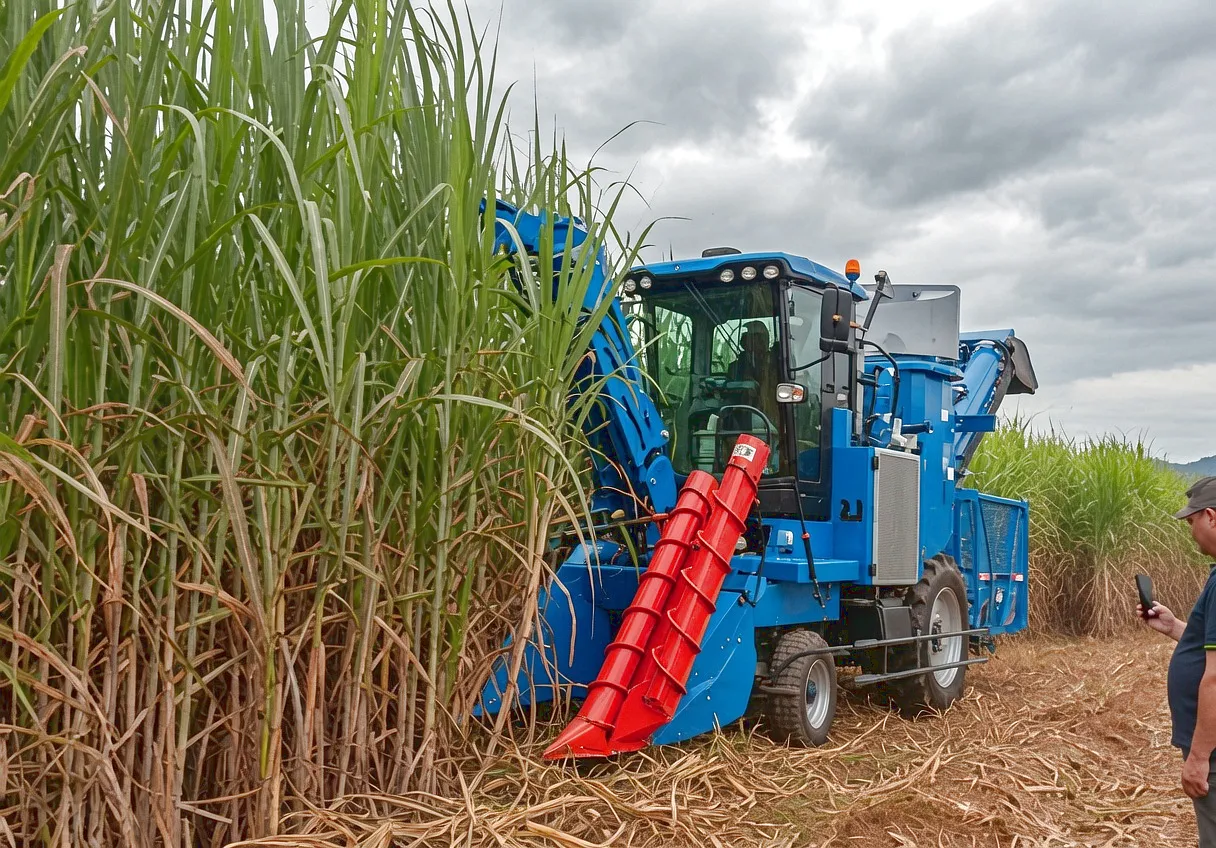
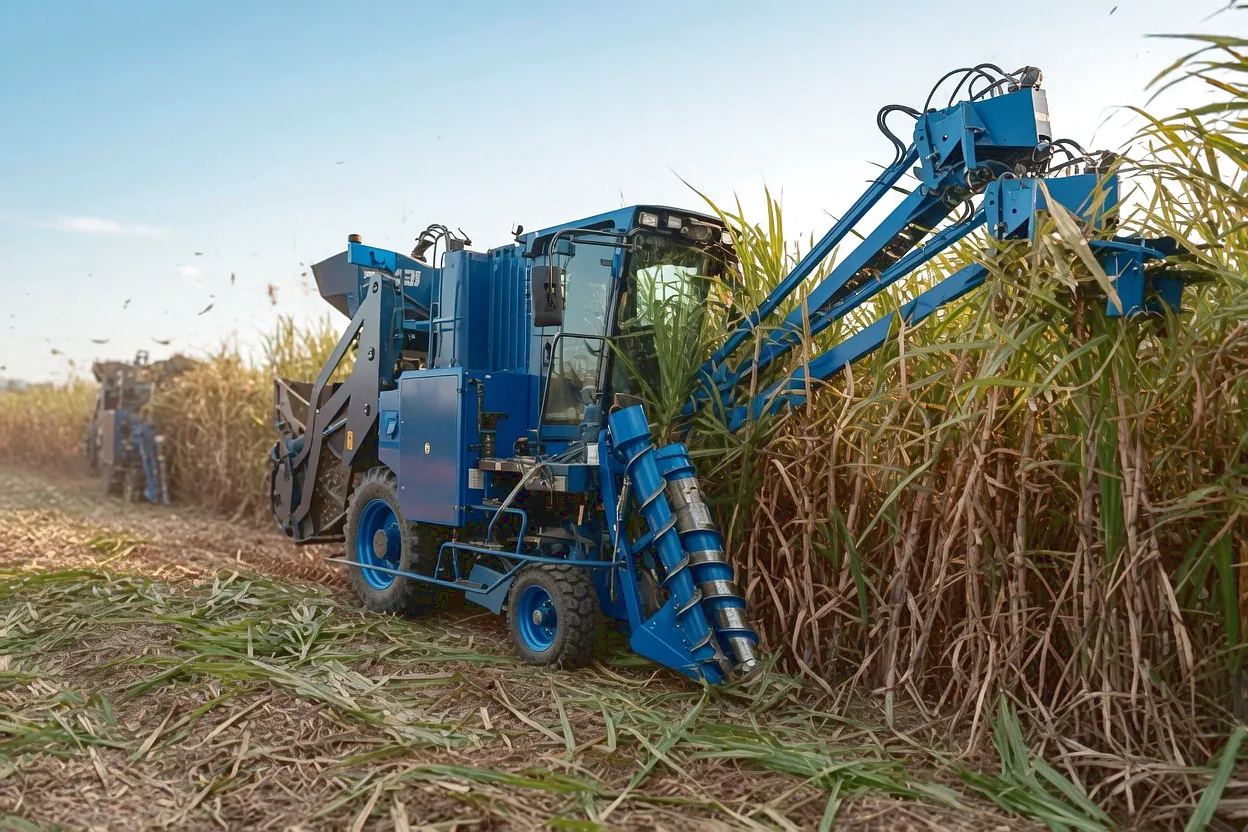
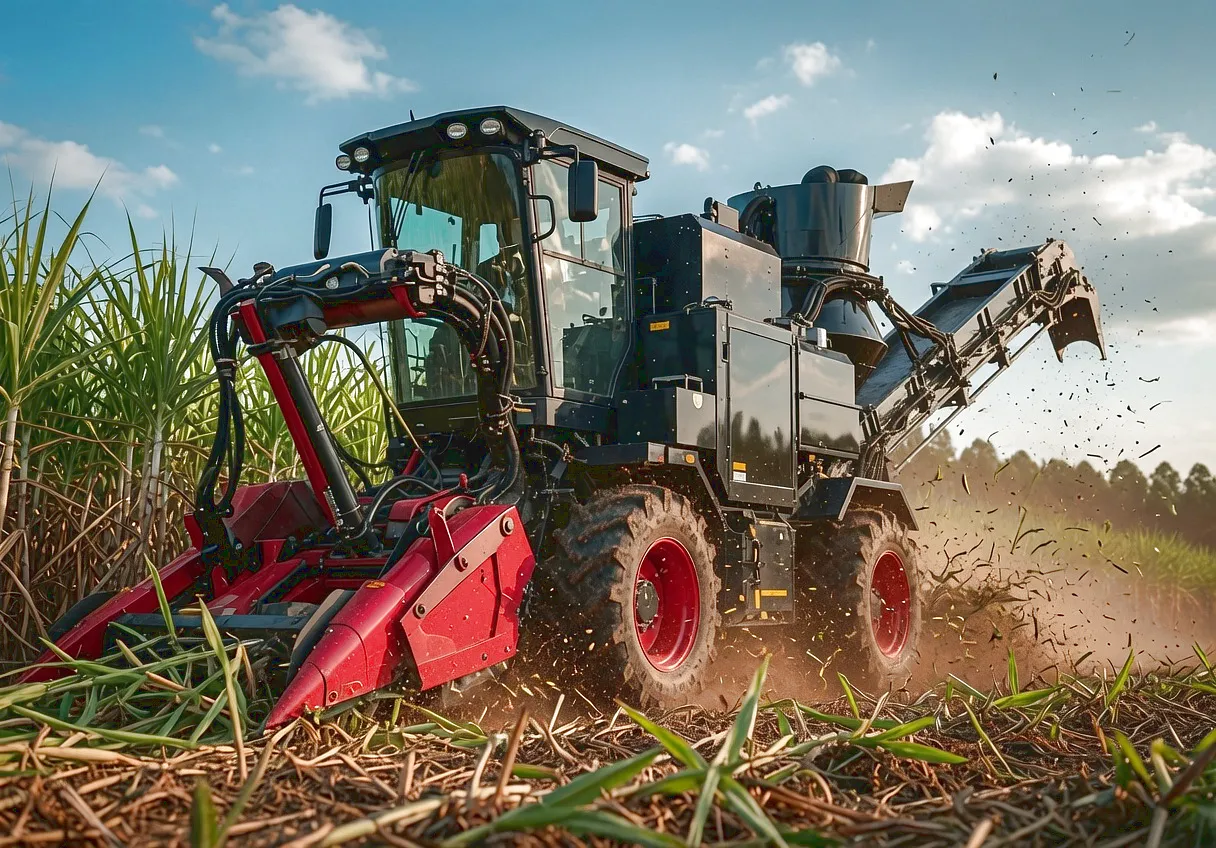
A modern sugarcane harvester is effectively several machines combined into one self-propelled unit. Each sub-system places distinct demands on its drive components, and leaf chain appears across multiple circuits. Understanding exactly where and why it is used helps engineers select the right series and maintenance strategy for each position.
Primary Elevator Drive
The slat-and-paddle elevator is the heart of the harvester — it elevates chopped billet cane up to 3.5 metres into the waiting transport wagon. Two parallel leaf chains in BL 644 or BL 666 series carry the slat paddles under continuous high-tension loading. The chains must withstand peak loads of 60–90 kN per strand while running in a heavily contaminated environment of cane juice, trash, and fine silica dust from the soil. Only a purpose-built leaf chain with adequate bearing-pin area can sustain this combination of load, contamination, and thermal cycling through a full 12-hour shift.
Header Height Control Linkages
The cutting header of a modern harvester floats over the soil surface to follow ground contour, adjusting its cutting height dozens of times per minute using hydraulic cylinders connected through articulated mechanical linkages. These linkages frequently incorporate leaf chain in the BL 422 or BL 444 range as flexible tension members that translate hydraulic cylinder stroke into precise header movement. Because the load direction reverses with each ground undulation, the chain must have excellent fatigue resistance across millions of low-amplitude cycles — exactly the load regime where leaf chain’s laminated-plate construction outperforms all alternatives.
Topper Disc Tensioner Assembly
Before the chopper drum can work on the cane stalk, the rotating topper disc removes the leafy crown. The topper lift-and-tilt mechanism uses a compact hydraulic system with a leaf chain acting as the mechanical tension member between the cylinder and the topper arm. The key challenge here is intermittent impact — each stalk contact sends a shock pulse through the kinematic chain. Medium-series BL 534 leaf chains handle this reliably because the wide bearing area distributes shock loads without allowing the pin to indent the plate hole, which is the primary failure mode in this position when undersized chain is specified.
Extractor Fan Drive Tensioning
The primary and secondary extractor fans create the airflow that separates cane billets from leaf trash. Drive-belt tensioner arms in high-performance harvester designs increasingly use leaf chain as the restraining element rather than solid links or turnbuckles, because the chain allows fine length adjustment via a master-link change while maintaining full structural integrity at high-vibration operating speeds. BL 534 and BL 644 are the most commonly specified series here, providing the necessary tensile load reserve against belt-tension spikes when the extractor fan encounters a slug of dense trash material.
Counterbalance & Cab-Lift Systems
Taller, higher-capacity harvesters use elevated operator cabs and extendable elevator spouts for reach over wide transport wagons. Cab-lift and spout-pivot mechanisms need a flexible, high-strength tension member that is simultaneously lightweight and immune to the bending-fatigue failures that would afflict rigid links. Heavy-series leaf chain in BL 1022 or BL 1044 is standard practice here. The chain’s inherent flexibility around sheaves allows compact packaging in tight machinery envelopes, while its tensile strength provides the safety factor required under UK PSSR (Pressure Systems Safety Regulations) and CE machinery directive compliance frameworks governing the UK market.
Basecutter Height & Tilt Adjustment
The twin basecutter discs determine cut quality and soil disturbance. Hydraulic cylinders set their height and forward tilt through mechanical linkages where leaf chain provides the flexible coupling between cylinder and cutter frame. The extreme proximity to the soil surface means the chain is exposed to abrasive mineral particles, crop juices, and intermittent water jets during field washing. Sealed-pin variants of BL 644 with pre-lubricated cavities between the plates deliver dramatically extended service life in this position — a design refinement that Ever Power has refined across many years of harvester-specific applications.
Why Ever Power Leaf Chain Outperforms Competitors
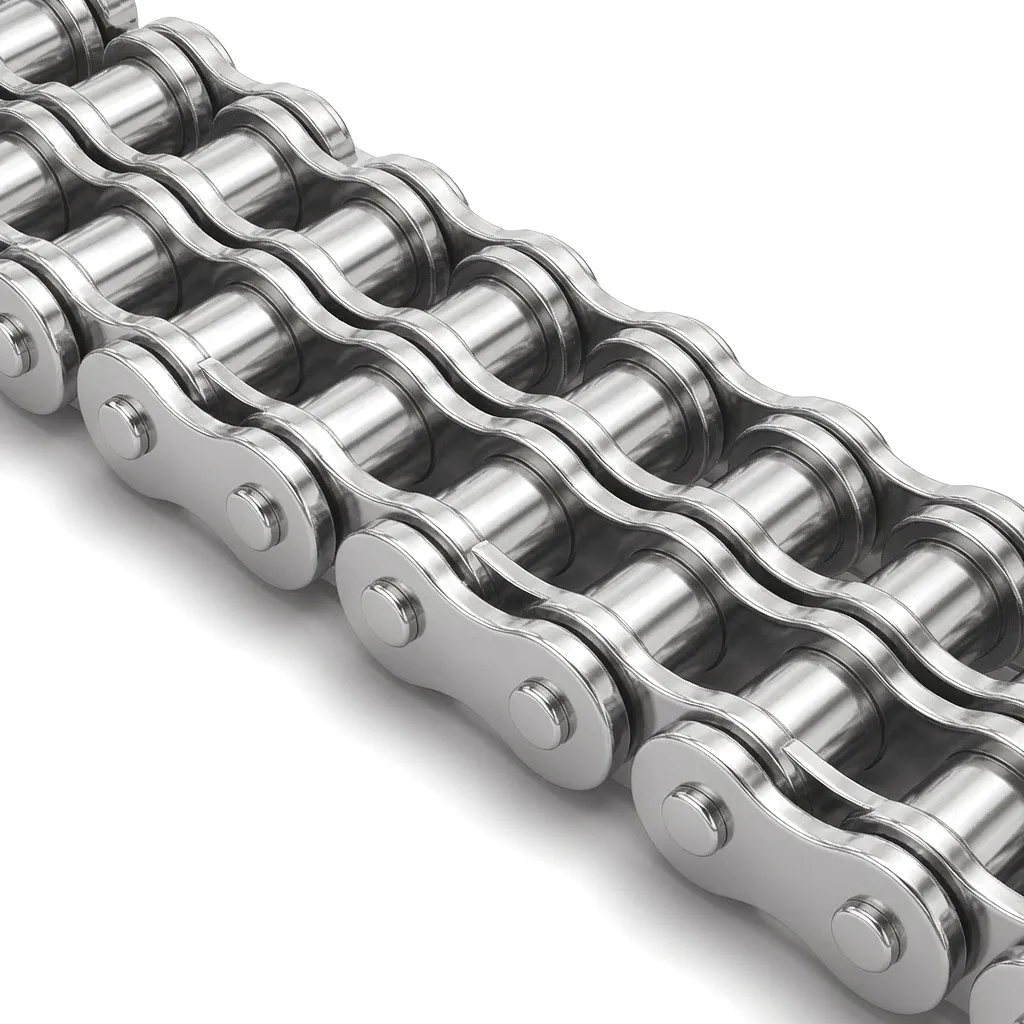
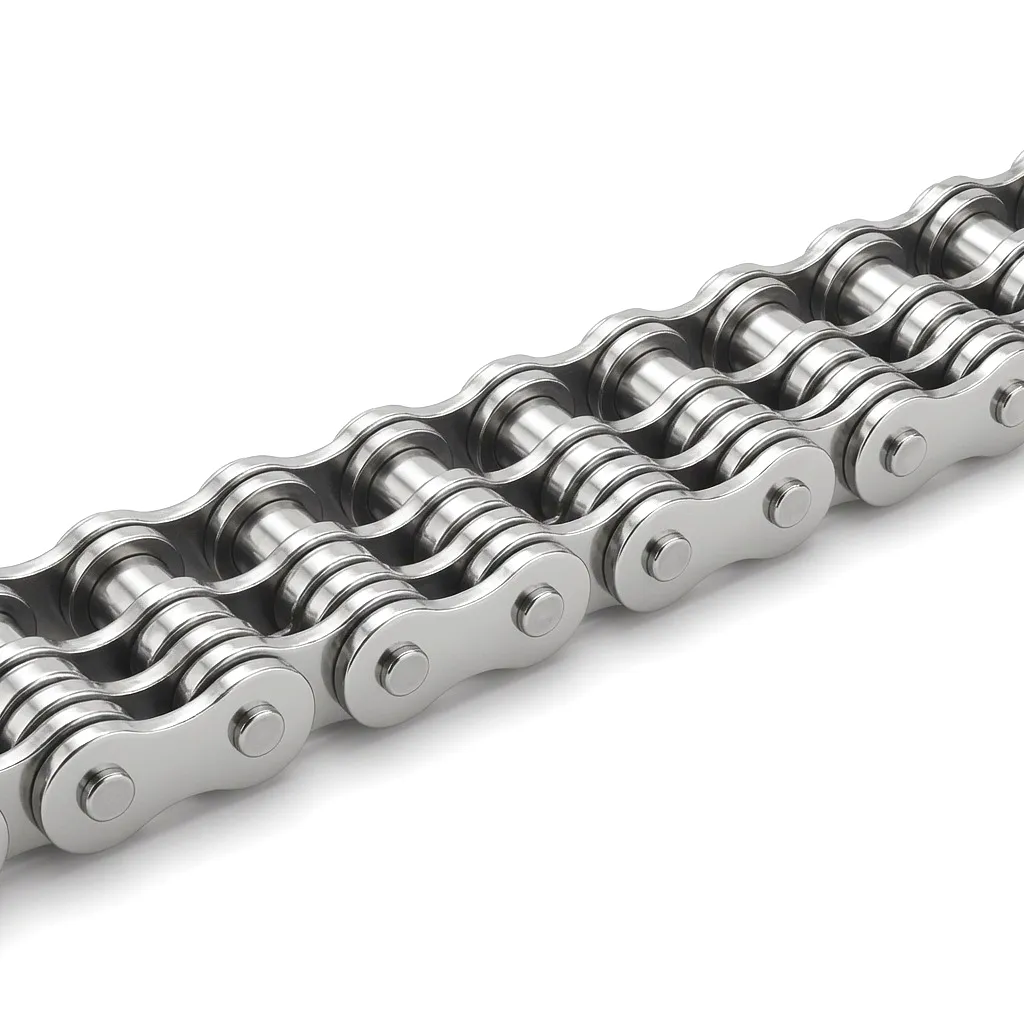
Harvester drives cycle in both tension directions. Leaf chain’s laminated plate design distributes stress across multiple load paths simultaneously, reducing the peak stress at any single point. Independent fatigue testing at TÜV-certified laboratories shows Ever Power BL 644 achieving over 2 million cycles at 40% of minimum breaking load — data directly relevant to elevator duty cycles in Australian and Caribbean cane seasons.
When a UK agricultural distributor ships leaf chain to a plantation maintaining a fleet of 20 harvesters, dimensional inconsistency between batches means mixed chains cannot be spliced together in an emergency — a downtime risk that costs far more than the chain itself. Ever Power’s SPC-controlled stamping lines maintain plate-hole diameter tolerance within ±0.008 mm batch-to-batch, ensuring interchangeability that field maintenance teams depend on during peak harvest.
Pre-lube and sealed-pin options reduce required re-lubrication frequency by 60–70% compared to open-pin leaf chain in the same application. In remote plantation operations where skilled maintenance personnel are scarce, this translates directly to reduced total cost of ownership. The polymer-sealed pin design retains lubricant within the articulation zone even in high-centrifugal-force and high-wash-down environments.
Every production batch ships with a material certificate traceable to the steel heat, heat-treatment furnace records, and dimensional inspection report. For UK procurement under CE and UKCA machinery compliance frameworks, this documentation trail is not optional — it is a legal requirement under the Supply of Machinery (Safety) Regulations 2008. Ever Power provides full documentation as standard, not as a premium addition.
Harvester OEMs frequently need non-standard link counts, special master-link types, or attachment plates welded at specific intervals for slat paddles. Ever Power’s engineering team works directly with OEM drawing packages to produce made-to-specification assemblies with documented qualification testing. Custom orders with specialised end terminations, modified pin extensions, or corrosion-inhibited packaging for long-term storage are routinely fulfilled with standard lead times of 15–25 working days from drawing approval.
Customer Success Stories
Real applications, real results. These case studies represent verified outcomes from commercial deployments where Ever Power leaf chain replaced either OEM-equivalent or substandard alternative chain in working sugarcane harvester fleets.
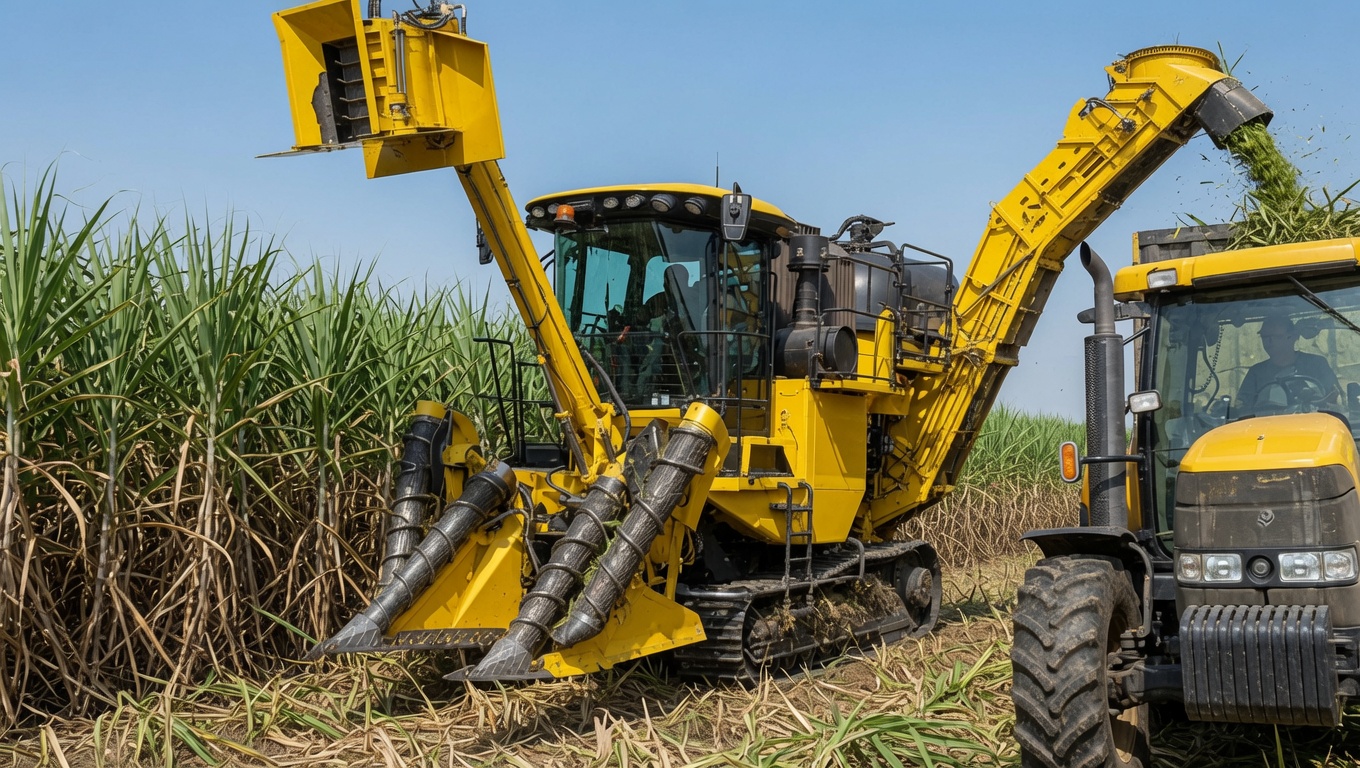
“We switched to Ever Power leaf chain across our entire header-lift circuit after two consecutive seasons of failures with the budget chain we had been using. The difference was night and day — we are now through a full 600-hour season without a single linkage issue, and the dimensional consistency means our workshop team can swap out individual link sets without cutting new chains. For anyone running harvesters in a heavy clay district, the sealed-pin BL 644 is worth every penny of the price premium.”
“As a UK-based importer supplying spare parts to Caribbean cane operations, I need a leaf chain supplier who can provide full certification documentation and consistent quality batch to batch. Ever Power ticks every box — their certificates are clear, their lead times are realistic, and when we had an urgent mid-season order last year, they expedited production without charging us the earth. The chains have performed flawlessly in Barbados and Trinidad operations.”
“Our engineering team specified Ever Power BL 688 for a prototype high-capacity elevator we were developing for a new harvester platform. The chain not only met our tensile requirements but came with full dimensional data in the format our CAD team needed — something many suppliers struggle to provide. When we went to production, pricing was competitive, and the quality was identical to the sample. I would recommend Ever Power without hesitation for any OEM looking for a reliable leaf chain partner.”
Manufacturing Excellence & Custom Engineering Capability
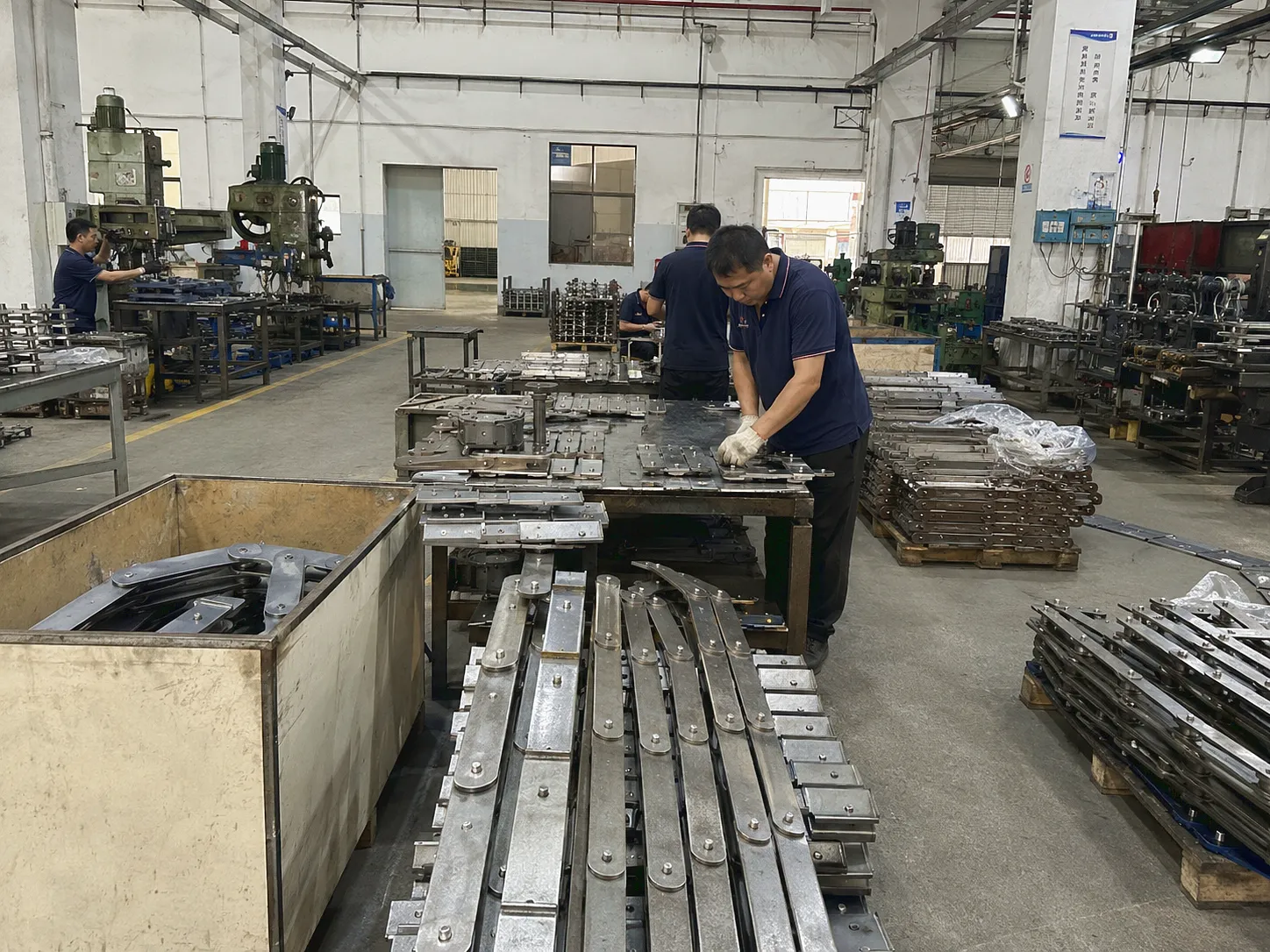
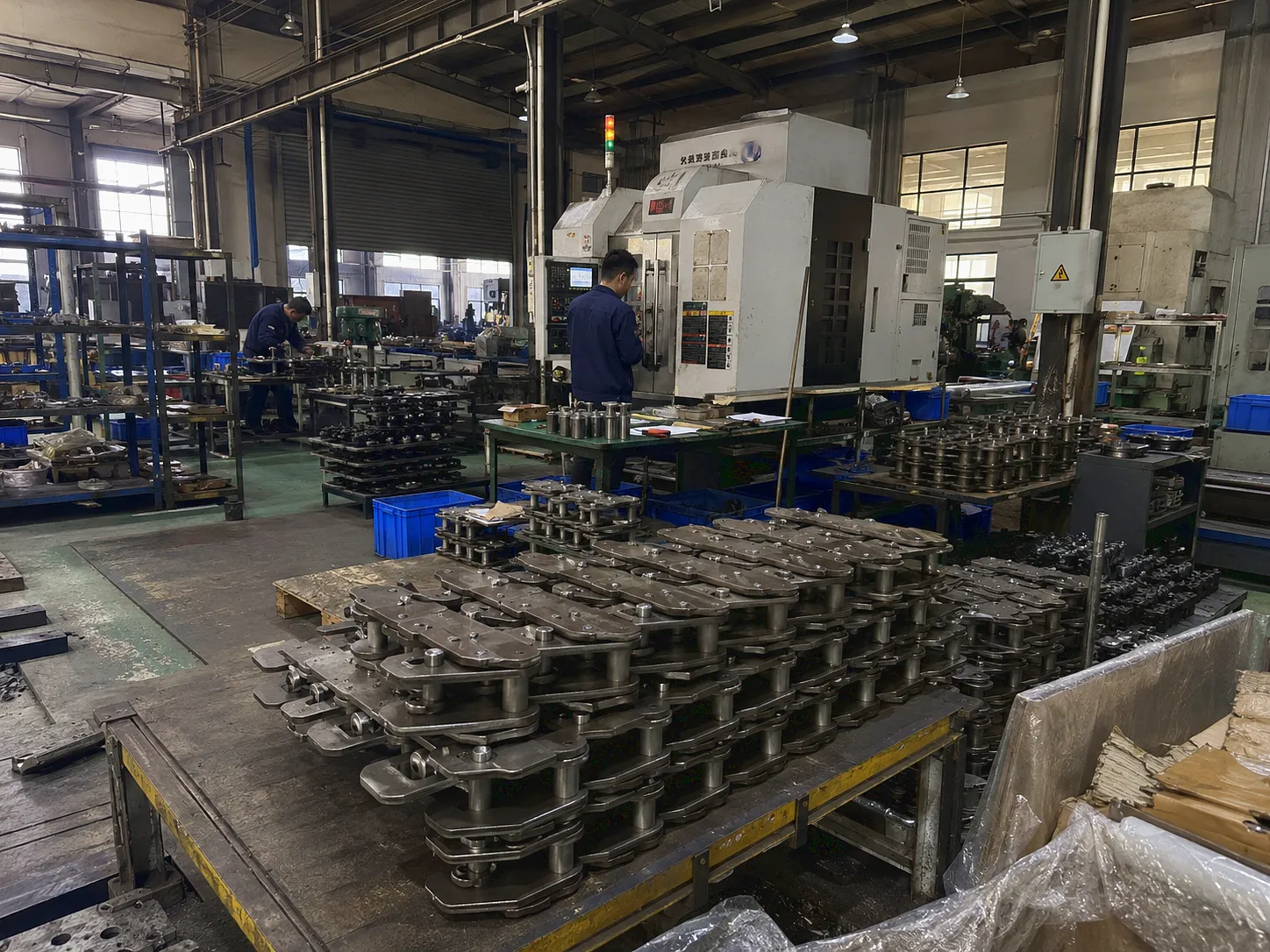
Ever Power’s manufacturing campus spans 42,000 square metres and houses one of Asia’s most comprehensively equipped leaf chain production lines. The facility operates eight CNC punch-press lines, six dedicated chain-assembly stations with automated plate-orientation verification, two continuous-belt carburising furnaces, and a fully equipped metrology laboratory with coordinate-measuring machines traceable to UKAS (UK Accreditation Service) calibration standards — a requirement specifically sought by UK procurement teams operating under ISO 9001:2015 quality systems.
Custom engineering is not a side business for Ever Power — it is a core competency. The application engineering team includes degreed mechanical engineers with specific backgrounds in agricultural machinery, lifting equipment, and industrial chain dynamics. When a UK OEM submits a drawing package for a non-standard leaf chain assembly, the engineering response includes a design review comment, dimensional compliance check against ISO 4347, and a formal FEA (finite element analysis) report on the proposed lacing configuration at the customer’s stated working load. This level of pre-production engineering support is rare among chain manufacturers and reflects the company’s positioning as a technical partner rather than a commodity supplier.
Customisation capabilities regularly requested by sugarcane harvester OEMs and UK agricultural distributors include: non-standard pitch combinations to match legacy harvester designs; extended-length pin variants for attachment plate welding; polymer-sealed pin options for coastal and humid-tropical environments; specialised phosphate conversion coatings for compatibility with biodegradable lubricants; bilateral attachment ears for slat paddle fabrication; and custom coiled packaging in corrosion-inhibited bags for long sea-freight transit times between UK ports and remote plantation warehouses.
Production lead times for standard series run 5–10 working days from order confirmation. Custom or modified-specification orders are quoted at 15–25 working days subject to the complexity of the modification. UK customers with established accounts benefit from dedicated stock holding programmes — Ever Power maintains consignment inventory at a bonded warehouse in the East Midlands to serve urgent replacement requirements without exposing distributors to long-transit procurement risk during harvest season.

Sourcing Leaf Chain from the UK: What Buyers Need to Know
- ✓ UKCA mark documentation
- ✓ BS EN ISO 4347 certified
- ✓ PSSR-compliant specs
- ✓ Full batch traceability
- ✓ ISO 9001:2015 system
The United Kingdom’s agricultural engineering sector is a globally significant procurement hub for sugarcane equipment. Companies based in Norwich, Peterborough, Hull, and Bristol regularly handle import-export chains serving plantation operations in the Caribbean, Sub-Saharan Africa, and South Asia. Since January 2021, post-Brexit machinery supply regulations have created some divergence between UK (UKCA) and EU (CE) conformity requirements, particularly around pressure-bearing and lifting components. Leaf chain for harvester lift and counter-balance circuits falls into this category under the Supply of Machinery (Safety) Regulations 2008 as amended.
Practically, this means UK importers and OEMs assembling harvesters for export from British facilities need cadeia de folhas suppliers who can provide documentation in both frameworks simultaneously — a common requirement that Ever Power satisfies as standard, given its export business across European and British markets simultaneously. The documentation pack accompanying each order includes mill test certificates, hardness survey results, dimensional inspection data, and chain-breaking test records for the production batch.
UK buyers sourcing for tropical export markets should also pay close attention to packaging specification. Standard export packaging for Ever Power agricultural chain includes VCI (Vapour Corrosion Inhibitor) inner bags, wooden crating with fumigation certification for phytosanitary compliance, and moisture-absorbing desiccant sachets for long sea-transit routes to Australia, the Caribbean, or East Africa. This level of packaging attention prevents the costly oxidation that can render apparently undamaged chain unusable within weeks of arrival in a humid tropical warehouse.
Payment terms for UK-based distributors include standard 30-day net on account after initial vetting, with options for consignment stock programmes that reduce working capital requirements while maintaining supply chain resilience during the critical pre-harvest stocking periods that typically run August through October for Southern Hemisphere seasons and January through March for Caribbean season procurement.
Field Maintenance Schedule & Inspection Protocol
A leaf chain will achieve its rated service life only if it is maintained within the parameters that its design assumes. The following protocol is drawn from field practice across commercial sugarcane harvesting operations and aligns with ISO 4347 inspection guidance and Ever Power’s application engineering recommendations.
| Interval | Task | Action / Limit | Tool Required |
|---|---|---|---|
| Daily (10 hrs) | Visual contamination check | Remove cane trash / mud build-up from chain guide channels | Compressed air, brush |
| 50 hours | Lubrication re-application | Apply ISO VG 220 gear oil or EP grease by brush to pin articulation zones; sealed-pin chains: skip unless pitch exceeds 1.5% | Brush / pressure-lube gun |
| 100 hours | Elongation measurement | Replace if elongation exceeds 2% (early warning); mandatory replacement at 3% | Chain elongation gauge |
| 200 hours | Plate & pin inspection | Inspect for cracked plates, corroded pits >0.3 mm deep, bent pins; replace individual links or full chain as needed | Magnifying glass, wire probe |
| Season-end | Full removal & storage prep | Wash, degrease, apply preservation oil, coil, tag with service hours, store in dry environment 10–40°C | Solvent tank, VCI bags |
| Immediate | Failure indicators | Replace immediately: visible plate cracks, pin protrusion >0.5 mm, lateral plate displacement, unusual noise or vibration | N/A — remove from service |
Leaf Chain vs Alternative Drive Solutions: A Comparative Analysis
Engineers sometimes encounter pressure to substitute leaf chain with roller chain, wire rope, or rigid link systems to reduce procurement cost. This table provides the engineering-led comparison across parameters that matter in harvester service — not catalogue numbers.
| Parameter | Leaf Chain | Roller Chain | Wire Rope | Rigid Link |
|---|---|---|---|---|
| Oscillating load fatigue life | ★★★★★ | ★★★☆☆ | ★★☆☆☆ | ★★★★☆ |
| Abrasion / contamination resistance | ★★★★☆ | ★★★☆☆ | ★★☆☆☆ | ★★★★★ |
| Sheave/pulley flexibility | ★★★★★ | ★★★★★ | ★★★★★ | ★☆☆☆☆ |
| Tensile strength-to-weight ratio | ★★★★★ | ★★★☆☆ | ★★★★★ | ★★★☆☆ |
| Field serviceability / splicing | ★★★★★ | ★★★★★ | ★★☆☆☆ | ★★★☆☆ |
| Compliance documentation | ★★★★★ | ★★★★☆ | ★★★☆☆ | ★★★☆☆ |
| Cost over 3-season lifecycle | Lowest | Médio | Medium-High | High |
Perguntas frequentes
Ready to Upgrade Your Sugarcane Harvester’s Leaf Chain?
Whether you need standard series from stock, a custom-specification assembly to OEM drawing, or a detailed technical consultation on your harvester’s chain requirements, the Ever Power engineering team is ready to help. We serve UK-based distributors, OEM design teams, and international plantation operations with the same level of technical rigour and responsive service.
Ever Power · ISO 9001:2015 Certified · ISO 4347 Compliant · UKCA Documentation Available · UK Distributor Network
© Ever Power Leaf Chain · All technical data conforms to ISO 4347:2021 · Last reviewed June 2026 · edit by gzl