
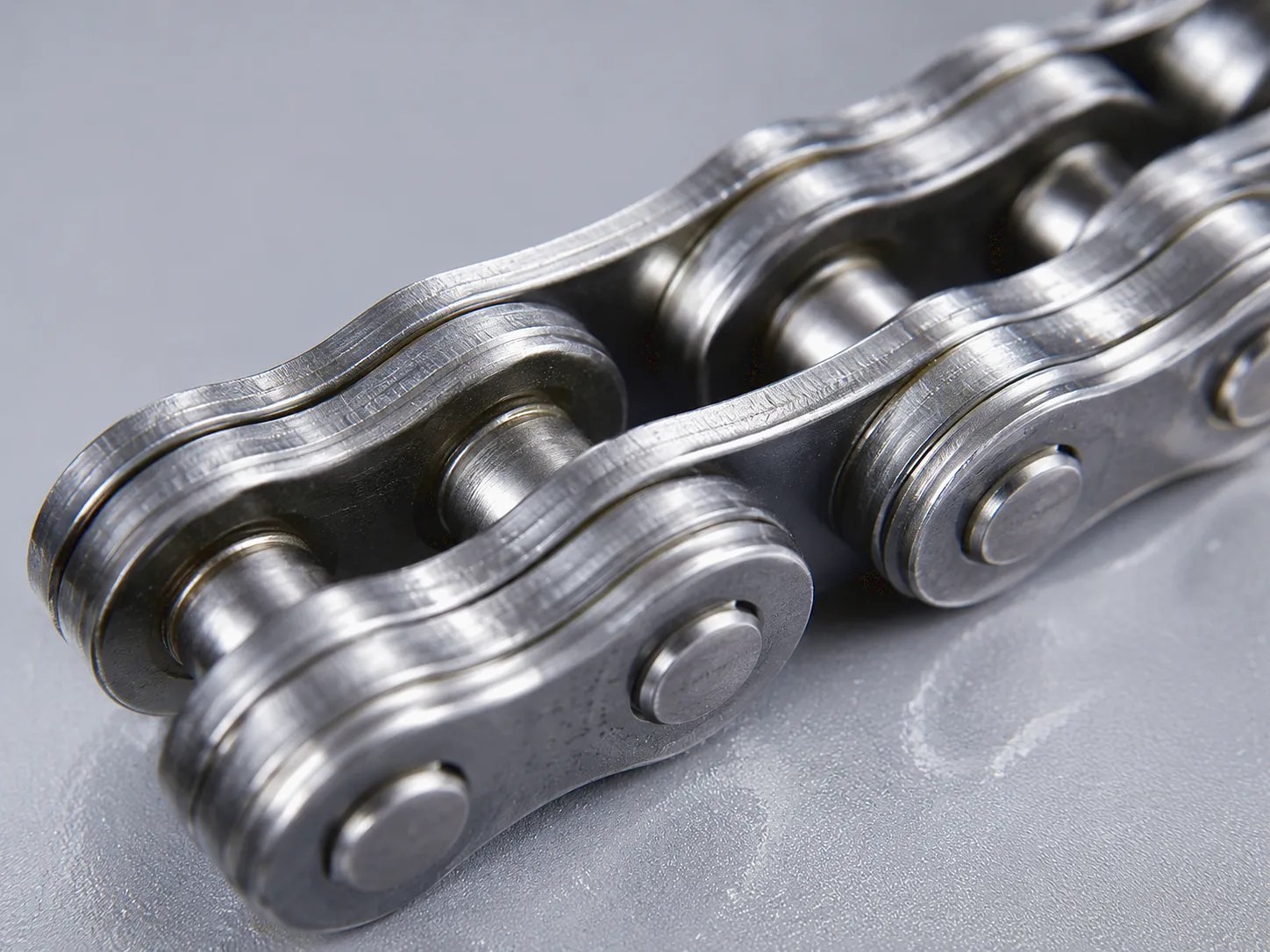
 Walk into any high-volume beverage factory in the UK — whether it is a craft cider house in Somerset, a soft drinks bottler in the West Midlands, or a large-scale beer cannery on Teesside — and you will find the same relentless mechanical rhythm: conveyors moving, indexing tables rotating, filling heads plunging and retracting, capping stations spinning. Behind that rhythm, quite literally driving it, are chains. Specifically, in the most demanding load-bearing positions, leaf chains — also written as leaf-type link plate chains or forklift-grade bearing chains — have become the transmission component that separates reliable plants from struggling ones.
This article draws on over 18 years of application engineering experience in leaf chain for industrial machinery to explain, in practical detail, why leaf chains are the right selection for beverage filling line environments, what specifications actually matter in a 24-hour production scenario, and how UK purchasing and maintenance engineers can evaluate suppliers intelligently rather than purely on unit price.
Need a leaf chain for your bottling or filling line? Get a tailored quote from our UK team today.
What Is a Leaf Chain and Why Does It Differ from Roller Chain?
Core engineering principles explained
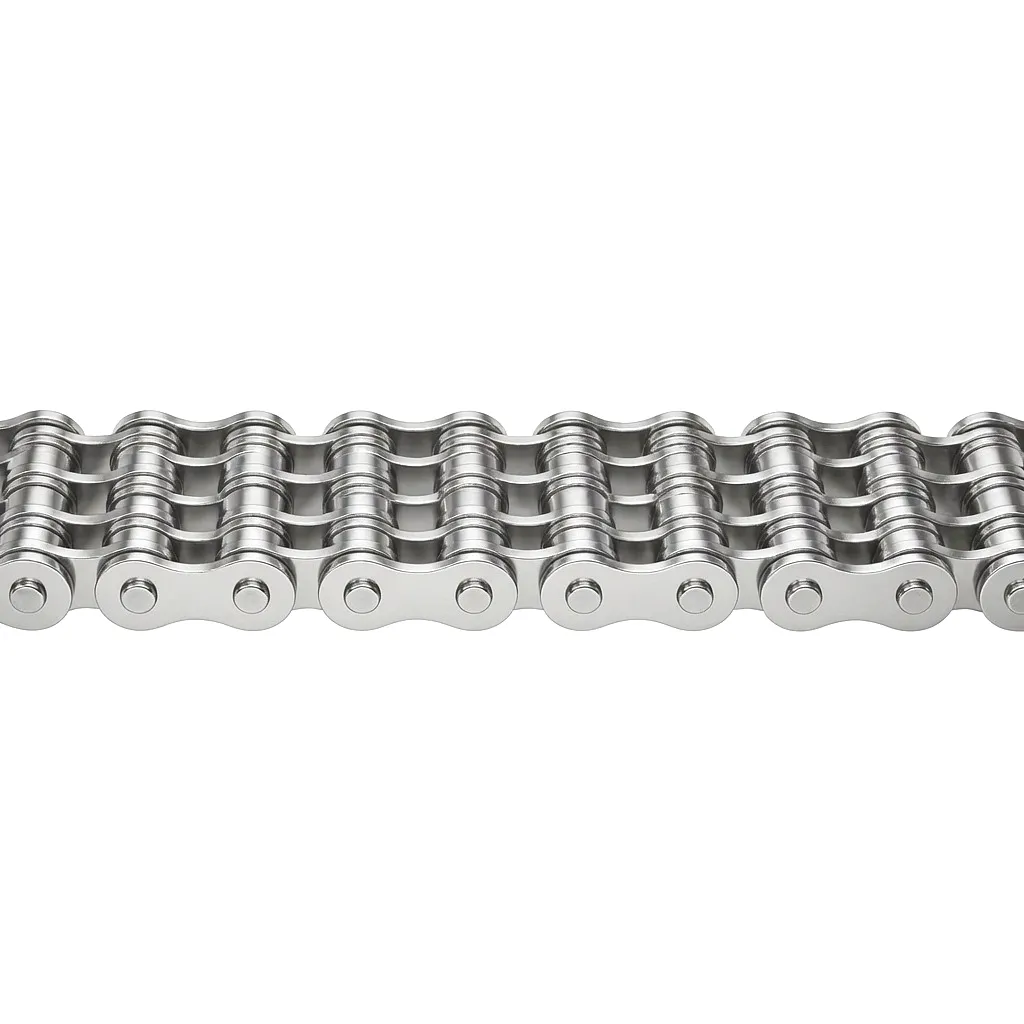
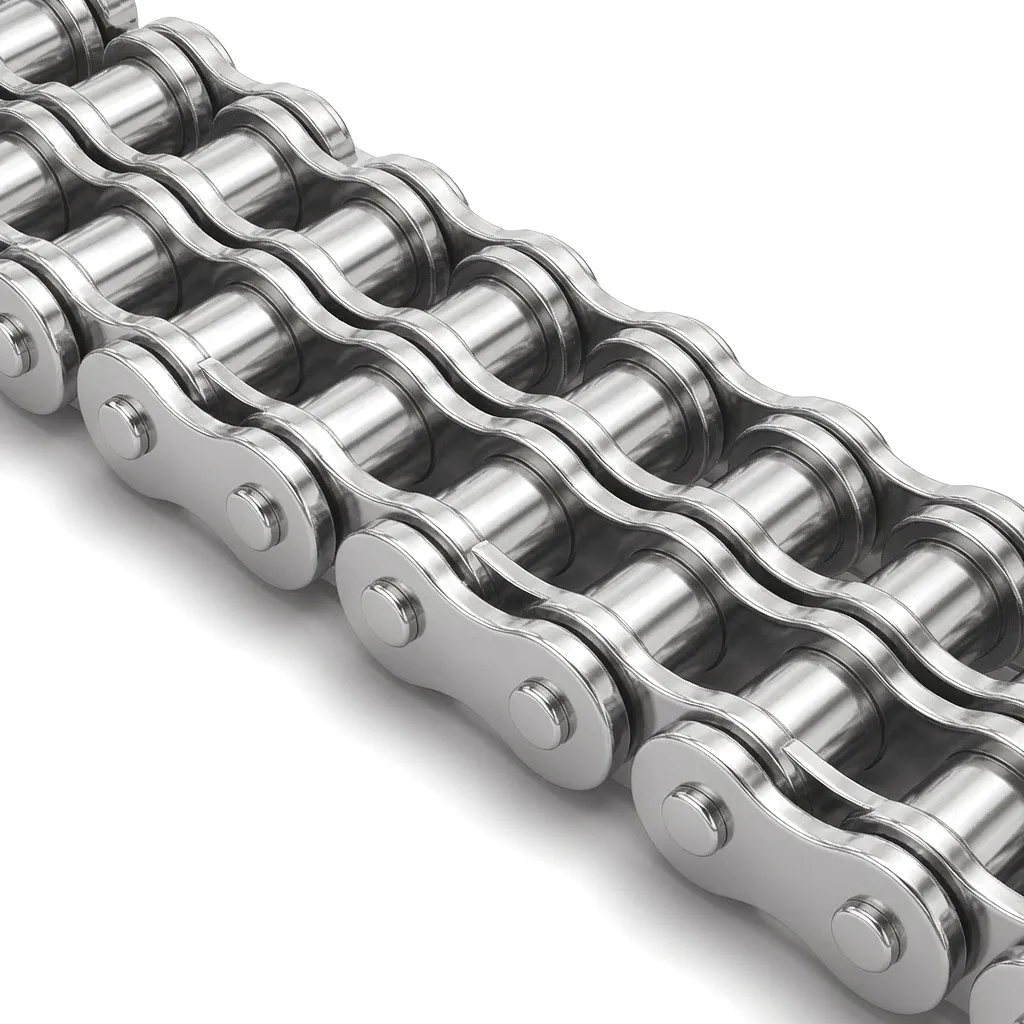
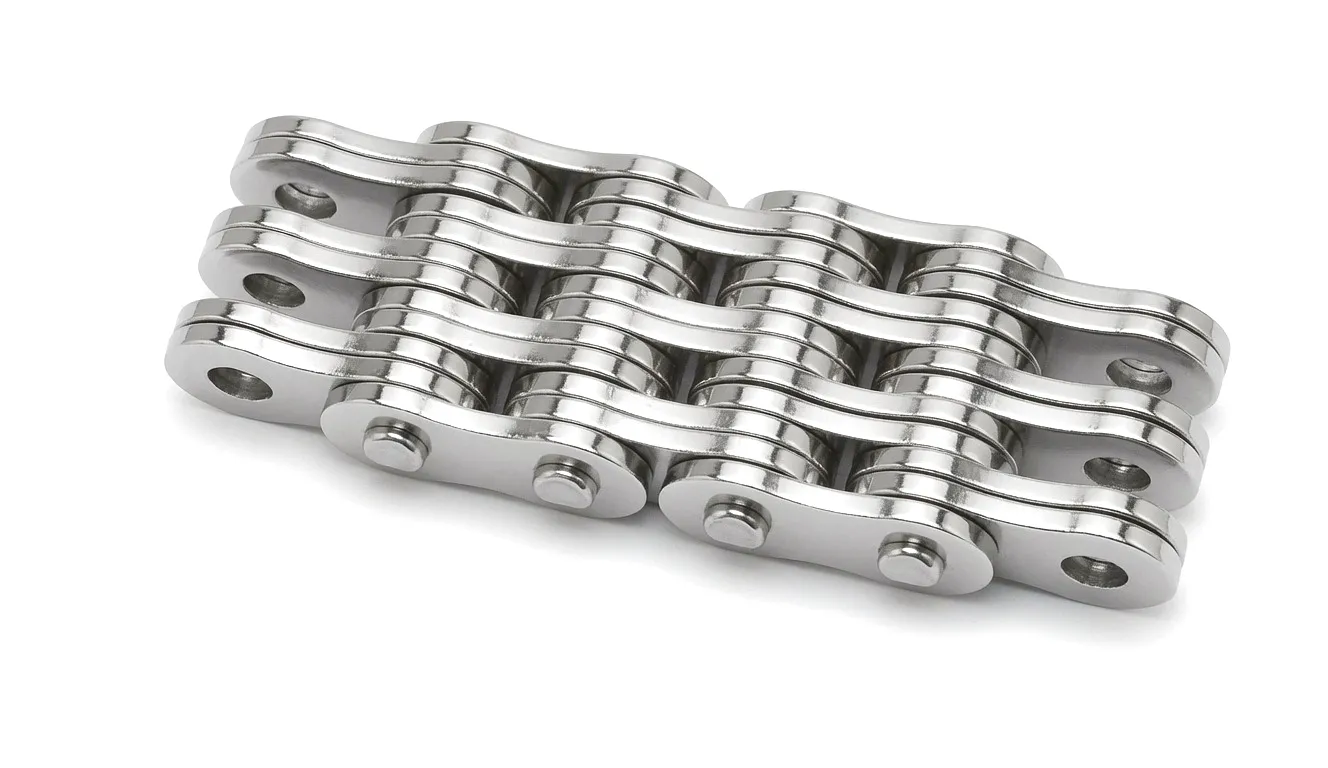
A leaf chain is constructed entirely from interlocked link plates and pins — there are no rollers, no bushings, no sprocket-engagement elements. The load is transmitted through the shear strength and bearing area of the pins acting against the inner diameter of the plate holes. This structural simplicity is the source of its primary advantage: an exceptionally high tensile strength-to-weight ratio combined with genuine resistance to side loading and bending fatigue that occurs when a chain runs over a guide rail or around a tight sheave.
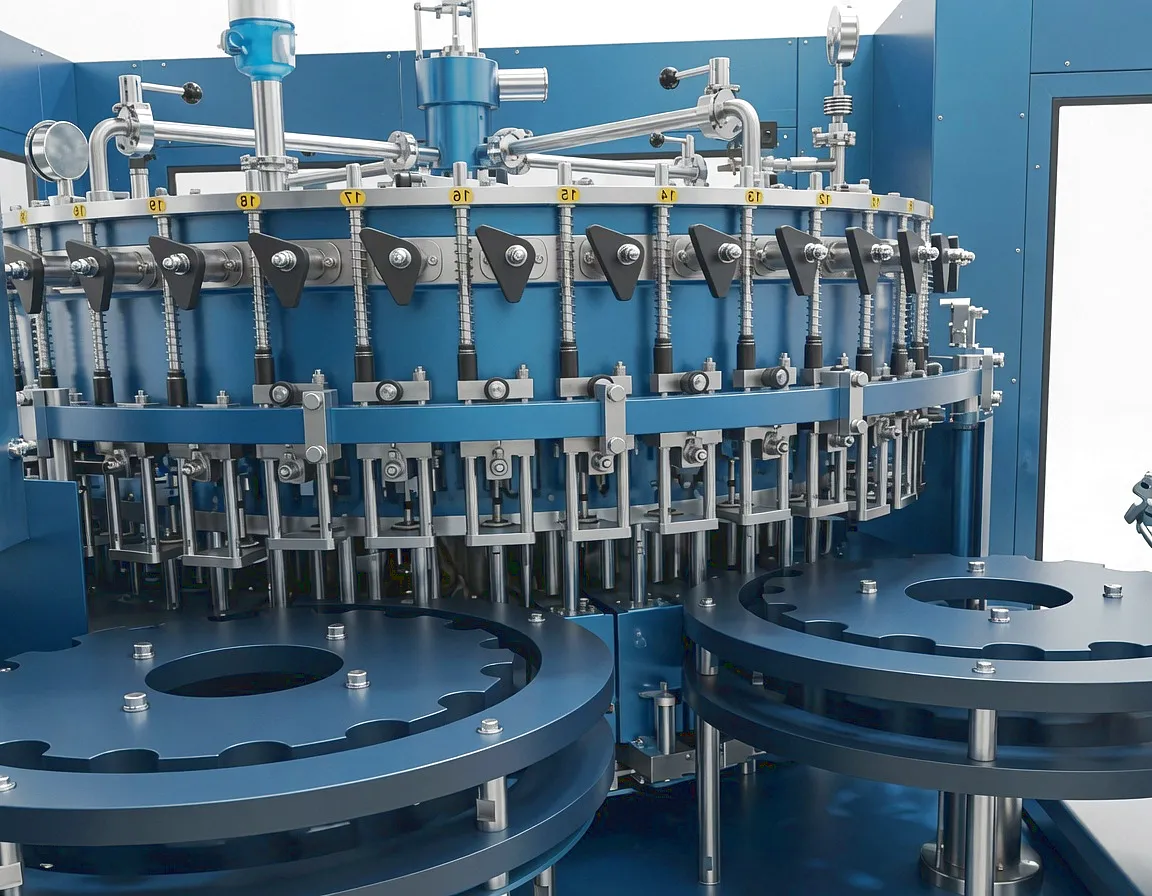
In a beverage filling line, leaf chains are encountered in two principal mechanical roles. The first is in the vertical lift mechanisms — the actuators that move filling heads, palletising arms, and crate elevators up and down. The second is in tensioning and indexing applications within star-wheel conveyor systems and accumulation tables where side loads are constant and predictable lubrication intervals are difficult to maintain. Both roles demand a chain that does not stretch unpredictably under dynamic load, that does not shed particles into the product zone, and that does not corrode when exposed to cleaning agents and liquid ingress.
Roller chains, by contrast, are designed primarily to engage with sprocket teeth to transmit rotary power. They are ideal for drive applications — running a conveyor belt or turning a rotary table — but the bushing-and-roller construction creates additional wear surfaces and a larger component count, neither of which improves fatigue performance in pure tensile loading. Using a roller chain where a leaf chain is specified is a common specification error that leads to premature elongation, unexpected failures and, in regulated food and beverage environments, potential contamination incidents.
Key Structural Advantages
- ▸ No rollers or bushings — fewer failure points
- ▸ Higher tensile rating per pitch than equivalent roller chain
- ▸ Superior side-load resistance
- ▸ Compact cross-section for tight machine envelopes
- ▸ Proven ISO 4347 / DIN 8152 standardisation
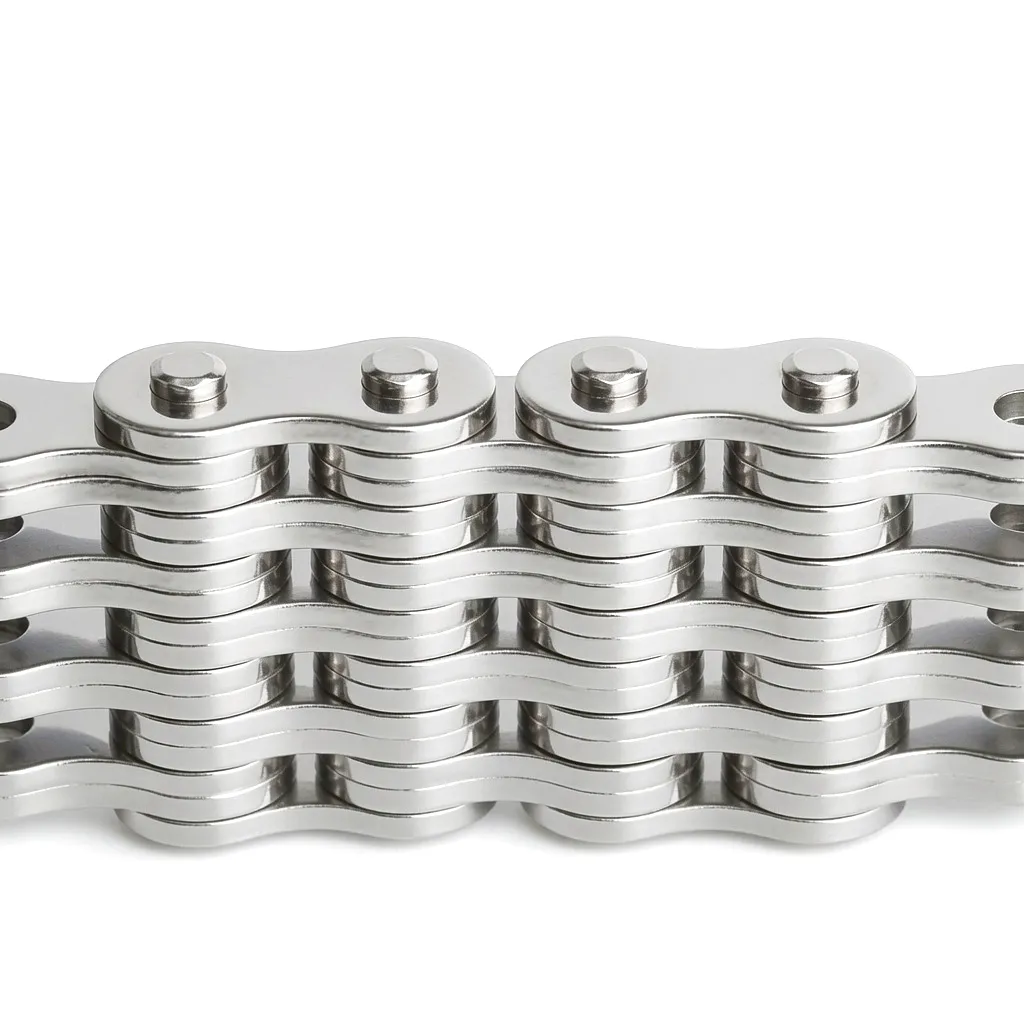
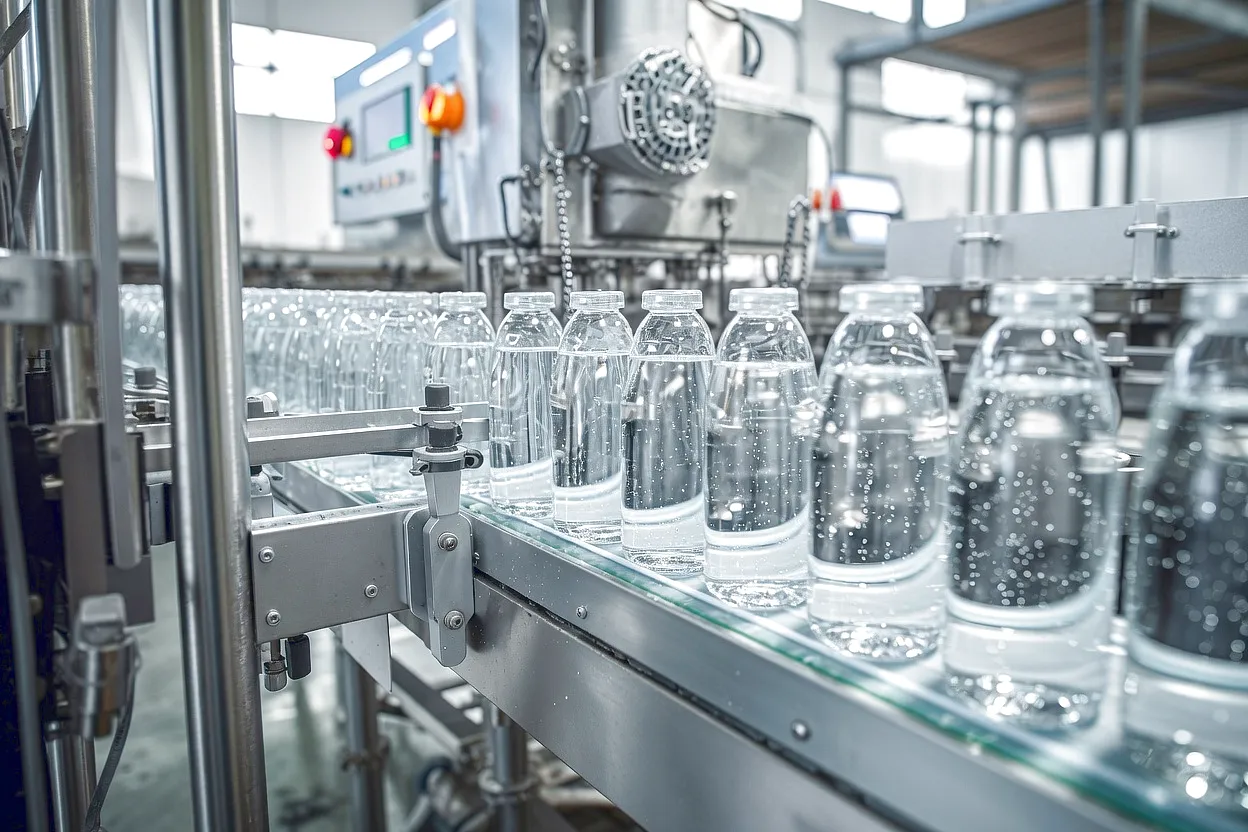
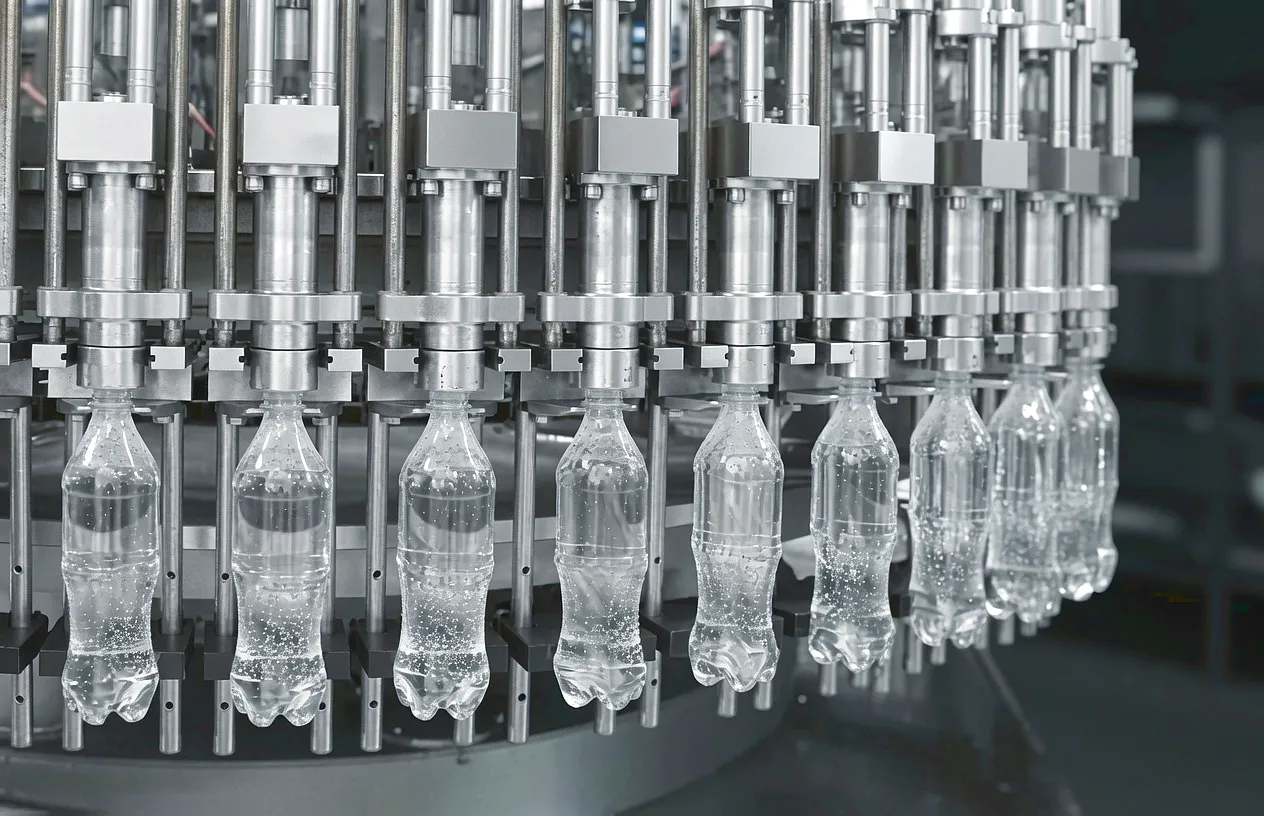
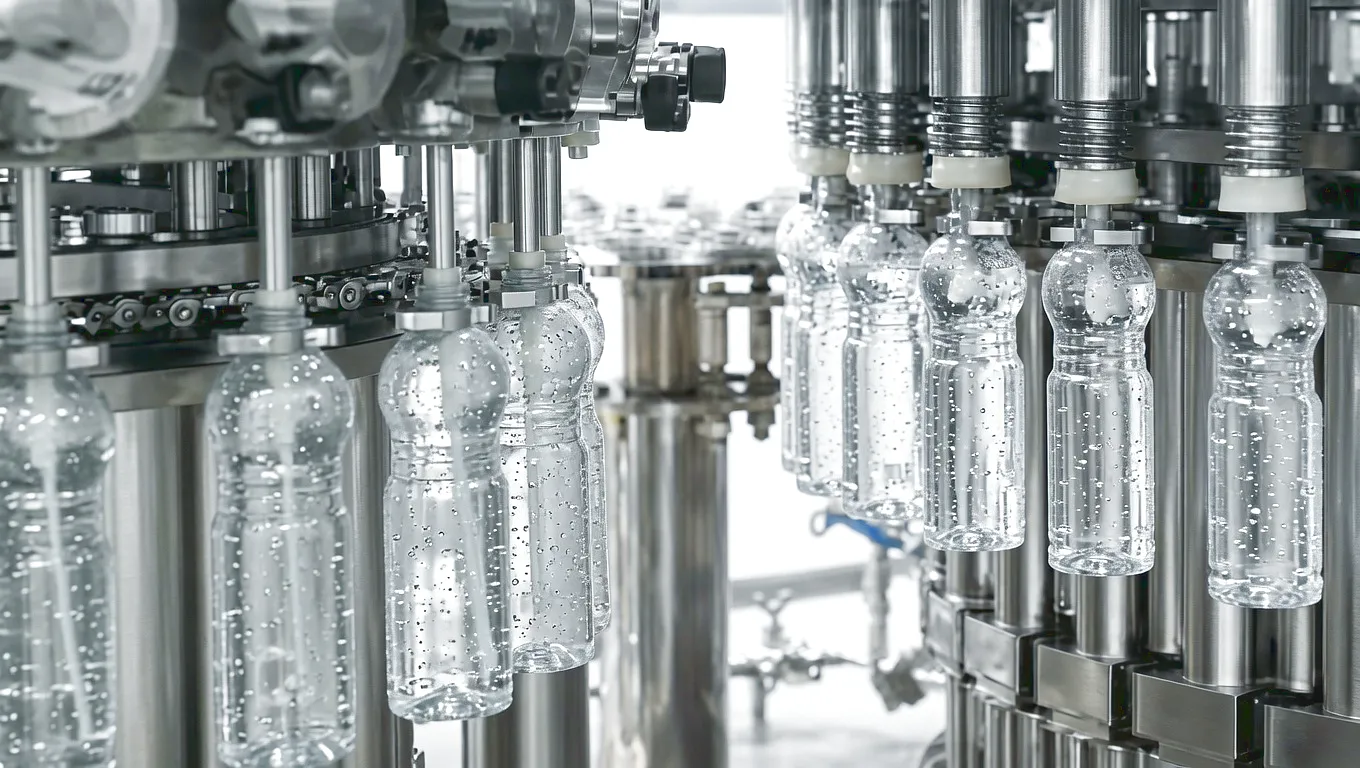
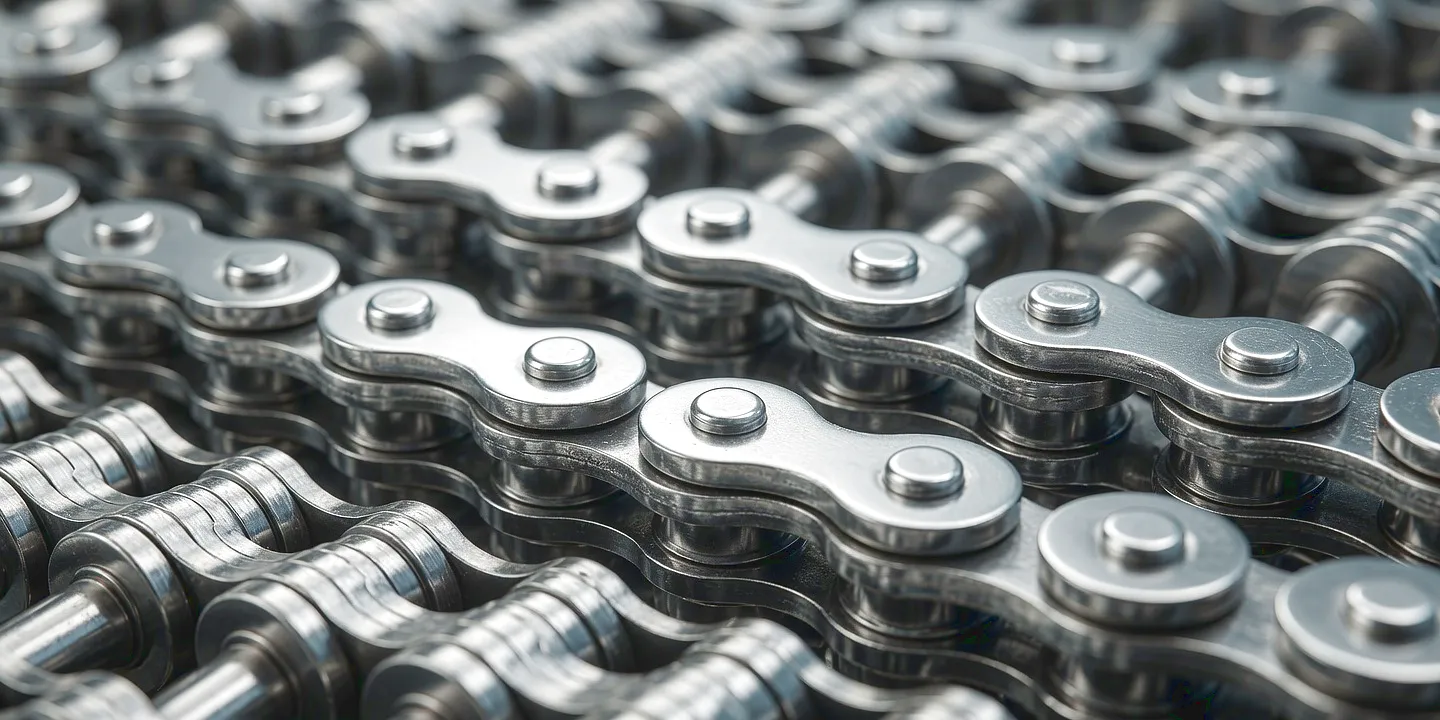
Leaf chain in action across beverage filling and bottling line environments
Why Beverage Filling Lines Are Among the Most Demanding Chain Environments in Manufacturing
From the perspective of a chain application engineer, a beverage filling production line is a genuinely hostile operating environment — more challenging than many engineers initially appreciate when they are sourcing components for a greenfield project or a machine rebuild.
Consider what a chain inside a canning or bottling line is routinely exposed to. Washdown cycles in UK food and beverage plants typically involve hot water at 70–85°C combined with alkaline or acidic CIP (clean-in-place) chemicals. Many craft breweries and soft drink producers now use peracetic acid-based sanitisers, which are aggressive to carbon steel under sustained contact. The mechanical environment adds cyclic tensile loading at high frequency — a filling head completing 40,000 cycles per shift imposes significant fatigue demands — combined with the vibration transmitted from rotary filling carousels, capping torque heads, and labelling stations all sharing the same machine frame.
Beyond chemistry and mechanics, there is the regulatory dimension. UK food manufacturers operating under BRC Global Standard for Food Safety and those supplying into major multiple retailers under GFSI-recognised schemes face strict documentation requirements around foreign body risk. Any chain component that sheds metallic particles — whether through abrasive wear of a poorly fitted roller or through corrosion flaking from an underspecified surface treatment — creates a HACCP deviation that can, in a worst case, trigger a product recall.
All of these factors combine to make leaf chain selection in a beverage filling context a task that rewards engineering rigour. The difference between a chain that lasts 18 months between planned replacements and one that fails inside six months often comes down to three or four specification decisions made at the purchasing stage.

Engineered for Food-Grade Environments
Our stainless steel and nickel-plated leaf chains are specifically designed to withstand the aggressive washdown, chemical exposure, and fatigue cycles typical of UK beverage filling operations. Every chain is manufactured to ISO 4347 with full traceability documentation.
Material Selection and Technical Specifications: What the Numbers Mean in Practice
Leaf chain for beverage filling lines is not a single product — it is a family of engineered components differentiated by material grade, surface treatment, lacing pattern, and pitch. Understanding which parameter governs your application prevents the most common procurement mistakes.
Carbon Steel (Case-Hardened)
The workhorse grade for dry or low-humidity zones within a filling plant. Typically Rockwell C58–64 surface hardness on pins, with a tenacity that delivers the highest tensile ratings in the leaf chain range. Suitable for crate palletisers and case erectors that are not directly in the washdown zone.
Stainless Steel (304 / 316)
The correct specification for any application inside the washdown envelope. Grade 316 is preferred where chloride-bearing cleaning agents or marine ambient conditions apply — a growing consideration for bottling plants in coastal UK locations. Tensile ratings are approximately 20–25% lower than carbon steel equivalents, which must be accounted for in the design safety factor.
Nickel-Plated Carbon Steel
A cost-effective middle ground for semi-wet zones. Nickel plating provides meaningful corrosion resistance at a lower unit cost than full stainless construction, while retaining near-standard carbon steel tensile values. Most effective when combined with food-grade H1 lubricant and a strict lubrication interval schedule.
Typical Technical Performance Parameters
| Parameter | AL422 (Light) | AL633 (Medium) | AL844 (Heavy) | AL1066 (Extra Heavy) |
|---|---|---|---|---|
| Pitch (mm) | 25.40 | 38.10 | 50.80 | 63.50 |
| Tensile Strength (kN) — Carbon | 55 | 125 | 220 | 370 |
| Tensile Strength (kN) — 316 SS | 42 | 97 | 172 | 285 |
| Pin Diameter (mm) | 7.92 | 11.10 | 14.27 | 19.05 |
| Standard Lacing Pattern | 2×2 | 3×3 | 4×4 | 6×6 |
| Max Allowable Elongation (%) | 3.0 | 3.0 | 3.0 | 3.0 |
| Compliance Standard | ISO 4347 | ISO 4347 | ISO 4347 | ISO 4347 |
All figures are nominal at ambient temperature. Contact our engineering team for performance data at elevated temperatures or in specific chemical environments.
Six Specific Application Positions Inside a Beverage Filling Line
Where leaf chain makes the greatest difference to plant uptime
1. Filling Head Lift Actuators
In rotary volumetric fillers and inline piston fillers, the filling head assembly moves vertically to engage the container neck and then retract. Leaf chain AL633 or AL844 grade is used in the counterbalance or direct drive role. The critical requirement here is zero-stretch consistency — if the chain elongates even 1mm beyond the calibration baseline, fill volume accuracy drifts outside ±0.5% tolerances required by UK Weights and Measures legislation.
2. Crate and Pallet Elevator Columns
At end-of-line, stacked crates or palletised layers travel vertically between floor levels or accumulation conveyors. Elevator systems using leaf chains can handle loads from 500kg to well over 5 tonnes depending on the lacing pattern and number of chain strands deployed. This is a textbook leaf chain application — pure tensile loading, defined mechanical advantage, predictable cycle count — and it represents one of the lowest risk positions in the plant when the chain is correctly sized.
3. Accumulation Table Tensioning
Large circular or linear accumulation tables that buffer containers between the filler and the capper use tensioned chain assemblies to maintain the horizontal surface under load. The chain must resist lateral distortion when a column of containers bears against the outer guide rail. Stainless steel AL422 or AL633 in 2×3 or 3×3 lacing is the standard specification here, chosen for corrosion resistance rather than brute tensile strength, since loads are moderate but the chemical environment is aggressive.
4. Keg Filling and Racking Systems
In the craft brewing sector — which has seen explosive growth in the UK over the past decade — keg racking machines present a particularly demanding combination of load and hygiene requirements. A 50-litre steel keg weighs approximately 12kg empty and over 62kg when filled; the lift mechanism that presents the keg to the racking head and then transfers it to the roller conveyor relies on leaf chain for reliability in a thoroughly wet, CO2-rich environment. Food-grade H1 lubricated stainless leaf chain is the specification of choice across UK craft brewery installations.
5. Bottle Rinser Carousel Lift Arms
Bottle rinsers that invert containers before filling use articulated lift arms driven by chain and cam mechanisms. The leaf chain in these systems operates partially submerged in rinse water at varying temperatures and must maintain dimensional stability across millions of cycles. This is an application where the fatigue endurance limit — not the static tensile rating — is the governing design criterion, making the selection of a chain with appropriate plate thickness and hardness particularly important.
6. Shrink Tunnel Conveyor Tensioners
After labelling, multipack shrink tunnels apply heat at 160–220°C to shrink film around bundled bottles or cans. The tensioner assemblies that maintain belt tracking and tension inside and adjacent to the heat tunnel must operate at elevated ambient temperatures. High-temperature-rated leaf chain with appropriate surface treatment, or carbon steel chain with heat-stable dry lubricant, is the correct selection in this zone.
Product Advantages That UK Plant Engineers Value Most
✔ Exceptional Fatigue Life
The plate-and-pin construction distributes tensile load evenly across multiple plate strands, giving leaf chain an endurance advantage over equivalent-rated roller chain in purely reciprocating or oscillating applications. Well-maintained stainless leaf chain in a filling head actuator regularly delivers 24,000 operating hours before scheduled replacement — equivalent to three full years in a double-shift plant.
✔ Dimensional Stability Under Load
The 3% maximum elongation threshold defined in ISO 4347 is not a design concession — it is a performance guarantee. When manufacturers produce to the standard with correct hardness profiles on pins and plates, a new leaf chain will undergo initial “bedding-in” elongation of approximately 0.1–0.2% and thereafter maintain dimensional stability for the bulk of its service life. For filling machine calibration, this predictability is invaluable.
✔ Reduced Maintenance Intervals
Because leaf chains have fewer moving interfaces than roller chains of equivalent pitch, they require less frequent lubrication and produce lower levels of particulate wear debris. In a washdown environment, where over-lubrication creates its own contamination risk, the reduced lubrication demand is genuinely useful. H1 food-grade grease applied at extended intervals keeps the chain compliant with HACCP requirements while protecting the joint interfaces adequately.
✔ Customisable Lacing and Length
Standard lacing patterns from 2×2 through to 8×8 and beyond allow engineers to tune the load capacity and chain width to the exact space envelope available in a filling machine. For OEMs designing compact-format filling lines for the craft brewery or small-scale soft drinks market — a growing segment in the UK — this flexibility allows leaf chain to be integrated into machine frames where a bulkier roller chain assembly simply would not fit.
Our Manufacturing Facility and Custom Chain Capabilities
Purpose-built production with engineering flexibility for UK buyers
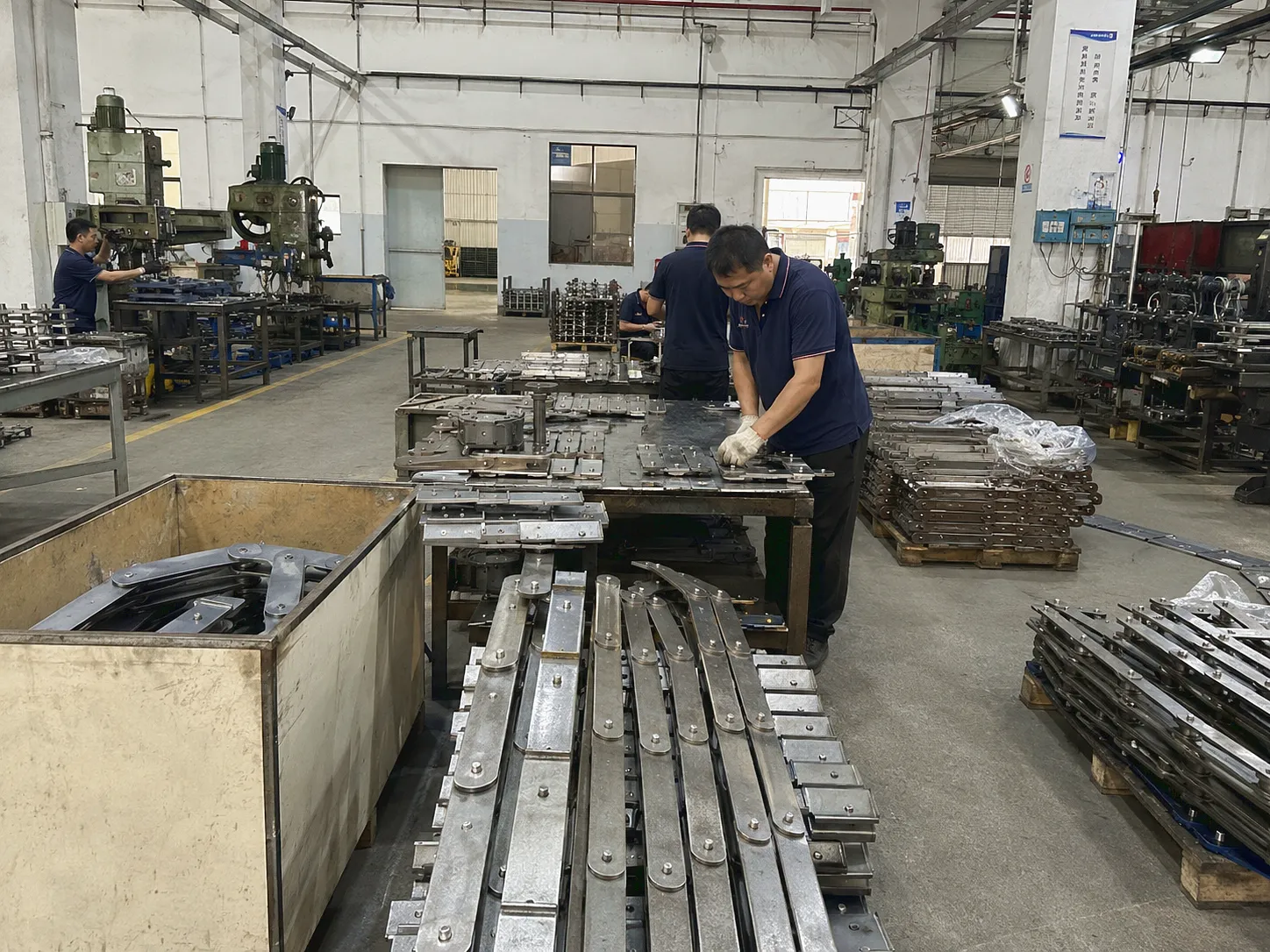
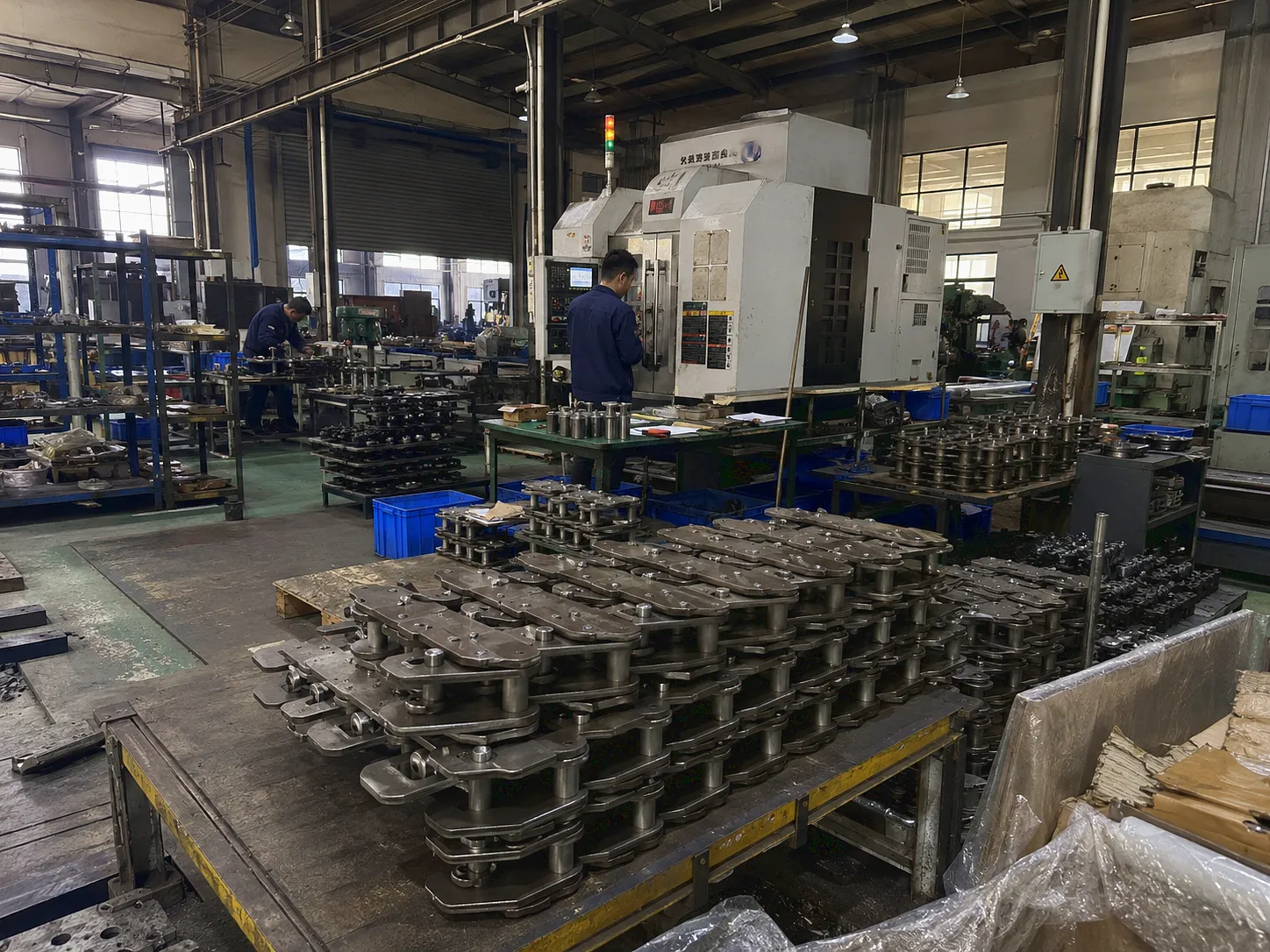
Our manufacturing facility operates CNC pin grinding centres, precision plate blanking presses, and automated assembly and pre-stretching lines that allow us to hold dimensional tolerances tighter than the ISO 4347 standard requires. Every batch is proof-loaded and elongation-tested before shipment, and full material certification to EN 10204 3.1 is available as standard for UK customers who require it for regulatory or customer audit purposes.
Beyond standard catalogue items, our engineering team has a strong capability in customised leaf chain solutions — a service that is especially relevant for UK OEMs and filling line manufacturers who design proprietary machine formats. We regularly produce non-standard lacing patterns (such as 2×3, 3×4, or asymmetric configurations), extended pin stems for attachment plates, custom hole patterns for direct bolting to machine carriages, and coated assemblies for applications where the chain doubles as a guide element. We can work from customer drawings, from worn-out sample chains, or from functional specifications without drawings — the approach is entirely flexible to your engineering workflow.
Ready to discuss a custom chain specification?
Our engineers respond within one working day.
Customer Success: A UK Soft Drinks Bottler Cuts Chain-Related Downtime by 73%
Real-world performance data from British manufacturing
We had been through two other chain suppliers in three years, always chasing the cheapest unit price and always paying for it in downtime. The stainless leaf chain we now use from this supplier has been running for 22 months without a single unplanned intervention. For a filling line running three shifts, that is transformative.
What impressed me most was the engineering conversation before we placed the first order. They asked about our washdown chemicals, our shift pattern, and our safety factor targets. Nobody else had done that. The chain they recommended costs slightly more per metre than what we had been using, but the total cost over 18 months is considerably lower because we are not replacing it mid-cycle.
We are an OEM building compact filling lines for the UK premium water market. Getting a non-standard lacing pattern with attachment holes machined to our drawing, at realistic minimum order quantities, had defeated every other supplier we approached. This team produced a sample within two weeks and matched our drawing exactly. The production batch followed shortly after with 3.1 certification. Genuinely impressive custom manufacturing capability.

How to Select and Maintain Leaf Chain in a UK Beverage Filling Environment
The most common chain procurement decision in a UK food manufacturing business is made by combining price comparison, a known brand name, and a vague recollection of what was specified last time. This approach works tolerably well for commodity consumables, but leaf chain in a filling machine is not a commodity consumable — it is a precision engineering component whose failure mode can be catastrophic rather than merely inconvenient. A structured selection and maintenance framework, even a simple one, produces meaningfully better outcomes.
| Application Zone | Chemical Exposure | Recommended Material | Lubrication | Typical Replacement Interval |
|---|---|---|---|---|
| Filling head actuator (wet zone) | High — alkaline CIP + water | 316 Stainless | H1 food-grade grease, 250h | 18–24 months |
| Pallet elevator (dry, external) | Low — ambient humidity | Carbon steel, case-hardened | Standard chain oil, 500h | 36–48 months |
| Accumulation table (semi-wet) | Medium — splash zone | Nickel-plated or 304 SS | H1 food-grade grease, 400h | 24–30 months |
| Keg racking lift (wet, CO2 rich) | High — CO2, organic acids | 316 Stainless | H1 food-grade grease, 200h | 18 months |
| Shrink tunnel tensioner (high temp) | Low — heat, no liquid | Carbon steel + dry lubricant | Dry PTFE spray, 1000h | 30–36 months |
Practical maintenance discipline for leaf chain in a filling line does not require complex procedures — it requires consistency. Monthly visual inspections for side plate discolouration (a sign of corrosion onset under surface treatment), quarterly elongation measurements against a reference datum marked on the chain at installation, and lubrication adherence to the schedule in the table above will catch the vast majority of developing problems before they become failures. A chain that has reached 2.5% elongation should be scheduled for replacement within the next planned maintenance window rather than run to the 3% threshold, because the elongation rate accelerates as pin-to-plate wear increases.
Frequently Asked Questions
Questions from UK beverage industry buyers and engineers
Ready to Specify the Right Leaf Chain for Your UK Filling Line?
Our engineering team works with beverage bottlers, breweries, soft drink producers, and filling machine OEMs across England, Scotland, and Wales to identify the correct leaf chain specification, provide full ISO and material certification, and support planned maintenance programmes that keep production running.
Ever Power Leaf Chain · ISO 4347 Certified · Serving UK Beverage Manufacturing Industry · EN 10204 3.1 Certification Available · edit by gzl