
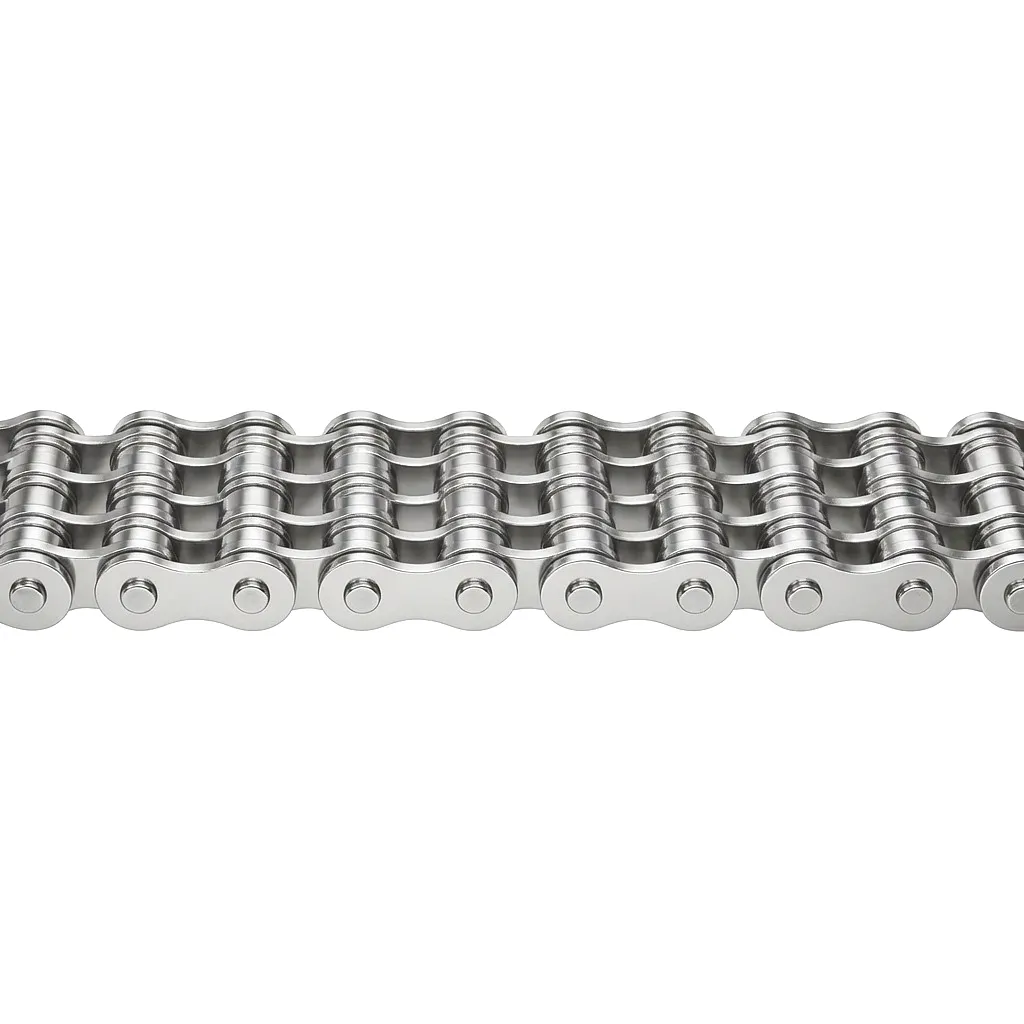
 Walk the floor of any operational beverage filling plant in the United Kingdom — whether it’s a mid-scale craft brewery in Yorkshire, a PET water bottler in the Midlands, or a large-format soft drinks facility in Greater London — and you will find the same unspoken engineering anxiety: the conveyor drive chain. No single mechanical component carries more collective responsibility for throughput continuity, product integrity, and shift-labour efficiency than the leaf chain running through each stage of a filling line. And yet, in purchasing decisions, it is frequently treated as a commodity.
That approach costs UK manufacturers millions each year in avoidable downtime, premature replacement cycles, and — critically — in lost production speed when a worn drive chain forces operators to derate conveyor velocity just to maintain stability. This article draws on over eighteen years of hands-on application engineering experience with plate chain systems to give technical buyers, plant engineers, and procurement managers an honest, complete picture of how the right leaf chain for beverage filling production lines performs, why specific design parameters matter, and what to look for when evaluating a supplier in Britain’s competitive food-and-drink manufacturing sector.
What a Leaf Chain Actually Is — And Why It Differs From Roller Chain
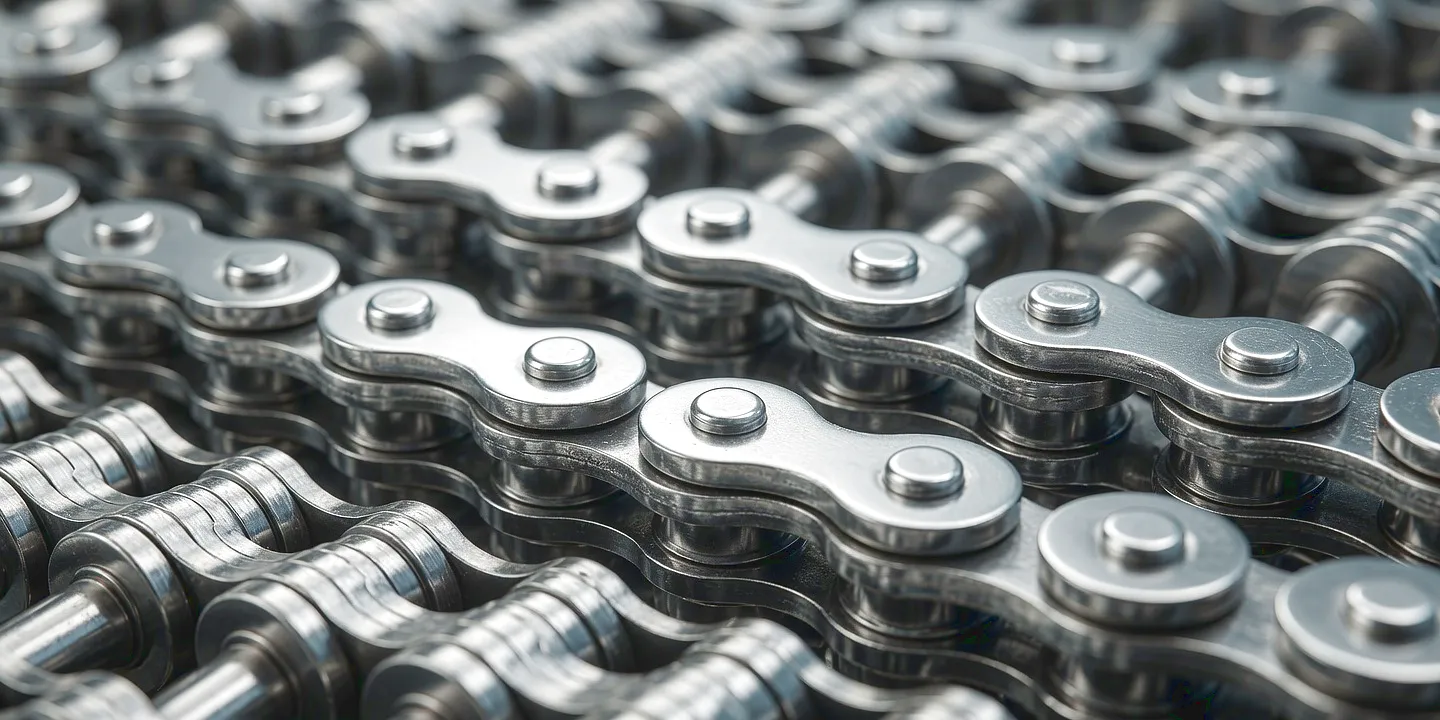
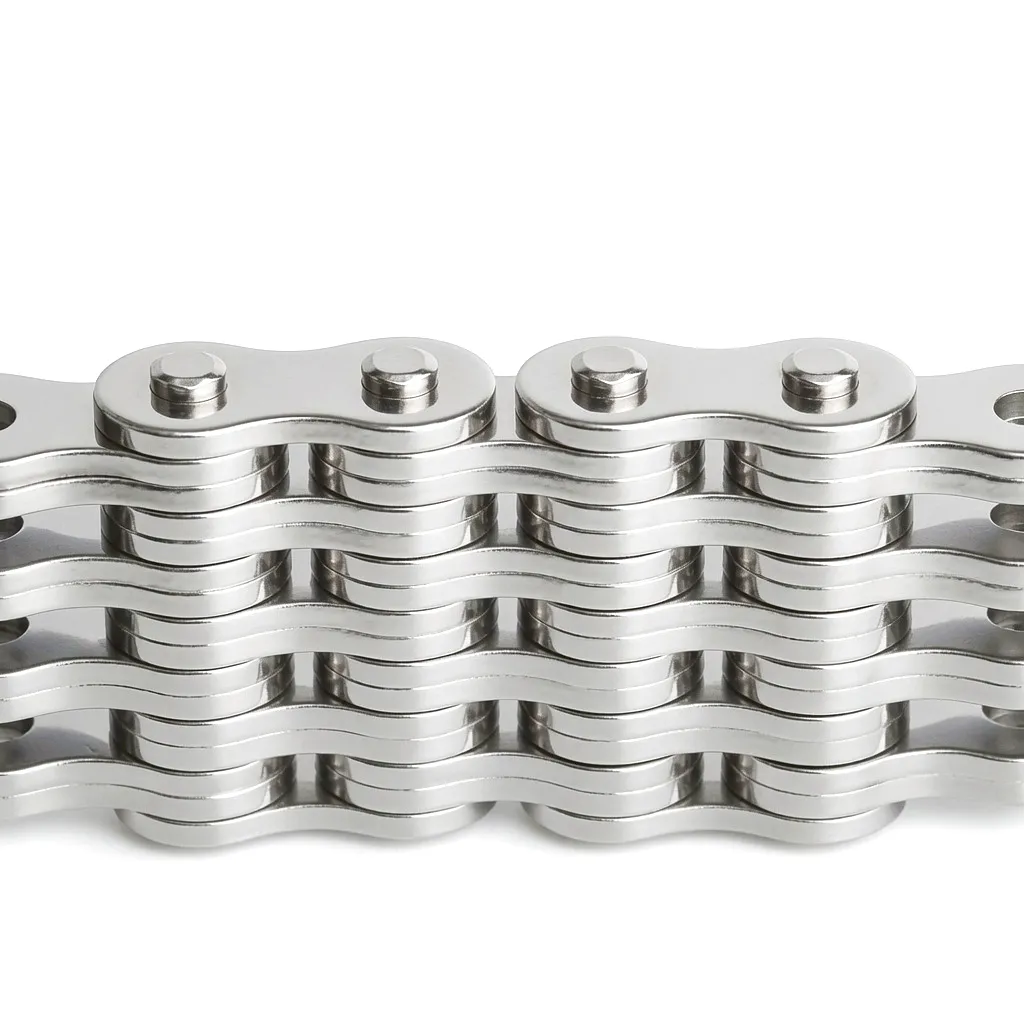
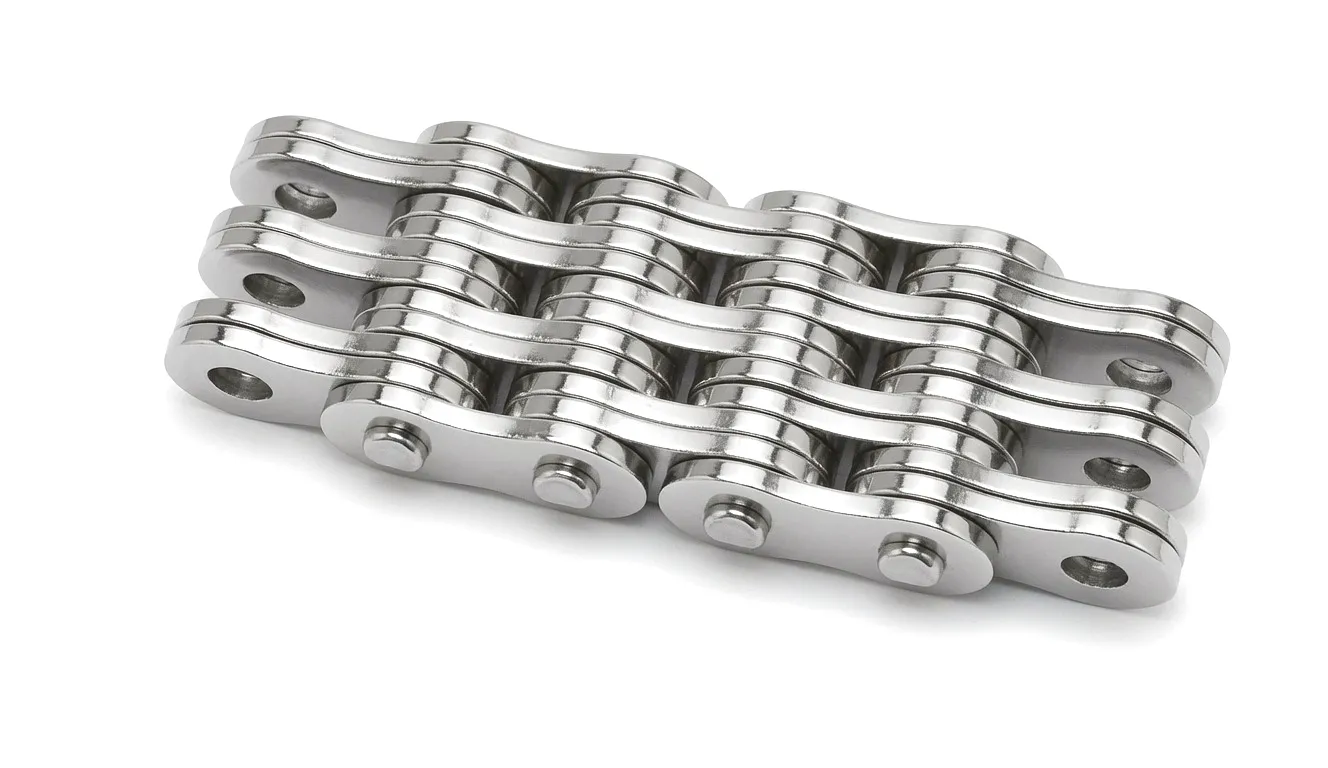
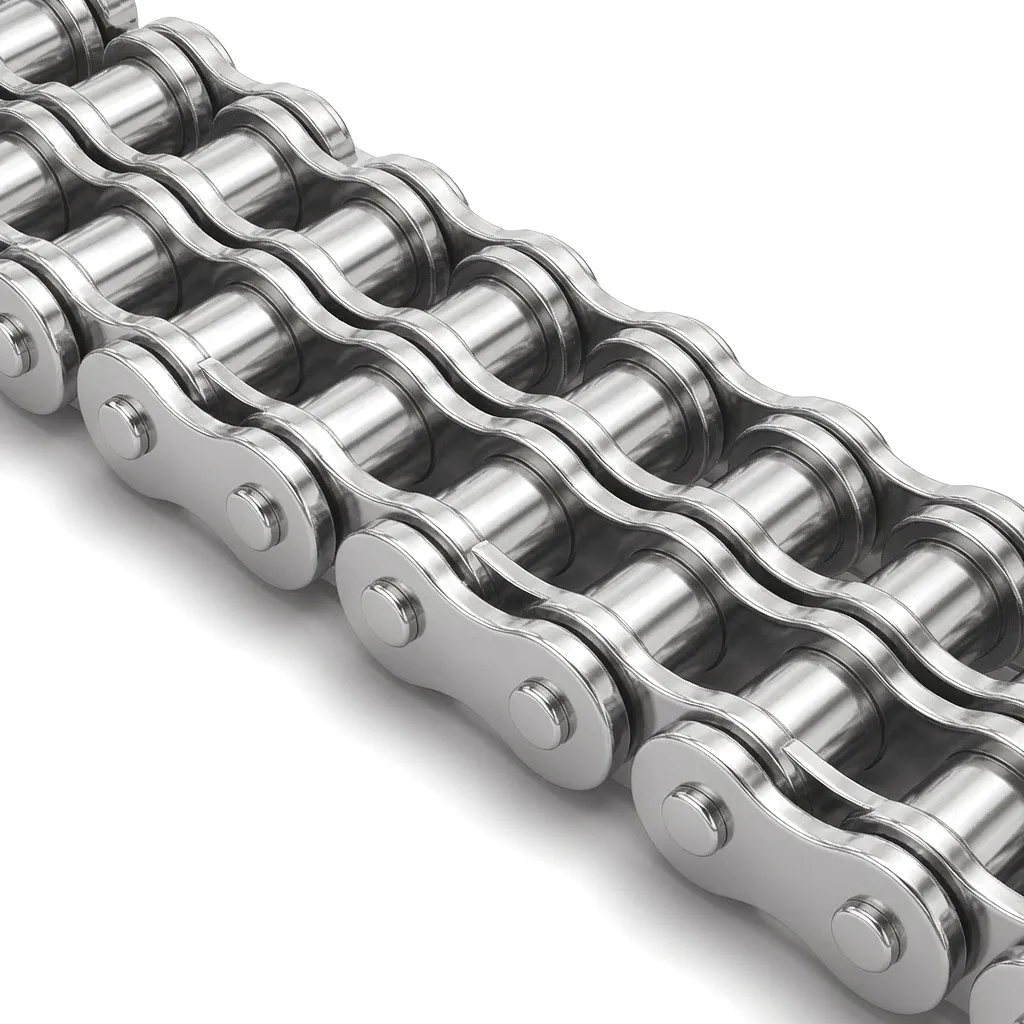 A leaf chain — sometimes written as plate chain or lade chain in older British engineering documentation — is a steel link chain constructed entirely from interleaved flat plates (link plates) and connecting pins, without rollers or bushes between the plates. This apparently simple distinction produces a fundamentally different load-bearing geometry. Because the pins bear the full articulating load directly between stacked plates, leaf chains achieve tensile strengths and fatigue life characteristics that conventional roller chains simply cannot match at equivalent pitch and width.
In a beverage filling production line, this matters for two primary reasons. Conveyor systems in bottling plants cycle continuously — often 20 or more hours per day in large UK facilities — under load profiles that include constant tension, dynamic shock loading at container handoff points, and the ongoing chemical aggression of washdown water, carbonated spillage, and CIP (clean-in-place) cleaning agents. A chain that cannot sustain mechanical integrity under this combination of stressors will exhibit plate cracking, pin corrosion, or pitch elongation long before the rated lifecycle. Each of those failure modes introduces either catastrophic line stoppage or, more insidiously, gradual speed-limiting wear that erodes throughput invisibly over weeks.
Engineering Principles, Materials, and Manufacturing Standards
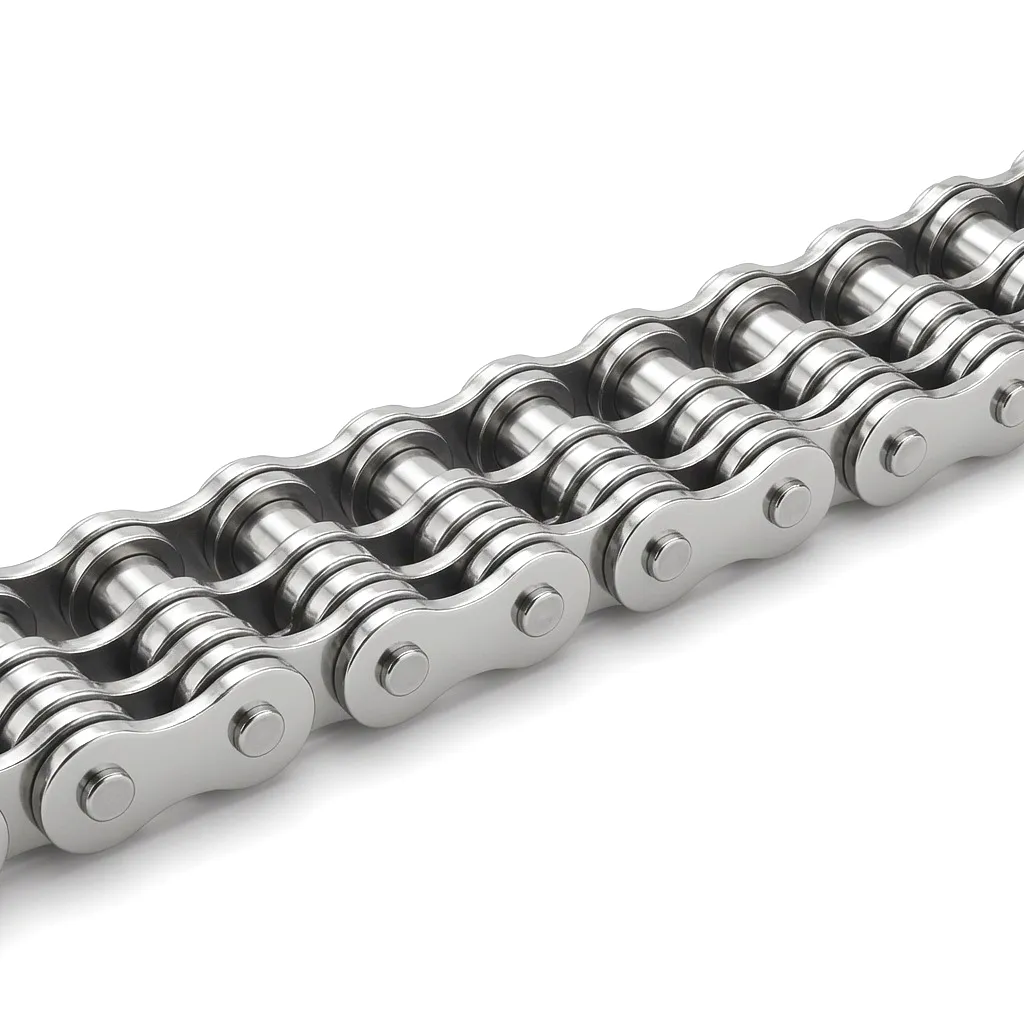 The operating principle of a leaf chain is deceptively straightforward: tensile load is transmitted through overlapping steel plates connected by hardened steel pins. The plate thickness, the number of plate layers (lacing), the pin diameter, and the surface treatment collectively determine the chain’s ultimate tensile strength, fatigue rating, and corrosion resistance. What separates a mediocre chain from an exceptional one — particularly for the demanding thermal, chemical, and cyclic-load environment of a beverage filling production line — is the quality of steel selection, the precision of heat treatment, and the consistency of assembly tolerances.
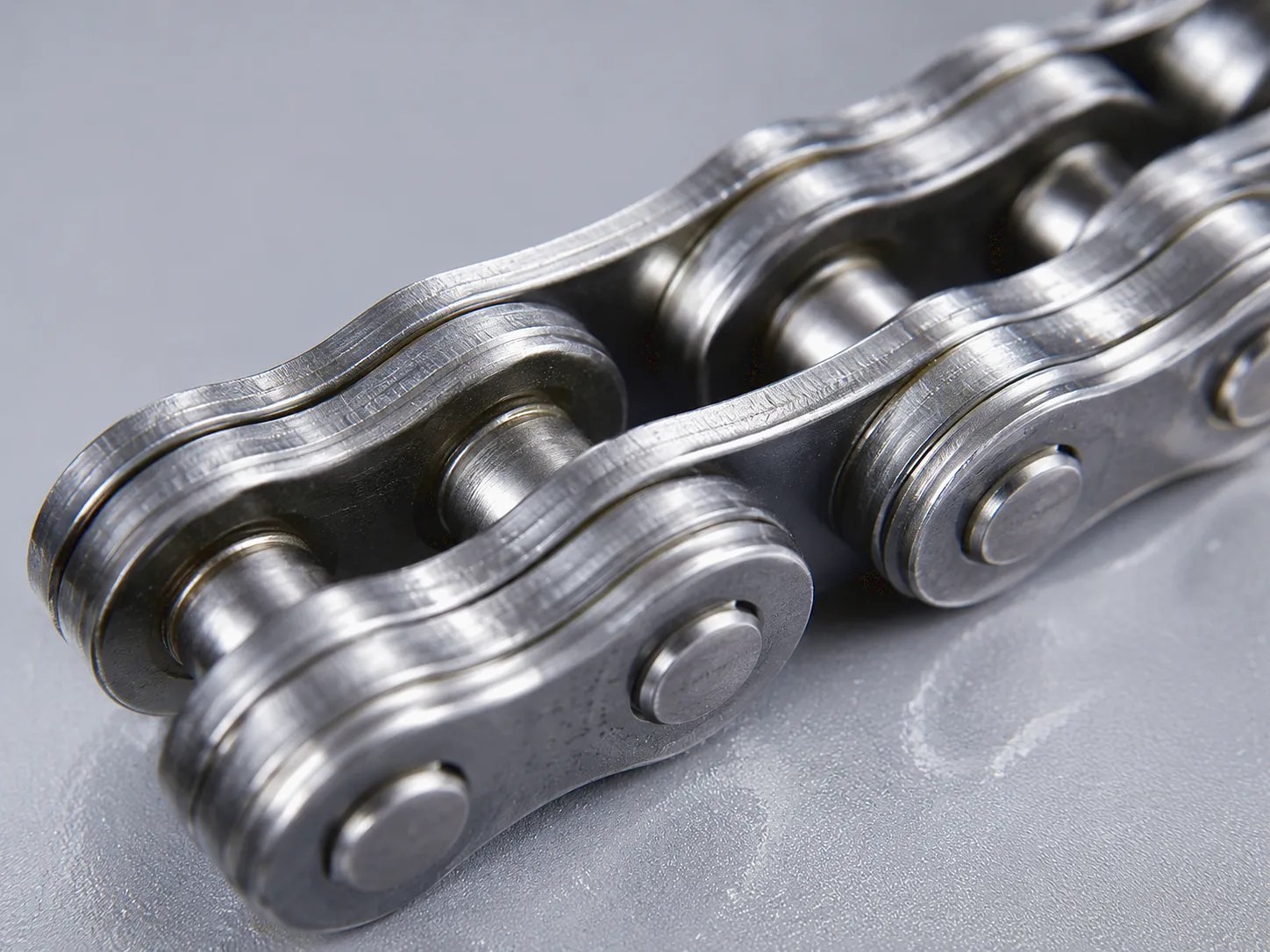
In our production process, we use high-carbon chromium steel for standard leaf chain plates — typically meeting or exceeding ISO 4347 and DIN 8152 specifications — with case hardening applied to pins and plates to achieve surface hardness in the 58–62 HRC range. This surface hardness delivers exceptional wear resistance at the pin-plate interface, which is the primary wear zone in any articulating chain. For beverage and food production environments specifically, we offer austenitic stainless steel variants (304 and 316L) that sacrifice a fraction of tensile strength in exchange for near-complete immunity to the corrosive washdown chemicals commonly used in UK bottling lines, including caustic soda, peracetic acid, and hypochlorite solutions.
Material Grades Available
High-Carbon Chrome Steel
Standard workhorse — ideal for dry or lightly lubricated conveyor runs. Case-hardened to 58–62 HRC.
Stainless Steel 316L
Preferred for washdown-intensive zones. Chloride and acid resistant. Complies with food-contact regulations (EC 1935/2004).
Nickel-Plated Carbon Steel
Cost-effective corrosion protection for moderate washdown exposure — the balanced choice for seasonal production lines.
Technical Performance Parameters
The data below covers our standard product range for beverage-industry plate chain applications. Custom specifications beyond these ranges are available on request.
| Parameter | Standard Range | High-Performance | Unit |
|---|---|---|---|
| Pitch | 12.7 – 50.8 | Custom (up to 76.2) | mm |
| Minimum Tensile Strength | 18 – 220 | Up to 400+ | kN |
| Pin Surface Hardness | 58 – 62 | 62 – 65 | HRC |
| Plate Lacing | 2 × 2 to 4 × 4 | Up to 6 × 6 | plates per link |
| Operating Temperature | -20 to +120 | -40 to +200 (special) | °C |
| Pitch Elongation at Replacement | <2.0% | <1.5% (precision grade) | % over nominal |
| Compliance Standards | ISO 4347, DIN 8152, ANSI / ASME B29.8 | — | |
Where Leaf Chain Works Inside a Beverage Filling Line
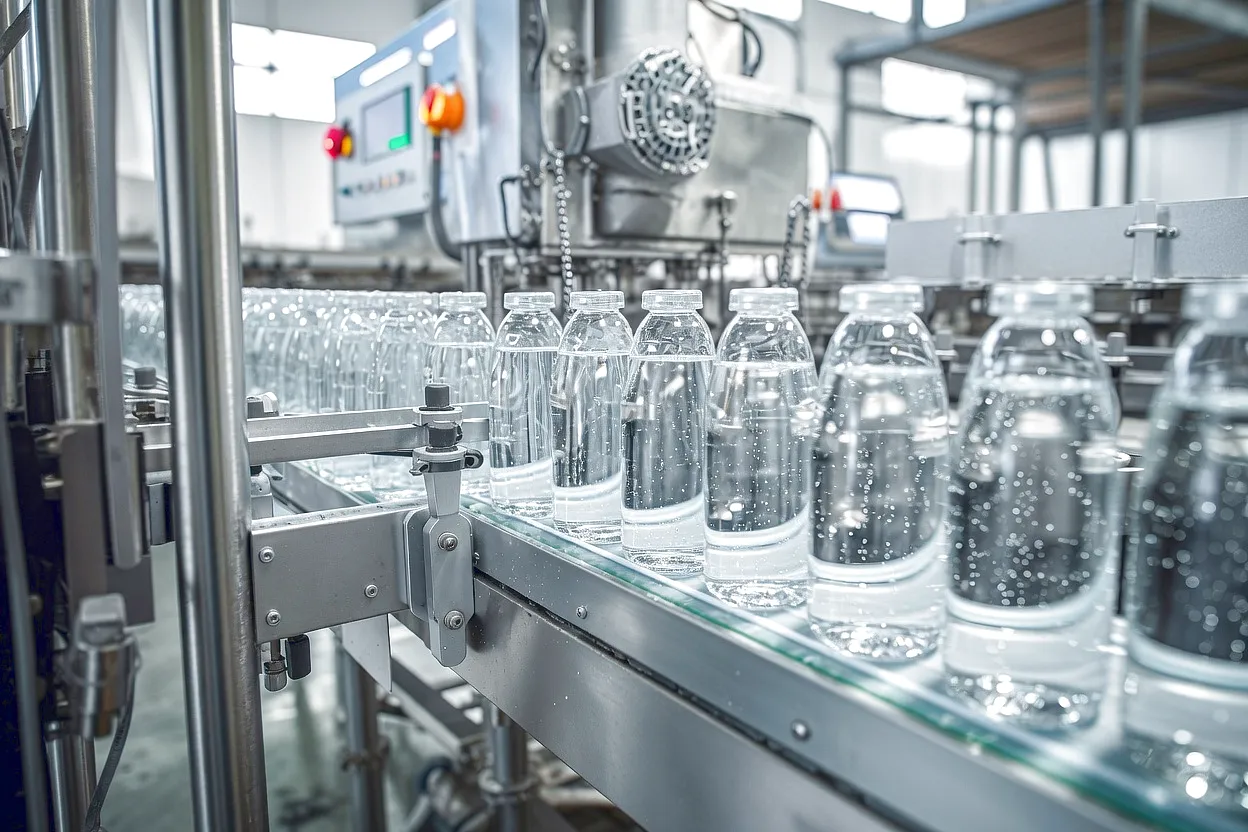
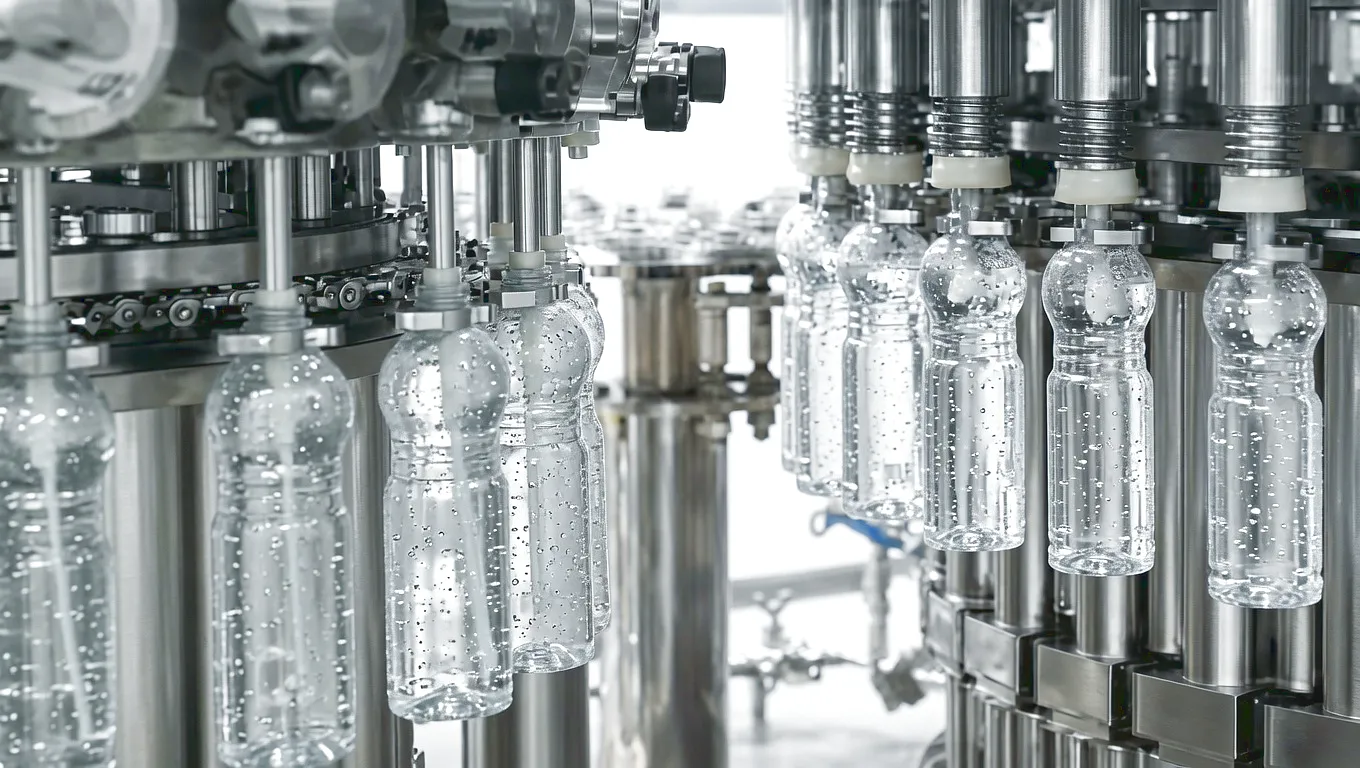
Modern beverage filling production lines are not a single machine — they are a sequence of interdependent stations, each creating different mechanical demand on the drive chain. Understanding the specific stress profile at each stage allows plant engineers to select the correct specification — rather than over-engineering uniformly (expensive) or under-engineering at a critical point (catastrophic).
Container Infeed & Depalletising
Leaf chain handles the high-tension pull of loaded pallet conveyors and layer-pad extraction mechanisms. The low elongation characteristic maintains synchronised timing between infeed rows.
Rinsing & Pre-Treatment
Rinser star-wheel and infeed conveyor chains are continuously doused with water and detergent. Stainless or nickel-plated leaf chain resists corrosion across multi-shift operations.
Filling Station Drive
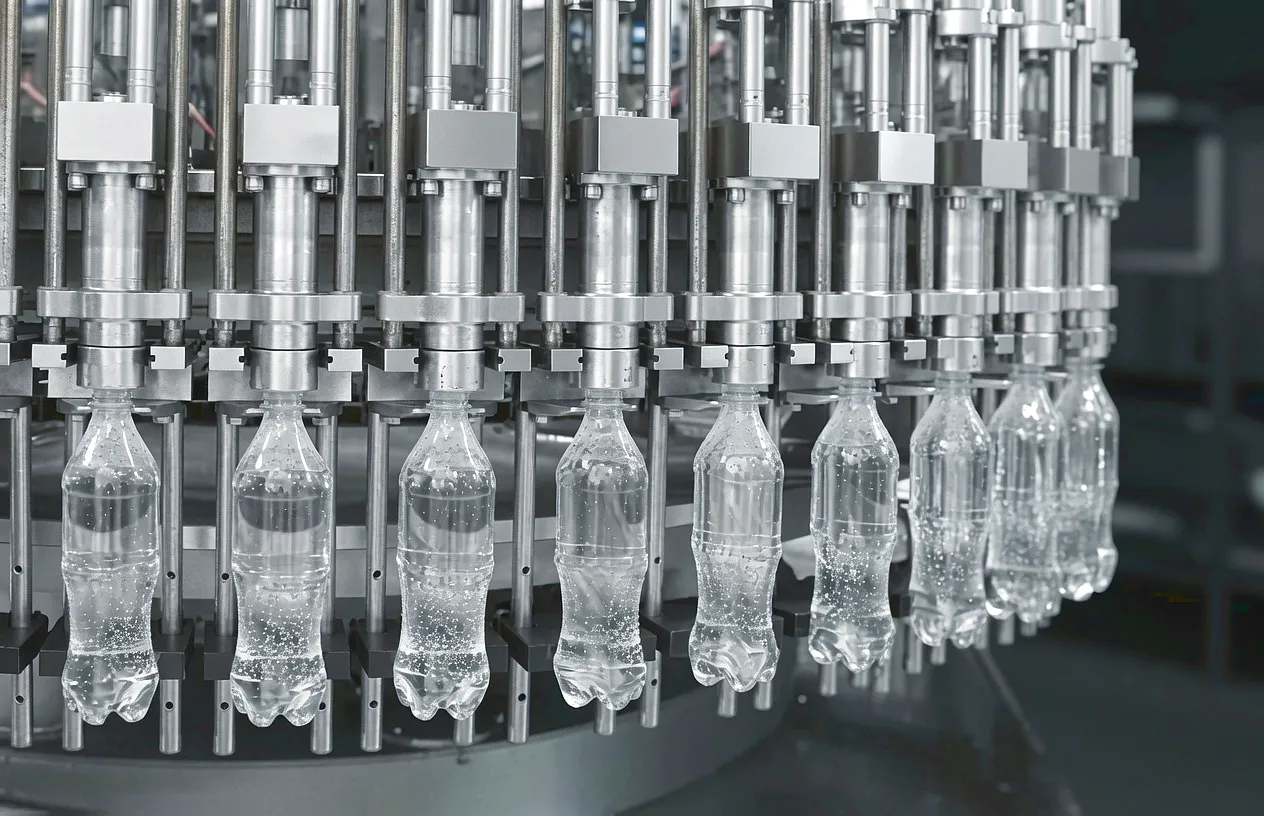
Precise pitch control at the filling carousel is non-negotiable. Even 0.3% pitch elongation in a worn chain can misalign containers under filling nozzles, causing fill-level variance and reject rates.
Capping & Seaming
Capper drives operate under dynamic torque loads during seam engagement. Leaf chain’s high fatigue resistance handles cyclic engagement forces far better than conventional alternatives.
Labelling & Inspection
Speed-sensitive vision inspection systems require smooth, vibration-free chain travel. Low-noise, well-lubricated leaf chain prevents false-positive reject signals from container jitter.
Packing & Palletising Outfeed
High-load pallet elevator drives — some lifting up to 2 tonnes — rely on leaf chain’s tensile strength and shock-load rating. This is where leaf chain’s structural advantage over roller chain is most unambiguous.
Why Engineers Specify Ever Power Leaf Chain — Six Operational Advantages
Technical data sheets tell you what a chain is rated to do. What they rarely capture is how a chain performs across its full service life under the specific abuse conditions of a running production line. The advantages below are drawn from real installation feedback and field measurement data collected from beverage manufacturing facilities across England, Scotland, and Wales.
Extended Service Intervals
Our precision case-hardening process extends typical replacement intervals by 30–50% compared with standard-grade chains of equivalent pitch. For a UK bottling facility running two shifts, this can translate to 8–12 fewer planned shutdowns per year per conveyor run.
Dimensional Consistency
Tight manufacturing tolerances — verified by CMM inspection on every production batch — ensure that container pitch remains within 0.1% of nominal throughout the chain’s service life. This is the foundation of repeatable fill accuracy and label placement precision.
Washdown Compatibility
316L stainless variants are tested to 500-hour salt-spray per ISO 9227 with no structural corrosion. For UK food and drink producers operating under BRCGS site standards, this provides documented evidence of compliance-grade materials — critical for third-party audits.
Easy Field Installation
Standardised connecting links compatible with DIN and ANSI sprocket geometries mean our leaf chain integrates with existing OEM equipment without modification. Replacement can be completed by a two-person maintenance team in under 40 minutes on most filling line configurations.
Predictable Wear Curve
Unlike lower-grade chains that wear unpredictably, our hardened-plate leaf chain shows a linear elongation curve throughout its service life. This makes scheduled replacement planning reliable, eliminating the reactive emergency replacements that are six times more expensive than planned ones.
Reduced Lubrication Demand
Our low-friction pin surface treatment (optional PTFE-impregnated pre-lubrication available) cuts re-lubrication frequency by up to 40% compared with standard plate chain — reducing lubricant consumption costs and the risk of product contamination on open-conveyor sections.
Customer Success: From Breakdown Culture to Planned Maintenance
A documented case from a UK-based beverage manufacturer, 2024.
 The Challenge
What Our Customers Say
We had been through four different chain suppliers in three years. The Ever Power leaf chain is the first product where I can honestly say we’ve gone beyond the quoted service life. Twelve months in, our filling line conveyor is still within tolerance. That reliability has genuinely changed how our maintenance planner structures the shift.
Engineering Manager · Craft Beverages Manufacturer, West Midlands, UK
What impressed us most wasn’t just the chain itself — it was the application engineering support before we ordered. They ran load calculations on our specific filling carousel and recommended a lacing configuration we hadn’t considered. The custom solution fits perfectly and the lead time was shorter than we expected given the specification complexity.
Maintenance & Reliability Lead · Bottled Water Producer, East Anglia, UK
We trialled the stainless leaf chain on one of our washdown-intensive rinser conveyors before rolling it out to the rest of the line. After six months the trial chain showed less corrosion than any product we’d used before. We’ve since standardised on Ever Power for all our high-exposure conveyor positions. The quote process was straightforward and UK delivery was prompt.
Plant Manager · Regional Brewery, South Yorkshire, UK
Manufacturing Capability & Custom Chain Solutions
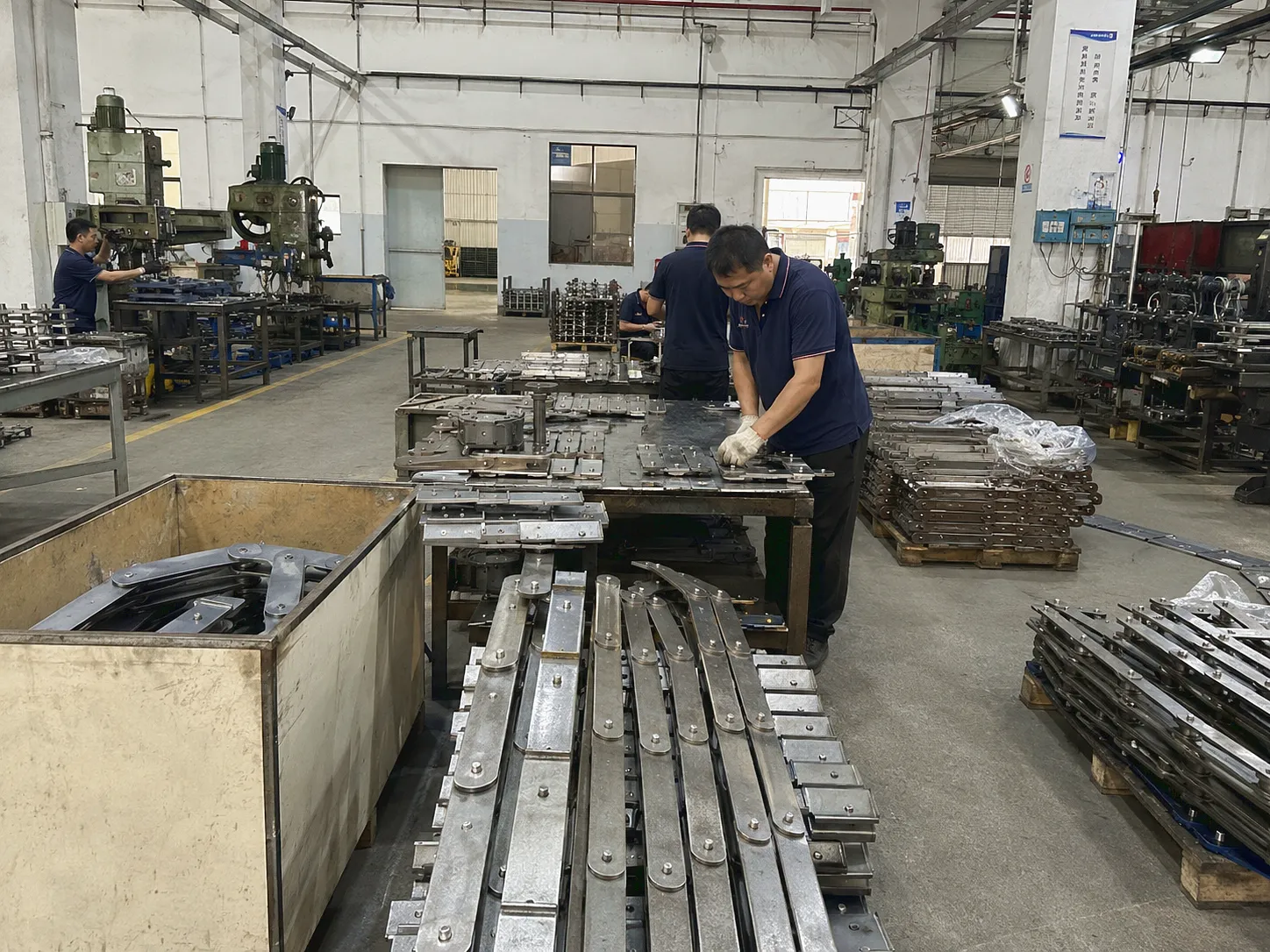
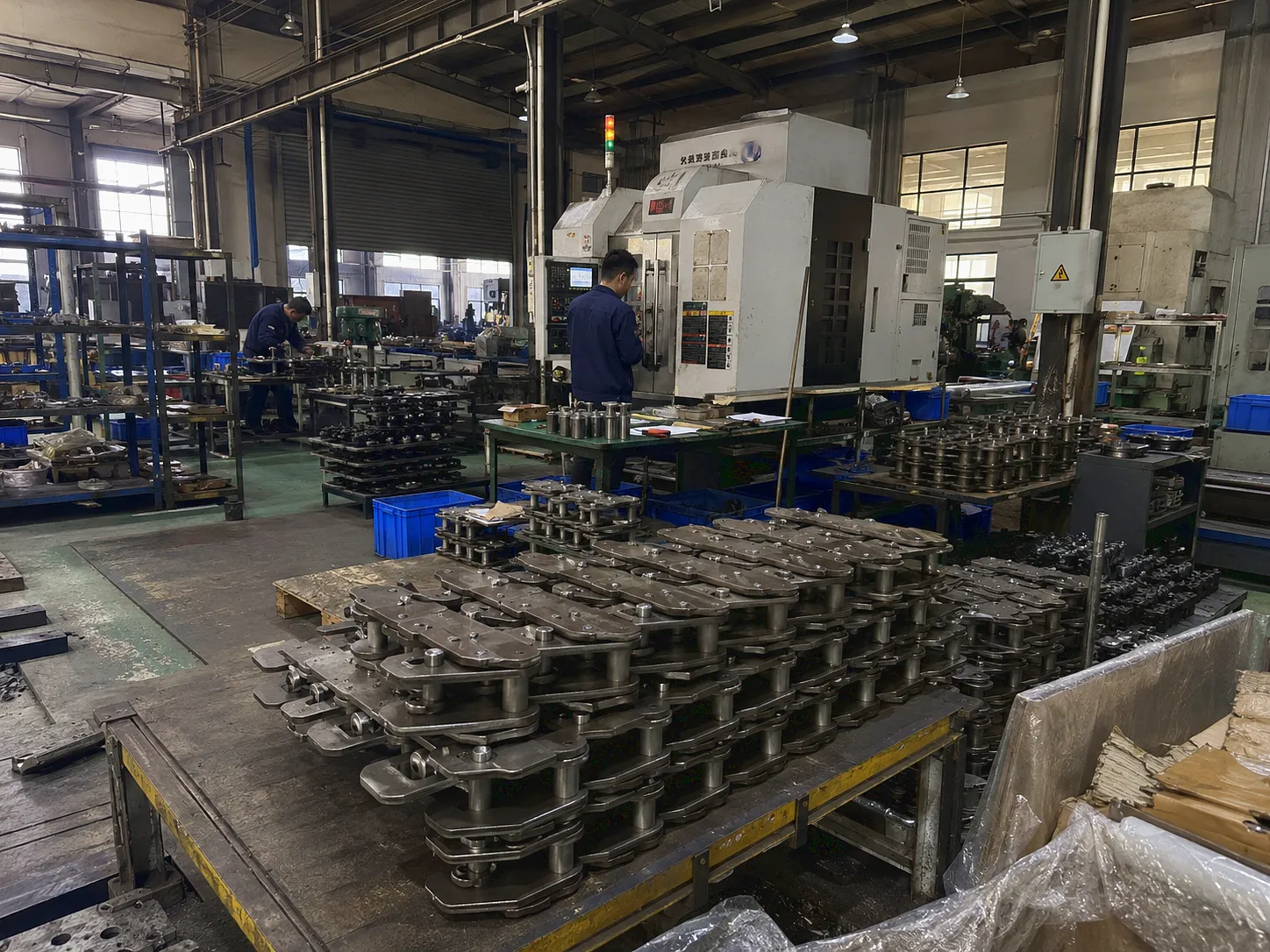
Standard leaf chain catalogues cover perhaps 70% of filling-line applications. The remaining 30% — OEM-specific attachment plates, non-standard pitches, unusual chain widths required by legacy European conveyors, or combinations of materials within a single chain assembly — require genuine manufacturing flexibility. That is exactly what we offer.
Our production facility operates ISO 9001-certified manufacturing processes across its full plate-chain production lines. Dedicated CNC precision grinding equipment ensures pin and plate dimensions are held to tolerances tighter than ISO 4347 mandates — a step that directly translates into the pitch consistency and wear-curve predictability our customers report in the field. We can produce custom-length chains, chains with integrated K-attachments or extended connecting pins for special transfer guides, and chains with mixed-material links for applications where sections of a conveyor pass through environments with different chemical exposure levels.
What We Can Customise For Your Line
🔩
Non-Standard Pitch
Any pitch between 9.525 mm and 101.6 mm, including legacy metric and inch-pitch variants
📏
K-Type Attachments
K1, K2, K1K2, and custom-profile attachment plates for conveyor integration
🎨
Surface Coatings
Zinc, nickel, PTFE dry-lube, or passivation on request — documented for audit trails
🔢
Custom Length Runs
Exact-metre cuts to eliminate field joining — reducing installation time and weak-link risk
🏗️
Mixed-Material Assembly
Carbon steel and stainless sections within one chain for cost-optimised washdown zoning
📄
Documentation Package
Material certs, test reports, dimensional inspection records for BRCGS and ISO audit compliance

Serving the UK Beverage Manufacturing Sector
The United Kingdom’s beverage manufacturing sector — one of the largest in Europe, generating approximately £22 billion annually and employing over 100,000 people in production roles — is served from a number of key regional manufacturing hubs. Understanding the specific production context of each region helps us spec the right chain, not just the right grade.
Facilities in Yorkshire and Humberside tend to run high-volume beer and CSD lines with extended daily run hours, requiring maximum fatigue resistance and scheduled-maintenance compatibility. Scottish whisky and gin distillery bottling halls present a different challenge — lower throughput but demanding hygiene standards and occasional ambient temperature extremes. London and South East FMCG bottlers, particularly those supplying major UK multiple retailers under BRCGS audit, place a premium on documented material traceability. We provide tailored documentation and specification support across all of these contexts.
Scotland
Distillery & craft bottling · Hygiene-grade chains
Yorkshire
High-volume beer & CSD · Fatigue-rated heavy duty
East Anglia
Bottled water & juice · Stainless 316L preferred
South East & London
FMCG & premium brands · Full documentation pack
Midlands
Multi-product lines · Custom lengths & mixed materials
Wales
Dairy & natural drinks · Corrosion-resistant options
Frequently Asked Questions
Questions commonly asked by plant engineers and procurement managers at UK beverage manufacturers.
Ready to Stop Replacing Your Filling Line Chain on Crisis Mode?
Our application engineers will review your existing chain specification, run a load calculation, and recommend the optimum leaf chain solution — free of charge, with a formal quote within 24 hours.